
Khanom Tokyo: Thai Rolled Pancakes with Pork, Sausage and Quail Egg (ขนมโตเกียว)

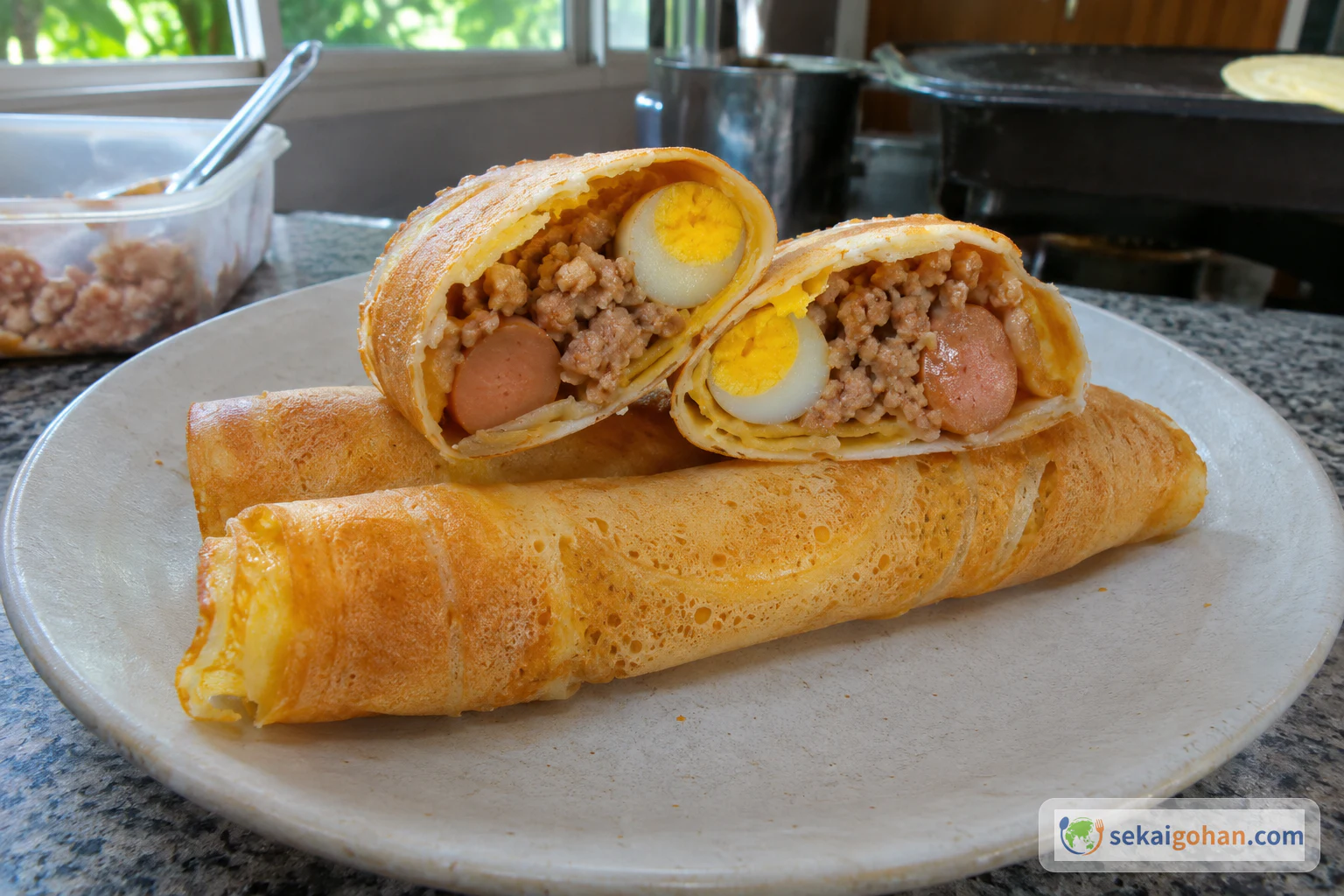
Savory Khanom Tokyo: thin pancakes rolled around seasoned ground pork, small sausages and quail egg
Cuisine
Thai

How to make savory Khanom Tokyo (ขนมโตเกียว), the Thai street snack of thin, lightly sweet pancakes rolled around seasoned ground pork, small cooked pork sausages and quail egg. Covers the batter, safe separate cooking of the pork, the cup measurement, and the uncertain story behind the Japanese-sounding name.

Cooking flow

Cooking steps

STEP11 / 11

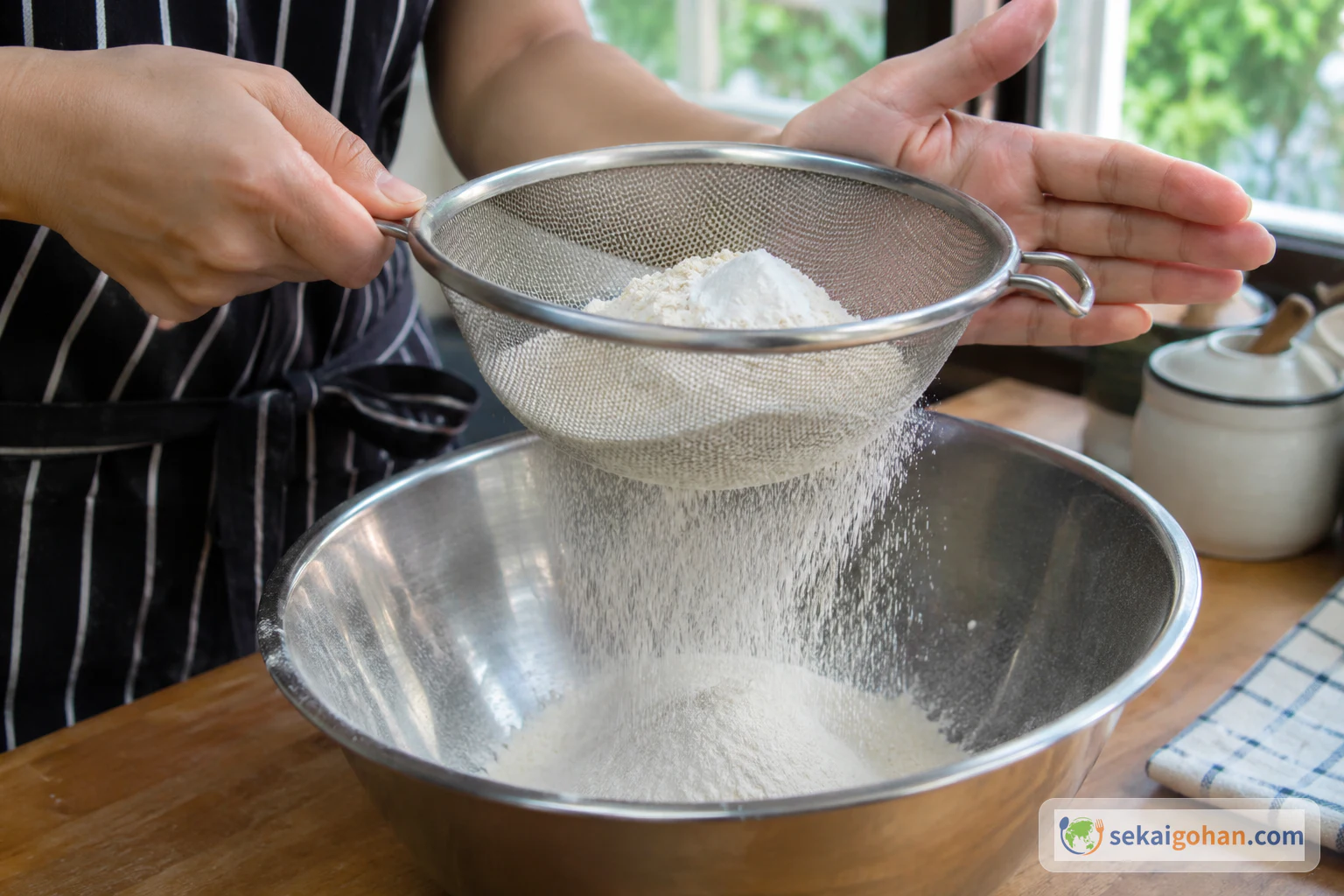
Sift the dry ingredients

Sifting flour, baking powder and salt together
Sift the flour, baking powder and salt together while everything is still dry

Put the flour, baking powder and salt together in a fine sieve and sift them into a clean bowl.

STEP22 / 11

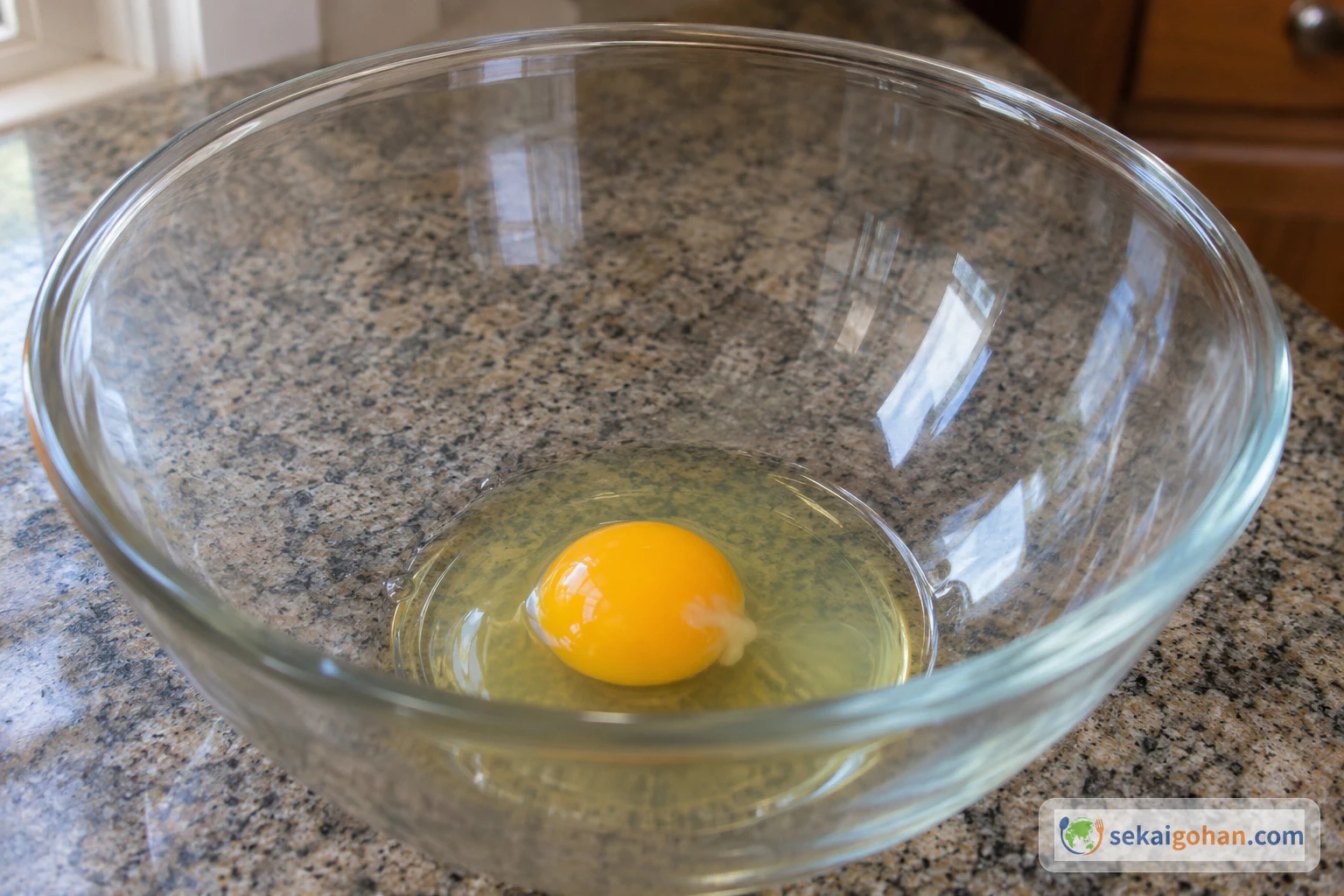
Mix the egg and sugar

Cracking the chicken egg for the batter into a bowl
Crack the egg into an empty bowl

Crack the egg into a separate bowl.

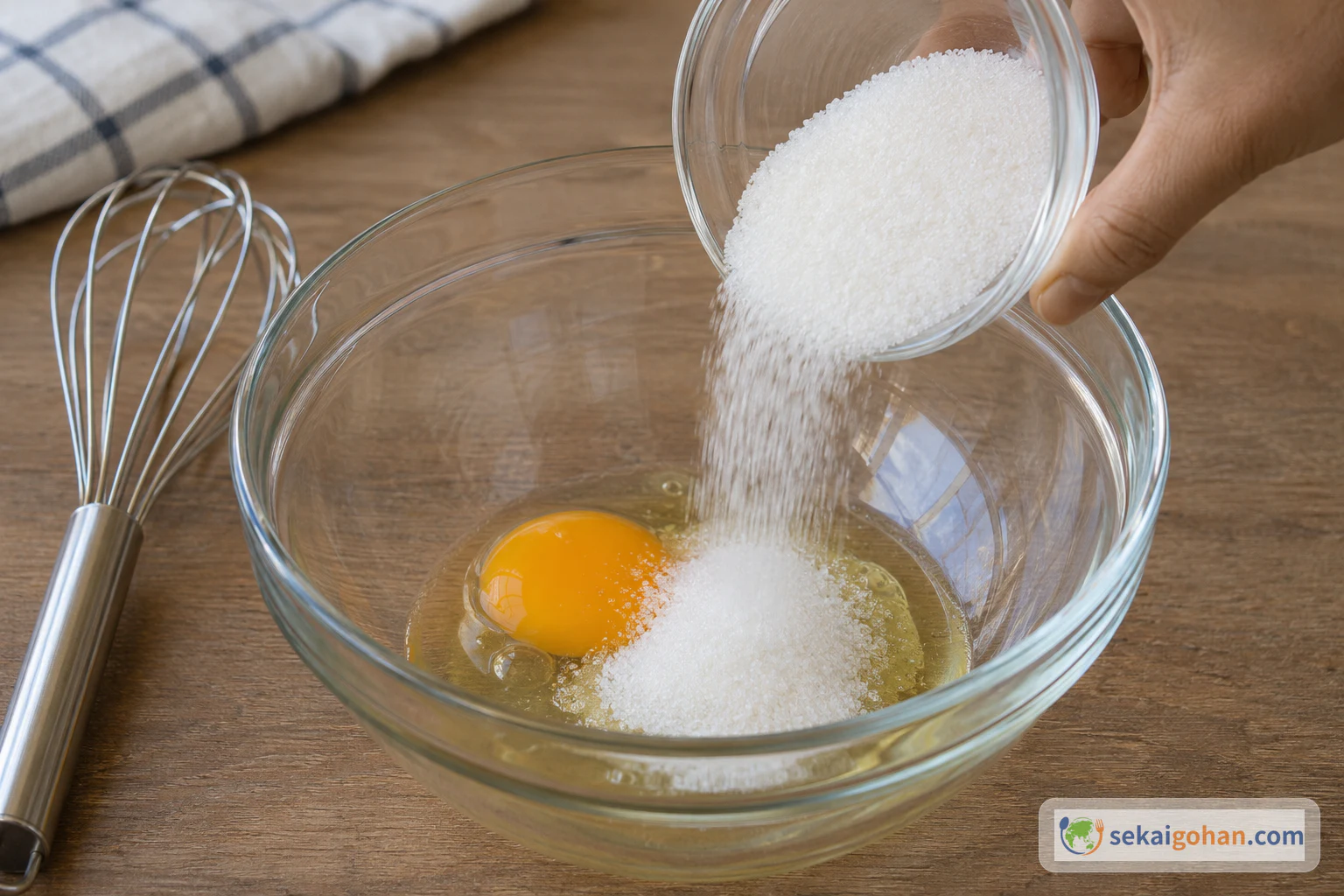
Add the sugar.

Adding sugar to the egg for the batter
Add the sugar to the egg

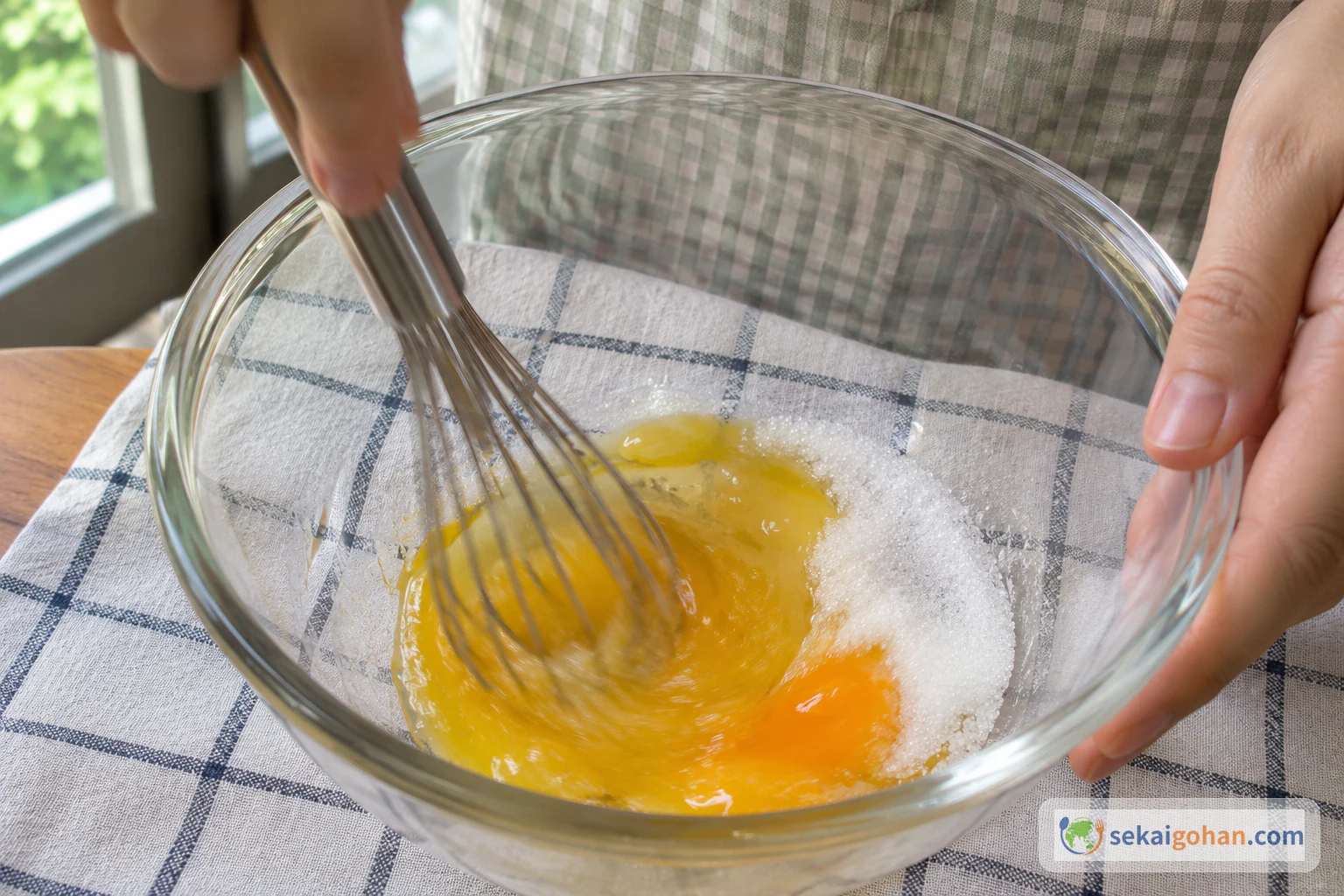
Mix until the sugar blends into the egg.

Mixing the egg and sugar in the bowl
Keep mixing until the sugar blends in
STEP33 / 11

Add the milk, oil and vanilla

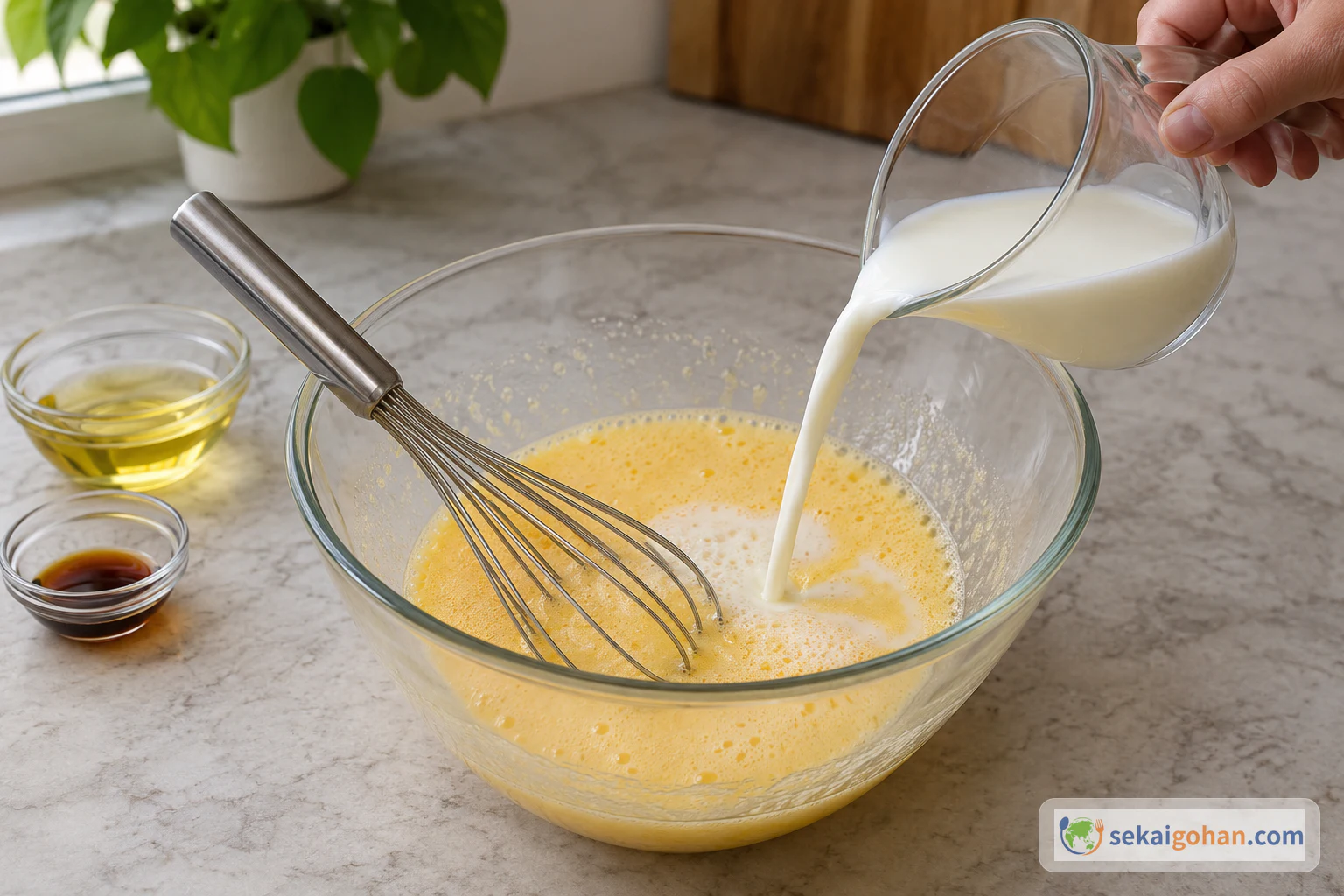
Pouring milk into the egg and sugar mixture
Add the milk first

Pour the milk into the egg and sugar mixture.

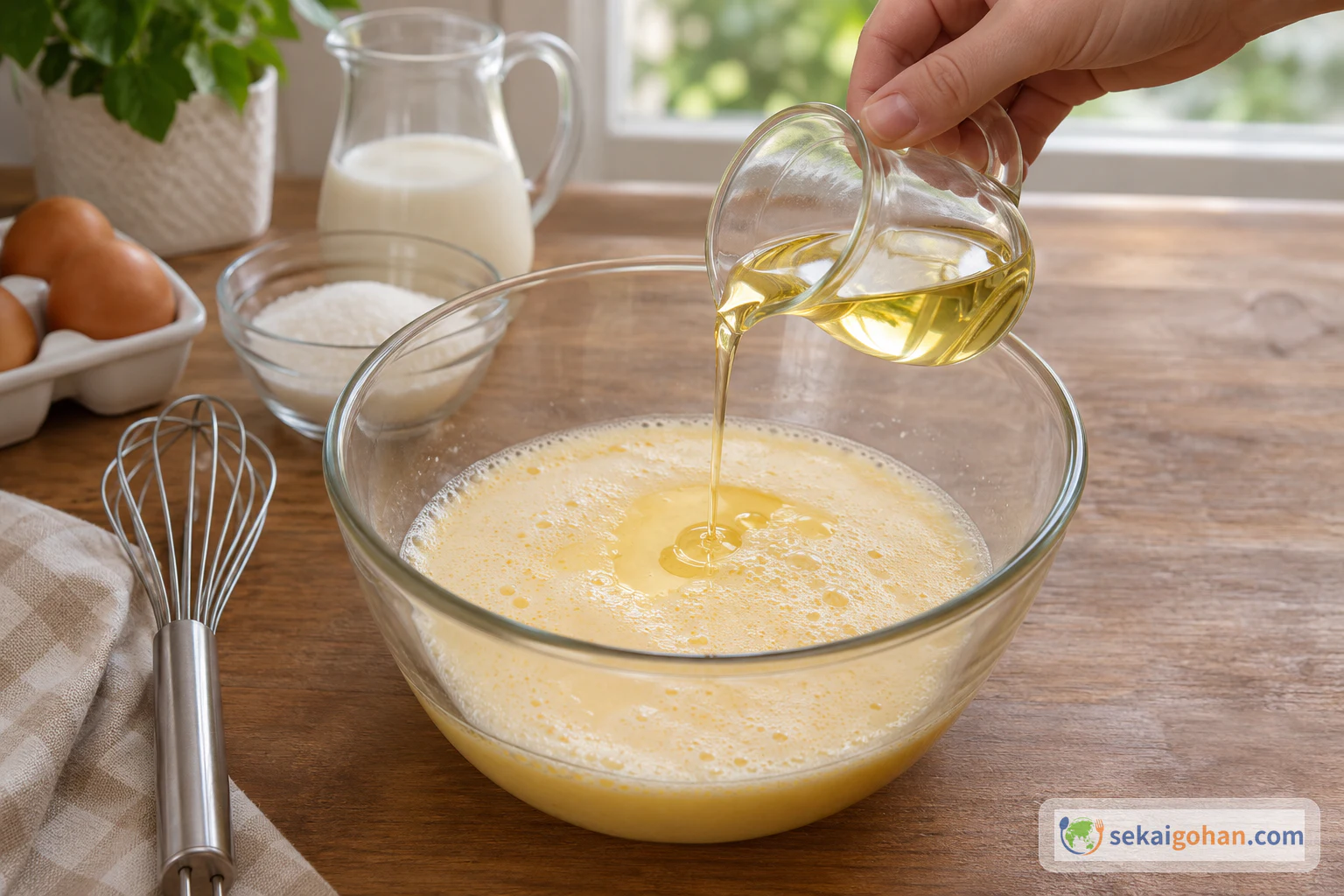
Add the vegetable oil.

Adding vegetable oil to the egg, sugar and milk mixture
Then the oil

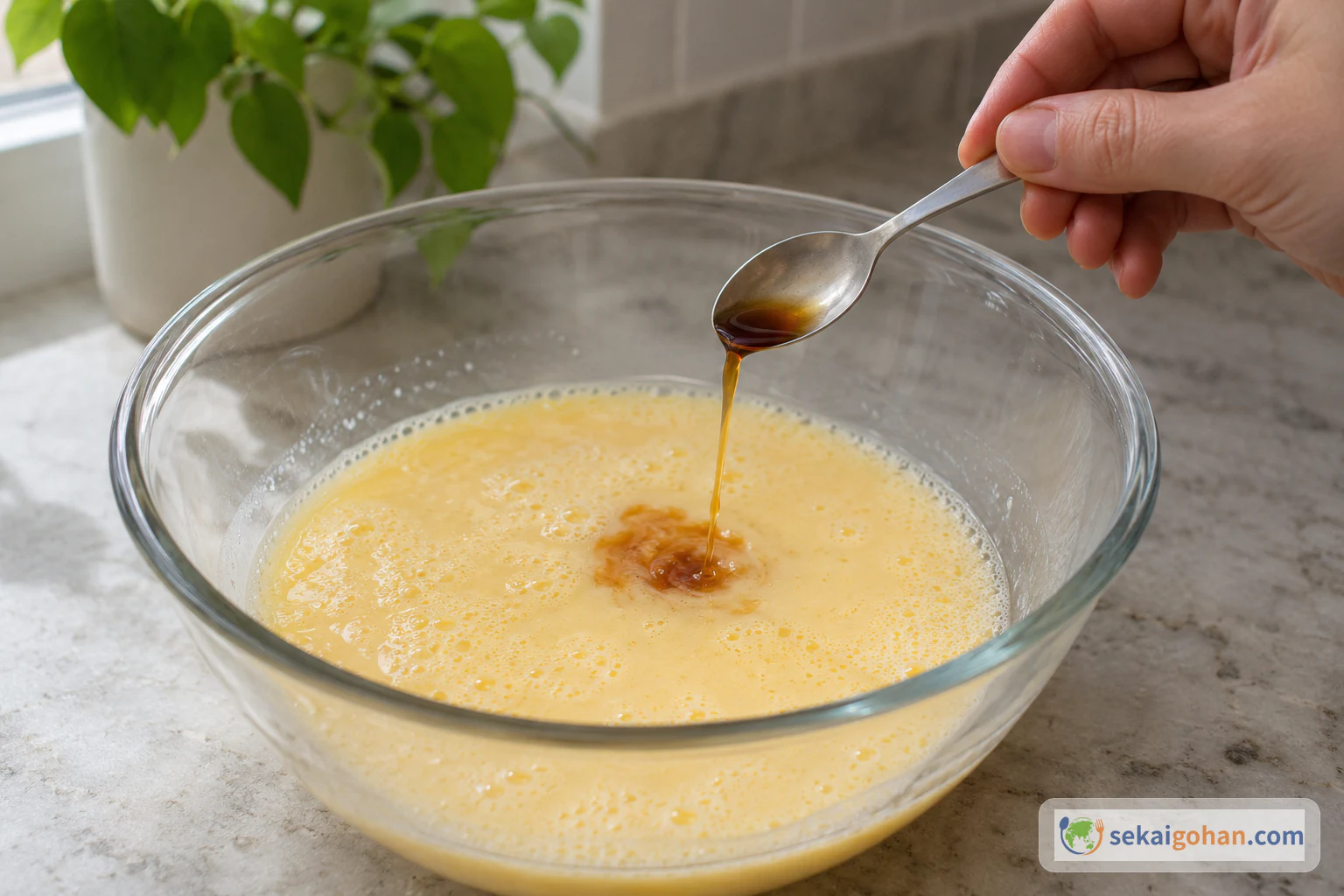
Add the vanilla flavoring.

Adding vanilla flavoring to the batter liquid
Then the vanilla

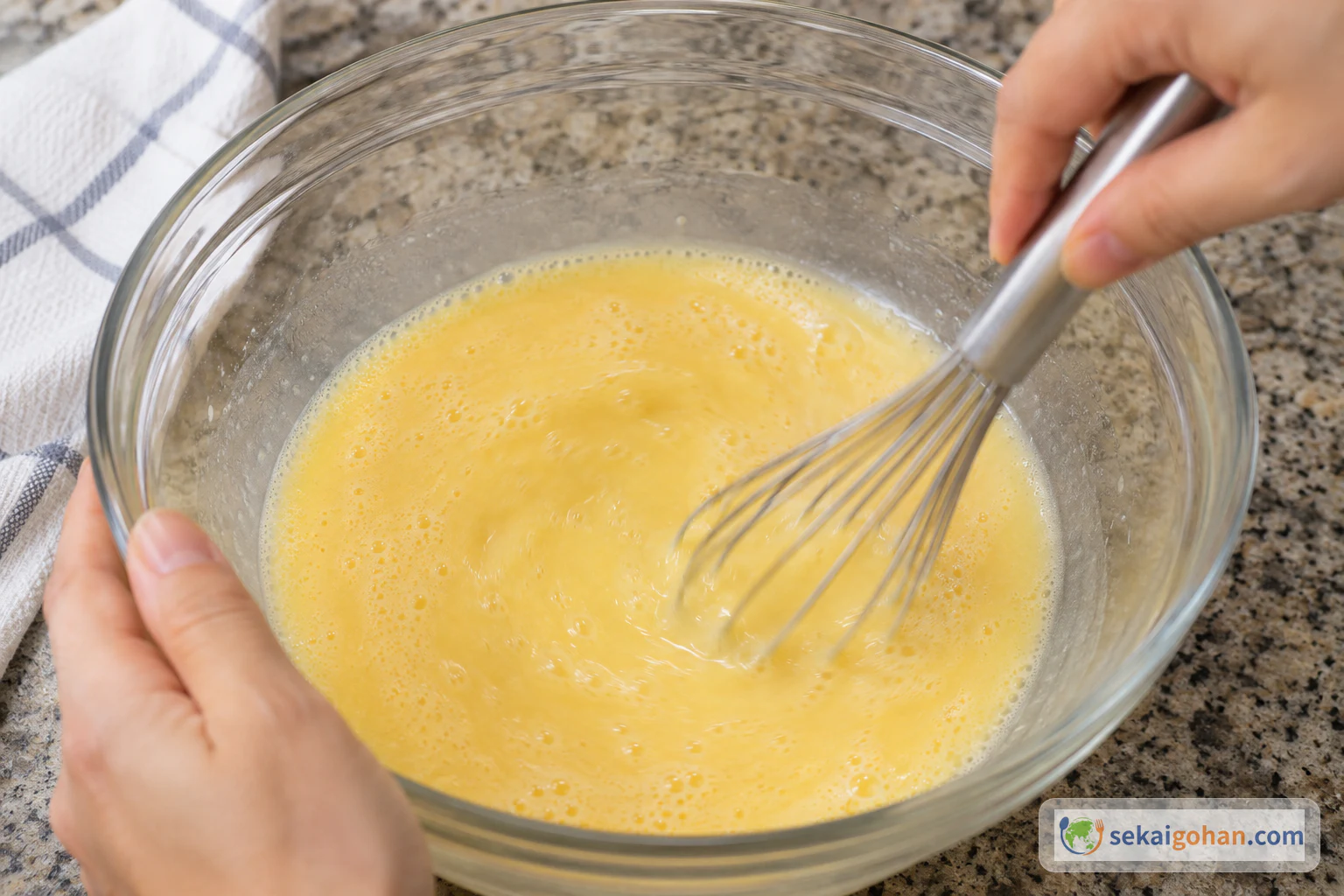
Mix until the liquid is evenly combined.

Mixing the egg, sugar, milk, oil and vanilla together
Mix the liquid until it looks even
STEP44 / 11

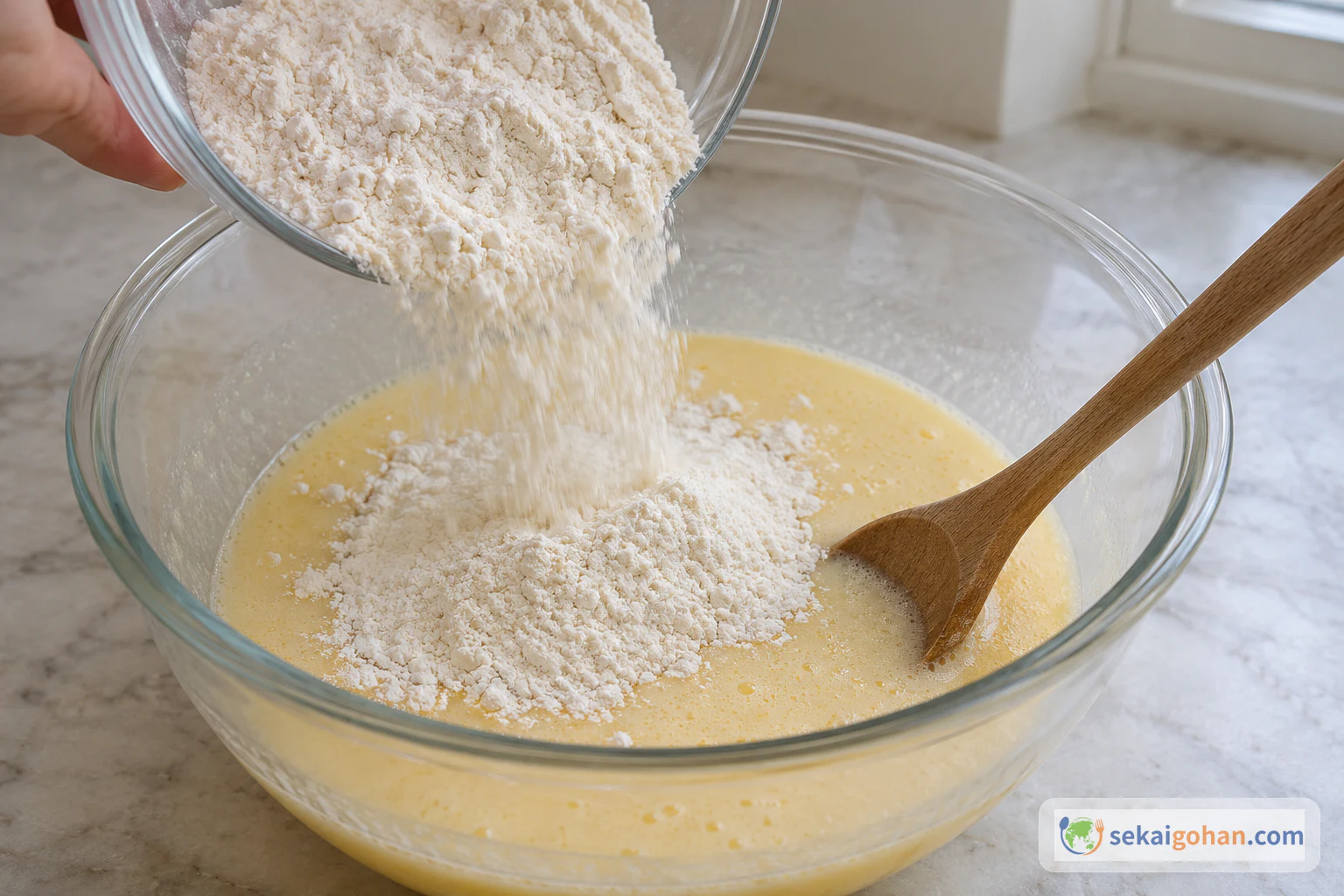
Add the sifted dry ingredients

Adding the sifted flour, salt and baking powder to the liquid
Tip the sifted dry mixture into the liquid

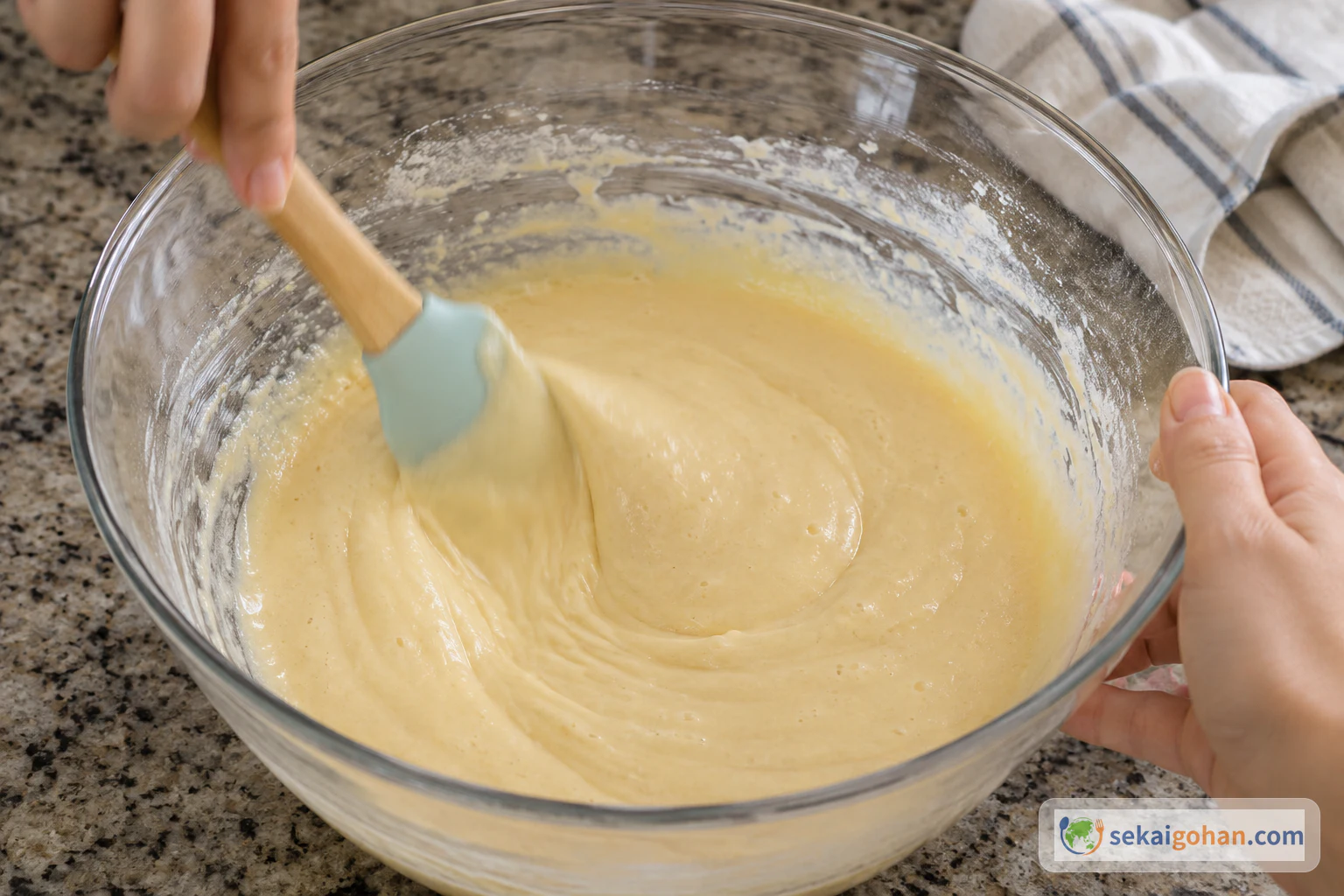
Add the sifted flour mixture to the liquid.

Mix until no dry flour is visible. Mix gently; don't whip it.

Mixing the sifted dry ingredients into the batter
Stir until no dry flour remains, without whipping
STEP55 / 11

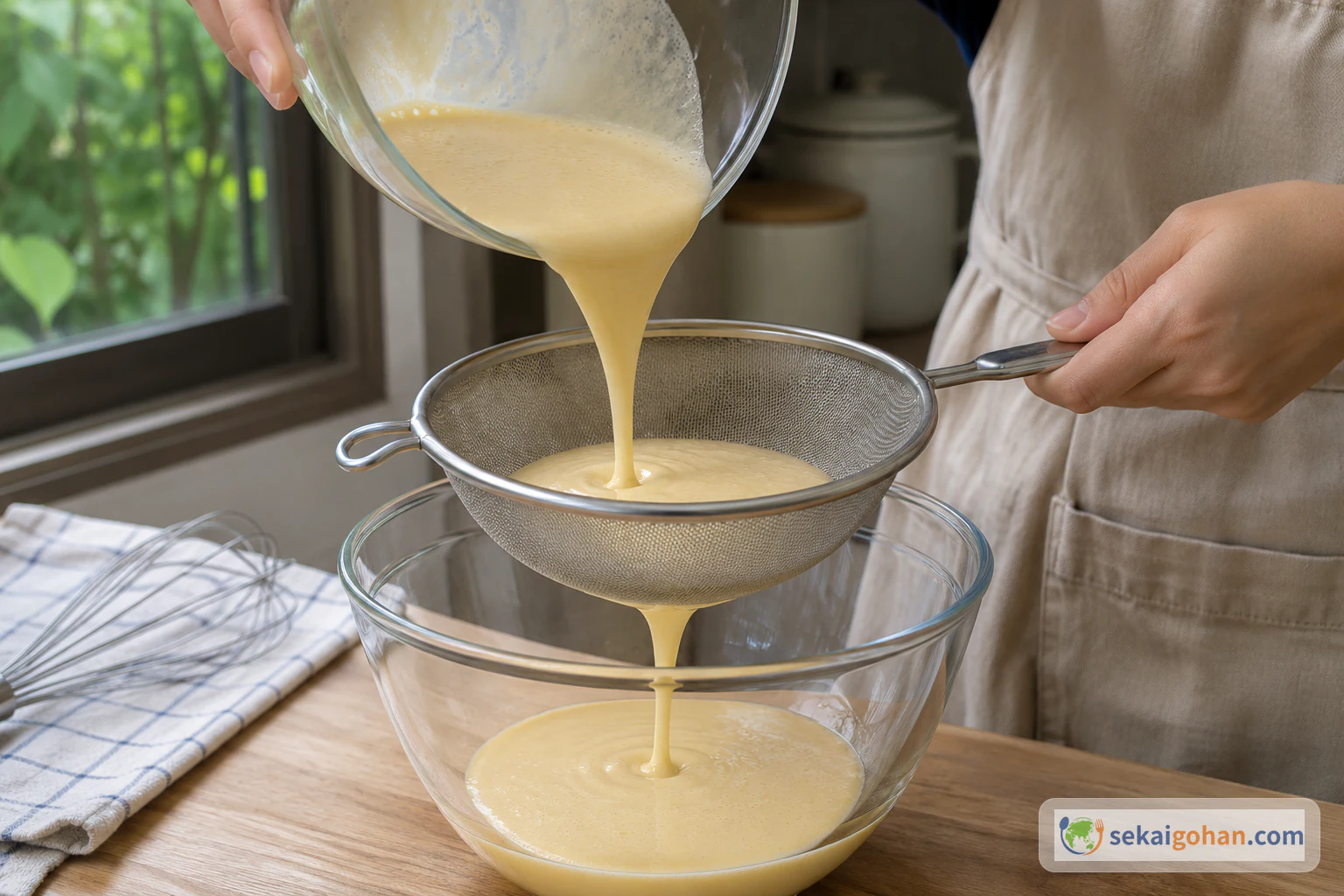
Strain the batter

Straining the mixed batter into a separate clean bowl
Strain the batter once into a clean bowl

Pour the batter through a fine sieve once, into a clean bowl.

STEP66 / 11

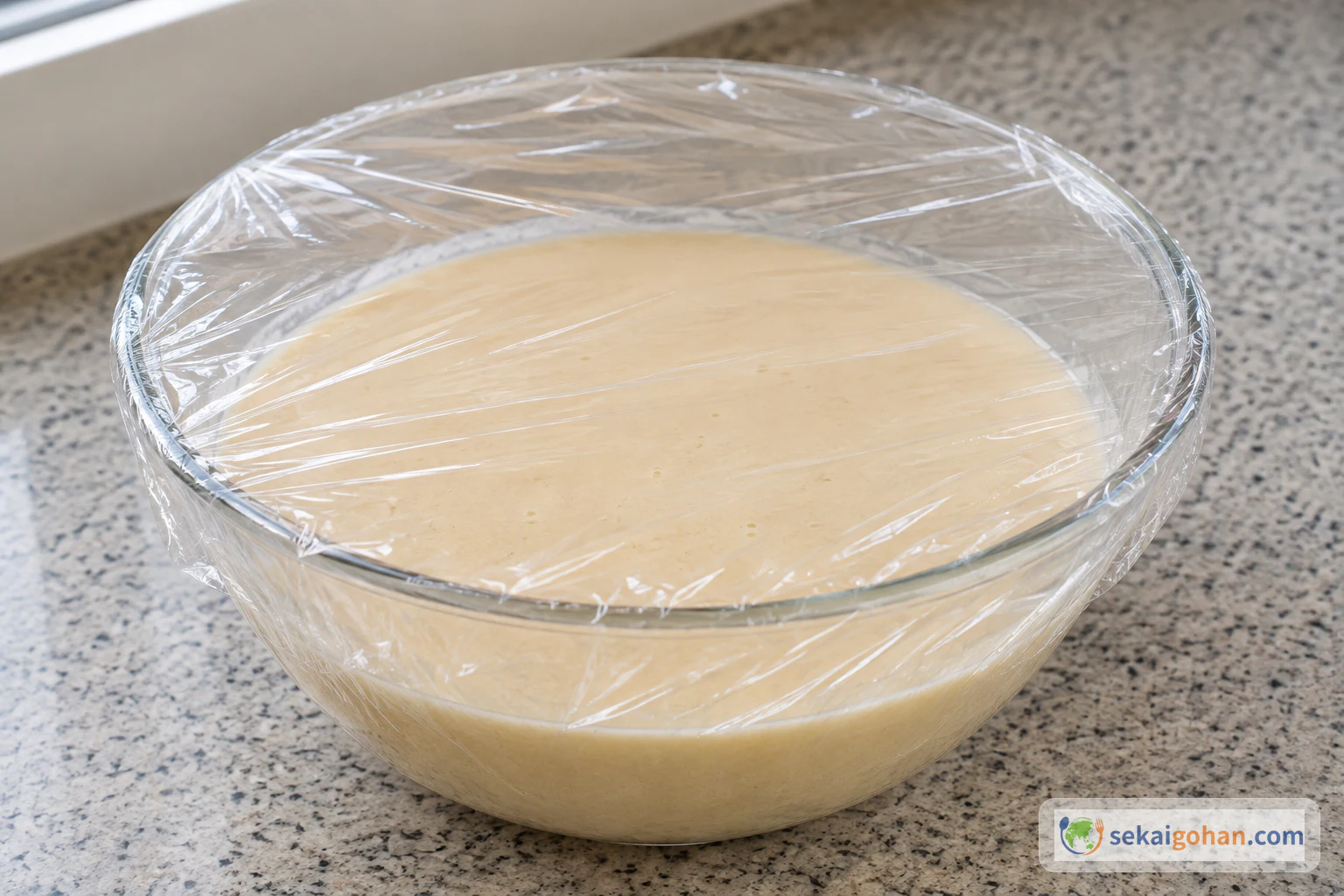
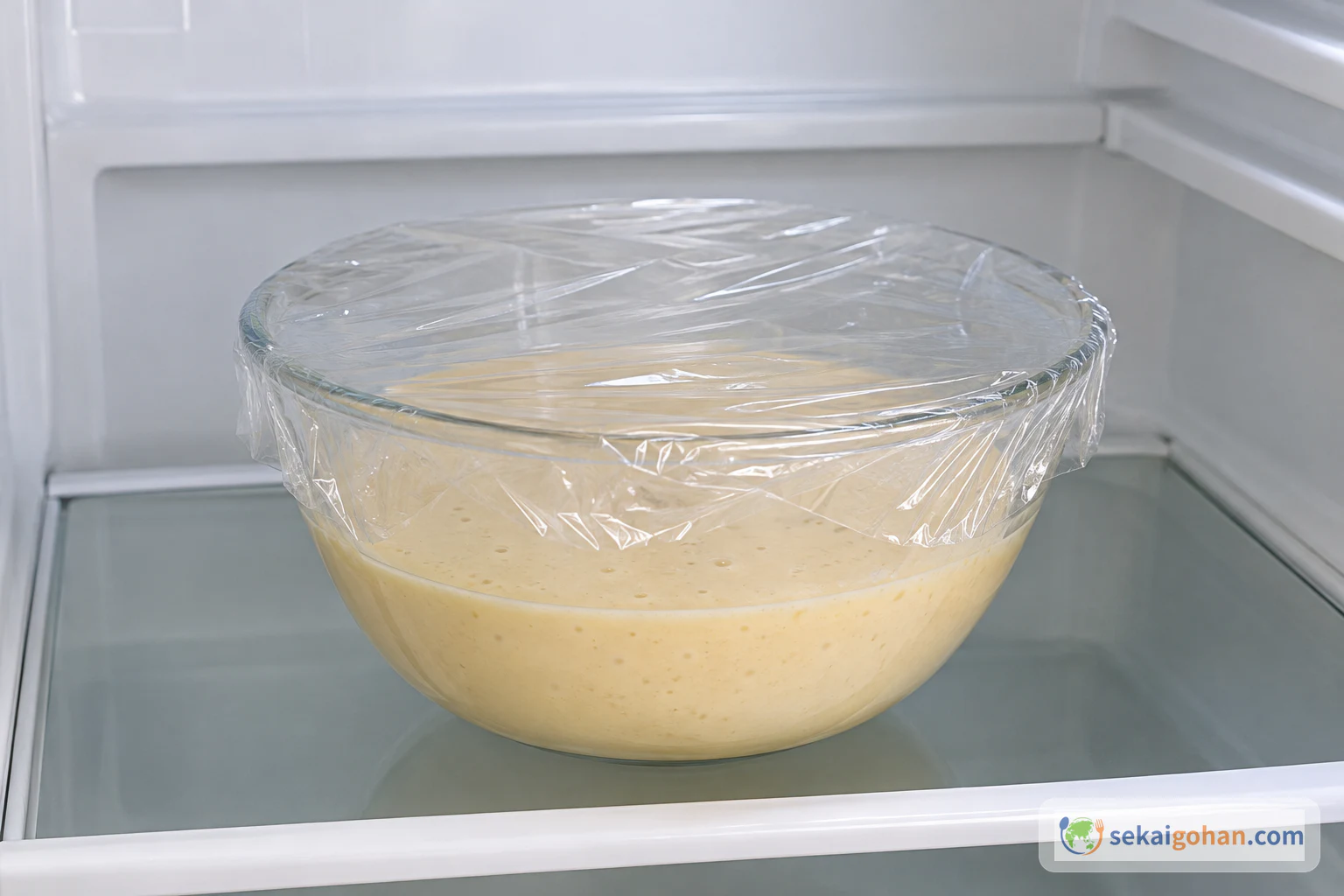
Cover and chill

Covering the strained batter with plastic wrap
Cover the strained batter

Cover the bowl with plastic wrap.

Refrigerate for 15–20 minutes.

Placing the covered bowl of batter in the refrigerator
Rest the covered batter in the refrigerator for 15–20 minutes
STEP77 / 11

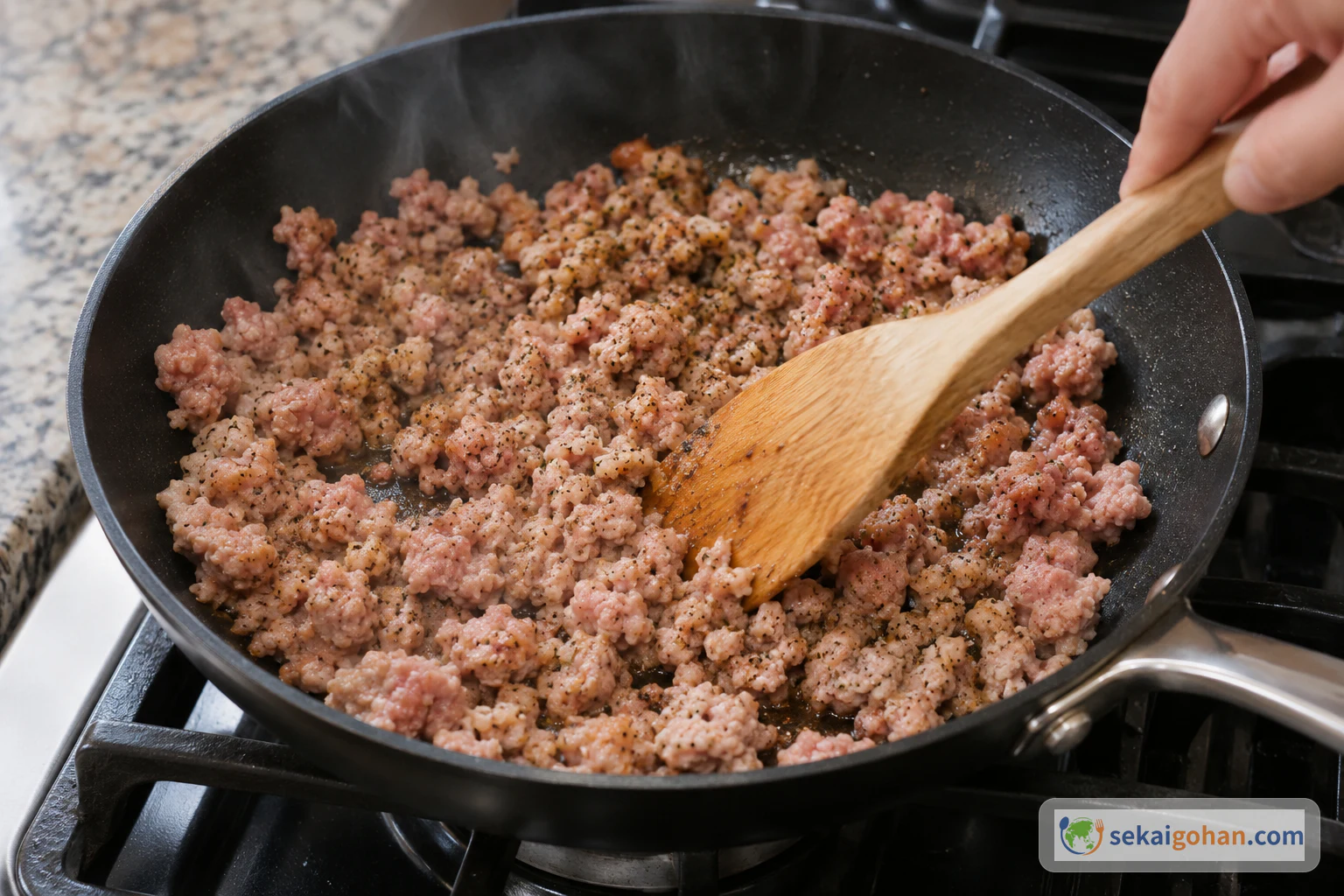
Cook the pork separately and check the temperature

Seasoned ground pork stirred as it cooks in a separate skillet (temperature check comes next)
Cook the pork in its own skillet, breaking it up as it cooks

In a separate skillet, cook the seasoned ground pork, stirring and breaking it into small crumbles. Keep the raw pork and anything it touches away from the batter.

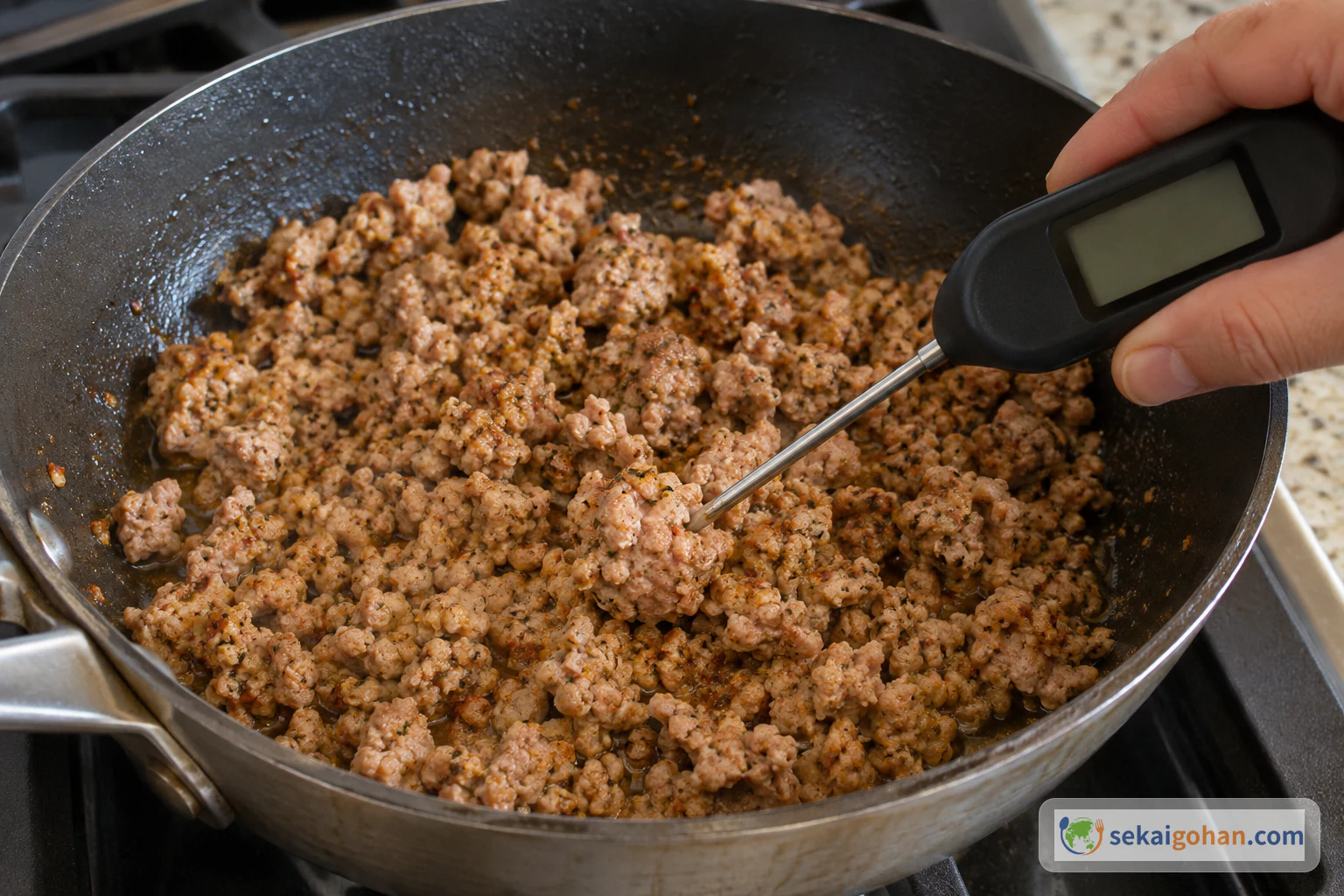
Insert a clean food thermometer into a thick cluster of pork and check that the pork reaches 71°C (160°F) throughout. Don't judge doneness by color alone. Set the cooked pork aside for filling.

Checking the separately cooked ground pork with a food thermometer
Check a thick cluster of pork with a thermometer; color alone is not enough
STEP88 / 11

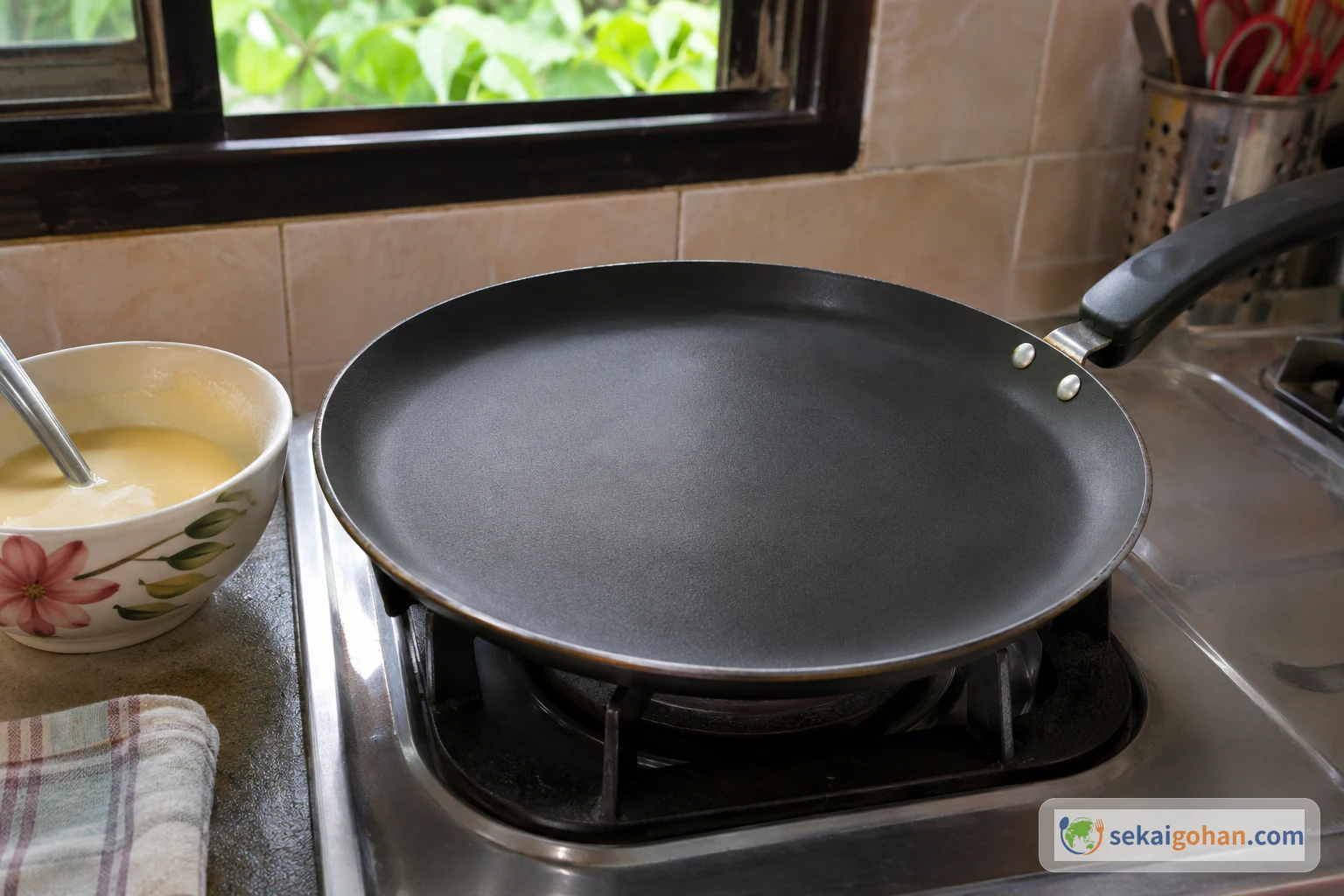
Preheat the pan

Preheating a flat griddle or frying pan
Preheat the empty pan over medium heat

Heat a flat griddle or flat frying pan over medium heat.

STEP99 / 11

Pour and spread the batter thin

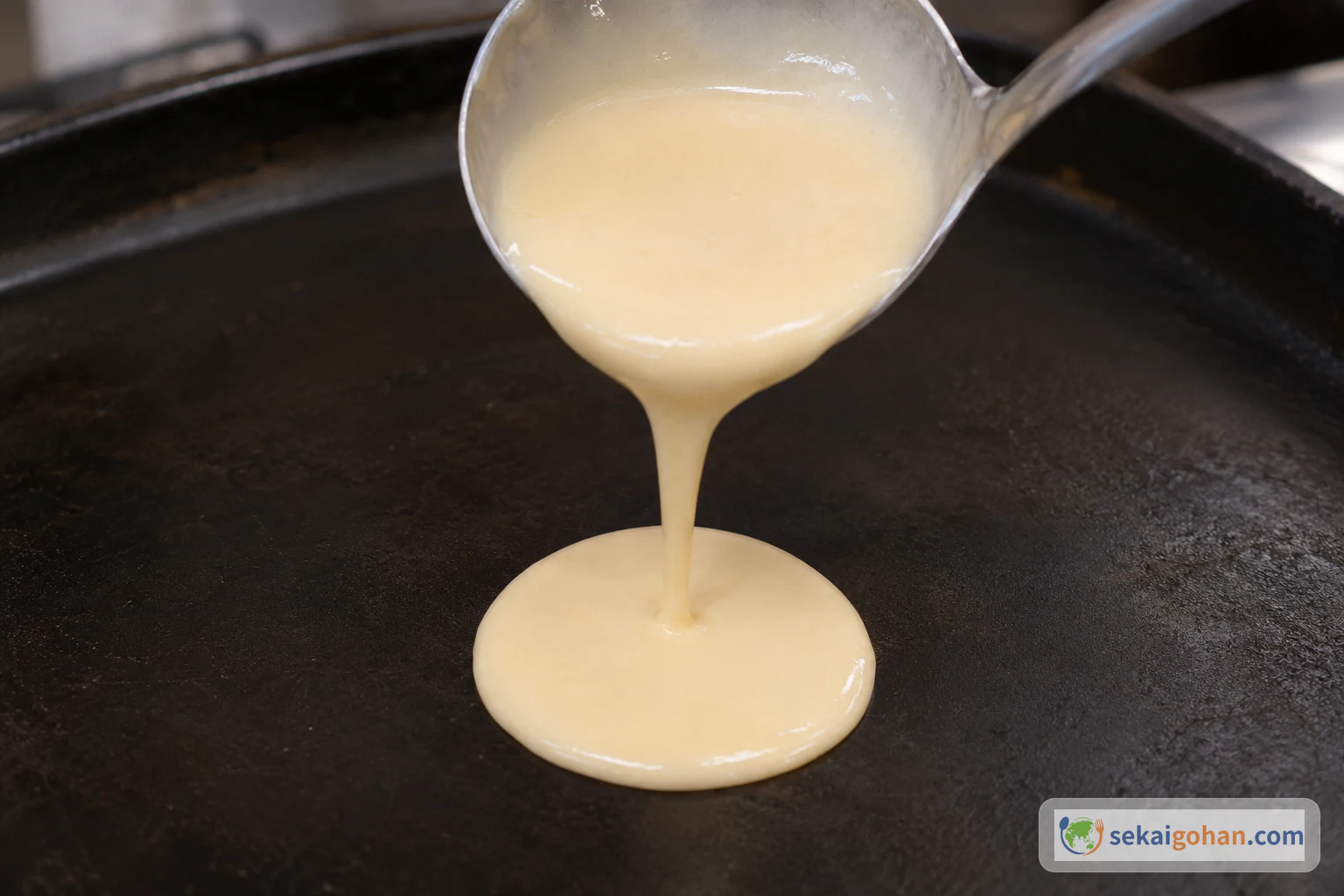
Pouring one pancake's worth of batter onto the preheated pan
Pour a small amount of plain batter onto the hot pan

Pour batter for one pancake onto the hot pan.

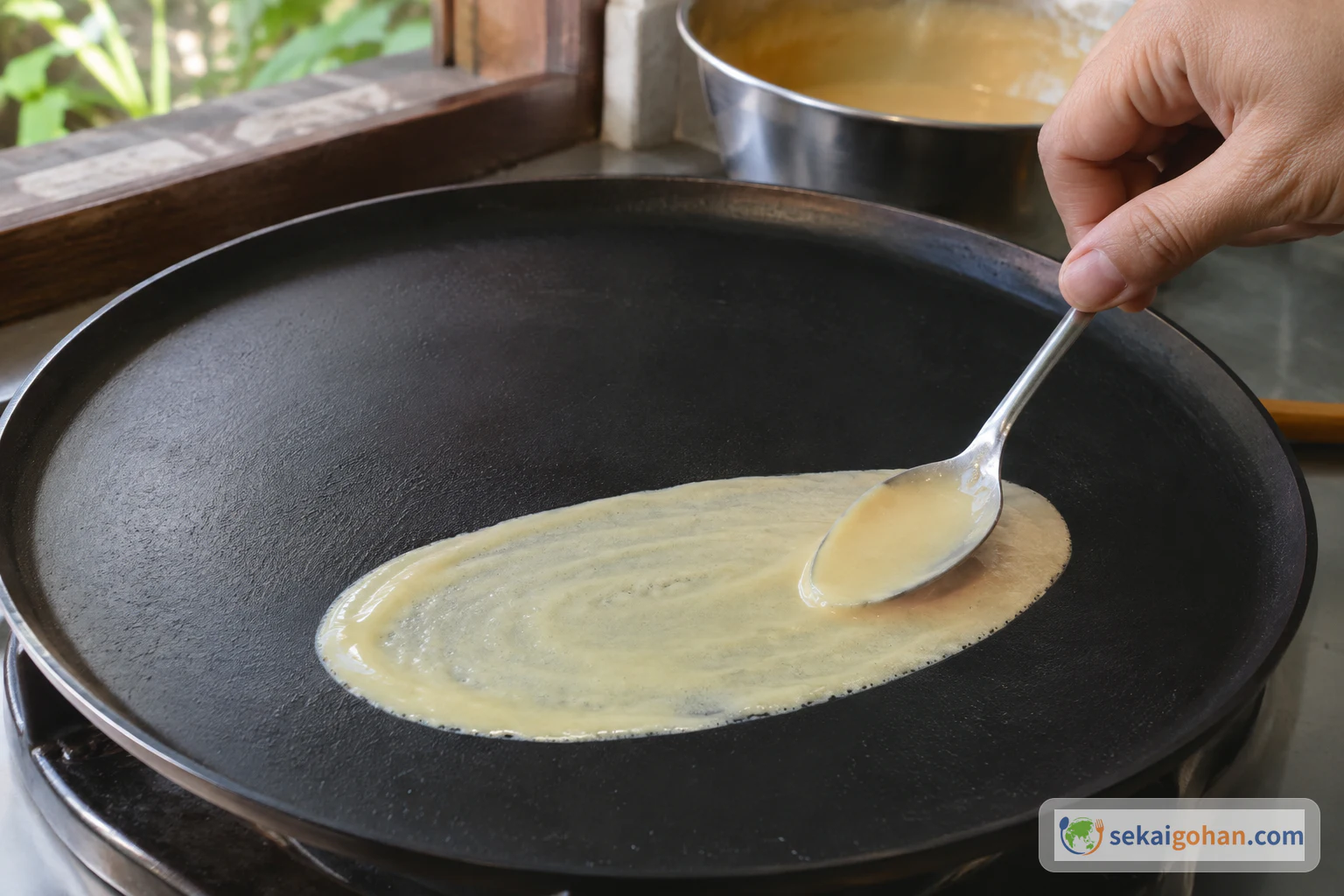
Spread it with the back of a spoon into a thin round or oval, as thin as you like.

Spreading the batter thin with the back of a spoon
Spread the batter into a thin round or oval
STEP1010 / 11

Add the quail egg and fillings, and cook until the egg is set

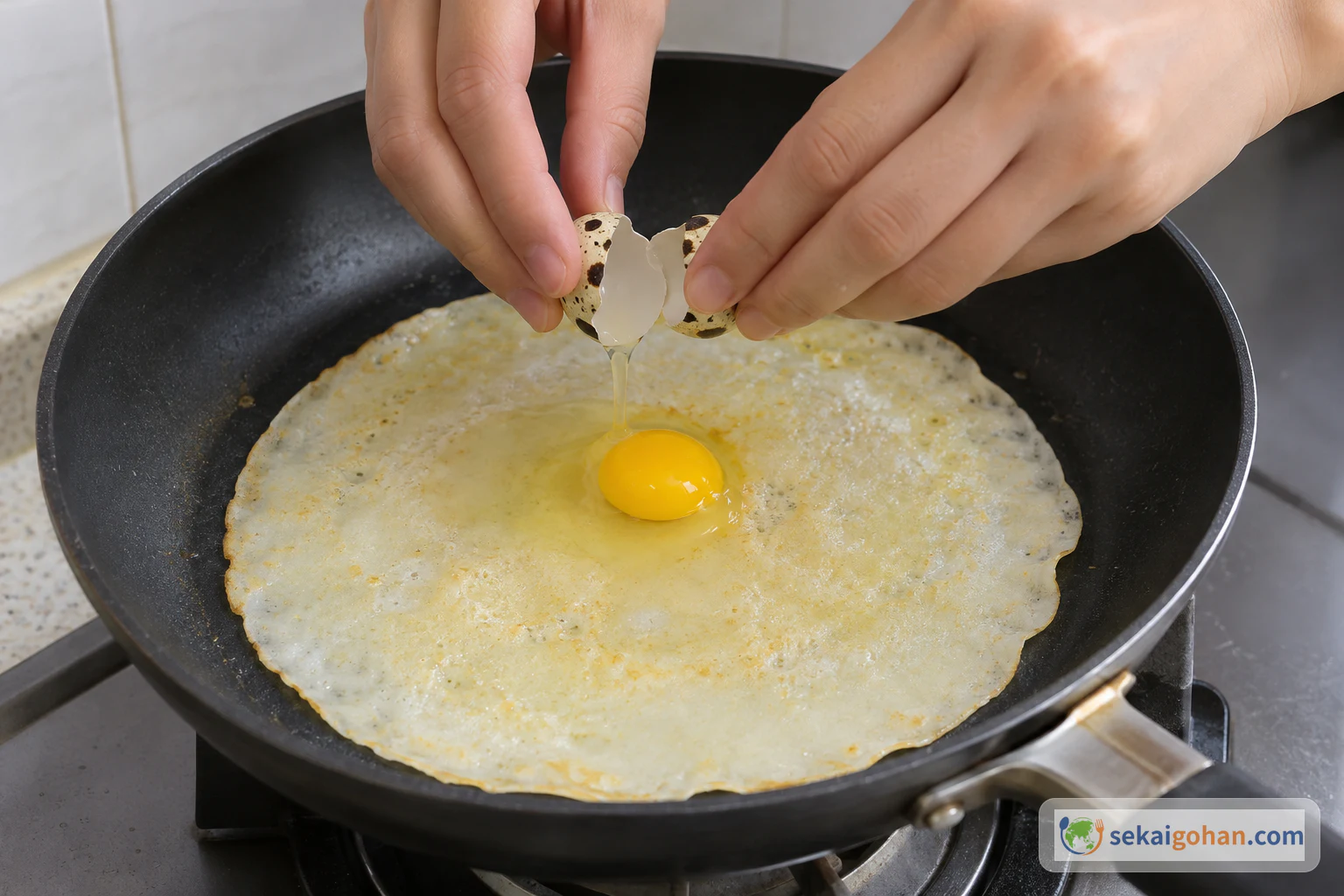
Cracking a quail egg onto the pancake as it begins to set
Crack the quail egg onto the setting pancake

When the batter begins to set, crack a quail egg onto it.

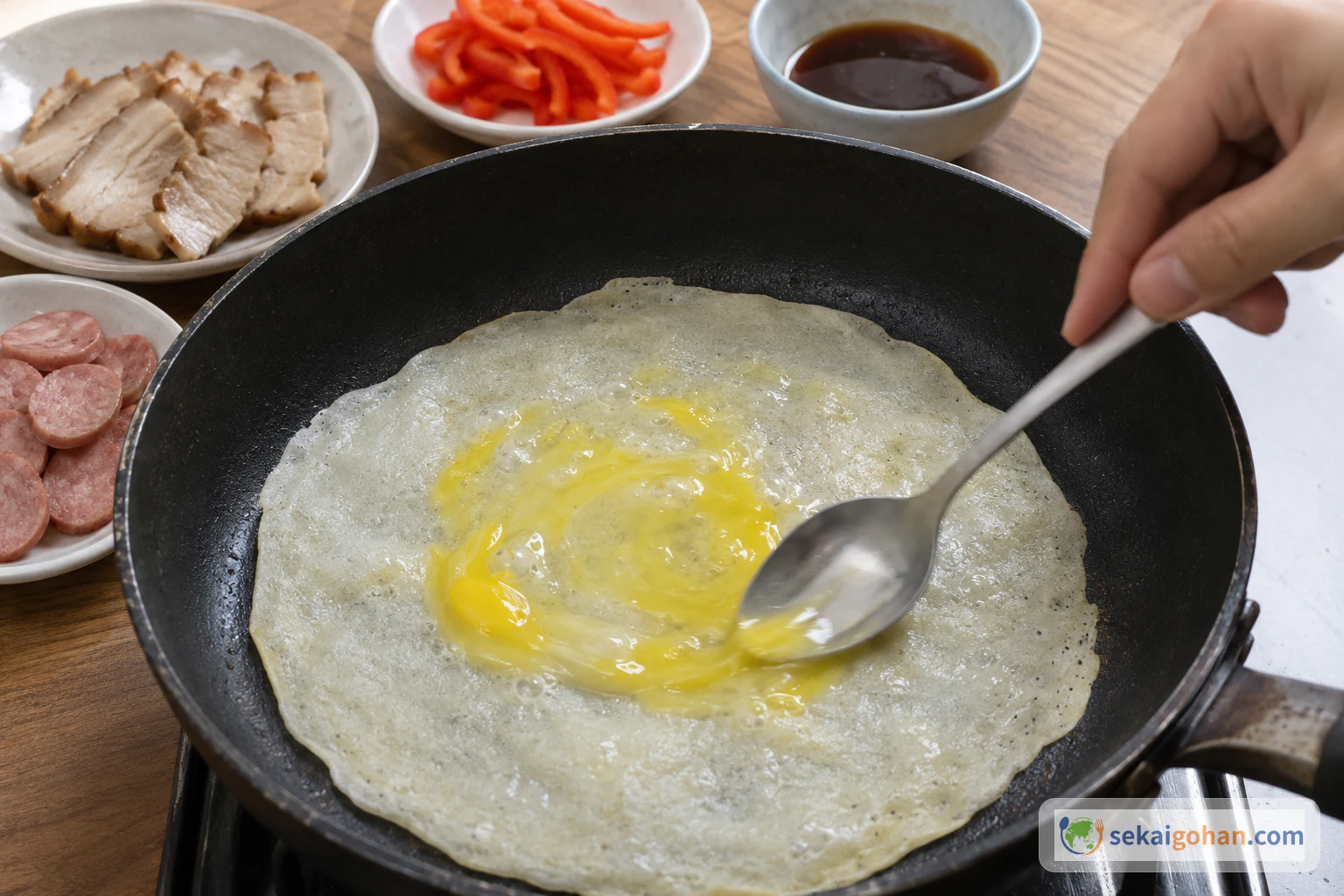
Spread the egg over the pancake with a spoon.

Spreading the quail egg over the pancake
Spread the egg across the pancake

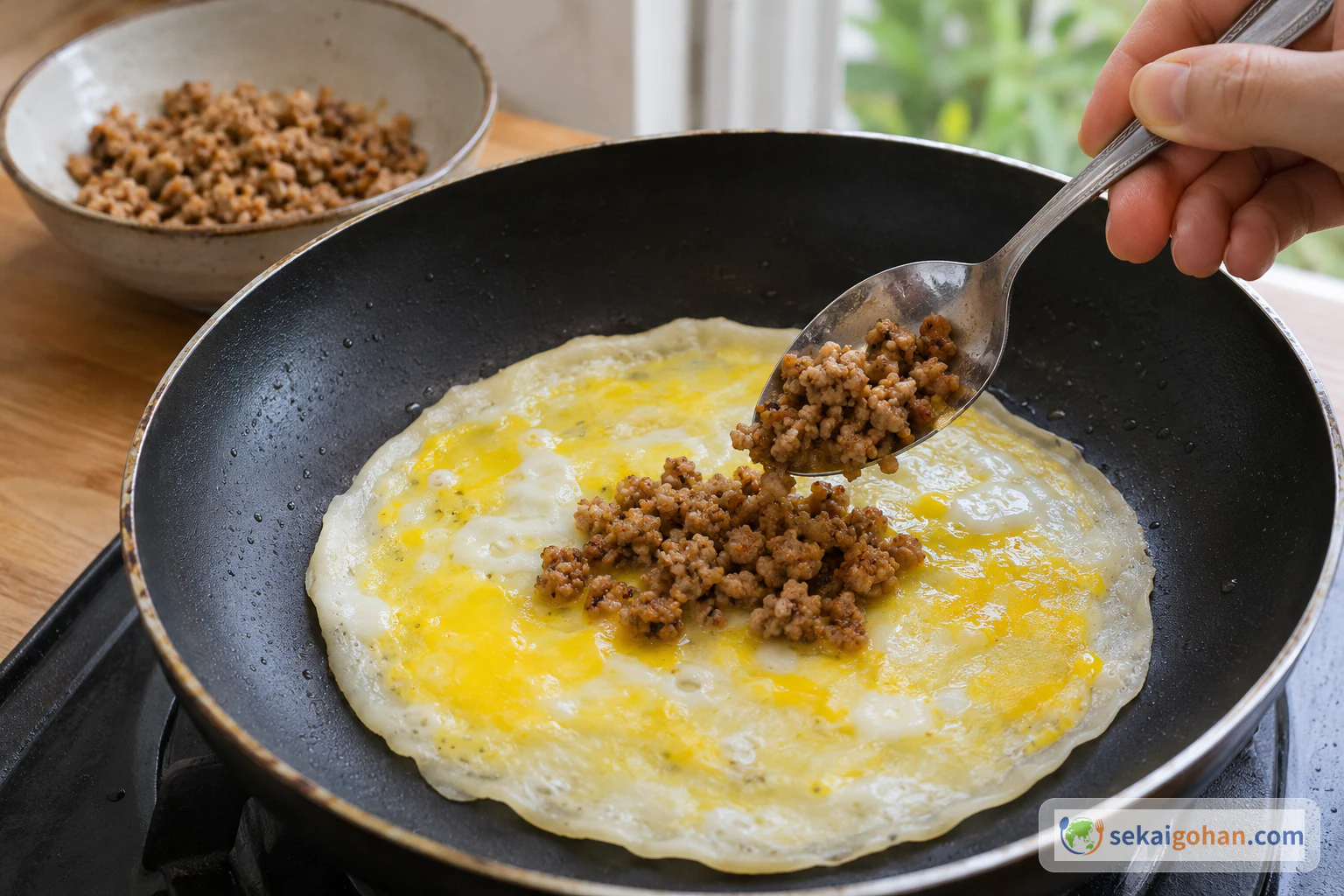
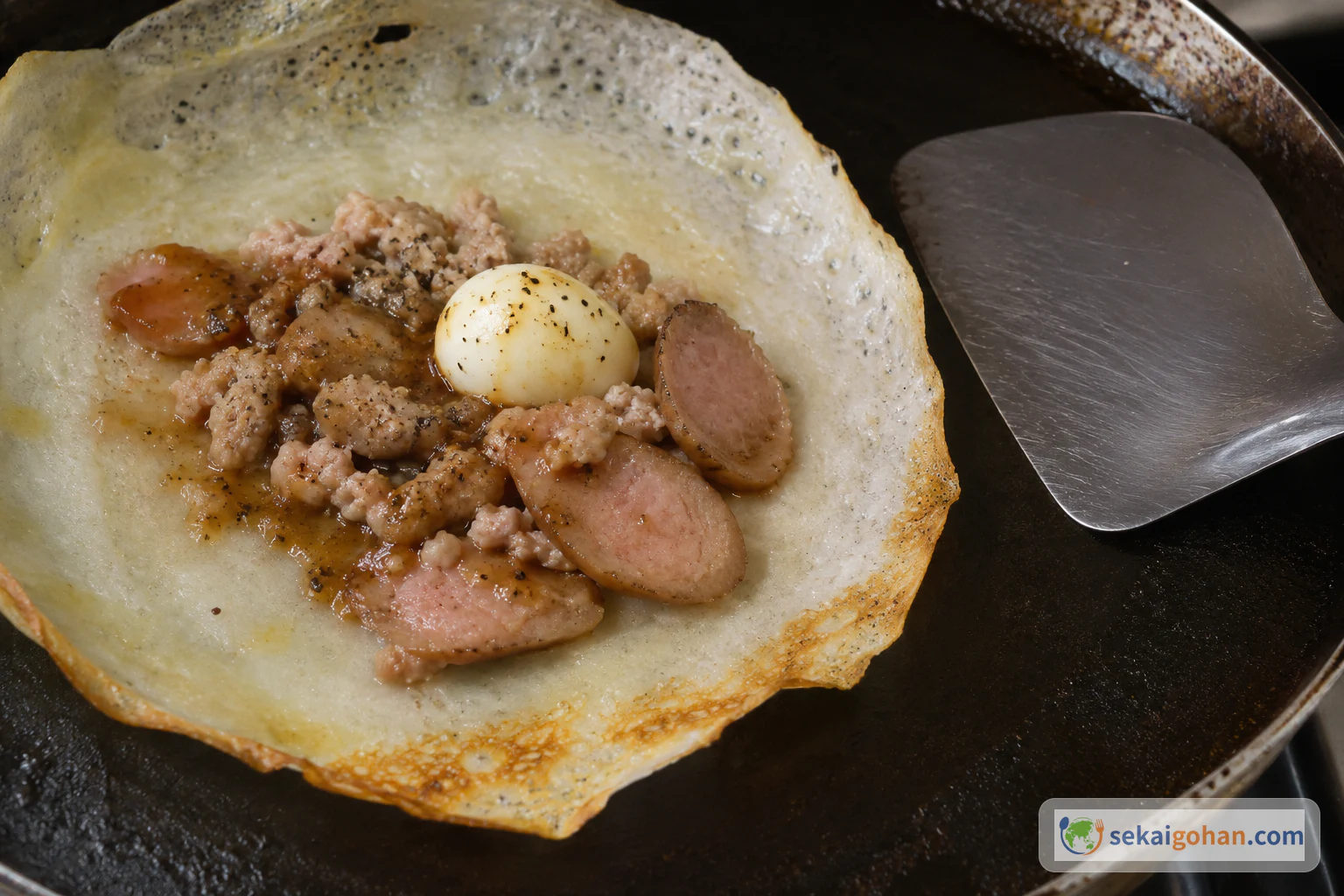
Add the cooked pork, to taste.

Adding the separately cooked ground pork to the pancake with the spread quail egg
Spoon on the pork that was cooked and checked in step 7

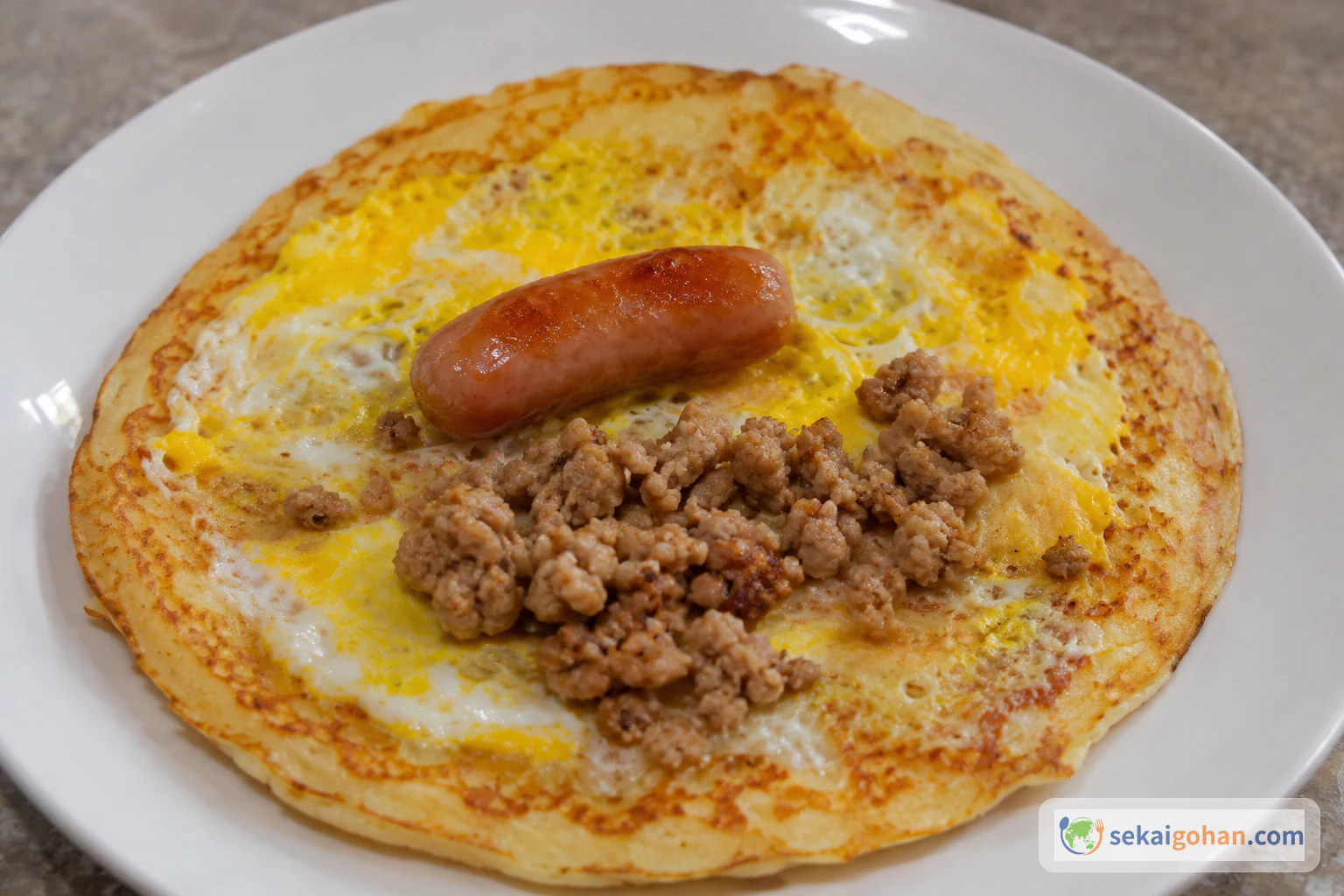
Add a sausage.

Placing a cooked pork sausage on the pancake
Place a cooked pork sausage on top

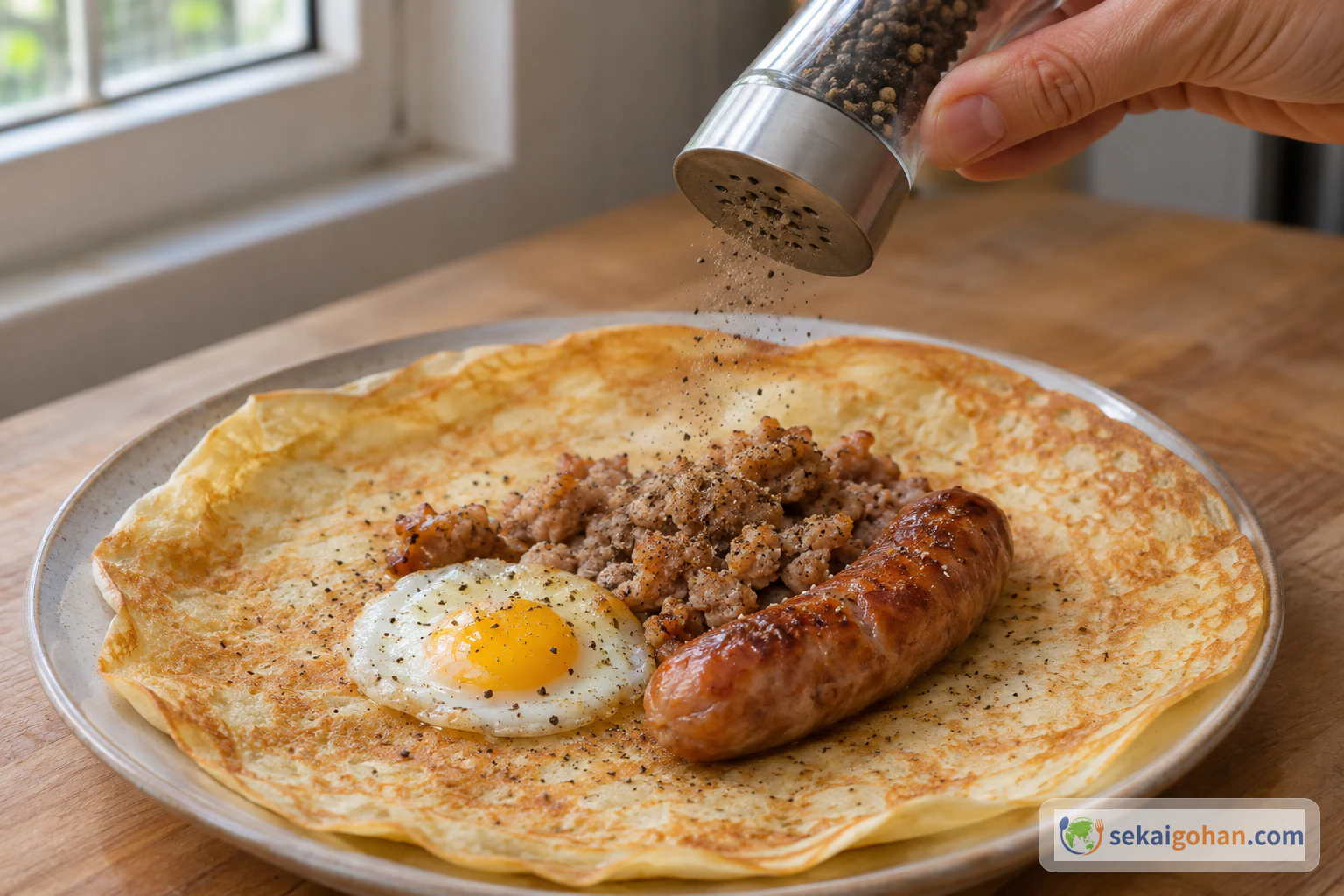
Sprinkle with pepper.

Sprinkling pepper over the filled pancake
Season with pepper

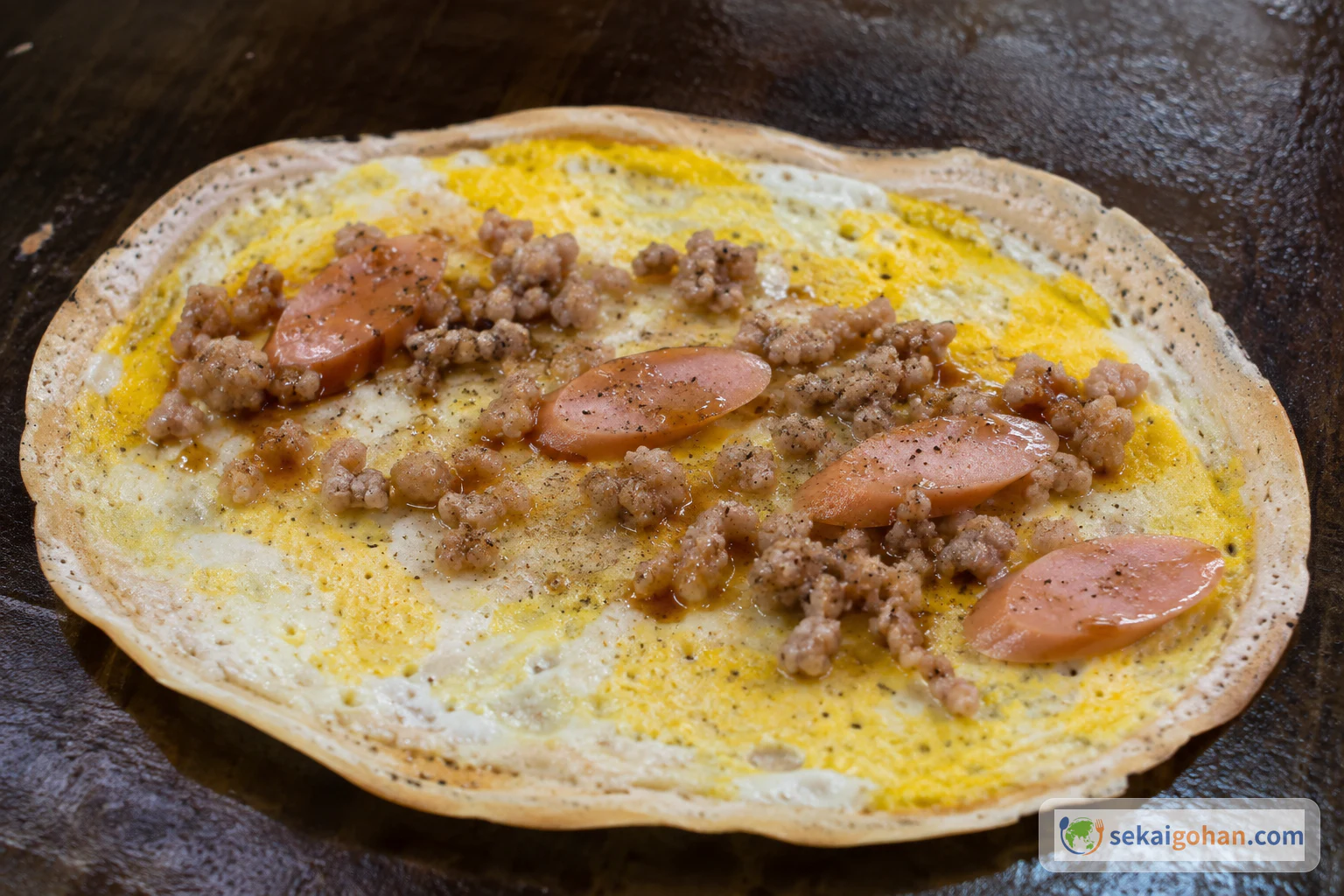
Drizzle on a little seasoning sauce.

Drizzling a little Thai seasoning sauce over the fillings
Add a little seasoning sauce

Keep cooking until both the white and the yolk of the quail egg are firm.

Checking that the quail egg white and yolk have set before rolling
Before rolling, the quail egg should be firm, not runny
STEP1111 / 11

Roll when the shell is browned

The lightly browned edge of the pancake before rolling
Look for color at the edge of the shell before rolling

Watch the edge of the pancake. When the shell shows some browning, it is ready to roll. The browning tells you about the shell only; it does not show that the fillings are safely cooked.

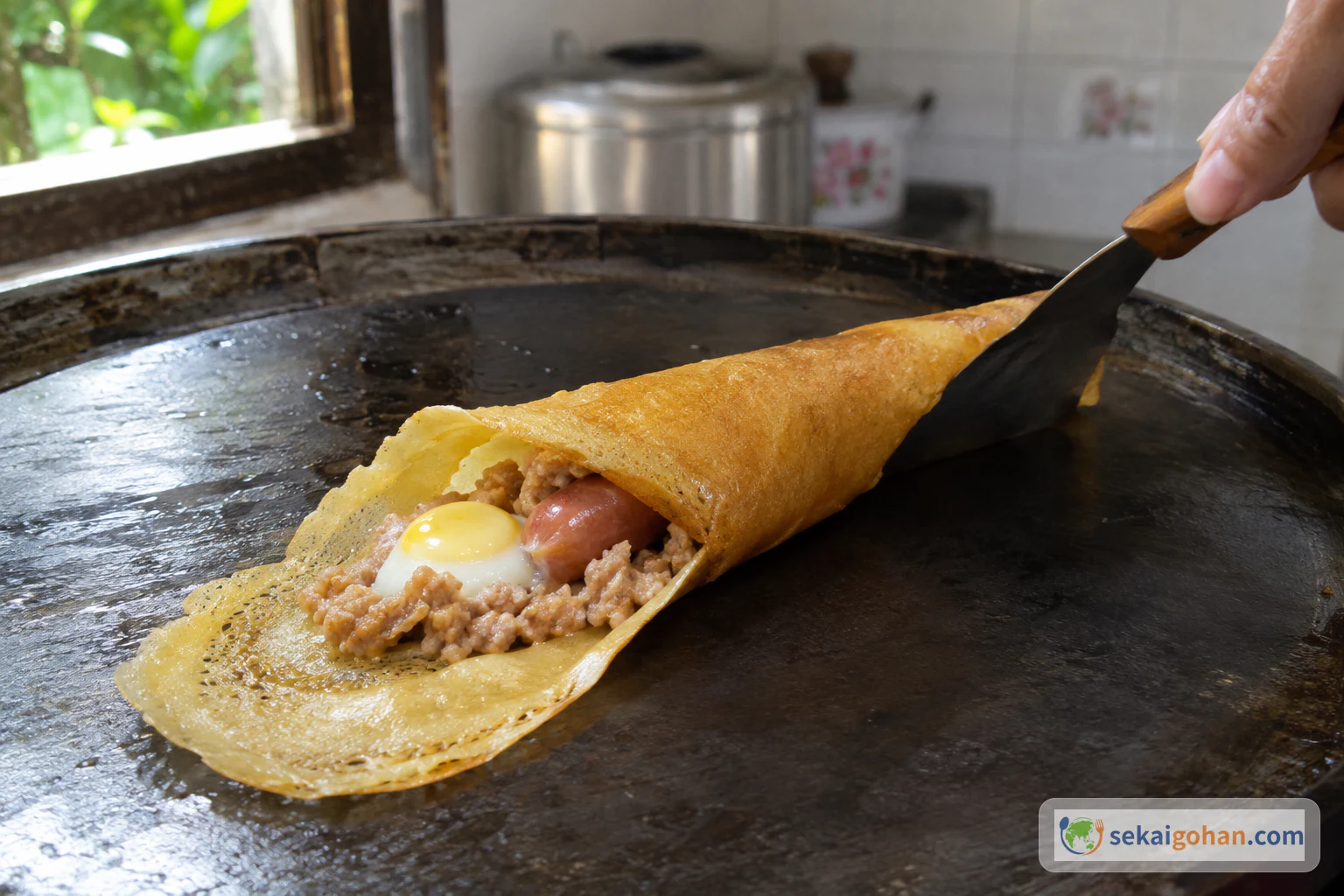
Slide a thin spatula under the pancake and roll it up around the fillings. Eat while warm.

Rolling the browned pancake around the fillings
Lift with a thin spatula and roll around the fillings
0 / 0
Ingredients

Ingredients

1 / 1

Ingredients

Ingredient Amount Role
All-purpose flour (แป้งอเนกประสงค์) 100g Body of the thin pancake. Sift with the baking powder and salt
Chicken egg (ไข่ไก่) 1 Batter. Mixed first with the sugar
Milk (นมสด) 1 cup Batter liquid
Vegetable oil (น้ำมันพืช) 1 tbsp Mixed into the batter
Sugar (น้ำตาล) 40g Light sweetness and color in the shell
Salt (เกลือ) 1/2 tsp Sifted with the flour
Baking powder (ผงฟู) 2 tsp Sifted with the flour
Vanilla flavoring (กลิ่นวนิลา) 1 tsp Aroma in the batter
Seasoned ground pork (หมูสับปรุงรส) to taste Filling. Cook separately to 71°C (160°F) before using
Small fully cooked pork sausages (ไส้กรอก) to taste Filling. Use as the label directs
Quail eggs (ไข่นกกระทา) to taste Filling. Cracked onto the pancake and cooked until the white and yolk are firm
Pepper (พริกไทย) to taste Seasoning for the fillings
Thai seasoning sauce (ซอสปรุงรส) to taste Seasoning for the fillings
0 / 0

A small pour of pale batter hits a preheated flat pan and gets pushed out with the back of a spoon into a thin round. As soon as it starts to set, the fillings go on, and once the edge takes on color, a spatula slips underneath and rolls everything into a neat little cylinder. That is Khanom Tokyo (ขนมโตเกียว), a Thai snack sold at street corners, in markets and from stalls outside schools. This savory version wraps a thin, lightly sweet shell around seasoned ground pork, small pork sausages, quail egg, pepper and Thai seasoning sauce.

Khanom Tokyo, a Thai Street Snack with a Japanese Name

Despite the name, Khanom Tokyo took shape in Thailand. Its first appearance is traced to the late 1960s at Thai-Daimaru in Bangkok, but the exact origin is uncertain, and several stories circulate. Claims that Japanese sweets such as dorayaki or yatsuhashi inspired it are speculation, not established history.

Street vendors fill the pancakes with anything from sweet cream to savory meats, and you pick what you like at the stall. The rolls are eaten warm, straight off the pan. To explore more of the country's food, see Thailand.

Ingredients: Batter and Savory Fillings
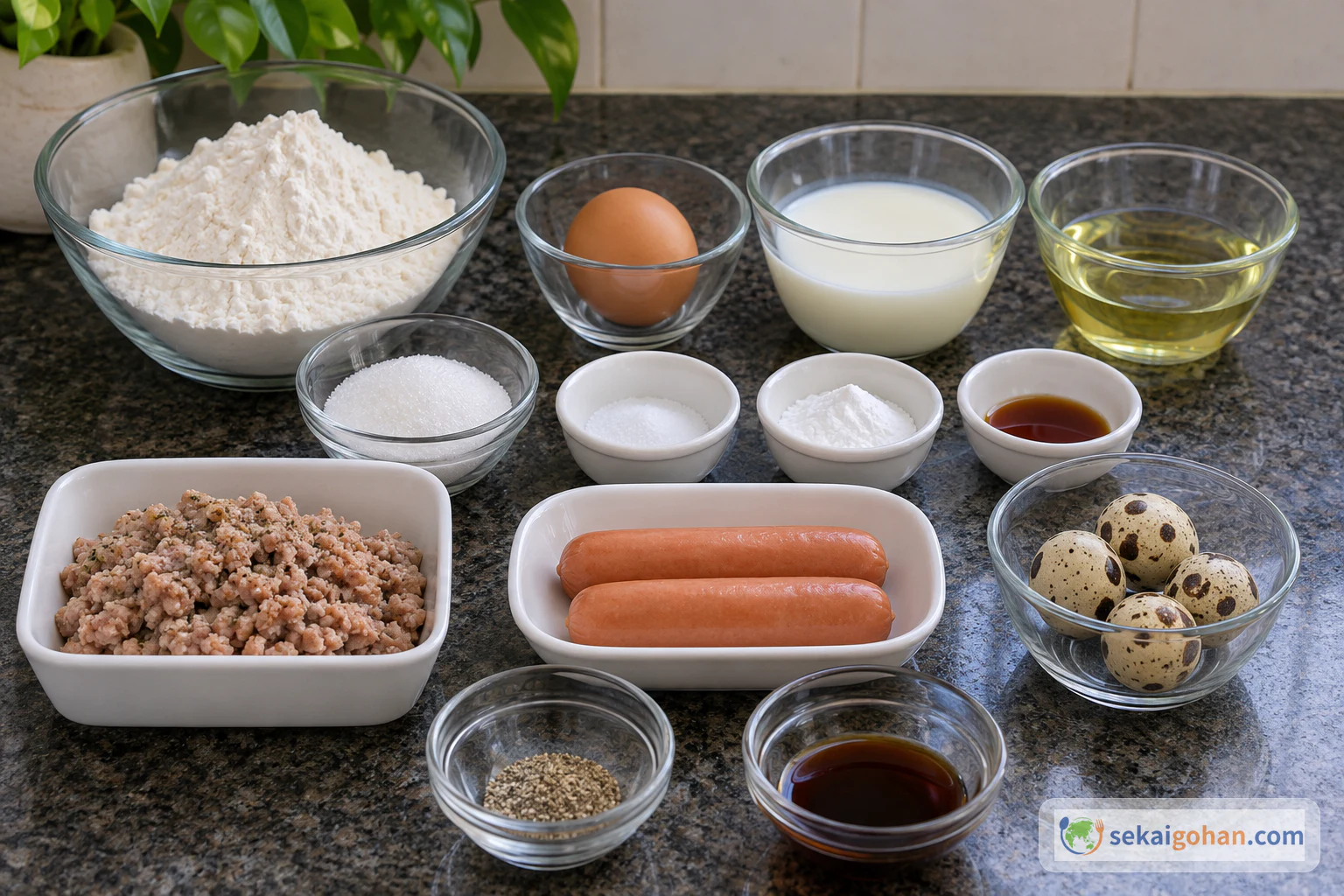
The batter ingredients and savory fillings, including cooked pork sausage, laid out separately
Batter ingredients and savory fillings, each in its own bowl
Allergens and labels

The batter contains wheat, egg and milk. Check the labels of the sausages and the seasoning sauce you buy for allergens, and confirm that the sausages are fully cooked pork sausages.

Equipment

  • Fine sieve
  • Two mixing bowls, plus one clean bowl for the strained batter
  • Whisk or spoon
  • Plastic wrap
  • A separate skillet for the pork
  • Food thermometer (essential for checking the pork)
  • Flat griddle or flat nonstick frying pan
  • Small ladle
  • Spoon for spreading the batter
  • Thin metal spatula for rolling

Choosing Ingredients for Khanom Tokyo

  • Flour: Use all-purpose flour, not cake flour. Brands vary, so the thinness and browning of the shell will vary a little too.
  • Milk: Plain milk, measured with a measuring cup.
  • Vegetable oil: Any ordinary neutral-tasting cooking oil.
  • Vanilla flavoring: Flavorings and extracts differ in strength, so the aroma depends on the product you use.
  • Seasoned ground pork: If you can't find Thai pre-seasoned ground pork, season plain ground pork with the seasoning sauce and pepper to taste. Cook the pork separately first and check it with a food thermometer until it reaches 71°C (160°F); a thin pancake on the pan for a short time will not cook raw pork safely.
  • Sausages: Small fully cooked pork sausages, used as their label directs. Japanese-style mini sausages work, with some difference in flavor. Raw sausage and chicken products are not suitable here.
  • Seasoning sauce: Thai seasoning sauce is preferred. Soy sauce can stand in, though it changes the aroma and saltiness.

Method: Make and Rest the Batter, Cook the Pork, Then Spread, Fill and Roll

Before you start

The batter rests for 15–20 minutes in the refrigerator. Use that time to cook and check the pork in a separate skillet, so the fillings are ready before the first pancake goes on the pan.

Troubleshooting Khanom Tokyo

Heat, pancake size and the amount of batter are all judged by eye at the stove, so the first few may take some adjusting. Fill in this order: quail egg, then the pork, a sausage, pepper and seasoning sauce.

Problem What to check What to do
The shell is thick or hard to spread The batter sets before it is spread Pour a smaller amount and spread it right away. Keep the heat moderate
The fillings don't stick to the shell The pancake had fully set before the fillings went on Add the quail egg and fillings as soon as the batter begins to set
The quail egg is still runny The egg has not had enough time on the pan Keep cooking until the white and yolk are firm before rolling
Unsure whether the pork is done Color can mislead Check the separately cooked pork with a thermometer for 71°C (160°F). A browned shell is not proof that the fillings are safe

Serving and Variations

Freshly cooked savory Khanom Tokyo served on a plate
Serve the rolls straight from the pan

Eat Khanom Tokyo warm, right after rolling. There's no dipping sauce; the pepper and seasoning sauce are already inside.

The fillings are yours to adjust. Use as much of each as you like, or leave out the sausage and keep just the pork and quail egg, still cooking the pork separately and the egg until firm. Khanom Tokyo also comes in sweet versions, with fillings such as cream.

Frequently Asked Questions

Is Khanom Tokyo a Japanese snack from Tokyo?

No. It is a Thai street snack with a Japanese name. Its first appearance is traced to Thai-Daimaru in Bangkok in the late 1960s, but its origin is not settled.

Is it sweet?

Khanom Tokyo can be sweet or savory. This one is savory, with a lightly sweet batter (it contains sugar and vanilla) around pork, sausage, quail egg, pepper and seasoning sauce.

How many does this batter make?

The yield depends on how much batter you pour for each pancake and how thin you spread it.

Can I use raw sausage or chicken sausage?

Use fully cooked pork sausage, prepared as its label directs. The sausage only warms through briefly on the pan, so raw sausage and chicken products don't belong here.

Sources