Bánh Gối: Hanoi's Golden Half-Moon Fried Pastries, Made at Home

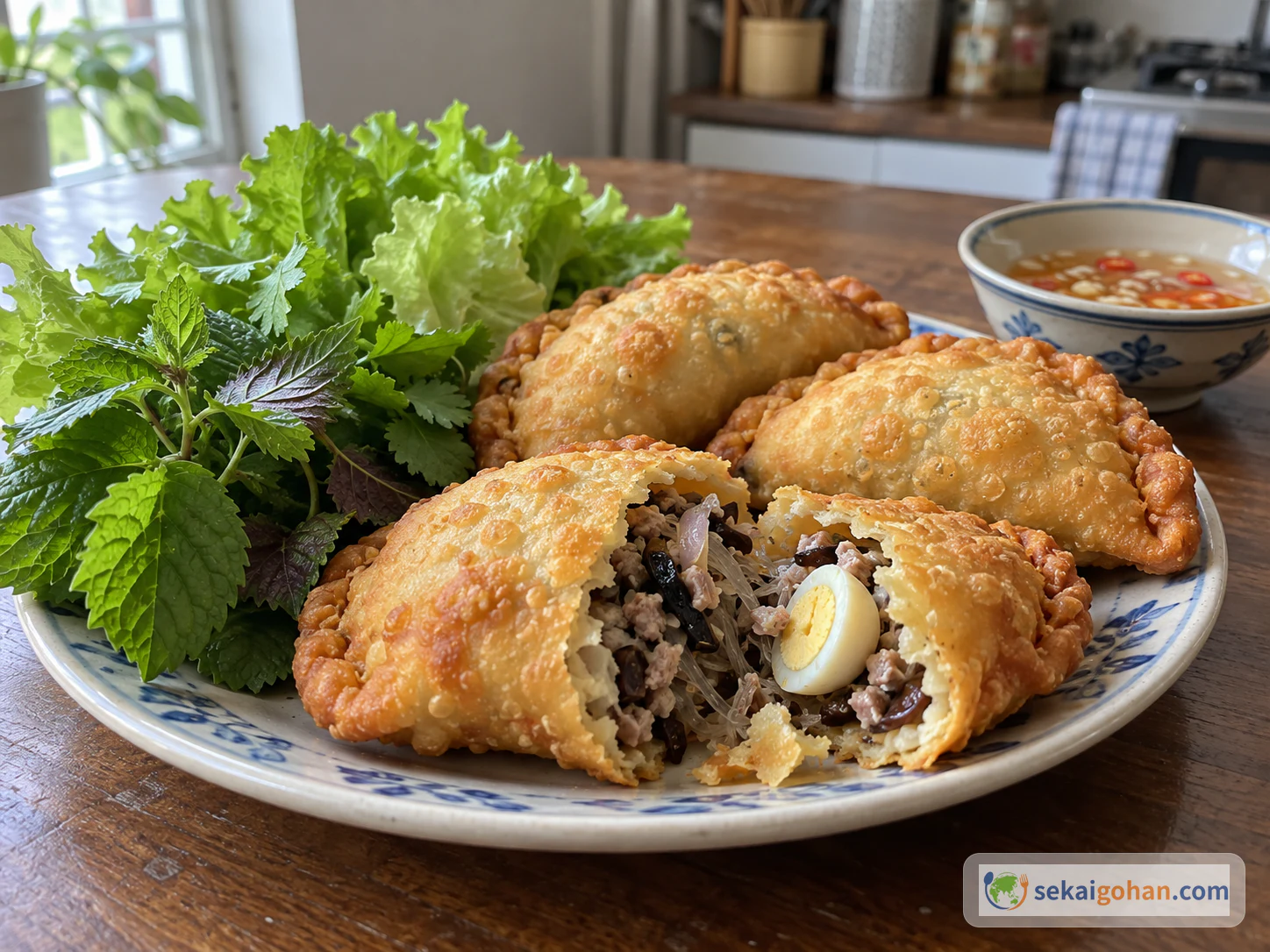
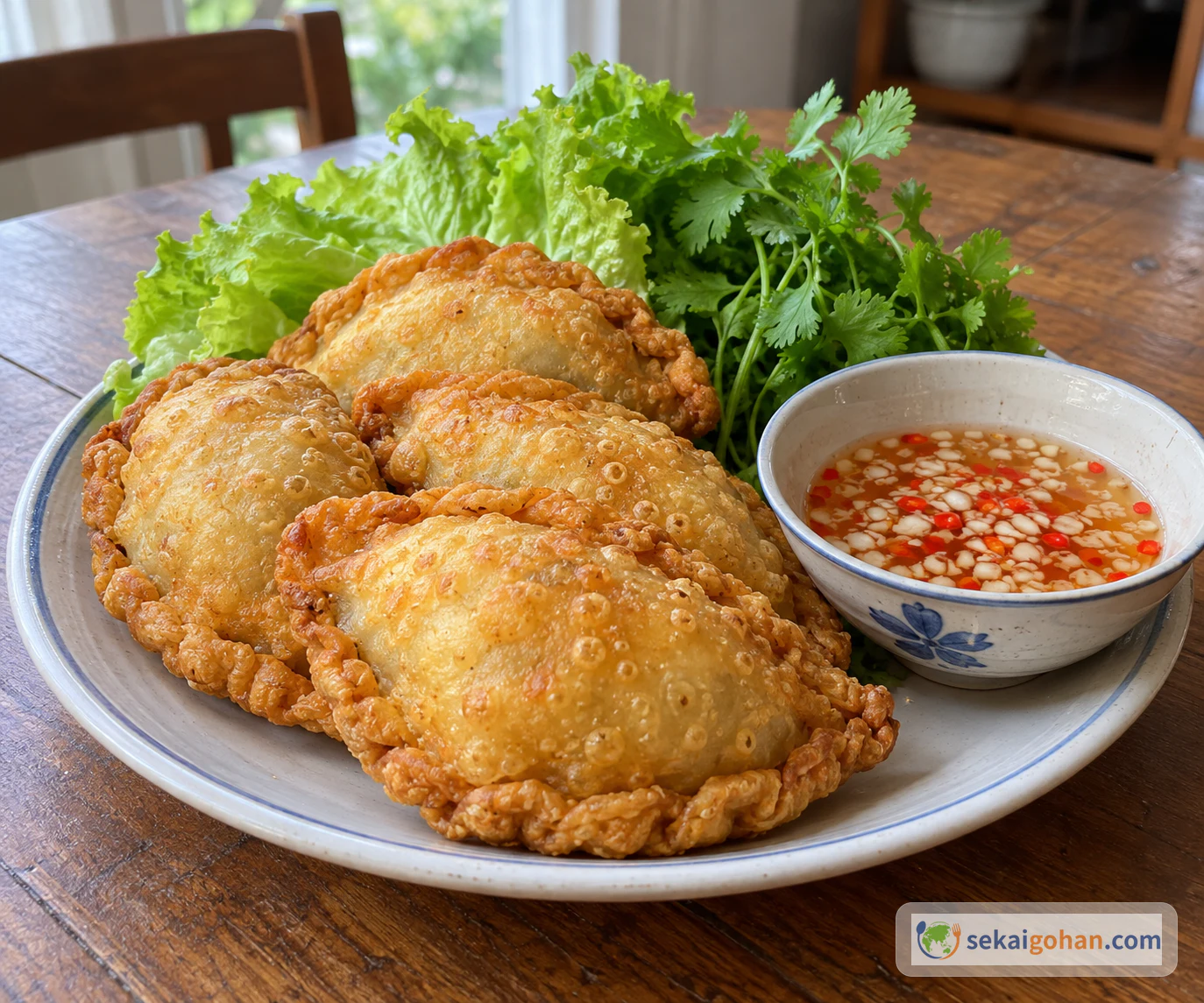
Golden fried half-moon bánh gối on a plate, one cut open to show the pork, wood ear mushroom and glass noodle filling
Serves
4–5 servings
Level
Intermediate
Cuisine
Vietnamese

How to make bánh gối, the Hanoi afternoon snack of pork, wood ear mushroom and glass noodles wrapped in a wheat and glutinous-rice dough and fried golden. Follows one published Vietnamese recipe for the dough, filling, folding and frying, with the sweet-sour fish sauce dip, troubleshooting, variations, and how it differs from bánh giò, bánh xèo and spring rolls.

Cooking flow

Cooking steps

STEP11 / 7

Prepare the filling ingredients

STEP 1

Soak the glass noodles in water until soft, drain them, and cut them short. Rehydrate the wood ear mushrooms in water, then chop them. Go by texture: the noodles should be pliable and the wood ear soft enough to chop easily. Drain both well, since extra moisture in the filling can weaken the wrapper. Finely chop the onion (or jicama), carrot and scallions.

STEP22 / 7

Knead the dough and let it rest

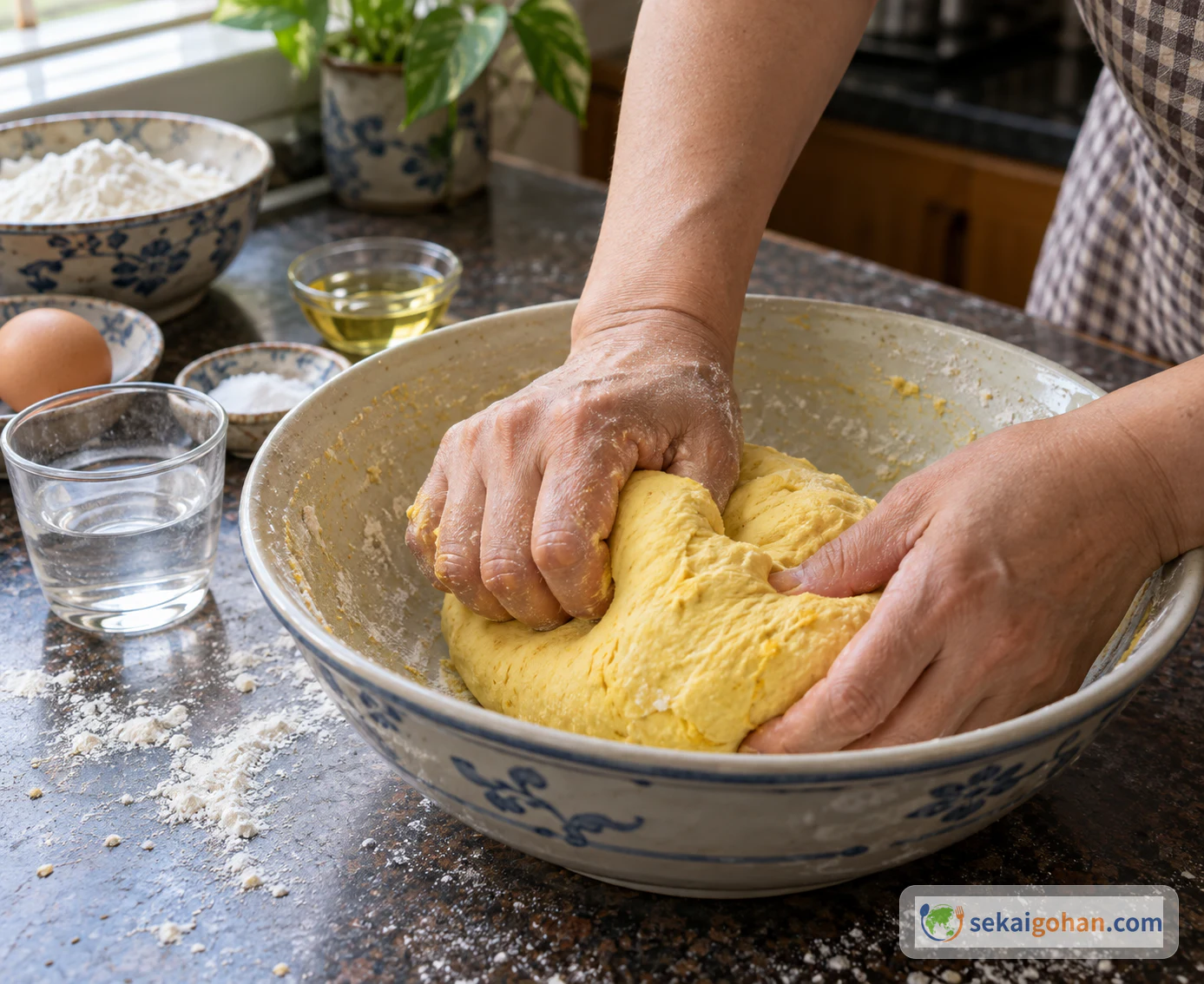
Bánh gối dough of wheat flour, glutinous rice flour and egg starting to come together
Add water gradually until the dough holds together without sticking

In a bowl, combine 9 oz (250g) wheat flour, 1.75 oz (50g) glutinous rice flour, 1 thìa of oil, 1 tsp salt, 1/2 tsp turmeric and 1 chicken egg. Add water a little at a time, mixing as you go and watching how the dough comes together. Flours absorb water differently, so stop when the dough is cohesive and no longer sticks to your hands. Cover and let it rest for 30 minutes.

STEP33 / 7

Mix the filling and boil the eggs

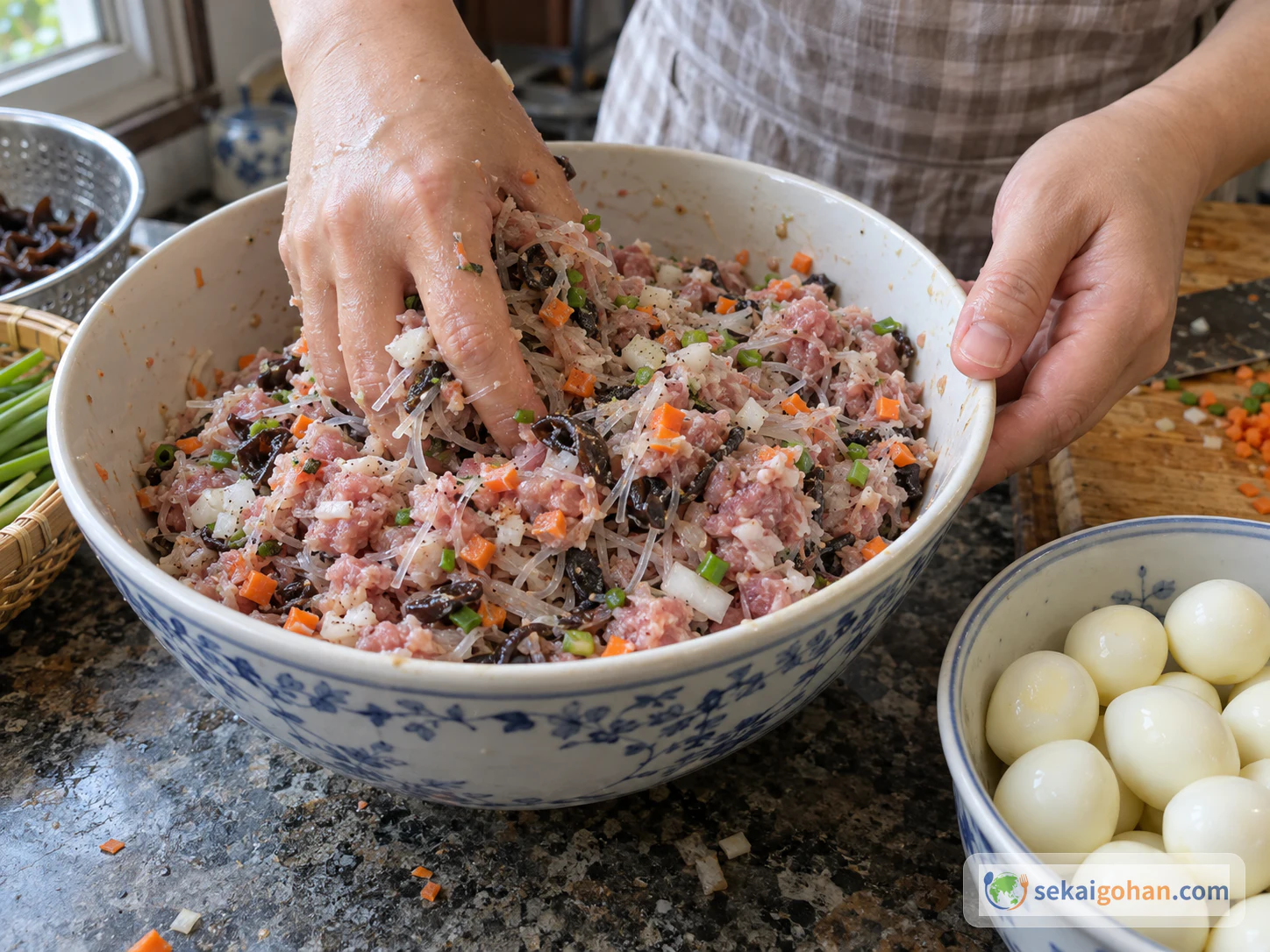
Rehydrated wood ear, glass noodles, onion and carrot being mixed into raw pork mince for bánh gối
Mix the raw filling in one bowl and keep the boiled eggs separate

Combine 7 oz (200g) pork mince with the glass noodles, wood ear, onion, carrot and scallions. Season with fish sauce, seasoning granules and pepper, adding a little of each at a time. Don't add salt or sugar to the filling. Let the filling sit for 15 minutes so the flavors come together.

Meanwhile, boil and peel the 16 quail eggs. If you are using chicken eggs instead, boil 4 and cut each into 4 or 6 pieces.

STEP44 / 7

Roll out the dough and cut rounds

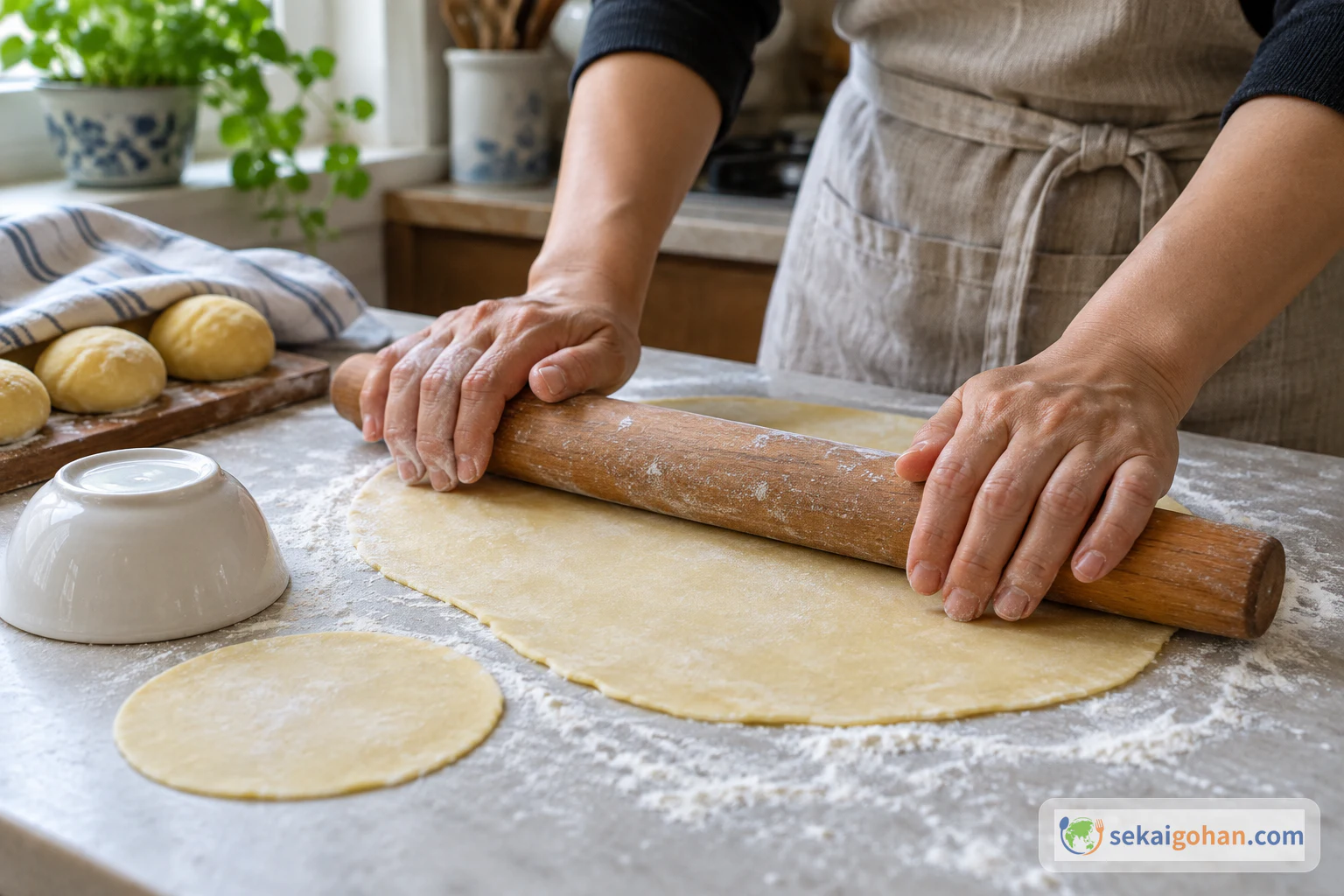
Rolling bánh gối dough thin into rounds with a rolling pin on a floured counter
Roll the dough thin, then cut rounds

Dust the counter with flour and roll the rested dough out thinly. Cut it into rounds. Aim for a dough thin enough to fry up light and crisp, but sturdy enough to fold around the filling without tearing.

STEP55 / 7

Fill and fold into half-moons

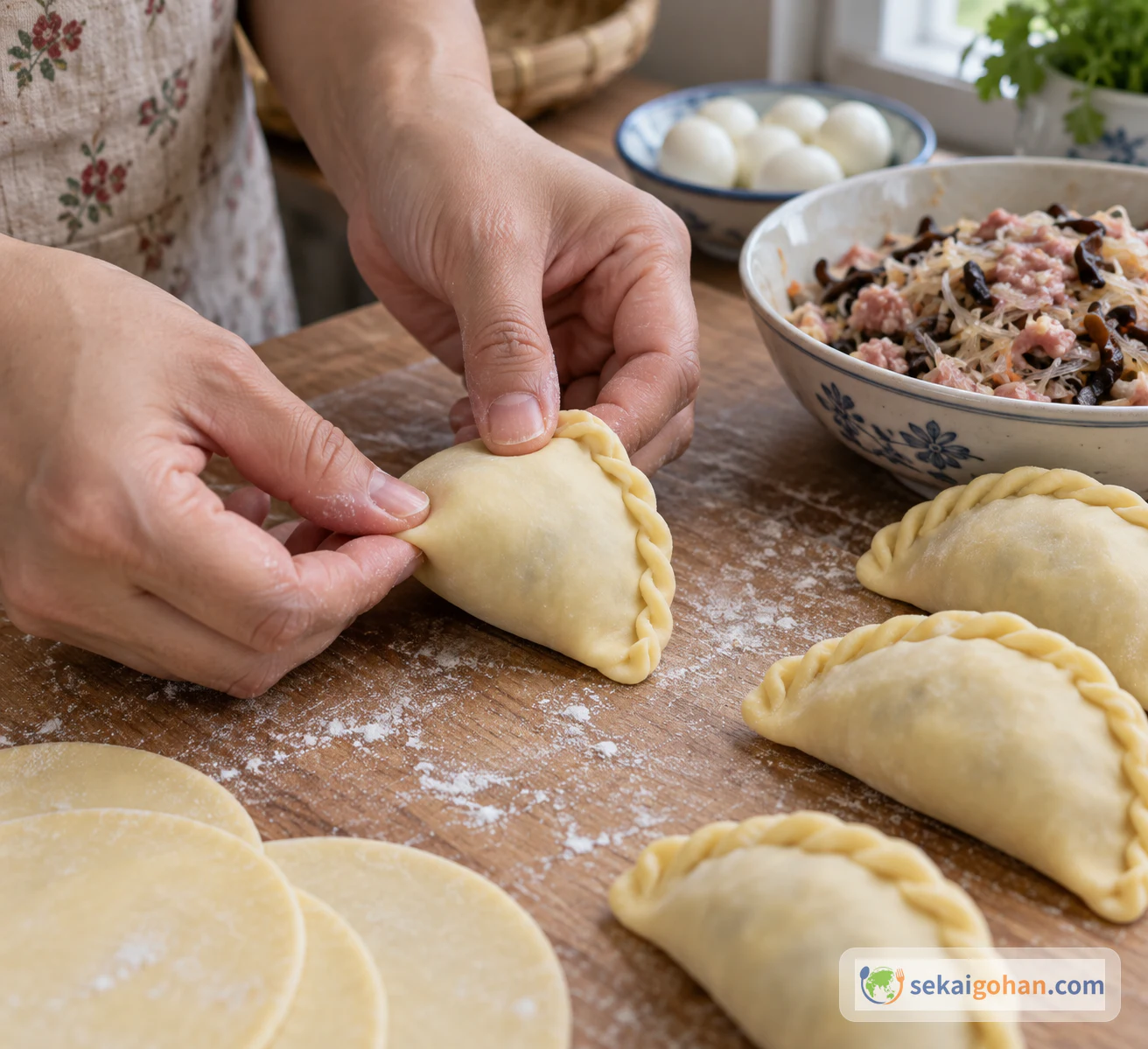
Folding a round wrapper over pork and glass noodle filling with a quail egg into a half-moon
Press the curved seam firmly so no gaps are left for oil to get in

Place some filling on a wrapper and set an egg in the center. Lightly moisten the edge with water, fold the wrapper over into a half-moon, and press the edges together firmly to seal. Keep the filling away from the edges and don't overfill; a crowded wrapper is harder to close and more likely to split. Repeat with the remaining wrappers.

STEP66 / 7

Fry a few at a time until golden

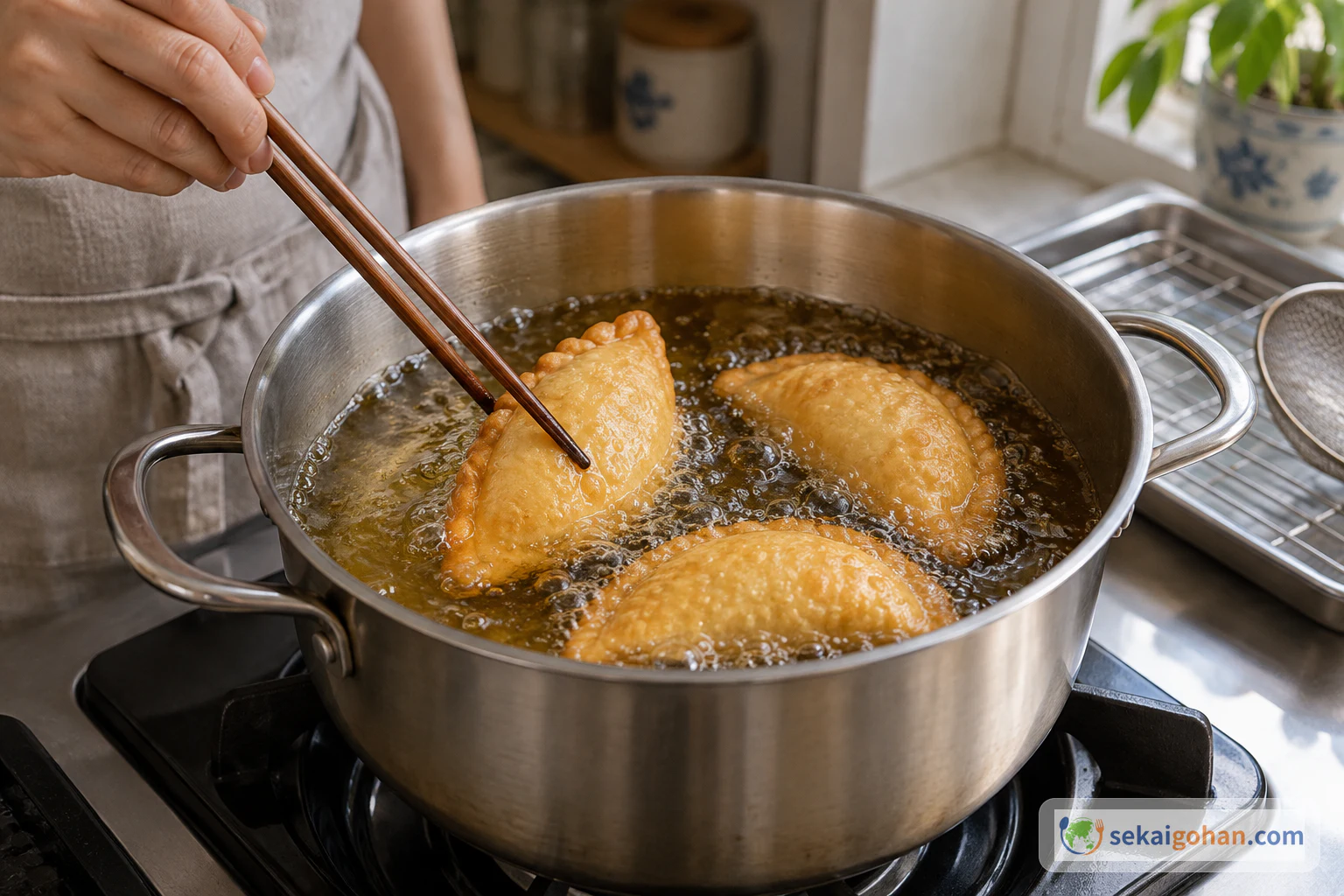
Half-moon bánh gối frying a few at a time in a deep pot, turning golden
Fry in small batches and turn until both sides are evenly golden

Heat oil in a deep pot. The oil is ready when small bubbles form around the tips of chopsticks dipped into it. Over medium-low heat, fry a few pastries at a time, turning them, until both sides are golden. Don't crowd the pot; adding too many at once lowers the oil temperature and makes frying uneven.

Because the pork goes in raw, check the center of a pastry with a food thermometer and make sure it reaches at least 71°C (160°F). Drain the fried pastries before serving.

STEP77 / 7

Make the dip and serve

Freshly fried bánh gối with lettuce, herbs and a fish sauce dip with garlic and chili
Serve while hot with lettuce, herbs and the sweet-sour dip

Mix fish sauce, sugar, lemon juice and water in a 1:1:1:5 ratio (2 tbsp, 2 tbsp, 2 tbsp, 10 tbsp) and stir until the sugar dissolves. Add minced garlic and chopped chili to taste. Serve the bánh gối hot, with lettuce, fresh herbs such as coriander, and the dip on the side.

0 / 0
Ingredients

Ingredients

1 / 1

Ingredients

Ingredient Amount Role
Wheat flour (bột mì) 9 oz (250g) Dough: the body of the wrapper
Glutinous rice flour (bột gạo nếp) 1.75 oz (50g) Dough: mixed with the wheat flour. Not the same as regular rice flour
Cooking oil (dầu ăn) 1 thìa (spoonful) Dough only; separate from the frying oil
Salt (muối) 1 tsp Dough
Chicken egg (trứng gà) 1 Dough
Ground turmeric (bột nghệ) 1/2 tsp Dough: gives the wrapper its pale yellow color
Water (nước) As needed Dough: added little by little
Pork shoulder, minced (thịt nạc vai xay) 7 oz (200g) Filling: the main ingredient, used raw
Glass noodles (miến) 1.75 oz (50g), dry weight Filling: rehydrated, then cut short
Dried wood ear mushrooms (mộc nhĩ) 2–3 pieces Filling: rehydrated, then chopped
Onion (hành tây) 1/2 Filling: finely chopped. Jicama (củ sắn / củ đậu) can be used instead; choose one, not both
Carrot (cà rốt) 1/4 Filling: finely chopped
Scallions (hành lá) As needed Filling: chopped
Fish sauce (nước mắm) A little Filling seasoning
Ground black pepper (hạt tiêu) A little Filling seasoning
Seasoning granules (hạt nêm) A little Filling seasoning
Quail eggs (trứng cút) 16 Filling: boiled and peeled. Alternative: 4 chicken eggs, boiled and cut into 4 or 6 pieces
Fish sauce (nước mắm) 2 tbsp Dip (ratio 1 part)
Sugar (đường) 2 tbsp Dip (ratio 1 part)
Lemon juice 2 tbsp Dip (ratio 1 part)
Water 10 tbsp Dip (ratio 5 parts)
Garlic As needed Dip: minced
Chili As needed Dip: chopped
Lettuce and fresh herbs (xà lách, rau thơm) As needed To serve alongside, for example coriander
Oil for deep-frying As needed Depends on the size of your pot
0 / 0

In Hanoi, bánh gối is an afternoon snack you eat while walking the city's streets. Each one is a pillow-shaped half-moon of thin dough, fried until golden, around a filling of minced pork, black wood ear mushroom, glass noodles and a quail egg. The filling is held together so it isn't wet. A sweet-sour fish sauce dip with fresh herbs cuts through the richness. This recipe serves 4–5 people and takes 90 minutes.

About Bánh Gối

The Pastry and Its Filling

The name comes from the shape: gối is the Vietnamese word for pillow. The dish also goes by bánh xếp (xếp means folding), and names vary between places and vendors. The dough is wheat flour with a little glutinous rice flour, tinted with turmeric and enriched with an egg.

The filling is raw pork mixed with rehydrated glass noodles and wood ear, onion, carrot and scallion, and a boiled quail egg goes in the center of each pastry. Fillings change from vendor to vendor. Some add carrot or jicama, some add Chinese sausage, and some use store-bought wrappers.

How It Differs from Similar Dishes

Vietnamese cooking has many wrapped foods, and several have similar-sounding names. Bánh gối is a wheat-based dough closed into a half-moon and deep-fried.

  • Bánh giò is a rice-flour dough wrapped in leaves and steamed. Both the dough and the cooking method are different.
  • Nem rán / chả giò are spring rolls. The filling is rolled up in a thin wrapper instead of sealed inside a folded half-moon of soft dough.
  • Bánh xèo is a thin rice-flour pancake, not a wrapped, fried pastry.

For more of the country's dishes, explore Vietnamese recipes on Sekai Gohan.

Ingredients (for 4–5 people)
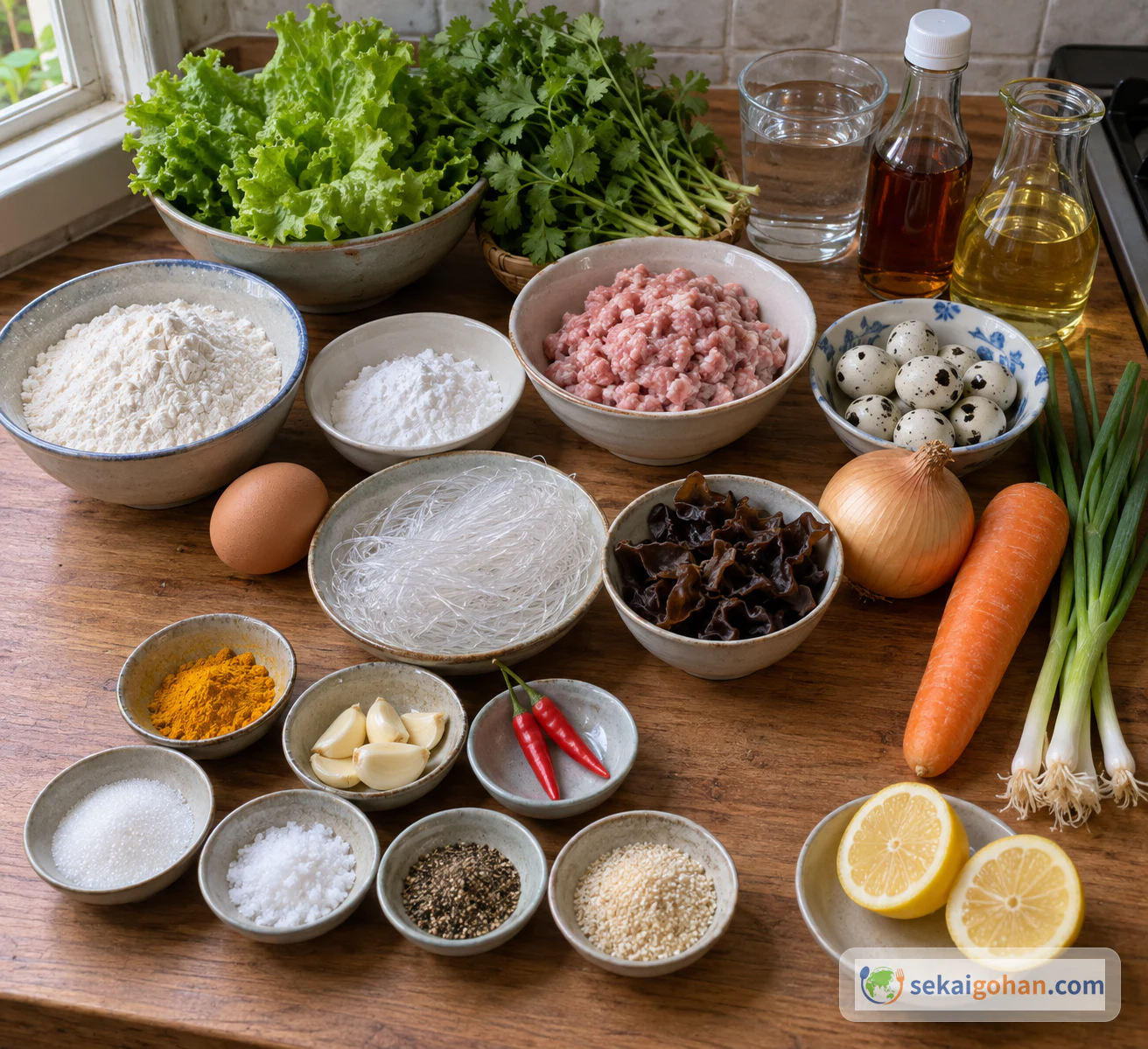
Ingredients for bánh gối: wheat flour, glutinous rice flour, pork mince, glass noodles, wood ear mushrooms, onion, carrot, eggs and fish sauce
Dough, filling and dip ingredients for one bánh gối recipe

Choose one of two egg options. One chicken egg always goes into the dough. For the filling, use either 16 quail eggs, or 4 more chicken eggs (5 in all). This recipe uses the quail-egg option, which is the classic filling. Don't use both options.

The dip uses a 1:1:1:5 ratio of fish sauce, sugar, lemon juice and water. The water is five parts, and each of the others is one part.

Allergens and food safety

This dish contains wheat, egg and fish (in the fish sauce). Check the label on your seasoning granules too. The pork goes in raw and is cooked only by frying, so check that the center of the filling reaches at least 71°C (160°F) with a food thermometer. Don't judge by the color of the wrapper.

Equipment

  • Mixing bowls for the dough and the filling
  • Cutting board and knife
  • Rolling pin
  • A round cutter, or a small bowl to cut around
  • A deep pot for frying
  • Long cooking chopsticks
  • A food thermometer, to check the center of the filling

Choosing Ingredients for Bánh Gối

Glass noodles (miến). Use Vietnamese miến, because other glass noodles will change the texture. The 1.75 oz (50g) is dry weight, before soaking.

Wood ear mushrooms. Buy them dried and rehydrate them. They give the filling its crunch, so stick with wood ear and not another mushroom.

Fish sauce. It seasons both the filling and the dip. Soy sauce tastes different and won't give the same flavor.

The flours. Use wheat flour and glutinous rice flour as listed. Plain rice flour, cornstarch and potato starch behave differently and can't stand in for them.

Onion or jicama. Either works. Jicama (củ sắn / củ đậu) changes the texture and moisture of the filling, so use one or the other, not both.

Method: Wrapping and Frying Bánh Gối

Before you start

Prepare the dry filling ingredients first, then make the dough so it can rest while you mix the filling. Judge the dough by how it feels and the pastries by their color and center temperature.

Troubleshooting Bánh Gối

Problem Likely cause What to do
The dough is sticky or crumbly Water added too fast, or not enough Add water only a little at a time. If sticky, dust lightly with flour; if crumbly, add a few drops more water
The dough springs back when rolled It hasn't rested long enough Let it rest the full 30 minutes before rolling
The edges won't seal Too much water on the edge, or filling on the edge Moisten the edge only lightly, keep the filling in the center, and press firmly
The wrapper tears while folding Too much filling, or dough rolled too thin Use less filling, or roll the next wrappers slightly thicker
Pastries burst or the oil spatters Gaps in the seal, or wet filling Seal the seam completely and drain the noodles and wood ear well before mixing
Greasy or unevenly browned pastries Too many in the pot at once Fry in small batches so the oil stays hot
Golden outside but unsure about the inside Color doesn't show doneness Check the center with a thermometer: at least 71°C (160°F)

Serving and Variations

Bánh gối is crispest straight out of the oil, so serve it soon after frying. If you want more or less heat, adjust the chili in the dip at the table and leave the filling as it is.

Some cooks add lạp xưởng (Chinese sausage) to the filling. That version has its own dough and filling amounts, so make it as a separate recipe and don't add its ingredients to this one.

Frequently Asked Questions

Do I need quail eggs?

Quail eggs are the classic choice, but either works. Use 16 quail eggs, or boil 4 chicken eggs and cut each into 4 or 6 pieces, with one piece in each pastry. Either way, one chicken egg goes into the dough.

Can I use store-bought gyoza wrappers?

Yes, as a shortcut. It's a different method from the handmade wheat and glutinous rice dough here, so treat it as a separate recipe and use its own frying temperature and time.
Sources