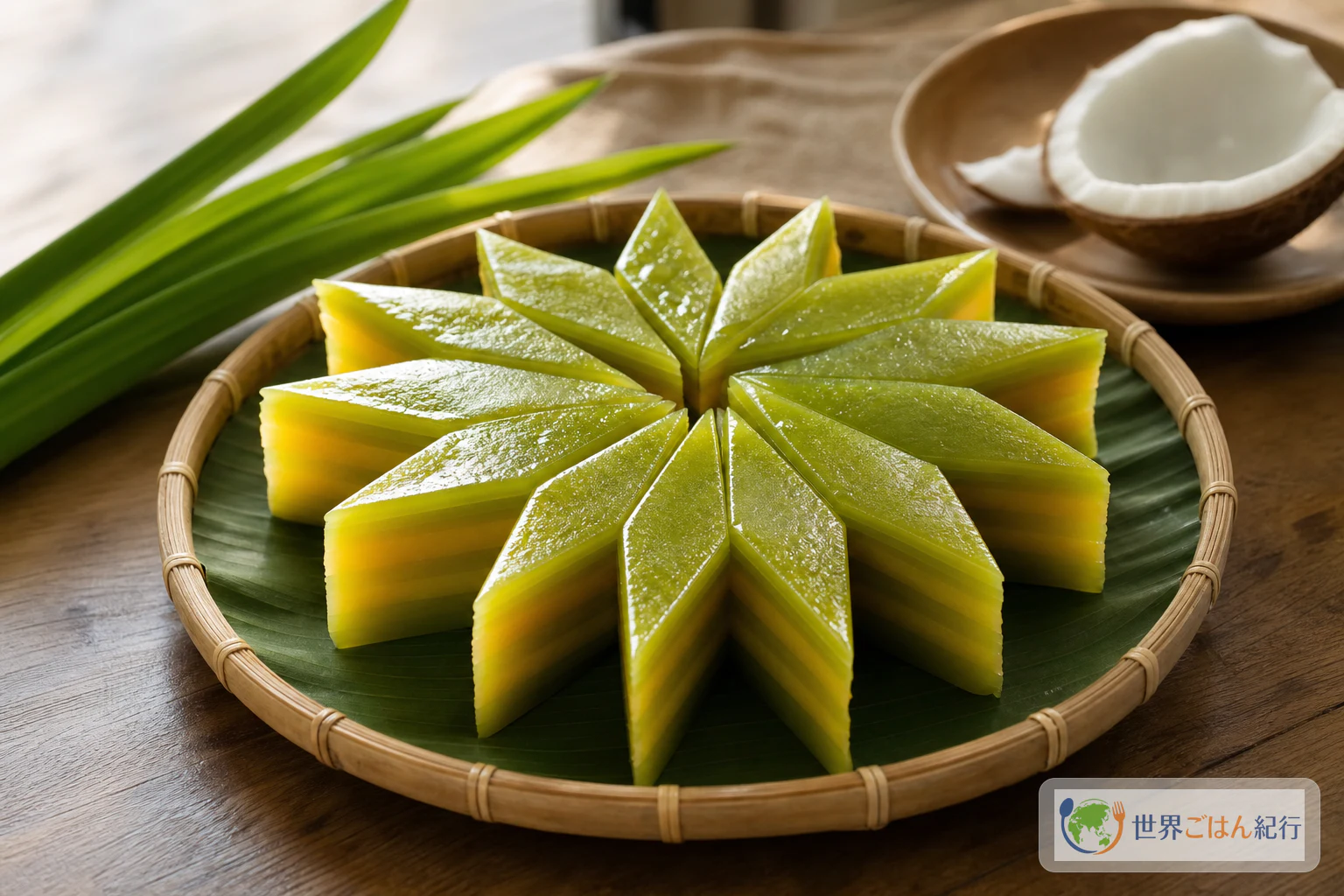
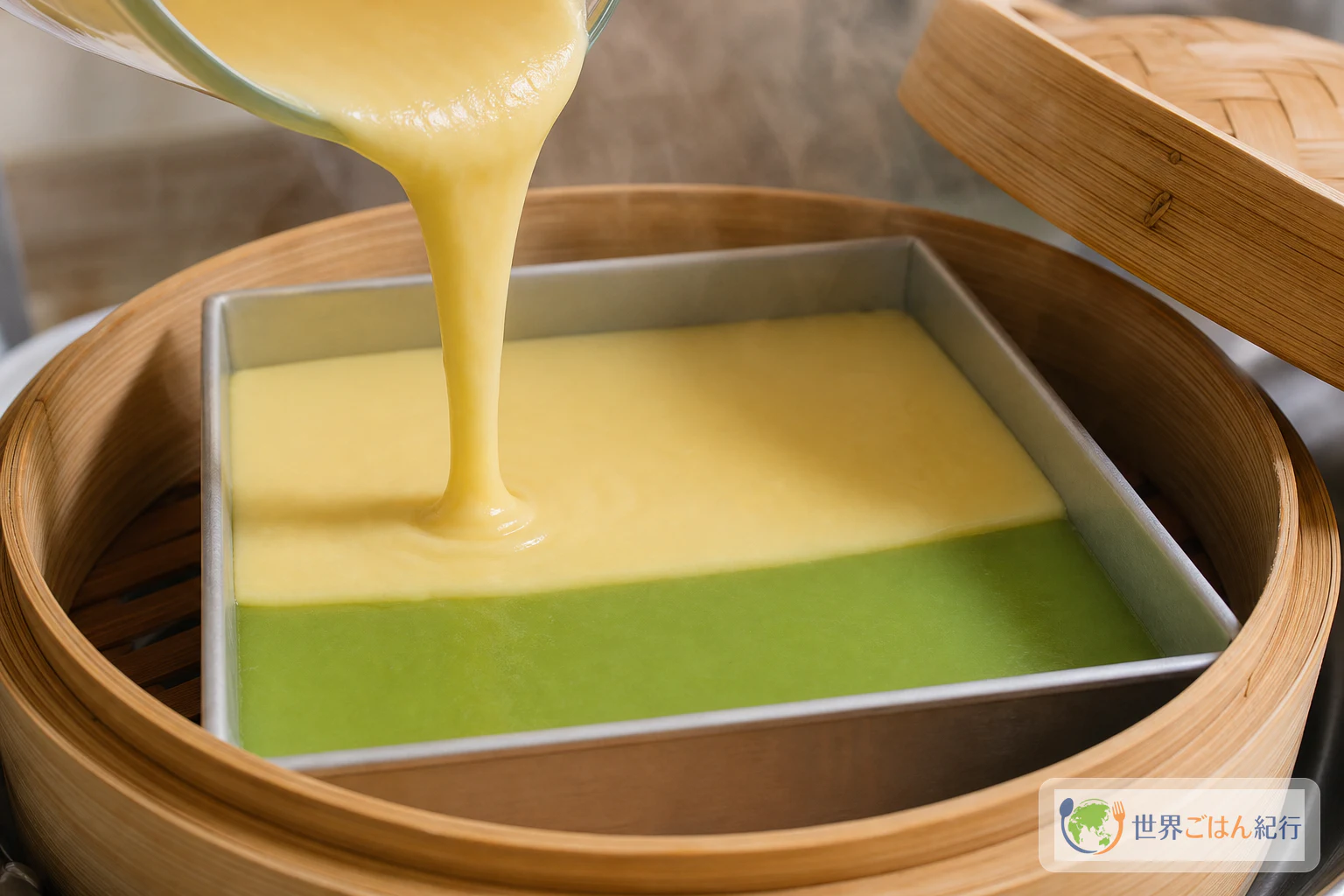
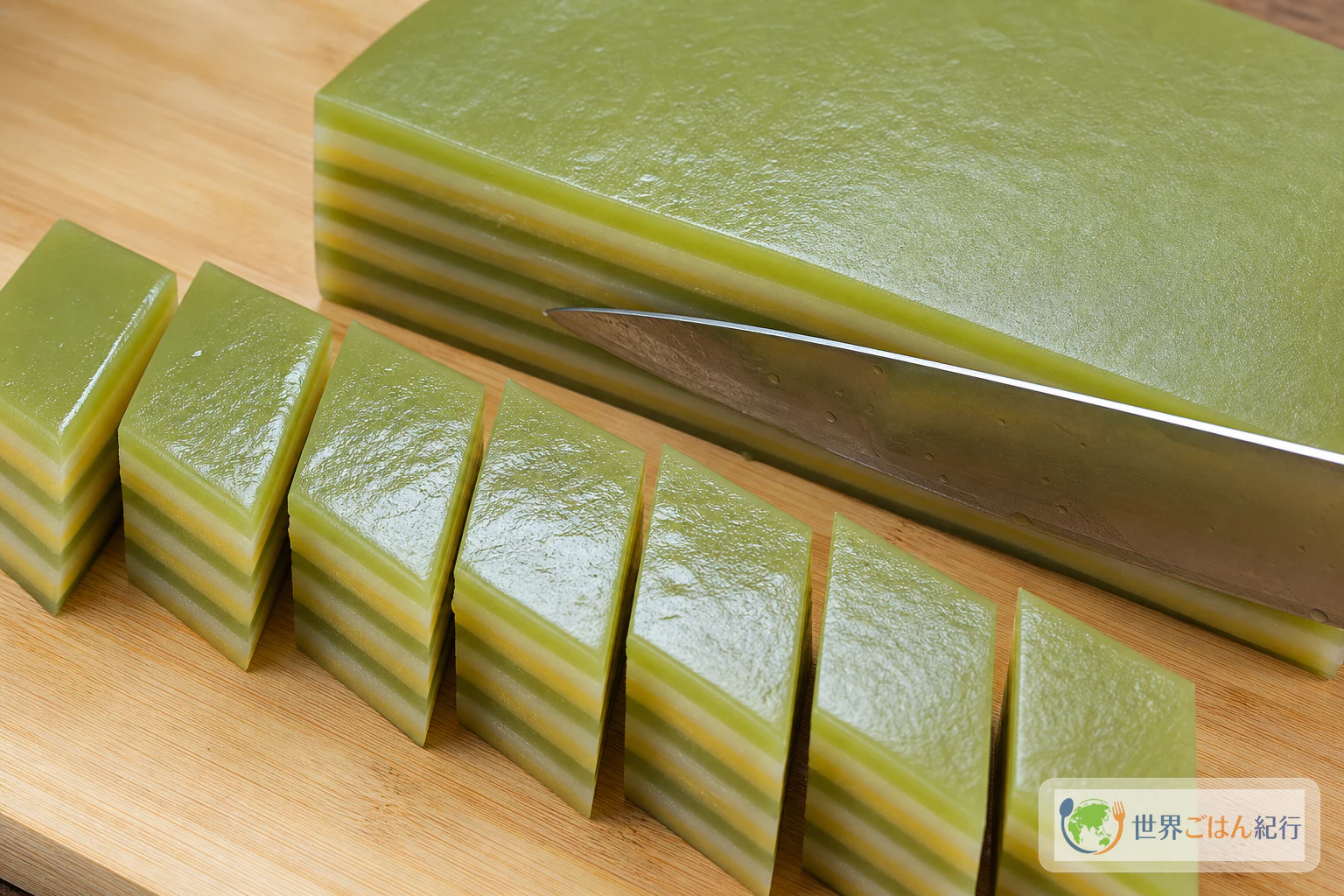
Lift the lid and the sweet steam of coconut reaches you first. Once the cake cools, its surface turns glossy. Press a knife in and the green and yellow layers sink slowly, then the cut face springs back. Bánh da lợn comes from southern Vietnam: a pandan-scented batter steamed in alternating layers with sweet coconut milk and mung beans. It tastes of the mealy sweetness of mung beans and the round aroma of coconut, held together by the spring of tapioca starch. And yes, the name means "pig skin" in Vietnamese, but there's no meat in it.
Bánh da lợn and southern Vietnamese sweets
The cake is steamed, not baked as a single sheet. So its character comes from the boundaries between the layers and its bouncy texture, not from browning. Pandan does more than add color. In the steam it leaves a sweet fragrance that nudges the plain starch toward a tropical sweet.
Southern cooking leans sweet, with sugar and coconut milk added to many dishes. Meals in the Mekong Delta are built on plenty of rice, fruit and vegetables. Small rice cakes, colored with pandan and sweetened with coconut or mung beans, round out the table. Turning rice, starch, beans and coconut into sweets fits naturally with the delta's ingredients.
Where the name comes from
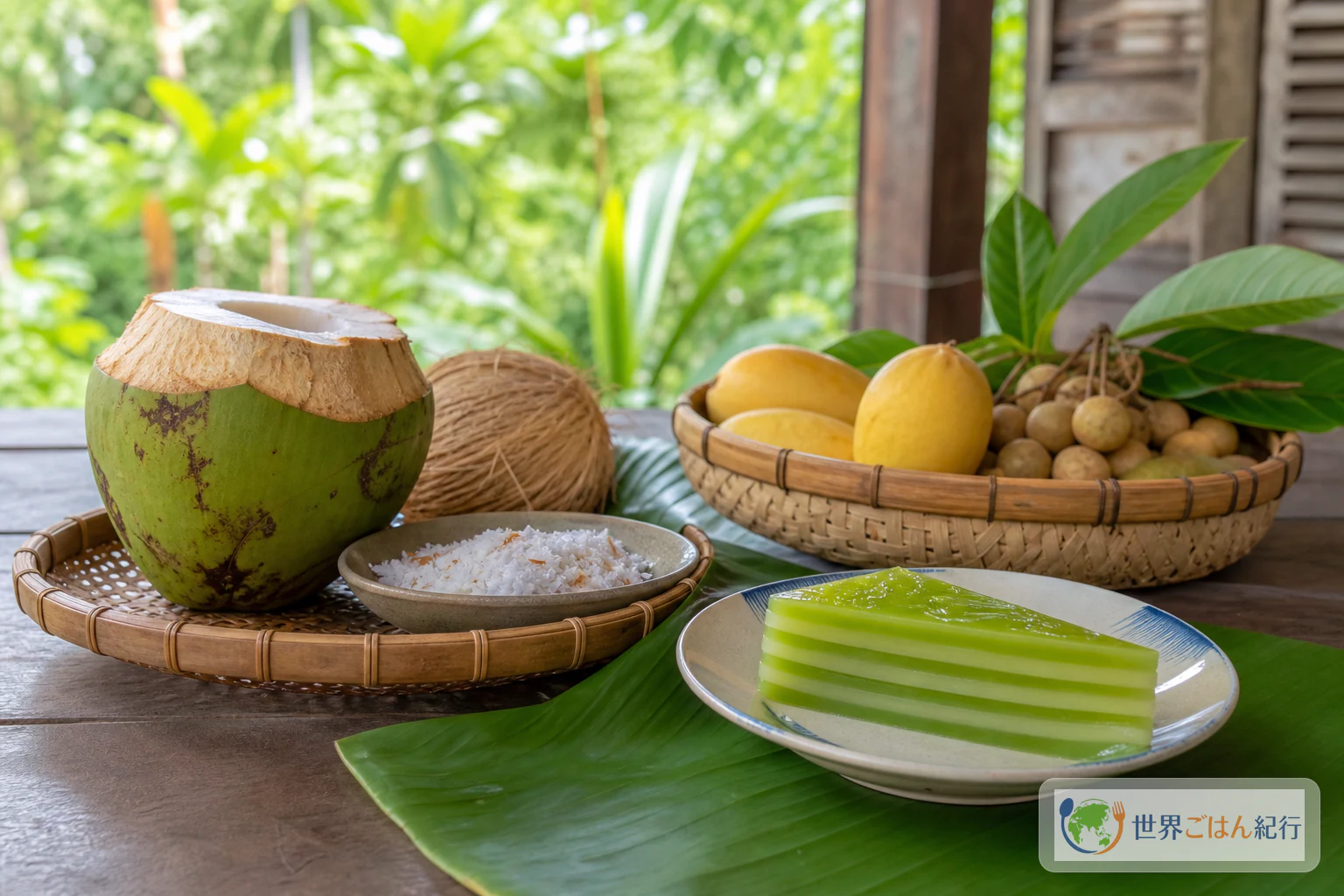
The origin of the name isn't settled. The most common explanation is visual: the translucent tapioca, pandan-green and mung-bean-yellow layers stacked together recall the surface and fat of boiled pork skin. Another theory says the name drifted over time from "da lợp," a phrase about layering, as with roof tiles. Neither etymology is confirmed. Both describe how the layers looked to the people who named them.
In Vietnamese, bánh broadly refers to cakes, breads and other foods made from rice flour or wheat flour. The same word appears in bánh mì (bread) and bánh xèo (a rice-flour crepe folded around a filling).
The pork-skin comparison also helps when you judge texture. More tapioca starch makes the cut face more translucent and bouncier. Too much, though, and the cake turns sticky in the mouth and clings to the knife. More rice flour steadies the layers but makes the cake firm once it cools. You don't add anything to make it resemble pork skin; you create the boundaries with starch and steam.
Pour the next layer when you can lightly touch the surface with a finger and no batter sticks to it. If a layer is oversteamed and dries out, the layers peel apart easily, so have the next batter stirred and ready.
Ingredients, and the role of the starches that hold the layers
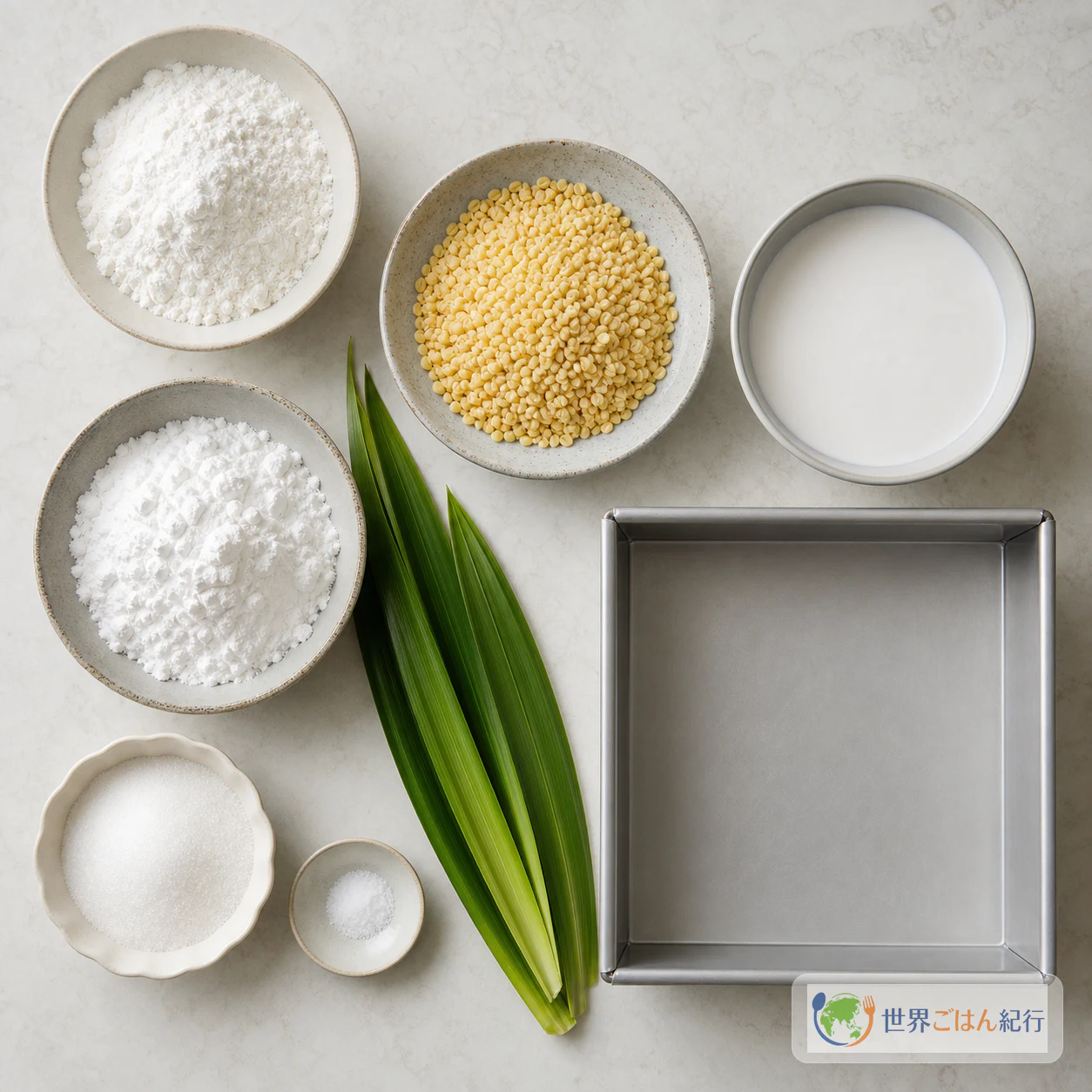
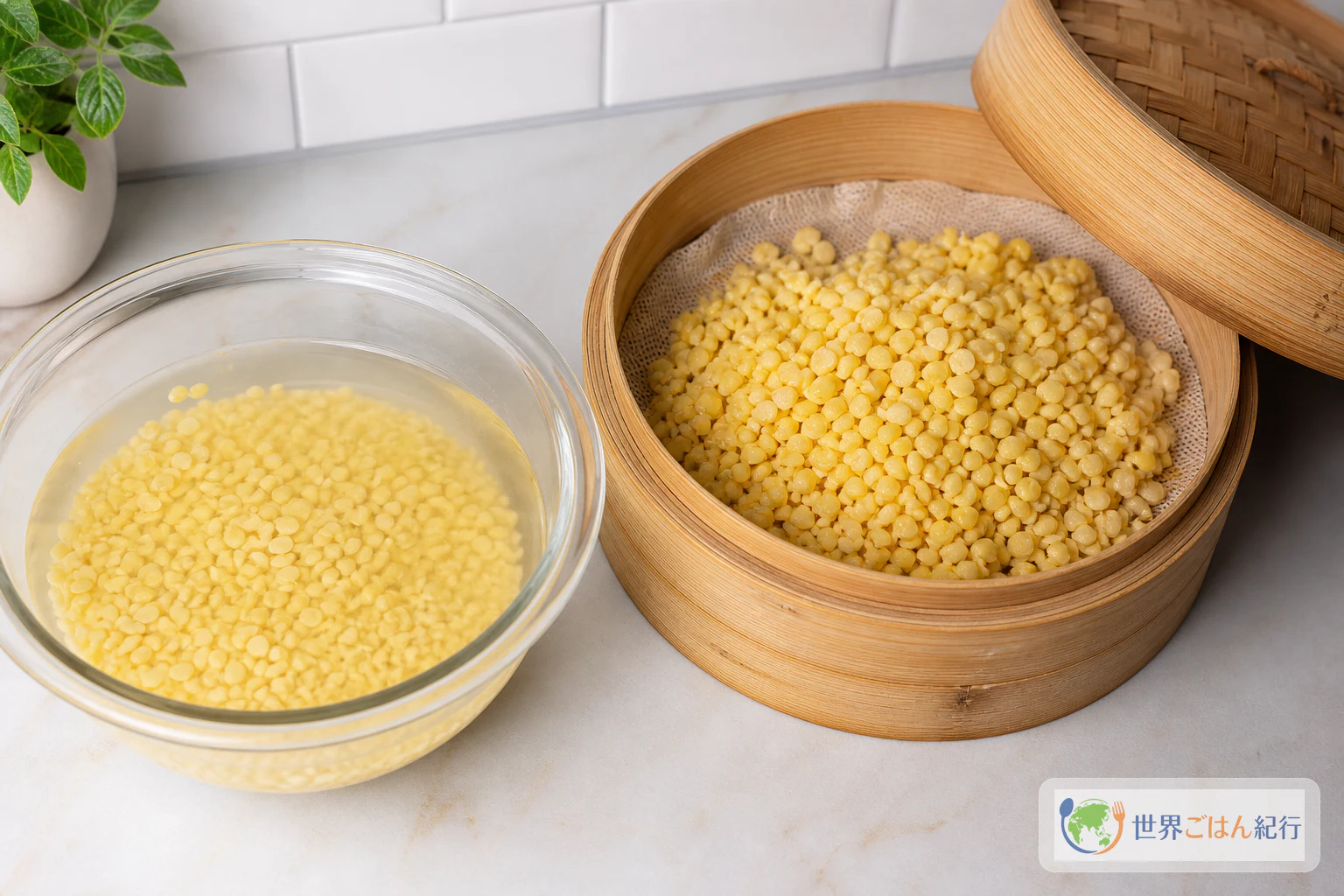
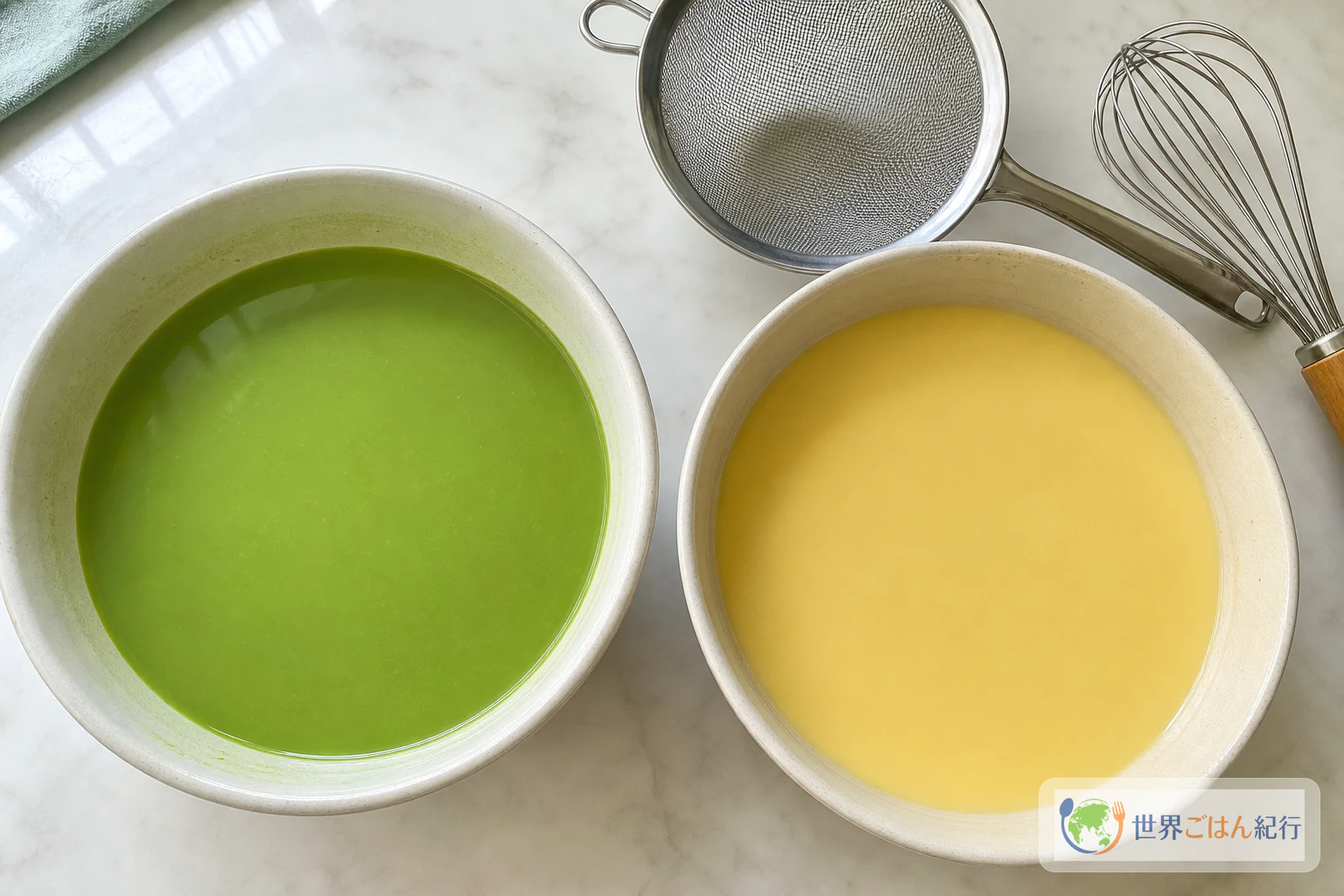
The heart of the ingredient list is the ratio of tapioca starch to rice flour. Tapioca alone pushes stickiness forward; rice flour alone makes the cut face white and hard. This blend is a home-kitchen compromise that separates the translucent green layers from the slightly opaque yellow layers that contain the mung beans.
Use unsweetened cooking coconut milk, not a sweet coconut drink. With a sweetened product, the baseline sweetness shifts even if you cut the sugar, and the moisture of the finished cake changes too. Leave out the pandan and you get a white-and-yellow sweet, but the aroma shifts to center on coconut.
If you're only trying it once, replacing just 1.75 oz (50 g) of the tapioca with potato starch lets you make it without buying anything special. But if you want to keep the translucency of the cut face and the spring when you press it with a finger, tapioca starch is worth buying. Check that the label lists tapioca starch made for food use.
The ingredients include coconut, mung beans, rice and tapioca. Some products are made in facilities that also handle wheat, buckwheat or peanuts, so if you have food allergies, check each product's label. Once steamed, let the cake cool, then cover it airtight and refrigerate. At home, aim to finish it within 2 to 3 days; if it firms up in the fridge, let it come back to room temperature before eating. To freeze, wrap pieces individually and keep for about 2 weeks; after thawing, give them a short blast of steam to restore the texture.
Choosing ingredients and substitutes for bánh da lợn
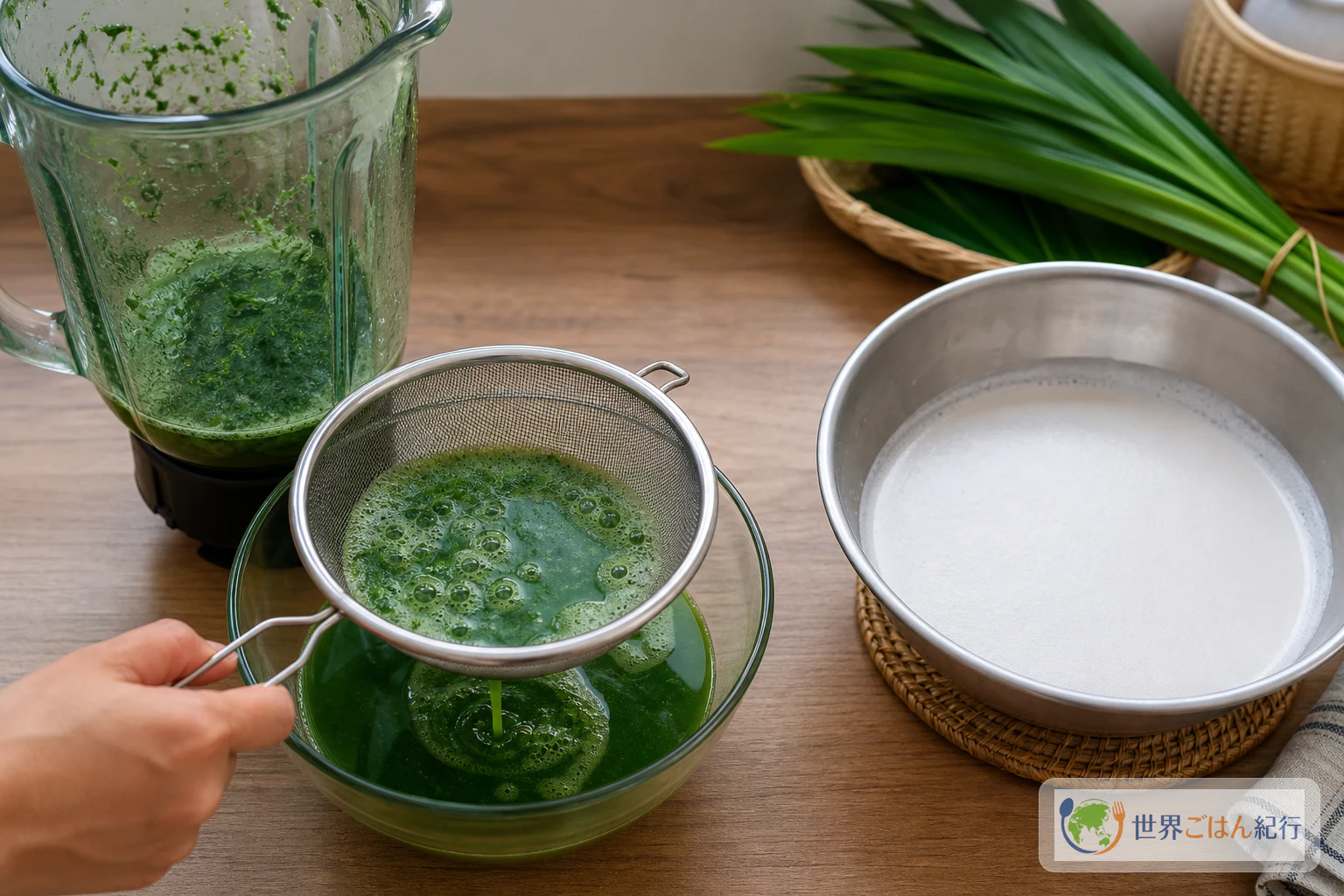
Pandan
If you can't find pandan leaves, replace them with water and you get a two-color cake, white and yellow. Even with a white layer, it holds up as a mung bean and coconut sweet. Food coloring alone can bring back the green, but not the aroma. For the color, you can use a pandan extract whose label you've checked, and cut the water by the amount of liquid you add. Vanilla extract gives a sweet aroma, but it's a different thing from pandan's grassy fragrance. Decide whether color or leaf aroma matters more before leaving it out, and the result will feel less off when you eat it.
Taro and purple sweet potato
Mix just 1.75 oz (50 g) steamed taro into the mung beans and the yellow layer gains fine flecks and an earthy aroma. If your taro is very moist, use 1 tbsp less coconut liquid. If you swap in taro for all of the mung beans, their sweetness disappears, so start with no more than half.
For a purple layer, steam and sieve purple sweet potato and mix it into a third of the yellow batter. It's a fun color change. The potato starch holds onto moisture, though, so the same volume makes a heavier batter. Start with no more than 1.75 oz (50 g). Then thin it with coconut liquid until it falls from a spoon at the same speed as the original batter.
Sugar
Cutting the sugar to 6.5 oz (180 g) brings the mung bean and pandan aromas forward. The cake loses a little of its sweet southern character, but you can leave the coconut milk as it is. For your first batch, use 8 oz (220 g) to see how the layers behave. Adjust the sweetness from the second time on, and any problem will be easier to trace.
Steaming the layers: common problems and fixes
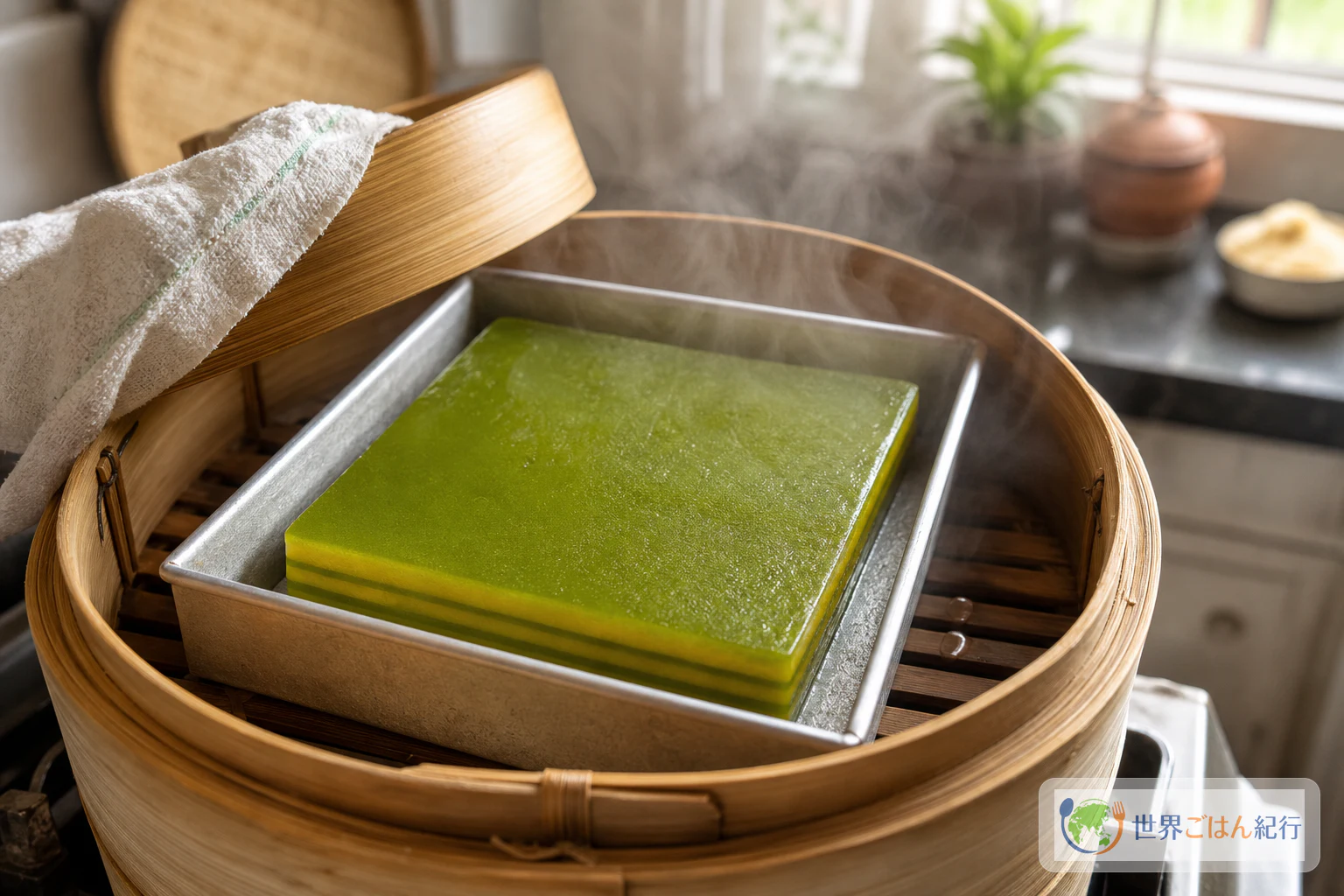
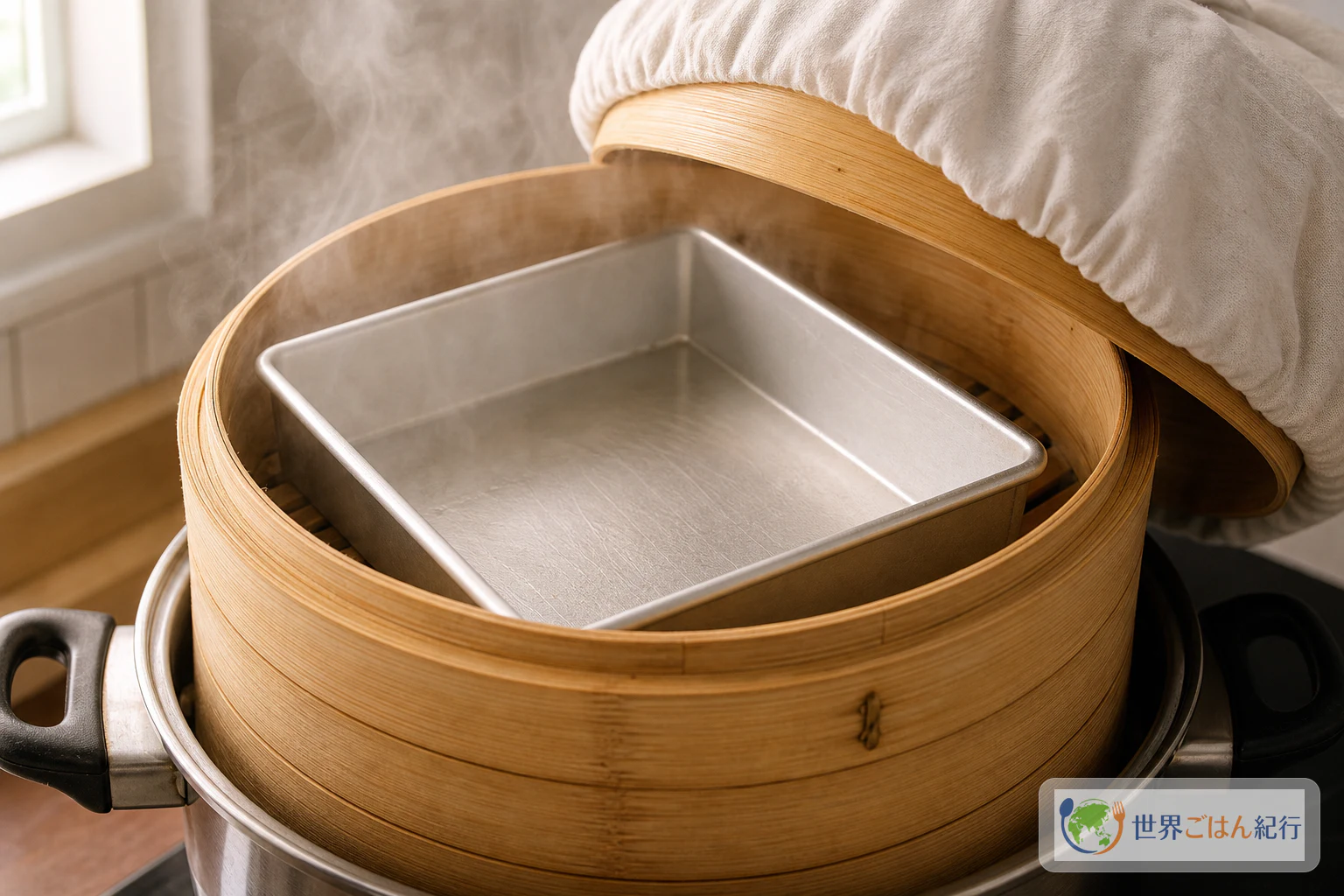
The first thing that trips people up at home isn't the flour ratio. It's how long to wait for the previous layer to set. Pour too soon and the colors bleed; wait too long and the layers peel apart. Judge by the strength of the steam and the look of the surface as you build up 8 layers, one at a time. Pour an equal amount of batter each time the previous layer has set a little, then give the whole cake extra steaming at the end. Wrap the lid in a cloth to catch condensation, and keep the steam going. Both protect the shape of the layers.
Steady steam matters because a home steamer can run low on water. When it does, the steam weakens partway through and the centers of the layers stay underdone. Start with 1.5 quarts (1.5 L) water and open the lid as few times as you can. Never let it boil dry. If the water gets low, heat boiling water in a separate pot, then add it gently where it won't splash onto the pan.
If the layers turn cloudy, hold off on changing the starch ratio. First check three things: how long you waited for the previous layer, how high you poured from, and the water drops on the lid. Pouring the batter from too high, lifting the lid at an angle, or leaving the surface until it dried out: any one of these is enough to blur the boundaries.
Bamboo steamer or a deep pot
If you have a deep pot, a steaming rack and the pan, and the pot's lid doesn't touch the pan, you can make this without a bamboo steamer. Keep the water level low enough that the pan stays clear of it, wrap a towel around the inside of the lid, and put the pan in once the steam is steady. If the lid touches the pan, use a smaller pan or switch to a steamer. A steamer is worth buying if you plan to keep making steamed sweets or dim sum. Look for an inner diameter of around 9.5 inches (24 cm) so the 7-inch (18 cm) square pan sits level, and check whether it's two-tiered and comes with a lid. For a one-time try, the deep pot you already have will do.
Serving bánh da lợn
Sprinkle on a little unsweetened desiccated coconut just before eating, and the soft layers gain a dry aroma and some bite. Add it before steaming and moisture collects on the surface, which tends to dull the gloss.
Thin slices make an easy sweet after Vietnamese bánh xèo, moving on to another dish of rice flour and coconut. Serve it next to bánh chưng, which also uses mung beans and rice, to compare two steamed foods: one a savory meal, the other a sweet snack. If you enjoy building layers, Thailand's khanom chan has a similar feel.
Frequently asked questions
Can I use only potato starch?
It will hold its shape, but the spring and translucency once it cools will change. For a first try without extra shopping, replace just 1.75 oz (50 g) of the tapioca starch with potato starch. Using potato starch for all of it makes the boundaries between layers hard to see.
I can't tell whether the previous layer has set
Look for the liquid on the surface to be gone, with only the center moving slowly when you gently jiggle the pan. If no batter sticks to a bamboo skewer, you can pour the next layer. A dry surface with fine cracks means it's oversteamed. Add the next layer right away, then give the whole cake extra steaming to bring it back.
It got firm in the fridge
Starch firms up when cold, so take the cake out of the fridge and leave it at room temperature for about 15 minutes, and its spring comes back. If it's still firm, put it back over steam for just 2 to 3 minutes. Avoid sprinkling it with water and microwaving it for a long time: the surface turns watery and the layers break down.
Can people avoiding wheat or dairy eat it?
This recipe uses no eggs or dairy. For allergies, check the labels of the flours and coconut milk you buy, and whether your cookware is shared. The more substitutes you use, the more labels you have to check, so it's safer to keep the ingredient list short the first time.