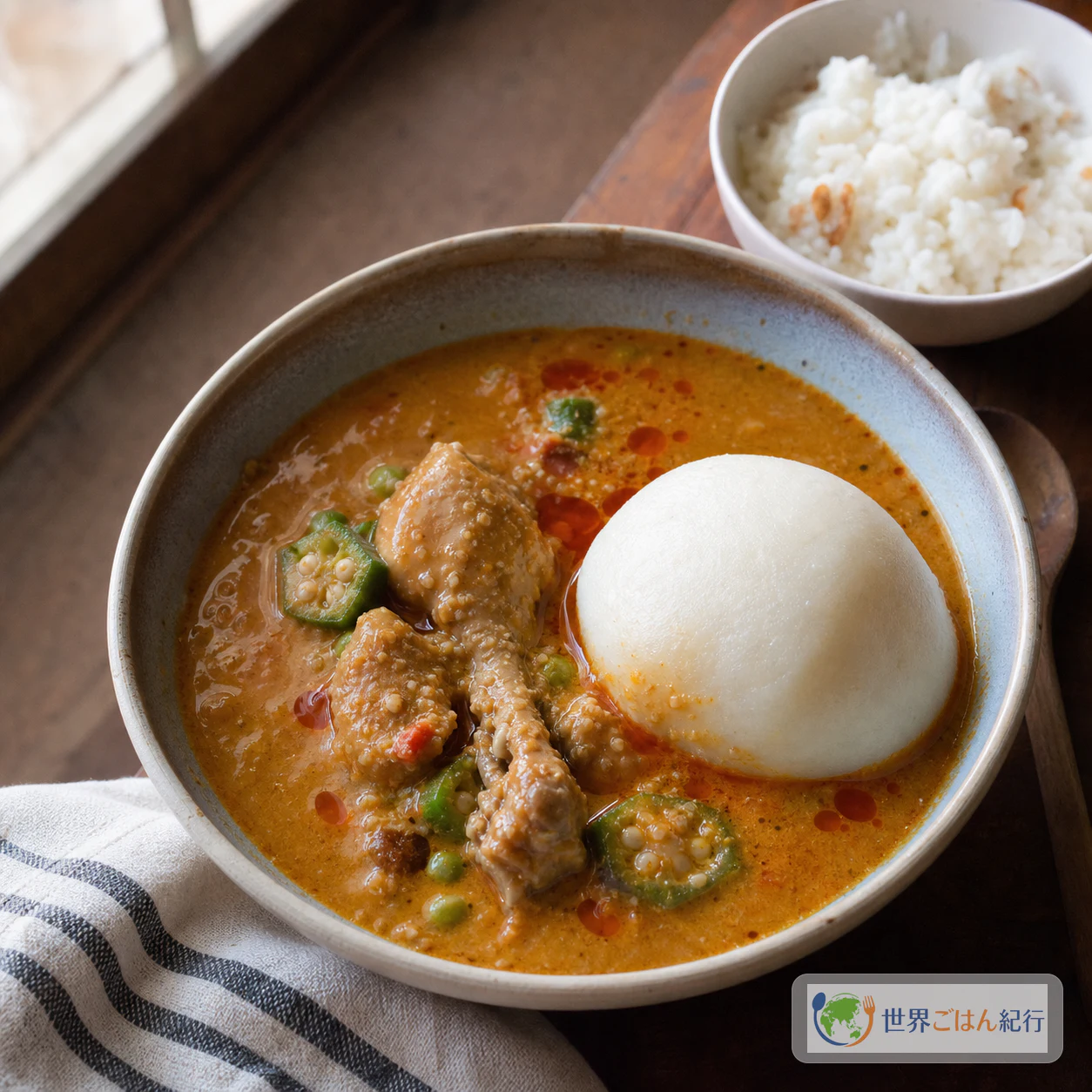
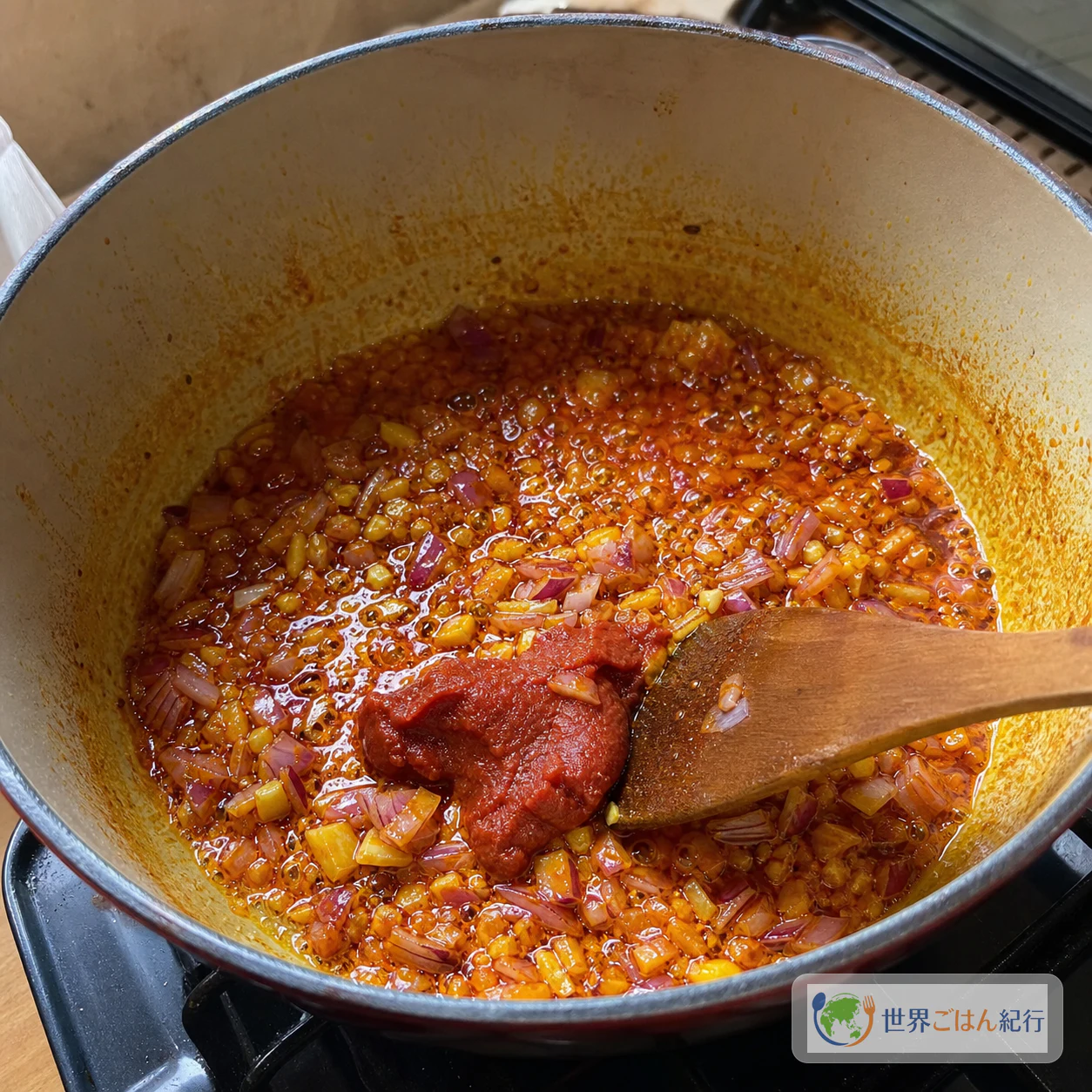
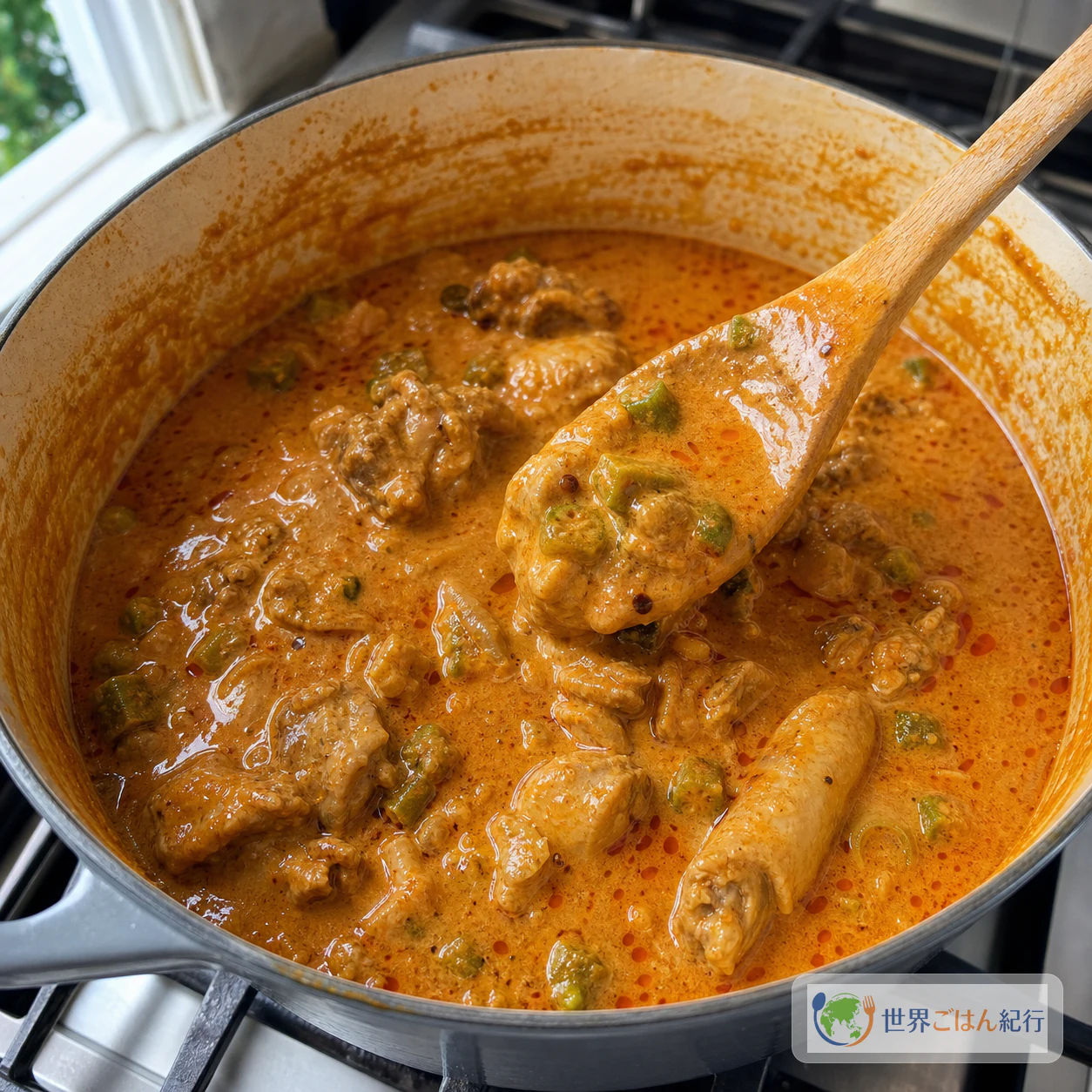
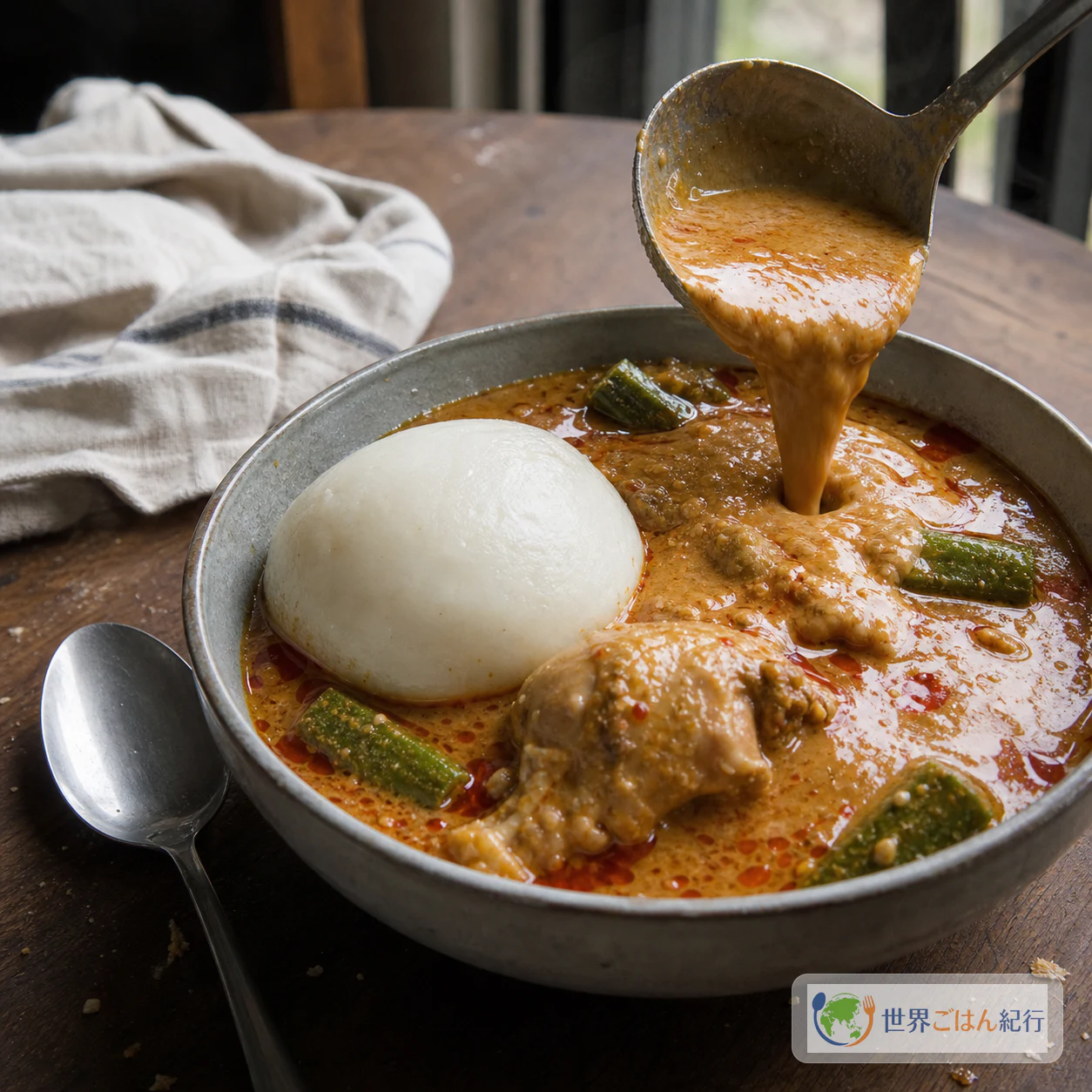
When the red oil starts to float in small beads at the edge of the pot, you are close to a Ghanaian dinner. Putting peanut butter into a soup makes you a little nervous at first, since it seems it will smell of sweet bread. But once peanuts loosened with hot broth go, bit by bit, into a red base of fried onion and tomato, the air in the kitchen changes: toasty nuttiness, chicken stock and the green heat of chili all stack up. In Ghana this is groundnut soup, or nkatenkwan, a rich, gently spicy soup eaten with staples you tear by hand. It is related to Mali's maafe, but it is made to cling to fufu rather than to be poured over rice.
About Ghanaian Groundnut Soup
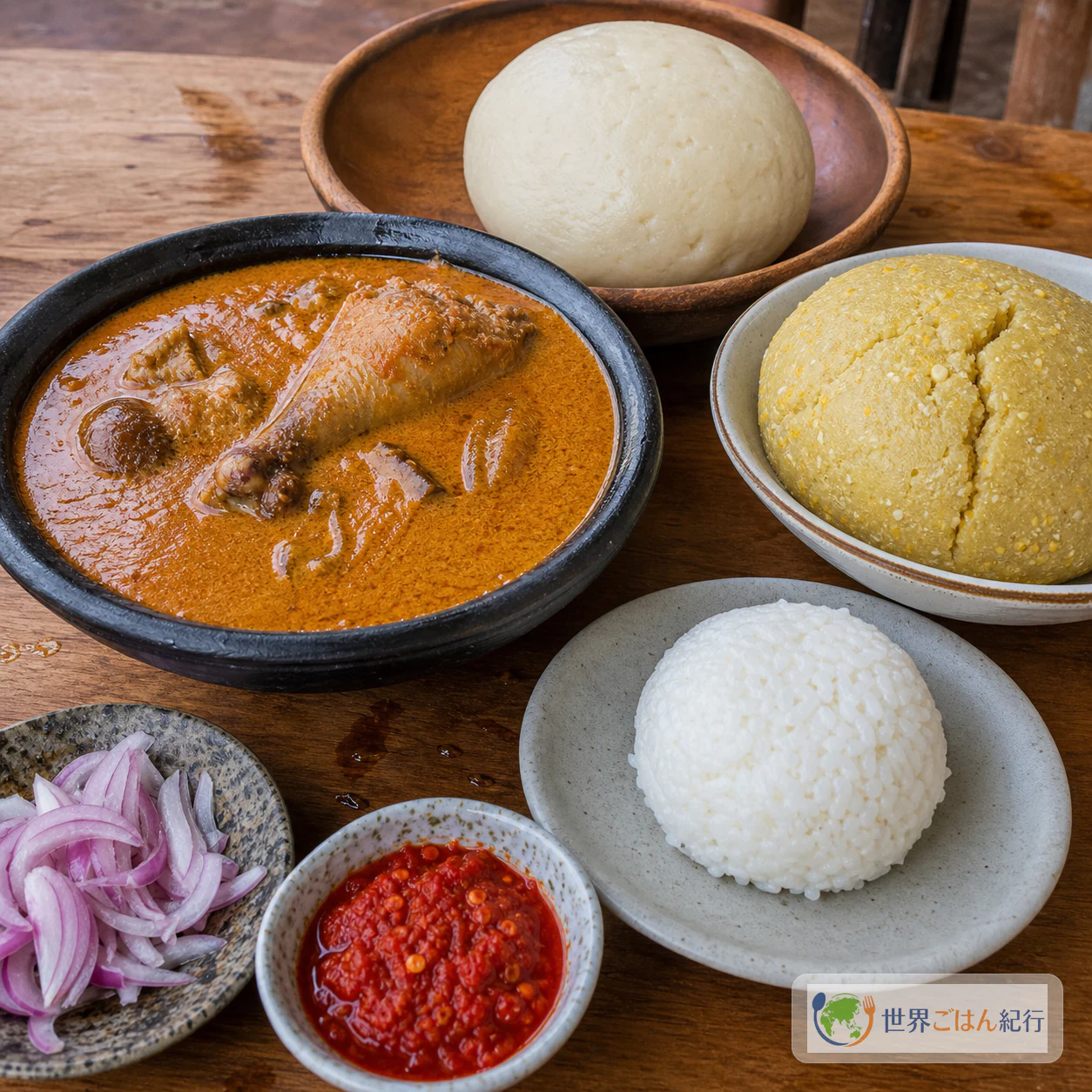
Groundnut soup has no single town or cook behind it. It is West African home cooking: grind groundnuts and dissolve them in soup. In English Ghanaians call it groundnut soup, and in the Akan-speaking world it is written nkatenkwan or nkate nkwan. It comes to the table with fufu, banku, or the rice balls called omo tuo. In the pot, the groundnuts give fat and body, while tomato, chili and aromatics draw the red outline. The real skill lies less in rare ingredients than in reaching, in a home pot, a thickness that clings to the staple.
Regional differences show up more in the staple than in the soup itself. Because the Ghanaian version goes with fufu or omo tuo, it leans toward soup rather than a full stew. The meat can be chicken, goat or fish, and some cooks push the tomato while others push the peanut. Even within Ghana, what goes into fufu changes among the Ga, Ewe, Ashanti and others, and when the staple changes, so does the thickness you want from the soup.
Its neighbors make the point clearly. Maafe is often a thick stew with large pieces of vegetable, served over white rice. Zambia's ifisashi also uses groundnuts, but there the leafy greens and nshima are the stars, not the meat. Groundnut soup keeps enough liquid to slide across the surface of the fufu. The three dishes look alike, but because the staples differ, so does the point at which you stop cooking.
| Item | Guide |
|---|---|
| Servings | 4 |
| Prep | 25 min |
| Cooking | 55 min |
| Total | about 1 hour 20 min |
| Staple to pair with | Fufu, banku, plain rice, rice balls |
| Heat | Medium. Adjust with the amount of chili |
Ingredients (serves 4)
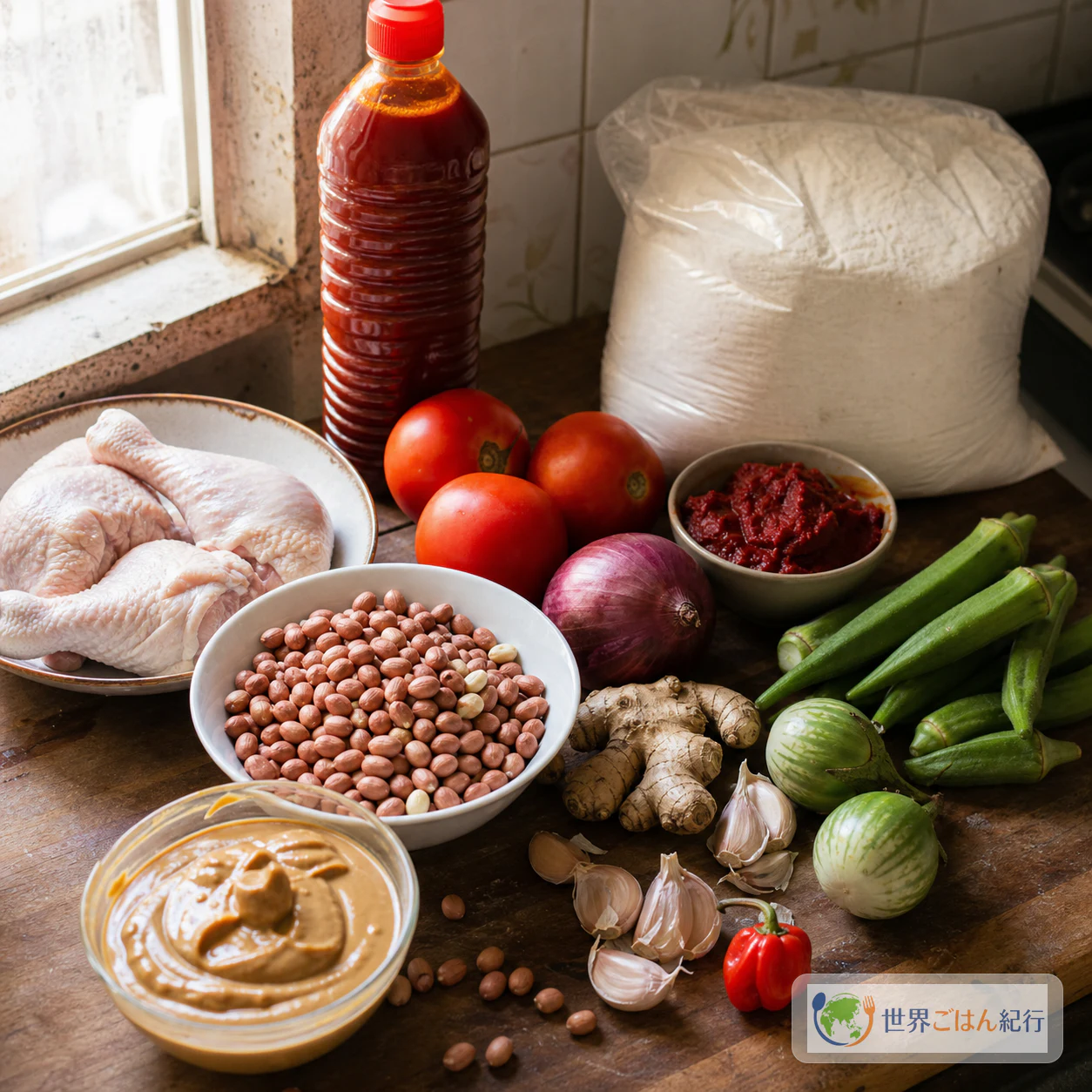
This recipe uses peanuts, chicken and dried shrimp. If you have a peanut allergy, treat it as a different dish. The dried shrimp can be replaced with ground bonito flakes. Letting the chili only scent the pot is enough, so if heat is a problem, start with half.
Choosing Ingredients and Substitutes for Groundnut Soup
Chicken, onion, tomato and okra come from any grocery. Three items deserve care: unsweetened peanut butter, which decides the taste; red palm oil, which gives Ghanaian cooking its red aroma; and fufu mix, which brings the way of eating closer. Get these wrong and the pot can look right but taste like a "sweet peanut stew" or a "tomato-braised chicken." For a first batch, start with bone-in chicken and tomato, and save goat or smoked fish for later.
| Ingredient | What to check before buying | What to avoid |
|---|---|---|
| Peanut butter | Mostly peanuts, no sugar | Peanut cream, chocolate-flavored, sweetened |
| Red palm oil | Edible, unrefined or labeled red palm | Flavored oils, industrial oils of unclear use |
| Fufu mix | Flour made from cassava, plantain or yam | Substitutes that rely on starch alone |
| Tomato paste | Mostly tomato | Ketchup. Sugar and vinegar make a different taste |
The peanut butter is the item that trips people up. Skip the sweet kind sold next to the bread and look for an unsweetened one, often found in natural-food sections and import grocers. If sugar sits near the front of the ingredient list, or it is chocolate-flavored or a sweet cream-type spread, put it back: the sweetness survives simmering and blurs the tomato, chili and chicken stock.
Red palm oil carries an aroma that links the nuts and the tomato, not just color, and it has strong character even in a small amount. Start with 2 tbsp, so a small bottle is plenty for a first try. If you dislike palm oil, neutral oil works, but the finished plate will taste lighter. In that case, fry the tomato paste thoroughly for 3 minutes over medium-low heat without scorching it, and add 1 tsp paprika to bring the color closer. The toasty character of red palm oil itself cannot be reproduced.
| Decision | Keep / swap | Reason |
|---|---|---|
| Unsweetened peanuts | Keep | Sweet peanut cream breaks the outline of the tomato and chili |
| Red palm oil | Keep if possible | Gives aroma as well as color. A neutral-oil swap makes a different, lighter flavor |
| Garden eggs | Swap | Small eggplants or ordinary eggplant give a close enough texture |
| Scotch bonnet | Swap | A little habanero or a dried chili brings the direction of the heat close |
| Goat meat | Swap | Bone-in chicken is easier to find and gives broth |
| Fufu | Swap, but try it once | Plain rice works too, but serving it with fufu shows what the thickness of the soup is for |
Instructions
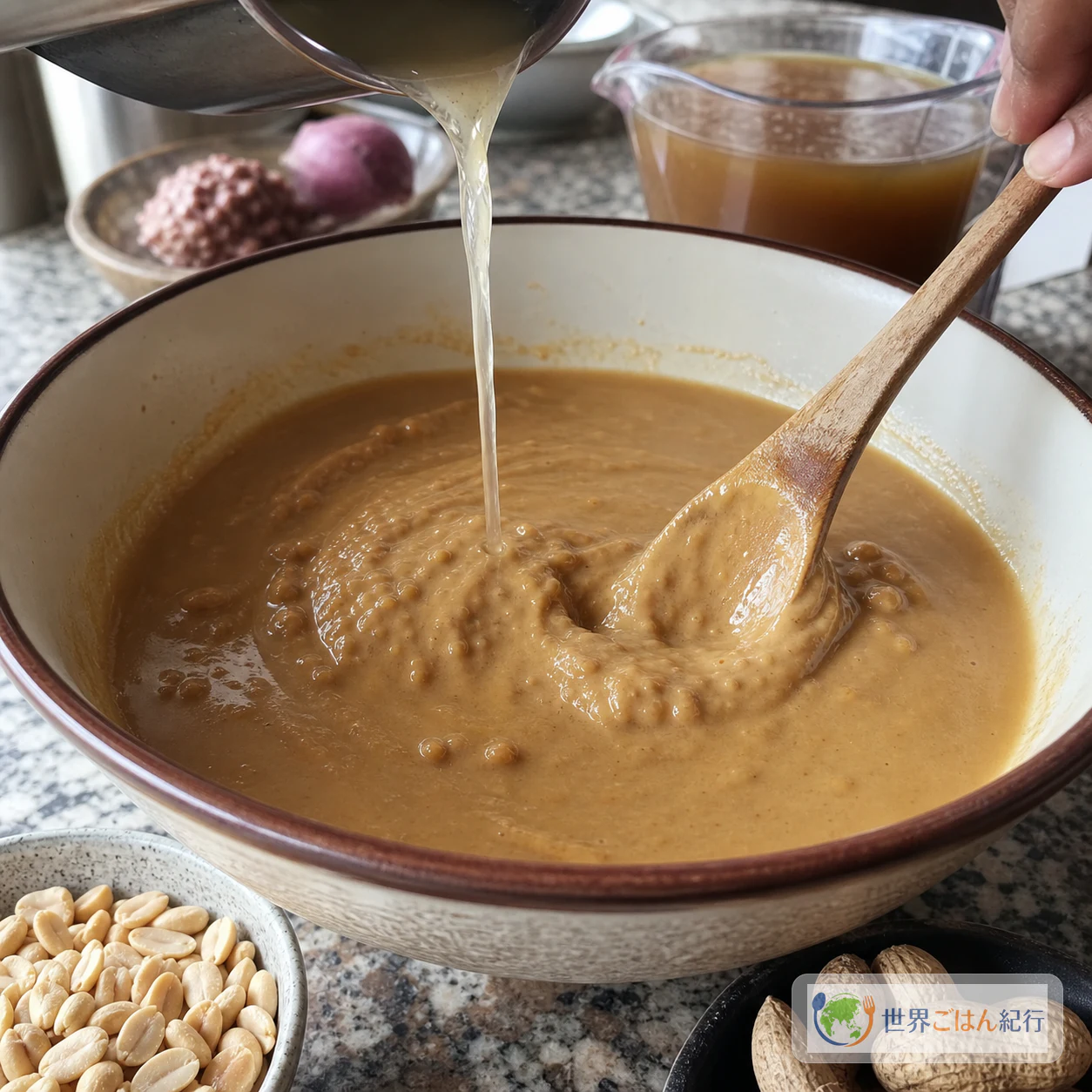
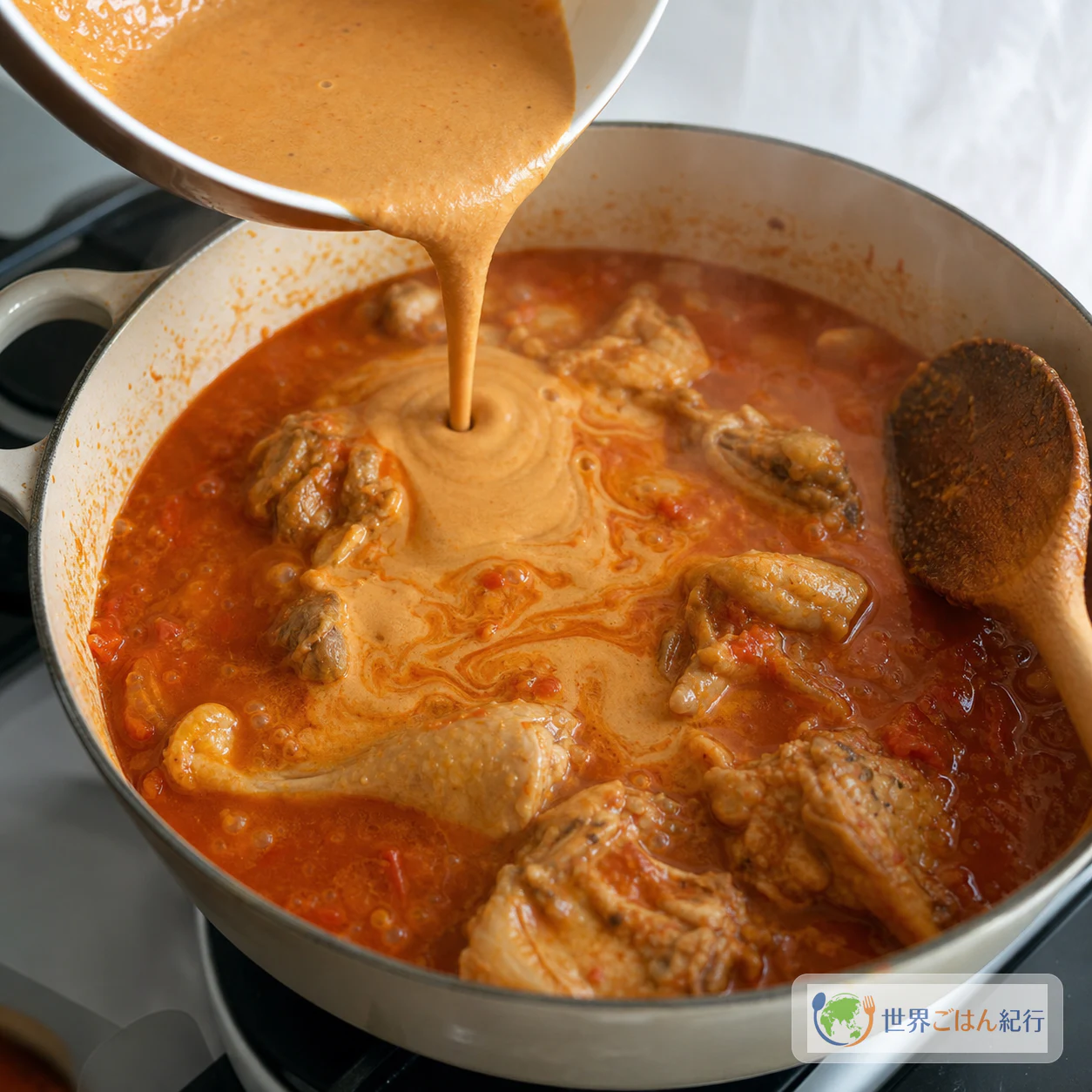
Don't add the peanut butter to the pot at the start. Fry the aromatics and tomato, loosen the peanuts separately, and combine them over low heat. This order cuts down lumps and scorching a great deal.
Groundnut Soup Troubleshooting
Sweet peanut butter
This is the hardest mistake to undo. Once sweetened peanut butter goes in, the sweetness stays no matter how much salt or chili you add. Use unsweetened peanut butter, unsalted or only lightly salted. If yours is salted, start with 1/2 tsp less salt than the recipe.
Scorching on the bottom
Peanuts sink, and the first 10 minutes after combining are more prone to scorching than they look. Keep the heat moderate, use a heavy pot and scrape the bottom every 5 minutes, and you prevent most of it. If you smell burning, don't scrape; move only the top liquid to another pot so the scorch stays behind.
Watery, with no richness
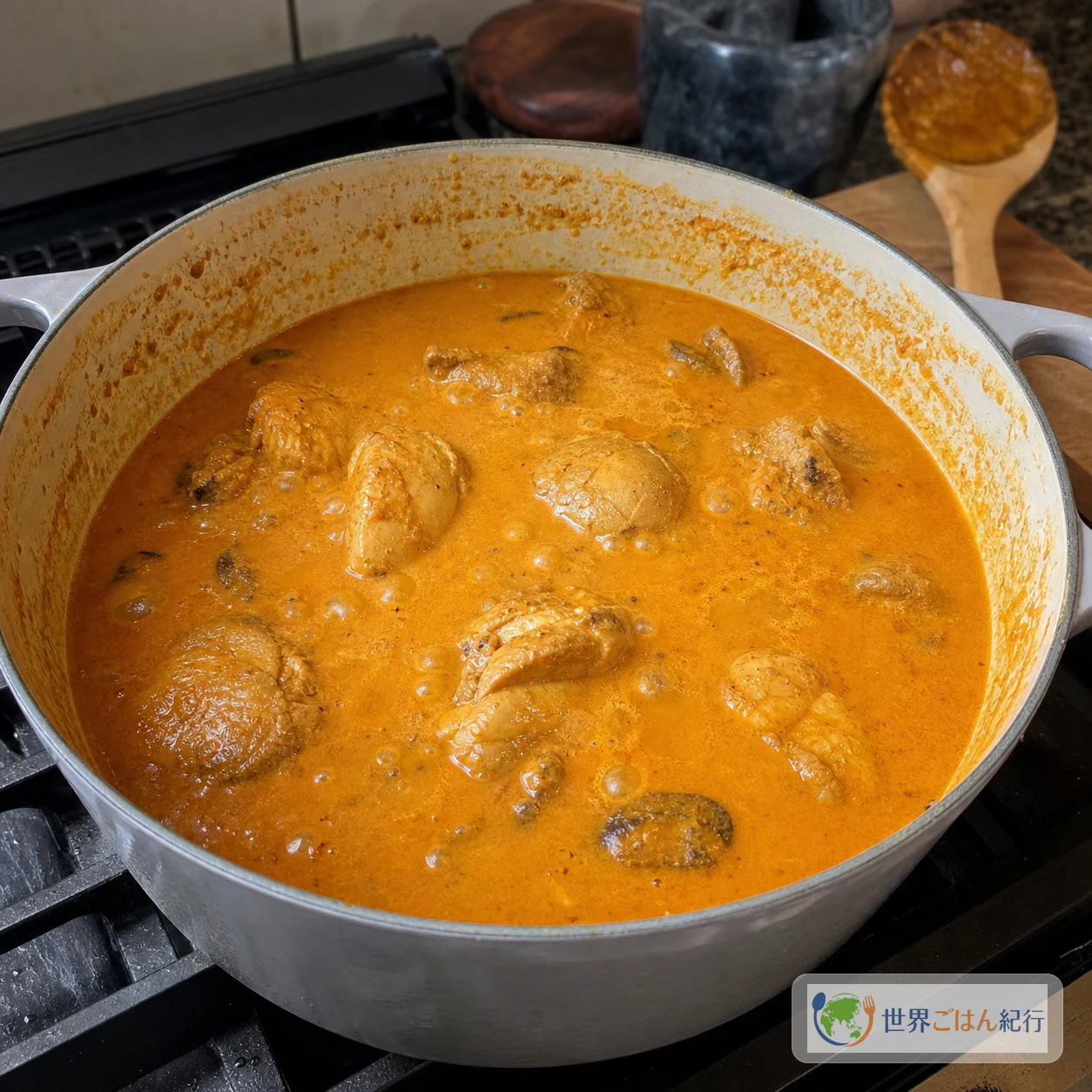
If no oil floats at all and the soup looks like a thin potage, it has not simmered long enough. Take off the lid and cook 5–10 minutes more on low, until beads of red oil appear and the soup coats the wooden spoon thinly. If it goes too heavy, add boiling water 3.5 tbsp (50 ml) at a time; cold water poured in all at once dulls the aroma.
Oil separates from the soup
A large film of red oil over a gritty soup means the heat was too strong or the peanuts were not loosened enough before going in. Drop to low, add 3.5 tbsp (50 ml) boiling water and stir widely from the bottom for about 1 minute. If it still won't come back, whisk 2 ladles of soup smooth in a bowl and return them to the pot. Skim only what has pooled thickly on top, since removing all the oil takes the aroma with it.
Too thick for fufu
Fufu isn't chewed so much as eaten coated in soup, and a sauce that is too heavy sticks to it and feels leaden. The same goes for banku: a soup that falls from the spoon in a thin ribbon is easiest to handle. For rice, you can leave it a little thicker.
Heavy, sticky okra
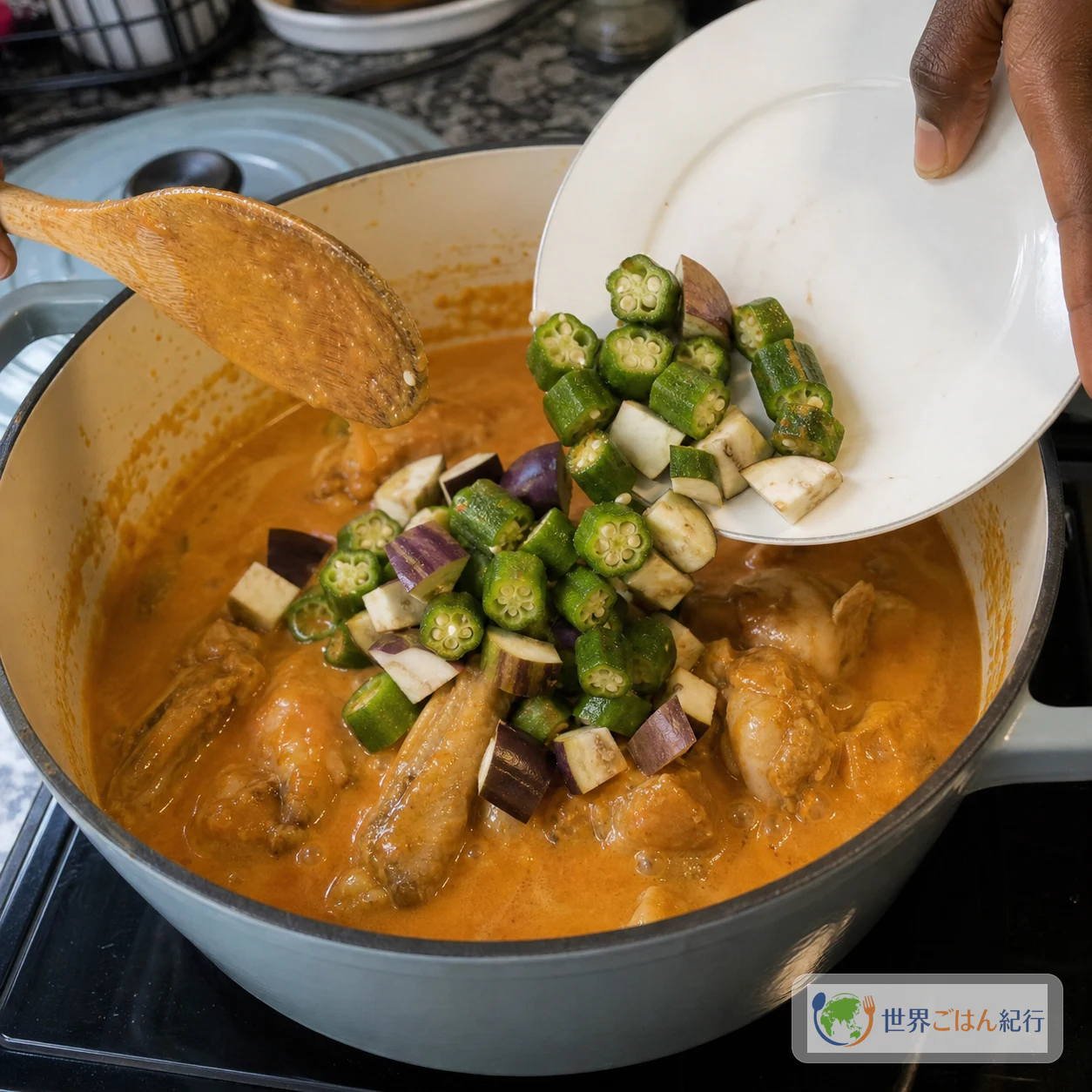
Okra added too early spreads its stickiness through the pot and, together with the peanuts, weighs everything down. Add the okra rounds for the last 10 minutes and stop while they are still green. If it does turn sticky, loosen it over low heat for 2 minutes with 3.5 tbsp–¼ cup (50–80 ml) boiling water. Vinegar would tighten it but pulls the soup away from its Ghanaian aroma, so fix it with liquid and heat first.
Serving and Storing Groundnut Soup
Matching the soup to the staple
Fufu and banku carry the soup on their surface rather than soaking it up, so don't fill the bowl. Pour the soup beside the staple and bring it over a little at a time. Adjust the liquid in the last 5 minutes for whatever you're serving it with; that way the same pot works with fufu at dinner and rice at lunch the next day.
| Pairing | Finished thickness | How to serve |
|---|---|---|
| Fufu | Falls from a wooden spoon in a thick ribbon | Pour beside the fufu and coat a little at a time |
| Banku | A little looser than for fufu | Keep the tomato notes because of the sourness |
| White rice | A little thicker than for fufu | Cover only half the plate and add more midway |
| Omo tuo-style rice balls | Between fufu and white rice | Break up the balls and coat a little at a time |
With banku, which has the sourness of fermented corn, a somewhat stronger tomato keeps things in balance. For rice, cook off a little liquid until the grains don't swim on the plate, and pour half over at the start and the rest midway so the rice doesn't turn mushy. If leftovers feel "too heavy," the problem is usually a thickness that doesn't suit the staple, not weak flavor.
Sides and nutrition
| Per serving | Value |
|---|---|
| Energy | about 640 kcal |
| Protein | about 1.25 oz (34 g) |
| Fat | about 1.5 oz (41 g) |
| Carbohydrate | about 1.25 oz (34 g) |
| Fiber | about 8 g |
| Salt equivalent | about 2.2 g |
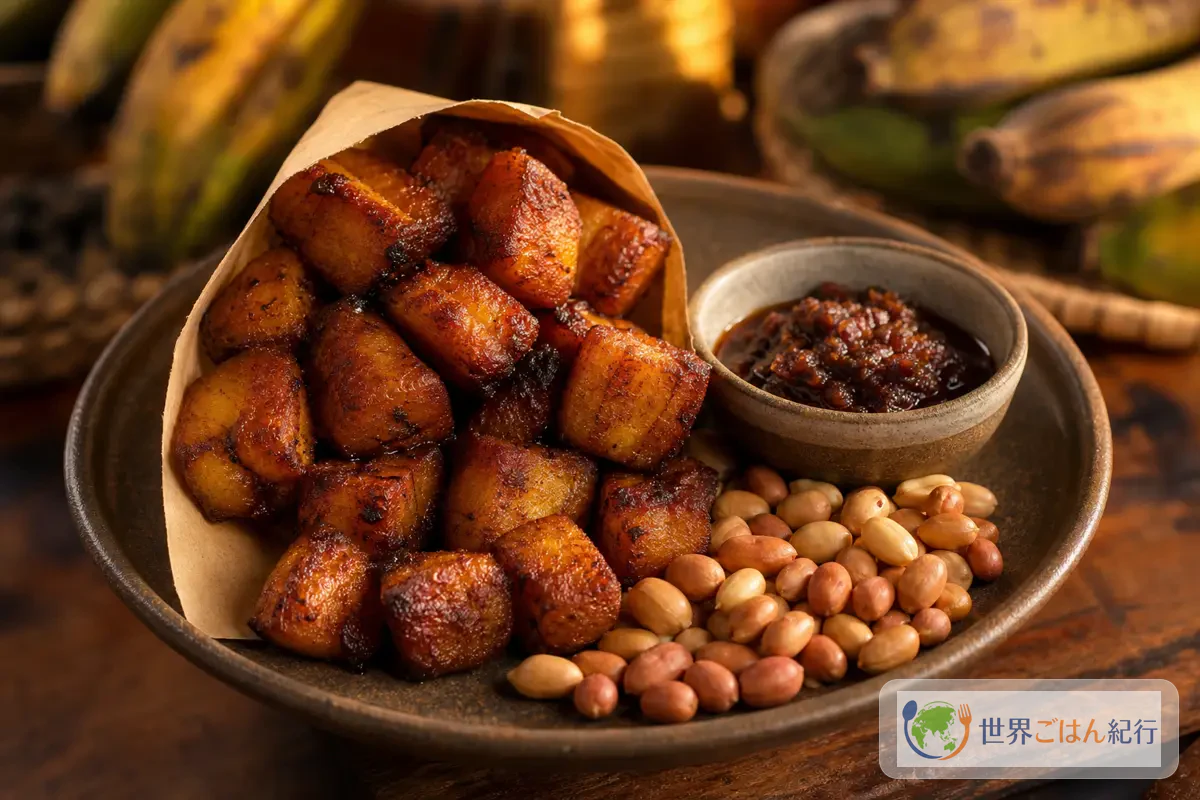
Peanuts and chicken make this a rich, high-protein dish, and with fufu or rice it is very filling. Keep the sides light, like a salad or steamed vegetables. A small plate of something toasty such as kelewele cuts the heaviness of the peanuts better than a sweet drink.
Storage and reheating
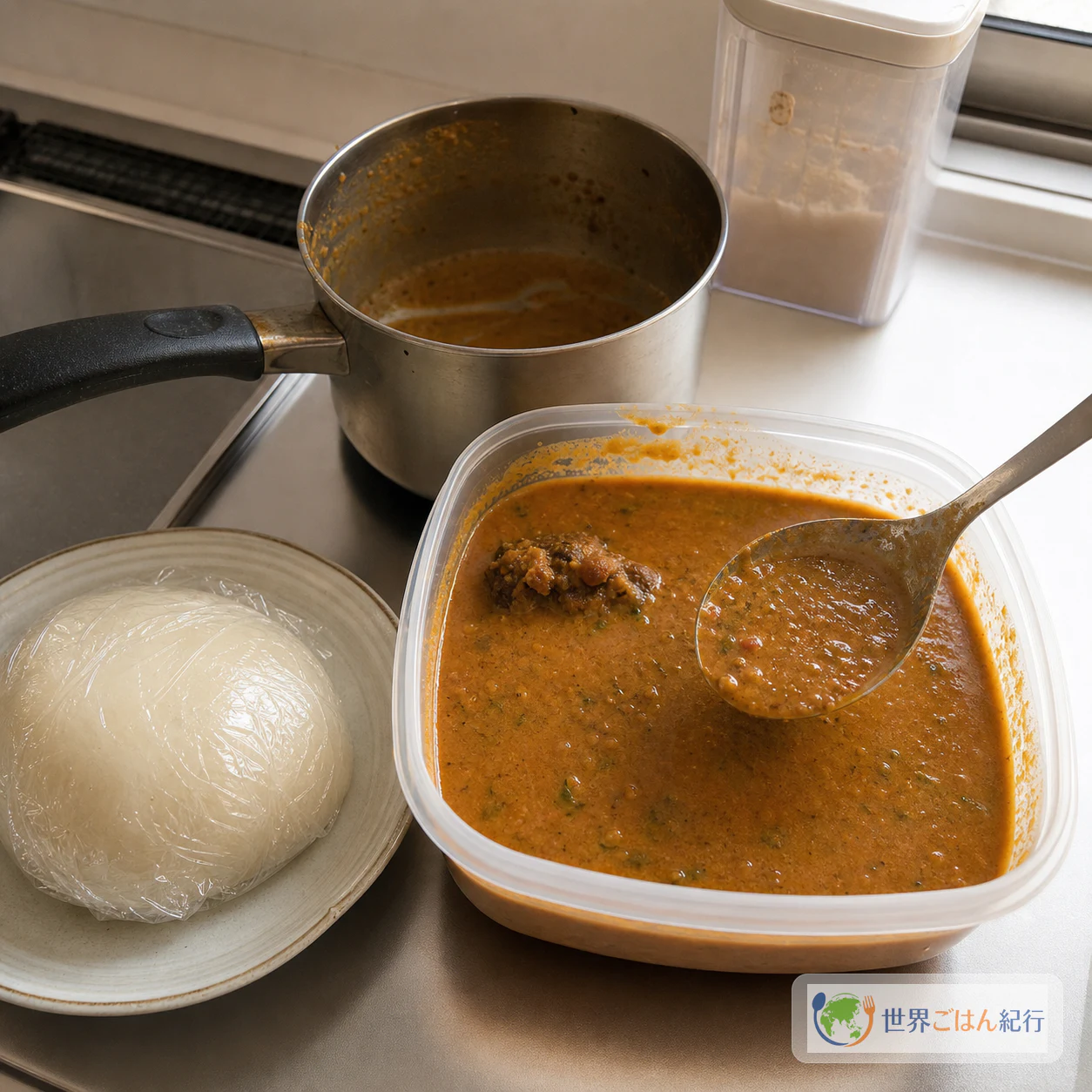
Because it contains peanuts and chicken, move the soup to a shallow container once it has cooled slightly and refrigerate it as soon as you can; it keeps for up to 2 days. When cold, the oil sets on top and the soup turns heavy, and the saltiness seems stronger, but it has not spoiled. Store fufu and rice separately.
To reheat, warm the soup in a small pot over low heat for 5–8 minutes, adding 2–4 tbsp boiling water and scraping the bottom with a wooden spoon. If the ribbon from the spoon is still too thick, add 1 more tbsp of boiling water at a time. Taste only once it is fully warm, and if it still seems blurry, add about 1/8 tsp salt. In a microwave, the edges set first, so heat at 600 W for 1 minute, stir, and continue 1 minute at a time. Steam or microwave the fufu just before serving to bring back its texture.
The soup alone freezes for up to 2–3 weeks. The okra softens, but the flavor holds. After thawing, warm it over low heat and stir the separated oil back in.
Frequently Asked Questions
Can I make it from peanuts instead of peanut butter?
Yes. Dry-roast 8 oz (220 g) skinned peanuts in a frying pan over low heat for about 10 minutes, then process them while hot for 5–7 minutes into a coarse paste. The aroma is better, but it's hard on the machine, so unsweetened peanut butter is the more reliable choice for a first try.
Can I make it with something other than chicken?
Yes. With beef shank, use 1 lb (450 g) and extend the initial simmer to 45–60 minutes. White fish breaks easily, so add it only for the last 10 minutes, after the peanut sauce is combined and the thickness is set.
Is there a way to make it mild for children?
Leave the chili whole, add half a chili only during the first half of the simmer, and remove it before the vegetables go in. The aroma stays and the heat drops considerably. For no heat at all, skip the chili and finish with a little black pepper.
Which other Ghanaian dishes help me understand it?
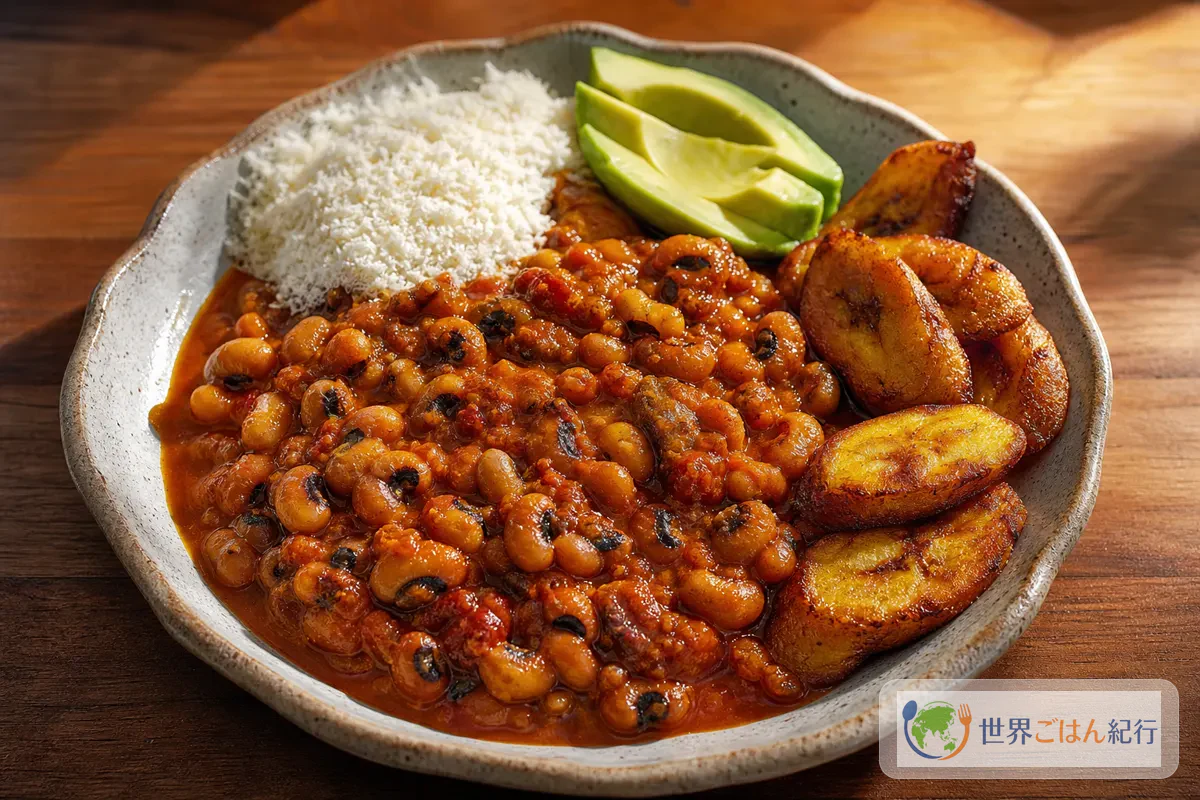
Start with the staple fufu to see how the soup is meant to be eaten. Then compare banku, with its fermented-corn sourness; waakye, the street-food dish of beans and rice; and red-red, made with beans and red palm oil. Together they show how staples and sauces work together in Ghanaian food.