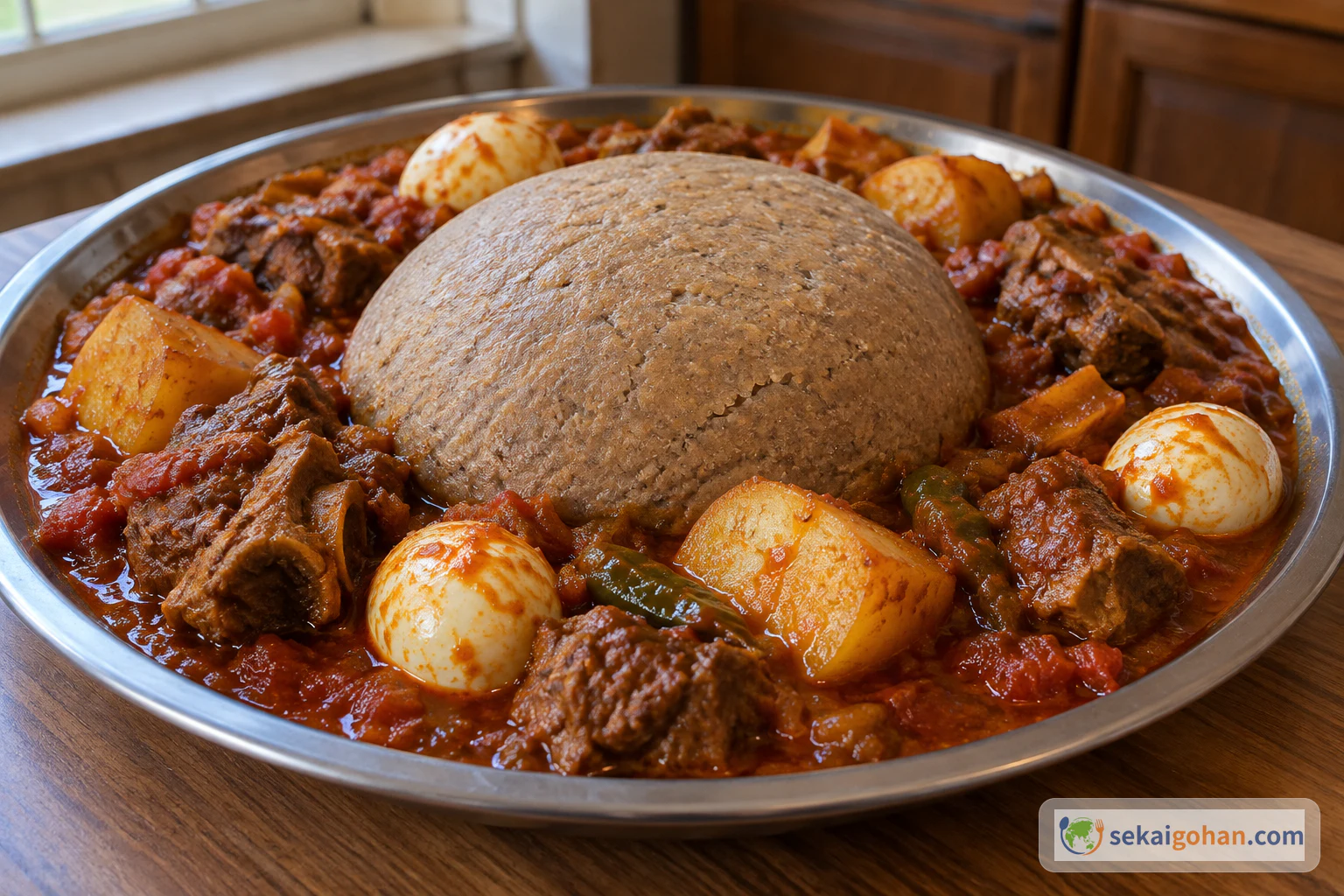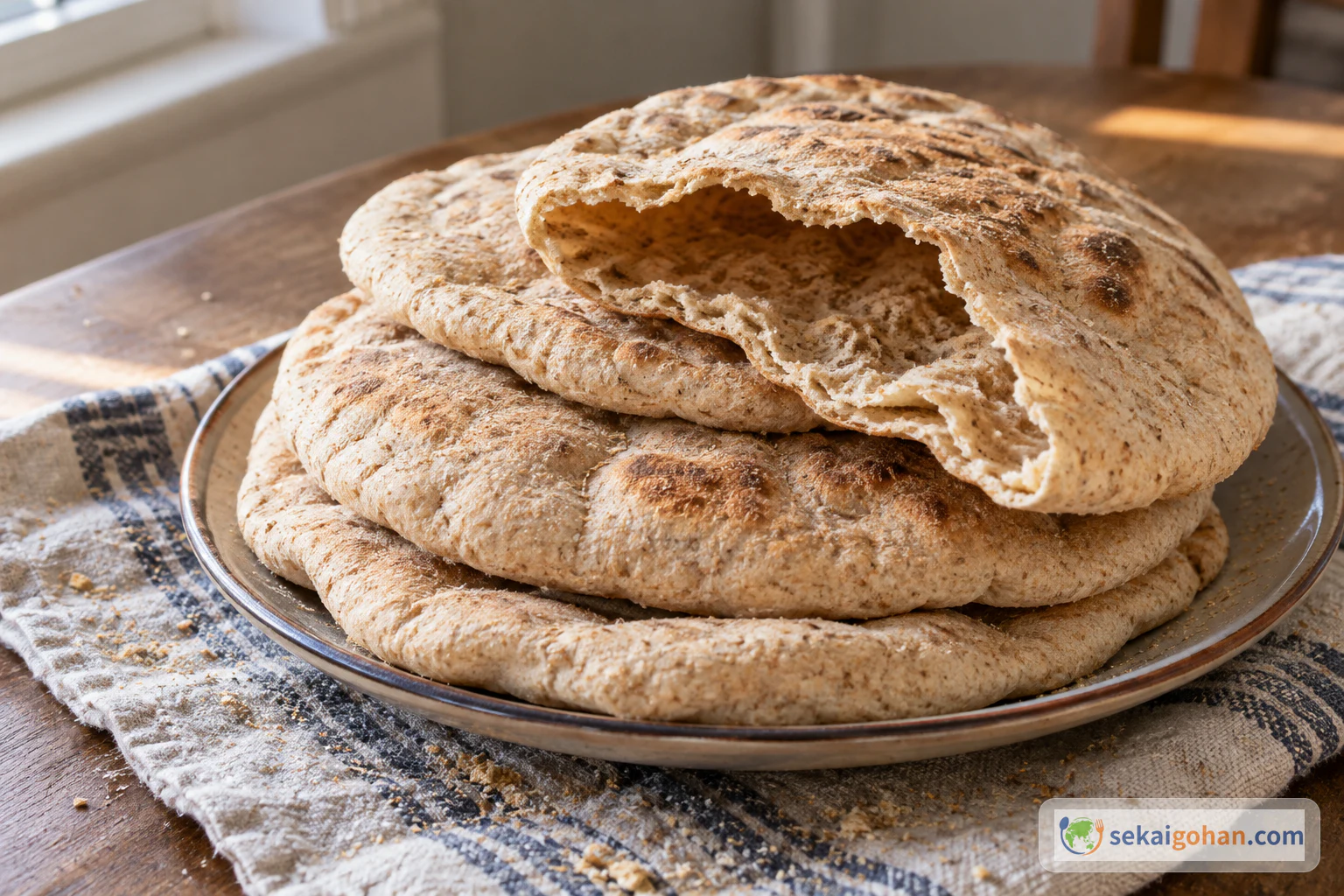
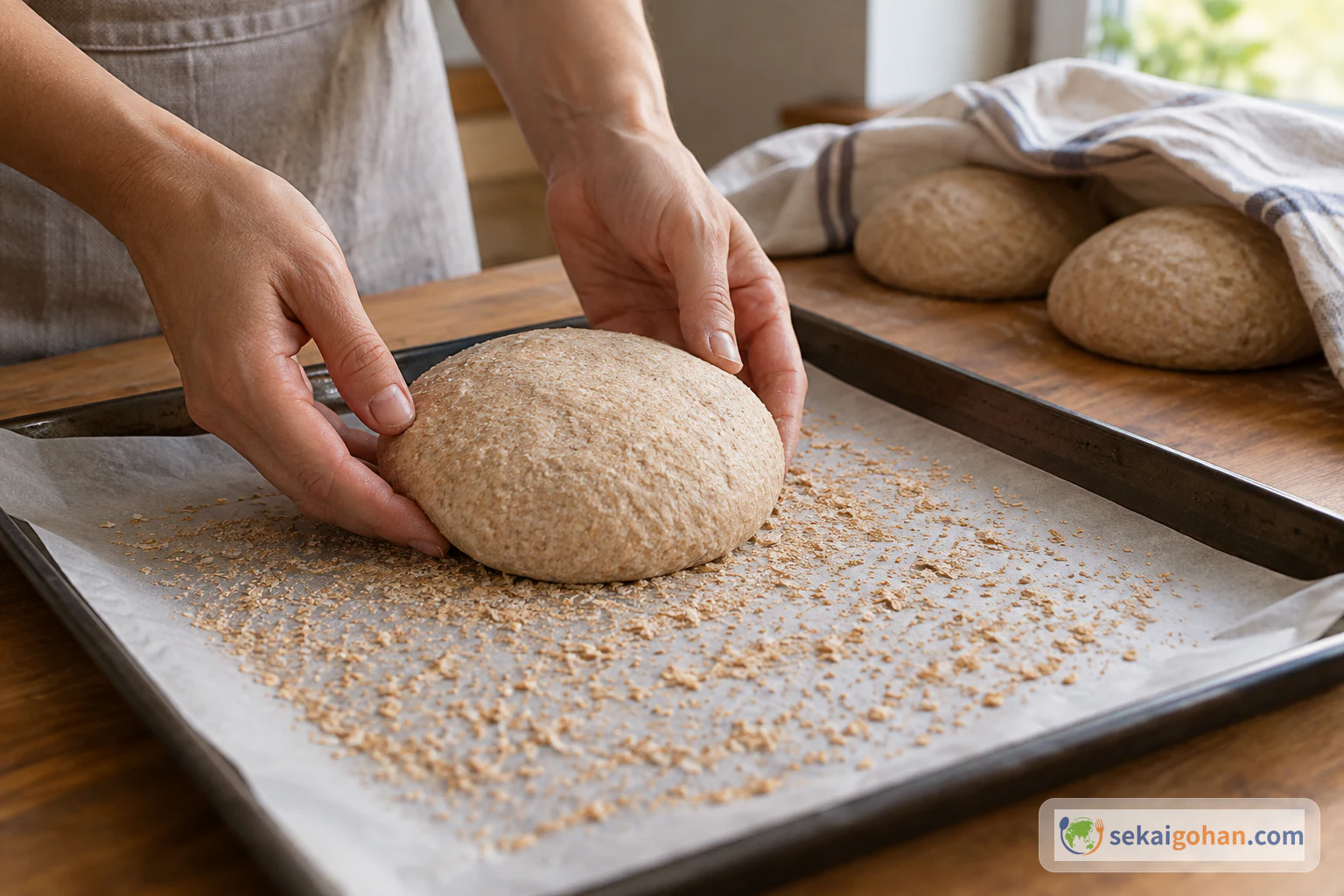
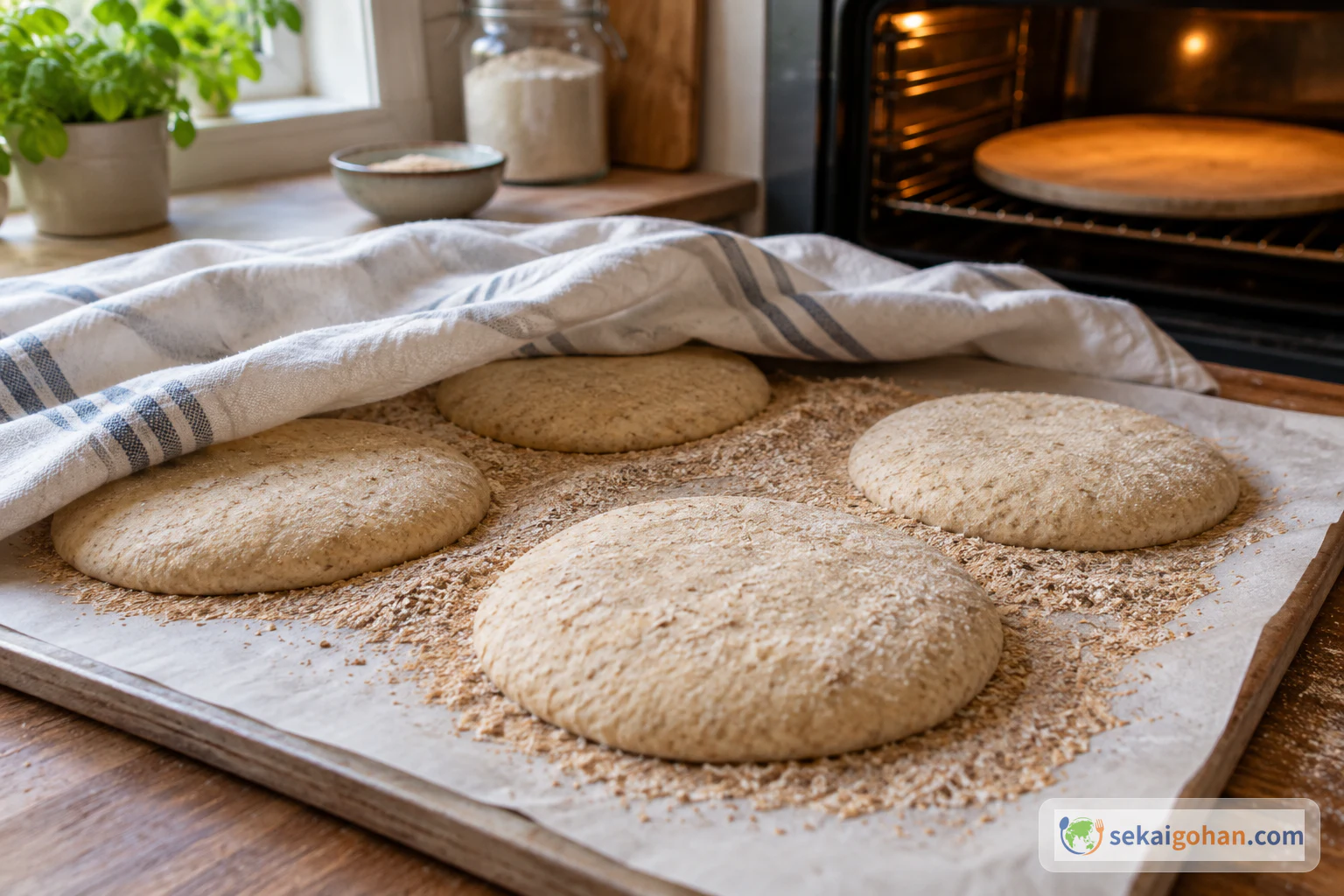
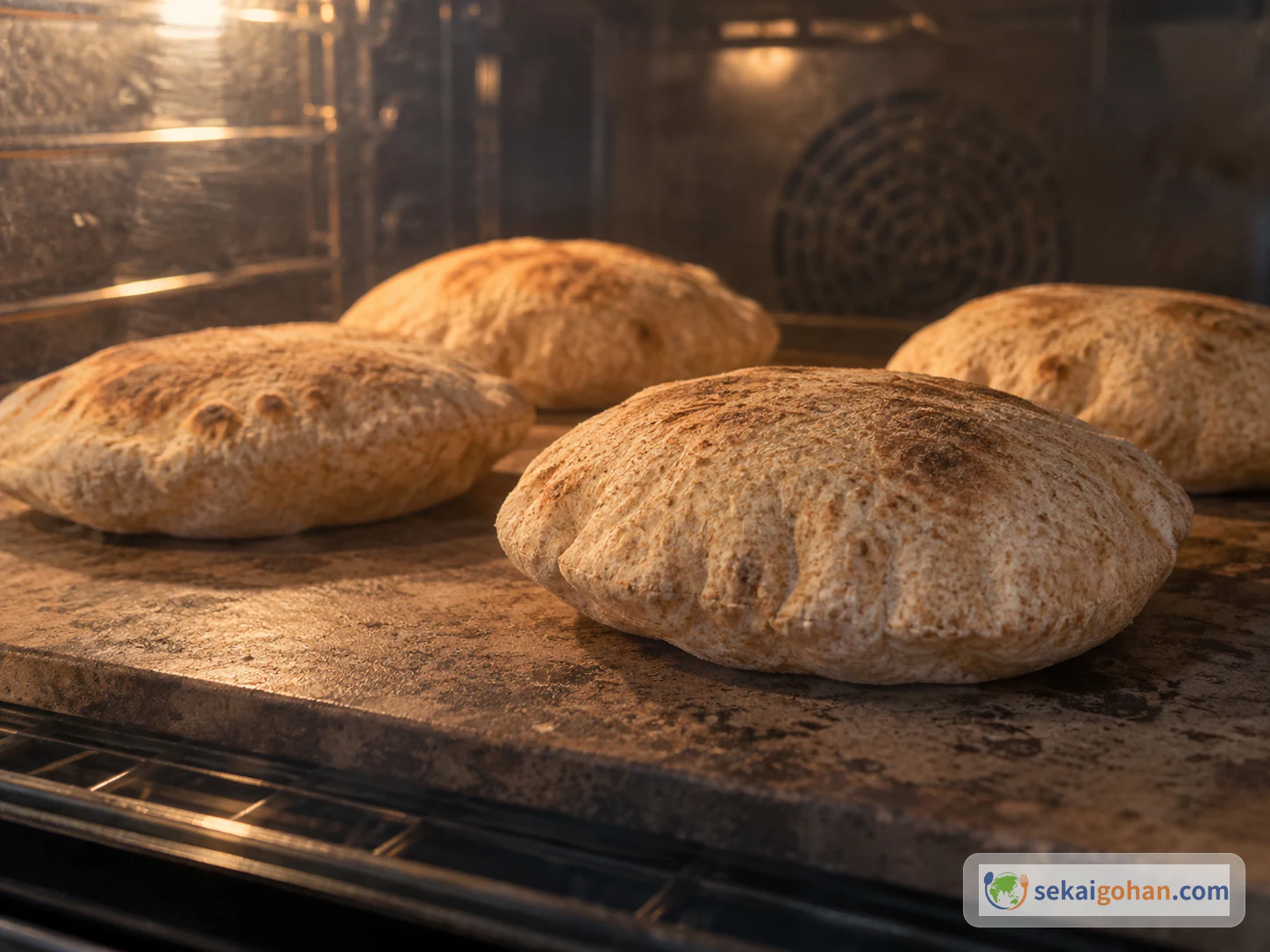
Torn by hand, a warm round of aish baladi becomes a spoon for sauce and beans, or a wrap for whatever else is on the table. In Egypt it turns up from breakfast through dinner, and on a farm-work break it can be the whole meal, with nothing more than onions, arugula and fresh cheese. The bread (عيش بلدي, also written eish baladi or aysh baladi) is made entirely with whole-wheat flour, and its character comes from that flour's flavor, a bran-flecked underside and a short bake at very high heat. At home, a baking stone in a hot oven gets you close to the ovens of Cairo's markets.
Aish Baladi at the Egyptian Table
Baladi means "local" or "native," and in Egyptian Arabic bread itself is called aish, a word connected with "life." That fits: bread is part of the daily rhythm, and at the table it works as much as a tool for eating as a side.
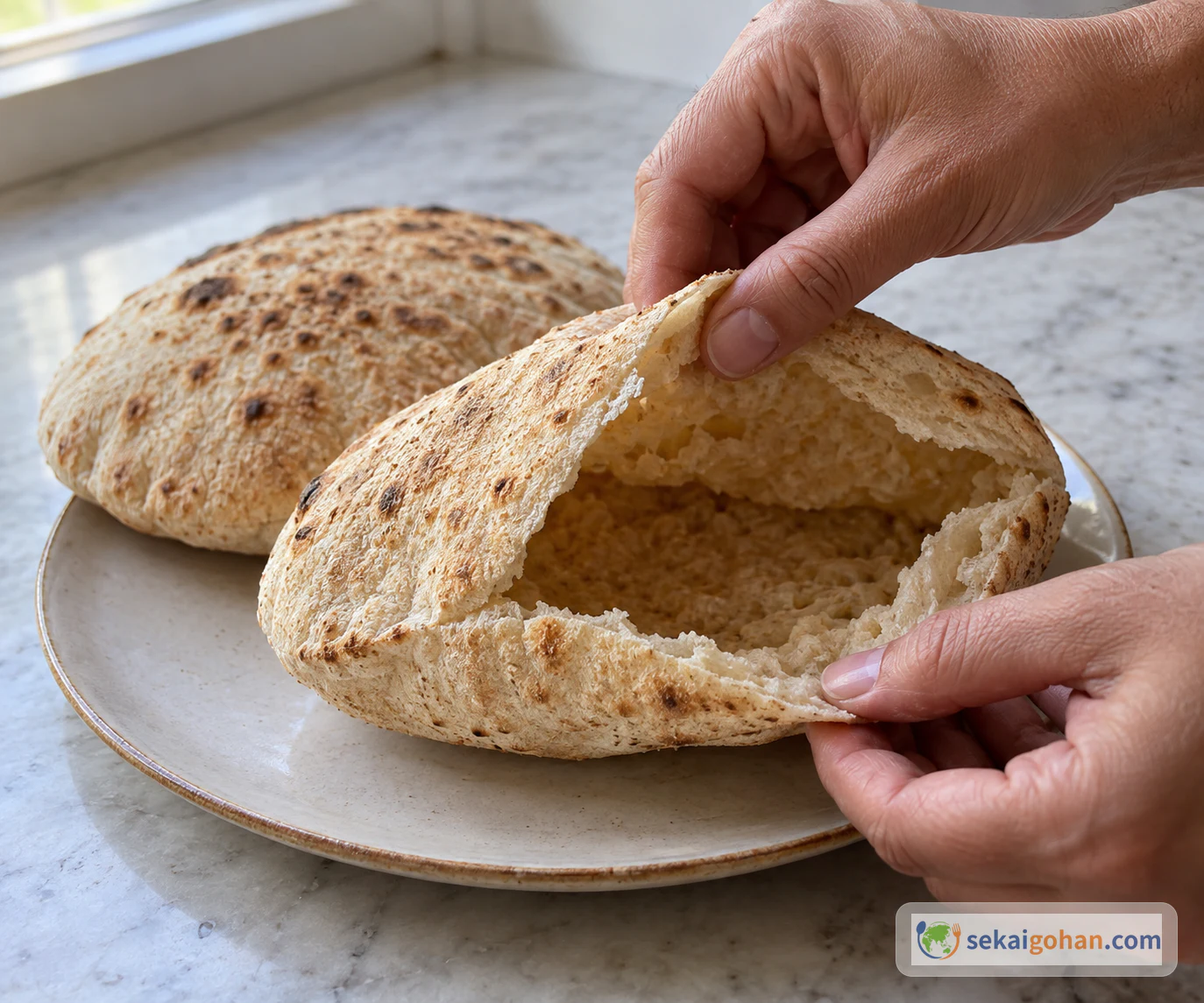
As it bakes, the bread can puff into a hollow pocket like pita, but the two aren't the same bread. Aish baladi is defined by its whole-wheat dough, the bran underneath and that blast of high heat.
Ingredients: 16 Flatbreads
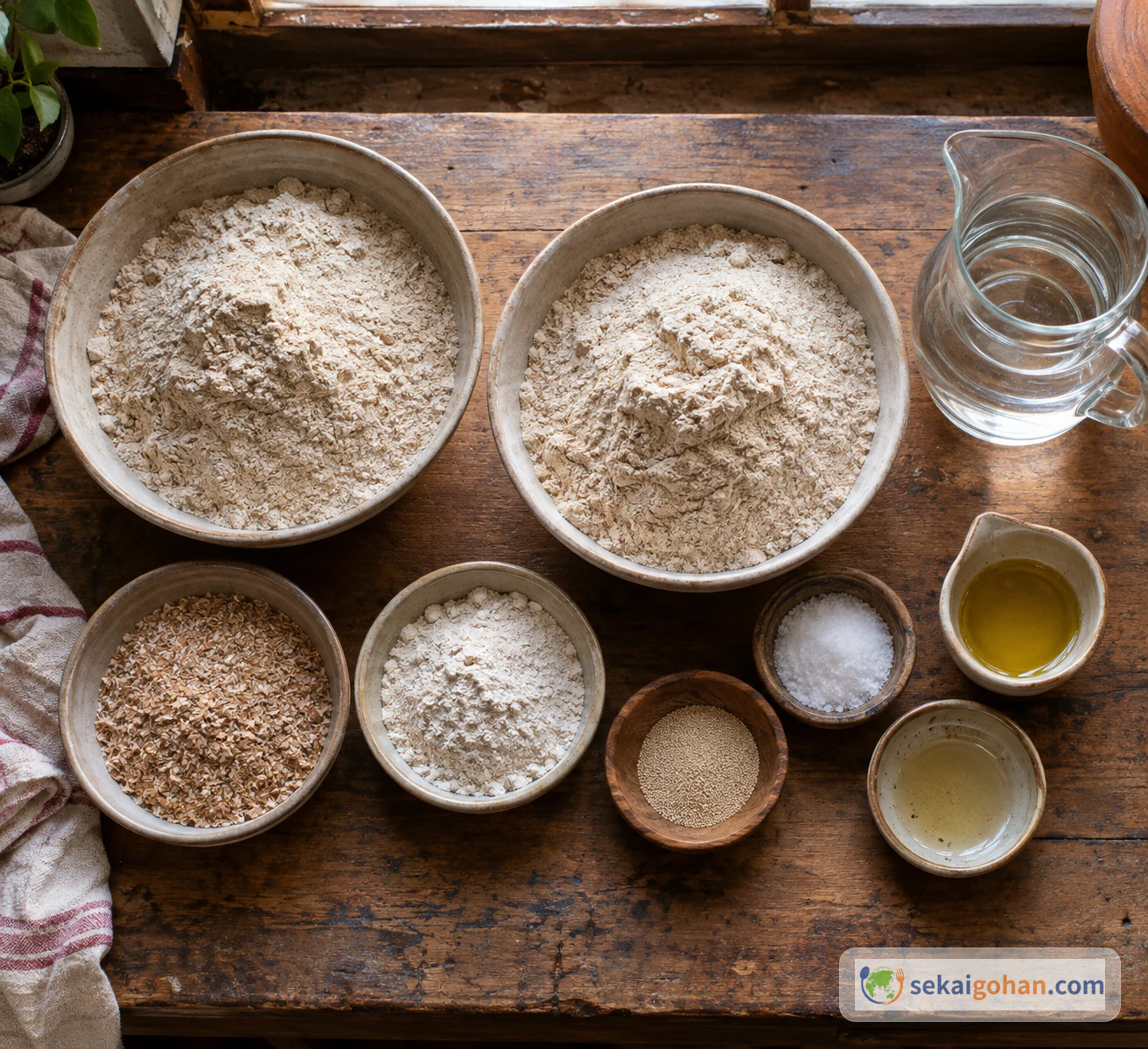
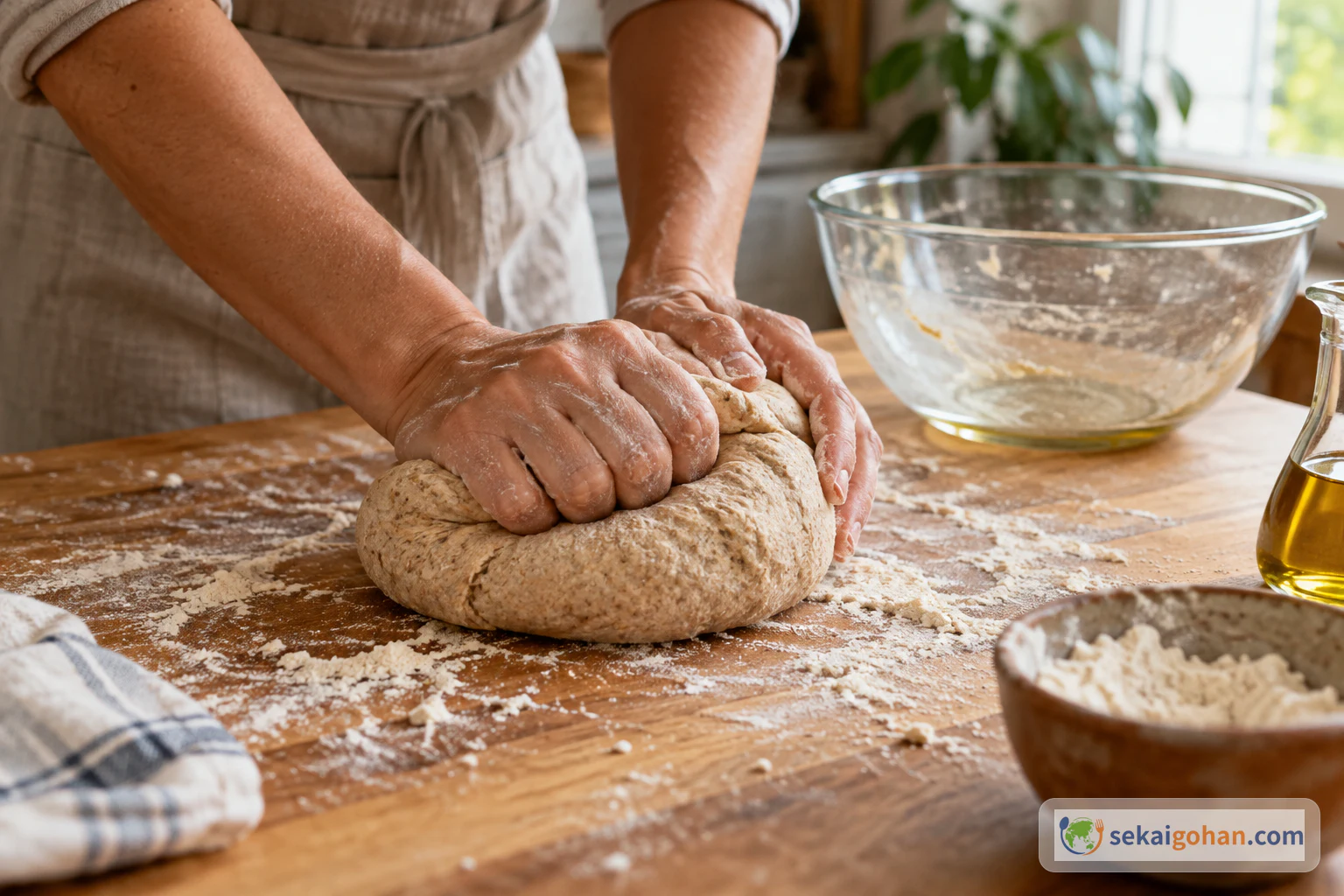
Add the 5 cups of whole-wheat flour in two halves. The flour for the work surface, the oil for the bowl and the optional bran are separate from the dough amounts, so don't take them out of the 5 cups of flour or the 1 tbsp of oil.
This bread contains wheat and is not suitable for anyone with a wheat or gluten allergy or with celiac disease. Take care with shared bowls, boards and baking surfaces. Don't taste the raw dough; handle the bread once it is baked.
Choosing Flour, Salt and Bran for Aish Baladi
Whole-wheat flour: Brands differ in how coarsely they're ground and how much water they absorb. Start with the listed amounts and watch the dough rather than adding a lot of extra flour at once. Keep the dough 100% whole wheat; swapping in white flour changes the bread, and the whole-wheat flavor is the point.
Kosher salt: Salt crystals vary in size and bulk, so another salt measured with the same spoon isn't an equal swap.
Bran: Cracked wheat bran scattered on the parchment is optional. It helps with handling and gives the bread its grainy underside. If you can't find it, extra whole-wheat flour does the same job; breadcrumbs, rice bran and other stand-ins don't belong here.
If you convert the measures: With a US cup of 236.6 ml, 2 1/2 cups is about 591.5 ml. Use that for each half of the flour by volume and for the water. 1 tbsp is 15 ml. Measure the flour by volume rather than converting it to grams.
Equipment
- A large mixing bowl, plus a lightly oiled bowl for the first rise (or reuse the first bowl, oiled)
- A clean work surface for kneading and dividing
- Two baking sheets lined with parchment paper, for the final rest (not for the oven)
- Clean kitchen towels
- A baking stone. If you don't have one, a heavy baking sheet turned upside down and preheated can be used instead
- A pizza peel or similar flat tool for moving the rounds to the stone
- A wire rack
- Heat-resistant oven mitts
- A thermometer, useful for checking the water temperature
Preheat the stone at 500°F (about 260°C). Check that your oven can be set that high and that your stone or baking sheet can be heated empty, following the manufacturers' instructions. Check the heat rating of every tool that goes near the stone, including any paper. The parchment is for the dough's final rest only; transfer the dough to the stone and do not bake it on that paper.
Method: Two Additions of Flour, a Long Rise and a Very Hot Stone
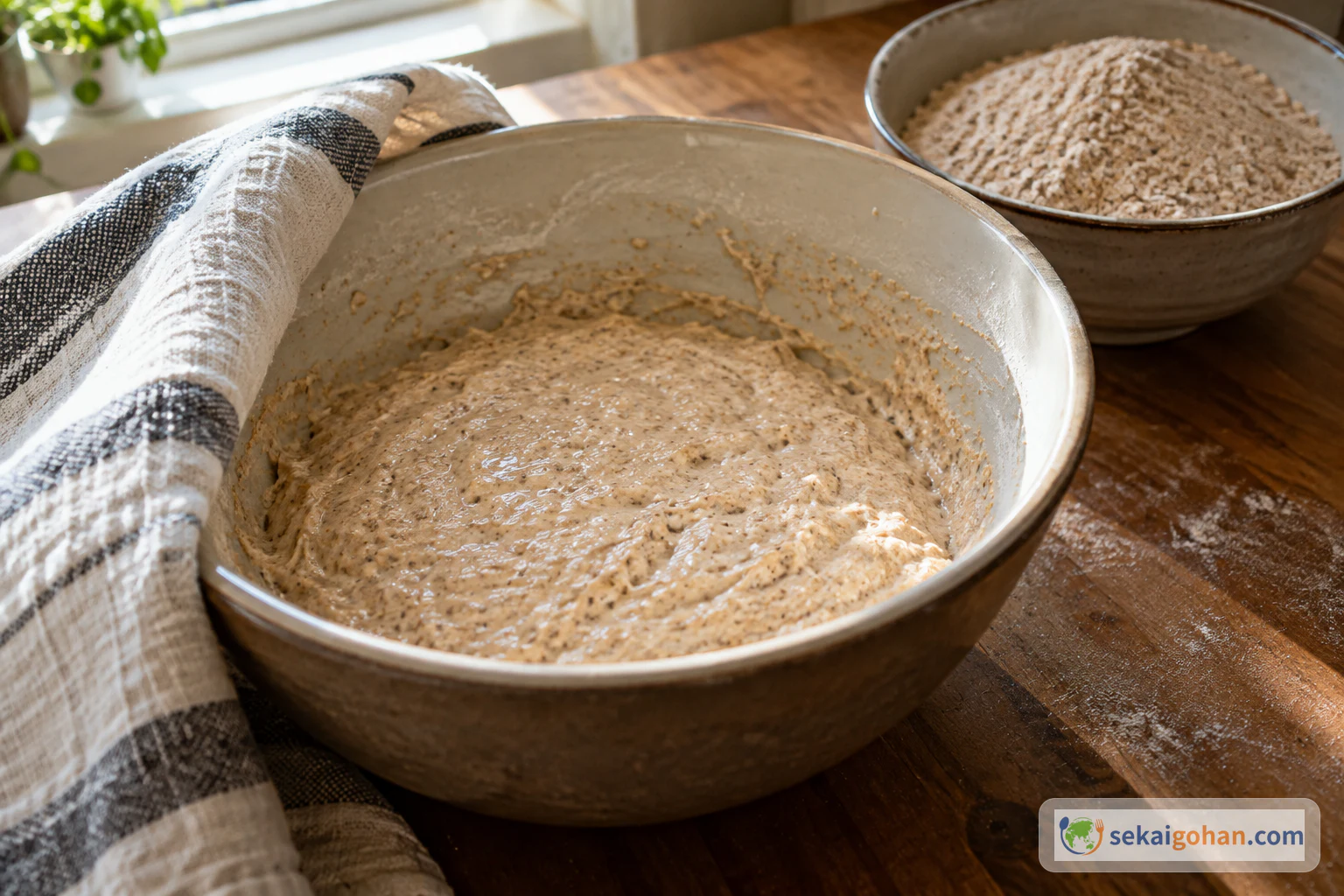
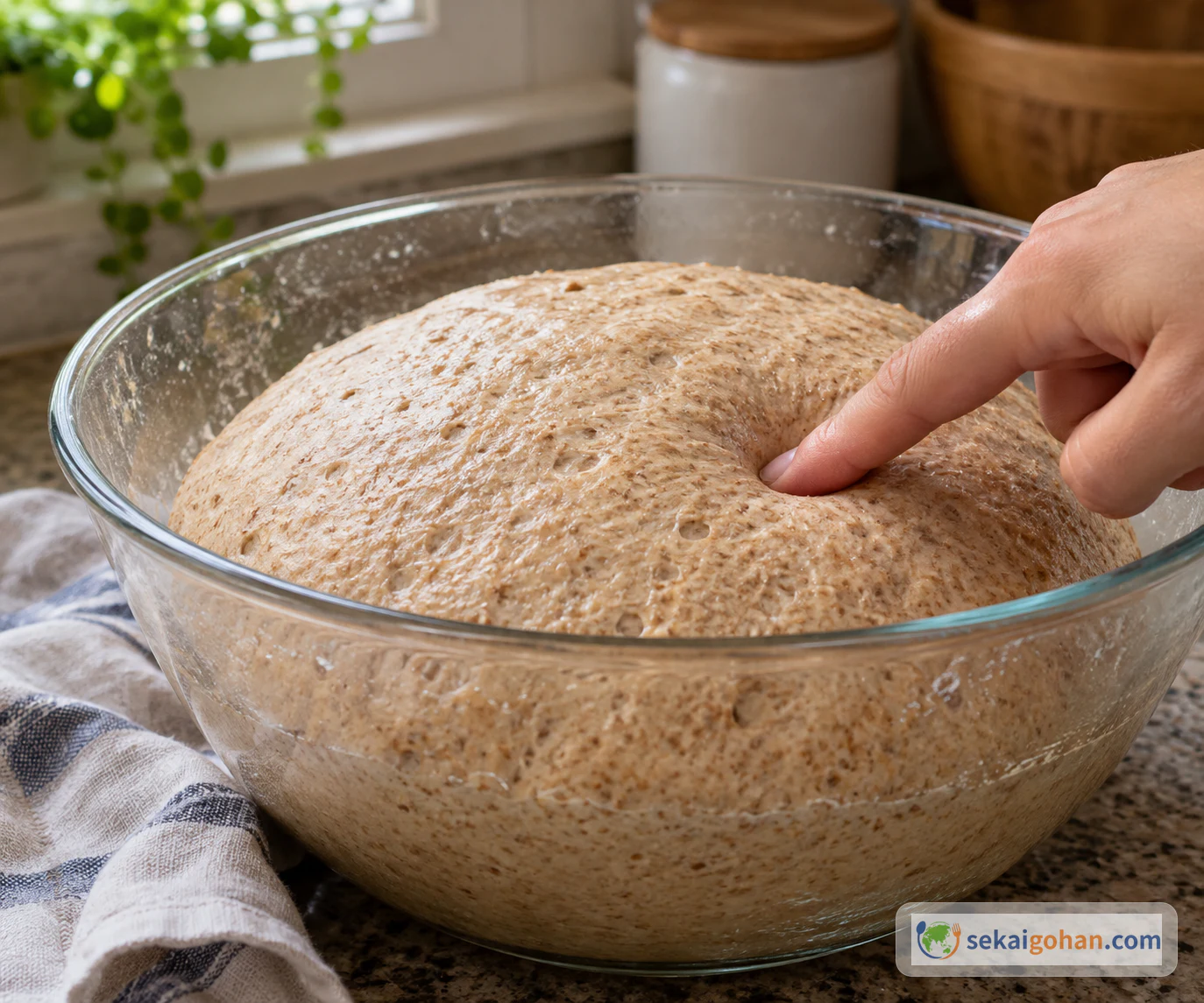
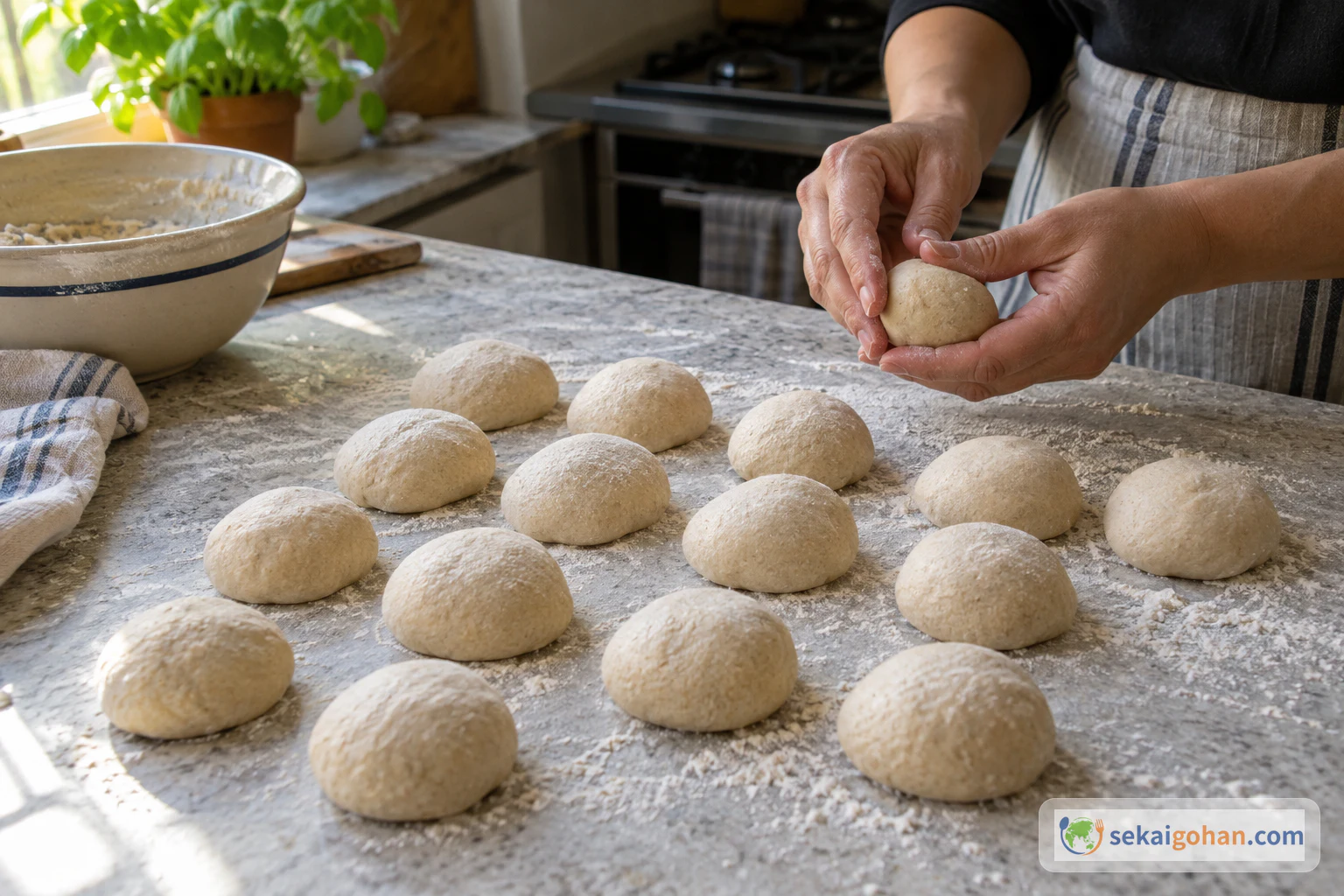
Ovens, stones and flours all differ. Allow time for all of the rises: the dough rests 30 minutes as a starter, rises about 1 1/2 hours, and rests about 30 minutes again after shaping. Preheat the stone during the shaping and final rest.
Why Aish Baladi Turns Out Flat, Pale or Stuck
Breads that don't puff can have more than one cause, so work through the likely ones in order.
| Problem | Possible causes | What to check |
|---|---|---|
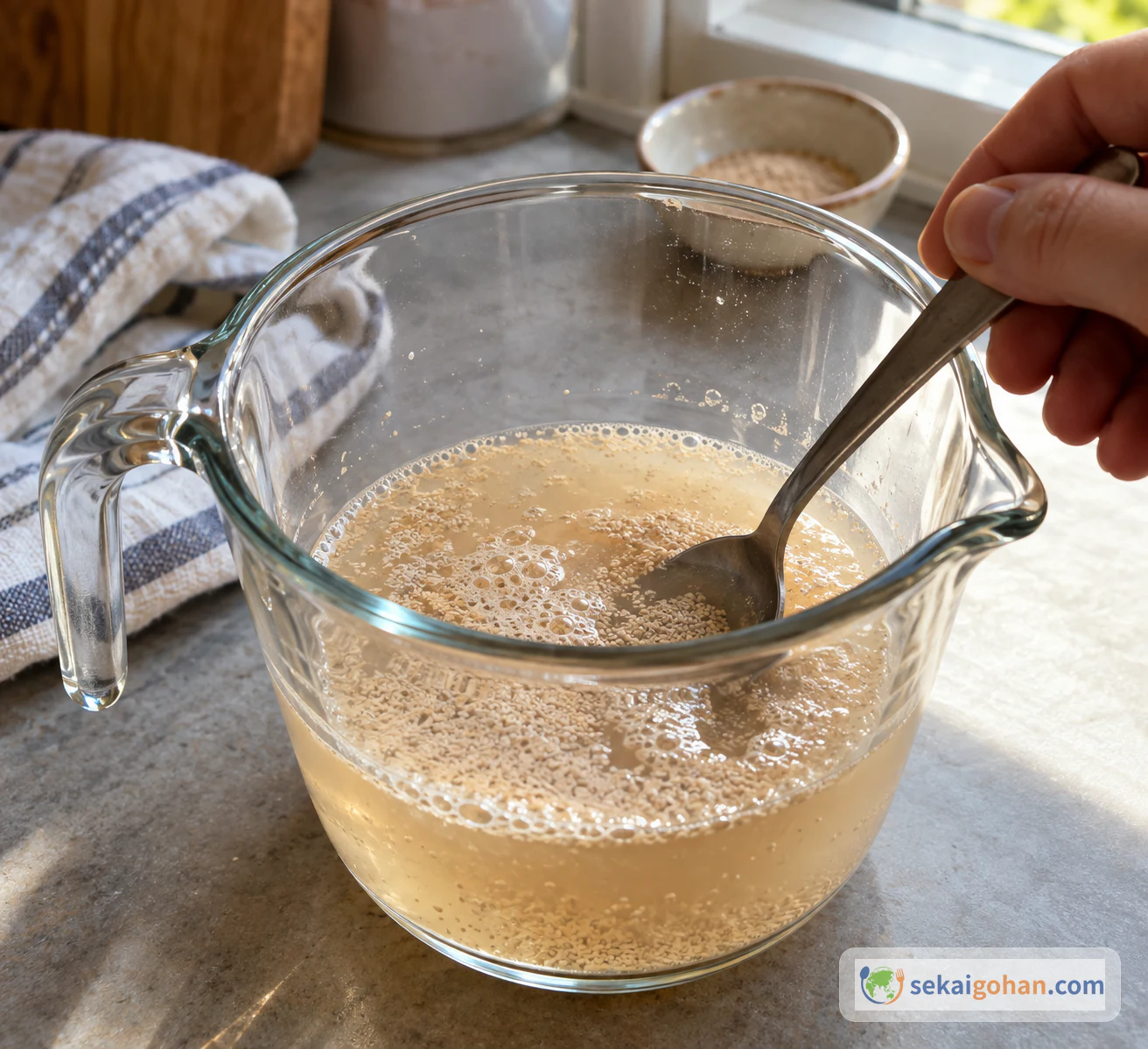
| The yeast doesn't foam | The yeast isn't active, or the water was too hot | Don't make the dough. Check the yeast and the water temperature (105°F, about 41°C) and start again |
| The dough feels too stiff or too wet | Whole-wheat flours absorb water differently | Watch the dough rather than adding a lot of flour at once; use dusting flour only lightly |
| The breads don't puff | Rounds too thick or uneven, not enough rest after shaping, stone not fully preheated, or the rounds deflated during transfer | Stretch to an even 5-inch (about 13 cm) round, give the full rest, preheat the stone for the full 30 minutes, and move the rounds gently |
| The rounds stick to the paper | Too little bran or flour on the parchment | Scatter a thin, even layer of bran (or whole-wheat flour) on the paper before setting the rounds down |
| Pale with no browned spots | The stone or oven isn't hot enough | Check that your oven really reaches the set temperature and that the stone had its full preheat |
If your oven tops out at 475°F (250°C), preheat the stone thoroughly at that maximum and judge the bake by the puff and the light browned spots rather than by the 6–8 minutes. No baking stone? A heavy baking sheet, turned upside down and preheated, works in its place.
Serving Aish Baladi
Eat the bread soon after its rest, while it's still warm and the whole-wheat aroma is at its best. Tear it to scoop up sauces or wrap it around other foods on the table. At an Egyptian meal it sits beside a bean dish such as ful medames, or alongside koshari, taameya or hawawshi. For more of the country's cooking, see our Egypt page.
Frequently Asked Questions
Is aish baladi the same as pita?
They look alike, and aish baladi can puff into a pita-like pocket, but they're different breads. This one is defined by its whole-wheat flour, the bran on the paper and the high-heat bake.
Will a 100% whole-wheat dough really puff?
Yes. A full rise, a stone preheated thoroughly at high heat, and thin, even rounds are the keys to a good puff.
Can I make it in a frying pan?
There is a baladi bread cooked in a frying pan, but it uses a different dough with white flour and sugar. It's a separate recipe, so keep its amounts and method apart from this one.
Can I use instant yeast?
This recipe is written for active dry yeast, so use that as listed.
Can I bake the rounds on their parchment?
Use the parchment-lined sheets for the final rest, then move the dough to the stone. The paper stays out of the oven at 500°F (about 260°C).