Saka-saka (Pondu): Pounded Cassava Leaves Simmered in Red Palm Oil from the DR Congo

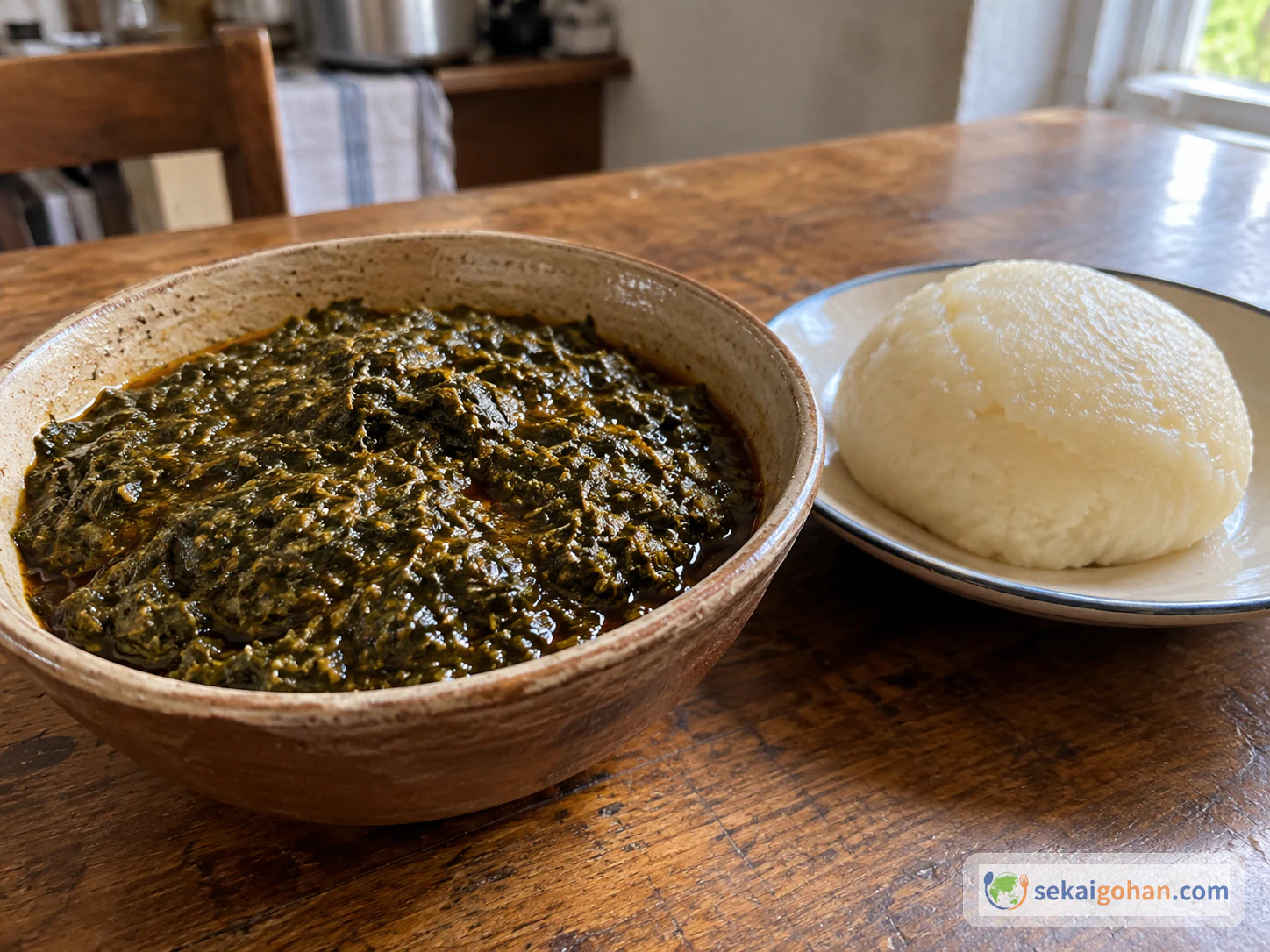
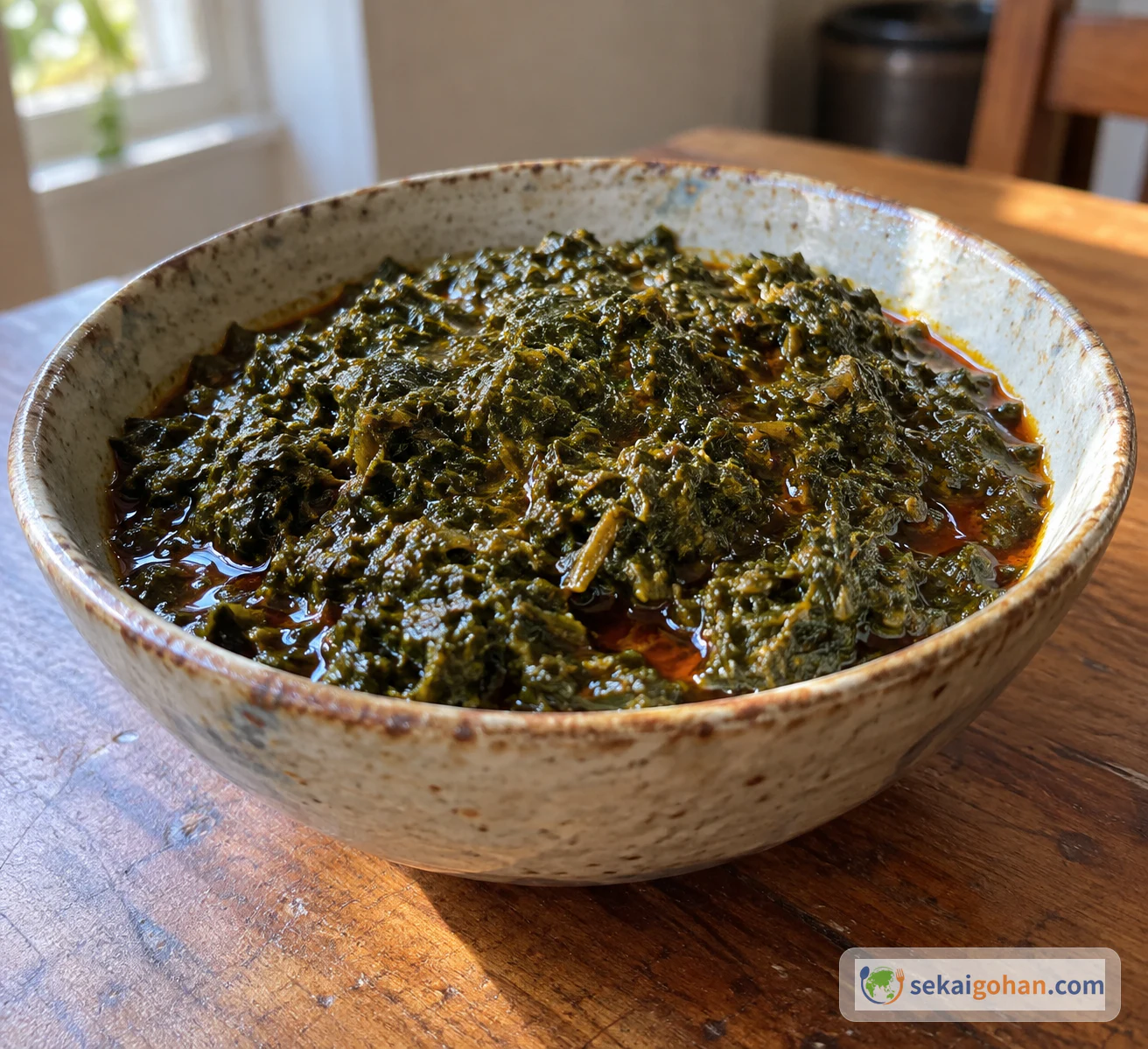
Saka-saka from the Democratic Republic of the Congo: finely pounded cassava leaves simmered in red palm oil, with the oil seeping between the leaves
Cuisine
Congolese (DR Congo)

How to make saka-saka, also called pondu, the Democratic Republic of the Congo's stew of pounded cassava leaves cooked in red palm oil. Covers the safe handling and long boiling of cassava leaves, choosing frozen leaves and red palm oil, optional fish and groundnut paste, serving with fufu or rice, and how this dish differs from same-named recipes elsewhere.

Cooking flow

Cooking steps

STEP11 / 8

Sort and wash the leaves, removing the tough stalks

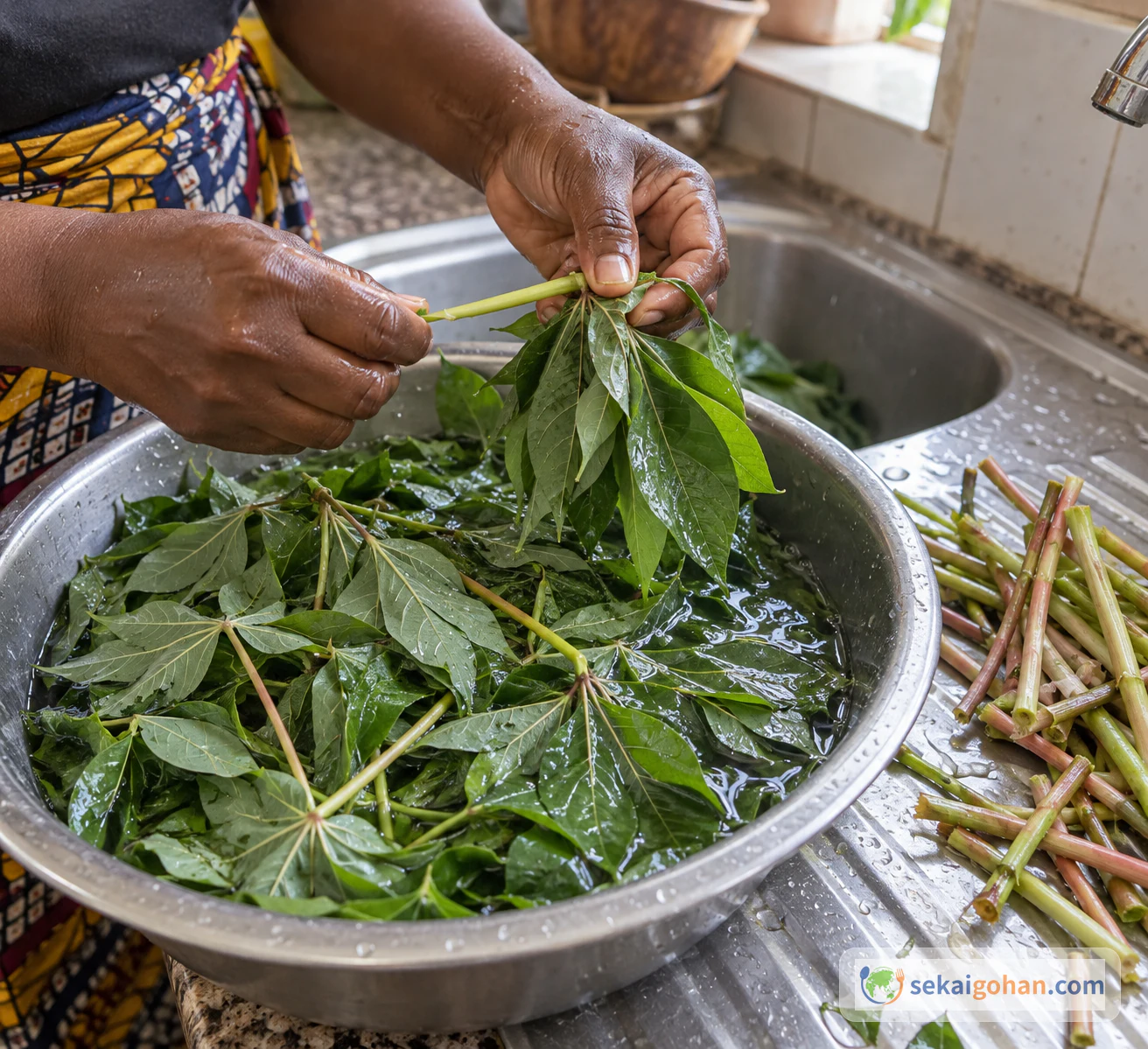
Washing cassava leaves under running water after removing the tough stalks
Keep the leaf blades and tender young stalks; set the tough stalks aside

Pick over the cassava leaves, discarding any damaged ones. Pull off the tough, mature stalks, keeping the leaf blades and the tender young stalks. Wash the leaves well and drain them.

STEP22 / 8

Pound the leaves finely

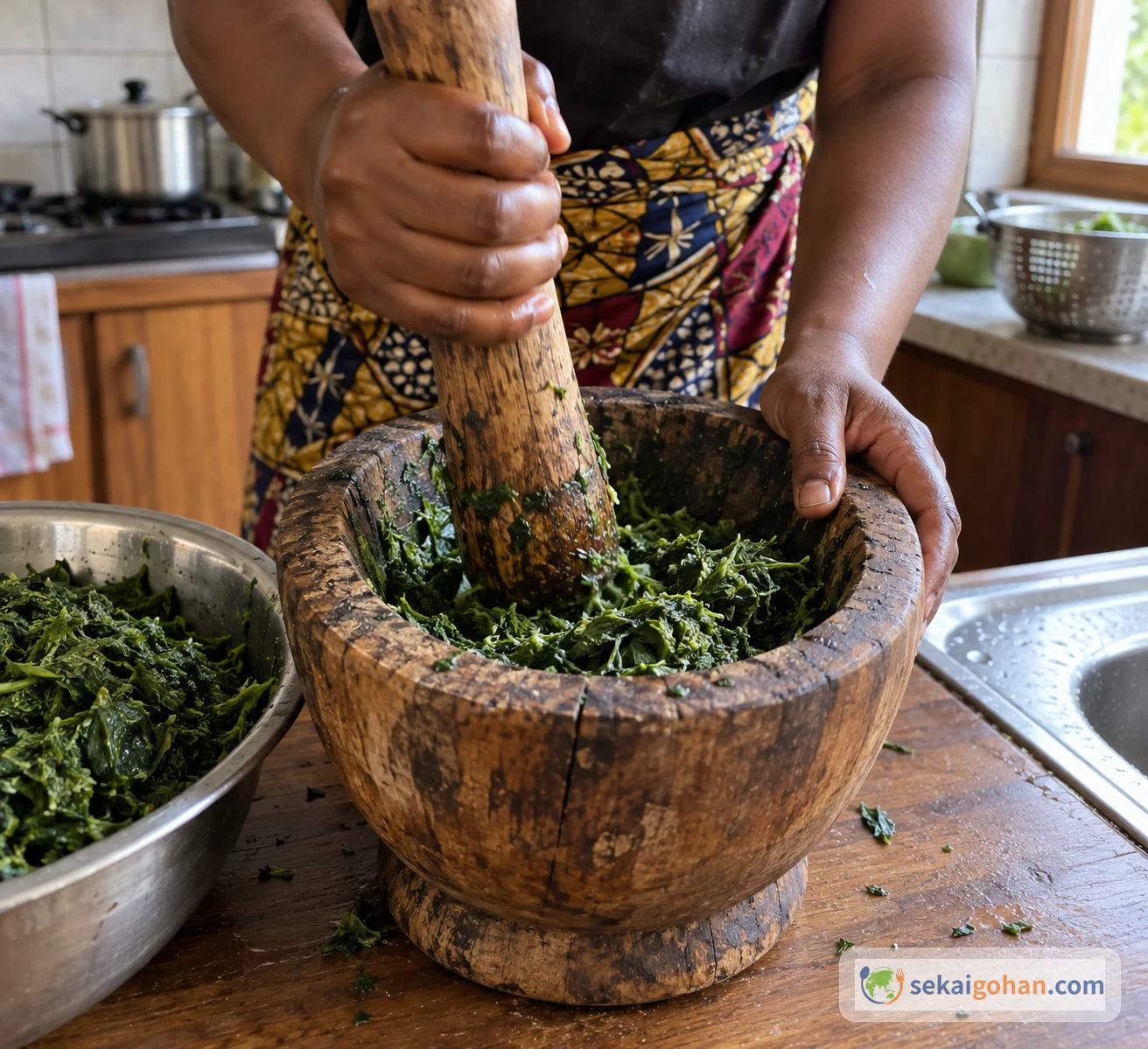
Pounding washed cassava leaves in a mortar until the pieces are small
Pound until the leaf pieces are small; a smooth puree is not needed

Pound the washed leaves in a mortar, working in batches, until the pieces are small. A food processor also works if it has room to move the leaves. The leaves do not need to become a smooth paste; small, broken-down pieces are what you want.

STEP33 / 8

Put the leaves and water in the pot

Adding pounded cassava leaves and 1 liter of water to the pot
Make sure all the leaves are touching the water before heating

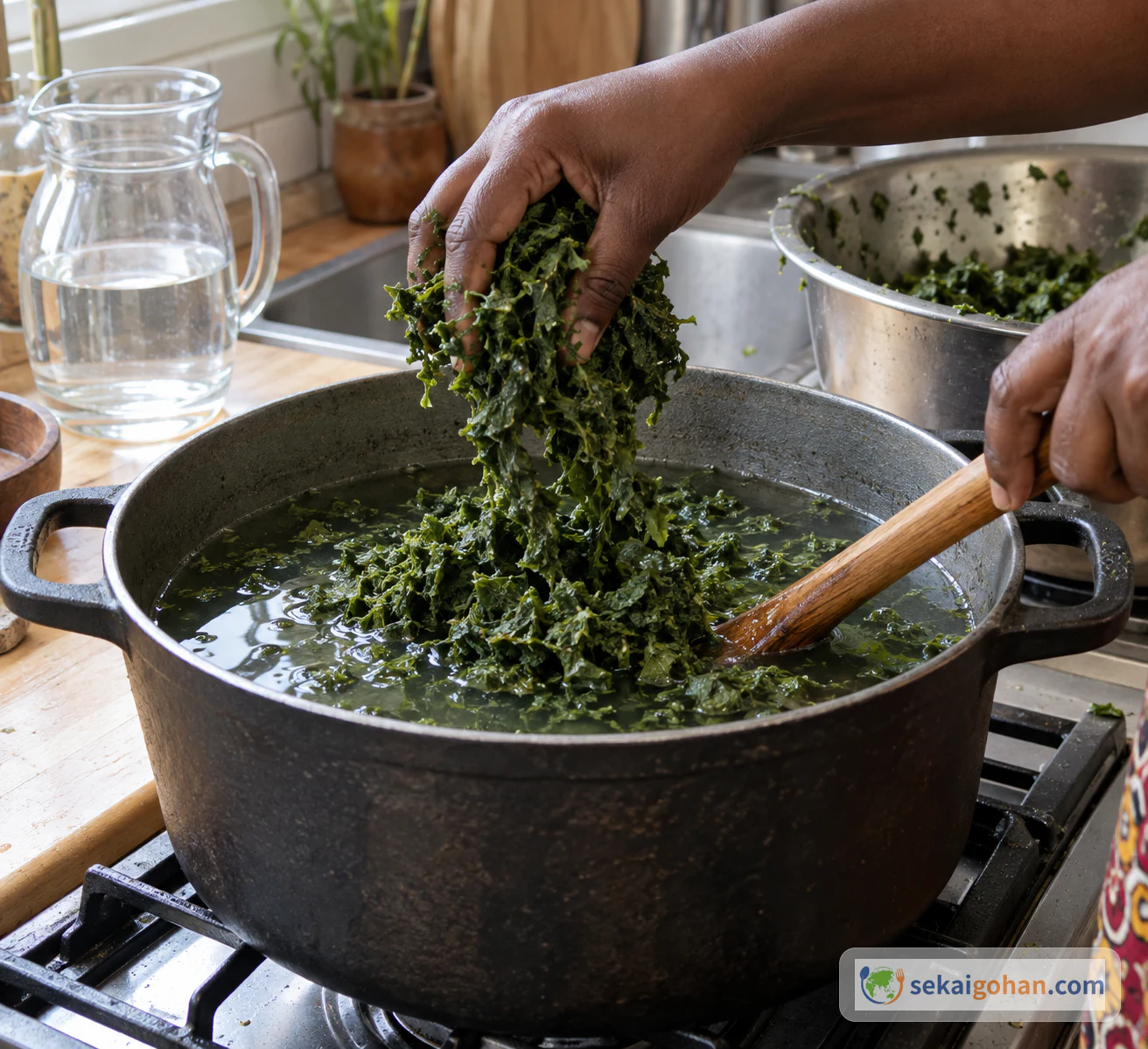
Put the pounded leaves and 1 quarts (1 L) water in a heavy pot. Push the leaves down with a wooden spoon so all of them are in contact with the water.

STEP44 / 8

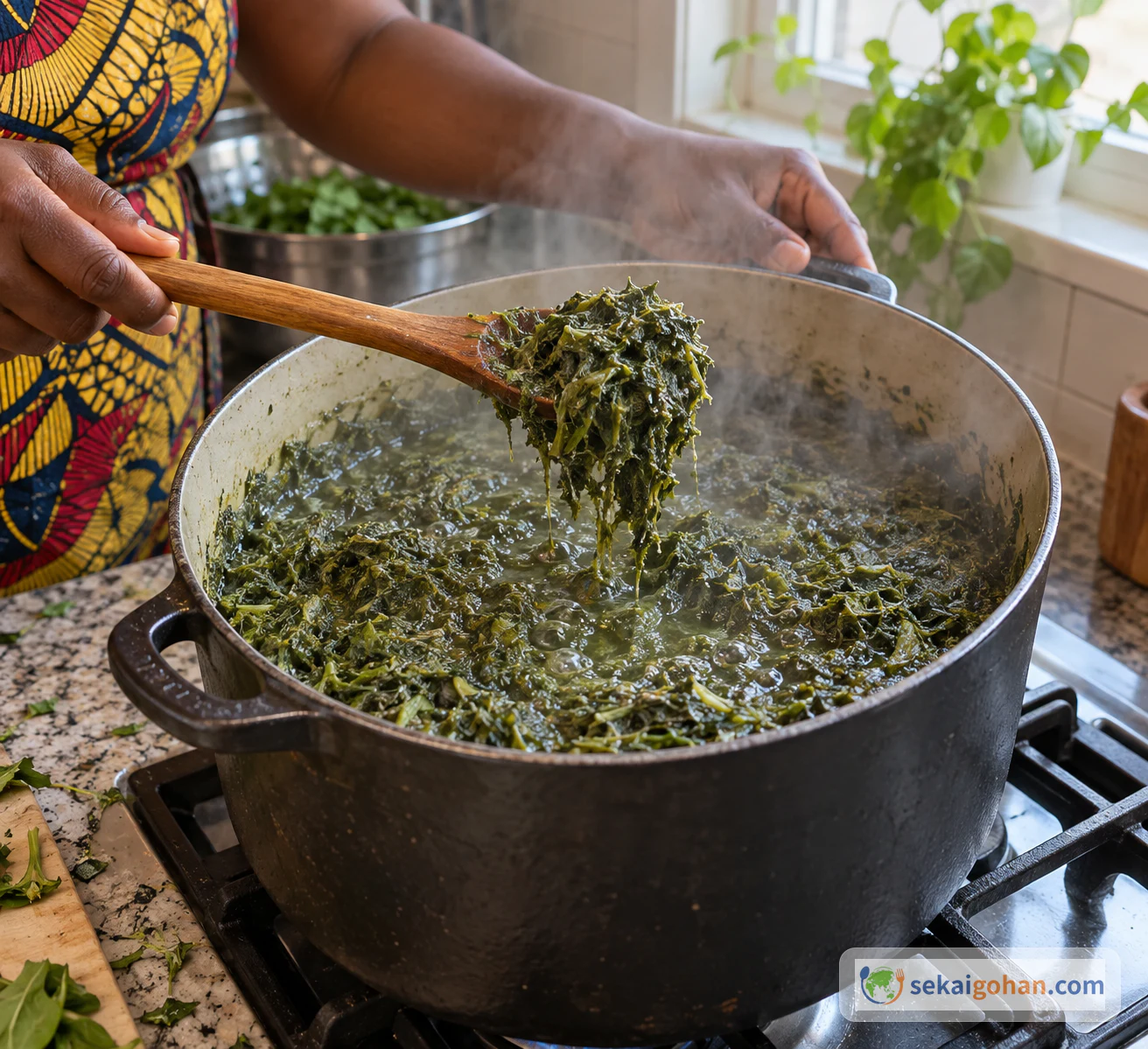
Boil the leaves for 30–60 minutes

Pounded cassava leaves simmering gently in the pot during the long boil
Keep a gentle boil and watch the bottom of the pot

Bring to a boil, then set the lid slightly ajar and keep the pot at a steady, gentle boil for 30–60 minutes. Stir from the bottom from time to time. If the pot starts to catch, add a little water at a time. Do not add oil, fish or other ingredients yet.

STEP55 / 8

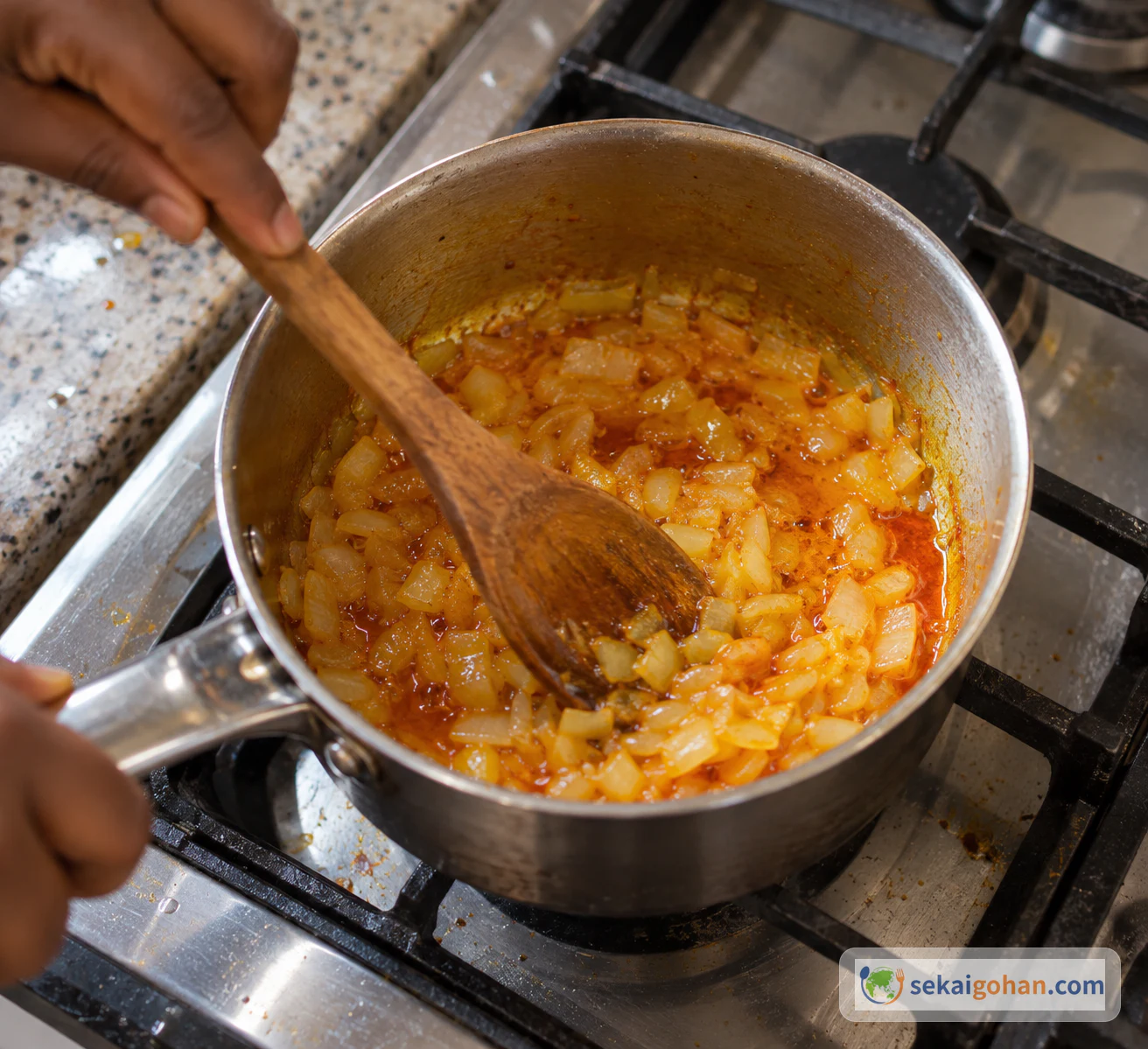
Soften the onion in a little of the palm oil (optional)

Softening optional onion in a little red palm oil
Cook the onion until soft and translucent, not browned

If using onion, chop it. In a small pan, warm a little of the ½ cup (150 ml) red palm oil and cook the onion until soft and translucent, without browning. Keep the rest of the oil for step 7.

STEP66 / 8

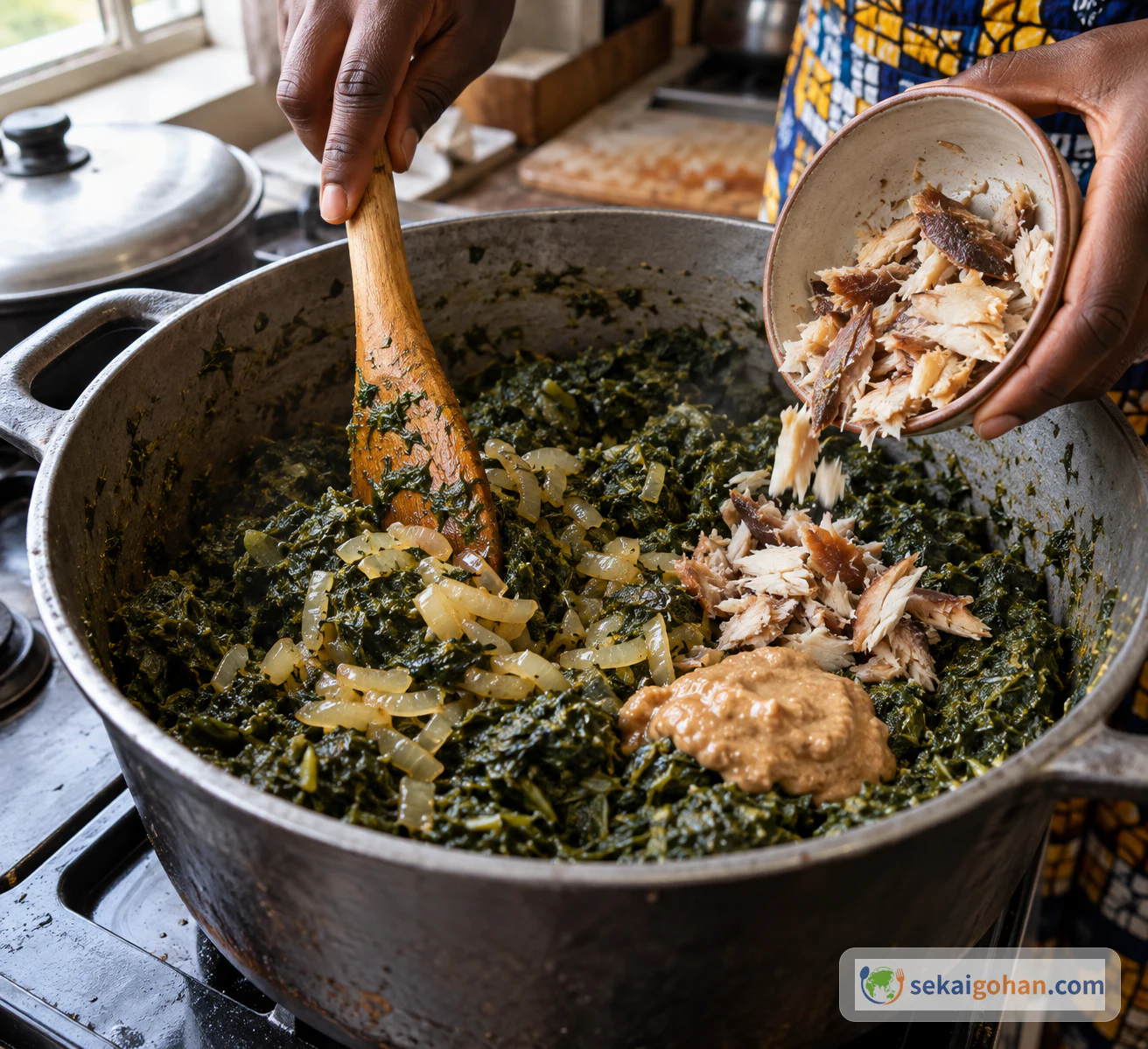
Add the onion, optional additions and seasoning

Folding softened onion and optional fish and groundnut paste into the cooked cassava leaves
Add only the optional ingredients you have chosen

Add the softened onion to the leaves, along with any optional leek, fish and groundnut paste you are using. To avoid lumps, loosen the groundnut paste in a little of the hot cooking liquid before stirring it in. Add pepper and a little salt; taste for salt again at the end.

STEP77 / 8

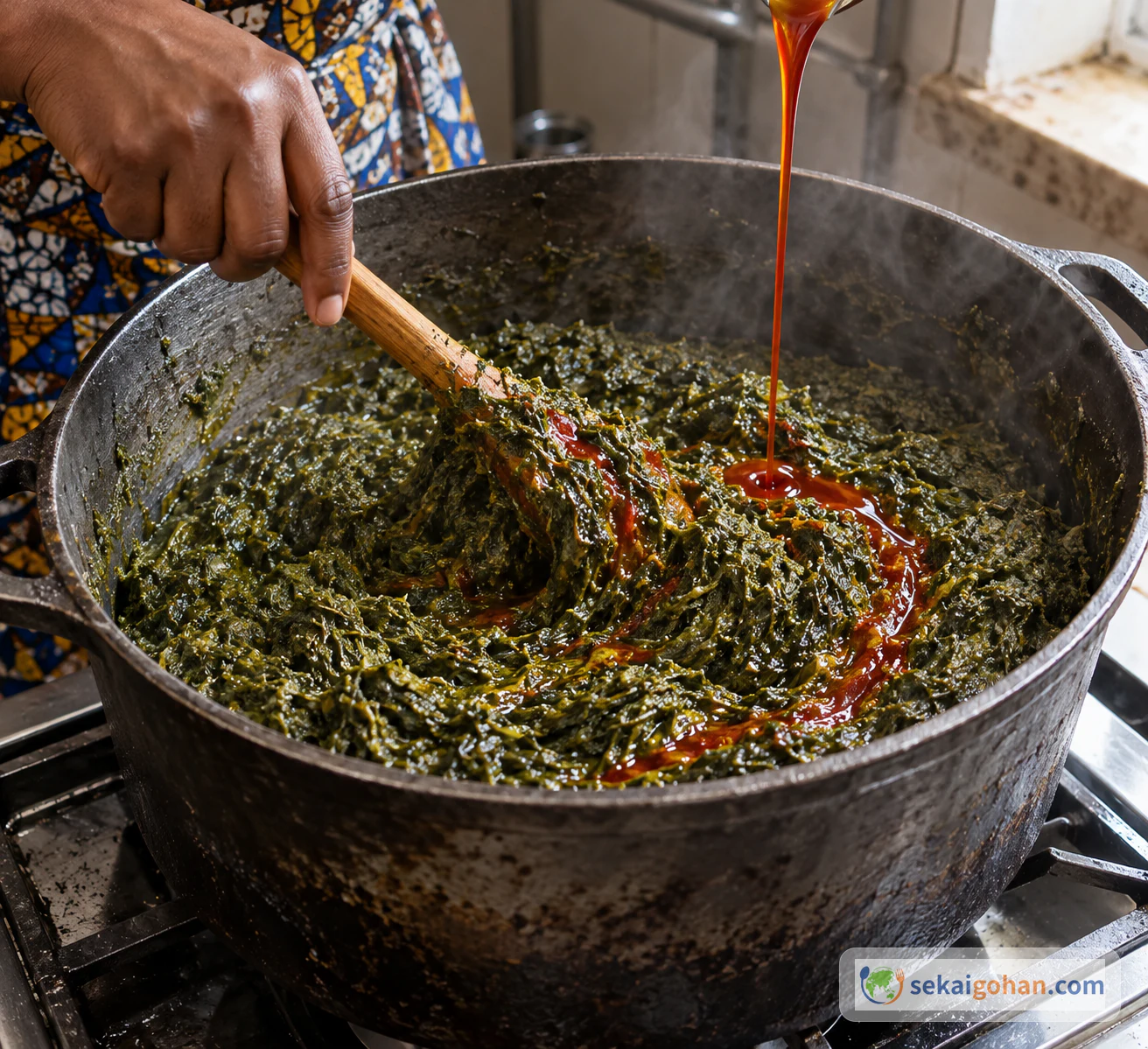
Add the remaining palm oil and cook 15 minutes more

Cooking saka-saka further after adding red palm oil, until the leaves are soft
The red oil starts to work its way into the leaves

Pour in the rest of the red palm oil, stir, cover and cook for 15 minutes more, until the leaves are soft. If it starts to catch, add a little water at a time.

STEP88 / 8

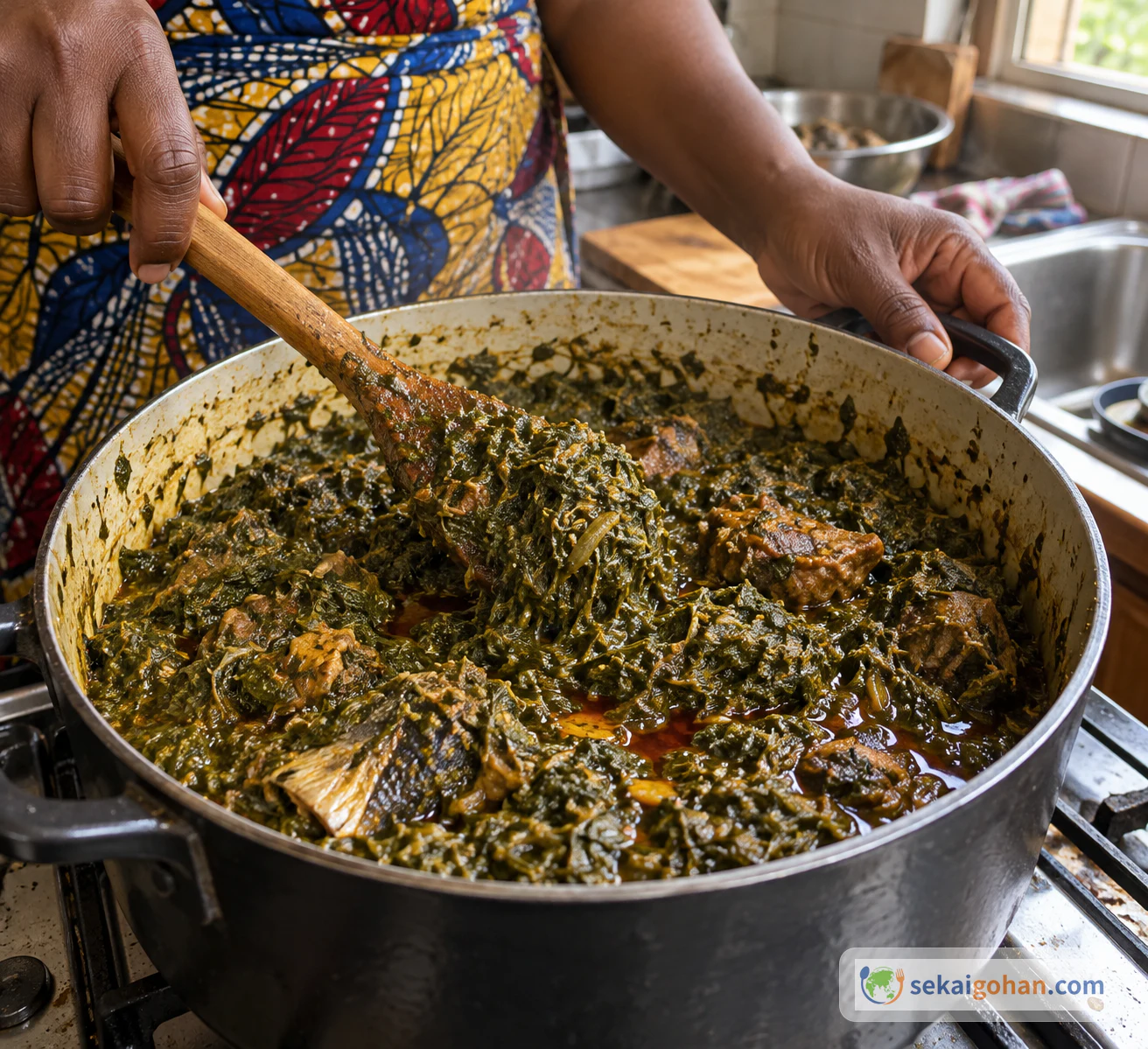
Uncover and cook down to a thick finish

Saka-saka cooked down with the lid off until red oil shows between the leaves
No pool of broth, just a little red oil between the dark green leaves

Take off the lid and let excess liquid cook off gently, stirring so the bottom does not scorch. It is ready when the leaves are soft, there is little liquid left, and red oil shows on the surface and between the leaves. Oil seeping out is part of this style, not a mistake. Taste and adjust the salt and pepper.

0 / 0
Ingredients

Ingredients

1 / 1

Ingredients

Ingredient Amount Role
Young cassava leaves (feuilles de manioc), fresh 2.25 lb (1 kg) The body of the stew. Use the leaf blades and tender young stalks; remove the tough stalks
Clean water 1 quarts (1 L) For boiling the pounded leaves
Red palm oil ½ cup (150 ml) The color and flavor of the dish. Part goes to the onion, the rest into the pot near the end
Salt to taste Seasoning, adjusted at the end
Pepper to taste Seasoning
Onion (optional) 2 oz (60 g) (2 small) Sweetness; softened in a little of the palm oil
Leek (optional) 2 stalks Aroma
Smoked or salted fish (optional) to taste Savory depth and salt
Groundnut paste (optional) to taste Richness and body
0 / 0

A pot of finely pounded cassava leaves sits over low heat. At first it is bright green and watery, but as it cooks the leaves darken, the liquid draws back, and red palm oil begins to seep out between the leaf pieces. That thick, dark green stew is pondu, also called saka-saka, from the Democratic Republic of the Congo (DRC). It is made from the leaves of the cassava plant, not the starchy root, and red palm oil gives it its color and flavor. It comes to the table with a starchy staple such as fufu or rice.

Saka-saka in the DR Congo

Pondu and saka-saka are both names for cassava leaves and for the stew made from them. Saka-saka is usually made with cassava leaves, onion and chilli, sometimes with dried fish or meat. Pondu is a cassava-leaf stew with ingredients such as red palm oil, chillies, garden eggs and tinned fish. In both, the leaves are pounded and cooked with palm oil, onion, garlic, green pepper and dried or smoked fish.

Young cassava leaves are eaten in the DRC and several other African countries, and the style varies. In the DRC the stew is cooked relatively dry, with oil seeping out of the leaves, and that is the version made here. In Sierra Leone, cooks prefer the leaves floating in a wetter mixture of water and oil, a separate dish with its own method. The neighboring Republic of Congo (Congo-Brazzaville) has its own saka-saka too.

Other leaf and palm dishes sit nearby. Poulet moambé, chicken in palm nut cream, is a separate DRC dish. Rwanda's isombe and Cameroon's sanga also use leaves or palm products, but they belong to other countries and are not versions of saka-saka.

Why the leaves need long boiling

Cassava leaves are never eaten raw. Outside Central Africa, the real challenges are finding the leaves at all and then handling them correctly.

Never eat cassava leaves raw

Remove the tough stalks, pound the leaves, and boil them thoroughly before seasoning. Do not use the cooking water for any other dish. For frozen cassava leaves, follow the heating instructions on the package.

Remove the hard petioles (leaf stalks), pound the leaf blades and young petioles, and boil the pulp for about 30–60 minutes before adding anything else. This eliminates the cyanogens. Prolonged boiling also reduces vitamin C.

Ingredients: A 2.25 lb (1 kg) Batch of Cassava Leaves
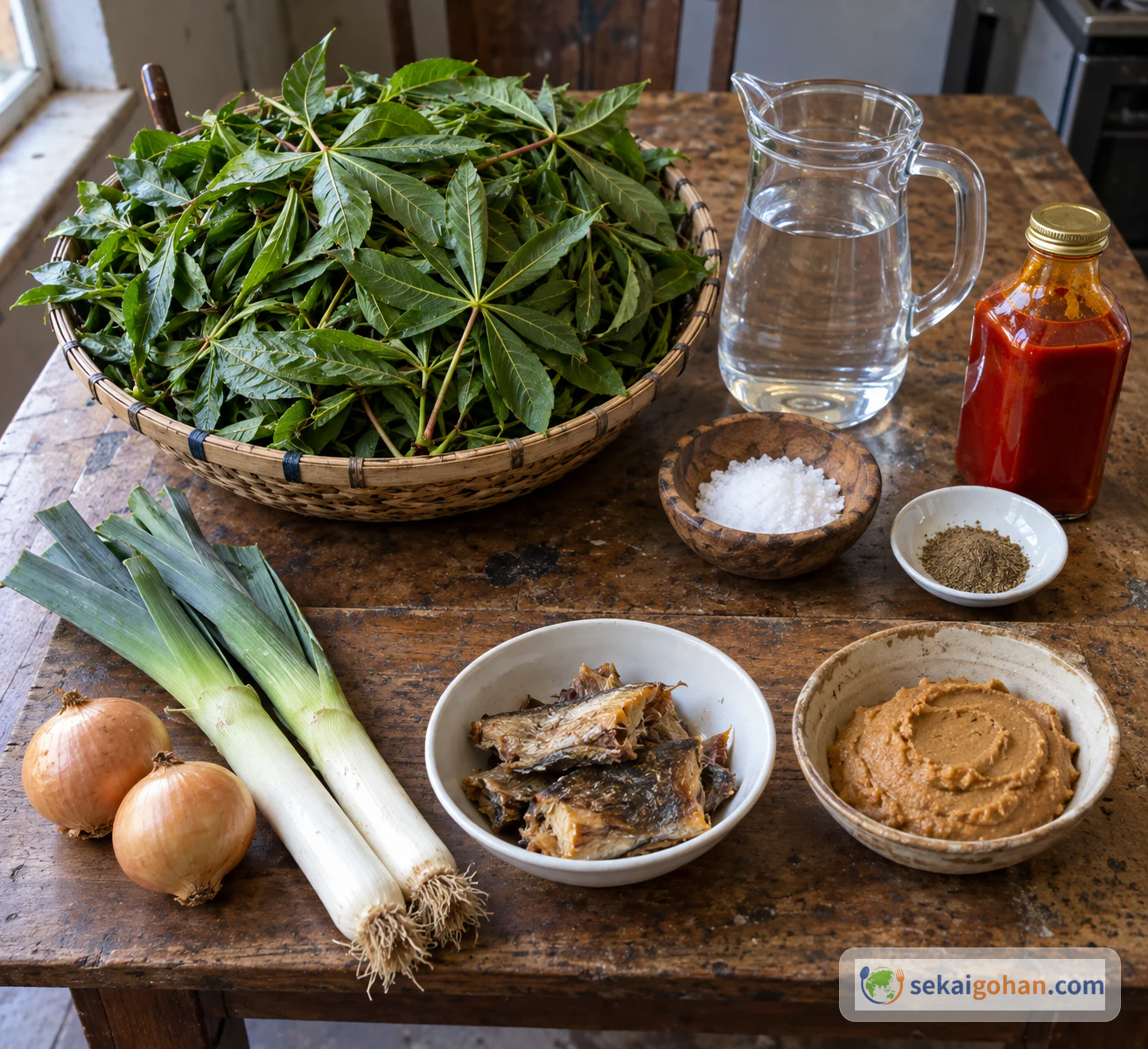
Saka-saka ingredients: cassava leaves, water and red palm oil, with optional onion, leek, smoked fish and groundnut paste set apart
The leaves, water and red palm oil are the core; onion, leek, fish and groundnut paste are optional

This batch is measured by the weight of leaves, not by servings. The first five rows are the core of the dish; the rows marked optional can be left out.

Frozen pounded cassava leaves are not a weight-for-weight swap for fresh leaves. Some are sold raw, some pounded, some already parboiled; follow the package for preparation and heating. If you add fish or groundnut paste, note the allergens: fish, and peanut (groundnut).

Equipment

  • A sturdy mortar and pestle, or a food processor with plenty of room
  • A heavy pot with a lid
  • A small pan for the optional onion
  • A wooden spoon
  • A colander or basin for washing the leaves

Choosing Cassava Leaves, Palm Oil and Additions

Cassava leaves. Fresh cassava leaves are rarely sold in ordinary supermarkets. Look in African grocery shops or online for frozen leaves labeled cassava leaves, feuilles de manioc, pondu or pounded cassava leaves. Check the label to see whether they are raw, pounded or precooked, and follow its heating directions.

Red palm oil. This is where the dish gets its color and taste. Refined palm oil and other neutral oils look and taste quite different, so look for African red palm oil; another oil makes a different dish.

Onion and leek. Both are optional. If leek is hard to find, simply leave it out.

Fish. Smoked or salted fish adds savoriness and salt. With salted fish, check the package to see whether it needs soaking first, and hold back on salt until the end.

Groundnut paste. Optional. Unsweetened, unsalted peanut butter is the closest supermarket choice, though it is not identical.

Spinach and other greens. These make a green stew that looks similar, but the taste, texture and handling are different. That would be a separate dish rather than a substitute for cassava leaves.

Method: Trim, Pound, Boil Long, Then Finish with Oil

Before you start

Steps 1–4 prepare and boil the leaves; nothing else goes into the pot until the leaves have boiled for 30–60 minutes. Steps 5–8 add the flavorings and palm oil and bring the stew to its finished consistency.

Saka-saka Troubleshooting

You are aiming for leaves pounded small and boiled until completely soft, then finished with red palm oil until only a little liquid remains and the oil glistens between the leaves. If it goes wrong, the cause is usually one of these.

Problem Likely cause What to do
Catching on the bottom Too little water during the long boil, heat too high Lower the heat and add water a little at a time; stir from the bottom
Leaves still tough or grassy Leaves not pounded finely enough, or not boiled long enough Pound more finely next time and give the leaves the full boil
Watery stew Too much liquid left at the end Uncover and cook down gently without scorching
Oil separating on the surface Normal for this style Leave it; red oil between the leaves is the intended finish
Too salty Salted or smoked fish Check the fish's saltiness before adding, and salt only at the end
Lumps of groundnut paste Paste added in one cold lump Loosen it in a little hot cooking liquid before stirring it in

Serving and Varying Saka-saka

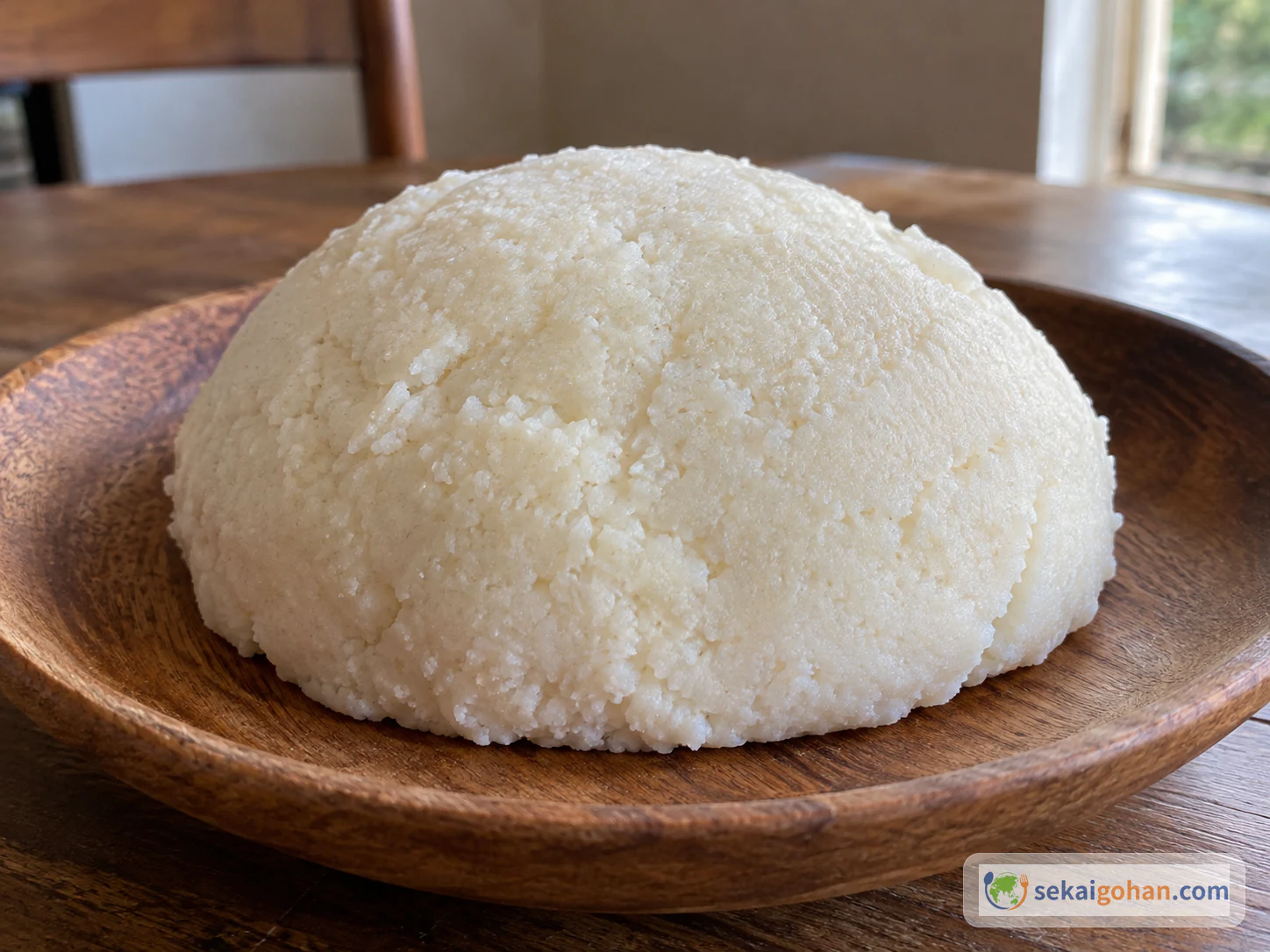
Saka-saka served at the table with fufu on the side
One way to serve it: saka-saka with fufu in a separate dish

Congolese meals commonly pair a starchy staple with a thick stew or sauce, and pondu with fufu or rice is one such pairing. It is food tied to meals shared at home, and some people say familiar dishes like this are hard to find after moving abroad. Serve the fufu or rice on the side and take a little of the thick leaves with each bite.

The basic pot leaves room to adjust:

  1. Leaves and oil only. Leave out the fish and let the cassava leaves and red palm oil carry the flavor.
  2. With smoked fish. Add smoked fish to taste and salt only at the end.
  3. With groundnut paste. Add groundnut paste to taste for richness and a thicker body. This adds peanut as an allergen.
  4. With or without onion. Use 2 oz (60 g) onion softened in palm oil, or leave it out.
  5. Drier or looser. Cook down further for the drier DRC finish, with oil seeping between the leaves.

Frequently Asked Questions

Can I use frozen cassava leaves?

Yes, but frozen products differ: some are raw, some pounded, some already parboiled. Follow the package directions for preparation and heating. The 2.25 lb (1 kg) in this recipe means fresh leaves, so frozen pounded leaves are not an equal swap by weight.

Can I store leftovers?

For frozen cassava leaves, follow the package's instructions after opening and thawing.

Is this the same as saka-saka from the Republic of Congo?

The name is shared, but this is the DRC dish. The Republic of Congo (Congo-Brazzaville) has its own version.
Sources

  • International Institute of Tropical Agriculture (IITA), "New Food Products From Cassava" (Cassava Leaves recipe, pp. 35–36). Source of the ingredients and quantities (1 kg fresh cassava leaves, 1 L water, 150 ml palm oil; optional onion, leek, fish and groundnut paste), the method (pound, boil 15–30 minutes, add additions, cook 15 minutes more), and the comparison between the drier DRC consistency and the wetter Sierra Leone style. It does not state servings. https://biblio.iita.org/documents/U03BkOnaboluFoodNothomNodev.pdf-a3024f68208a04e24ea6385e84c658f0.pdf
  • Queensland Health / Metro South Health, "Food and cultural practices of the Congolese community in Australia – a community resource." Descriptions of saka-saka and pondu, pairing a staple with a thick stew, and the processing of cassava leaves. Based on the Congolese community in Brisbane and notes that practices vary. https://www.metrosouth.health.qld.gov.au/__data/assets/pdf_file/0019/242254/heau-cultural-profile-congolese.pdf
  • Food and Agriculture Organization of the United Nations (FAO), "Save and Grow: Cassava — A guide to sustainable production intensification." Young cassava leaves as food in the DRC and elsewhere in Africa; removing hard petioles, pounding and boiling for about 30–60 minutes; the effects of that process on cyanogens and vitamin C. https://www.fao.org/4/i3278e/i3278e.pdf
  • African Journal of Food, Agriculture, Nutrition and Development (AJFAND), "'The food we eat here weakens us': Food practices and health beliefs among Congolese forced migrants in South Africa – a case study of Yeoville in Johannesburg." Participants' descriptions of pondu/saka-saka and its ingredients, and of pondu and fufu as food from home. A qualitative study, not a survey of all DRC households. https://www.ajfand.net/Volume19/No2/Lakika17135.pdf
  • World Tourism Organization (UNWTO, now UN Tourism), "A Tour of African Gastronomy." Cited only to show that this saka-saka/pondu recipe is listed under the Republic of Congo, not the DRC. https://www.uhtti.ac.ug/wp-content/uploads/2021/03/A-tour-of-African-Gastronomy-2020.pdf