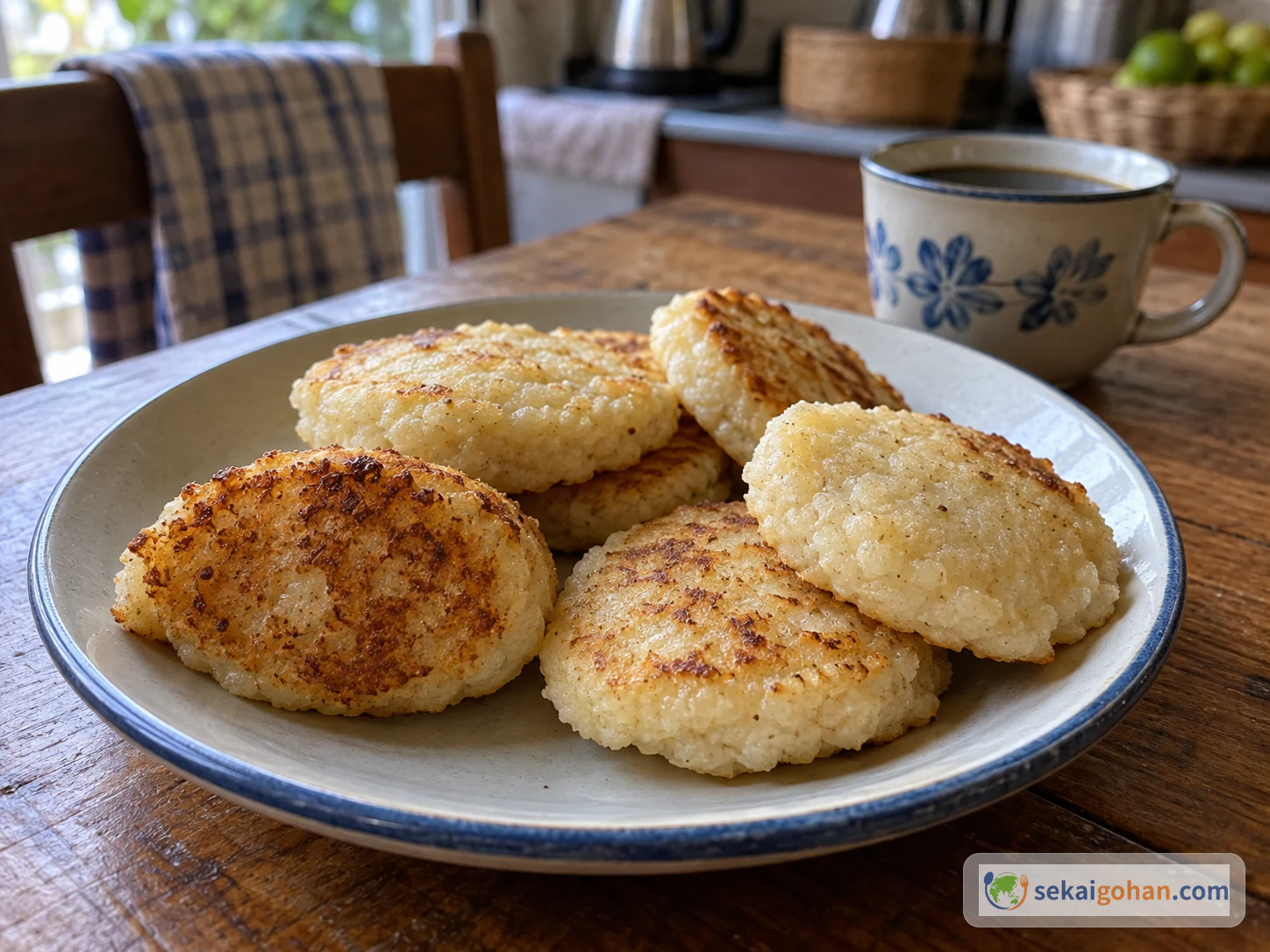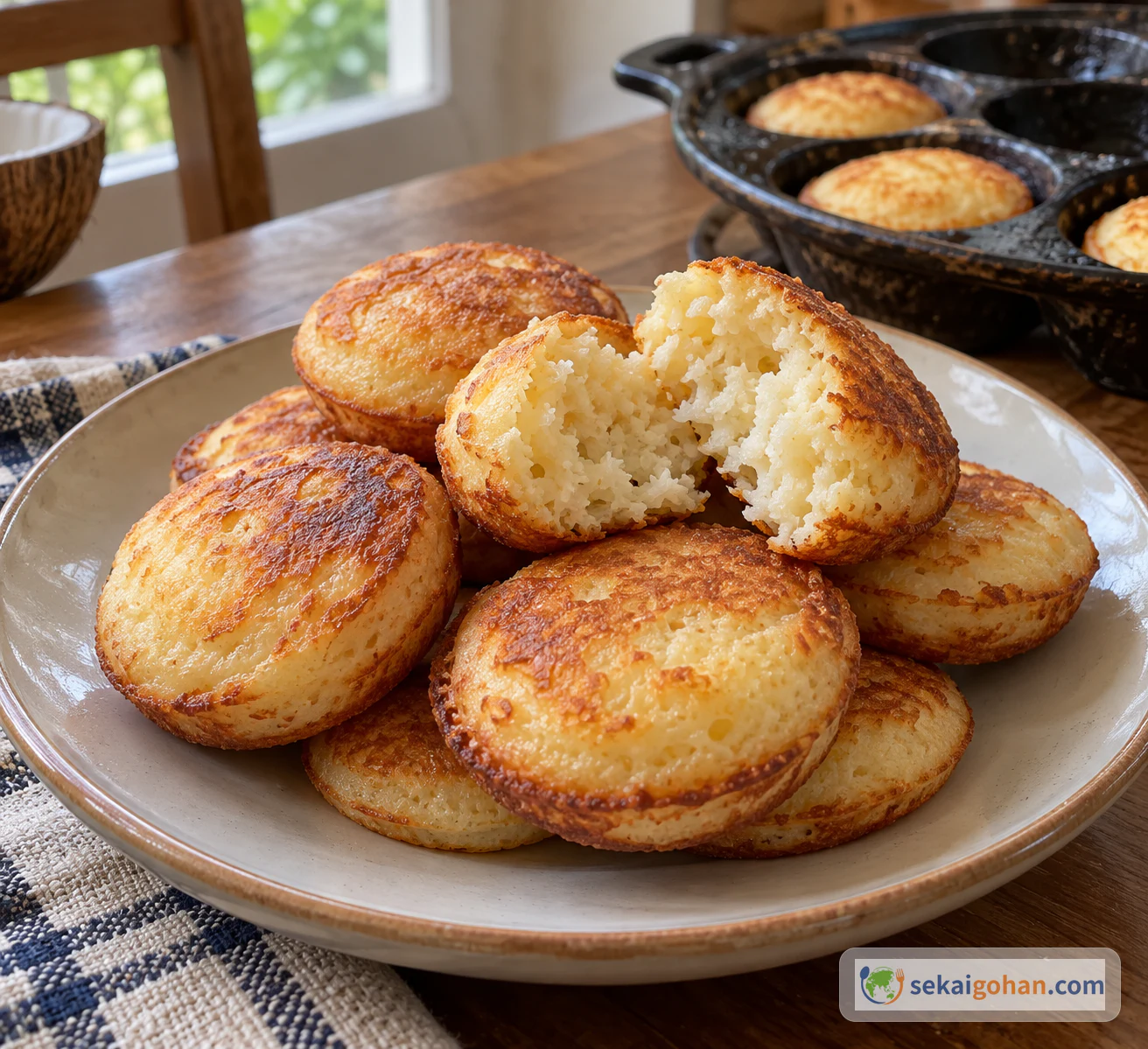
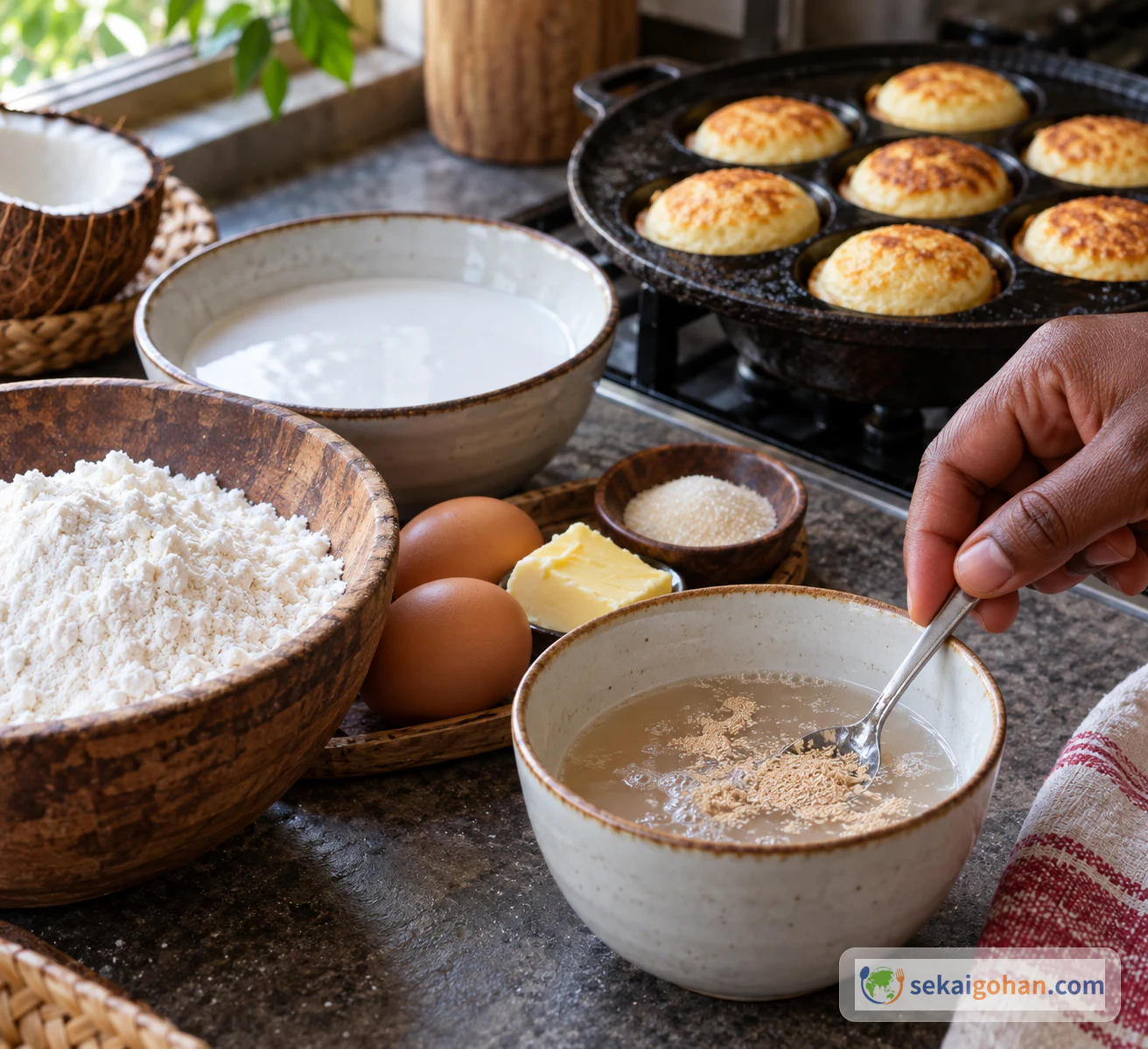
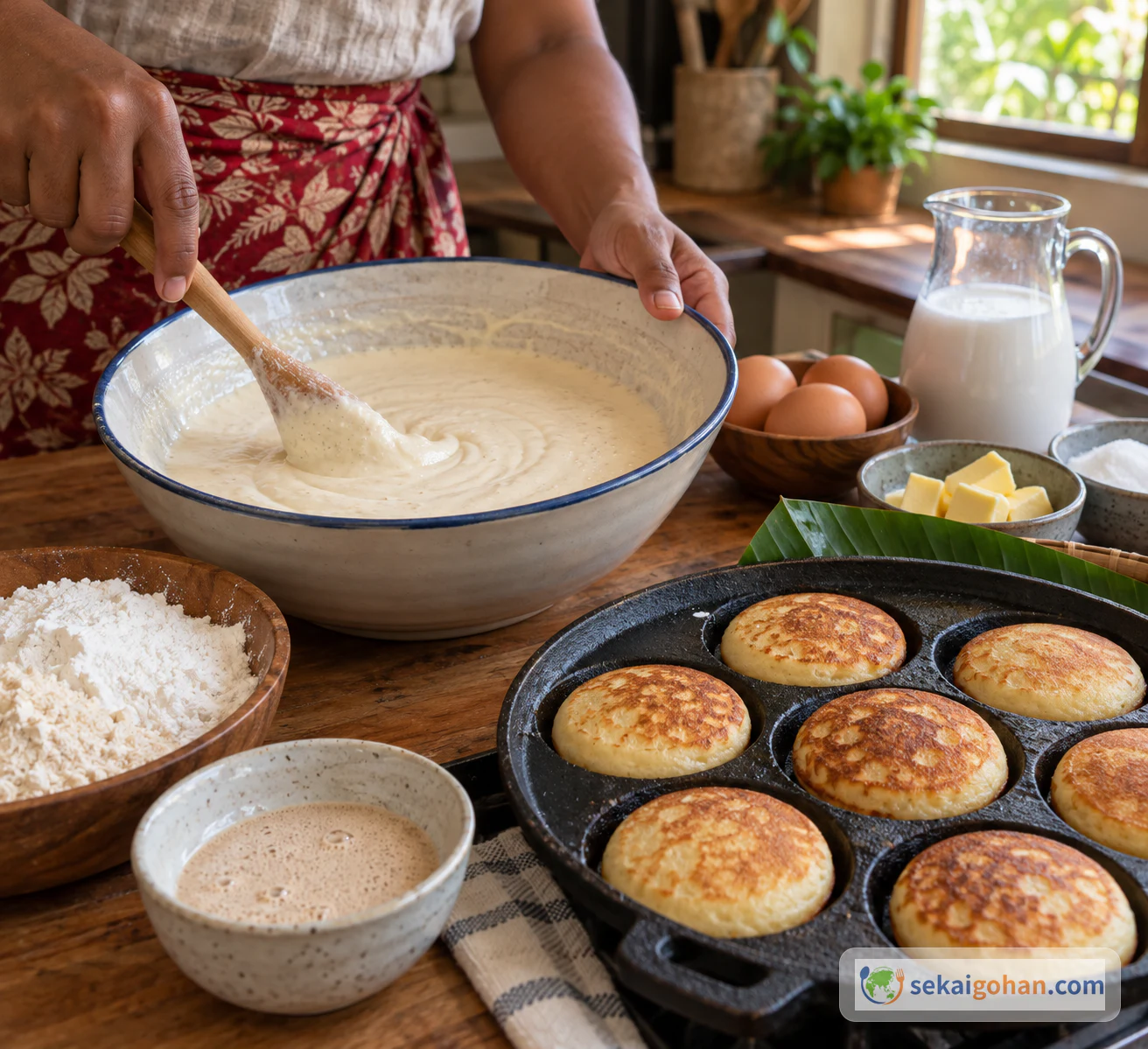
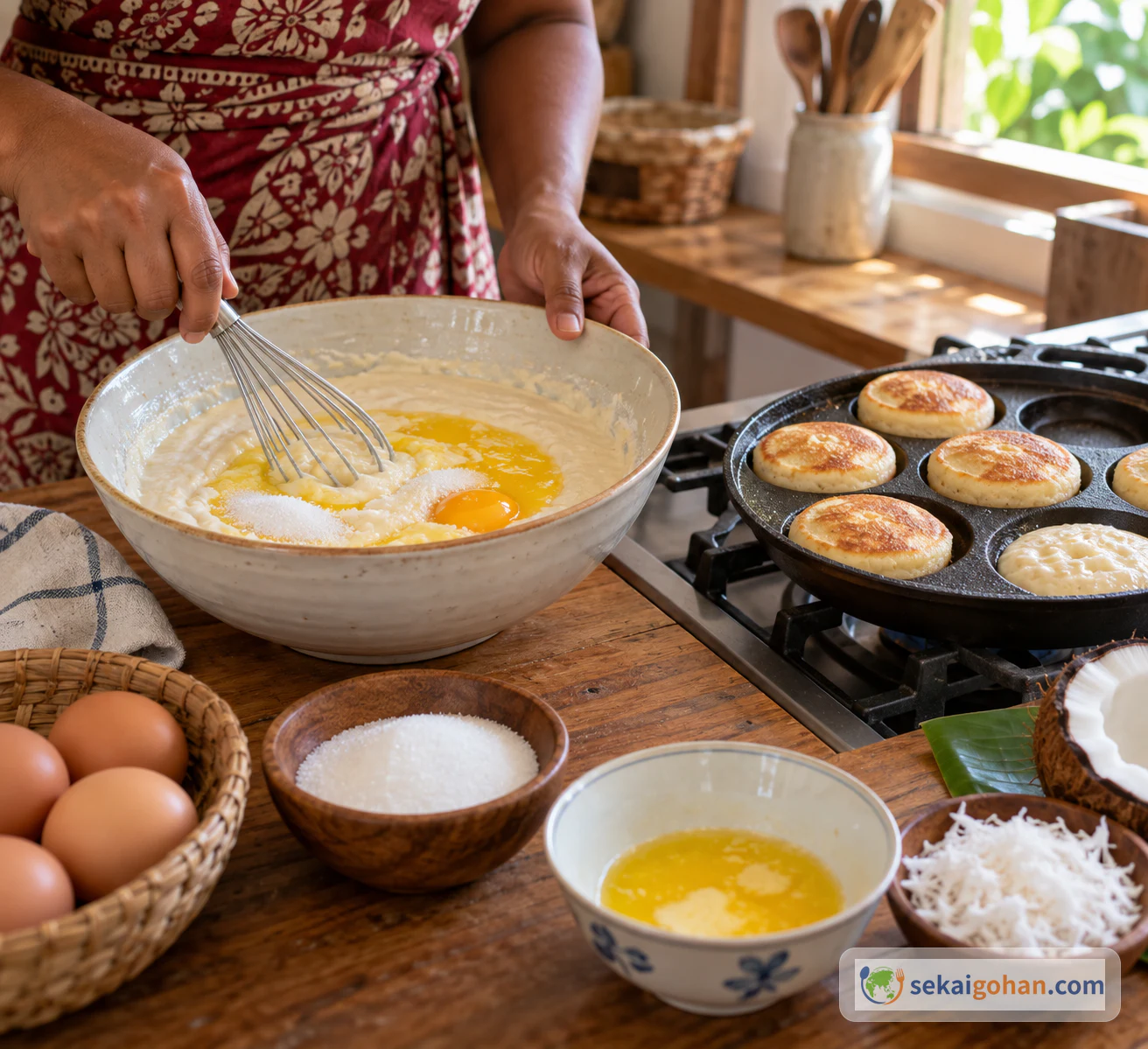
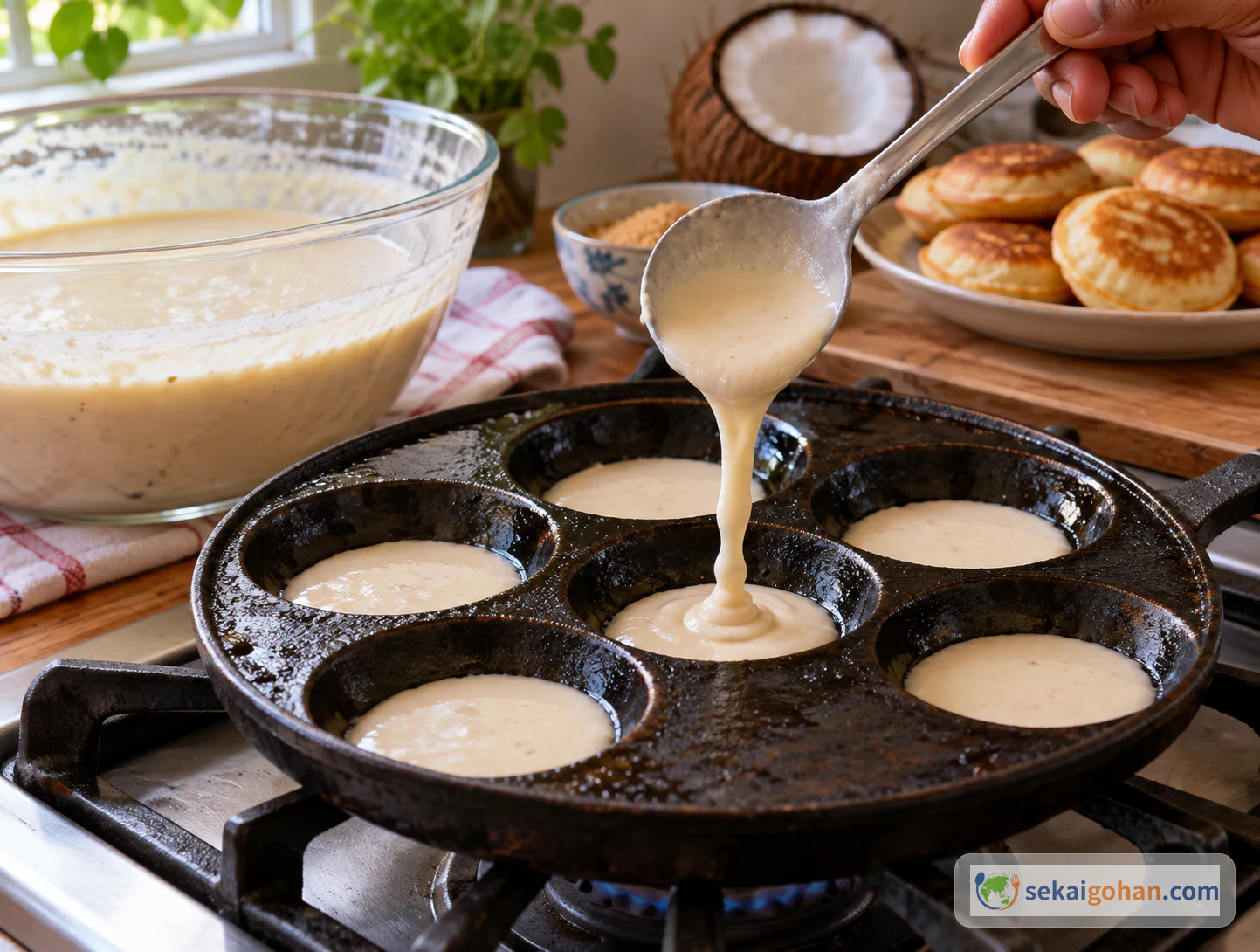
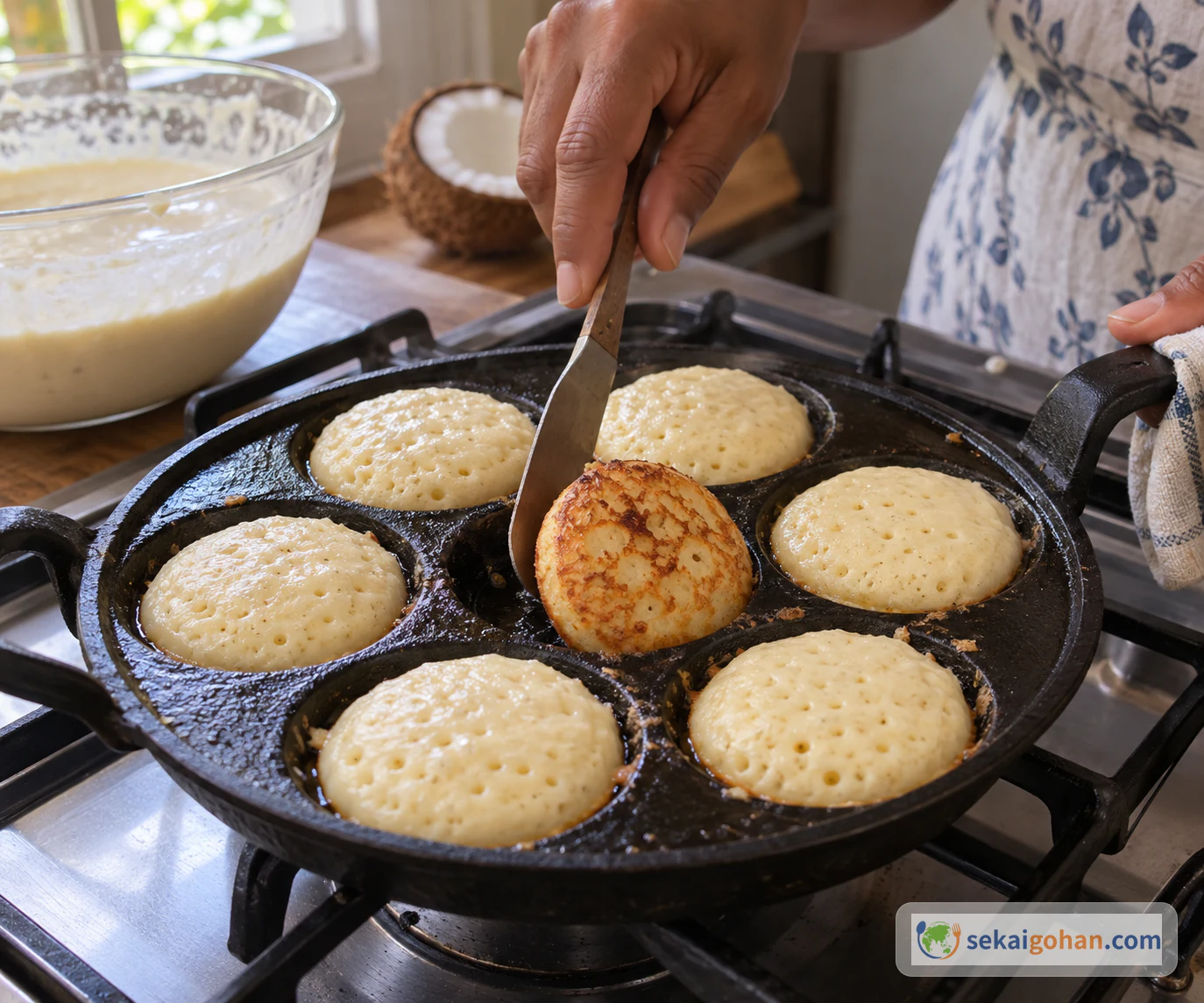
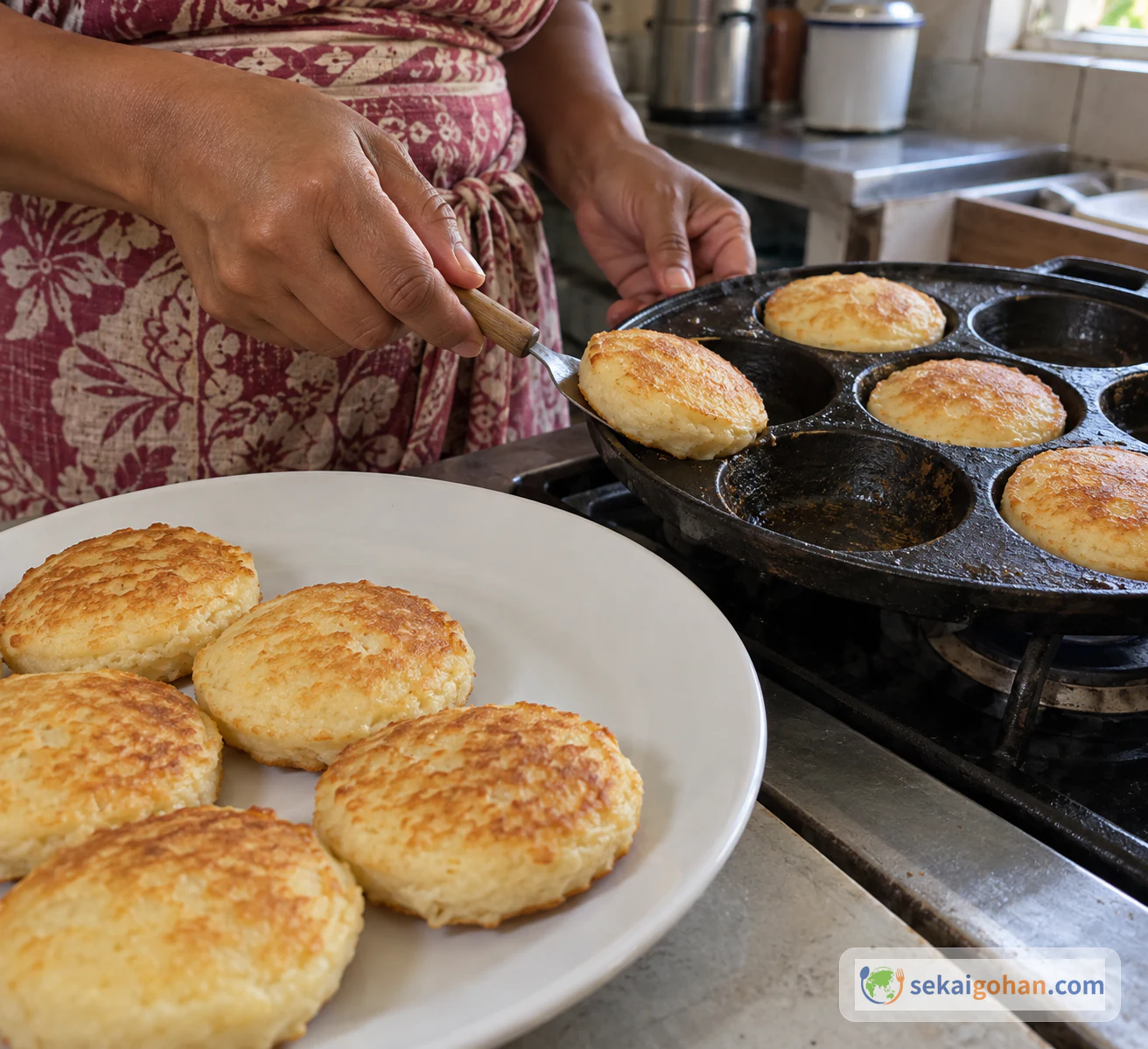
Picture a plate of small round cakes, golden on both sides and still warm, next to a cup of coffee or tea. That's mokary au coco, a soft, slightly sweet Malagasy cake eaten at breakfast or as a snack. Rice flour makes it tender, coconut milk gives it its scent, and yeast keeps it light. The batter rests until it loosens to the consistency of crêpe batter, then cooks in small greased wells, which give the cakes their round shape.
Mokary at the Malagasy Table
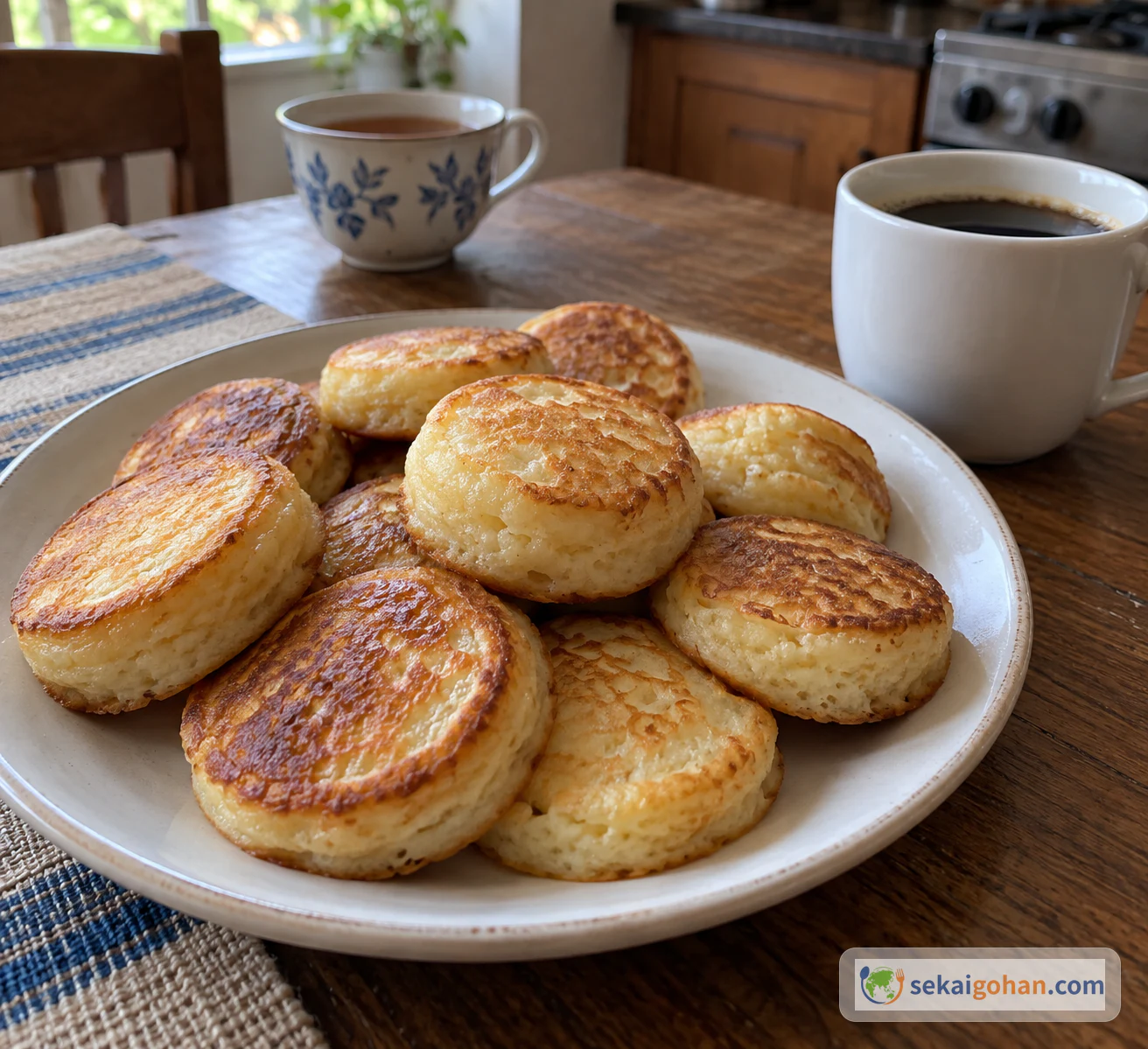
In Madagascar, mokary is eaten at breakfast or as a snack, with a hot drink alongside. Every family and region has its own version: some use only rice flour and some add wheat flour, and some add melted butter or grated coconut. The coconut version is especially popular on the coast.
You'll see the name spelled both "mokary" and "moukary," and it covers more than one formula. Mokary vary, which in northern Madagascar means rice bread or cake, is a separate preparation. It has no coconut and is made with an overnight ferment, so keep its method apart from this one. Mixing the two gives you a different recipe.
| Mokary au coco (this recipe) | Mokary vary | |
|---|---|---|
| Coconut | Coconut milk, with optional grated coconut | None |
| Flour | Rice flour and wheat flour | Rice flour |
| Leavening and rest | Yeast, 1 hour 30 minutes | Yeast and baking powder, with a cooked rice-flour paste and an overnight ferment |
| Cooking | Greased multi-well pan | Small lidded pans over charcoal |
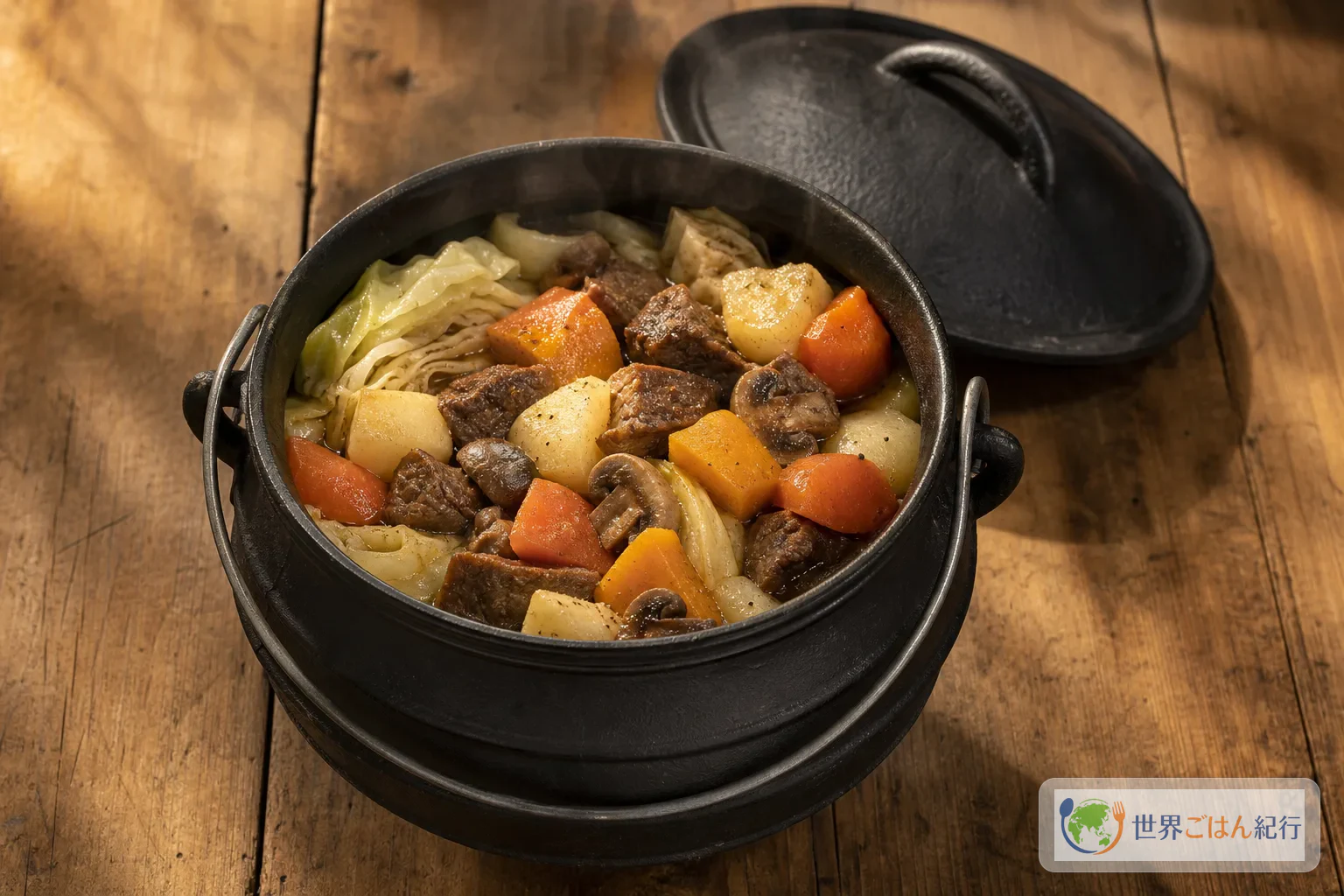
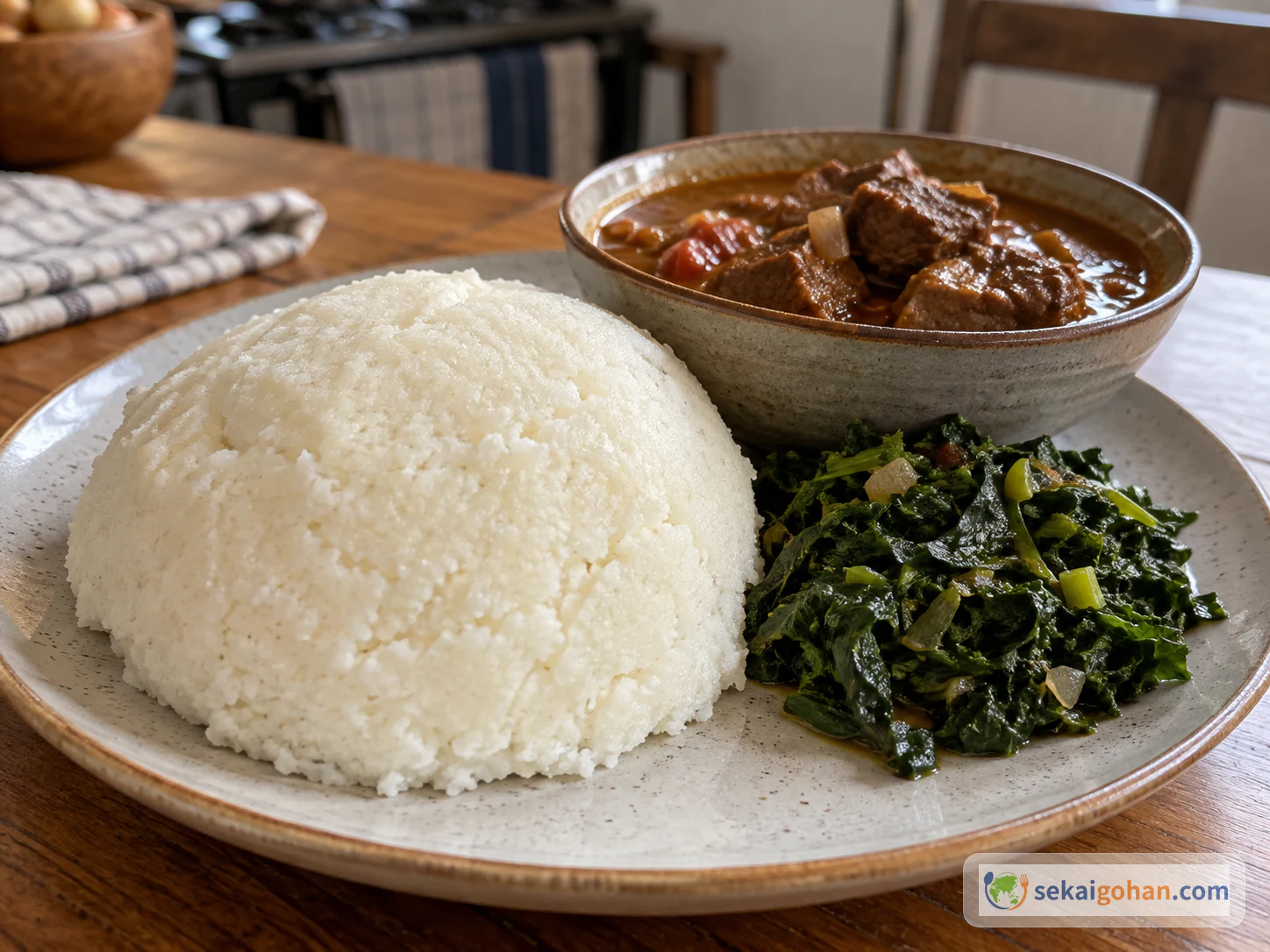
There's plenty more of the country's food to explore on our Madagascar page, including two very different dishes: koba, a sweet steamed in banana leaf with peanuts, and romazava, a stew of meat and greens.
Ingredients (Makes About 50 Small Cakes)
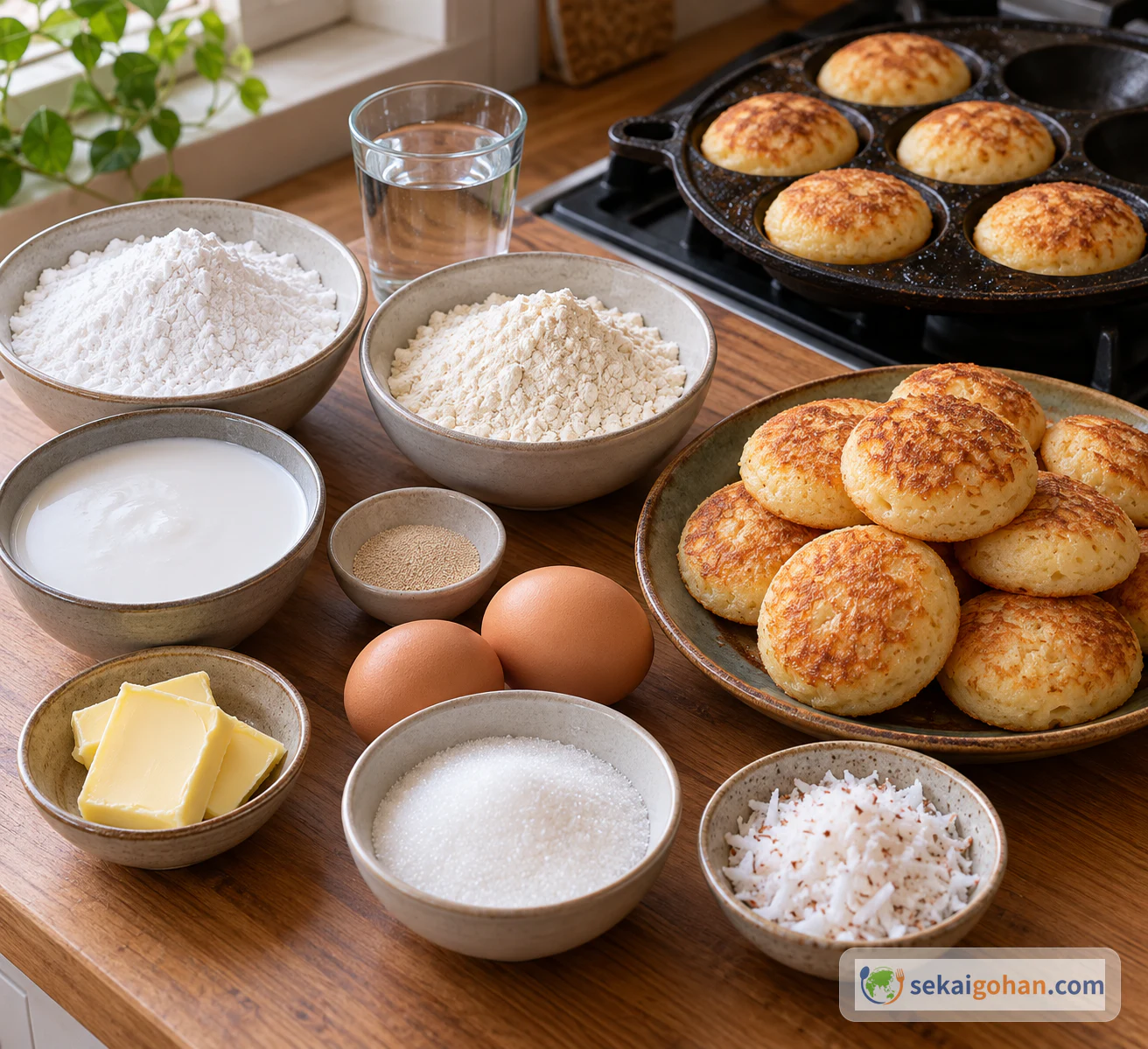
The number of cakes changes with the size of your pan's wells, so treat about 50 as a rough guide.
Choosing Ingredients for Mokary
- Rice flour: Finely milled baking rice flour is the easiest to work with. Other rice flours are ground differently and can give a tighter texture.
- Wheat flour: Soft cake flour is a sensible starting point. If you replace all of it with rice flour, the texture and structure will change.
- Coconut milk: Homemade is ideal. Canned or carton coconut milk is a convenient swap as long as it's unsweetened. Thickness varies from product to product, so judge the batter by eye.
- Yeast: Weigh dry yeast rather than counting sachets, because sachet weights vary by brand. About 4 g is half of a standard 8 g sachet. Follow the directions for your product, and expect a modest rise.
- Sugar: Ordinary white sugar is fine.
The water is there for two jobs. Use one tablespoon to dissolve the yeast, then add the rest a little at a time until the batter looks like crêpe batter. Glass sizes vary, and it's fine if some water is left over. What matters is the consistency.
Equipment
- Mokary pan, or a multi-well blini or paniyaram pan
- Small cup for the yeast
- Large mixing bowl and wooden spoon
- Kitchen scale and measuring spoons
- Spoon or small ladle for pouring
- Small spatula or similar tool for turning
- Brush for oiling the wells (handy but not essential)
- Plate for the finished cakes
Mokary Troubleshooting
Change one thing at a time, and cook a few test cakes before doing the whole batch.
| Problem | Likely cause | What to do |
|---|---|---|
| Batter overflows the wells | Wells too full | Fill only about halfway to leave room to rise |
| Outside browns before the center is done | Heat too high | Lower the heat, cook longer, and test a small number before continuing |
| Batter feels heavy or thick | Not enough water | Add the remaining water a little at a time. Consistency matters more than using the full ¾ cup (200 ml) |
| Cakes rise only modestly | The yeast amount is on the low side | Expect a modest rise. Don't extend the rest |
| Cakes come out as flat pancakes | Cooked in a flat pan | Use a multi-well pan for the small round shape |
Serving, Storing and Varying Mokary
Mokary is at its best warm from the pan. If you have leftovers, handle them with clean utensils and plates, spread them out in shallow containers, and cool them quickly. Then refrigerate at 50°F (10°C) or below. Reheat thoroughly to 167°F (75°C) or above, and throw out anything that has been kept too long or seems doubtful.
This recipe contains wheat, eggs, milk (butter) and coconut. Never taste raw batter, and cook the cakes through to the center. Don't leave the batter or the cooked cakes at room temperature for long. Rest the batter for no more than 1 hour 30 minutes, and cook it right away once the eggs are in. Take care with the hot pan when oiling and turning.
For a smoother cake, leave out the grated coconut, since it's optional. If you like vanilla, you can add some. It isn't part of this formula, but it goes well with the coconut.
Frequently Asked Questions
Are mokary and mofo gasy the same?
They're closely related. Mofo gasy is associated with the highlands and is made from a fermented rice-flour batter cooked in molds. Mokary is a member of that wider family that contains coconut.
Can I use a regular frying pan?
You'll get the flavor, but not the small round shape. A mokary pan is best. A lightly oiled blini pan comes close; start with the wells half full so the batter doesn't overflow.
Can I make the batter the day before?
No. The batter only needs its 1 hour 30 minute rest, and it shouldn't sit out at room temperature for long. Versions with a 4-hour or overnight ferment use different formulas, so their timing won't work here.
What temperature should the water for the yeast be?
That depends on your yeast. Some products call for 95°F (35°C) water and a 15-minute soak, so check the label on yours and follow it.