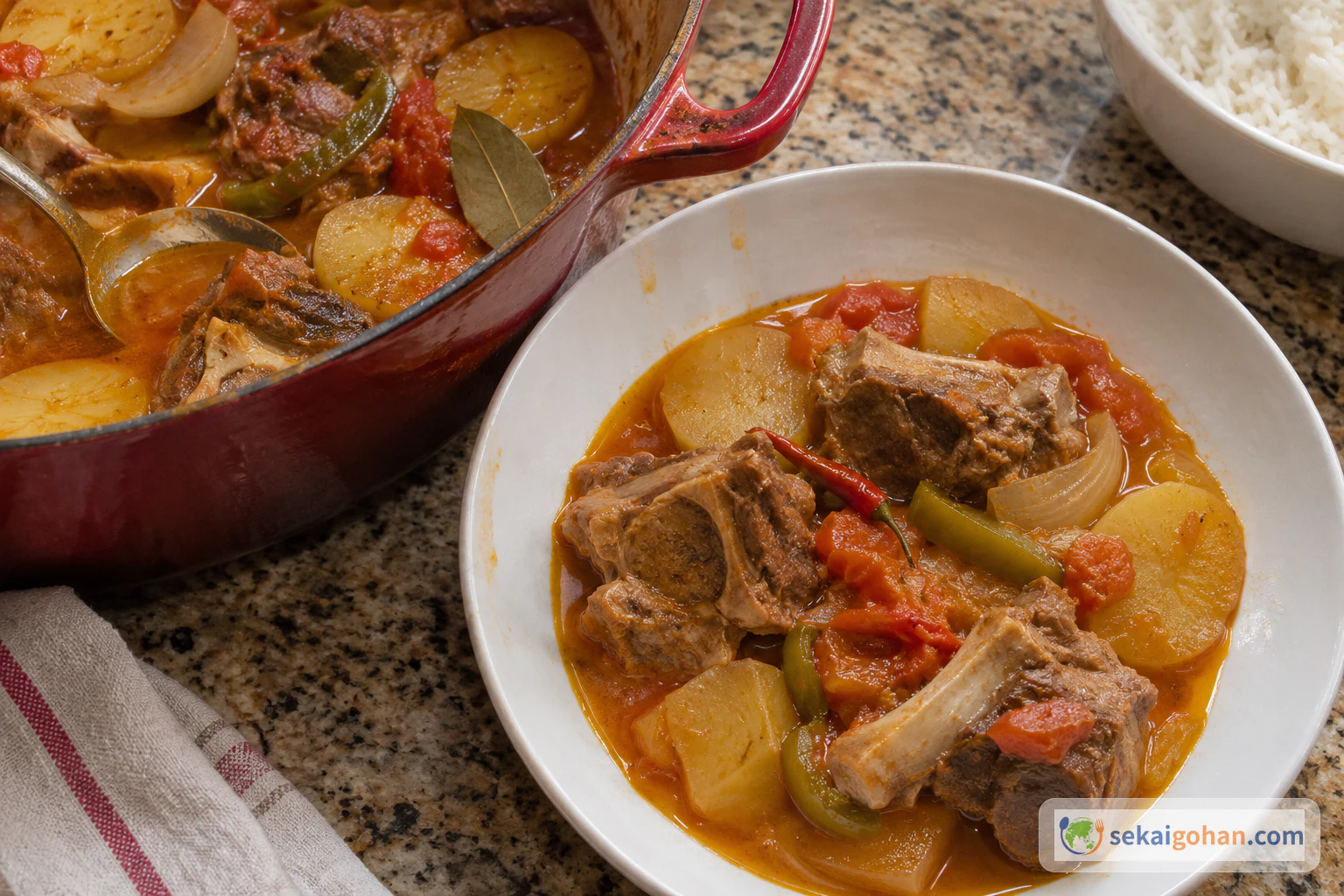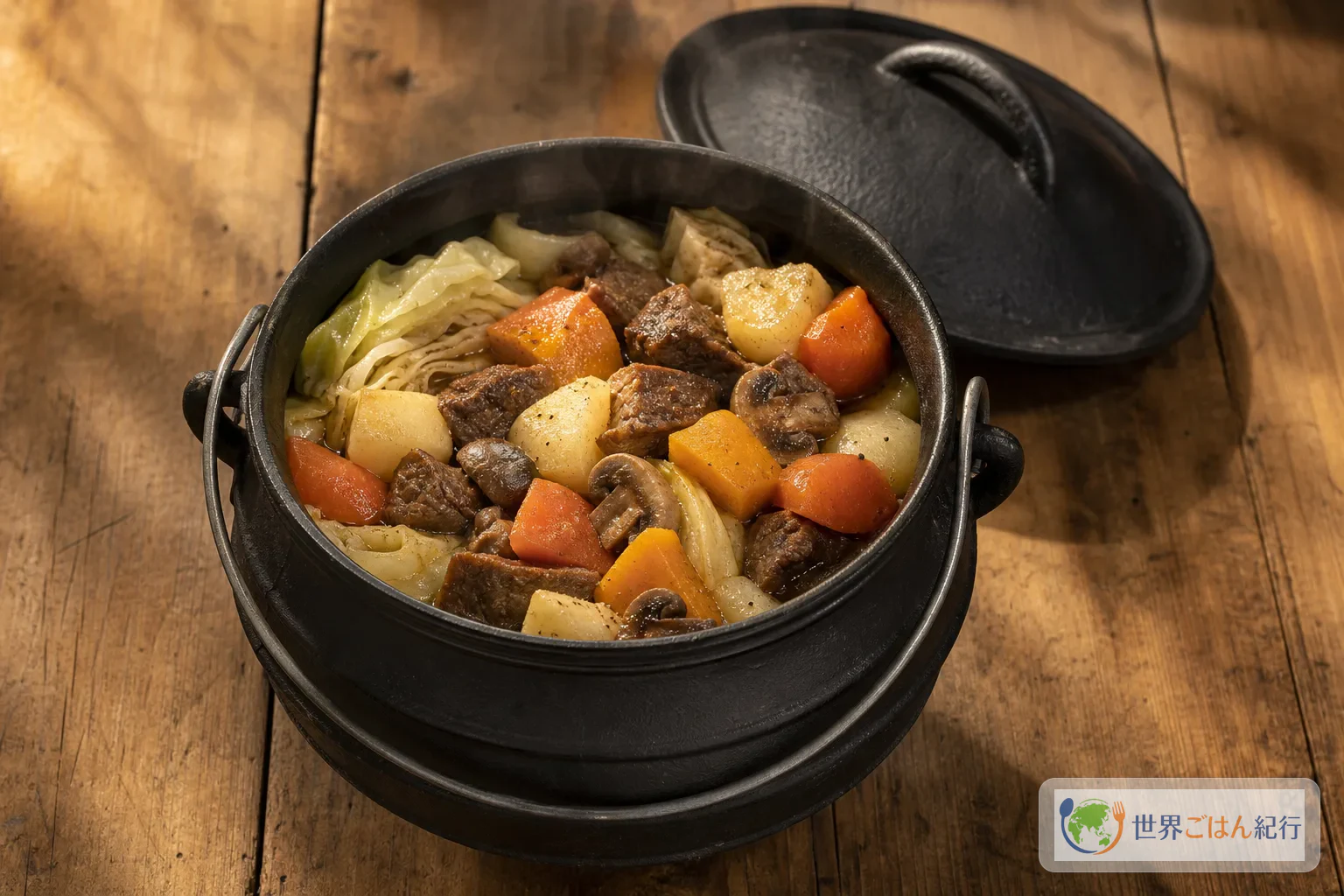
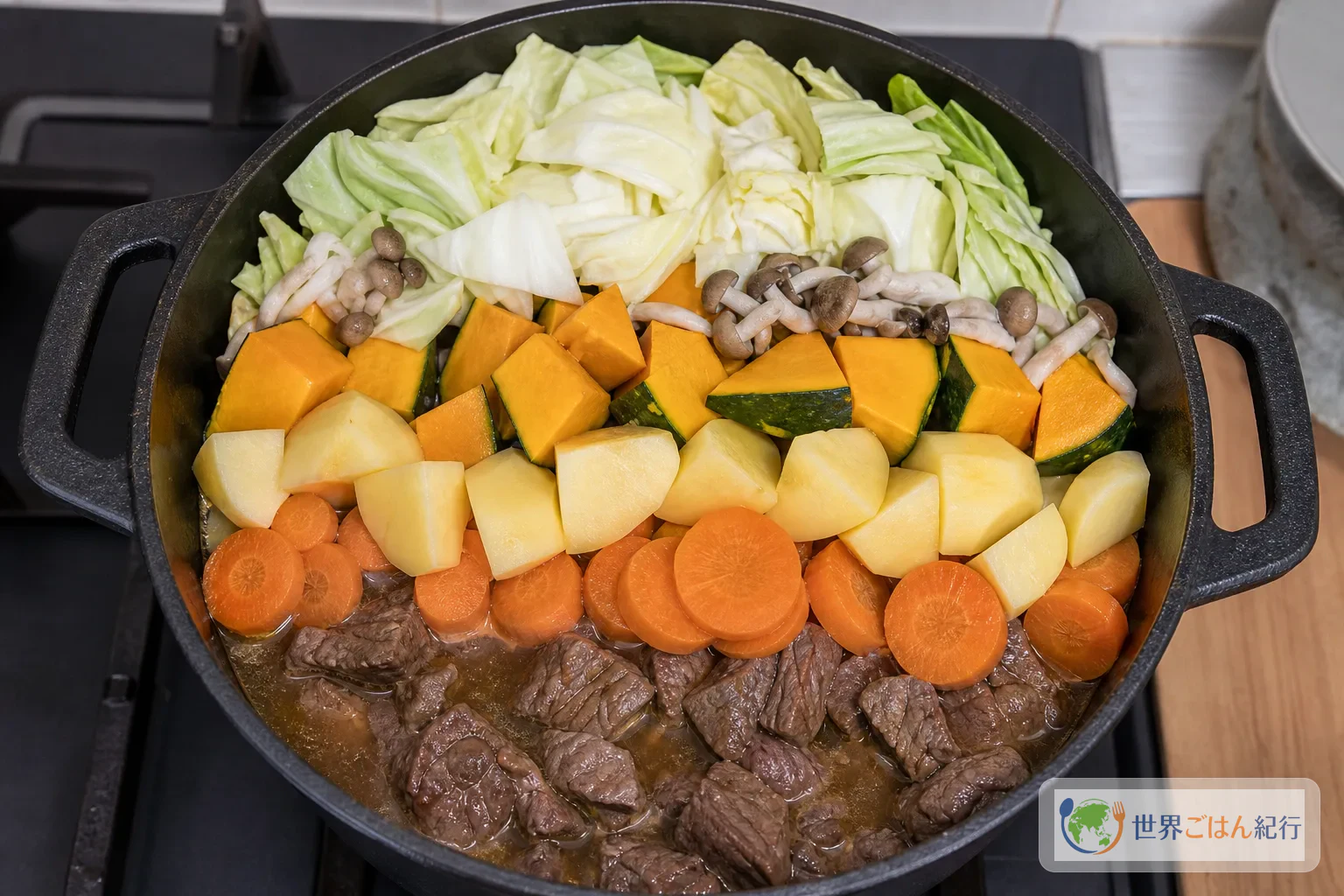
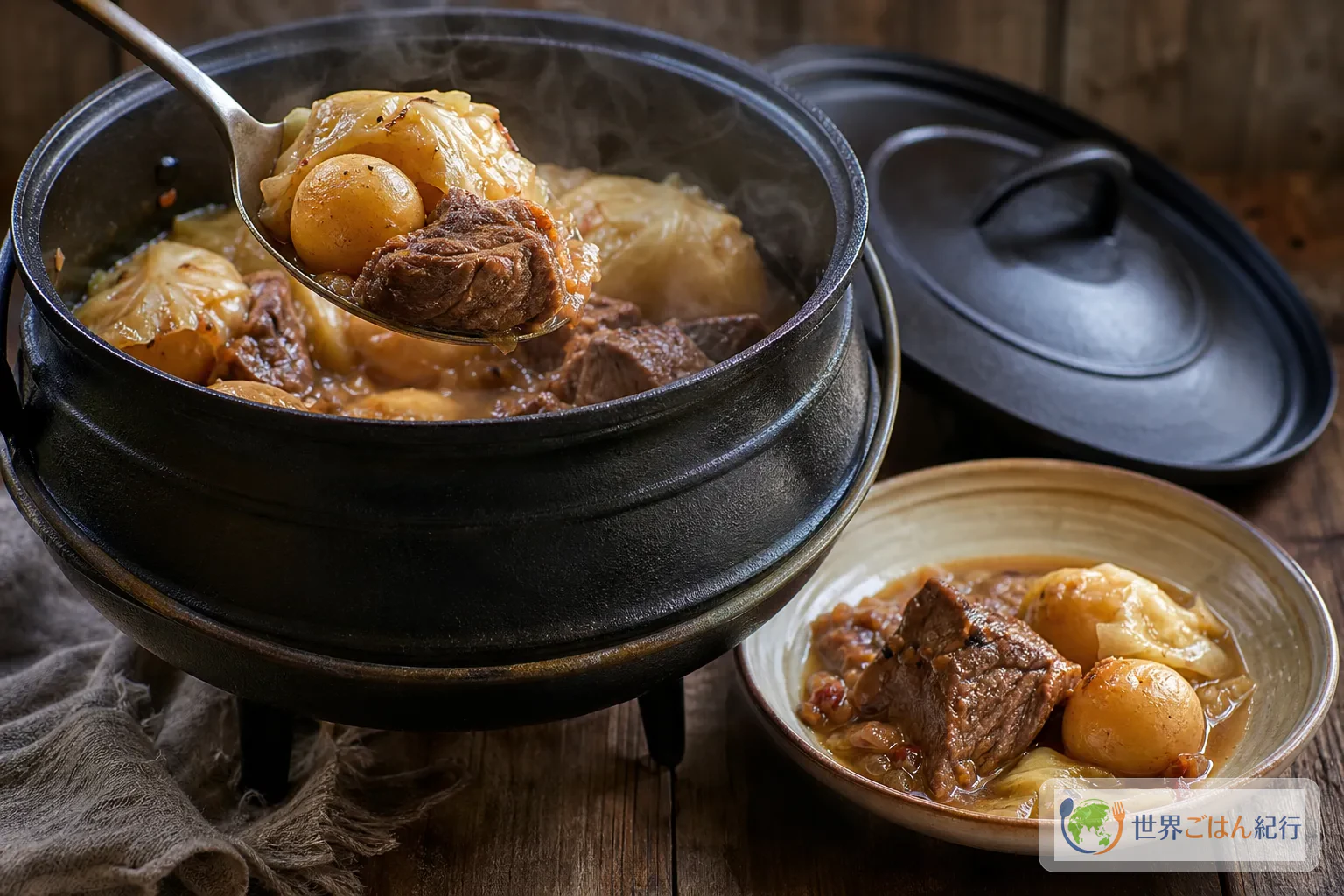
Lift the lid and the first thing you see is potatoes. Beneath them sit carrots, squash, and cabbage, and at the very bottom, beef. Each time you slip in a spoon, the color of the broth shifts a little.
You'll be tempted to stir. Potjiekos asks you to resist: the ingredients are stacked in layers and cooked slowly with the lid closed. Our version takes South Africa's three-legged pot, usually set over an outdoor charcoal fire, and moves it into a home oven. It stews until the beef chuck flakes apart with chopsticks while the root vegetables still hold their corners.
What Potjiekos Is and Why You Don't Stir It
Potjiekos is Afrikaans for "pot food." Meat and vegetables are layered into a cast-iron three-legged pot over charcoal and left alone. The meat at the bottom softens in the broth, while the vegetables above cook in the steam. Meat goes in first, slow-cooking vegetables above it, and leafy vegetables and mushrooms on top.
With a traditional pot, you control the heat by how you arrange the coals. The cook doesn't hover; the pot works away slowly while the conversation at the table goes on. Local recipes use lamb, chicken, pork, and venison as well as beef, and gathering around the pot is part of the meal.
One explanation of its origin is that European stews arrived in South Africa. Since then, the dish has taken many shapes across South African tables, adapting to whatever meat, vegetables, and fire were at hand.
Making Potjiekos at Home
A heavy pot and an oven will do the job of a three-legged pot over an open fire. The goal is to keep what happens inside the pot, not to recreate the equipment. Above all, don't let the liquid boil hard, so the steam can cook the upper layers.
| What to keep | Home substitute | How to tell it is right |
|---|---|---|
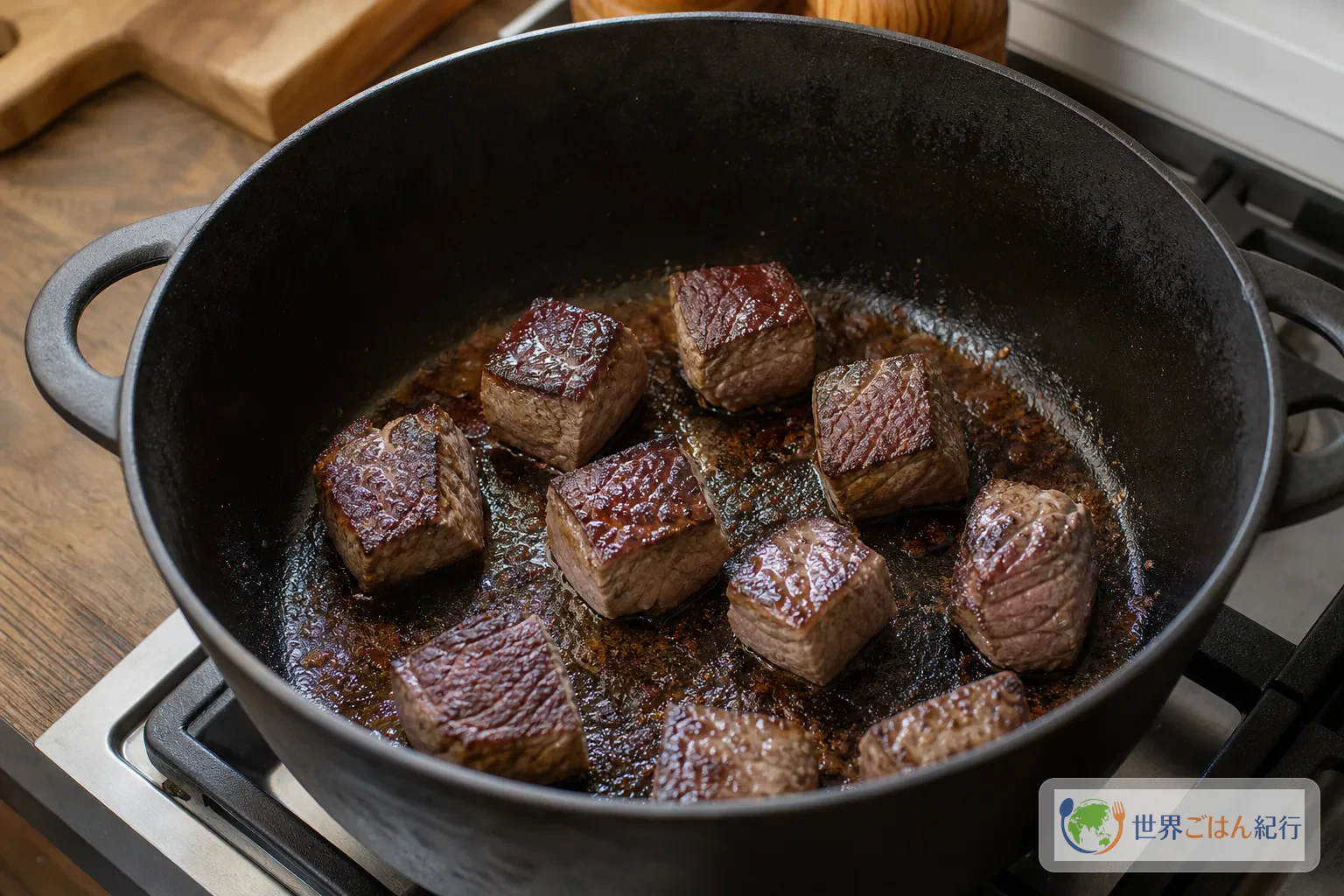
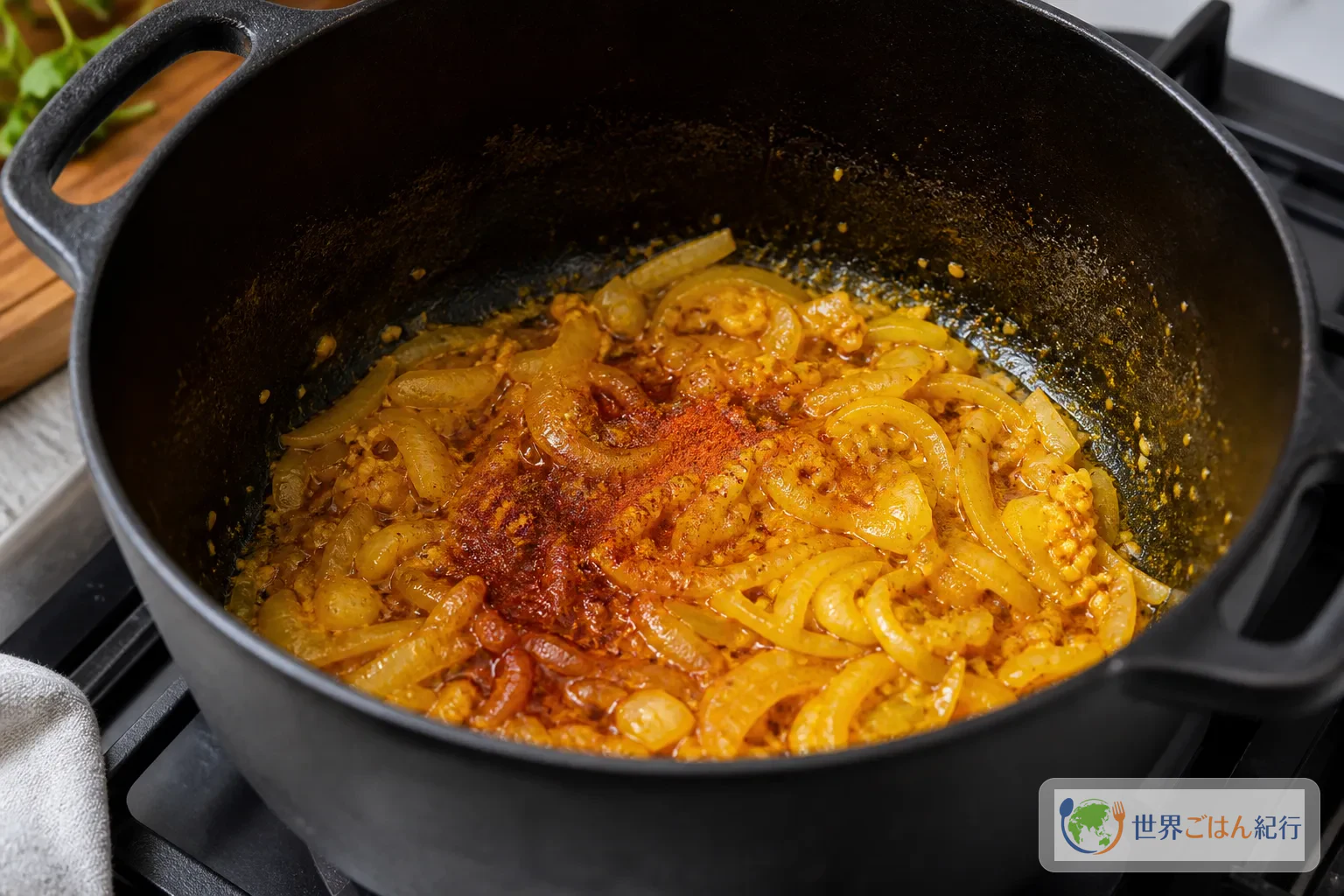
| Searing the meat at the bottom | Sear in a heavy pot | The beef turns brown and a thin brown film stays on the bottom |
| Layering the ingredients | Stack meat, root vegetables, then leafy vegetables in that order | The broth stays below the upper vegetables and shows between the ingredients |
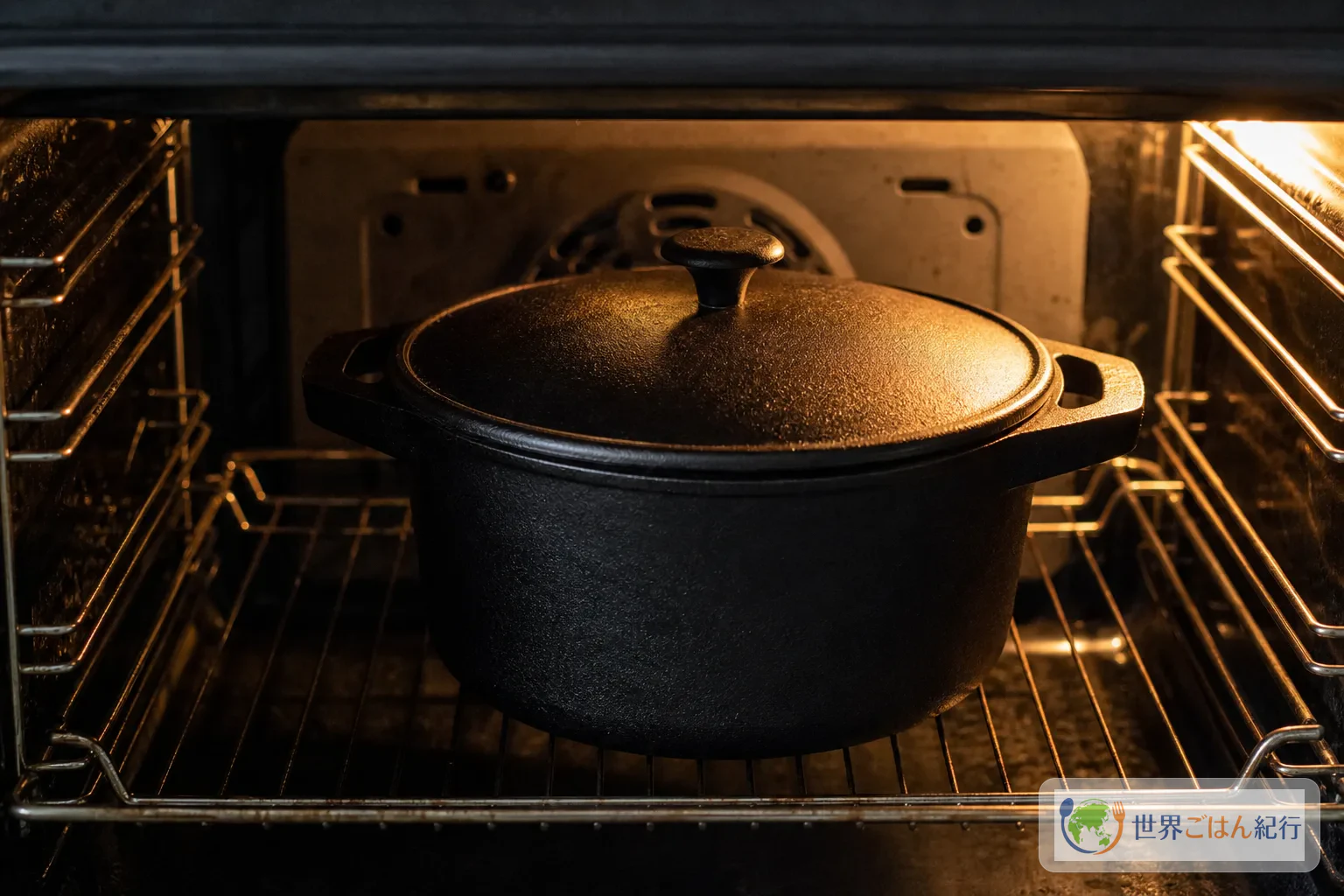
| Long cooking over low heat | Put the lidded pot in a 325°F (160°C) oven | The broth moves quietly, and the meat fibers come apart when pressed with a fork |
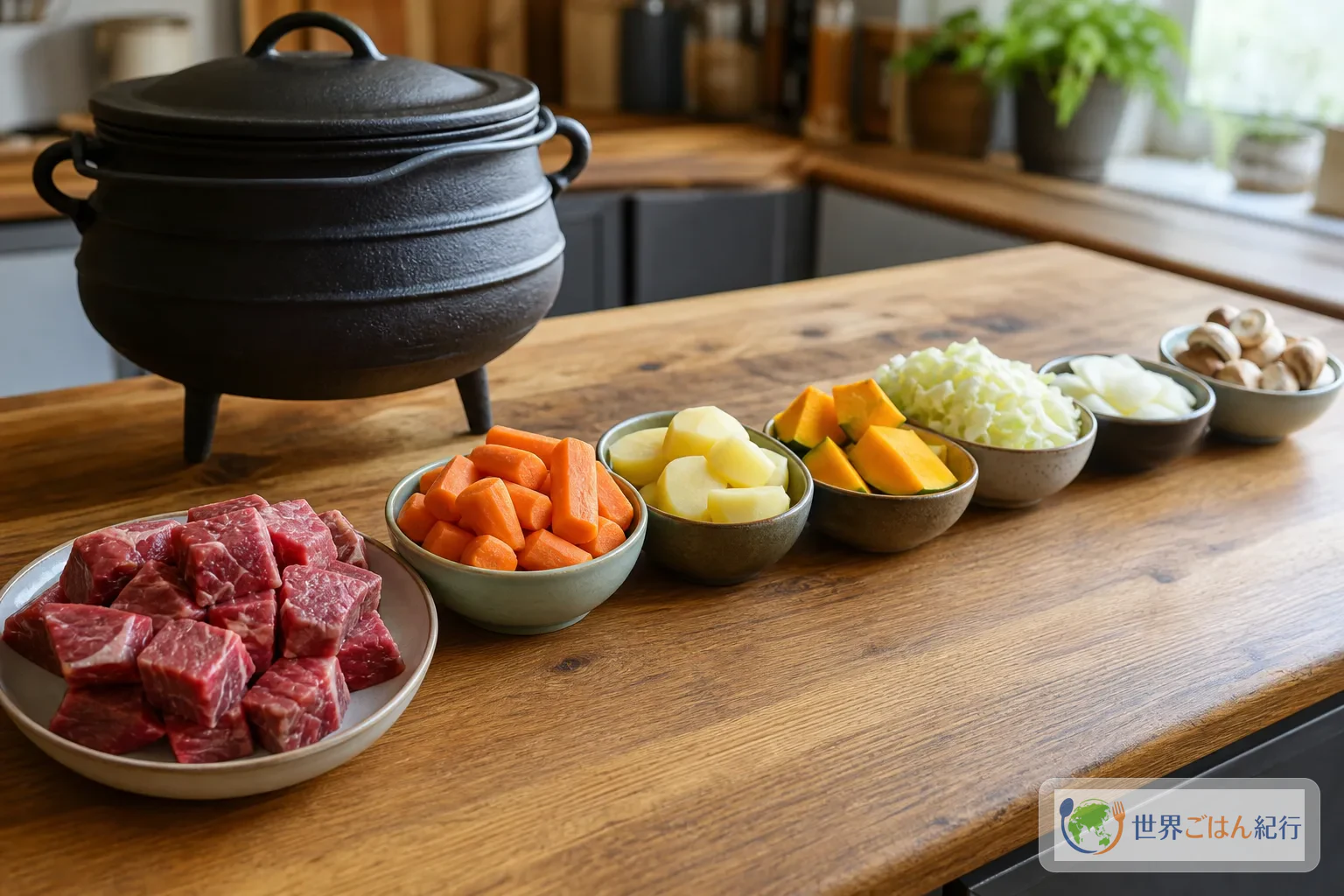
Use a pot of about 9.5 inches (24 cm) that can go into the oven with its lid, and check the heat limit of the handles and knob first. A dedicated three-legged pot is worth buying if you often cook over charcoal outdoors and feed six or more people. For a single batch of this four-serving version, the heavy pot you already own is enough, and it spares you the storage and upkeep of a new one.
Ingredients (serves 4)
Beef bouillon products may contain wheat, dairy, soy, and other allergens. If you have allergies, check the ingredient label, and if needed replace it with water and salt. If you use red wine, the alcohol is not necessarily completely gone even after cooking, so if that concerns you, use the version without it.
Choosing Spices and Substitutes for Potjiekos
Turmeric and cumin
Turmeric turns the pot yellow and adds an earthy aroma to the beef fat and broth. It also keeps the sweetness of the squash from blurring. If you rarely use it, curry powder works instead; some blends contain salt or chile, so start with 1/2 tsp.
Cumin brings a warm, woody aroma to the beef fat without any heat. If turmeric alone leaves the flavor flat, add 1 tsp cumin. Buy these spices on their own if you want their individual aromas in the pot; if you keep curry powder or garam masala on hand and the finer differences don't matter to you, skip them. Whatever you buy, check the net weight and ingredient label.
Swapping the meat and vegetables
Potjiekos is about how heat reaches each layer, so substitutions work as long as the layers stay intact.
- Lamb shoulder: cut it into the same 1.5 inches (4 cm) cubes as the beef and sear the surface fat before layering. Its aroma is strong, so start with 1/2 tsp cumin.
- Chicken thighs: cut into 1 inches (3 cm) cubes and shorten the stewing time from 2 hours to 2 hours 15 minutes. If the potatoes soften first, cut the chicken larger.
- White fish: stew the root vegetables for 30 minutes first, then lay bite-size pieces of fish on top and cook for about 20 minutes.
- Chickpeas and mushrooms: put boiled chickpeas where the beef would go. Drain canned chickpeas and reduce the tomato paste to 1 tbsp.
- Sweet potato: omit the squash and the dried apricots, since the sweetness would overlap.
Keep leafy vegetables and fish away from the bottom of the pot. They break down in the direct heat, and then nothing is there to catch the browned meat juices.
How to Make It
Prep and Searing (about 40 minutes)
Layering and Stewing (about 3 hours)
Potjiekos Troubleshooting
The meat is tough
The broth is too low, and steam is escaping through gaps in the lid. Add just 3.5 tbsp (50 ml) of hot bouillon around the edge of the pot, put the lid back, and simmer another 15 minutes. Always warm the liquid first, because cold liquid drops the temperature in the pot.
Too much broth
Leave the ingredients where they are, take off the lid, and reduce over low heat for 10 to 15 minutes. Rock the pot gently instead of stirring, which would break the potatoes.
The potatoes fall apart
Either they were cut too small or the broth boiled hard. Next time, cut them into 2 inches (5 cm) cubes and lower the oven to 300°F (150°C). For now, the broken bits melt into the broth and eat like a sauce.
The flavor is thin
Before serving, ladle a little broth into a small dish and add salt a pinch at a time to check. Salting the whole pot directly makes only the top vegetables salty.
The aroma is heavy
Add just 1 tsp lemon juice to the broth rather than more cumin or paprika. The acidity cuts the meat fat and brings back the outline of the sweet vegetables. If you dislike sour flavors, leave it out and simply adjust the salt.
Serving and Storing Potjiekos
At the table
Tipping the whole pot onto a big platter hides the layers you worked for. If you can, set the pot on the table, lift the lid to show the cabbage and spices on top, and serve one portion at a time from there.
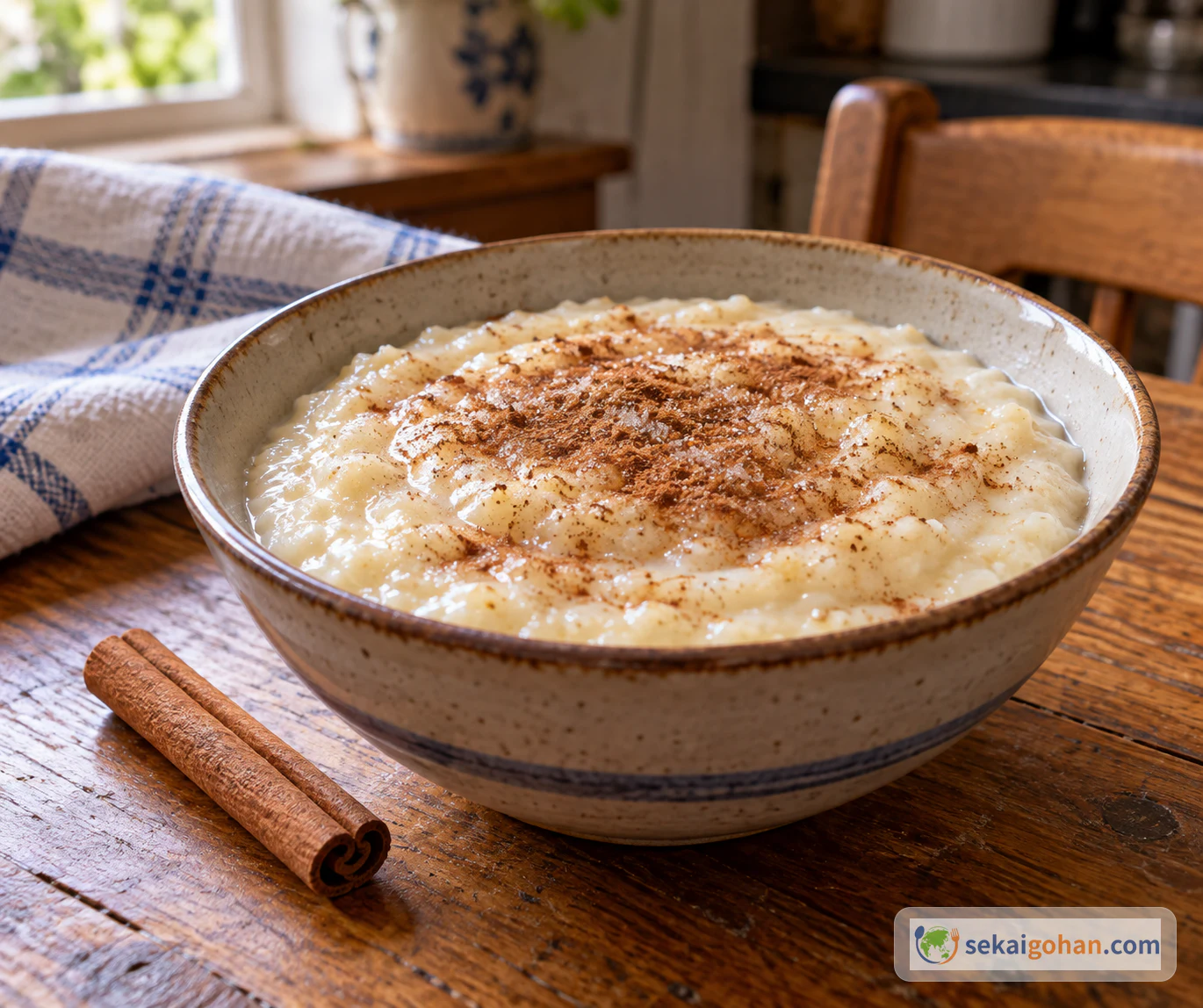
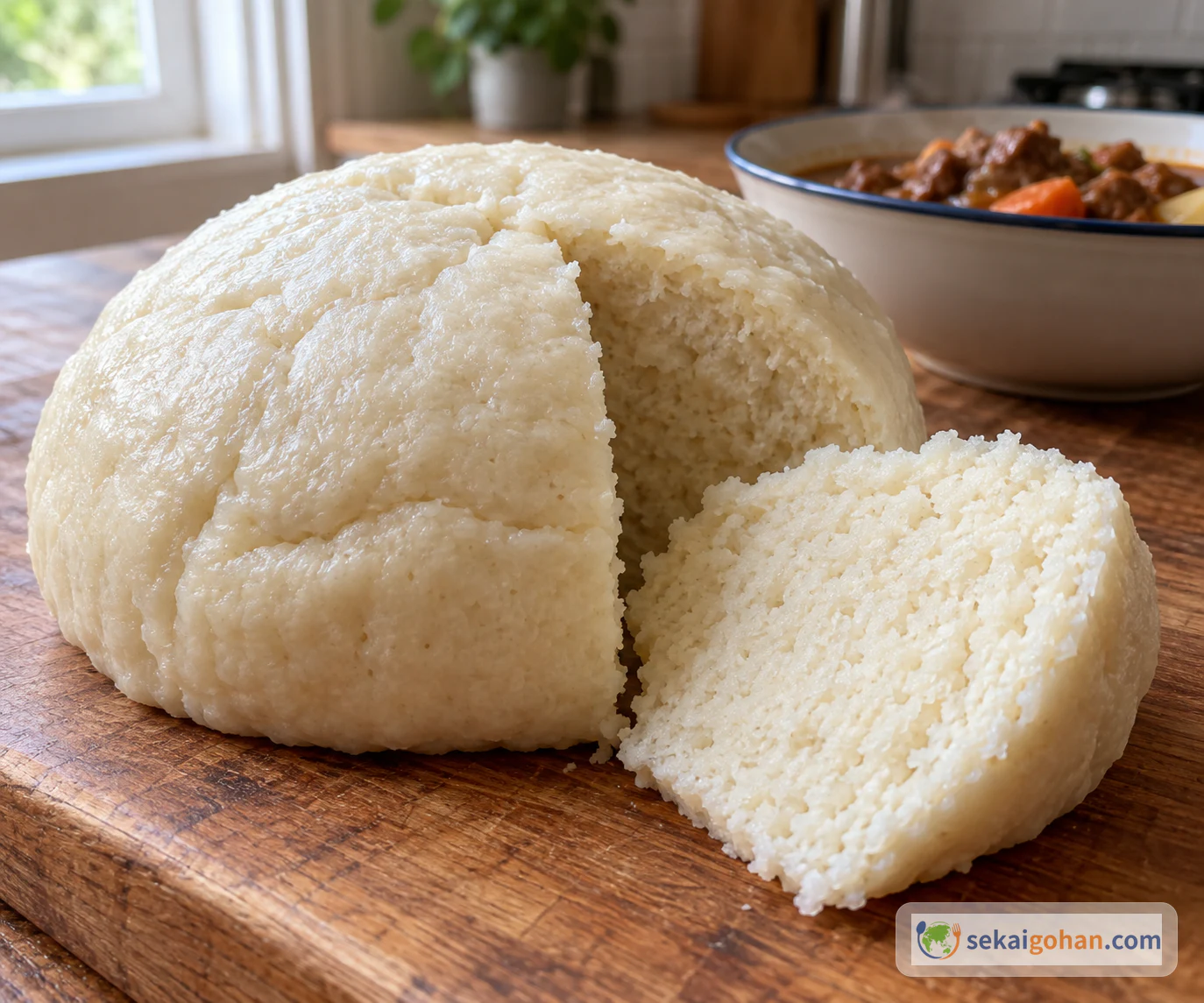
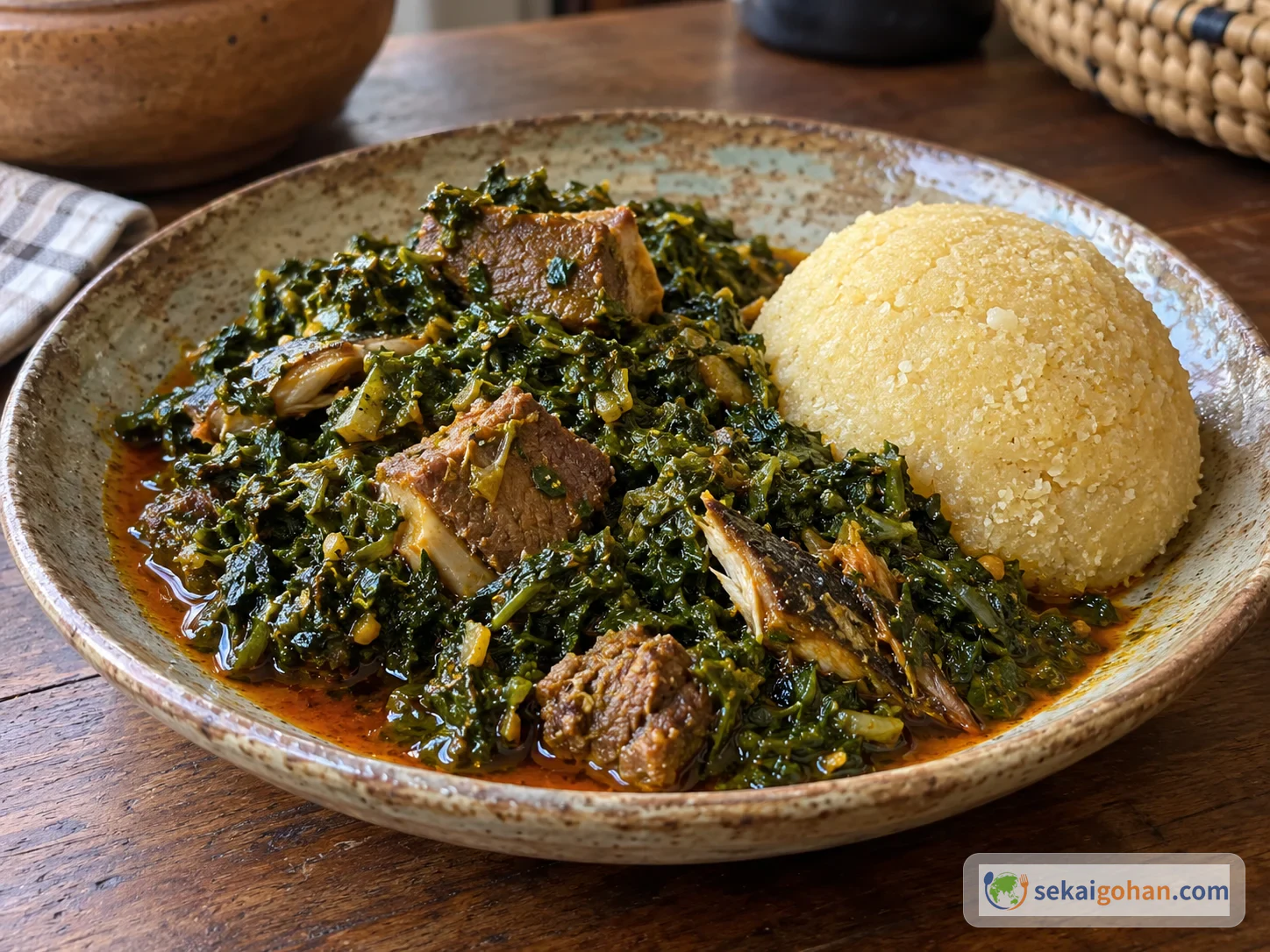
Serve rice, bread, or the cornmeal porridge eaten in South Africa on the side to catch the broth. Keep them out of the pot, since they would throw off the water balance. Plain white rice is enough, and thick slices of bread are good for dipping. Chakalaka, South Africa's spicy vegetable dish, makes a good side, and on days when the meat fat feels heavy, a sharp, acidic salad keeps you going back for more.
Storage and reheating
Let it cool a little, transfer the ingredients and broth to a lidded container, and refrigerate. Finish it within 2 days. Potatoes change texture when frozen, so if you freeze it, set aside only the meat and broth.
To reheat, return it to a pot, cover, and warm over low heat until hot through the center. If the broth has set, add about 2 tbsp bouillon instead of water. Warm the meat in chunks and cut it just before eating, since shredded meat dries out quickly.
Frequently Asked Questions
I don't have an ovenproof pot. Can I use a regular pot?
Yes, if it's a heavy pot with a tight-fitting lid; cook it on the stove instead. Warm the broth over medium heat, then lower to low once it boils. If the pot tends to scorch on the bottom, put a wire rack between the burner and the pot, and plan on 2 hours 30 minutes to 3 hours.
Can I stir the pot partway through?
No. Moving the ingredients disturbs how the heat reaches each layer. If you want to taste the broth before eating, scoop about 1 tsp from the bottom.
Is red wine required?
No. Use beef bouillon to a total of 2 cups (500 ml) and stew it with the tomato paste and spices. Without the wine, a little lemon juice at the end sharpens the flavor.
Is it suitable for children?
This recipe uses no chile, so it isn't strongly spicy. If you substitute commercial bouillon or curry powder, check the label for chile and allergens. For children, cut the ingredients into smaller pieces after plating and check the temperature before serving.