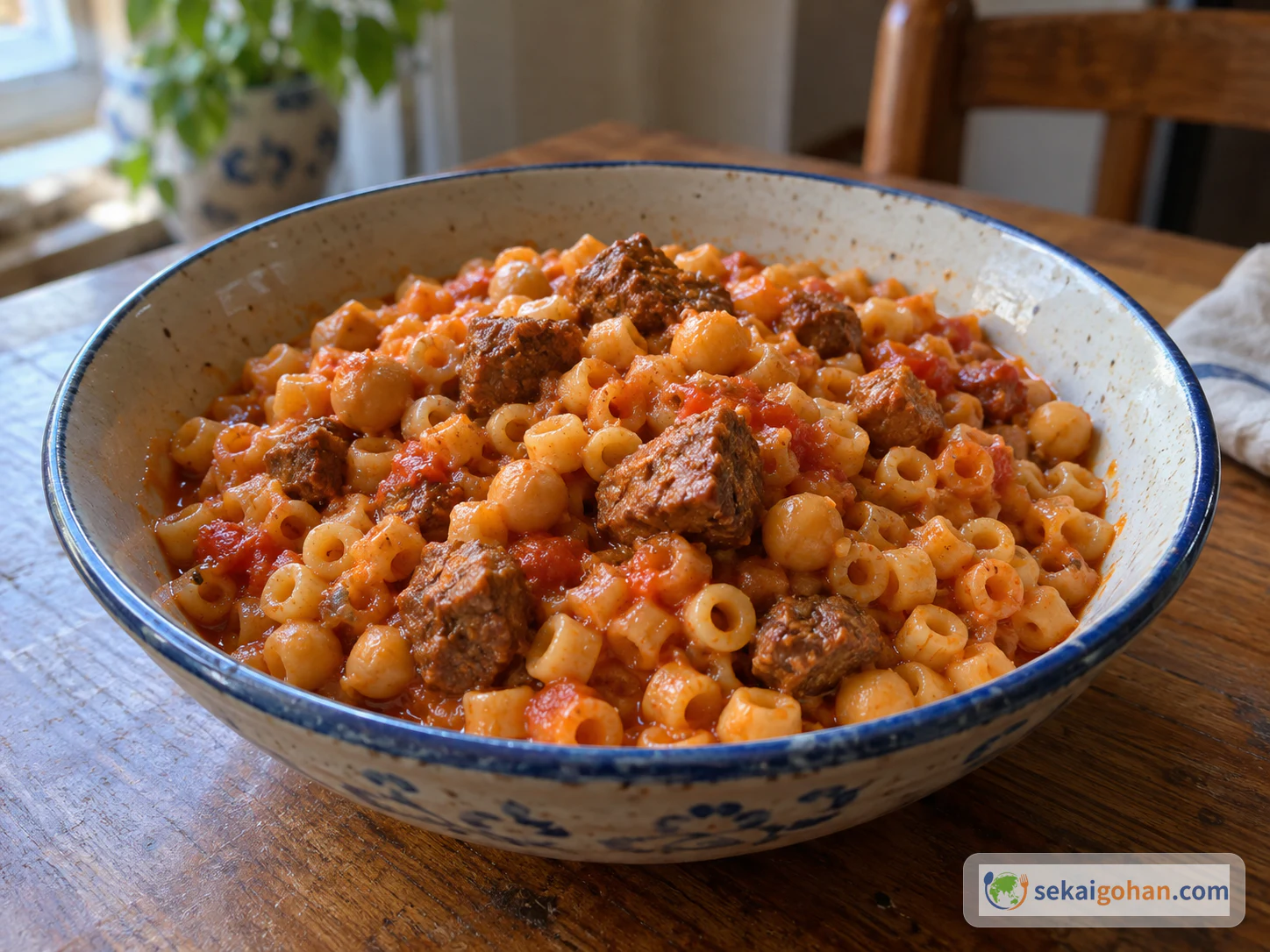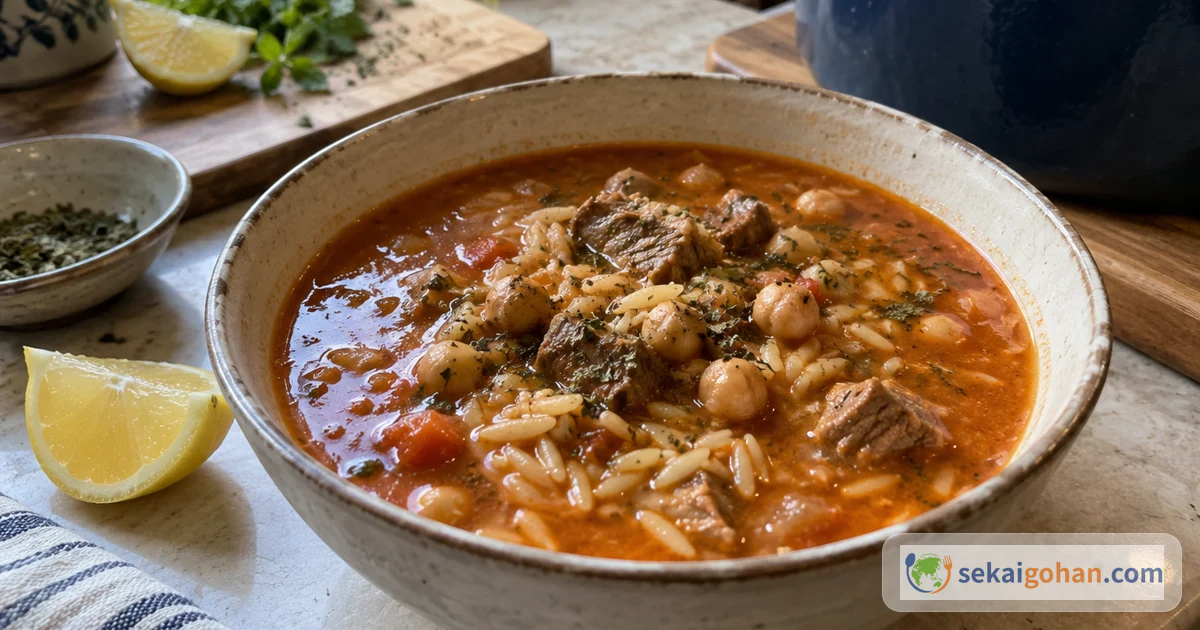
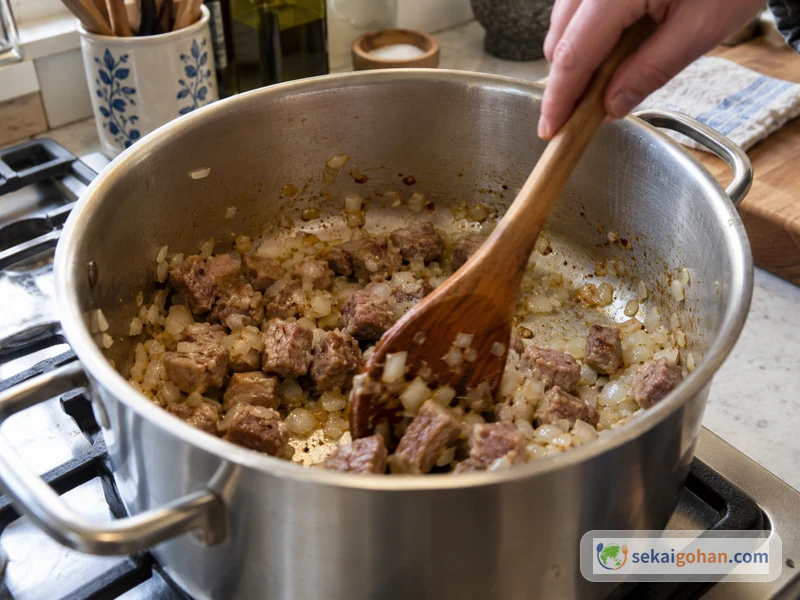
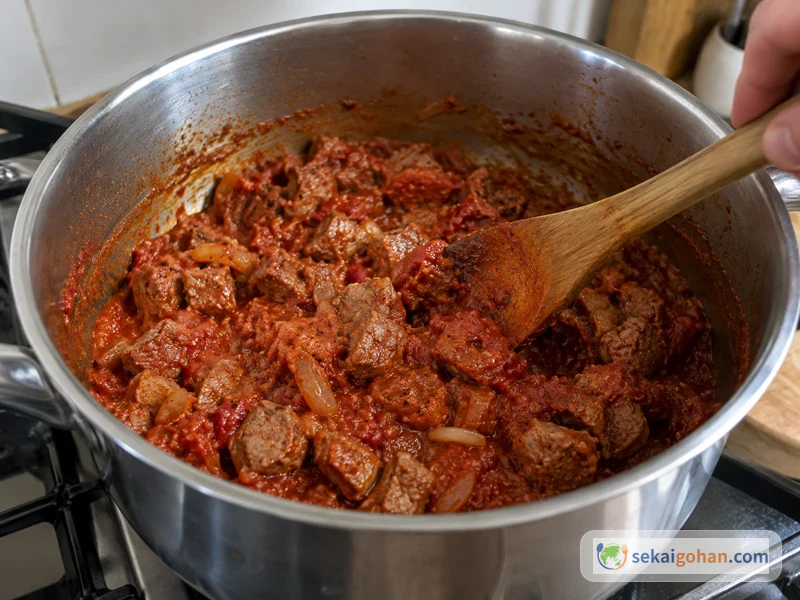
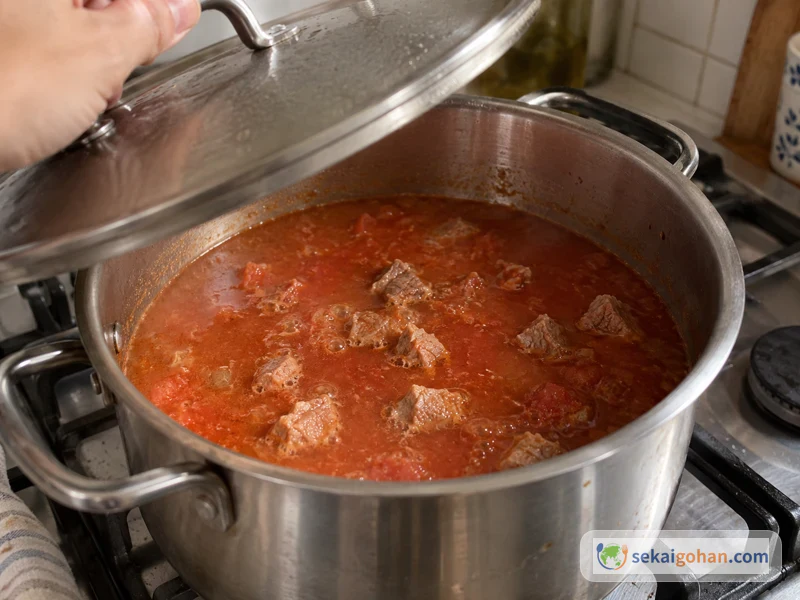
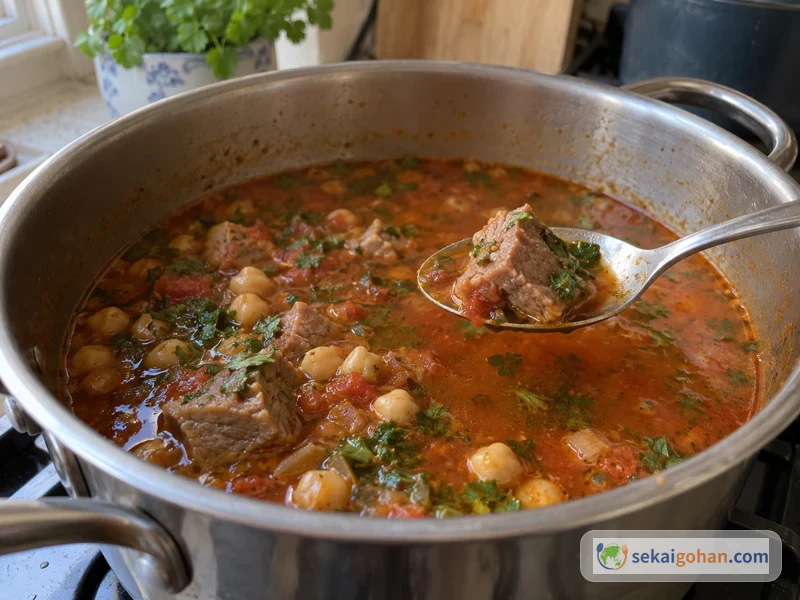
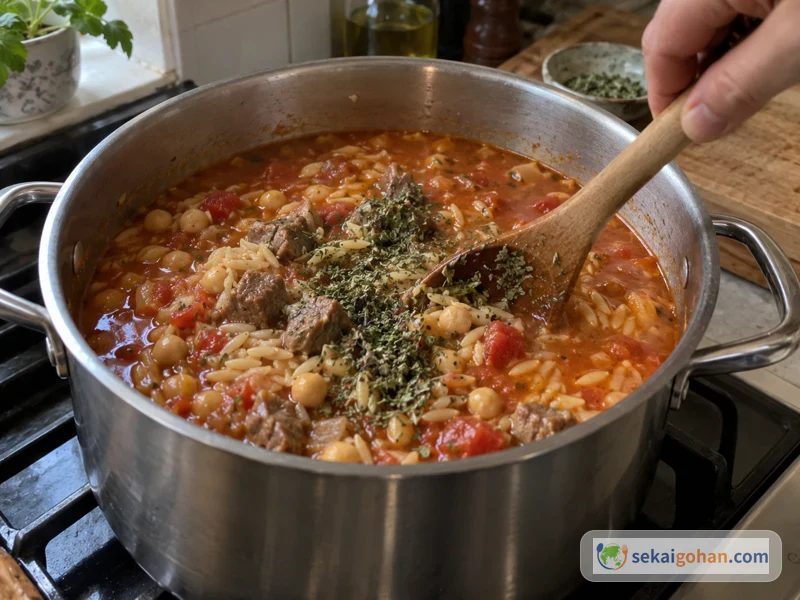
When the sun goes down and the call to prayer drifts over the neighborhood, steaming bowls begin to appear on the table: a soup stained red with tomato, full of tiny rice-shaped pasta and meat that gives way at the touch of a spoon. A last scattering of mint sends its fragrance up with the steam, and a squeeze of lemon goes in just before the first spoonful. Sharba libiya, literally "Libyan soup," is exactly what its name says. Libyans have loved this bowl for generations, with its rich tomato, warm spices and cool lift of mint.
Sharba libiya, Libya's Ramadan soup
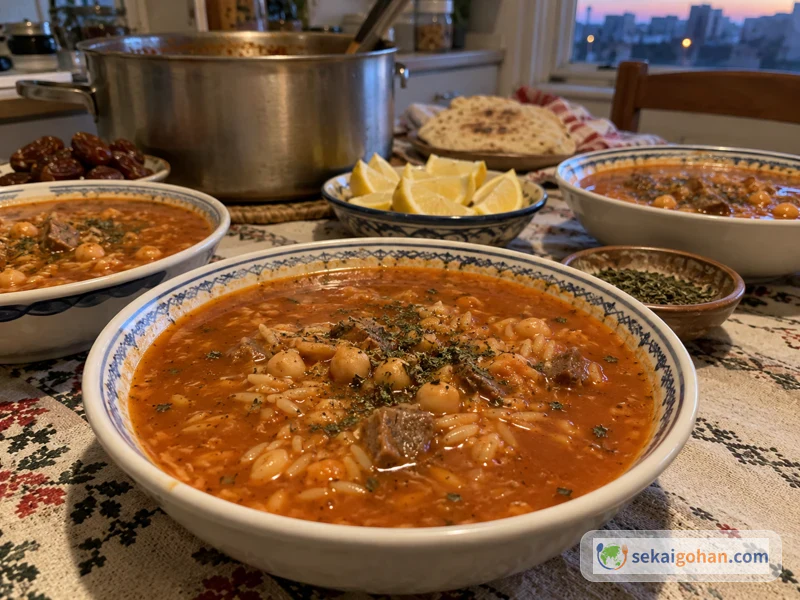
This soup is close to Libya's national dish, and people call it either simply sharba (soup) or sharba libiya. It is served on many occasions, but it is eaten most in the month of Ramadan, when it reaches the table almost every evening. After a day of fasting, a warm soup is gentle on the body. With meat, tomato, beans and pasta all in one pot, it is a whole meal in a bowl.
The soup is well known beyond Libya, too, across North Africa in countries such as Tunisia, Algeria and Morocco.
Sharba is a word for "soup" used from North Africa through the Middle East, and it is also spelled shorba or chorba depending on the region. Algeria has its own version, chorba frik, made with roasted young wheat (freekeh), so the ingredients and aromas differ from country to country.
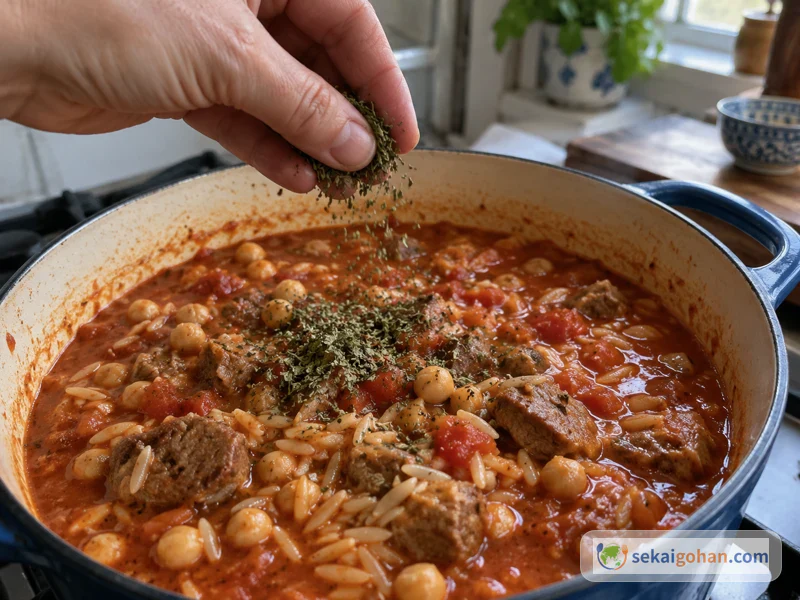
Wherever it is made, one thing never changes: a generous addition of dried mint at the end. The mint brings a cool freshness to the warm aroma of tomato and spices. Without it, a meat soup can easily turn heavy, but with it the bowl stays light enough to finish to the last spoonful.
Ingredients (serves 4)
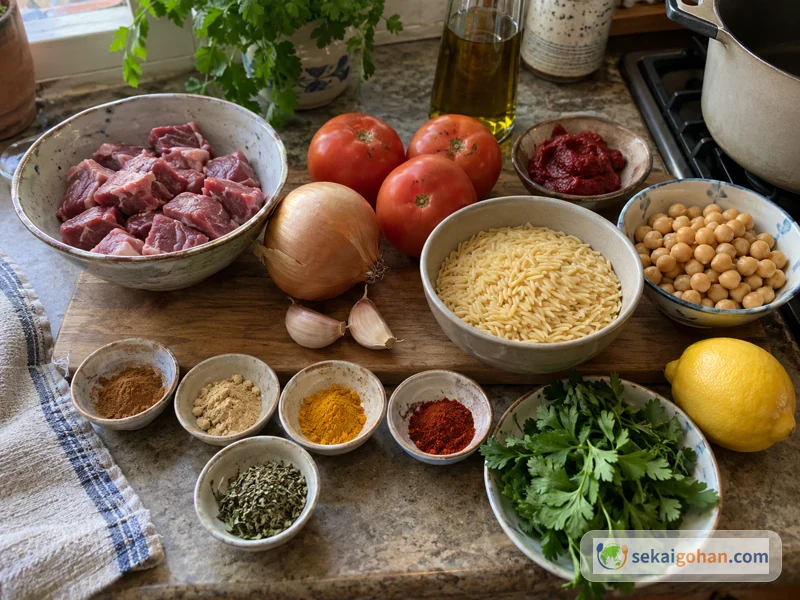
Grating the tomatoes leaves the skins in your hand and puts only the pulp in the soup. The riper the tomato, the sweeter the soup and the brighter its color. Orzo is sold at Italian and import grocers and online. If you cannot find it, broken-up spaghetti or another small soup pasta will do. Dried spearmint is the easiest to use; rub it between your palms just before adding it and the aroma comes up much more strongly.
Cut the tomatoes in half crosswise, press the cut side against a grater and grate, holding the skin down with your palm. In the end only the skin stays in your hand, so there is no need to blanch and peel them.
Choosing ingredients for sharba libiya
The other signature is orzo, a small pasta shaped like grains of rice. Cracked-wheat bulgur works in its place. It cooks differently from orzo, though, so follow the package directions and simmer it until soft.
For spices, the recipe uses cinnamon, ginger, turmeric and cayenne pepper. Another version swaps in chili powder, paprika, mixed spices and turmeric.
Orzo soaks up the soup as it cooks and tends to sink and stick to the bottom of the pot. If it scorches, the burnt taste spreads through the whole soup, so once the orzo is in, stir from the bottom now and then. Orzo and bulgur are made from wheat, so anyone with a wheat allergy should take care.
The sharba way is not al dente orzo but orzo cooked soft all the way through. If the soup reduces too much, loosen it with a little hot water at a time.
Dried mint gives its best aroma when it goes in just before you turn off the heat. Add it too early and the fragrance fades, so treat it as the last small step.
Serving sharba libiya
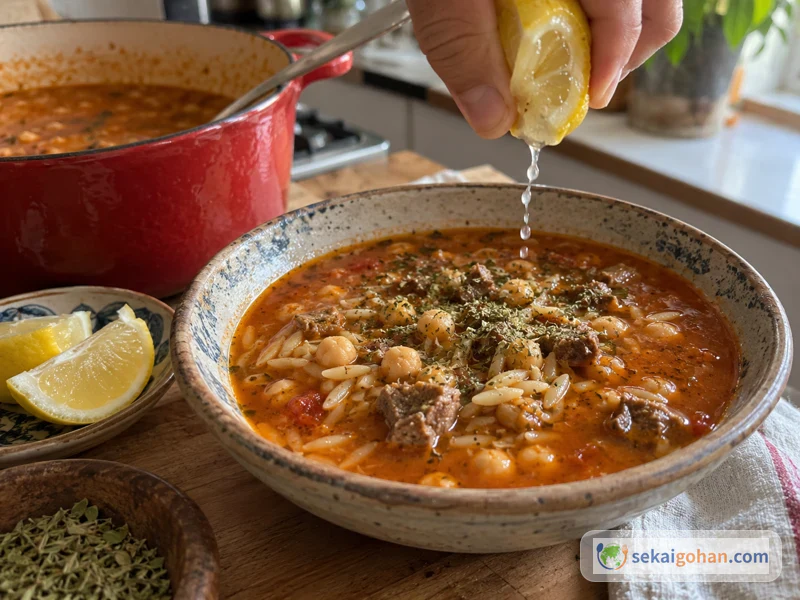
Ladle the soup generously into warmed bowls and serve it hot with lemon wedges. Squeezed on just before eating, the lemon adds acidity that sharpens the sweetness of the tomato and the aroma of the mint. How much lemon is up to you, and squeezing on a bit more as you go is perfectly fine.
If you'd like to taste North African soups side by side, try Algeria's roasted-wheat soup chorba frik, or harira, the Moroccan soup that is essential on Ramadan evenings. For another Libyan home dish, there is mafrum, stuffed potatoes in tomato sauce.
Frequently asked questions
What if I cannot get lamb?
Beef can be used in place of the lamb. Cut a stewing cut of beef into about 0.5 inches (1 cm) cubes and proceed the same way. How long the meat takes to become tender depends on the cut, so check it by pressing with a spoon in step 4.
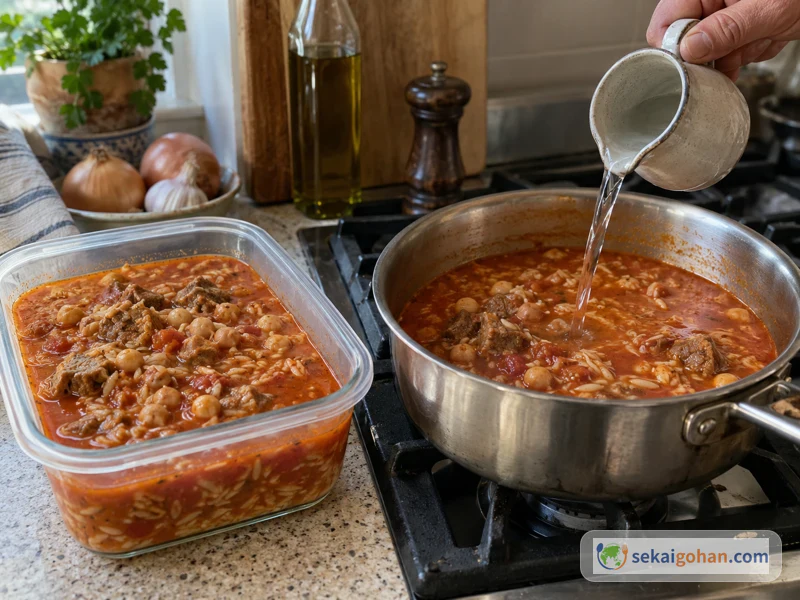
What should I do with leftover soup?
Let it cool a little, then transfer it to a storage container, refrigerate it, and finish it soon. As it sits, the orzo absorbs the soup and swells, so the soup gets thicker. When reheating, loosen it with a little hot water and heat it until it is hot all the way through.
Is it a spicy soup?
The heat depends on how much cayenne pepper you use. Leave it out and you have a mild soup built around the warm aroma of cinnamon and ginger. If you like it hot, add more cayenne.