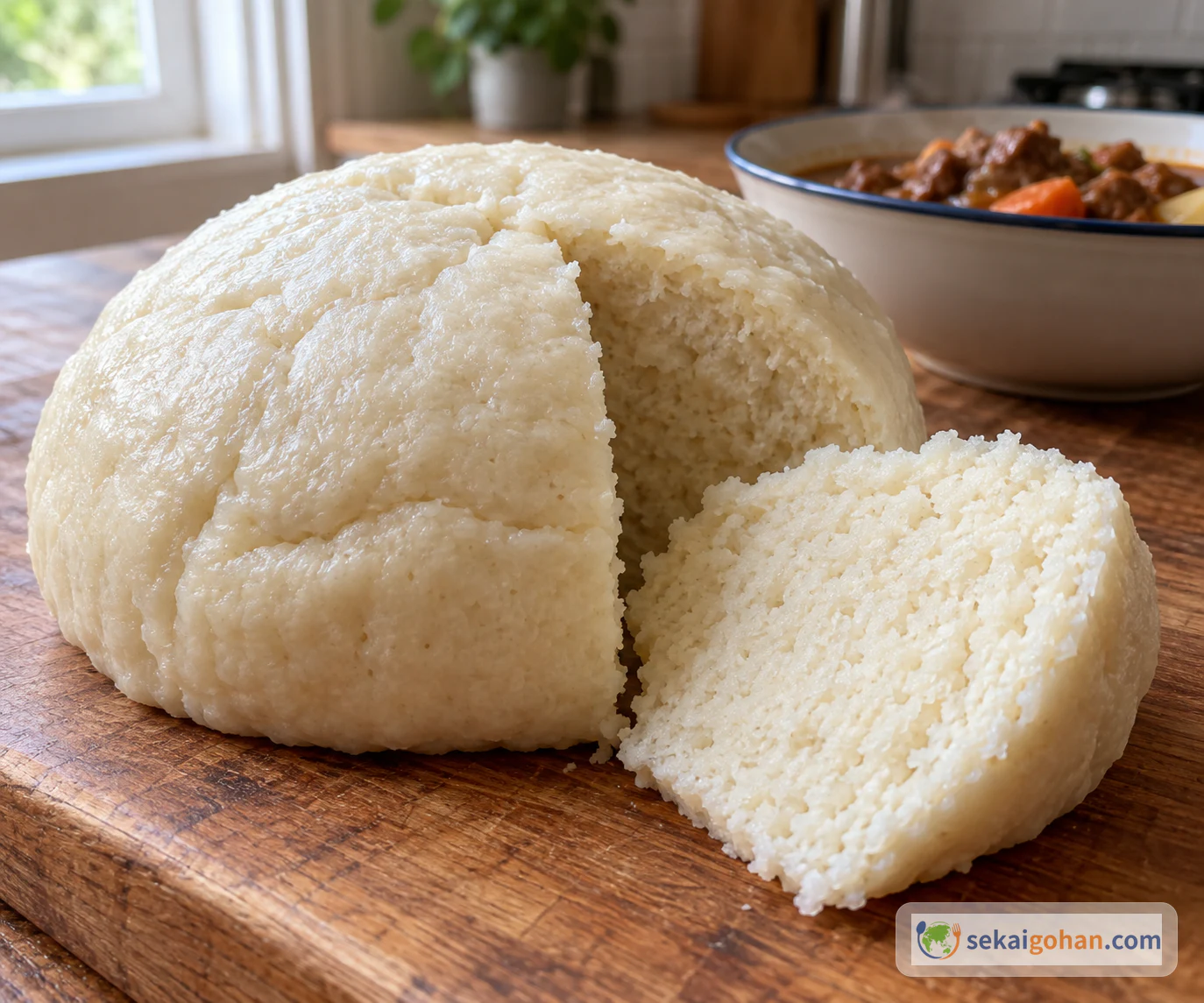
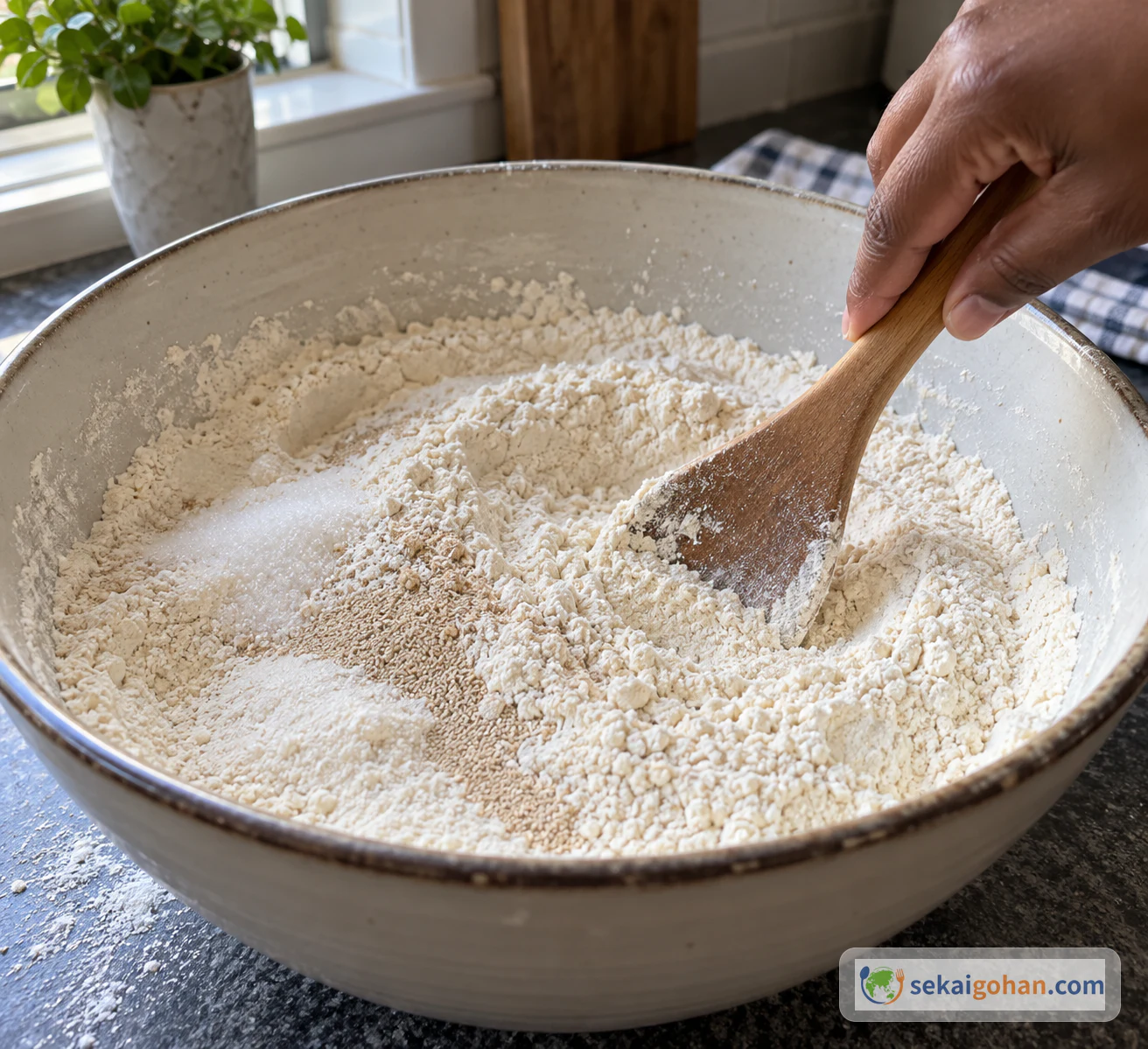
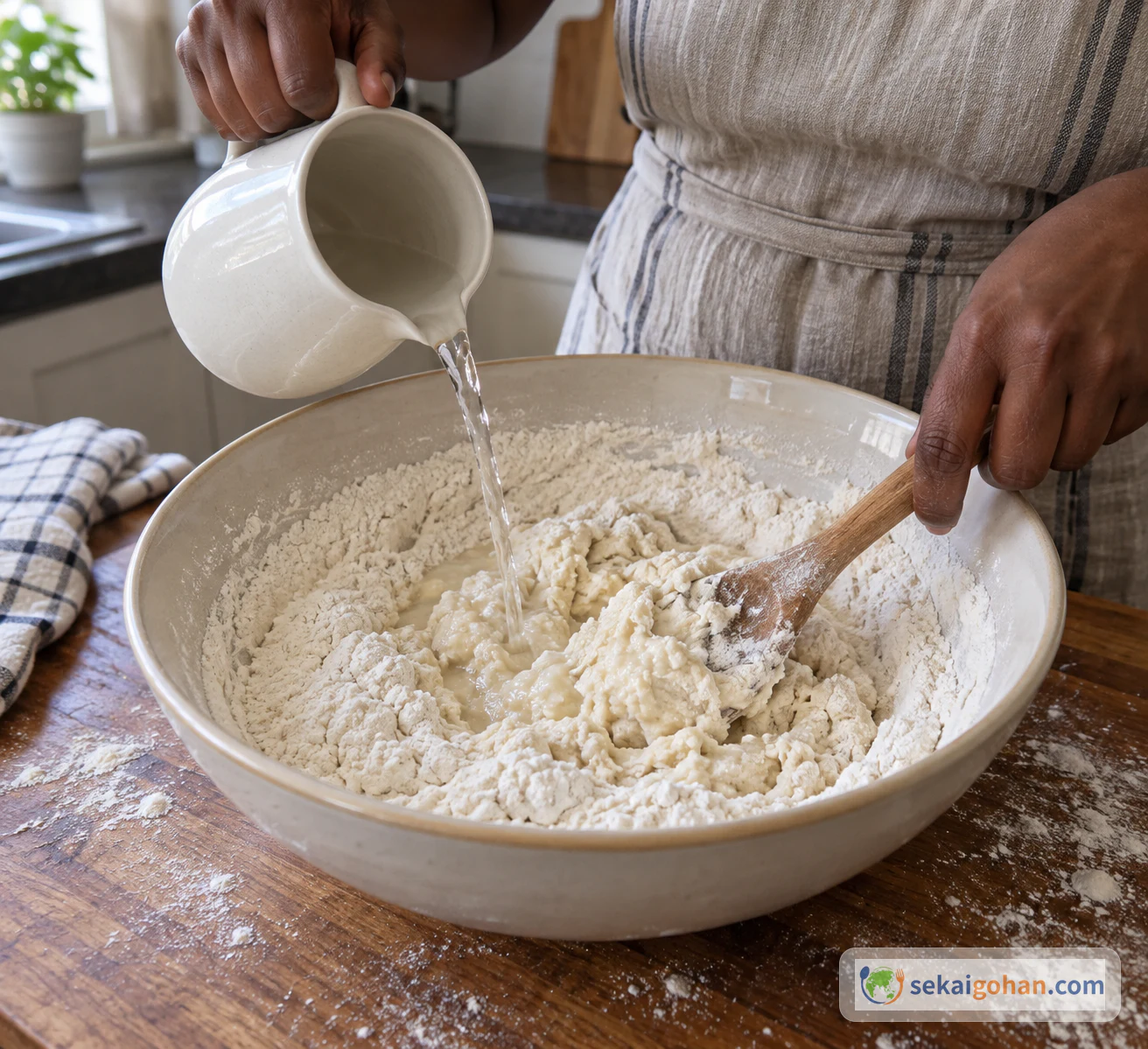
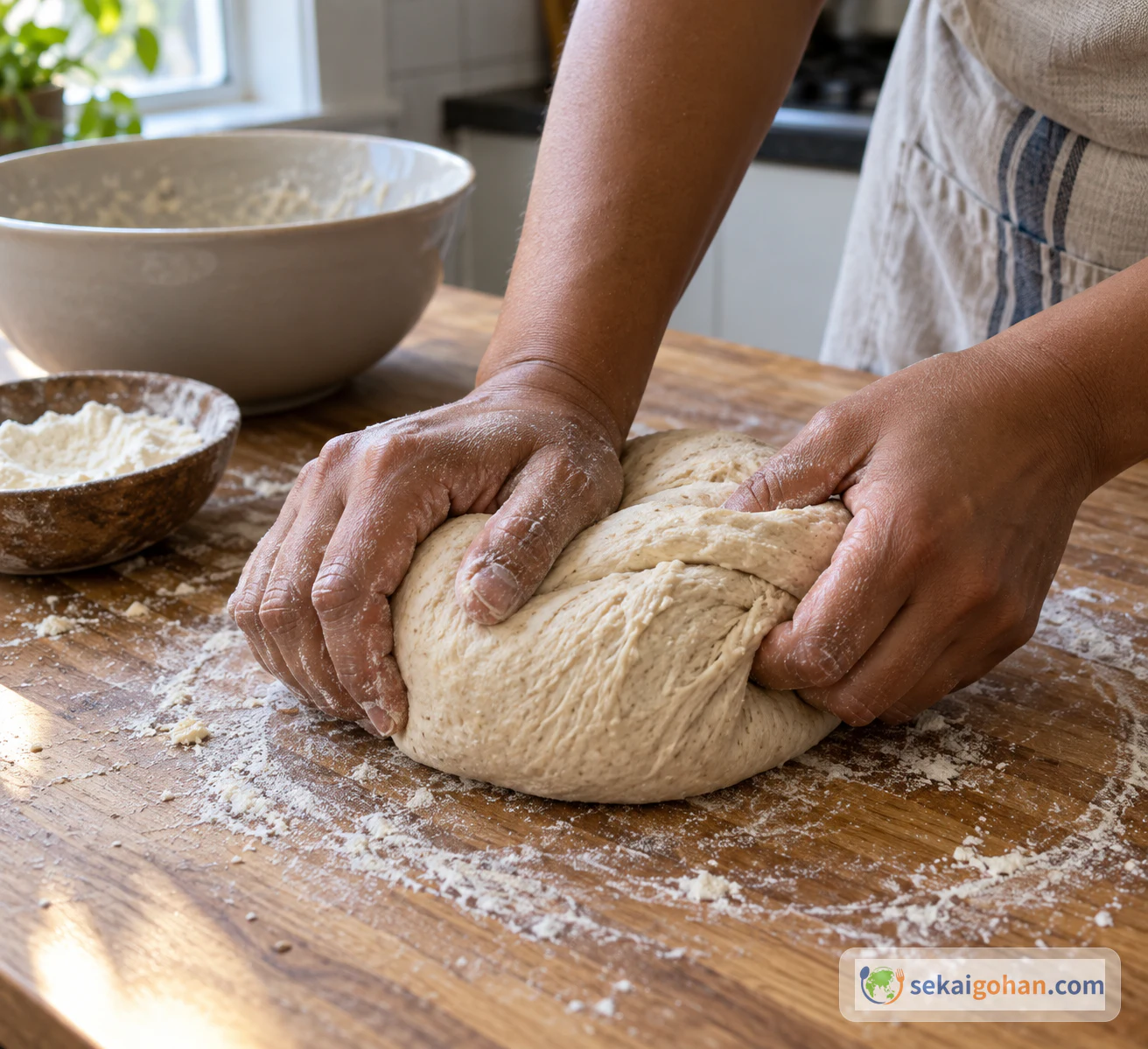
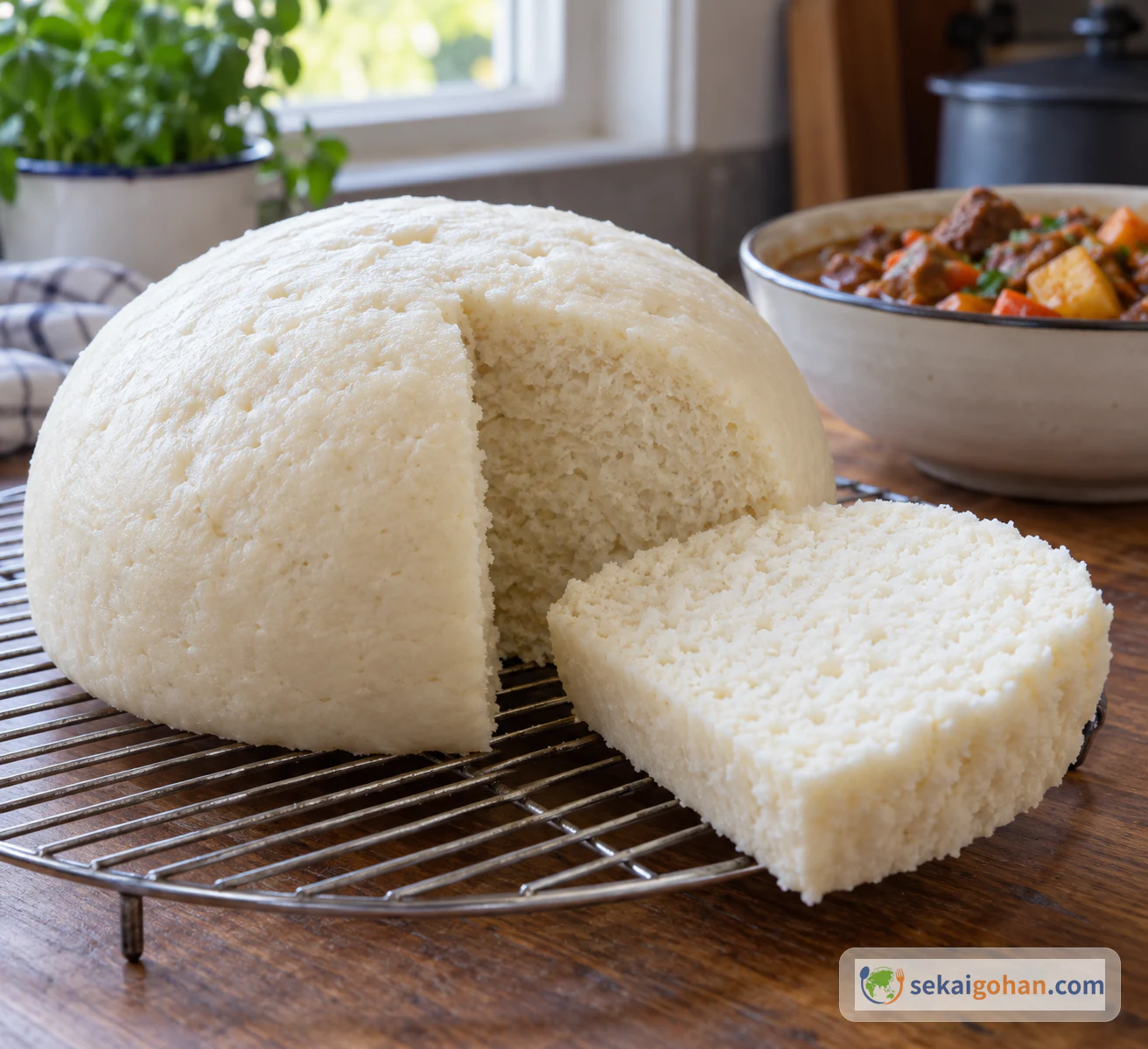
The lid comes off the pot, the steam clears, and inside the bowl sits a pale, rounded loaf. Turned out and sliced, it's soft and moist, the kind of bread made for mopping up the gravy of a stew. Ujeqe is South Africa's steamed bread, a plain, gently sweet wheat loaf that boarding students know as a taste of home, eaten alongside stews and curries. It needs no oven, only patience while the dough rises and a long, undisturbed steam with the lid kept firmly on.
Ujeqe in Zulu Cooking
Ujeqe is a yeast-risen wheat dough cooked by steaming. In Zulu cuisine, where food is closely tied to farming, herding and tradition, uJeqe is the steamed bread. It often appears alongside other dishes such as iDombolo and offal dishes. Names vary by region and household, so iDombolo and ujeqe are best treated as separate dishes, and what goes with the bread differs from family to family.
The loaf is plain, but it matters to people. Besides its place beside stews and curries for boarding students, it belongs at gatherings: one baker describes ujeqe as a steamed bread tied to a sense of being together.
Recipes differ. One version adds baking powder and butter and steams in two stages. Another uses 2.25 lb (1 kg) of flour, rises the dough twice, and serves the bread with sugar beans. For more of the country's food, see South African recipes.
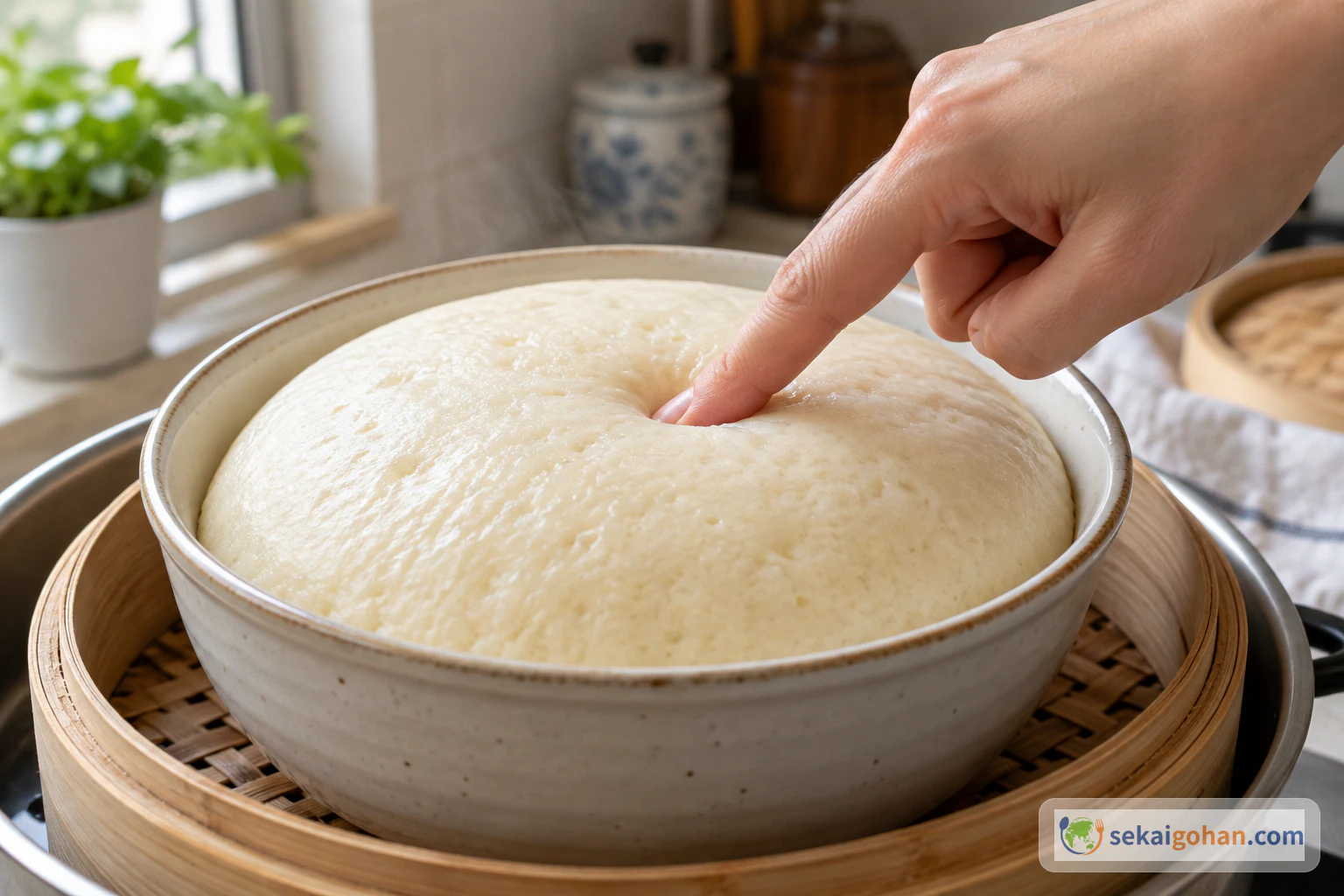
A plain, gently sweetened wheat dough, risen until doubled and cooked by steam alone, so it stays pale and soft with no browned crust. It should be well risen and spring back when you press it lightly.
Ingredients for One Medium Loaf (Serves 6)
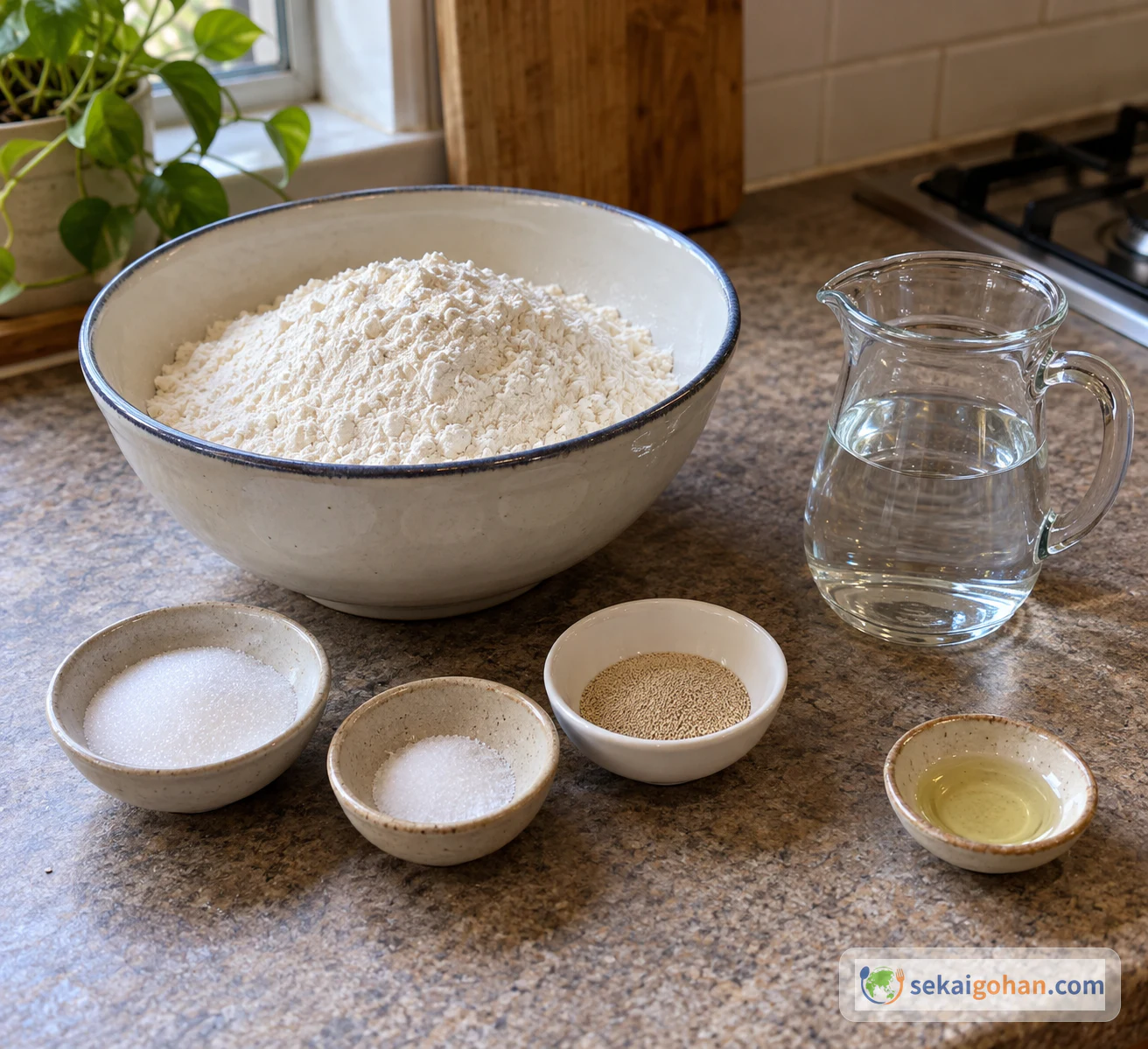
Follow the flour weight rather than the cups. Sugar, salt and yeast are given as spoon measures with millilitres. Makes one medium loaf, serving 6.
This bread contains wheat but no milk or egg. Check the labels on your flour and yeast for allergen and shared-facility statements, and keep cross-contact from other foods and equipment in mind.
Equipment
- Large mixing bowl
- Round heatproof bowl, 9 inches (23 cm)
- Clean damp cloth
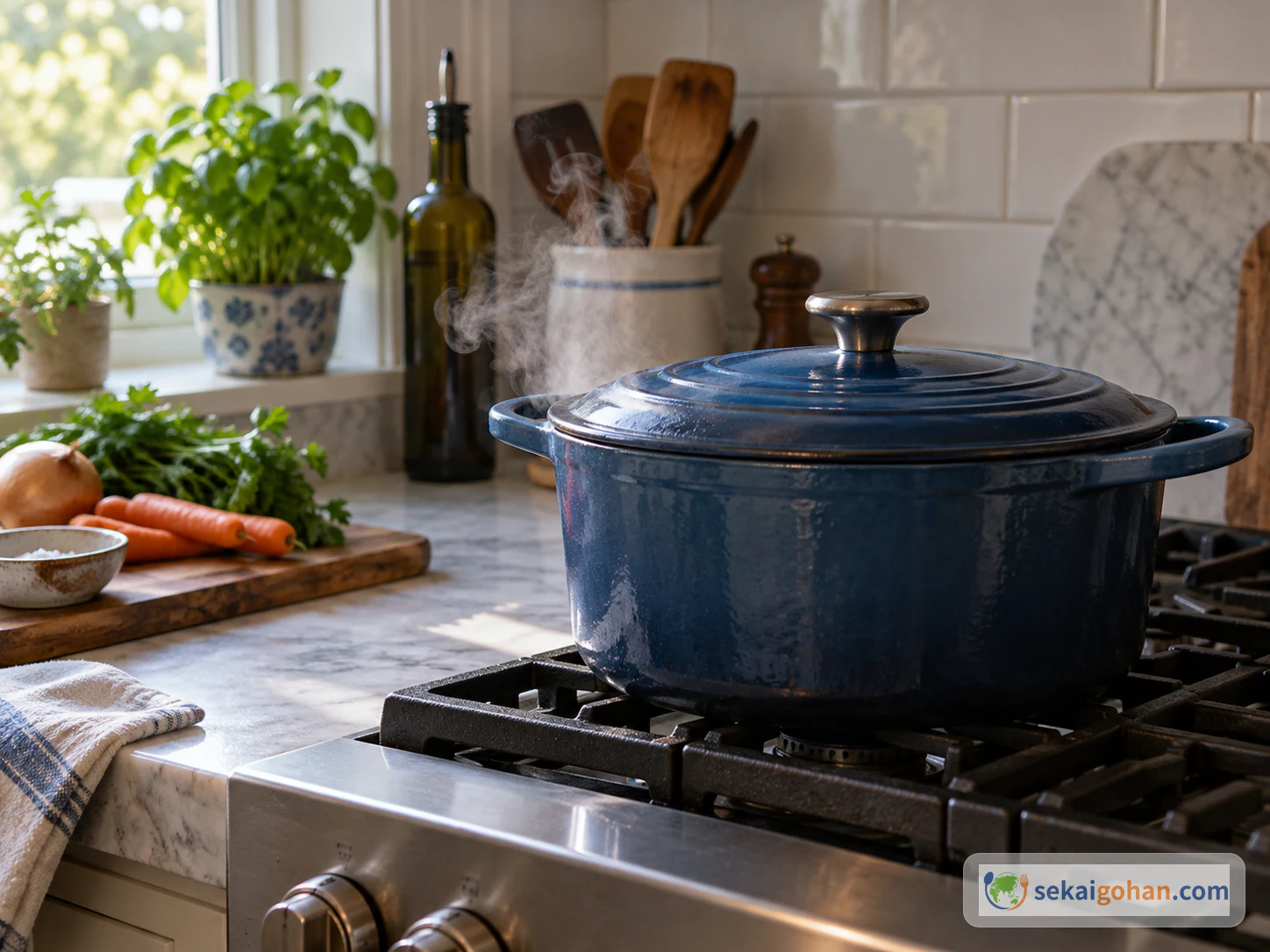
- Lidded pot large enough to hold the heatproof bowl with the lid closed
- Oven mitts
- Wire rack
Choosing Flour, Bowl and Pot for Ujeqe
Flour. Use cake flour. If it's hard to find, a soft, low-protein flour is the closest substitute, though the texture won't be identical. Bread flour gives a different loaf, so stick with a soft flour. Use instant yeast as listed.
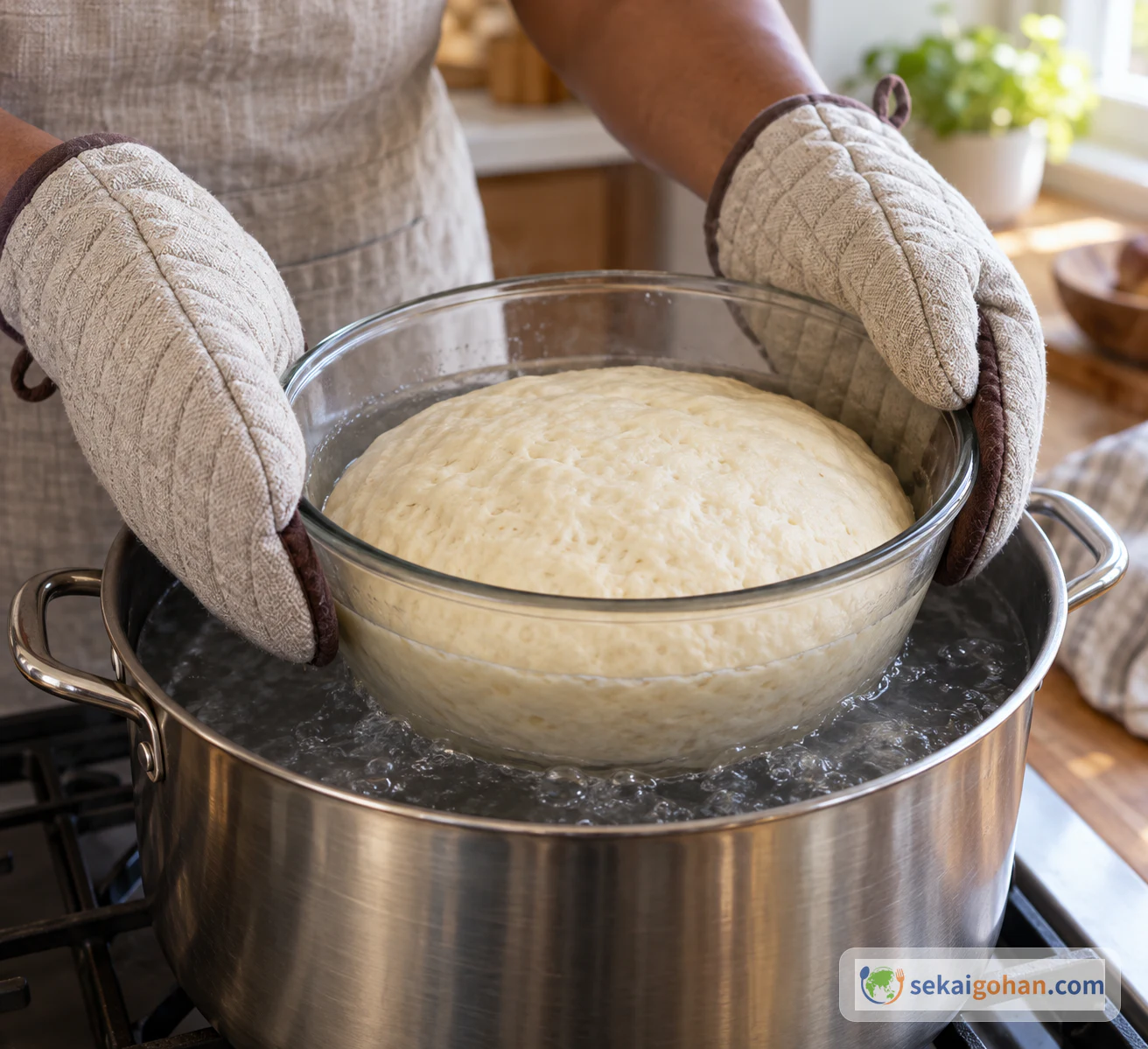
Bowl and pot. Check the fit before you start. The 9-inch (23 cm) bowl, with the risen dough in it, must sit steadily in the pot with the lid closed. Half-fill the pot with boiling water; it can touch the outside of the bowl, but keep the level well below the rim so none gets inside. Steaming takes a long time, so choose a roomy pot with a lid that closes well.
Method: Knead, Rise Until Doubled, Steam for 75 Minutes
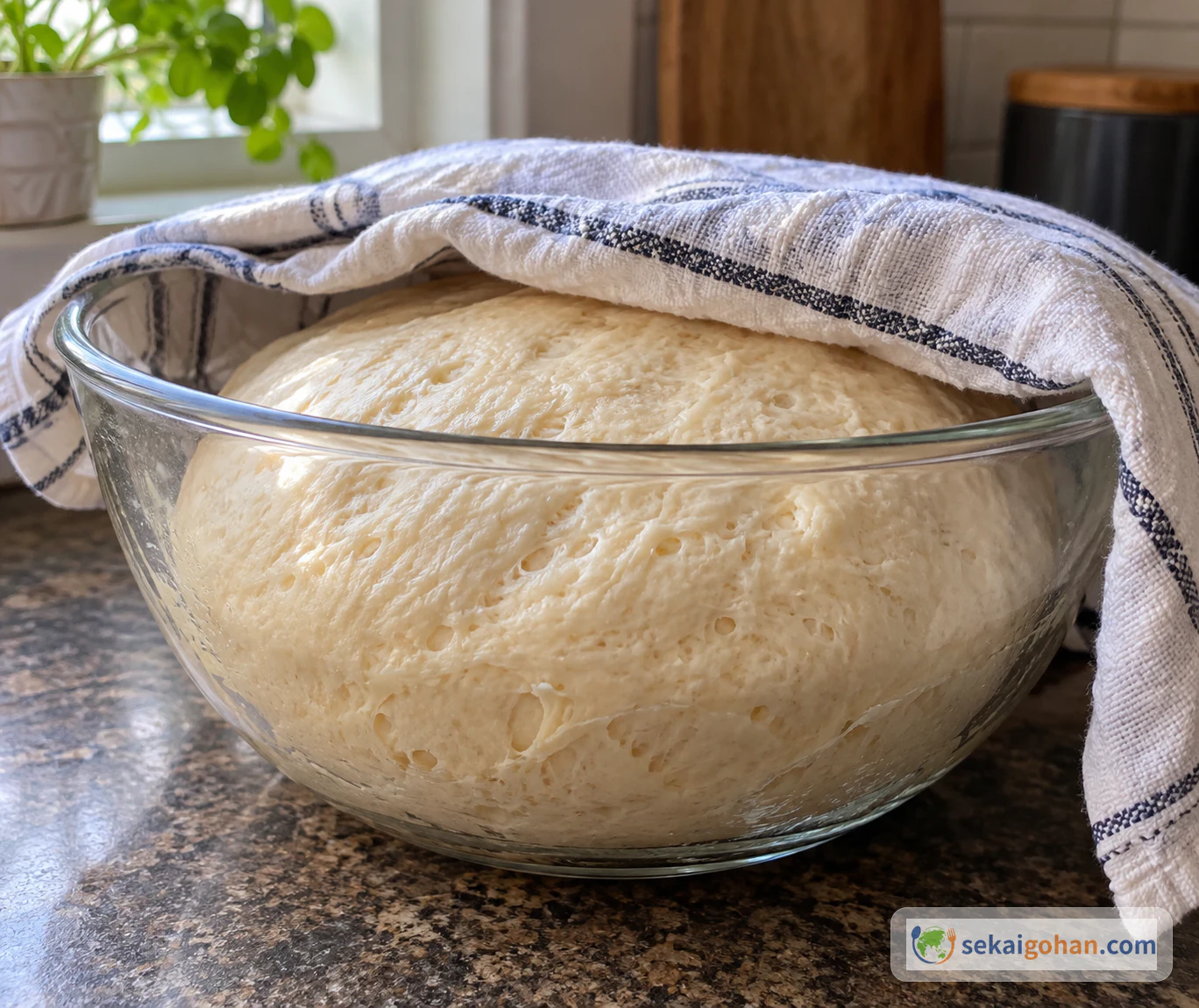
Rising is finished when the dough has doubled, however long that takes in your kitchen. Steaming is finished when the loaf is well risen and springs back when lightly pressed.
The pot holds boiling water and a hot glass bowl for well over an hour. Use dry oven mitts, open the lid away from you, and lift the bowl out slowly and level. Choose a pot large enough that it holds plenty of water throughout the steam.
Common Ujeqe Problems and Fixes
| Condition | What to look at | What to do |
|---|---|---|
| The dough is slow to rise | A cool room, water that is too hot, or tired opened yeast | Wait until the dough has doubled rather than going by the clock |
| The dough feels stiff or dry | The aim is a soft, elastic dough | Use only as much dusting flour as you need. If you change the 1½ cups (375 ml) of water, note it so you can compare next time |
| The surface is wet | Condensation dripping from the lid, or water getting into the bowl | Keep the water well below the bowl's rim and use a lid that fits well and doesn't drip onto the bowl |
| The loaf doesn't spring back after 75 minutes | It isn't cooked through | Keep steaming, check the pot's water safely, and test again with the same spring-back sign |
Serving Ujeqe and Variations
Ujeqe is a soft bread that catches liquid. Spread the slices with butter, use them to mop up the gravy from stews and curries, or serve them with sugar beans (ubhonsisi), always alongside the bread rather than in the dough. Away from South Africa, a beef, bean or vegetable stew from your own kitchen makes a good partner.
For smaller portions, the dough can be shaped into 6–8 small rolls and steamed for about 40 minutes; that time is for rolls only, not the 9-inch (23 cm) loaf. You can also replace some of the flour with whole-wheat flour, though that isn't a local version.
Frequently Asked Questions
How do I know the rise is finished?
When the dough has doubled in size. The time depends on your kitchen, so watch the dough rather than the clock.
Can I use a steamer instead of a pot?
Yes, if it holds the 9-inch (23 cm) bowl steadily above the water with the lid closed. Check the dimensions first, and keep the lid shut for the full steaming time.
Does ujeqe contain butter or egg?
No. The dough is cake flour, sugar, salt, instant yeast and water, with oil only for greasing the bowl. Some other recipes add butter and baking powder.