
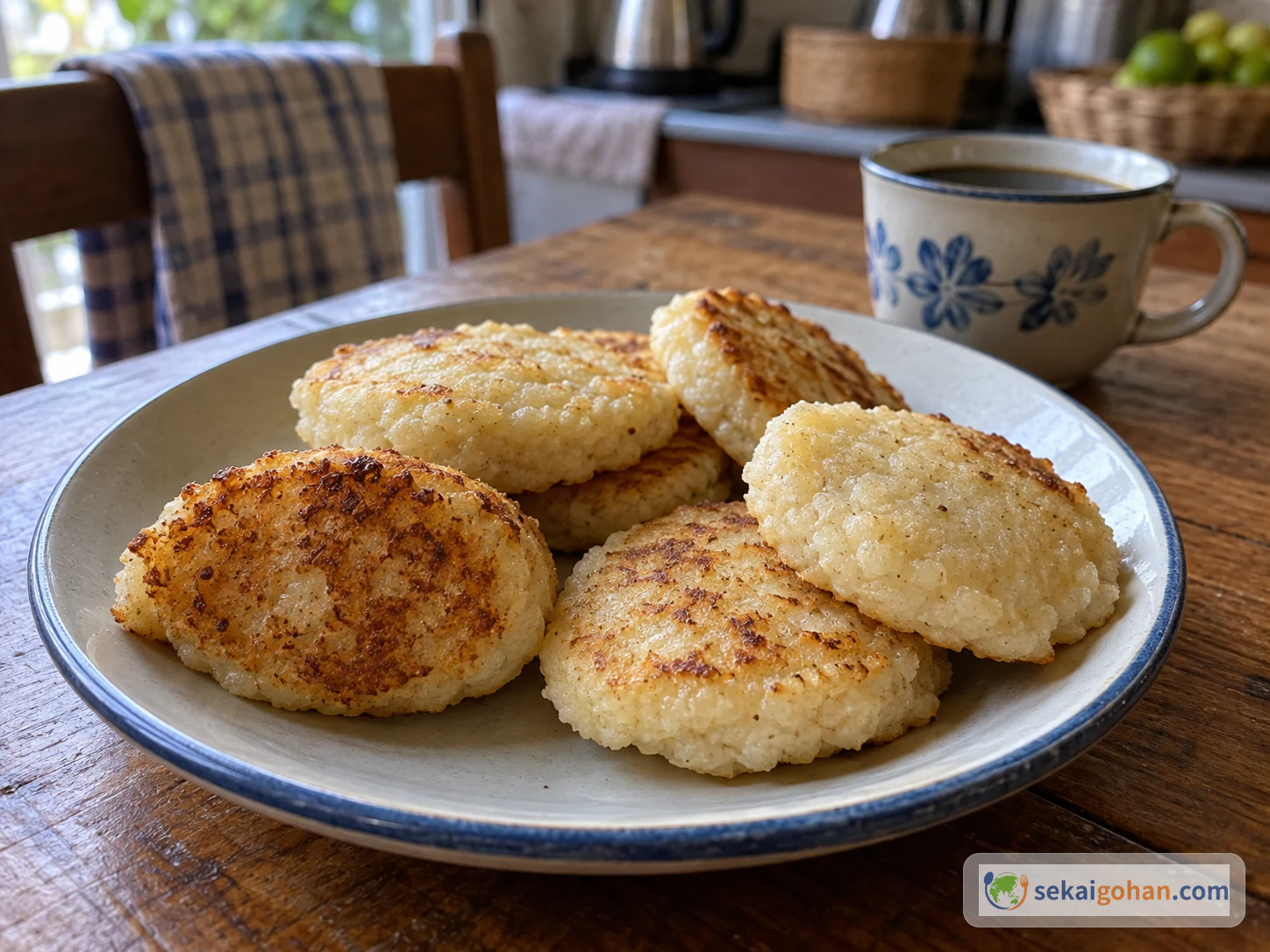
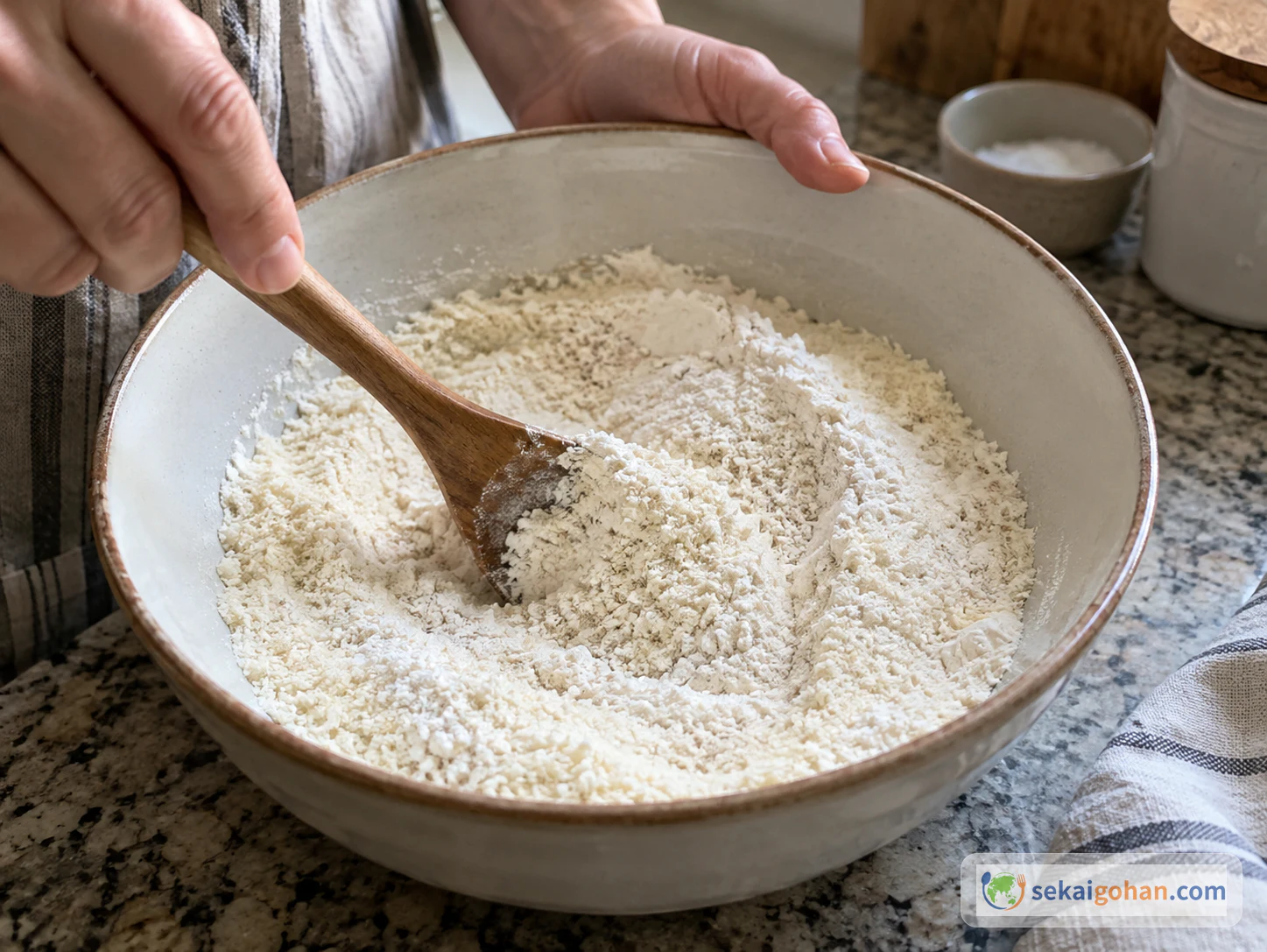
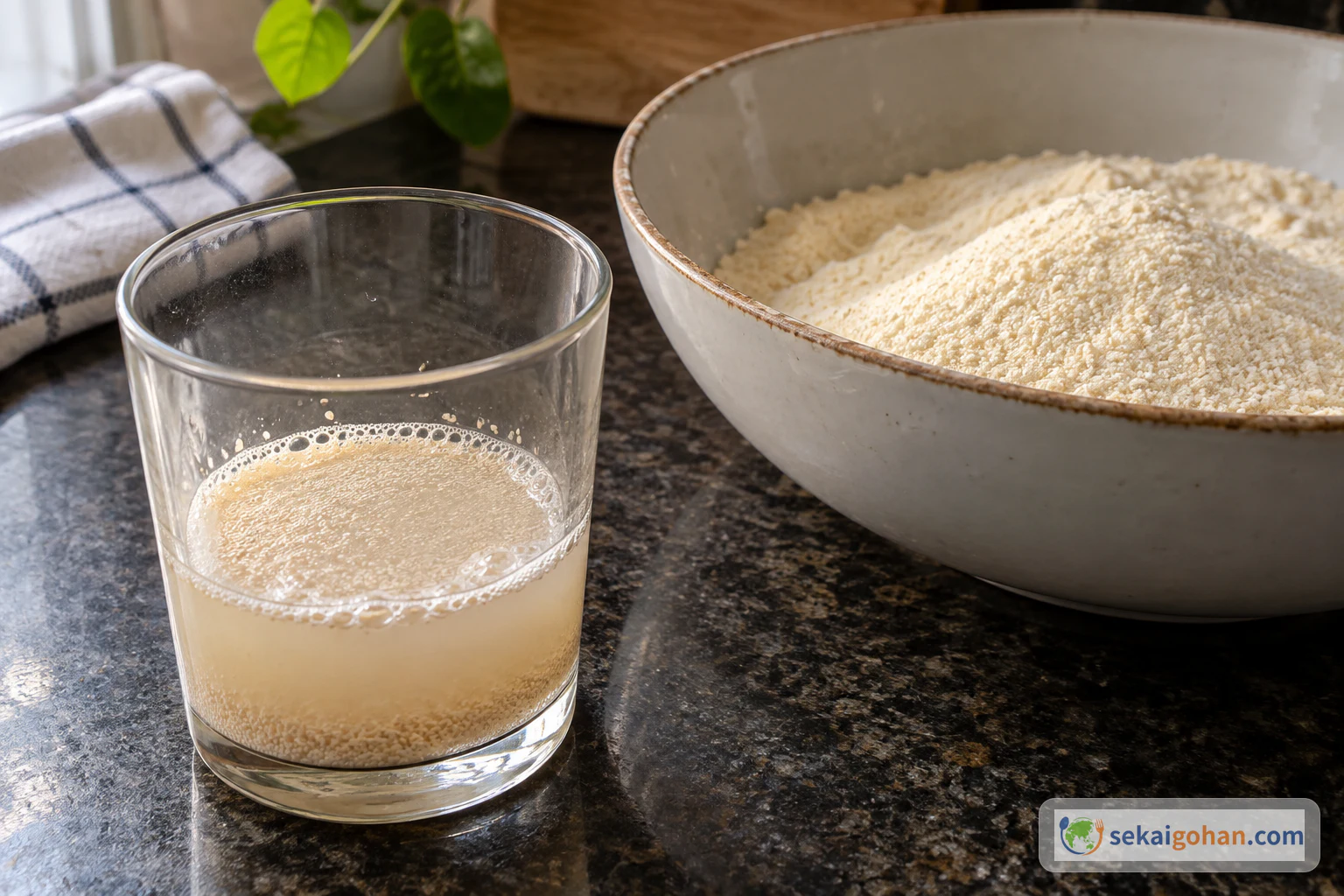
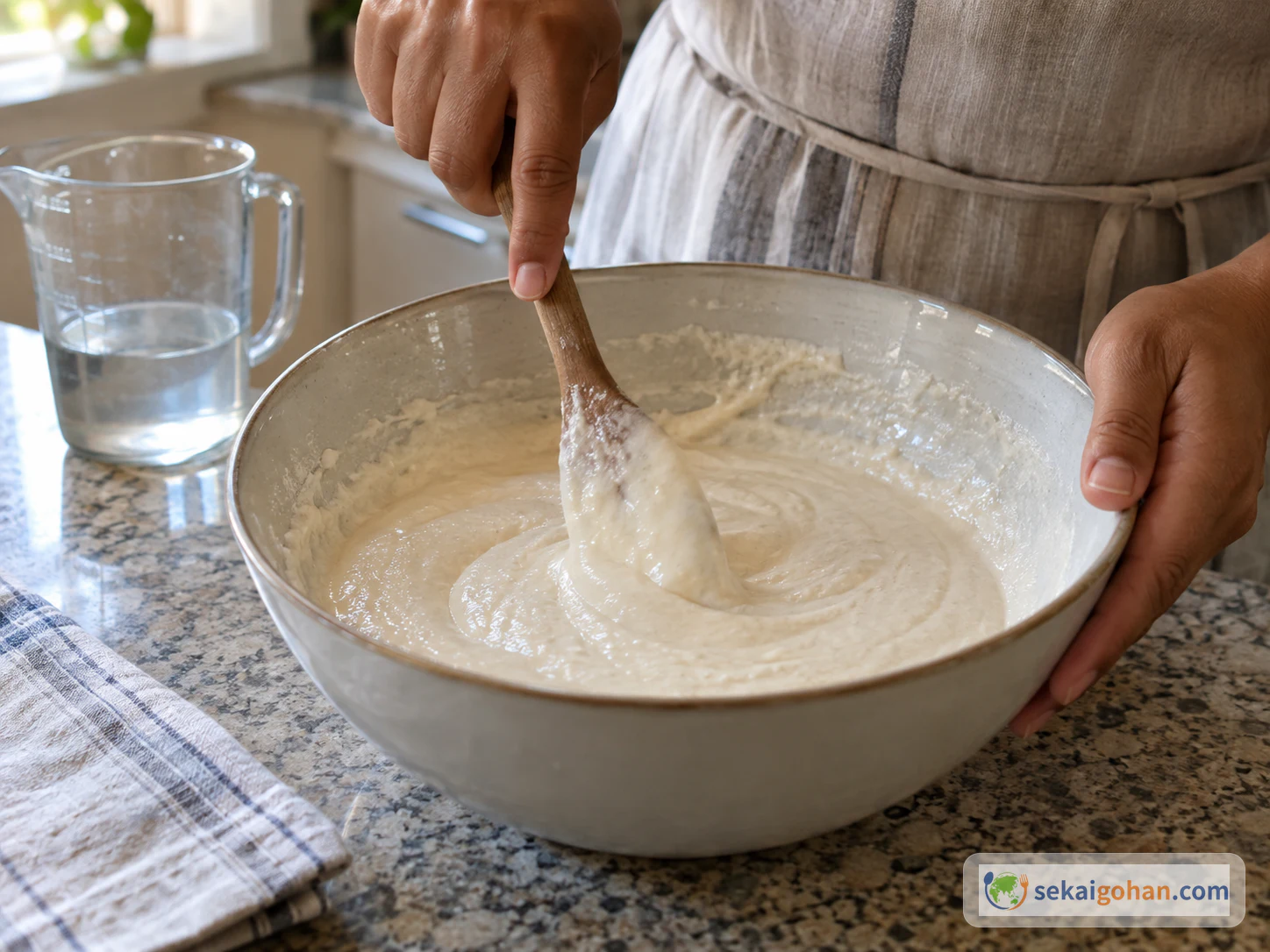
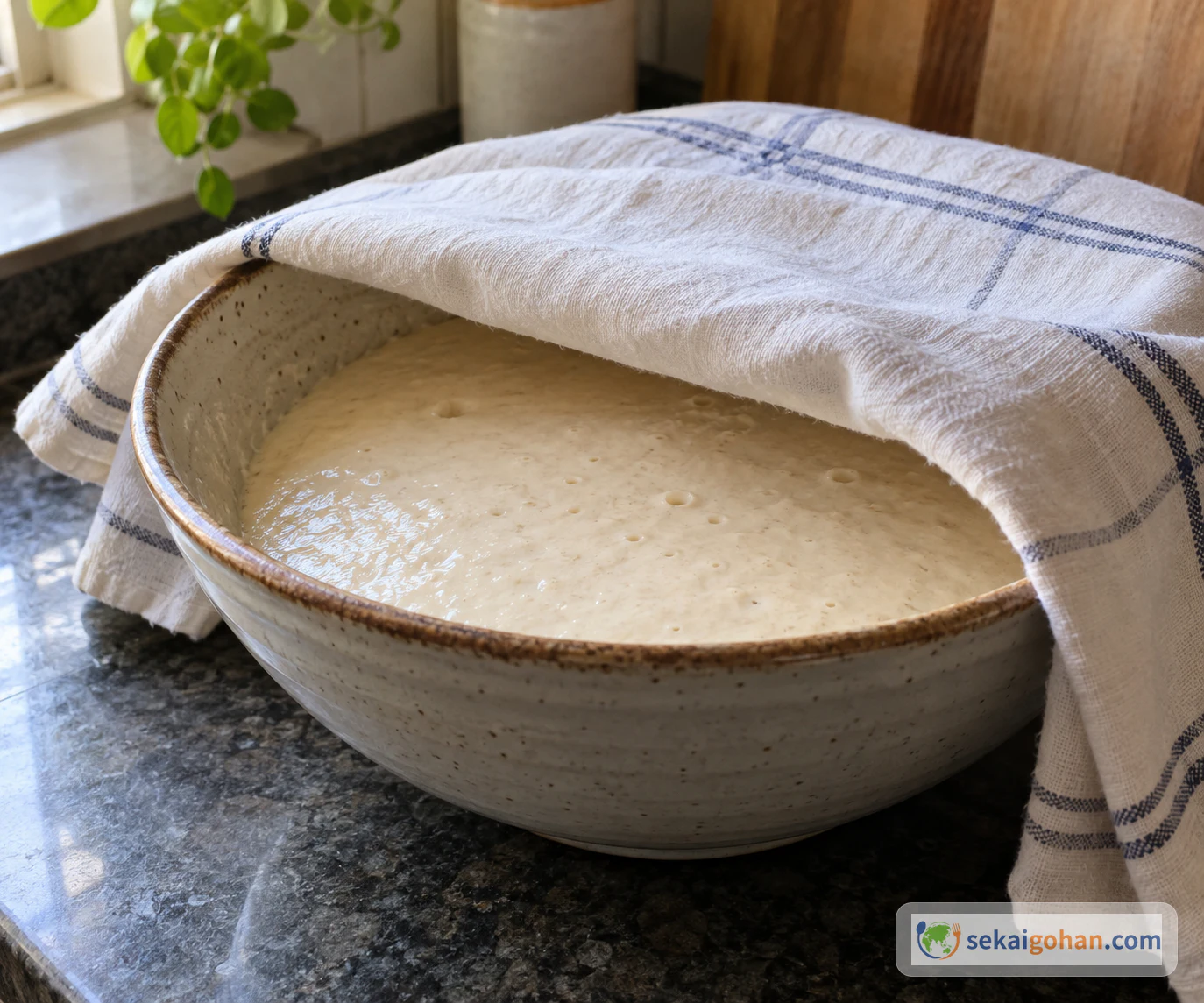
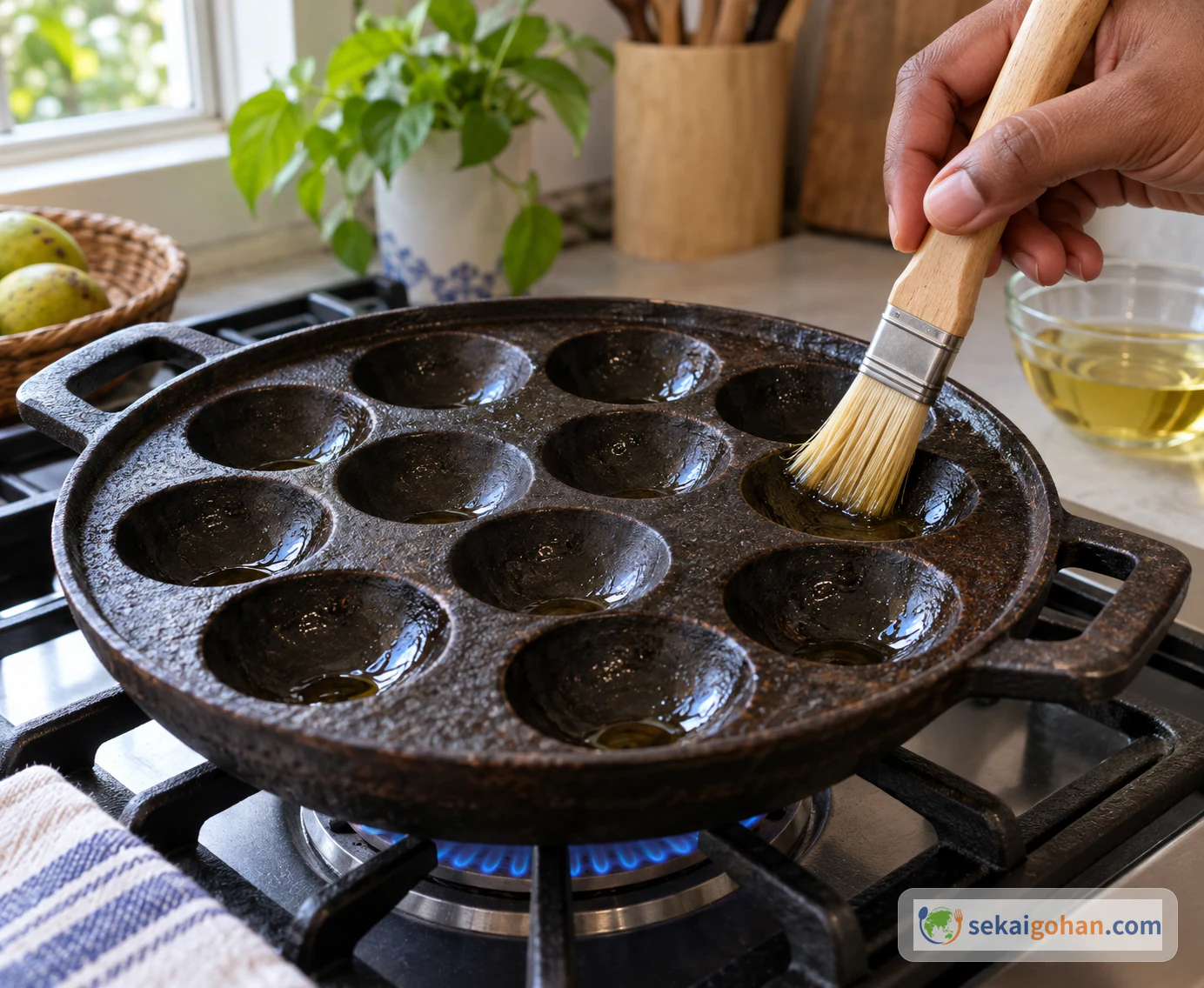
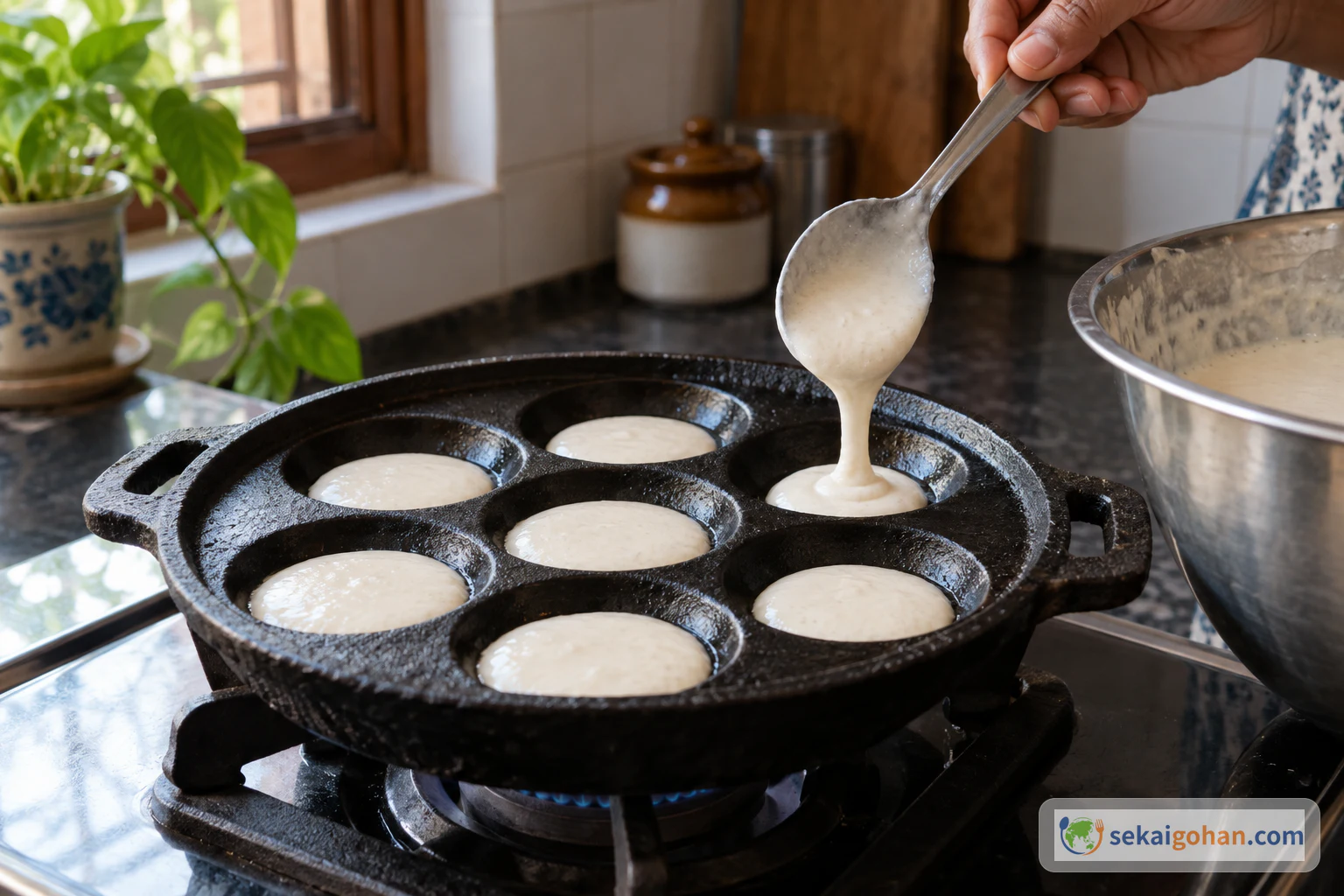
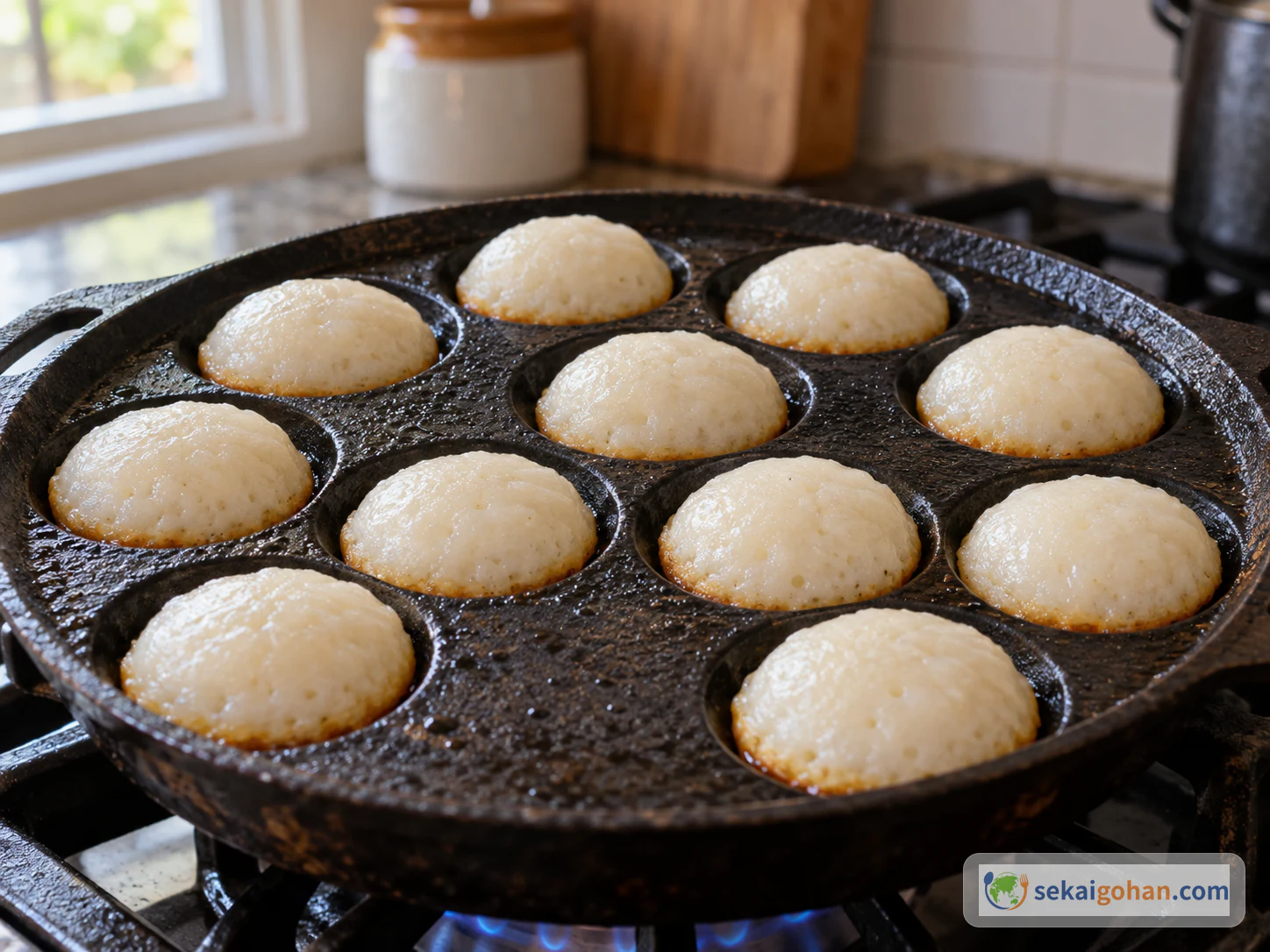
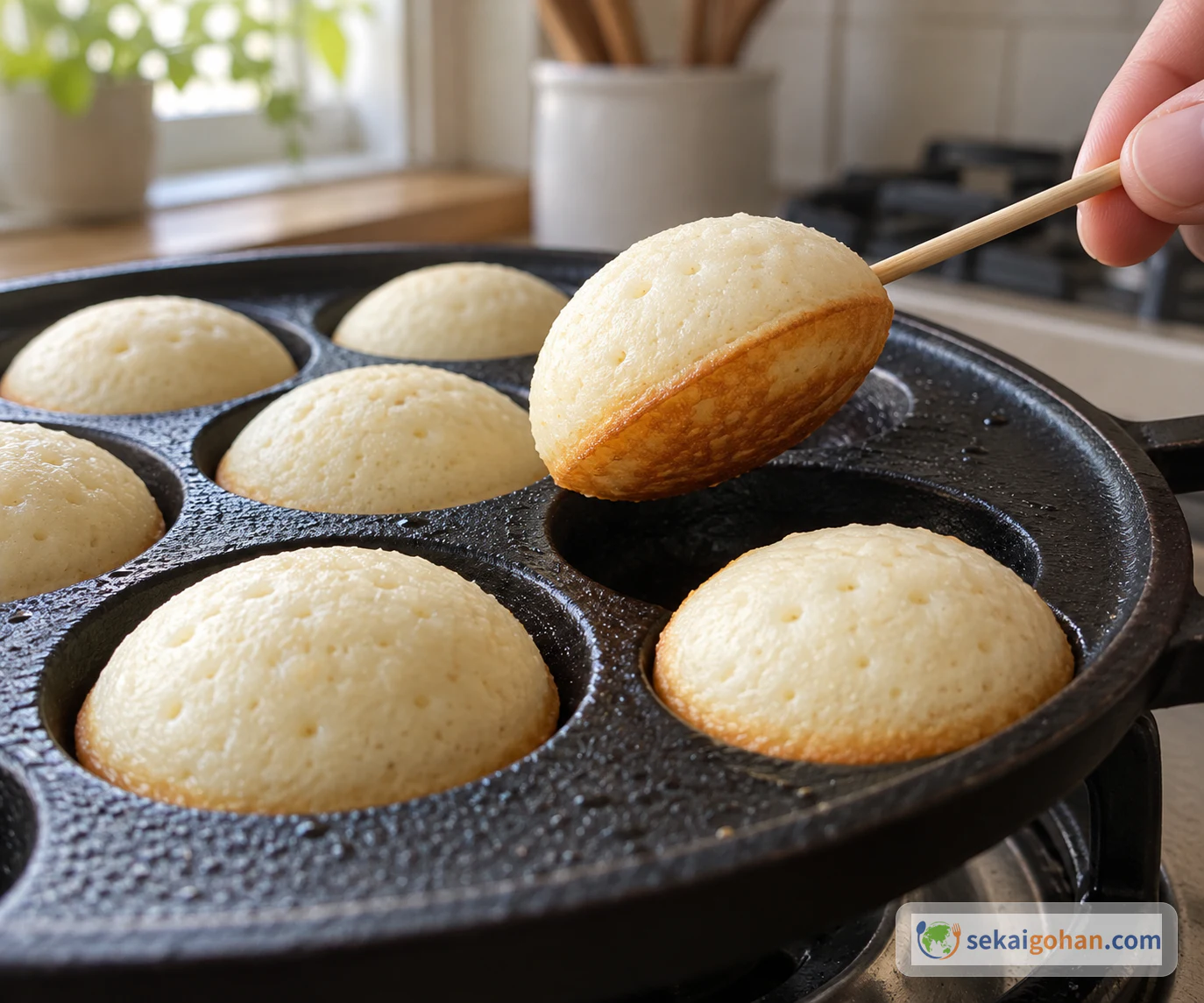
A spoonful of pale, lightly risen batter goes into each hollow of a hot, lightly oiled pan. A few minutes later the base has set and turned golden while the top is still soft, and the cakes come out one by one. Ramanonaka are small savory rice cakes from the Malagasy highlands, made from a salted batter of rice semolina and rice flour. Think of them as the savory counterpart to sweet mofo gasy: a toasted, crisp-edged bottom and a soft, tender top.
Ramanonaka in Madagascar
In Madagascar you'll find ramanonaka at morning street stalls and among the afternoon snacks. The two rice products in the batter give the cakes their character. The coarse semolina gives them body, and the fine flour keeps them soft. A short rest with yeast lightens the batter, and cooking on one side only gives the contrast between the golden base and the pillowy top.
The name covers more than one batter. Some cooks blend in wheat flour, and some cook the cakes on both sides; a few of those versions are listed near the end. Mofo grefy, though, is a separate mixture of its own. For more of the country's food, see our Madagascar page.
Ingredients: Rice Semolina, Rice Flour and Yeast
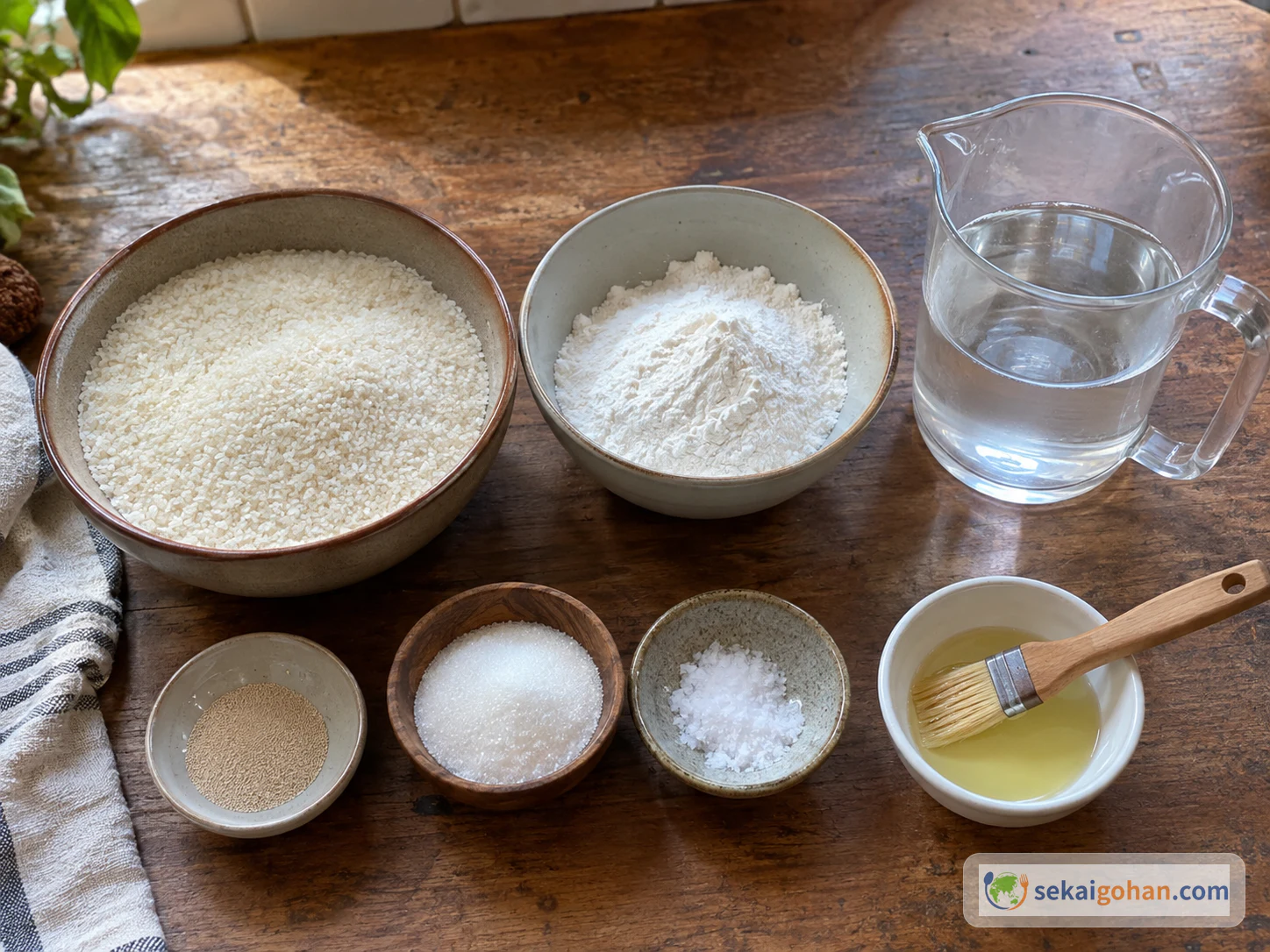
Choosing Rice Semolina and Rice Flour
Rice semolina (semoule de riz) is coarsely ground rice, and it behaves differently from fine rice flour. Look for it at import grocers or online, and search under the French name too. Read the product description carefully, because wheat semolina for couscous looks similar and is easy to grab by mistake.
Rice flour should be one sold for baking or cooking. You need both products for this batter. The grain size and water absorption differ, so replacing the semolina with the same weight of rice flour changes how the batter behaves.
Dry baker's yeast is easiest in small sachets of around 7g, which is exactly the amount here. Keep the batter to rice: wheat flour and cassava flour belong to other formulas.
This formula uses rice-based ingredients and contains no wheat flour, but check the labels on your rice semolina, rice flour and yeast for allergen and cross-contact information.
Equipment
- Mixing bowl and wooden spoon
- Small glass or other container for the yeast
- Measuring jug
- Clean cloth
- Round dimpled pan, such as one made for mofo gasy
- Small brush for the oil
- Spoon for portioning the batter
- Thin wooden pick for lifting out the cakes
If you can't find a mofo gasy pan, a takoyaki pan works as a stand-in. Its cavities differ in size and shape, so judge doneness by the cakes rather than the clock.
Troubleshooting Ramanonaka
| Problem | What to check | What to do |
|---|---|---|
| The batter doesn't rise | Whether the yeast foamed, and how warm the room is | Check the yeast and move the batter somewhere warmer before judging the timing |
| The cakes stick | Whether the pan was hot enough and every cavity was oiled | Preheat the pan fully and oil any spots you missed |
| The base burns | Heat level | Lower the heat |
| The center stays uncooked | How much batter is in each cavity | Use less batter per cavity |
Serving Ramanonaka and Other Versions
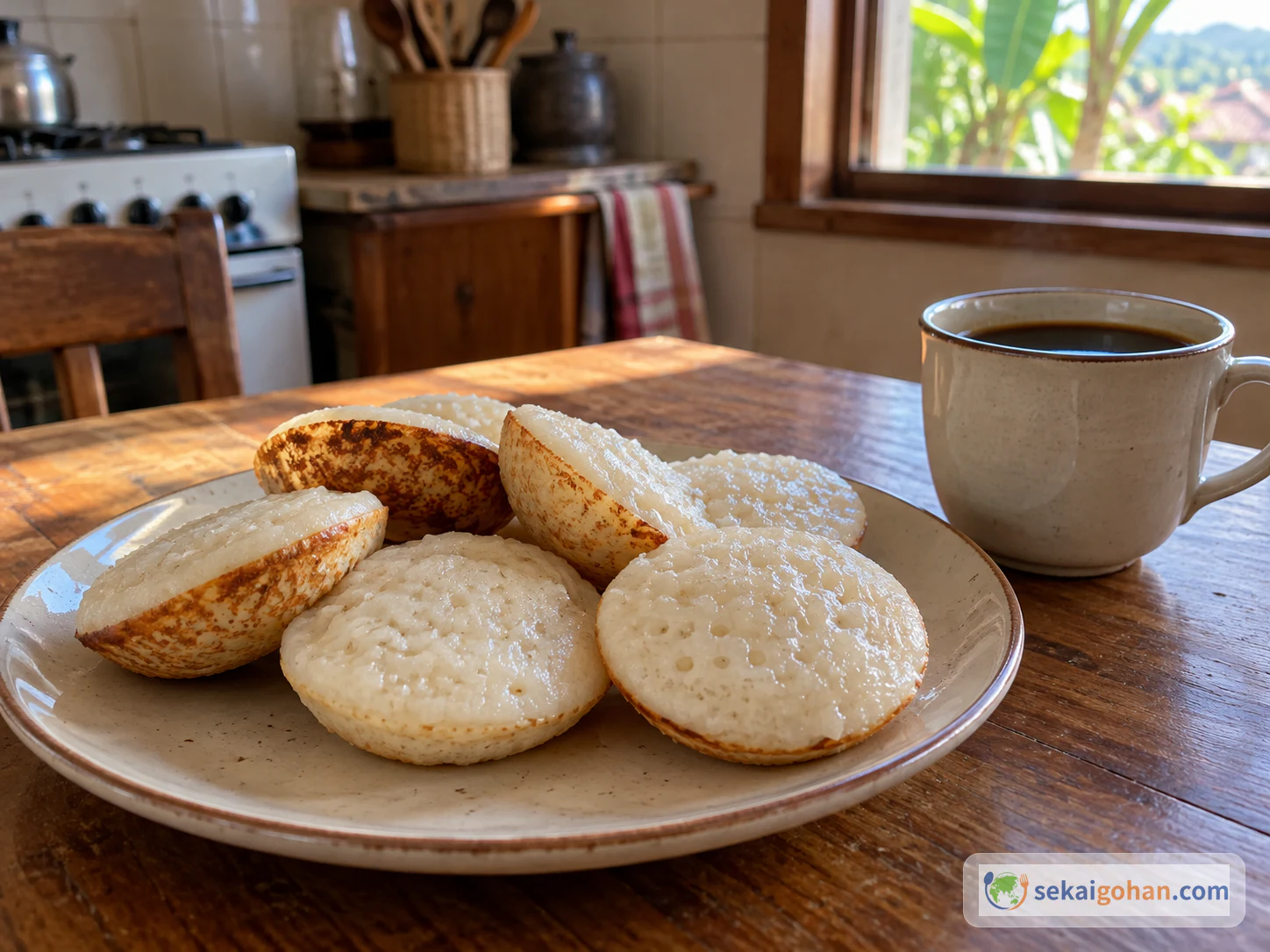
Ramanonaka are best hot or still warm, with coffee or Indian-style tea, either for breakfast or as a snack. For another side of the Malagasy table, try koba or romazava.
Other ramanonaka batters
Other cooks make ramanonaka with a different balance of flours. These are complete formulas in their own right, so use each one as a whole rather than mixing its parts into the recipe above.
| Version | Main ingredients | Cooking and rest |
|---|---|---|
| Rice flour and wheat flour batter | Rice flour 4.5 oz (125g), wheat flour 4.5 oz (125g), water 3 cups (700ml), salt 1 tsp, sugar 1 tbsp, pepper 1/2 tsp | In a mold, about 2 minutes per side |
| Wheat flour and rice semolina batter | Wheat flour 4.5 oz (125g), rice semolina 5.5 oz (150g), yeast 4g, water 1¾ cups (415ml), sugar and salt 1/2 tsp each; makes 30 | Rest 4–8 hours; in a mold, cooked on both sides |
| Cassava blend ratio | Ratio only: rice semolina 80%, wheat flour 10%, high-quality cassava flour 10% | A trial of cassava in the traditional snack, not a full home recipe |
Some versions add meat, cheese or seafood as a filling. If you go that way, cook the meat and seafood thoroughly before adding them to the batter.
Frequently Asked Questions
Is the water for the yeast extra?
No. The 1¾ cups (400ml) of lukewarm water is the total. Part of it dissolves the yeast and sugar, and the rest goes into the batter.
How long should the batter rest?
Rest it somewhere warm until it has risen slightly. The 4–8 hour rest belongs to the wheat flour version, which is a different formula.
Do I need a special pan?
Use a round dimpled pan, such as a mofo gasy pan. A takoyaki pan works as a stand-in, but its different cavity size changes the shape and the cooking time. How many cakes you get depends on the cavities in your pan.
Do I cook both sides?
Not for this batter: one side only, so the top stays soft. The versions that are cooked on both sides use different batters.
How should I store leftovers?
For hygiene, eat the cakes soon after cooking.


