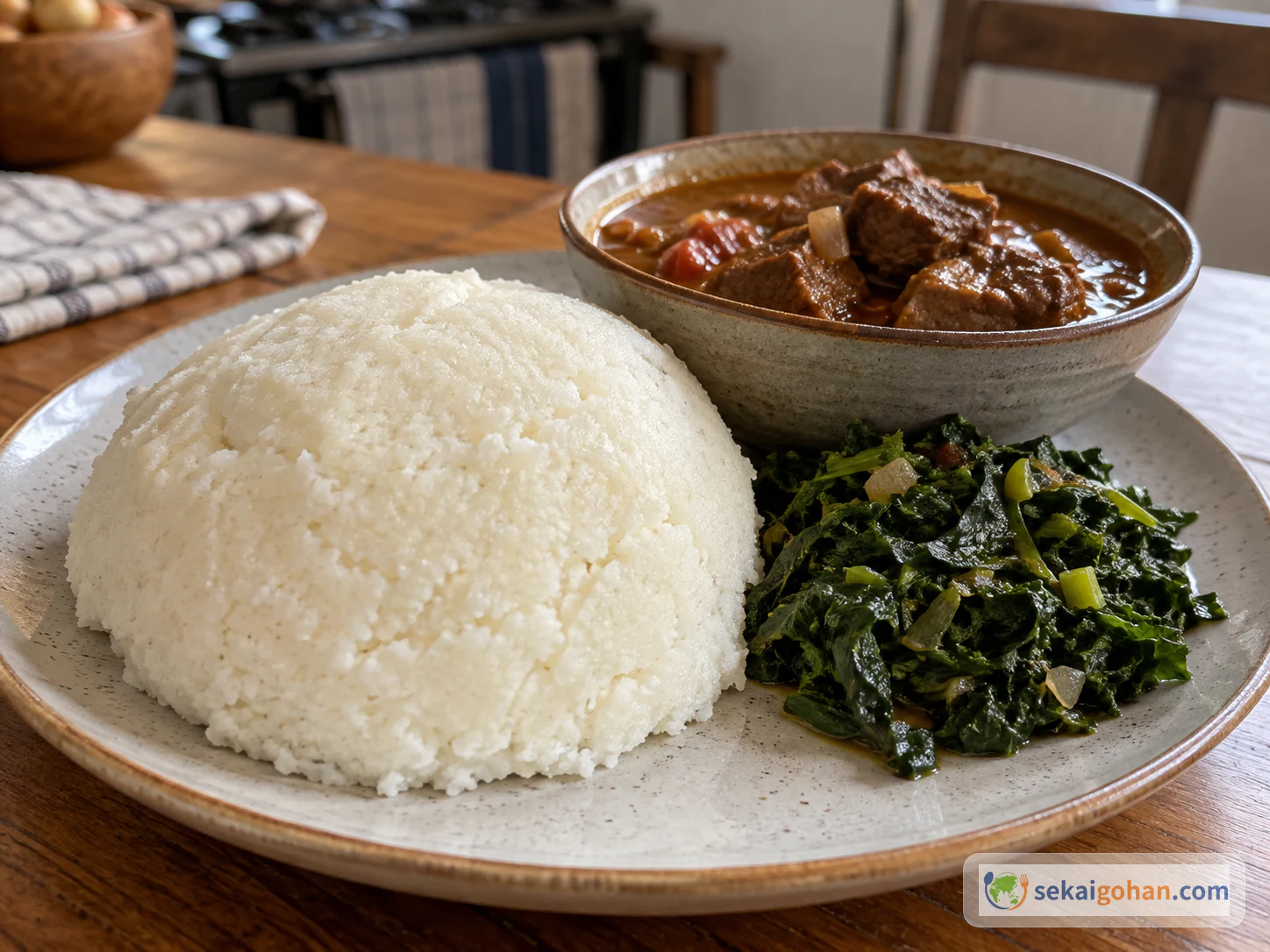
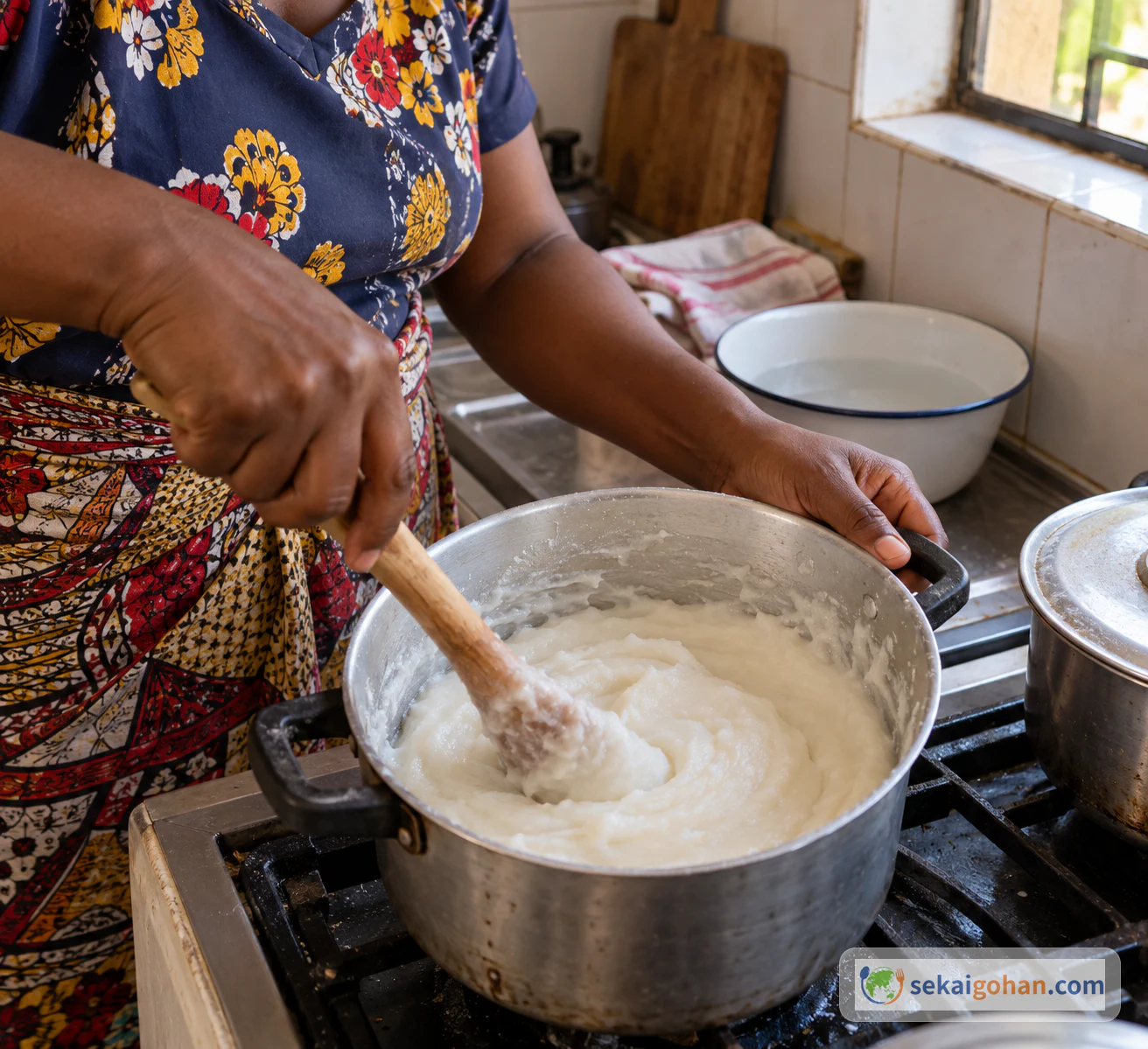
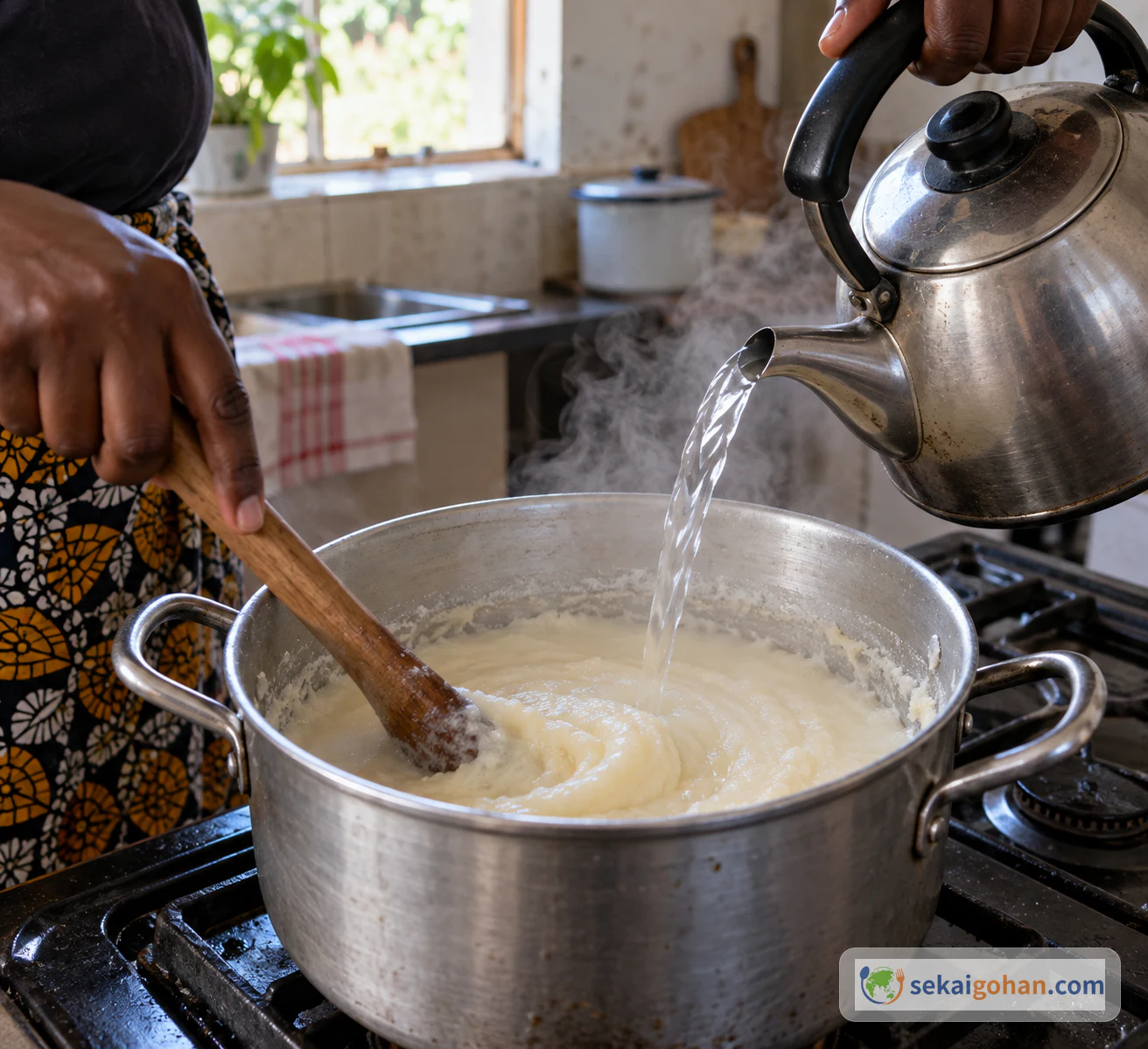
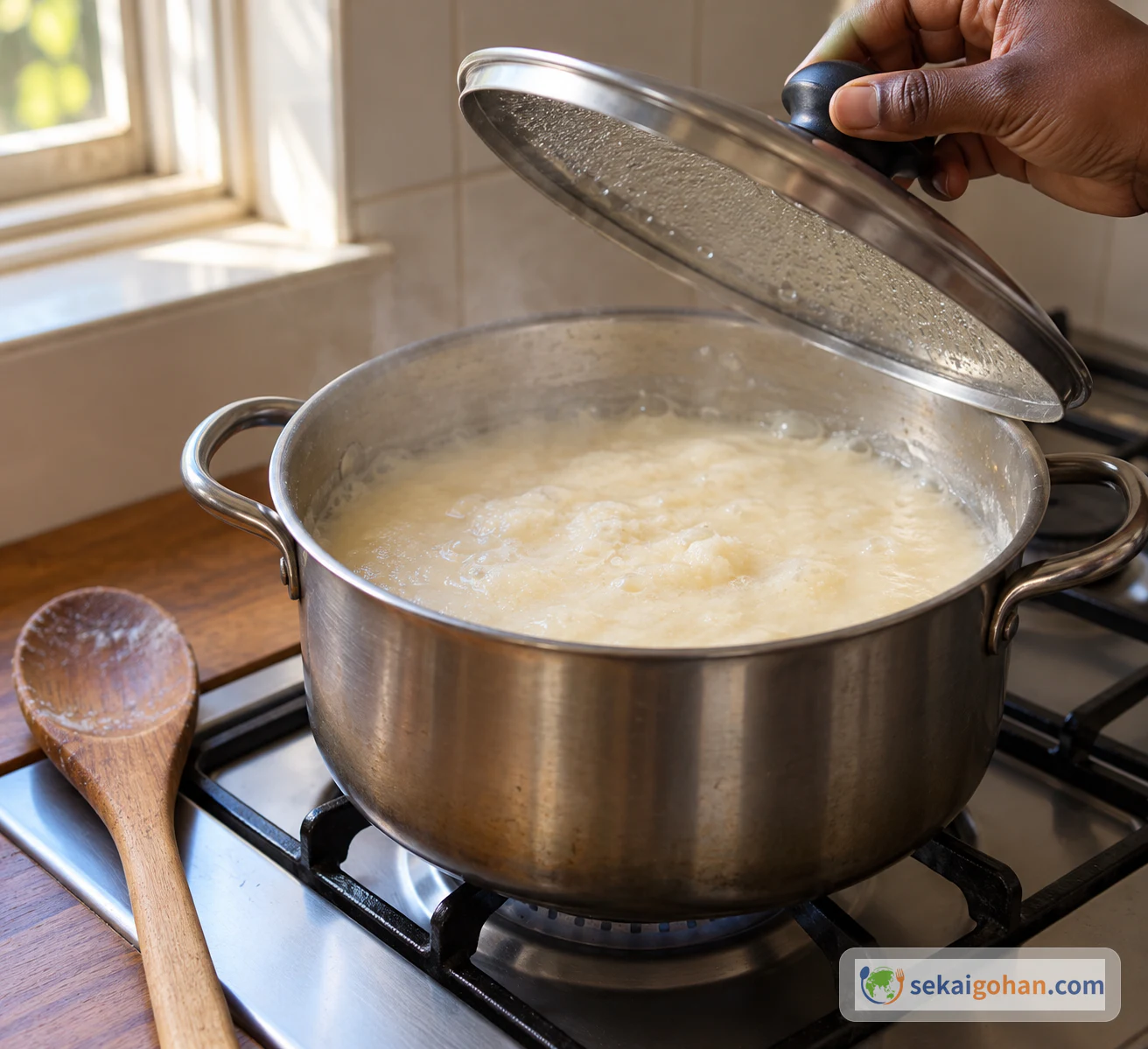
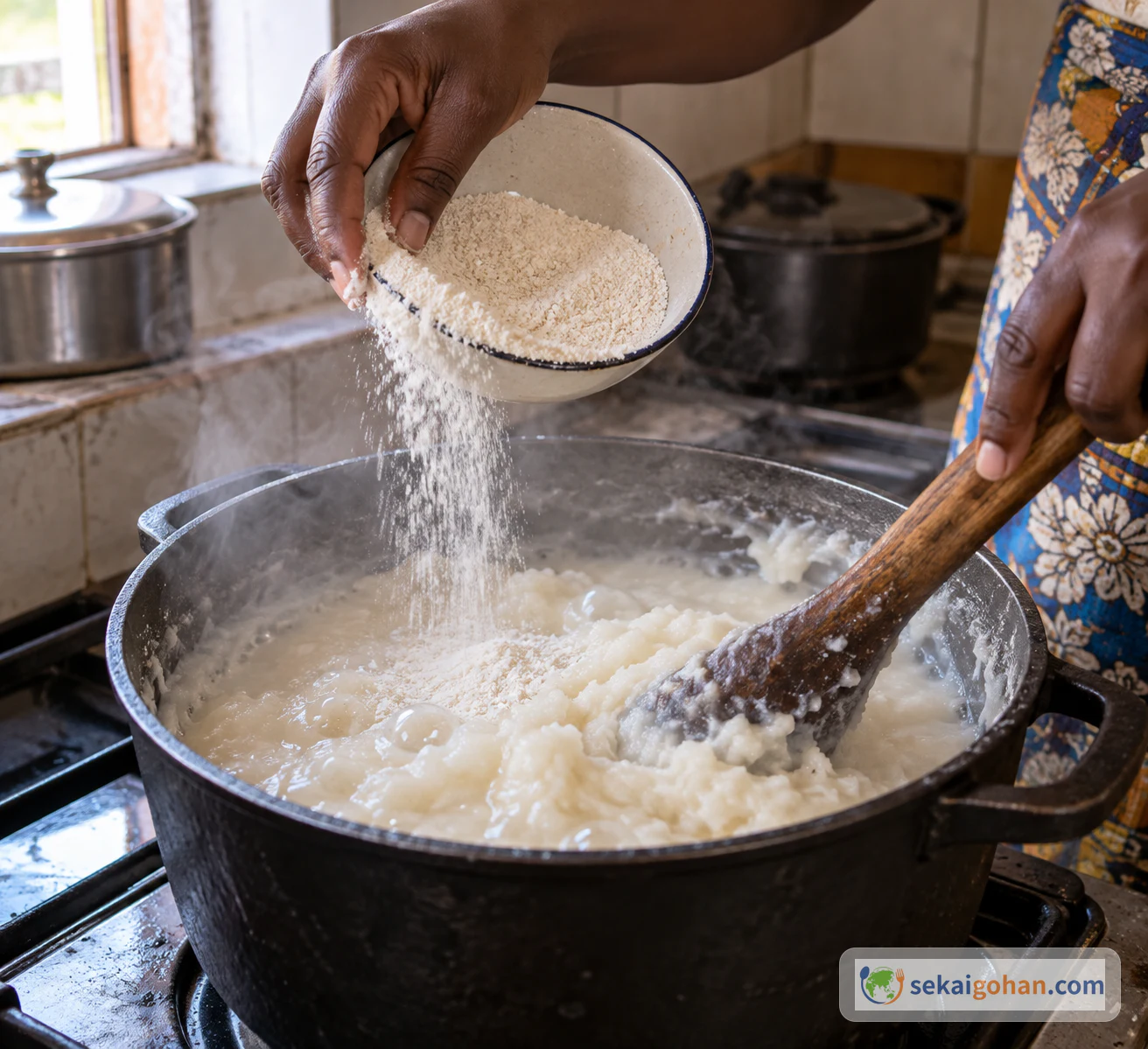
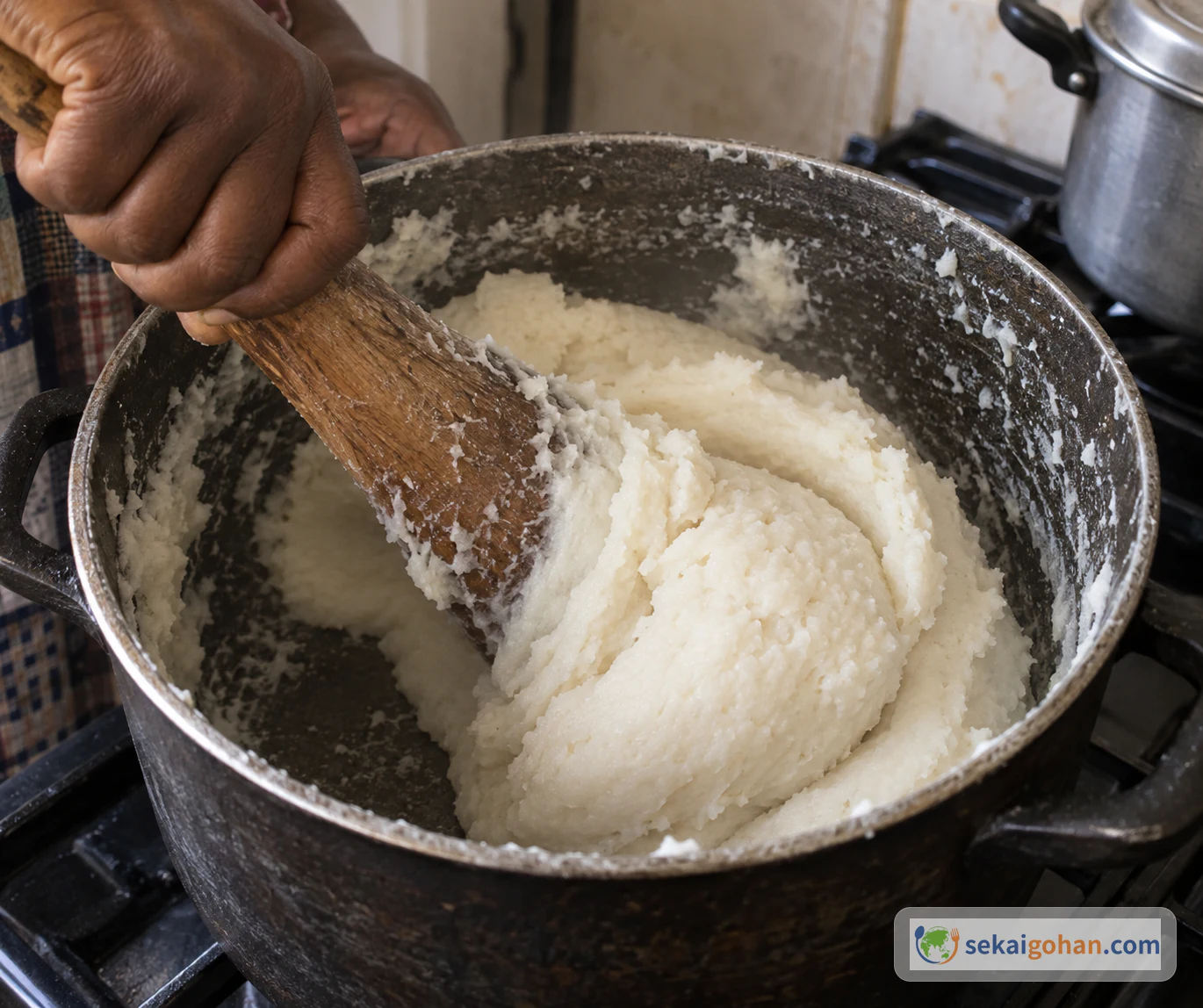
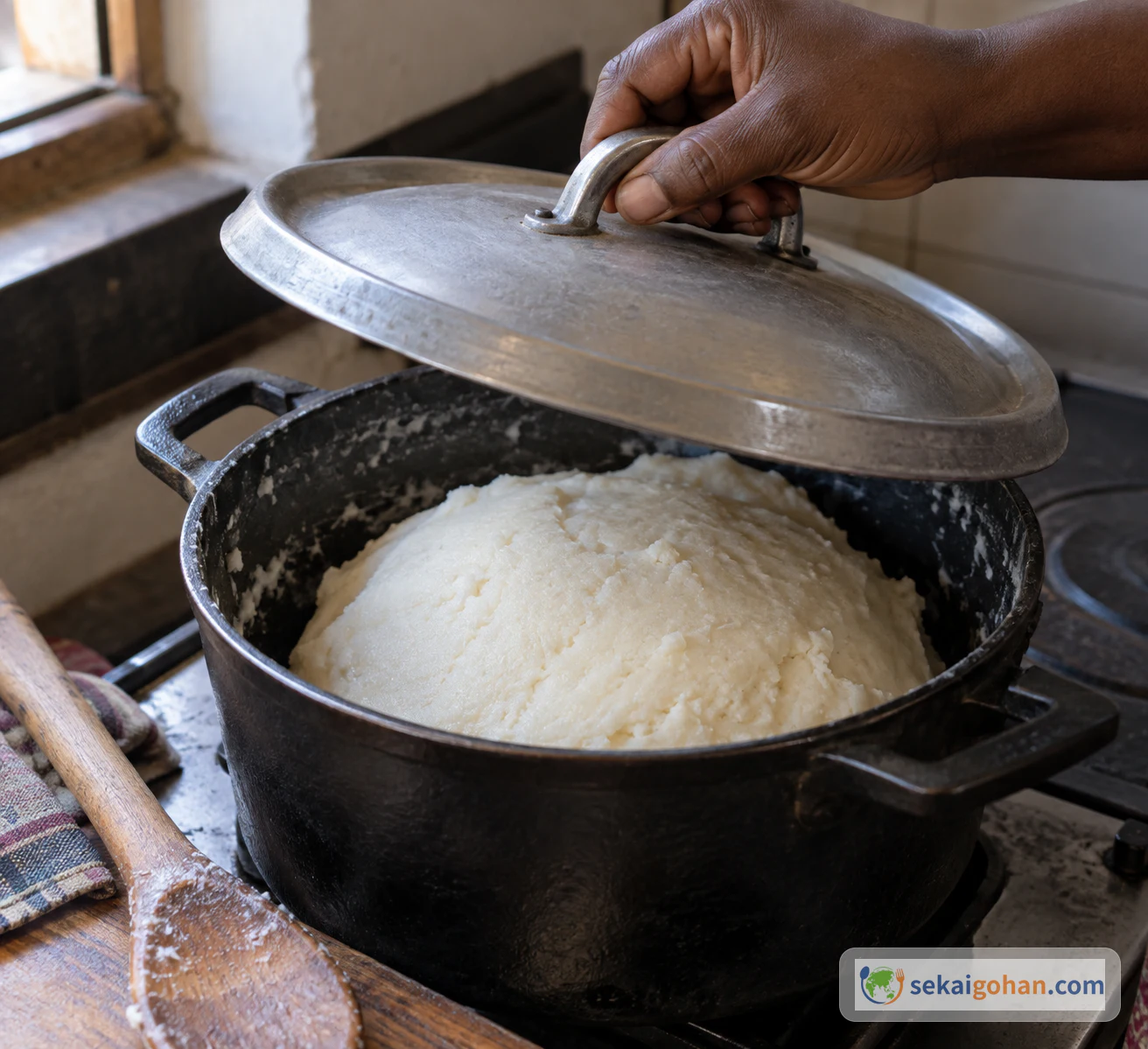
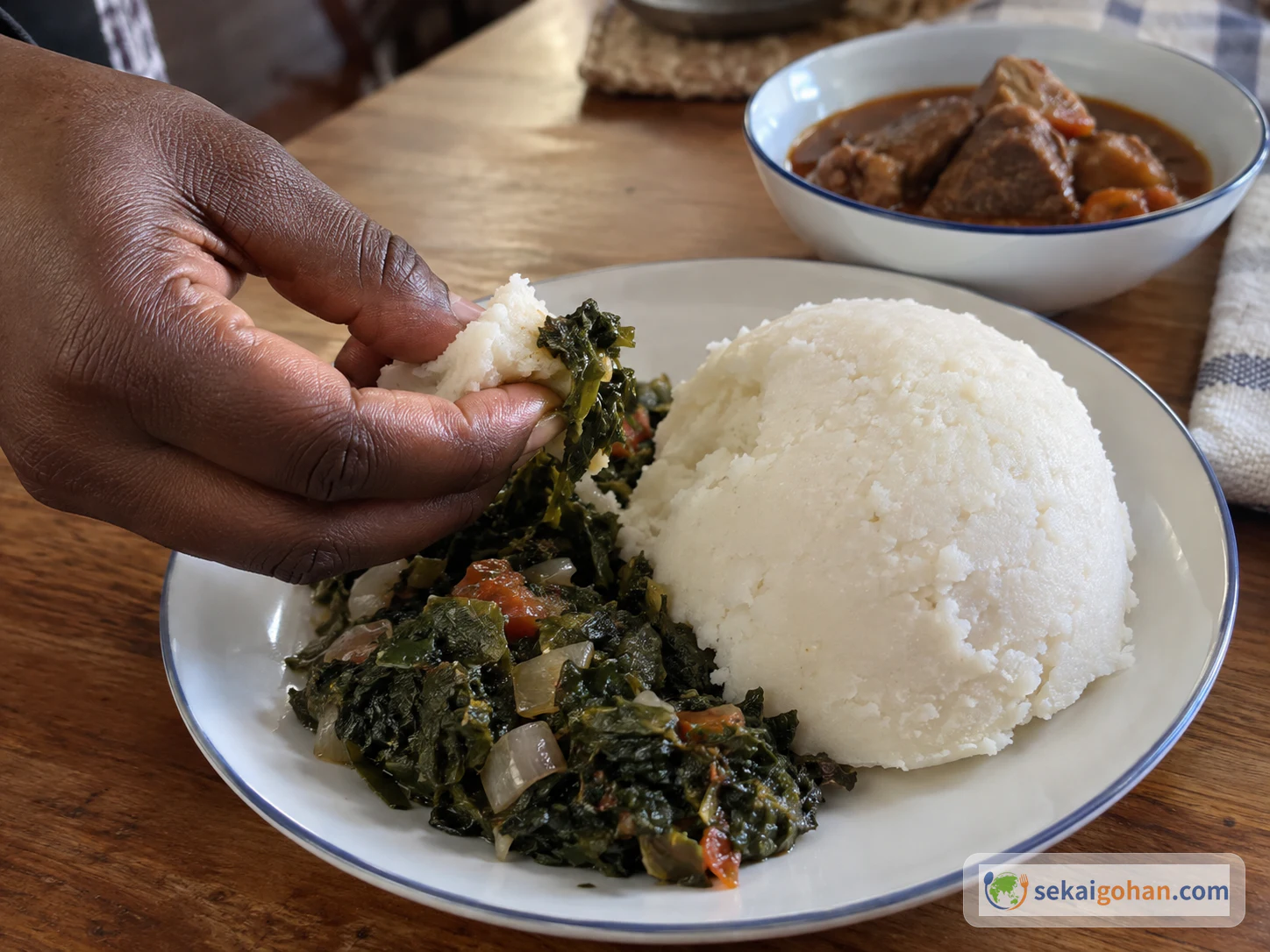
On the plate sits a pale, smooth mound of sadza, with a bowl of stew and a portion of leafy greens beside it. Pinch off a small piece, roll it into a bite, and use it to scoop up the relish. Sadza is Zimbabwe's staple: white maize meal and water, cooked and then kneaded until it is smooth, firm and holds its shape. It tastes mild on purpose. Everything else on the plate is carried by it, so what you're after is texture, not seasoning.
Sadza in Zimbabwe
Sadza is eaten at breakfast, lunch and dinner, always with a sauce or accompaniment alongside. At lunch and dinner that usually means meat and leafy greens. It is everyday food, the thing the rest of the meal is built around.
If you already know ugali, sadza will feel familiar, since both are firm staples made from maize meal and water. They are close relatives, but each has its own name, its own proportions, and its own side dishes from its own kitchens.
Every household has its own opinions about method and firmness, and techniques differ from family to family. One cook learned to make it at the age of eleven. The recipe below is one reliable version among many.
The stages of cooking have Shona names. Rakukwata is the stage when the pot comes to the boil, mona sadza is stirring the sadza, and rishinyire is covering the pot and letting it steam.
Ingredients: 2 Generous Servings, Measured with a 1 cups (250 ml) Cup
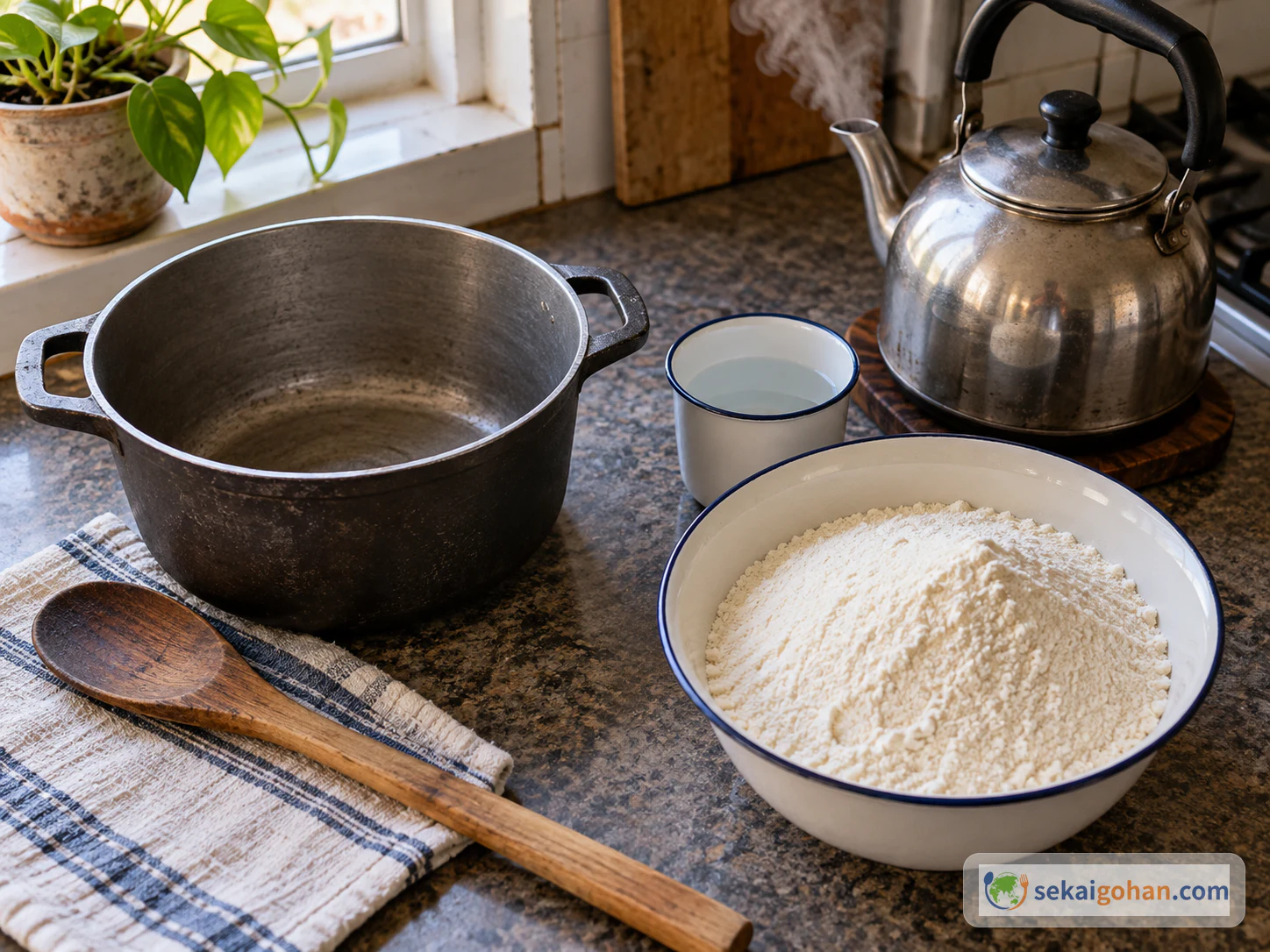
Measure all three ingredients with the same 250 ml cup. An 8 fl oz US cup holds less, which would change both the meal and the water, so use a 250 ml measure throughout. The water is also given in millilitres. The maize meal is given by volume only.
This batch serves two generously. You will use 1 3/4 cups of maize meal in total, in two parts: 1 cup at the start, and the remaining 3/4 cup later. Don't measure extra on top of the 1 3/4 cups.
There is no salt, oil or butter in this recipe. Sadza is deliberately plain; flavor comes from the stew and relishes served with it.
Equipment
- A pot with a handle and a lid
- A sturdy wooden spoon, or a mugoti (the wooden stirring stick used for sadza in Zimbabwe), though a strong wooden spoon works fine
- A 250 ml measuring cup
- A kettle or second pot for boiling water
- A small bowl, if you want to shape the sadza into neat domes for serving
Choosing Maize Meal for Sadza
Look for products labeled white maize meal or mealie-meal. Fineness and processing matter: super-refined mealie-meal and unrefined mugaiwa need different cooking times, so check the label for grind and intended use.
If you can't find white maize meal, yellow cornmeal or polenta-type meal can stand in as an approximation. Expect differences in color, aroma, grain and how much water it takes up.
Some products won't work at all:
| Product | Why it doesn't stand in for white maize meal |
|---|---|
| Masa harina | Treated with lime, so its flavor and how it absorbs water are different |
| Cornstarch / corn flour (starch) | A pure starch, not a maize meal; it won't give sadza's body |
| Potato starch | A different starch entirely |
Method: Paste, Soft Porridge, Then a Firm Knead
Sadza is made in stages: a cold paste, a soft porridge simmered under a lid, then the rest of the meal kneaded in until firm, and finally a short covered rest. The two cooking times (5–10 minutes, then 5 minutes) are separate stages; don't confuse one with the other.
Sadza Troubleshooting
Most problems come down to how fast the meal goes in and how long you knead. Go by feel in the pot rather than the clock.
Follow the amounts and times below, but judge by the texture described at each step. Heat, pots and maize meal all vary.
| Problem | Likely cause | What to do |
|---|---|---|
| Dry lumps of meal in the starting paste | The paste wasn't fully mixed before the hot water went in | Stir the cold paste until smooth before adding any boiling water |
| Hard grains or clumps after adding the rest of the meal | The 3/4 cup went in too quickly | Next time, add it in several small portions while stirring continuously |
| The sadza won't come together in the pot | Not enough kneading | Once it has bubbled and thickened, keep pressing it against the side of the pot and folding it back |
| The finished sadza feels loose | Needs more working, or your meal behaves differently | Knead and judge the texture before adding more meal; if you do adjust, add only a little at a time |
| Sticking or catching on the bottom | Heat too high for your pot | Keep the heat low for the final stage and work the spoon across the bottom of the pot |
| Cooking takes longer or shorter than expected | Grind and refinement of the meal | Refined and unrefined meals cook differently; go by texture |
| It tastes bland | That's the nature of sadza | Pair it with a well-flavored stew or leafy relish |
Serving and Storing Sadza
Sadza always comes with something to scoop:
| Pairing | Context | Notes |
|---|---|---|
| Meat and leafy greens | Eaten at lunch and dinner | The everyday pattern |
| Usabi relish | Made with beef and collard greens | Served on the side |
| Muriwo neDovi | Leafy greens with peanut butter | Contains peanuts; see the allergy note below |
The sadza itself is made only from maize meal and water. Accompaniments can contain allergens. Muriwo neDovi is made with peanut butter, so check the ingredients of any relish or side dish with everyone at the table before serving.
The batch generously serves two, and you can divide it into smaller portions on the plate if that suits your meal. To scale up or down, change every ingredient by the same ratio and keep measuring with the 250 ml cup.
If you have leftovers, cool them and refrigerate promptly, then reheat until steaming hot all the way through.
Frequently Asked Questions
What is sadza made from?
White maize meal and water, nothing else.
Is sadza the same as ugali or polenta?
They are related maize staples, but not the same dish. Ugali belongs to East African tables, with its own ways of cooking and serving it. Polenta is made with a different kind of meal and used differently in its own cuisine. Sadza is the Zimbabwean staple, eaten alongside Zimbabwean stews and relishes.
Why add the meal in two parts?
The first cup makes a smooth paste and a soft porridge that cooks under the lid. The remaining 3/4 cup, added gradually after the porridge comes back to the boil, firms it up into sadza. Adding it slowly keeps it from clumping.
Do I have to use a mugoti?
A mugoti is the wooden stirring stick used for sadza in Zimbabwe, but a sturdy wooden spoon works fine for this recipe.
Do people eat sadza with their hands?
One way to eat it is to roll a small piece into a ball and scoop up the relish. Tables vary, so eat whichever way is comfortable, and wash your hands first if you use them.