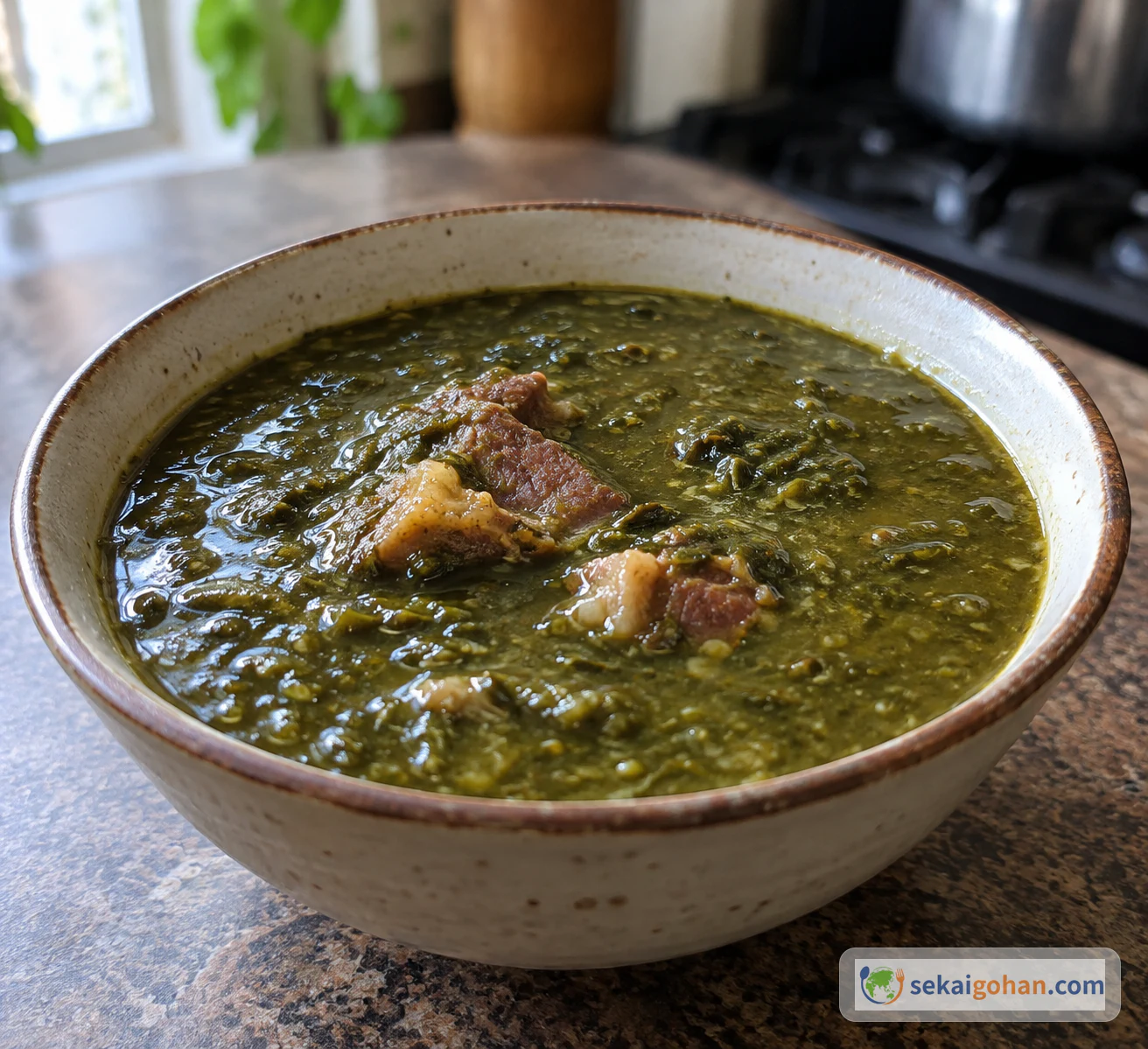
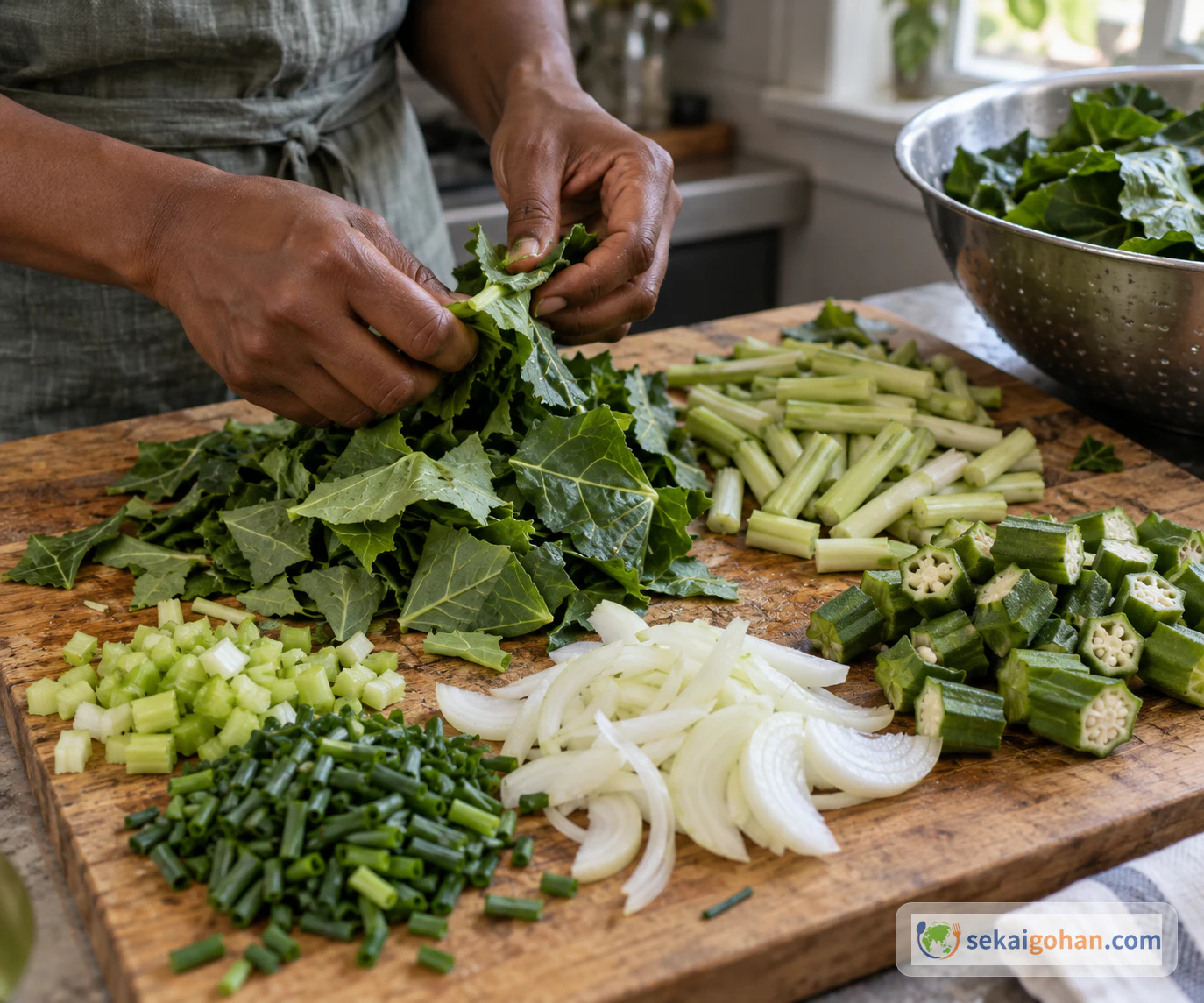
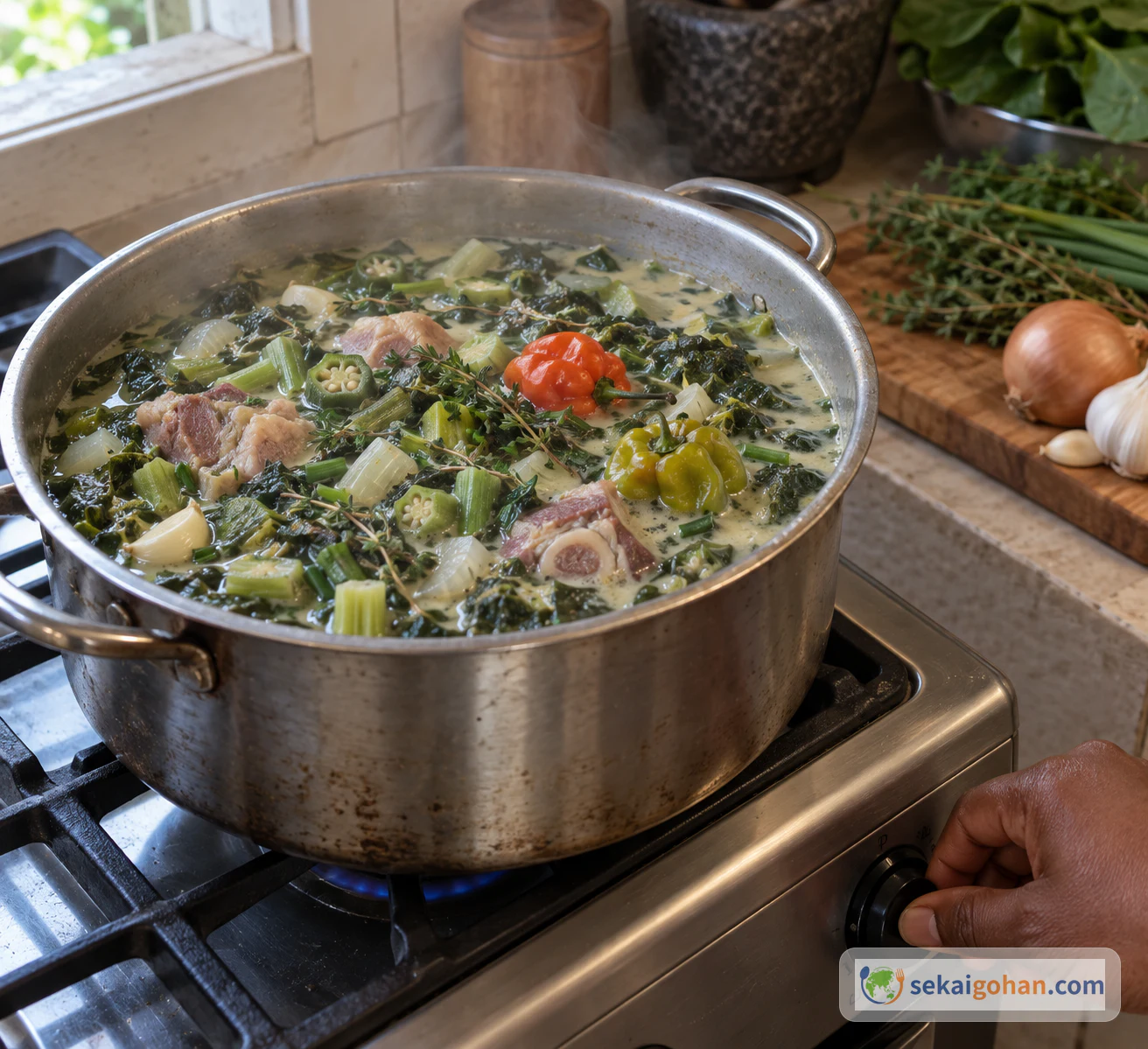
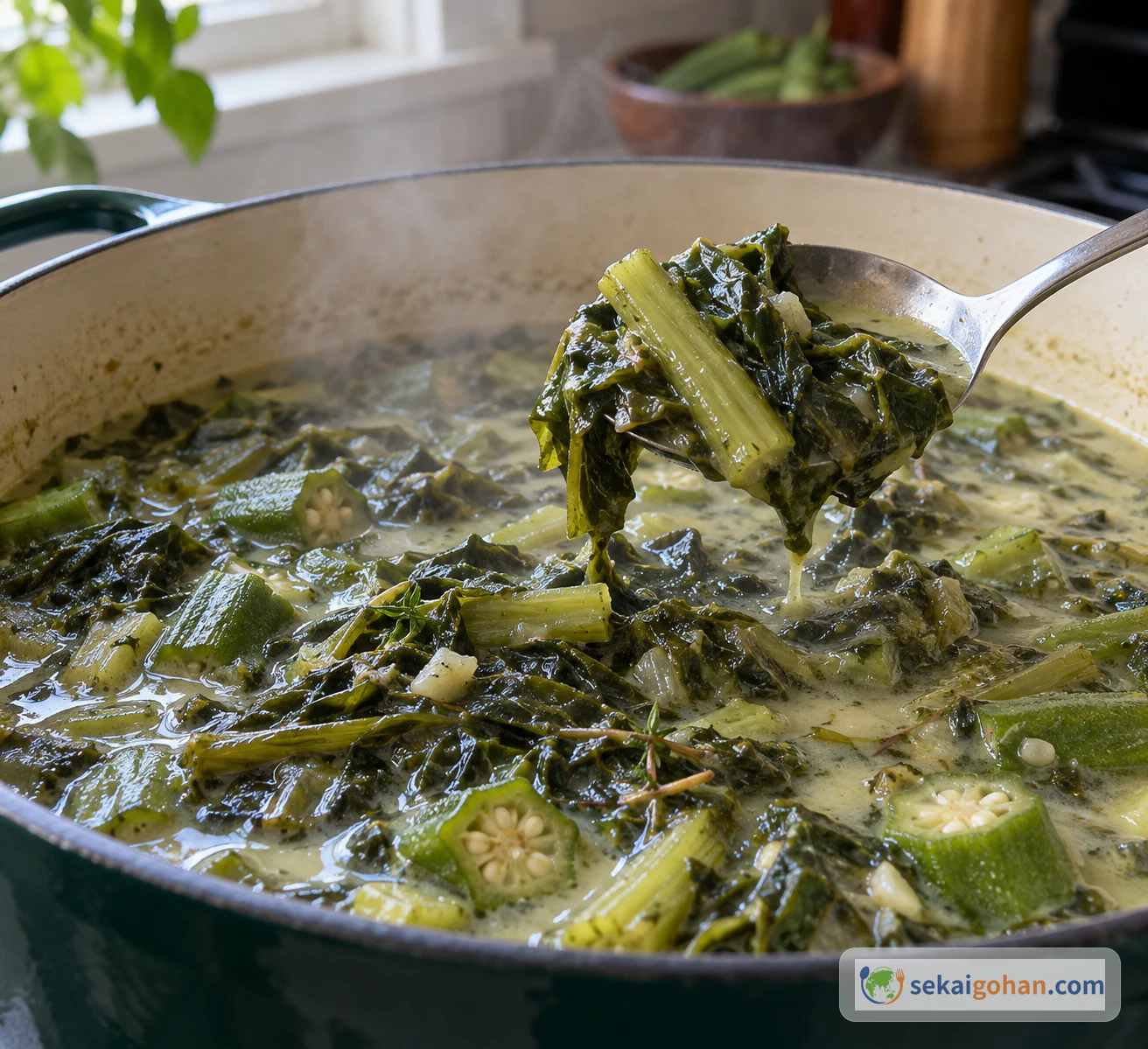
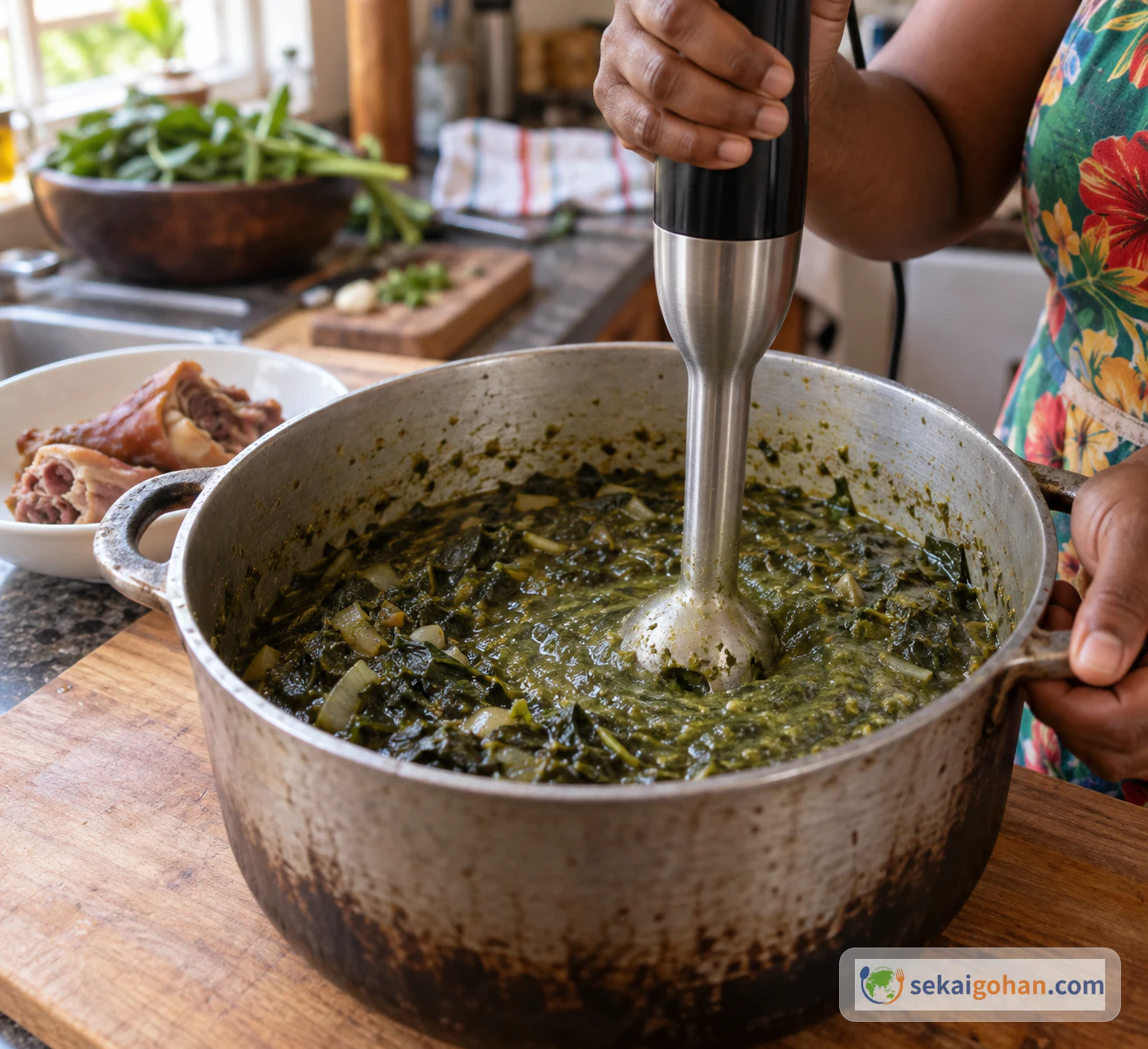
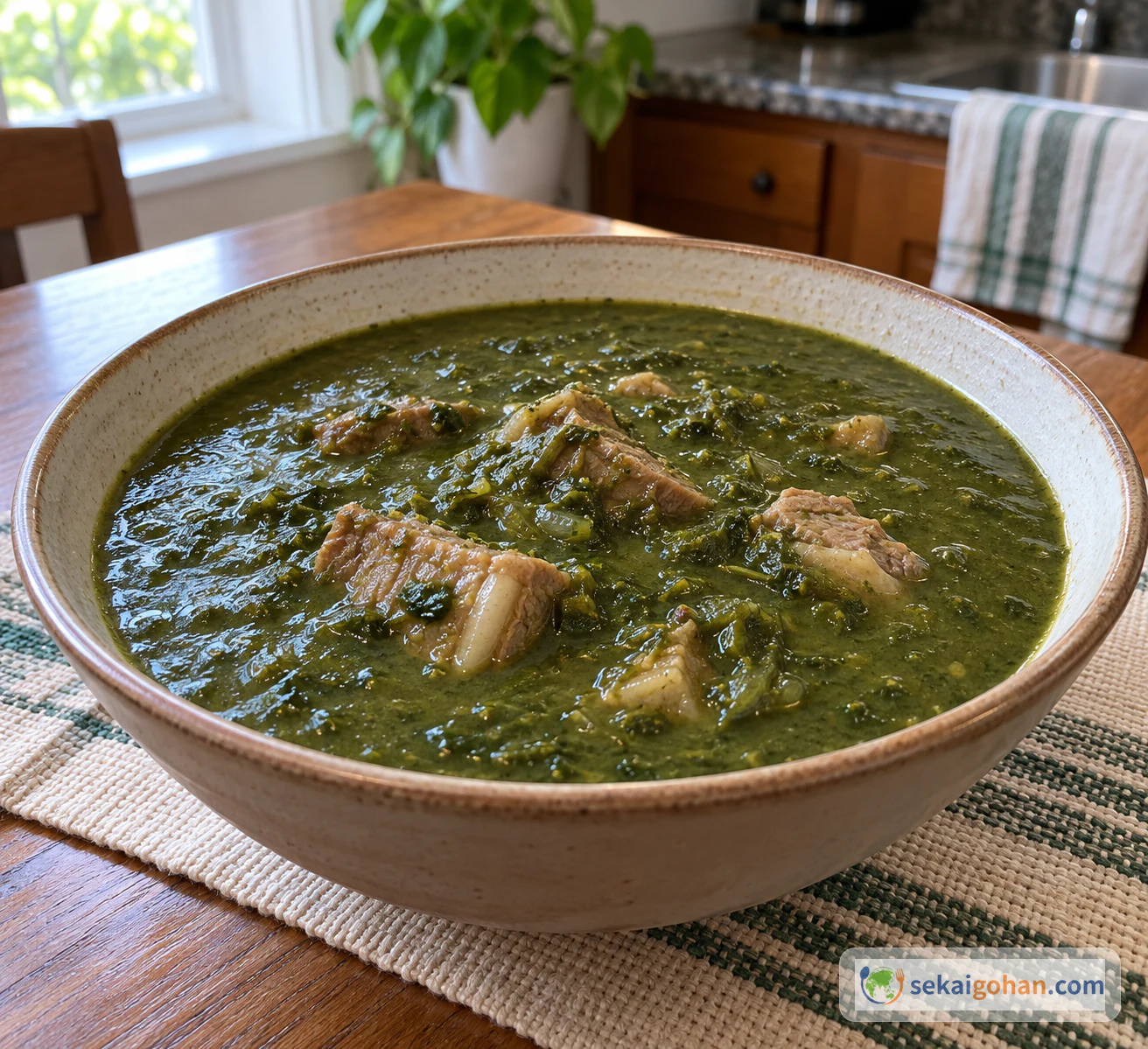
Picture a pot of coconut milk coming up to a simmer. Broad, dark dasheen leaves slump into it and soften, okra slowly gives the liquid a silky body, and pieces of salted pork tail season the pot from within. When everything is tender, the soup cools for a few minutes and is blended into a smooth, deep-green purée. This is callaloo soup the way it's made in Dominica, built on dasheen (taro) leaves. It tastes grassy and deep from the leaves and round from the coconut milk, with a salty note from the pork tail.
Callaloo in Dominica and Across the Caribbean
Across the Caribbean, the word callaloo can mean a leafy green or a thick stew or soup made with leaves, and the same name covers quite different pots. Dominica's food has a lot in common with its neighbors and their Creole cooking. There, callaloo soup is a dish of dasheen leaves cooked with various vegetables and meat.
This dish comes from the Commonwealth of Dominica, an island nation in the eastern Caribbean. It is a different country from the Dominican Republic.
Versions of callaloo in Dominica
Dominica alone has many versions of callaloo. Some households add crab, root vegetables, green plantain or dumplings. A crab callaloo brings in tannia, pumpkin, green plantain, crab, aromatics, coconut milk and dumplings. The leaves, pumpkin, tannia and aromatics are cooked soft, cooled and blended, then combined with green plantain, small dumplings and coconut milk cooked separately. Another family version is a one-pot meal of greens, salted meat, green plantain, yam, herbs, seasoning peppers, small dumplings, coconut milk and water. It's a dish for the table during the Creole season.
Is callaloo the national dish?
You'll often see callaloo called Dominica's national dish. In August 2013, though, a culture ministry official said the country had no official national dish yet. Callaloo had won the most votes among the candidates, and documents for cabinet approval were being prepared. The vote considered popularity, the dish's connection to the island's food culture, and whether its ingredients grow locally so it can be cooked all year.
Ingredients: One Batch of the Source Recipe
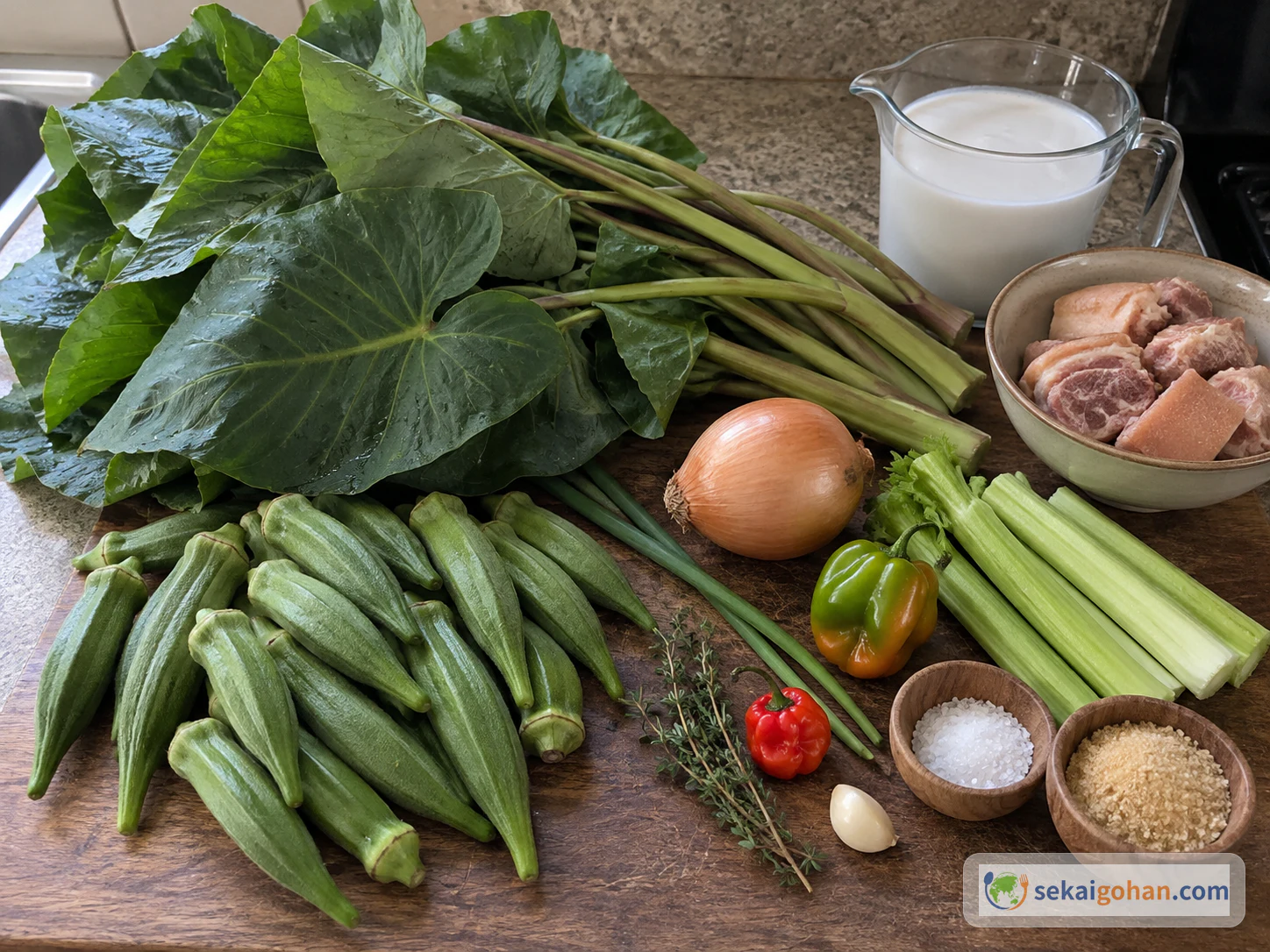
These amounts make one batch. 1 cup is 240 ml, so the 2½ cups of coconut milk is 600 ml. Teaspoons are 5 ml.
Check the ingredient label of the salted pork tail and of your coconut milk, since products differ. Crab is not part of this version, but if you make a crab variation, take care with shellfish allergies and avoid cross-contact through pots and utensils.
Equipment
- A medium pot for the soup
- A separate pot for boiling the pork tail
- A hand (immersion) blender
- Cutting board and knife
- Measuring cups and spoons
- A spoon for checking tenderness
- Shallow containers for any leftovers
Choosing Dasheen Leaves and Substitutes
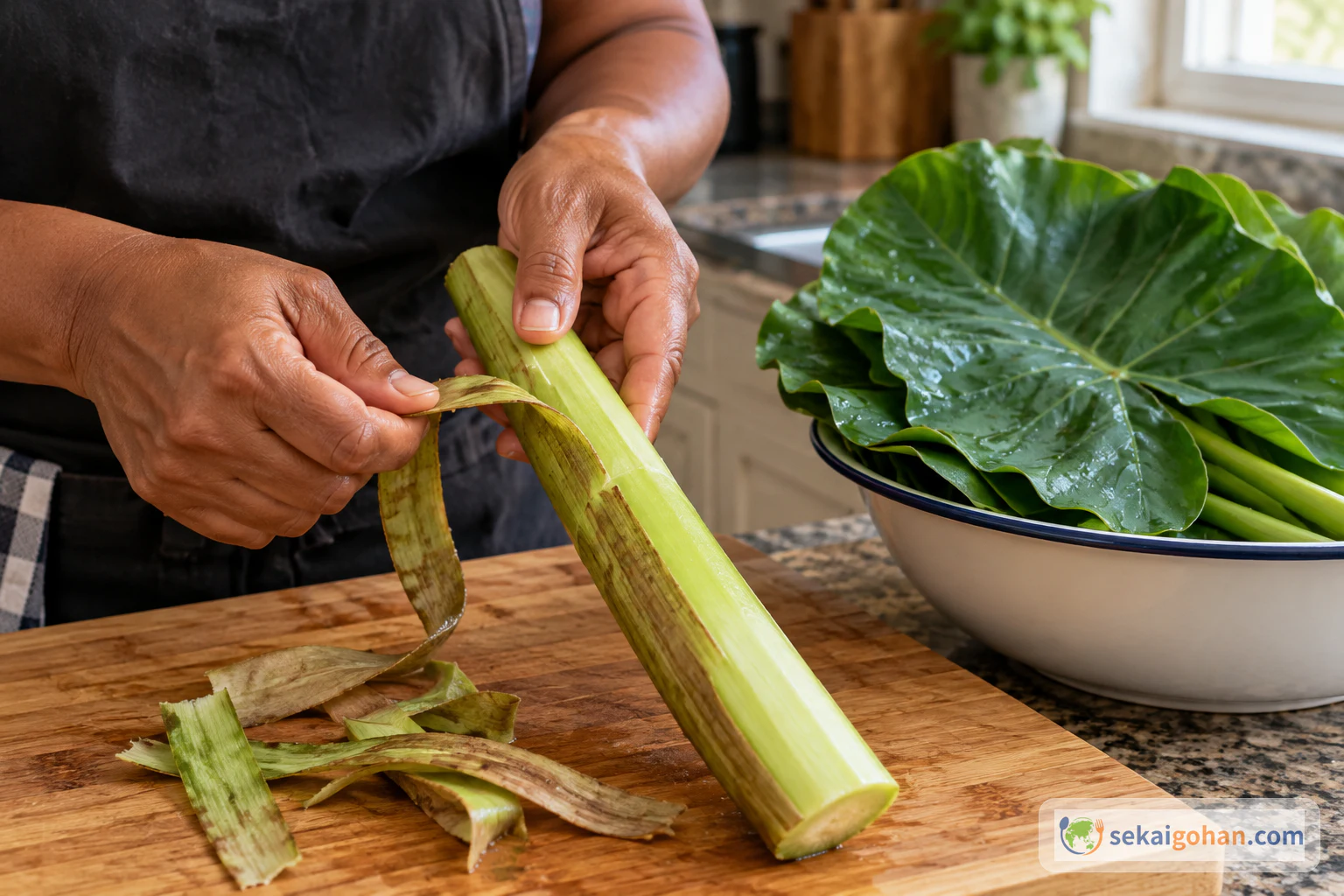
The biggest decision is the leaf. Use only dasheen (taro) leaves sold as food, from a supplier who confirms they are meant for eating. Wild taro-like plants, ornamental plants, and taro whose leaves you can't confirm as edible are off the table, because cooking won't make wild plants safe. Even edible taro leaves and stalks can irritate, so prepare them properly and cook them thoroughly. If your supplier gives cooking instructions for the leaves, follow those as well.
If you can't get safe, edible dasheen leaves, spinach, Swiss chard or collard greens will work. Just know you're making a different version: the aroma, the thickness of the leaf and the texture of the stalks will all change. Chard and collard stems vary in firmness, so judge them by how they cook, not by the clock.
The pimento. Pimento peppers are fairly mild and go in for their flavor. Allspice berries are not a substitute.
The hot pepper. It goes into the pot whole. If you leave it out to avoid the heat, the soup changes.
Method: Soften Everything, Then Blend
Simmer for about 20 minutes. Keep cooking until the leaves and stalks are fully tender, and follow any cooking instructions from your leaf supplier.
Fixing Common Callaloo Problems
Servings and total time are not given, so judge each stage by the state of the pot, as the steps describe.
| Problem | Likely cause | What to do |
|---|---|---|
| Leaves or stalks still firm after 20 minutes | Thick stalks or leaves | Keep simmering on low until fully tender. Don't blend firm stalks just because the time is up |
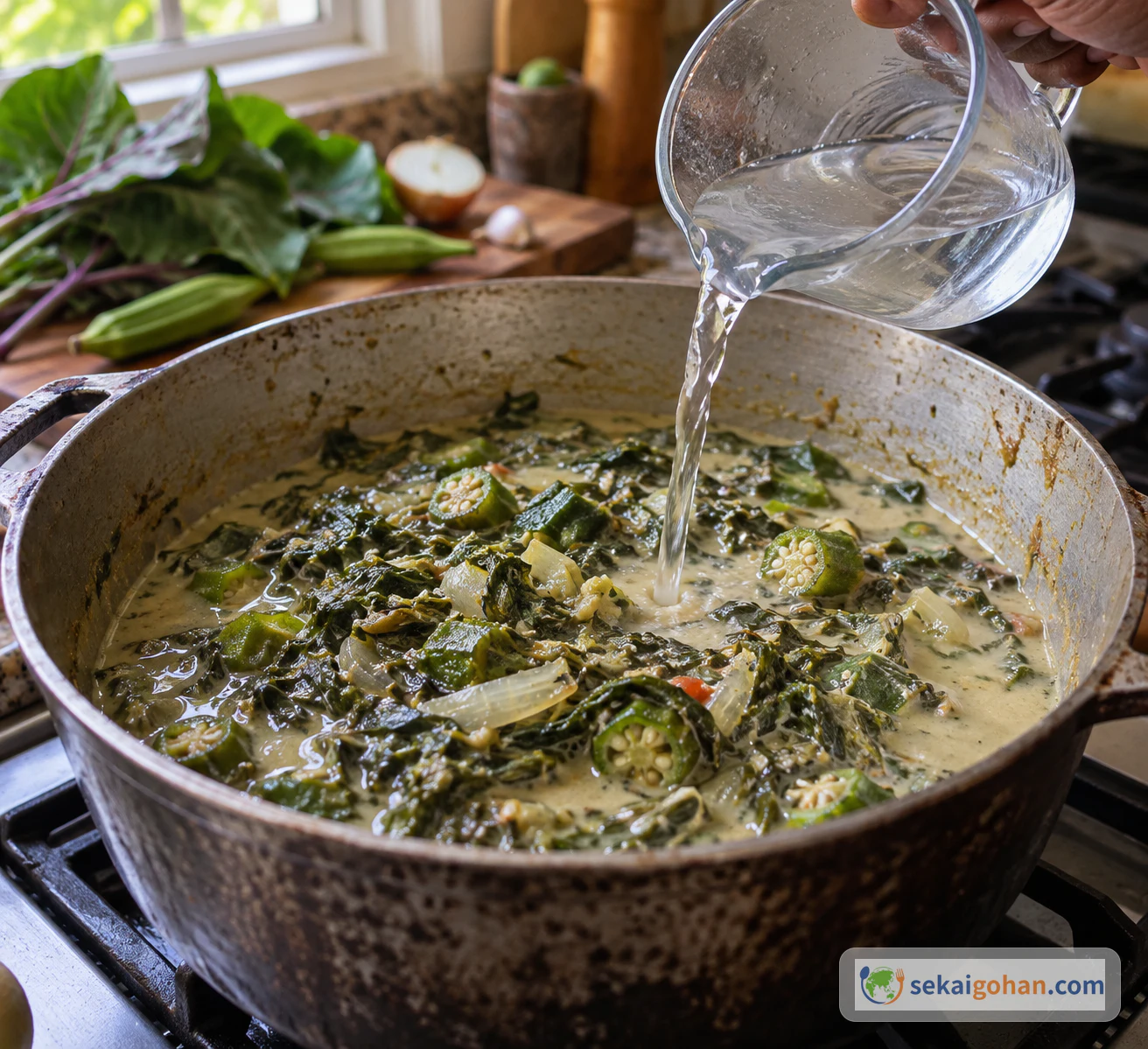
| Too thick to blend | Liquid has cooked down | Add warm water a little at a time before blending |
| Soup tastes thin | Too much water added | Add water in small amounts next time; salt after tasting |
| Too salty | Salt left in the pork tail | Taste first and allow for the pork tail's saltiness before adding salt |
| Texture or aroma not what you expected | Spinach, chard or collards used | Expected: these substitutes aren't the same leaf as dasheen |
Callaloo Variations and Leftovers
The pork tail is the easiest thing to swap, and each swap gives you a different soup:
- Crab pincers instead of pork tail. Mind shellfish allergies.
- Chicken instead of pork tail.
- No pork tail. The soup loses salt, savoriness and some texture. For a fully vegetarian pot, check the labels on all the other ingredients.
The soup can be refrigerated and eaten two days later, as long as it's cooled safely first. Divide leftovers into shallow containers so they cool quickly, get them into the fridge promptly, and reheat thoroughly before eating.
Frequently Asked Questions
Can I use taro leaves I find growing outdoors?
No. Buy only leaves sold as food from a trusted supplier, prepare them properly and cook them thoroughly. Wild taro-like plants should never be picked or eaten.
How many people does this serve?
The recipe doesn't give a serving count, so think of the amounts as one batch.