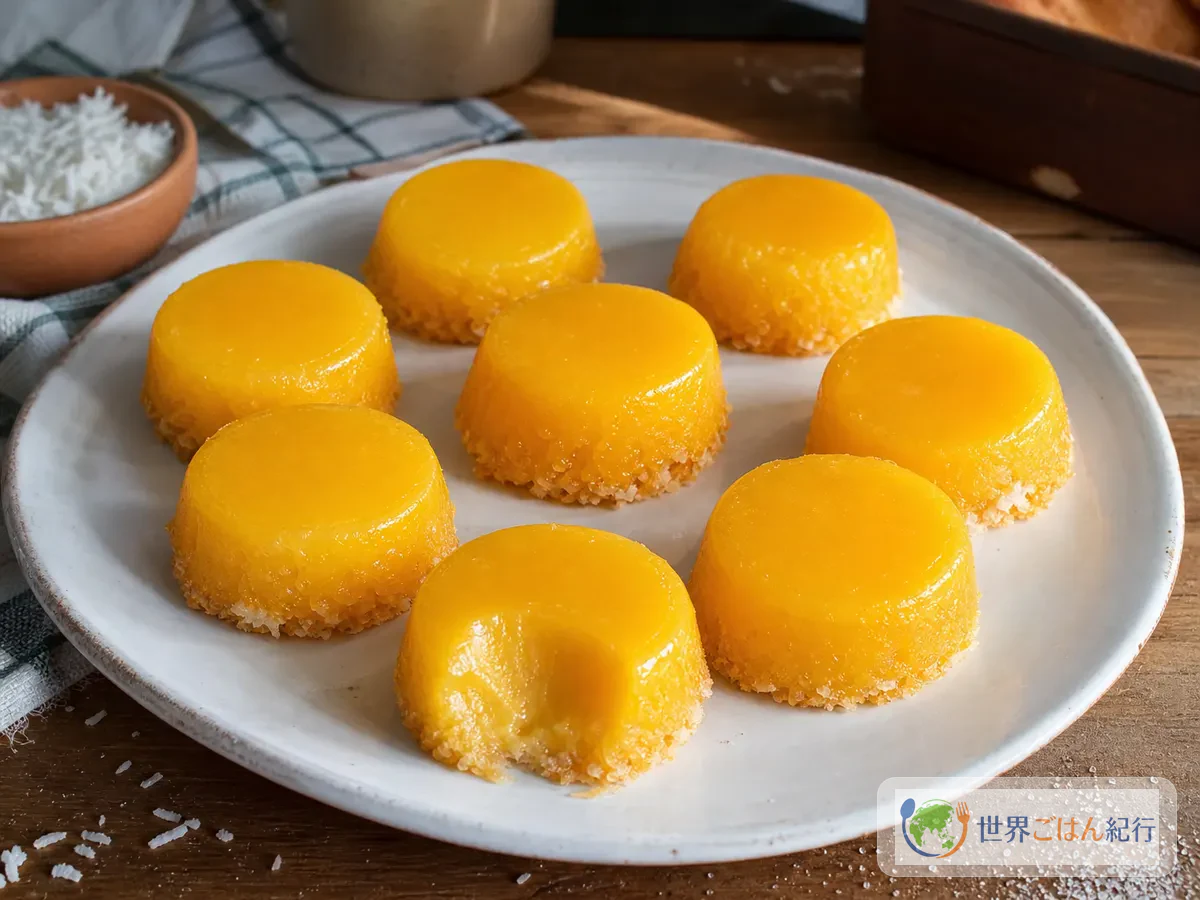
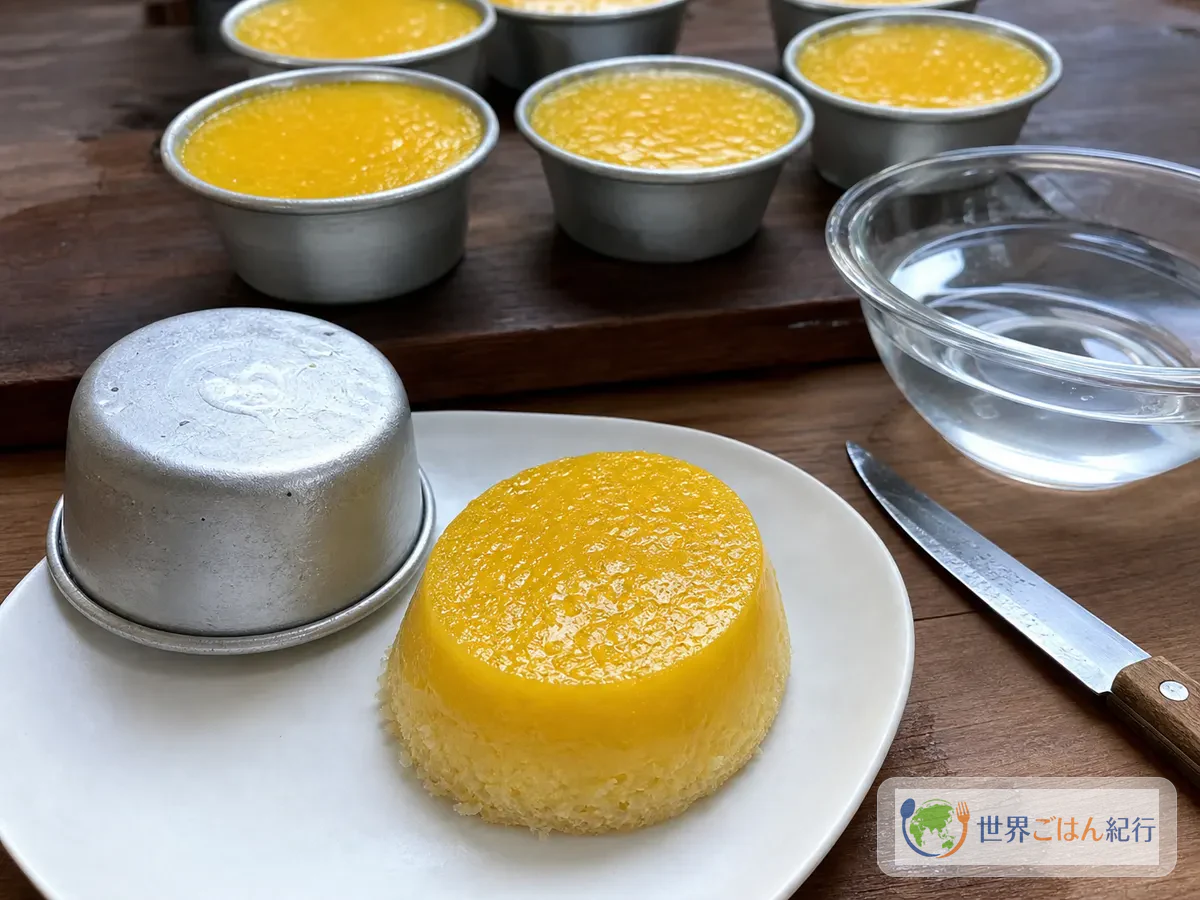
Turn a quindim out of its mold and the top catches the light: a smooth, glossy yolk custard with a layer of coconut settled underneath. Set one straight from the refrigerator beside a cup of black coffee, and that yellow gloss alone changes the mood of the table. This small Brazilian sweet is just egg yolks, sugar and coconut, baked in a water bath. It's like a pudding, only richer. It's less light than a macaron and less quiet than yokan.
Quindim and quindão in Brazil
In Brazil, the version baked in small molds is called quindim, and the one baked in a large ring mold is sometimes called quindão. This recipe makes 8 small ones, the easiest size to get right in a home oven. Unlike the Brazilian dishes and sweets that close a churrasco with strong sweetness, quindim lets the place come through with nothing but eggs and coconut.
It's eaten in small amounts after a meal. Many Brazilian sweets use plenty of condensed milk or egg yolk, and quindim tastes much sweeter than a Japanese pudding, so a little goes a long way.
Ingredients (8 molds, 2 inches (5 cm) across)
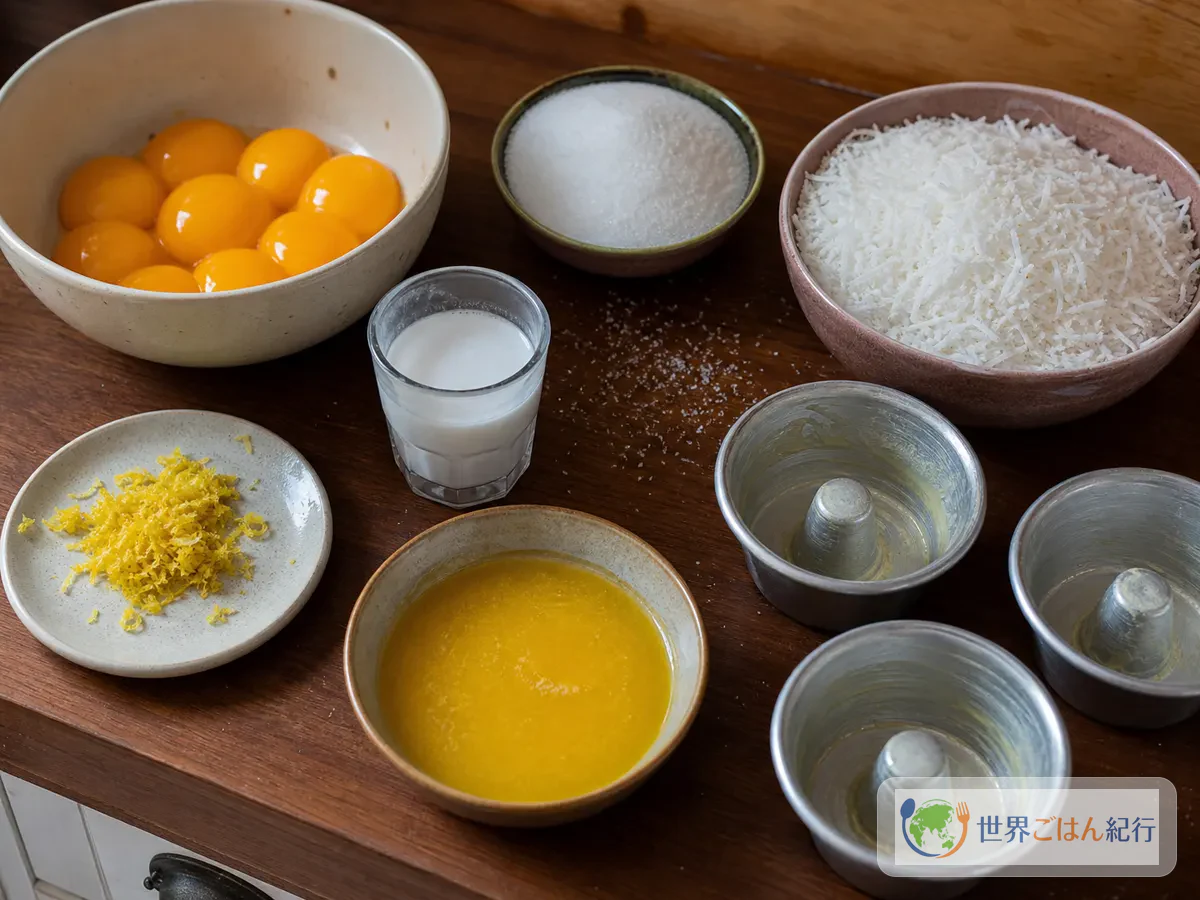
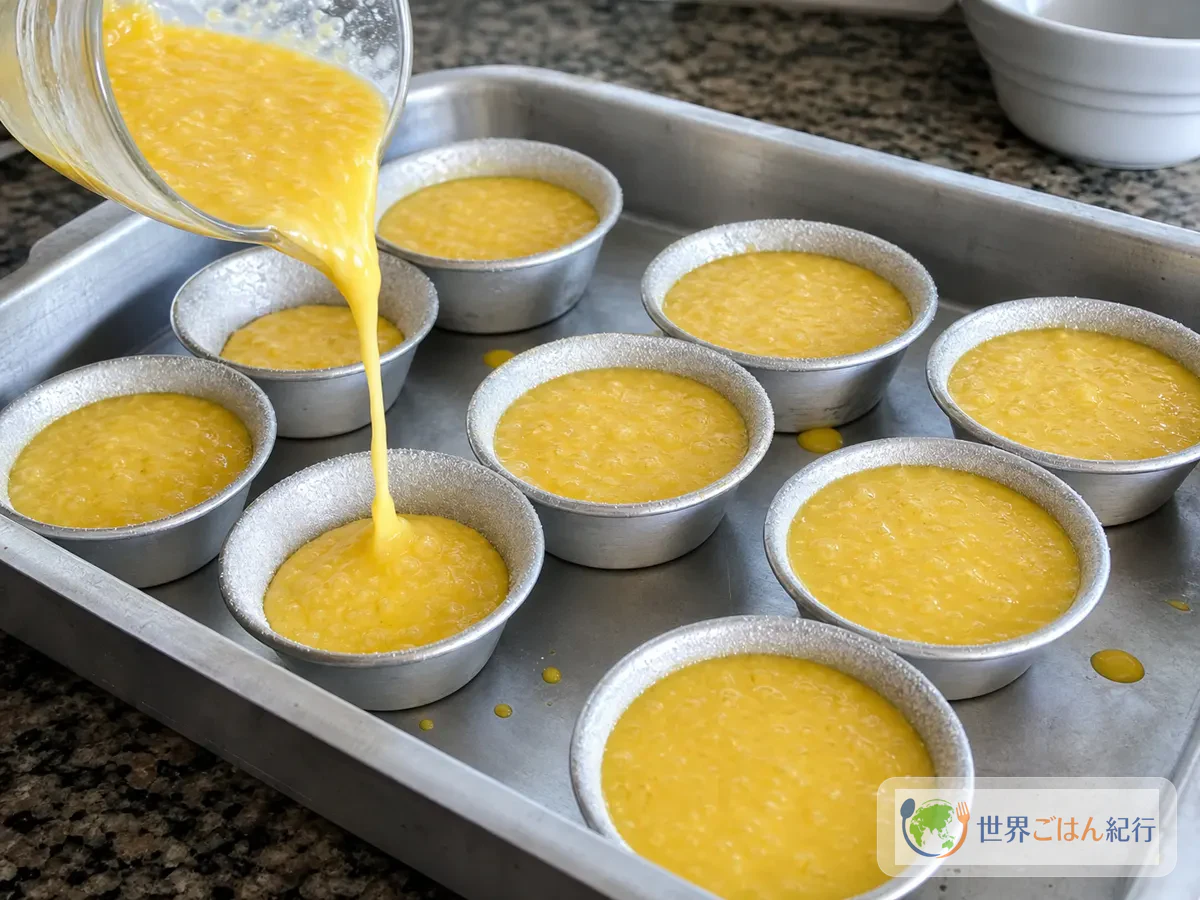
This amount fits small pudding molds, aluminum cups or mini bundt molds. The larger the mold, the slower the heat reaches the center, and the more likely you get a firm top with a runny middle. For a first batch, choose molds about 5 cm across.
This recipe contains egg, dairy and coconut. Because it uses many yolks, it has a strong egg flavor. Cutting the sugar heavily ruins the gloss, the release and the keeping quality. Even if you want it less sweet, keep to 8 oz (220 g) of sugar at the lowest for a first batch.
Which ingredients you can swap and which you cannot
With so few ingredients, changing any one of them makes a different sweet. Keep the yolks, sugar and coconut, and adjust only the supporting aromas to what you have on hand.
| Role | Ingredient to keep | What you can swap | What changes |
|---|---|---|---|
| Yellow gloss | 12 egg yolks | Down to 10 yolks | Weaker color and richness; looser set |
| Sweetness and release | Granulated sugar | Soft white sugar | A little more moist, with less clarity on the surface |
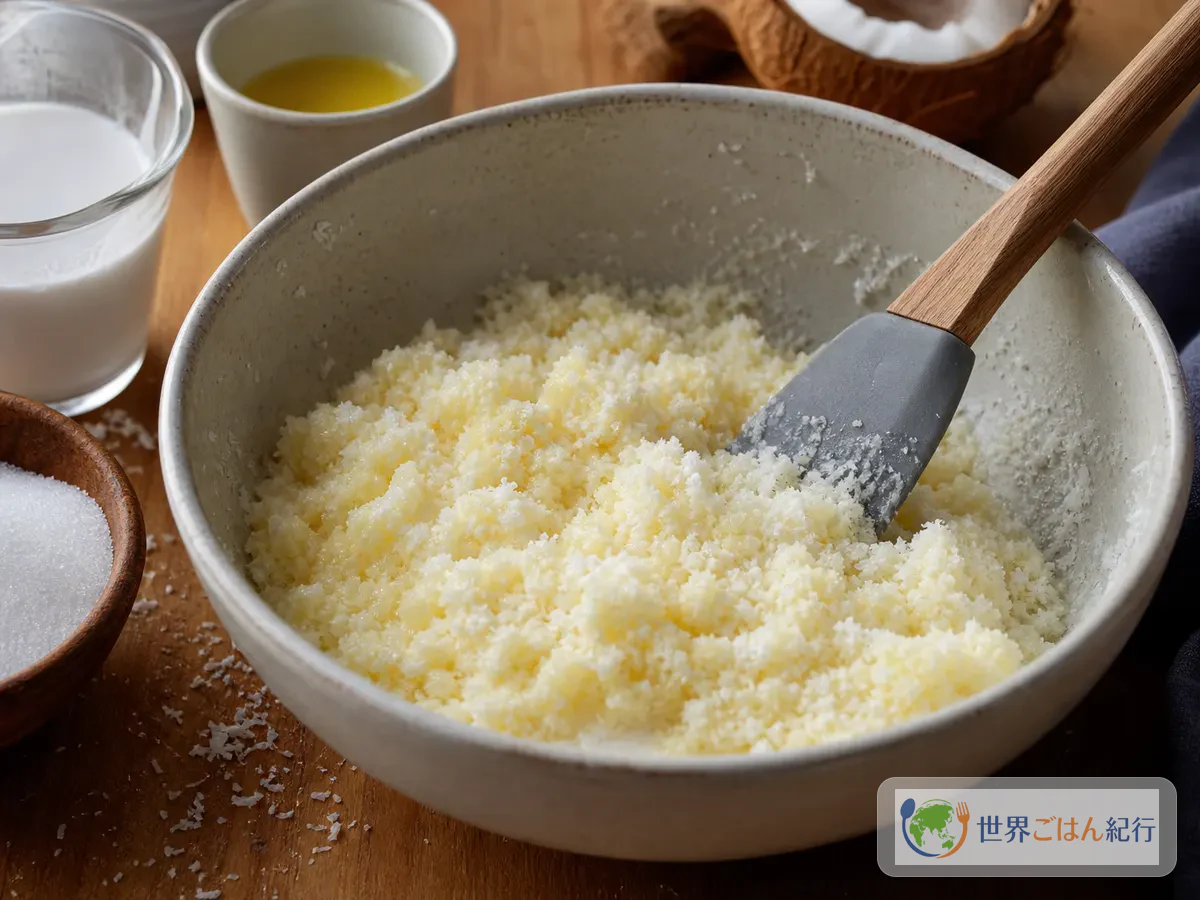
| Layer of bits | Unsweetened fine coconut | Chopped long-cut coconut | Large pieces make the bottom layer coarse |
| Aroma | Coconut milk | Water or milk | Water is light but weak in aroma; milk leans toward pudding |
| Molds | Small metal molds | Pudding cups, heatproof ramekins | Glass or ceramic heat slowly; allow about 5 minutes longer |
Focus on three things: unsweetened coconut milk, small metal molds and a deep heatproof dish for the water bath. Eggs, sugar, butter and lemon come from any grocery store. Fine coconut is sometimes in the baking aisle, but avoid sweetened coconut, which scorches easily.
Coconut milk is used by the tablespoon, so leftovers can go into curries or rice dishes. The molds and bath dish are also useful for pudding, baked cheesecake and South American corn sweets.
Method: strain the yolks and bake in a water bath
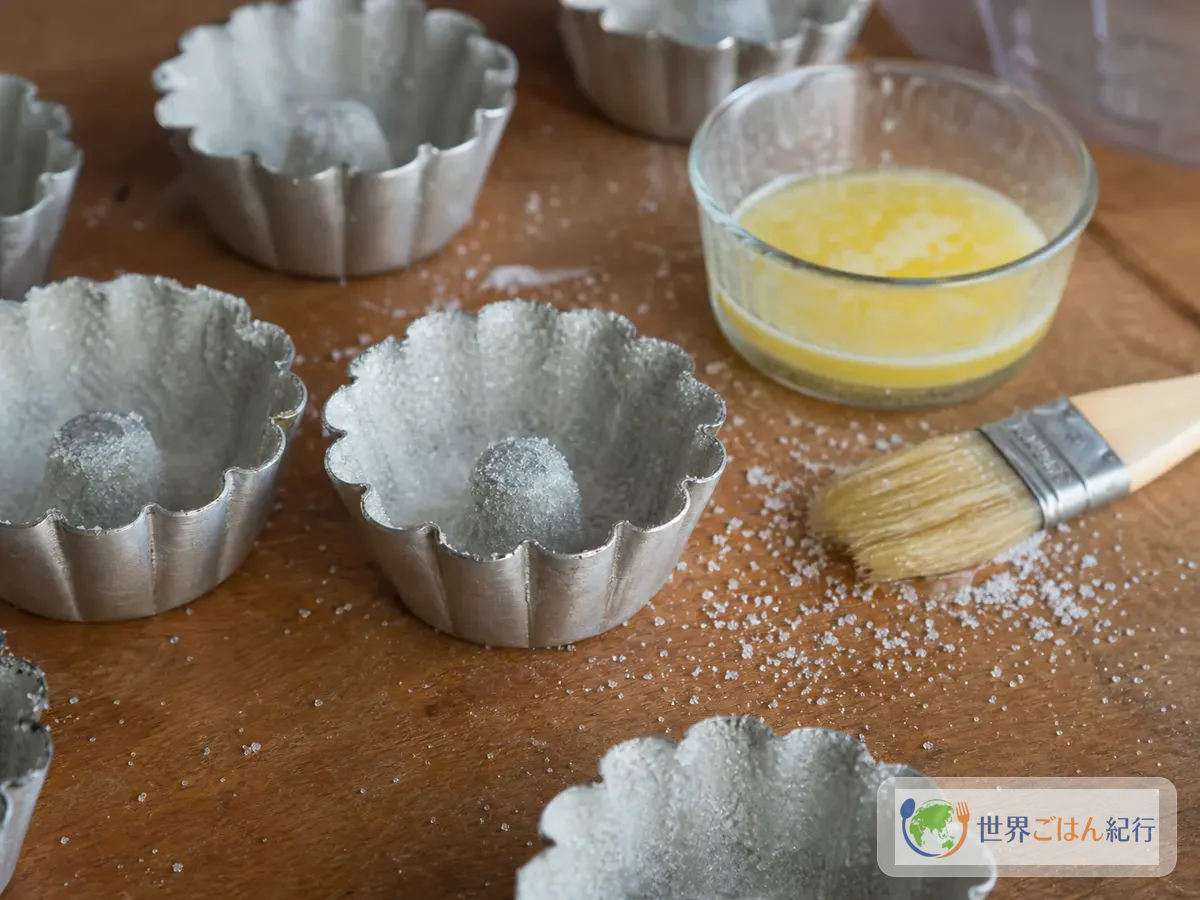
Rushing after cracking the eggs makes the mold prep careless, and the quindim will not release. First, preheat the oven to 350°F (180°C), boil the water, and butter and sugar the molds before moving to the batter. After mixing, the batter rests 30 minutes, so use that time to prepare the baking tray and bath dish.
Common quindim problems and fixes
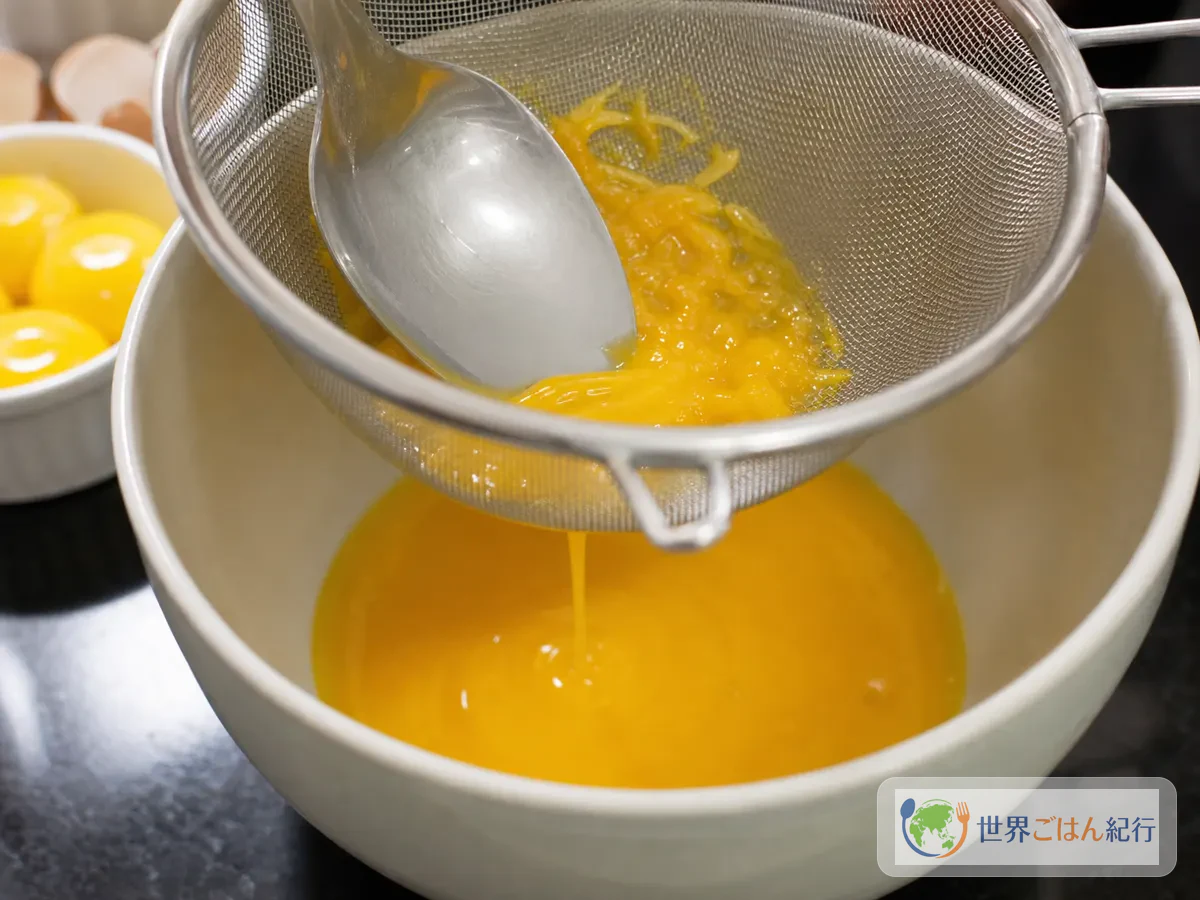
The ingredient list is short, so the hard part is technique: how you strain the yolks, how far you rehydrate the coconut, how thoroughly you coat the molds with sugar, and how high the water comes up in the bath. Brazilian home recipes share the same backbone. They strain the yolks to tame their odor, coat the molds firmly with butter and sugar, and bake in a water bath. With ingredients this simple, any mistake shows right in the result. Egg odor, sticking, toughness and missing layers almost always come down to straining, the molds, or when you stop baking.
| Problem | Cause | Fix |
|---|---|---|
| Smells of egg | Yolk membranes not strained; mixture whipped | Strain through a fine sieve, and stir the sugar in without whipping |
| Will not release | Butter and sugar too thin; chilled completely | Run a knife around while warm, and hold the outside of the mold in 122°F (50°C) water for 15 seconds |
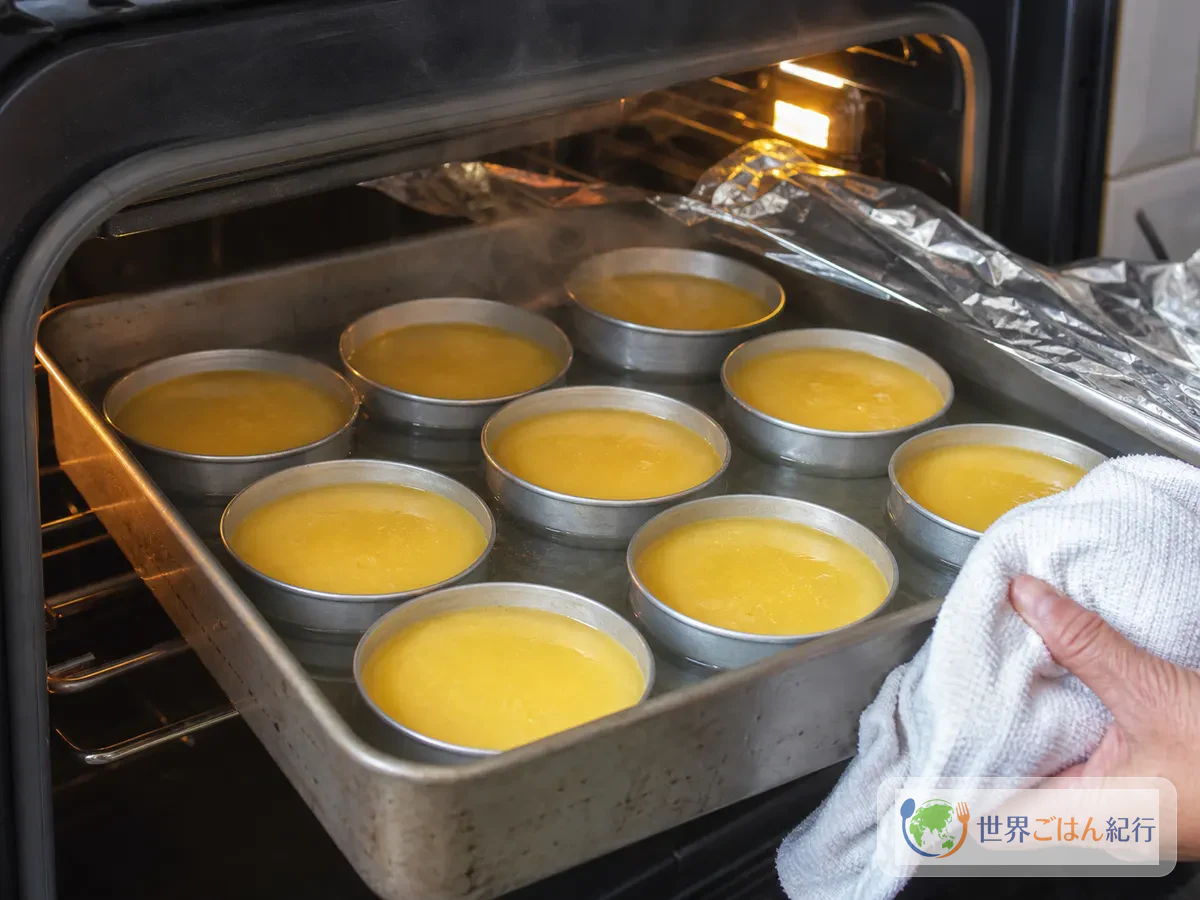
| Surface cracks | Oven too hot; too little water in the bath | Keep to 350°F (180°C) at most, and keep the water halfway up the molds |
| Firm and rubbery | Overbaked | Stop when the center still wobbles slightly, and let residual heat finish it |
| No coconut layer | Batter not rested; mixed too finely | Rest 30 minutes, and before filling just stir lightly from the bottom |
| Watery | Underbaked; molds too large | Bake 5 minutes more, and check that no liquid clings to the skewer |
It's fussy work, but skip it and the egg odor comes forward once the quindim is chilled. Throw out whatever stays in the sieve.
Serving, storing and baking quindão
Serving quindim
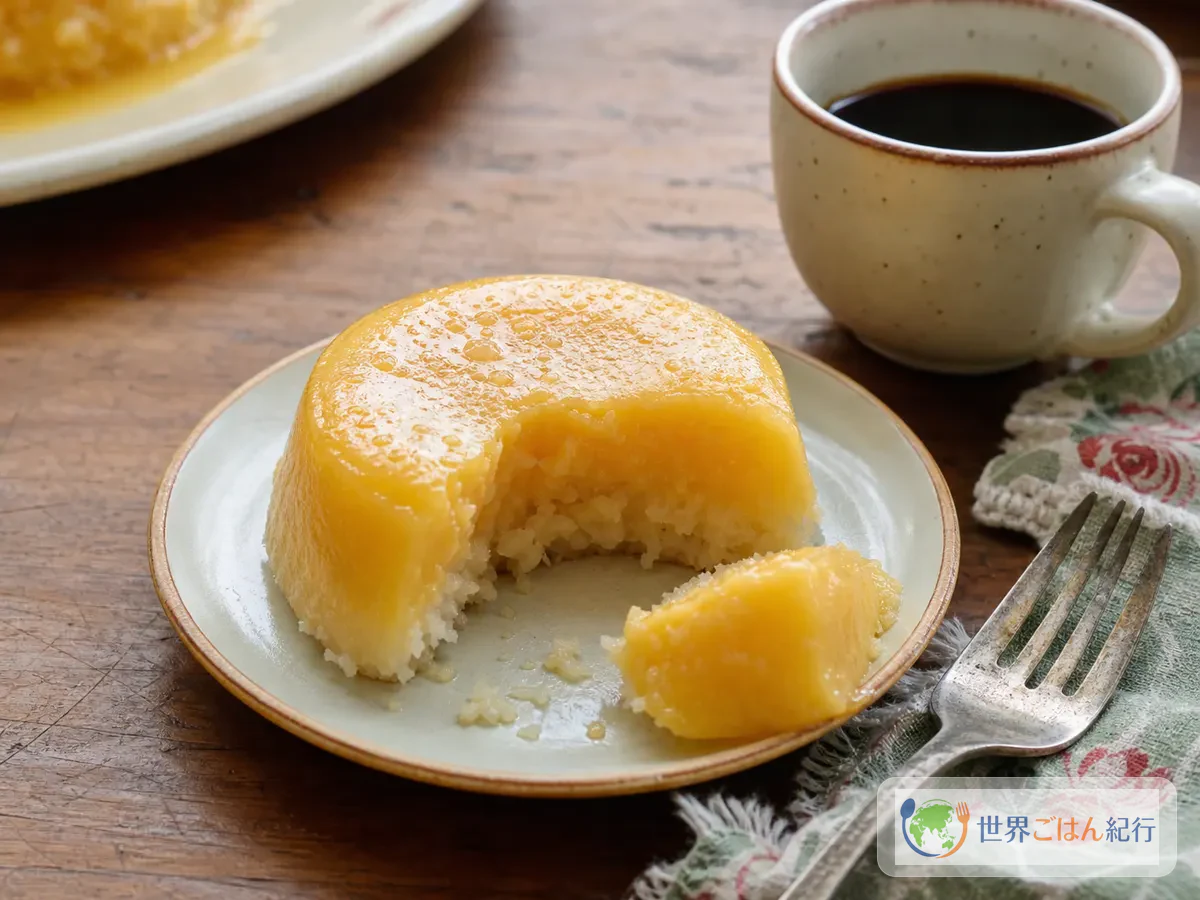
Because it's so sweet, quindim wants something bitter or clean beside it: strong coffee, unsweetened tea, or cold sparkling water. It also fits best after beans or salty dishes rather than grilled meat or fried food. After a bean stew such as feijoada or the seafood-scented moqueca, a small chilled quindim gives the end of the meal a clear outline.
Storage and making ahead
Quindim keeps 3 days in the refrigerator. Once they've cooled completely, wrap each one in plastic wrap or arrange them in a lidded container without overlapping. A dry surface loses its gloss, so keep them covered rather than out on a plate. They look their best baked the day before and refrigerated overnight.
Take them out 5–10 minutes before eating. Straight from the cold, the aroma of butter and coconut stays closed and only the sweetness comes through. Serve them cool rather than reheated, since a microwave tightens the yolk and dulls the surface.
Freezing works, though the texture suffers a little. Wrap each one in plastic, put them in a storage bag, and freeze for up to about 2 weeks. Thaw in the refrigerator for half a day and blot any droplets gently with a paper towel. When looks matter, stick with the refrigerator.
Baking one large quindão
For a quindão to share, pour the same batter into a ring mold about 6 inches (15 cm) across and bake 50–60 minutes in a water bath. Stop when the center wobbles lightly and no liquid clings to the skewer, then let it cool about 30 minutes before flipping, longer than the small ones. The center of a big one is harder to judge, so get a feel for when to stop with small molds first.
More dishes to cook alongside
- How to make pudim - Another sweet Brazilian egg dessert. With condensed milk and caramel, it has a different richness from quindim.
- How to make guagua de pan - Shares ingredients and aromas with this region.
Frequently asked questions
Q. What do I do with the egg whites?
Use them in meringue sweets, financiers, as a garnish for soup, or in an egg-white omelet. They keep about 2 days in the refrigerator and about 1 month in the freezer. Freeze them one egg white per portion so they're easy to use later.
Q. Can I make it without coconut milk?
Yes, but the aroma is weaker. If you rehydrate with ¼ cup (80 ml) water, add a little more lemon zest and cut the fine coconut by 10 g so it doesn't turn heavy. ¼ cup (80 ml) milk also sets, but the taste moves closer to an egg pudding than a Brazilian sweet.
Q. Can I use silicone molds?
You can, but metal molds give better gloss and color. Silicone heats more gently, so bake 5 minutes longer at the same 350°F (180°C) and watch the wobble in the center. It releases well, but the sugar film clings less to the sides, so the glossy outline typical of quindim is a little weaker.
Q. Can I halve the sugar?
Better not. In quindim the sugar supports gloss, release, keeping quality and the set of the yolks as well as sweetness. Halved, the texture comes closer to steamed egg and it's harder to unmold. If you must cut back, stay at 8 oz (220 g) and serve it with an unsweetened drink so it still satisfies.