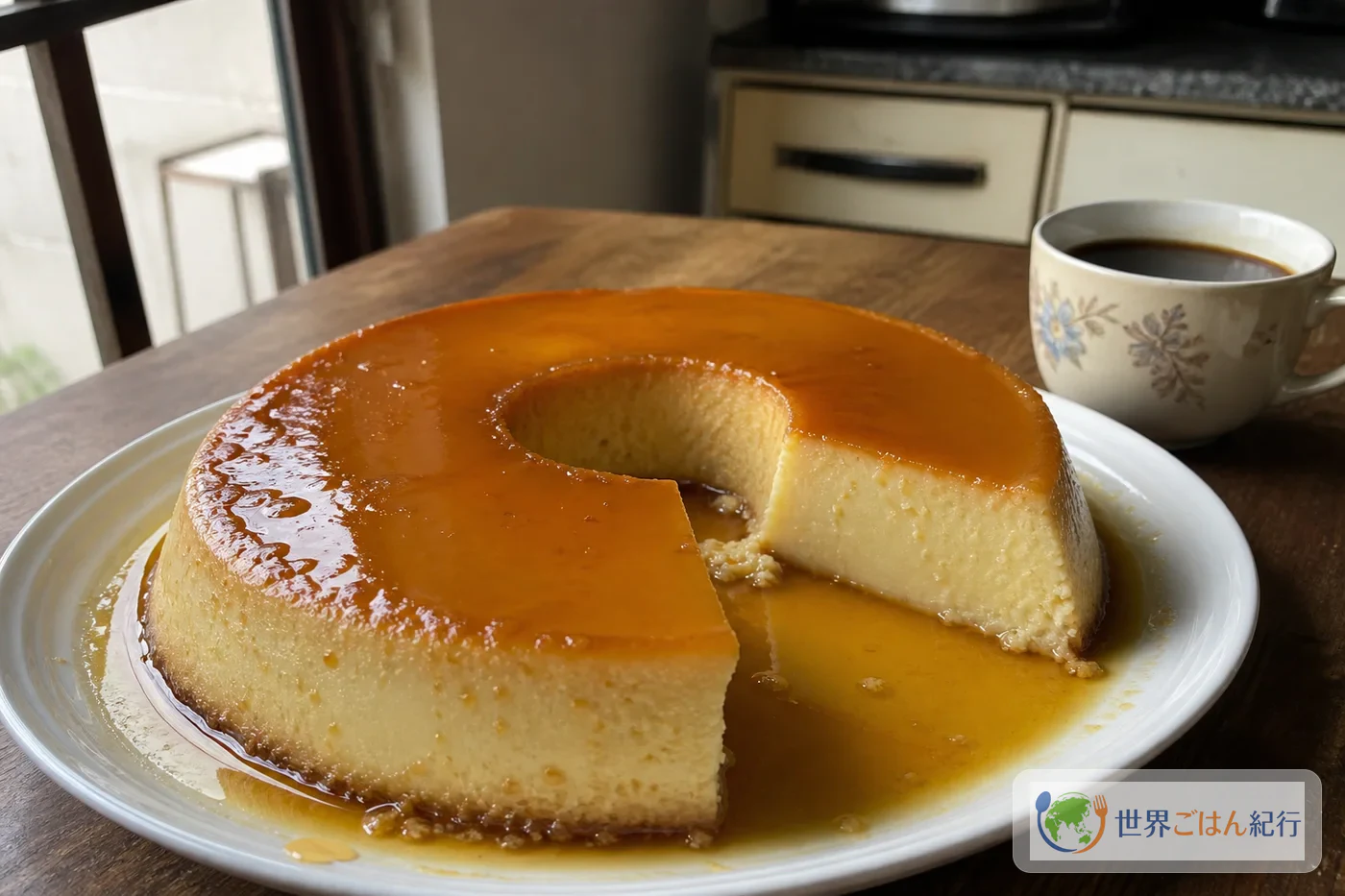
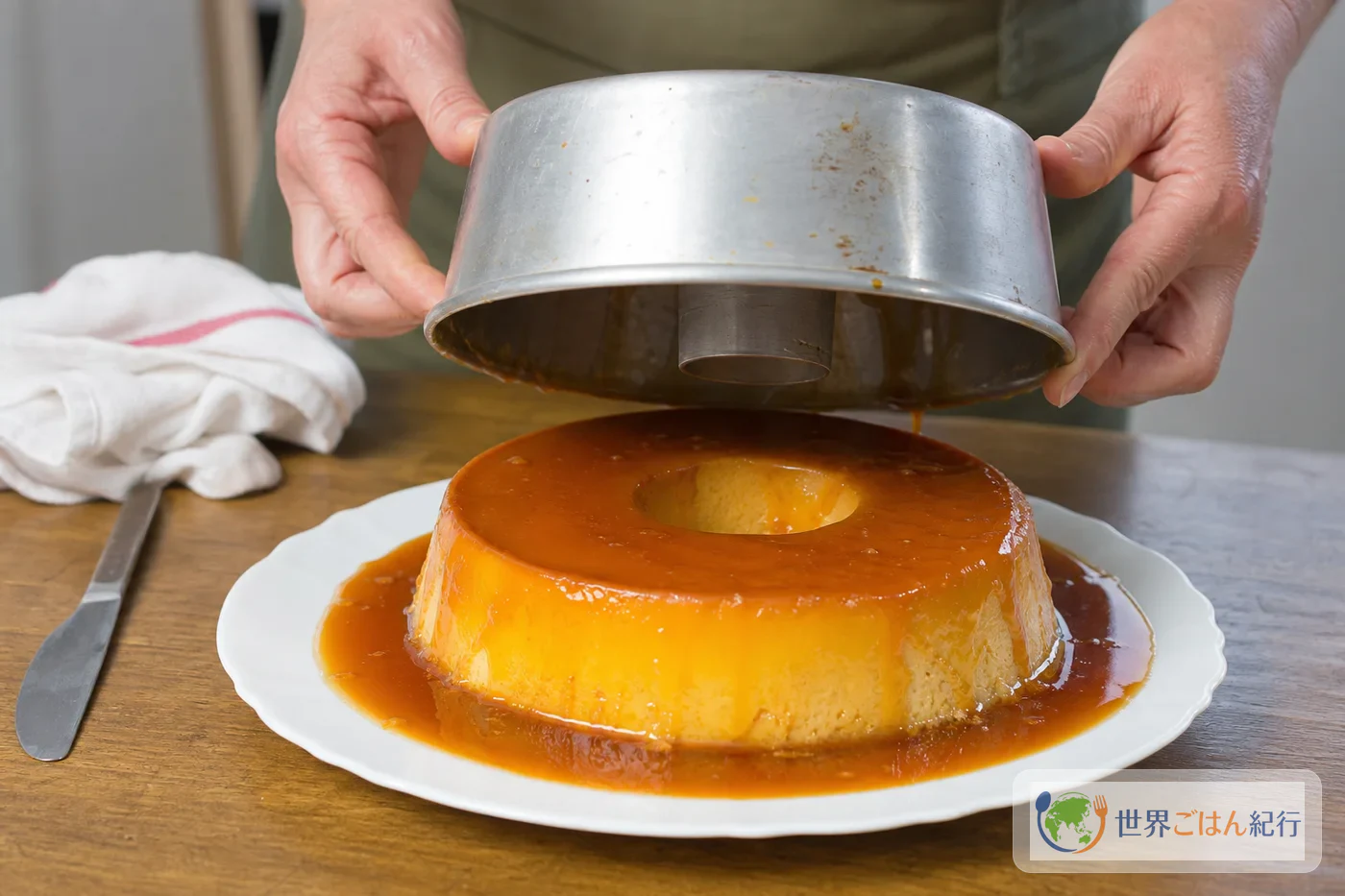
Turn out a thoroughly chilled mold onto a plate, wait a moment, lift it off, and amber caramel slowly runs down the sides. That's pudim, the condensed milk flan Brazilian families make all the time. It's sweeter than a silky Japanese-style custard pudding, and you taste the rounded aroma of condensed milk more than the egg. Cut a small slice after dinner and set it next to a strong coffee, and the sweetness snaps into focus.
What is Brazilian pudim
In Portuguese, pudim refers broadly to "pudding." In Japanese the name is spelled several ways. Here, "pudim" means the Brazilian condensed milk flan, also called pudim de leite condensado.
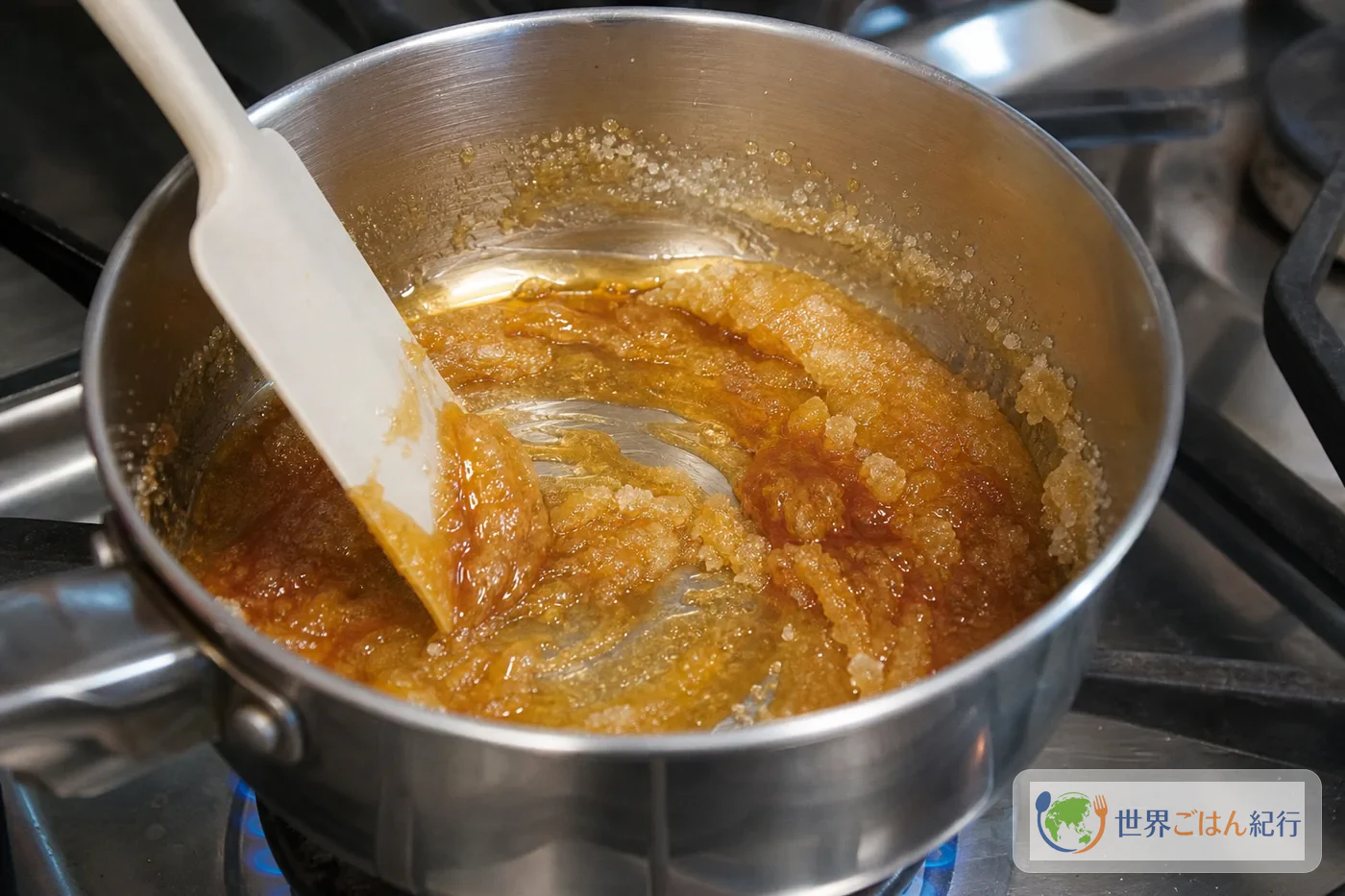
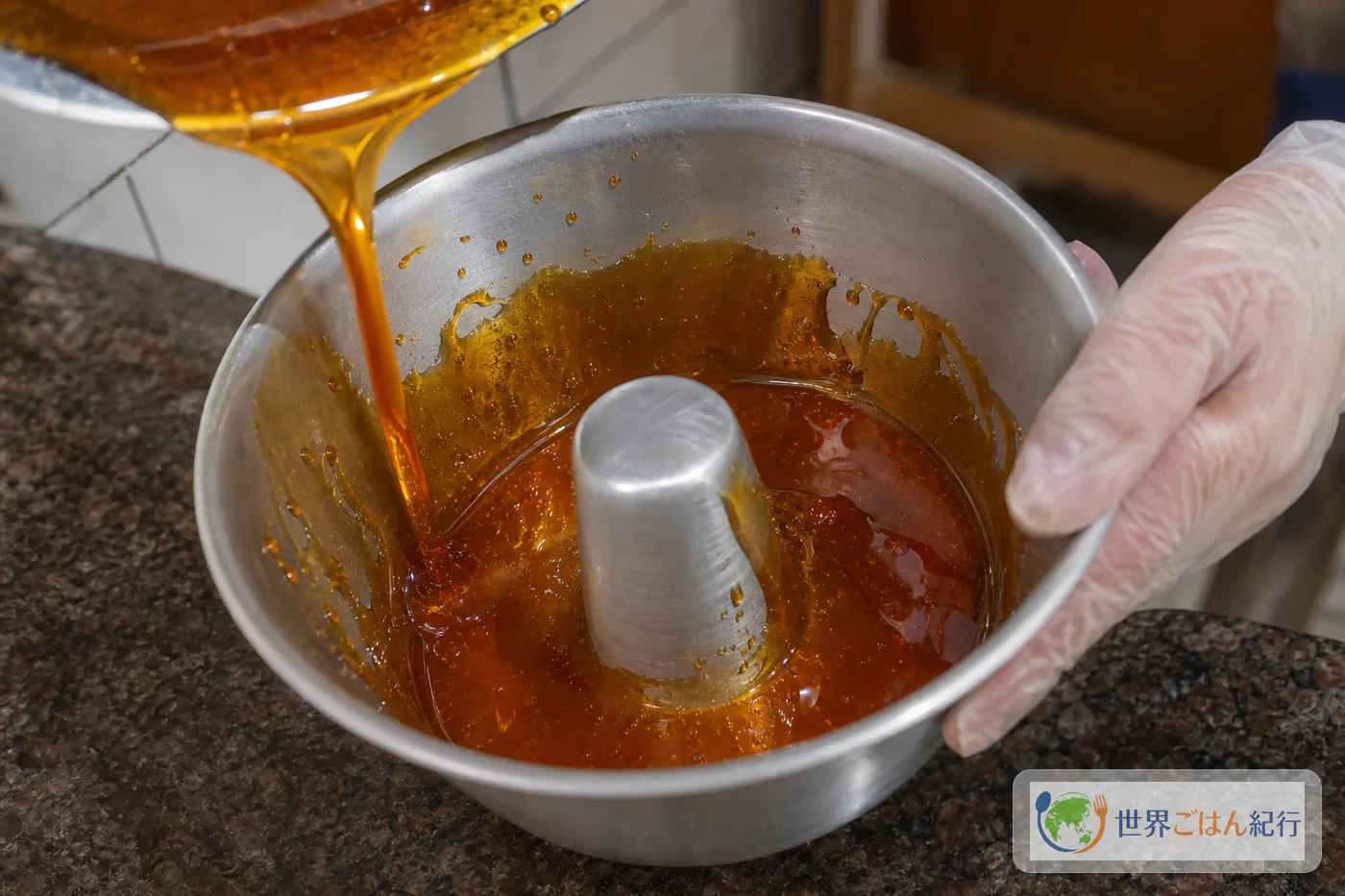
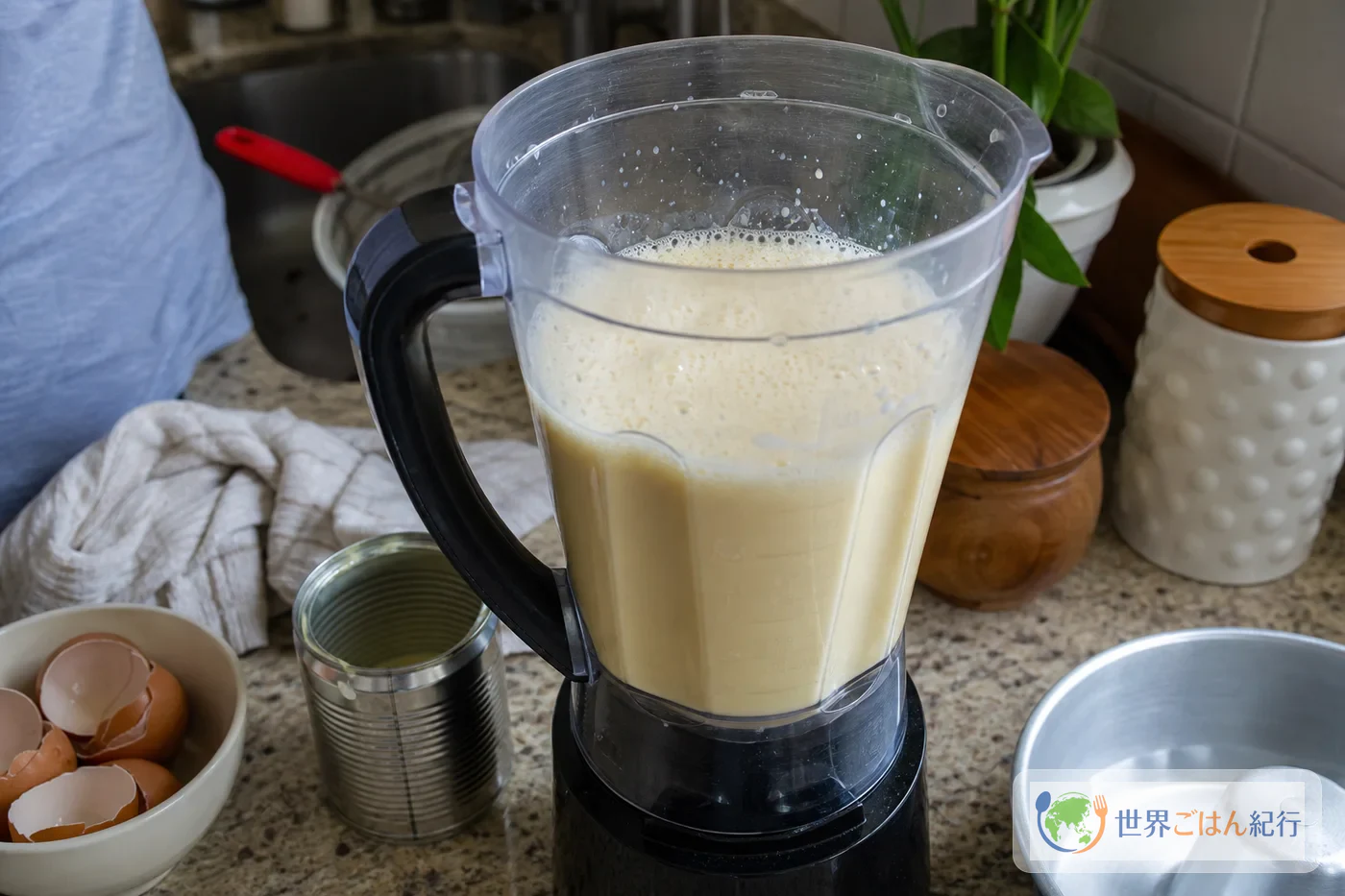
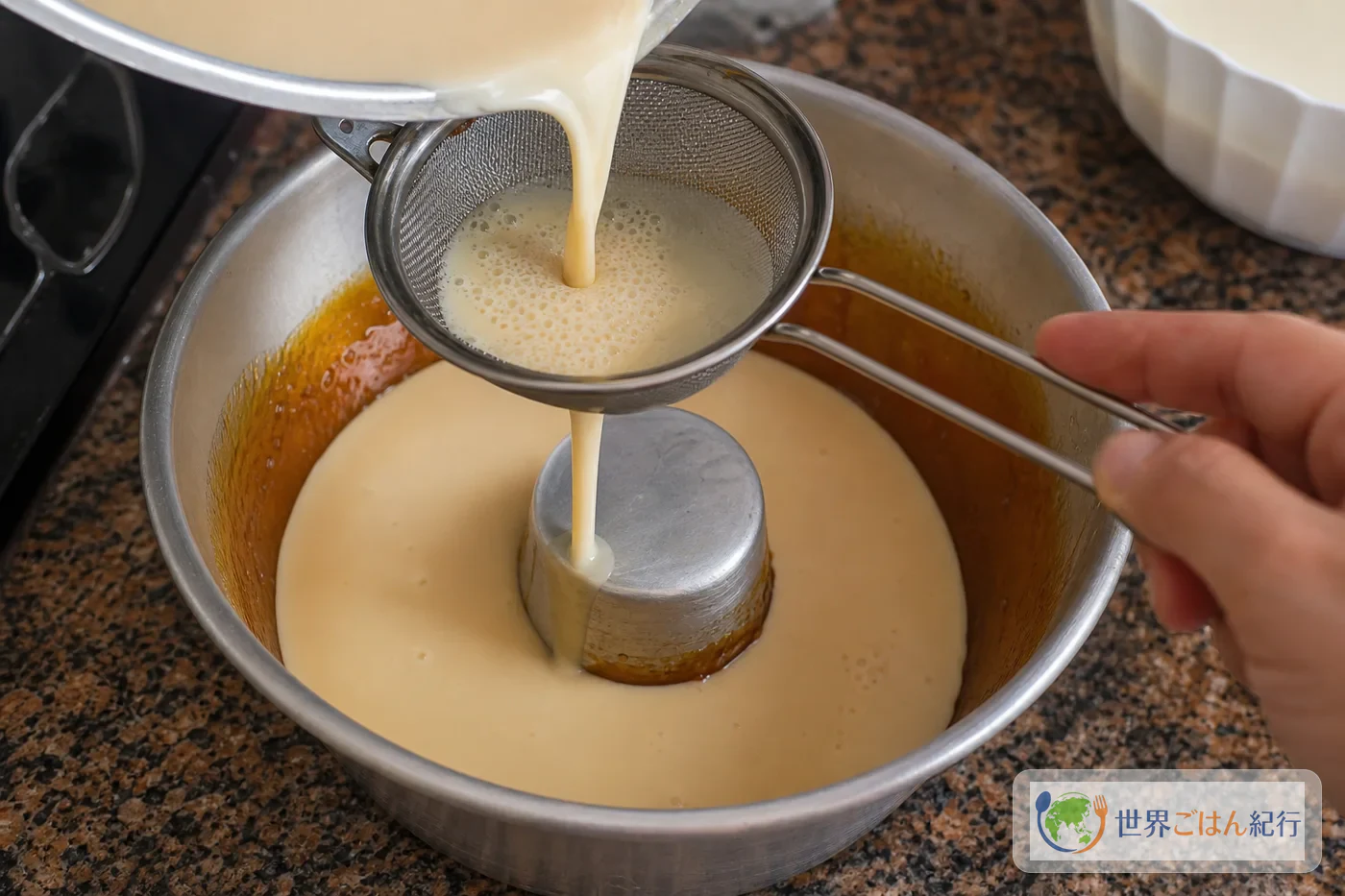
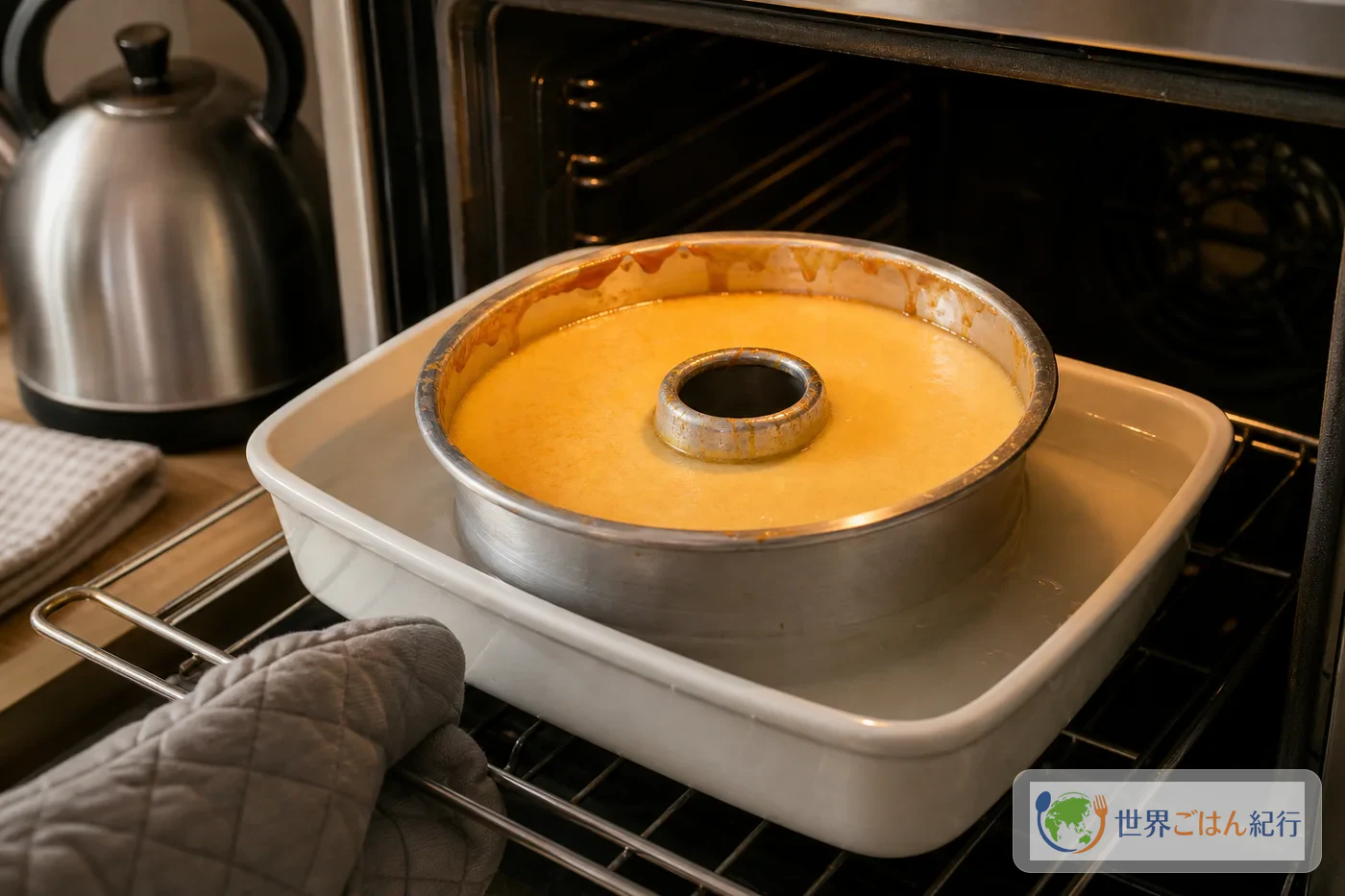
The version you see most often in Brazilian kitchens is pudim de leite condensado, made with sweetened condensed milk. Eggs, milk and condensed milk are whirled together in a blender, poured into a caramel-lined ring mold with a hole in the center, and baked in a water bath. The ingredient list is short, but a lot can go wrong at home. The caramel can cook too far, the batter can go into the oven full of bubbles, the water bath can be too shallow, or the pudim can collapse because it wasn't chilled long enough. Get those points right and even a first attempt turns out reliably.
Where pudim comes from
Desserts of egg, milk and sugar, set and topped with caramel, come from the European tradition of egg sweets, such as those of Portugal and Spain. They spread to Brazil with European confectionery from the colonial period on. Brazil first imported condensed milk from Europe and the United States, but domestic production grew (in 1921 Nestlé began making condensed milk in Araras, in the state of São Paulo), and condensed milk became a staple of home baking. Today pudim de leite condensado ranks alongside brigadeiro as one of the classic homemade sweets.
Pudim, flan and quindim
Pudim is a cousin of flan and crème caramel, but in the Brazilian home version condensed milk dominates. A flan made only with eggs, milk and sugar is lighter. Pudim has a rounder sweetness and, once chilled, a dense, chewy body. Think of it as a rich sweet to enjoy in small amounts after a meal.
The mold with a hole in the middle isn't just for looks; it helps the pudim cook evenly. With the center open, heat gets all the way around, so even a large pudim sets fairly evenly. If you don't have a ring mold, divide the custard among pudding cups. A large pudim baked in a deep bowl or loaf pan makes it hard to tell when the center is done.
Compared with an egg yolk and coconut sweet like quindim, pudim uses easy-to-find ingredients, and an authentic result is easier to get. The one trap is the sweetness. Cut back too far on the condensed milk and the pudim stops tasting Brazilian. It's meant to be sweet, which is exactly why it goes so well with unsweetened coffee.
Ingredients (one 7 inches (18 cm) ring mold)
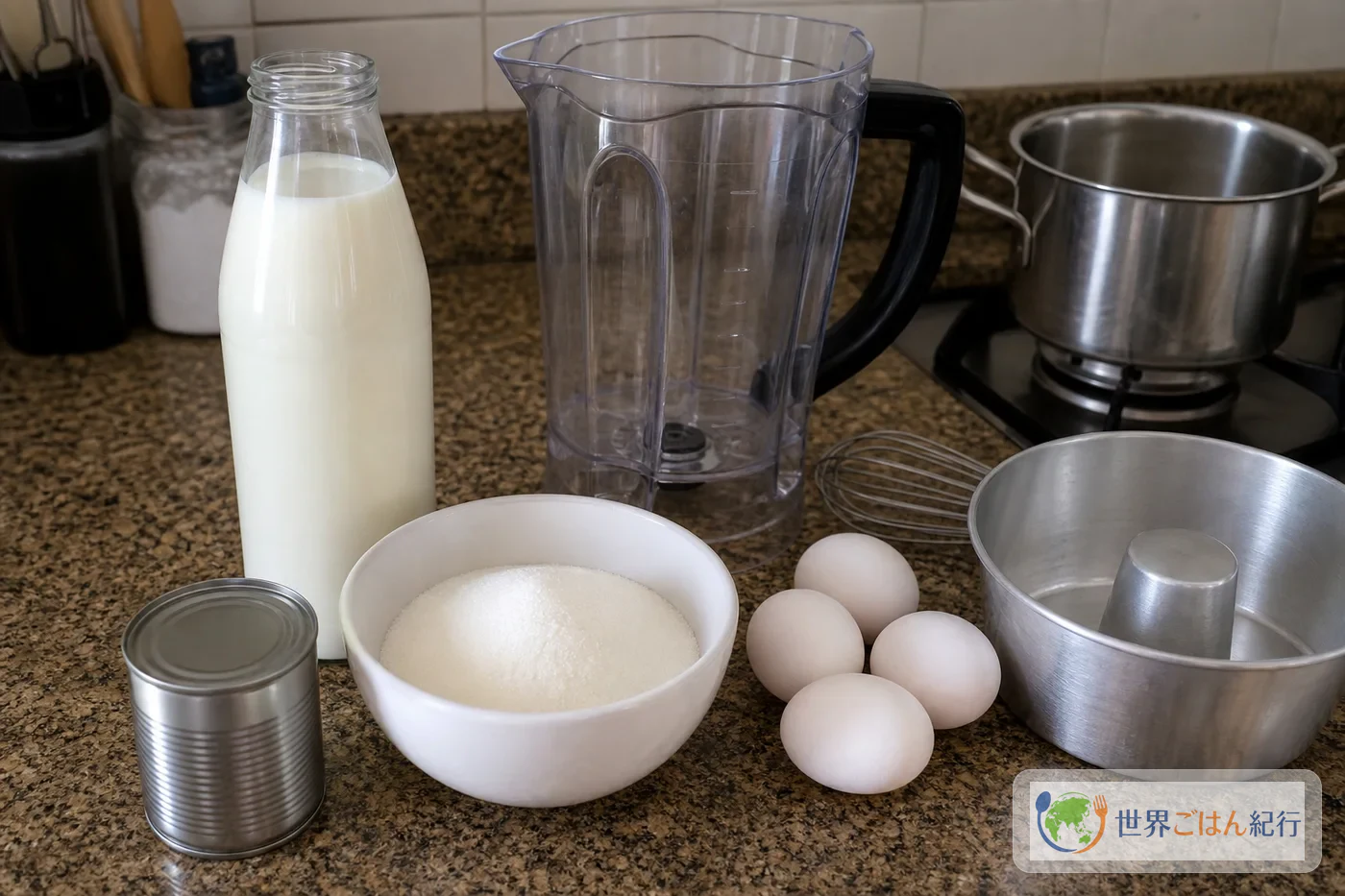
These amounts lean toward the properly sweet Brazilian style. Cut the sweetness back too far and you end up with a thin egg custard that also loses its gloss when unmolded. For a first try, keep the sugar and condensed milk as written, and cut smaller slices instead.
This recipe contains eggs and dairy. The custard sets slowly at low temperature, so don't eat it underbaked. If the center wobbles a lot, bake it longer; if you use a thermometer, aim for about 80°C (176°F) in the center.
What you can swap and what to keep
| Role | Ingredient or tool to keep | What can stand in | What changes |
|---|---|---|---|
| Sweetness and aroma | Condensed milk, 395 g | The same amount of another brand of sweetened condensed milk | Sweetness varies a little by brand |
| Smoothness | Milk, 450 ml | 400 ml milk + 50 ml heavy cream | Richer, but a step away from the Brazilian home-style flavor |
| Setting | 4 eggs | 3 eggs + 1 egg yolk | A bit richer, sets a little softer |
| Mold | 18 cm ring mold | 6–8 pudding cups of 150 ml | Shorter baking time. No ring shape with a center hole |
| Cooking | Oven water bath | Steam-bake in a deep pot | The heat is closer, so keep it on low |
Ingredients and tools for pudim
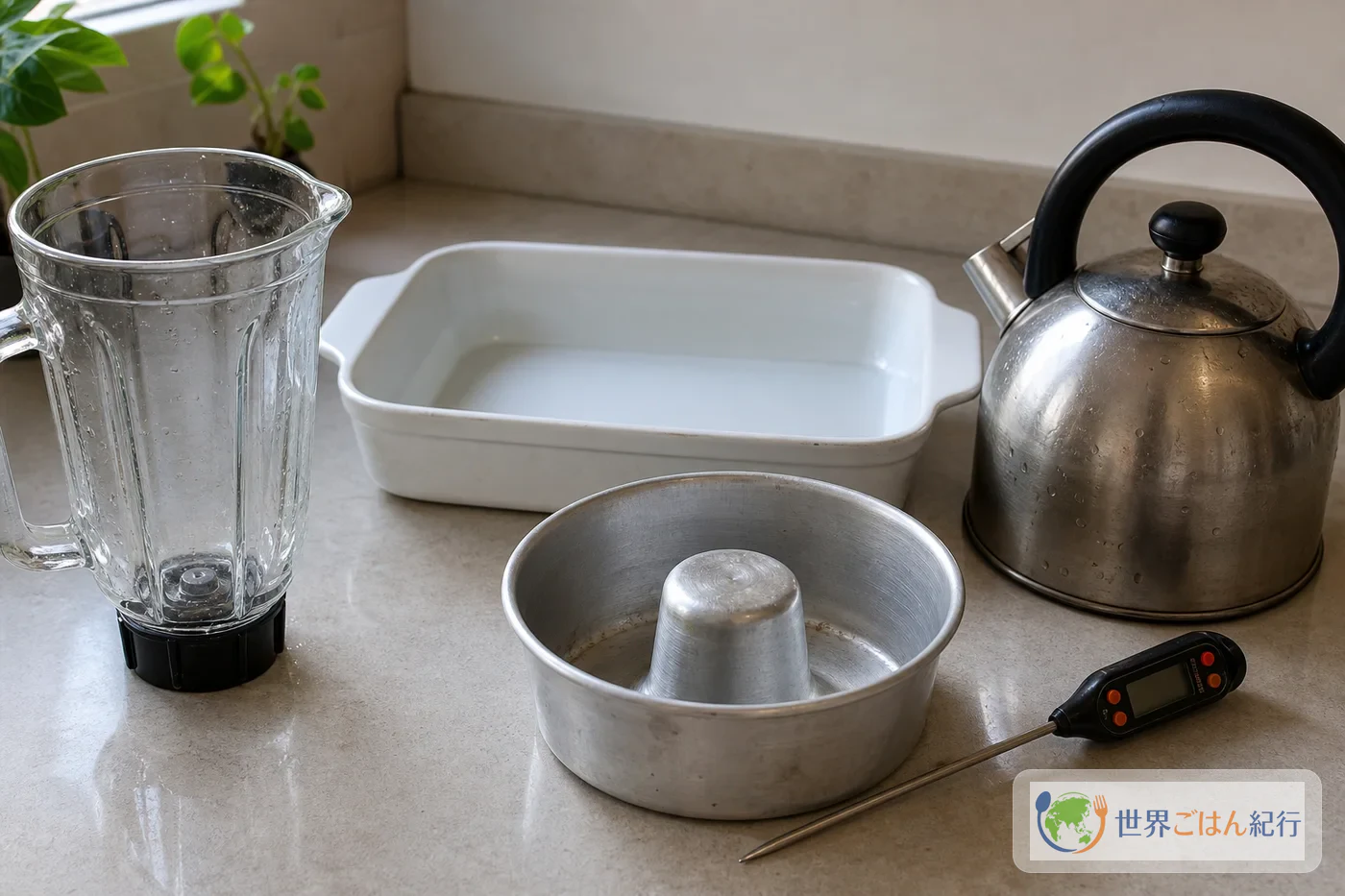
Condensed milk, milk, eggs and sugar are all ordinary grocery items. The equipment matters more, especially the first time. You need a blender for the Brazilian move of blending all the liquids smooth in one go, an ovenproof dish deep enough for a proper water bath, and ideally a thermometer to tell you when to stop baking.
The blender's job is to make the eggs and condensed milk uniform quickly, so keep the blending short to avoid whipping in bubbles. The water-bath dish should let you pour water halfway up the mold once the mold is inside. A shallow sheet pan doesn't hold enough water, and the outside sets before the inside.
A thermometer is optional. Still, it's hard to judge doneness by eye, and if you measure the center temperature once, you'll find it much easier to read the wobble next time.
Method: coat the mold with caramel and bake in a water bath
Preheat the oven to 170°C (340°F). Bring water to a boil for the water bath and have the mold, the ovenproof dish and some aluminum foil out and ready. If you go looking for equipment after the caramel is made, it starts setting before you can coat the mold.
Common pudim problems and fixes
| Problem | Cause | Fix |
|---|---|---|
| Bitter caramel | Cooked until it turned black and smoked | Stop at amber, and add the hot water as soon as the bottom of the pan darkens |
| Won't come out of the mold | Not chilled long enough, caramel set too thick | Chill at least 4 hours and dip the bottom in 50°C (122°F) water for 10 seconds |
| Large holes throughout | Blended too long, oven too hot | Stop at 20 seconds and bake in a water bath at 170°C (340°F) or below |
| Runny center | Underbaked, mold too deep | Bake 10 minutes more and check for about 80°C (176°F) in the center or a slight wobble |
| Cracked surface | Water bath too shallow, heat hitting it like direct heat | Top up the water to half the mold's height and lay foil loosely over it |
| Too sweet | Slices too big, sweet drinks | Cut thin, into 8–10 slices, and serve with unsweetened coffee or tea |
Pudim comes together better as "eaten in small slices at its proper sweetness" than as "made less sweet." Before cutting back the condensed milk, slice it smaller and serve unsweetened drinks.
Pudim with holes or without
In Brazil you'll find pudim with fine holes in the cut face and pudim that's perfectly smooth. If you're used to flawless custard puddings, the holes can look like a mistake. In homey Brazilian pudim, though, those little holes, called "furinhos," are often the whole point.
| Result | Adjustment that suits it | What to do |
|---|---|---|
| Homey texture with holes | Add a bit more air and higher heat | Blend for 30 seconds and bake at 180°C (355°F) |
| Smooth texture | Hold back bubbles and heat | Blend for 20 seconds, strain, rest 5 minutes and bake at 160–170°C (320–340°F) |
| Firm texture | Overbaked | Don't let the center get close to 90°C (194°F) |
| Watery texture | Underbaked or not chilled enough | Bake to about 80°C (176°F) in the center and chill at least 4 hours |
Each style has its appeal. With holes, the caramel seeps into the cut face and the sweetness spreads faster in your mouth. A smooth pudim looks elegant, but the density of the condensed milk comes through strongly, so serve it in small portions with strong coffee. Go smooth for guests and a little holey for the days you're eating plenty at home.
This recipe leans slightly smooth so it slices cleanly. If you want a few holes, blend 10 seconds longer and raise the oven to 180°C (355°F). Even then, don't skip the water bath. Without it, the outside sets before the inside can catch up, and the pudim cracks easily.
Serving and storing pudim
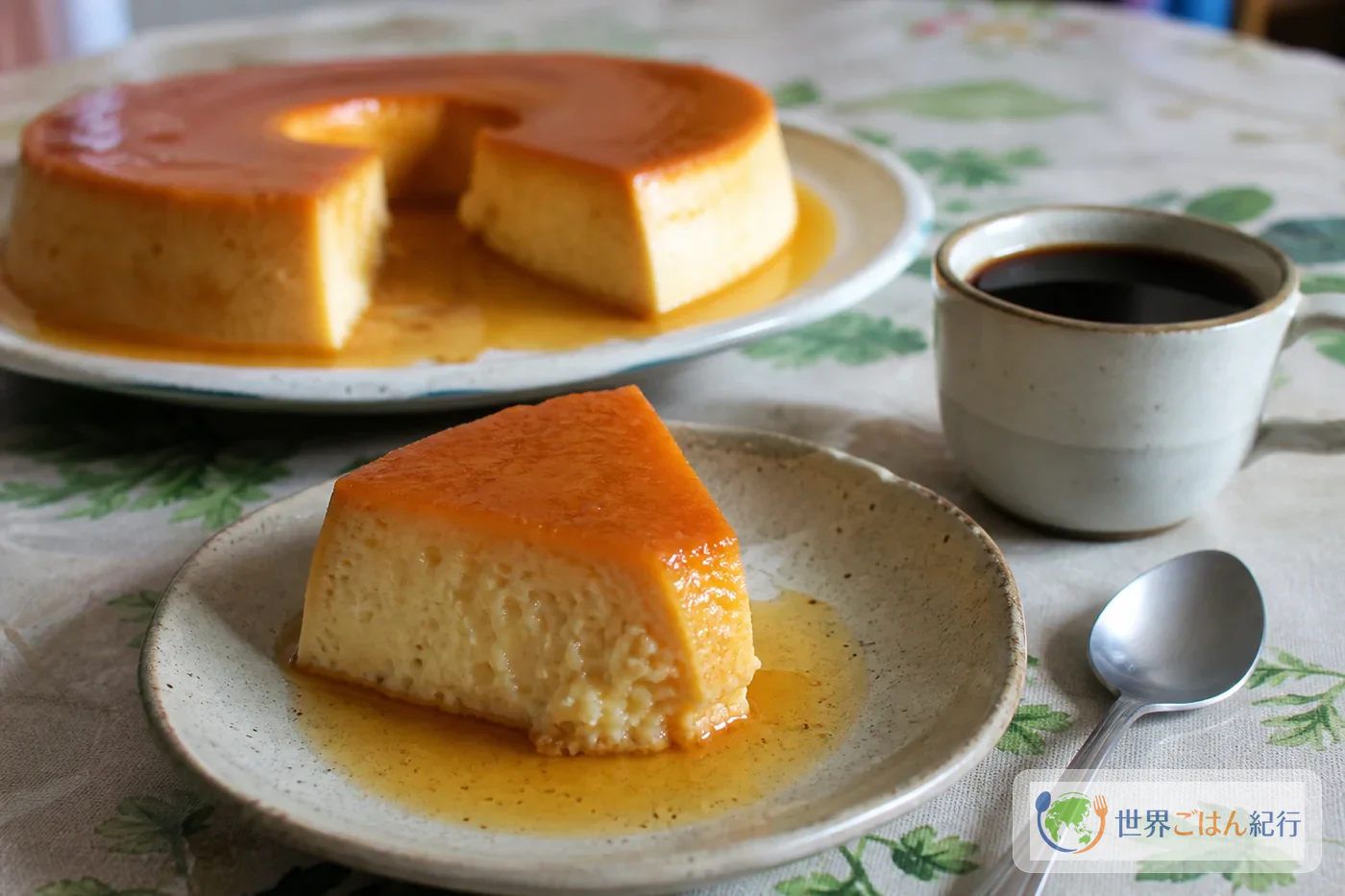
Take the pudim out of the fridge about 5 minutes before serving. Straight from the cold, the condensed milk aroma stays locked in and all you taste is sweetness. For clean slices, warm the knife in hot water and wipe it dry before each cut.
Store it in the refrigerator for up to 3 days. Once it's unmolded, cover it with a deep storage container so it doesn't dry out. If it's still in the mold, drape plastic wrap loosely over it so the wrap doesn't touch the surface. You can freeze pudim, but it weeps as it thaws and the texture turns coarse, so it's not one to serve guests.
On a menu, pudim works best in small portions after salty Brazilian dishes. Have it after a bean stew like feijoada, a seafood stew like moqueca baiana or churrasco, finish with bitter coffee, and the sweetness won't sit heavily.
More Brazilian dishes
- How to make quindim - Another rich Brazilian sweet, made with egg yolks and coconut.
- How to make pão de queijo - A Brazilian snack from the same kitchens, also made in the blender.
- How to make feijoada - Cold pudim is perfect after this salty bean dish.
- How to make moqueca baiana - A good dessert after the aromas of coconut and seafood.
FAQ
Q. Can I make it with half the condensed milk?
It will set, but you'll lose much of the richness and gloss that make Brazilian pudim what it is. With half the condensed milk you get a different, lighter pudding, and adding sugar won't bring that back. The first time, use a full can and cut smaller slices.
Q. I don't have a ring mold. Can I use pudding cups?
Yes. Divide the caramel among 6–8 metal pudding cups of about 150 ml and fill them about 80% with custard. Bake in a 170°C (340°F) water bath for about 35–45 minutes, stopping when the center wobbles slightly. Small cups cook faster than a large mold, so check them early.
Q. How do I make it in a steamer?
Cover the mold with aluminum foil and steam over low heat for 35–45 minutes, starting once the steamer is producing steam. Water that boils hard the whole time tends to cause large holes, so aim for a thin stream of steam escaping from the edge of the lid. If the center still wobbles, add 5 minutes at a time.
Q. When is the best time to unmold it?
After at least 4 hours in the fridge. Flip it while it's still warm and the soft body collapses. If it's so cold the caramel won't move, dip the bottom of the mold in water at about 50°C (122°F) for just 10 seconds, cover with a plate and flip it in one motion.