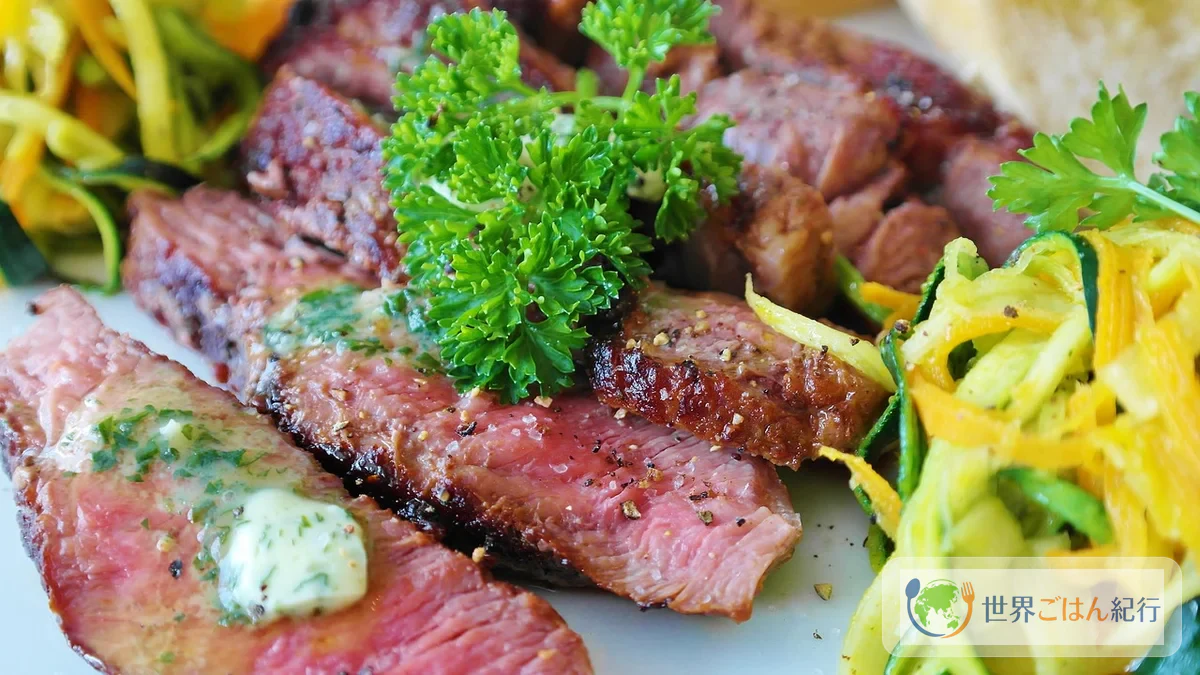
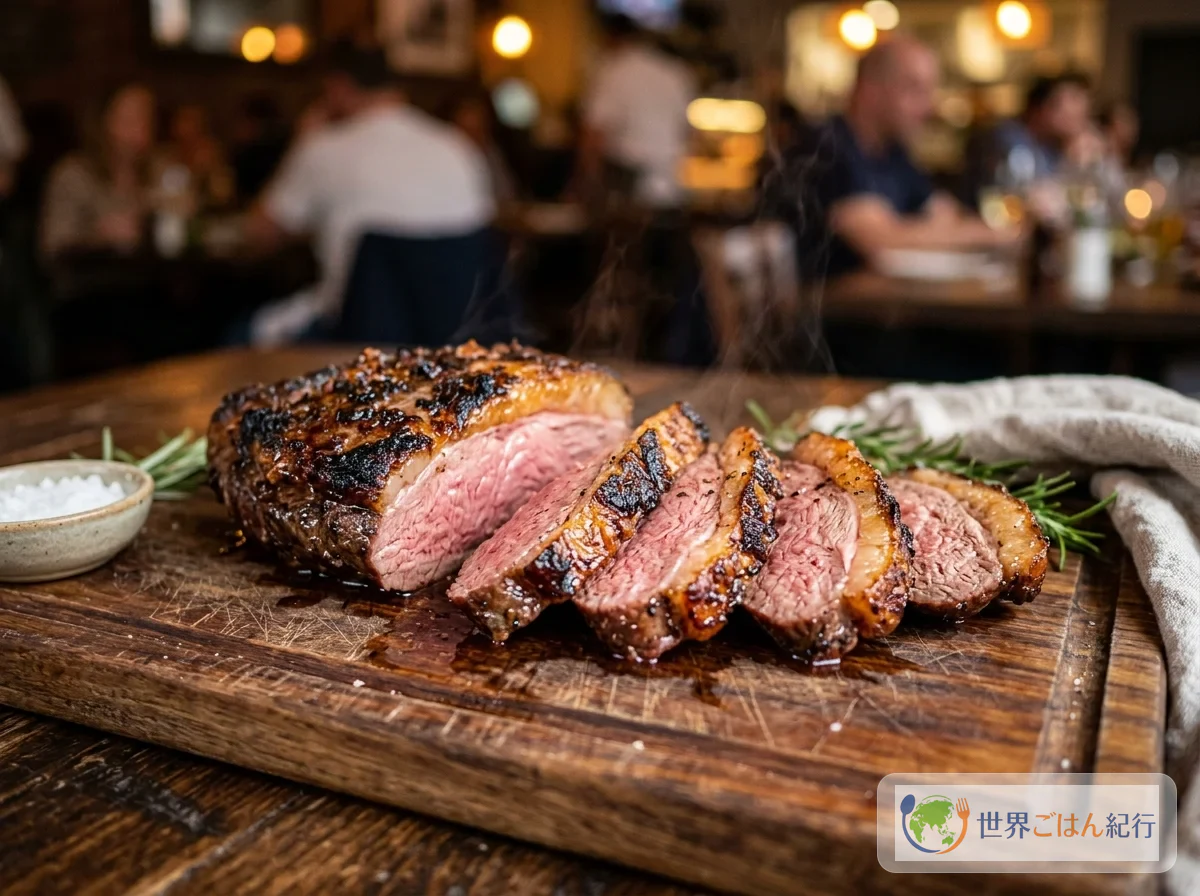
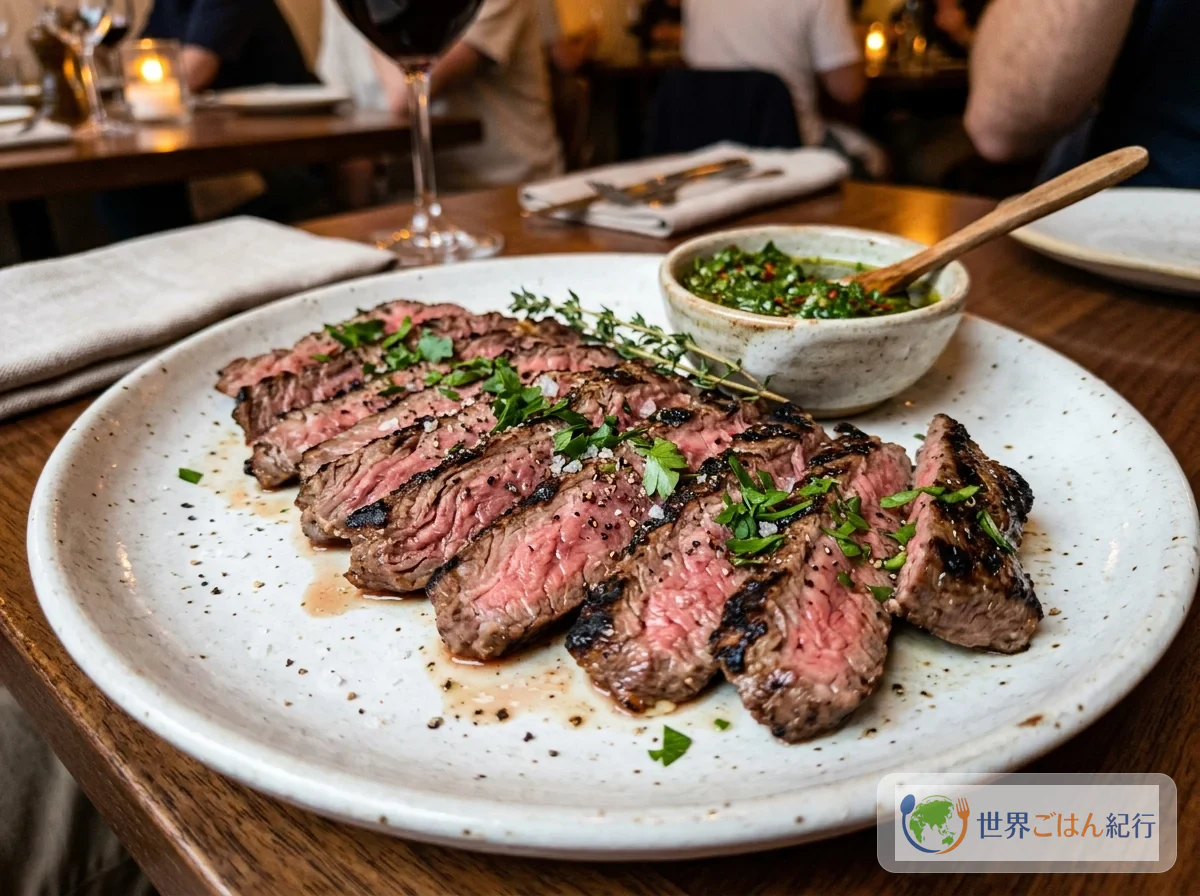
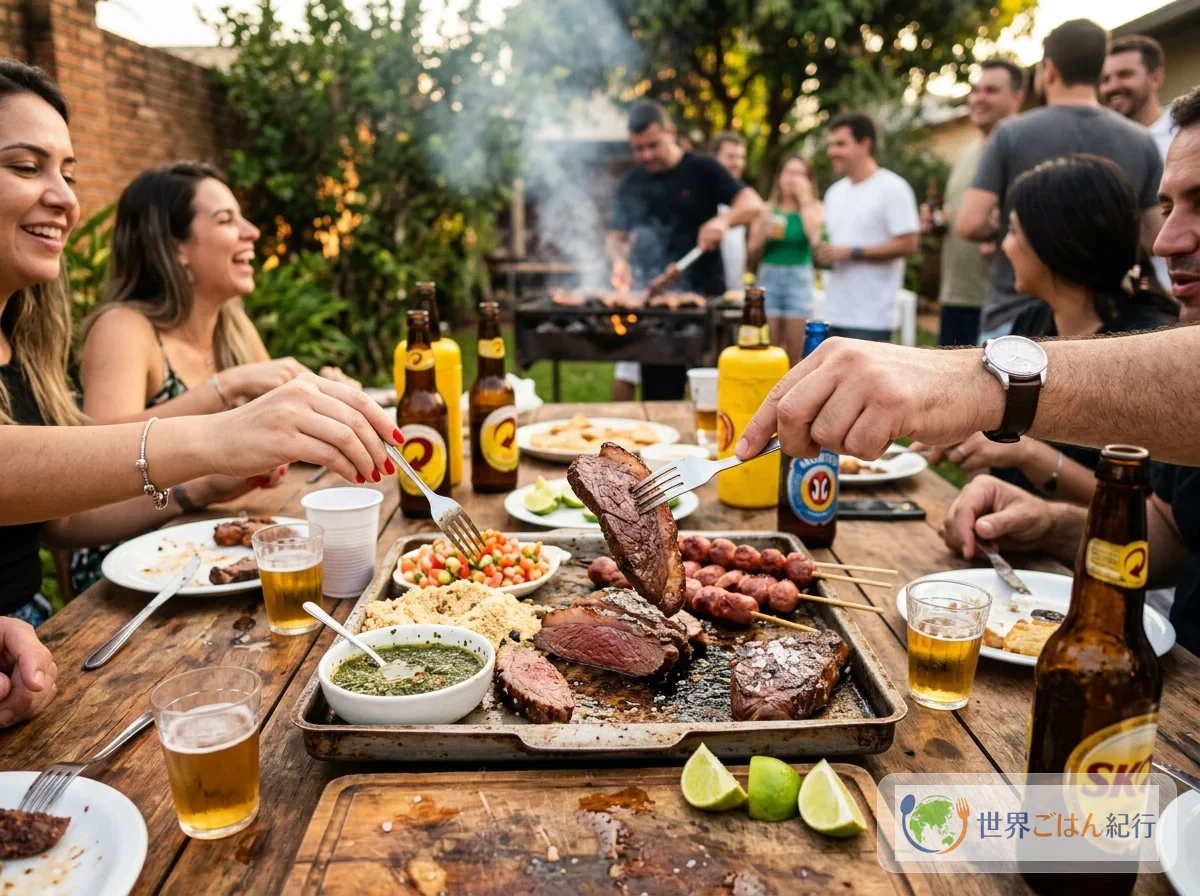
Thick slabs of beef on long skewers, coarse salt crackling on the crust, fat dripping onto the coals and sending up a puff of smoke: that is churrasco. The only seasoning is rock salt, with no marinade and no sweet sauce, so what you taste is beef, salt, and the heat of charcoal. The dish comes from the gauchos of Rio Grande do Sul in southern Brazil. Today it is how Brazilian families and friends spend the weekend, at a churrascaria (a churrasco restaurant) or around a grill in the backyard. With so few elements, the details matter. Get the timing of the salt or the distance from the fire wrong and it suddenly becomes just tough grilled meat. It belongs on the same Brazilian table as feijoada.
Churrasco and the Gauchos of Southern Brazil
In Portuguese it is pronounced "shoo-HAHS-koo," but in Japan the spelling "shurasuko" has become established. The restaurant name "churrascaria" means "a place that serves churrasco."
From the cowboys of the pampas to a national barbecue
The history of churrasco is tied to the pampas, the vast grasslands of South America. In the 16th century, Spanish conquistadors brought cattle and horses to the River Plate basin. When the Jesuit mission villages (reducciones) collapsed in the 18th century, the herds went wild, scattered across the pampas of Argentina, Uruguay, and southern Brazil, and multiplied into millions.
The cowboys who drove those cattle across the grassland were the gauchos, people of mixed Indigenous, Portuguese settler, and Spanish descent with a culture all their own. Their meals were extremely simple: beef on skewers roasted over a campfire, with mate tea (chimarrão) passed around. That campfire meal is where churrasco begins.
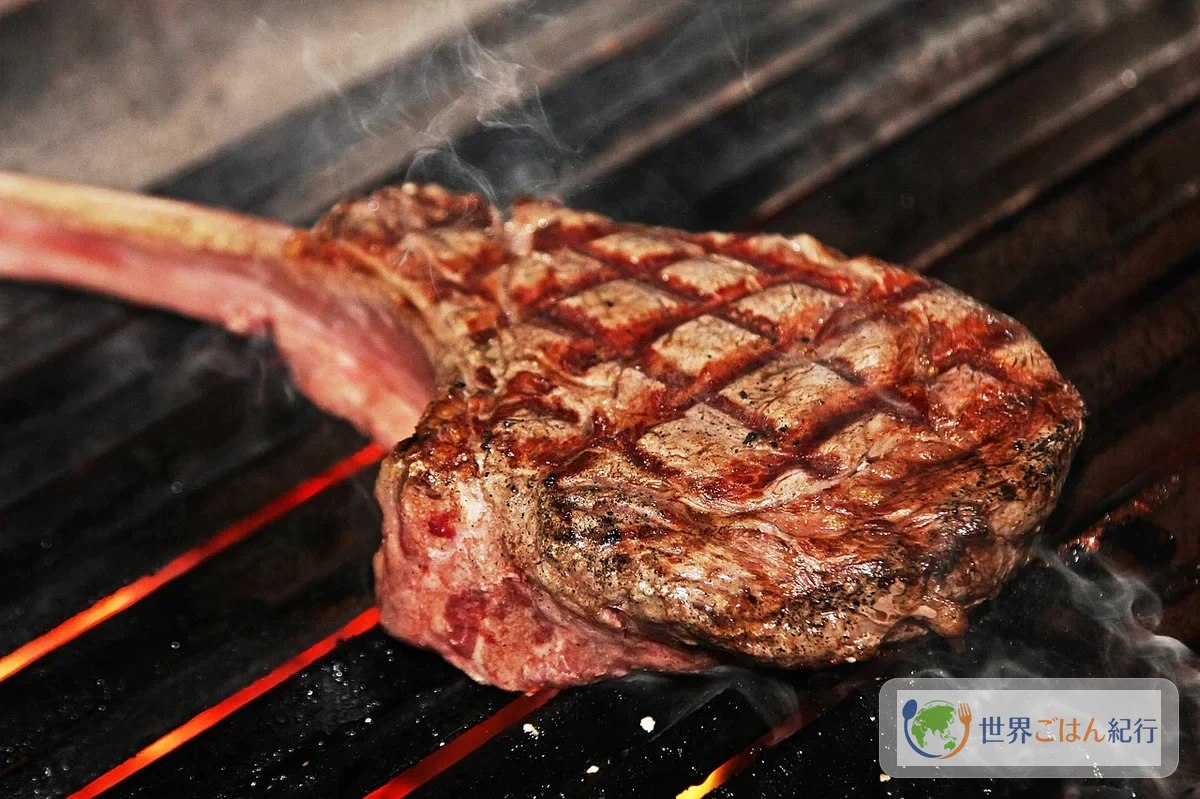
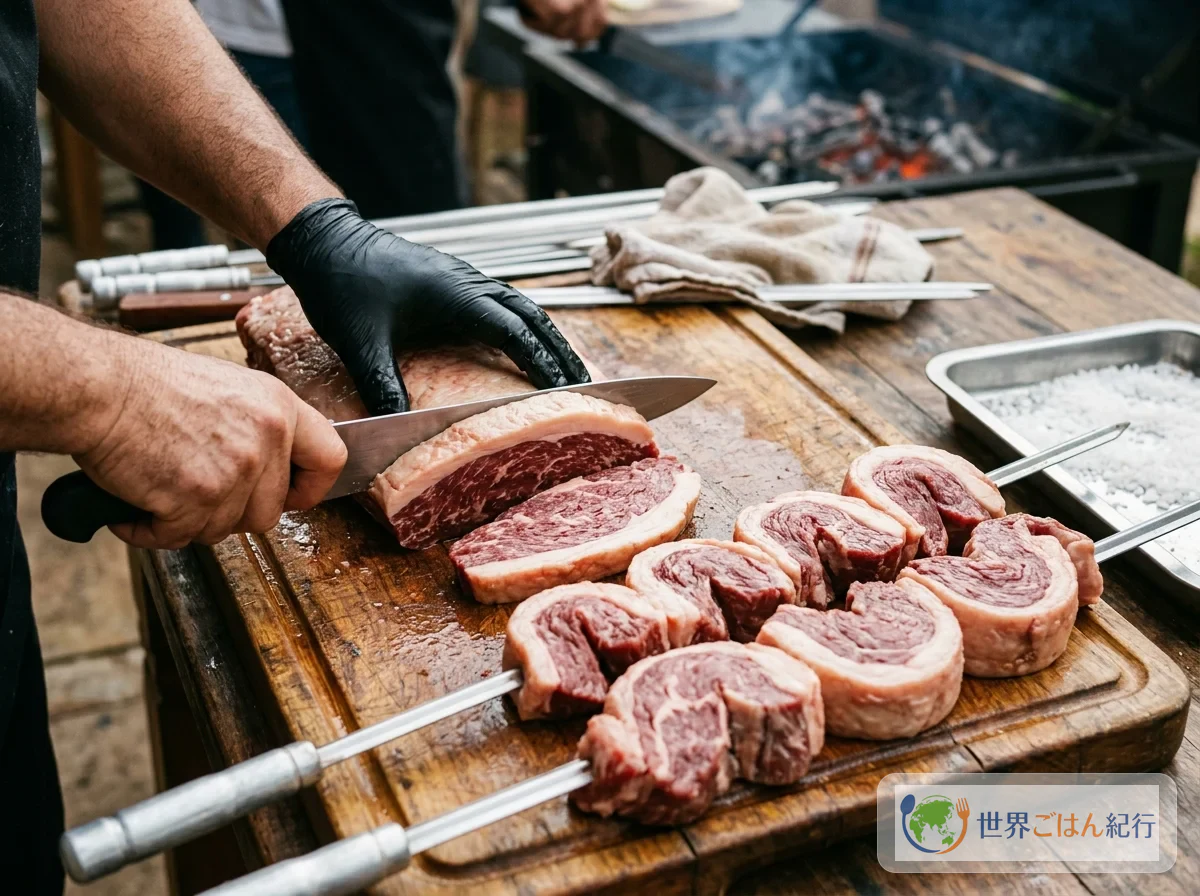
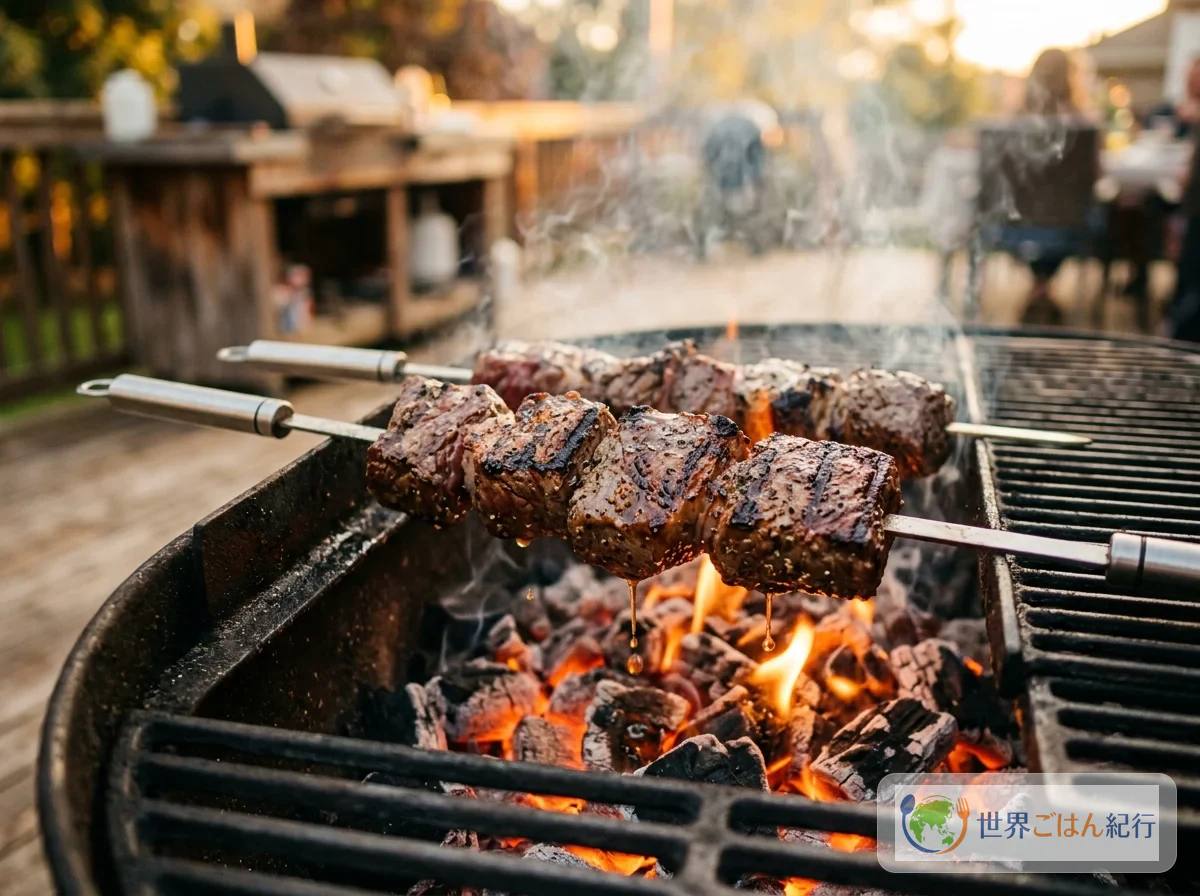
The gauchos grilled in a style called "fogo de chão (fire on the ground)." They skewered large chunks of meat on bamboo spits (taquara), stuck them into the ground at an angle beside the fire, and seasoned them with rock salt alone. Cooking slowly by radiant heat rather than direct flame leaves a large piece of meat crisp outside and moist and juicy inside, and today's churrascarias still use the same technique.
The spread of the churrascaria
In the 1950s and 60s, Brazil built highways at a rush and long-distance trucking took off. Along the highways of Rio Grande do Sul, churrascarias for truck drivers appeared one after another.
In the 1980s, gaucho-style "rodízio" (all-you-can-eat) churrascarias spread to São Paulo and Rio de Janeiro. In a rodízio, garçons (servers) circle the tables with huge skewers and carve meat in front of the guests. By the end of the 1990s the format had reached the United States, Australia, Portugal, and the United Kingdom, and chains such as "Fogo de Chão" and "Texas de Brazil" now operate around the world.
In the United States it has evolved its own way as the "Brazilian steakhouse," and at the high-end churrascarias of New York and Miami you can work through more than 15 kinds of meat in a set course. Churrascarias have also opened in Tokyo and Osaka. For the bigger picture, see the overview of South American cuisine (in Japanese); churrasco stands alongside Argentina's empanada and Peru's ceviche and lomo saltado as one of the best-known dishes of the continent.
In Rio Grande do Sul, the "Farroupilha Revolution anniversary" is celebrated every year on September 20, when people in traditional gaucho dress parade and grill churrasco in the squares.
Weekends, football, and who stands at the grill
In Brazil, people have long said that "churrasco is a man's job." At home parties the husband or father traditionally stands at the grill while the wife or mother prepares salads and sides, a division that goes back to the gauchos, for whom grilling over a campfire on the ranch was a daily task. That is changing: women churrasqueiras (women churrasco grillers) are increasing, and women who share churrasco recipes on social media are gaining a following.
Churrasco is liveliest on football days. During the World Cup especially, people set up the grill in front of the television in homes and bars all over the country, grill while they watch, and cheer every time a goal goes in. For Brazilians, churrasco and football are the two great elements of the weekend.
Ingredients (serves 4)
This dish contains beef, pork (sausage and bacon), wheat (breadcrumbs and some sausages), and dairy (butter). Allergens differ by sausage product, so always check the package label.
Choosing Cuts and Salt for Churrasco
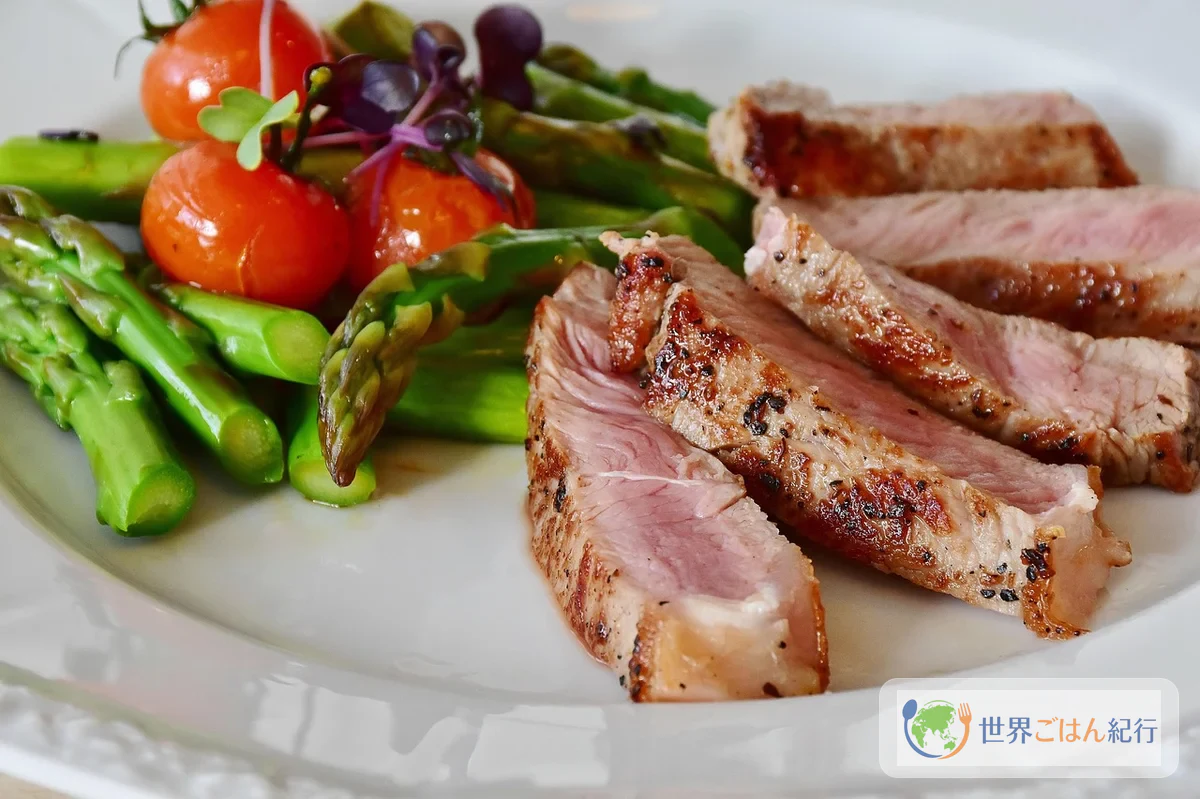
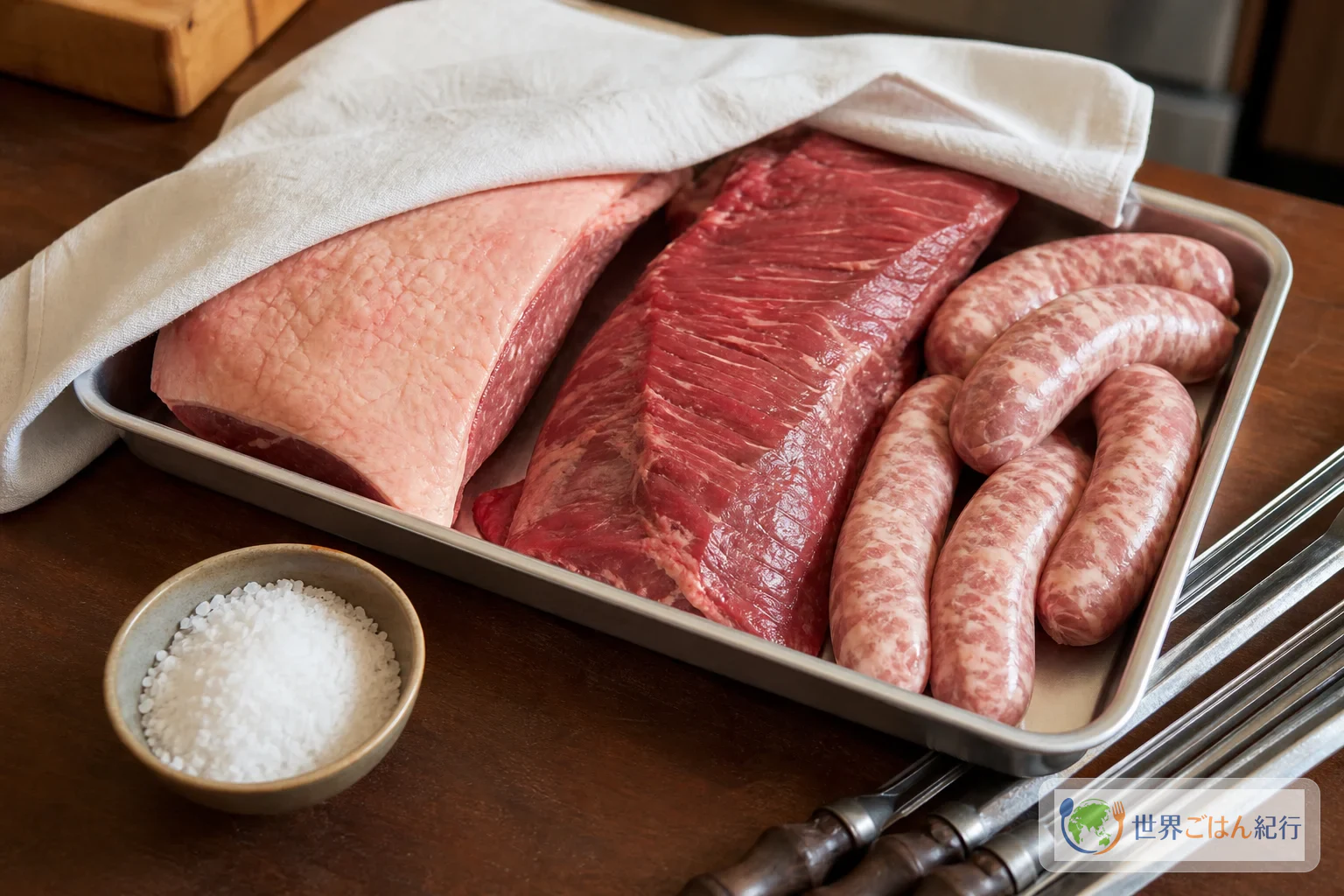
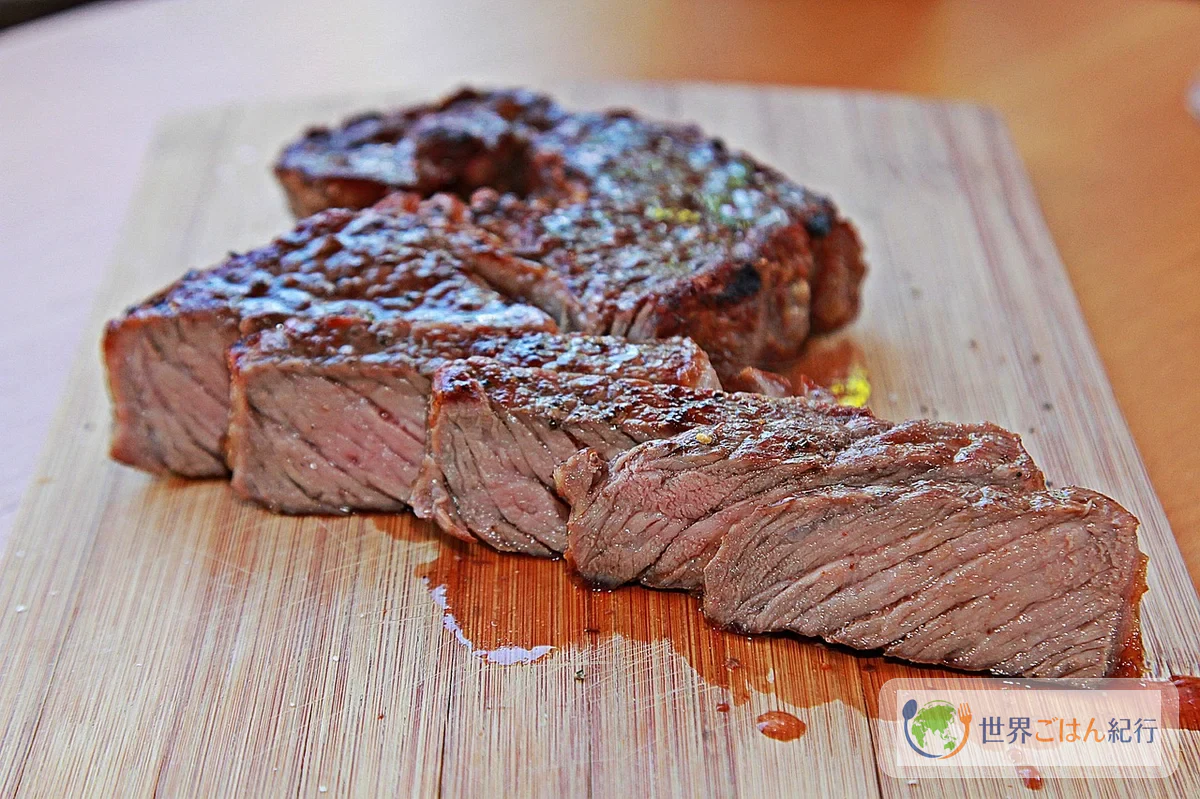
Much of the pleasure of churrasco is tasting several cuts side by side. South American meat cooking is devoted to cuts (see the overview of South American cuisine (in Japanese)). At a churrascaria, 10 to 15 kinds of meat come out one after another; at home, 4 or 5 are enough for a party feel.
Picanha
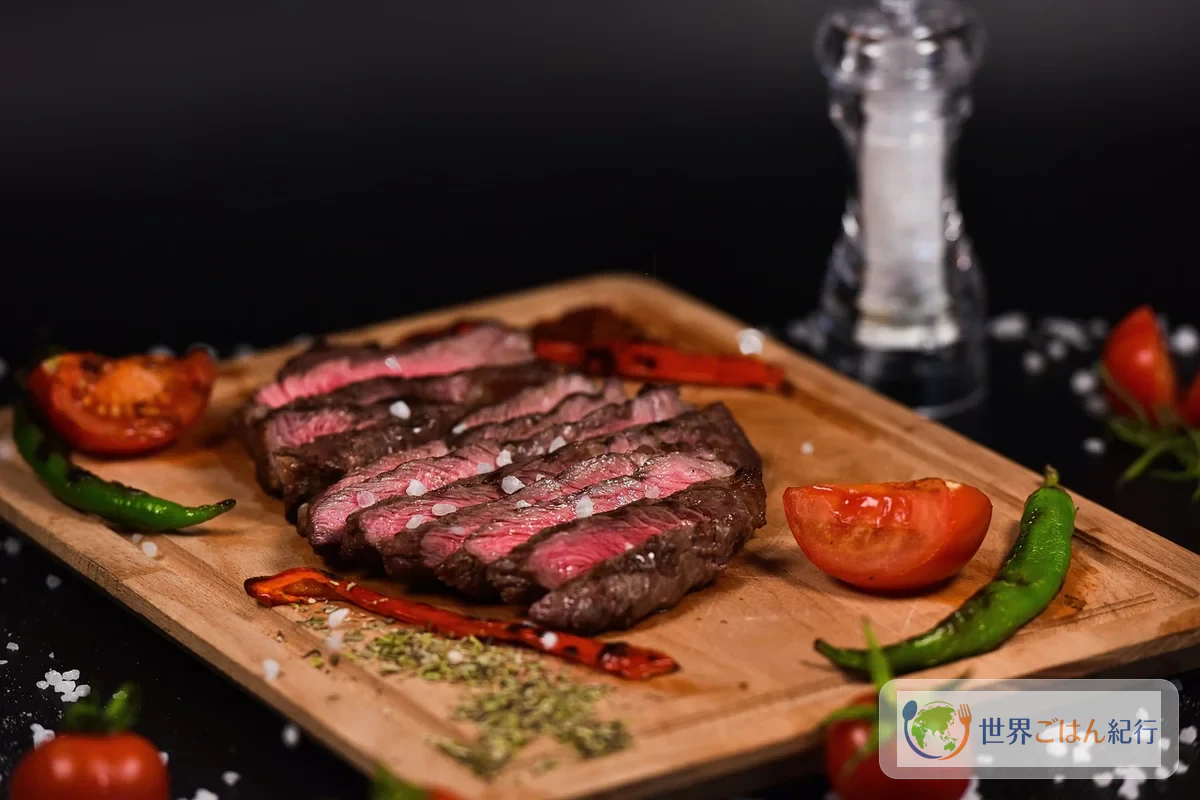
Picanha is the star of churrasco. It is the top of the rump, on the beef's hindquarter, and in English-speaking countries it goes by "top sirloin cap" or "rump cap."
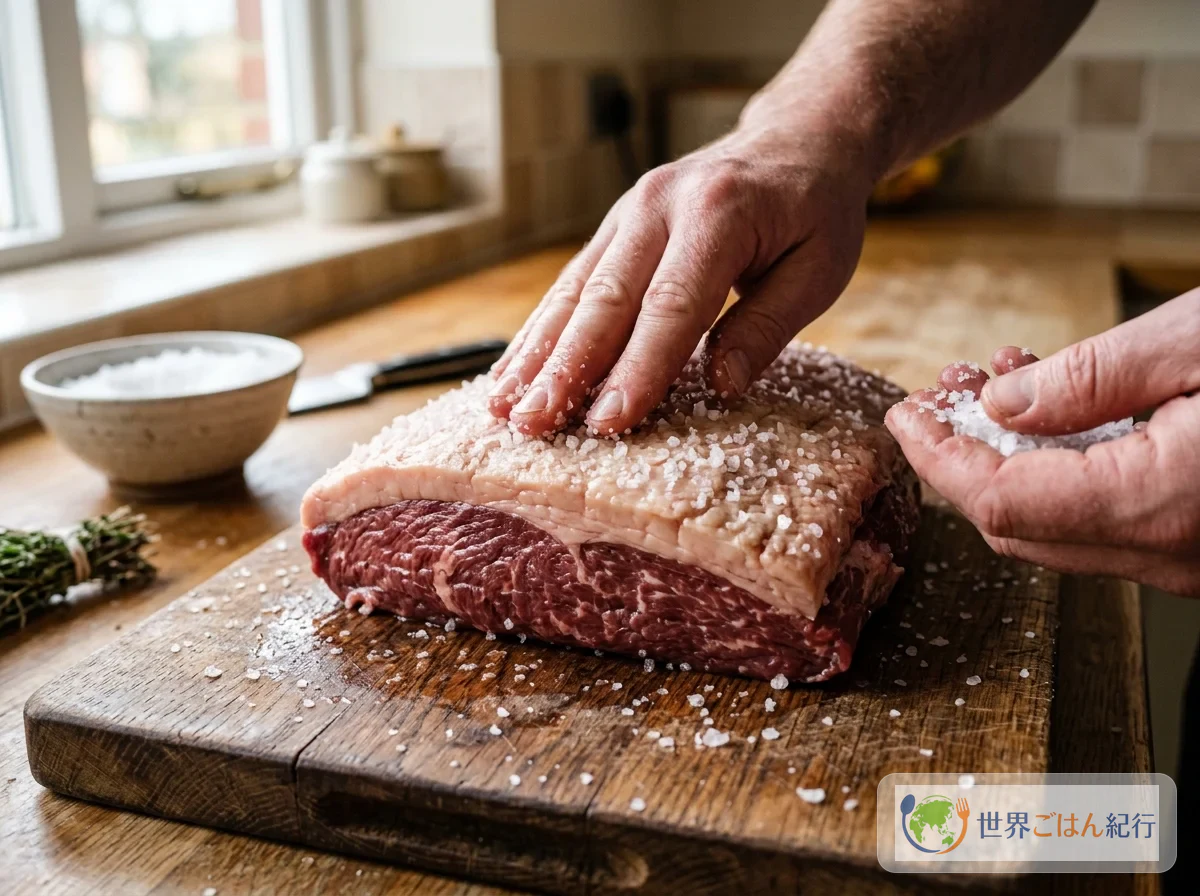
What sets picanha apart is the thick layer of fat, the fat cap, covering one side. As it grills, the fat melts and carries savor through the whole piece, so the meat comes out crisp outside and juicy inside. Picanha without its fat cap isn't really picanha, so always grill it with the fat on.
Fraldinha, costela, and linguiça
Fraldinha is the lower part of the beef plate, near the flank. The name means "little diaper" in Portuguese, after where it sits, near the beef's hip joint. It is a lean cut with fine marbling whose savor spreads the more you chew, and gaucho cooks slice it across the grain to bring out the most tenderness.
Costela is beef ribs, grilled boldly on the bone the way South America likes it, as in Colombia's bandeja paisa. Skewered and grilled slowly for 4 to 6 hours, it is the most time-consuming cut of churrasco. That is often too long for a home meal, but if you have a barbecue grill it is well worth trying.
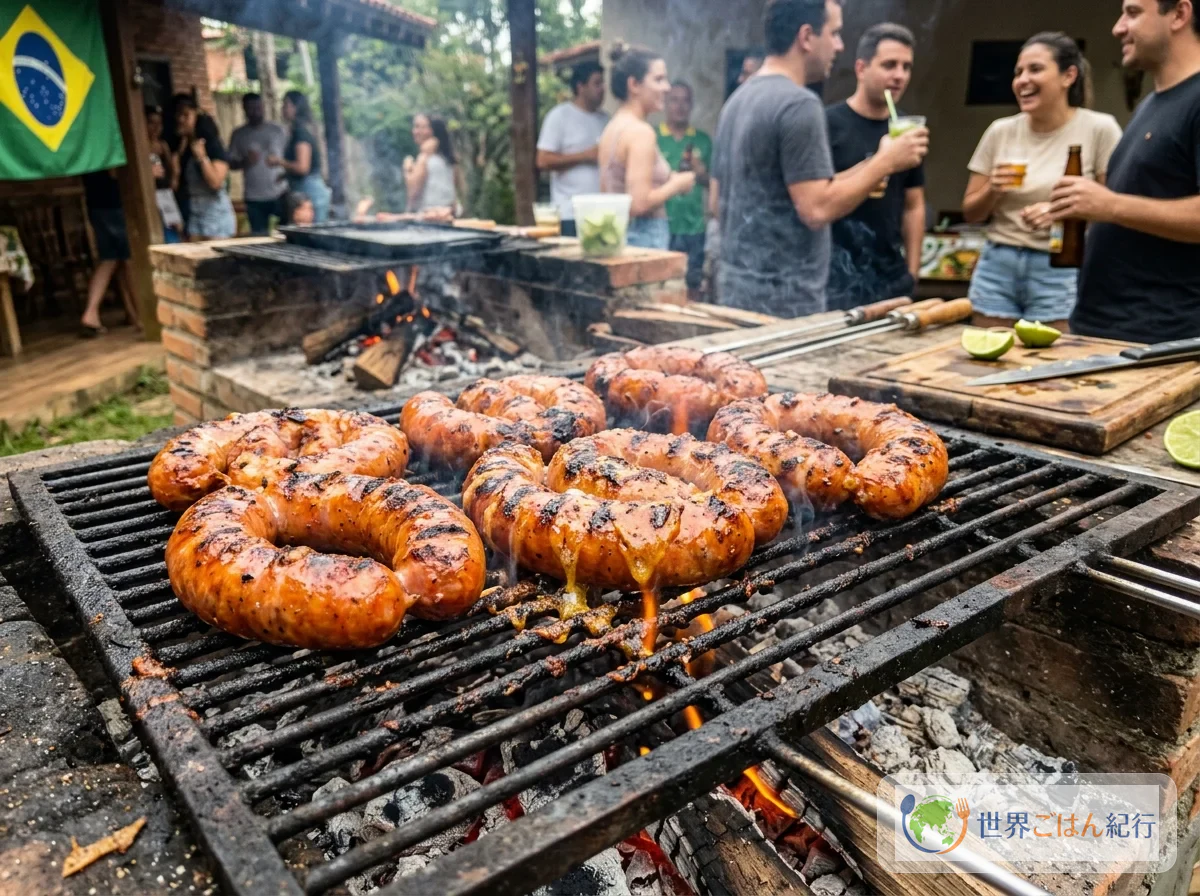
Linguiça is a pork sausage from Portugal, flavored with garlic, paprika, and oregano and milder than chorizo. It plays the appetizer at churrasco, grilled first as a snack to go with beer.
Substitutes from the supermarket
Picanha usually means a trip to a butcher or a mail-order shop, but the substitutes below still turn out delicious.
| Authentic cut | Where to find it | Substitute (available at a supermarket) | Notes |
|---|---|---|---|
| Picanha (rump cap) | Butcher or mail order | Rump block / round block | Little fat, so brushing the surface with olive oil gets close |
| Fraldinha (bottom sirloin flap) | Some supermarkets | Beef short plate block / skirt steak | Skirt steak is well marbled and has the closest texture |
| Costela (ribs) | Butcher | Beef short rib block (bone-in) | Short ribs cut for grilling at a supermarket also work |
| Linguiça | Brazilian grocer | Coarse-ground sausage | Adding garlic and paprika brings the flavor closer |
Ask a butcher or look for mail-order blocks under names such as "picanha," "rump cap," or "top sirloin cap"; blocks of 1 lb (500g) to 2.25 lb (1kg) are commonly sold. Choose one with the fat cap attached and avoid "trimmed" pieces. It is this fat that decides the flavor of churrasco.
Rock salt
Since salt is the only seasoning, its quality shows directly in the taste. In Brazil cooks use "sal grosso," a coarse sea salt from the northeast. Elsewhere, these options work.
| Type of salt | Characteristics | Ease of use |
|---|---|---|
| Large-grain rock salt (such as Himalayan) | Large grains that can be knocked off after grilling | Suitable |
| Coarse salt | Easy to find at a supermarket | Second best |
| Refined table salt | Fine grains penetrate easily and tend to make the meat too salty | Not recommended |
Grain size is what matters. The meat gets a generous coat of coarse salt, and after grilling the skewer is tapped to knock off the excess. Large grains stay on the surface instead of sinking in, so the crust tastes of salt while the inside stays gently seasoned.
Method
Preparation (30 minutes)
Charcoal grilling (40–60 minutes)
At churrasco restaurants, medium-rare to medium, with pink left in, is preferred. At home, cook beef steaks and roasts to a center temperature of 63 degrees C, then rest them for 3 minutes. Ground meat and raw sausages need 71 degrees C at the center. If children, older adults, pregnant people, or anyone with a weak immune system will eat it, use a thermometer rather than judging by the spring of a finger.
Cooking Churrasco at Home
Churrasco is meant for charcoal, but with a little adaptation it comes out well in most kitchens.
Charcoal grill
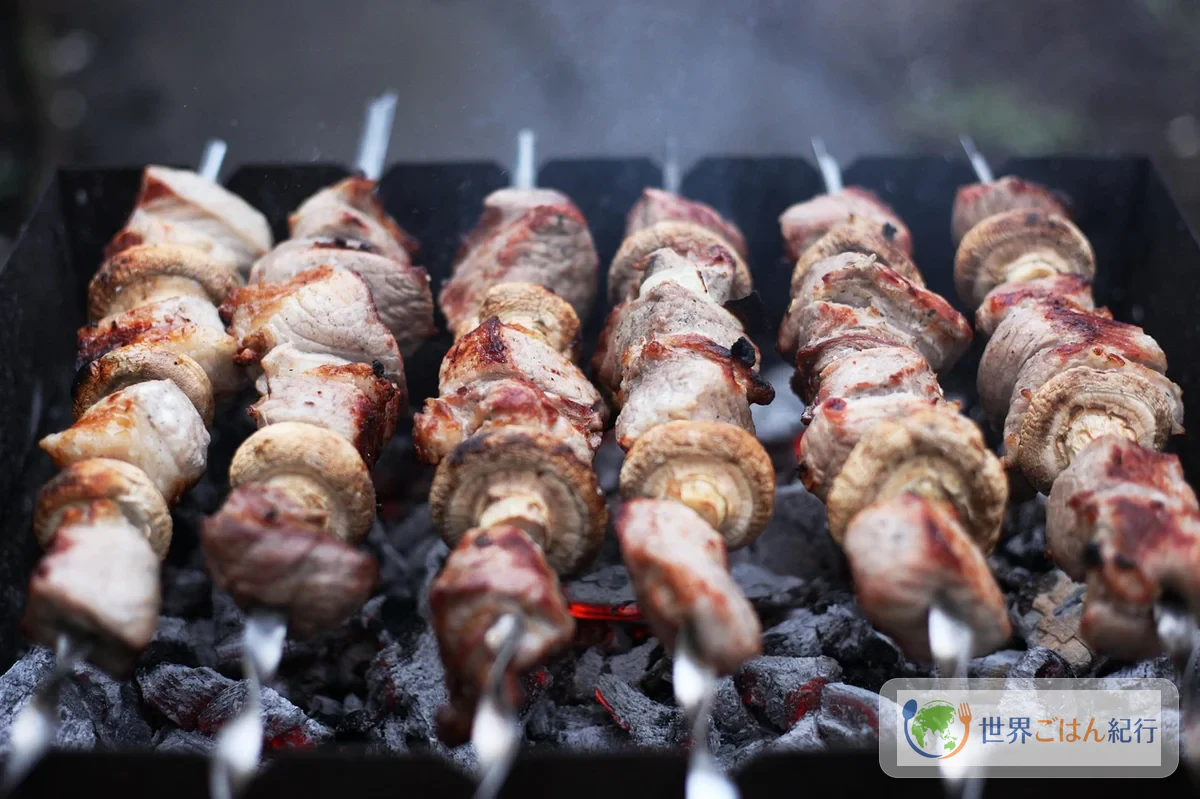
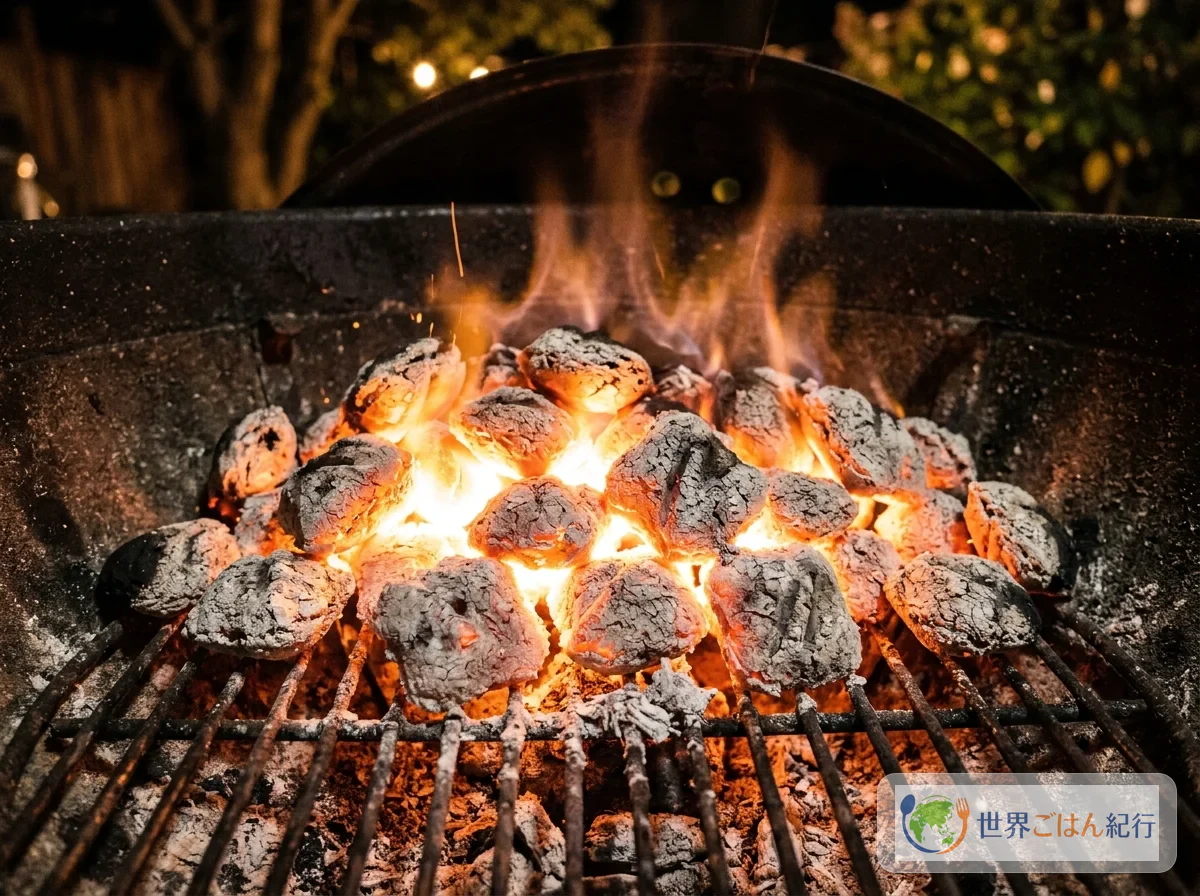
If you have a charcoal grill you can use in the yard or on a balcony, you get the finish closest to the original. Binchotan or compressed sawdust charcoal gives stable heat; mangrove charcoal swings in temperature, so it is safer to avoid.
The trick is distance from the fire. Churrasco cooks by radiant heat from 4 inches (10 cm) to 6 inches (15 cm) away, not over direct flame, so a grill with an adjustable rack, or skewers laid across stacked bricks, is ideal.
If you spread charcoal evenly across the whole grill, you have nowhere to move meat that is about to burn. Push the charcoal to one side to make a "high-heat zone" for color on the surface and a "low-heat zone" for cooking through, and retreat to the low side when things get too hot. In American barbecue this basic technique is known as "indirect grilling."
Gas grill or portable stove
On a gas grill, use the same two-zone idea: one side on high, the other off. Brown the surface on the high side, then move the meat to the off side to cook through slowly on residual heat. You lose some of the smokiness of charcoal, but temperature control is easier. A grill plate on a portable stove is also handy; it smokes, though, so use it under a range hood or outdoors.
Broiler and oven
This is the indoor answer for apartments where charcoal is out. Brown the surface of the meat under a hot broiler (3 to 4 minutes per side), then move it to a 200 degrees C oven for 10 to 15 minutes. The broiler's high heat creates the Maillard reaction (the savor of browning), and the oven's even heat cooks it through.
Frying pan and oven
The easiest method. Heat a cast iron skillet or frying pan over high heat until smoking and put the meat in without oil. Brown it 2 to 3 minutes per side, then put the pan in a 200 degrees C oven for 8 to 12 minutes, until the center reaches 55 to 60 degrees C. You end up with something closer to a steak, without skewers, but the flavor is very much churrasco.
Don't cut the meat right after it comes off the heat; wrap it in aluminum foil and rest it 5 to 10 minutes. As it rests, the juices that gathered in the center spread back through the whole piece. Cut too soon, and they run out onto the cutting board.
Common mistakes and how to avoid them
Salt the meat 5 to 10 minutes before grilling. Salting more than 30 minutes ahead draws moisture out and leaves the surface soggy. At a churrascaria the meat is skewered, salted, and held to the fire straight away, so the surface sears before the salt penetrates.
It is tempting to trim the fat, but it holds the whole thing up. As it melts, it coats the meat with a film of oil that keeps moisture in, and when it drips onto the charcoal it makes smoke that flavors the meat. If you don't like eating fat, take it off on your plate.
A common home-barbecue failure is grilling all the meat at once, piling it on a plate, and eating it cold by the second half. Churrasco works by slicing off the cooked outside thinly, serving it, and returning the rest to the fire. Carving a single piece in 3 to 4 rounds keeps hot meat coming to the table, which is exactly what a churrascaria's rodízio does.
What to keep and what to let go
Few homes have room for a big charcoal grill, smoke is a real problem in an apartment, and you may end up with rump or round from the supermarket instead of picanha. So aim to keep the backbone of the flavor rather than copy everything. Keep the meat thick, don't over-trim the fat, salt with coarse salt right before grilling and knock off the excess, and rest the meat. Hold to those four and you get close to real churrasco even without skewers, even with a broiler and oven.
Some things you can let go. Costela's long grilling is too much for a weeknight, so start with rump in place of picanha and skirt steak. No charcoal? Brown over high heat, then finish in the oven. No cassava flour? Make farofa with breadcrumbs. A version you can manage in your own kitchen is one you'll want to cook again next weekend.
Churrasco Side Dishes
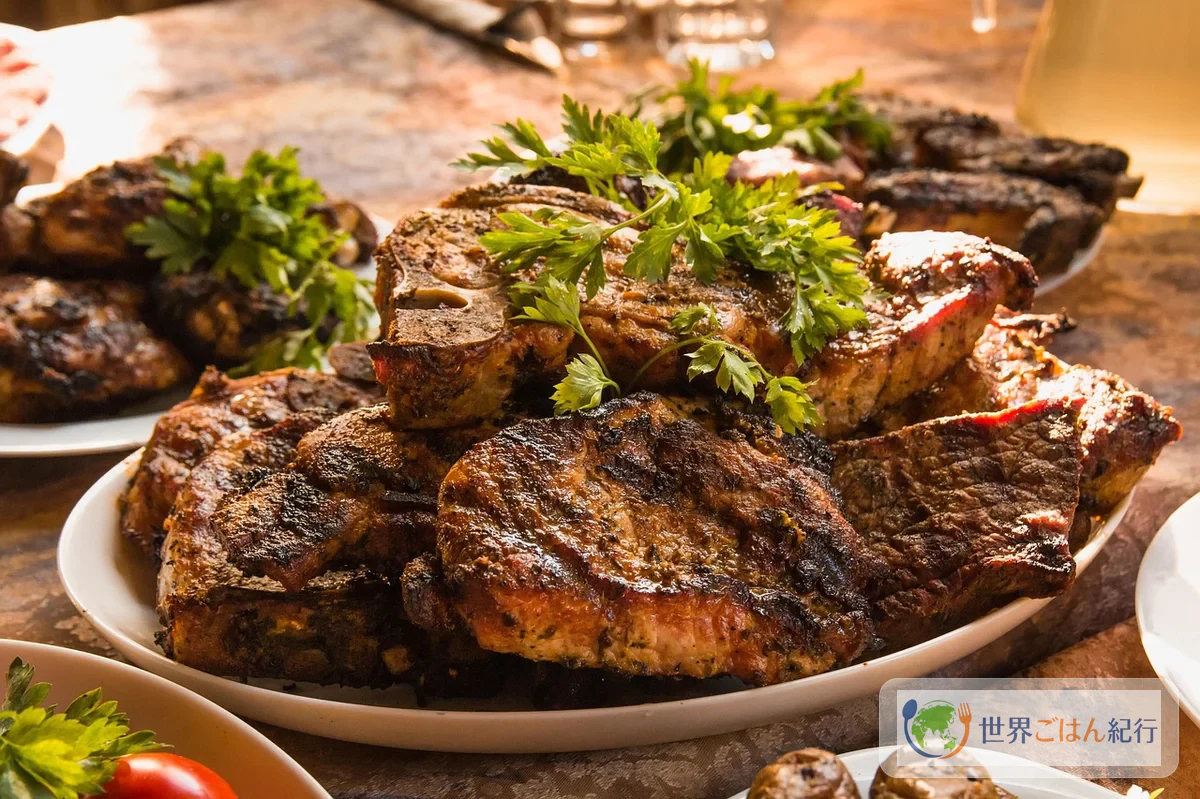
Churrasco is delicious on its own, but sides break up the richness and keep you eating to the end. At a proper churrascaria, these three are always on the table.
Vinagrete (Brazilian salsa)
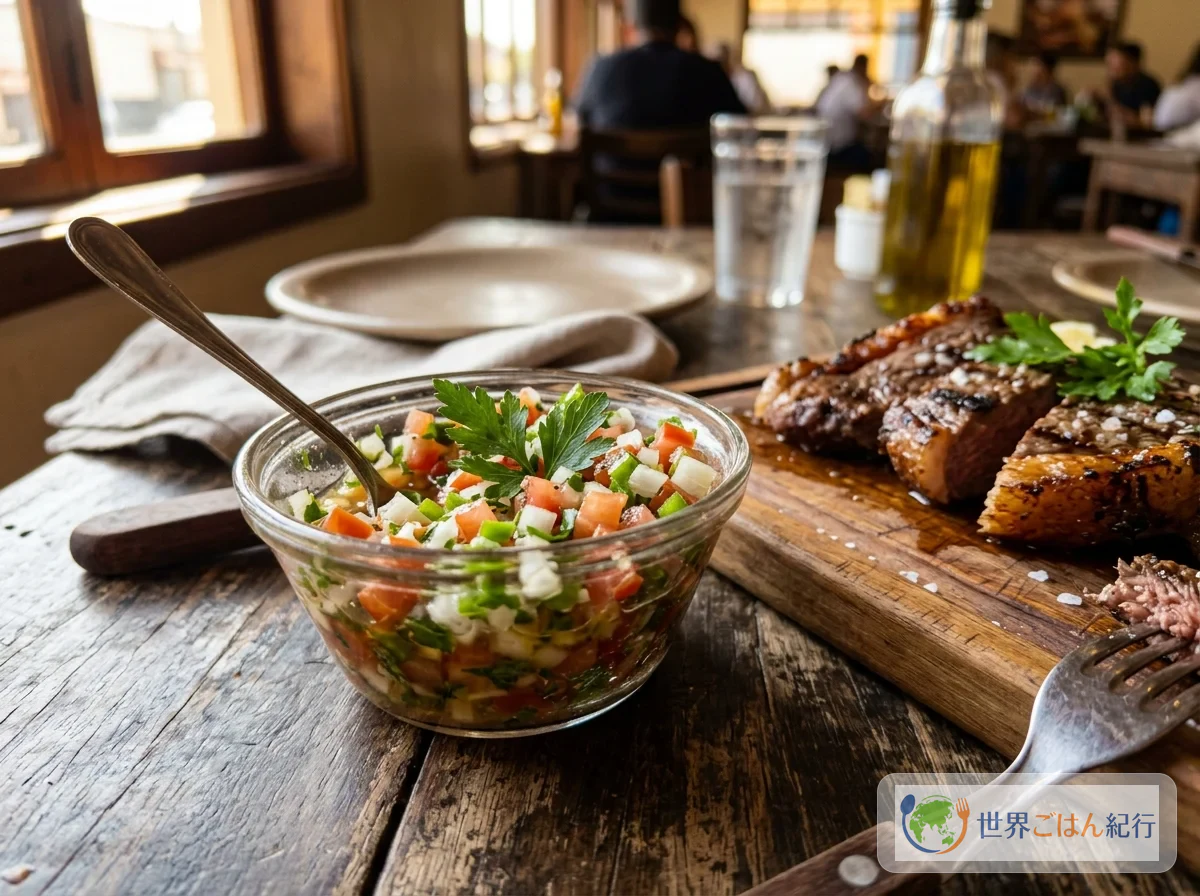
Vinagrete is Brazil's everyday salsa. It resembles Mexico's pico de gallo but uses no lime juice, finished instead with white wine vinegar and olive oil. There is no heat; its acidity and crunchy vegetables refresh your palate between bites of rich meat.
Dice 3 tomatoes into 0.25 inch (5 mm) cubes (no need to seed them). Chop 1 onion into 0.25 inch (5 mm) pieces and soak it in water for 5 minutes, cut 2 bell peppers into 0.25 inch (5 mm) pieces, and chop the Italian parsley. Combine everything in a bowl with 4 tbsp white wine vinegar, 3 tbsp olive oil, 1 tsp salt, and a little black pepper, and rest it in the refrigerator for 30 minutes or more so the flavors come together.
Soaking the onion is the step not to skip. Without it, the onion's bite is too strong and fights with the meat.
Farofa (crunchy meal)
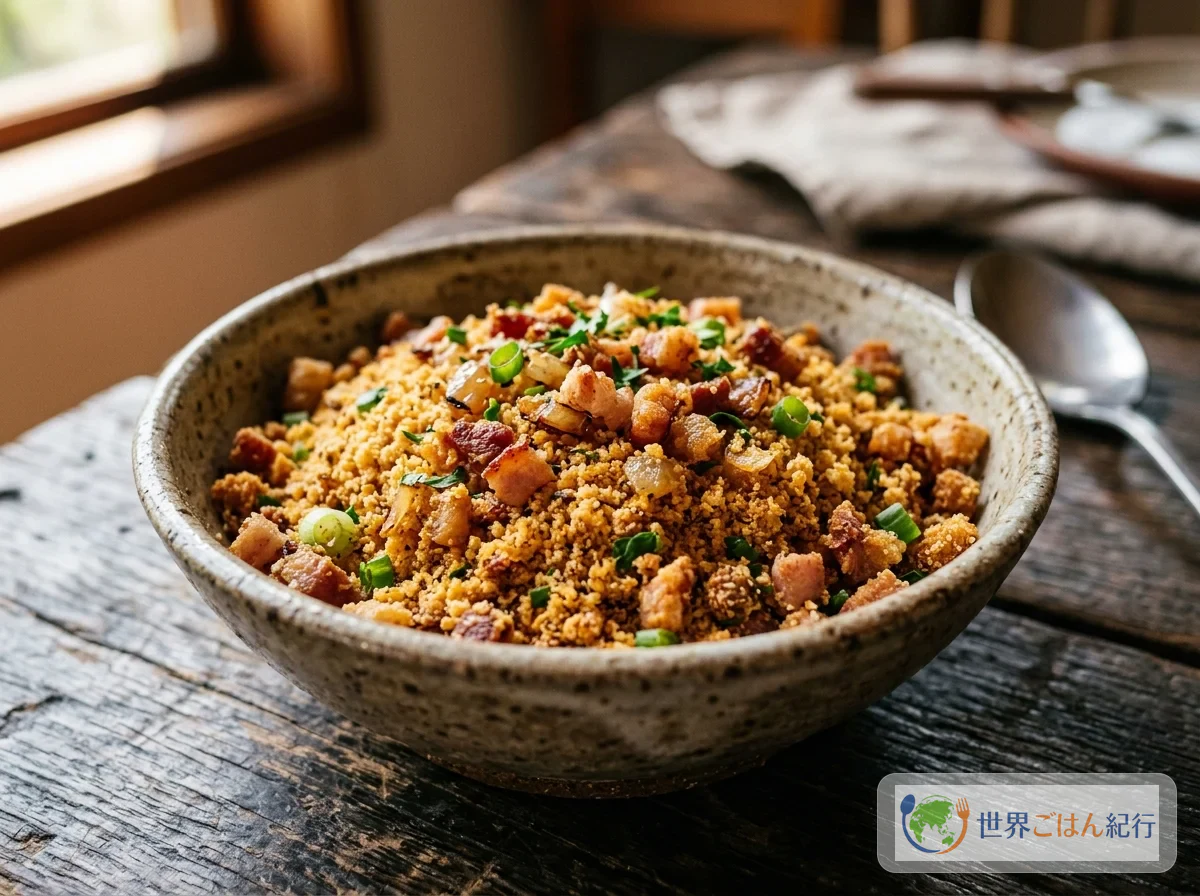
Farofa is traditionally cassava flour (manioc flour) toasted in butter, and it shows up with almost every Brazilian meal, feijoada included. Cassava flour can be hard to find, so this version uses breadcrumbs. If you do come across farinha de mandioca, make both and taste the difference. There is also a full recipe for farofa.
In a frying pan, cook the bacon (chopped into 0.25 inch [5 mm] dice) over medium heat for 4 to 5 minutes until crisp. Add 3 tbsp butter, then the chopped garlic and onion, and cook for 2 minutes.
Add 3.5 oz (100g) breadcrumbs all at once and stir constantly over medium heat for 8 to 10 minutes. It is done when the crumbs are light brown and flow loosely when you tilt the pan. Season with a pinch of salt.
Stirring constantly is an absolute condition for farofa. Stop your hand and it burns in 5 seconds. Turn off the heat at the line between light brown and brown. The color keeps progressing from residual heat, so the trick is to take it off the heat a little on the pale side.
Pão de queijo (Brazilian cheese bread)
This chewy cheese bread is a fixture at any proper churrascaria. Made with tapioca starch (cassava starch), it is gluten-free, crisp outside and chewy inside. These amounts make about 15 pieces.
| Ingredient | Amount | Notes |
|---|---|---|
| Tapioca starch | 7 oz (200g) | Available in the baking section |
| Grated cheese (Parmesan) | 1.75 oz (50g) | More is tastier |
| Egg | 1 | |
| Milk | ½ cup (100ml) | |
| Olive oil | 2 tbsp | |
| Salt | 1/2 tsp |
Bring the milk and olive oil to a boil, pour it all at once over the tapioca starch, and knead. When the dough has cooled a little, knead in the egg and cheese, shape it into balls the size of ping-pong balls, and bake in a 180 degrees C oven for 20 to 25 minutes, until the surface cracks and takes on a light color.
Churrasco Variations and Menu Ideas
Pineapple and banana skewers
Brazilian churrascarias bring out fruit skewers between the meats. Cut pineapple into 1 inch (2 cm) rings, thread them on skewers, sprinkle with cinnamon sugar, and grill over charcoal; the caramelized sweetness and acidity cut through the richness of the meat. Ripe banana on a skewer is another classic, and with vanilla ice cream on the melting fruit it becomes a proper dessert.
Grilled queijo coalho
Brazil's "queijo coalho" barely melts when heated, so on a skewer it grills up crisp outside and chewy inside. Halloumi (a Cypriot cheese that doesn't melt when grilled) is a close substitute. Cut it 1 inch (2 cm) thick, skewer it, and grill over medium heat for 3 to 4 minutes per side.
Frango com bacon
Bacon-wrapped chicken, "frango com bacon," is a churrascaria favorite. Cut chicken thighs into bite-size pieces, season with salt, garlic, and paprika, wrap in bacon, and skewer. Grill slowly over medium heat for 20 to 25 minutes, until the center of the chicken reaches 75 degrees C or higher.
Miso-marinated churrasco
Brazil has many Japanese immigrants, and Japanese-Brazilian churrasco sometimes borrows from Japanese cooking. Marinate beef for 2 hours in 2 tbsp white miso, 1 tbsp mirin, and 1 clove of garlic before grilling; the fermented savor of miso goes surprisingly well with the toasty aroma of charcoal. Serve it with grated daikon and ponzu. Marinating and then grilling is common to barbecue cultures everywhere, as in the spice marinade of Jamaica's jerk chicken.
Vegetable skewers
Bell pepper, zucchini, mushrooms, and corn on skewers make a refreshing plate between meats. Coat with olive oil and coarse salt and grill over medium heat for 10 to 15 minutes. Chimichurri (an Argentinian herb sauce of parsley, garlic, oregano, vinegar, and olive oil) adds welcome acidity.
Building a Latin American table
For a churrasco party, dishes from Latin America and the Caribbean whose richness doesn't overlap add variety. Start with Peru's ceviche, whose clean acidity whets the appetite, or Argentina's empanada, a meat pie you eat by hand. Argentina's locro and Uruguay's chivito also broaden the spread.
Make a big pot of feijoada alongside and you have a full Brazilian course; feijoada simmering while the meat grills is just like a weekend in Brazil. For dessert, cube pineapple, mango, and papaya, squeeze lime over them, and you have a fresh Caribbean-style fruit salad that suits the end of a meat meal.
More dishes to cook together:
- How to make papa a la huancaína
- How to make acarajé
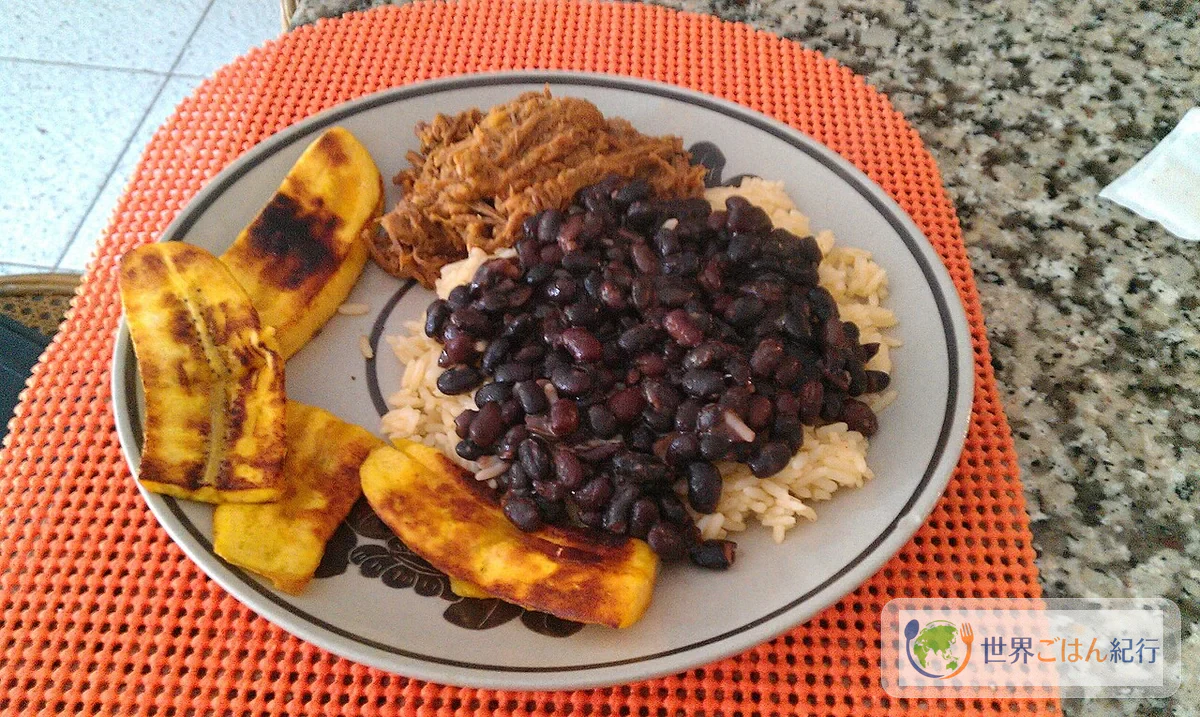
- How to make baião de dois - Rice and beans on one plate, a home dish of the northeast that works as the staple on a grilled-meat day.
- How to make casado
Frequently Asked Questions
If I can't get picanha, what is an easy substitute?
A rump block is the closest choice, since picanha is the top of the rump and the flavor and texture are similar. Look for "rump" or "round block" at the supermarket meat counter, and if there is little fat, brush the surface with olive oil before grilling. In American barbecue circles "tri-tip" is a popular substitute too, though it is hard to find in some countries.
Can I make it without skewers?
Yes. Grill it steak-style, directly in a frying pan or on a grill rack: cut the meat thick (1.5 to 2 inches [4 to 5 cm]), coat it with coarse salt, brown it over high heat, then cook it through slowly over low heat. Skewers do make the rodízio-style carving in rounds easier, so a few inexpensive metal ones are worth having.
How can I make churrasco indoors without smoke?
The broiler-and-oven method produces the least smoke. The broiler vents smoke better than a frying pan, and since the meat moves to the oven after browning, smoke comes only in the first 5 to 6 minutes. Set the range hood to high and open a window slightly to keep the air moving.
What drinks go with churrasco?
In Brazil the standard is the "caipirinha," a cocktail of cachaça (a sugarcane spirit) with lime and sugar. Beer is an easy match, especially a pilsner, whose carbonation refreshes the mouth after fatty meat. For red wine, South American bottles such as Argentine Malbec or Chilean Cabernet Sauvignon work well, the way Peruvian wine suits Peru's lomo saltado. Without alcohol, guaraná (a Brazilian soda) or mate tea brings the table closer to Brazil.
How do I store leftover meat and reuse it?
Cool the grilled meat, wrap it in plastic wrap, and keep it up to 3 days in the refrigerator or 1 month in the freezer. Slice it thin and tuck it into a baguette with vinagrete and lettuce for a churrasco sandwich, or chop it into fried rice or over a salad. It is also good in a salad dressed with onion and vinegar, in the spirit of Ecuador's encebollado.