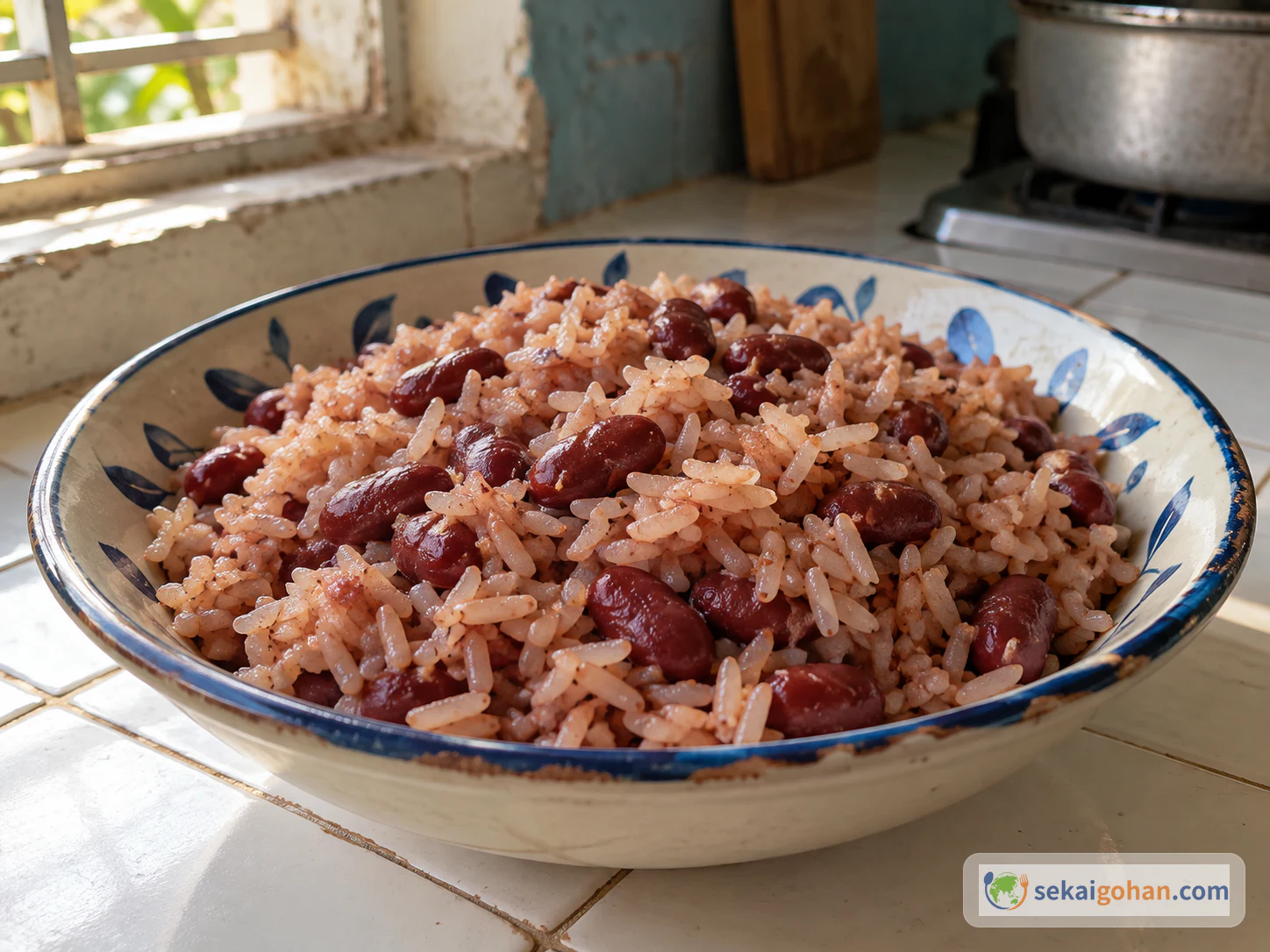
In the kitchen at dusk, the sweet smell of beans drifts from a pot with its lid slightly open. Slide in a wooden spatula and black-eyed peas tumble out between the grains of rice, while in another skillet the corners of white cheese sizzle. It feels like a feast, yet at its center are just rice and beans. Baião de dois comes from northeastern Brazil, especially the state of Ceará, and its flavor rests on four layers rather than on spices: the rounded taste of the bean cooking liquid, the moisture the rice drinks up, the saltiness of meat and butter, and the cheese added at the end. Get those four right, and the dish holds together even with black-eyed peas.
About Baião de Dois
In its basic Ceará form, rice, beans, oil, and aromatics cook together in one pot. Beyond that, almost everything can change. Beans can be green beans, white beans, feijão-de-corda, or fava beans; rice can be white or parboiled; meat can be dried meat, salted meat, bacon, or linguiça; and dairy can be queijo coalho or cream (nata). See the full ingredient list.
Those choices shift across Ceará itself, between coastal, sertão, and mountain kitchens. Adding meat or dairy, or picking one bean over another, is simply part of how the dish is made from place to place. Queijo coalho, a white cheese from the Northeast of Brazil, is grilled on its own or added to baião de dois, and Ceará's baião is a mixed dish of green beans, rice, and aromatics. See details.
The word baião is also the name of a genre of music and dance from northeastern Brazil. Learn more about baião. Picture rice and beans keeping step in the same pot, and the name starts to make sense.

Ingredients (serves 4)

If you start from dried beans, wash them and soak them in the refrigerator for 6–8 hours. Do not leave them soaking in a hot room. If using canned beans, drain them, rinse lightly under water, and use water mixed with unsalted stock in place of the cooking liquid.
Because bacon and cheese are used, this dish contains pork and dairy. Some products contain wheat or soy, so check the labels on processed foods. If you avoid dairy, omit the cheese and replace the bacon with a plant-based ingredient. Rice and beans alone still make the pot hang together.
Narrow the Shopping to Three Things
For black-eyed peas, choose ones whose skins do not tear easily and that keep their shape when cooked. If you start with canned beans, there is no need to buy dried ones. Dried beans are worth buying only for someone who plans to make bean dishes several times and who can soak them the day before.
Queijo coalho is hard to find at ordinary supermarkets. White fresh cheese is not queijo coalho itself, but it works if you want to mix a white dairy product into the pot. To grill the cheese and keep its shape, look for halloumi or queijo coalho, and check the product name and net weight. For a single batch, combine small amounts of feta and mozzarella you already have.
Farinha is a fine flour that sits beside the pot to catch the juices of meat and beans. The baião does not need it, but the toasty flavor of cassava gives a dry texture to a plate of only rice and beans. Skip it the first time if you like. If you plan to keep cooking Brazilian food, you can reuse it for farofa.
Choosing Ingredients for Baião de Dois
Use feijão-de-corda or feijão-verde if you can find them; that is best. Elsewhere, use dried black-eyed peas. The aroma and skin texture change a little, but the method stays the same: let the rice absorb the broth, and add white cheese at the end.
The rice decides the texture. Short-grain rice gets somewhat sticky when cooked, as do white rice and agulhinha rice, while parboiled rice keeps its grains separate. For a first attempt, short-grain rice is fine.
The cheese is flexible. If you find queijo coalho, grill cubes of it for toastiness. Halloumi browns easily and is rather salty, while a white fresh cheese isn't grilled at all: mix it in after cooking, and you decide how much it breaks up. Each one tastes different, but the pairing of beans and rice stays the same.
Outside Brazil, it's easiest to make beans and rice the stars first and add meat and cheese after. Canned black-eyed peas and the bacon you already have are enough for a first try, and bell pepper and tomato bring aroma and acidity. Your plate won't match a Brazilian one ingredient for ingredient, and that's fine: keep the bean broth, don't overcook the rice, and use the final cheese to adjust the salt, and the flavor comes together with what you have at home.


Method: Beans First, Rice Later
You don't need three separate pots for baião de dois. Use one heavy pot for the aromatics and rice, and parboil only the beans first in a small separate pot. Parboiling the beans separately protects the grains of rice.
Baião de Dois Failures and Fixes
The usual stumble outside Brazil is cooking the rice and beans for the same length of time from the start. Beans that start out hard are still hard when the rice is done, and beans boiled until they collapse make the whole pot heavy. Softening the dried peas first, cooking the rice in their liquid, and folding the beans back in for the second half keeps both the shape of the beans and the separate grains of rice.
The rice won't finish softening beans that are still hard at the center. At the parboiling stage, split one bean and check that no white chalkiness remains in the middle; a few split skins are no problem. Canned beans break down easily, so hold them back until 8 minutes remain.
Stirring again and again right after cooking breaks the rice, and once it breaks, the broth turns thick all at once. Take off the lid, leave it 2 minutes, then turn it once from the bottom with a wooden spatula, sliding in from the edge with a lifting motion. If moisture is still visible, give it 1–2 minutes over medium-low heat; if it has dried too much, add hot broth 2 tbsp at a time and turn it from the bottom without pressing. Still soft? Serve the grilled cheese and farinha on the side for contrast.
Bacon, bean broth, and cheese all vary in saltiness. Add no salt when parboiling the beans, 2 g when cooking the rice, and the remaining 2 g after tasting at the end. Salt added after grilling the cheese only seasons the surface.

Serving, Variations, and Storage
Serving baião de dois
If you found queijo coalho, enjoy its browned edges; if not, skip the cheese. Toasted farinha is worth making if you plan to serve this alongside feijoada or churrasco. When you lift the lid, look for beans that stay whole and rice that has taken on the flavor of the broth.
For more ways with beans and grains, try acarajé, fried black-eyed pea fritters, or chipa guasu, a sweet baked corn dish.


Version without meat
Leave out the bacon and increase the butter to 1.5 oz (40 g); with only butter and aromatics, the sweetness of the beans comes forward. Sauté the onion for 5 minutes over medium-low heat to bring out its sweetness, and add the tomato 2 minutes later. If the bean broth tastes thin, reach for black pepper and cilantro before salt. It's a good first attempt when you want to taste the beans and rice on their own.
Version with dried meat
If you can get salted beef, carne de sol, or dried beef, shred 5.5 oz (150 g) finely, desalt it, wipe off the moisture, and sauté it at the same point as the bacon. The meat's saltiness is hard to read, so use half the salt when cooking the rice and adjust at the end.
Version with linguiça
Cut 4 oz (120 g) linguiça or a thick sausage into 0.25 inch (5 mm) widths. Put it in the first pot in place of the bacon and sauté over medium heat for 4 minutes until the fat runs. Saltiness and garlic strength differ by product, so leave out the cumin for better balance.
Version with greens
At the finish, add 2.75 oz (80 g) shredded kale, garland chrysanthemum, or spinach leaves. Mix them in after turning off the heat and cover for 3 minutes so they wilt in the residual heat. Lots of watery leaves will loosen the rice, so dry them well after washing.
Version with farinha
Melt 10 g butter in a small skillet and toast 2 oz (60 g) cassava flour over low heat for 4–5 minutes. When the flour turns the color of kinako and a dry, toasted aroma rises, turn off the heat and add just 0.5 g salt. Keep it out of the pot; set it at the edge of the plate so everyone can add a little at a time.

Storage and reheating
Rice-and-bean dishes shouldn't sit in the pot at room temperature. Bacillus cereus can cause illness from grain dishes such as fried rice, so don't leave cooked rice out long. See details. Once you've served what you'll eat, spread the rest in portions in shallow containers so the steam can escape, refrigerate within 2 hours, and finish it within about 2 days. To freeze, wrap one serving at a time before mixing in the cheese, which keeps the texture from breaking down after reheating.
To reheat refrigerated portions, move them to a heatproof container, add 1 tbsp water or bean broth, cover loosely with plastic wrap, and microwave at 600 W for 2 minutes per serving. Stir, then add 30 seconds at a time until it is hot at the center. In a pot, use low heat, and if the bottom looks close to scorching, add 1 tbsp water at a time.
Thaw frozen portions in the refrigerator before heating, or heat them from frozen, covered, with a little water. Versions with white fresh cheese release water easily, so a little fresh cheese added after reheating makes them nicer to eat.

FAQ
Can I substitute adzuki or soybeans for black-eyed peas?
Adzuki beans have a strong sweetness and skin texture, and soybeans are large and change the character of the broth. For a close substitute, choose white kidney beans or cowpeas. Keep in mind that a different bean makes a different dish.
I don't have queijo coalho. Can I make it without cheese?
Yes. Queijo coalho matters, but the rice and beans still work without it. Skip the cheese, use a little less salt, and add aroma at the end with cilantro, green onion, and black pepper.
Is it fine to cook the beans in a pressure cooker?
For soaked black-eyed peas, pressure-cook for about 8–10 minutes once the cooker reaches pressure. Older beans and different cookers change the time, so after releasing the pressure, split one bean and check for chalkiness at the center; if it's still hard, return it to the pot and extend 5 minutes at a time. Cooking the rice under pressure makes the water hard to judge, so finish the rice in a heavy pot the first time.
Can I make it spicy?
Yes. Add 5 g green chili with the bell pepper, or put a little chili sauce on the table. A pot that's hot from the start is hard on children and anyone who dislikes heat. For layers of aroma without heat, use green onion instead of cilantro.