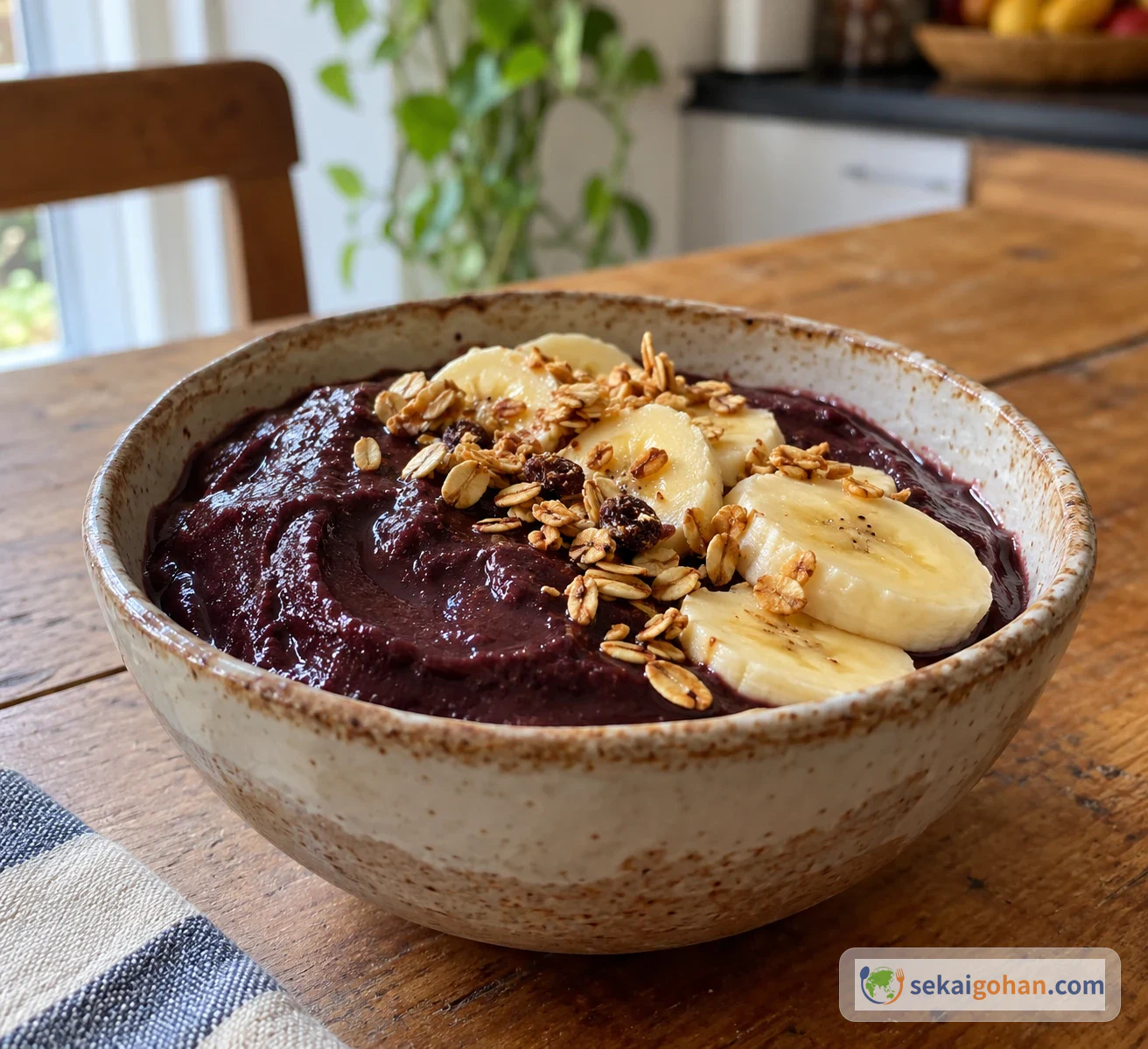
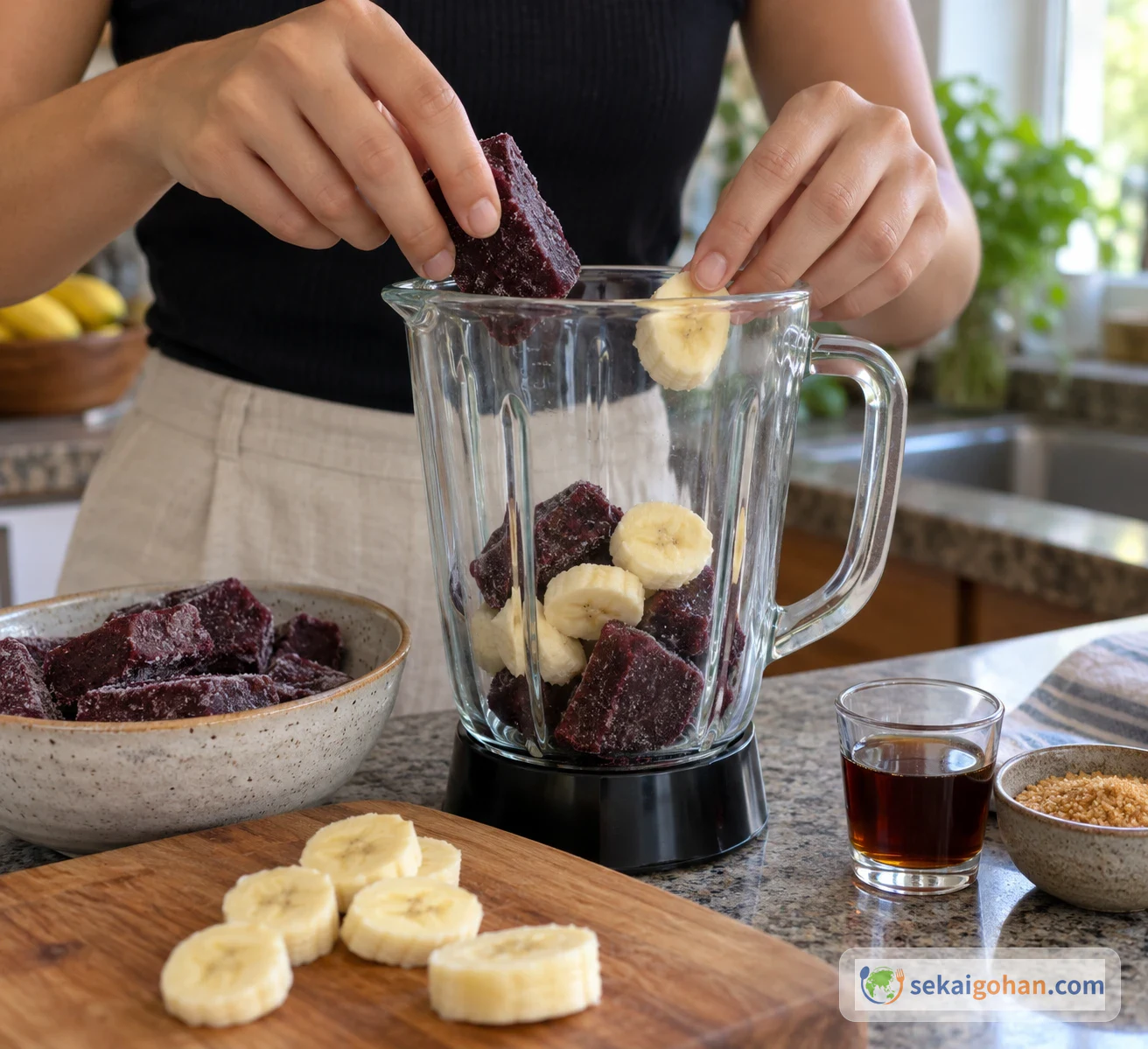
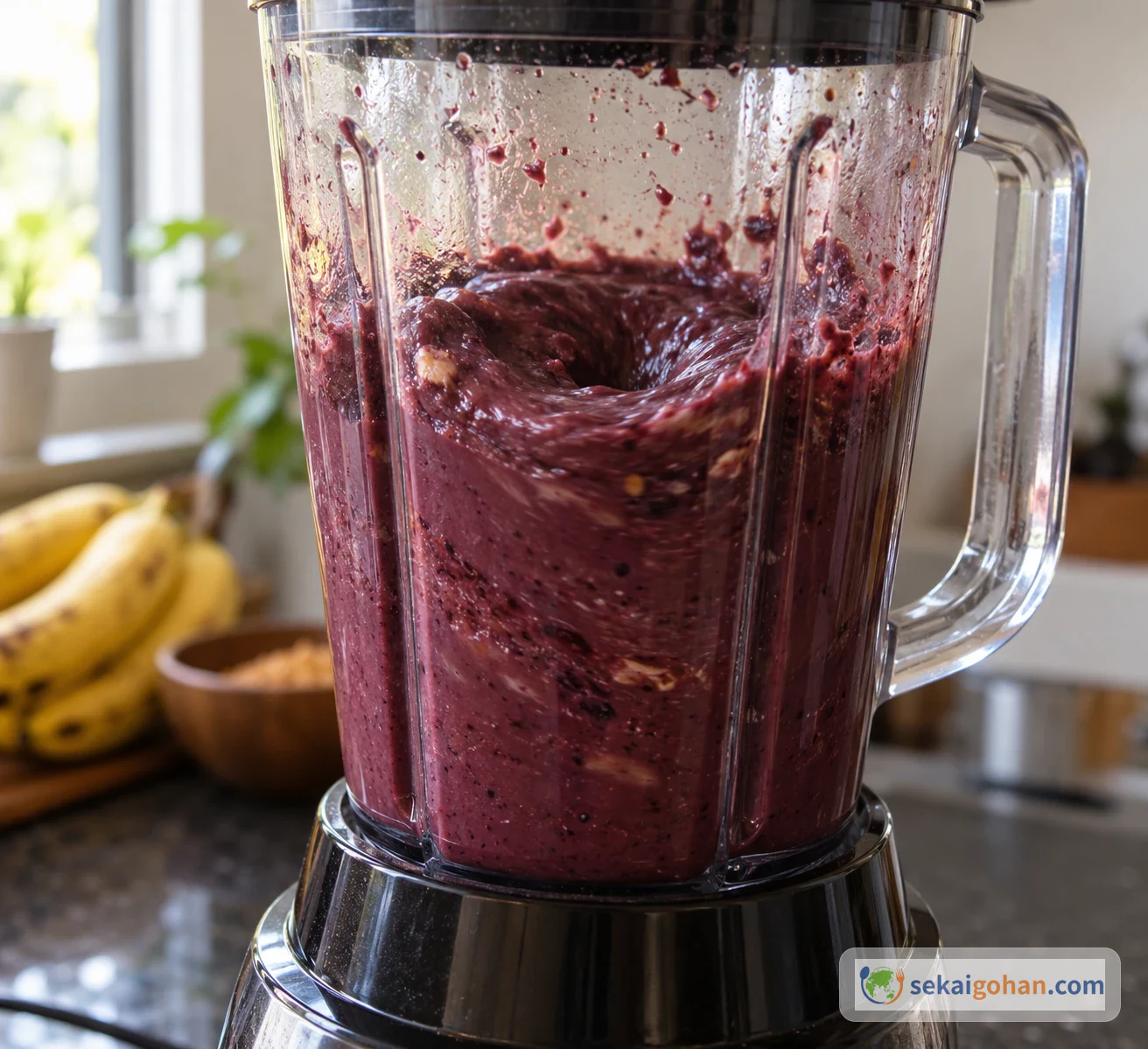
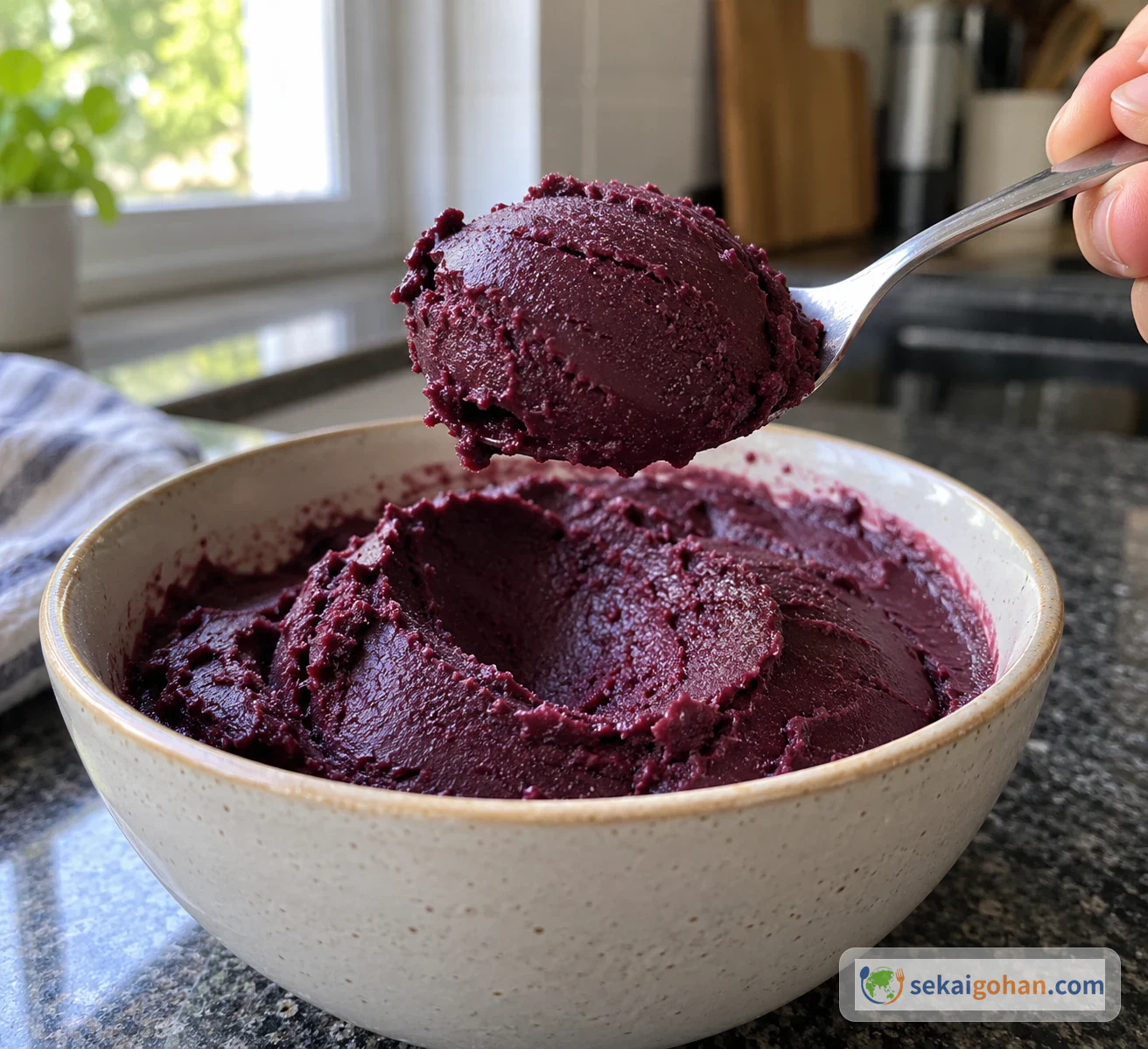
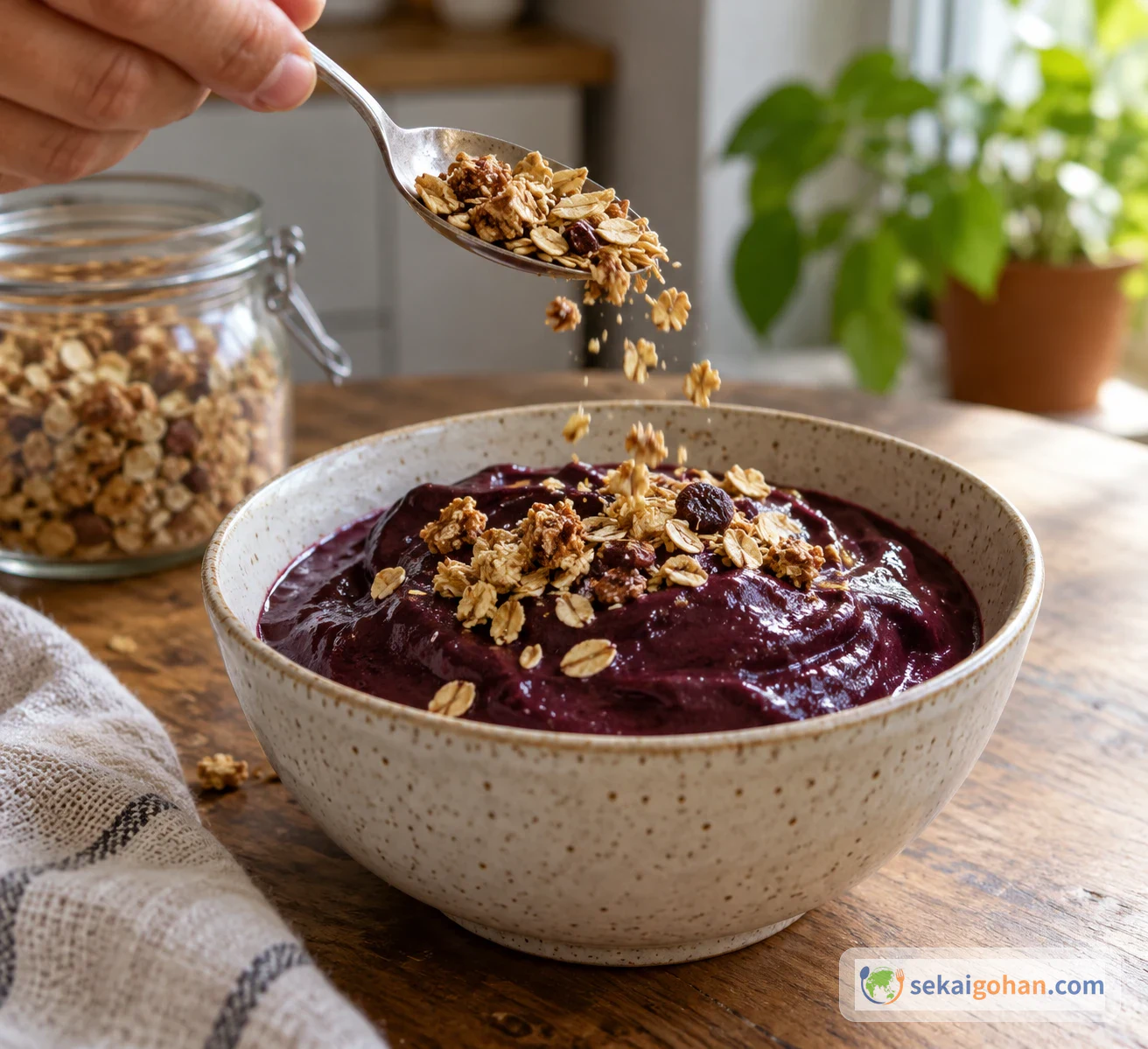
A good spoonful of açaí na tigela feels heavy: a cold, deep-purple cream that sits on the spoon instead of running off it. Granola scattered on top stays dry and crisp for the first few bites. The flavor is fruity and earthy, softened by banana and sweetened with guaraná syrup and brown sugar. That is the frozen bowl most people now call an açaí bowl. In the Amazon river estuary, though, the same dark purple açaí comes to the table with cassava flour and fried fish.
About Açaí na Tigela
In Portuguese the dish is açaí na tigela, "açaí in the bowl." It is frozen açaí pulp blended into a thick, cold cream and eaten from a bowl, much like a creamy sorbet. Brazilian recipes vary a lot in the details, especially in how sweet they are. If you want Brazilian recipes and products, search for the Portuguese name along with "polpa" (pulp).
Açaí in Pará, Beside Fish and Farinha
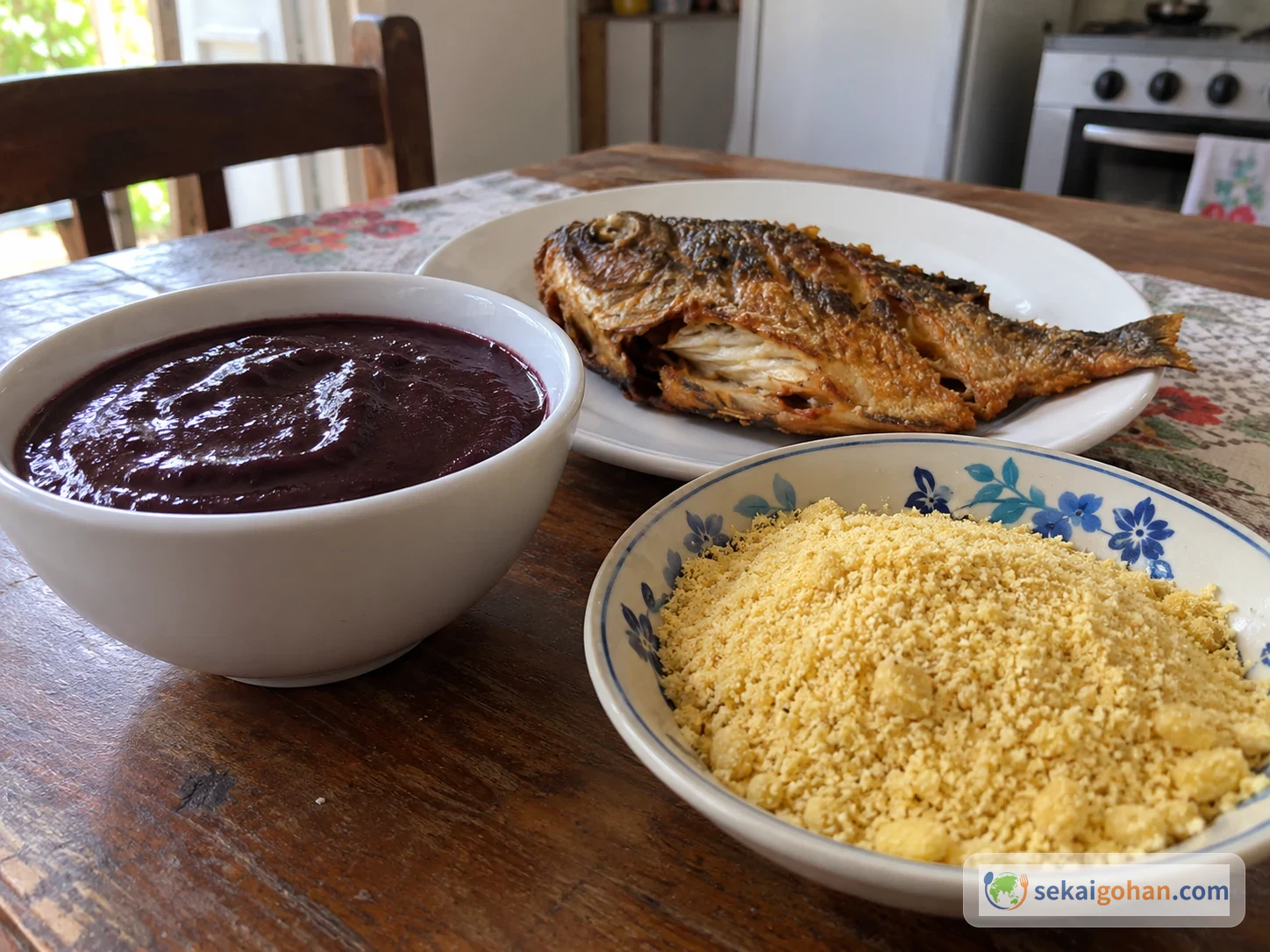
The açaí palm grows wild in the Amazon region, especially in the wetlands and floodplains of the river estuary. On the estuary islands of Pará, açaí harvesters mix the juice with cassava flour and eat it with fried fish, shrimp or carne de sol (salt-cured beef). The local juice is called vinho de açaí. Here vinho means the açaí drink, not alcoholic wine.
For Pará this is an everyday, staple-like way of eating, and açaí, fish and manioc flour together are part of the state's food culture. The açaí on this table is usually not the sweet, banana-blended cream of the bowl. It is thick açaí served with coarse flour and savory food. Both are ways of eating the same fruit, and neither one is the "real" version.
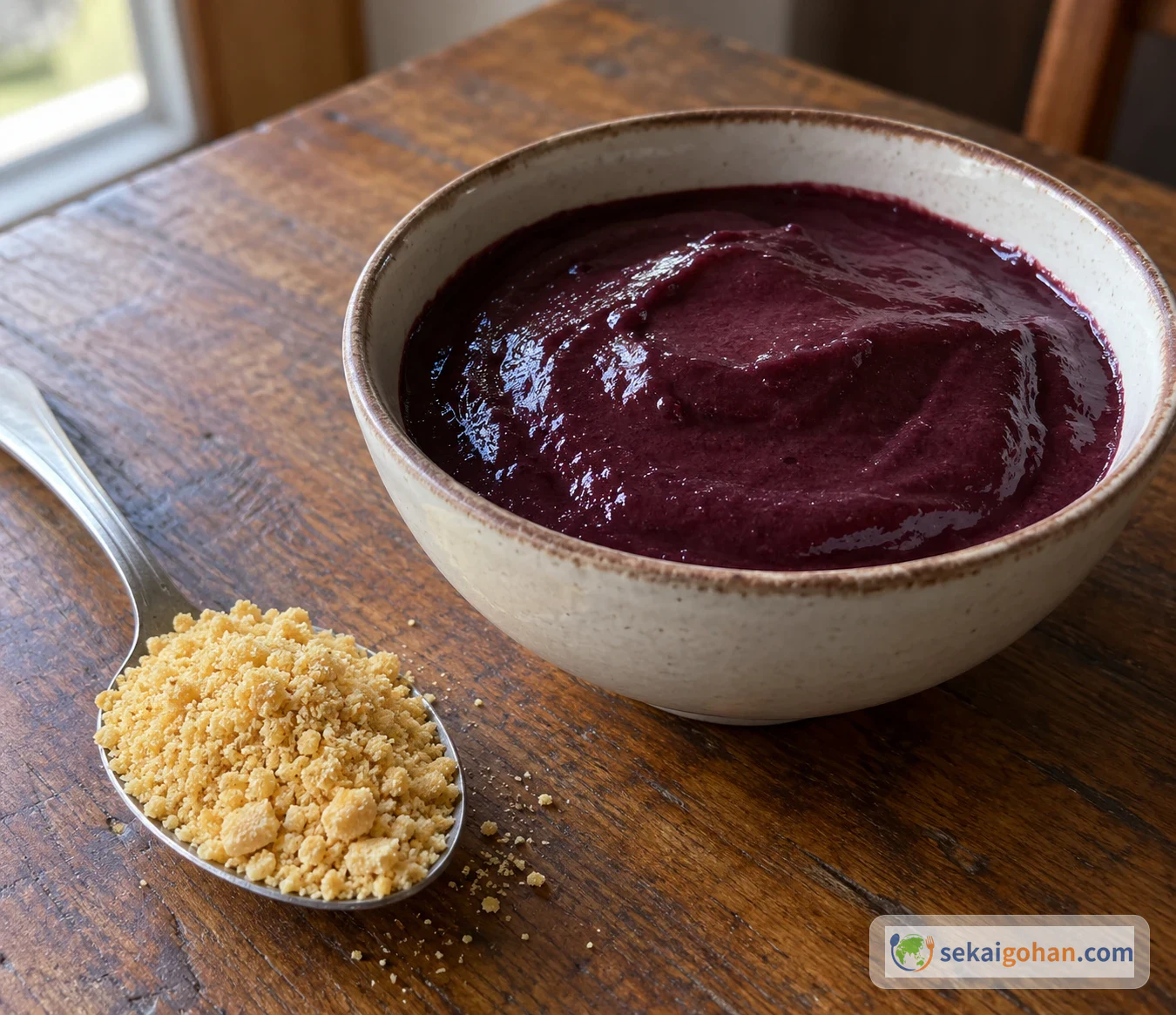
If you'd like to eat it the Pará way, leave the açaí unsweetened and skip the bowl toppings. Serve it with farinha de mandioca next to a savory dish. Pará also makes mingau de açaí, a porridge of rice or farinha d'água cooked until soft before the açaí goes in. That is its own dish, not a version of açaí na tigela.
From the Estuary to the Frozen Bowl
Açaí is closely tied to the land and the people who produce it. Brazil's Rota do Açaí (Açaí Route) covers the whole chain: production, harvest, processing, industrialization and sales. It involves family farming, traditional knowledge and local communities in Pará and Amapá, and traditional açaí is one of the local foods of the state capital. By 2001, açaí drinks made from frozen pulp had spread to Brazil's South and Southeast, and that growing market is where the sweet frozen bowl came from.
Ingredients and Equipment
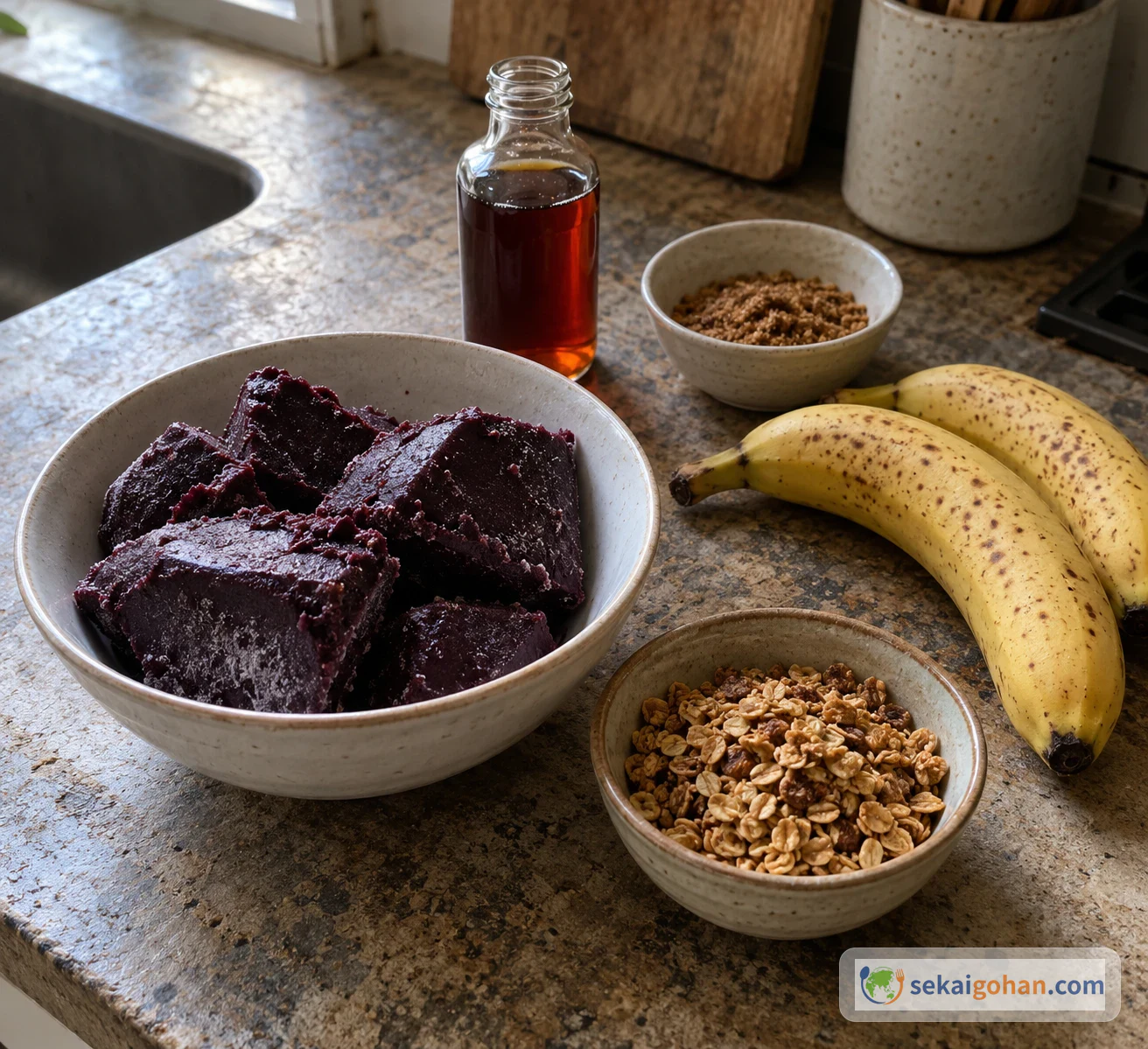
Check the frozen pulp first. Some frozen açaí pulps are sold unsweetened, and others already contain sugar or guaraná. This recipe adds its own sweetness, so it assumes an unsweetened commercial frozen açaí pulp sold as food. If your pack is already sweetened, don't add the full syrup and sugar on top. Read the label and treat it as a different mix.
These amounts make 6 servings and take 10 minutes, which suits small snack-size bowls.
US conversion (approximate): 500g is about 1.1 lb.
- A blender whose manual says it can handle frozen ingredients, and a jar size suited to this amount
- 6 small bowls
- Measuring spoons and a silicone spatula
Never put a spoon, spatula or any other tool into the jar while the blender is running. If it jams, stop it and switch it off before you touch the contents. Follow your blender's manual for frozen ingredients and maximum capacity.
Choosing Açaí Pulp, Farinha and Toppings
Start with a labeled, commercially processed frozen açaí pulp, and check how sweet it is before you add anything. The guaraná syrup and brown sugar in this recipe assume unsweetened pulp. Sweetened or liquid-style products make the bowl too sweet or too thin.
The flour names matter. Farinha de mandioca (cassava/manioc flour), farinha d'água and the granular farinha de tapioca from Pará are separate products, each with its own name. None of them is the fine tapioca starch, tapioca flour or tapioca pearls you find in ordinary supermarkets abroad, so shop by the Portuguese product name.
Granola is the most common topping. Brands differ, so check the label for wheat, nuts and other allergens. If you change toppings or sweeteners for allergy reasons, expect a different flavor and texture. The crunchy topping goes on just before serving.
How to Make Açaí na Tigela
Allow 10 minutes, plus time to get the pulp ready as the package directs and any extra chilling. No cooking or heat is involved.
Judge each stage by texture, not by the clock. Blenders and pulps differ too much for a fixed number of seconds or minutes to mean much.
Fixing Thickness, Sweetness and Blender Trouble
Most problems with this bowl come from the product or the equipment, not your technique. Read the label and your blender manual before you change the recipe.
| Problem | Likely cause | What to do |
|---|---|---|
| Watery or soupy | The pulp had thawed, or it was a sweetened or liquid-style product | Try again with unsweetened frozen pulp. Adding water or milk won't fix it, and chilling alone won't bring the texture back |
| Blender won't turn | The frozen pieces are too large, or the amount doesn't suit the blender | Stop and switch it off before you touch anything. Work in smaller batches as your manual allows. Never put tools in while it runs |
| Too sweet | The pulp or syrup already contained sugar | Check both labels and reduce the sugar and syrup |
| Not cold enough | The ingredients thawed, or serving took too long | Set out bowls and toppings before blending and serve right away. Chill further only if needed |
Liquid, banana and sweetener all change the bowl. Extra liquid thins it, and extra banana or sweetener can bury the açaí's own flavor. If you want the açaí to come through, keep them at the recipe's amounts and don't mix in ratios from a different recipe.
Variations, Storage and Allergies
There are plenty of other ways to build the sweet bowl, and each one makes a different mix:
- Banana and honey. Use 1 lb (500g) pulp, 2 ripe bananas and 4 tbsp honey, divided into 4 bowls. Think of it as its own recipe: honey isn't an equal swap for guaraná syrup and won't taste the same.
- A larger, sweeter batch. 2.25 lb (1kg) pulp, 2 cups (500ml) guaraná syrup and 5–6 bananas make 11 servings, finished with granola and banana.
- Extra banana on top. A few banana slices can go over the granola. They aren't counted in the main recipe's amounts.
- Pará farinha de tapioca or cashews. Top 4 bowls with 4 tbsp granular farinha de tapioca from Pará, or 2 tbsp cashew nuts.
Serve the bowl as soon as it's blended, and make only what you'll eat. For the frozen pulp, follow the storage and thawing directions on the package.
Hygiene matters at every stage, from harvesting and transport to processing. Poor hygiene can contaminate the food. Açaí processed in unsanitary conditions can transmit Chagas disease orally, so processing has to be hygienic. At home, use a labeled, commercially processed frozen açaí pulp sold as food and follow its instructions. This recipe doesn't cover making pulp from raw açaí fruit at home. Being frozen does not by itself make a product safe.
For more dishes from the same country, see recipes from Brazil.
Frequently Asked Questions
Can I use sweetened açaí pulp?
You can, but don't use this recipe's amounts as written. With a sweetened product, read the label, cut back the guaraná syrup and brown sugar, and expect a different result.
Should I add water or milk to help it blend?
Try other fixes before you add liquid. Check whether the pulp has thawed or is a liquid-style product, and whether your blender can handle frozen ingredients in this amount. If it stalls, stop the blender and switch it off, then free the mixture or blend in smaller batches.