In the evening, you sauté onions slowly in butter until the kitchen air turns a little sweet. Pour in milk, let yellow cornmeal soak it up, crumble in white cheese in generous pieces, and bake it all in a dish. Out of the oven, it's hard to say whether you're holding bread or a side dish. Sopa paraguaya has "soup" in its name, but it's a savory Paraguayan cheese bread made from cornmeal, cheese, onion, eggs, and milk. Cut into squares it looks like cake. In the mouth it's moister than cornbread and lighter than a gratin, and the salt of the baked cheese and the sweetness of the onion stay with you.

Sopa Paraguaya's Origins and Place at the Table
The Spanish word sopa usually means "soup," yet this dish is baked solid. According to the story behind the name, a soup made for the nineteenth-century Paraguayan president Carlos Antonio López came out too thick, so it was baked. The ingredients tell more. Cornmeal is deeply rooted in Guaraní food culture, and after the Spanish colonial period, cattle, milk, eggs, and cheese spread into it. Sopa paraguaya sits where Guaraní corn and cassava doughs met Spanish dairy and eggs.

In Paraguayan cooking, corn and cassava matter more than rice. Many dishes are built on flour or starch, such as chipa, mbejú, chipa guasu, and bori bori, and the line between staple and side is loose. Beside meat, sopa paraguaya is a side. With morning coffee it's a light meal, and next to a stew it becomes the staple.
When you plan South American cooking, the big meat dishes get the attention: Brazilian churrasco, Bolivian salteñas, Uruguayan chivito. Sopa paraguaya is the dish beside the star that pulls the plate together. In Paraguay it sits next to asado (grilled meat) and stews, catching the soup and meat juices and bringing the aroma of corn and dairy.
Sopa Paraguaya vs. Chipa Guasu and Arepas
Sopa paraguaya and chipa guasu (chipa guazu) are easy to confuse. Both use corn and cheese, and both are sometimes cut into squares, but they start from different ingredients.
| Dish | Main ingredients | Texture | Reproduction point outside Paraguay |
|---|---|---|---|
| Sopa paraguaya | Cornmeal, cheese, eggs, milk, onion | Moist savory cornbread | Finely ground cornmeal and salty cheese matter |
| Chipa guasu | Fresh corn, cheese, eggs, milk, onion | Close to a soufflé, with the strong sweetness of corn kernels | Control the moisture of canned or frozen corn |
| Arepa | Pre-cooked corn flour, water, salt | A staple bread, crisp outside and soft inside | Masarepa is essential. Ordinary cornmeal makes something else |
Venezuelan arepas are made by kneading masarepa, a pre-cooked corn flour, with water. Sopa paraguaya is lifted by eggs and dairy and baked moist in the oven. Within the overview of South American cuisine (in Japanese), think of it as a baked side dish that goes beside meat.
Why Sopa Paraguaya Works Beside Meat
At Paraguayan tables it often sits beside beef asado and stews. Fatty meat makes you want bread or rice, but ordinary bread just soaks up the juices and goes flat. Sopa paraguaya has the sweetness of corn, the salt of cheese, and the aroma of sautéed onion, so it takes in the meat and keeps its own flavor.
In this it's a little like Brazil's farofa. Neither stars on its own. Each slips in among the meat, beans, stews, and salads and makes the plate easier to keep eating. At home it fits beside barbecue, roast chicken, chili con carne, and hearty soups. It also works in place of rice under bean stews like feijoada and seafood stews like moqueca baiana.
Ingredients (8 pieces): Cheese and Flour You Can Gather

Local recipes often use queso Paraguay, lard or oil, cornmeal, milk or whey, eggs, and onion. Since queso Paraguay is hard to get elsewhere, combining the stretch of mozzarella with the saltiness of feta or grated hard cheese gets you close. Shredded pizza cheese alone melts easily but tastes vague, so the trick is to add a little salty cheese.
This dish contains eggs and dairy. Cornmeal itself is not wheat, but some products are processed on lines that handle wheat. If you avoid gluten, read the allergen labeling on the package before buying.
Ingredients That Cause Confusion When Shopping
On the cornmeal shelf, similarly named flours line up. Cornstarch is only starch, so no. Coarse polenta grind leaves hard grains and doesn't suit the moist dough here. Masa harina is for Mexican cooking and its lime-treated aroma makes a different dish. Masarepa is the pre-cooked flour for arepas; it can be used, but absorbs differently, so the moisture needs adjusting.
For a first try, choose "finely ground cornmeal" or "corn flour." The finer the flour, the more cake-like; the coarser, the more rustic and gritty. Don't hunt for an exact match to local harina de maíz. A fine grind that cooks through easily in a home oven is the safer choice.
With cornmeal and a salty cheese on hand first, sopa paraguaya becomes much easier to make. Check a fine cornmeal, feta, and a heatproof square pan together, and shopping goes faster.
Queso Paraguay is a white fresh cheese that doesn't melt too much. With "mozzarella only," it stretches but the flavor is weak; with "grated hard cheese only," it turns salty and hard. A home-friendly combination is 6.5 oz (180 g) mozzarella with 2.5 oz (70 g) feta, or 7 oz (200 g) shredded pizza cheese with 3 tbsp grated hard cheese.
Choosing Cornmeal and Cheese for Sopa Paraguaya
Outside Paraguay, the two hard ingredients are queso Paraguay and harina de maíz (corn flour). Queso Paraguay is almost impossible to find abroad. Harina de maíz gets shelved alongside cornstarch, corn flour, polenta, and masarepa, which makes it easy to grab the wrong bag. Supermarket and online substitutes work well for both.
Made with coarse polenta flour, the grains tend to stay hard even if you extend the baking time. Sopa paraguaya is a rustic dish, but too much grit makes it hard to eat. Start with finely ground cornmeal, and once you're used to it, mix in some coarser grind.
Pizza cheese alone looks fine but tastes vague. Mix in a slightly salty white cheese, such as feta, grated hard cheese, or cottage cheese with salt added, and it can stand in for queso Paraguay. Don't blend it smooth. Small lumps of cheese give you bursts of flavor as you bite.
How to Make It: Don't Burn, Don't Rush, Bake It Moist
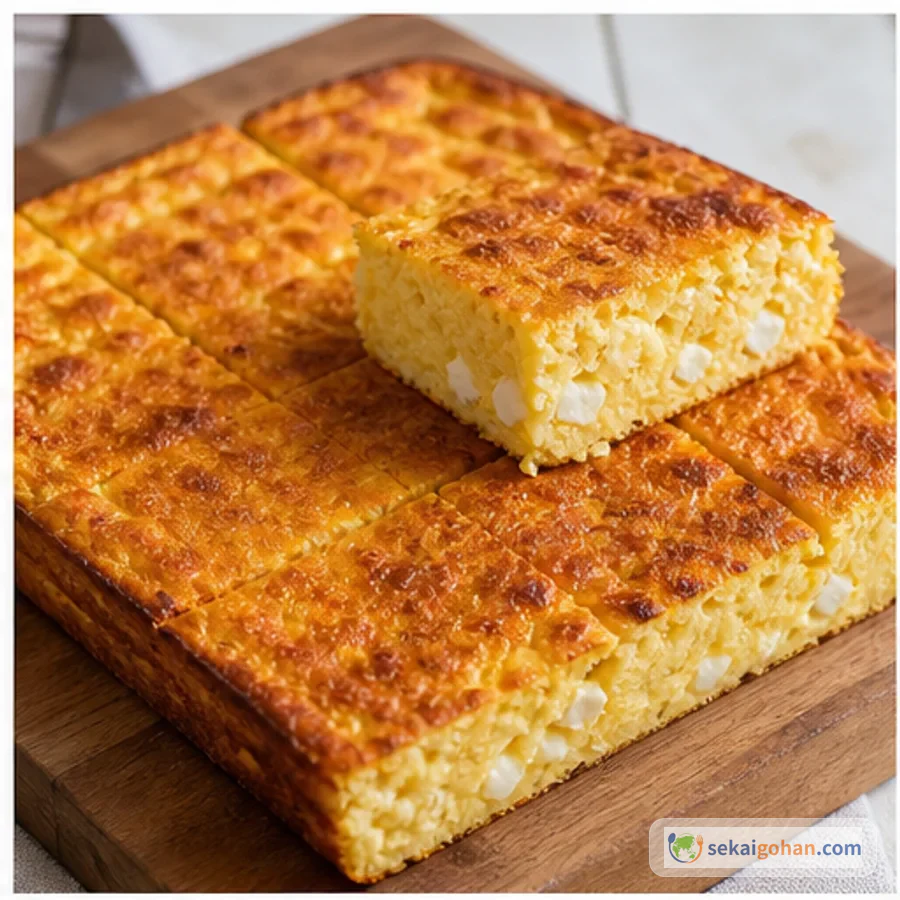
Sopa paraguaya has no difficult shaping. Most failures come down to three things: burning the onion, adding the flour all at once and getting lumps, and cutting it right out of the oven so it falls apart. Keep to the order of mixing and the resting time, and even a first try is quite reliable.
Because sopa paraguaya has so much cheese and egg, the center is moist when fresh. But if white batter clings thickly to the skewer, or the center moves like liquid when you shake the pan, it is underbaked. Lower to 350°F (170°C) and bake 10 minutes more, cooking the center without burning the surface.
Common Sopa Paraguaya Problems and Fixes

Most problems come down to the flour, the salt, or the moisture. The onion and the timing of the cut matter too.
If you cook the onion down to a deep amber the way you would for curry, the color and aroma turn heavy. Aim for translucent and sweet, not brown. About 10 minutes is enough. If it looks close to burning, add 1 tbsp water to cool the bottom of the pan.
Straight from the oven, the inside is soft with steam and melted cheese. A 10–15 minute rest lets the egg and cheese settle, and the slices come out clean. When you have guests, count back from serving time so you allow for the rest as well as the bake.
Adjusting Moisture in a Home Oven
In a home oven the center can stay heavy. The causes are pan depth, the water in the cheese, and the grind of the flour. You want a batter "heavier than pancake batter and softer than potato salad," one that falls slowly from a spatula and spreads on its own in the pan.
If the batter is crumbly and won't spread, add 2–4 tbsp milk. If it flows like soup, add cornmeal 2 tbsp at a time, then wait 5 minutes before baking. Cornmeal takes up water more slowly than wheat flour, so a batter that looks right just after mixing will end up too stiff.
Serving, Variations, and Storing Sopa Paraguaya

In Paraguay, sopa paraguaya isn't a sweet you eat one slice of and finish. It comes out with meat, beans, soup, and salad and is eaten a bit at a time through the meal. Beside asado it works like bread, soaking up the meat juices and fat. Beside soup it has more flavor than ordinary bread.
These pairings are a good place to start at home.
| Occasion | Dish to pair with | Role of sopa paraguaya |
|---|---|---|
| Weekend meat dish | Steak, barbecue, roast chicken | Between staple and side. Takes up the meat juices |
| Soup day | Minestrone, bean soup, beef shank stew | Stands in for bread. The salty cheese makes it filling |
| South American menu | Churrasco, chivito, salteñas | Ties the menu together with corn |
| Breakfast | Fried egg, tomato, salad | An unsweetened cornbread |
| Lunch box | Chicken breast, hard-boiled egg, cooked vegetables | A staple that holds together cold |
For a South American meat plate, bandeja paisa and locro are good partners. For a stew plate, try ropa vieja and pabellón criollo. If you want acidity, add ceviche. For a stir-fry, add lomo saltado, and the sweet corn will refresh your palate between bites. You can also set it beside churrasco, compare it with the snack culture of salteñas, or taste it against arepas.
It goes with spicy stews like pozole rojo and stands up to the toasty sauce of pepián. With mole poblano, cut it smaller so the plate doesn't get heavy. As a party appetizer, cut it into small pieces and set it out with hand-held dishes like doubles and griot.
Sopa Paraguaya Variations

As a side for meat, make it a little saltier and use plenty of black pepper. Next to grilled meat, roast pork, charcoal-grilled chicken, or sausages, it makes a plate feel more South American than bread would. If you make churrasco at home, serve it with farofa and you get the corn and flour traditions of Brazil and Paraguay side by side. Fatty meat calls for the acidity of vinagrete. Lean grilled meat calls for the herbs of chimichurri. Either one keeps the sweet aroma from turning heavy.
For breakfast, use less salt and a little more butter. Put a reheated slice next to a fried egg, tomato, and salad for an unsweetened cornbread breakfast. If you want to compare corn staples, cachapa and arepas fit the same breakfast slot.
You can add small amounts of chopped bell pepper, scallion, or corn kernels, up to 3.5 oz (100 g) in total. Watery vegetables keep the center from setting, so leave zucchini and tomato for a later batch.
To lean toward chipa guasu, swap part of the cornmeal for frozen corn: 9 oz (250 g) cornmeal and 5.5 oz (150 g) frozen corn, with half the corn lightly chopped. It comes out sweeter and fluffier, halfway between sopa paraguaya and chipa guasu. That also brings it closer to dishes like Chile's pastel de choclo, which layers corn over meat.
Storing and Making Sopa Paraguaya Ahead

Sopa paraguaya firms up as it cools, and the corn's sweetness mellows. Fresh from the oven it's fluffy and fragrant, but the firmer slice the next day is good too. Let it cool completely before you wrap it, because steam trapped under the wrap turns the surface sticky. Cut it into 8 pieces and wrap each in plastic wrap, or lay them in a container without overlapping.
| Storage method | Guide | Reheating |
|---|---|---|
| Room temperature | Same day | Toaster oven for 2 minutes just before eating |
| Refrigerated | 3 days | Microwave 20–30 seconds + toaster oven 2–3 minutes |
| Frozen | 2 weeks | Thaw naturally, then bake back in a toaster oven |
It's full of egg and dairy, so don't leave it out at room temperature in summer. Always cut it before freezing, since a big block thaws unevenly, and single wrapped pieces are easy to grab for breakfast. The oil in the cheese carries its smell to other food in a shared container, so wrap pieces in plastic wrap first.
If you plan to make it ahead, don't bake it too thick. At 2 inches (5 cm) or more, the center feels heavy after refrigeration. In an 8-inch (20 cm) square pan at about 1.5 inches (3–4 cm) high, it reheats easily and holds together when cut. For a double batch, two shallow pans are more reliable than one deep one.
For a lunch box, bake the night before and refrigerate (move frozen pieces to the fridge the night before). In the morning, warm the center lightly and bake the surface last so the moisture returns and the aroma rises. Then cool it completely before packing. This takes away most of the made-ahead feel. If you pack it cold, lightly blot the surface with paper towels.
The microwave alone brings back the inside but leaves the surface soft. Finish refrigerated or thawed pieces in a toaster oven to bring back the toasty outside.
Frequently Asked Questions

Can I make it with cornstarch?
No. Cornstarch is the starch of corn, which is different from cornmeal or corn flour. It can't give the batter structure, and you end up with a different dish held together only by egg and milk. Use finely ground cornmeal or a fine-grained corn flour.
Without queso Paraguay, can it still be authentic?
It won't taste exactly the same, but mozzarella combined with a salty cheese gets quite close. Mozzarella alone tastes weak, and feta alone is too salty. You can also mix 3 tbsp grated hard cheese into 7 oz (200 g) shredded pizza cheese from the supermarket.
Is baking powder traditional?
It isn't required, and many local recipes rely on the eggs alone. In a home oven, though, the center tends to get heavy, so this recipe adds just 1 tsp. For a more traditional version, leave it out, beat the eggs well, and bake 10 minutes longer.
Can I eat it sweet?
You can drizzle on a little honey or maple syrup, but sopa paraguaya is a savory dish at heart. Instead of adding sugar to the batter, try the baked slice plain first, then add a touch of sweetness to taste alongside the salty cheese.
Sources
For the ingredient ratios we checked what Paraguayan local recipes and English-language recipes have in common, and replaced items with flour and cheese that are easy to get. We don't overstate culinary history, and treat it as a dish where Guaraní flour foods met Spanish-derived dairy.
- Wikimedia Commons, Category:Sopa paraguaya, accessed 7 May 2026.
- 196 flavors, Sopa Paraguaya - Traditional Paraguayan Recipe, accessed 7 May 2026.
- Recetas Nestle Paraguay, Sopa Paraguaya, accessed 7 May 2026.
- Gastronomia.com Paraguay, Sopa paraguaya: origen y receta, accessed 7 May 2026.
- Wikipedia contributors, Sopa paraguaya, accessed 7 May 2026.