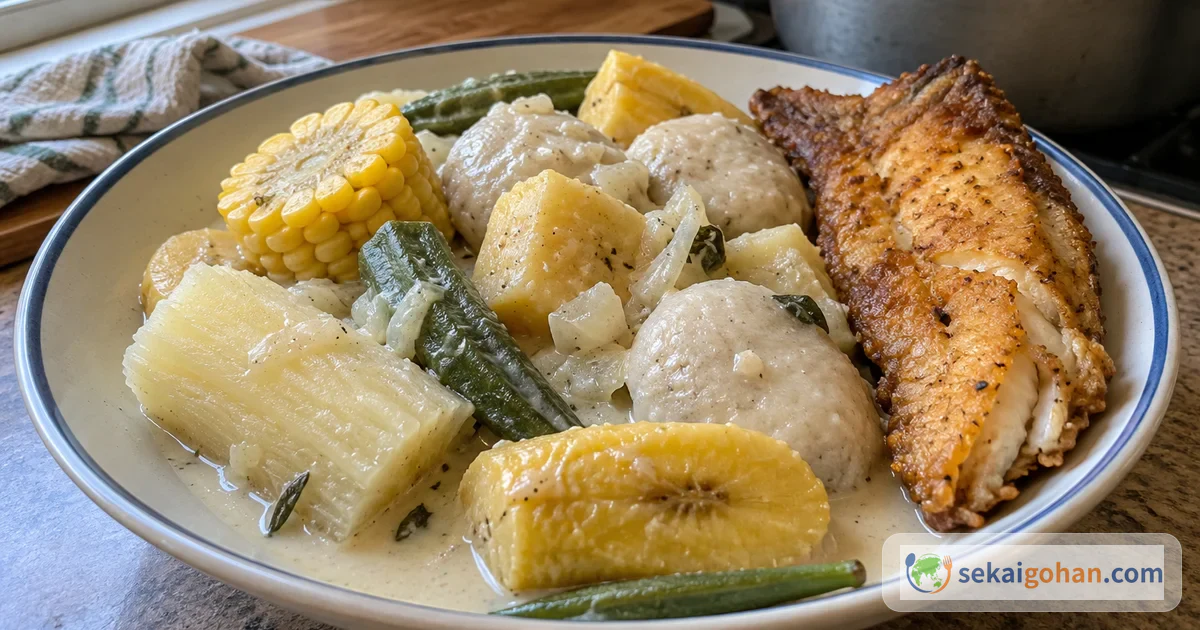
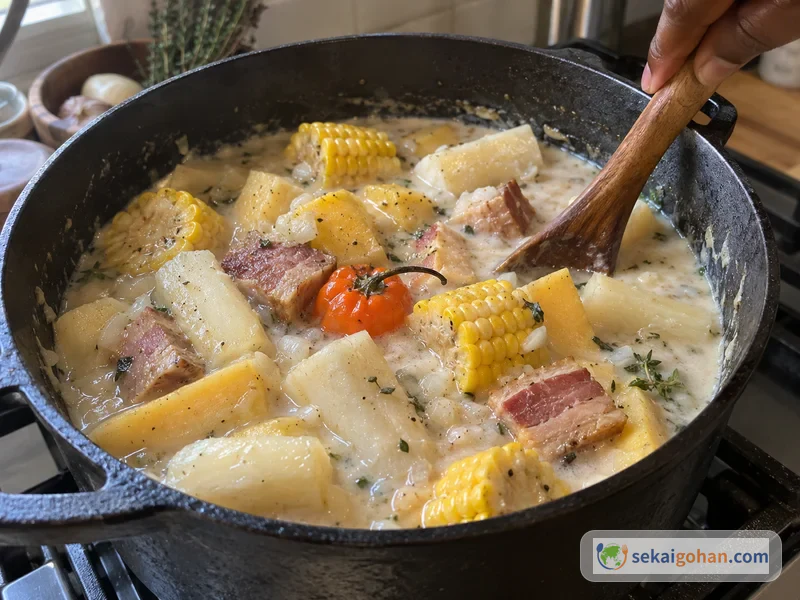
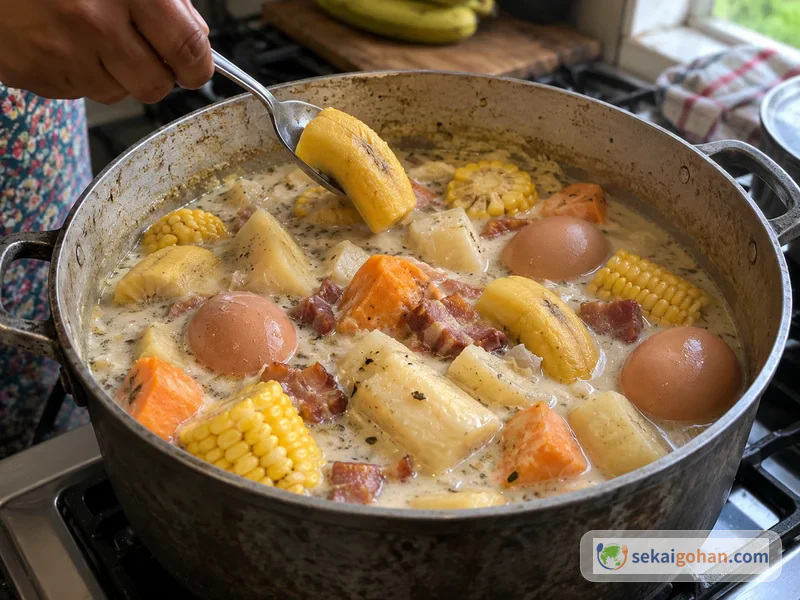
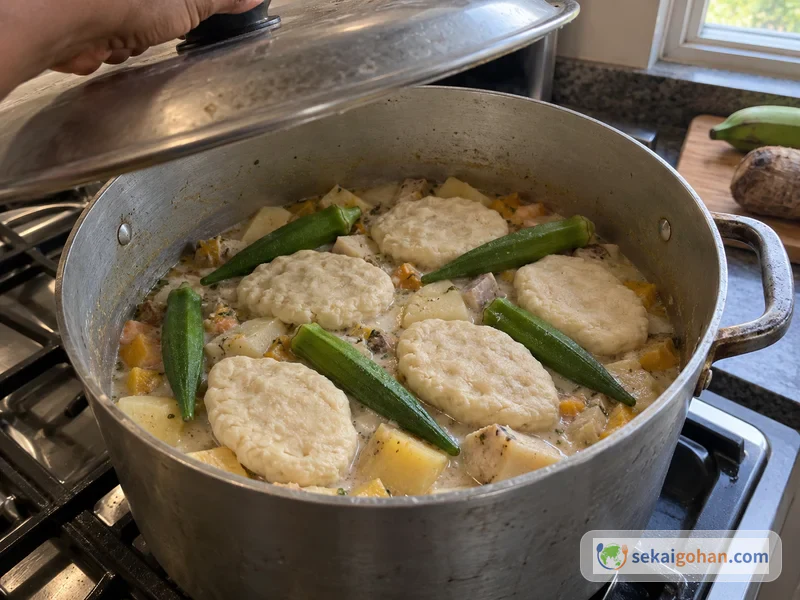
When you lift the lid of the big pot, sweet coconut steam rises with the scent of thyme. Thick pieces of cassava and sweet potato sit in the white broth with yellow plantain boiled in its skin and chunks of corn, and puffed flour dumplings and okra rest on top. This is metemgee, the one-pot of root vegetables simmered in coconut milk that Guyanese kitchens know well. It's sweet, gently spiced with chile, and filling, usually served with a piece of crisp fried fish at the edge of the plate.
Metemgee and Guyanese "Provisions"
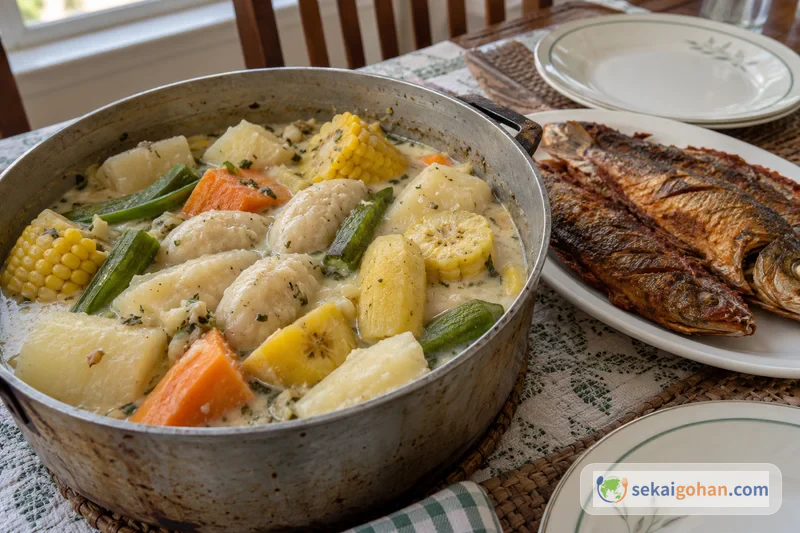
In Guyana, root vegetables such as cassava, sweet potato, eddoe (a relative of taro), and yam are collectively called "provisions." They anchor everyday meals, and metemgee simmers those provisions soft in coconut milk. Think of it as a thick Guyanese Creole soup: provisions, plantain, okra, and large dumplings called "duff," stewed in a chile-spiked coconut milk sauce.
The dish name is spelled "metemgee" and "metem," and sometimes "mettagee."
Meat is optional. Salted beef or smoked meat often goes in, along with eggs boiled in their shells, and in the Caribbean the dish is still often topped with fried salted fish or meat. Left meatless, though, it's a surprisingly flavorful vegetarian dish. The root vegetables and coconut milk are the stars; the protein is a side you are free to choose.
Guyanese cooking is also famous for pepperpot, with its meat stewed black in cassareep, and for cook-up rice, where beans and rice cook together in coconut milk. Metemgee uses no rice at all. It fills you up with fluffy root vegetables and dumplings instead, and even with the same coconut milk, it eats like a very different dish.
Ingredients (serves 4)
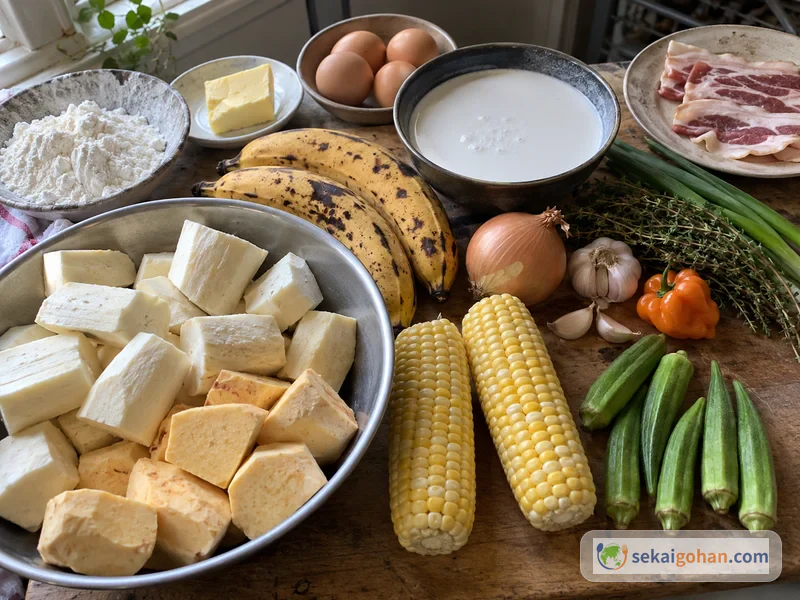
The amounts below use ingredients that are easy to find outside Guyana.
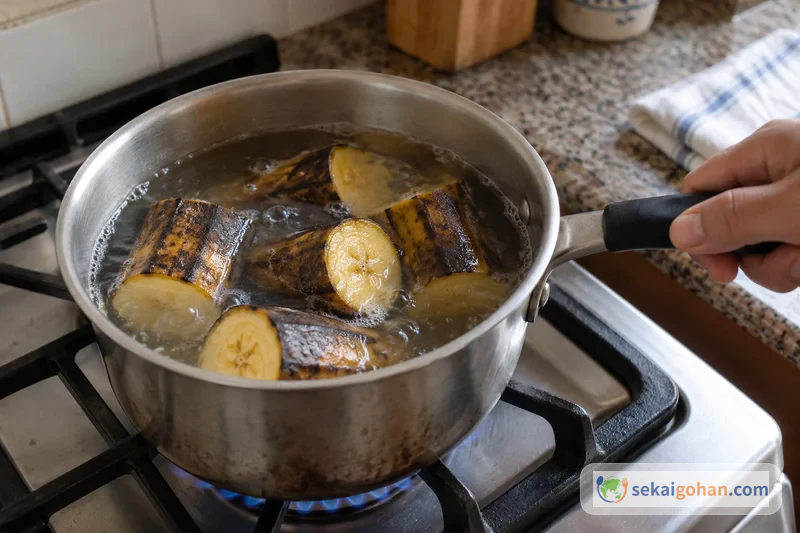
Plantain looks like a banana, but it is a cooking variety that is too hard to eat raw. For metemgee, use fully ripe ones with black spots spreading over the skin, so that sweetness dissolves into the broth. If you can only find green ones at an international market or online, leave them at room temperature for a few days to ripen.
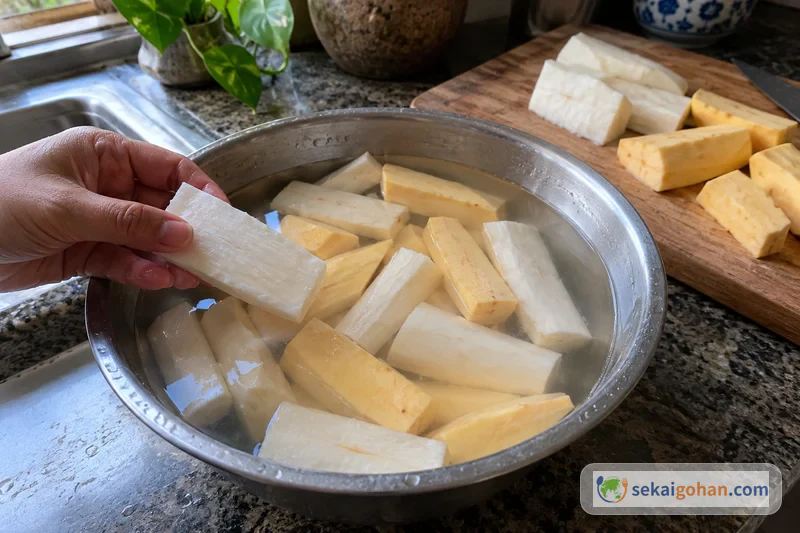
Cassava contains compounds that can release harmful substances, so peel it and cook it thoroughly through to the center before eating. Do not eat it raw or undercooked.
Choosing Ingredients for Metemgee
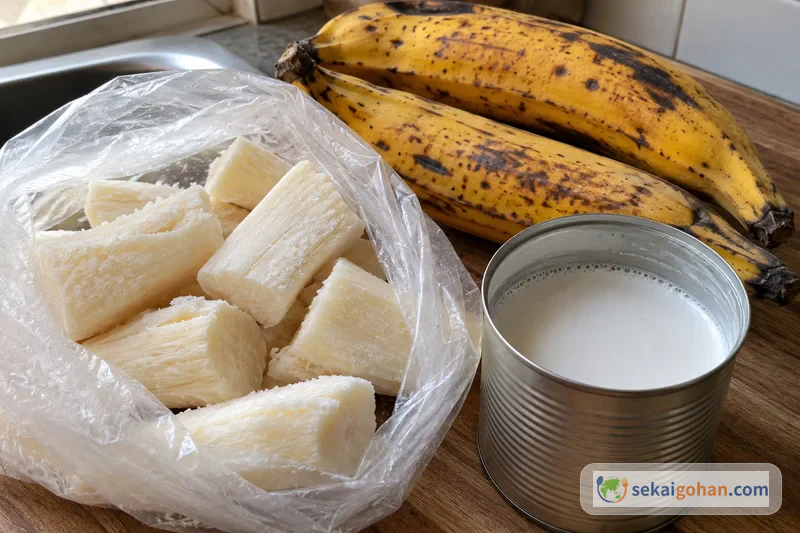
Outside Guyana, the hard part is finding cassava and plantain. Look in the freezer section of an international market. Canned coconut milk and everyday vegetables take care of the rest of the pot.
In place of bacon, salted pork or smoked turkey gives a smoky aroma closer to local recipes. For something easier to buy, parboil bone-in smoked ham or spare ribs and use those. Instead of frying the fish, you can also serve flaked salt cod braised with tomato and onion; its saltiness brings out the sweetness of the root vegetables.
How to Make Metemgee
Allow about 40 minutes for prep and making the dumplings, and about 60 minutes to simmer the root vegetables and finish. While the root vegetables simmer, parboil the plantain in a second pot beside them.
Scotch bonnet is a very hot chile. If it breaks during simmering, the whole broth becomes strongly hot. Lift it out with a ladle, and if you touch it with bare hands, wash your hands right away so you don't touch your eyes or face.
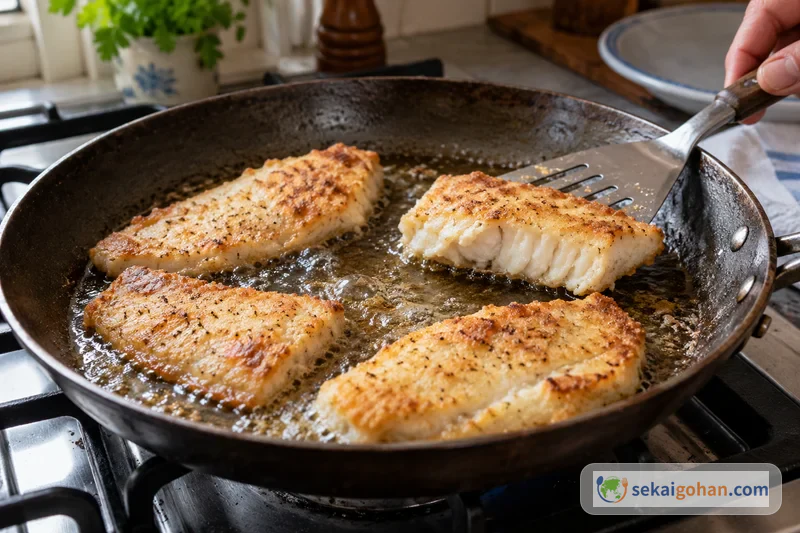
Oil for pan-frying fish spatters if any moisture remains. Wipe the fish dry before putting it in, and do not take your eyes off the skillet.
Keeping the Metemgee Dumplings Whole
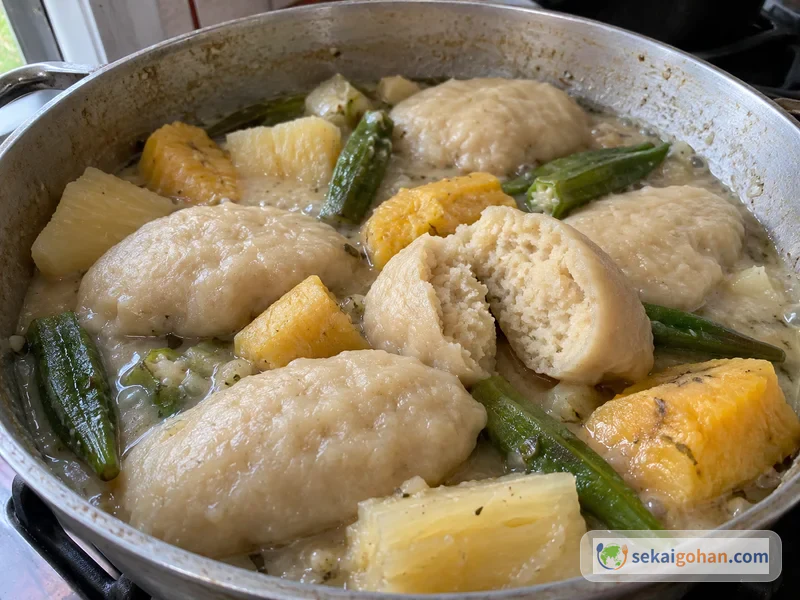
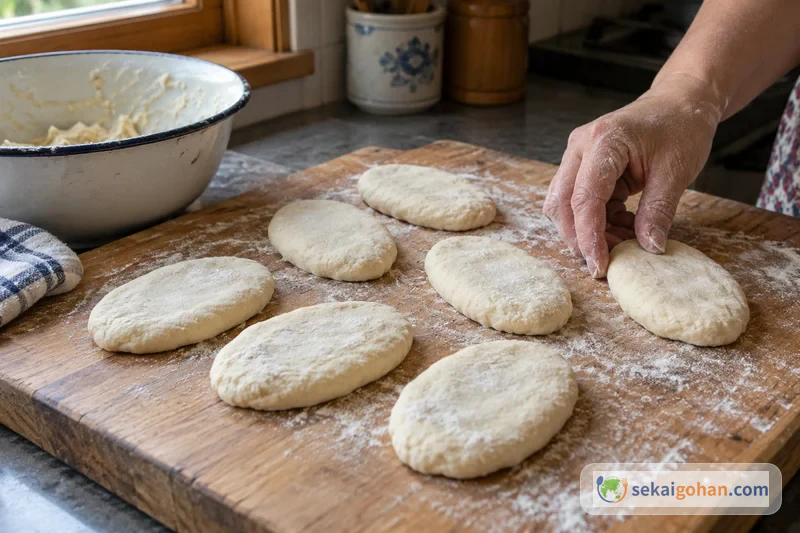
The other challenge is steaming the dumplings on top without breaking them. Place the dumplings and okra gently on the root vegetables, and do not stir the pot much. The dumplings aren't boiling in the broth; they cook in steam on a platform of root vegetables, so keep the liquid low at this stage.
Dumplings swell a lot. When arranging them in the pot, leave 0.5–1 inches (1–2 cm) between neighbors. If they touch, the touching sides tend to stay underdone.
If your pot is too small to put everything on top, you can boil only the dumplings separately in salted water for about 15 minutes and lay them on the stew for the last 5 minutes to warm through.
The broth should cling thickly to the root vegetables, thanks to starch from the cassava and sweet potato. If it feels too thin, don't add flour; take off the lid and reduce it over low heat for about 5 minutes.
Serving Metemgee and Variations
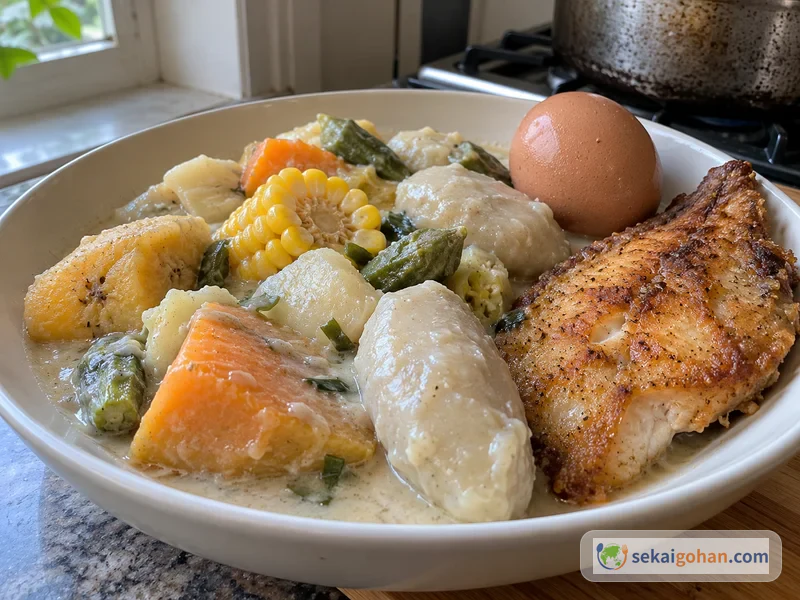
Plate the root vegetables, plantain, dumplings, and okra together in a deep dish and spoon over plenty of broth. Set the fried fish beside it and serve the eggs in the shell. Everyone peels their own and breaks the yolk into the broth.
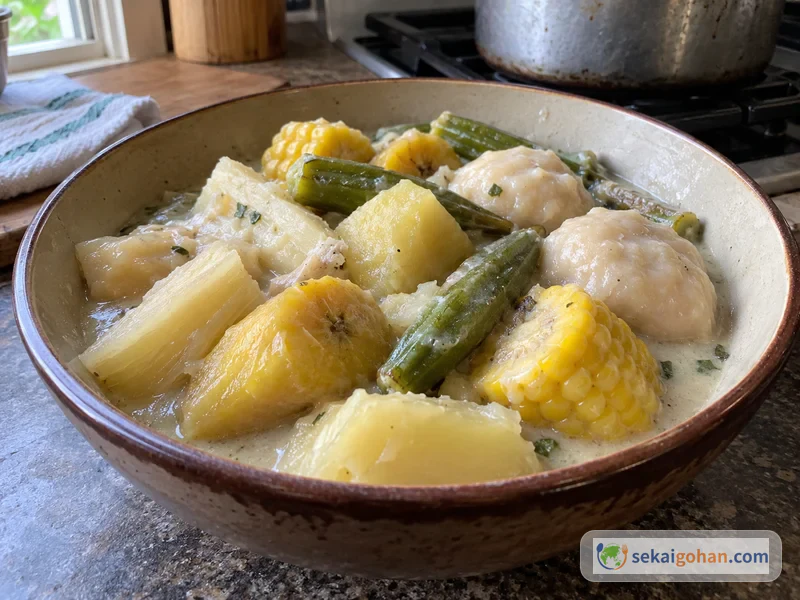
The vegetarian version, with just root vegetables, plantain, dumplings, and okra, shows off the sweetness of the coconut milk best. To make it vegan, leave out the meat, eggs, and fish, use plant-based margarine instead of butter in the dumplings, and mix the dough with water rather than milk.
For another Guyanese dish cooked with coconut milk, try cook-up rice, with beans and chicken cooked into the rice. Pair it with pepperpot to see the range of one country's cooking. Root vegetables and dumplings in coconut milk also turn up in Grenada's oil down.
Frequently Asked Questions
What if I can't get cassava?
Increase the sweet potato and add potato or taro. You won't get the chewy texture of cassava, but it still works as a dish of root vegetables stewed in coconut milk. Taro is a close relative of Guyana's eddoe.
Can I use banana instead of plantain?
Dessert bananas melt easily when simmered and give off a strong sweetness, so the result is different from plantain. If you use them, choose firm ones that still have some green, skip the parboiling, and add them for the last 10 minutes.
How can I reduce the heat?
Simmer without the Scotch bonnet and add a hot sauce of your choice at the table. Even whole in the pot, it stays mild as long as it doesn't break; if the heat comes out too strong, take it out early.
Can I make it ahead?
As the stew cools, the root vegetables absorb liquid and set, and the dumplings tighten. If you refrigerate it for the next day, add a little water and reheat over low heat until hot to the center, and finish it soon. Store the fried fish separately.
Which ingredients should I watch for allergies?
There's wheat in the dumplings and the coating on the fish, egg in the stew, and dairy (butter and milk) in the dumplings. To avoid wheat, leave out the dumplings and increase the root vegetables; the egg and dairy can be left out too.