A heap of pickled red onions crowns a warm bowl of tuna and yuca soup, and a squeeze of lime tightens everything at once. This is encebollado, the dish Ecuadorians love most. The broth is driven by cumin and coriander, the yuca gives it body, and the onions add a sharp, bright crunch on top. Ask anyone in Ecuador and they'll tell you it's "the best hangover medicine."
About encebollado
Ecuador sits on the Pacific coast of South America. Its name means "equator" in Spanish, and the line runs right through the middle of this small country. The soup's name comes from "cebolla" (onion) and means "covered in onions": tuna (albacore) and yuca (cassava) simmer in a cumin-scented broth, and the bowl is finished with a pile of pickled red onions called curtido.
Every country in South and Central America has a soup it is proud of, and this is Ecuador's. It stands alongside Peruvian ceviche and Brazilian feijoada as a signature South American dish.
Encebollado mornings in Guayaquil

Encebollado comes from Ecuador's Pacific coast, and in Guayaquil especially it is eaten every morning as a national dish. It has another name, "levanta muertos" (raise the dead). After a heavy Friday night of drinking, heading out for encebollado the next morning is a standard weekend scene, and lines form at the stalls.
Breakfast in Ecuador is hearty. Besides encebollado, the table holds bolón de verde (balls of green plantain), tigrillo (green plantain scrambled with cheese) and fresh juices from tropical fruits such as passion fruit and soursop. Just as Moroccan tagine belongs to the souks of Marrakech, encebollado belongs to the markets of Guayaquil.
The Pacific coast and its fish
Ecuador's Pacific coast has nutrient-rich waters thanks to the Humboldt Current (Peru Current). Tuna, marlin, shrimp, octopus: the country's fishing industry is among the largest in South America, and encebollado grew out of that catch.

Though small, Ecuador has four climate zones: the coast (Costa), the mountains (Sierra), the Amazon rainforest (Oriente) and the Galápagos Islands. Encebollado is the representative dish of the coast, a national dish alongside the Sierra's locro (a potato soup) and the Amazon's maito (steamed in banana leaves).
Guayaquil versus Quito
Ecuador's two big cities, Guayaquil on the coast and Quito in the mountains, have an ongoing encebollado dispute. The Guayaquil side holds that the coastal version is the orthodox one: fresh albacore tuna, plenty of yuca and a clear, cumin-scented soup. The Quito side counters that the real thing is the mountain encebollado, which is spicier, colored with achiote (annatto seeds) and served with mote (giant corn) instead of chifle.
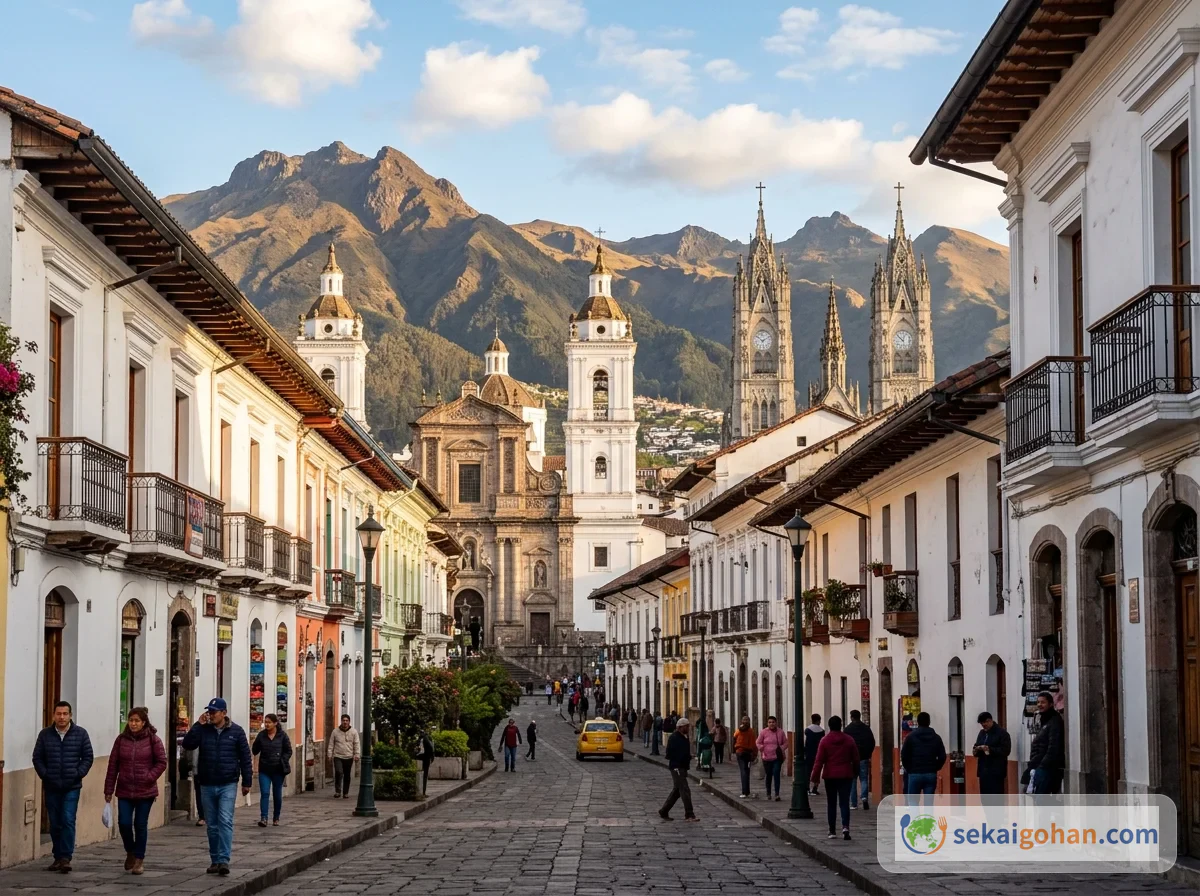
Like the regional differences in Turkish kebab or the island-by-island versions of Indonesian nasi goreng, the argument shows how a national dish takes on different forms from region to region.
Yuca, a root from the Amazon
Yuca (cassava) is a root vegetable native to the South American Amazon. It has been cultivated for about 8,000 years and is a staple across the continent. In Ecuador it is on the table every day: boiled and eaten with butter, fried, or grated and baked into bread. Like the cassava in Ghana's fufu, it is a root that runs through the food cultures of the equatorial belt.
Ingredients (serves 4)
Main ingredients
Yuca is the key to the texture of encebollado. Frozen cassava is sold at Latin American and Asian grocers, and online under "frozen cassava." If you can't get it, waxy potatoes can stand in, but the particular chewy texture of yuca is hard to reproduce. Taro is another substitute with a similar texture.
Spices and seasoning
Curtido (pickled red onion) ingredients
Ecuadorians declare that "encebollado is eaten with curtido." The soup alone isn't finished. The bite of the red onion and the acidity of the lime bring out the savoriness of the soup, and the freshness of the cilantro lightens the whole. Be sure to make it ahead and let it marinate at least 30 minutes.

A cooking thermometer lets you check that the fish is cooked through to the center without overcooking it.
Choosing ingredients for encebollado
Yuca is what gives the soup its character, because of its high starch content, about twice that of potato. That starch thickens the broth to somewhere between a soup and a stew, which plays nicely against the crisp curtido. If you can't find it, potato (waxy) is the closest substitute. Taro also thickens, but its stickiness is strong and opinions divide; sweet potato is too sweet. Frozen cassava from Latin American or Asian grocers, or online, is the reliable route.
For the fish, Ecuadorians also widely use red-fleshed fish such as marlin, bonito and swordfish. White fish (sea bream, cod) works, though the color and savoriness of the soup come out somewhat weaker. In some places the easiest to find is seared bonito, which pairs well with cumin.
Common encebollado mistakes
Think of the tuna as lightly poached in the soup; past 5 minutes it turns dry. At stalls in Ecuador the tuna goes in after the order is taken, and the cook kills the heat right in front of the customer. Faintly pink in the middle is best.
Overcooked yuca clouds the soup white and spoils the texture. As soon as a bamboo skewer slides in, lower the heat. You want a slight thickness with the cubes still holding their shape. As with the dal in Nepali dal bhat, the thickness decides the quality of the dish.
Serving encebollado and variations
Serving and pairing
Make plenty of curtido. Ecuadorians joke that "an encebollado without enough curtido is a sin," and even double the amount in the recipe is not too much. Leftovers make a good side for grilled fish or meat.
In Ecuador the soup always comes with plantain chips called chifle, dipped into the bowl for a crisp accent. At home, store-bought salted banana chips are the closest stand-in; thick-cut or hard-fried potato chips, or even crackers, also work. To round out a South American meal, try Chimichurri, Empanada or Hallaca.
Nutrition (per serving, from 4 servings)
High in protein from the tuna and low in fat, with the yuca supplying energy.
| Nutrient | Amount |
|---|---|
| Calories | 350 kcal |
| Protein | 1.25 oz (32 g) |
| Fat | 10 g |
| Carbohydrates | 1.25 oz (35 g) |
| Fiber | 4 g |
| Sodium | 580 mg |
Variations

Shrimp (encebollado de camarón). Use 12 large shrimp instead of tuna. Simmer them in the shell to draw out flavor, and peel them as you eat. It comes out sweeter than the tuna version.
Bonito. The flavor of seared bonito's dark meat goes well with cumin. Cut it 1 inches (2 cm) thick, add it at the end and simmer only 3 minutes.
Vegetarian. Use 14 oz (400 g) firm tofu (1 inches (2 cm) cubes) and 7 oz (200 g) mushrooms instead of tuna, and make the soup with kombu dashi. Add the tofu at the end just to warm it through; with the yuca's thickness and the tofu's texture, it's a satisfying bowl.
Chilled. In the height of a Guayaquil summer (above 95°F (35°C)), encebollado is sometimes eaten cold. Cool the soup to room temperature, then chill it in the refrigerator before serving. It blends better with the cold curtido and wakes up the appetite on a hot day; as with Peruvian ceviche, fish and citrus hold up well when chilled.
Frequently asked questions
Q1. How do I adjust the heat?
The soup itself is not spicy. The heat comes from the Scotch bonnet (or a dried red chili) in the curtido. If you don't like heat, leave it out and serve chili sauce on the side.
Q2. How do I store encebollado?
The soup keeps 2 days in the refrigerator. Tuna turns dry by the next day, so take it out before storing, keep only the soup and add fresh tuna when you reheat. Curtido keeps 3 days refrigerated.
More South American dishes
Pacific-coast South American cooking pairs seafood with root vegetables, and these make good next steps.
- Ceviche: Peruvian marinated seafood, "cooked" with lime much like curtido
- Feijoada: Brazil's black bean stew and national dish
- Bandeja paisa (in Japanese): Colombia's abundant platter
- Lomo saltado: Peruvian stir-fried beef from the street food tradition
- Ropa vieja: Cuba's beef stewed in tomato, a bridge between the Caribbean and South America