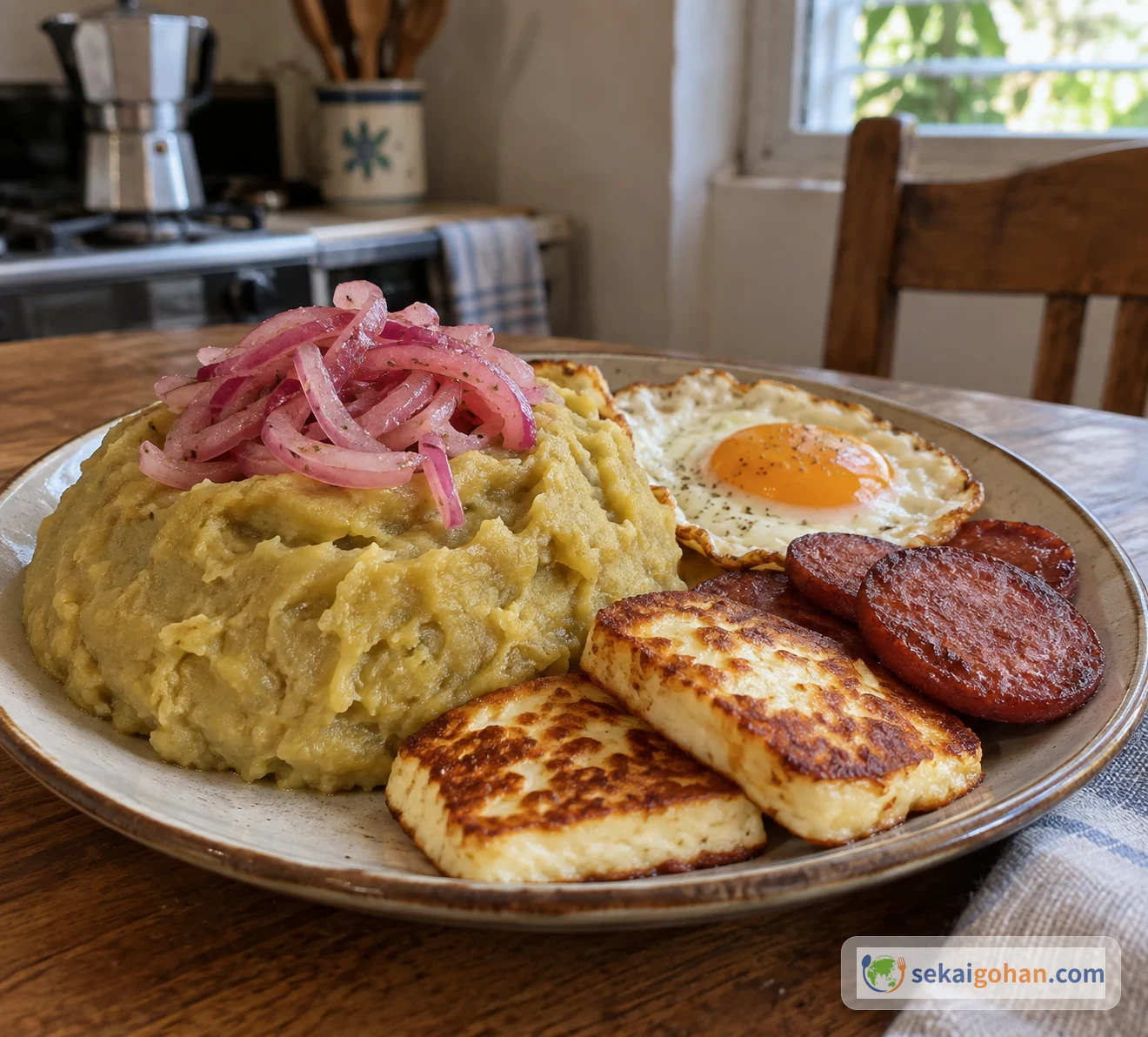

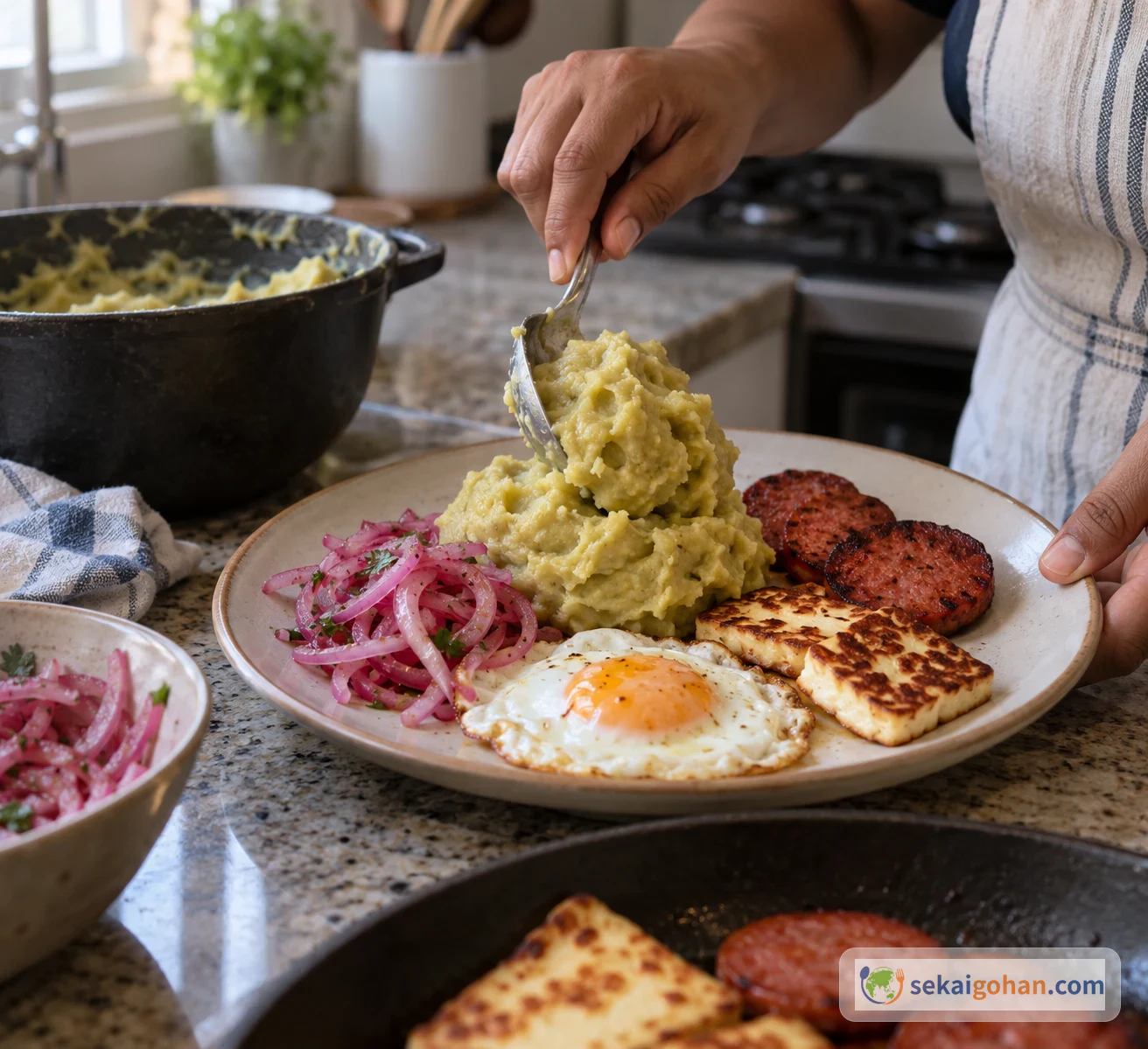
Pale yellow, steaming mash goes onto plates in a morning kitchen. Beside it sit red onions tightened with vinegar and sides with browned edges. This is mangú, the Dominican breakfast: a breakfast of mashed green plantain, boiled and mashed until soft. The mash itself isn't strongly sweet. It's a gentle base enriched with butter or oil and salt, and it waits for the sour onions and salty sides to bring it to life. Keep some of the cooking water and finish while hot: that is the key to this dish.
What mangú is and where it comes from
The name sounds like the fruit mango, but mangú is a dish, not a fruit. It's a representative Dominican breakfast, eaten at home in the morning and also served at lunch or in the afternoon as a side. The classic plate is known as "los tres golpes": egg, white fried cheese and Dominican salami. The three sides turn the pale mash into a breakfast plate, and red onions, with oil and vinegar, set acidity between the salty bites.
Mangú has African heritage. It carried African food culture across the ocean and took root as an island breakfast. Boiling hard green fruit and mashing it into something soft to gather around has the feel of making a staple, and that's how it's still eaten today.
The name has two stories behind it, and neither is proven. One says US soldiers during the occupation of 1916–1924 ate it and said "Man, good!" The other links it to "mangusi," which in the Congo region refers to something boiled and mashed. Here is what is certain: green plantain is boiled and mashed and eaten with three sides.
Mangú is easy to confuse with its neighbors. Puerto Rican mofongo is fried green plantain mashed with garlic and chicharrón, while mangú is boiled and mashed with its cooking water and fat. Ghanaian fufu, where plantain or cassava is pounded and eaten with soup, lets you compare ways of eating on both sides of the Atlantic. And for a different Caribbean breakfast built around a salty main dish, try Jamaican ackee and saltfish.
Ingredients (serves 4)
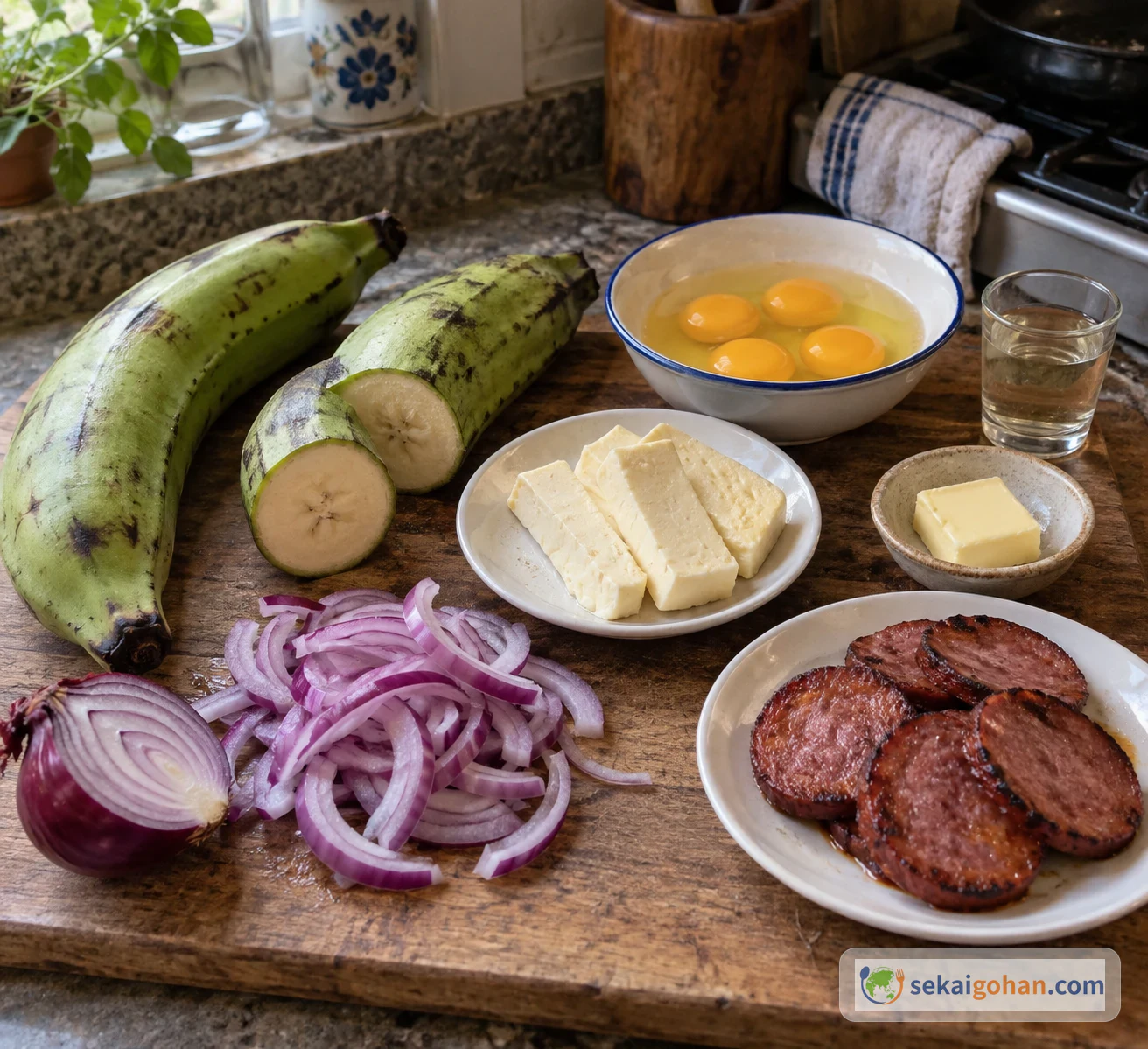
The star of the ingredients is hard green plantain, not yellow banana. Choose plantain, the cooking banana, with skin that is completely green and hard. Don't swap in an ordinary ripe yellow banana in the same amount. Keep the local names for the white fried cheese and Dominican salami, and use the substitutes listed: halloumi, which is easy to find elsewhere, and cooking salami or sausage. Use the local names, and substitute ingredients you can find. The salt in the mash comes from the cooking water and butter, and halloumi and salami also contain salt, so don't add extra salt to the sides. The nutrition values are estimates for the ingredient table as listed, not for optional sides such as avocado.
Two specialty ingredients are worth searching for: "plantain, cooking banana" and "halloumi." Buy the green plantain first, then look for a cheese that can be grilled.
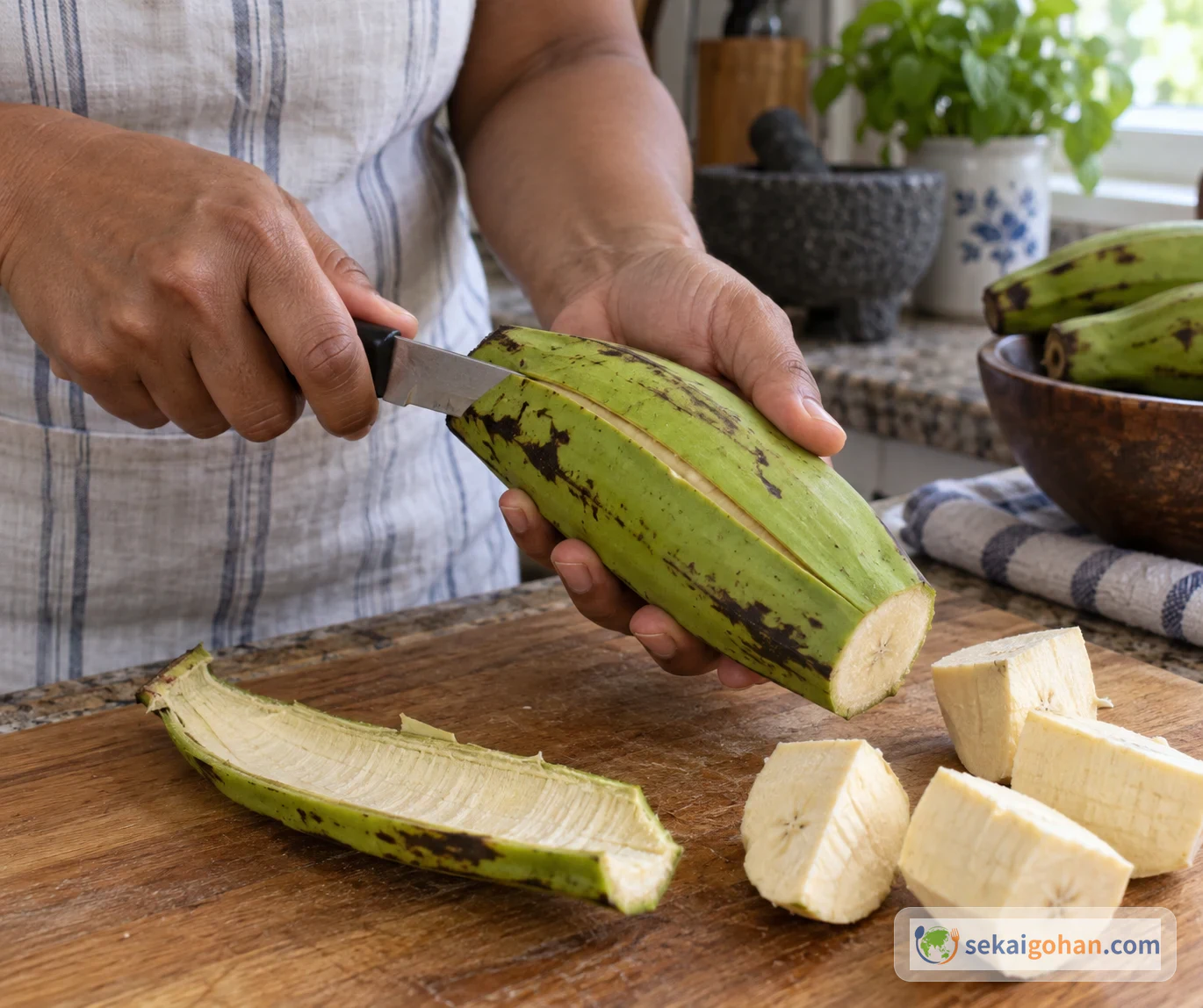
Halloumi is dairy, eggs are egg, and salami and sausage contain meat. Check the labels. Do not serve this to anyone with dietary restrictions or a reaction to dairy; plan a different menu for them. The skin of green plantain is hard, so cut off both ends and make a shallow lengthwise cut, taking care not to push the blade toward your hand. Take care that hot cooking water and oil do not splash on your face or hands. When you use raw sausage, cook it through to the center following the package instructions. Even for cured or precooked salami, follow the storage label after opening.
Choosing the cheese, salami and sides for mangú
Outside the Dominican Republic, egg, halloumi and cooking salami or sausage stand in for the three sides. Halloumi isn't the same product as the local white fried cheese, but it keeps its shape when grilled and it's salty, so it does the same job. Choose a substitute for its texture, not as an exact copy. Hold back on extra salt when you use it, and don't serve it to anyone with a dairy allergy.
For the Dominican salami, use a cooking salami or sausage that's easy to find. Cook raw sausage through to the center, and handle processed products as labeled. If the product is very salty, cut back the salt in the mash and the onions. You're after the same role on the plate, not the same taste.
Avocado is a good optional addition. It goes well with the soft mash and the onion's acidity, and it adds no saltiness, which helps when the other sides run salty.
How to make it
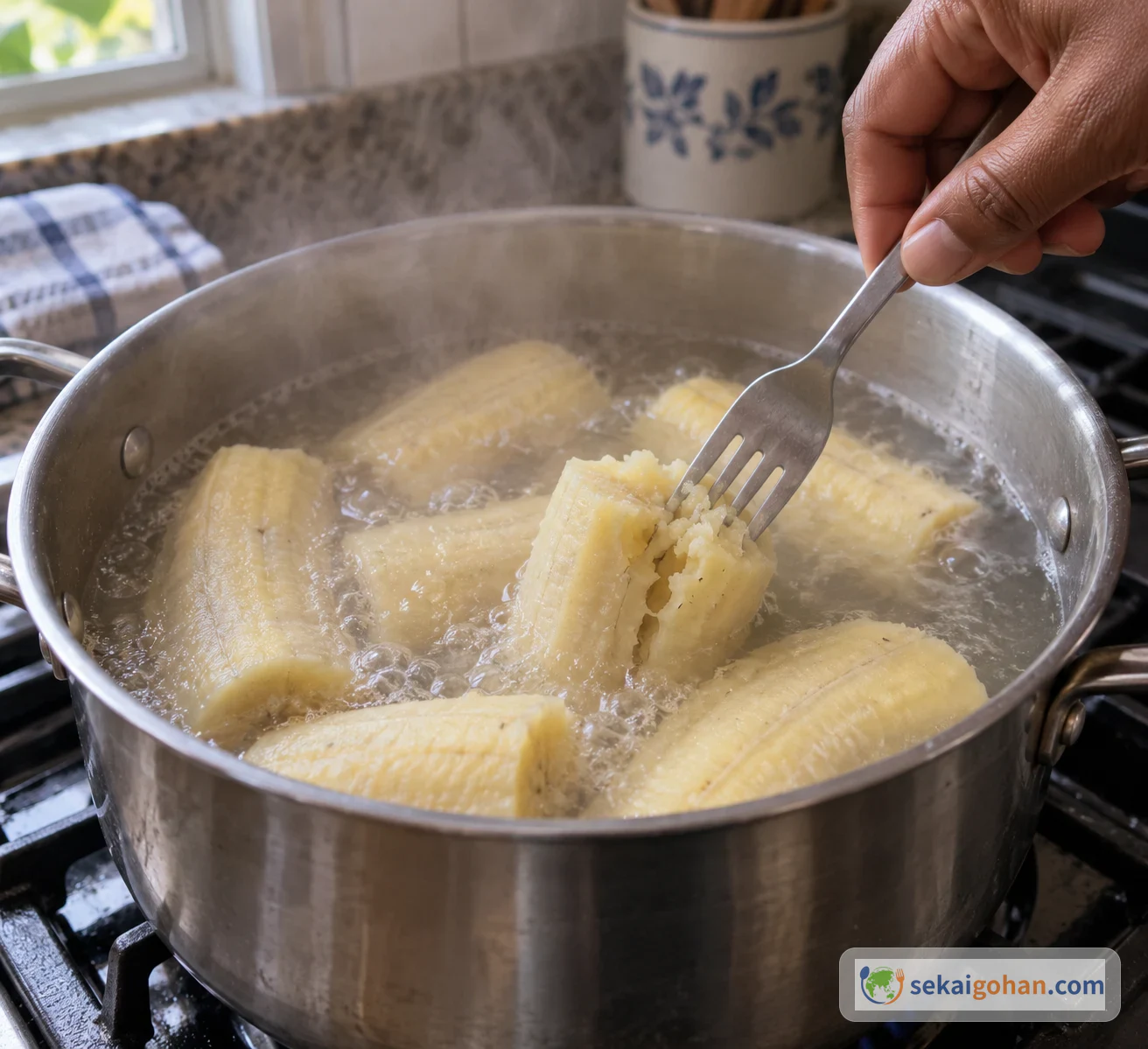
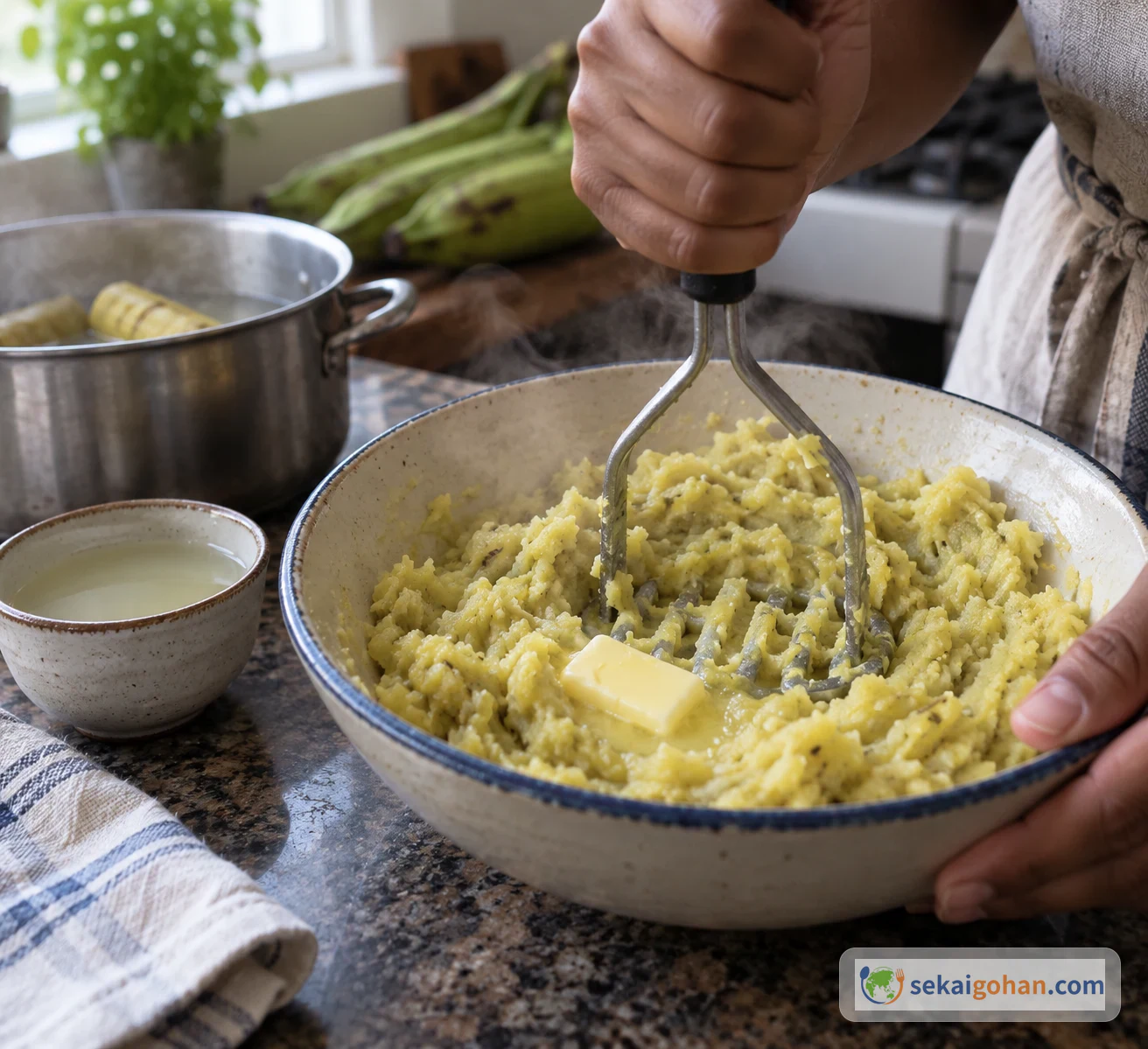
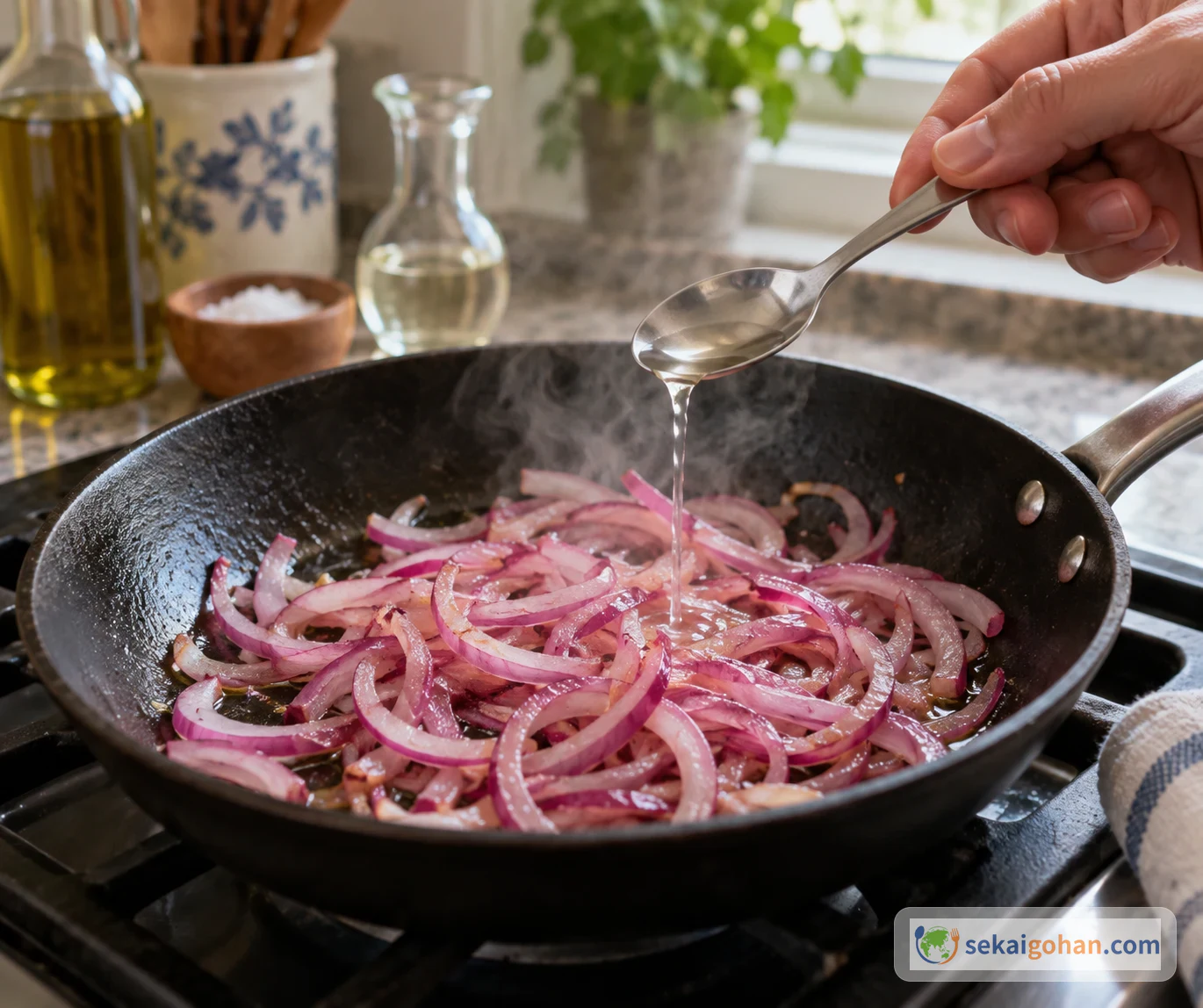
The order is: remove the skin, soften in salted water, mash while hot, finish the red onions with acidity, cook the sides, and plate at the last moment. Boil the plantain for 15–25 or 25–35 minutes; start checking at about 25 minutes. Go by the fork, not the clock: stop when a fork goes in easily. Mash right after lifting it from the pot. The mash stiffens as it cools. Time the sides to finish as the boiling ends, so the mangú stays warm to the end. Plate it at the last moment.
Common mangú problems and fixes
Mangú gets thick and stiff as it cools, so make it a little softer than you want and don't leave it sitting while the sides cook. If it dries out, put thickness back 1 tbsp of liquid at a time, using the warm cooking water you kept or cold water, and mash again. If it turns watery, stop adding liquid and let it rest. Turn off the heat under the red onions before they lose their bite, and add the vinegar after the heat is off. When the sides are salty, skip the extra salt rather than adding it.
Set aside the cooking water first, and warm the bowl and plates. This slows the stiffening as the mash cools.
| State | Possible cause | How to fix it |
|---|---|---|
| Mash is dry and stiff | It cooled, or too little cooking water | Add warm cooking water or cold water 1 tbsp at a time and mash again. |
| Lumps remain in the center | Plantain undercooked, or mashed after cooling | Cook longer until soft to the core and mash while hot. Don't mix raw plantain or a lot of cold water into finished mash. |
| Red onions go too limp | Low heat too long, or heated after adding vinegar | Next time stop at about 3 minutes and toss with the vinegar in the residual heat. |
| Sides are salty | Added salt without considering the halloumi and salami | Stop extra salt on the mash and onions, and balance with unsalted sides such as avocado. |
| Not enough cooking water | Discarded without setting aside | Use cold water 1 tbsp at a time and check temperature and thickness. Next time set aside 1 cup (240 ml) before it finishes boiling. |
Serving, variations and storing mangú
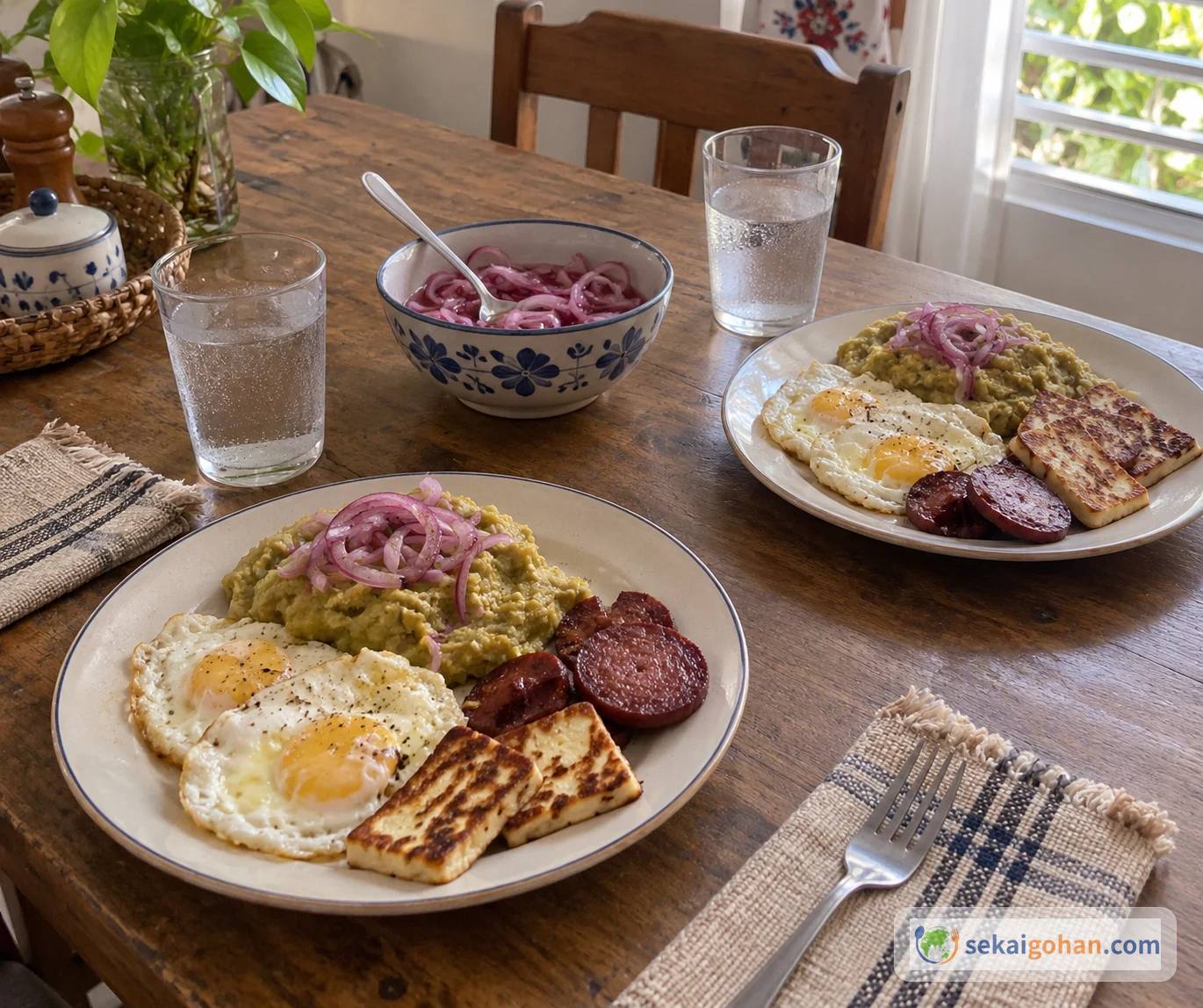
At the table, the red onion's acidity runs into the mash, and you take the egg yolk, grilled cheese and salami a bite at a time, combining them as you go. Each bite shifts the balance between the sweet base and the salty and sour notes, and that's the fun of this plate. Nothing on it is unusual; a boiled staple and a few salty, sour sides are enough to make the morning table richer.
The plate changes from region to region and household to household. The breakfast with egg, fried cheese and salami is the core, but mangú also becomes a dinner side or a plate with fish.
| How the plate is built | What goes with it | Regional or household difference to convey |
|---|---|---|
| The three sides | Egg, white fried cheese, Dominican salami | The representative breakfast combination. |
| A coastal plate | Fish added to egg or onion | Fish joins the plate on the coast. |
| A plate with a different sausage | Salami replaced with longaniza | Longaniza replaces the salami. |
| A plate mixing ripeness | Some ripe plantain added to the green | Changes sweetness and color. |
| A plate with more vegetables | Avocado added | An optional side next to the mash. |
Mangú is best eaten freshly made. Sealed and refrigerated, leftovers keep for up to 1 week. Move them to a shallow container to cool quickly, and keep the refrigerator at 50°F (10 °C) or below. Don't leave them at room temperature for long. Reheat thoroughly, to 167°F (75 °C) or above at the center. If the thickness doesn't return, loosen it with a little water. If it smells or looks off, or has been out too long, throw it away without tasting. Cool the dairy, egg and meat sides separately too, and follow the storage label on each.
Frequently asked questions
Can I make mangú with yellow bananas or the fruit mango?
Use plantain that is completely green and hard. With yellow bananas or fruit mango, the starch, sweetness and skin handling change, and it won't be the same mangú. Versions with ripe or mixed-ripeness plantain do exist, but they give a different, sweeter finish.
How many days can leftover mangú be stored?
Sealed and refrigerated, leftover mangú keeps up to 1 week, as long as you chill it quickly and reheat it thoroughly. Move leftovers to a shallow container to cool quickly, and keep the refrigerator at 50°F (10 °C) or below. Reheat to 167°F (75 °C) or above at the center for at least 1 minute. Raw sausage has its own cooking check, and the egg, cheese and meat sides need the same care. If anything smells or looks off, or has been left at room temperature too long, throw it out without tasting.