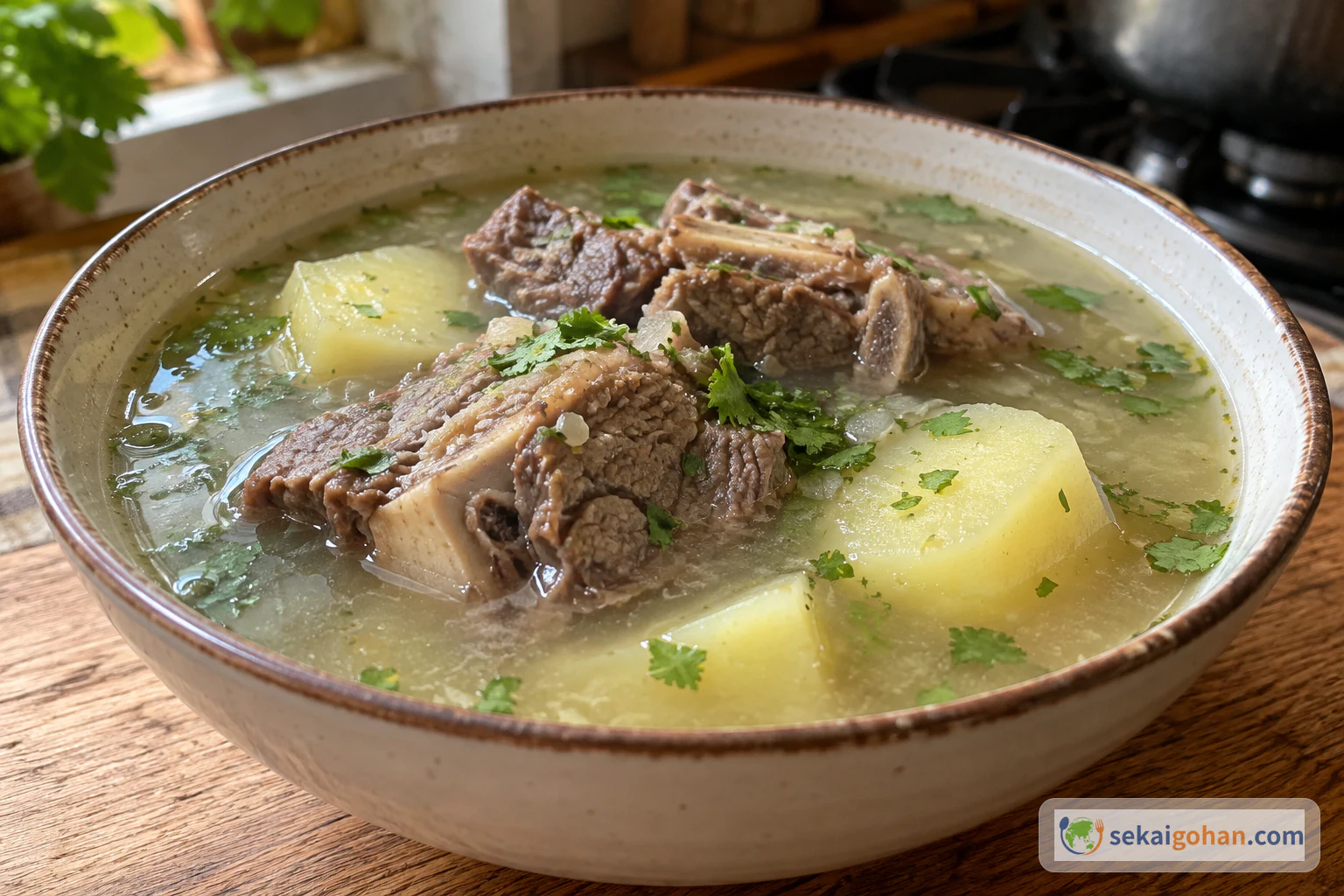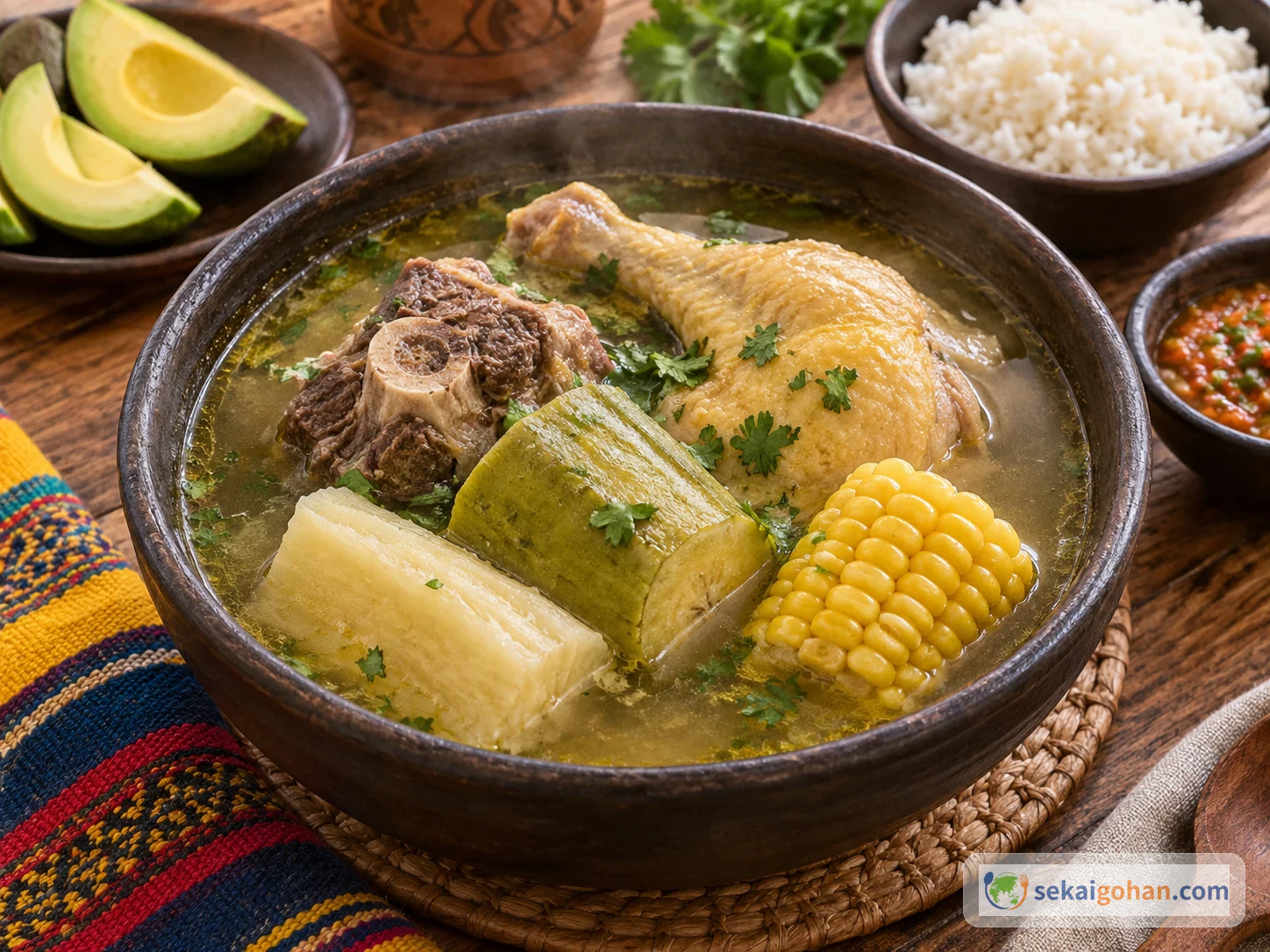
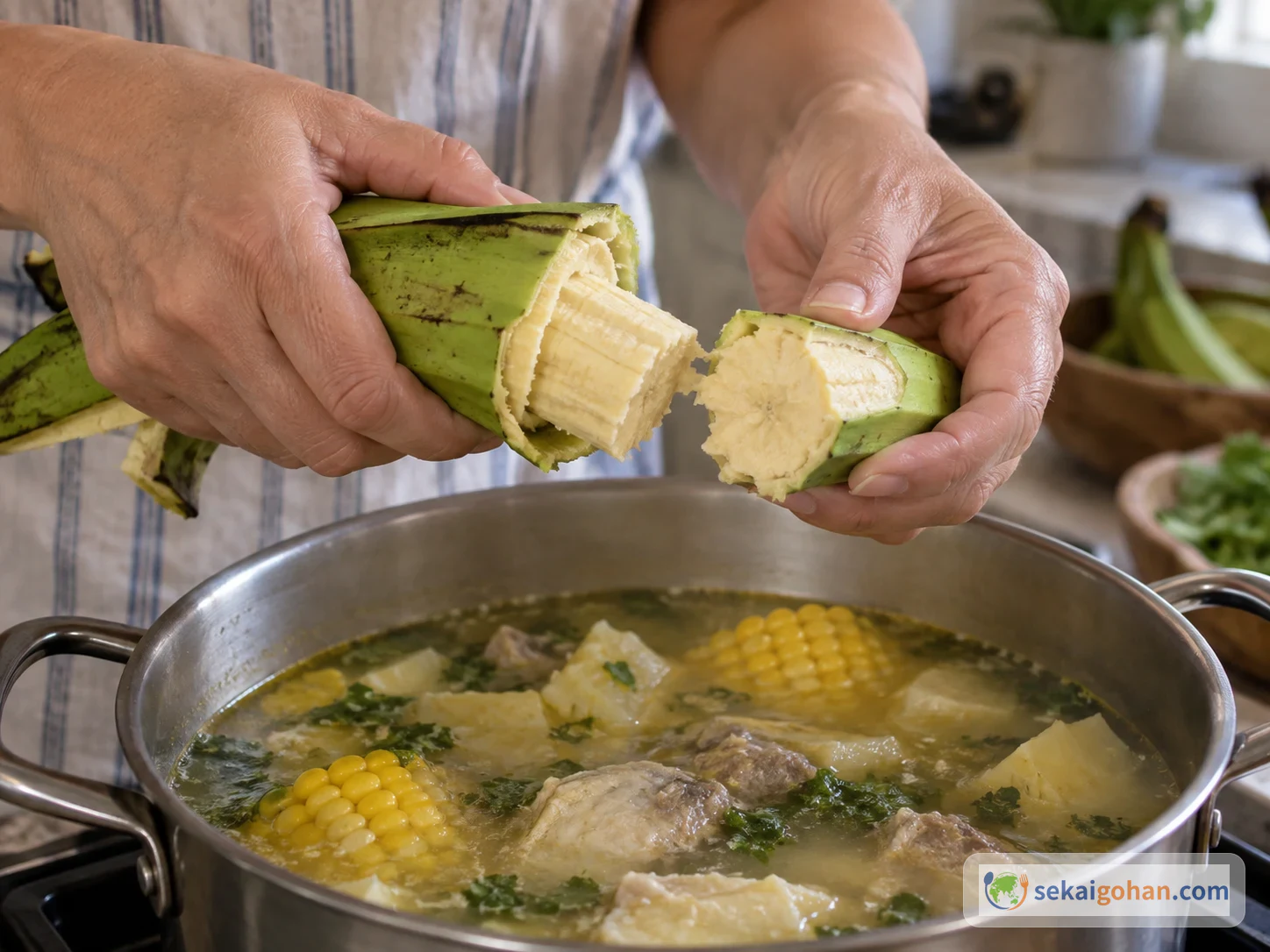
Beyond the steam of a big pot, someone peels a green plantain, snaps it by hand without a knife, and drops the pieces in. That small gesture says a lot about sancocho de gallina, the hearty stew of Colombia's Valle del Cauca. It's built in layers: bone-in chicken or hen, oxtail, green plantain and yuca, all simmered into a broth with gentle body and a deep, meaty flavor. This version follows the one from Ginebra and is scaled for four people cooking at home.
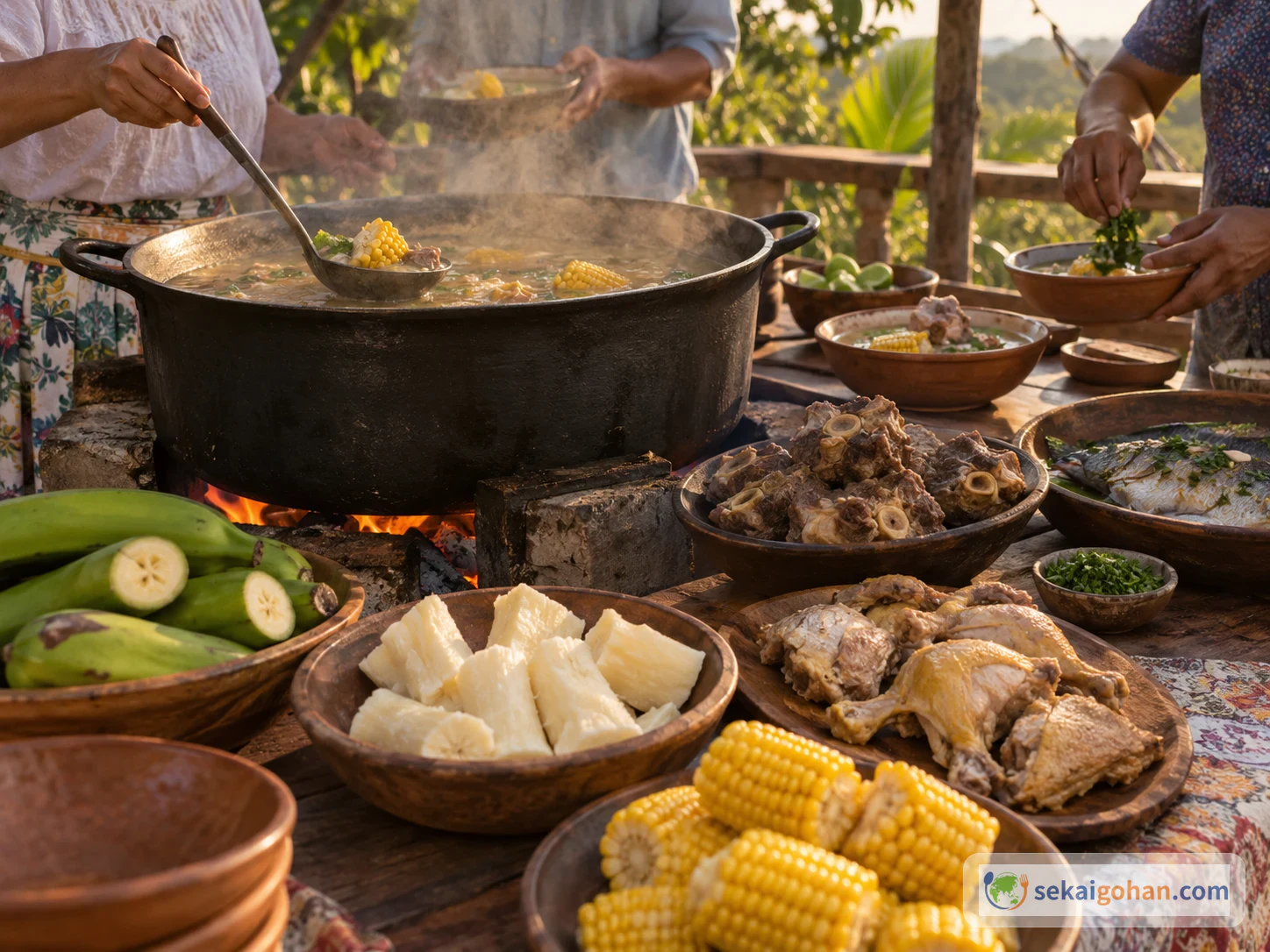
Sancocho de gallina in Valle del Cauca
Sancocho comes in many versions, shaped by region and household. It often turns up as a big shared pot at family gatherings, at festivals, and at meals after communal work known as minga. Each place fills the pot with what it produces, so a mountain meat pot and a Pacific coast fish pot are different dishes. The local ingredients decide what is in the pot.
In Ginebra, a town in Valle del Cauca, sancocho is closely tied to music and gatherings. The town holds the Festival Nacional Mono Núñez, a sancocho festival where food and music meet. Ginebra's pot centers on hen, oxtail, green plantain, yuca and aromatics such as scallion, onion and green tomato, and it comes with avocado, white rice and ají. Nearby, the sancocho valluno is made with beef and beef ribs, with a tomato and onion sofrito and cilantro-family herbs. Either way, in Valle's sancocho, yuca and green plantain are at the center of the table.
| Region / name | What goes in the pot | Difference visible at the table |
|---|---|---|
| Valle del Cauca / sancocho valluno | Beef, beef ribs, green plantain, yuca, tomato and onion sofrito | Avocado, white rice and ají on the side |
| Valle del Cauca / Ginebra version | Hen, oxtail, green plantain, yuca, scallion, onion, green tomato, herbs | Household differences such as taking out the chicken to brown it again, grilled plantain or corn |
| Pacific coast / Chocó | Fish, salted meat, smoked meat, chicken, green plantain, yuca, culantro cimarrón | A separate regional version centered on the aroma of fish and smoke |
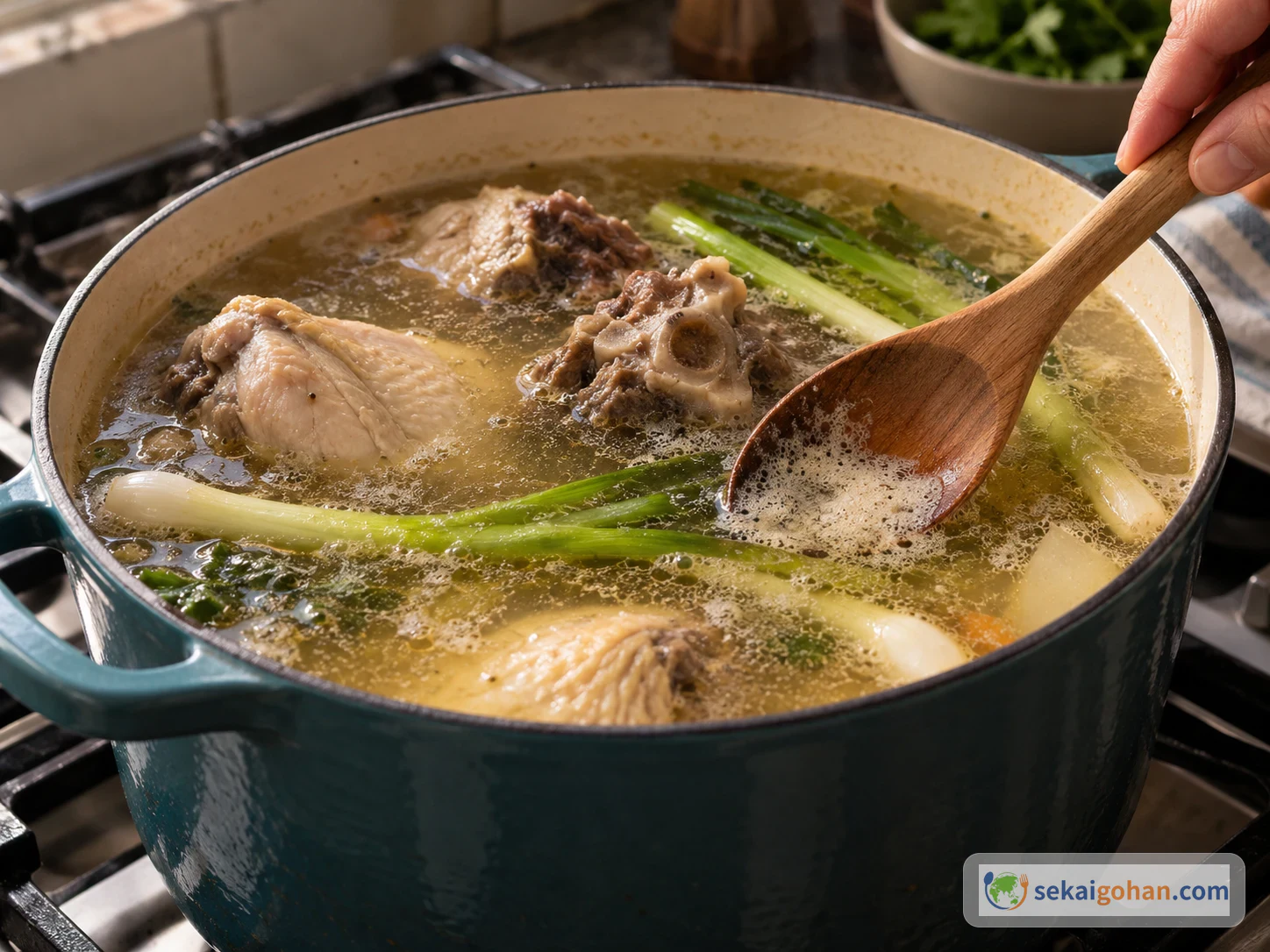
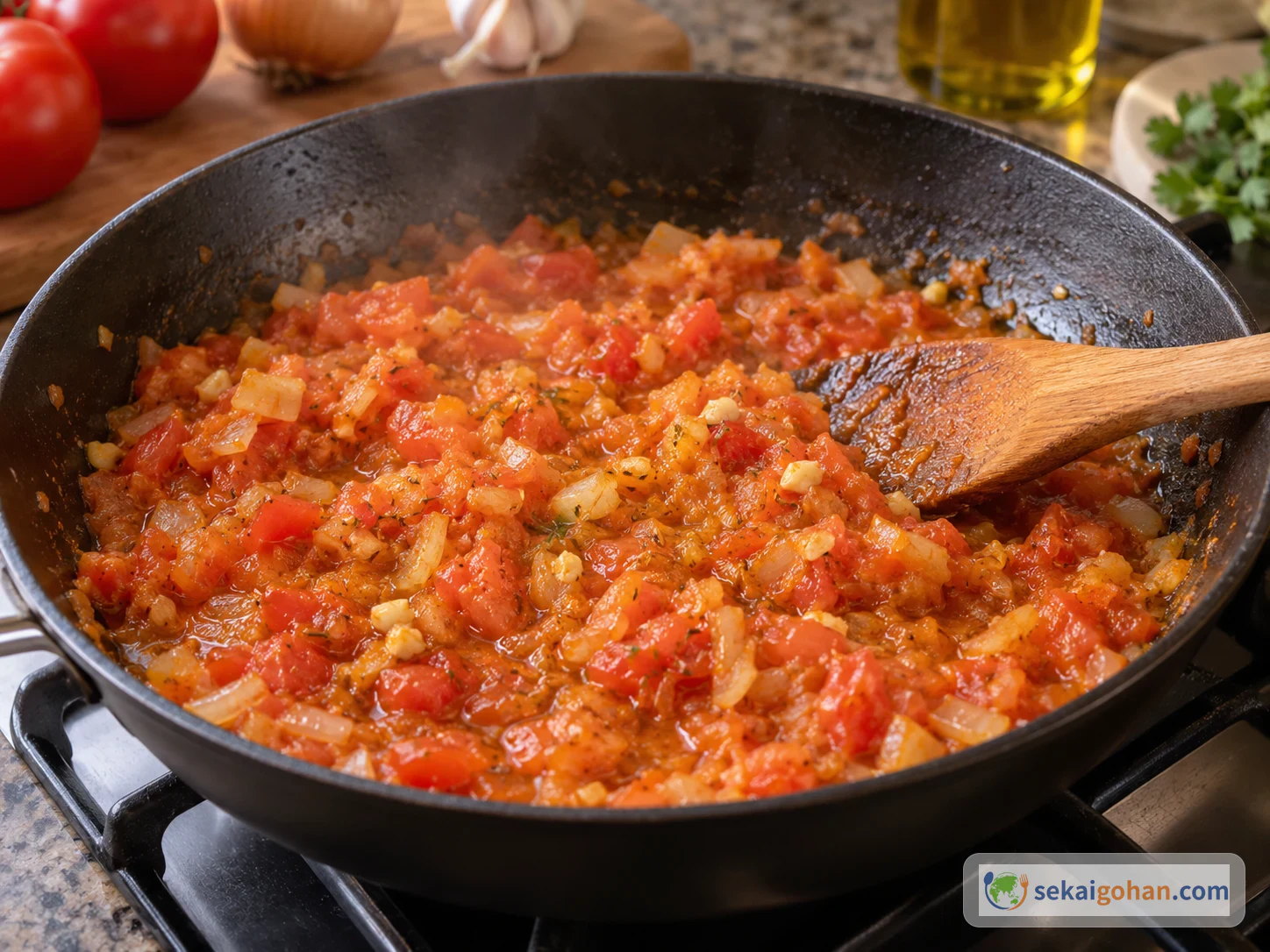
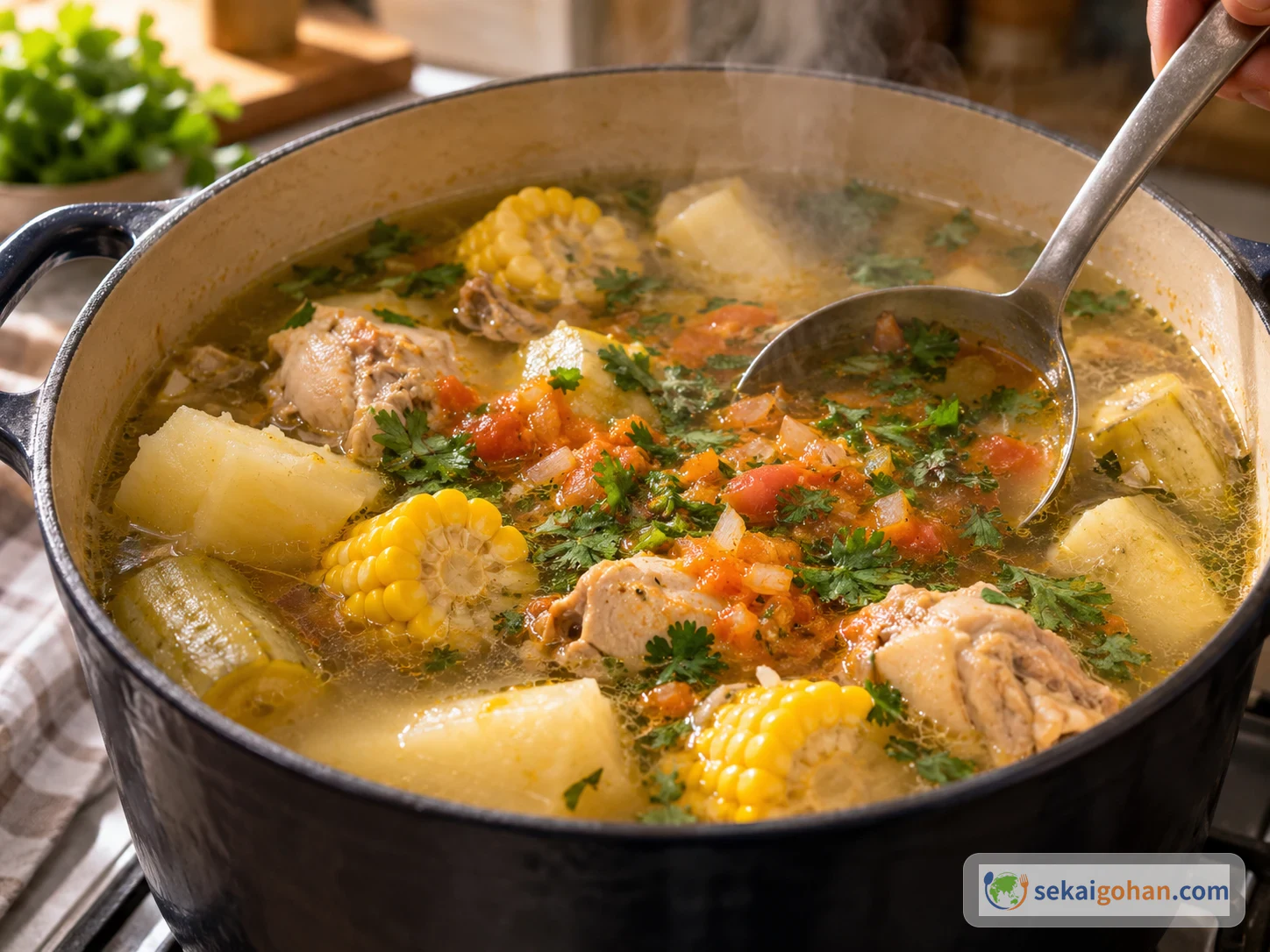
A mature hen is hard to find in many places, so this recipe uses bone-in chicken and adds a little oxtail to deepen the broth. The meat simmers first. Then the plantain, yuca, corn and an achiote-colored sofrito go in one after another, and each does its own job in the pot. Layer the ingredients into the broth in order.
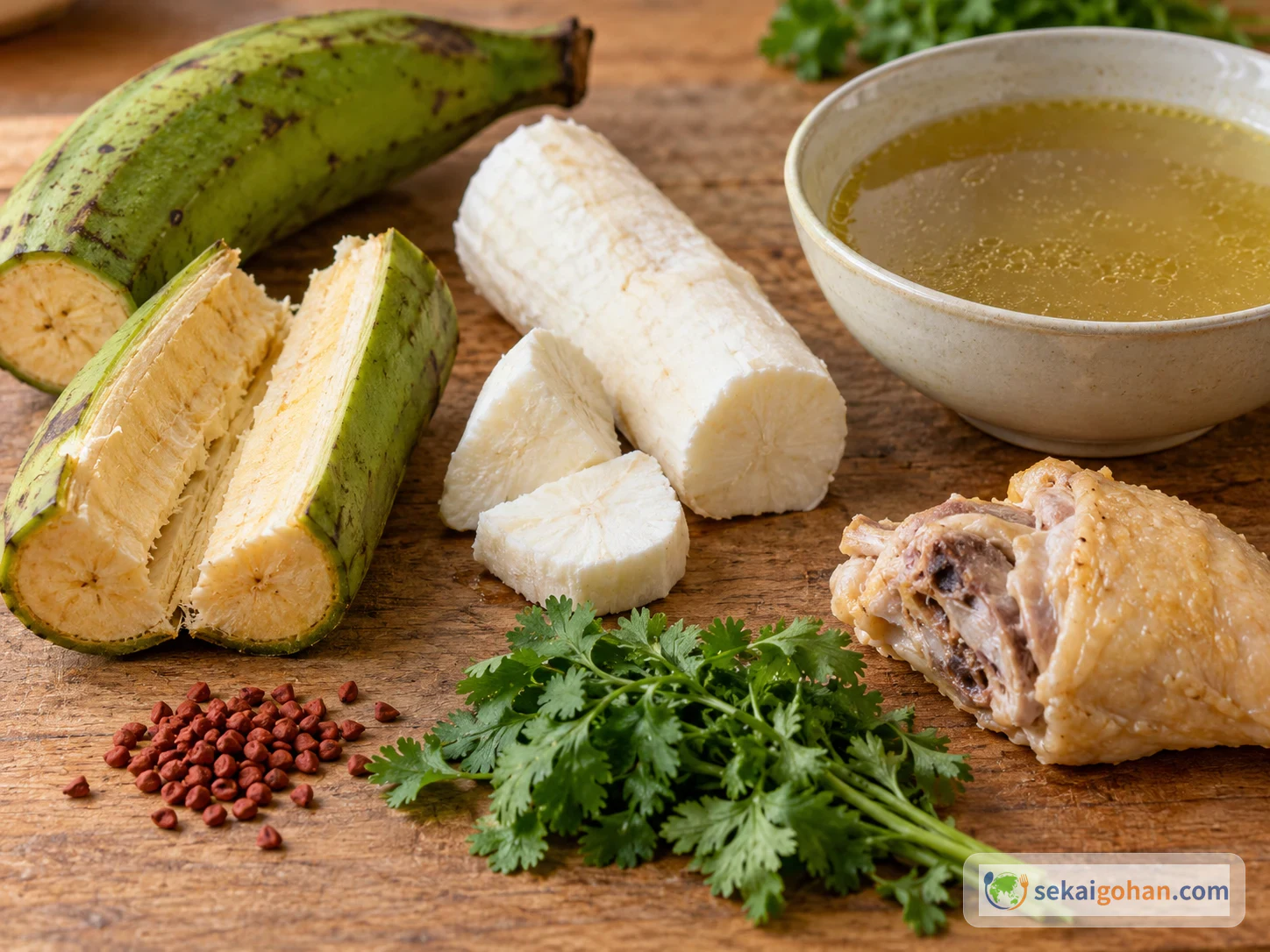
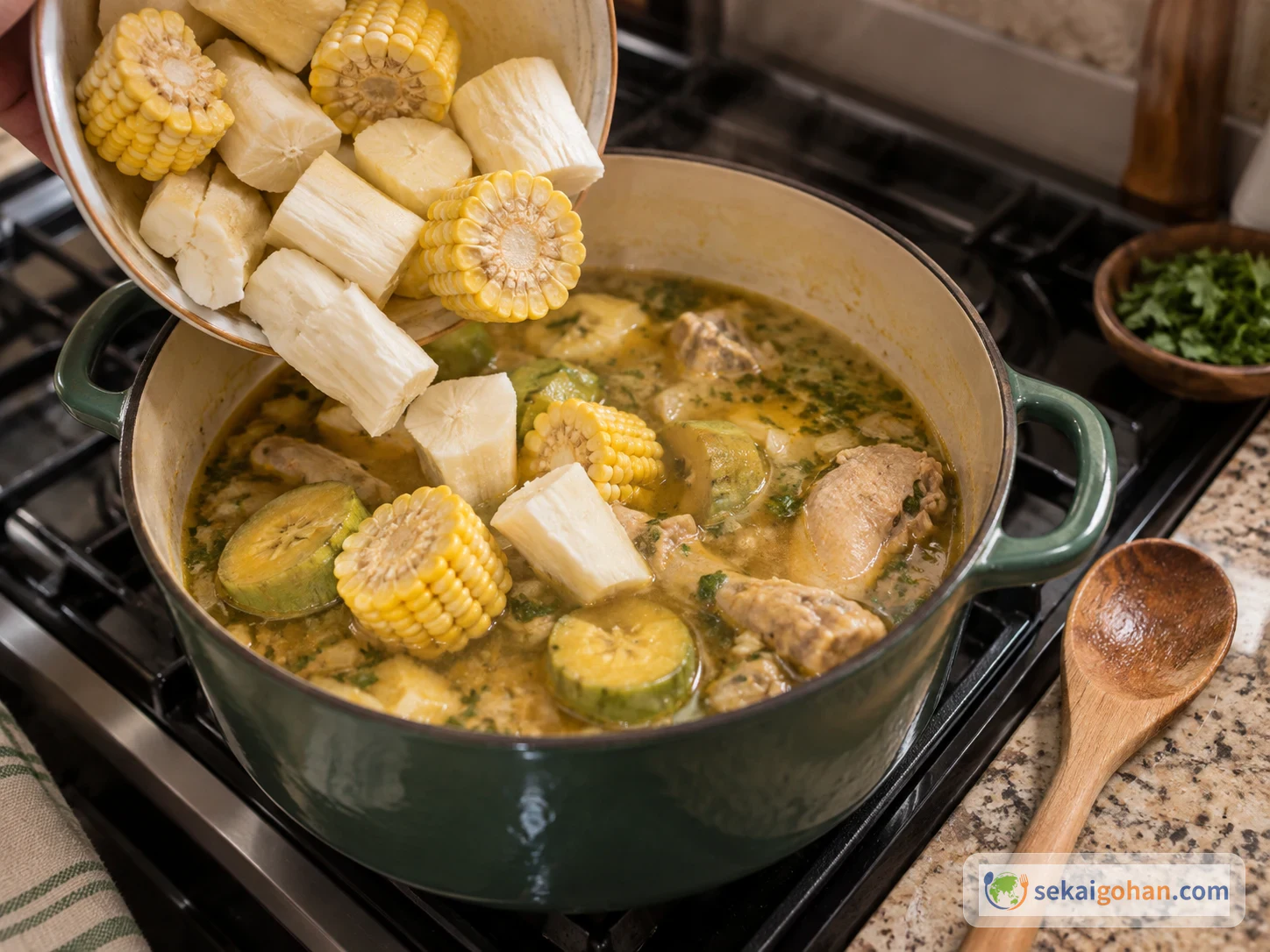
The green plantain is the part people remember. You don't slice it into rounds. You break it by hand into pieces of 1.5 to 2 inches (4 to 5 cm), and starch seeps slowly from the rough broken faces to give the broth its gentle thickness. Once cooked, it turns floury and crumbly, nothing like a ripe banana. Breaking the green plantain by hand into the pot. It's a small step, and it gives the stew its character.
Ingredients (serves 4)
Read the ingredient tables with three roles in mind: meat, root vegetables and sofrito. The meat gives broth and substance, the green plantain and yuca give a satisfying, almost staple-like fullness, and the achiote sofrito carries aroma and color. A mature hen has many bones and sinews and takes longer, so for your first try, use bone-in chicken thighs and drumettes together. Oxtail is there to approach the Ginebra structure, so if you cannot find it, leave it out; do not just add more water to the chicken. More than the kind of meat, keep the order of bone-in meat and root vegetables. That is the key to this pot.
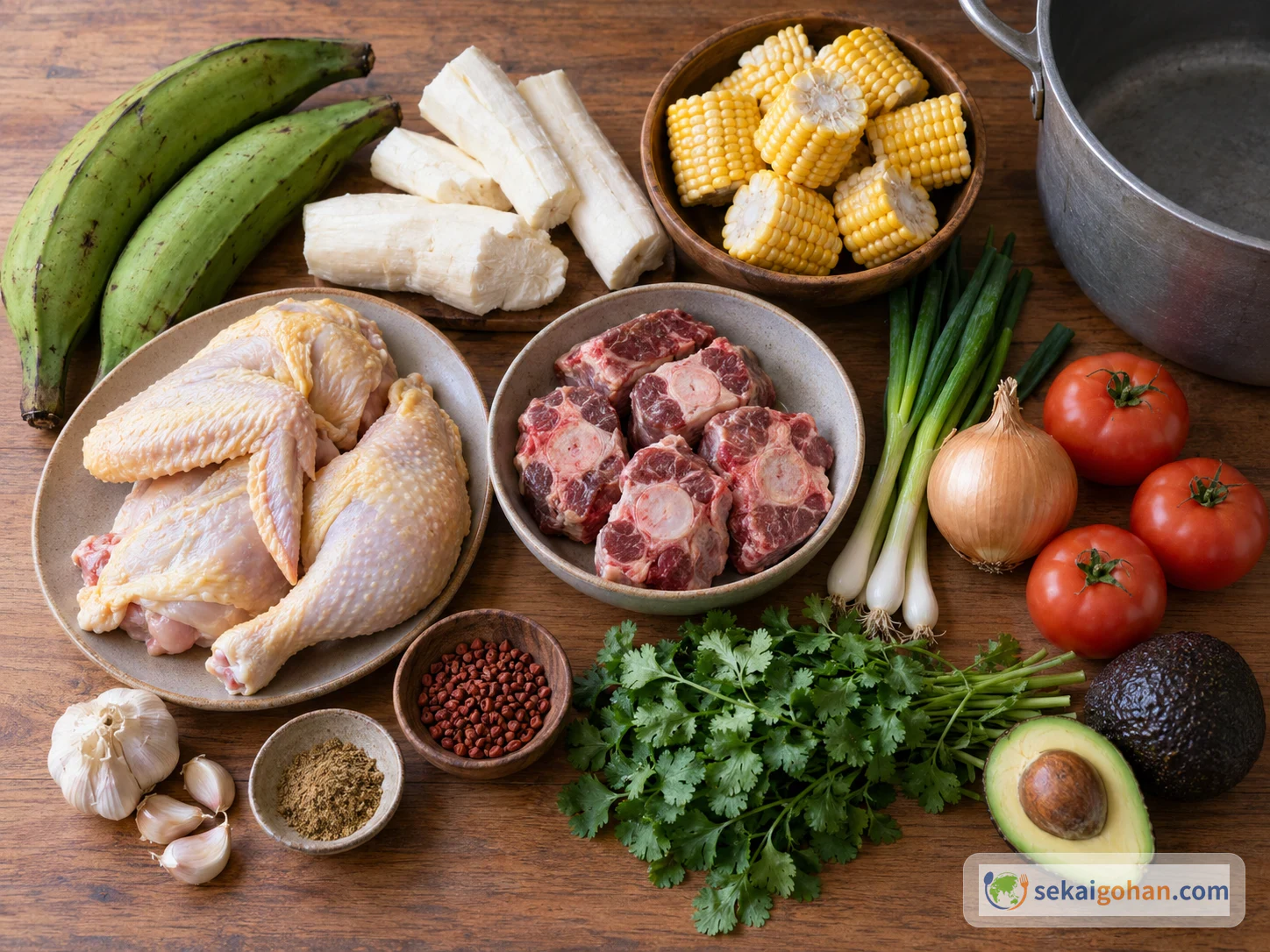
When shopping, prioritize green plantain, yuca and achiote. Ripe bananas, potatoes and powdered ingredients are each something else, not substitutes. Look for yuca under the name yuca or cassava root. If you hesitate, gather plantain, yuca and achiote in that order, and the shape of the pot will not fall apart.
Use separate cutting boards and knives for chicken and beef, or wash them with detergent before using them for vegetables. Check allergen labeling one by one for your family, including avocado, cilantro and hot sauce. Do not wash raw meat, avoid spreading splashes, and cook it through to the center to be safe.
Choosing ingredients and substitutes for sancocho
Bone-in chicken stands in for gallina, though it gives less of the gelatin and deep aroma of a mature hen. Without oxtail, you can increase the chicken to 3 lb (1.4 kg). The broth will be lighter, but even without oxtail, keep the bone-in meat.
Yuca is the root, so buy it fresh or frozen (tapioca starch won't work here). For fresh yuca, peel it and remove the hard core in the center. Frozen yuca goes into the pot still frozen and is the best fallback when fresh is hard to find.
Each of the other swaps changes the dish. Ripe banana, banana chips or sweet potato in place of green plantain change the sweetness and stickiness, so choose a green-skinned, firm cooking plantain. Culantro cimarrón is a local herb with its own aroma, and cilantro stands in only because it's easier to find. Leave out the achiote and you lose both the color and the earthy aroma. What can be swapped is availability; do not force the dish's outline to be the same.
Cut potatoes that hold their shape into 1.5-inch (4 cm) cubes. They soften faster than yuca, so add them 10 minutes later. The texture differs from the yuca version, so think of it as another Colombian root-vegetable pot. Keep the green plantain and achiote as they are, and change only the root vegetable.
If color starts to appear on the bottom of the pot, lower the heat before it does. If needed, add a little broth and move the bottom with a wooden spoon. Do not stir in blackened bits; make a new batch in another pot. Adding water after the burning has spread will not undo it.
Before you start eating, check that the thickest part of the chicken has reached 74°C (165°F) or higher. Do not leave leftovers at room temperature for 2 hours or more; divide them into shallow containers and cool them quickly. In a hot environment, shorten the standing time even further. Eat refrigerated leftovers within 3 to 4 days, and reheat the whole pot to 74°C (165°F). If there is a sour smell, bubbles or sliminess, do not eat it even within the storage period.
Cooking sancocho on a home stove
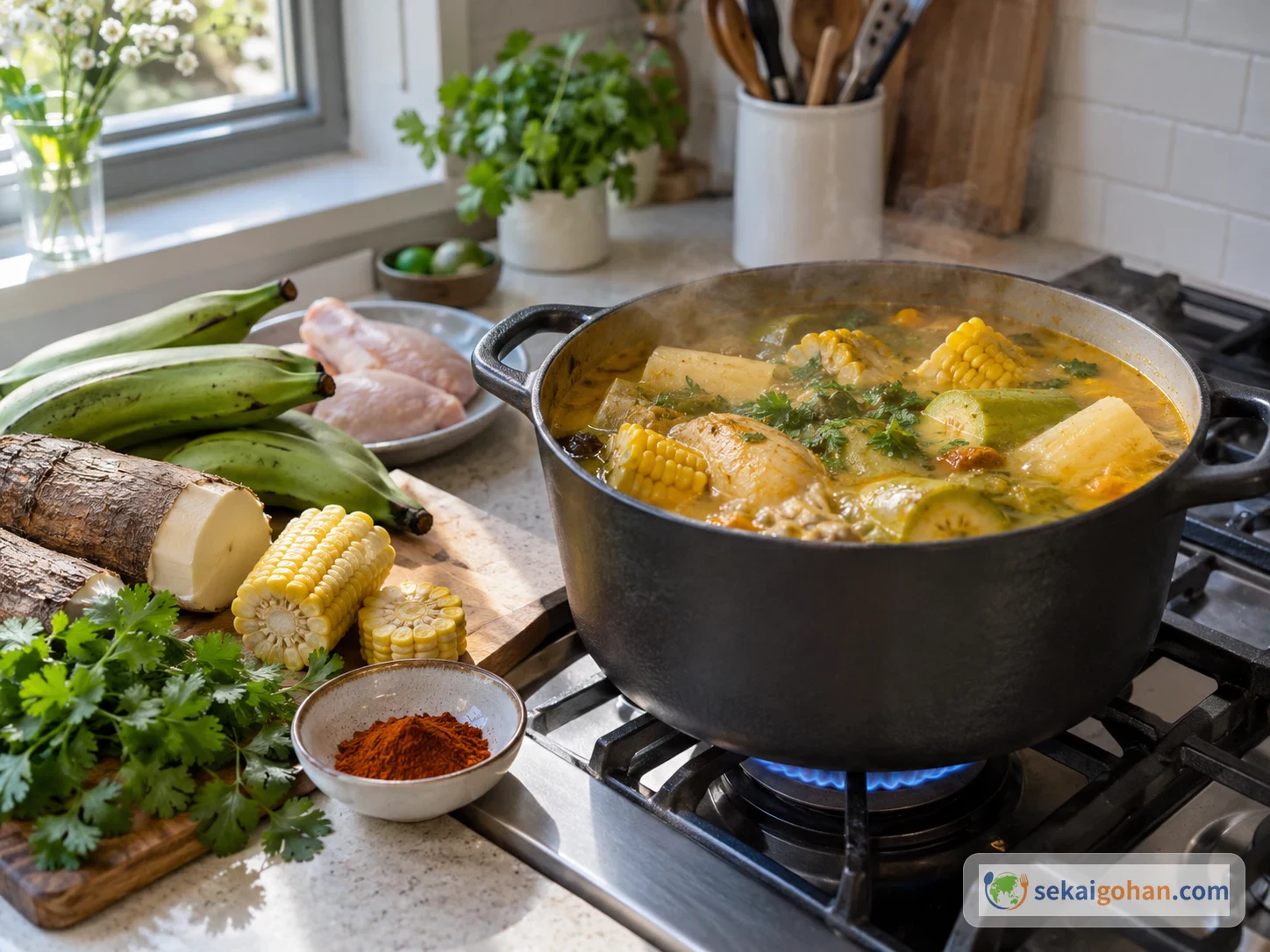
A big outdoor pot doesn't translate directly to a home burner. Use a large heavy pot and keep the boil low. Move the bottom gently with a wooden spoon so the plantain and yuca don't break up, because stirring hard with a metal ladle turns them to mush. Even if you double the recipe, fill the pot no more than about two-thirds.
Go by the water level and the skewer test, not fixed heat settings. Read the pot by how the broth is bubbling and the state of the ingredients, not by heat. If you use a mature hen, cooking times vary a lot from bird to bird. Add the plantain only once the meat is tender and starting to come away from the bone. In every case, finish by checking with a thermometer that the thick part of the chicken has reached 165°F (74°C) or higher.
Serving, storing and varying sancocho
At the table
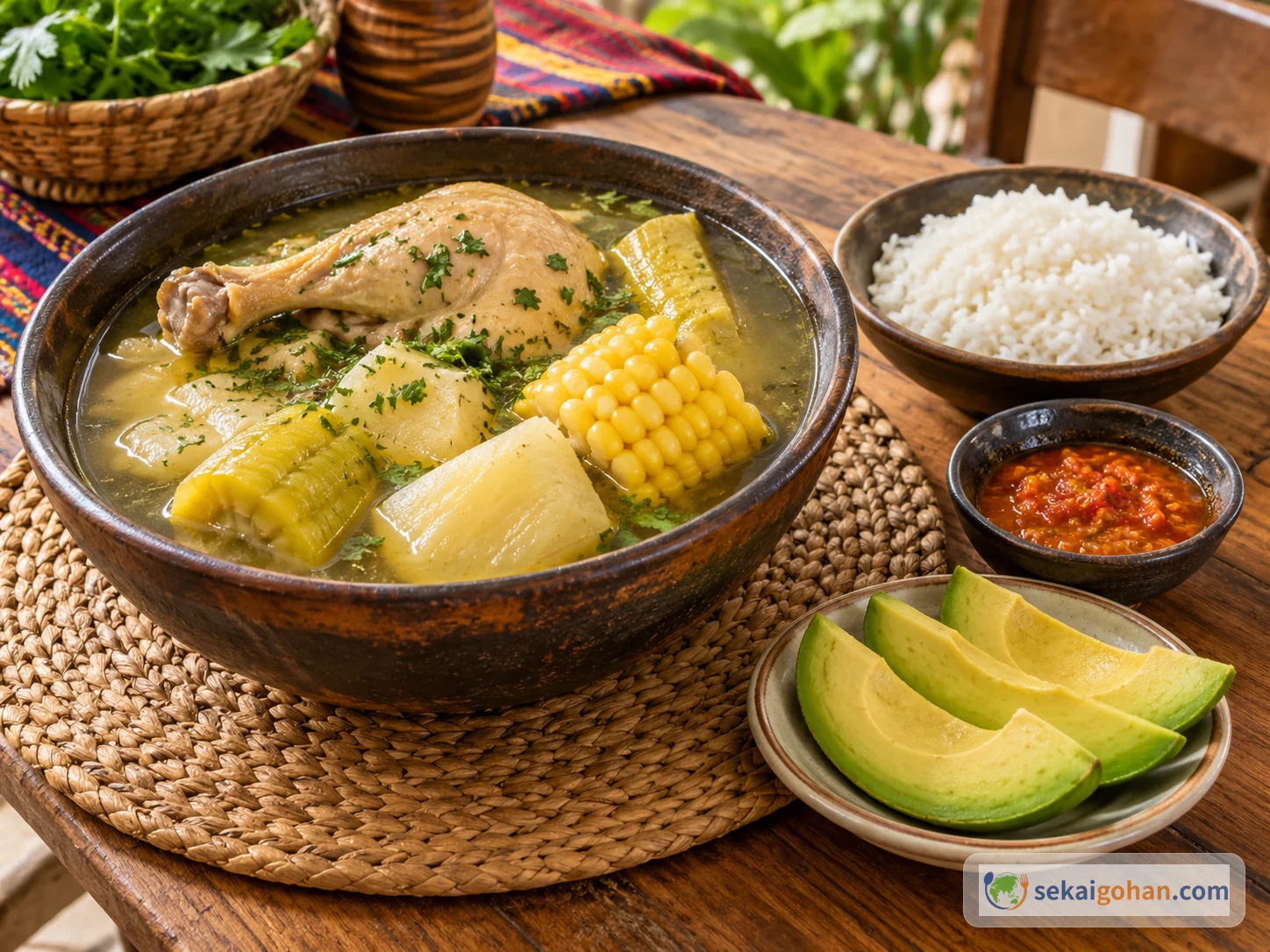
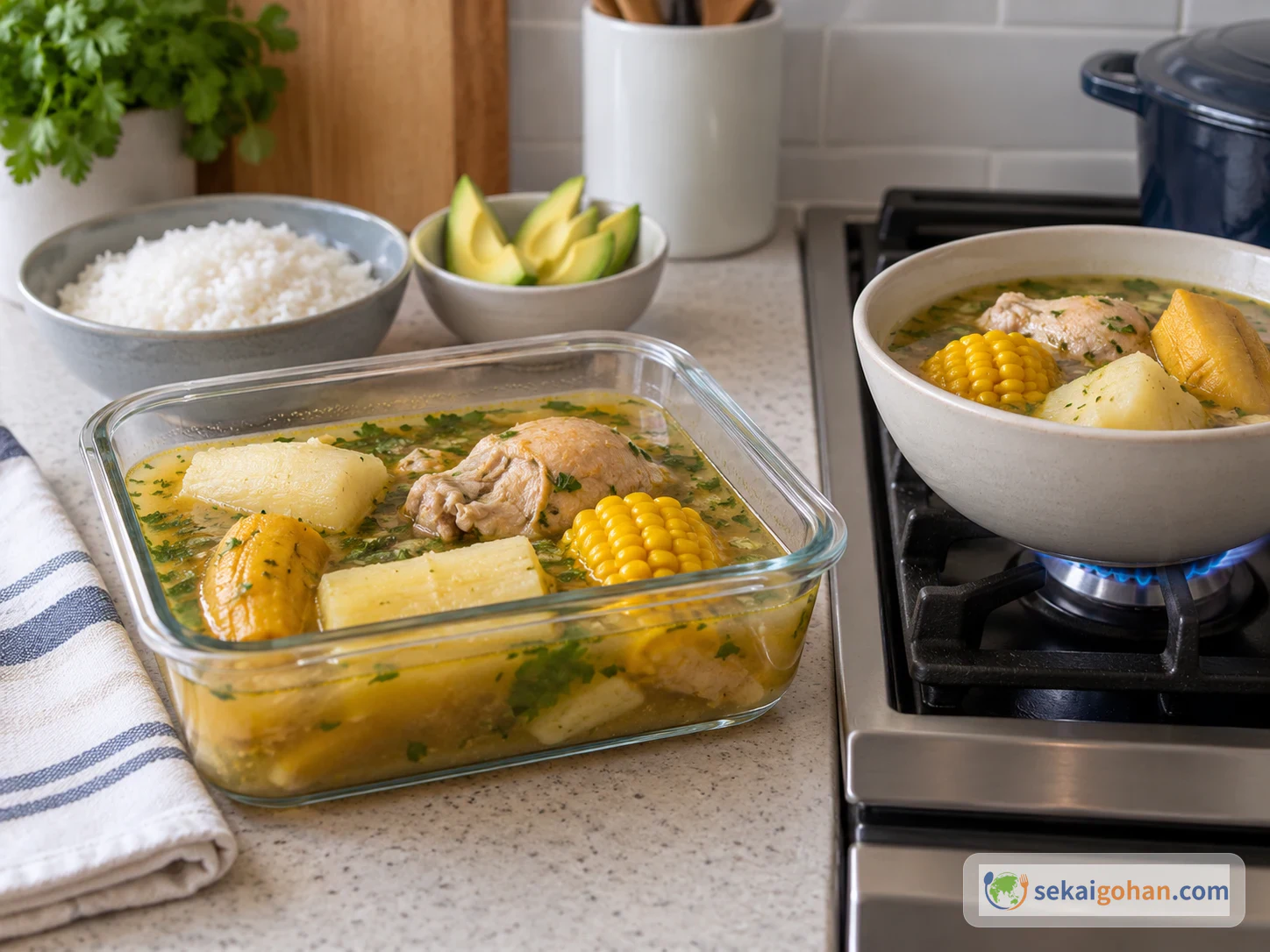
Put the meat and root vegetables in the bowl first and ladle the hot broth over them, with avocado, white rice and ají picante on separate plates. Scatter the cilantro leaves last. When the color of the sofrito has spread evenly through the broth, it's ready. Taste the first mouthful plain so you get the meat broth and the texture of the plantain and yuca. From the second mouthful on, add heat and acidity at the table, so everyone seasons their own bowl. Browning the boiled chicken again, as some Ginebra households do, adds toastiness without changing the broth. Serve the ingredients on one plate and the broth on another.
The next day
Divide leftovers into shallow containers and start cooling within 2 hours. Keep them refrigerated for 3 to 4 days at most, and don't leave the pot out at room temperature. Overnight, the root vegetables soak up liquid and the broth thickens. To reheat, bring the broth to a boil and get the center of the chicken to 165°F (74°C). If the root vegetables look ready to fall apart, take the solids out and warm them separately. Loosen the broth with boiling water, then adjust salt and heat at the table.
Treat a fish version as its own dish. In the Chocó fish sancocho, the fish goes in only for the last 10 to 15 minutes. Draw the salt out of smoked or salted meat first, and season the root vegetables and broth starting from half the usual salt. Coconut milk and the other root vegetables of coastal versions belong in those recipes, not in this Valle pot.
FAQ
What if I do not have oxtail?
Leave it out and increase the chicken to 3 lb (1.4 kg). The broth is lighter, but keep the meat on the bone.
If I use a mature hen, when do I add the plantain?
Add it once the meat is tender and starting to come away from the bone. Hens vary a lot, so go by the meat, not the clock. At the end, confirm that the thick part reaches 165°F (74°C) or higher.
I want to know about other Colombian dishes
Ajiaco is Bogotá's highland soup of chicken and potatoes. Mute, from Santander, stews hominy, beans and several meats. For an Andean table built from several dishes, there's bandeja paisa.