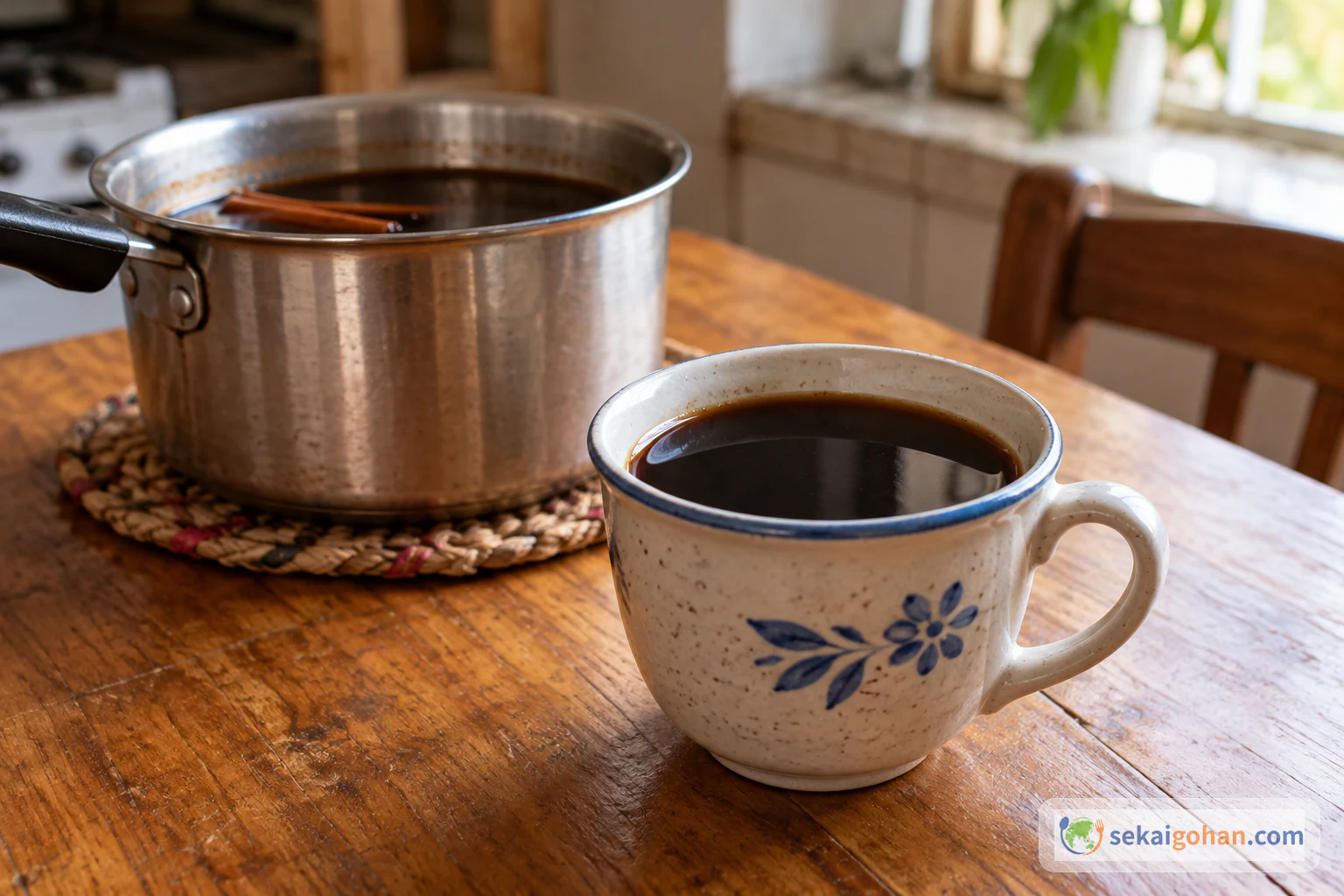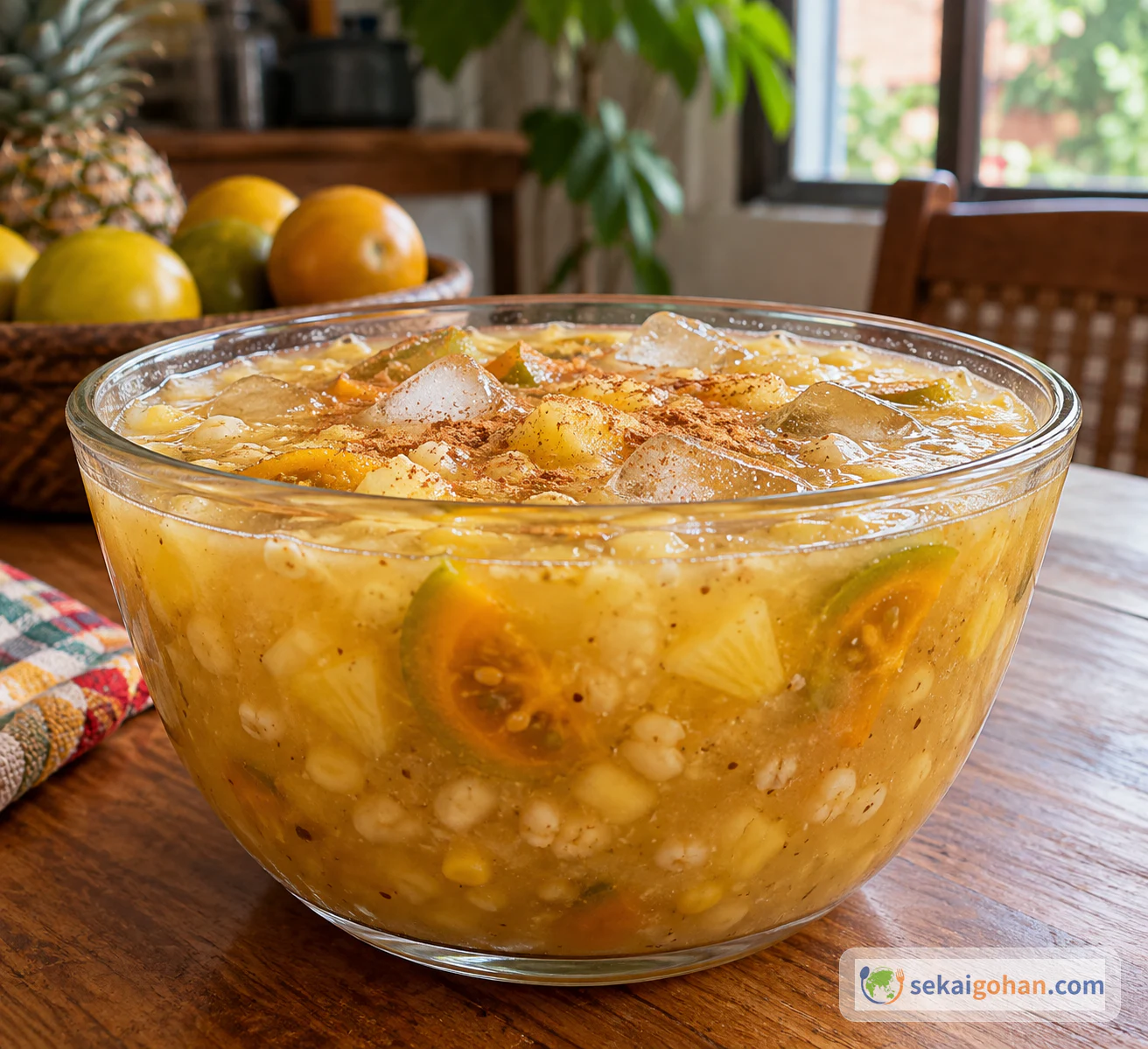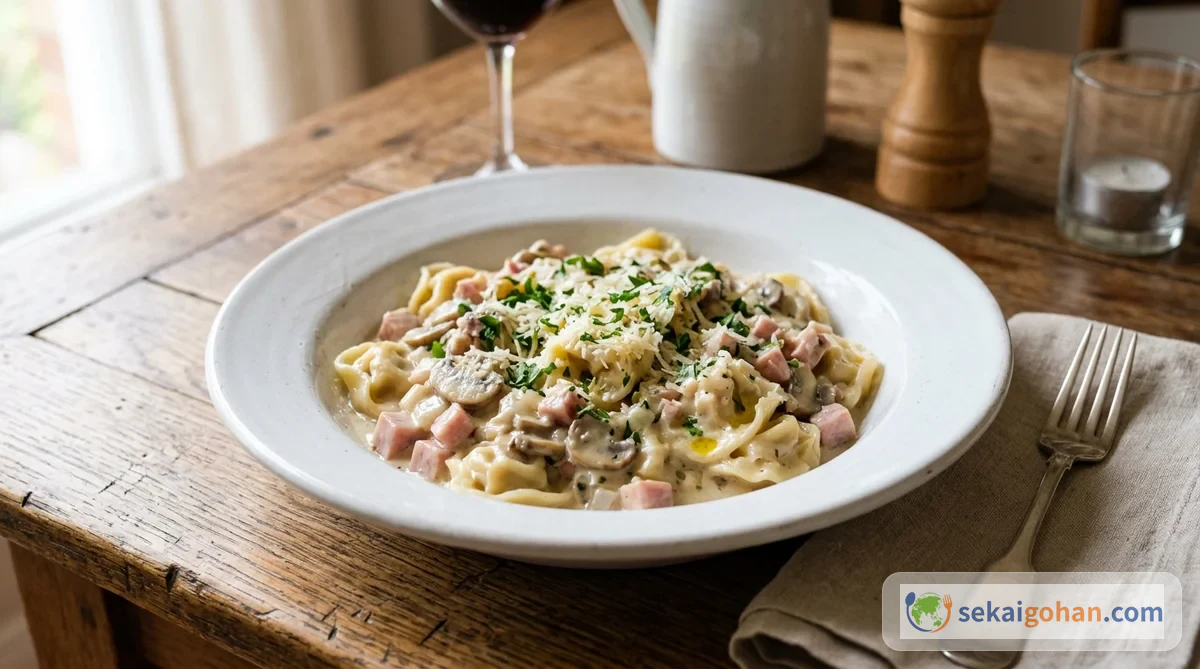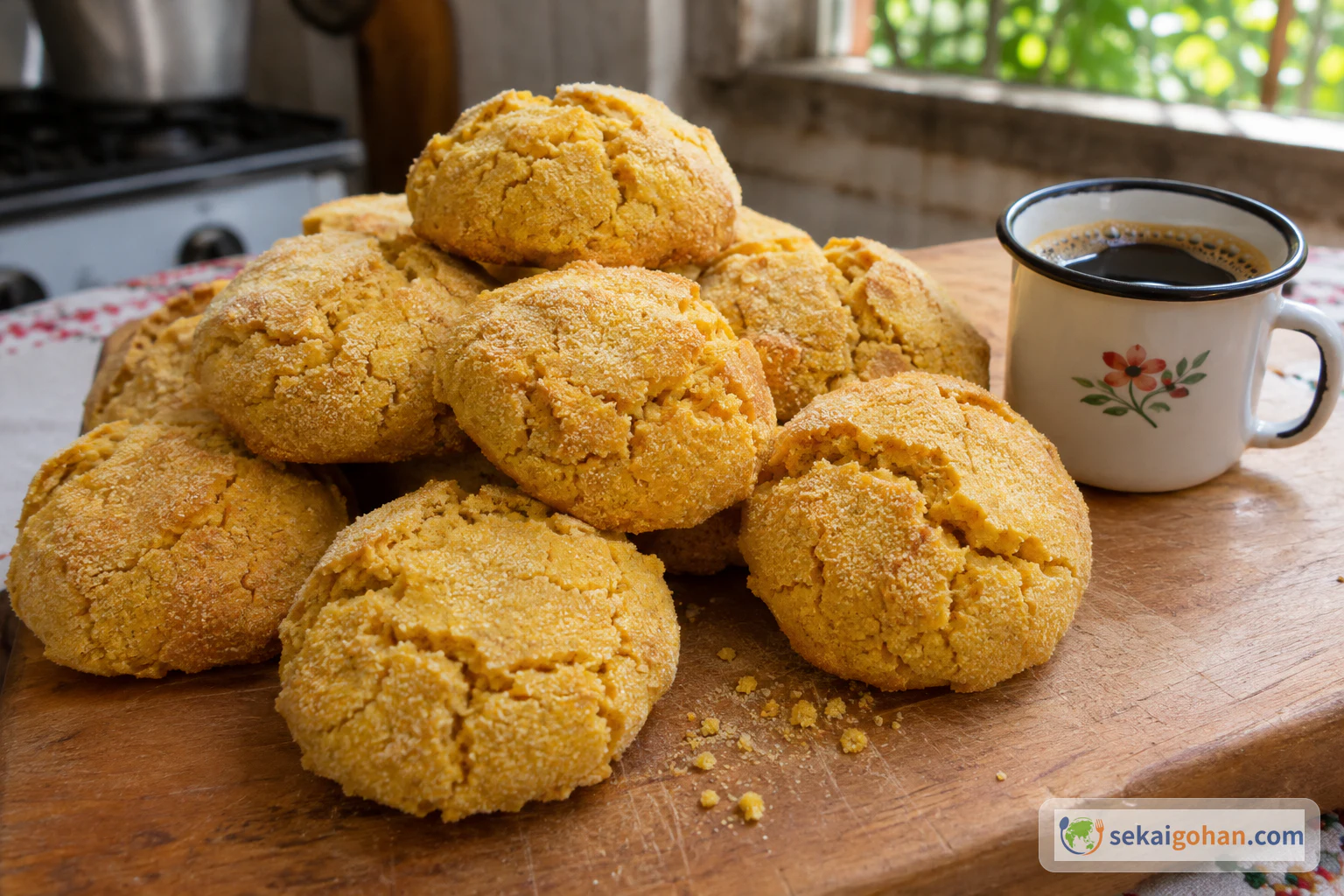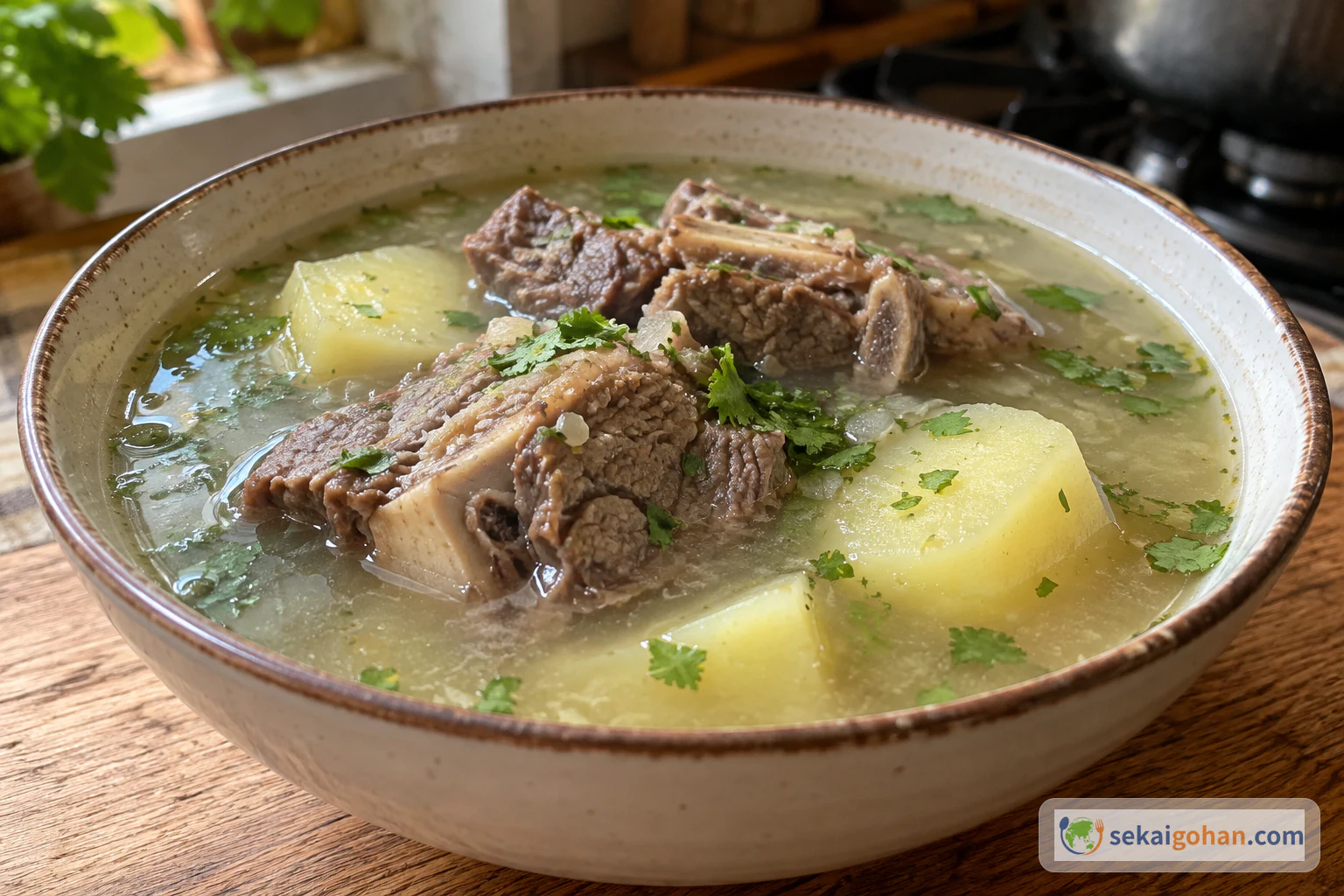
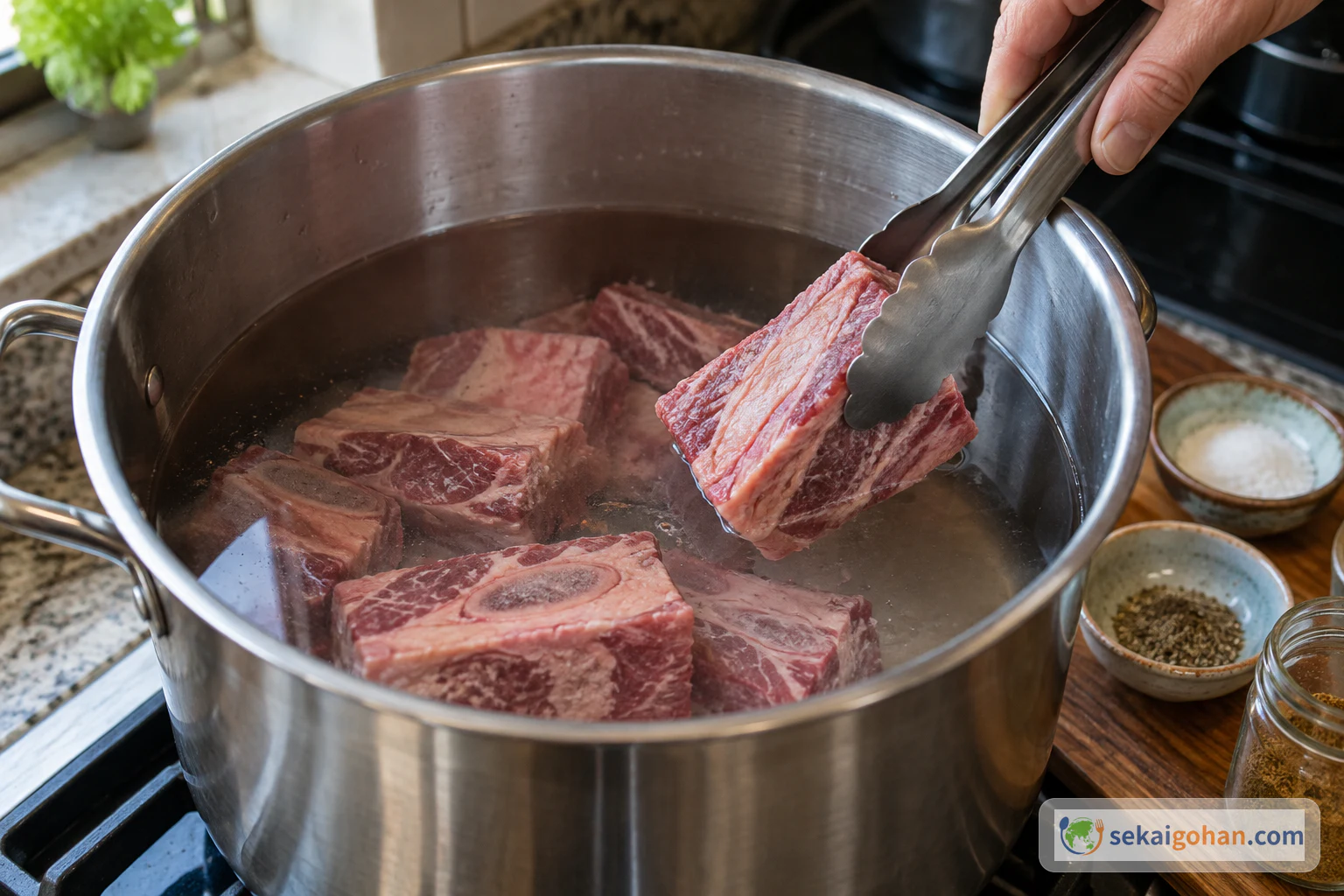
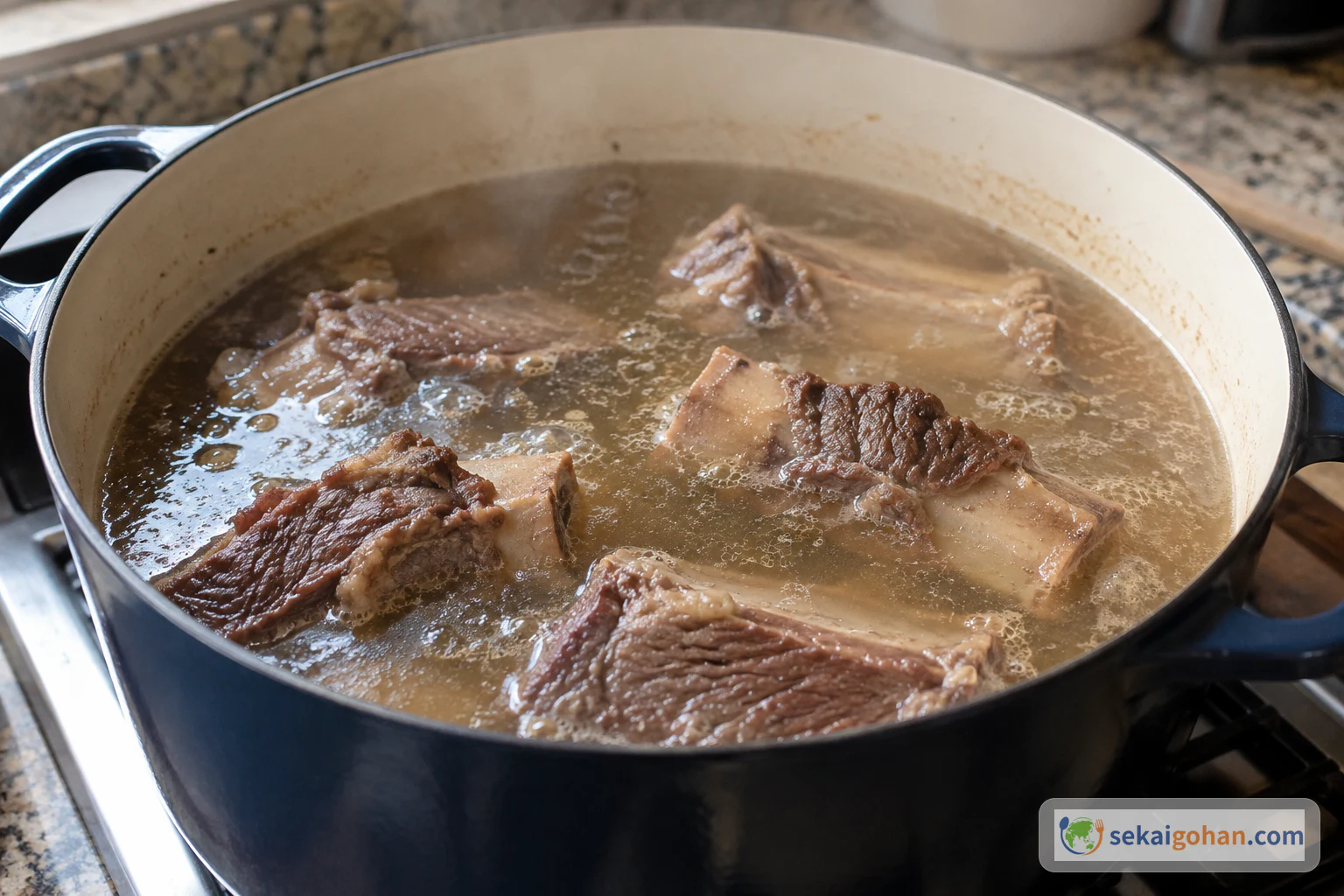
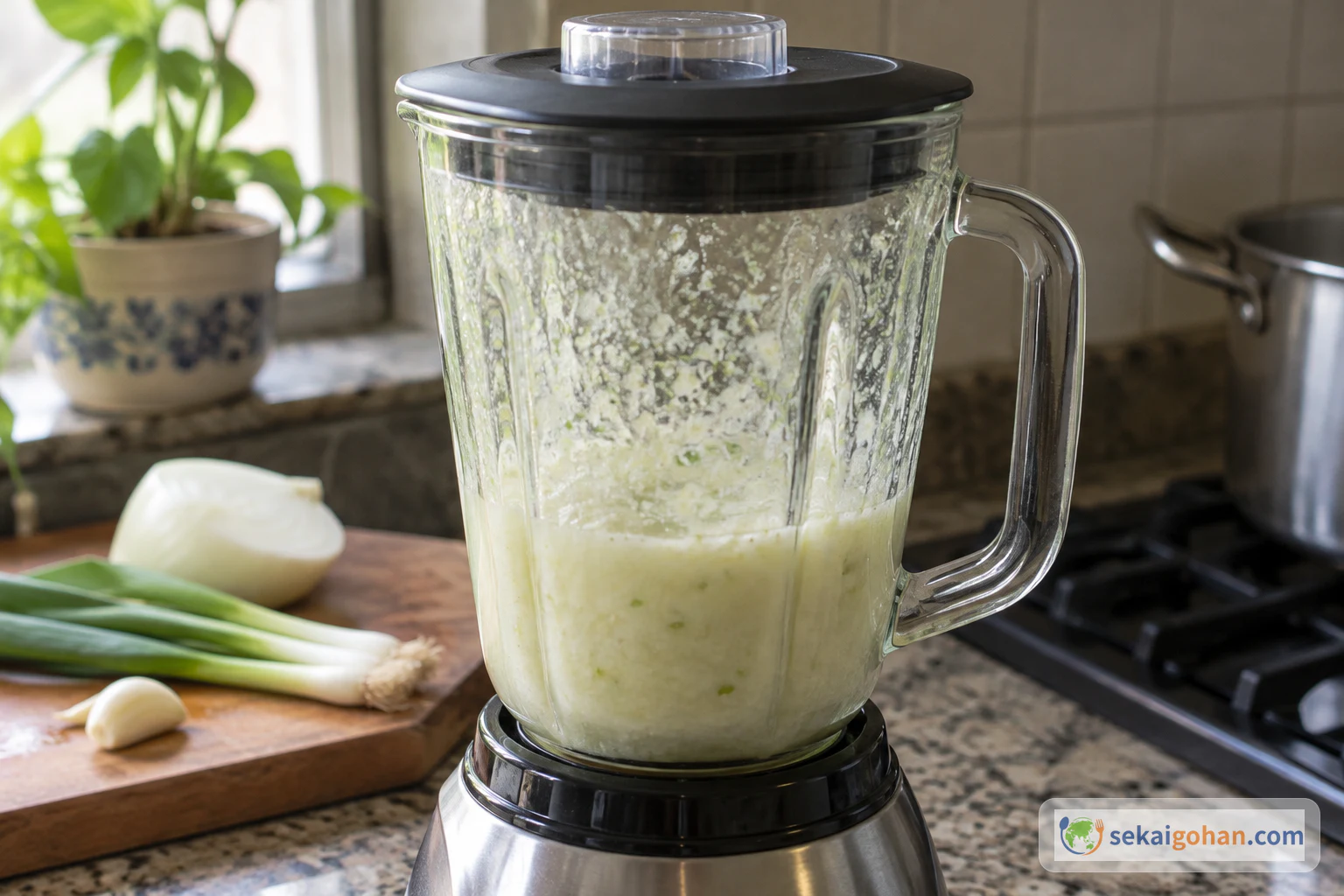
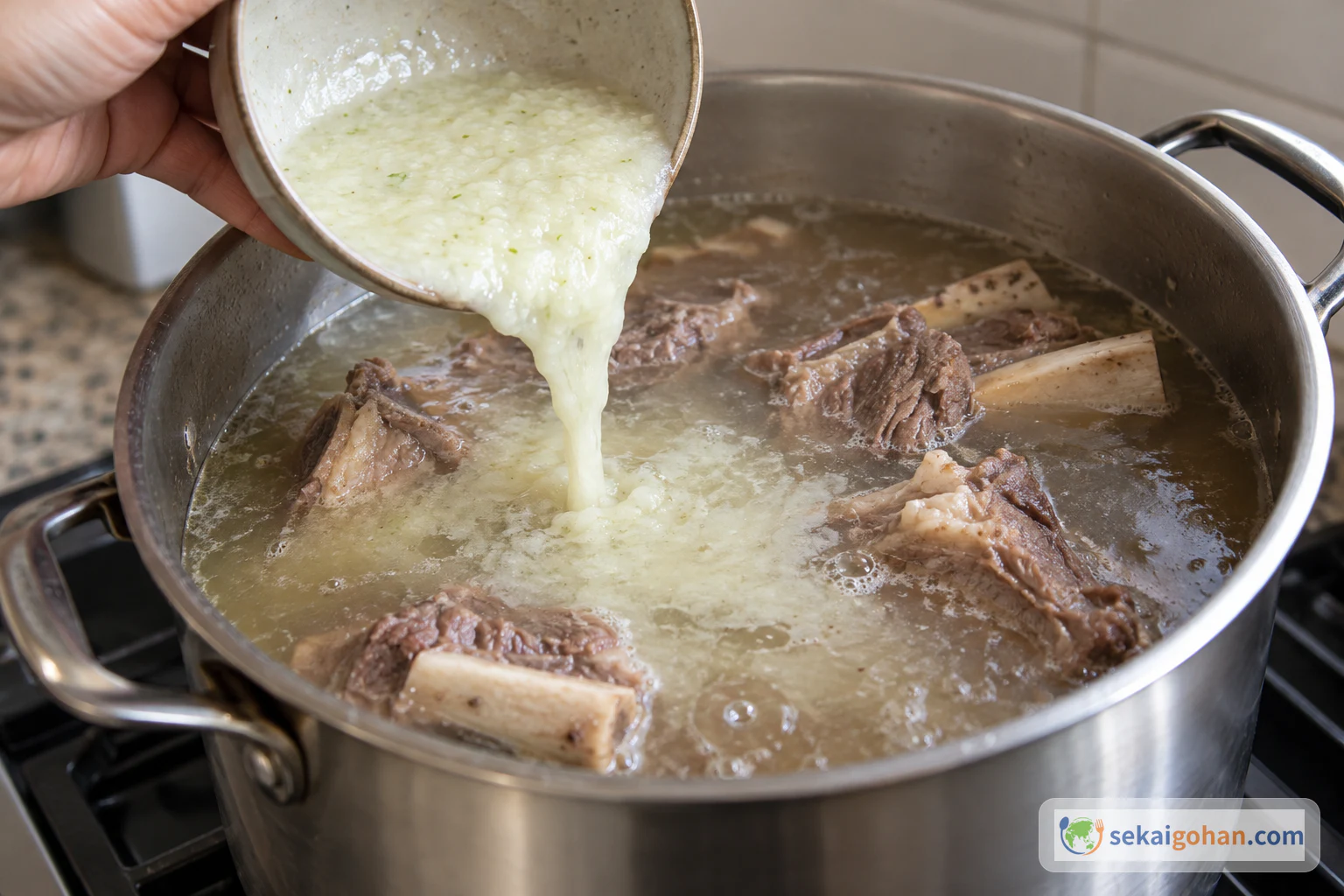
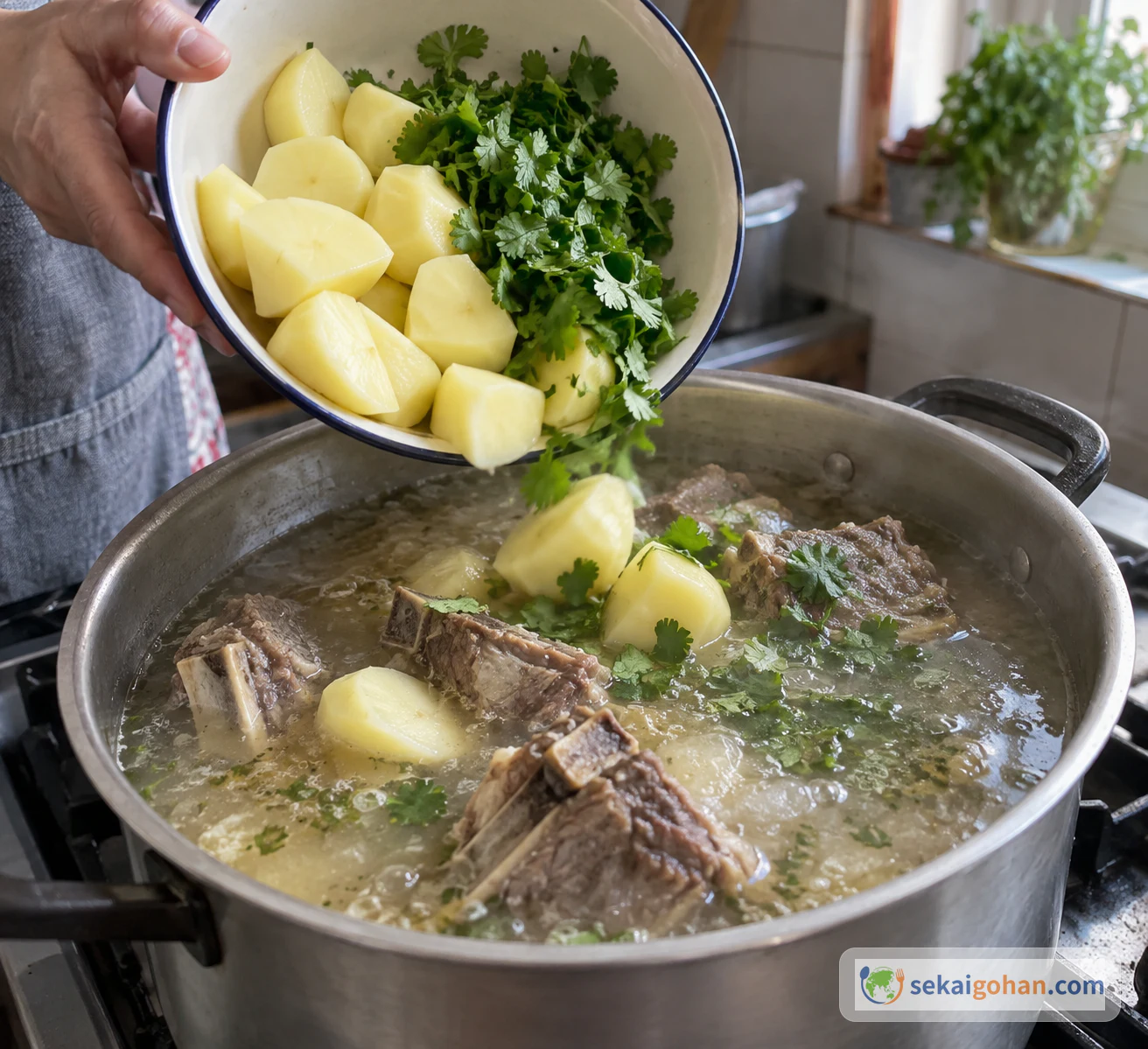
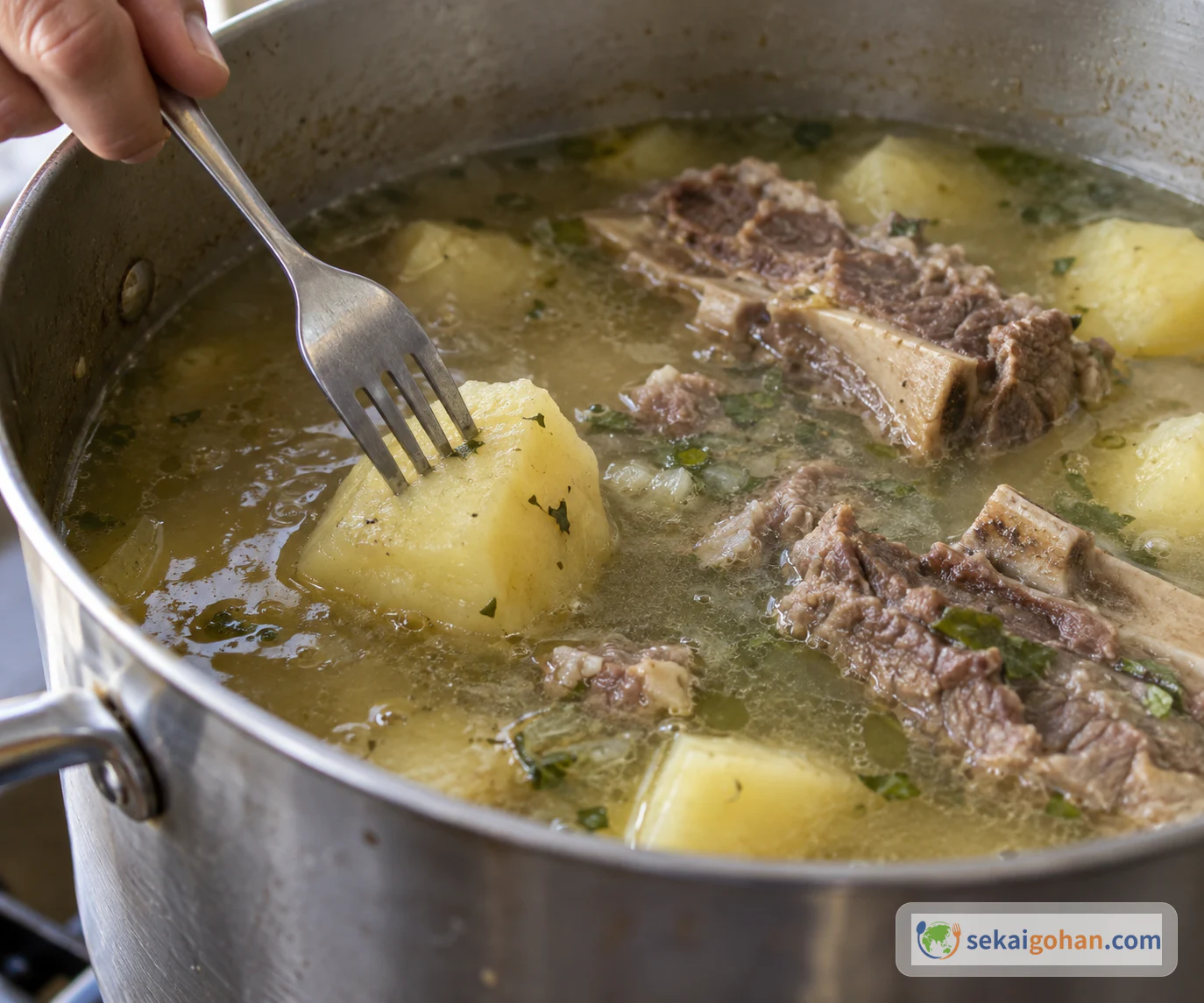
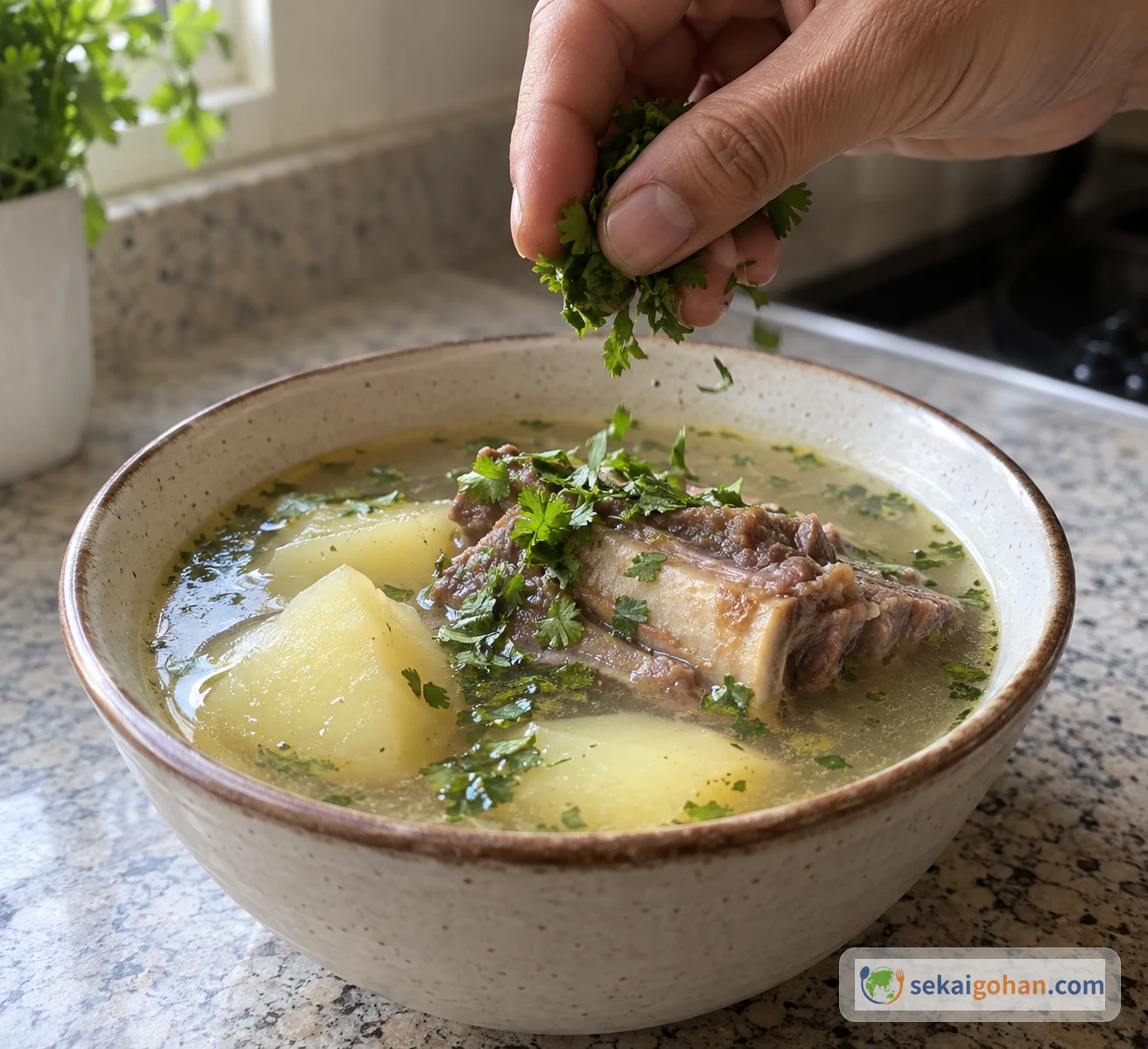
A deep bowl holds a bone-in piece of beef rib, chunks of peeled potato and a scattering of fresh cilantro, with steam rising off a pale, savory broth. In Colombia, that bowl is breakfast. Caldo de costilla is cooked slowly. Short ribs simmer with cumin, salt and pepper, then a blended mix of onion, scallions and garlic goes into the pot, and potatoes and cilantro finish it. The only real challenge is timing: you want the meat tender and the potatoes holding their shape at the same moment.
Caldo de Costilla in Bogotá and Beyond
Caldo means broth and costilla means rib, so caldo de costilla is simply "rib broth." Colombian recipes call the cut costilla de res (beef rib) and the potatoes papa.
Colombian homes make many versions of caldo de costilla, but they share the same core of water, beef ribs and potatoes. The dish is linked to the Cundiboyacense zone, the highland area around Bogotá, though you'll find it well outside that region too. It's served late at night and at places where transport workers gather.
Bogotá claims the soup as a cultural expression of the city. At its gastronomy congress, "El Sabor de Nuestra Casa," the cooking demonstrations featured caldo de costilla alongside the Bogotá breakfast.
At home, the details shift. Some cooks add carrot, and the type of onion, the garlic, cumin and herbs, and even the use of broth powder vary from recipe to recipe. Whatever the version, it's a good, sustaining bowl.
Ingredients: Short Ribs, Potatoes and a Blended Onion Base
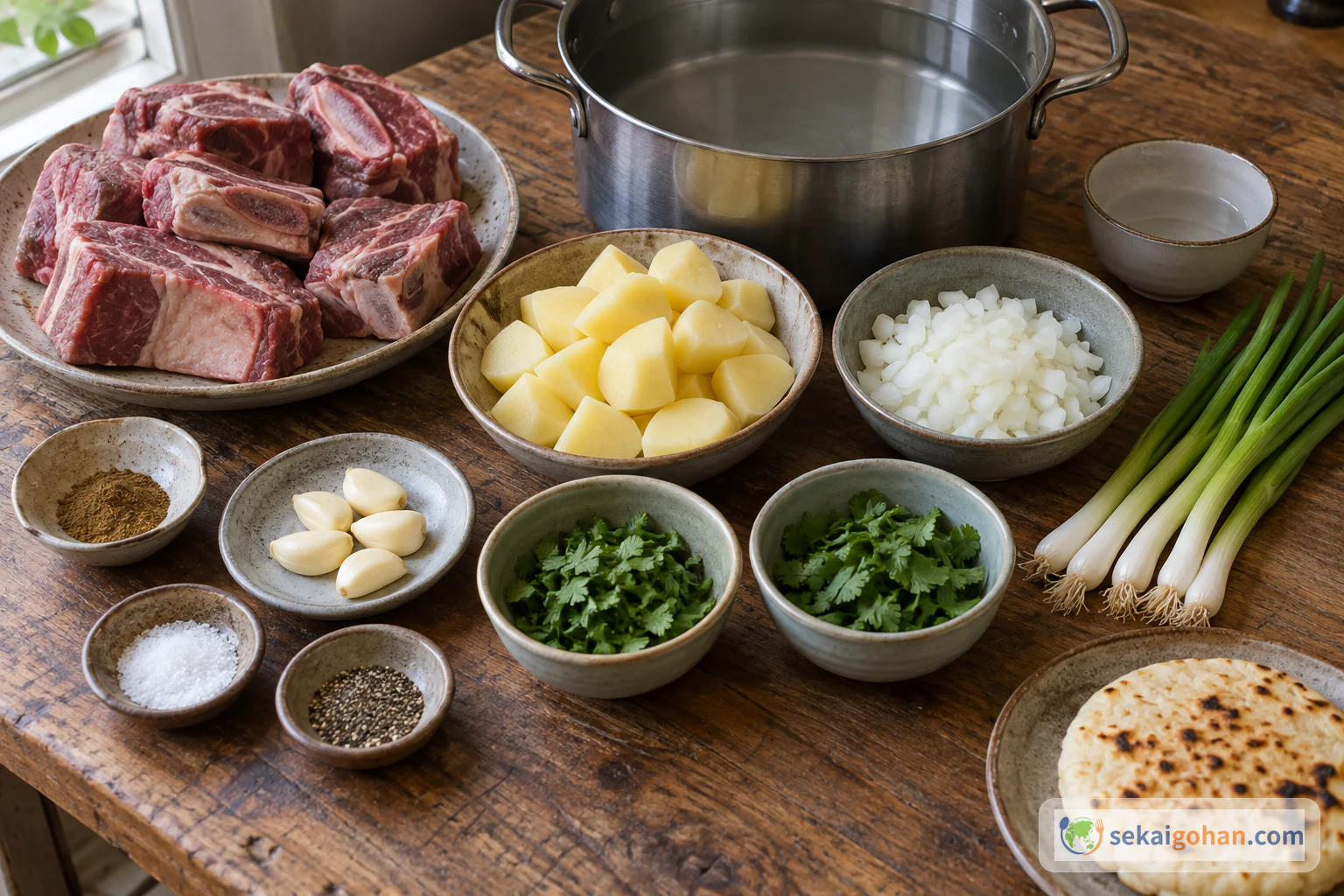
This recipe makes 4 servings. Water is used twice. Put the 15 cups in the pot at the start. The ¼ cup for the blender is extra, so don't take it out of the 15 cups.
Check the labels on the beef you buy and on any arepa product. Do not assume the meal is allergen-free without reading what is in each product.
Equipment
- A large, deep pot with plenty of room above about 15 cups of water plus the ribs and potatoes
- A blender
- A knife and cutting board
- A ladle, plus a skimmer if you want to remove foam
- A clean fork for testing the potatoes
Choosing Ribs, Potatoes and Herbs for Caldo de Costilla
1 cup = 240 ml and 1 teaspoon = 5 ml.
- 3 pounds of ribs is about 1.36 kg, weighed with the bone.
- 1 pound of potatoes is about 454 g.
- 15 cups of water is about 3.6 L.
- ¼ cup of blender water is 60 ml.
- 1 cup of chopped onion is 240 ml.
- ½ cup of chopped cilantro is 120 ml, or 60 ml for each half.
The onion and cilantro amounts are volumes, not weights.
Short ribs. The 3 pounds is the weight of bone-in ribs. The same weight of boneless meat would be far more meat than the recipe intends. Bone-in beef shank works too, but its different balance of bone and fat gives the broth a different taste.
Scallions. Use slender green onions. Colombian recipes often call for cebolla larga, a long onion. If all you can find are thick long onions or leeks, keep in mind that six of those is a much larger amount than six slender scallions.
Potatoes. Potatoes that hold their shape are easier to keep intact. Floury ones break down more readily and thicken the broth.
Cilantro. Use fresh coriander leaves. Chop the whole ½ cup at once, then divide it into two equal portions, so you don't add a second full ½ cup by mistake.
Method: Ribs First, Then the Onion Base, Then Potatoes
The times below depend on how thick your ribs are. Before the potatoes go in, check the meat with a fork, not the clock.
Follow these steps with leftovers and raw meat:
- Heat food until the center reaches 167°F (75°C) for at least 1 minute.
- Keep raw meat from contaminating other foods.
- Divide leftovers into shallow containers, cool them quickly and refrigerate them.
- Reheat to about 167°F (75°C) or above.
This is general household advice, not a guarantee for this dish.
Fixing Common Caldo de Costilla Problems
| Problem | Likely cause | What to do |
|---|---|---|
| Ribs still tough when it's time for potatoes | Thick ribs, or the simmer was too gentle to make progress | Keep simmering before you add the potatoes and check again with a fork. Let tenderness decide |
| Potatoes falling apart | They went in before the meat was ready, or the pot boiled hard | Add potatoes only once the meat is tender, keep a gentle simmer and start testing them early. Floury varieties break down more easily |
| Broth looks greasy | Fat from the ribs on the surface | Spoon off some of the surface fat if you like; a little can stay |
| Broth looks cloudy | The blended onion base, which is expected | Nothing to fix. Keep a gentle simmer so it doesn't turn murky |
| Broth tastes flat | Not enough salt for this volume of water | Taste and adjust the salt and pepper when the potatoes go in, and again before serving |
| Cilantro tastes dull | All of it was cooked | Save the second half for the bowls so its fresh aroma stays on top |
Serving and Variations
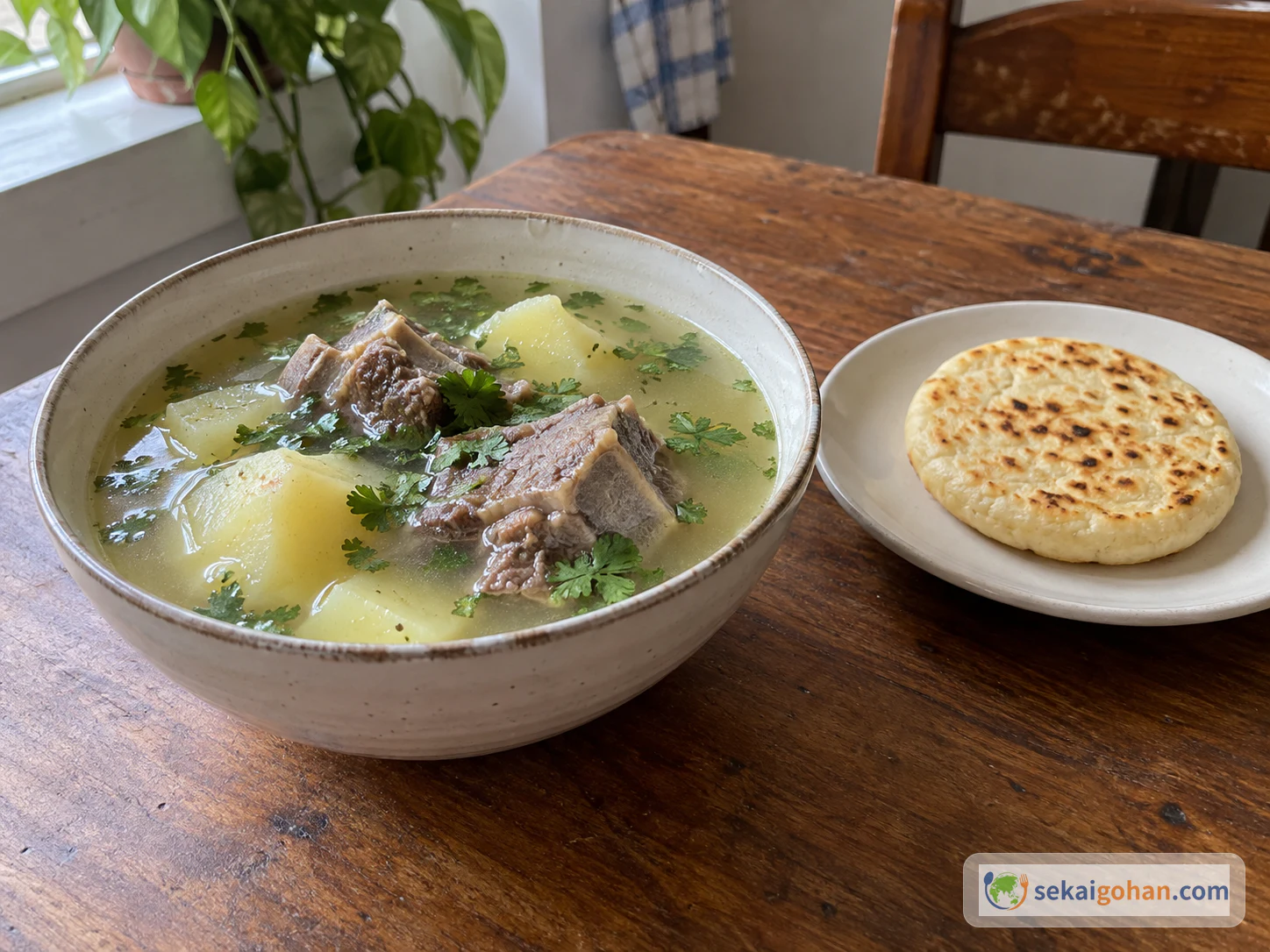
Arepa, ají, avocado and white rice all go well with caldo de costilla. A plain arepa on the side is the simplest way to turn the bowl into a full breakfast.
Home cooks change the pot in a few ways. Some add carrot. One version garnishes with chopped onion along with the cilantro, and seasonings differ from kitchen to kitchen, with some cooks using broth powder. Some Colombian recipes use a pressure cooker, though the timing depends on the cooker and the cut.
For more of the country's dishes, explore Colombian recipes.
Frequently Asked Questions
Is caldo de costilla the same as sancocho?
No. Caldo de costilla is a beef-rib broth built around ribs and potatoes. Sancocho is a fuller soup with several ingredients; chicken sancocho (sancocho de gallina), for example, is built on chicken rather than beef ribs.
Why isn't my broth clear?
The onion, scallion and garlic mixture is blended and stirred into the pot, so the broth turns pale and slightly cloudy. That's how it should look.