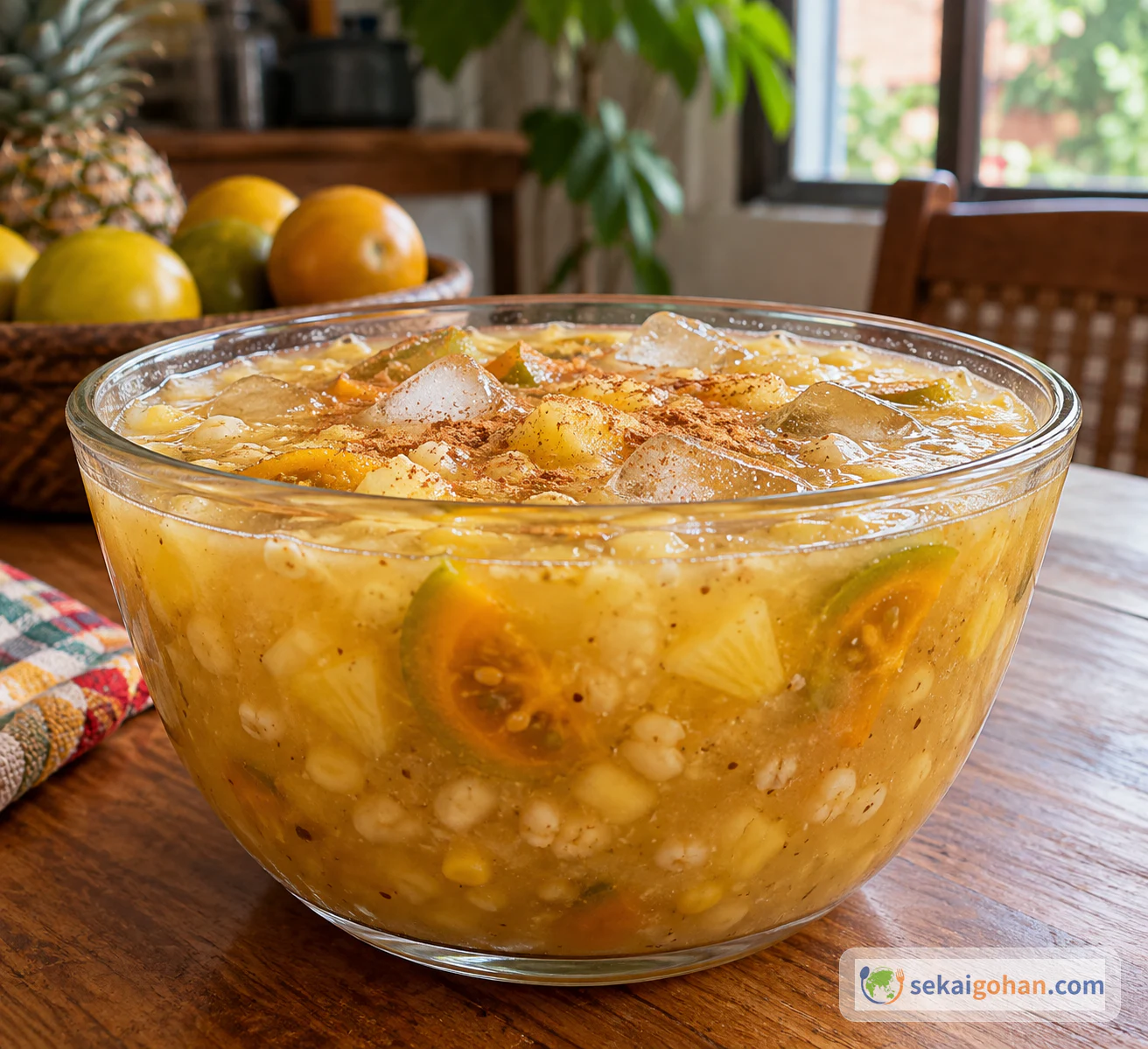
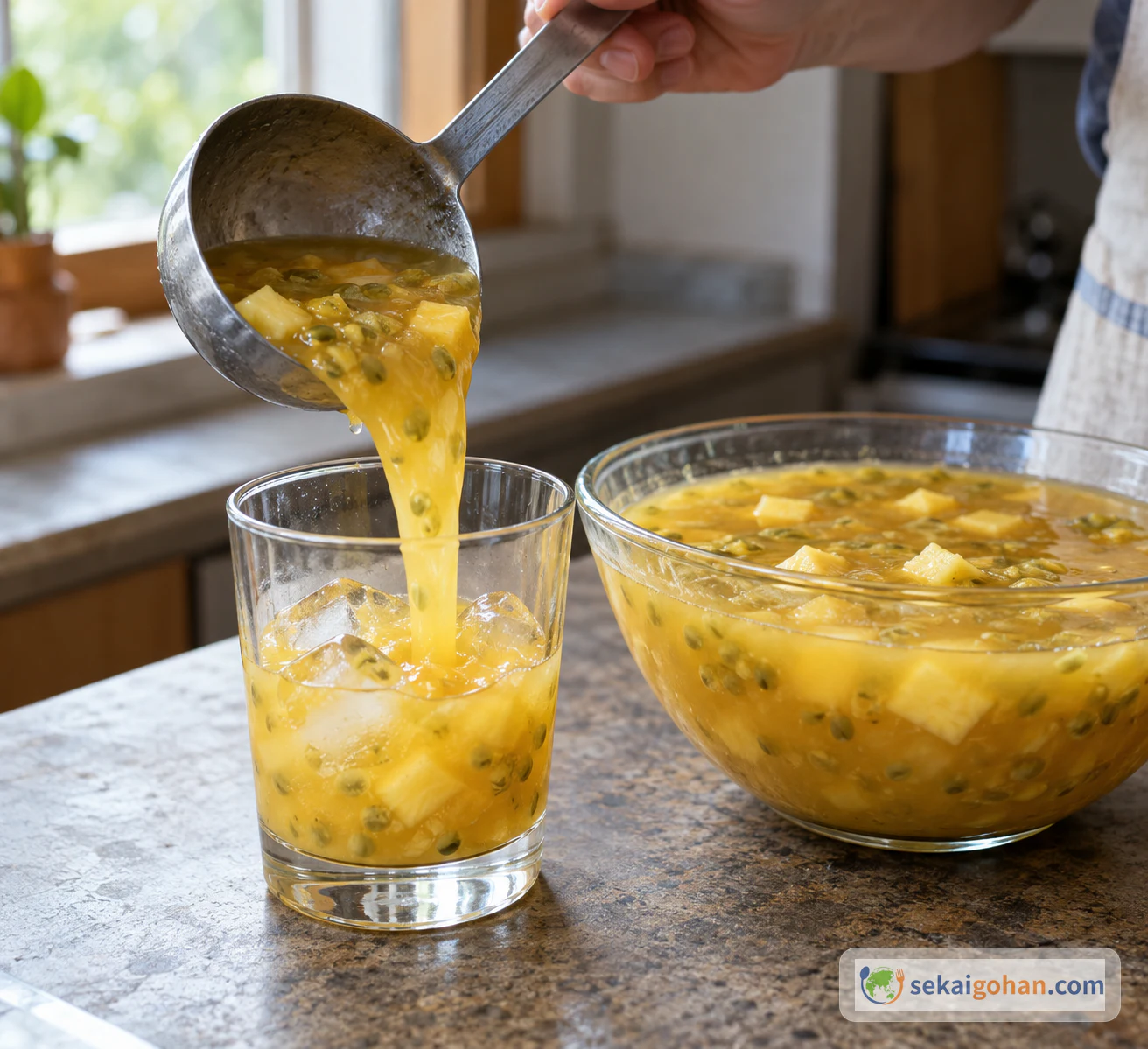
On a hot day in Cali, champús comes to the table cold, with ice in the glass. It is thick enough that you notice the corn but still easy to drink. The sharp, fruity tartness of lulo cuts through the molasses-like sweetness of panela, and there are soft bits of pineapple in every sip. This is champús valluno, made with white cornmeal and popular throughout Colombia's Cauca region.
About Champús Valluno
In Cali, Evergista Gómez Balanta is known for keeping the tradition of champús alive. As a child, she watched her grandmother and mother make it at home during Semana Mayor, Holy Week, in a large pot that was poured out for the whole family.
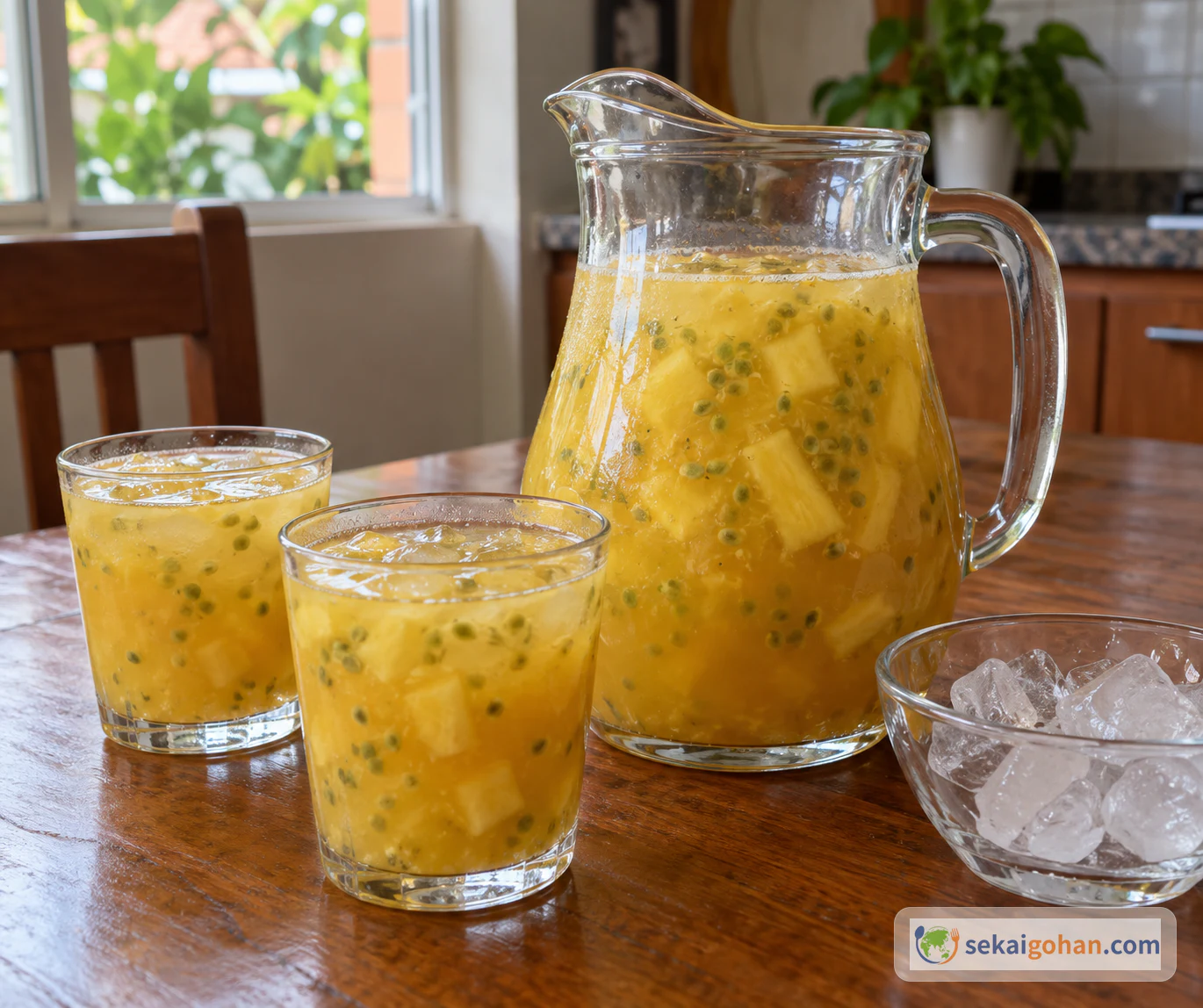
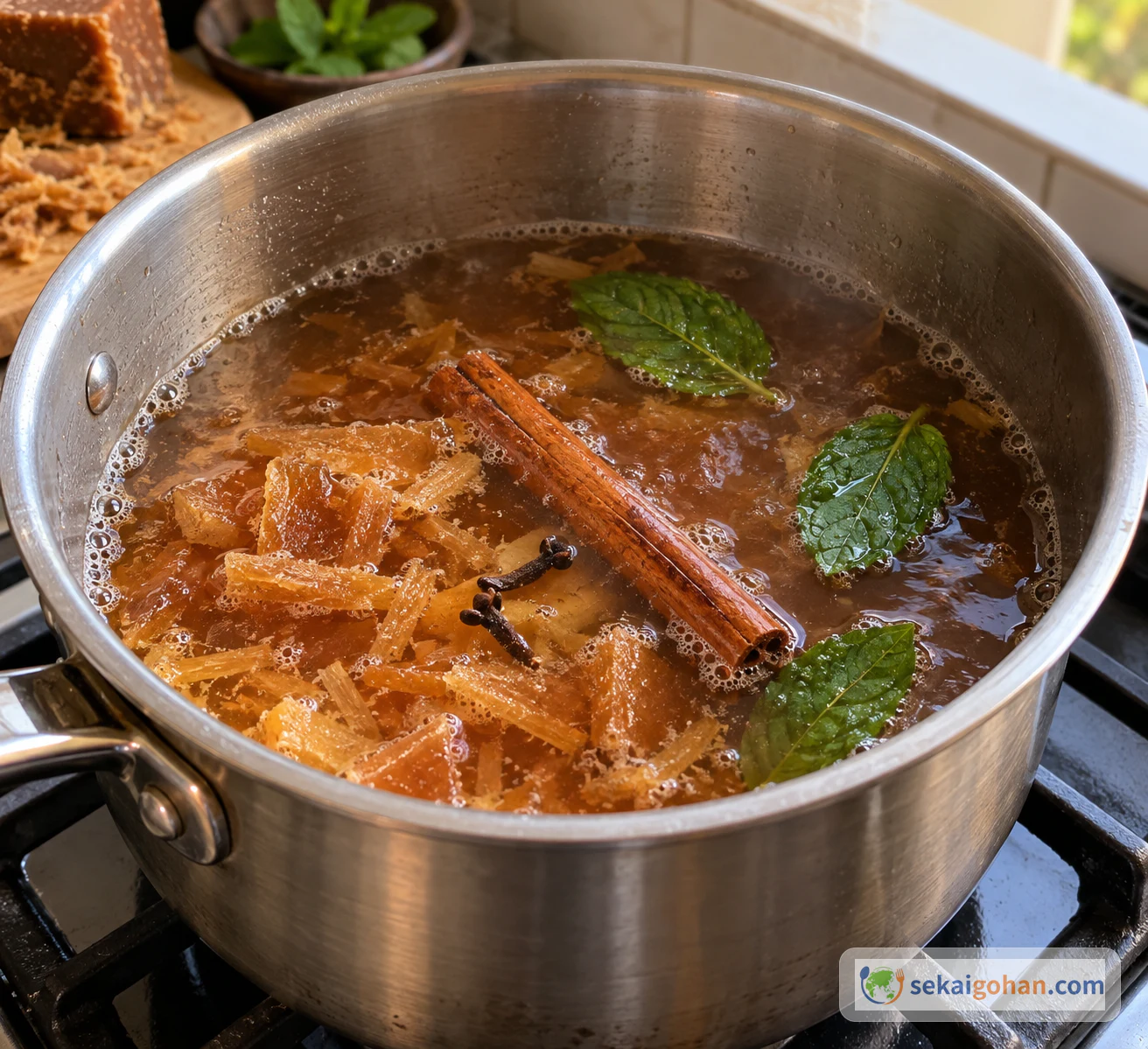
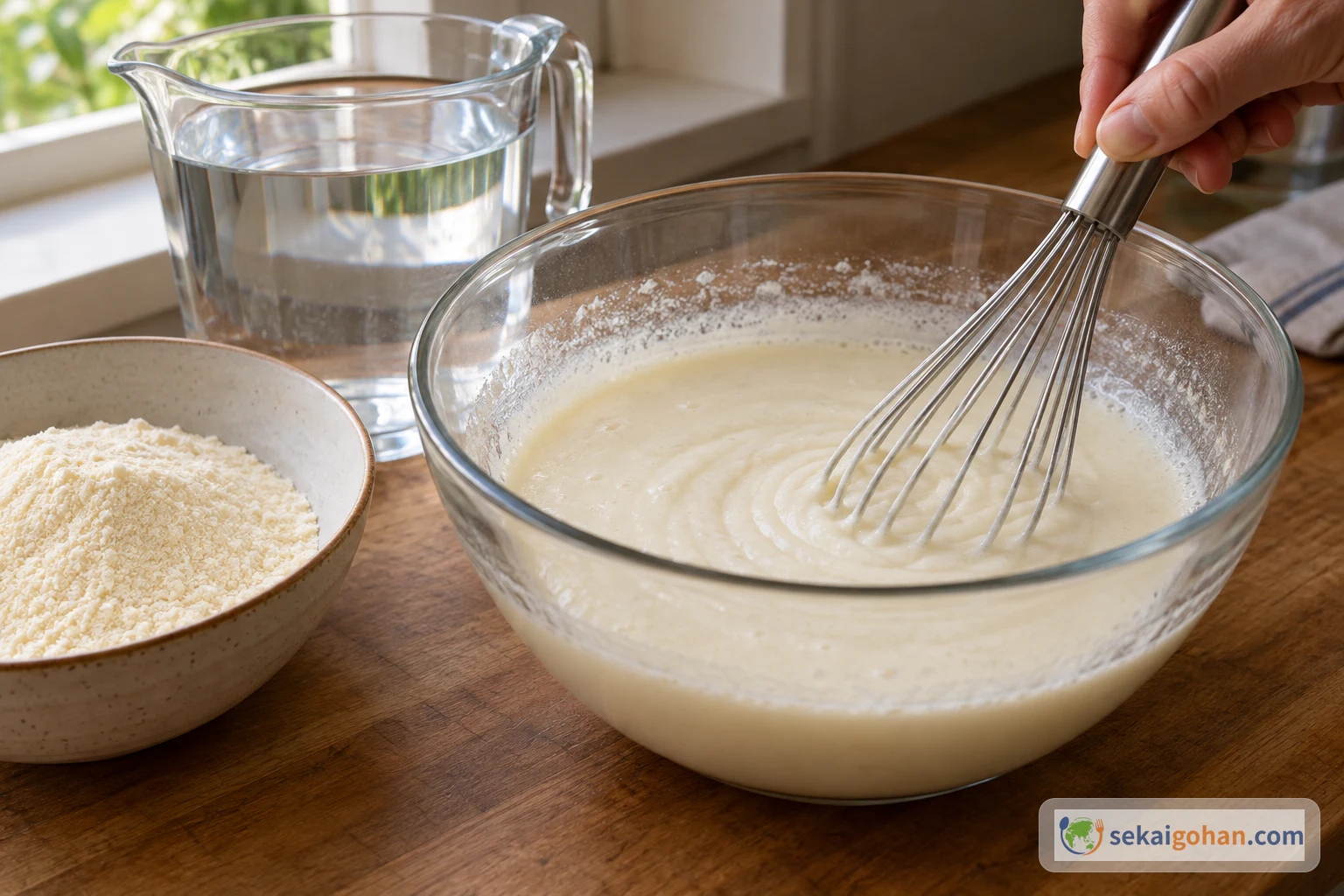
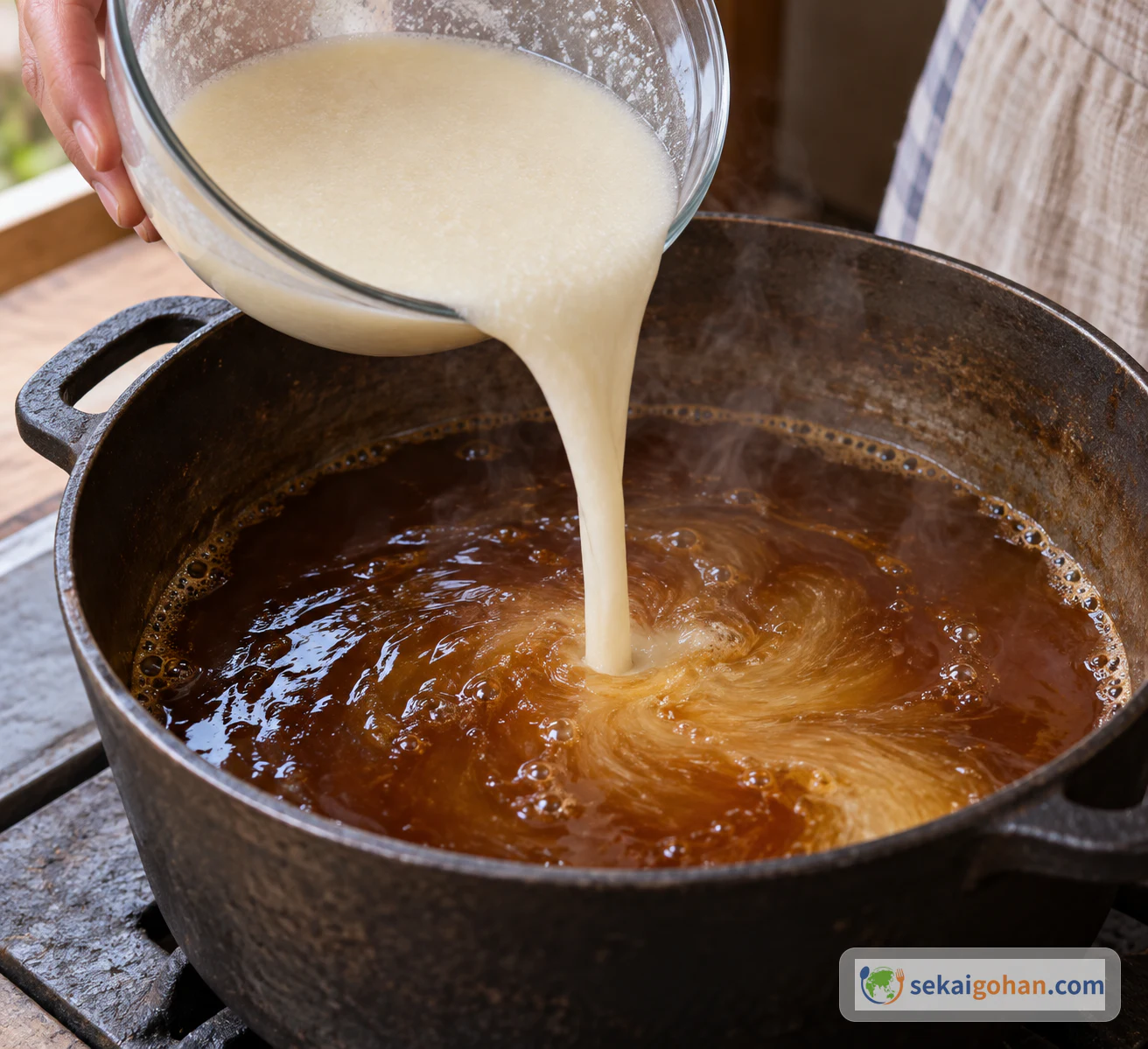
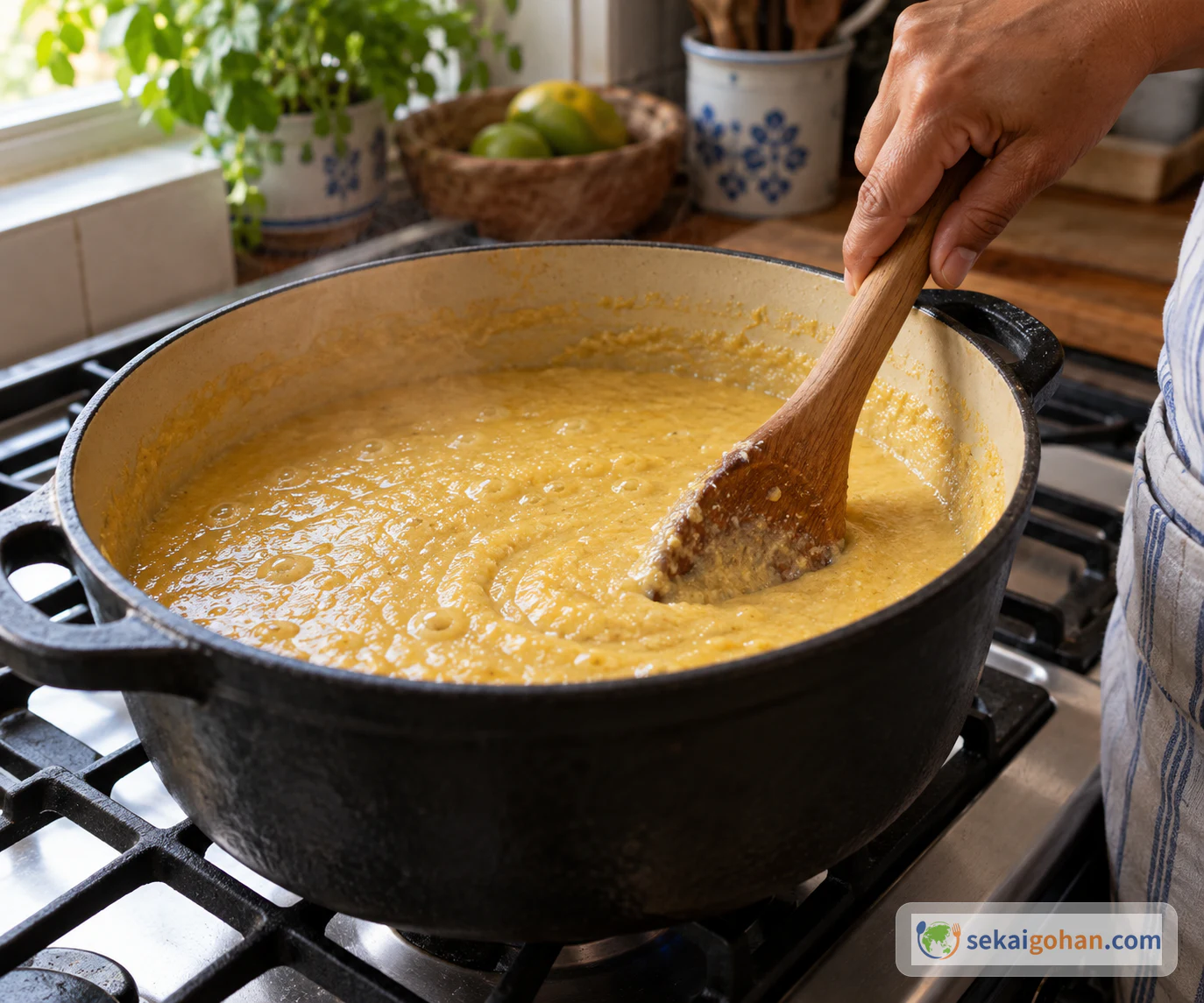
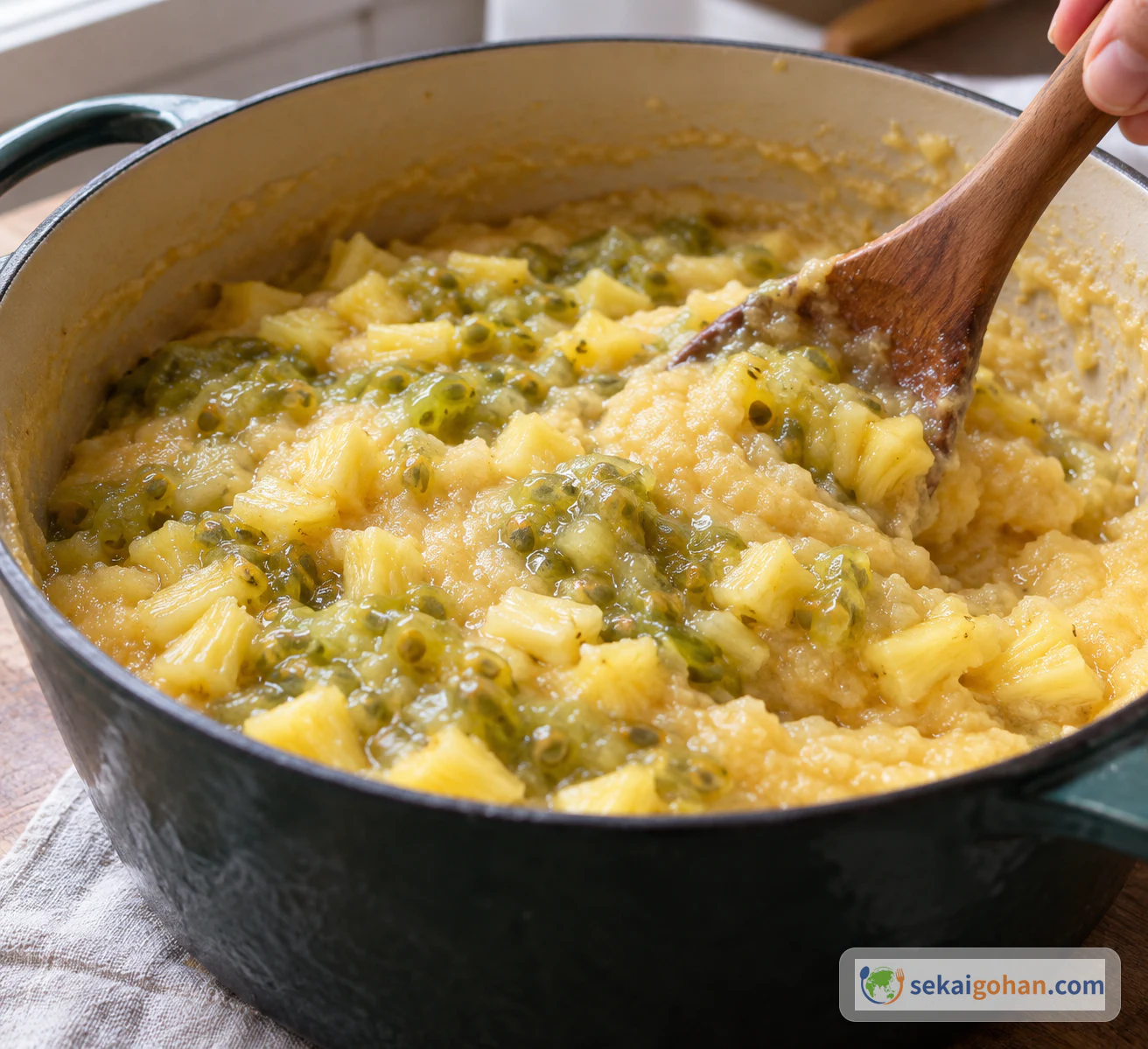
The drink is simple to build. Water, panela and spices simmer into a lightly thickened sweet base called melao, and white cornmeal, dissolved in a separate measure of water, cooks in that base. Lulo and finely chopped pineapple go in only after the pot comes off the heat and cools a little, and ice goes in at serving. Champús is not fermented, so it never needs to stand or sour.
| Element | What it brings |
|---|---|
| White cornmeal | Body and a grain base |
| Panela | Sweetness with a molasses-like depth |
| Lulo (naranjilla) | Tartness and fruity aroma, the flavor axis of the drink |
| Pineapple | Fruitiness and soft pieces to bite |
| Cloves, cinnamon, leaves | Warm, sweet spice aroma in the melao |
Cornmeal and Whole-Kernel Versions
Not every champús starts from the same corn. This one dissolves white cornmeal in water. Another version soaks 2 cups of dried corn overnight and simmers it with cinnamon for about an hour until the kernels are tender, then combines it with a melao of panela, sour orange leaves, clove and water, plus lulo and pineapple, and serves it with ice. A third uses whole corn (1 libra of maíz), 10 lulos, 150g panela, 3L water, aromatic herbs, pineapple and optional sour orange juice.
The cornmeal and whole-kernel versions differ in both preparation and texture, so pick one method and follow it from start to finish.
Ingredients (6–8 servings)
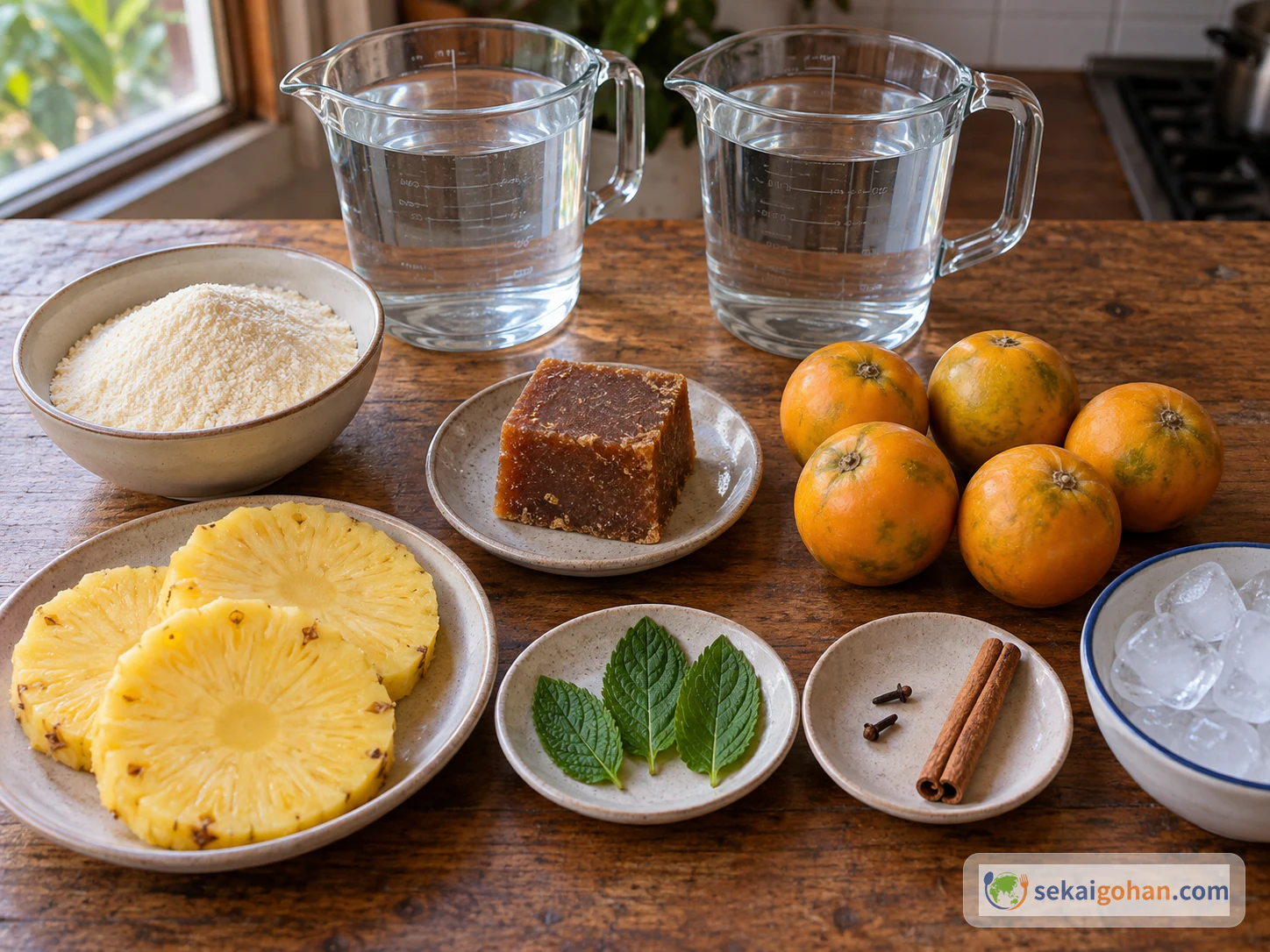
This recipe makes 6–8 servings.
This drink contains corn. Check the labels on packaged cornmeal, panela and fruit pulp for allergens and cross-contact statements. Work with clean hands and utensils, and wash the fruit before cutting.
Equipment
- A heavy-bottomed pot with plenty of room to spare for 2 quarts (2 L) of liquid plus fruit (around 4.25 quarts (4 L) is a practical guide)
- A measuring jug that holds 1 quarts (1 L)
- A mixing bowl and a whisk for dissolving the cornmeal
- A wooden spoon for scraping the bottom of the pot
- A spoon or knife for scooping out lulo pulp
- Optional: a fine sieve, only if you extract the lulo pulp yourself and want it smoother
Choosing Ingredients for Champús
Lulo (naranjilla). This version uses the pulp scooped from 5 fresh lulos, but lulo pulp works too. If it is frozen, a whole pack may not equal 5 fruits, and the juice released as it thaws changes how concentrated the drink becomes. Tartness and aroma also vary by origin and brand, so add the pulp gradually and taste as you go.
Panela. Use 5.5 oz (150g) panela. If yours is a solid block, grate or shave it. Muscovado sugar is an option, though you'll get a different sweetness and molasses note.
White cornmeal. Use food-grade white cornmeal and check the package for cooking directions. Cornstarch, nixtamalized flour such as masa harina and precooked corn flours behave differently, so expect a different result if you use one.
Water and ice. Use drinkable water for cooking and drinkable ice for serving.
How to Make Champús
Allow about 30 minutes for the melao and about 1 hour after the cornmeal goes in. Use the heat advice below for a home stove.
Champús Problems and Fixes
Judge the thickness by eye and with a spoon. Champús should coat a spoon and feel thick, yet still pour from a ladle.
| Problem | Likely cause | What to do |
|---|---|---|
| Lumps | Cornmeal not fully dispersed, or added too fast | Next time, whisk the cornmeal into the 1 quarts (1 L) of water a little at a time and pour it in slowly while stirring |
| Scorching or a set layer on the bottom | Heat too high, not enough stirring | Use a heavy pot, keep the heat low-to-moderate and scrape the bottom often |
| Too thick or heavy | Cooked down more than intended | Turn off the heat and check the texture first. If you thin it, add water only a little at a time |
| Too sweet | Panela varies in sweetness | Serve ice in the glass so each drinker can dilute to taste |
| No lulo available | Hard to find fresh fruit | Use lulo pulp |
Serving and Storing Champús
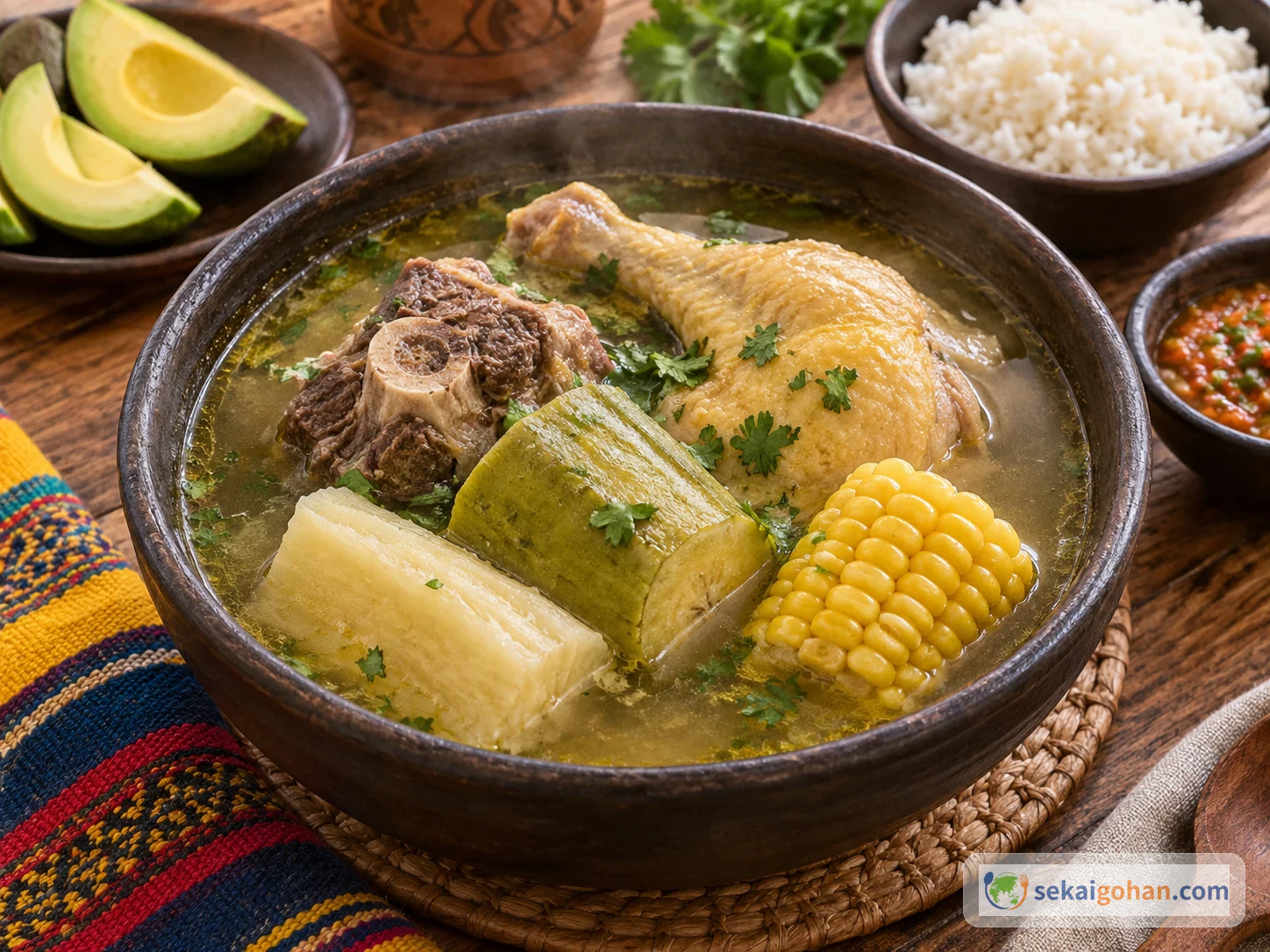
In Cali, champús goes alongside empanadas, atollado or arroz con pollo. If you want more to bite, cut the pineapple a little larger than finely chopped. And if you're worried about ice watering the drink down, serve the ice on the side and let each person add their own.
Use clean hands and utensils, and don't leave champús at room temperature for long after cooking. Divide any leftovers into clean, shallow containers so they cool quickly, then refrigerate them promptly.
Champús is one of many corn-based foods in Colombia, alongside dishes like arepas. To keep exploring the country's regional cooking, browse more Colombian recipes.
Frequently Asked Questions
Are lulo and naranjilla different fruits?
No, lulo and naranjilla are two names for the same fruit.
Do I need sour orange leaves?
No. Sour orange leaves are the traditional choice, and mint is the alternative; this version uses 3 mint leaves, which take the aroma in a slightly different direction.