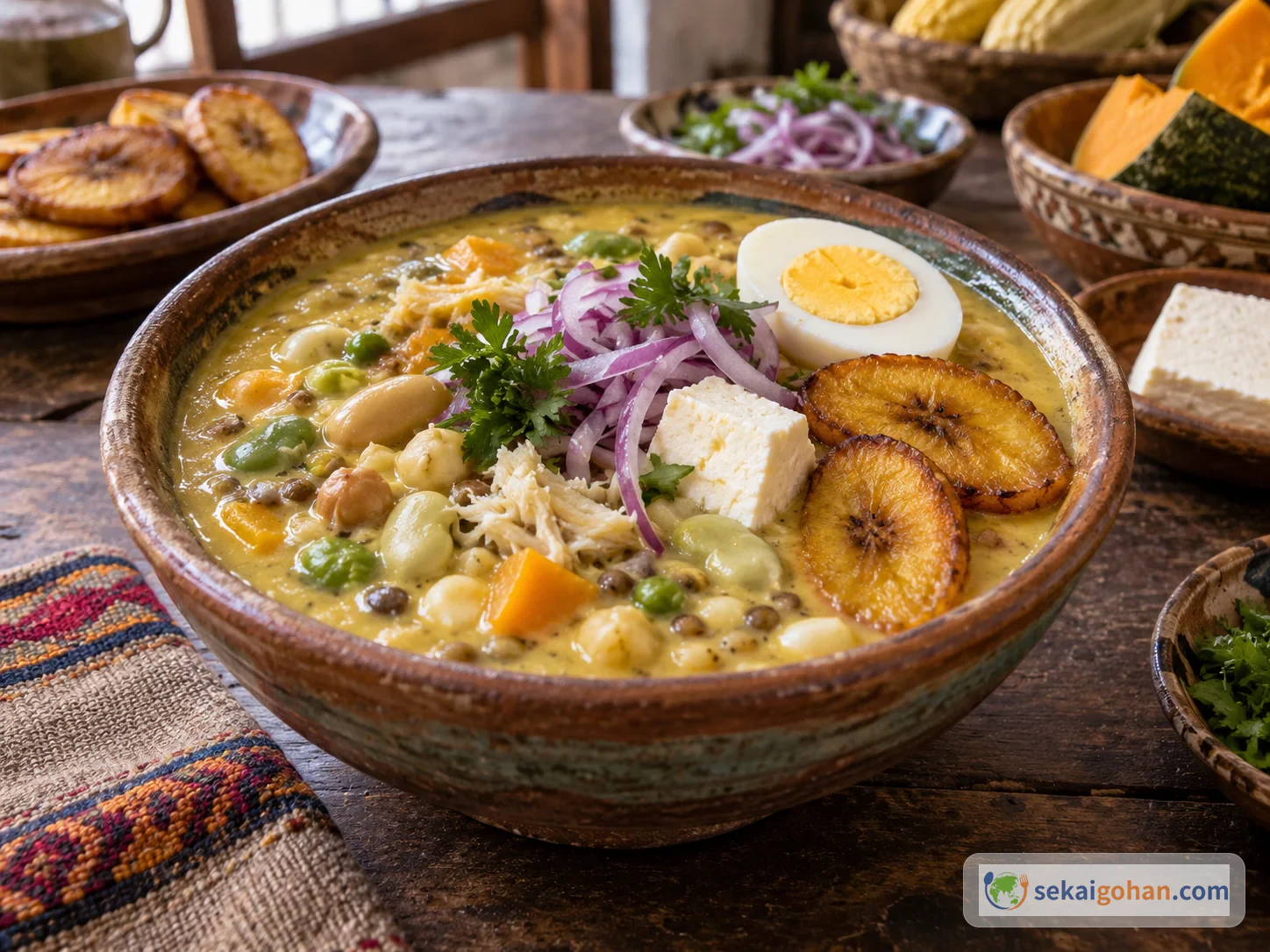
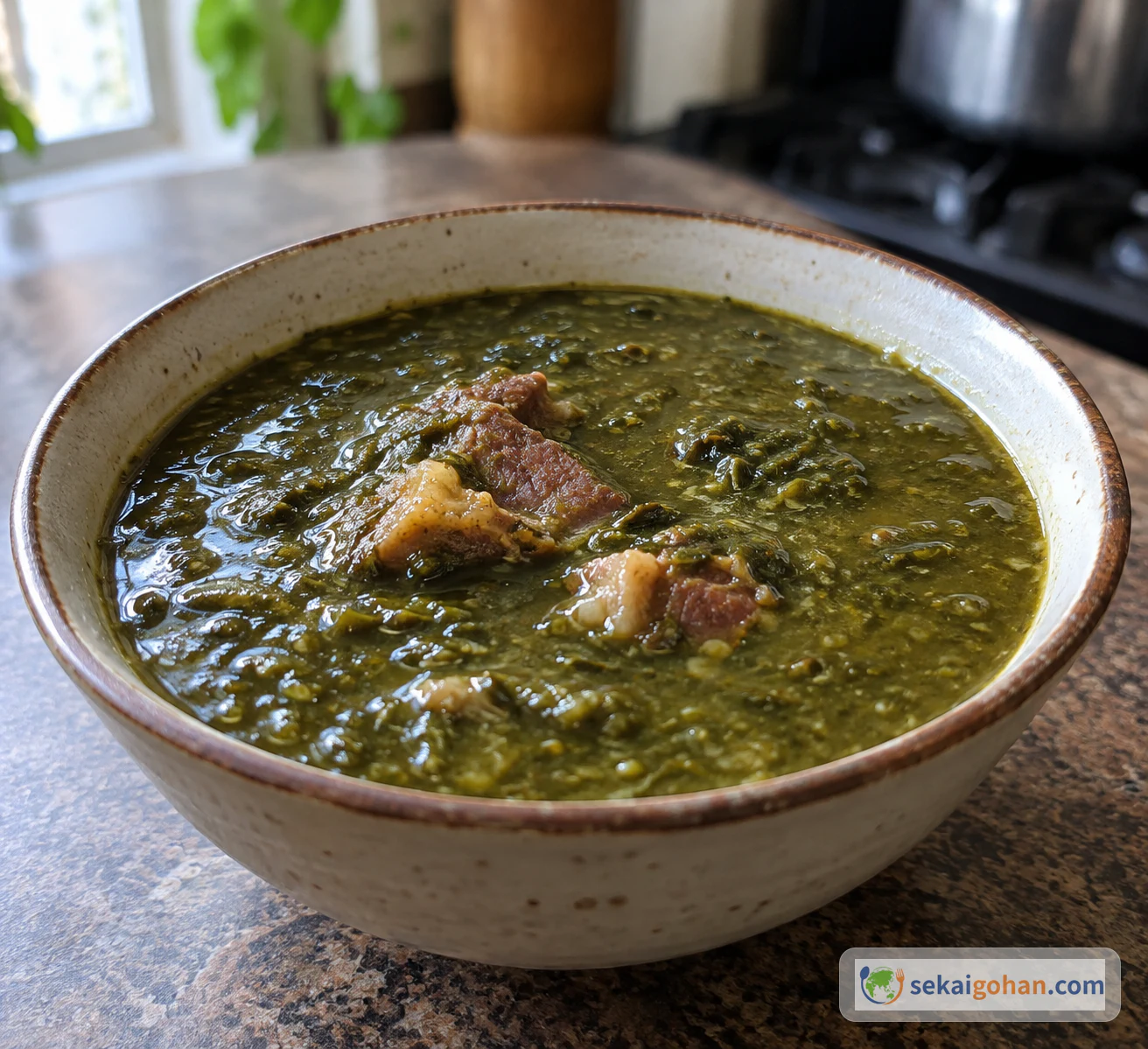
Lift the lid and an orange sauce shows through the white steam, with red shrimp, the tartness of tomato and the soft fragrance of coconut. The pot looks quiet, but spoon it over freshly cooked rice and every flavor comes through clearly. Encocado de camarón is a shrimp and coconut stew from Ecuador's coast: camarón means shrimp, and encocado means a stew made with coconut. Unsweetened coconut milk goes over a refrito of sautéed onion, bell pepper, tomato and garlic. Its richness stops just short of sweet and takes in the saltiness of the seafood, while annatto-infused oil lays a sunset orange over the white sauce.

Encocado and the Esmeraldas table
Encocado is closely tied to Esmeraldas, a province in northwestern Ecuador on the Pacific coast, where the sea, rivers and tropical plants are never far apart. The province's food culture layers African, Indigenous and mestizo traditions, and its cooking puts seafood, coconut, green plantain, rice and herbs on one plate, joining what comes from the sea with what comes from the field. Fish encocado, made with onion, bell pepper, tomato, garlic, achiote oil and coconut milk and served with rice and green plantain, is one of the region's signature dishes.
Encocado isn't one fixed recipe, and the range from house to house is part of the dish. Households that use fish pick a white fish whose flesh doesn't fall apart. The shrimp version brings the sweetness forward, and the chicken version takes a longer simmer. Many cooks keep the heat out of the pot and serve ají on the side, so each person adds as much as they like.
It's easy to mix encocado up with its neighbors. Encebollado (in Japanese) is a different dish, Ecuador's sharp-flavored fish soup. The pairing of lime and seafood echoes Peruvian ceviche (in Japanese), but in encocado the seafood is cooked in the sauce. Brazil's moqueca baiana (in Japanese) is the closest relative, another seaside coconut stew, but moqueca is built on dendê oil and coconut milk, while encocado starts with the aroma of annatto and the refrito vegetables. Because the two are so alike, keep moqueca's oils and herbs out of this pot.
Sort the ingredients first and you can see what to buy

These amounts are for 4 people. Prepare the rice and green plantain separately to suit appetites. If using frozen shrimp, thaw them slowly in the refrigerator and pat the surface thoroughly dry with paper towels. If they stay wet, the seasoning is diluted and extra water gets into the sauce.
Encocado itself
What to serve with it
Prepare about 5.5 oz (150 g) of white rice per person, 1.25 lb (600 g) for 4 people. For a more Ecuadorian table, add patacones, thick slices of green plantain fried. If fresh green plantain is hard to find where you are, a small amount of frozen unsweetened cooking plantain or salted plantain chips will do. Ripe, sweet plantain sharpens the contrast with the sauce's saltiness, so start with a small amount.
The herbs used in Esmeraldas cooking also include a strongly scented leaf called chillangua, which is separate from cilantro. It is hard to find, so this recipe uses plenty of cilantro stems instead. The stems keep their fragrance through longer cooking than the leaves and add a green scent to the refrito. If you dislike cilantro, omit the leaves and use a small amount of flat-leaf parsley stems in place of the stems. The flavor will be milder.
Annatto is an ingredient where it's hard to decide whether to buy the first pack. What this dish wants is not strong heat but the red-orange that passes into the oil and a faint earthy aroma. The refrito starts with achiote infused into oil. For this amount, leave the annatto seeds in oil over low heat for 2 to 3 minutes and remove them once the color comes out. If you want to make it more than once and enjoy the difference in color, buying annatto makes sense.
If you're only trying it once, you can replace it with 1 tsp sweet paprika. Paprika does not reproduce the annatto aroma. Turmeric or curry powder changes the direction of the aroma, so skip them.
If you buy annatto, check that it is whole seeds and not a seasoning blend. It suits people who will also use it in rice dishes, bean dishes and stews. If you only want the color once, paprika you already have works.
Choose unsweetened coconut milk for cooking, not a sweet drink, whose ingredients are mostly coconut and water. It's fine if the solids have separated in the can; mix well before measuring. If you only have thick coconut cream, mix 1¼ cups (300 ml) cream with ½ cup (100 ml) water to make 1¾ cups (400 ml). With a sweetened drink, sweetness comes forward against the saltiness of tomato and shrimp.
Check that the can is unsweetened and about 1¾ cups (400 ml). If you cook this rarely, buy it only if you can freeze the leftovers in small containers. Otherwise, thin unsweetened coconut cream with water.
Keep shrimp refrigerated raw, and limit the marinating time to 15 minutes. If you have an allergy to shrimp, fish, coconut, cilantro or the like, don't substitute casually; check the ingredient labels. If you swap fish for shrimp, use the doneness cues in step 4.
Choosing ingredients and substitutes for encocado
You don't need to import every ingredient to cook this at home. What matters is the unsweetened coconut, the color of the annatto, the refrito of aromatic vegetables, and rice with green plantain alongside. Unsweetened coconut milk is the base of the flavor, so use it as it is if you can.
If you cook encocado often, it's worth buying annatto for its orange color. Otherwise, briefly warm 1 tsp paprika in the oil and add it to the refrito without scorching it. The color will be a little different and the earthy aroma of annatto seeds will be weaker, but the dish still works. Turmeric and curry powder can supply color, but they pull away from encocado's aroma, so think of them as a different dish rather than a substitute.
Swap one thing at a time. Cilantro stems stand in well for chillangua, and if you have no green plantain, the dish holds up on rice alone. Frozen shrimp are fine once thawed and patted dry. Pre-cooked shrimp are a poor choice, though: warmed in the sauce, the flesh firms up before any shrimp flavor gets into it.
Method: finish the sauce first
If you are serving green plantain, cut it first and soak it in water while the rice cooks. The encocado itself proceeds in about 10 minutes of marinating, 8 minutes of sautéing vegetables, 5 minutes of simmering the sauce and 5 minutes of cooking the shrimp. Rather than trusting the recipe's clock alone, move on by the state of the pot, which absorbs differences in shrimp size and stove.
Fixing common encocado problems
Infuse the annatto into the oil over low heat, sauté the vegetables, simmer the coconut milk gently, and add the shrimp last. The order things go into the pot sets both the aroma and the texture.

A watery refrito is the most common slip. The tomato releases liquid and the bottom of the pan stays wetter than you'd expect, and if you pour in the coconut milk then, the aromatics boil and the sauce tastes muddy. Cook two more minutes, until a wooden spoon leaves a line on the bottom for a moment. If it looks close to scorching, lower the heat and stir more often.
If the sauce is thin, first check whether the 5-minute simmer was cut short. Adding starch before the sauce has reduced only makes the surface heavy, so use a little starch slurry only if the sauce still runs too freely over rice after the full 5 minutes. If it gets too thick, stir in water or seafood stock 1 tbsp at a time over low heat.
Shrimp that curl up tight and turn rubbery have been overcooked. Next time, finish the sauce before they go in and watch the color of a single shrimp. To rescue the pot you have, add the lime and cilantro off the heat and spoon the stew over hot rice a little at a time, which makes the toughness less noticeable. It helps, but the shrimp won't go back to a tender bite.
Bitter annatto means the seeds stayed in the oil too long. Remove the scorched seeds and add a little unsalted tomato to the refrito to round out the flavor. If some bitterness remains, a squeeze of lime and a pinch of salt at the end will even it out better than more coconut milk. Next time, just lower the heat.
Frequently asked questions
What should I choose if I swap the shrimp for fish?
500 g of a white fish that holds together, such as cod, sea bass or swordfish, is an easy choice. Cut it into 2 to 3 cm cubes, marinate it the same way as the shrimp, and mix gently so the surface doesn't break. Once the coconut sauce is finished, add the fish and simmer over low heat for 6 to 8 minutes, until the center is opaque and flakes lightly with chopsticks. Cooking time varies with the type and thickness of the fish, so cut pieces evenly and go by the center rather than the clock.
Can I make it with coconut cream?
Yes. Cream on its own is too rich, so thin the unsweetened kind with water to a total of 1¾ cups (400 ml). Avoid cans whose labels list sugar or flavoring. If you like a thicker sauce, don't cut the water at the start. Cook as written and judge the thickness in the last minute.
Is it a spicy dish?
Not unless you add chile. Serve Ecuadorian ají on the side and let anyone who wants heat mix it in at the edge of the plate, so the sweetness of coconut and seafood comes first. If you're feeding children, set aside a little sauce before adding the lime, which also lets you adjust the acidity.
How many days does it keep?

Set aside what you'll eat now, move the rest to a shallow container and let it cool. Don't leave perishable food at room temperature for more than 2 hours, and eat refrigerated leftovers within 3 to 4 days. Reheat only what you'll eat, in a pot, until hot all the way through. Store the rice in a separate container and add a little water when reheating it. Whatever the date, throw out anything that smells, looks or feels slimy or off.
The sauce thickens a little by the next day. Stir in water or coconut milk 1 tbsp at a time over low heat, finish with a little lime, and it tastes almost freshly made again. Instead of adding more shrimp and simmering again, pair the leftover sauce with freshly cooked fish or steamed vegetables so the seafood doesn't get any tougher.