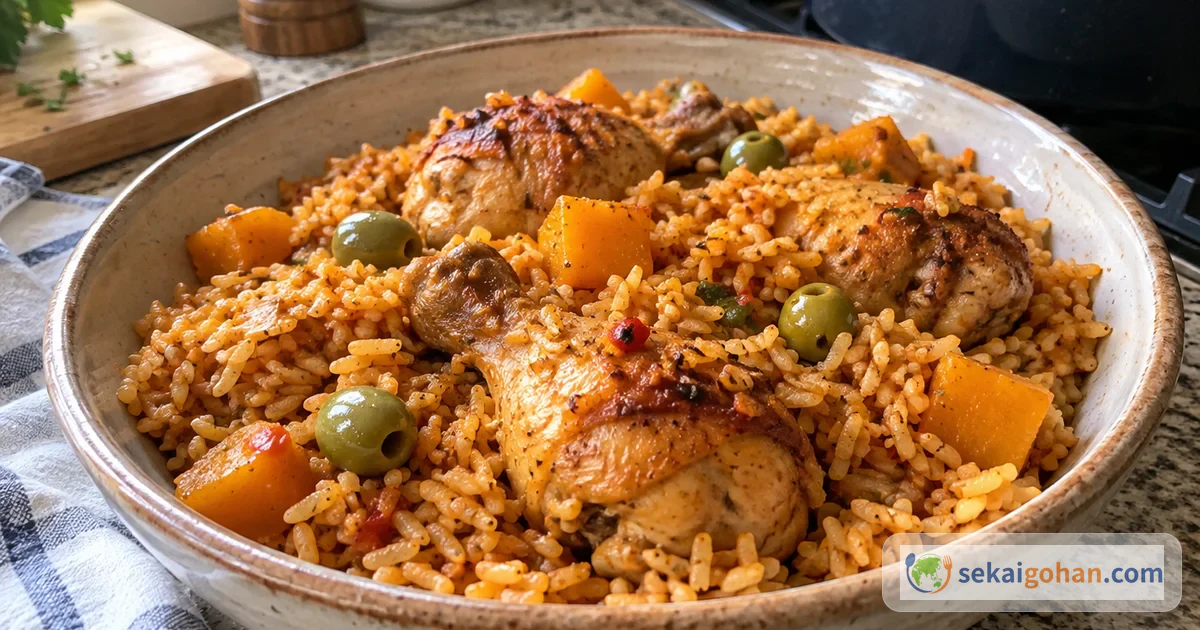
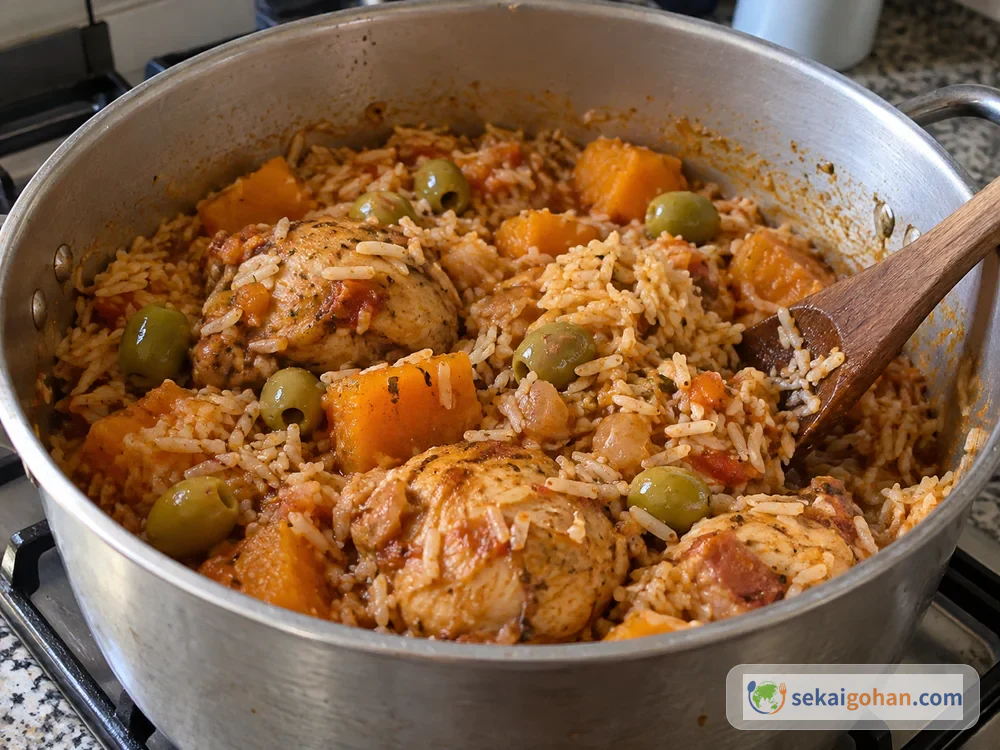
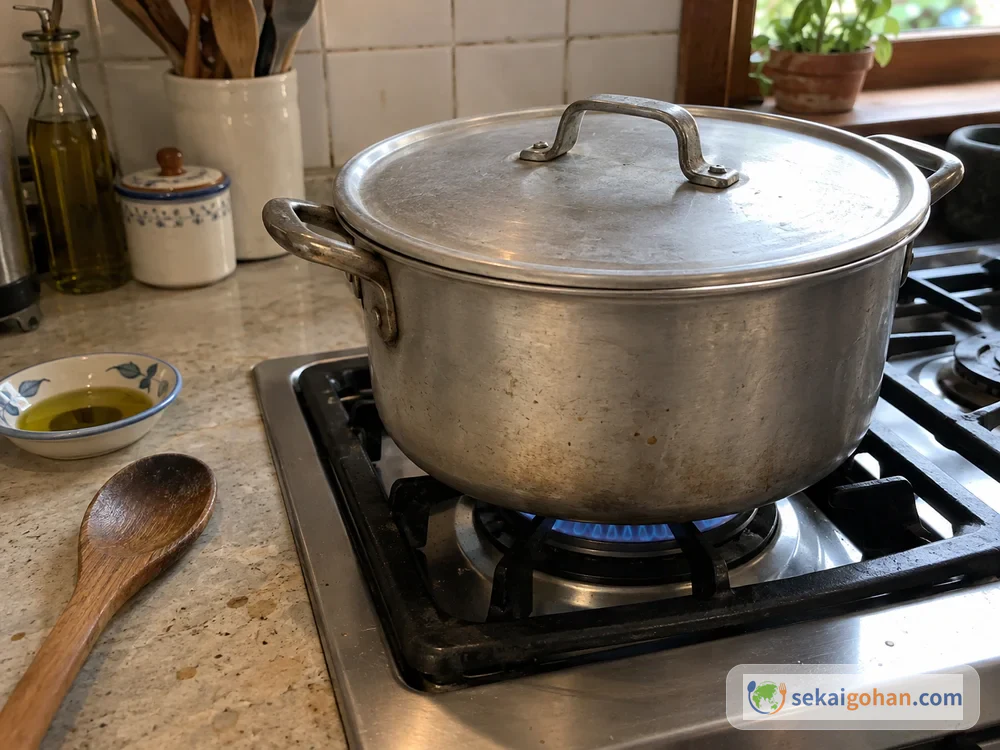
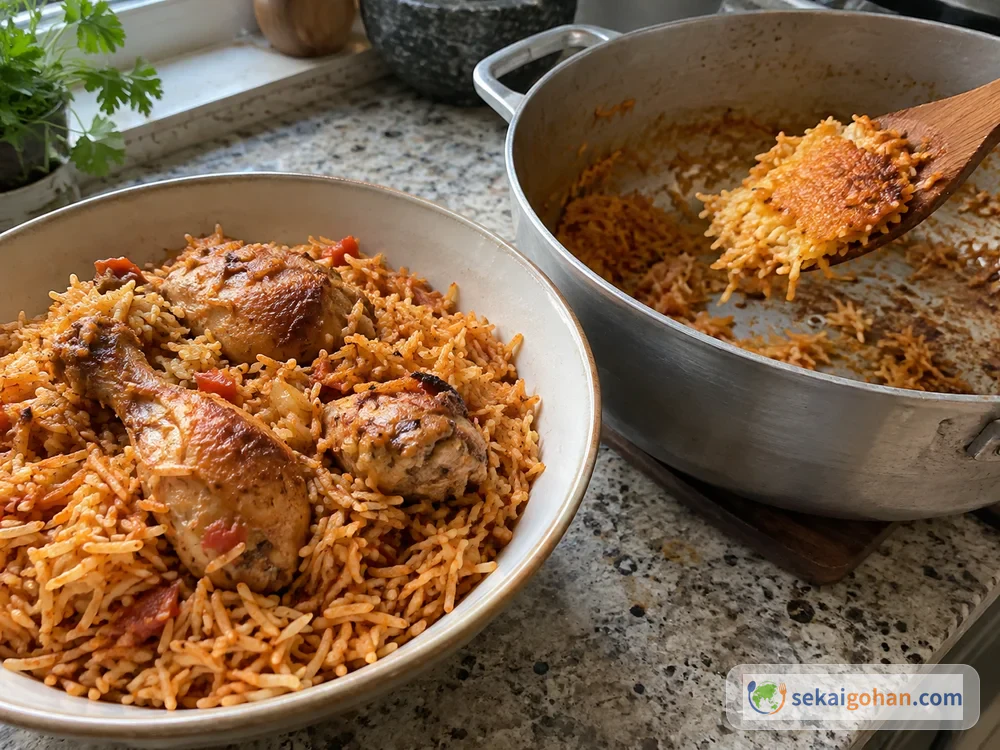
Sugar hits the hot oil and crackles as it turns amber. The seasoned chicken goes in all at once, and as the meat browns a sweet, toasty smell rises from the pot. Later, after the rice has been served, you can hear the golden crust being scraped off the bottom of the pot in Dominican kitchens at midday. This is locrio de pollo, a home-style dish in which chicken and rice cook together in one pot with tomato sauce and vegetables. You can make it with an ordinary pot and supermarket ingredients.
Locrio, the Dominican Rice Pot
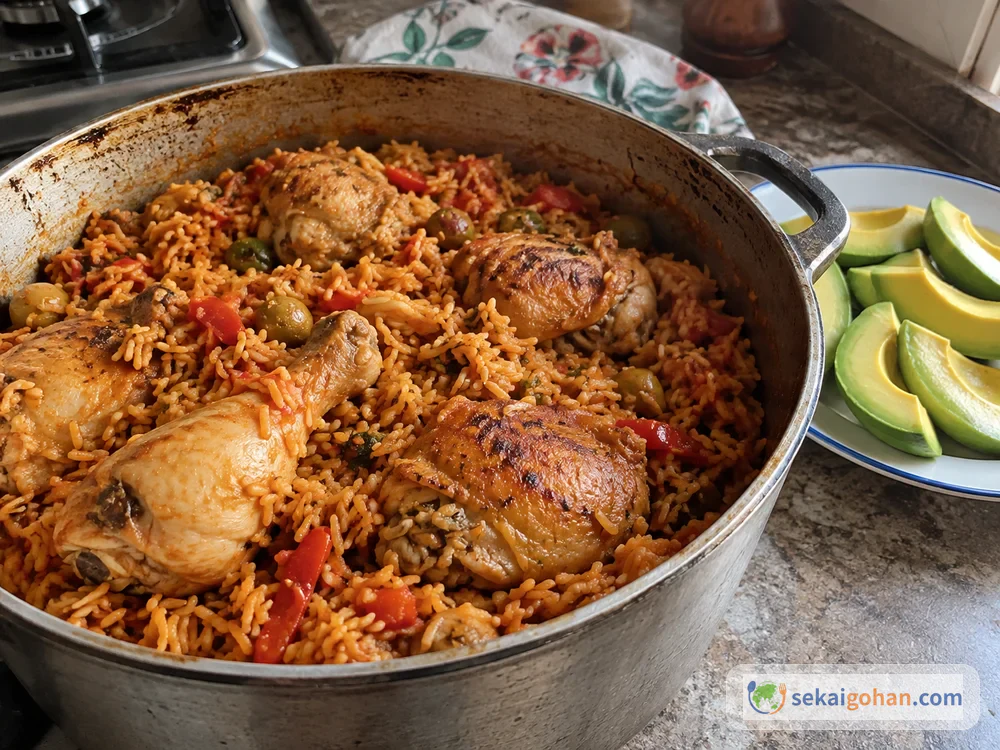
Locrio is a dish from Santo Domingo of meat or seafood cooked together with rice. Its roots go back to the Spaniards' fondness for yellow rice colored with saffron or bija (annatto). Many would argue it deserves to be called the national dish of the Dominican Republic.
Where the name comes from
Nobody is sure where the name comes from. It combines "locro" and "criollo," yet the dish has almost nothing to do with locro, the stew of the South American Andes. The oldest written mention dates to the 18th century, and in 19th-century Santo Domingo pigeon locrio was a well-known specialty.
Locrio comes with many fillings. About 20 Dominican locrio recipes have been identified so far, made with chicken, pork, seafood, and more. Locrio de longaniza, made with sausage, is also a classic.
Chicken colored with burnt sugar
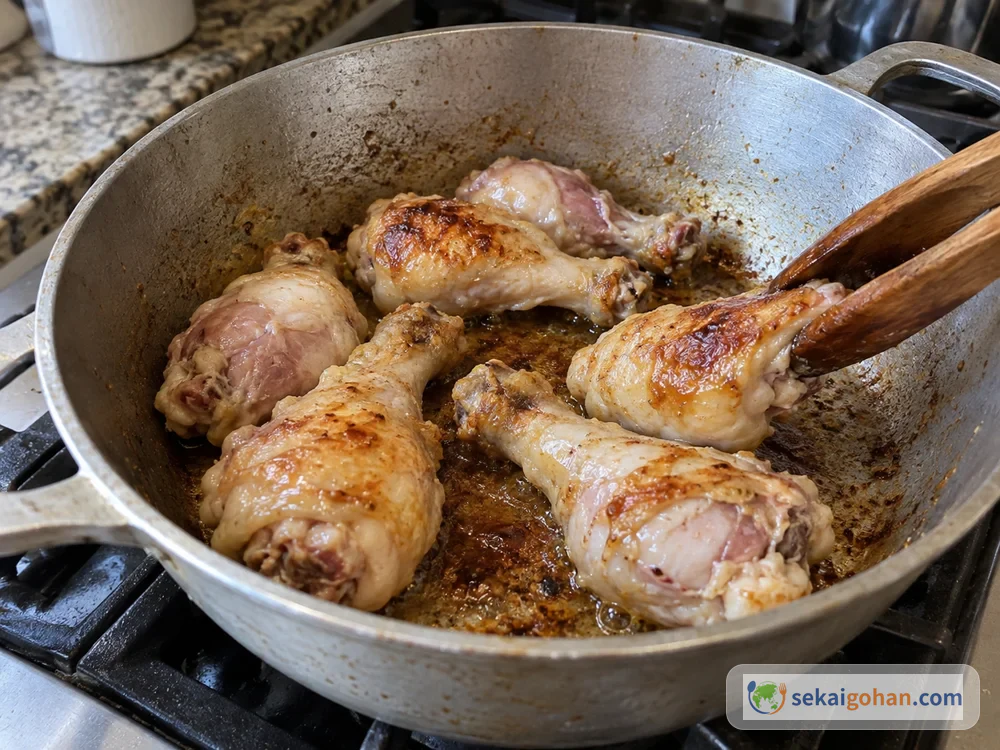
What sets chicken locrio apart is that the meat is first browned in oil with burnt sugar. The step gives the dish a sweet, toasty aroma and a deep, appetizing color. How dark you take the sugar decides how dark the meat gets, so that part is up to you. Just never serve a Dominican pale chicken.
Concón, the crust at the bottom of the pot
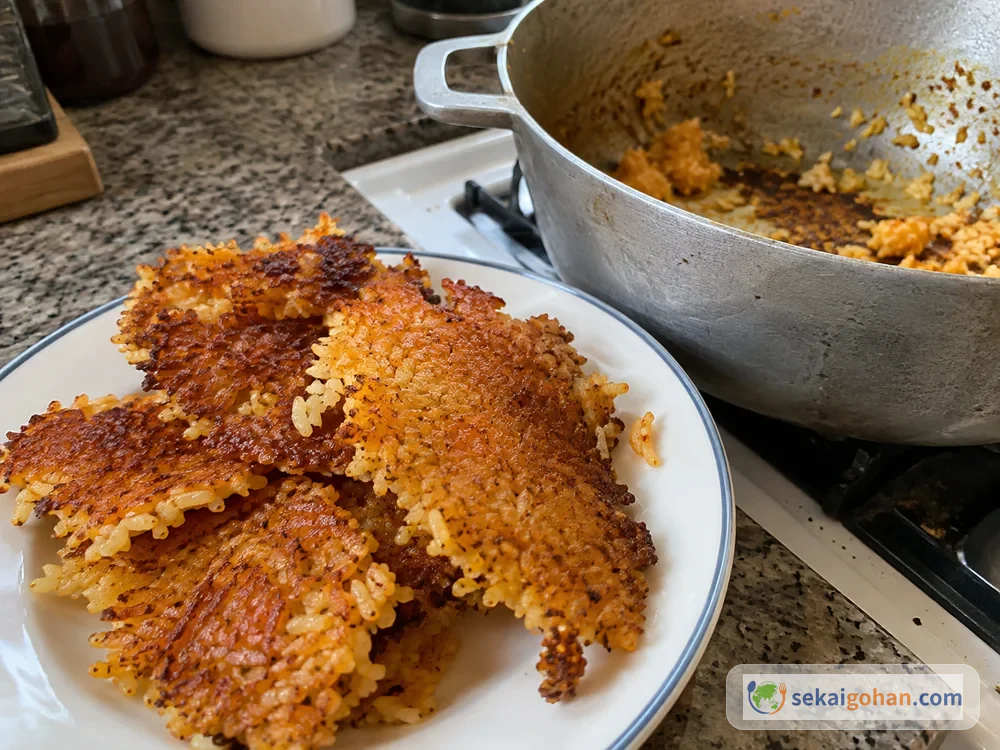
When rice is cooked the Dominican way, a golden, crisp crust forms on the bottom of the pot. This is concón, and it tastes like buttered popcorn. The name comes from the sound of scraping it loose. In Puerto Rico it's called "pegao," meaning "stuck to the pot."
Each pot gives only a little concón, so it's a small treat, and locrio is one of the rice dishes that produces it. As with Japanese okoge, the trick is to get it golden without burning it.
Ingredients (serves 4)
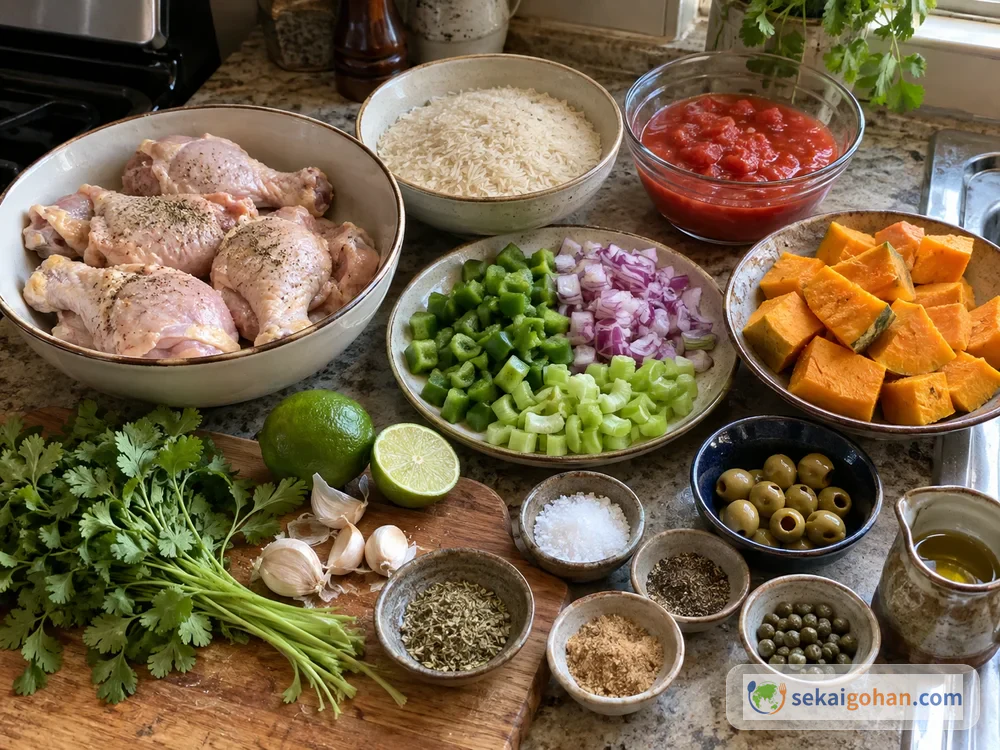
Since it uses about 13 oz (370 g) of rice, it is a complete one-pot meal that serves as both staple and main.
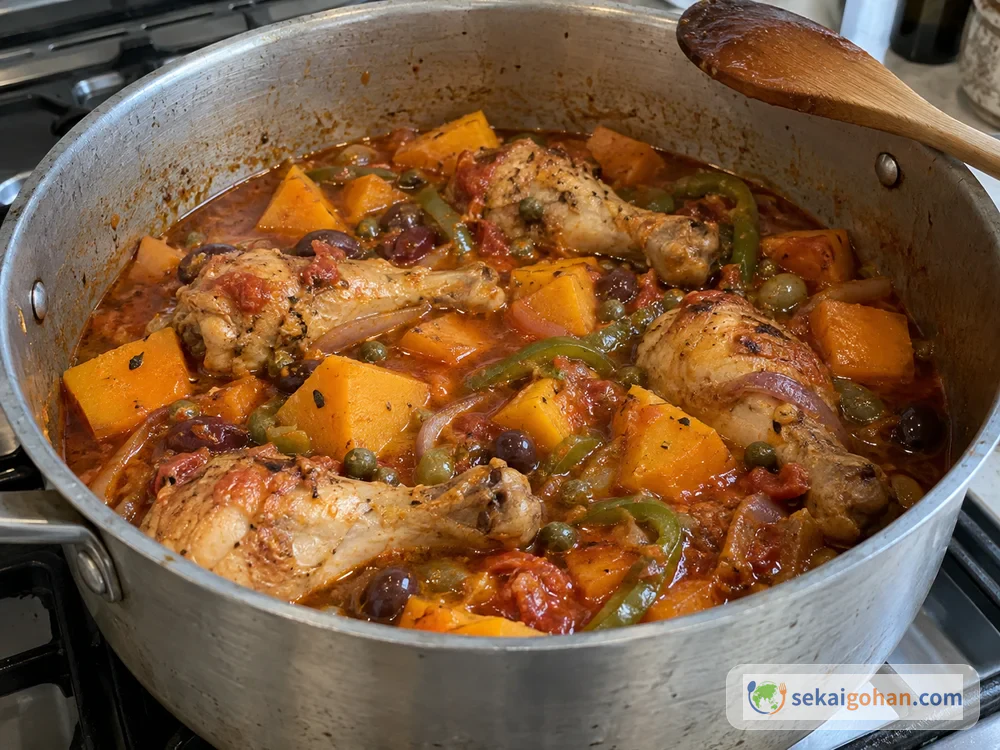
In the Dominican Republic they use long-grain rice. If you use short-grain rice, wash it and let it drain for about 30 minutes before cooking so the grains are less sticky. The squash breaks down and coats the rice, adding a gentle sweetness and body.
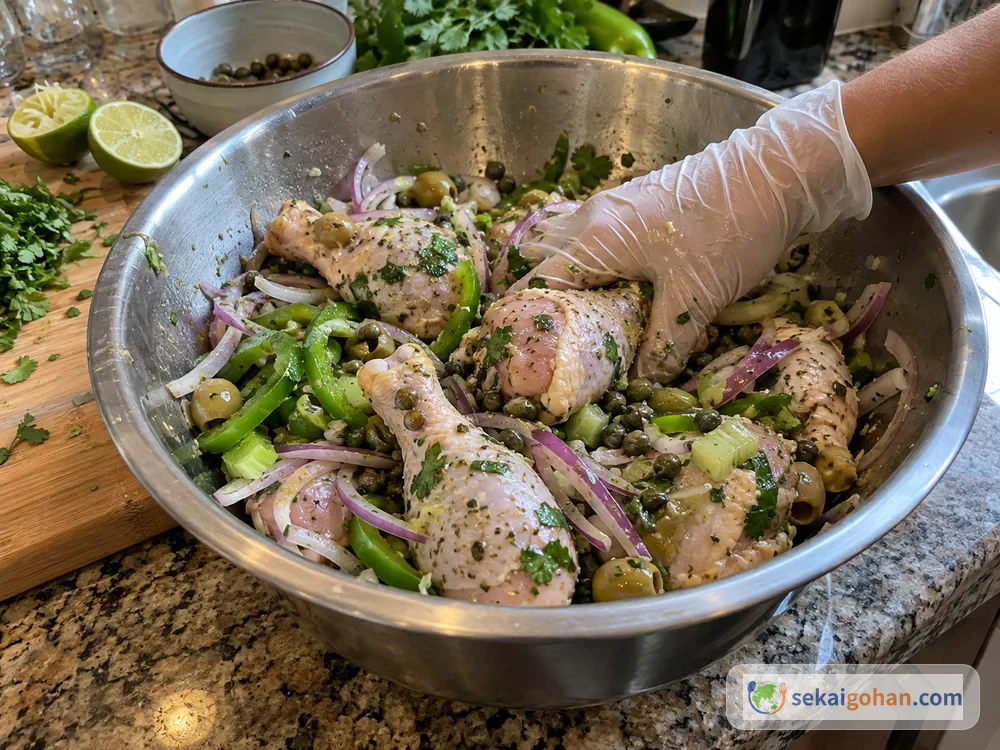
Wash hands, knives, and cutting boards that have touched raw chicken thoroughly before using them on other ingredients. Rest the seasoned chicken in the refrigerator, not at room temperature for long.
How to Make Locrio de Pollo
Including the 30 minutes of resting after seasoning, allow about 45 minutes of prep and about 40 minutes to cook. During the final steaming, do not lift the lid; just watch the heat.
Burnt sugar is very hot, and if it gets on skin it can cause a serious burn. When adding the chicken, the oil spatters, so add it standing a little away from the pot. Make sure bone-in chicken is cooked fully, to the bone, before eating.
Tips for Locrio Without Scorching or Mushy Rice
When to put the lid on
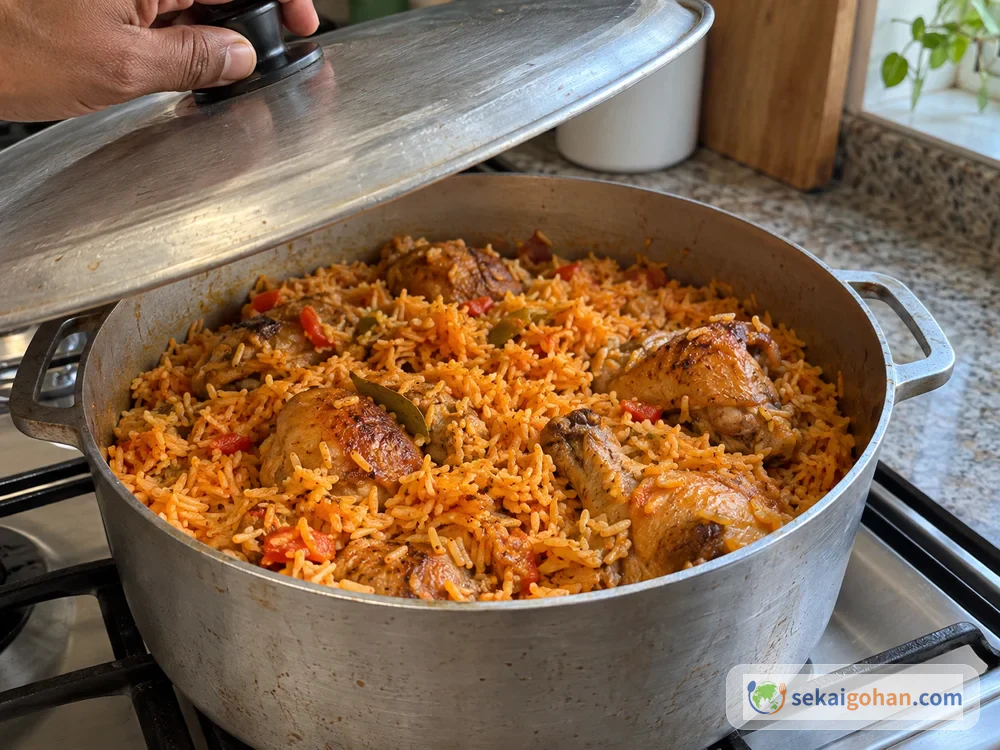
The hardest part of locrio is judging the time between adding the rice and cooking off the liquid. If you cover the pot while there's still a lot of liquid, the rice turns mushy. If you cook the liquid off too far, the bottom burns and the concón turns black. Cover it the moment the liquid on the surface has just disappeared.
Heat and the pot
If you smell burning while the rice cooks over very low heat, turn the heat down further. On a strong gas flame, a wire gauze or flame tamer under the pot keeps the flame off the bottom and makes burning less likely.
Choose a pot where the rice comes no more than 3/4 of the way up, and don't pack it down. With room in the pot, the heat circulates evenly and the concón browns evenly too.
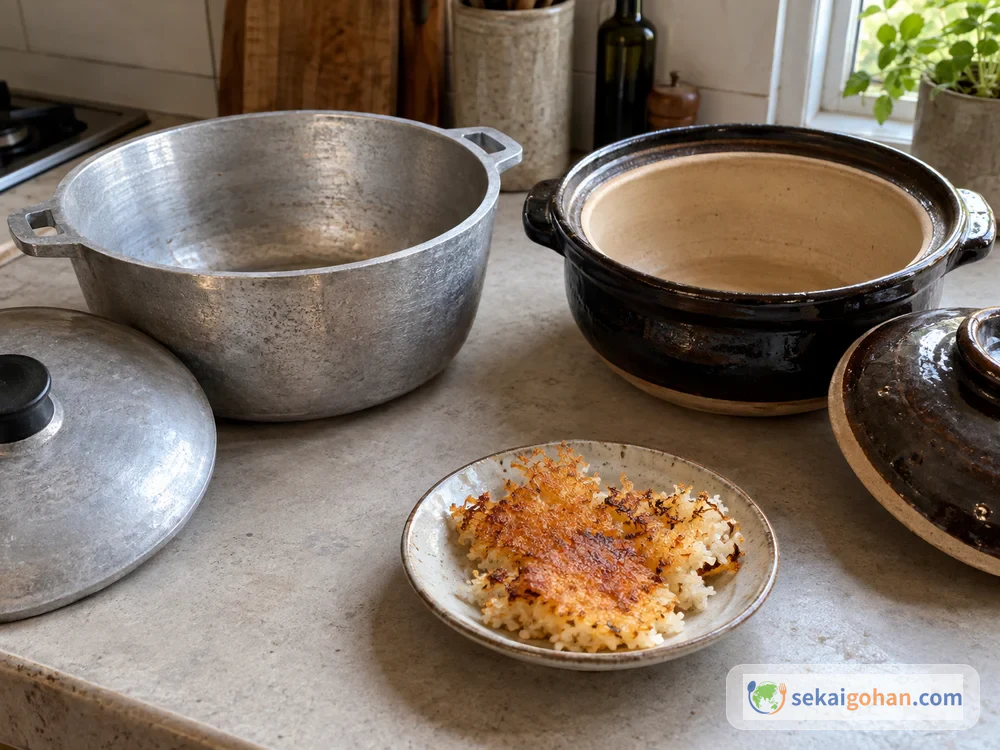
A thick pot of cast iron or cast aluminum is well suited to making concón. In Dominican and other Caribbean kitchens, the standard pot for rice is the caldero. Any pot will make concón, but a heavy pot or a clay pot works best.
Keeping the concón crisp
To keep the concón crisp, move the locrio to a dish as soon as it's done. If it sits steaming in the pot, the rice at the bottom absorbs the steam and goes soft.
Serving Locrio and Variations
How to eat it
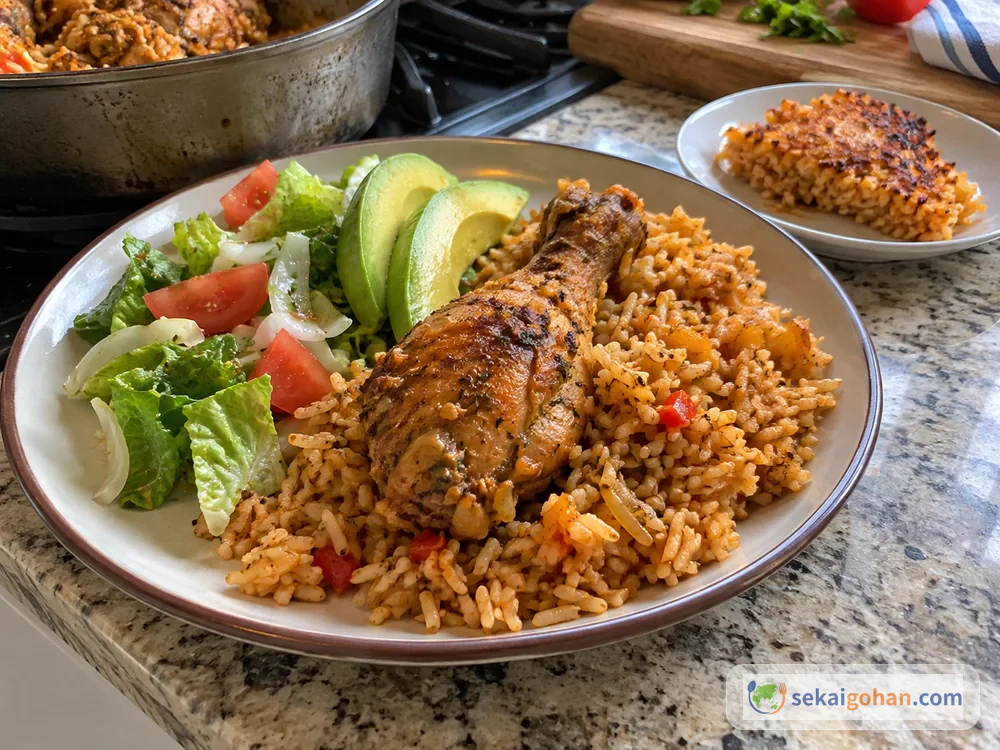
Serve the locrio with sliced avocado or a vegetable salad to freshen the plate. Put the concón on a separate small plate and pass it around. Its crunch and toasty flavor are the best part of the whole pot.
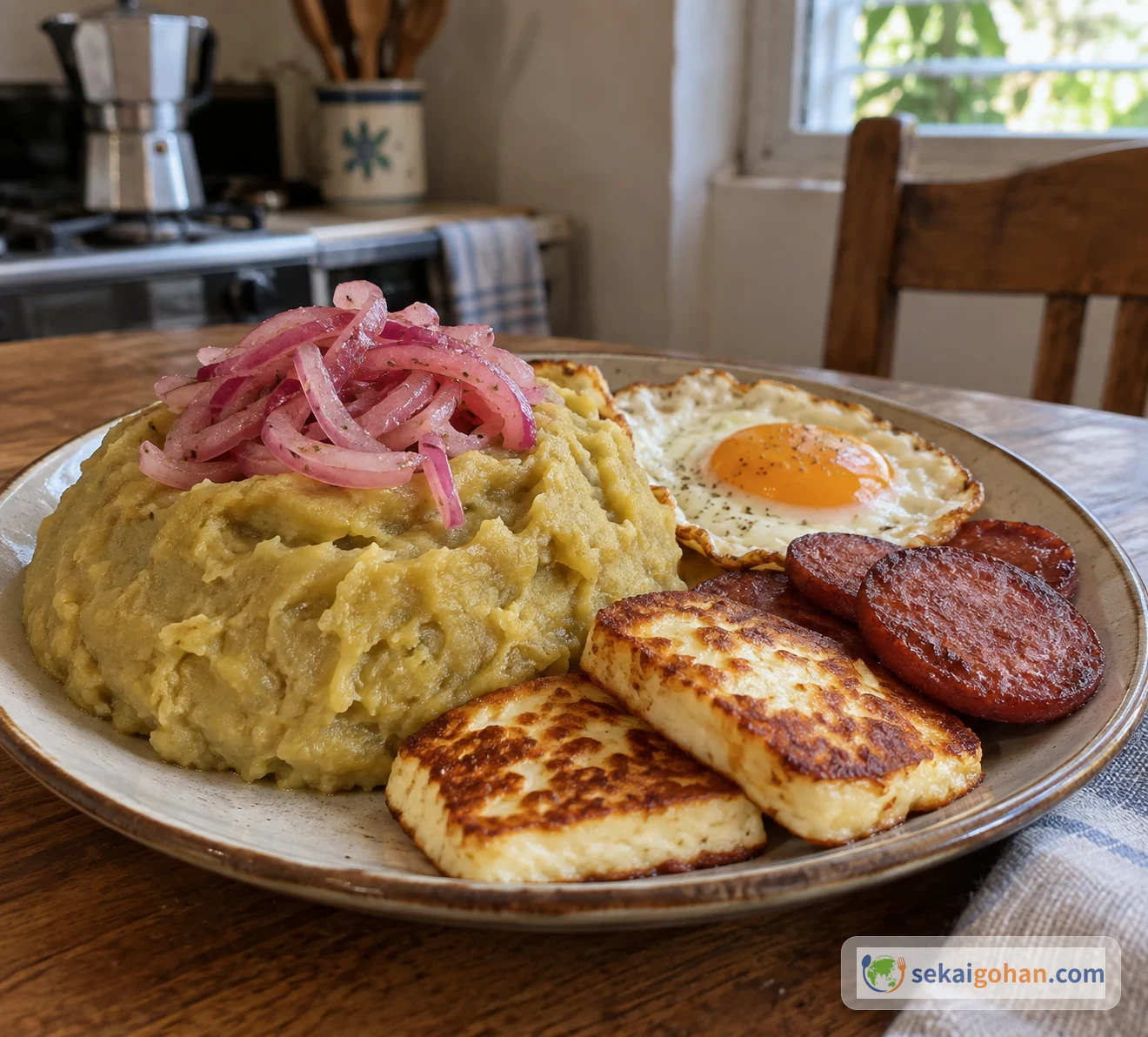
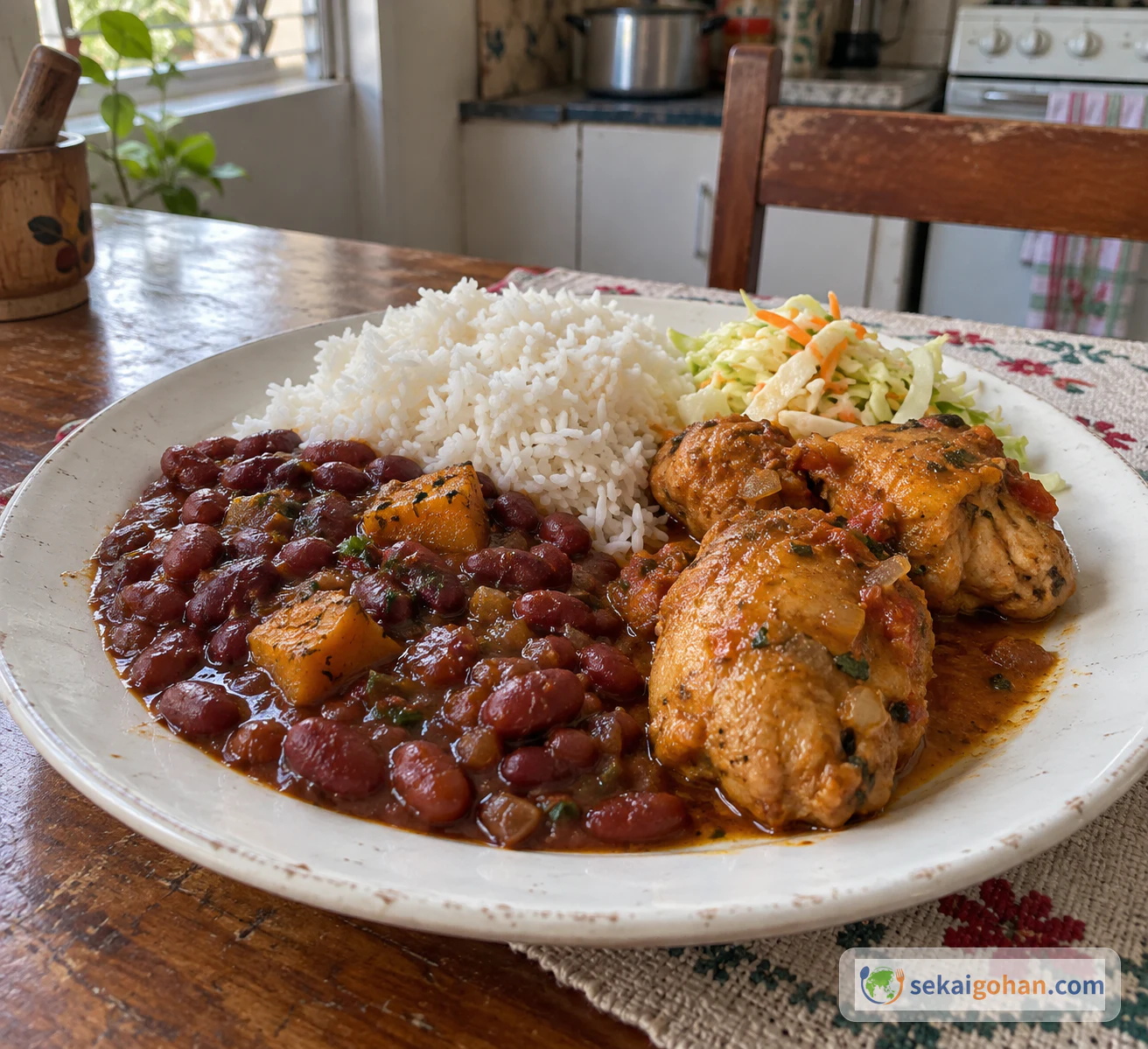
If you want more Dominican cooking, try mangú, mashed green plantain eaten for breakfast. You can also serve locrio next to Puerto Rico's pigeon pea rice, arroz con gandules, to see how the two islands' rice dishes differ.
With sausage or shrimp

For a version close to locrio de longaniza (made with Dominican sausage), sauté sliced smoked sausage instead of chicken and follow the same steps. Sausage is quite salty, so start with less salt and adjust at the end.
For seafood, add peeled shrimp to the pot just before the rice so they stay tender. Whatever the filling, the step of coloring with sugar is the same. Leave out the squash and use carrot instead for a lighter, less sweet pot.
FAQ
Can I make it in a rice cooker?
Yes. Brown and simmer the chicken in a pot, then move it to the rice cooker's inner pot with the rice and cook. Almost no concón will form, though, so if you want the crust, cook it in a pot.
Can I make it with boneless chicken?
Yes, boneless chicken thighs work. Bone-in gives more flavor, but boneless is easier to eat and easier to serve to children. Cut it into large bite-sized pieces.
Can I make it without burning the sugar?
You can leave the sugar out, but you'll lose the deep color and toasty flavor of the Dominican original. If burning it worries you, add the chicken as soon as the sugar has melted and turned light brown. It will still color the meat well enough.
Can I make it ahead?
Once it has cooled, refrigerate it in an airtight container and eat it soon, reheating it in the microwave until it's hot at the center. The concón goes soft over time, so eat that part the same day.