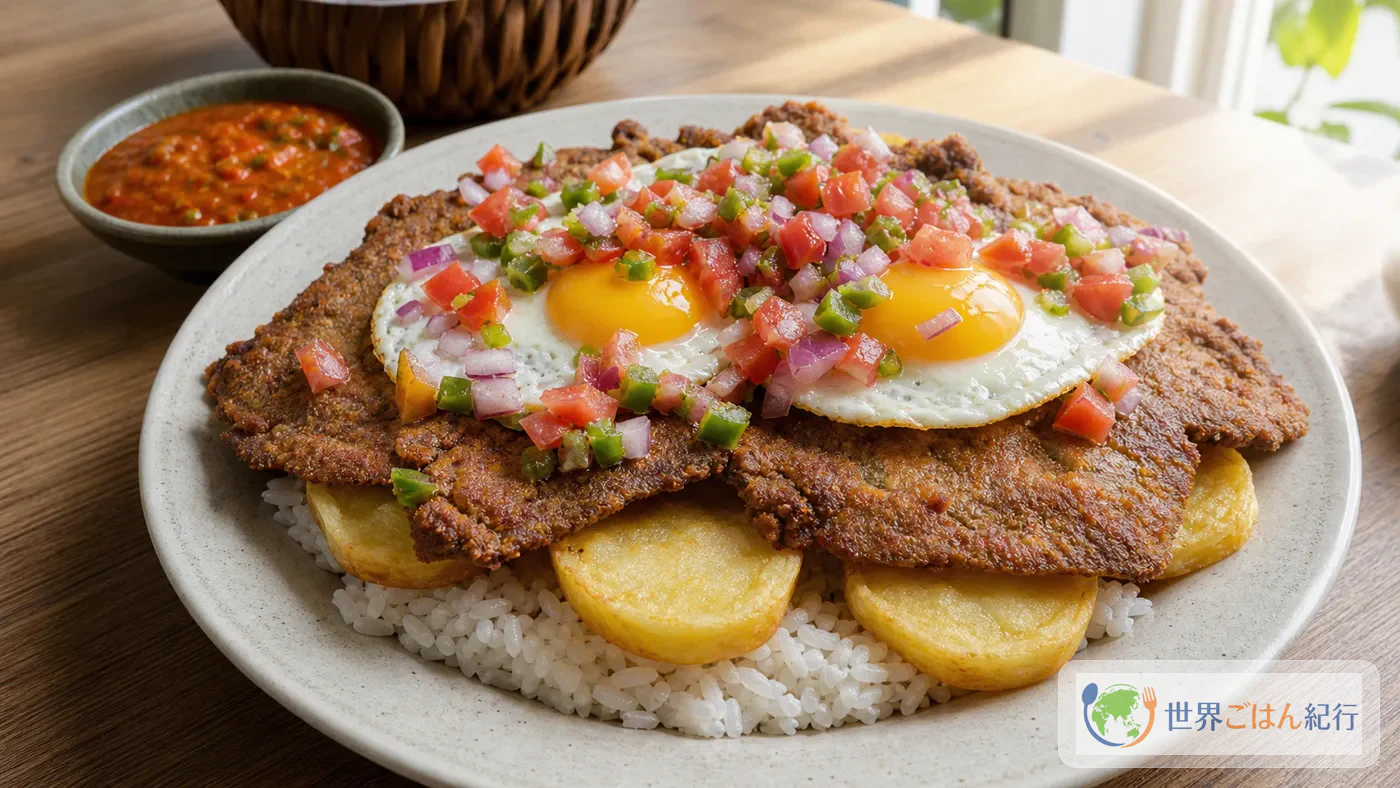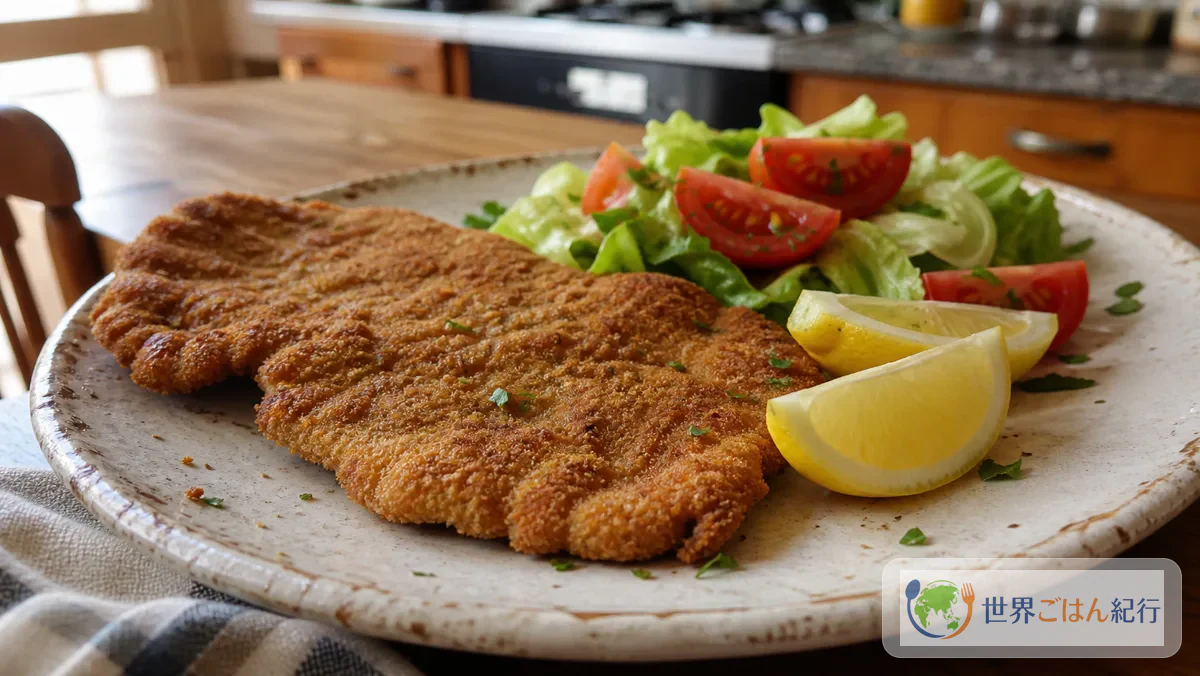
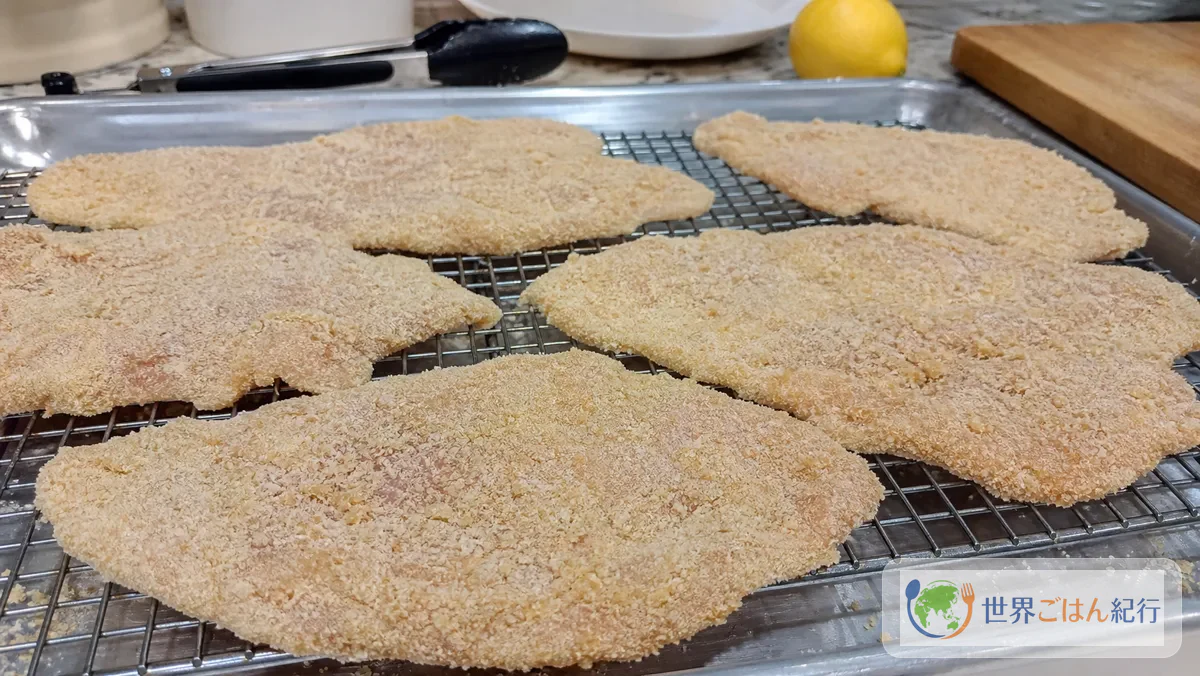
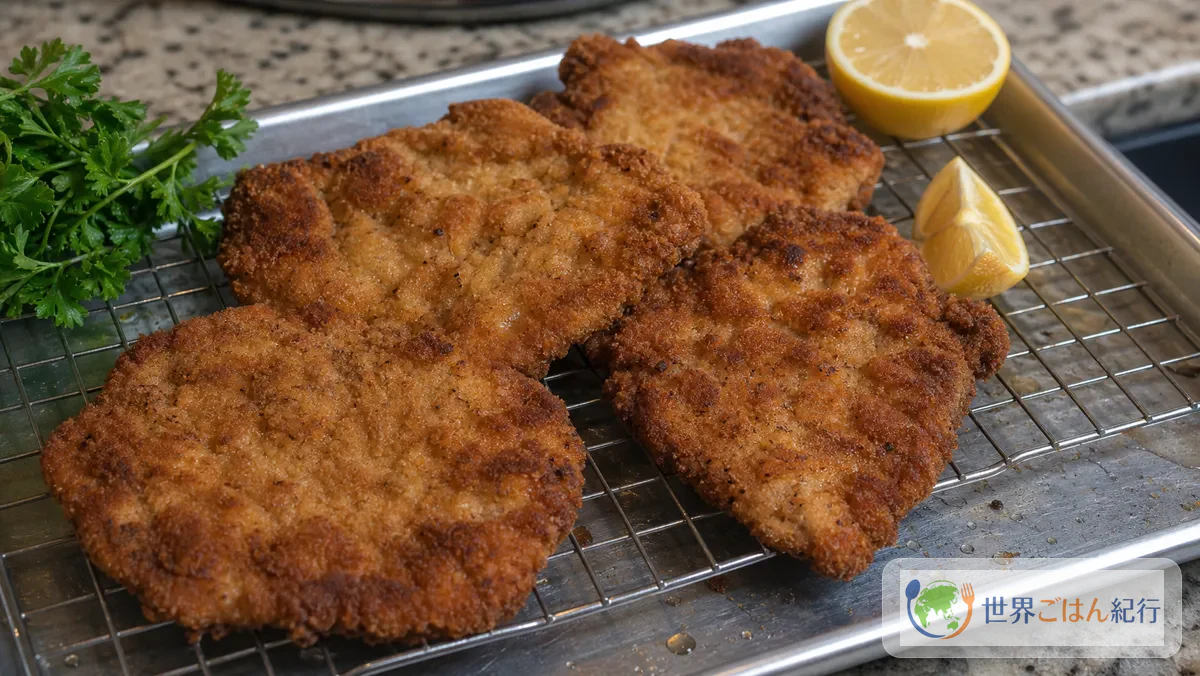
Milanesa arrives at the table as a wide, flat piece that nearly hangs over the edge of the plate, with a wedge of lemon beside it. It's Argentine home cooking at its most everyday: meat pounded thin, dipped in egg and breadcrumbs, and fried until golden. If you know tonkatsu, the difference comes down to thickness. Milanesa spreads the meat thin and keeps the coating thin, so it eats lighter, and a squeeze of lemon cuts the oil.
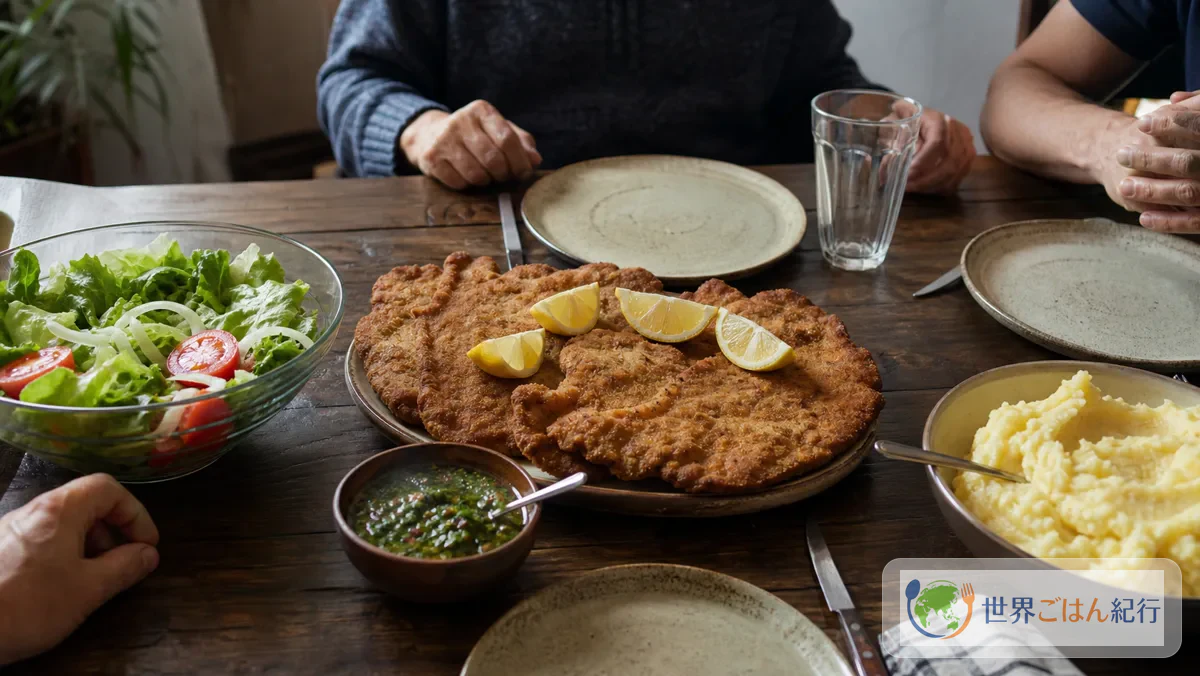
Milanesa in Argentina
The name calls to mind Milan, Italy. In Argentina the dish is tied to the cooking of European immigrants, especially Italians, who arrived in the late 19th and early 20th centuries. Today it's simply part of the weekly rotation. People squeeze lemon over it, serve it with mashed potatoes or salad, and turn the leftovers into a sandwich.
To build an Argentine menu around it, add chimichurri for an herb sauce or start with empanadas as a light first course. On a meat-heavy day it sits well next to asado. Another fried dish, revuelto Gramajo, brings potatoes and eggs together, but it's cooked over a slightly different heat and eaten at a different pace.
Ingredients, and where to draw the line on authenticity
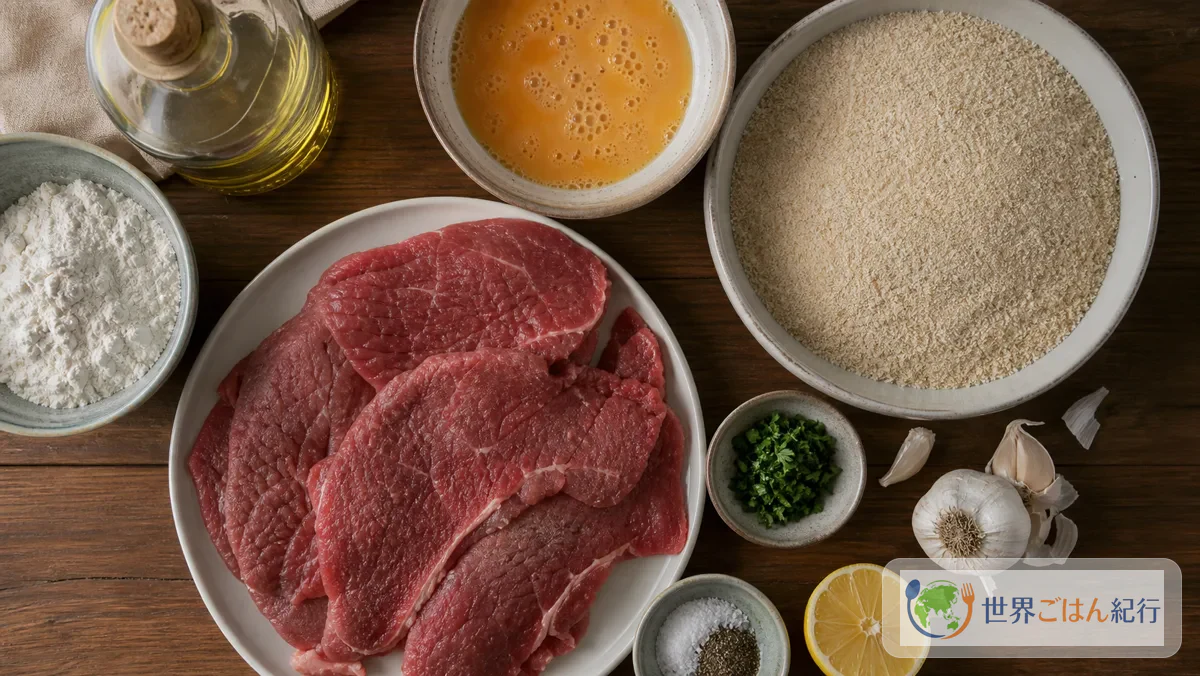
This makes 4 large milanesas. Because the meat is spread thin, 1.25 lb (600 g) gives more pieces than thick cutlets. With salad and mashed potatoes on the side, it is enough for the table.
For beef round, pound a thick steak for an even texture. If you use sliced meat, avoid slices as thin as shabu-shabu cuts. Choose lean pieces a little larger than yakiniku cuts. Meat 0.125 inch (2 mm) or thinner loses its beef flavor, and the coating takes over.
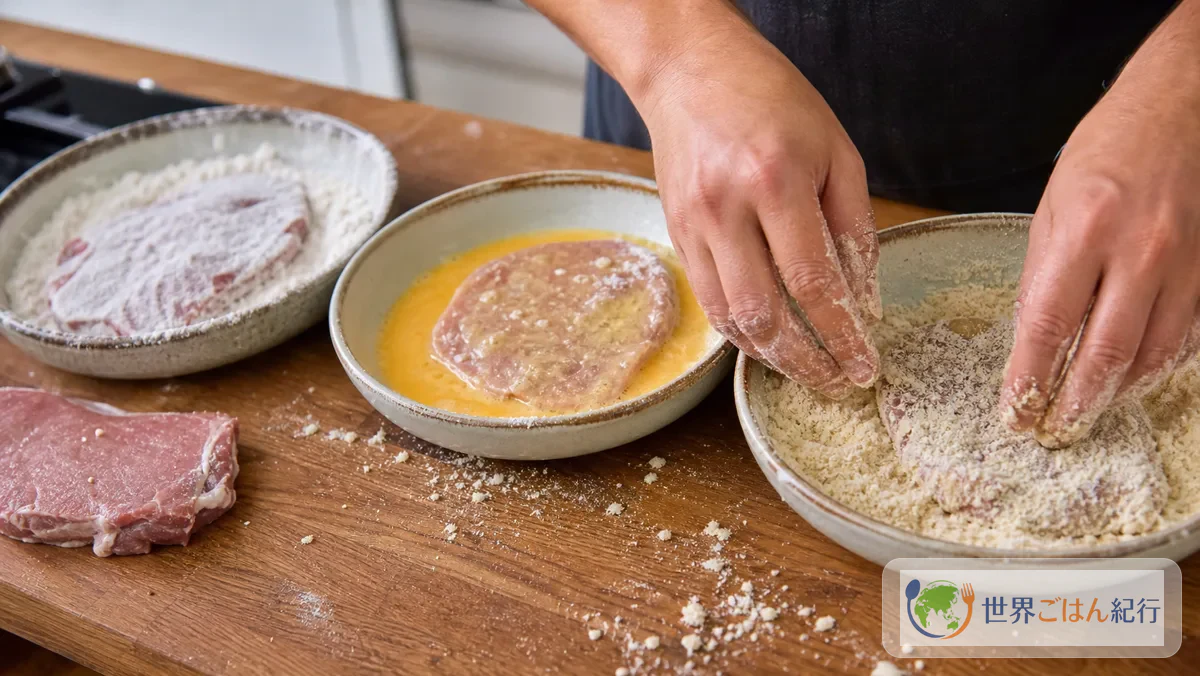
Fine dry breadcrumbs are easier to handle than coarse fresh Japanese-style panko. If you only have coarse crumbs, put them in a bag and crush lightly with a rolling pin. The finer the grains, the closer you get to pan rallado, and the thinner and more evenly they stick. A thick coating like tonkatsu turns it into a different fried dish.
This recipe uses wheat, egg and beef. Pork or chicken follows the same method, but change the doneness guide. For chicken breast, cook to 165°F (74°C) at the center. For pork loin, cook to 145°F (63°C) or higher, and rest 3 minutes before cutting. Even with beef round, cook until no red remains at the center of the thin piece.
Choosing Ingredients and Tools for Milanesa
The meat
In Argentina, cooks use lean cuts that slice thin easily, such as nalga, bola de lomo and peceto. At home, pound a beef round steak to about 0.25 inch (5 mm), or lay out lean beef round slices one at a time without overlapping them. Skip heavily marbled cuts, because the fat ends up sitting on the coating and in the oil and makes the milanesa heavy.
If you can't find beef round, pork loin, chicken breast or chicken tenderloin all work. What matters is the thickness and the coating, more than the meat itself. Cook chicken to 165°F (74°C) at the center. Cook pork to 145°F (63°C) or higher and give it time to rest. Eggplant or soy meat makes a home version under the same name, though you won't get the aroma of beef.
| Local thinking | Replacement | Point to keep |
|---|---|---|
| Spread lean beef thin | Beef round steak, beef round for grilling | Even it out to 0.25 inch (5 mm) and avoid fatty cuts |
| The fine coating of pan rallado | Fine dry breadcrumbs, crushed fresh crumbs | Coat thinly and evenly, without pressing |
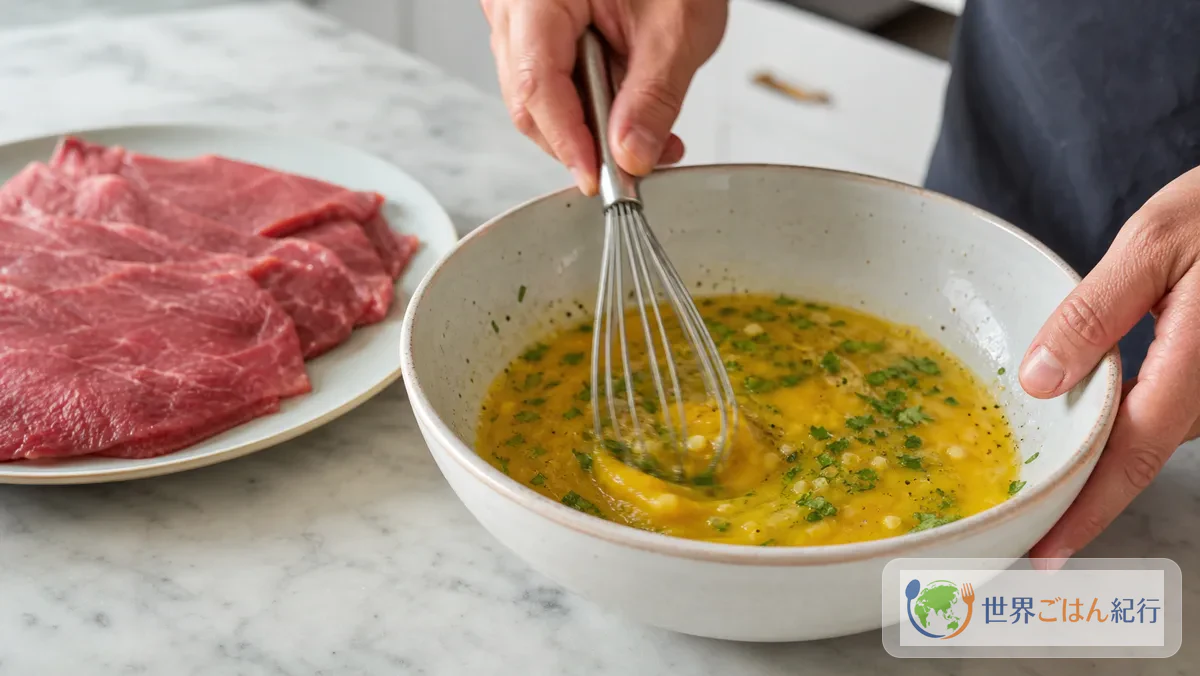
| Put aroma in the egg wash | Garlic, parsley, a little oregano | Add aroma from the egg side, not the crumbs |
| Use lemon to cut the oil | Lemon, a light salad, a little chimichurri | Keep the sauce light so the coating stays light |
| Make it napolitana | Top with tomato sauce, ham and cheese and bake | Fry a basic milanesa, then bake briefly |
The tools
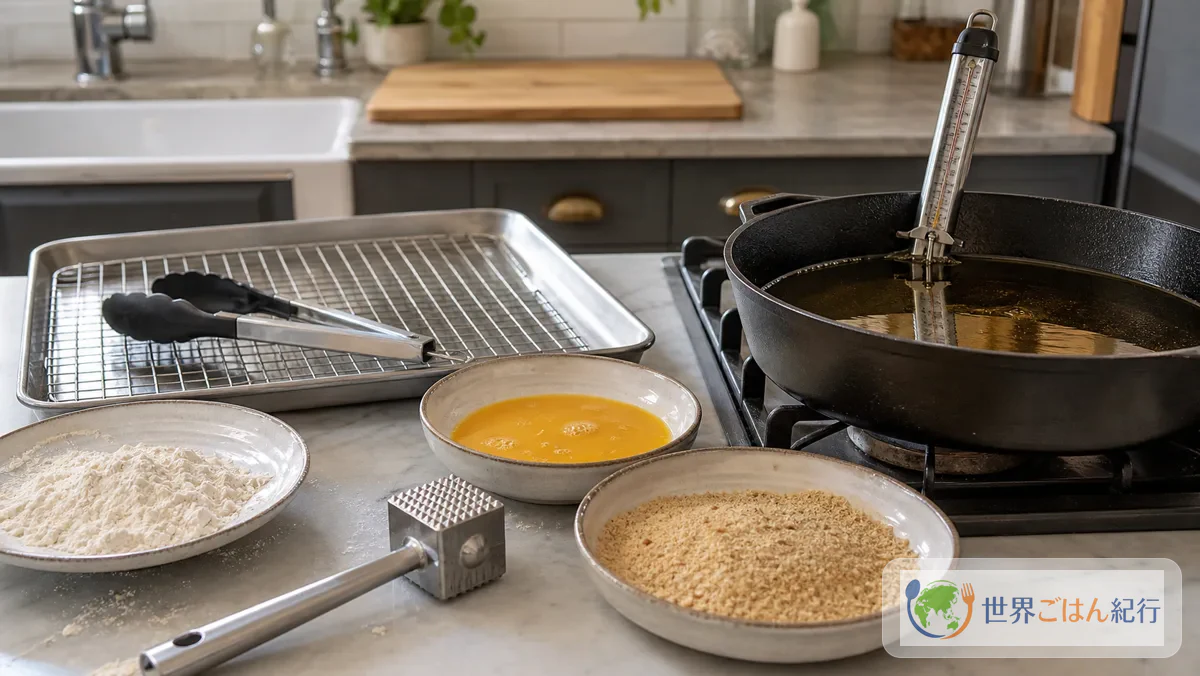
You can get beef, eggs, breadcrumbs and lemon at any neighborhood store, and only a few tools really matter. Good milanesa depends on how thin the meat is, how hot the oil is and how well it drains. The right tools keep all three steady.
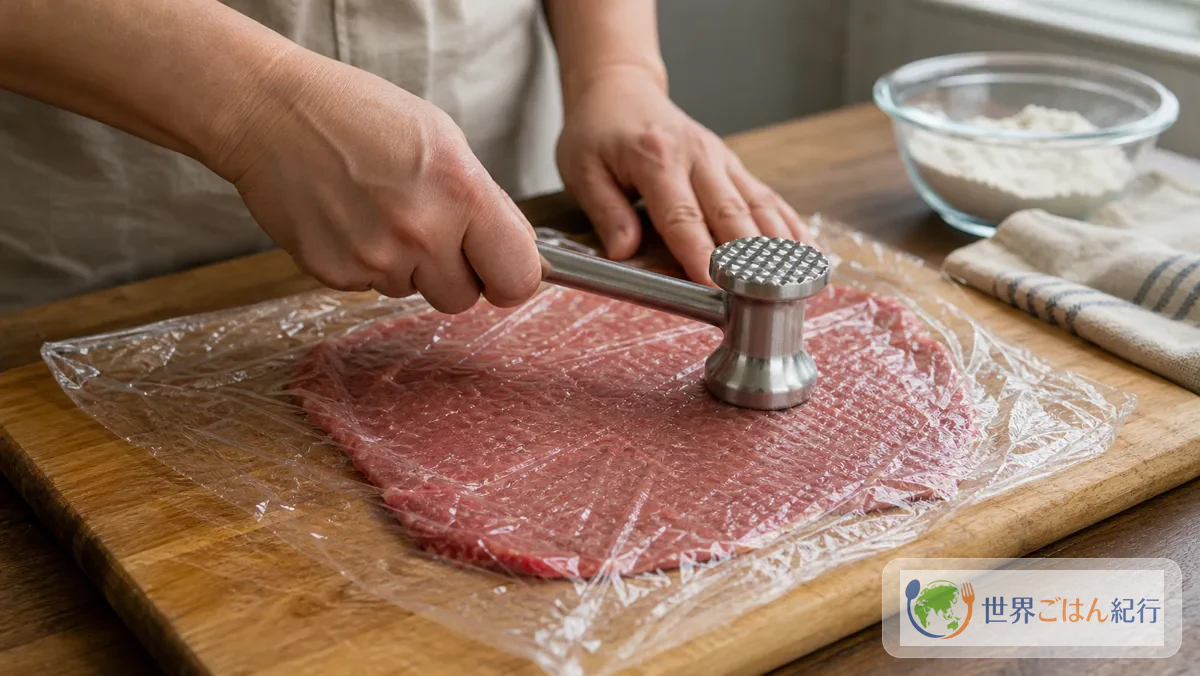
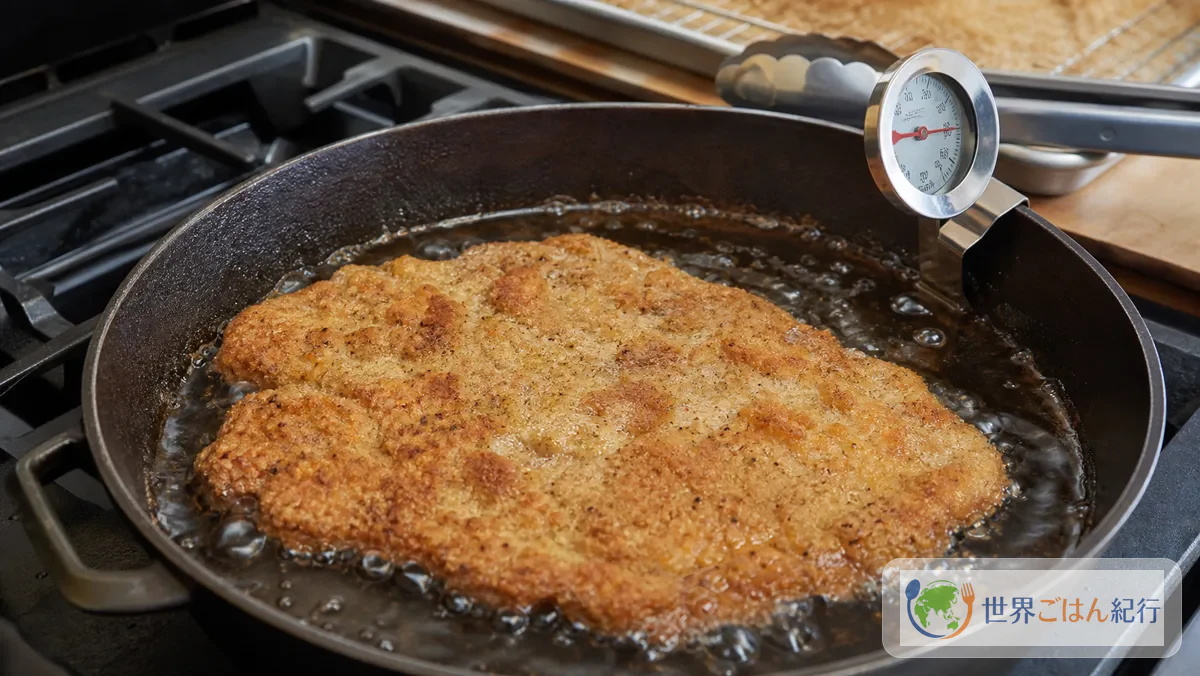
A meat mallet makes it easier to even the meat out to 0.25 inch (5 mm). Pick one that lets you tap down just the thick parts. A bottle or rolling pin also works. A thermometer helps you hold the oil at 170–175°C (up to 350°F). Because each piece is wide, a heavy skillet of about 10 inches (26 cm) works better than a small, thin pot: the meat lies flat, and it's easy to keep the oil about 1 inches (2.5 cm) deep. Finally, set out a rack for draining.
Method
Work in this order: thin the meat, add aroma to the egg wash, coat thinly, rest 5 minutes, fry at 170–175°C (up to 350°F), and drain on a rack. If you go straight from coating into the oil, the crumbs peel off easily.
Common Milanesa Problems and Fixes
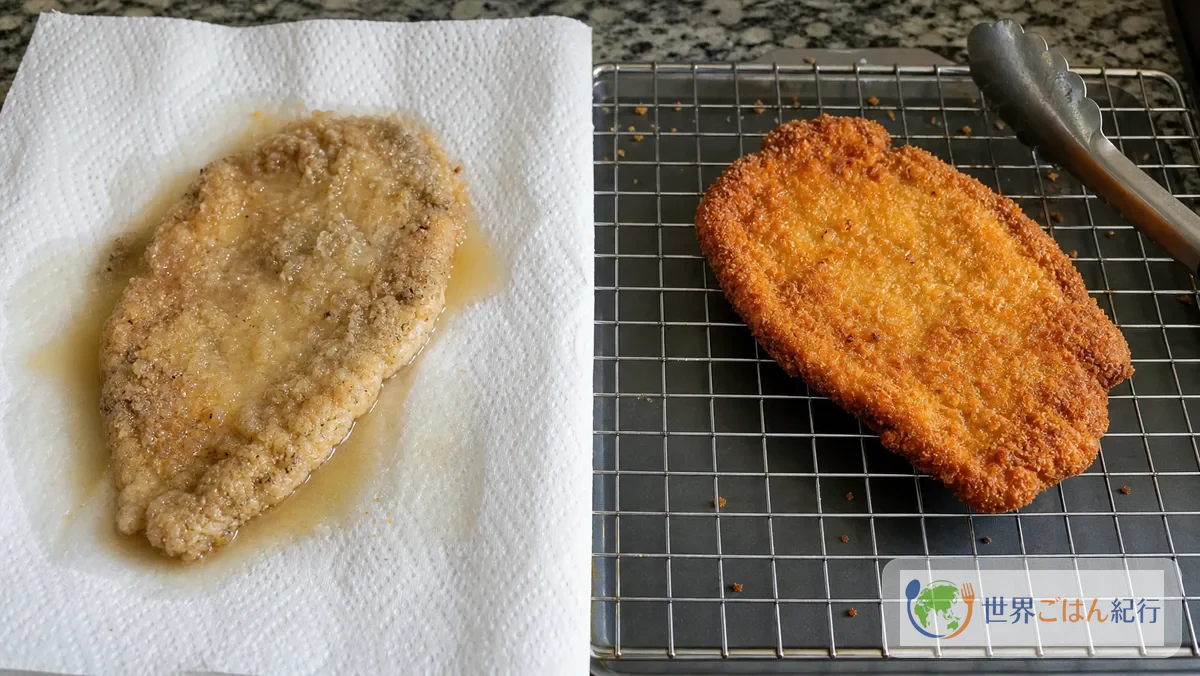
Most first-time failures are one of two things: the coating browns but the meat is tough, or the milanesa sits on paper, soaks up oil and turns heavy. If the oil is too cool, the coating drinks it in, and if it's too hot, the outside scorches before the meat is done. Every thin piece you add also cools the oil, so from the second piece on, let the temperature come back before you add the next. Drain the fried pieces on a rack, never stacked on paper.
| Problem | Cause | Fix |
|---|---|---|
| Coating peels off | Moisture left on the meat, flour too thick | Blot with paper, coat the flour thinly and shake off the excess |
| Greasy | Oil below 325°F (165°C), stacked on paper | Wait for 170–175°C and rest the fried pieces on a rack |
| Meat is tough | Fried thick for a long time | Even it out to 0.25 inch (5 mm) and fry one piece at a time |
| Coating scorches | Large bits of garlic, oil above 350°F (180°C) | Grate the garlic, lower the heat and bring the oil back |
| Heavy like tonkatsu | Coarse crumbs coated thickly | Crush the crumbs and coat thinly without pressing |
Serving, Storing and Napolitana
Serving
Milanesa is lightest straight from the oil, with lemon and a salad. For dinner, serve it with mashed potatoes. At lunch, Argentines often tuck it into bread. If you do, keep the sauce light. A few thin slices of lettuce and tomato are enough and let the coating's aroma come through.
Napolitana
Milanesa napolitana is a basic milanesa with a second dish layered on top. The name calls Naples to mind, and it spread through Argentine eateries and homes as a variation. Top a fried milanesa with 2 tbsp tomato sauce, 1 thin slice of ham and 25 g melting cheese, then bake for 3–4 minutes in a 425°F (220°C) toaster oven. A short bake at the end keeps the coating from getting heavy. Make the plain version with just lemon first, though. That way you learn to judge the thinness of the meat and coating, and the difference is easier to taste.
Storing and reheating
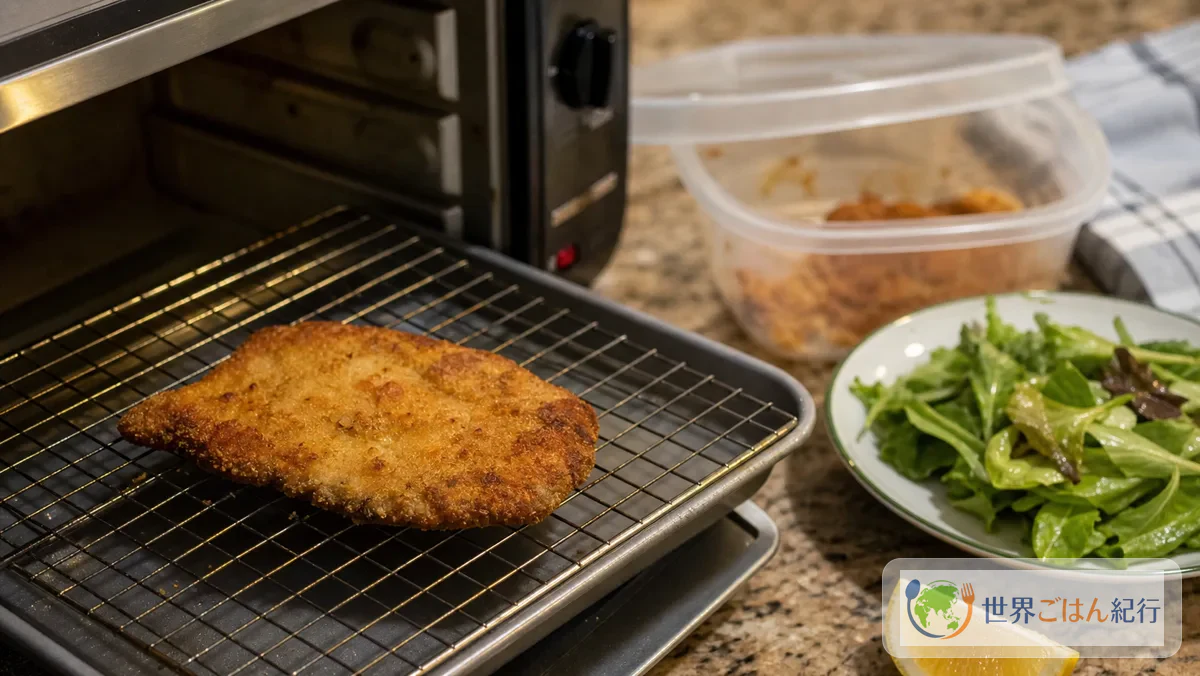
You can coat the meat ahead of time, but don't keep it in the refrigerator unfried for longer than the time in the table. Once fried, let it cool a little, wrap it loosely in paper and put it in a container. The paper absorbs oil, but left on too long it makes the coating damp, so take it off before you warm the milanesa in a toaster or oven.
| State | Storage | Reheating |
|---|---|---|
| Meat before coating | After seasoning, half a day in the refrigerator | Take out of the refrigerator 20 minutes before frying |
| Already coated | 2 hours in the refrigerator | If the surface is damp, add about 2 tsp crumbs |
| Fried milanesa | 2 days in the refrigerator | 5–6 minutes in a 350°F (180°C) toaster, on a rack |
| For sandwiches | 1 day in the refrigerator | Warm only the meat and combine with bread and vegetables just before eating |
The coating loses some of its lightness in a home freezer, but freezing works when you need it to. Wrap each fried milanesa in plastic wrap, put it in a storage bag and eat it within 2 weeks. Bake it from frozen in a 350°F (180°C) oven for 12–14 minutes, and once the center is hot, give it 2 more minutes in the toaster to bring back the crunch.
Frequently asked questions
Can I make it with chicken breast instead of beef?
Yes. Open out the thick part of the breast to 0.25 inch (7 mm) or less, fry at 170–175°C, and cook it through to the center temperature given above. Chicken holds more moisture than beef, so blot the surface with paper after seasoning and before the flour goes on. That keeps the coating from peeling.
Are coarse Japanese-style fresh breadcrumbs okay?
Yes, but coarse crumbs make it harder to get a thin coating, and if you coat thickly the texture drifts toward tonkatsu. Put them in a bag and crush them lightly with a rolling pin before using.
Can I bake it with less oil?
You can pan-fry it. With 0.5 inches (1 cm) of oil, cut the meat smaller and fry 3 minutes on the first side and 2 1/2 minutes after flipping. In shallow oil the edges of the coating dry out and the color turns uneven, so for your first try, 1 inches (2.5 cm) of oil gives more consistent results.
Can I make a sandwich from leftover milanesa?
Yes. Warm the refrigerated milanesa in a toaster. Spread the bread with mayonnaise and a little lemon juice, then layer on thin slices of lettuce and tomato. A watery sauce makes the coating damp, so put it together just before eating.