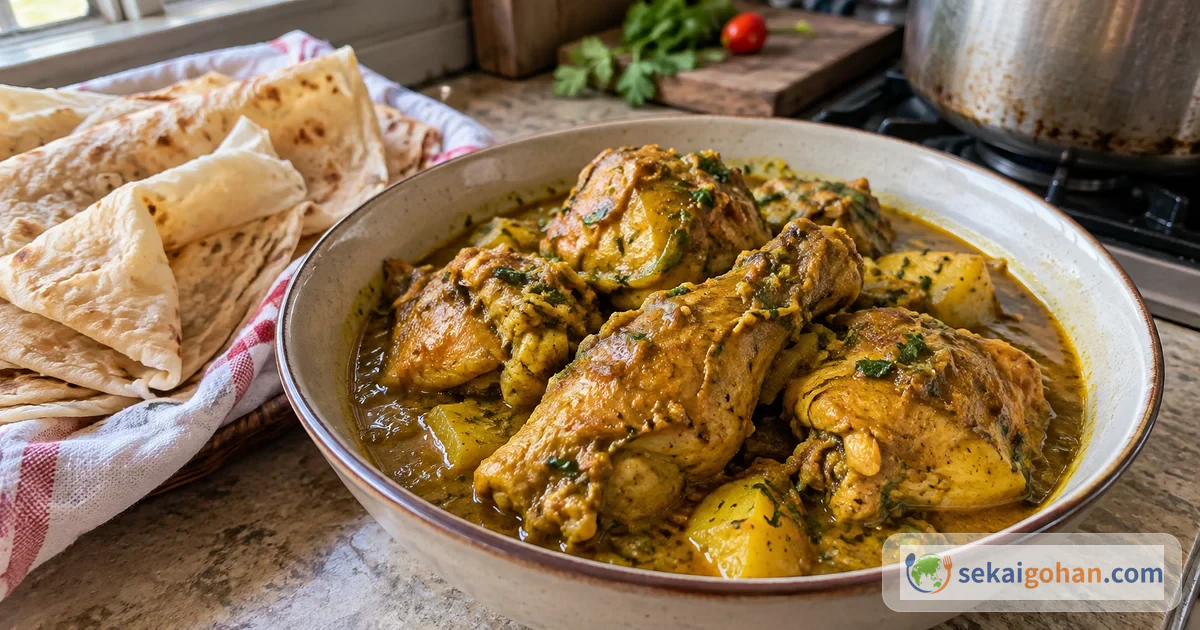
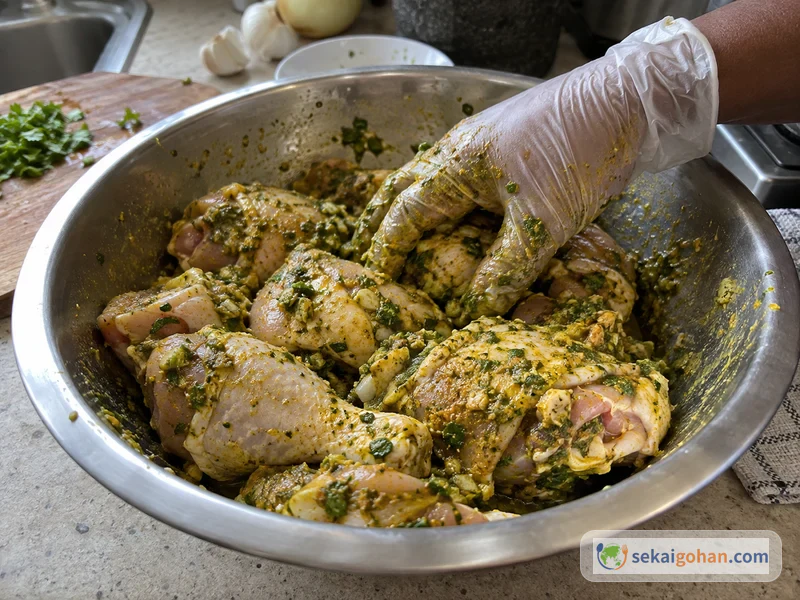
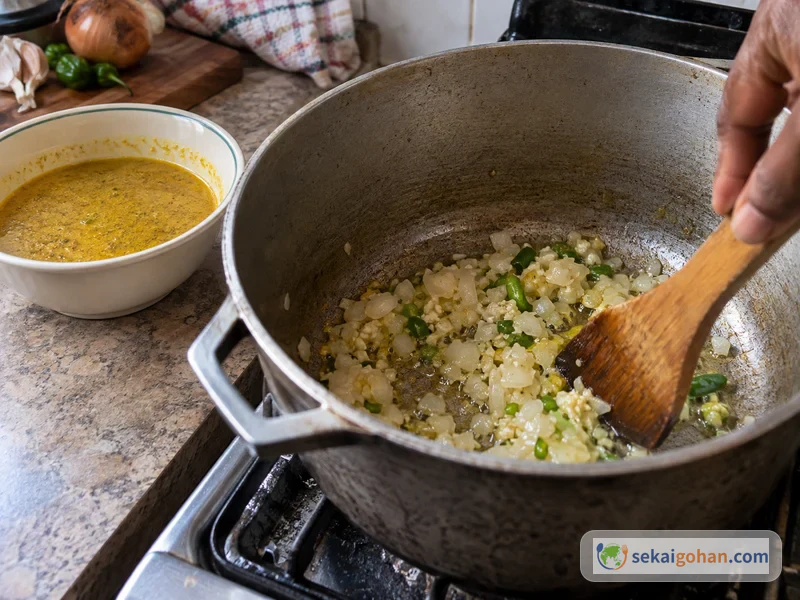
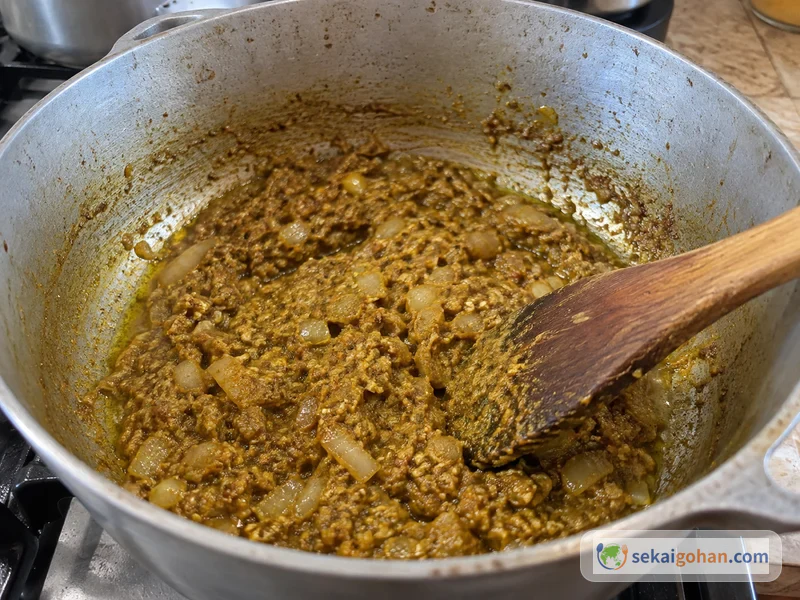
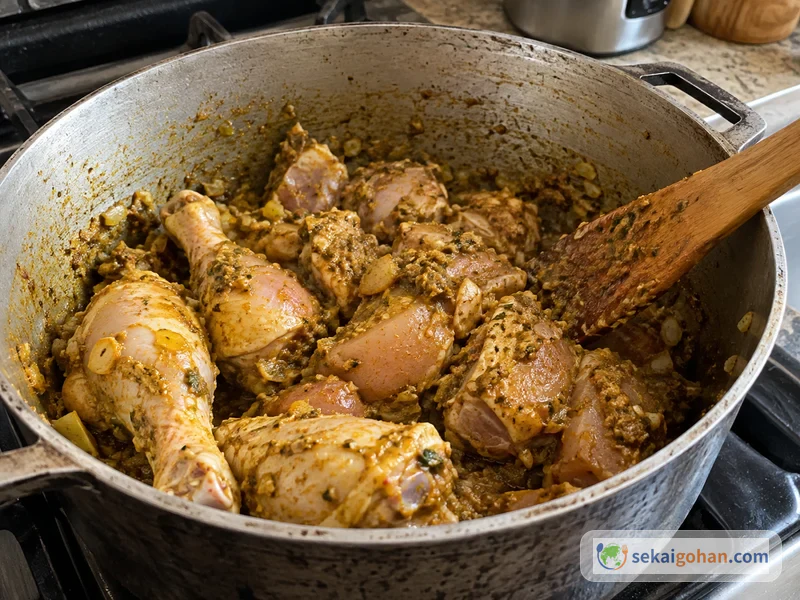
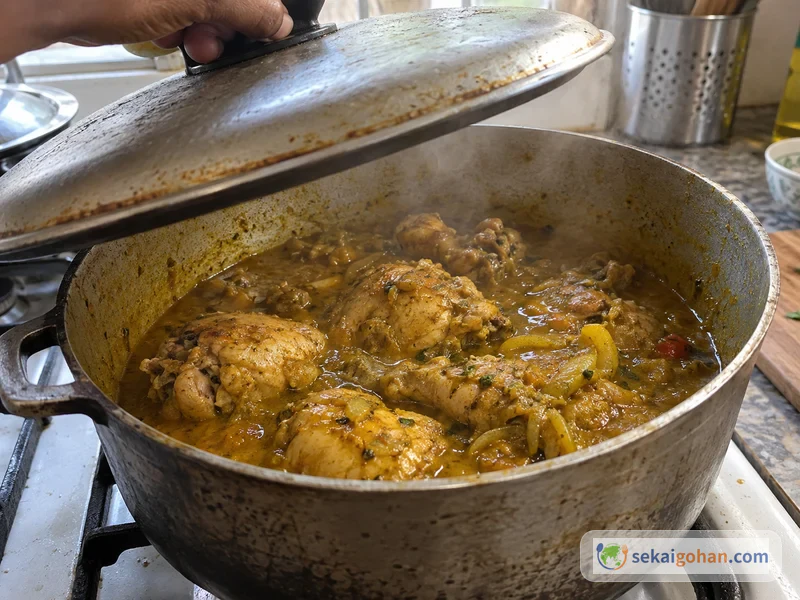
Pour curry powder stirred into water into hot oil and it foams with a sizzle; keep stirring and the water cooks off, the curry turns gritty, and the oil starts to seep out. In goes the chicken, stained green with herbs, and as it simmers under the lid the smell of spice and herbs fills the whole kitchen. This is curry chicken from Trinidad and Tobago, where a curry that crossed the sea from India became an island dish of its own. It's deeply aromatic, rich with herbs, and you eat it wrapped in thin roti.
Trinidadian Curry Chicken and Its History
Curry in Trinidad and Tobago goes back to a wave of migration from the 19th to the early 20th century. In May 1845, the ship Fatel Razack arrived carrying the first people to come from India as indentured laborers. Migration continued until 1917, and in all more than 140,000 people came to the island.
They came as a new labor force, but they also brought their food. Curry, roti and dal (a stew of pulses) are now everyday dishes loved across the island. Every year on 30 May, "Indian Arrival Day" marks that arrival as a public holiday; it became a holiday in 1994 and took its present name in 1995.
In Trinidad, cumin is called "geera," a word from Hindi. Curry leaf is "caripoulé." Words from India are still used in the island's kitchens.
The ingredients are close to those of Indian curry, but two things make the Trinidadian version distinct. The chicken is first flavored with "green seasoning," and the curry powder is fried in oil for a good while before the meat goes in. Both are a method for curry born on the island.
In Trinidad there is also a dish, "geera chicken," that makes geera the star in the same pot as curry. Whole geera is toasted to bring out its aroma, then cooked with garlic and curry leaf, making a chicken dish more toasty than curry.
Ingredients (serves 6)
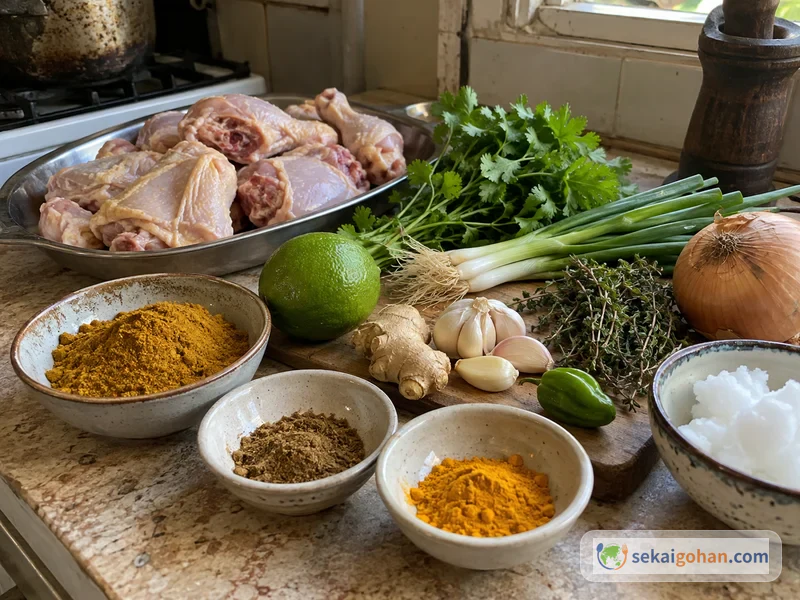
This recipe uses ingredients that are easy to find. The green seasoning is a quick version.
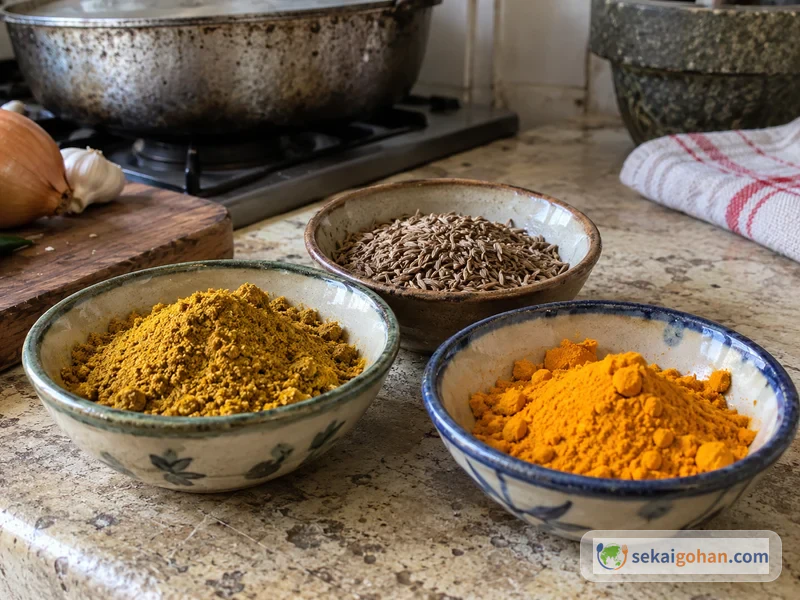
For the curry powder, use a powdered curry powder, not Japanese curry roux. Combining curry powder with geera (cumin) is standard in Trinidadian kitchens.
Habanero and Scotch bonnet are extremely hot chilies. Remove the seeds and pith, and wear disposable gloves when cutting them. If you are not used to heat, keep the amount modest with a green chili or chili flakes.
Choosing Ingredients for Curry Chicken
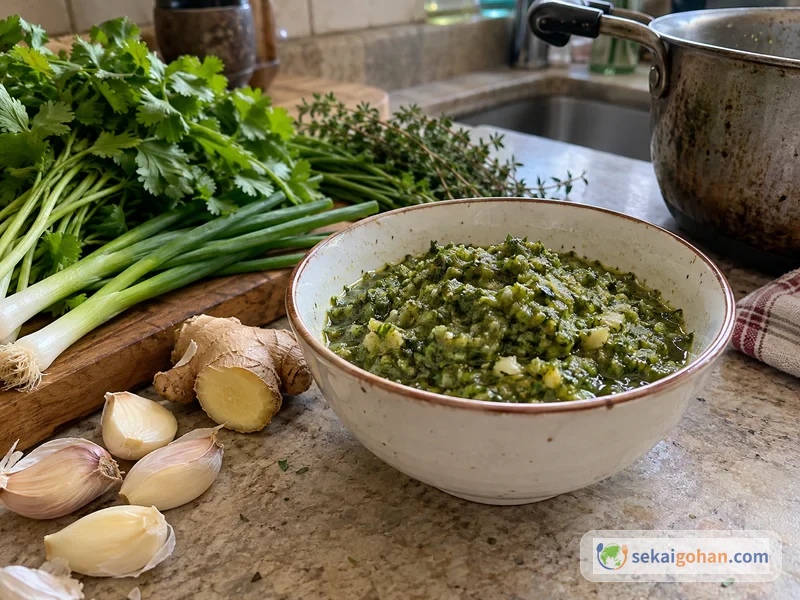
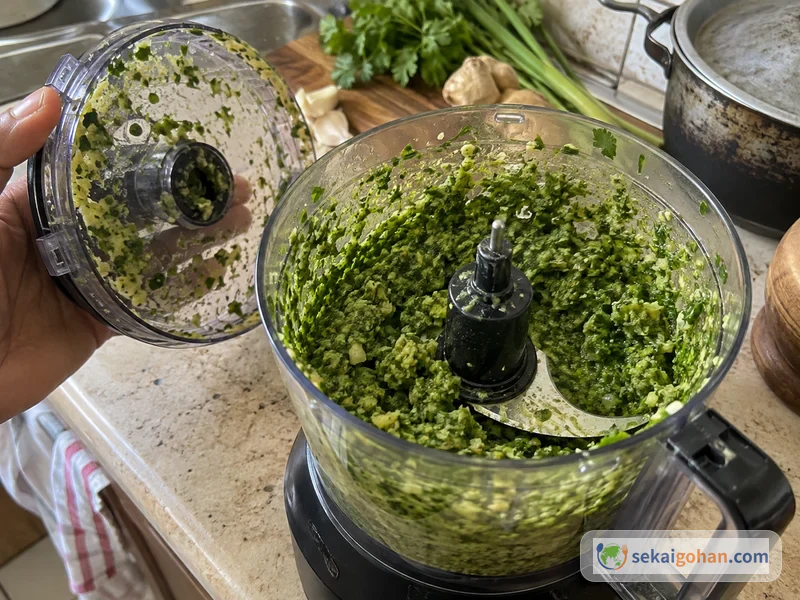
Green seasoning is the green herb blend no Trinidadian kitchen goes without, made from garlic, thyme, shado beni (culantro), chives and ginger. Shado beni has long, narrow leaves and a cilantro-like aroma, and it is the pillar of aroma in island cooking. Where it's hard to find, use cilantro instead.
Toast whole cumin in a dry frying pan for 1 to 2 minutes and then grind it, and the aroma is far stronger. This toasty note is why Trinidadian recipes specify "roasted geera."
How to make curry chicken
Including 4 hours of resting the seasoned chicken in the refrigerator, prep takes about 4 hours 20 minutes, and about 50 minutes more to fry and simmer. If you have time, season the chicken the night before.
Pouring the curry liquid into hot oil makes it spatter violently. Pour from a little distance from the pot, and use a long-handled wooden spoon while frying. With bone-in chicken, make sure it is cooked through to around the bone before you eat it.
Getting the Most Aroma from the Curry
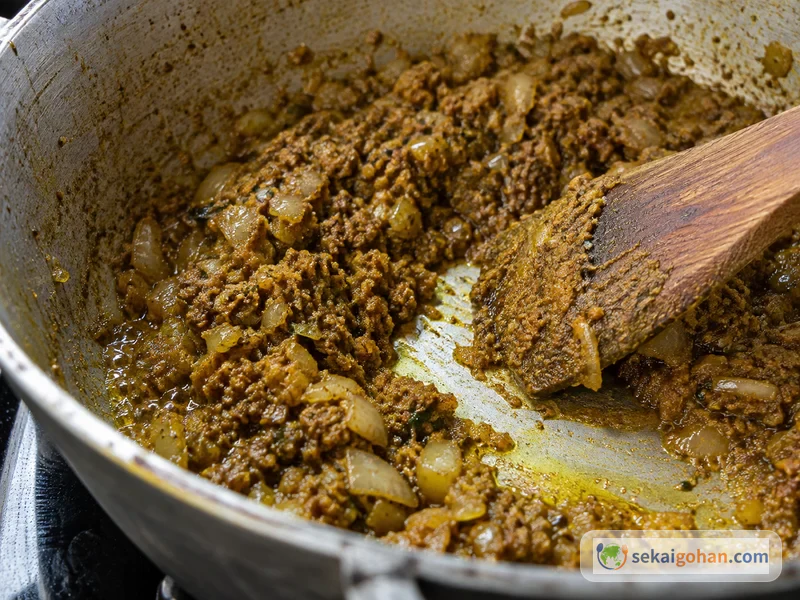
Frying the curry is the step that matters most. If you simmer the dissolved curry powder with the chicken straight away, it keeps a floury taste and the aroma stays vague. Fry it until almost all the liquid is gone and the oil seeps out, and the spices pass their aroma into the oil, which takes out the floury taste and brings out a toasty fragrance that carries through the simmer.
Time spent seasoning shapes the flavor too. The longer the green seasoning sits on the chicken, the deeper its aroma. Four hours will do, but seasoning the night before lets the herbs and curry reach the inside of the meat.
If the sauce reduces too much while simmering, add hot water a little at a time. If you want to dip roti into it, leave a little more sauce.
Serving Curry Chicken and Variations
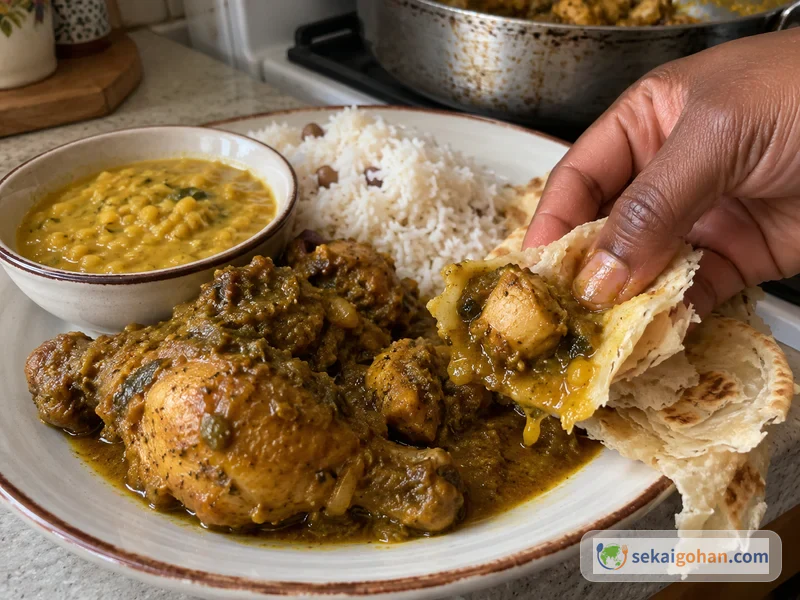
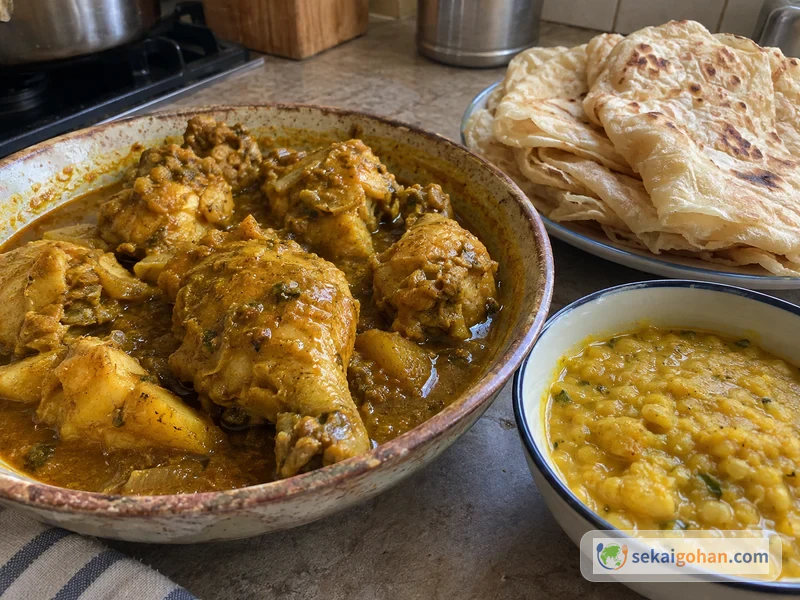
In Trinidad, curry chicken is eaten with thin roti or rice. The island way is to tear off some roti, wrap it around chicken and sauce, and eat it by hand. Store-bought chapati, tortillas or naan make fine substitutes.
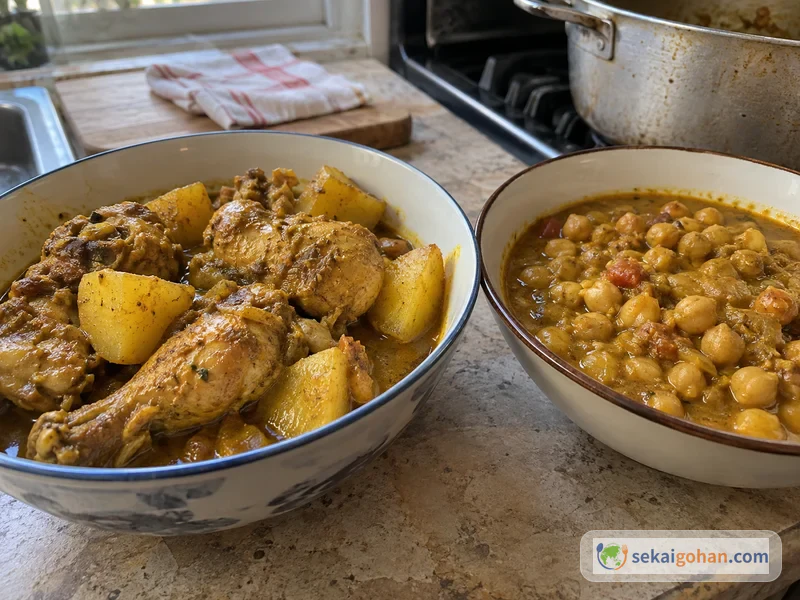
Large chunks of potato simmered with the chicken soak up the curry and are almost a second dish in themselves. Cut them into 2 cm to 1 inch (3 cm) cubes and add them when you add the water, after steam-simmering the chicken. Whatever potato breaks down gives the sauce a natural thickness.
For a meatless version, follow the same steps with cooked chickpeas. The result comes close to the chickpea curry in doubles, Trinidad's street-stall breakfast of chickpea curry sandwiched in fried bread. Same spices, completely different meal. For another side of the island's home cooking, try pelau, chicken and rice cooked together.
Frequently asked questions
Can I make it with curry roux?
Curry roux is thickened with flour and fat, and is a different thing from Trinidadian curry. Use powdered curry powder.
Is curry leaf added locally?
Yes, a single caripoulé (curry leaf) goes in partway through the simmer. It's hard to find in some places, but if you have it, add it with the water for a fresh aroma.
How do I reduce the heat?
Leave out the chili, or use a small amount of green chili. The heat of curry powder varies by product, so choose a mild blend.
Can I make it ahead?
Once cooled, put it in an airtight container and refrigerate. Reheat until hot all the way through, and eat it soon.