La Bandera Dominicana: Dominican White Rice, Stewed Red Beans and Chicken

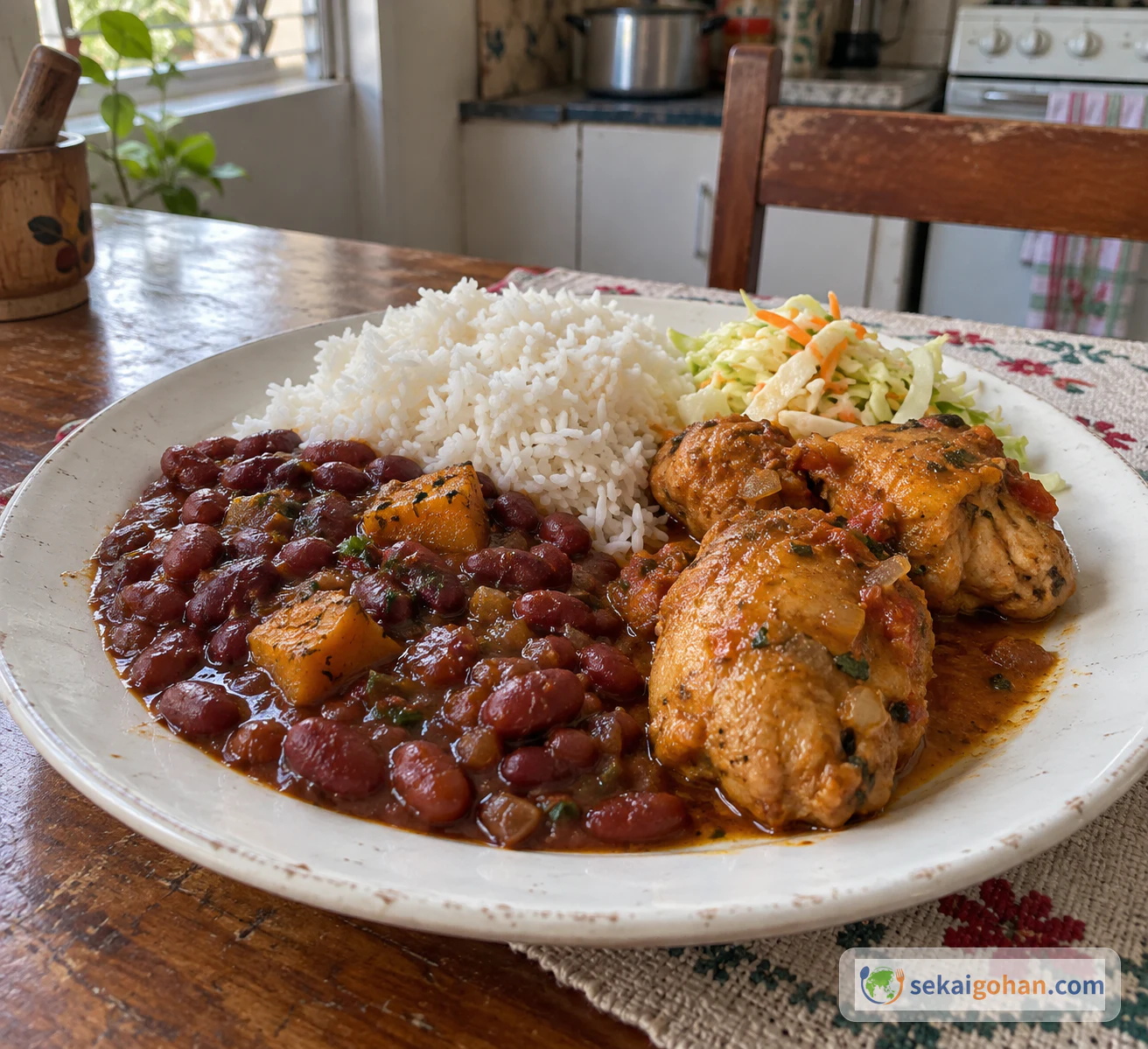
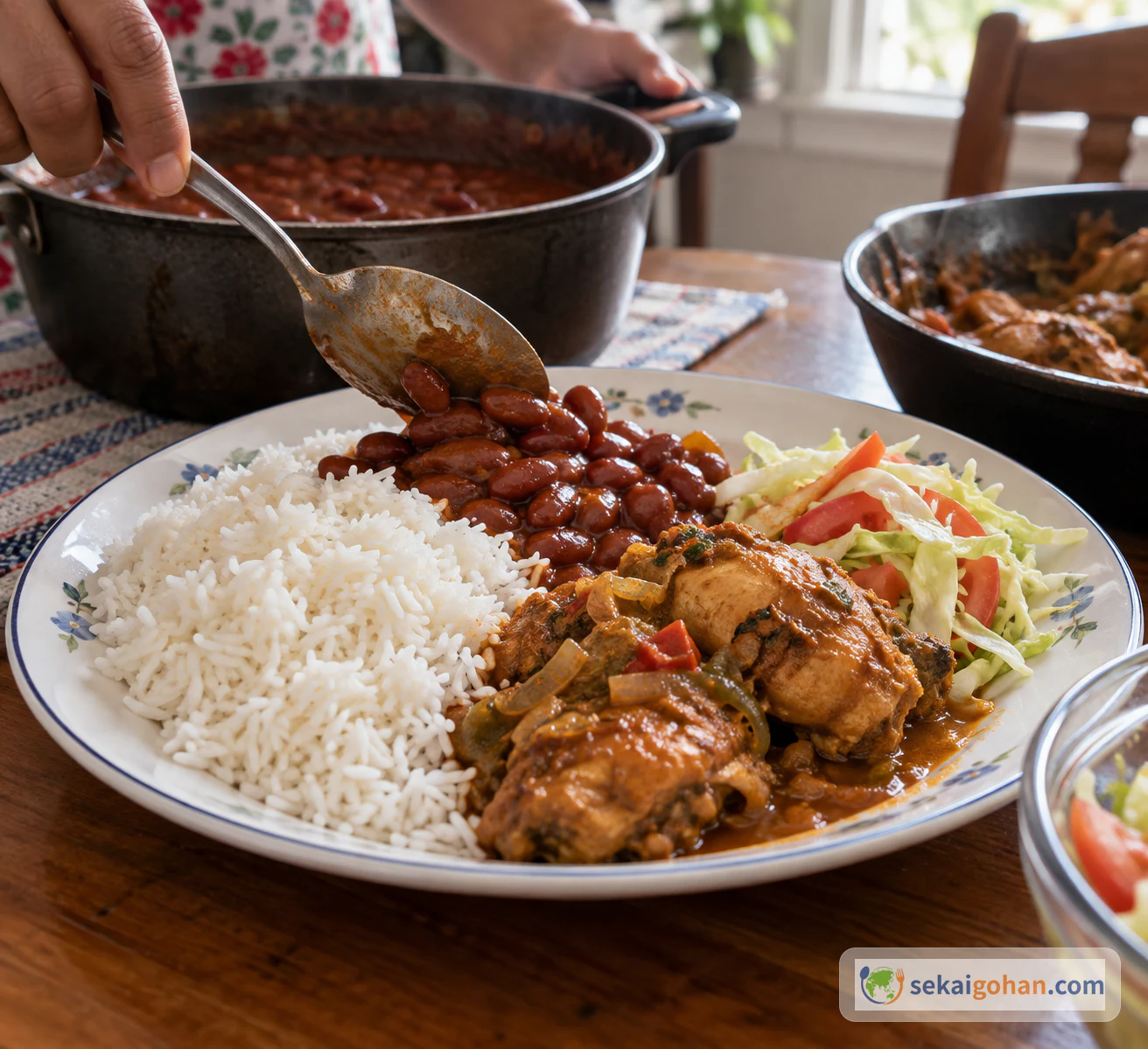
Dominican La Bandera lunch: white long-grain rice, red stewed beans and tomato-colored stewed chicken served in separate portions
Level
Intermediate
Cuisine
Dominican

How to make La Bandera Dominicana, the Dominican lunch of white rice, stewed red beans and pollo guisado served side by side. Based on a recipe in a 2024 Dominican cookbook, with notes on choosing auyama, ají cubanela and sour orange, the order of work, and checking chicken with a thermometer.

Cooking flow

Cooking steps

STEP11 / 10

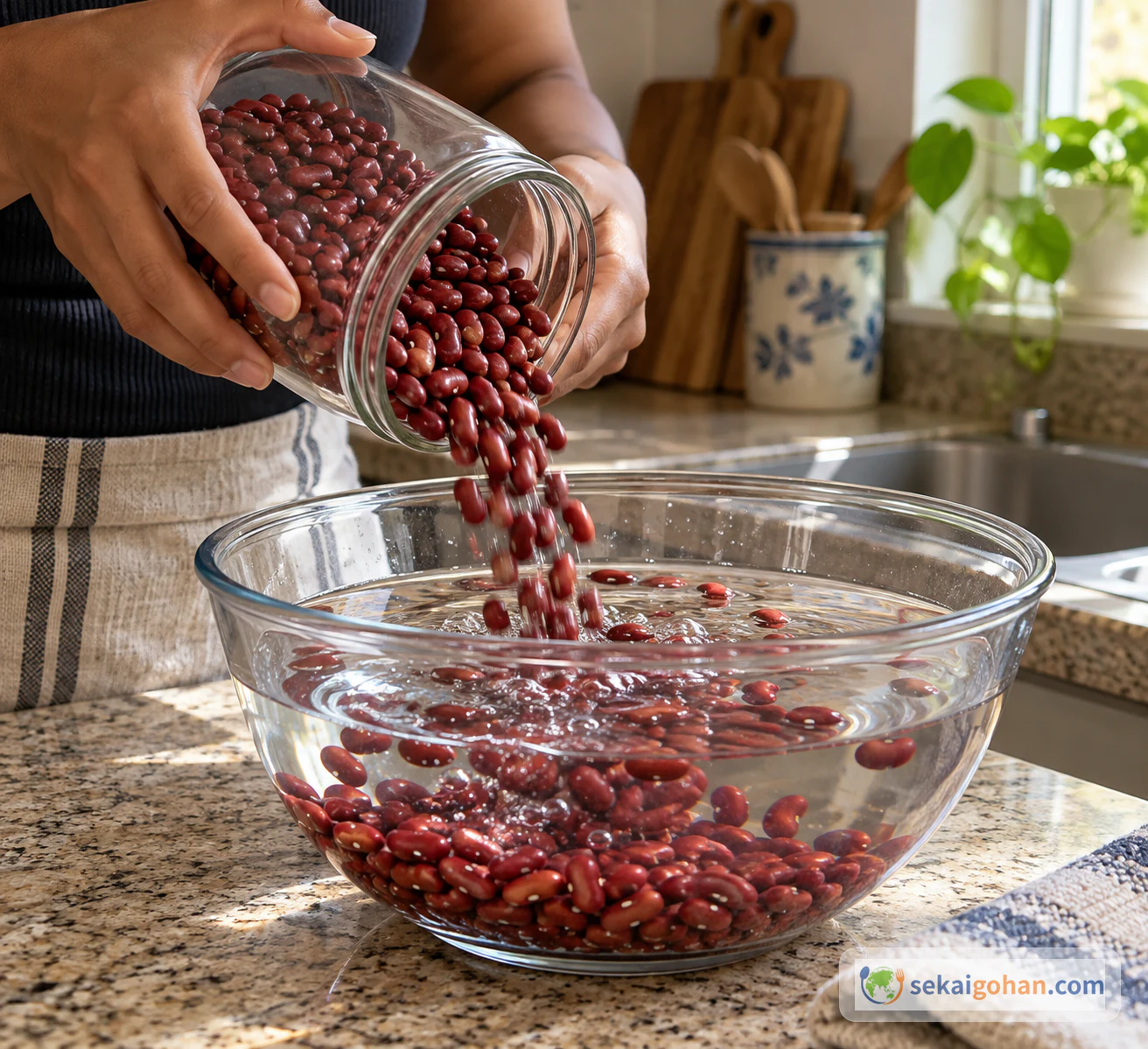
Soak the beans

Dried red beans being poured into a bowl of water to soak for La Bandera
The beans soak for 1 hour before any seasoning goes in

Put 1 libra dried red beans in a bowl, cover with water and soak for 1 hour.

STEP22 / 10

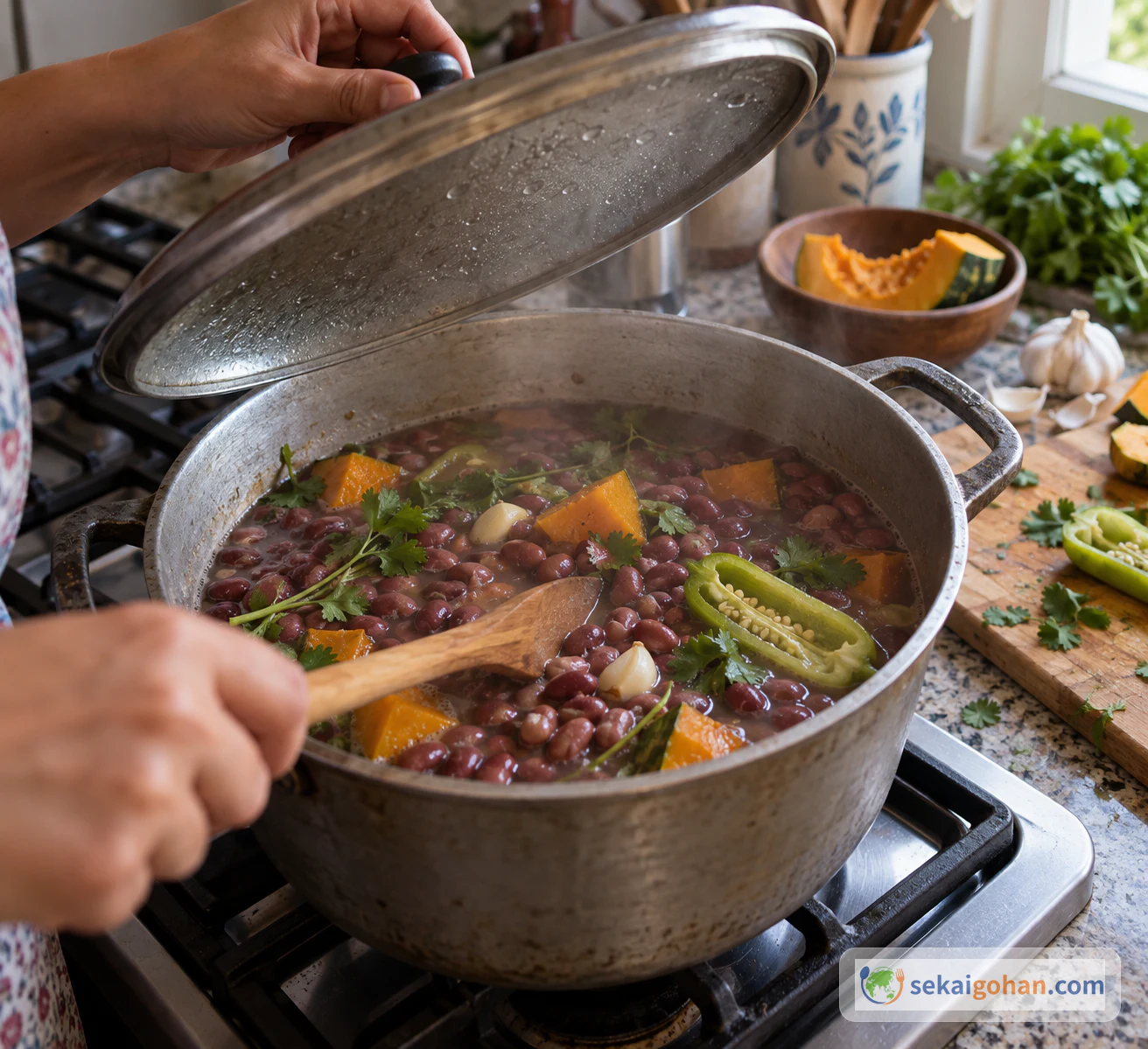
Simmer the beans with the first aromatics

Red beans simmering with auyama, garlic, cubanela pepper and herbs
At this stage there is no onion or tomato color in the pot

Drain the beans, discarding the soaking water, and put them in a large pot with enough fresh water to cover them well. Add 1 teaspoon salt, 1 tablespoon oil, the diced auyama, the 1/2 head garlic, the 3 cilantro ancho leaves and half of the ají cubanela.

Simmer until the beans are al dente: the center is no longer too hard, and each bean still holds its shape. If the water runs low, add more so the beans stay covered. If the bag of beans gives cooking directions, follow them too.

STEP33 / 10

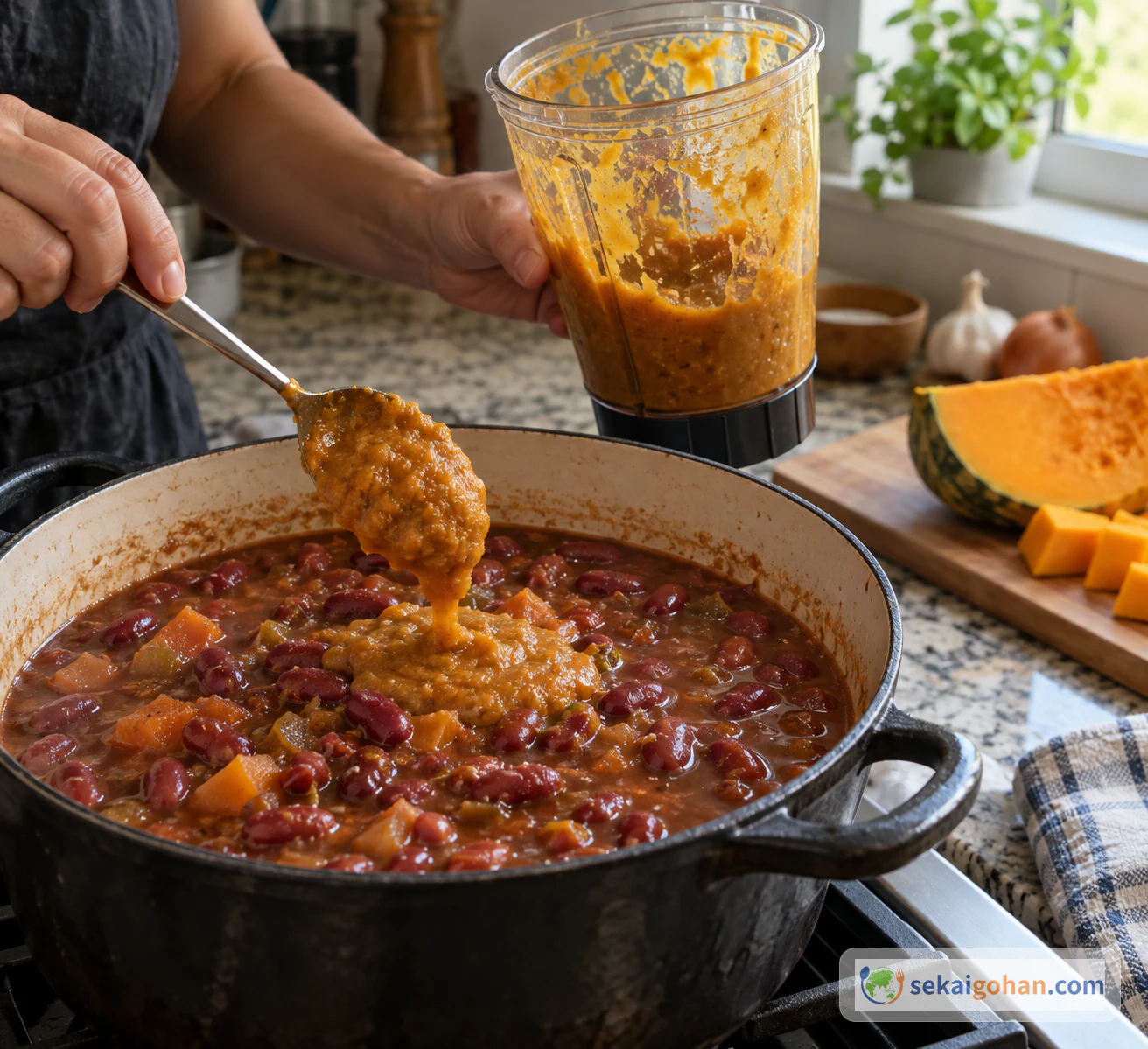
Blend a small portion to thicken the pot

A portion of cooked red beans and vegetables blended and returned to the pot to thicken it
Blend only a small portion; whole beans stay in the pot

Scoop out 1/2 taza of the beans along with the auyama, garlic and ají from the pot. Leave the cilantro ancho behind. Blend to a thick, rustic puree, taking care with the hot food.

Stir the puree back into the pot. Only this small portion is blended, so most of the beans stay whole. Simmer over low heat until the liquid thickens.

STEP44 / 10

Finish the beans

STEP 4

Once thickened, add the quartered red onion, the remaining half of the ají, 2 tablespoons tomato paste, 1 tablespoon oil and the remaining salt to taste. Cook over low heat for 8 minutes. Add the sprig of cilantrico and cook for 5 minutes more.

The beans are ready when the stew is thick and the beans still hold their shape. Bite into one: if the center is still hard, keep simmering over low heat, adding a little hot water if needed. Do not serve beans with a hard center.

STEP55 / 10

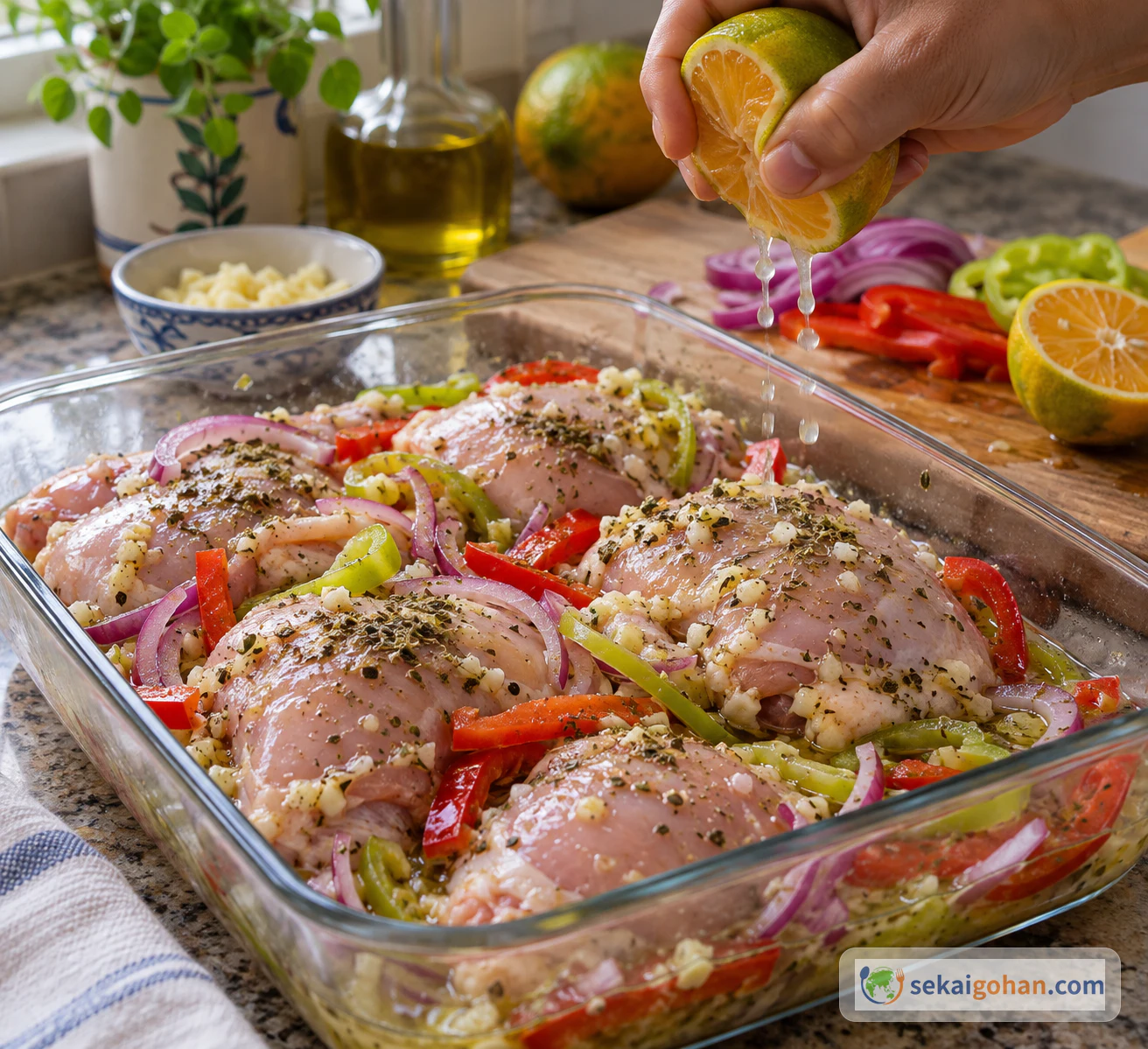
Season the chicken

Chicken being seasoned with sour orange juice, garlic, oregano, onion and peppers
The seasoned chicken stays in its own dish, away from food that will not be cooked

Remove the skin from the chicken and place it in a shallow dish. Pour over the juice of 1 sour orange, cover and refrigerate for 15 minutes.

Discard the liquid without rinsing the chicken. Add the crushed garlic, oregano, salt and pepper, the juice of the remaining 1/2 sour orange, and the sliced ají, onion and red pepper. Cover and refrigerate for 30 minutes. Wash and sanitize anything that touched the raw chicken.

STEP66 / 10

Color the sugar and brown the chicken

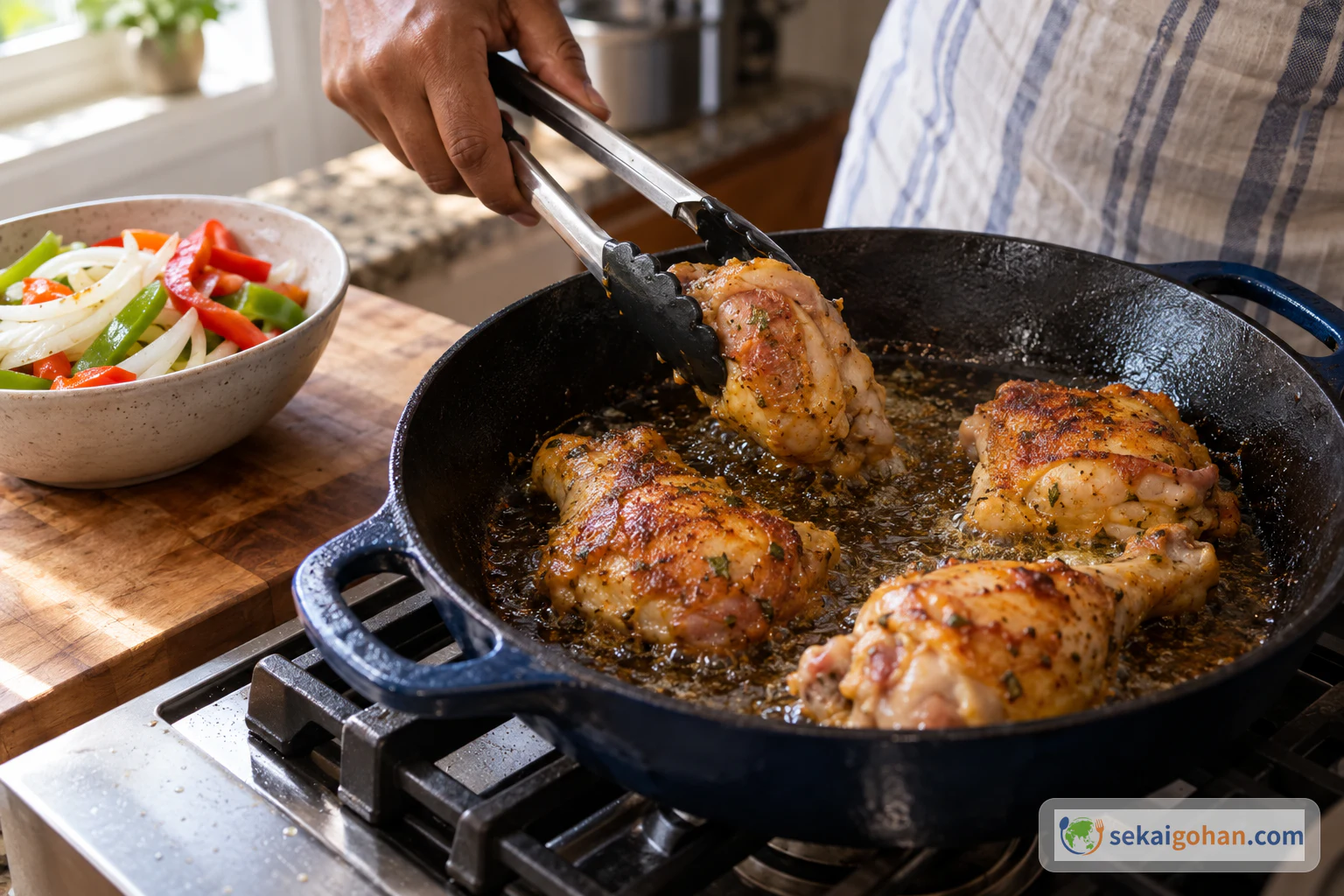
Seasoned chicken being browned in oil and caramelized sugar, with the sliced vegetables set aside
Brown the chicken alone; the sliced vegetables wait in a separate bowl

Lift the chicken out of the dish and let the liquid drip off. Pick out the sliced vegetables and set them aside in a small bowl for step 8. Discard the remaining liquid.

Warm 2 tablespoons oil in a heavy pan over medium heat and add 1 teaspoon sugar. As soon as the sugar takes on color, before it turns dark brown, add only the chicken, carefully and with long tongs. Brown it on all sides.

STEP77 / 10

Cook the chicken until tender and check the temperature

STEP 7

Keep cooking the chicken until the meat is tender. Different cuts and pans take different amounts of time, so watch the pan. If the liquid has evaporated and the chicken is about to scorch, lower the heat and add a little water.

Check the thickest part of the meat with a food thermometer, and for a whole bird, check near the inner thigh as well, without touching bone. It must reach 74°C (165°F). If it has not, keep cooking and check again.

STEP88 / 10

Build the sauce and return the chicken

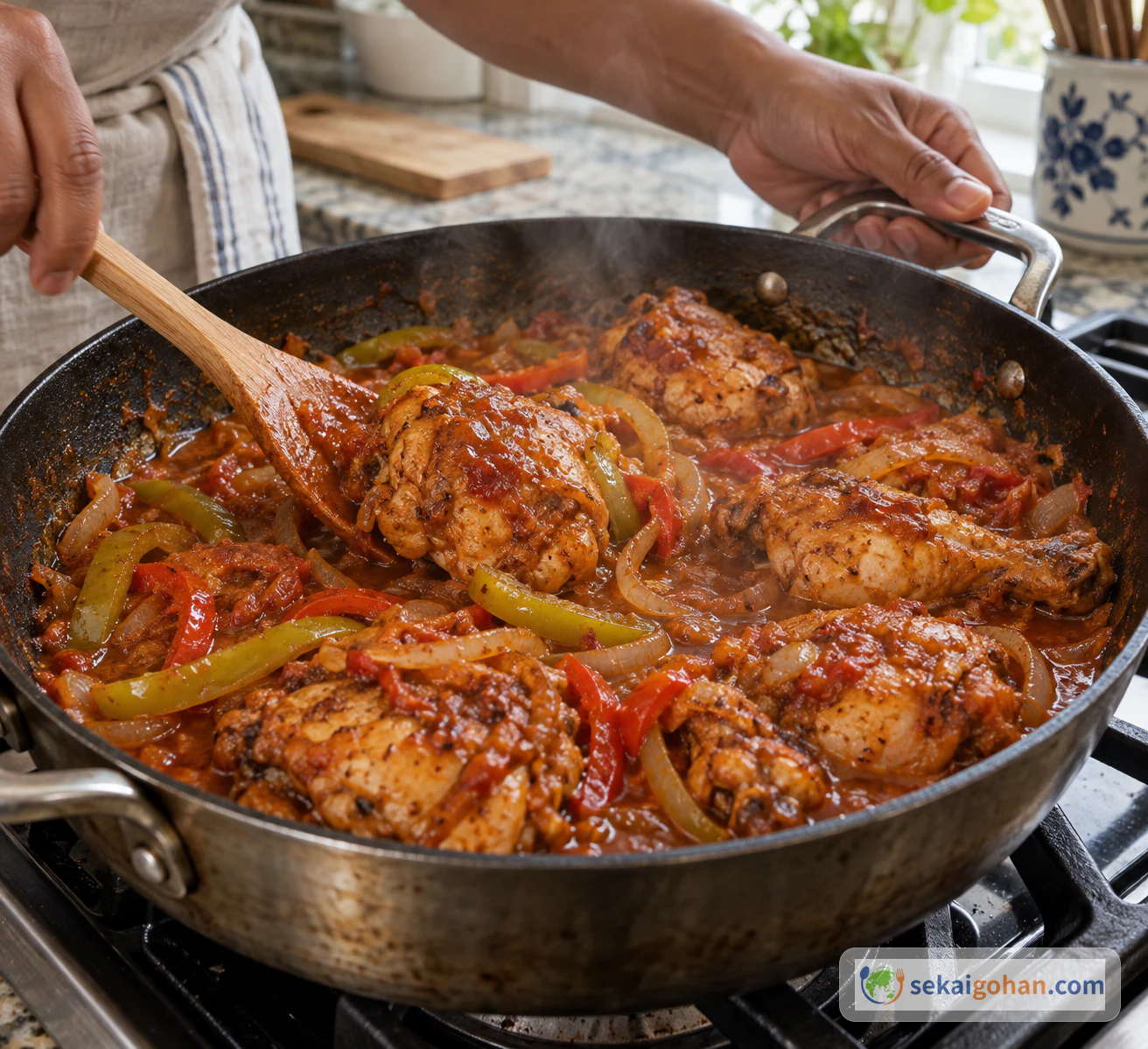
Browned chicken simmering with tomato paste, the reserved vegetables and water
Turn the chicken in the red-brown sauce until each piece is coated

Move the chicken to a clean plate. Put 2 tablespoons tomato paste and the reserved vegetables in the pan and sauté until the vegetables are cooked through. Add 1/4 taza water, return the chicken and turn it in the sauce until coated and simmering.

STEP99 / 10

Cook the rice

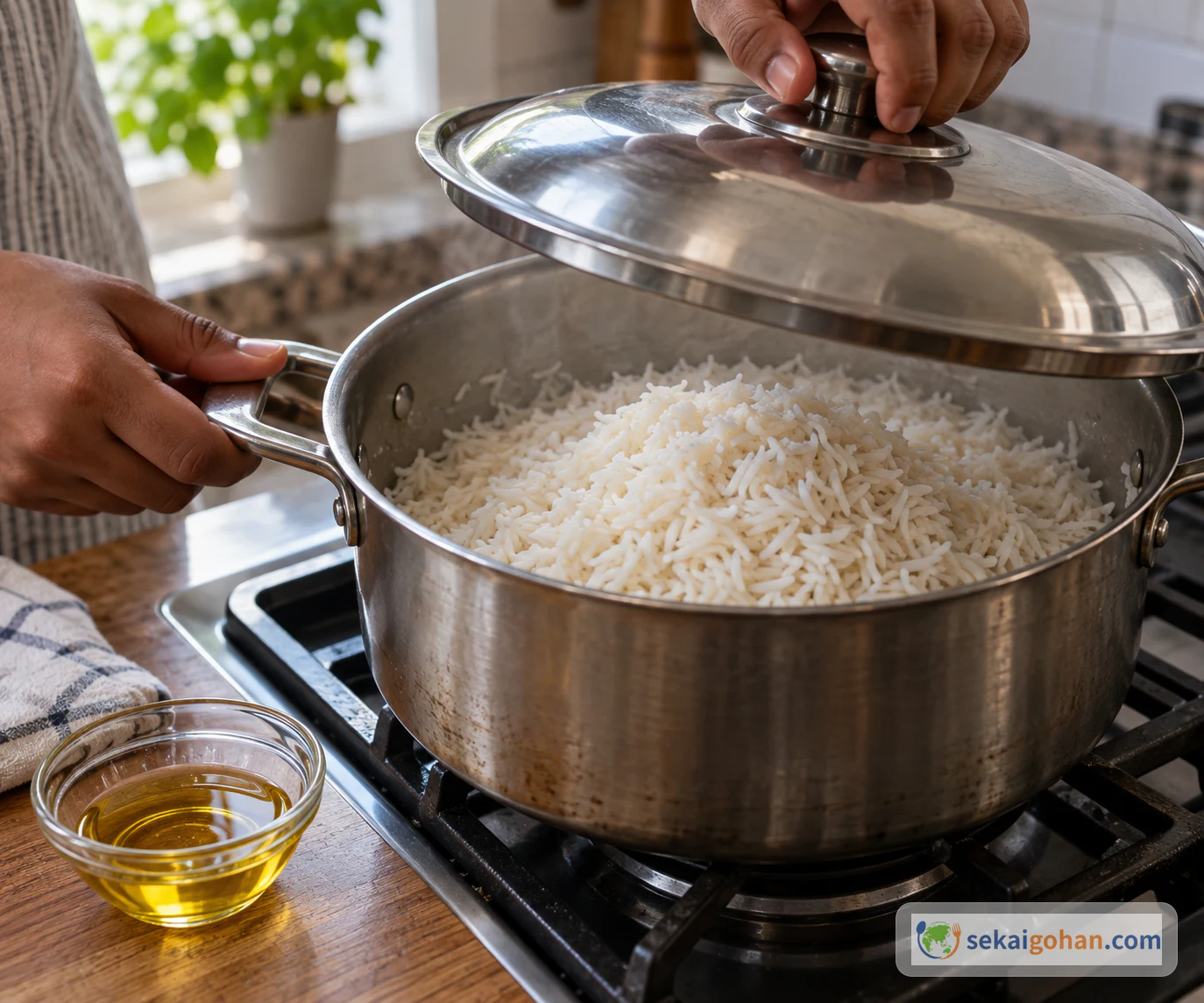
Long-grain rice gathered in the center of the pot as the lid goes on for very low heat
The remaining oil waits nearby until the rice is tender

Bring 3 tazas water to a boil in a saucepan. Add salt to taste and 1 tablespoon oil, then add 3 tazas long-grain rice.

When the water has reduced, gather the rice into a mound in the center of the pot. Cover and cook over very low heat until tender. Add the remaining 3 tablespoons oil, cover again and cook for about 6 minutes.

STEP1010 / 10

Plate the three dishes separately

White rice, red stewed beans and stewed chicken served separately with an optional salad
Each dish keeps its own place on the plate

Spoon the rice, beans and chicken into separate portions on each plate, with a little of the sauce on the chicken. Add salad, avocado or plantains on the side if you like. Wash any salad vegetables and the avocado well under running water before cutting them.

0 / 0
Ingredients

Ingredients

1 / 4

White rice (arroz blanco)

Ingredient Amount Role
Water (agua) 3 tazas (cups) Cooks the rice
Salt (sal) to taste Seasons the rice
Vegetable oil (aceite) 4 cucharadas (tablespoons) 1 goes in at the start, 3 after the rice is cooked
Long-grain rice (arroz de grano largo) 3 tazas (cups) The white part of the plate
2 / 4

Stewed red beans (habichuelas rojas guisadas)

Ingredient Amount Role
Dried red kidney beans (habichuelas rojas) 1 libra (pound) The red part of the plate
Water, for soaking and simmering as needed Soaks and then cooks the beans
Salt (sal) 2 cucharaditas (teaspoons) 1 at the start, the rest to taste near the end
Oil (aceite) 2 cucharadas (tablespoons) 1 at the start, 1 with the final aromatics
Squash (auyama), diced 1/2 taza (cup) Adds sweetness and body to the pot
Garlic (ajo) 1/2 cabeza (head) Simmers with the beans, then is blended
Broad-leaf coriander (cilantro ancho or cilantro cimarrón) 3 hojas (leaves) Herbal aroma; never goes in the blender
Ají cubanela or green ají (ají verde) 1 Half at the start, half with the final aromatics
Small red onion (cebolla roja), quartered 1 Added after the beans thicken
Tomato paste (pasta de tomate) 2 cucharadas (tablespoons) Color and depth in the final simmer
Fine-leaf coriander (cilantrico) 1 ramita (sprig) Added for the last 5 minutes
3 / 4

Stewed chicken (pollo guisado)

Ingredient Amount Role
Chicken (pollo), skin removed 1 whole, or the pieces you prefer The third color on the plate
Sour orange (naranja agria) 1 1/2 Juice of 1 for the first soak, juice of 1/2 for the seasoning
Garlic (ajo), crushed 4 dientes (cloves) Seasoning
Oregano (orégano) 1 cucharadita (teaspoon) Seasoning
Salt and black pepper (sal y pimienta) to taste Seasoning
Ají cubanela, sliced 1/2 Seasons the chicken, then goes into the sauce
Onion (cebolla), sliced 1/2 Seasons the chicken, then goes into the sauce
Red bell pepper (pimiento rojo), sliced 1/2 Seasons the chicken, then goes into the sauce
Vegetable oil or extra-virgin olive oil 2 cucharadas (tablespoons) Browns the chicken
Sugar (azúcar) 1 cucharadita (teaspoon) Colors the oil and the chicken
Tomato paste (pasta de tomate) 2 cucharadas (tablespoons) Base of the sauce
Water (agua) 1/4 taza (cup) Loosens the sauce
4 / 4

Optional, served on the side

Ingredient Amount Role
Cabbage, tomato, lettuce and onion as needed Green salad
Oil, lemon and salt a little Salad dressing
Avocado as needed Side
Plantains (plátanos or tostones) as needed Side
0 / 0

The lid comes off a pot of red beans and the smell of beans and herbs rises. In the next pan, chicken is taking on the color of tomato, and white rice is being spooned onto the plate. This is La Bandera Dominicana, "the Dominican flag," the typical midday meal of the Dominican Republic: white rice, stewed red kidney beans and a meat stew. Each part is cooked in its own pot and served side by side, so it keeps its own texture and flavor. The real trick for a home cook is timing: start the beans, move on to the chicken, cook the rice, and only then bring everything together on one plate.

La Bandera Dominicana at the Dominican Table

The name is a playful comparison. The red beans stand for the flag's red, the rice for its white, and the meat takes the blue. Nobody arranges the plate to look like a flag. At home the whole meal is also called comida or plato del día.

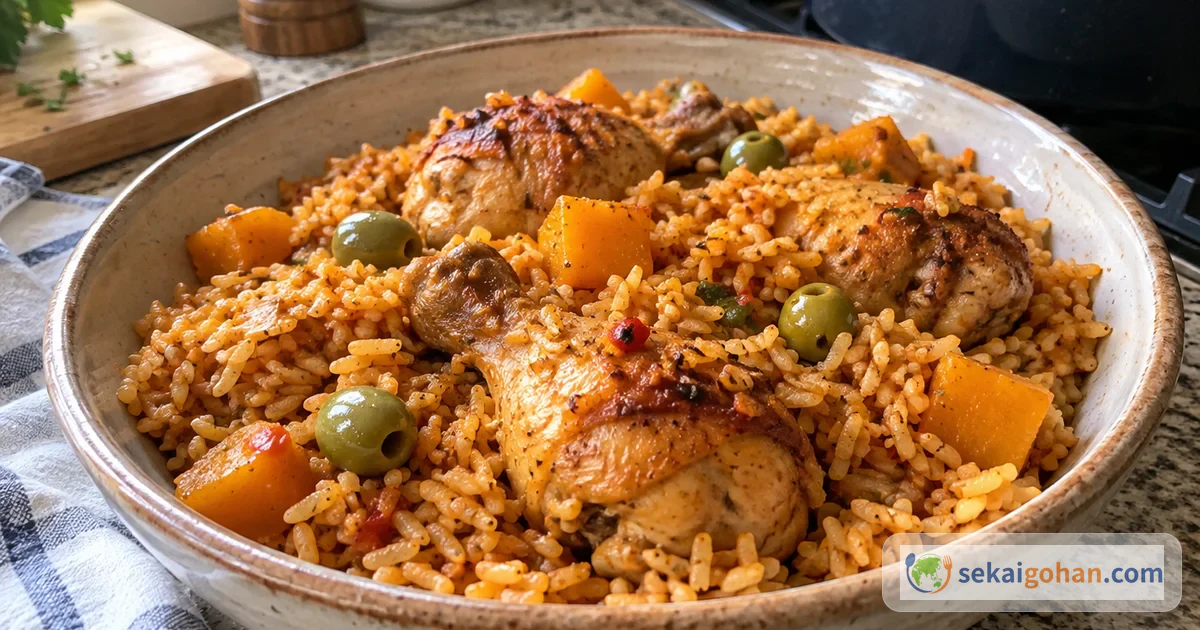
Rice and stewed red beans stay the same in every version, but the meat changes. Chicken stew (pollo guisado) is the common choice, beef is another popular one, and pork or goat also turn up. Tostones often come alongside, and so can salad, fried ripe plantains, avocado or concón, the crust from the bottom of the rice pot.

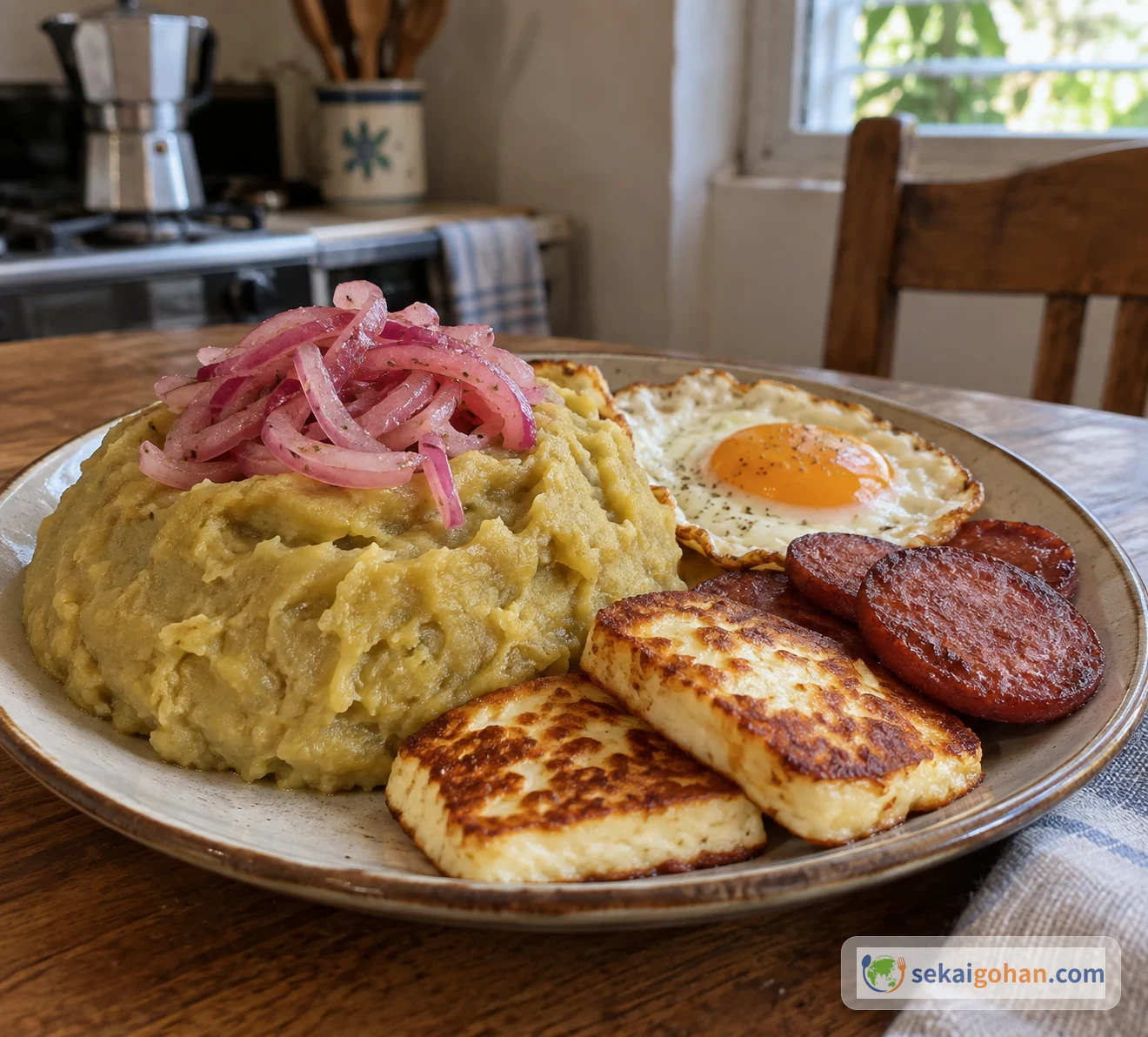
Keeping the pots separate is what sets La Bandera apart from locrio de pollo, where chicken and rice cook together in one pot. For a Caribbean neighbor that pairs rice and legumes, compare Jamaican rice and peas. If you'd rather start the day the Dominican way, try mangú, a green plantain breakfast, and find more dishes on our Dominican Republic page.

Ingredients: Three Dishes, Measured Separately
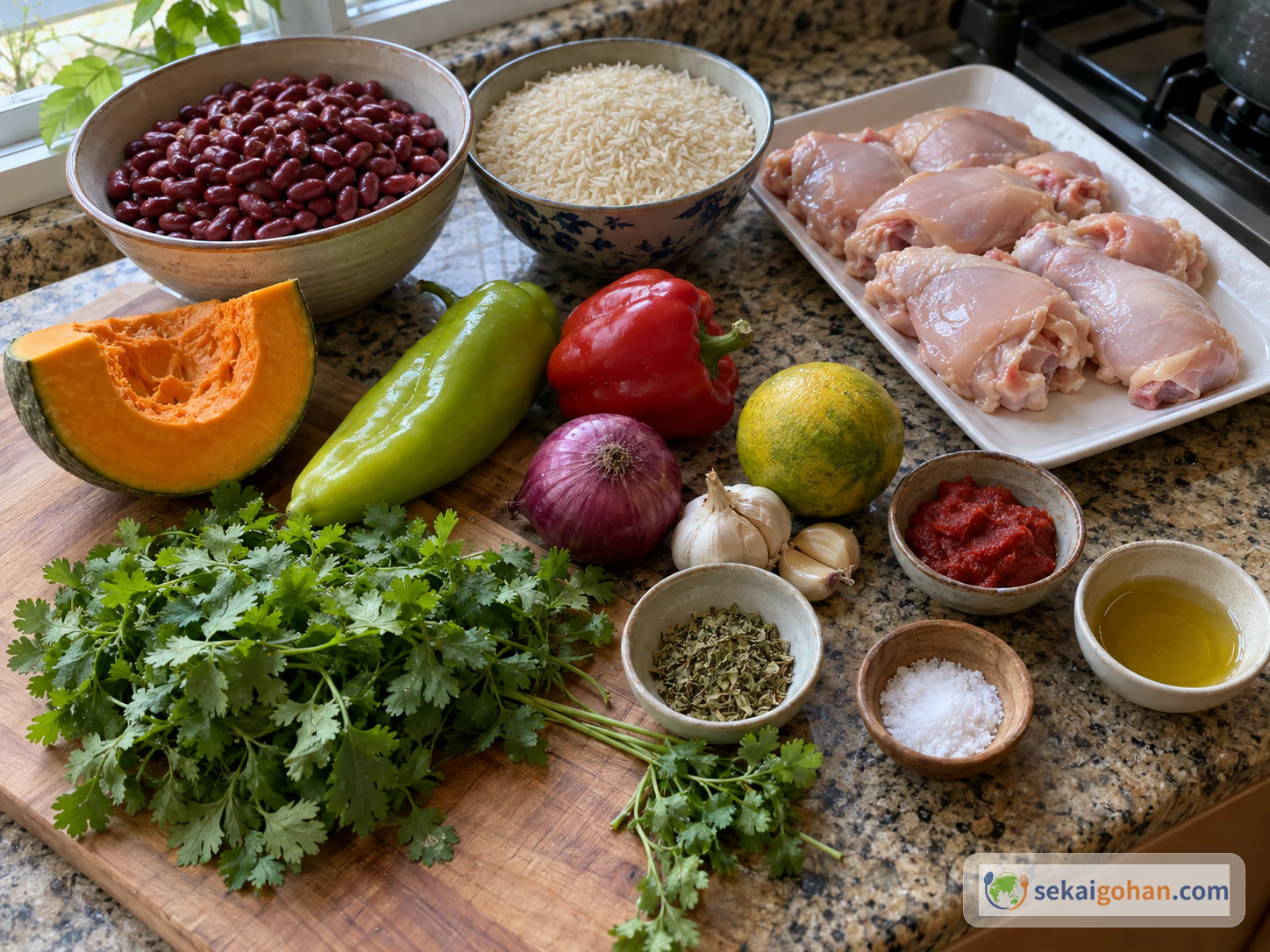
La Bandera ingredients: dried red beans, long-grain rice, chicken, auyama, cubanela pepper, citrus and aromatics
Keep the raw chicken on its own tray, away from the produce

Use the same cup for the rice and its water. Oil, salt, sour orange and ají are each divided, so measure the portions before you begin.

Equipment

  • A large pot for the beans
  • A blender
  • A shallow dish for seasoning the chicken
  • A heavy pan or pot for the chicken
  • A saucepan with a lid for the rice
  • A food thermometer
  • Long tongs and a wooden spoon

Choosing Ingredients and Substitutes for La Bandera

Every swap below changes the flavor, so think of each one as a slightly different dish rather than an exact match.

What you are looking for Possible swap What changes
Auyama Kabocha-type squash Water and sweetness differ. Watch how it breaks down in the pot
Ají cubanela Green or sweet bell pepper Bell pepper has no heat and a different aroma. A chile can add too much heat, so use only a little if you want some
Naranja agria Another citrus juice The flavor differs, and a same-volume swap won't taste the same
Cilantro ancho and cilantrico Ordinary cilantro These are two separate ingredients, and ordinary cilantro only partly fills their roles
Long-grain rice Japanese or other short-grain rice Separation and texture change, so check the water ratio

Tomato paste comes both salted and unsalted, so read the label before you season. If you're cooking for someone with allergies, check the labels on the tomato paste, oil and beans too.

Method: Beans First, Then Chicken, Then Rice

The order of work

Start the beans first. While they cook, season and stew the chicken, then cook the rice and plate everything. Timing depends on your pots and stove, so use the signs in each step to decide when to move on.

Handling raw chicken

Do not rinse the chicken. Wash and sanitize everything it touches, and keep it away from food that will not be cooked. Never pour the raw marinade liquid into the sauce. Tenderness and color do not prove the chicken is safe, so check its temperature with a thermometer.

Fixing Common Problems with La Bandera

The recipe gives no serving count, total time, bean simmering time, rice water-reduction time or chicken weight. Keep the measures as written, and where there's no time, go by how the food looks and bites.

After the citrus soak, discard the liquid and leave the chicken unrinsed, since rinsing can spread raw poultry contamination. Check doneness with a food thermometer: poultry, whole or in pieces, is done at 74°C (165°F). Test the thickest part of the meat and near the inner thigh, keeping the probe off the bone.

Problem Likely reason What to do
Beans are still hard They need more cooking Add hot water if the pot is low and keep simmering until the center is soft. Serve them only once they are tender
Beans are watery Not enough reduction Simmer gently over low heat a little longer, checking that the beans keep their shape
Beans have turned to mush Too much was blended, or they were stirred hard Next time, blend only the 1/2 taza and stir gently
Rice is hard at the end Heat or pot size let the water go too quickly Sprinkle in a little hot water, cover and keep over very low heat
Rice is sticky Too much water or a different rice type Next time use long-grain rice and adjust the water if you changed the rice
Chicken color is too dark The sugar went too far before the chicken went in If the sugar is black or smells burnt, discard it, clean the pan and start again with fresh oil and sugar
Chicken sauce is thin Too much liquid remains Simmer a little longer, turning the chicken in the sauce
Chicken is tender but below 74°C (165°F) Tenderness does not show the temperature Keep cooking and check again with the thermometer

Serving and Varying La Bandera

Give each dish its own place on the plate. From there, the three-part plate leaves plenty of room to play:

  • Other beans: Pinto or pink beans can replace the red beans. The color and flavor will change.
  • Other meat: Beef, pork or goat can replace the chicken while the rice and beans stay as they are. This recipe gives the method for chicken only, so look up timing for the others.
  • Tostones: Serve fried green plantains on the side, apart from the three main dishes.
  • Salad and avocado: These add a lighter contrast to the plate.
  • Canned beans: A shortcut, but salt, liquid and simmering time would all need rethinking.

Frequently Asked Questions

How long do the beans take?

The recipe gives a 1-hour soak but no simmering time. Follow the directions on your bag and keep cooking until the center of the bean is soft. Beans can also be soaked overnight; this recipe uses the 1-hour soak.

Can I convert the tazas and libra to grams?

The recipe gives no grams, so keep the measures as written. A taza may differ from a Japanese measuring cup, but using the same cup for the rice and water keeps those two amounts equal.

Will this rice form concón?

Concón is an optional extra, and this recipe isn't built to produce it, so treat it as a bonus if it happens.
Sources