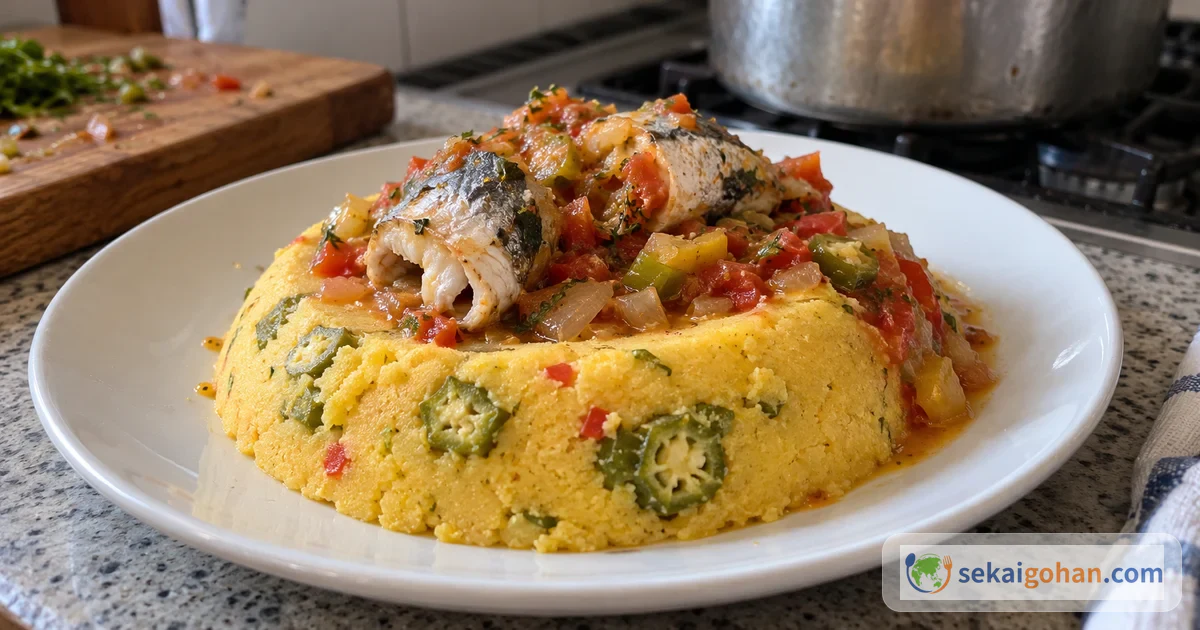
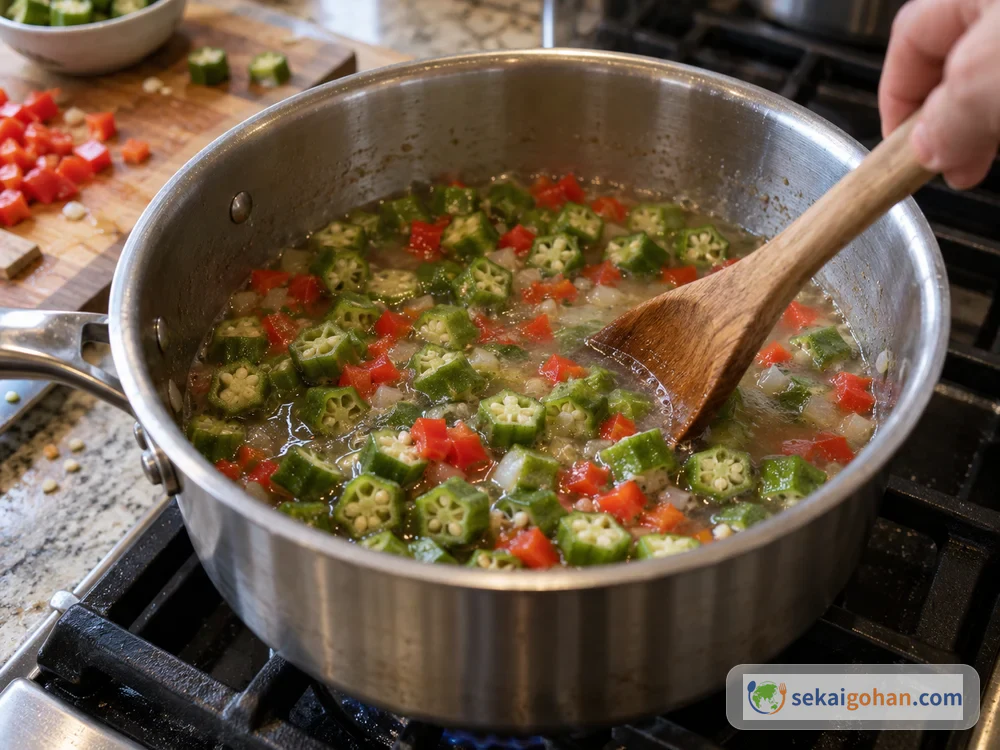
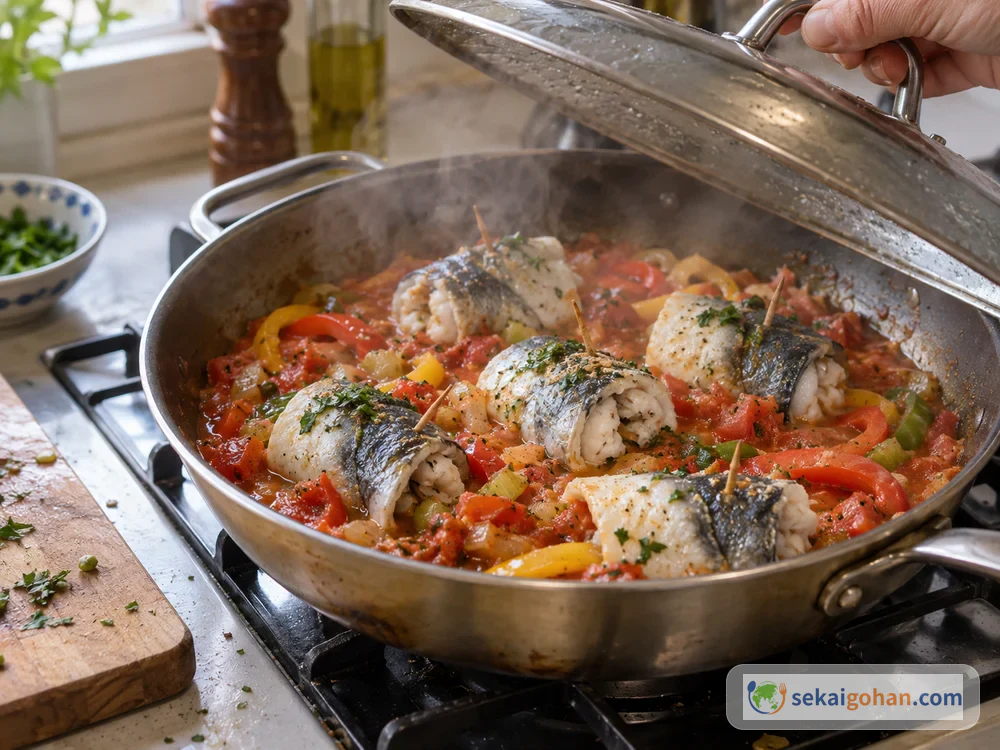
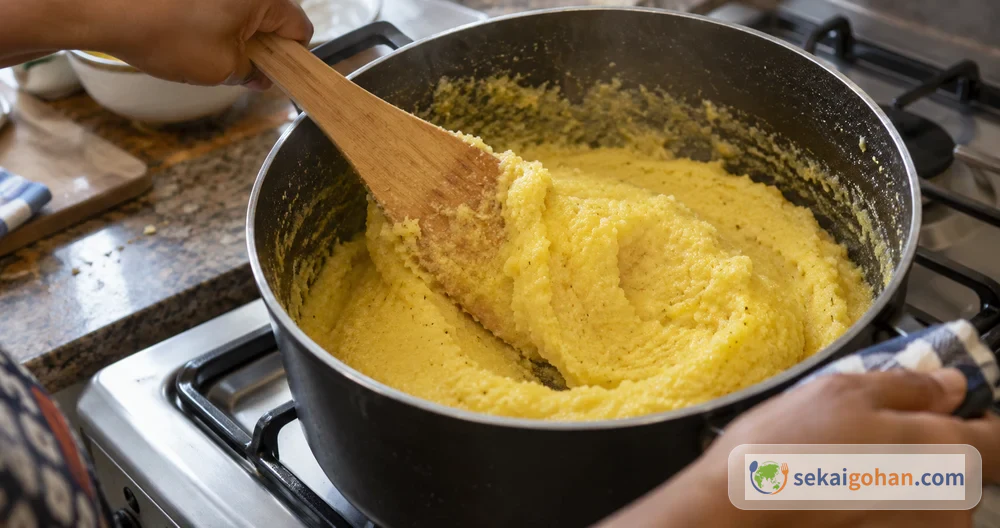
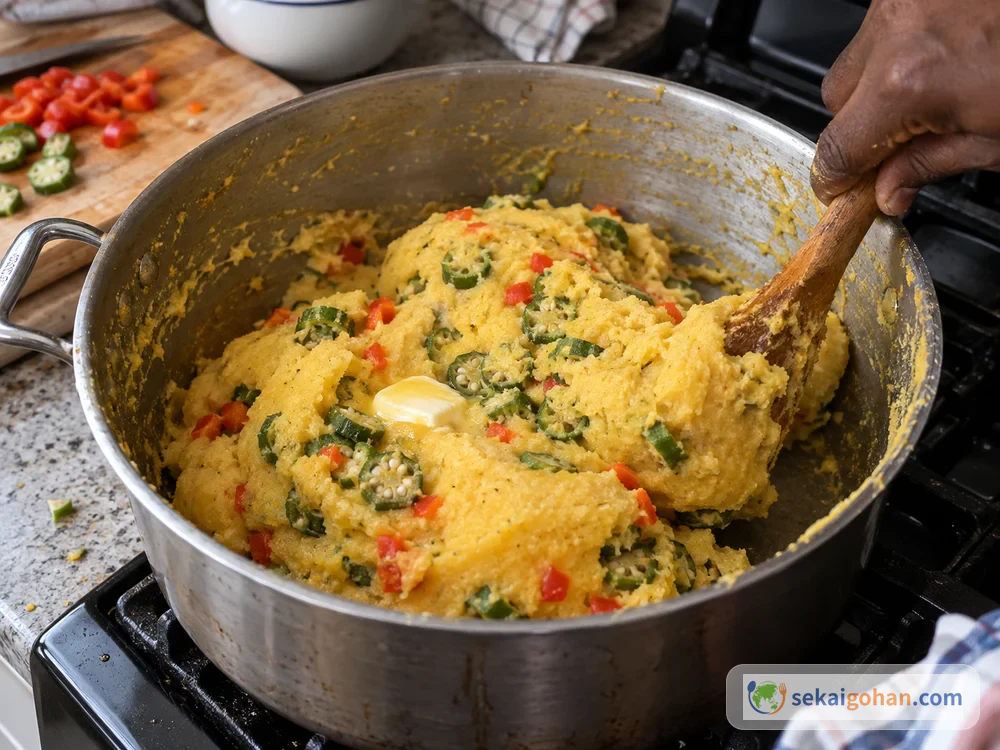
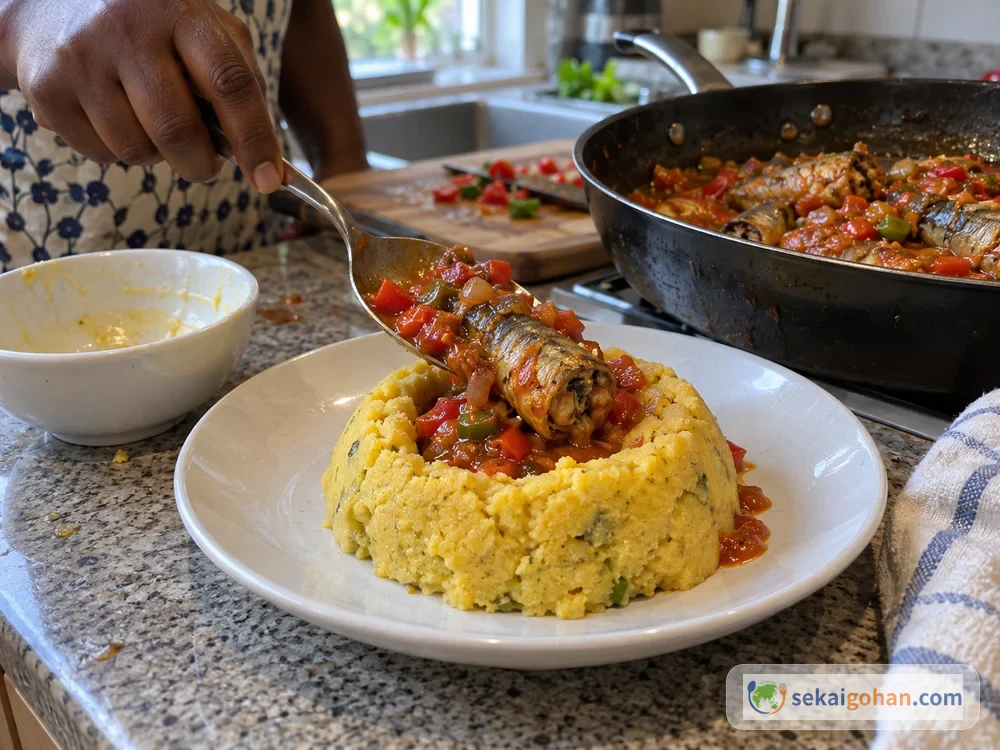
In the pot, the yellow cornmeal grows heavier little by little. You turn it from the bottom with a flat wooden stick, press, and turn again, until the batter, bound by the okra, slides cleanly off the sides of the pot. Mound it round on a dish, make a hollow, and spoon in flying fish steamed in a tomato and bell pepper sauce, with plenty of the juices. This is cou-cou and flying fish, the national dish of Barbados, an island nation at the eastern edge of the Caribbean.
Cou-Cou and Flying Fish in Barbados
Friday in the Land of the Flying Fish
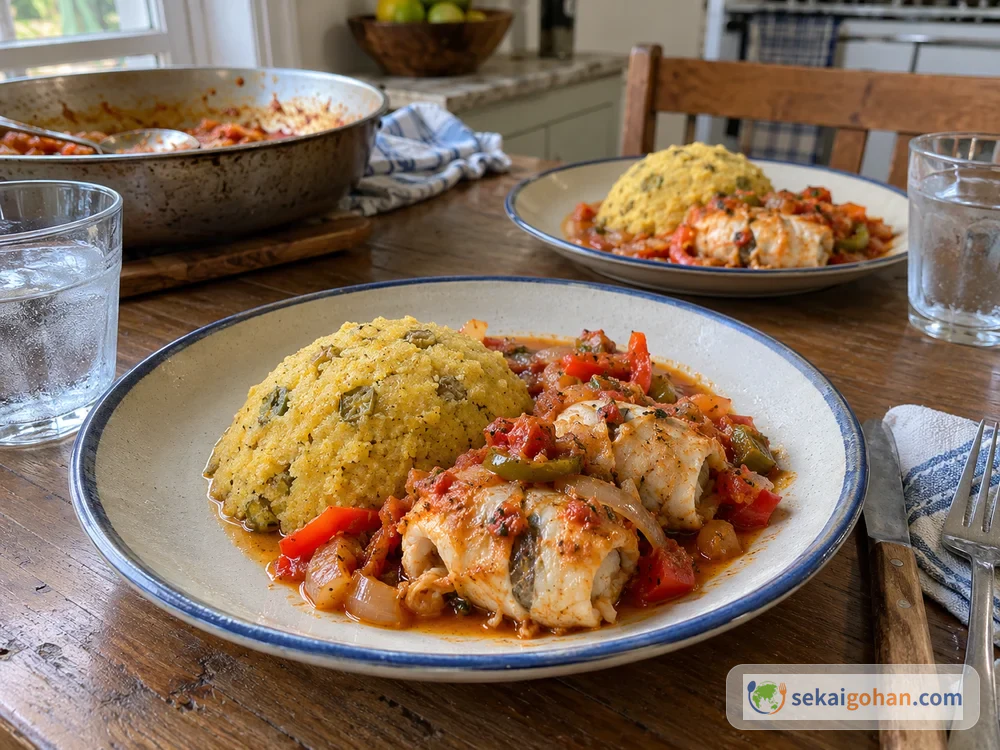
So many flying fish swim in the waters around Barbados that the island has long been called the "land of flying fish." Today the flying fish is the national fish and one of the national symbols, and the dish that pairs it with cou-cou, a stirred mix of cornmeal and okra, is the national dish.
People have long eaten it at the weekend, on Friday or Saturday, and cou-cou at Friday lunch is a firm custom in homes and island eateries alike. The fish is cooked one of two standard ways. It is either steamed with lime juice, spices, and vegetables, or fried and served with a spicy sauce.
Cou-cou is made almost the same way it has been made in Africa for centuries: grain or tuber flour is cooked into a paste with hot water and eaten with a sauce or stew. That way of eating, familiar on West African tables, crossed the sea and took root on a Caribbean island, and you can still taste the island's history layered on the plate.
The Island's Cou-Cou
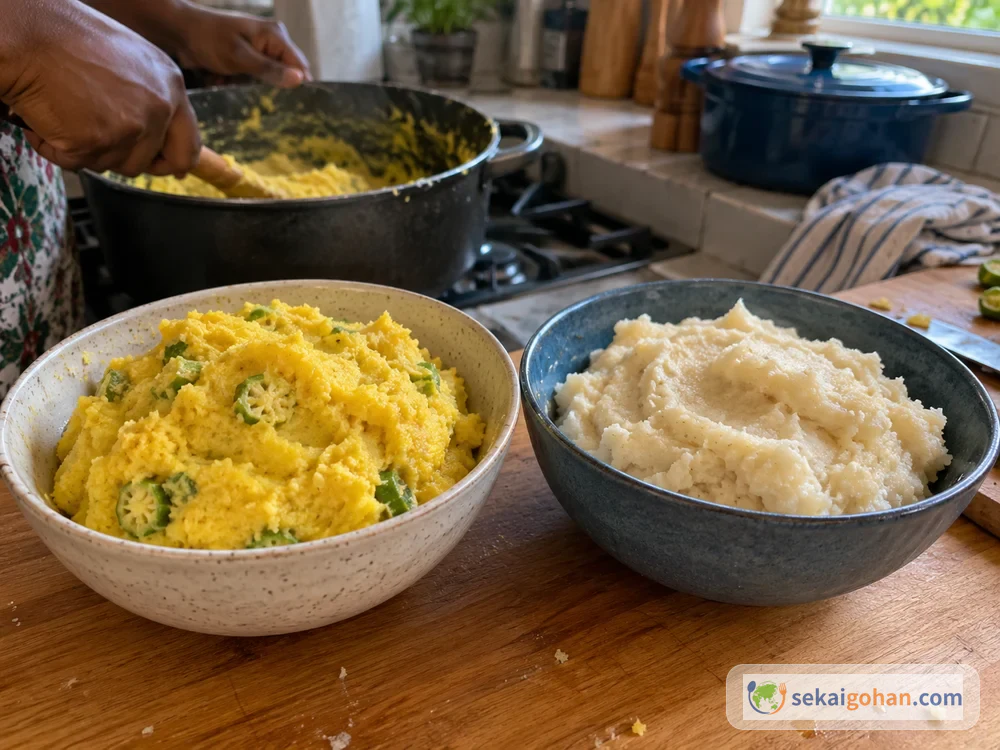
The basic cou-cou is made with cornmeal, but on the island it is also made with breadfruit, yam, or green banana. Flying fish isn't the only partner either; sometimes it's salt cod or a beef stew. Whatever goes into it, the idea stays the same: stir a staple and serve a saucy dish alongside.
Cou-cou often gets compared to Italian polenta or the grits of the American South. What sets it apart is the okra. Its mucilage binds the batter smoothly, so cou-cou is less likely to turn crumbly as it cools.
Ingredients (serves 4)
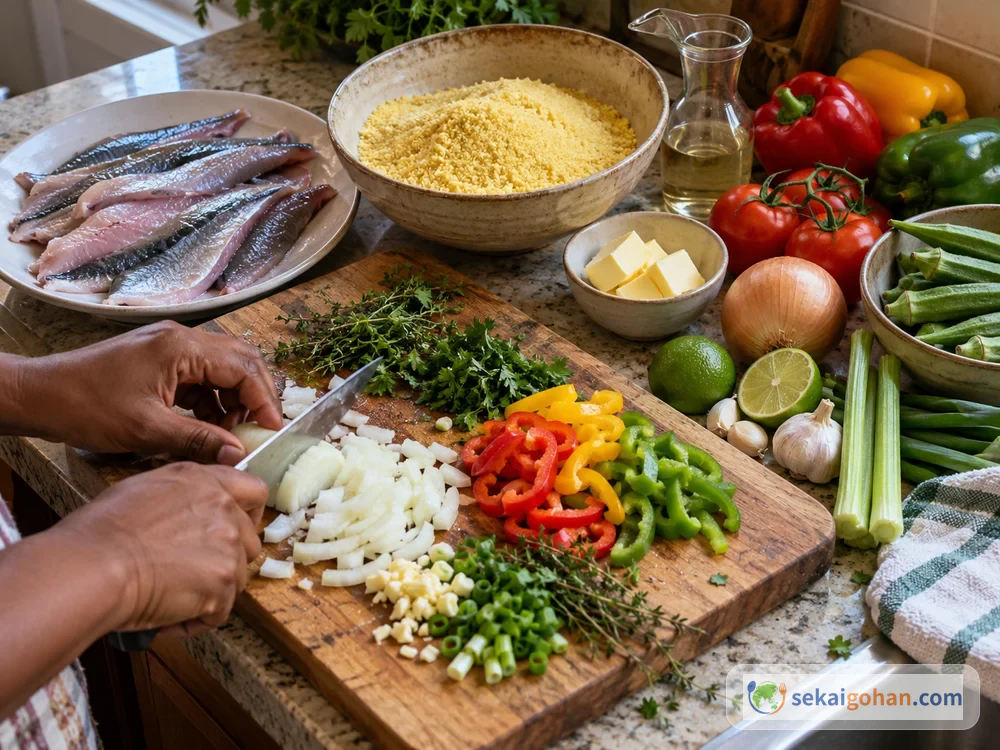
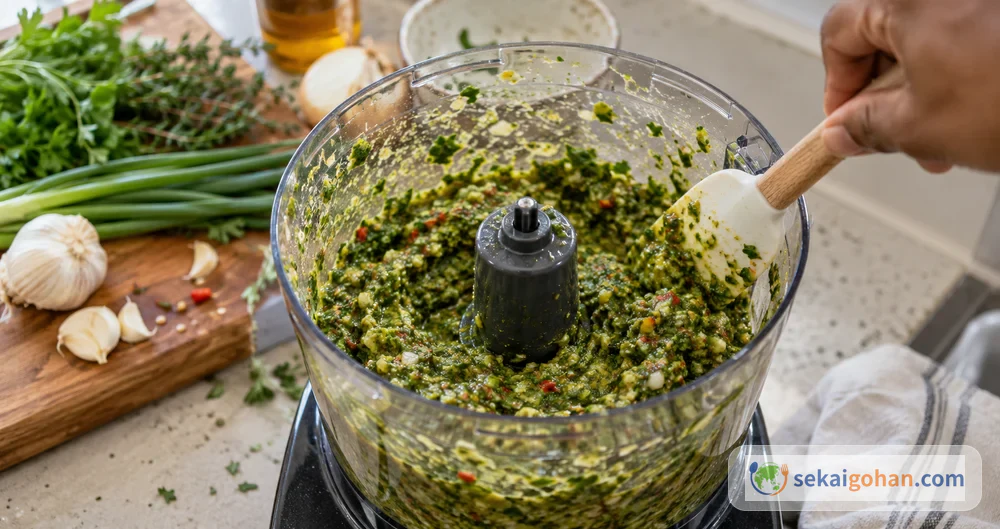
The Bajan seasoning here is a quick version you make the same day, with the island's traditional blend reduced to a small quantity.
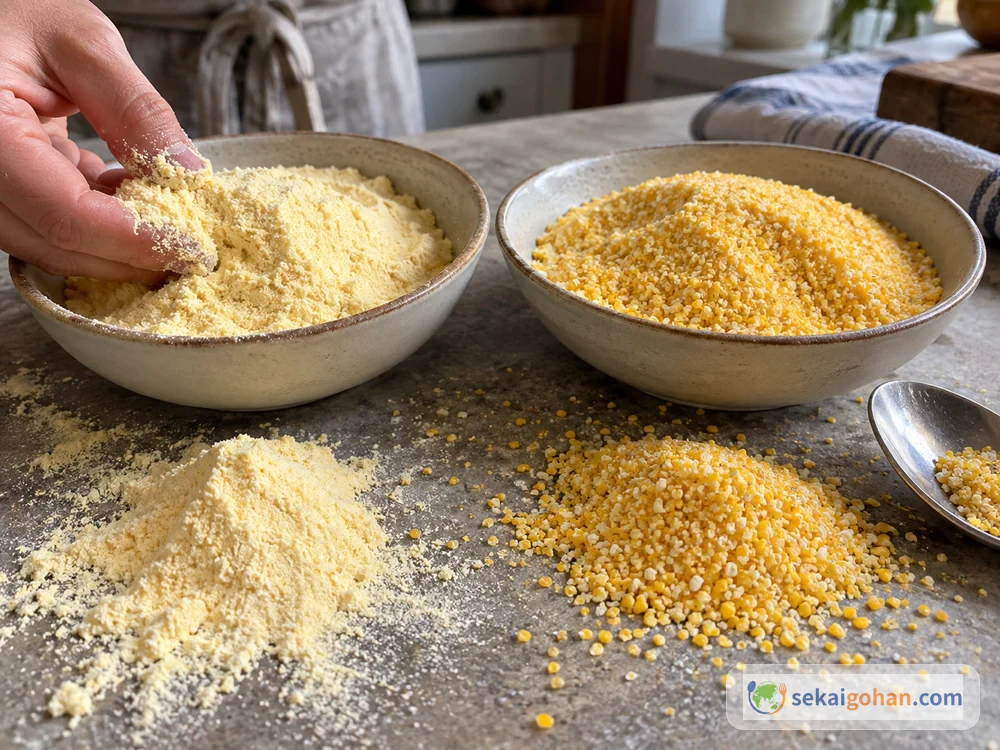
Cornmeal is available at grocers, baking supply shops, or online. Choose fine-ground yellow for smooth cou-cou. Coarse-ground leaves a gritty texture.
Cloves are a very strongly scented spice. Too much makes the whole sauce smell medicinal, so keep to a pinch. Do not rub your eyes with hands that have chopped hot pepper.
Choosing Ingredients and Substitutes for Cou-Cou and Flying Fish
Some places outside the island sell flying fish, so you can get close to the real flavor. When it's out of season, use fillets of a mild white fish such as sea bass, cod, or sea bream.
Barbadian cooking rests on a seasoning blend called "Bajan seasoning." It is a paste of onion, scallion, garlic, and hot pepper with herbs such as thyme and marjoram, vinegar, and salt, and it is essential for fried fish and roast pork alike. Locally it is made in large batches and rested a week in the refrigerator before using.
If you'd like to keep the shopping simple, swap the Bajan seasoning for a quick paste of chopped scallion, garlic, thyme, vinegar, and salt. It still gives the feel of the dish, though without the cloves and Worcestershire sauce the island depth is a little weaker.
How to Make Cou-Cou and Flying Fish
Allow about 40 minutes for prep and about 35 minutes to steam the fish and finish the cou-cou. Cou-cou firms up as it cools, so the trick is to stir it up while the fish steams and finish them at the same time.
Cornmeal in the middle of stirring can bubble and spit hot batter. Keep the heat low and use a long-handled wooden spoon. Flying fish has many small bones. When serving to children, remove the small bones with tweezers.
Stirring Smooth Cou-Cou
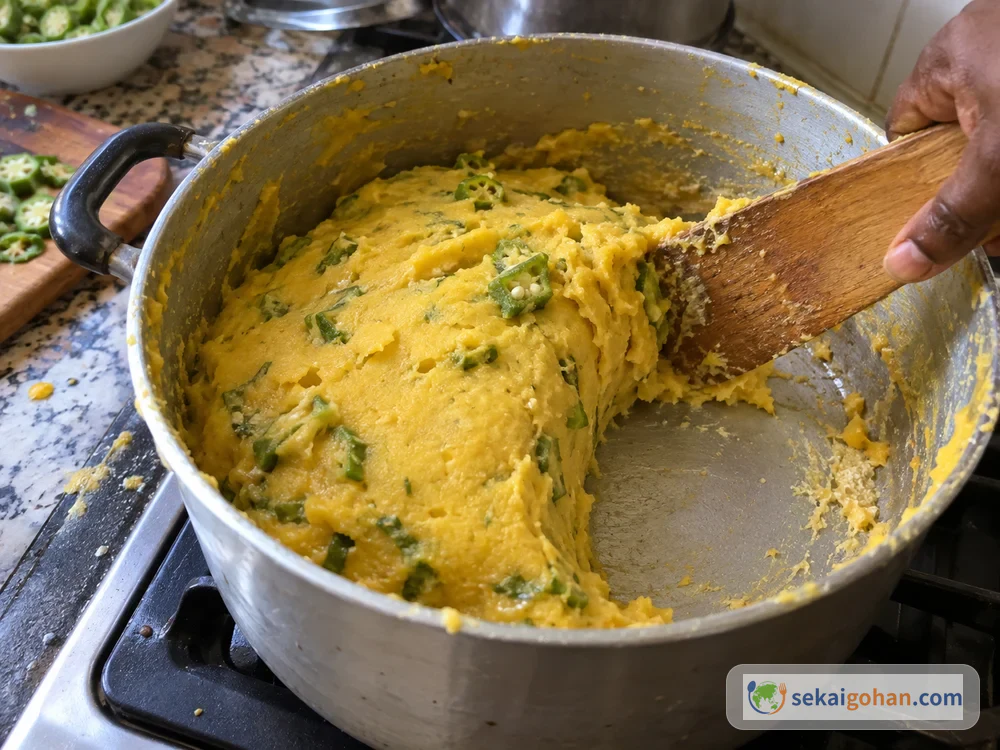
Lumps are the most common problem with cou-cou. Dry cornmeal dropped into hot water sets on the surface at once, which leaves grains with dry meal trapped inside. Soaking it in water first lets the meal absorb water evenly, so lumps are far less likely.
The tool used to stir cou-cou is the "cou-cou stick," a flat wooden stick shaped like a small cricket bat. Beating out the lumps with it as you stir gives smooth, fluffy cou-cou.
The island way is to add the cooking liquid a little at a time, each time the batter stiffens, rather than all at once. Press against the bottom of the pot with the spatula to crush any lumps before adding more, and you'll get a smooth result.
The cou-cou is ready when the batter holds on a lifted spatula and pulls away cleanly from the sides of the pot. Aim for noticeably firmer than polenta, firm enough to shape in a bowl. If it's too soft, it spreads on the plate and runs into the sauce.
Serving and Variations
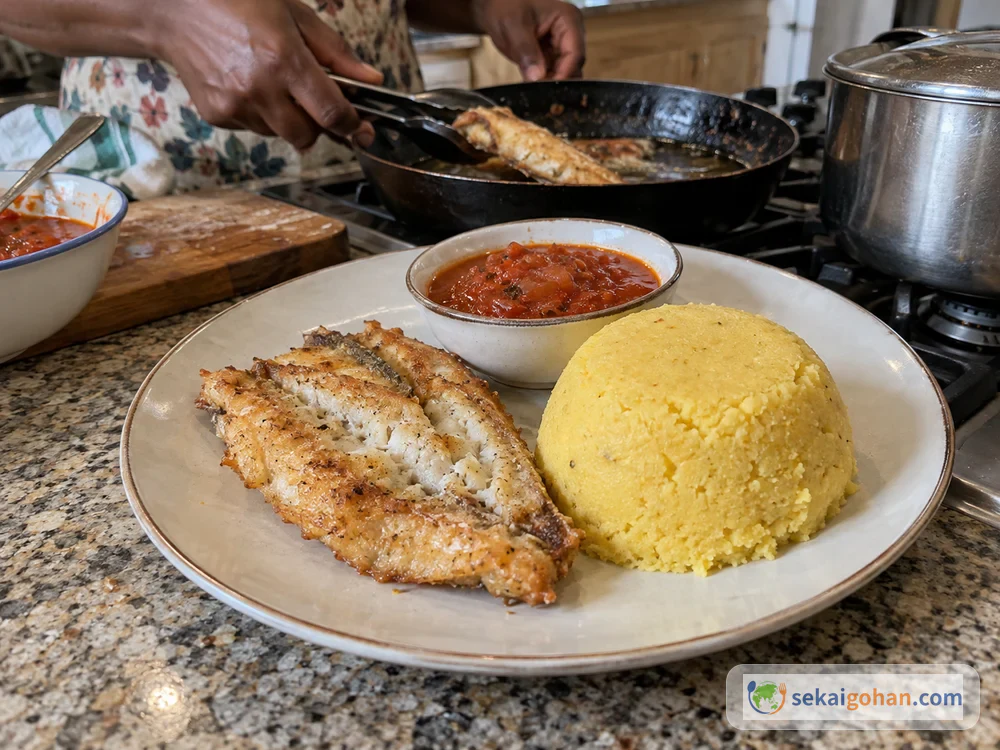
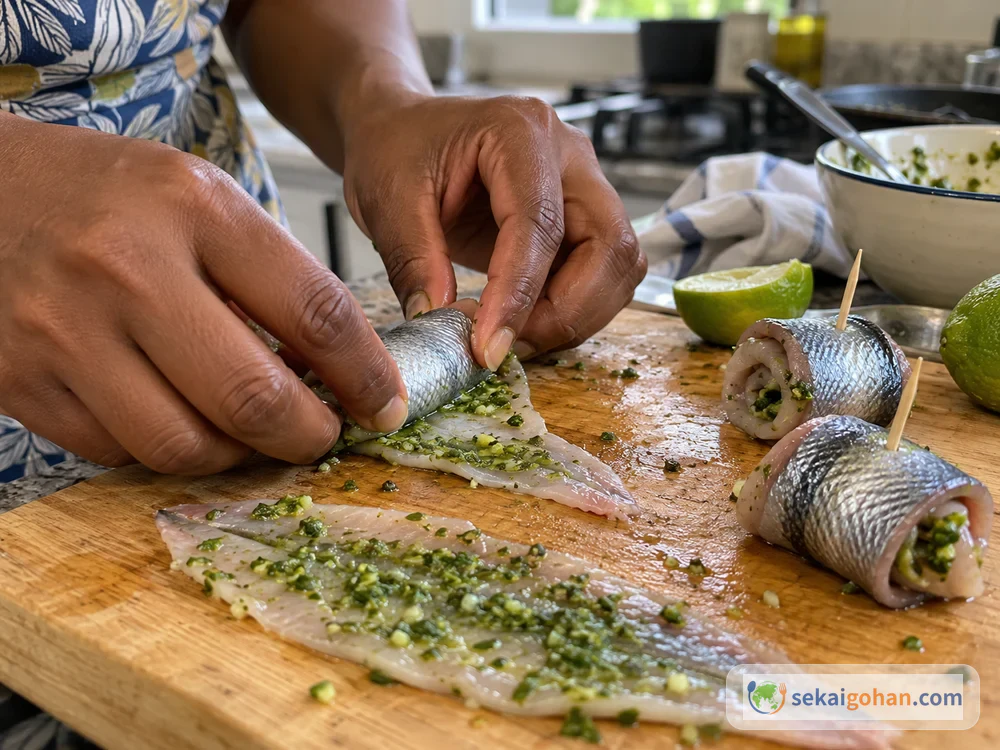
For the fried version, fry the seasoned flying fish open rather than rolled and spoon the tomato sauce over it. You get a toasty flavor that's quite different from the steamed fish.
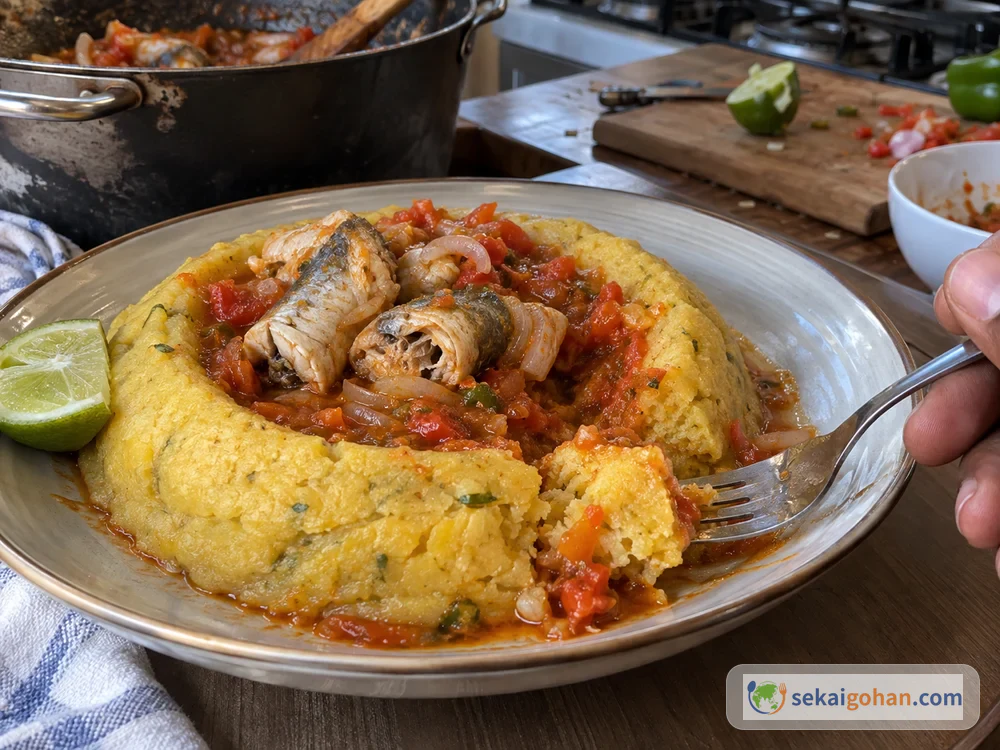
To eat it, break up the cou-cou with a spoon or fork and lift it to your mouth with a piece of fish, letting it soak up the sauce. It's best with plenty of gravy, so don't be stingy. Serve lime on the side and squeeze it over partway through to sharpen the flavors.
If cou-cou cools and sets, return it to the pot, add hot water a little at a time, and stir again over low heat to soften it. Leftovers sliced thin and fried in butter become a different treat.
Jamaica's fried bread festival is another Caribbean dish made with cornmeal. For a different take on Caribbean fish, compare escovitch fish, topped with pickled vegetables. It's the same sea, yet each island pairs its fish in a completely different way.
FAQ
Can I use polenta flour instead of cornmeal?
Yes. Polenta flour is also ground corn, and a fine grind gives a similar texture. If yours is coarse, stir longer and use a little more liquid.
Can I leave out the okra?
The okra gives cou-cou its smoothness and cohesion, and without it you have plain stirred cornmeal. If you dislike okra's sliminess, chop it fine; stirred in, it's barely noticeable.
Can I make the Bajan seasoning ahead?
This quick version is a small batch, so keep it in a clean jar in the refrigerator and use it up soon. It's also good for seasoning chicken and pork.
Where can I buy flying fish?
Look for it at fishmongers or supermarket seafood counters when it's in season. Ask them to fillet it and the prep gets easier.
Can I adjust the heat?
All the heat comes from the hot pepper in the Bajan seasoning. If you don't like spicy food, leave the pepper out and put hot pepper sauce on the table.