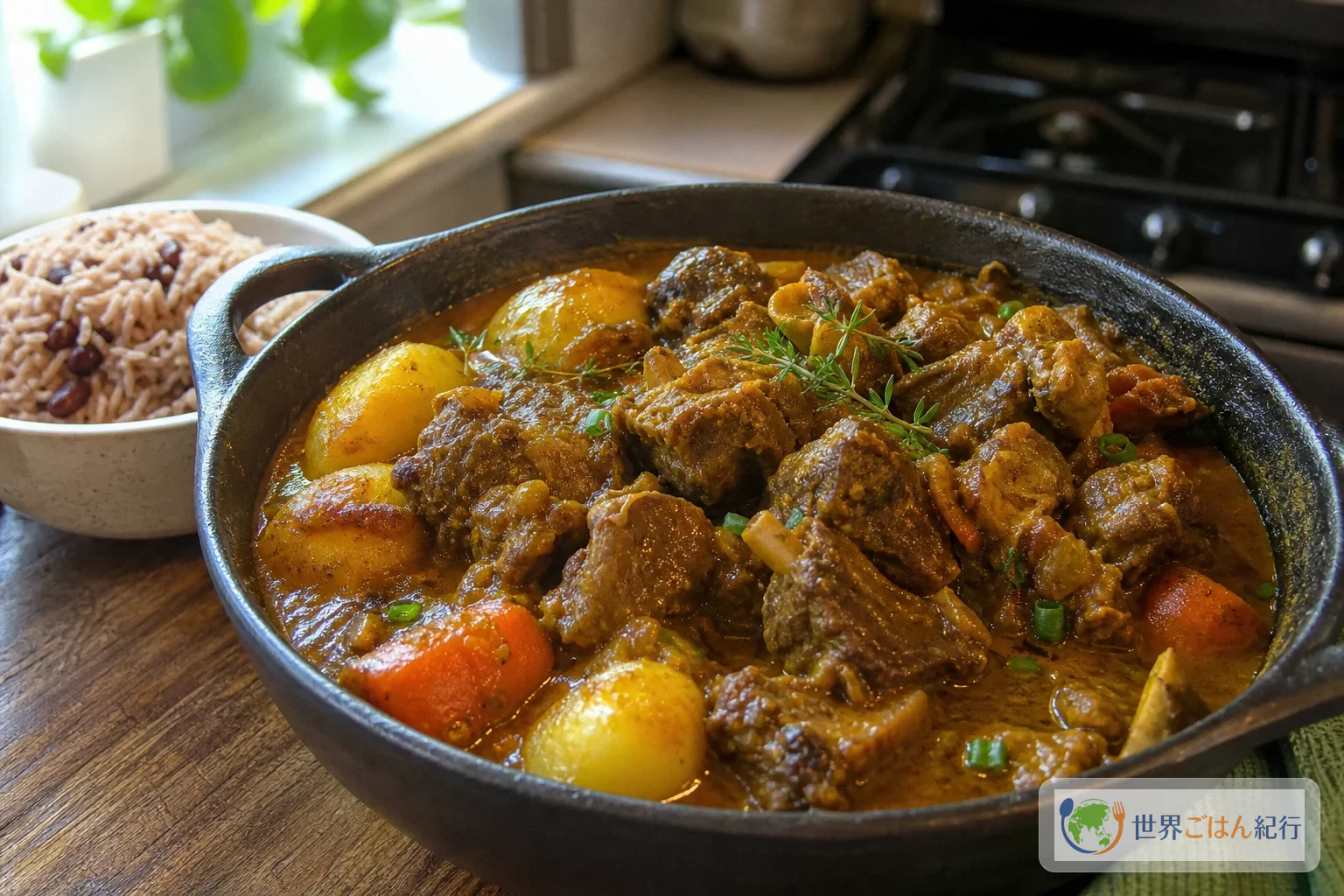
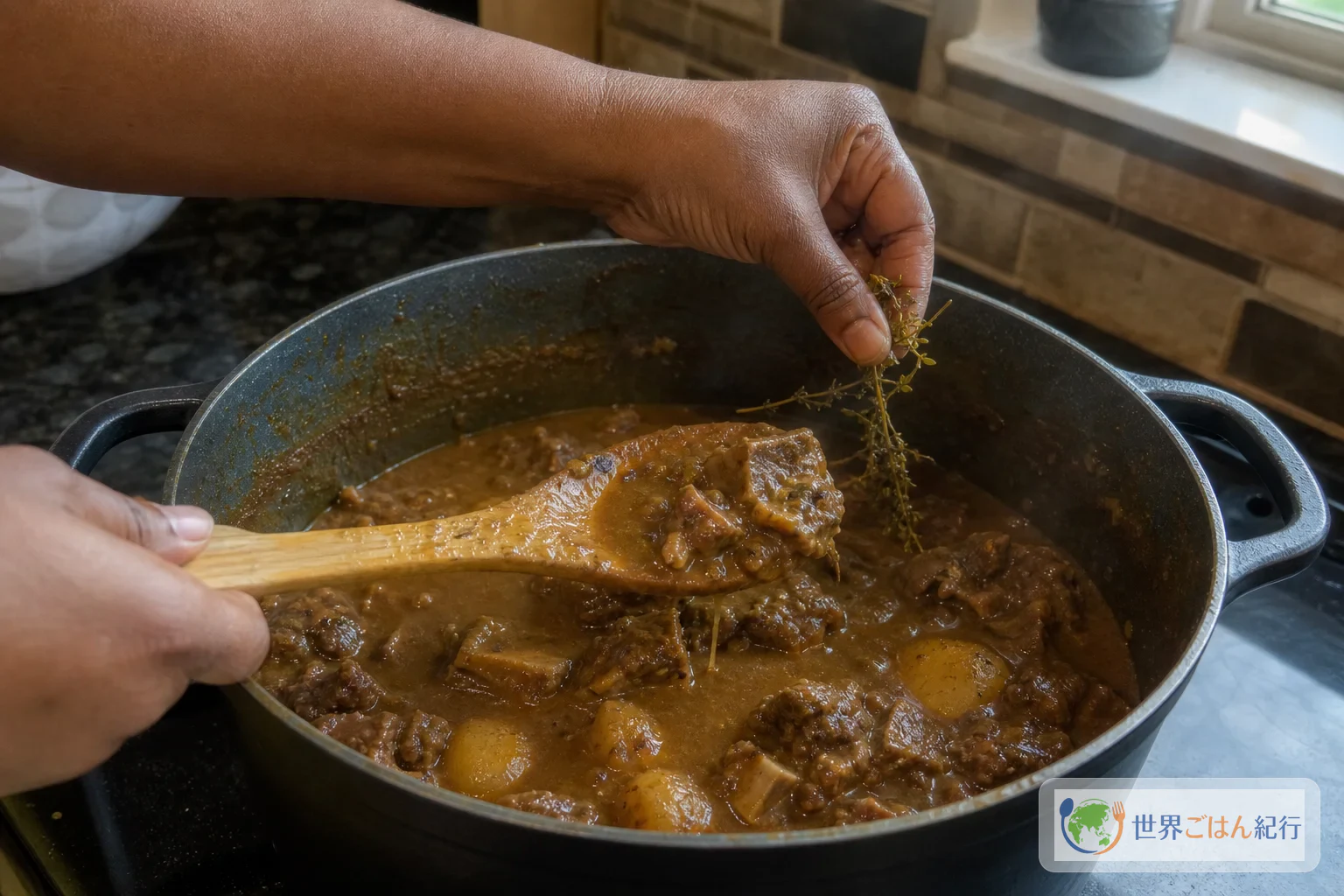
Sometimes you know what's in the pot before you lift the lid. There's the green scent of thyme, the sharp edge of ginger and the sweet, earthy smell of curry powder bloomed in oil, and behind it all, the heavy steam of bone-in meat that has been simmering for a long time. That's Jamaican curry goat. Goat on the bone is braised with allspice (which Jamaicans call pimento), scallions, thyme and Scotch bonnet, after the curry powder has been woken up in hot oil. Follow that order and even the curry powder already in your pantry moves away from a generic "curry flavor." It runs on a slower clock than a curry finished by stirring in a block of roux.
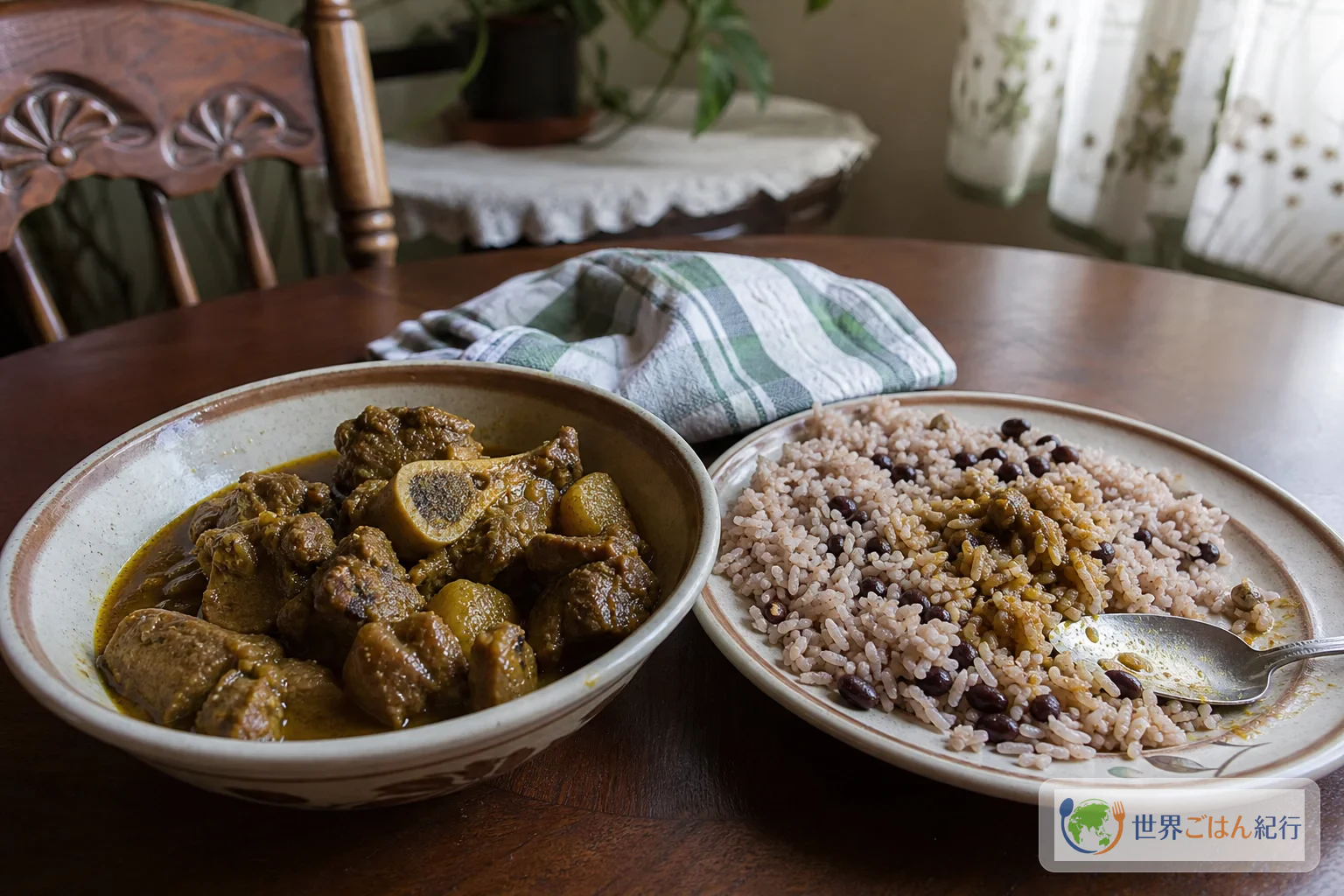
Jamaican curry goat and where it comes from
How curry came to Jamaica
The name Curry Goat says exactly what it is: goat curry. Its history runs back to the indentured laborers who came from India to the island between 1845 and 1917. The culture of those who stayed shaped the Jamaican table, and curried dishes and rice are part of that legacy. Curry goat became one of Jamaica's best-known curry dishes, and its popularity reached other Caribbean islands.
The dish wasn't transplanted unchanged, though. Jamaican curry picked up pimento, thyme, scallions and Scotch bonnet, all long loved on the island, and pimento is treated as a Jamaican spice. Curry goat became a dish for celebrations and days when people gather.
How it differs from other Caribbean curries
Compare it with Trinidadian curries or Guyanese stews and you'll see that, even within the same Indo-Caribbean tradition, the use of chiles, coconut, beans and breads changes. Trinidad's doubles is street food of chickpeas and fried bread eaten by hand. Jamaican curry goat is a pot of bone-in meat and rich sauce eaten with rice or roti.
Some Caribbean curries use coconut, but this one doesn't. Leaving it out shows off the dry spice character of the dish and the rich sauce that comes from the bones. For coconut at the table, serve rice and peas alongside to soak up the sauce.
One dish, many family pots
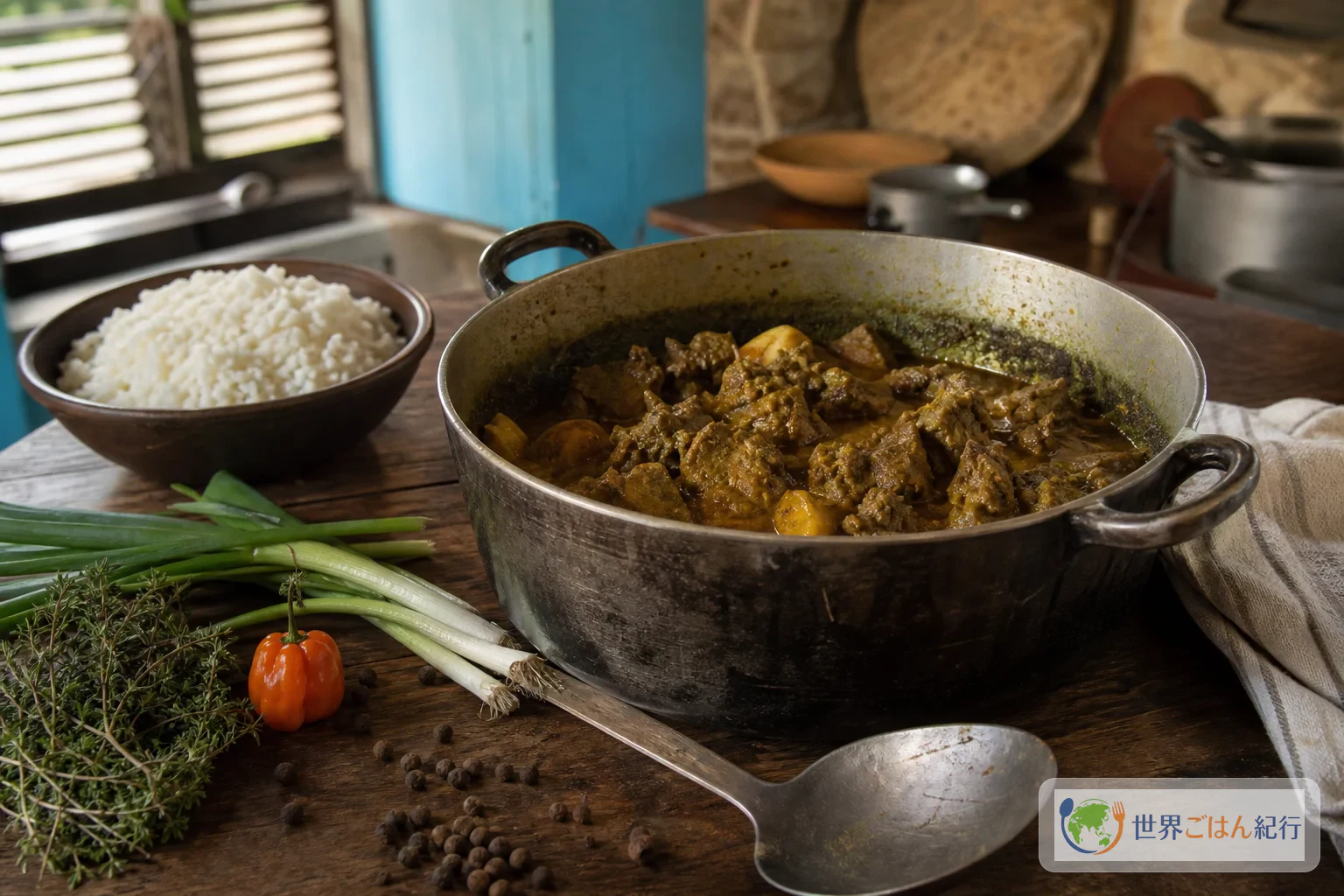
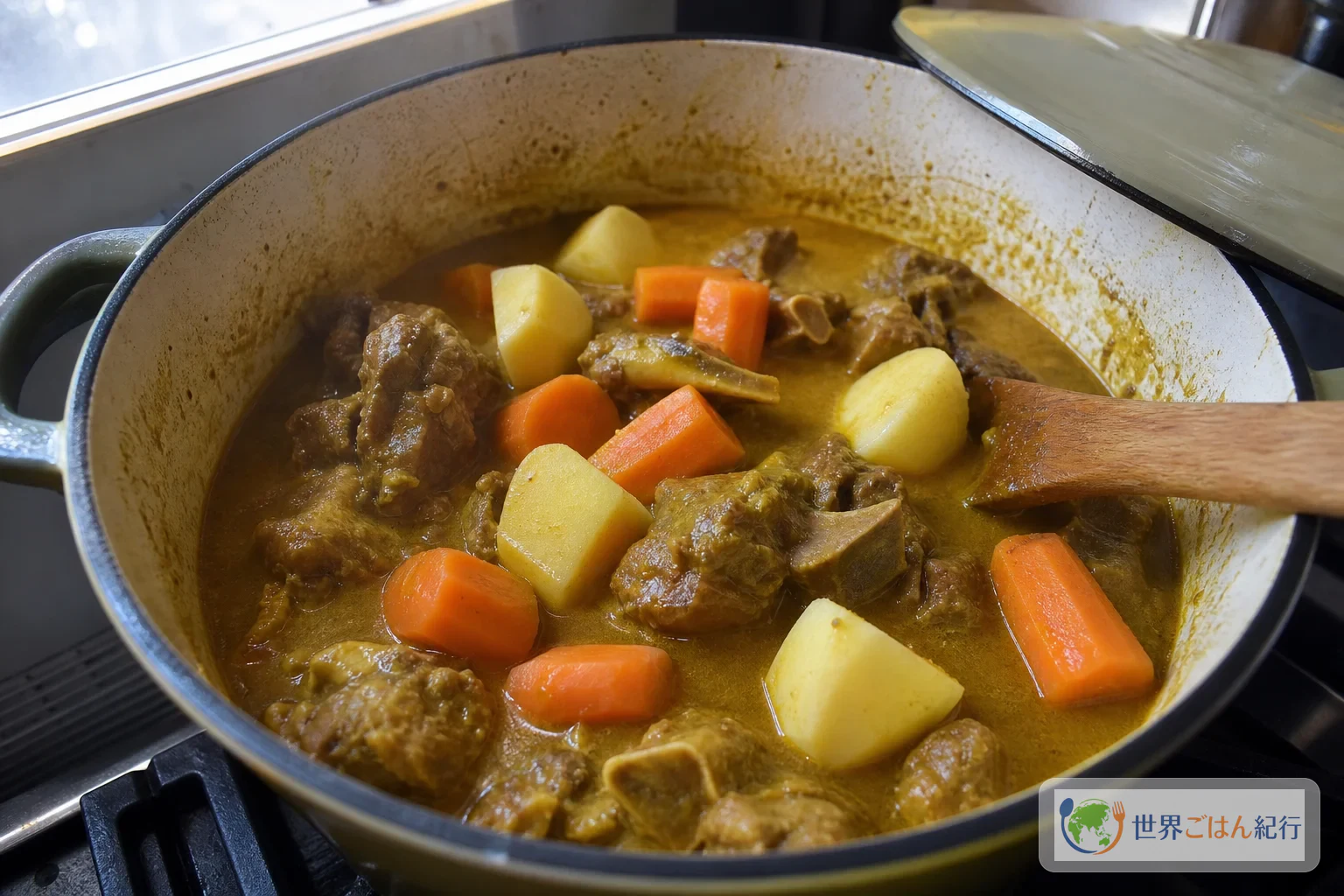
Compare home recipes and you'll find small differences from pot to pot. Some cooks add whole allspice, some use ground allspice in the marinade, and some add the potatoes at the very end. Keep three markers in mind, the scent of pimento, properly cooked bone-in meat and a rich sauce, and you won't lose sight of what makes this dish itself.
Many of those habits come from the practicalities of cooking for a crowd. Braise goat in a big pot and you can stretch it with sauce and rice when more people show up. Add the Scotch bonnet whole and you can serve a plate for the kids and a hot plate separately. Add the potatoes last and they keep their shape while the meat softens. It's a dish built for cooking for whoever is eating today.
Ingredients (serves 4)
Curry powders vary by brand, and some contain salt or wheat. If you need to avoid wheat or have an allergy, check the ingredient label on the package before you buy. Don't call the dish gluten-free until you have checked the labels on the meat, curry powder and stock.
Look for large cuts of shoulder, neck or shank with a little fat and connective tissue left around the bone. Thin slices of lean meat cook quickly but tend to toughen partway through a braise, so skip them the first time. If you switch to lamb, choose bone-in shoulder or thick-cut pieces rather than thin slices, so the sauce keeps the flavor of the meat.
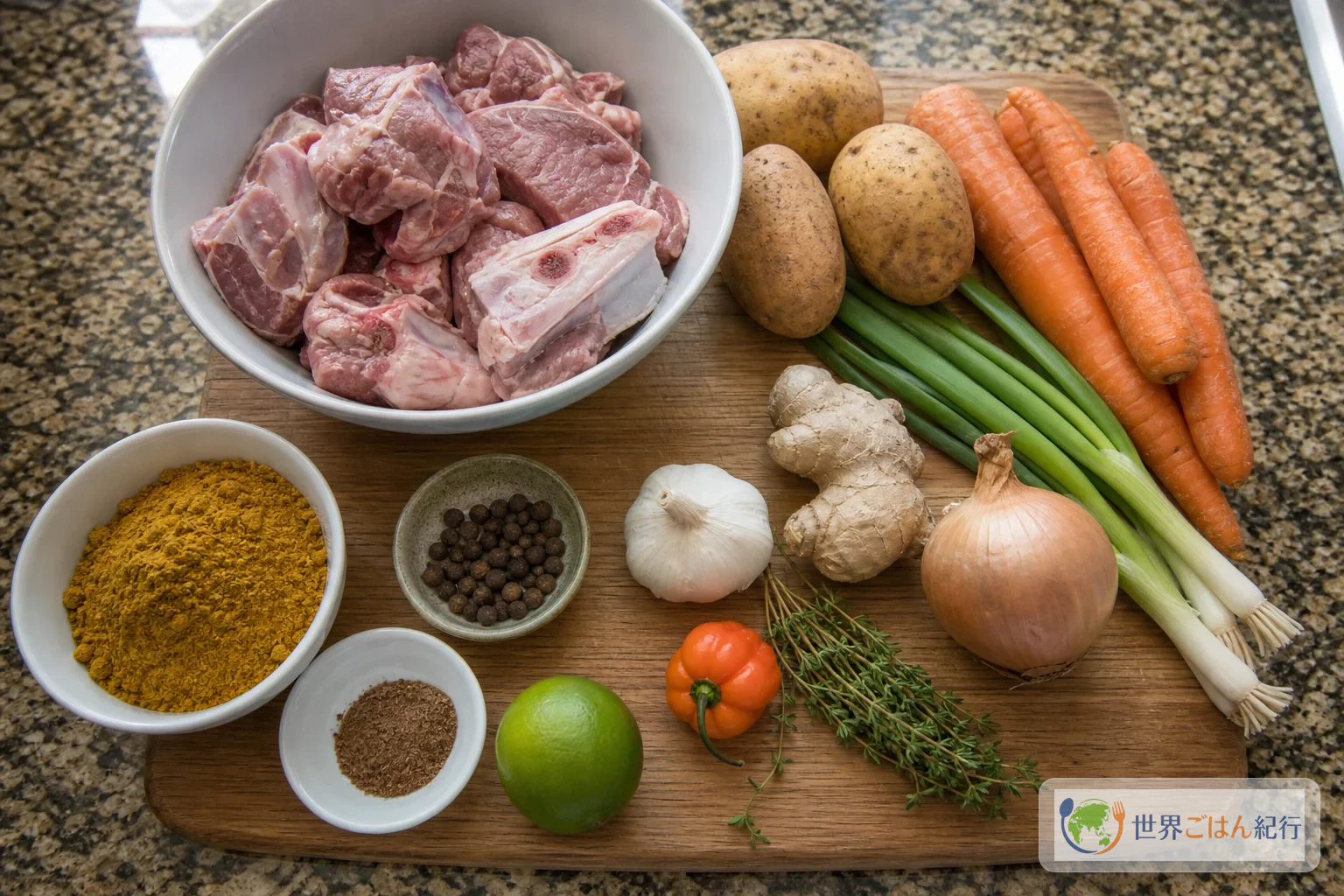
Choosing goat, pimento and curry powder
Onions, ginger, garlic, potatoes and carrots come from any supermarket. Goat sometimes turns up in the frozen section of halal grocers or butcher shops. Ask for "bone-in goat," "goat shoulder" or "goat neck." If you can't find it, frozen lamb shoulder or lamb neck works with exactly the same braising logic. What matters most is bone-in, large pieces and low heat, more than which animal the meat comes from.
The one ingredient worth seeking out is pimento, or allspice. It carries hints of cinnamon and clove and leaves a sweet, woody scent deep in the meat. If you already have whole pimento, use that. If you don't have a way to grind whole berries, a jar of ground allspice is the practical place to start, and you'll use it again for jerk chicken or rice and peas.
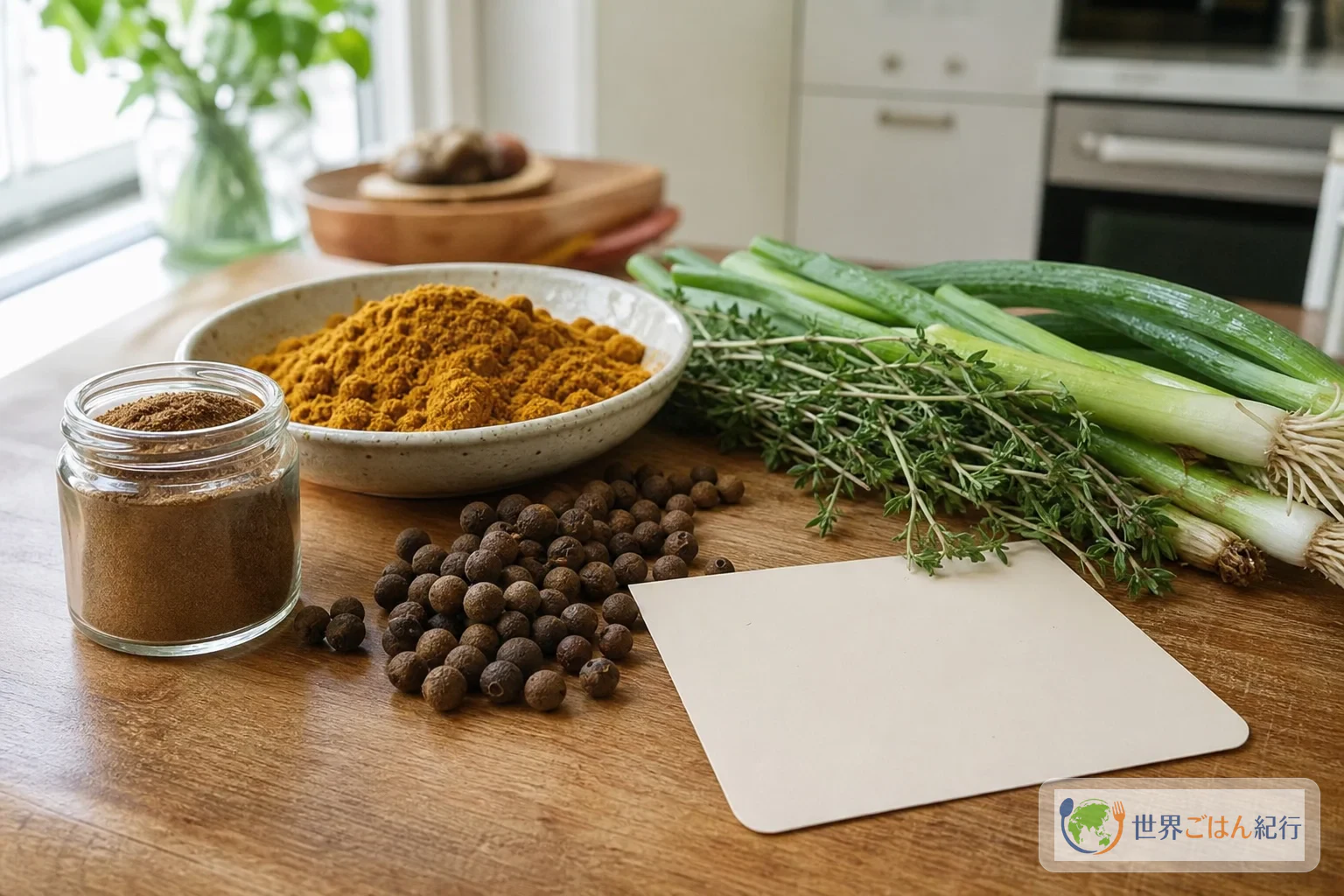
If your curry powder isn't a Jamaican style, the simplest fix is to hold on to the allspice. With an Indian-style curry powder, start with 3 tbsp as written and add 1 tsp pimento. To push the aroma further, add another 1/2 tsp turmeric. Lots of garam masala at the end tends to pull it toward a different dish, so go easy.
Method: make the curry fragrant before the meat goes in
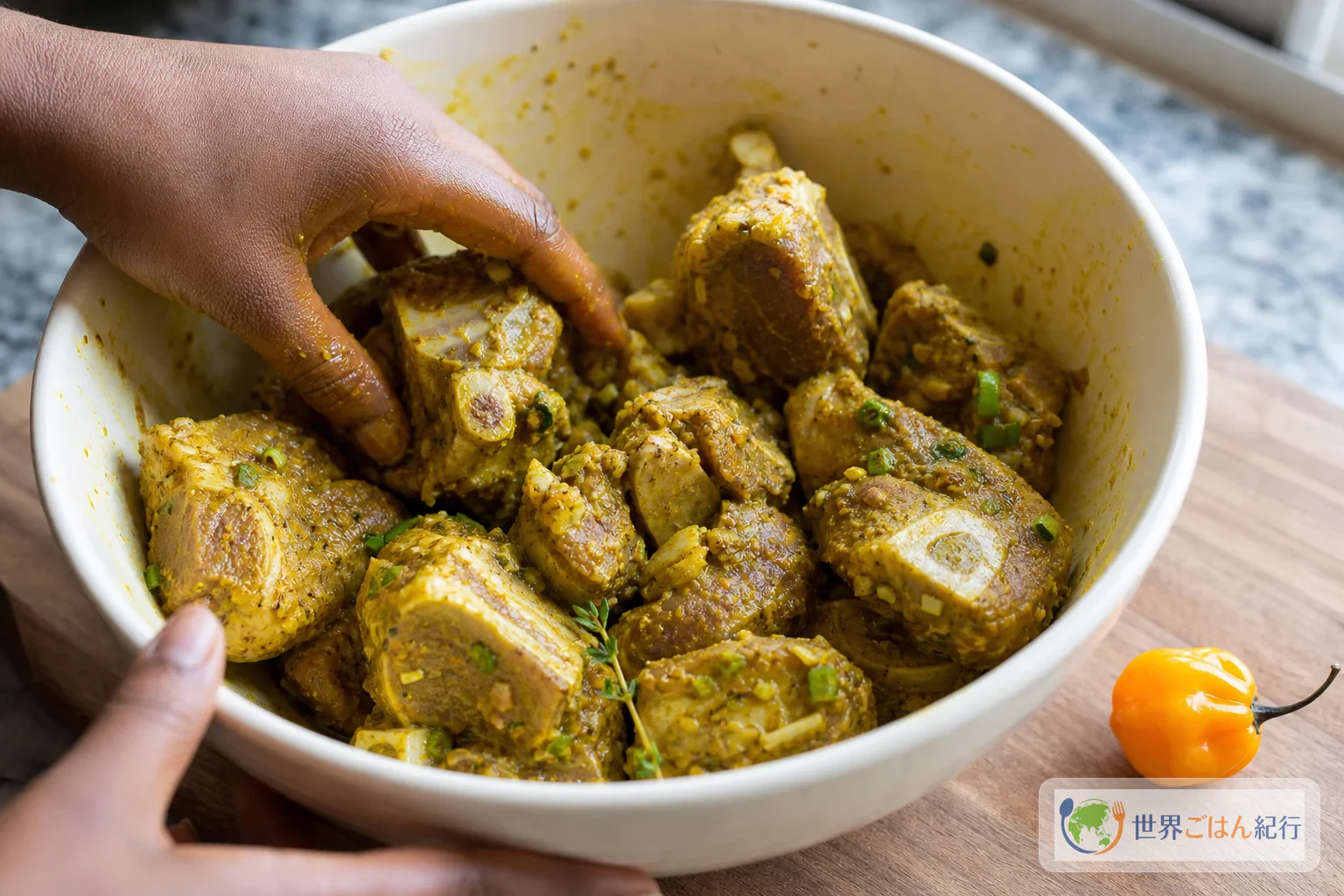
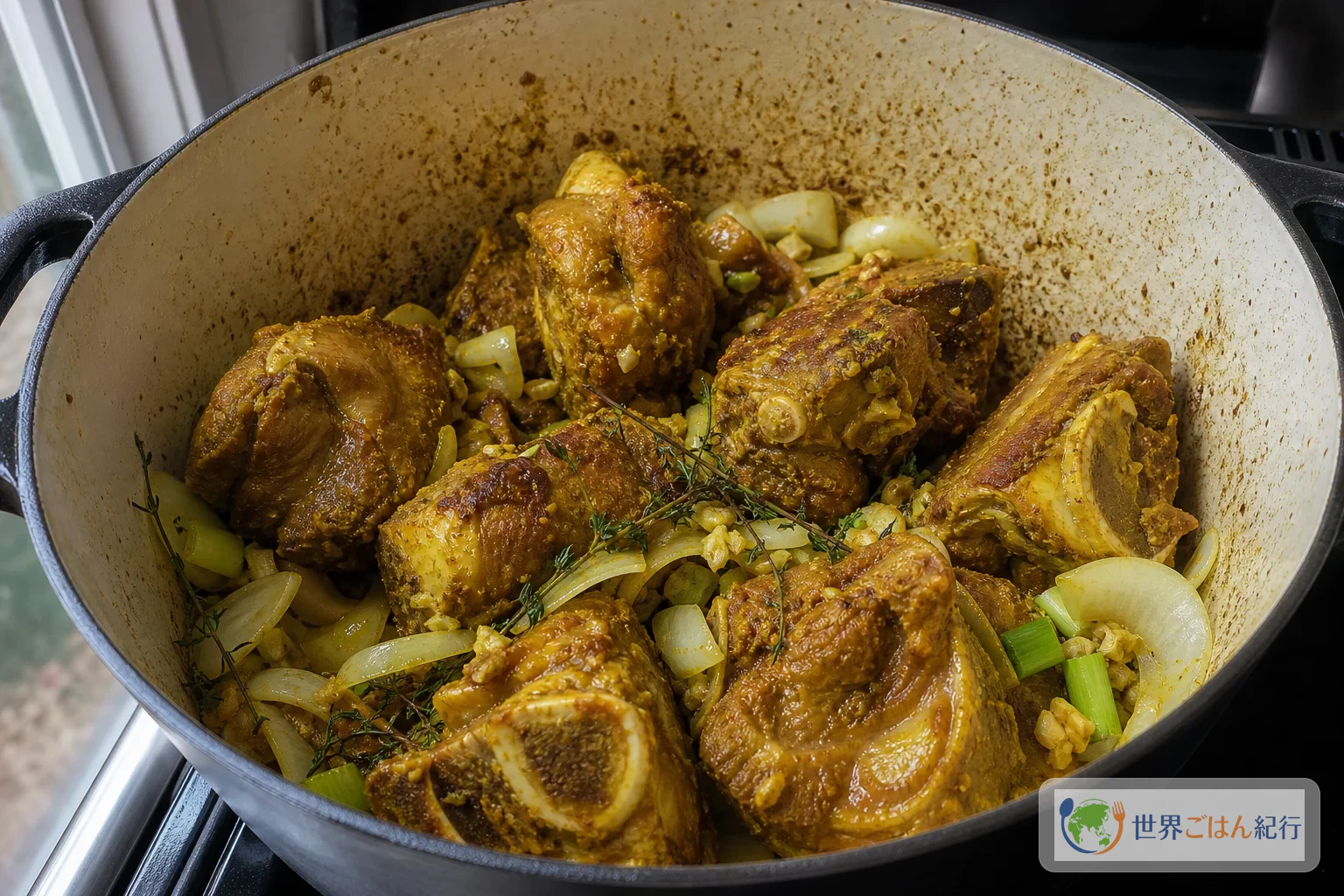
Marinate for 2 to 8 hours. The cooking itself takes about 2 hours 15 minutes. Thaw frozen meat in the refrigerator and pat the surface dry with paper towels before you start. Keep a separate cutting board and knife for raw meat and vegetables, or wash them in hot, soapy water right after use.
Common curry goat problems and fixes
Bloom the curry powder without scorching it
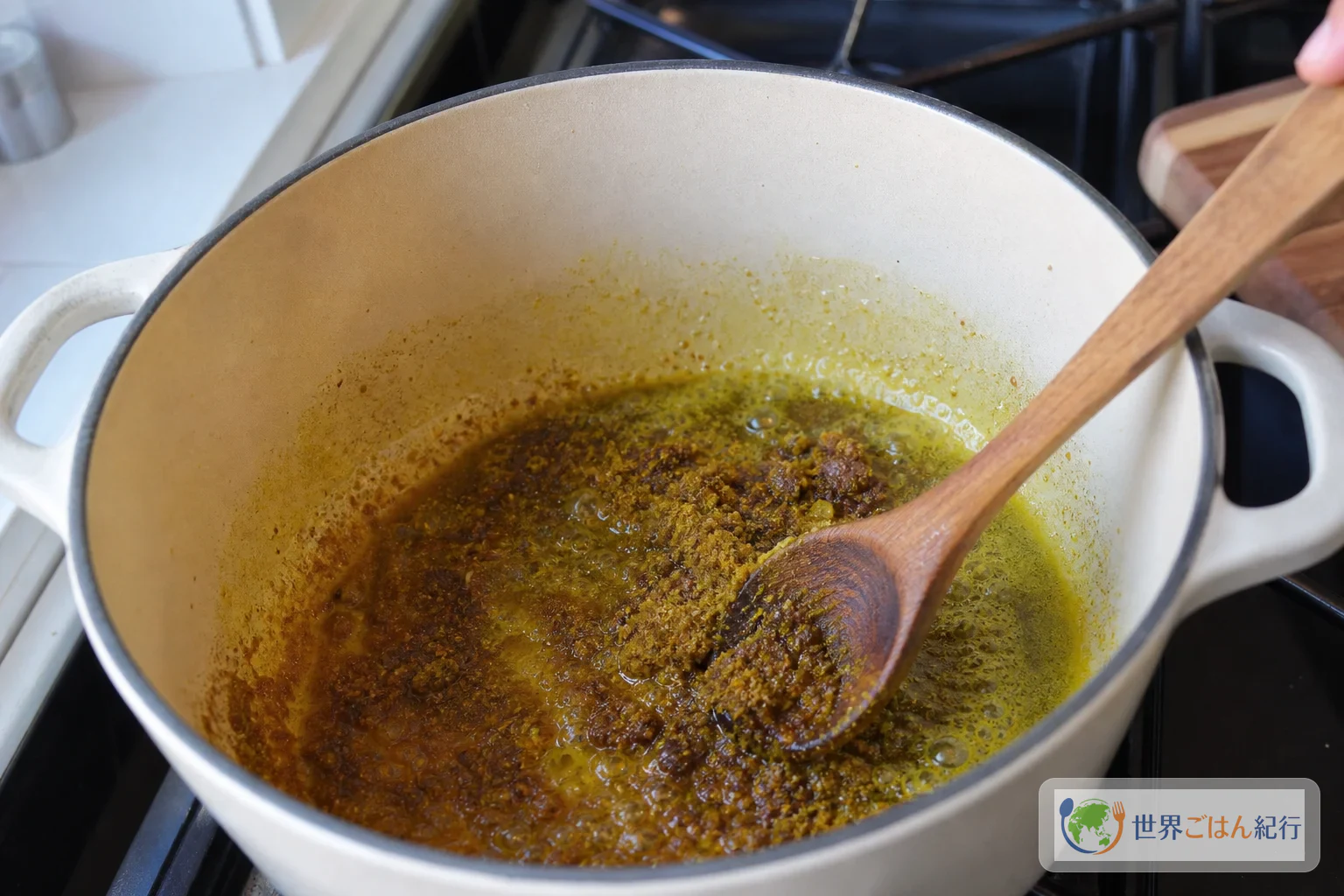
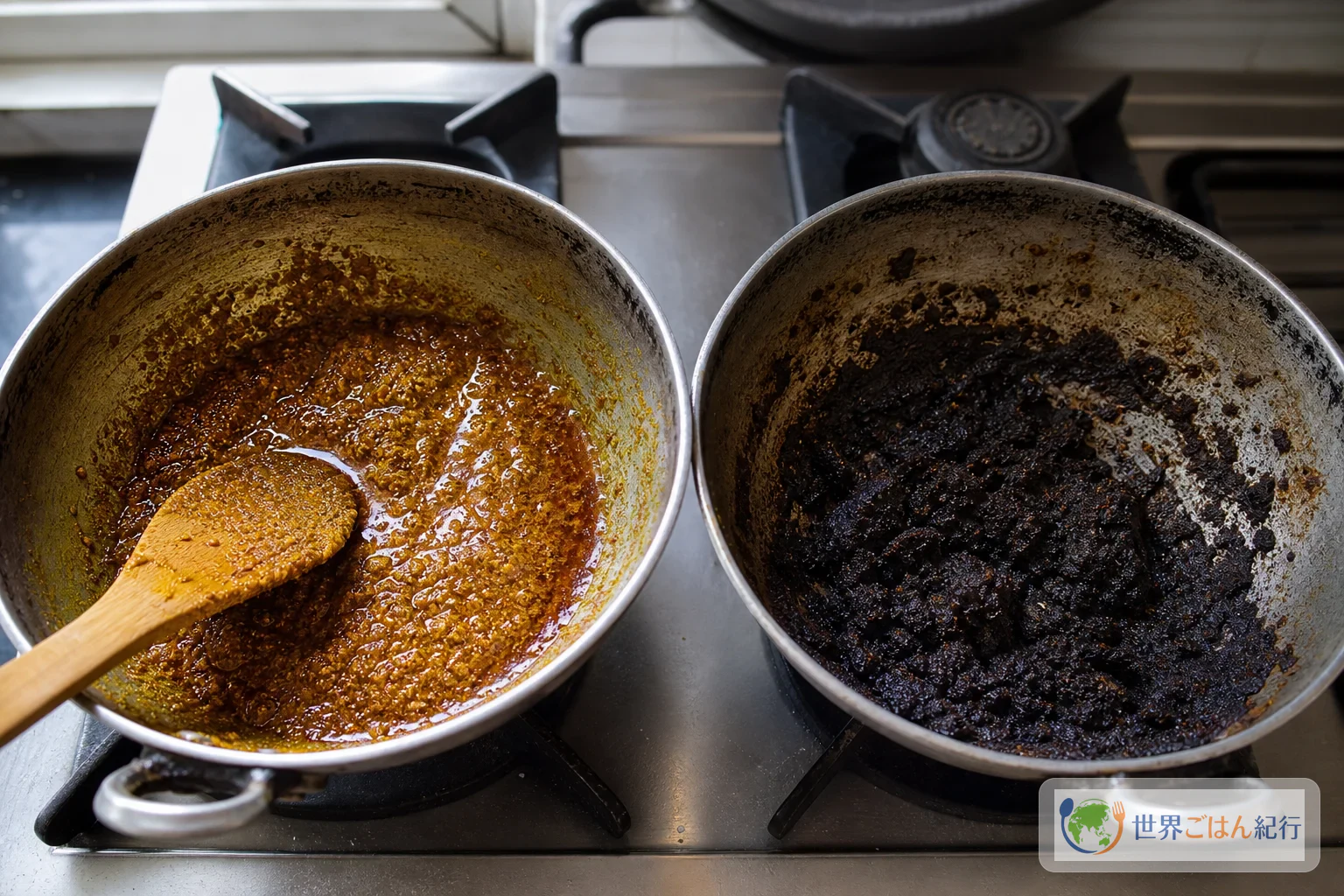
Jamaican cooks call the step of briefly toasting curry powder in hot oil burning the curry. Here "burn" means driving off the moisture in the powder and moving its color and aroma into the oil. If the oil is too hot, the bitterness of turmeric and fenugreek comes out first. Keep stirring once the powder goes in, and as soon as the aroma rises, bring the temperature down with the meat or liquid, before any black smoke appears. This short step sets the aroma of the whole pot.
If you see black smoke or it tastes bitter, discard that oil. Wash the pot and bloom 1 tbsp oil and 1 tbsp curry powder over medium heat for just 45 seconds. Trying to hide burned powder with water or sugar rarely works in a pot holding 2 lb (900 g) of meat.
Tough goat needs more time
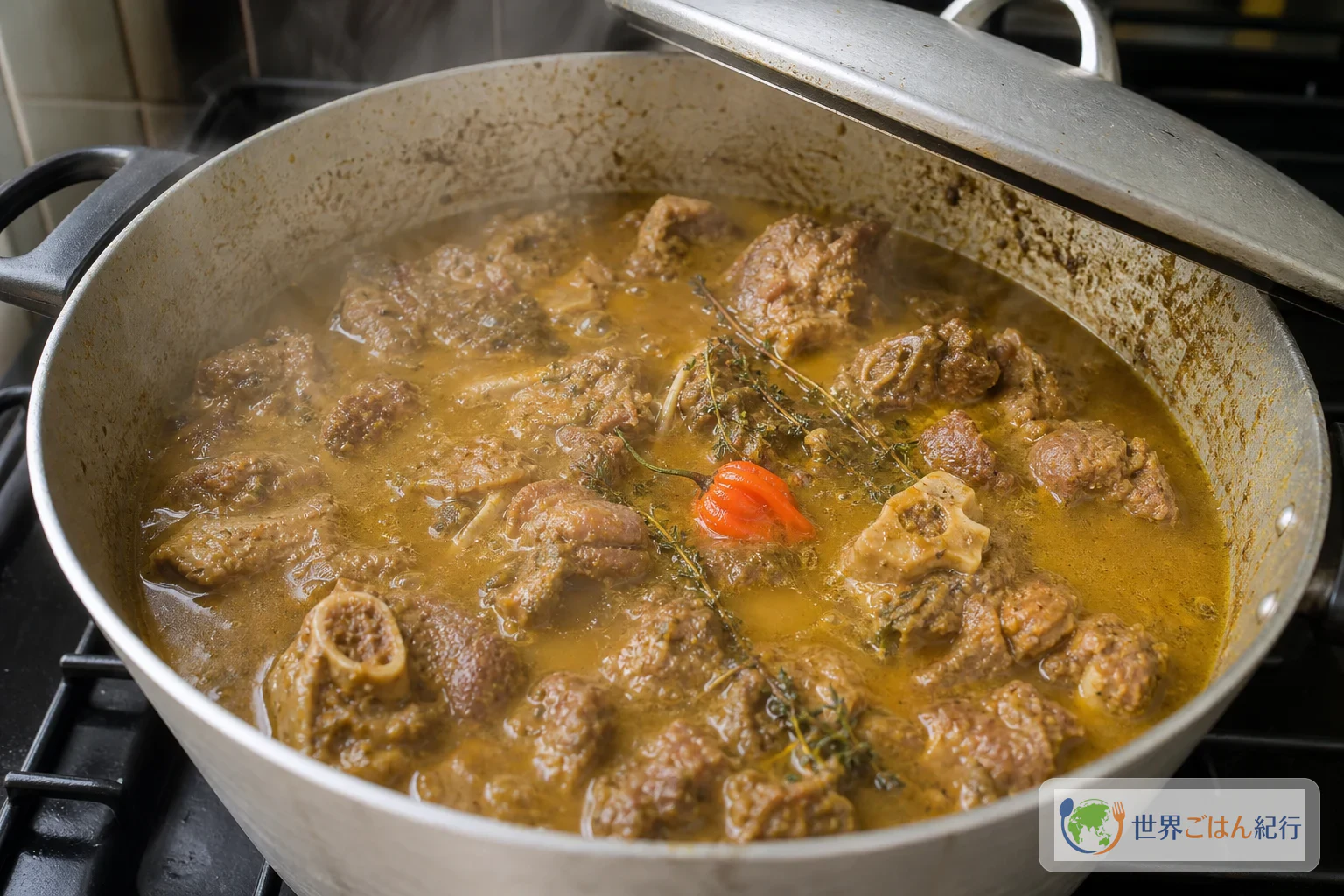
Goat is meat for braising, in cuts with sinew and bone, rather than for thin slices seared over high heat. If it's still firm at 90 minutes, turning up the heat to drive off liquid only tightens the outside. Keep the small bubbles of a low simmer, add hot water 3.5 tbsp (50 ml) at a time and keep going until a skewer slides in easily near the bone. If the vegetables look ready to fall apart, take the potatoes out early.
Scorching or a watery sauce
Start with too little water and the bottom of the pot scorches before the meat softens. Begin with 2½ cups (600 ml), enough to come halfway up the meat, and only take the lid off for the last 8–10 minutes to thicken the sauce. If it's still watery, lift the meat and vegetables onto a plate, reduce the sauce alone for 3–5 minutes and return them, so they stay intact.
Cutting a Scotch bonnet or habanero spreads its juice. Wear gloves and keep your hands away from your face and eyes. To serve different heat levels, simmer the chile whole, remove it once its aroma has gone into the pot, and add a little hot sauce only to the plates of those who like it hot.
Curry goat variations and what to serve with it
Variations
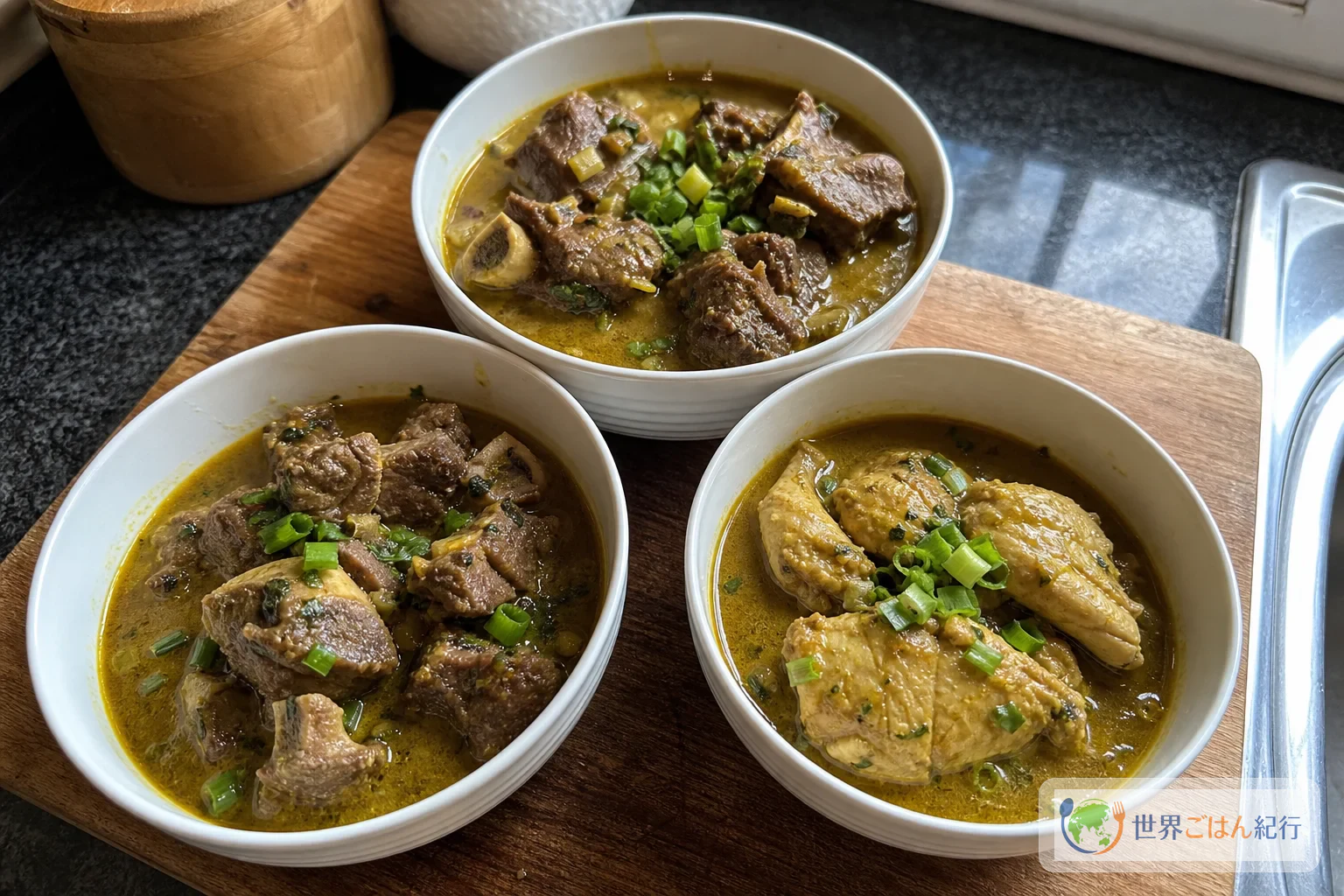
Missing an authentic ingredient is fine, but what you swap changes the texture of the dish and, sometimes, its name. Decide which backbone you want to keep.
| Direction | What changes | How to judge it |
|---|---|---|
| Closer to the original with goat | Use bone-in shoulder, neck or shank | Simmer about 2 hours, until the meat loosens around the bone |
| With lamb | Swap in 900 g bone-in lamb shoulder | Start checking at 90 minutes. Milder in aroma than goat |
| Weeknight chicken | Swap in 900 g bone-in chicken thighs | Simmer 40–50 minutes. Make sure the center reaches at least 75°C (165°F) |
| Milder | Don't cut the chile; add 1 whole and remove it after 20 minutes | Keeps the thyme and pimento aroma, lowers only the heat |
| Pressure cooker | Sear the meat, add the stock and cook at pressure for 20–25 minutes | After the pressure releases, add the potatoes and reduce uncovered for 10 minutes |
What to serve with curry goat
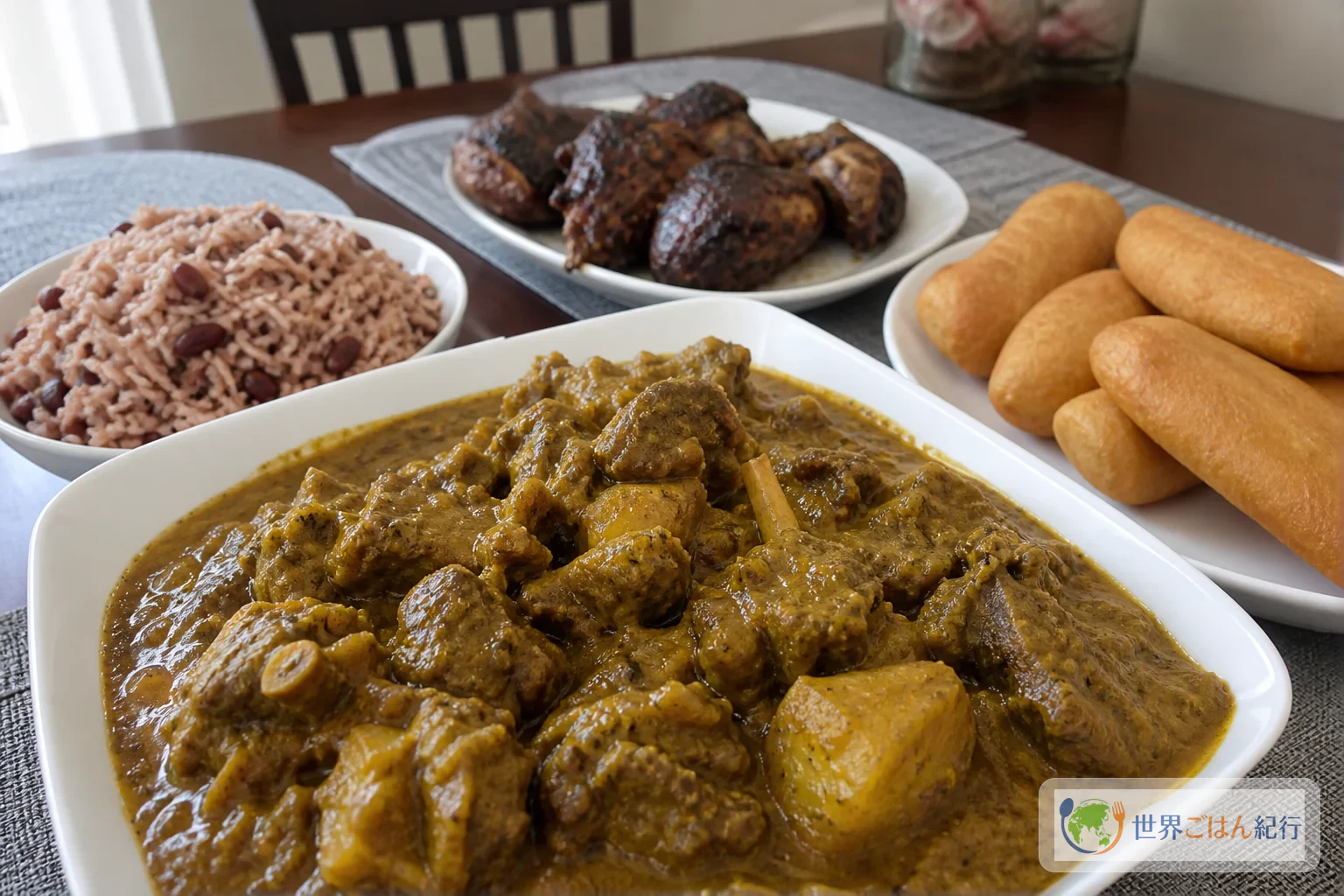
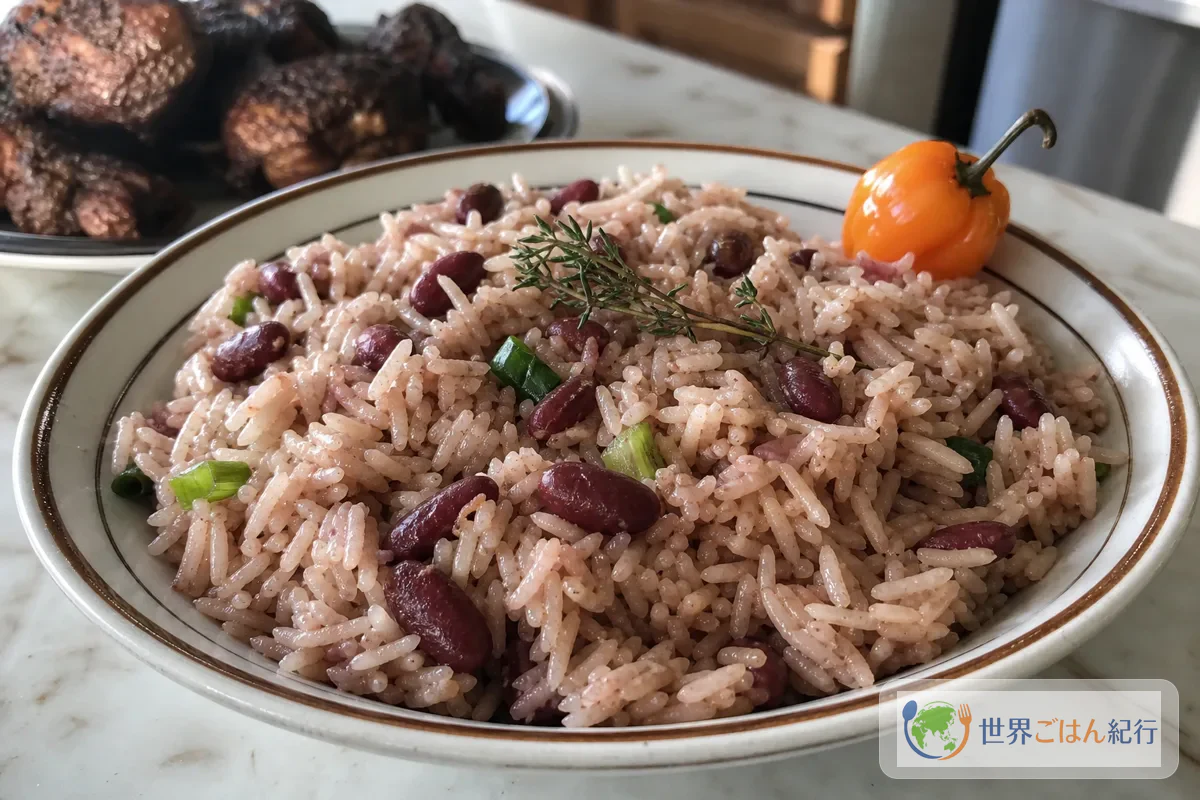
The easiest first side is rice and peas. The beans and the scent of coconut take the edge off the heat and help you finish every bit of sauce. For a lighter weeknight meal, make Jamaican jerk chicken the main dish and save curry goat for a weekend braise, so the spices don't pile up.
When you want something bready, dip the sweet fried dough of festival or roti into the sauce. Another day, try Jamaican run down for fish and coconut. Even among braises from the same island, you'll see how different ways of thickening the cooking liquid change the dish.
FAQ
If I can't get goat, does it still work with lamb?
Yes, though it's more accurate to call it a Jamaican-style lamb curry than curry goat. Use bone-in lamb shoulder or neck. Thinly sliced beef or pork changes the braising time and the way the fat renders, so the same steps will need adjusting.
Can I use Indian curry powder?
You can, but the aroma will vary with the powder. Some products contain salt or wheat, so check the label. Coconut milk or Japanese curry roux moves the pot away from Jamaica's dry-spiced meat braise, so leave them out of your first batch.
Can I eat it if I don't like spicy food?
Yes. Use the Scotch bonnet whole, as in the milder variation above, and add hot sauce only to the plates of those who like it hot. After handling the chile, take off your gloves and wash your hands so you don't rub it into your eyes.
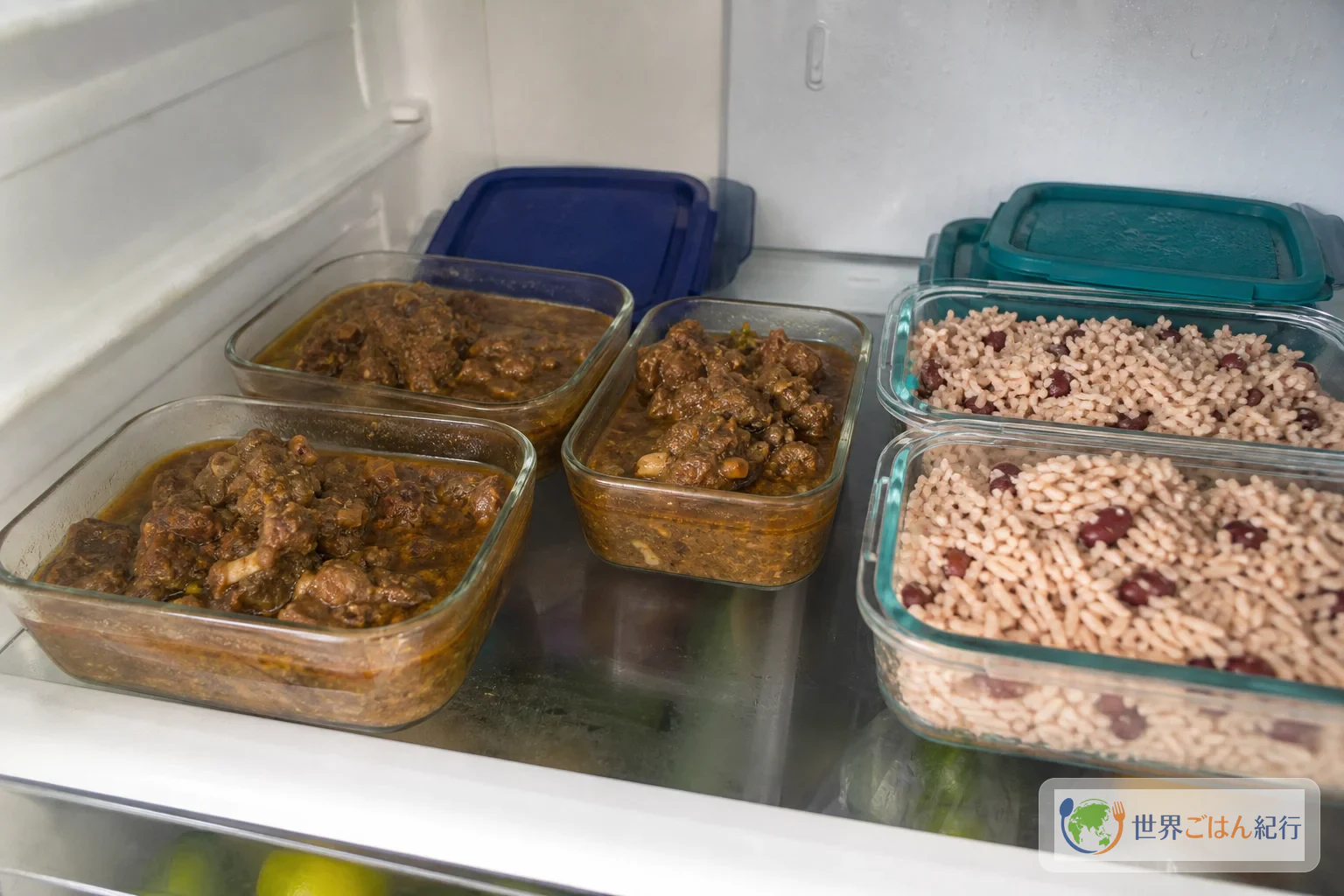
How long do leftovers keep?
Divide into shallow containers within about 2 hours of cooking and refrigerate. Eat within 3–4 days, and reheat until the whole thing reaches 74°C (165°F). To freeze, divide into single portions; if the potatoes have broken down after thawing, reduce the sauce a little and spoon it over rice. Discard anything left at room temperature for a long time, and don't judge it by smell alone.