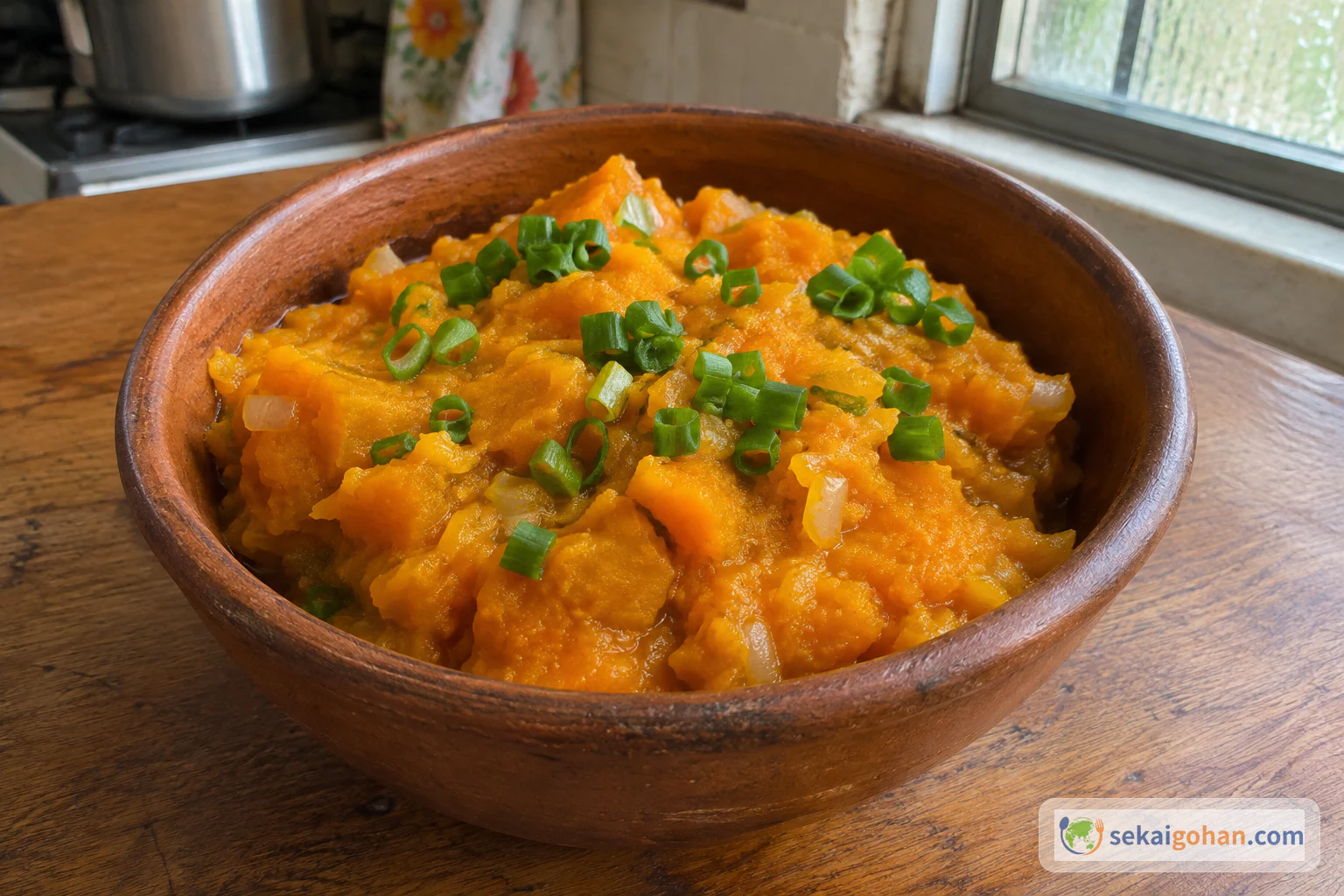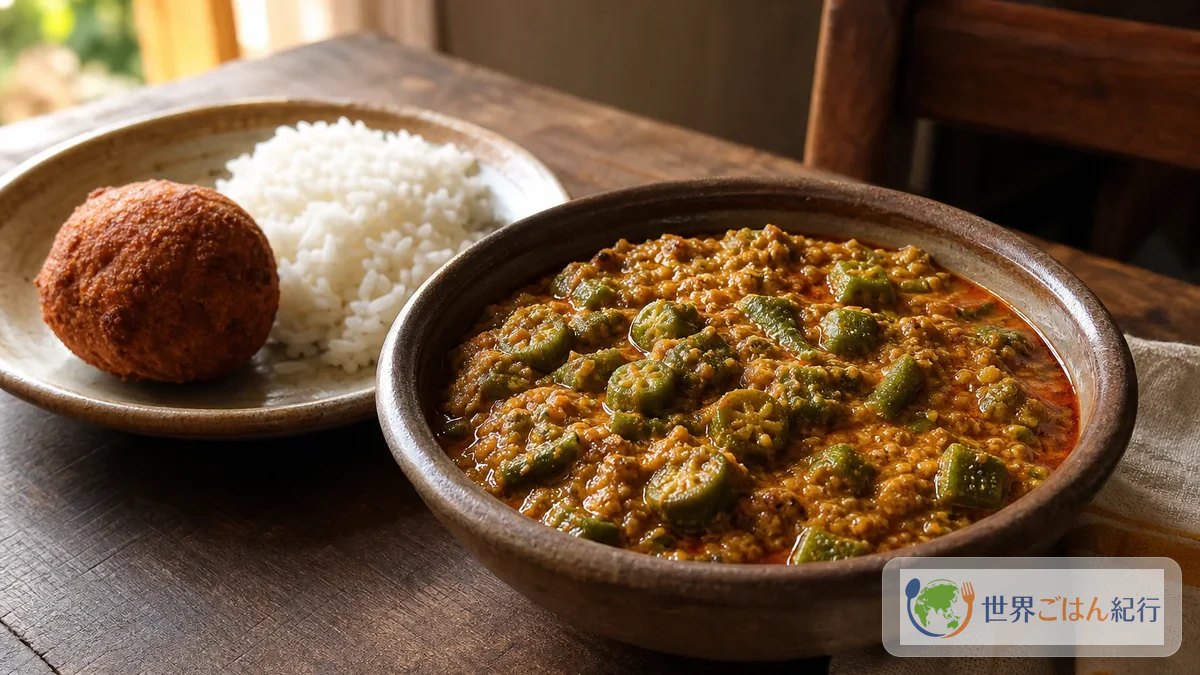
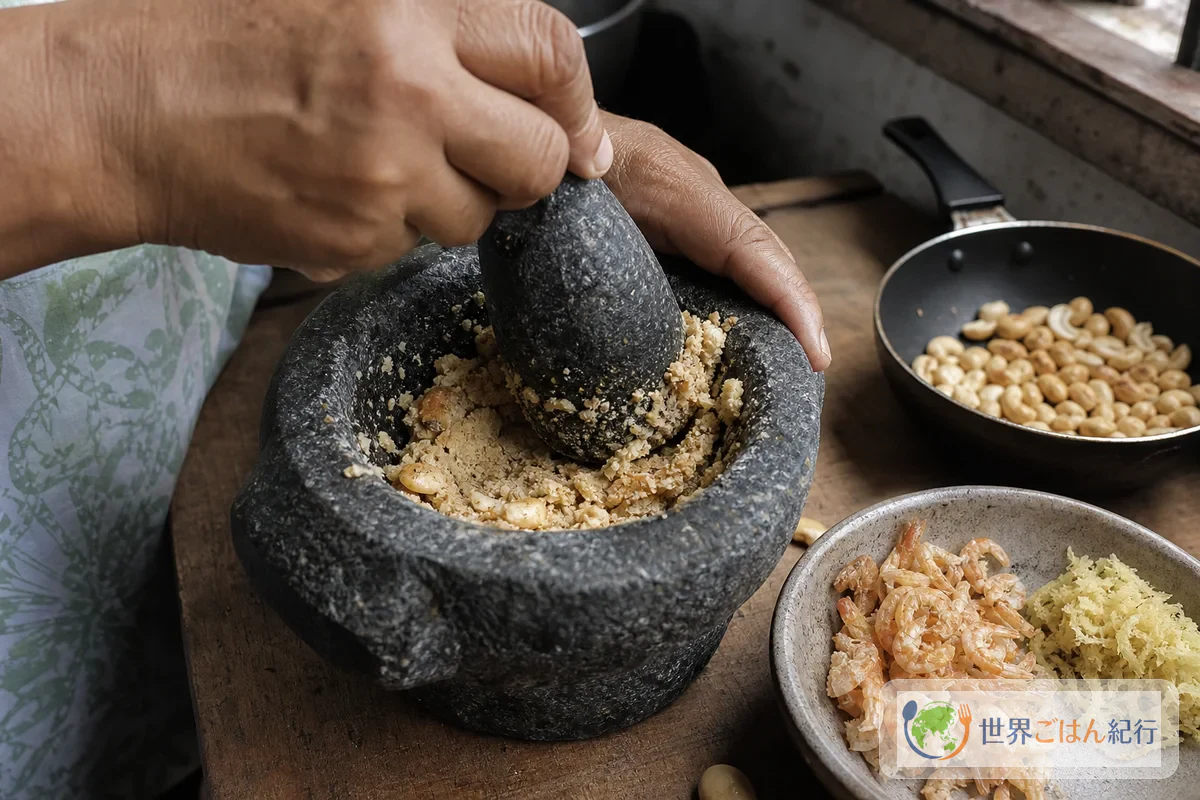
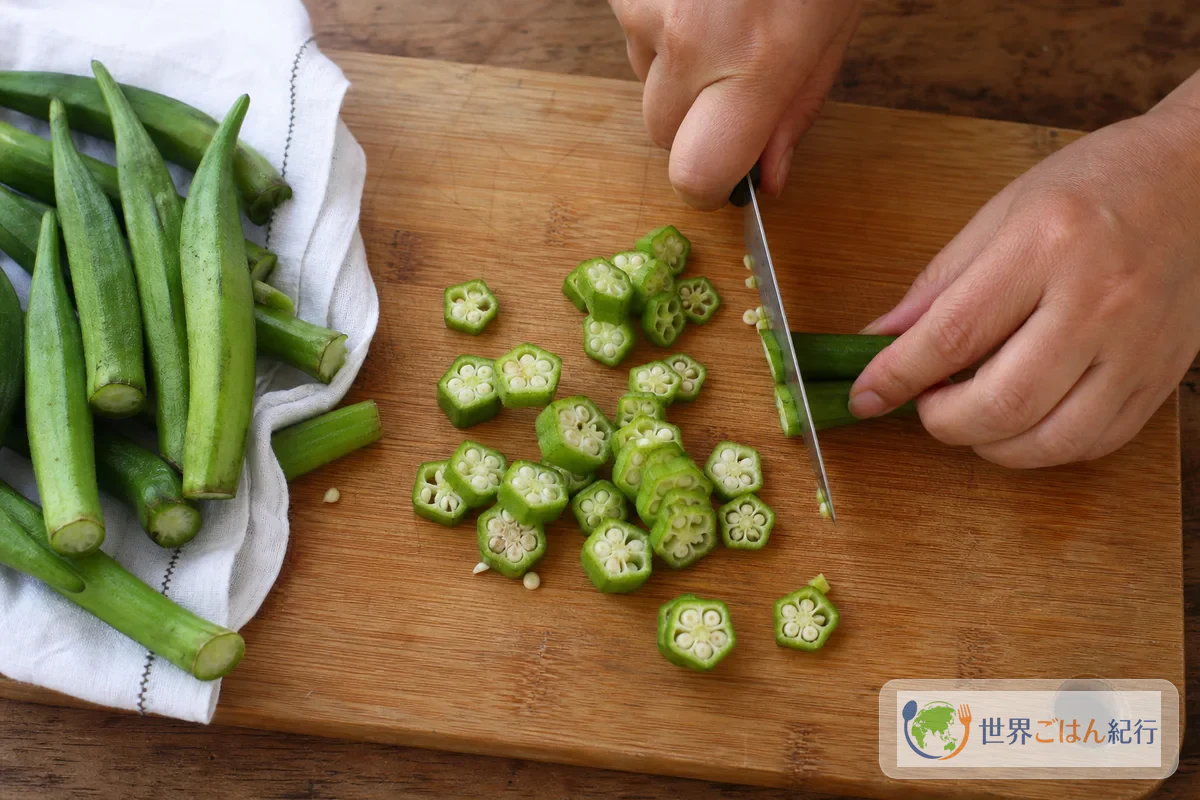
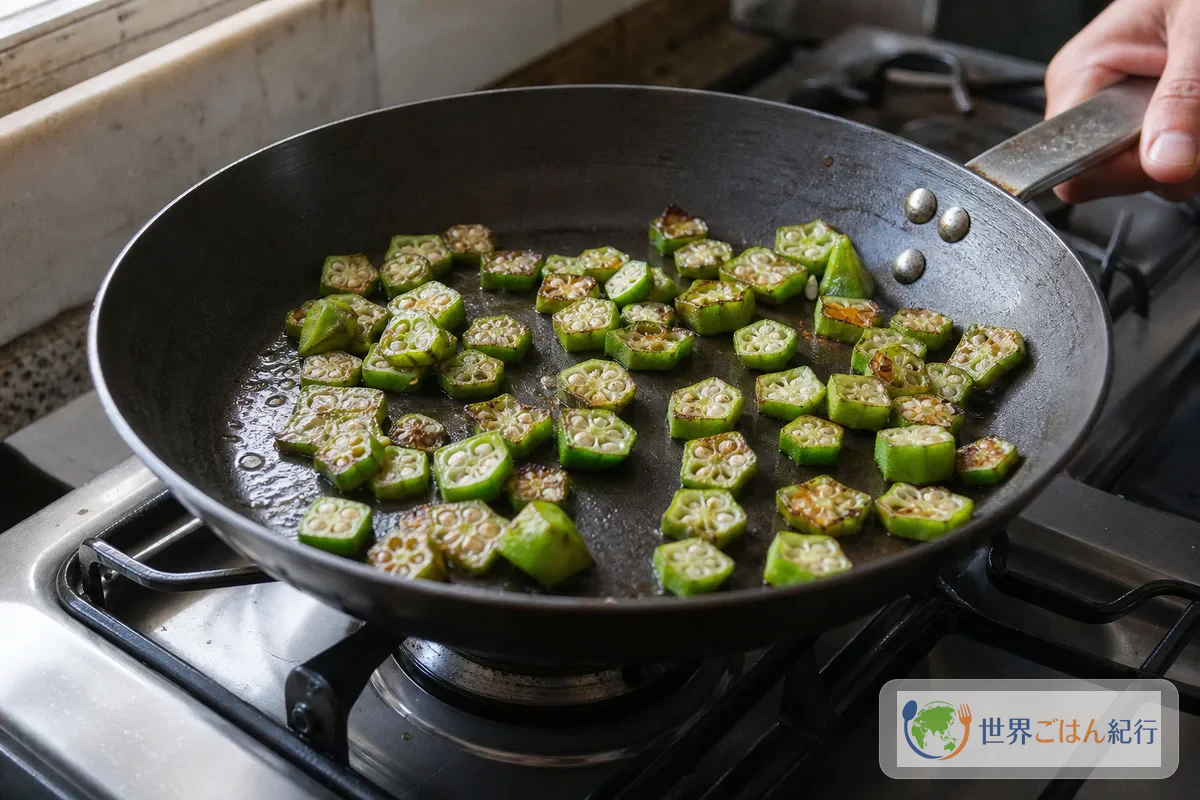
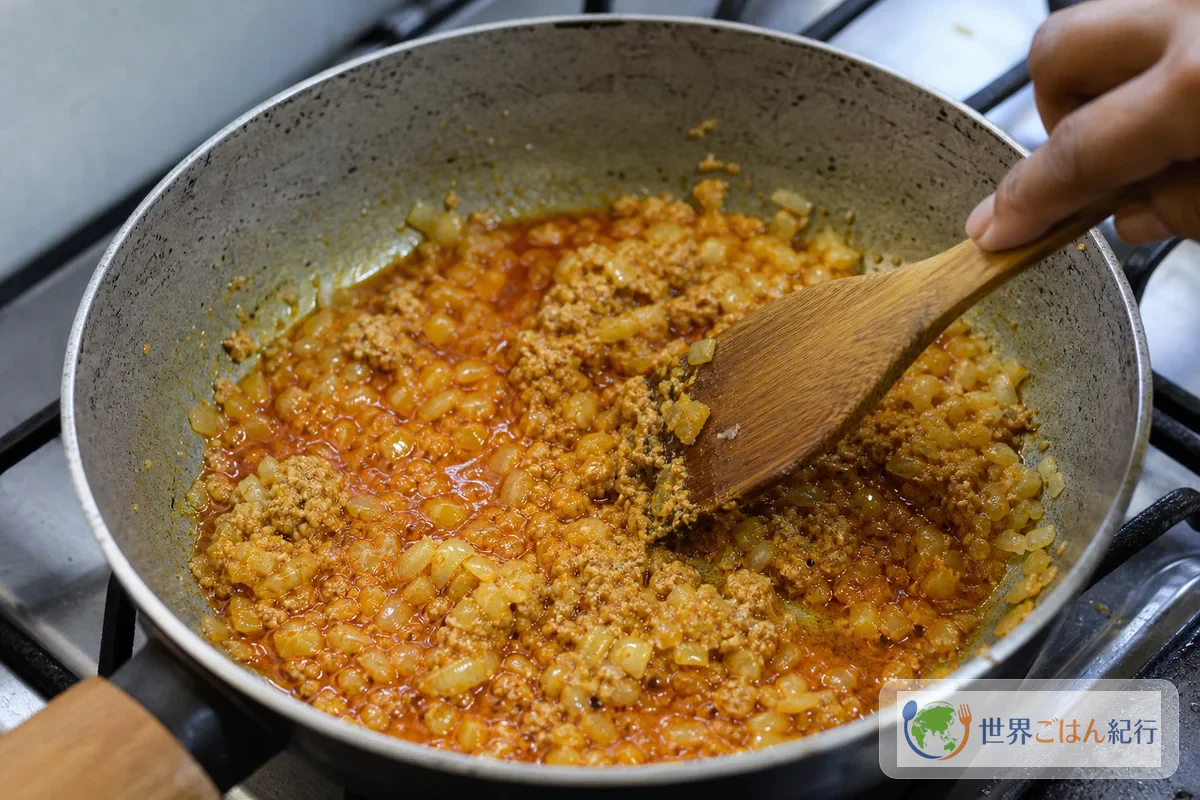
Put okra on the cutting board, and every cut of the knife answers with a small sound. When the stringy slime from the cut ends and the smell of dried shrimp end up in the same bowl, the air in the kitchen changes a little. Then the red dendê oil goes in. Caruru is an okra stew from Bahia, in northeastern Brazil, rich with ground nuts and dried shrimp. People eat it with rice and spoon it into acarajé. What trips up first-time cooks is how much of the slime to keep. Sear the dry okra briefly and turn off the heat while you watch the liquid thicken, and the slime becomes the body of the sauce.
Caruru in Bahia
At the Bahian table
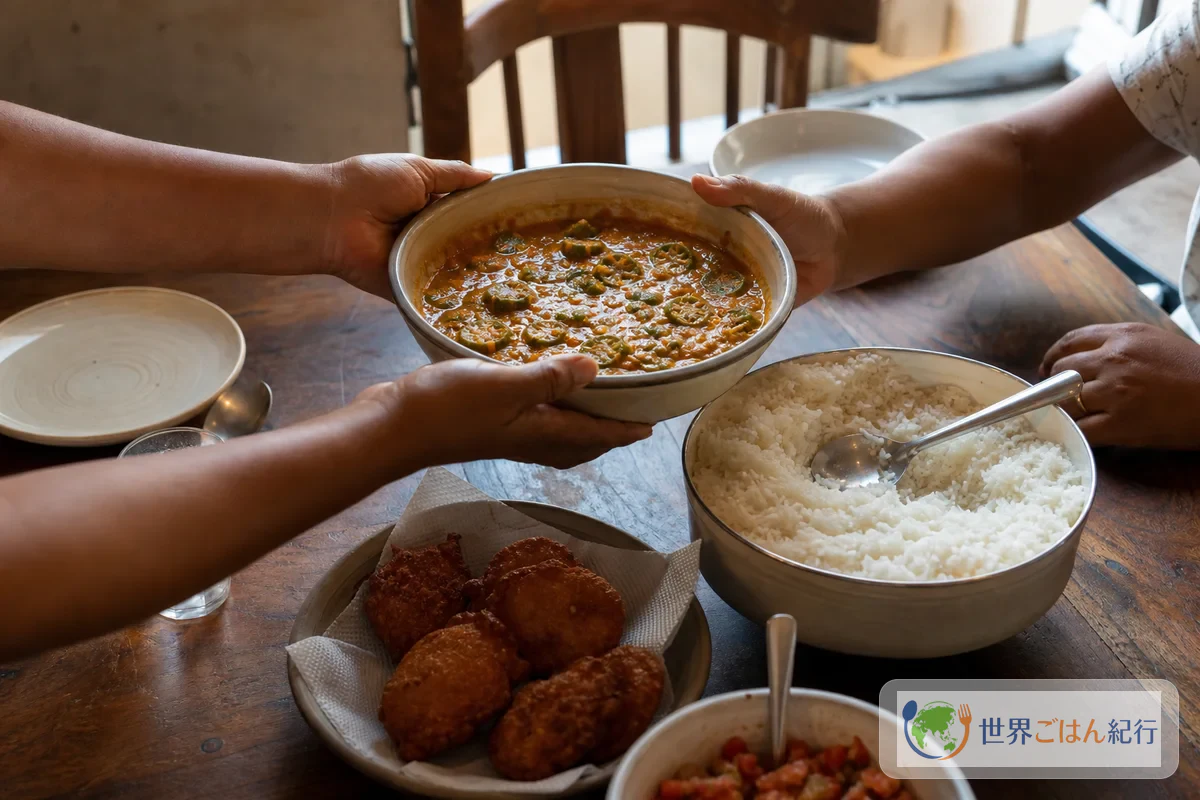
A big pot of caruru sits in the center of the table, and everyone adds a little of it to white rice, fried bean fritters and fish dishes. Next to plain rice, the deep smell of dendê oil and the savor of dried shrimp stand out. Spread a spoonful over rice and the liquid slips between the grains while fine bits of nut stay on the tongue. In that bite caruru is more than a garnish for grilled food. It's the sauce that ties the whole table together.
Caruru is both an everyday side dish and a religious food. Acarajé is fried in dendê oil, and caruru and dried shrimp are among its fillings. In Bahia, food is a culture that includes the people who keep it alive and their local customs. Read Bahia's intangible heritage guide.
Caruru de Cosme e Damião in September
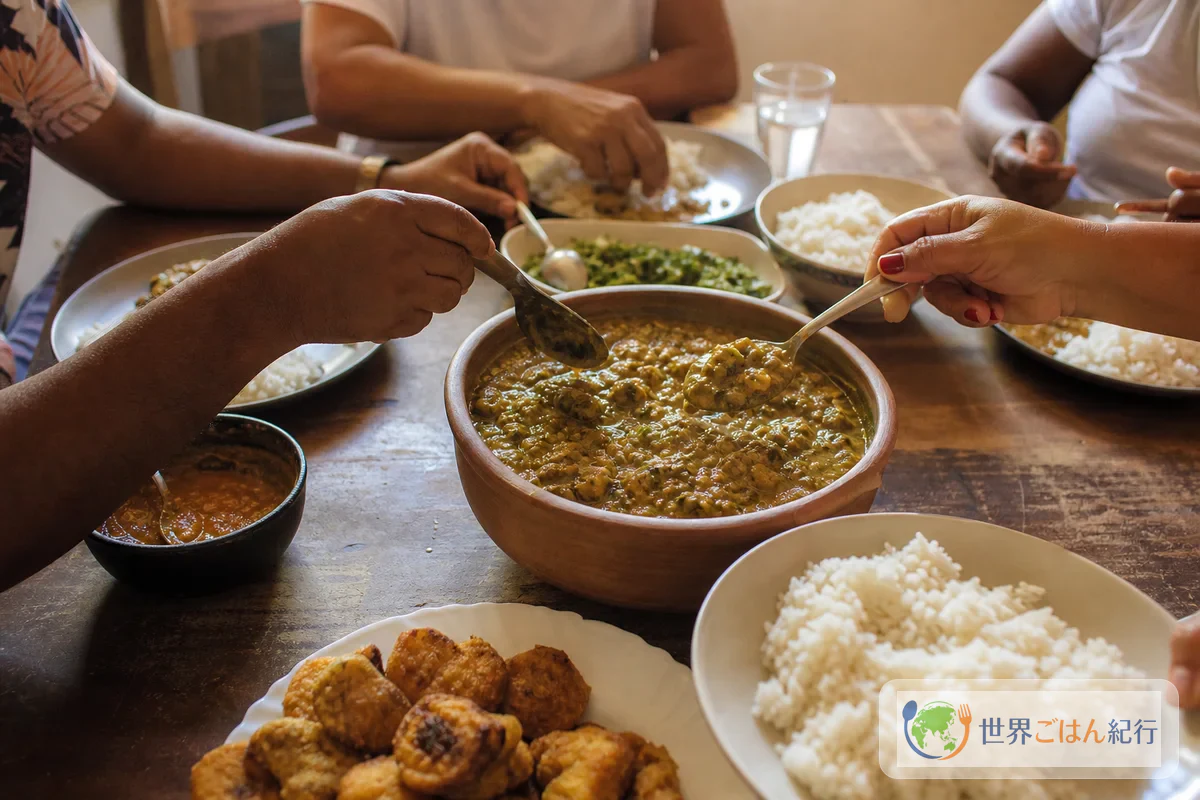
Caruru de São Cosme e Damião is a September tradition. Family, the terreiro and the local community gather to cook, set the tables, and share the food through prayer, song and distribution. When it was registered as state intangible heritage in 2024, the listing covered more than the recipe: it is a living practice, including the knowledge of who cooks, who sets up the place, and who receives a share first. Read more about the Bahia heritage listing.
By custom, "the seven boys", seven children, are served before the adults, which puts children at the center of the table. Around Salvador, caruru links religious food with household sociability, and neighbors work together at the September gatherings. Okra, dendê oil, dried shrimp and more appear in religious settings and in everyday cooking alike. Read the PDF.
This recipe is for a home dinner. It brings the structure of the flavor to your table and leaves the places and customs to the community that keeps them. Cook it with care as a dish, and take care over the time you spend sharing it.
Bahian caruru versus the Pará style
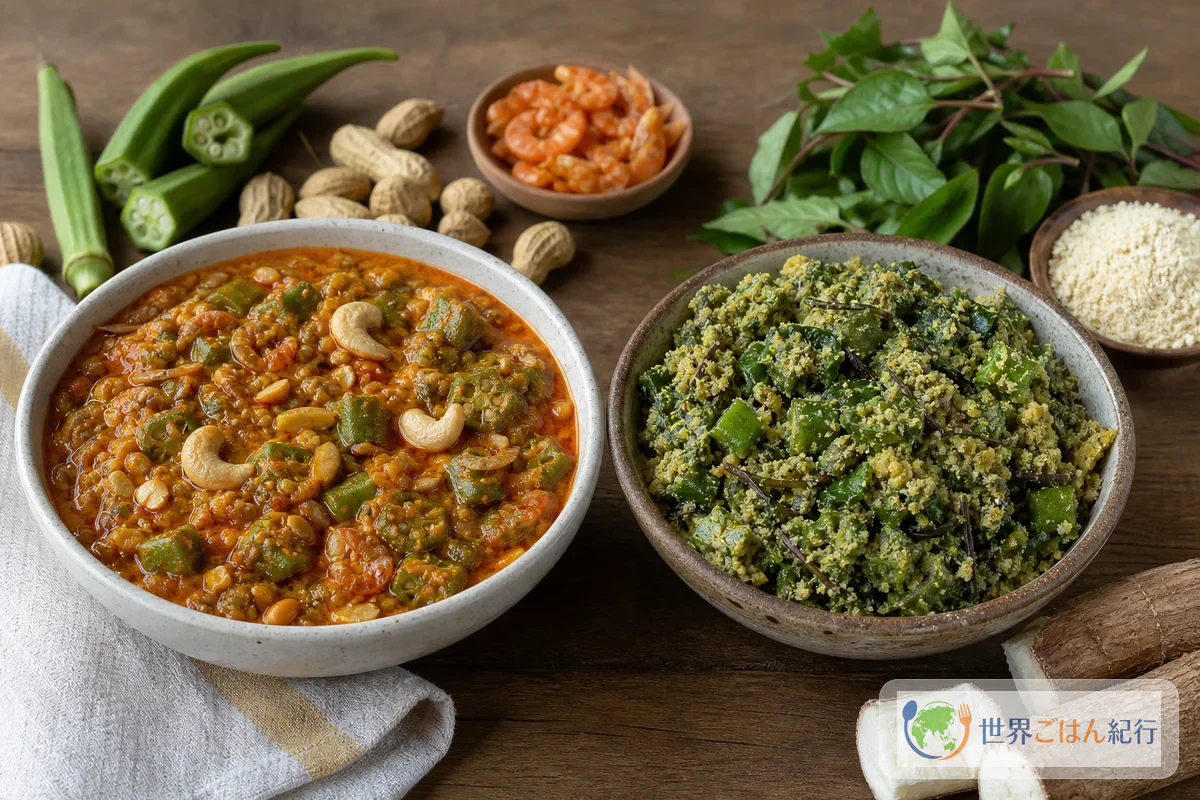
The name "caruru" suggests one stew made across all of Brazil, but the dish changes from region to region.
| Axis of comparison | Bahian caruru | Caruru presented as Pará style |
|---|---|---|
| Thickness | Thickened with okra and nuts | Raised by adding cassava flour little by little |
| Aroma | Dendê oil, dried shrimp, ginger | Dried shrimp stock, dendê oil, greens |
| Added ingredients | Cashews, peanuts | Cassava flour, jambu. Elsewhere watercress can be served alongside |
| How it's eaten | Served with rice, acarajé and fish dishes | Eaten as a heavier stew with flour |
A Pará-style version starts from a dried shrimp stock, gets cassava flour added in stages, and comes to the table with jambu. See a Pará-style okra and shrimp recipe. The two are separate dishes, and stirring cassava flour into the Bahian recipe won't make one into the other.
Ingredients Make Okra's Slime Your Ally
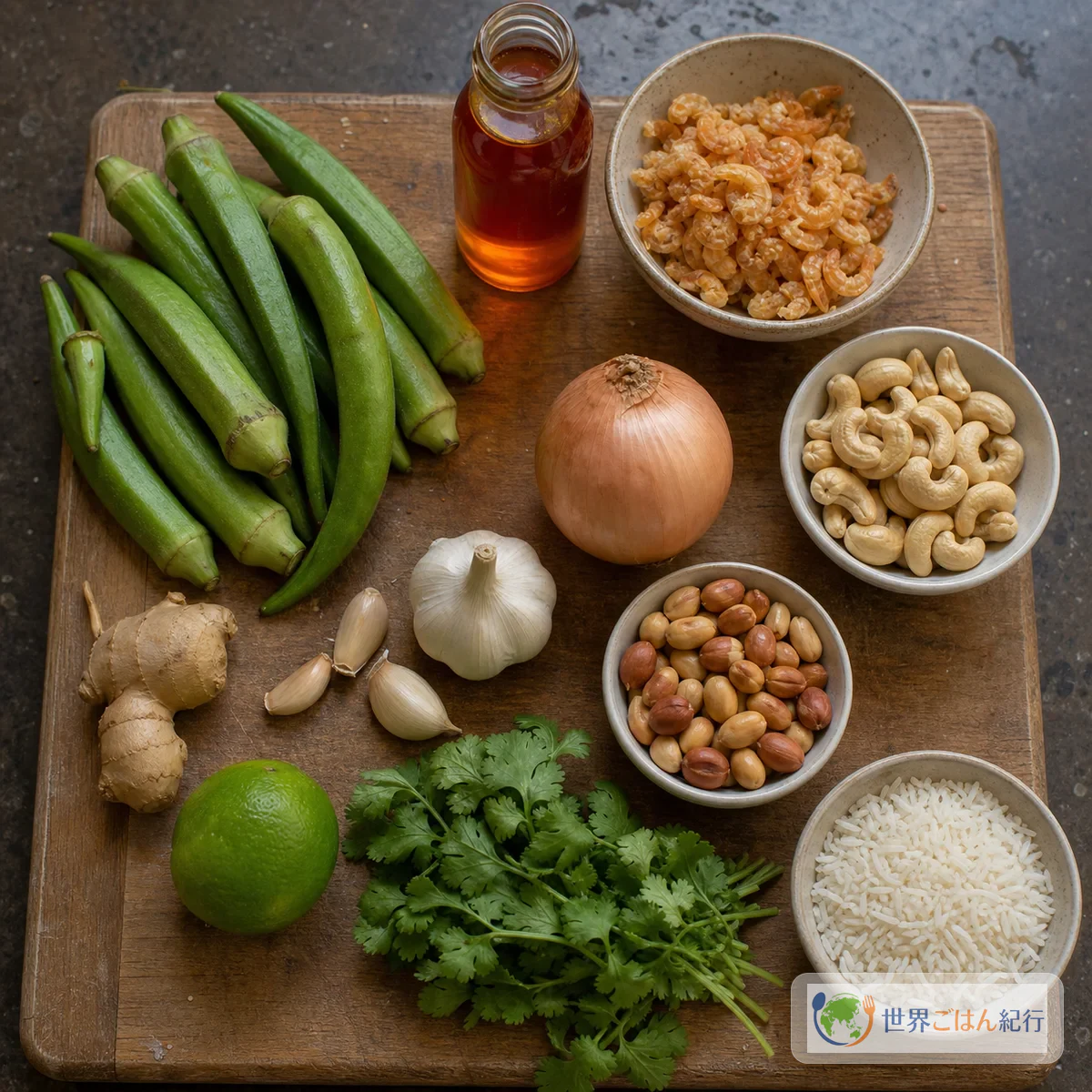
The amounts below are for 4 servings as a side beside a main dish.
If you plan to eat caruru alone instead of adding more white rice, use 1.5 times the okra and a little more liquid.
Choose dendê oil for aroma, not color
Dendê oil doesn't just turn caruru orange.
The sweet, heavy smell the moment it goes in the pot unifies the sea aroma of dried shrimp and the toastiness of nuts.
Substitute rice bran or peanut oil and you get a stew, but it is a different okra dish.
If you plan to keep cooking Bahian food, check the edible labeling and volume before you buy dendê oil.
Not sure you'll like the aroma of dendê oil? Start with a small blend of 2 tbsp (30 ml) rice bran oil and 2 tsp (10 ml) dendê oil.
Dried shrimp is the core of the savor
Dried shrimp doesn't make caruru taste tropical in one bite.
Ground together with nuts, it joins oil and water and puts salt and the savor of the sea behind the green smell of okra.
Don't use it if you have a shellfish allergy.
Replacing it with the same amount of fish sauce or small dried shrimp changes the aroma and saltiness, so adjust the seasoning differently from this recipe.
It makes sense if you also make other dishes using small amounts of dried shrimp.
If you are making it just once, skip the special items and make it as a nut sauce without dried shrimp.
Choosing Caruru Ingredients and Substitutes
Dendê oil carries the center of the aroma, and it does more than add color. Dried shrimp and nuts get stronger the more you add, so start with the amounts in the table and adjust the salt last.
Each substitution moves the dish a little. Without dried shrimp, you have a home version for avoiding shellfish. Replace all the dendê oil and you get a delicious okra and nut stew, but the Bahian aroma fades. If you must avoid shellfish or nuts, leave out the dried shrimp and nuts and use rice bran oil. Changing ingredients is fine. Write down what you kept and what you changed next to the dish name, and the decision is easier next time.
If you don't have a mortar, use a thick bowl with a pestle or the back of a spoon. Jambu is hard to find reliably. A small amount of watercress or water spinach brings a green aroma, though not the tingling.
Method: Keep the Slime and Layer the Aroma Last
If you go by the clock alone, without looking in the pot, caruru gets too thick.
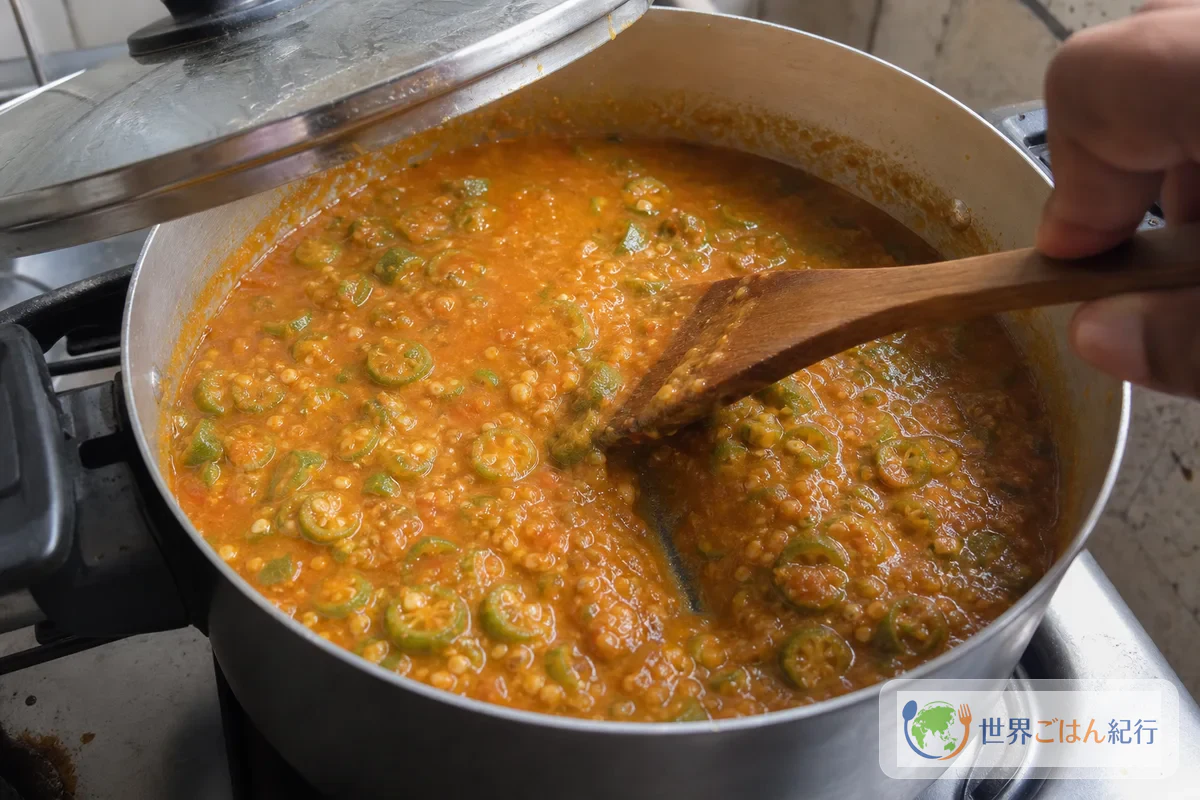
Go by what you see as well as the times below: check the color of the okra, the flow of the liquid, and the trail of the wooden spoon.
Common Caruru Problems and Fixes
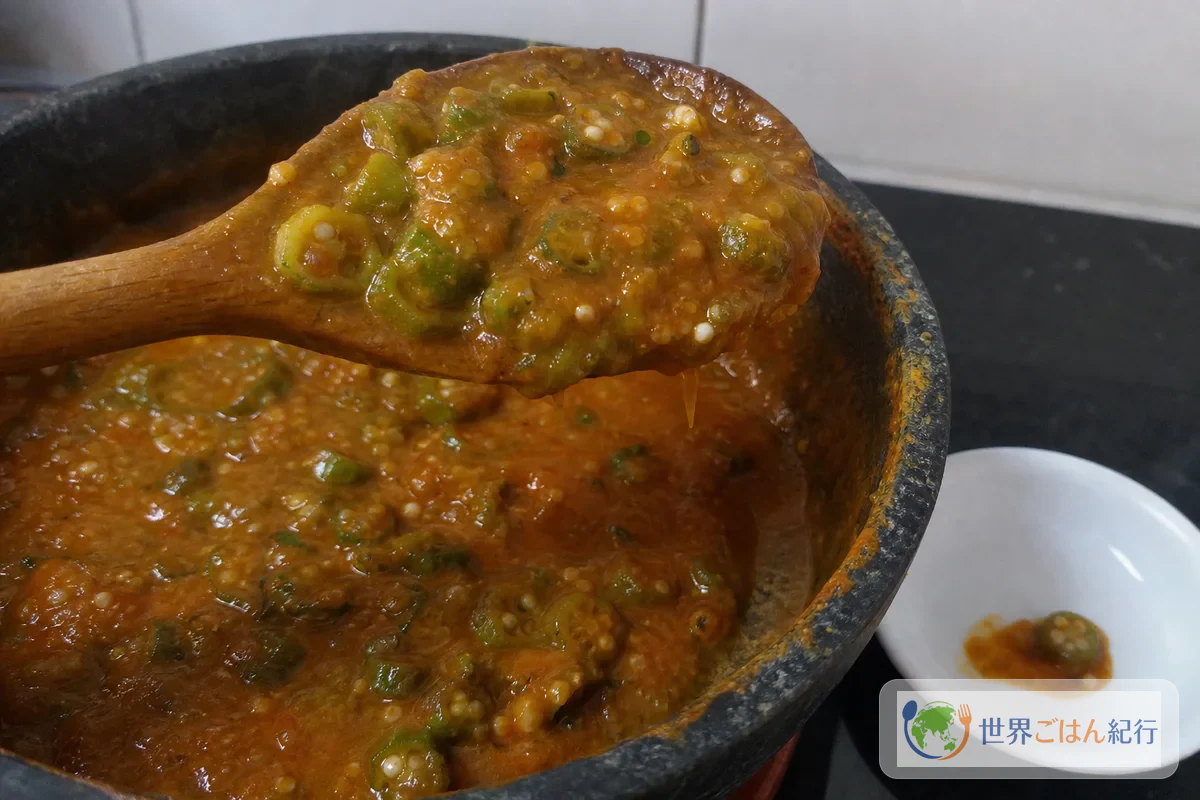
Slime depends on moisture more than on cutting
Washing okra with vinegar or lemon reduces slime, but in caruru that slime is what holds together the liquid carrying the nuts and dried shrimp. Dry the surface before cutting, sear briefly over high heat, and keep the pieces whole until the simmer ends. Do it in that order and you keep both the stringy texture and a thick sauce.
Splitting the dendê oil
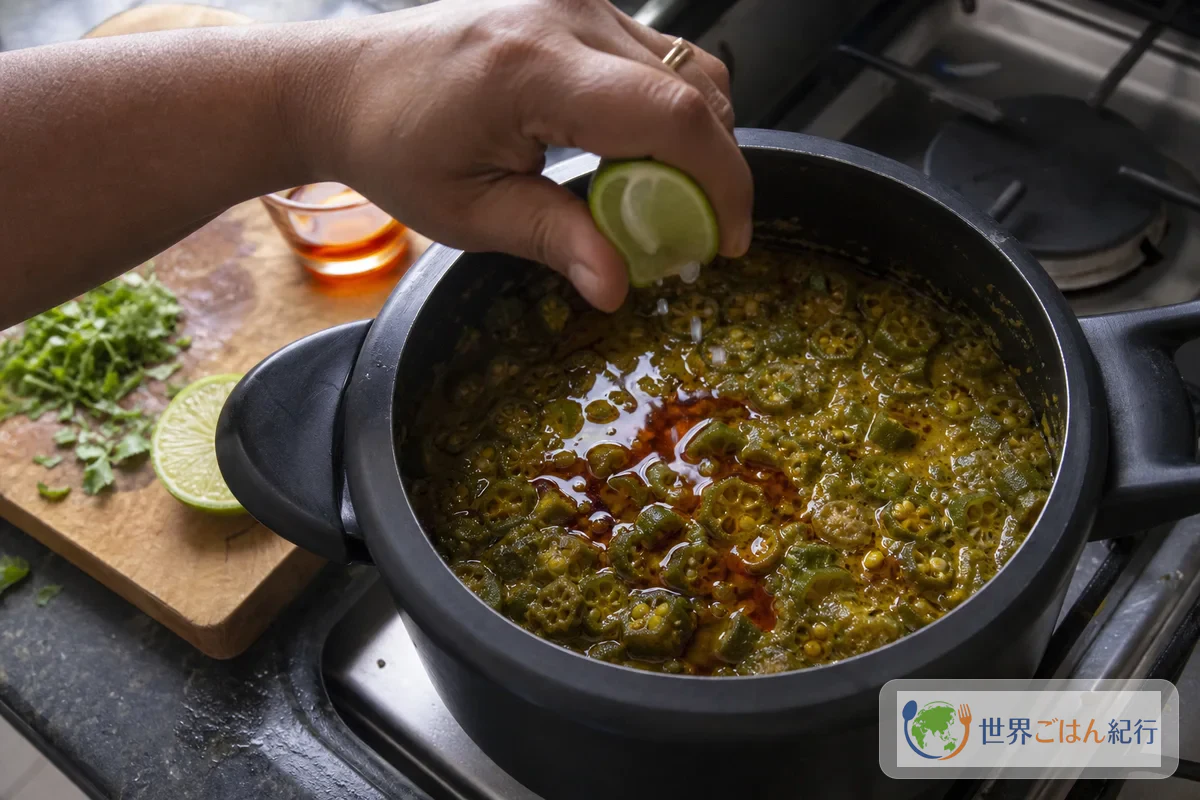
If all 2.5 tbsp (40 ml) go in at once, the aroma sinks deep into the stew. Use 2 tbsp (30 ml) for the aromatic base and add 2 tsp (10 ml) after you turn off the heat. Then one aroma rises from the pot and a second one reaches you in the mouth, and both layers sit well with rice.
Grinding the shrimp and nuts
Ground too fine, the dried shrimp and nuts turn into a uniform paste. Too coarse, and the bits stand out in the liquid. A mortar lets you stop partway and check. With a food processor, pulse about 3 times for 5 seconds each, and resist adding oil to the bottom to loosen it.
A red-orange liquid in a dark pot looks heavy and is hard to judge.
Drop 1 tsp on a white plate. If it flows slowly when you tilt the plate, it is thick enough to serve with rice. Another sign: a spatula trail stays on the bottom of the pot for a moment.
If it spreads like water on the plate, reduce 2 more minutes.
If it clumps without falling from the spoon, add 1 tbsp water and warm 1 minute over low heat.
Serving, Storing and Varying Caruru
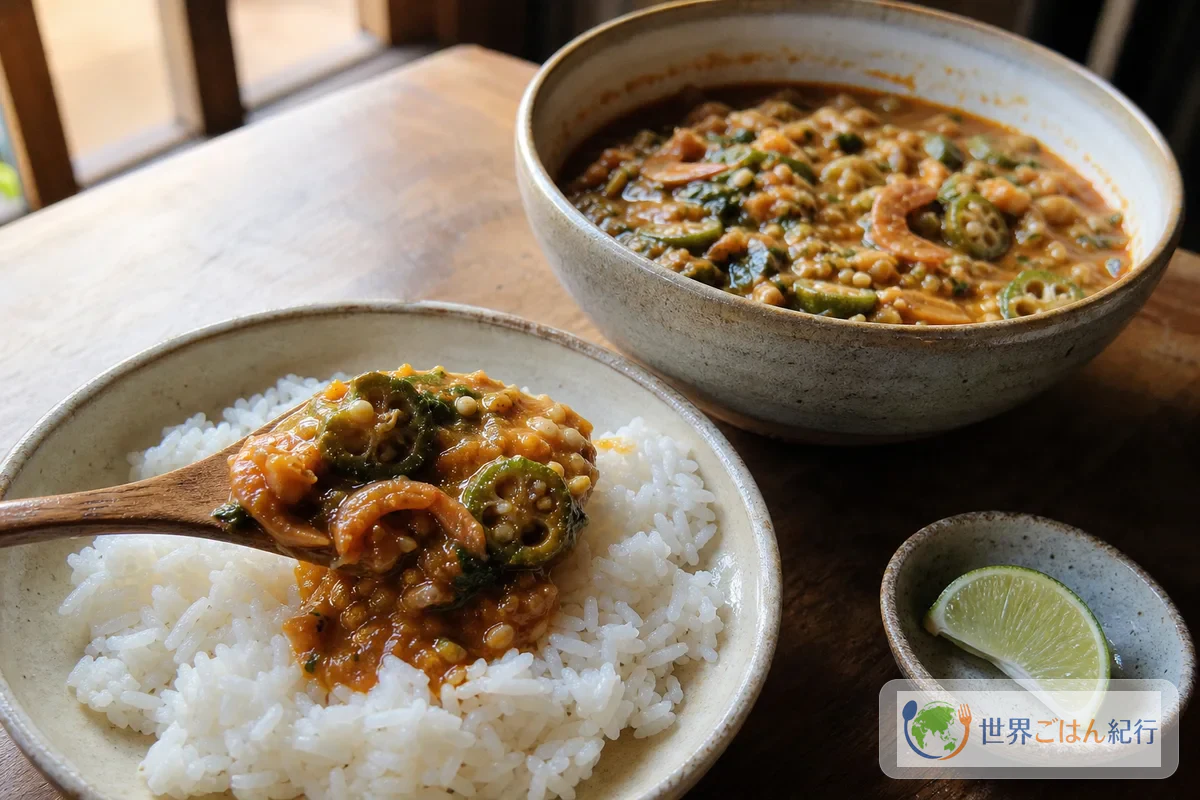
Make it a little richer for white rice. Next to acarajé, loosen the liquid by a notch so it spoons easily over the fried bean dough. Serve it with acarajé or moqueca baiana and the flavor of Bahia runs through the whole meal. When the plate shares the table with many dishes, put small plates by the pot and let each person serve themselves. With a strongly scented food like this, letting people choose how much to take changes how it comes across.
Variations
- Caruru without dried shrimp: Omit the dried shrimp and use the soaking liquid from dried shiitake for part of the water. The sea aroma won't come through, but the backbone of nuts and dendê oil remains.
- Caruru to serve with fish: Reduce the water to ½ cup (150 ml) and serve it rich beside grilled white fish. Look at the saltiness of the fish and cut back the salt in the caruru.
- Pará-style thickness: Make half this recipe, then add cassava flour 1 tsp at a time at the end and cook 1 minute each. Stop when the spoon's trail fades slowly; a lot at once makes the sauce too firm to bring back. After adding flour, add extra water only a little at a time.
- A home version with heat: Add just 1/2 a red chile to the aromatic base. Keep the heat in the background so the aroma of dried shrimp still comes through.
- A version with frozen okra: Pour off the water released on thawing, wipe the surface, and go to step 3. It gets softer than fresh okra.
More Dishes to Cook
- Acarajé: A combination in which caruru is used as a filling.
- Moqueca baiana: Carries the aroma of dendê oil into a main dish.
- Farofa: Adds a dry texture to the soft caruru.
- Feijoada: Widens a Brazilian menu centered on rice.
Frequently Asked Questions
Can I add curry powder?
You can, but it pulls the aroma away from this caruru's center. If you use it, sauté only 1/4 tsp in step 4 so it doesn't hide the dendê oil and dried shrimp. It suits a day when you want a spice stew. When you're making a Bahian okra dish, try it without curry powder first.
What if the okra is too slimy?
Add water 1 tbsp at a time and warm over low heat for 1 minute. If it's still heavy, next time sear the okra 3 minutes in step 3 and cut the time it spends back in the pot to 5 minutes in step 5. A lot of vinegar or lemon in the pot takes out the slime, but it also sharpens the aroma of the dried shrimp and nuts.
Can I make it without dendê oil?
Yes, though the center of the aroma changes. Combine 2 tbsp (30 ml) rice bran oil with 2 tsp (10 ml) red palm oil, or use all rice bran oil, and call the dish "home okra and nut stew". If you'd rather not add to your shopping list, skipping dendê oil is fine.
How long does it keep?
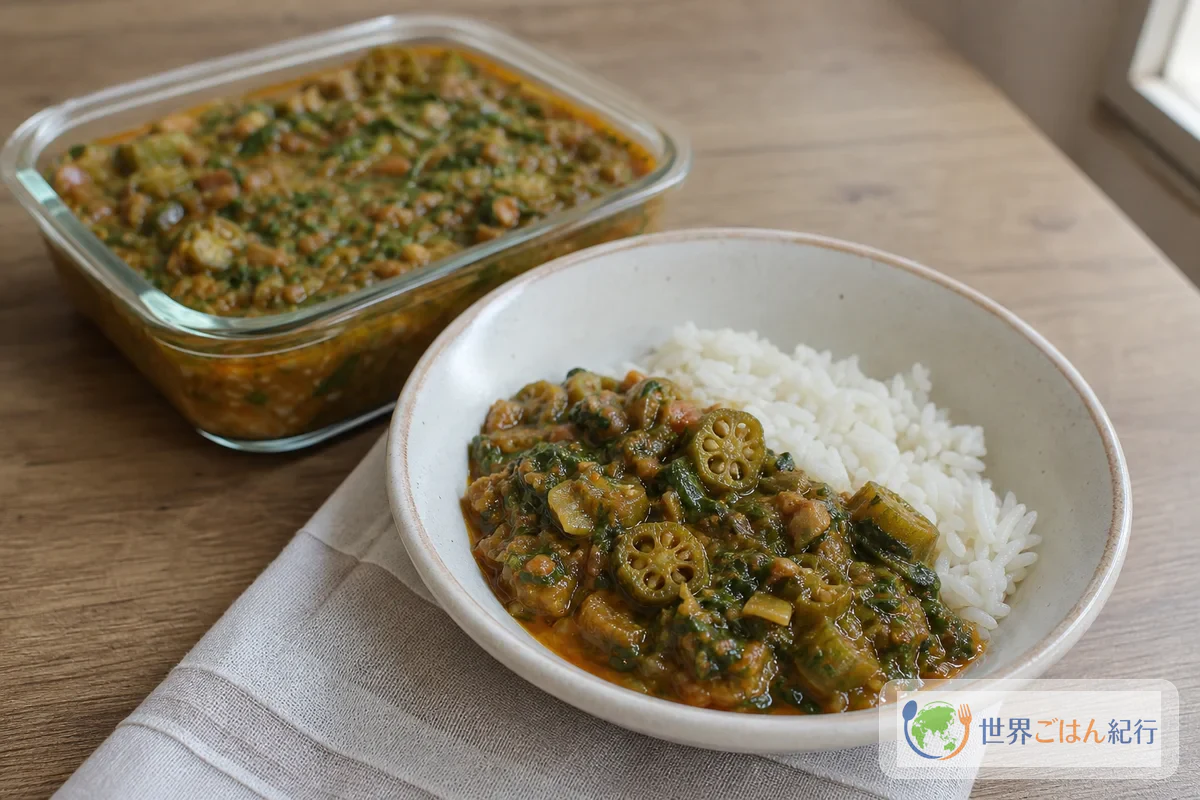
After cooking, don't leave it long at room temperature. Portion it into shallow clean containers so it cools quickly, then refrigerate it and plan to finish it within 3 days from the next day. Take out only what you will eat into another dish and reheat it through to the center, to 167°F (75°C) or more. Check the ministry's "Preventing food poisoning at home" (in Japanese) too. The dish contains shellfish and nuts, so wash any storage containers and serving utensils that are shared.
What goes with it for a first try?
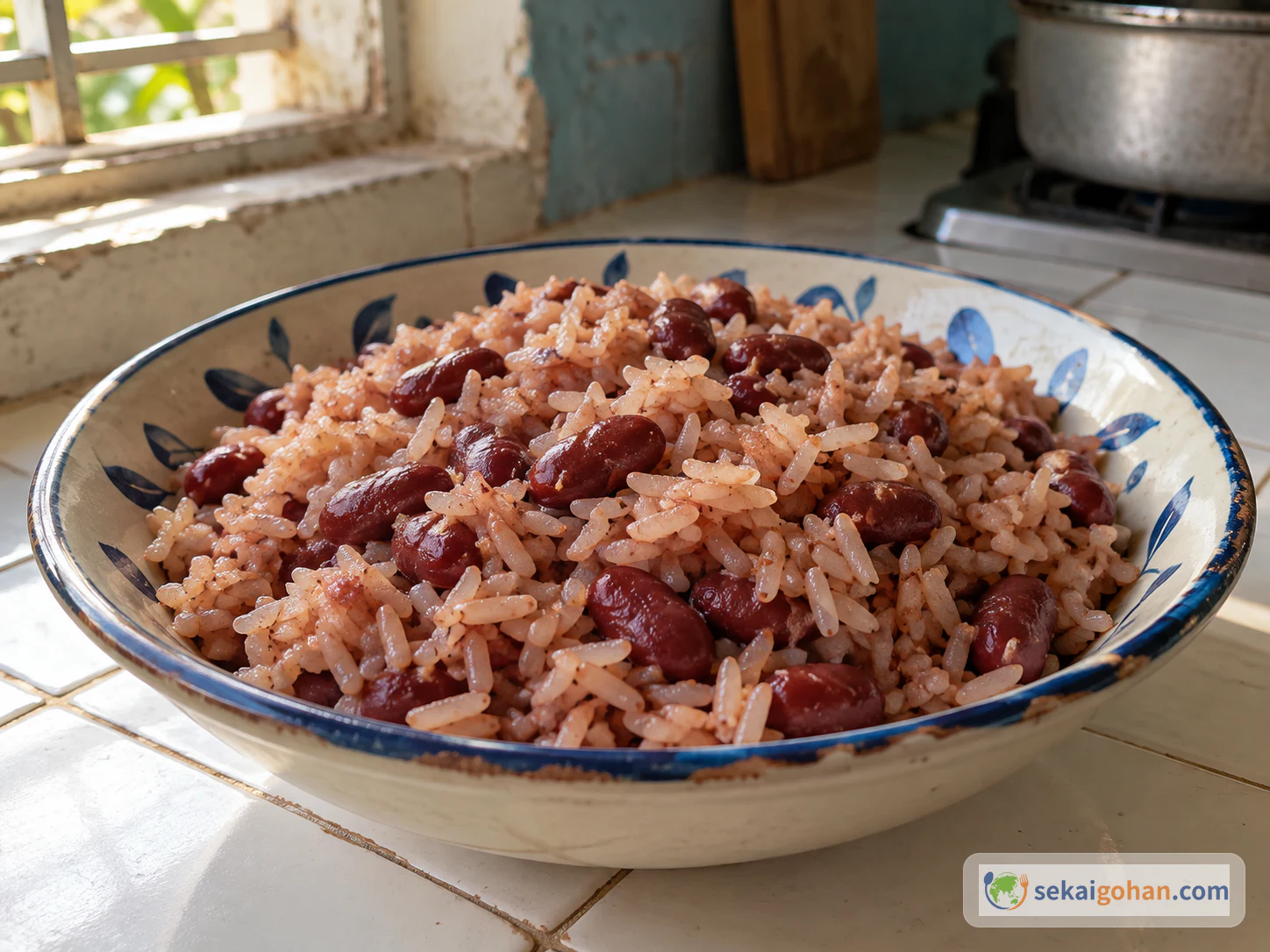
Start with freshly cooked white rice. Add about 2 tsp of caruru at a time and let the rice soak up the dendê oil and dried shrimp. On a day you want some acidity, put lime on the side. For a Bahian spread, make moqueca baiana the main and add a little farofa, so the soft stew and the dry texture play off each other.
Sources
These sources were consulted to check the basis of the text and cooking decisions.
- Caruru de São Cosme e São Damião completa um ano de reconhecimento como patrimônio imaterial da Bahia, SECOM Bahia (Portuguese, accessed and checked: 31 July 2026)
- Patrimônio imaterial da Bahia, IPHAN (Portuguese, accessed and checked: 31 July 2026)
- Caruru Recipe, Food Network (English, accessed and checked: 31 July 2026)
- A Bahian, Pará-style okra and shrimp curry, Foodism (English, accessed and checked: 31 July 2026)
- The Brazilian Table, chapter on Cosme and Damião Caruru (English PDF, accessed and checked: 31 July 2026)
- Paper in Scripta Instituti Donneriani Aboensis, record of religious ritual and food culture in Bahia (English PDF, accessed and checked: 31 July 2026)
- Brazilian Caruru Recipe, Brazilian Kitchen Abroad (English, accessed and checked: 31 July 2026)
- Preventing food poisoning at home, Ministry of Health, Labour and Welfare (Japan) (Japanese, accessed and checked: 31 July 2026)
- Food Safety and Eating Out, FoodSafety.gov (English, accessed and checked: 31 July 2026)