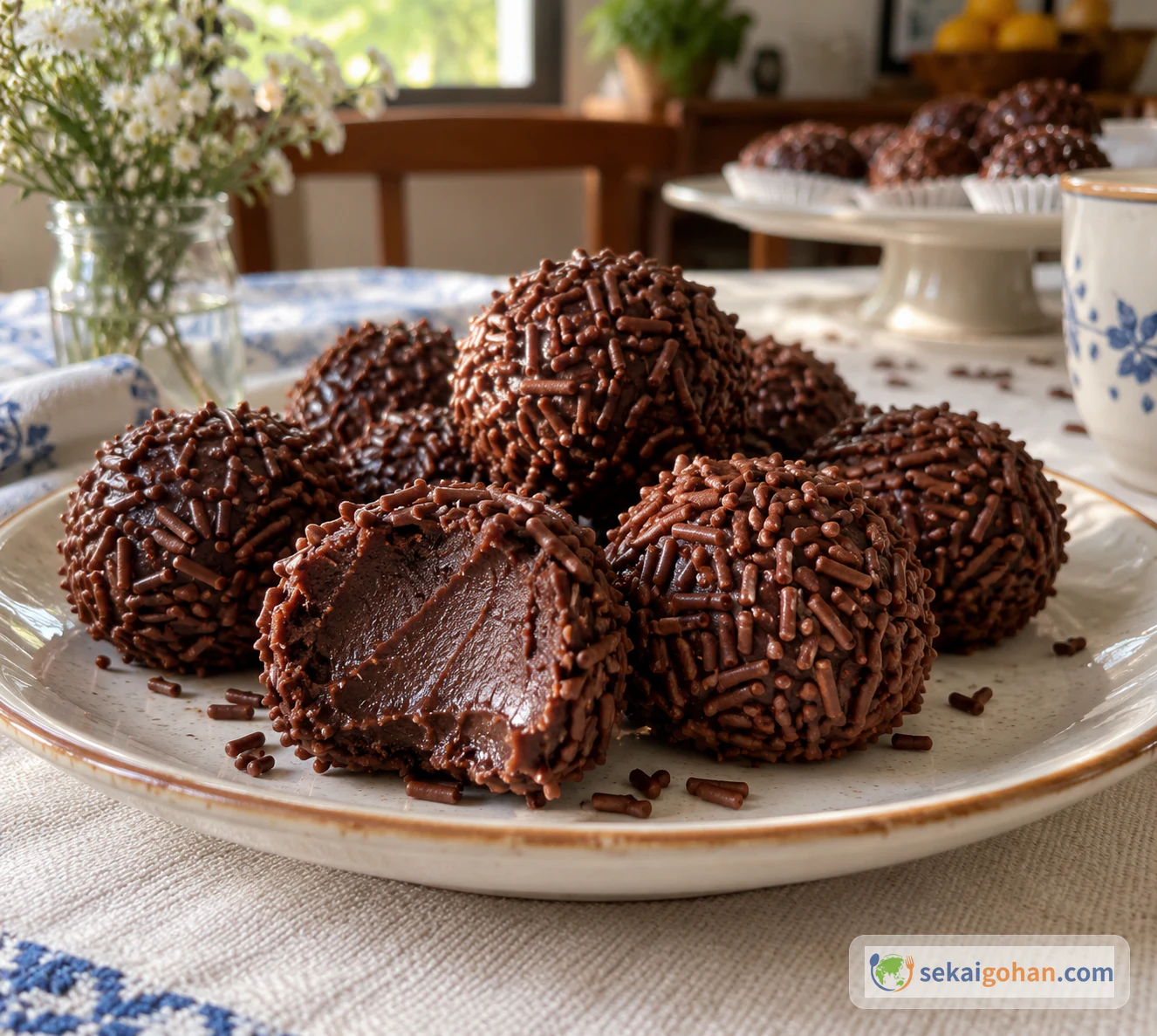
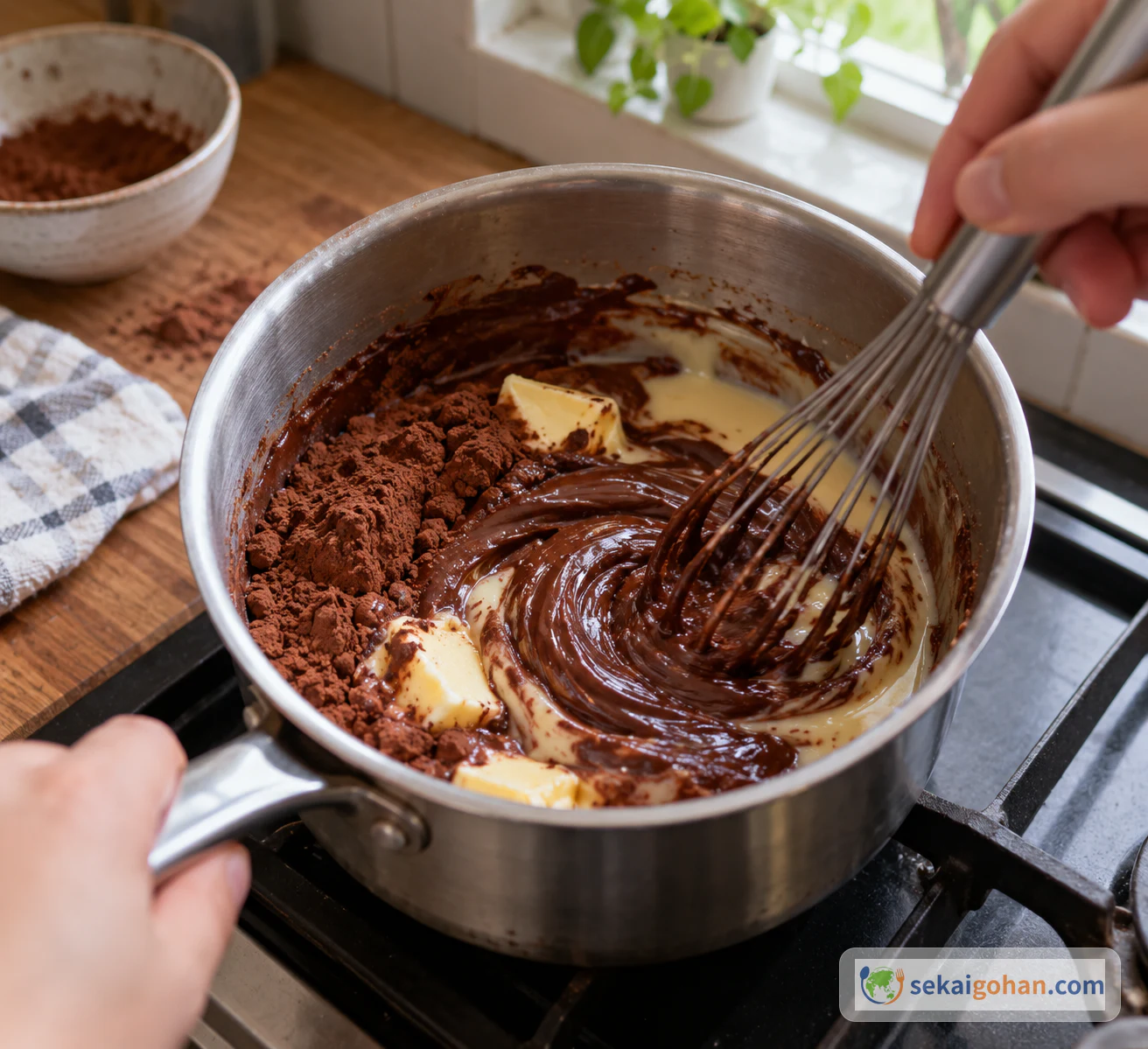
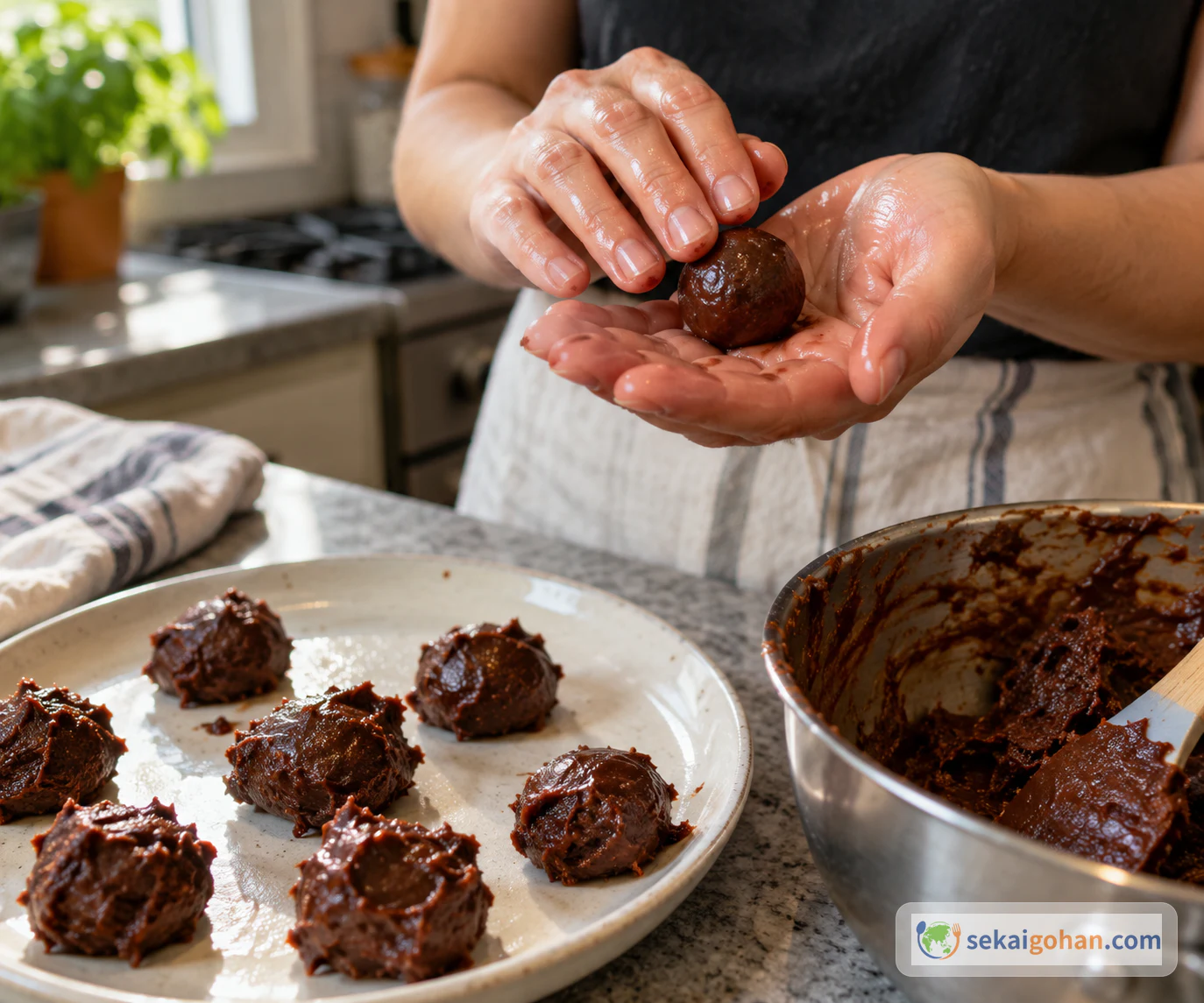
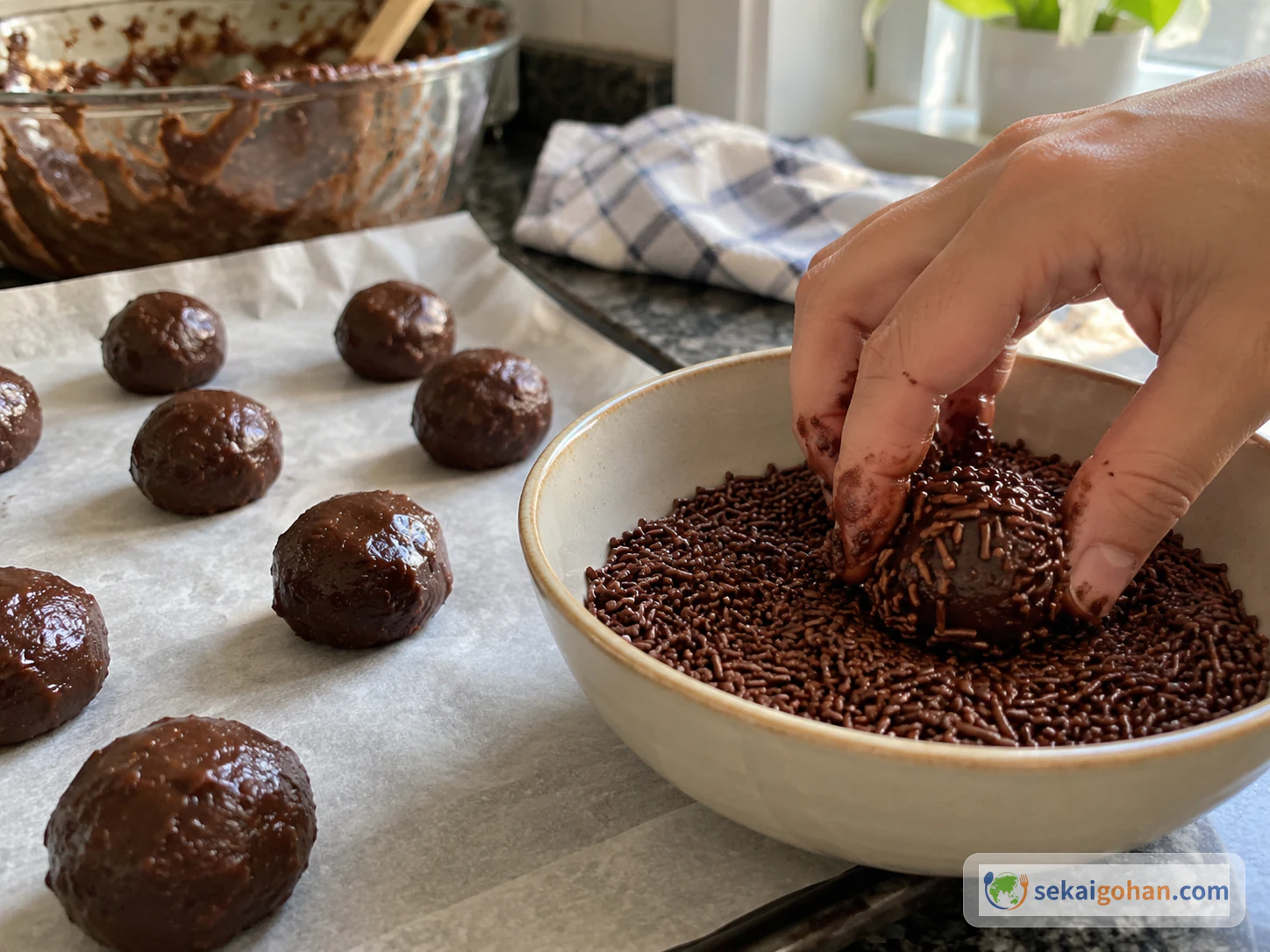
Picture small paper cups lined up on a celebration table, each holding a round, dark sweet covered in chocolate sprinkles. Bite in and the sprinkles crunch a little before you reach the soft, fudgy center. Brigadeiro is Brazil's bite-size party sweet, and it takes only a few ingredients: sweetened condensed milk cooked with cocoa and butter until it thickens into a dense mass. Once it cools, you roll it by hand into small balls and coat them in sprinkles. You get the deep sweetness of cooked-down condensed milk with a gentle bitterness from the cocoa.
Brigadeiro's Name and History
You'll find brigadeiros at children's birthdays and at celebrations such as weddings. In English they're sometimes called "chocolate truffles." That's a handy shortcut, but a French truffle is made from chocolate and cream, while a brigadeiro is built on condensed milk and has its own place on the Brazilian party table.
The name brigadeiro means "brigadier." The most widely told story links it to Brigadier Eduardo Gomes and his presidential campaign in the 1940s: the sweet supposedly took its name from being sold during the 1945 campaign. The story explains the name, but it doesn't prove who invented the sweet or when.
The written record tells a different story. A recipe printed in 1949 gives a formula of condensed milk, chocolate and sprinkles. Even so, it's hard to say who first made the sweet, and the printed recipe doesn't confirm an inventor or a year of invention.
The name also changes within Brazil. In the state of Rio Grande do Sul, the sweet is called negrinho, and nobody is sure why.
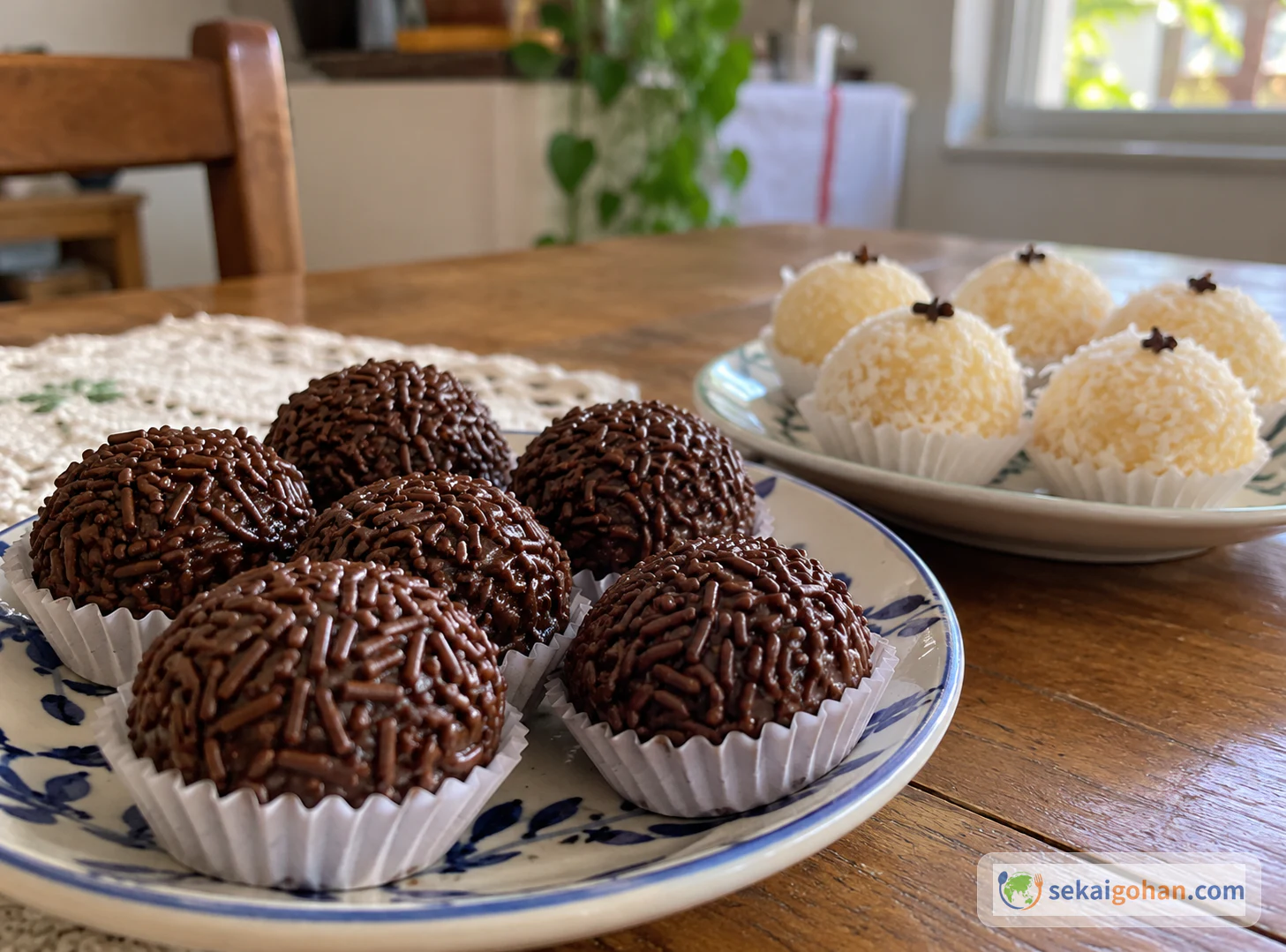
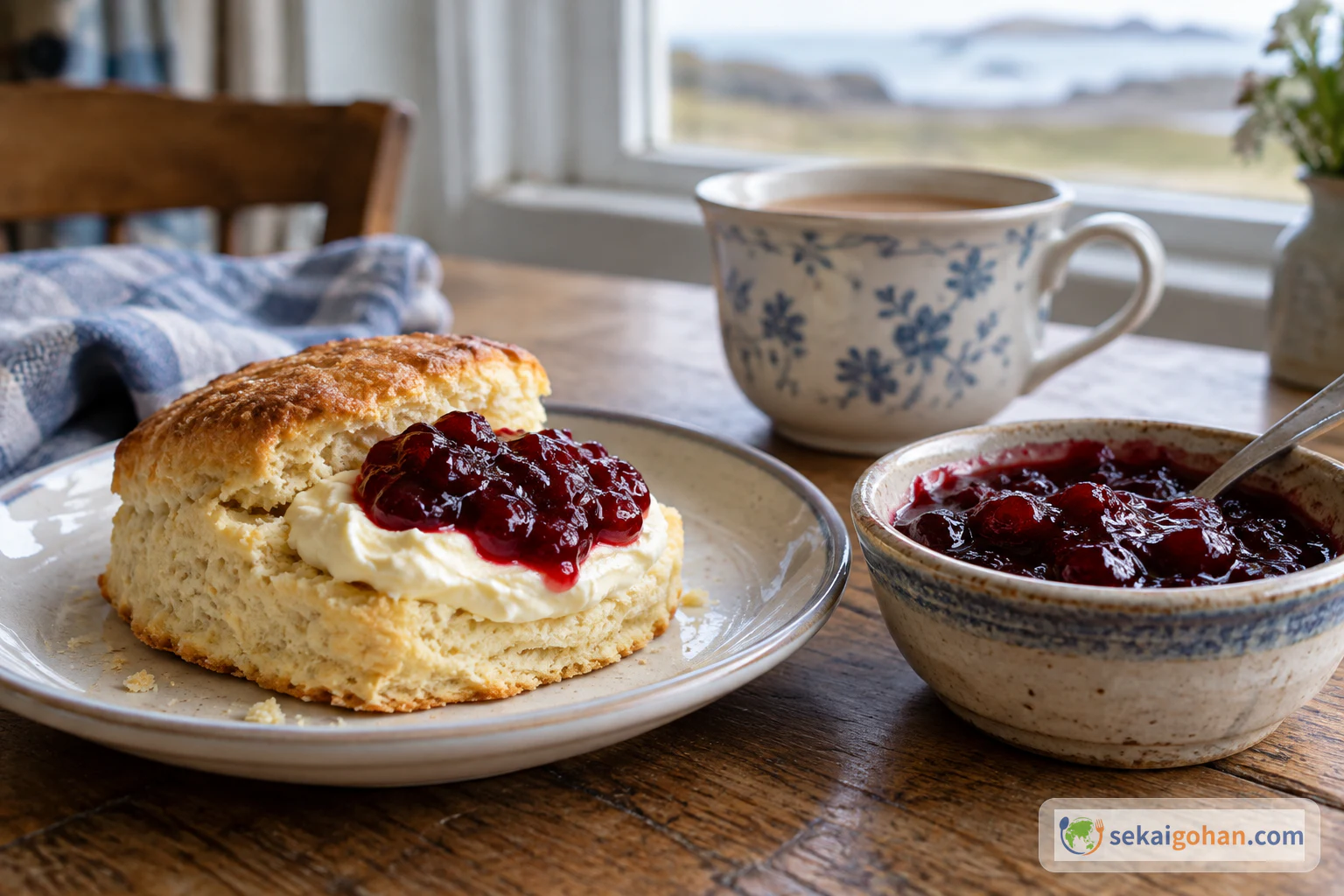
Brigadeiro often shares the table with other small party sweets, like the pale beijinho shown above. Beijinho is a different sweet in its own right, not a variation of brigadeiro.
Ingredients: Four Things, Measured in Cups, Spoons and Cans
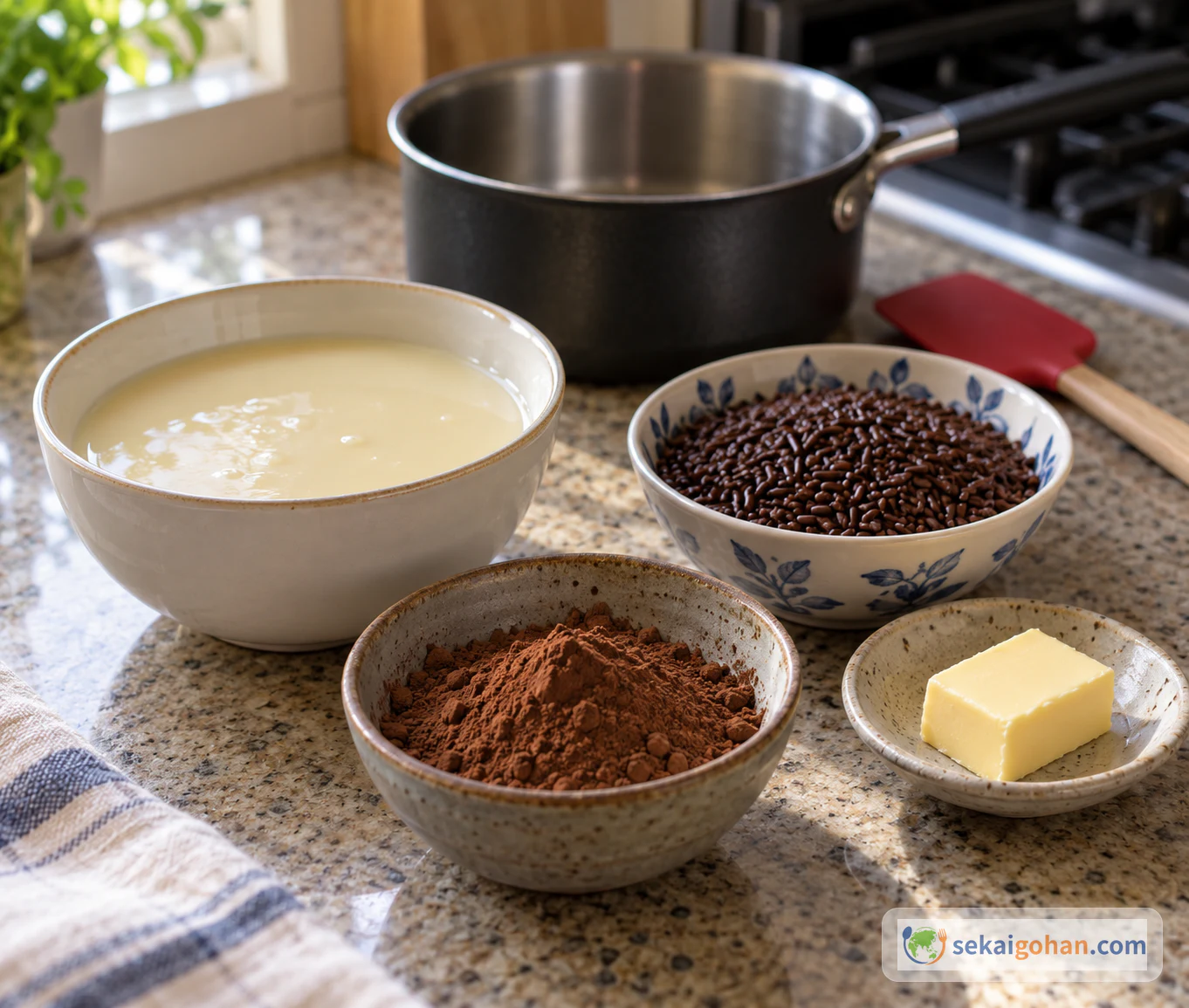
One 14-ounce can makes about 12 pieces. Your count will depend on your condensed milk, your pan, how far you cook the mixture and how large you roll the balls.
Condensed milk comes in different can sizes in different countries. A can of another weight won't match the 14-ounce can in this recipe. If you use one, adjust the cocoa, butter, timing and yield yourself, and judge doneness by the trail in the pan.
Brigadeiro contains milk from both the condensed milk and the butter. Chocolate sprinkles differ by brand, so check each label for milk, soy and other allergens, including any shared-facility statement. If you are cooking for someone with a milk allergy, also watch for cross-contact through utensils and work surfaces.
Choosing Cocoa for Brigadeiro
Use unsweetened cocoa as the base. Sweetened cocoa and drinking-chocolate powders contain added sugar, so swapping them in spoon for spoon changes the sweetness and gives you a different sweet. The chocolate em pó (chocolate powder) used in some Brazilian versions doesn't behave the same as unsweetened cocoa either.
Method: Cook by the Pan Base, Not Just the Clock
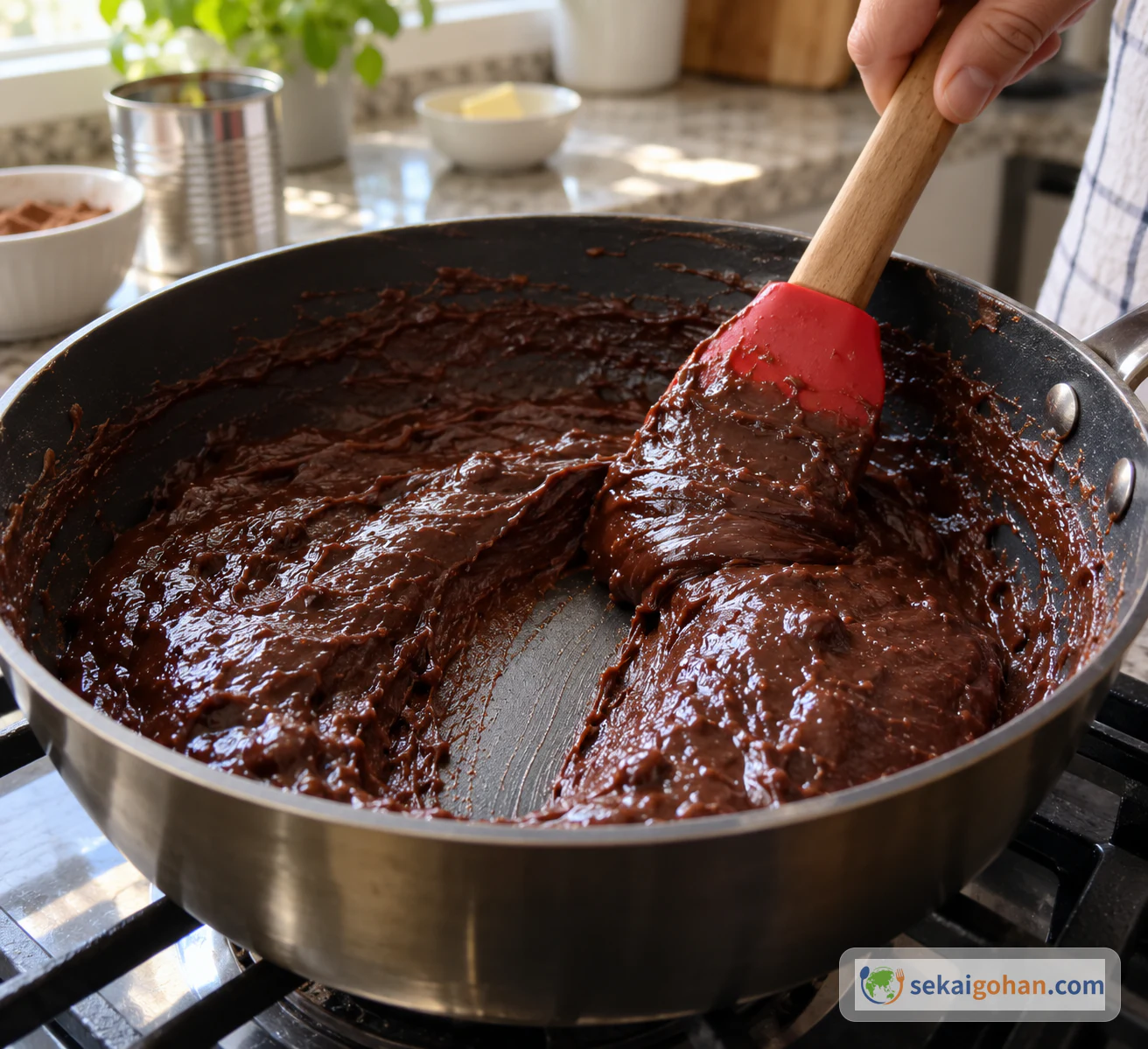
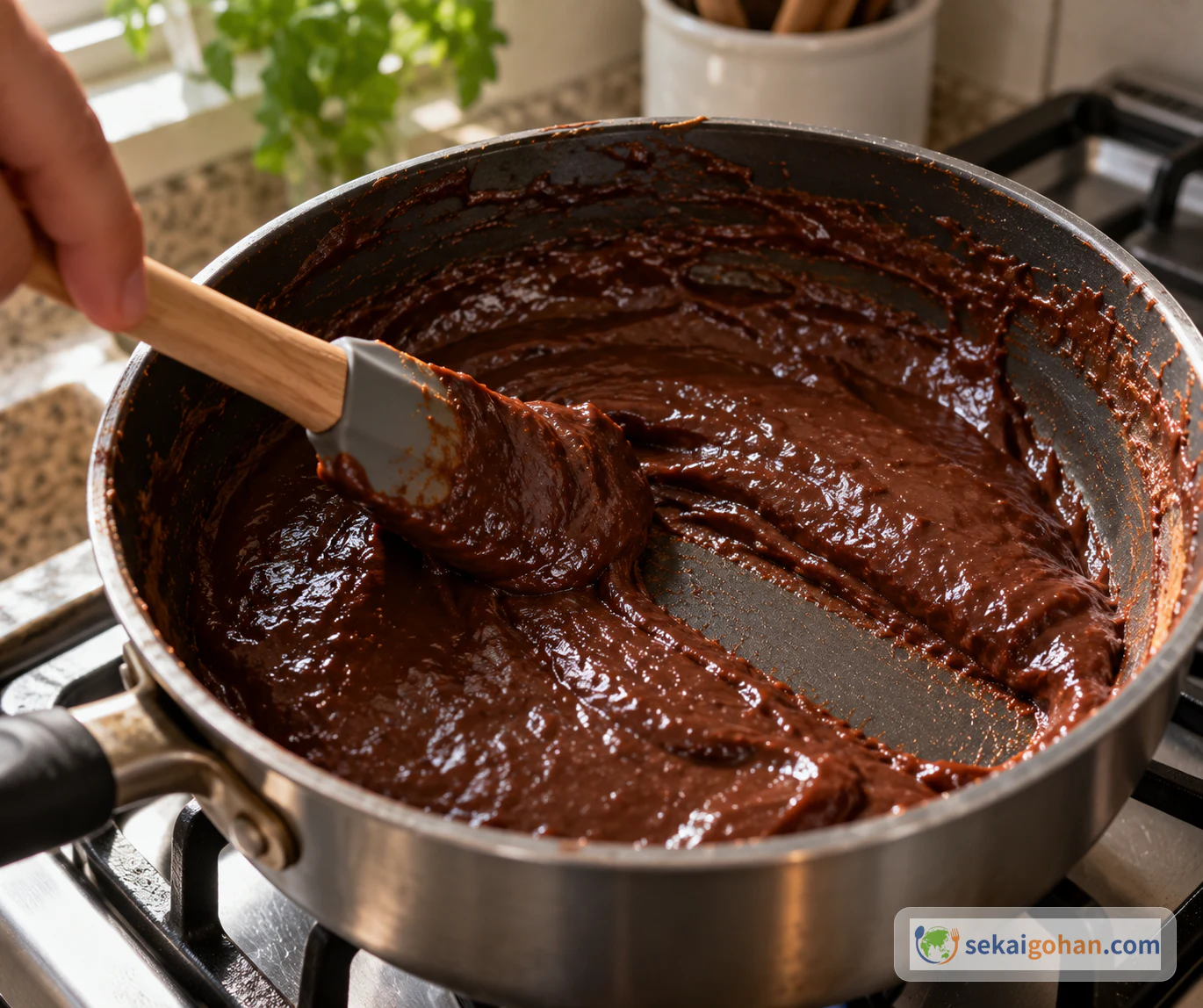
Cook the mixture over medium-low heat, stirring constantly, for 10–15 minutes. Watch the mixture, not the clock. Stop when it is very thick, starts to pull away from the base of the pan, and leaves a trail on the bottom when you drag your spatula across.
Fixing Common Brigadeiro Mistakes
Most problems come down to heat and timing. Your best guide is the trail the spoon leaves on the pan base, not the clock.
| Problem | Likely cause | What to do |
|---|---|---|
| Lumps of cocoa | Cocoa added to hot or thick mixture, or added all at once | Next time, stir the cocoa into the cold condensed milk a little at a time before heating |
| Scorched base | Heat too high, or the base and corners weren't scraped | Keep the heat at medium-low and scrape the whole base constantly. Don't scrape scorched bits into the mixture |
| The trail on the pan base closes immediately | Not cooked enough yet | Keep stirring over medium-low heat until the trail stays for a moment |
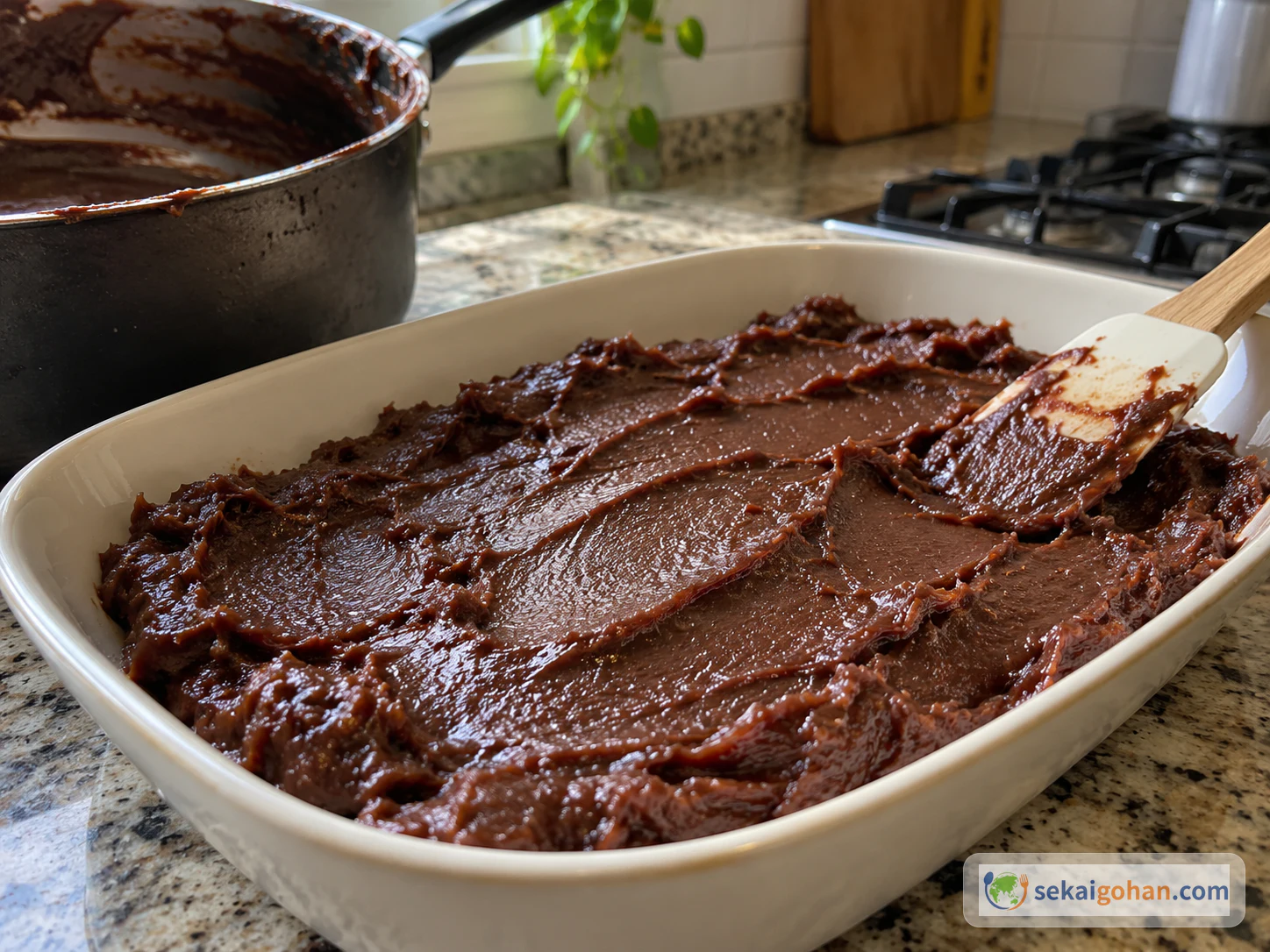
| Too soft to roll | Not cooled enough, or slightly undercooked | First, cool it longer. If it still flows, return it to the pan, cook briefly while stirring, then cool again. Watch carefully so you don't overcook it |
| Hard once cooled | Cooked too far | Next time, turn off the heat earlier. Adding water or milk afterward changes the texture, so don't use it as a fix |
| Sprinkles won't stick, or go on patchy | Too much butter on hands, or the surface has dried out | Use only a trace of butter and coat each ball soon after rolling |
Serving, Storing and Variations
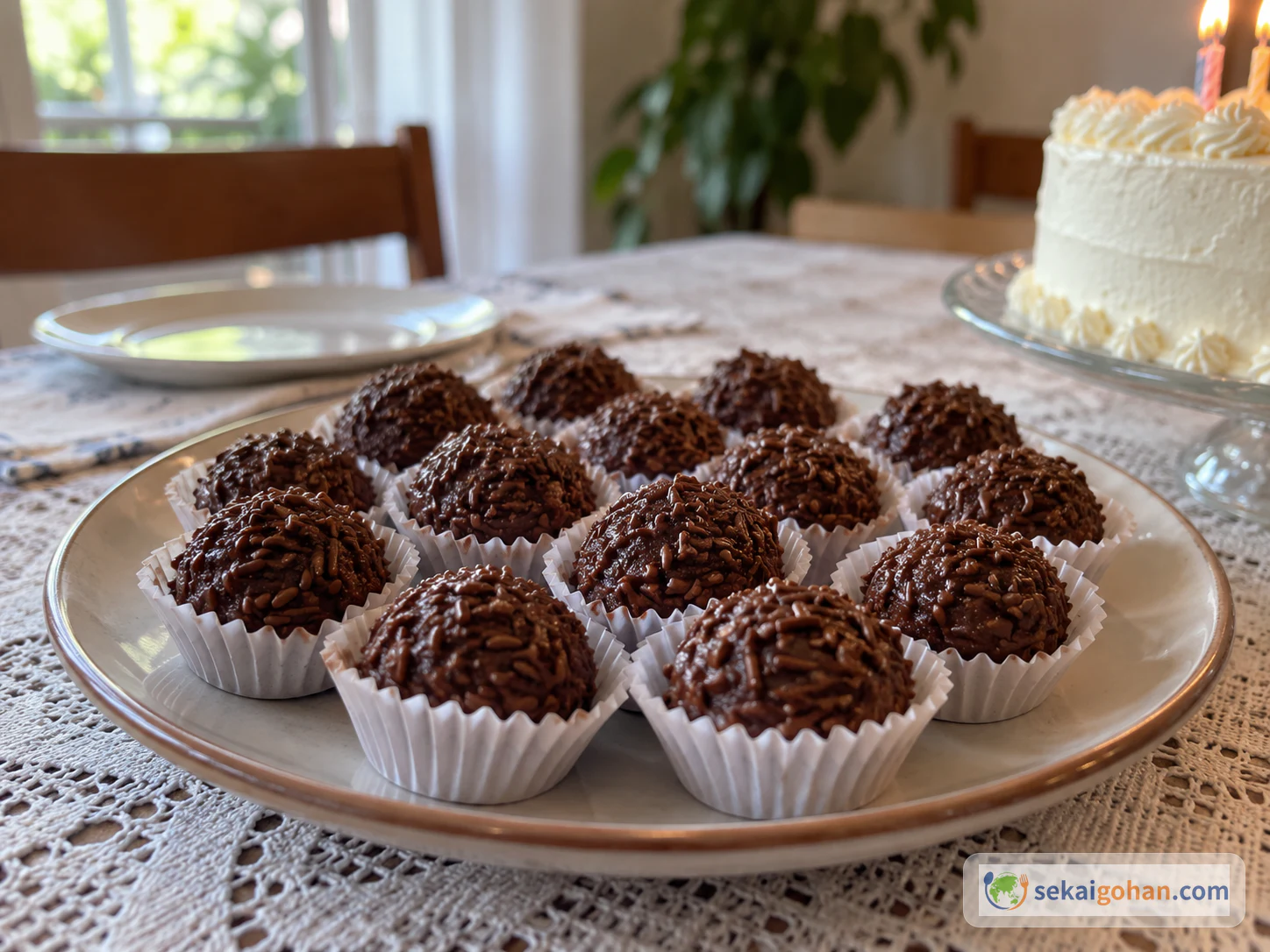
Brigadeiros are served as small bites, each in its own paper cup, arranged together on a shared plate. Each piece is small and rich, so a plate goes a long way next to a birthday cake or other party food.
If you aren't serving them right away, cover them and keep them in a clean, airtight container in the refrigerator, and eat them soon. Don't leave them out at room temperature or keep them for a long time.
Brigadeiro recipes vary in cocoa and firmness. The brigadeiro tradicional adds milk and uses chocolate em pó. That's a separate formula, so don't add milk to this one. Beyond chocolate sprinkles, the standard coating, you can top brigadeiros with cacao nibs or shaved chocolate. Just expect a different look and texture.
Frequently Asked Questions
When can I start rolling?
Don't roll the mixture while it's hot. Wait until it's cool enough to handle and firm enough to hold a ball shape. If it's still sticky, give it more time to cool.
Can I make this with a can that isn't 14 oz?
You can adjust for another size yourself, but it won't match this recipe exactly. The amounts, cooking time and yield here are for one 14-ounce can. Judge doneness by the trail on the pan base, not by the time.
For more dishes from the same country, see recipes from Brazil.