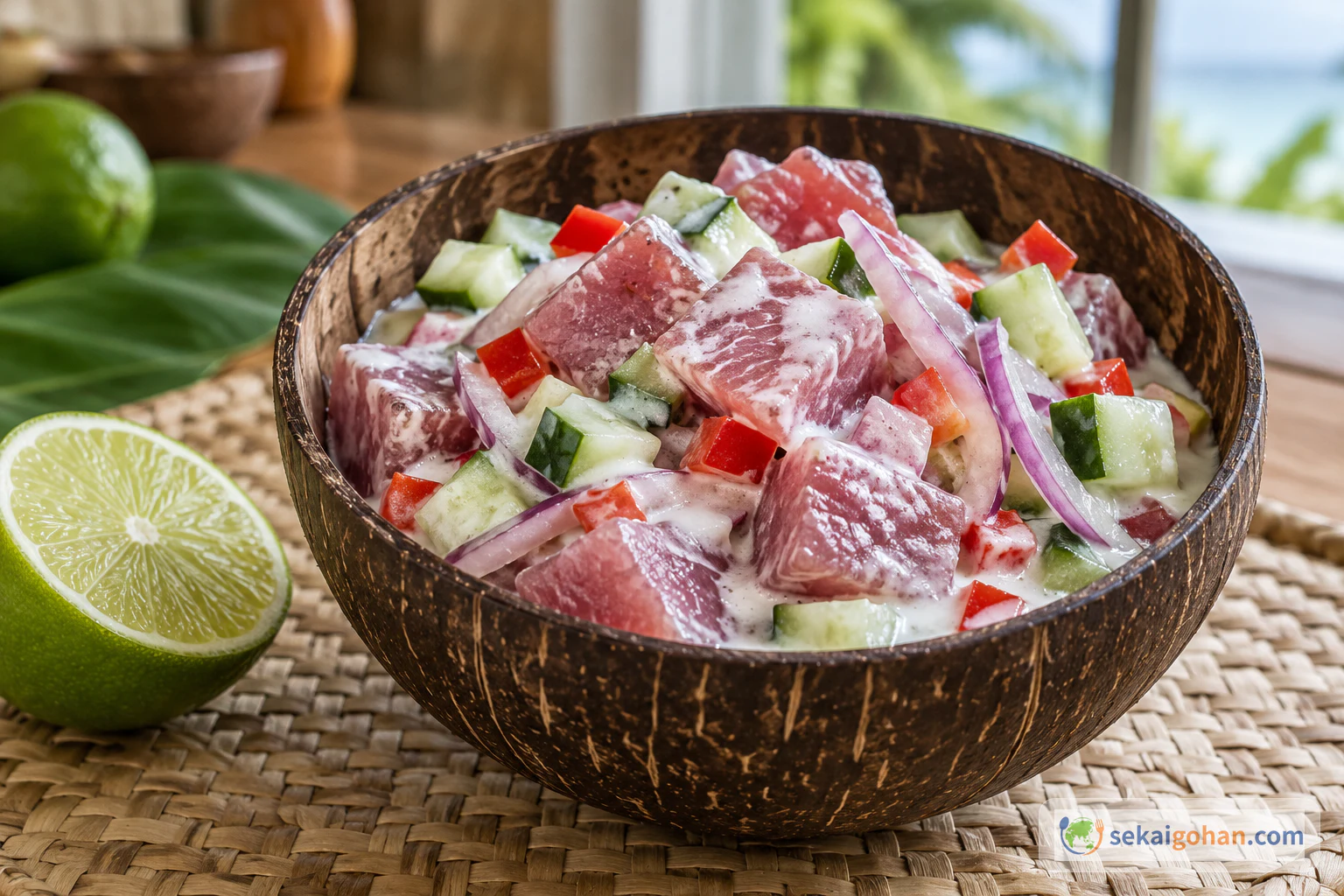
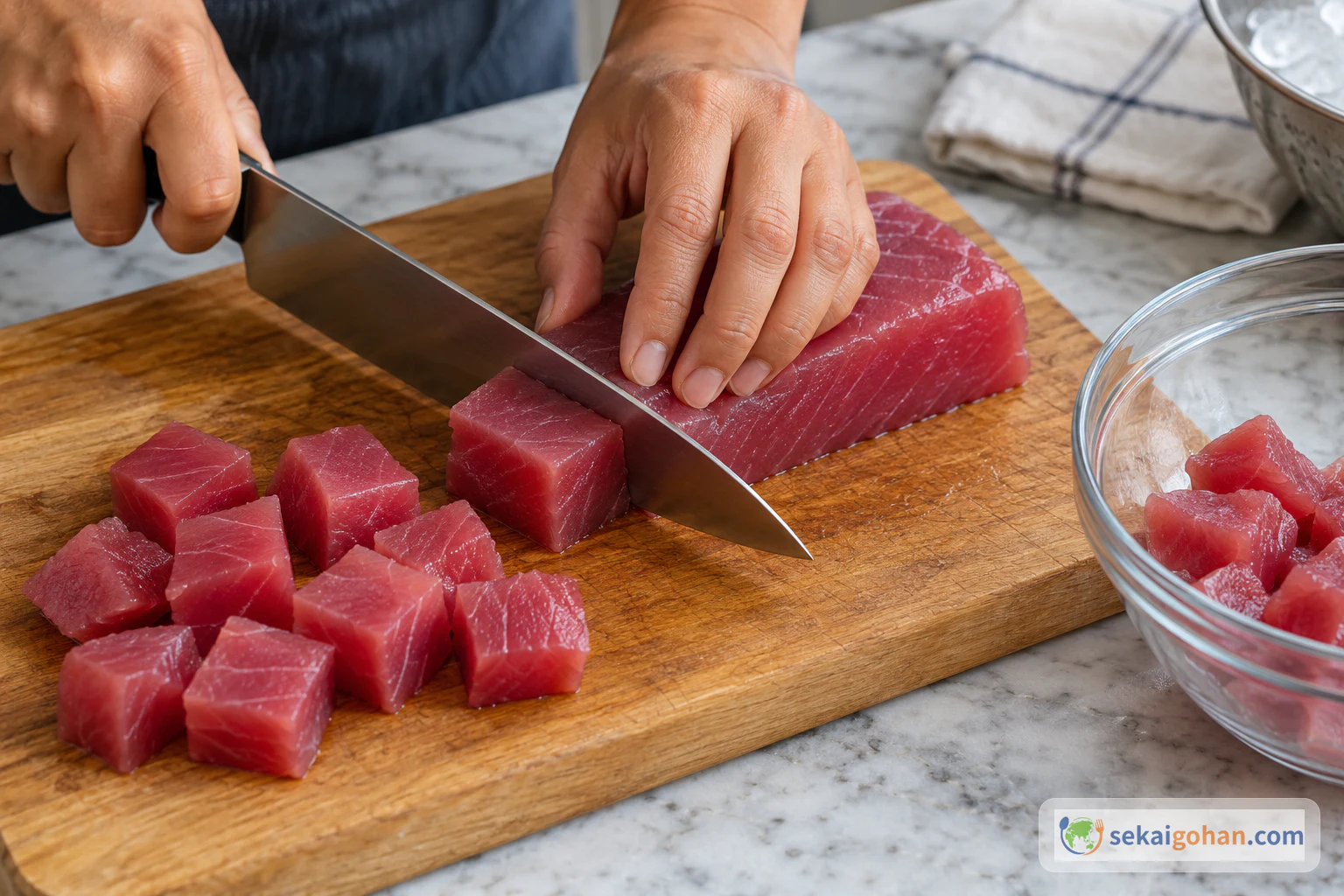
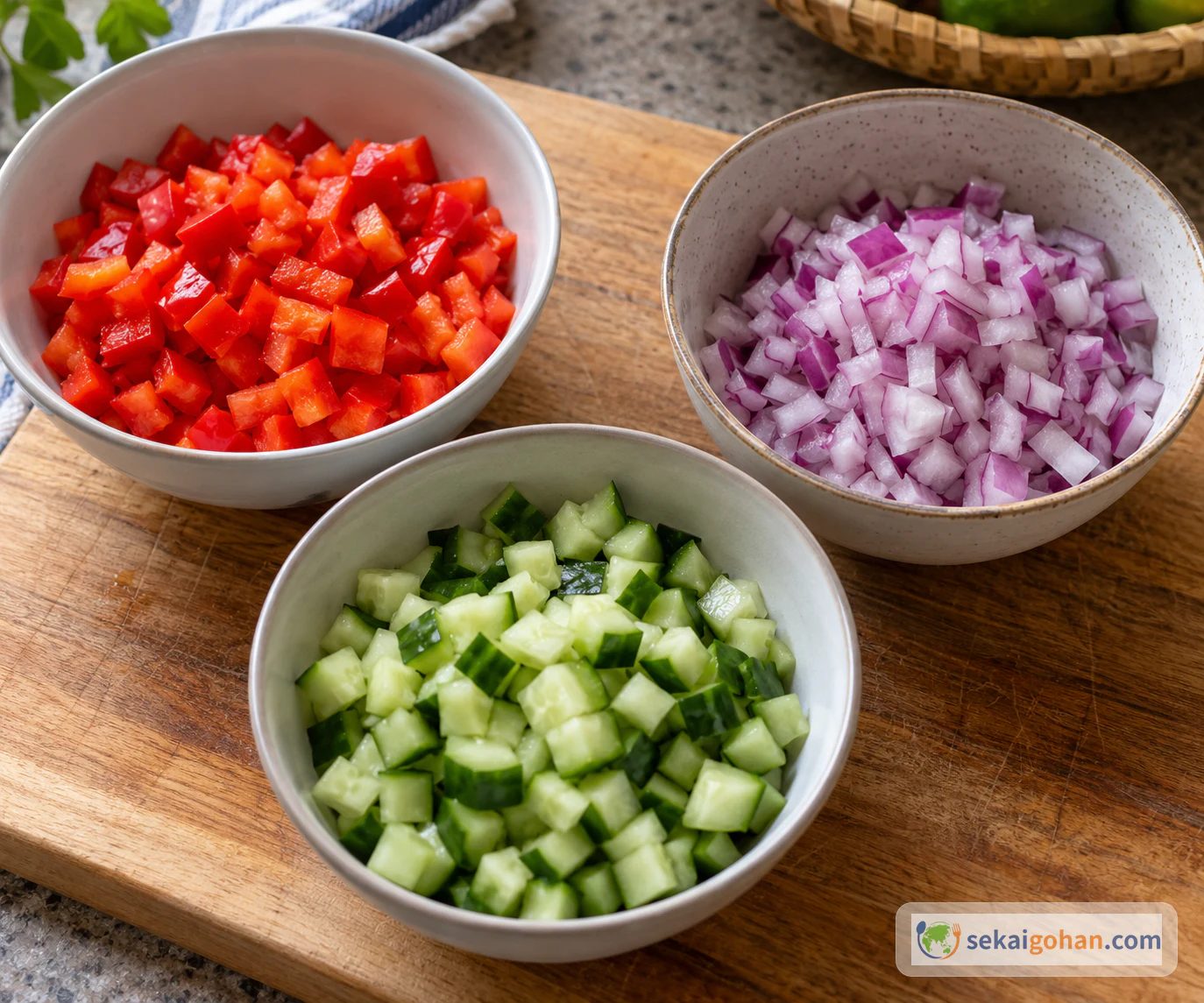
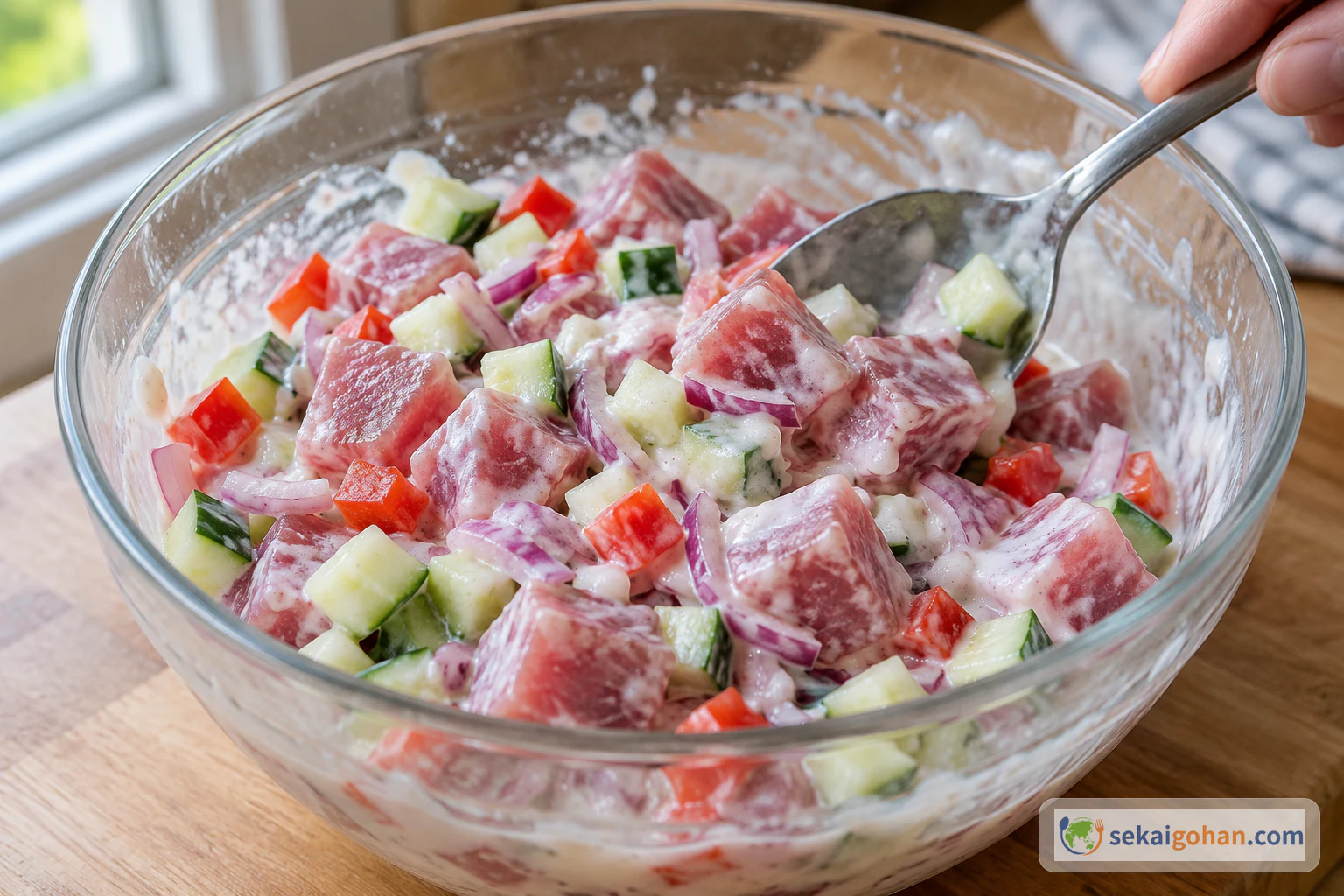
Cubes of chilled fish sit in freshly squeezed citrus. Then comes thick white coconut cream, with small pieces of red capsicum, cucumber and red onion. Everything is folded together gently and served cold. Ika Mata comes from the Cook Islands, and the pleasure of the bowl is in its contrasts: cold, firm fish, bright citrus, rich coconut cream, and cucumber and onion that stay crisp. This version serves four and uses tuna and lemon. Because the fish is eaten raw, it all starts with how you choose it.
Ika Mata in the Cook Islands
The name says exactly what the dish is. Ika Mata means "raw fish" in Rarotongan Māori, and in the Cook Islands it is eaten at celebrations. Many Pacific islands have their own raw fish dishes, each with a local character. Fiji's kokoda is one, and Peru's ceviche also uses citrus to change the look of fish. Ika Mata belongs to that wider family, but it has its own name and method.
The fish changes with place and season, following what the sea and the market offer. Maroro, or flying fish, is a traditional choice, caught at night with bright lights. White fish works too, yellowfin tuna is common, and some recipes use kahawai.
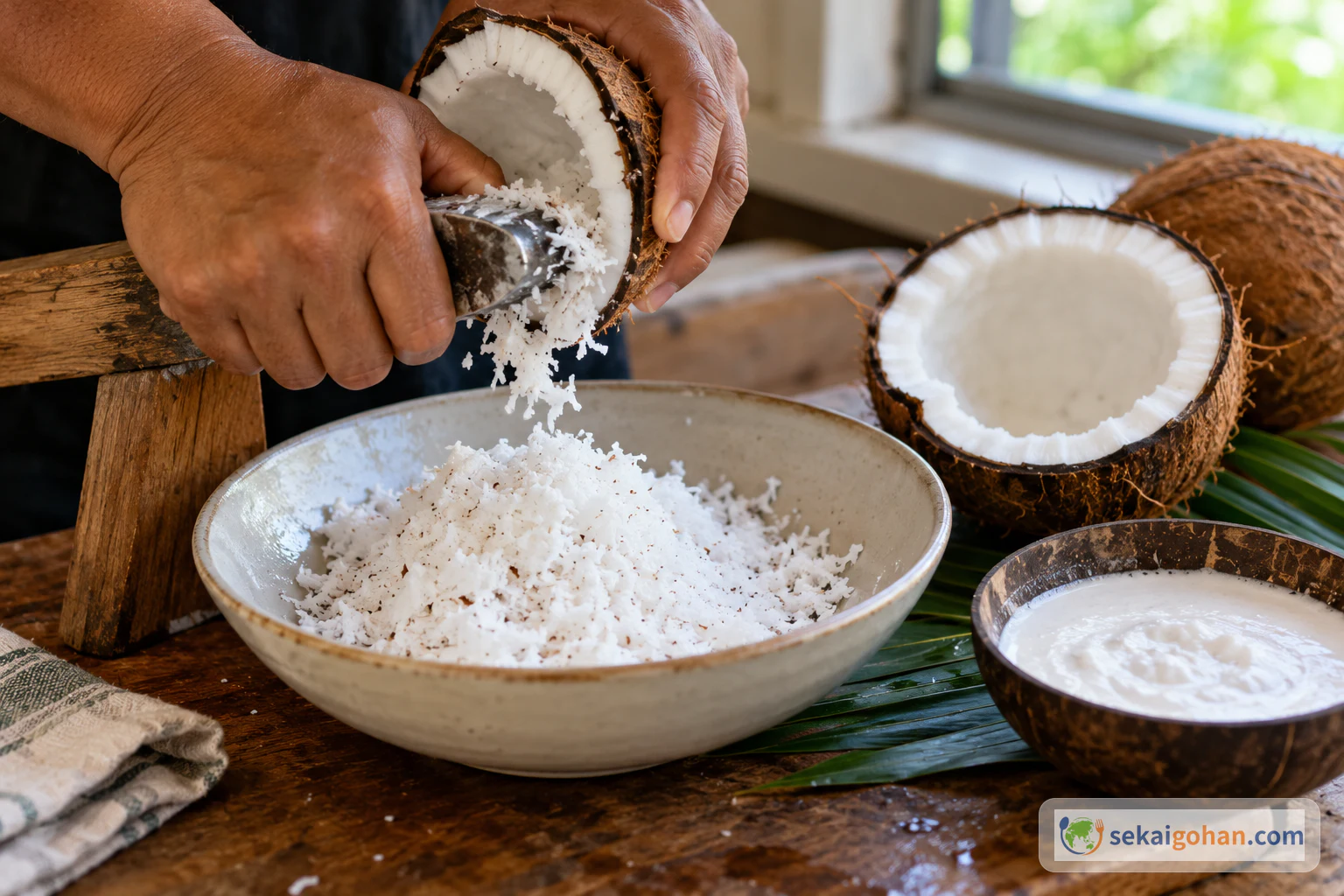
The coconut cream can start with a whole coconut. At one demonstration in Avarua, the dish began with the coconut, not the fish. The cook husked a coconut, grated the white flesh and squeezed it to get fresh cream. The fish went through lime and salt, then joined tomato, red onion, capsicum, spring onion, ginger and coriander.
For more on the islands, see the country guide: Cook Islands.
Ingredients (Serves 4)
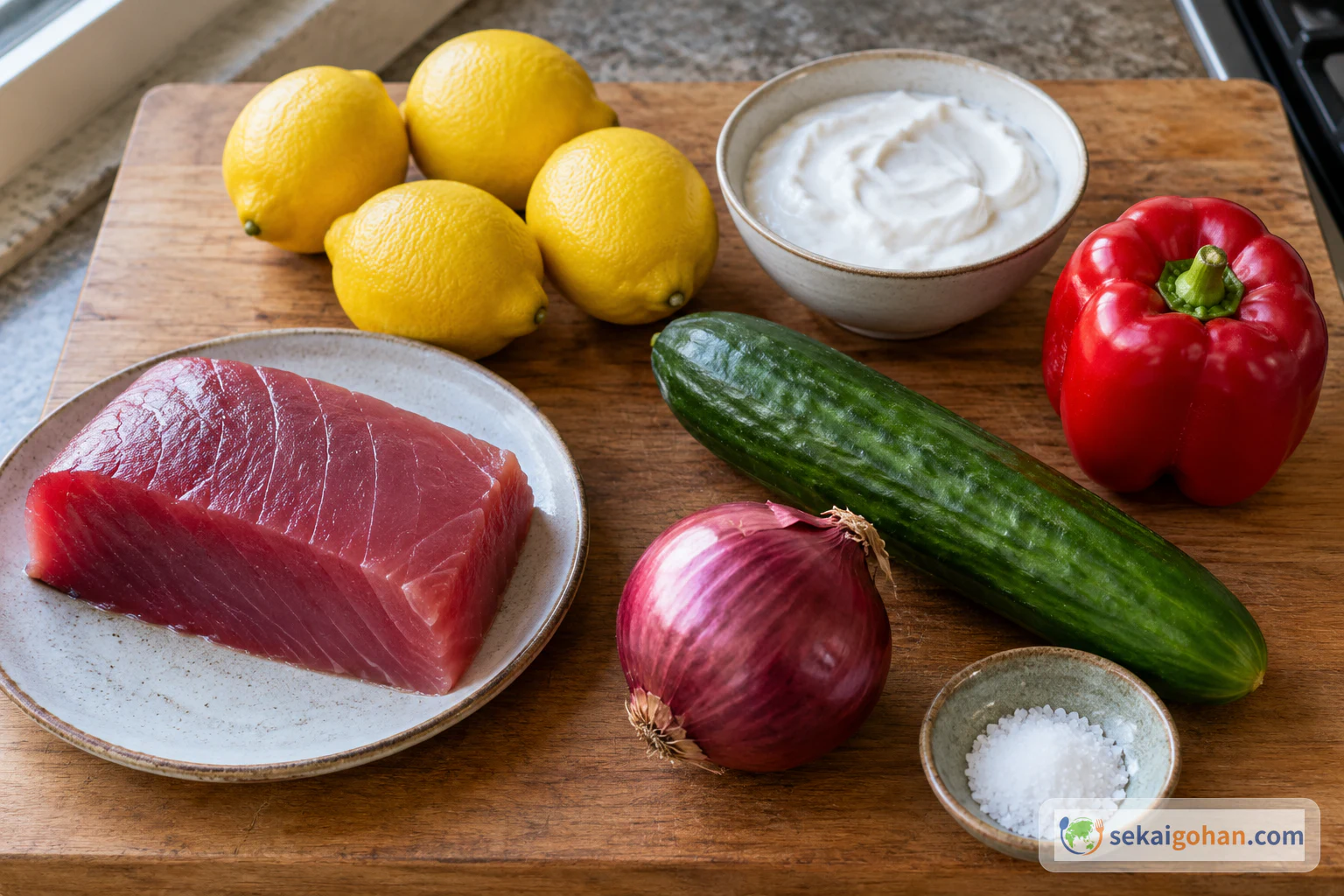
These amounts serve four. The lemons are counted, not measured as juice, because the amount of juice depends on the size of the fruit.
This dish contains fish and coconut. Do not serve it to anyone with a fish allergy. Anyone with health concerns about eating raw fish should choose the cooked variation described below.
Choosing Fish, Citrus and Coconut Cream for Ika Mata
Fish: Buy fish sold specifically for eating raw, and if the label isn't clear, ask the seller. If you can't confirm a fish is meant to be eaten raw, don't use it raw. That goes for ordinary fillets meant for cooking and for fish you caught yourself. Tuna and white fish sold for raw eating both work, but each fish brings its own fat, firmness and flavor.
Keep it cold: Tuna is one of the fish linked to histamine food poisoning, and once histamine has formed, cooking can't remove it. Buy the fish at the end of your shopping, refrigerate it right away, and keep it cold while you work and until you serve.
Citrus: Lemon gives a sharper, more direct sourness. Lime works too, with a brighter, greener aroma.
Coconut cream: Choose a thick, unsweetened cream. Thin coconut milk makes the dish lighter and more watery. Fresh cream squeezed from grated coconut has a more lifted aroma than canned, but it takes a grater and extra time. For everyday cooking, thick canned cream is the practical choice. Save fresh cream for when you have the coconut and the tools.
Vegetables: If your cucumber is very watery, scoop out the seeds before dicing so the dressing stays thick.
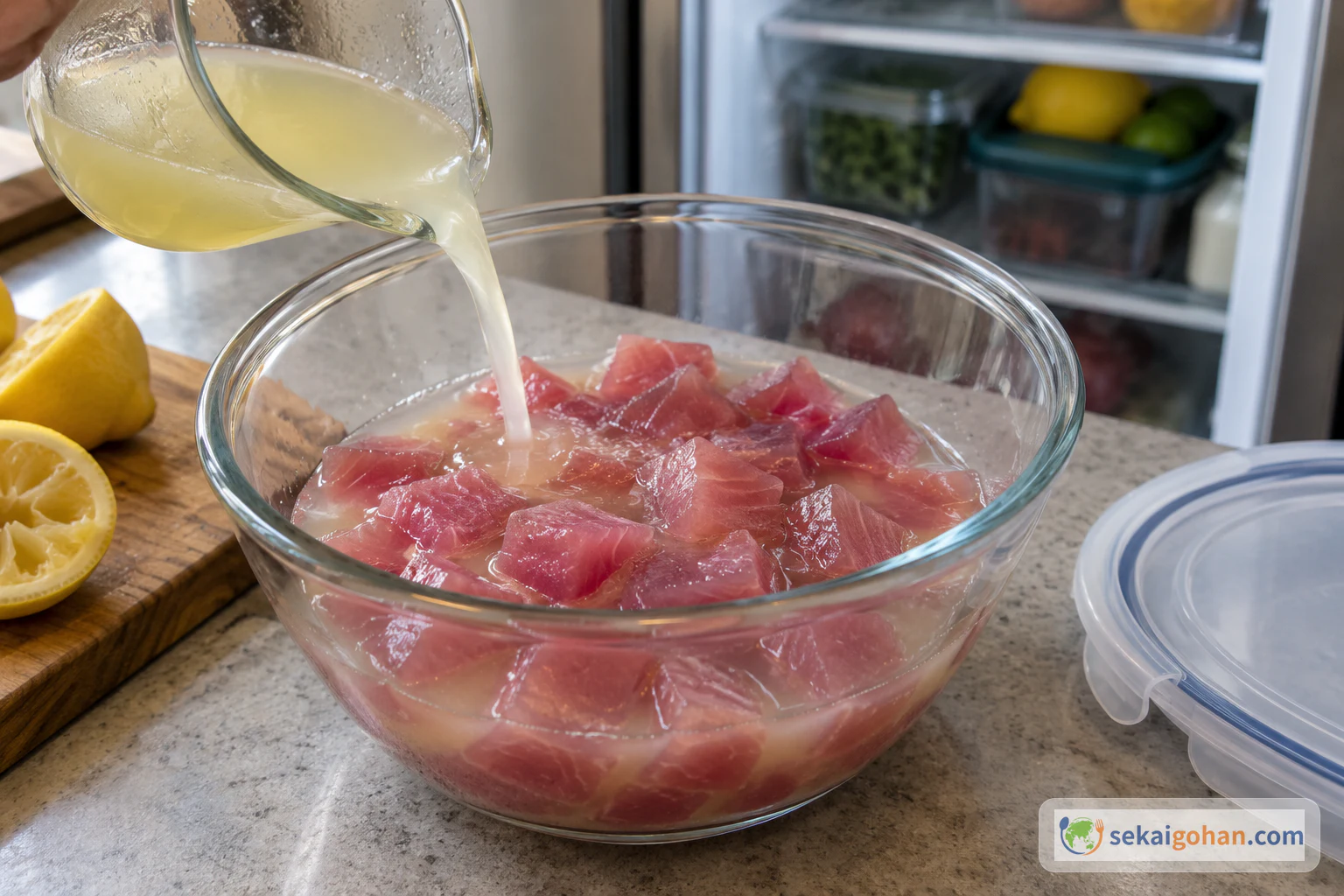
In citrus the fish turns from translucent to opaque and white. This is the acid changing the texture of the protein. It is not heating, it does not sterilize the fish, and it does not kill parasites. Vinegar, salt, soy sauce and wasabi do not kill anisakis larvae either. Do not use the color of the fish, or a longer marinating time, to decide whether it is safe to eat.
Equipment
- A sharp knife
- A clean cutting board for the fish (use a separate board for the vegetables, or wash the board and knife after cutting the fish)
- A glass or ceramic bowl
- A lid or cover for the bowl
- A refrigerator
- A coconut grater, only if you want to make fresh coconut cream
Method: Keep It Cold, Mind the Marinating Time
This recipe marinates the fish covered in the refrigerator for 30–45 minutes. Other Cook Islands recipes use anything from a few minutes to a couple of hours. A longer citrus marinade does not make raw fish safe. Keep it refrigerated throughout.
There are four steps. The vegetables are cut while the fish marinates, so the bowl comes together right before serving.
Fixing Common Ika Mata Problems
| What happens | Likely cause | What to do |
|---|---|---|
| The fish is too firm or tough | It sat in the citrus too long, or the cubes were cut very small | Keep it within 30–45 minutes, or marinate for less time if you prefer a softer texture |
| It tastes too sour | Large lemons gave a lot of juice, and all of the marinade went into the bowl | Next time, taste the fish after marinating and leave some juice behind, or drain it as some other recipes do |
| The dressing is watery | Cucumber seeds, extra tomato, or thin coconut milk | Seed the cucumber and use thick unsweetened cream. Tomato adds both water and acidity |
| It tastes different from versions made with maroro or kahawai | A different fish | This is expected. Treat it as your own version made with the fish you have |
| You're not sure the fish can be eaten raw | No raw-eating label, or unclear handling and temperature history | Don't eat it raw. Citrus turning it white confirms nothing. Use the cooked variation |
Serving, Variations and Storage
Serving Ika Mata
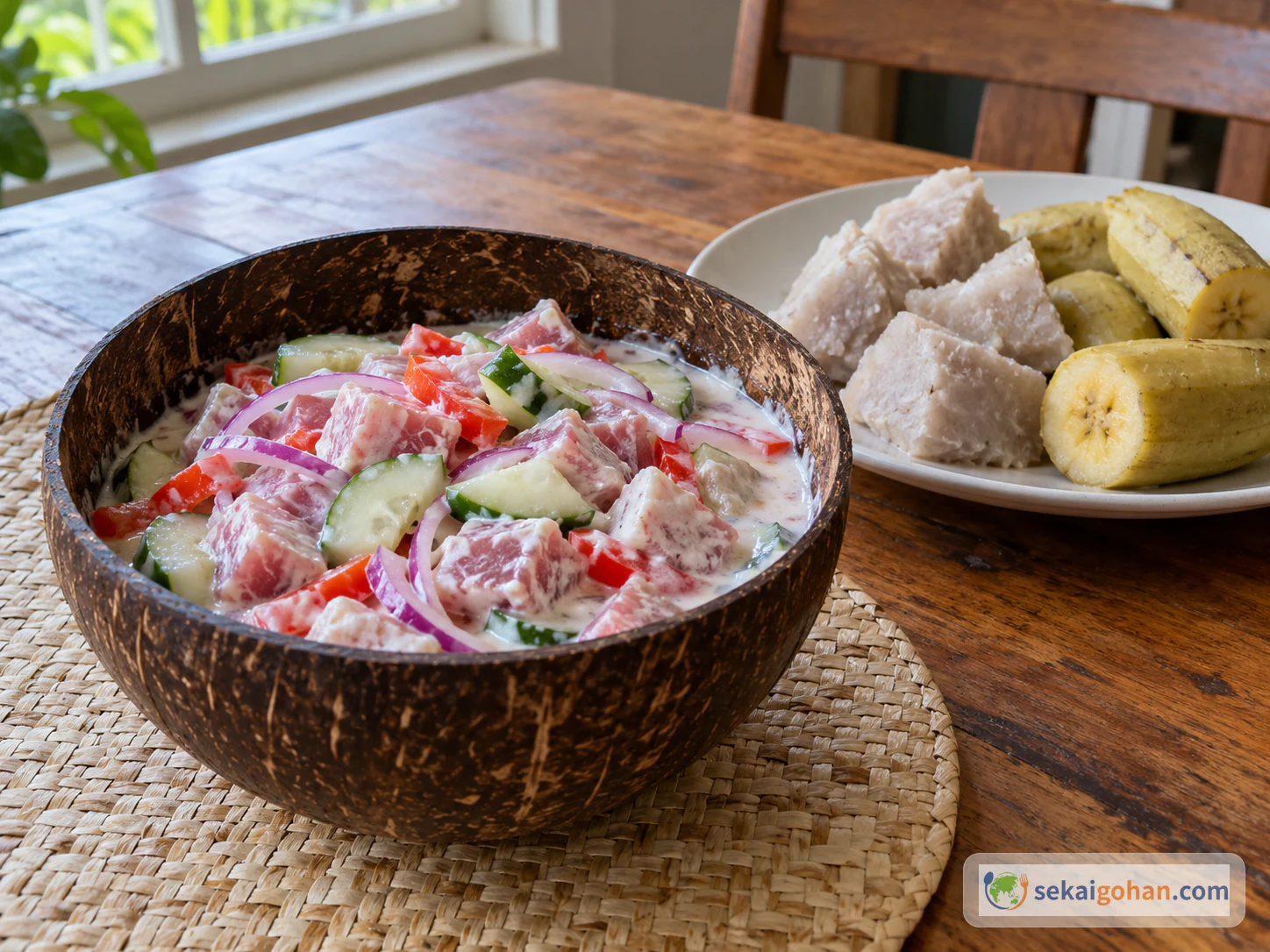
Serve taro, cassava, kumara, breadfruit or cooked green banana alongside Ika Mata, not mixed in, so the fish and coconut keep their own flavor. Outside the islands these exact roots can be hard to find. Other cooked starchy vegetables can share the plate, though they taste and feel different.
Variations from Cook Islands Kitchens
| Variation | What changes | Note |
|---|---|---|
| Lime instead of lemon | A brighter, greener aroma | Juice varies from fruit to fruit, so judge the marinating time by texture |
| White fish | Maroro, kahawai or other white fish | Often milder and softer than tuna. It must still be sold for raw eating |
| Add tomato | More juiciness and acidity | Seed the cucumber and add the cream gradually so it doesn't get watery |
| Ginger, coriander and spring onion | Herbs and ginger, as served in Avarua, push the aroma forward | The aftertaste differs from the plainer red-onion version |
| Carrot and chives | Adds carrot and chives and serves the dish in coconut-shell bowls with lime slices | First soak the fish in a cold salt-water bath: 1.5 tablespoons salt in 2½ cups (600 ml) water, for 30 minutes |
| Drain the citrus | Salt and chill the fish, add citrus for only a few minutes, then drain it before adding vegetables and cream | Less sourness and a softer texture. Marinate for 5–10 minutes, and don't over-marinate |
| Cooked "Ika Mata-style" fish | For anyone who prefers not to eat raw fish: cook the fish thoroughly, let it cool, then dress it the same way | This is a different dish from traditional raw Ika Mata. Label and serve it as an Ika Mata-style dish |
Safety and Leftovers
Parasites. Anisakis illness can come from eating infected seafood raw. Check the fish visually and remove the viscera quickly. To kill the larvae, freeze the fish at -20°C for at least 24 hours, or heat it to at least 158°F (70°C), or to 140°F (60°C) for one minute. A home freezer is no substitute for buying fish sold for raw eating and checking with the seller.
Freezing and cooking. Freezing can kill parasites, but it doesn't kill all harmful germs, so thorough cooking is the safest choice. If you're unsure, make the cooked variation.
Leftovers. Ika Mata is not a make-ahead dish. Make only as much as you will eat, serve it cold right away, and don't keep leftovers for another day.
Frequently Asked Questions
How long should I marinate the fish?
Marinate for 30–45 minutes, covered, in the refrigerator. Other recipes range from a few minutes, to 5–10 minutes, to a couple of hours. The longer it sits, the firmer the fish gets, and it can turn tough, so choose the time for the texture you want. A longer time does not make the fish any safer.
Does the citrus make raw fish safe?
No. The fish turns white because of the acid, not because it has been cooked or sterilized. Start with fish sold for raw eating and keep it cold. If you're unsure, cook the fish thoroughly and make the Ika Mata-style variation.