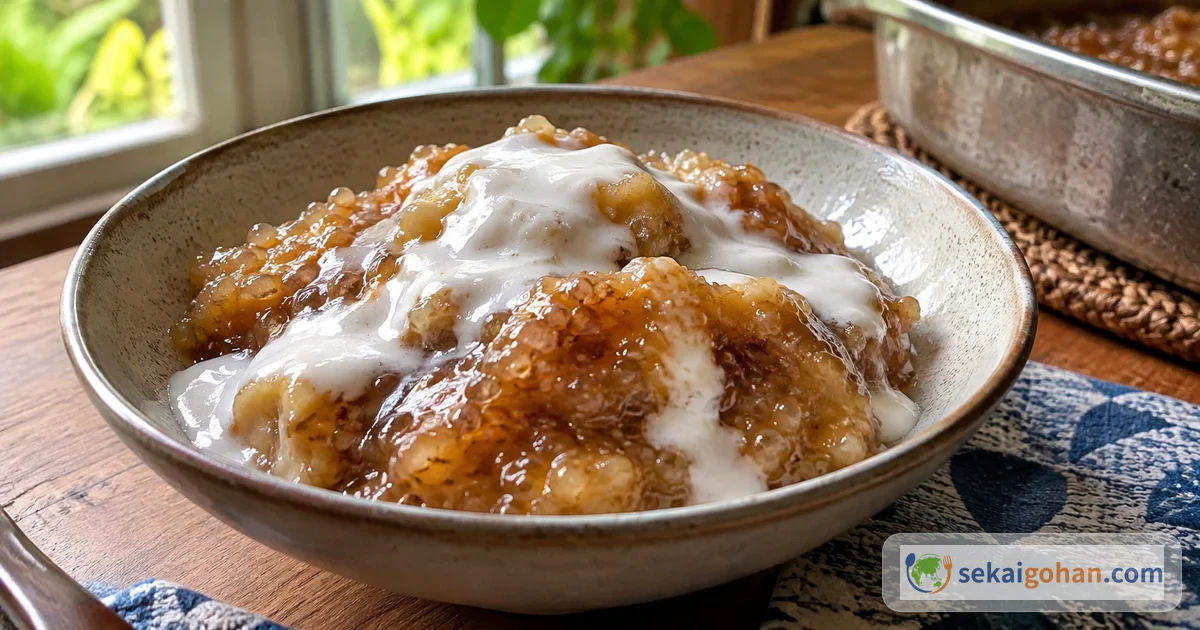
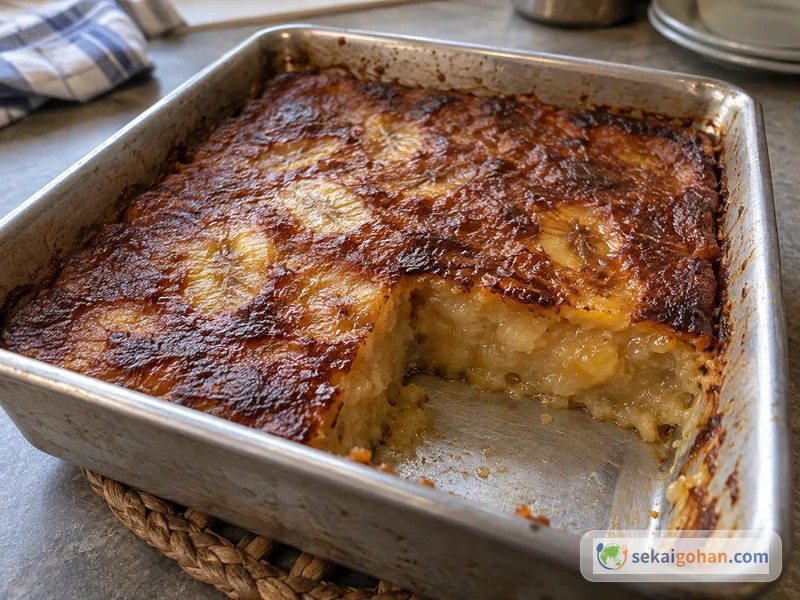
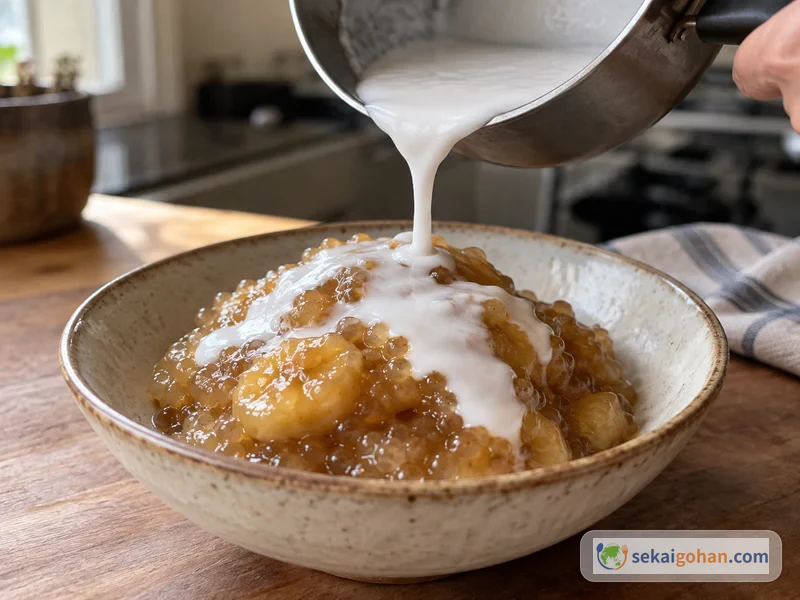
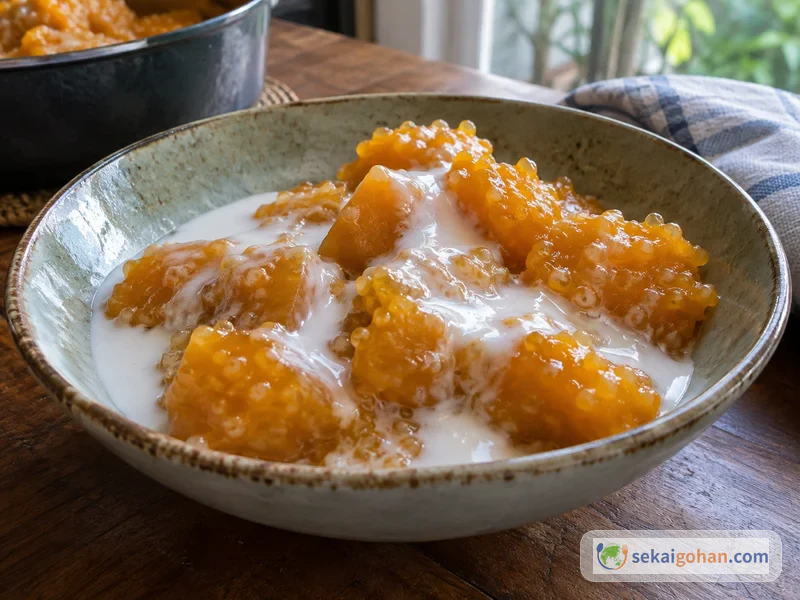
At Christmas lunch, with the relatives gathered, a big baking dish comes out of the oven. Inside is a banana pudding baked a deep amber, wobbly and glossy. An adult spoons it into bowls and pours plenty of warmed coconut cream over the top, and the children can't wait to reach in. This is poke, the dessert people in the Cook Islands make for celebration days. It is soft, chewy and a little sweet, just from the ripe bananas.
Poke on Cook Islands celebration days
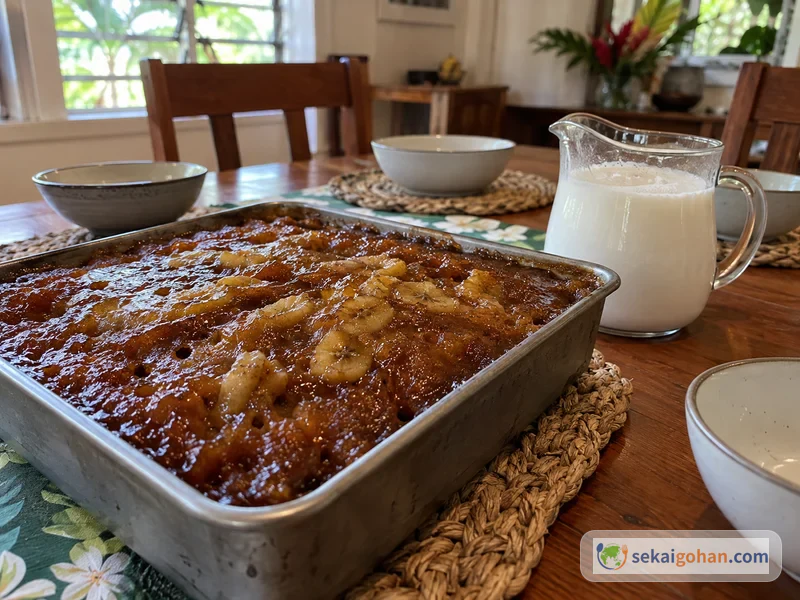
The Cook Islands is a country of 15 islands in the South Pacific, northeast of New Zealand. Poke is a dish made on special days like Christmas, Easter and birthdays, and people learn it from their aunties and grandmothers. About 20,000 people live in the Cook Islands, while more than 58,000 people of Cook Islands descent live in New Zealand and Australia. So poke gets handed down in kitchens far from the home islands too, Auckland among them.
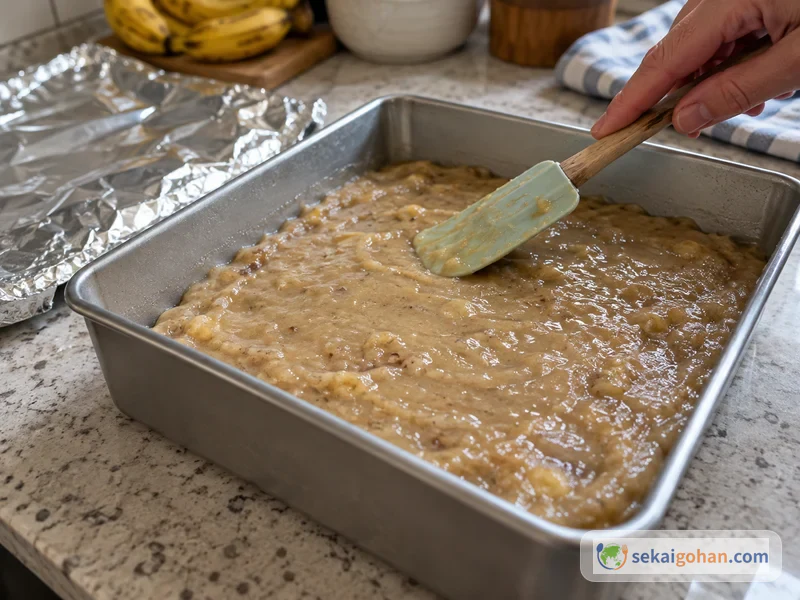
There are only three ingredients: very ripe bananas, starch and coconut cream. The bananas are cooked and mashed, worked together with a starch such as arrowroot, and baked slowly. What comes out is a translucent amber dough with a springy, mochi-like chew and a jelly-like gloss. The basic way adds no sugar at all; the bananas do the sweetening.
The name poke comes from an old Polynesian word meaning “to mix” or “to knead.” In Tahiti the “k” sound drops and it is called “po'e,” and it is eaten in the Cook Islands, French Polynesia including Tahiti, and Easter Island. Despite the same name, it is a different dish from Hawaii's fish salad “poke.”
In the past, the dough was wrapped in banana leaves and steam-roasted in an earth oven dug in the ground. Today it is usually baked in an oven.
Ingredients (serves 6, one 8 × 8 inches (20 × 20 cm) dish)
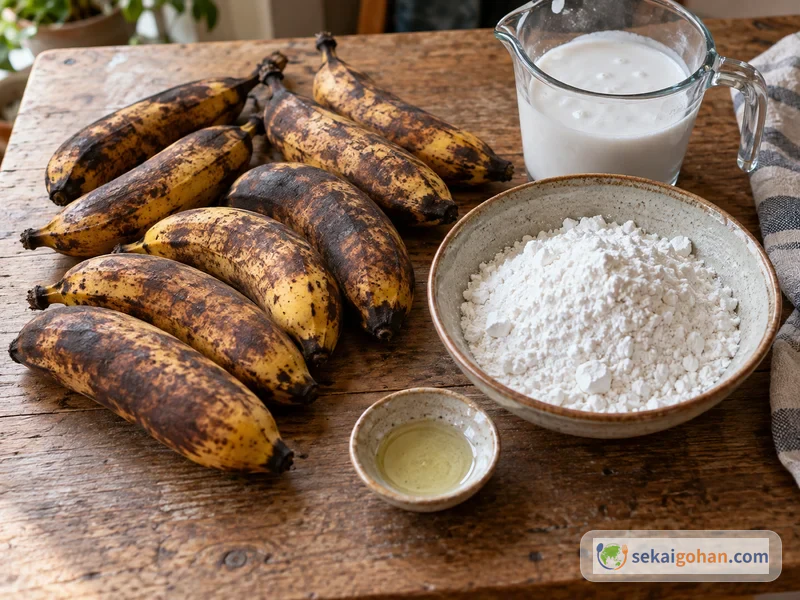
Bananas are among the fruits that easily cause a reaction in people with a latex (natural rubber) allergy. People with a banana or coconut allergy should not eat this.
Choosing bananas, starch and coconut cream for poke
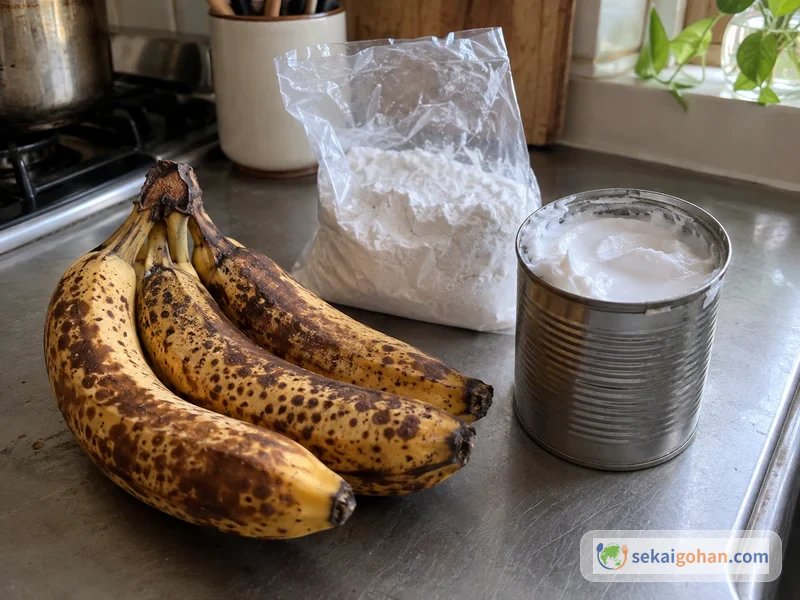
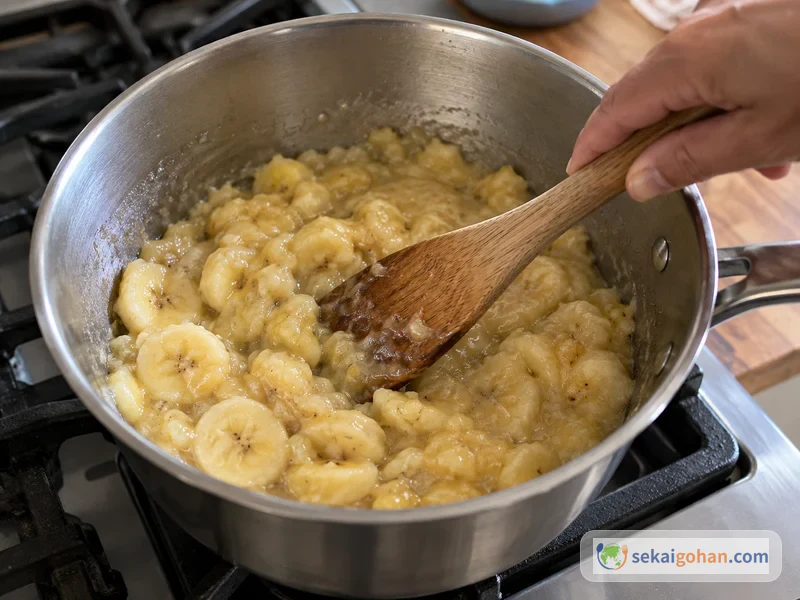
How ripe the bananas are decides how good your poke will be. Use bananas whose skins have turned almost brown. Supermarket bananas need a few days at room temperature (or some time in the sun) until the skins are covered in black spots and brownish all over. The riper they are, the sweeter the pudding and the deeper its amber color.
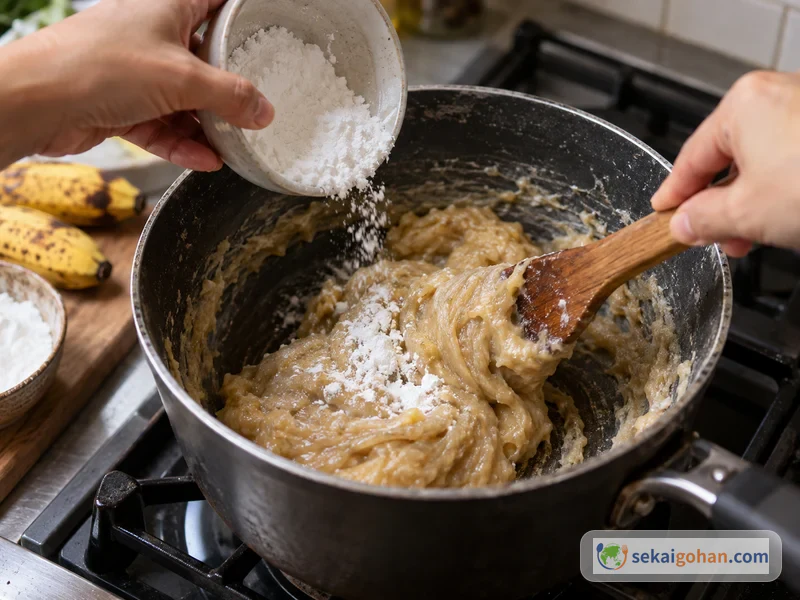
The “pia” used in the Cook Islands is arrowroot or tapioca starch. Arrowroot is hard to find elsewhere, but tapioca starch turns up at baking-supply shops and online, so use that.
Tapioca starch gives a translucent gloss and spring when baked. Use it if you want the characteristic texture of poke.
Coconut cream is richer than coconut milk, with more fat, and comes in cans and cartons. If you can't get it, use coconut milk and simmer it a little longer when warming so that it thickens; the result is close.
How to make banana poke
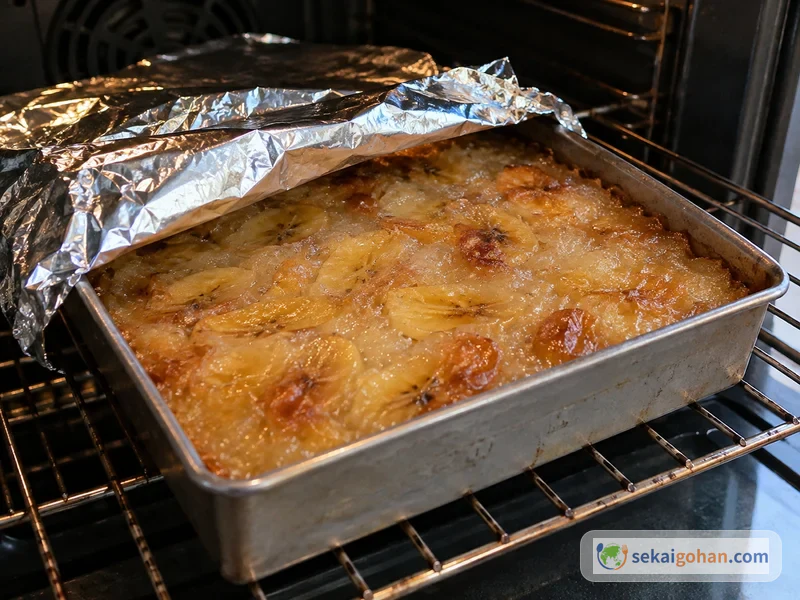
Working the dough takes about 15 minutes, and then it bakes in the oven for about an hour. If you warm the coconut cream while it bakes, you can eat as soon as it comes out.
After the tapioca starch is added, the dough is very heavy and apt to stick to the bottom of the pot. Be sure to keep the heat low, and stir without pausing, scooping up from the bottom. If your arm gets tired, it is fine to turn off the heat and rest for a moment.
Layer hot poke and hot coconut milk alternately in the bowl and let them blend before serving. Mixing the coconut cream into the dough gives a creamy, soft-textured way to eat it.
While you are cooking down the bananas or working the tapioca starch, the hot dough can spatter. To avoid burns, use a long-handled wooden spoon and do not bring your face too close to the pot. Baked poke is very hot all the way through, so let it cool a little before eating.
Serving and varying banana poke
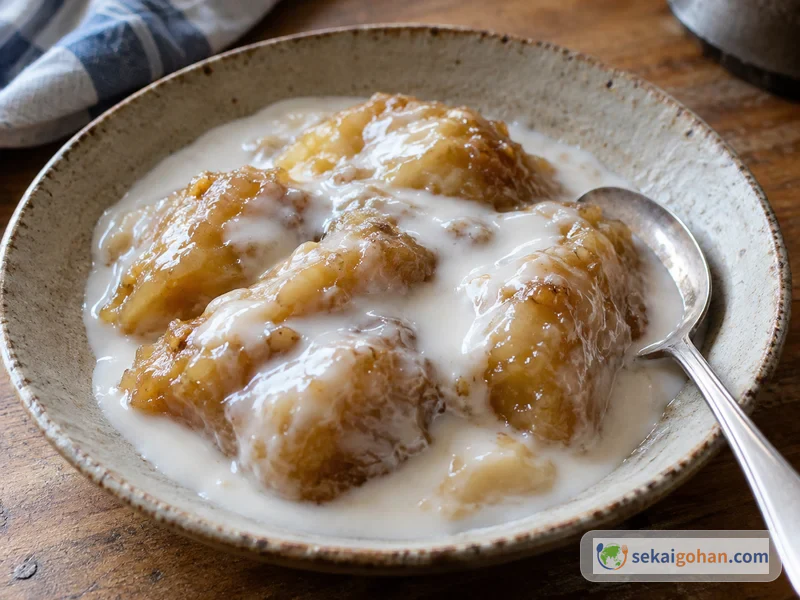
Freshly baked poke is soft enough to scoop with a spoon. Once the coconut cream coats it, the sweet banana aroma and the richness of coconut come together for a taste that is simple yet rich. In the Cook Islands it is usually eaten as a side dish in place of bread or potatoes, though it works just as well as a dessert, or even a salad.
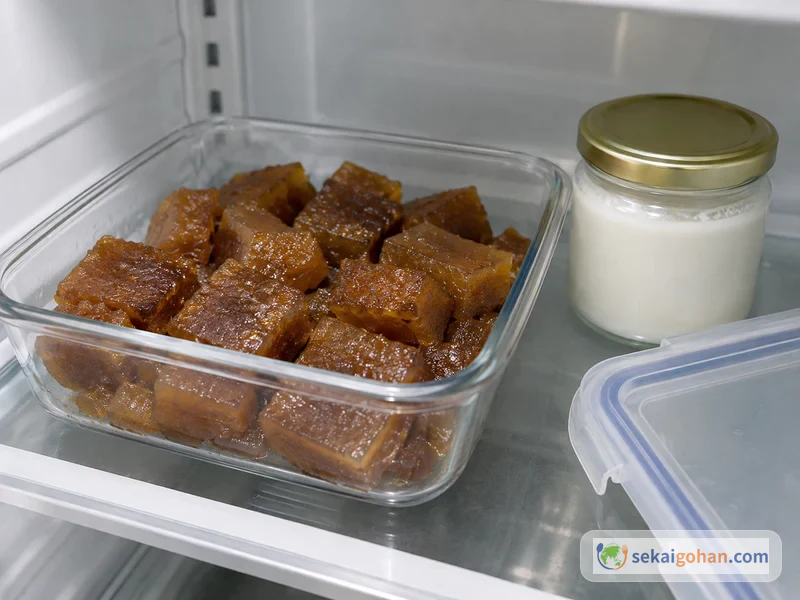
As it cools, poke sets firmly. Chilled and cut into squares, it has a chewy bite like yōkan or uiro, a different kind of deliciousness from the warm version. Pour on more coconut cream before eating.
Pumpkin or taro can stand in for the banana. For pumpkin, remove the skin and seeds, steam it until soft, mash it, and use the same amount as the bananas (about 1.75 lb (800 g)). Pumpkin is less sweet, so add 2–3 tbsp sugar to taste.
Papaya and mango are also well-known variations in Polynesia. Mash the fruit and make it the same way for a poke with a tropical color and aroma. Swapping half the banana for mango adds a refreshing tartness.
Frequently asked questions
Will it be sweet without adding sugar?
With very ripe bananas, yes. Under-ripe bananas give a poke that lacks sweetness and browns only lightly, so wait until the skins turn brown. If it still seems not sweet enough, dissolve a little sugar in the coconut cream as you warm it.
Can I make it ahead?
Once it has cooled, cut it up, put it in a storage container, and finish it within 2 days in the refrigerator. It hardens in the fridge, but 30 seconds to 1 minute in the microwave brings back the chewy texture. Keep the coconut cream separate and warm it just before pouring on.
The center stays white and cloudy and won't turn translucent.
Either the baking time was too short or the dough was too thick. Keep the foil on and bake 10 minutes at a time. Tapioca starch turns translucent as it cooks, so once the center is done, the whole pudding turns amber.