
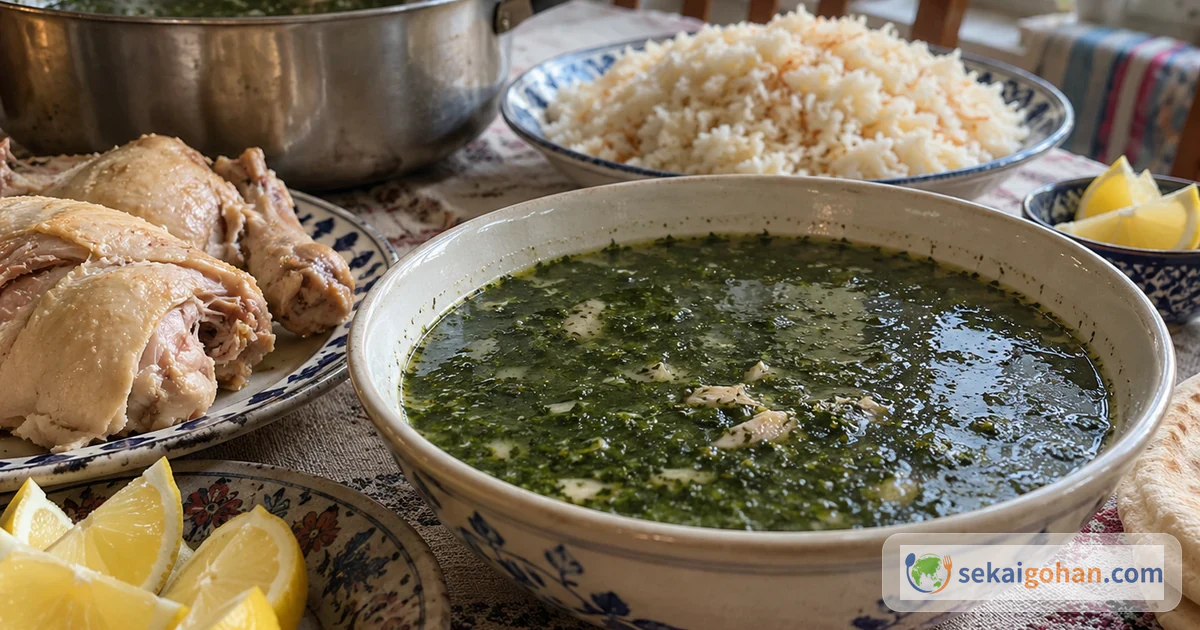
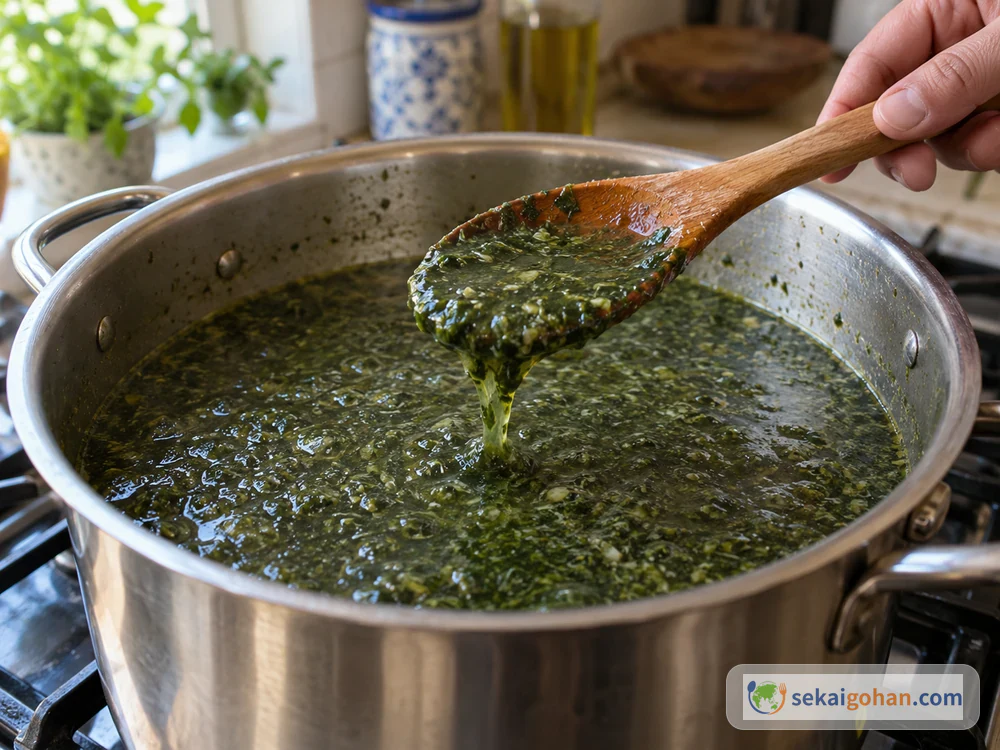
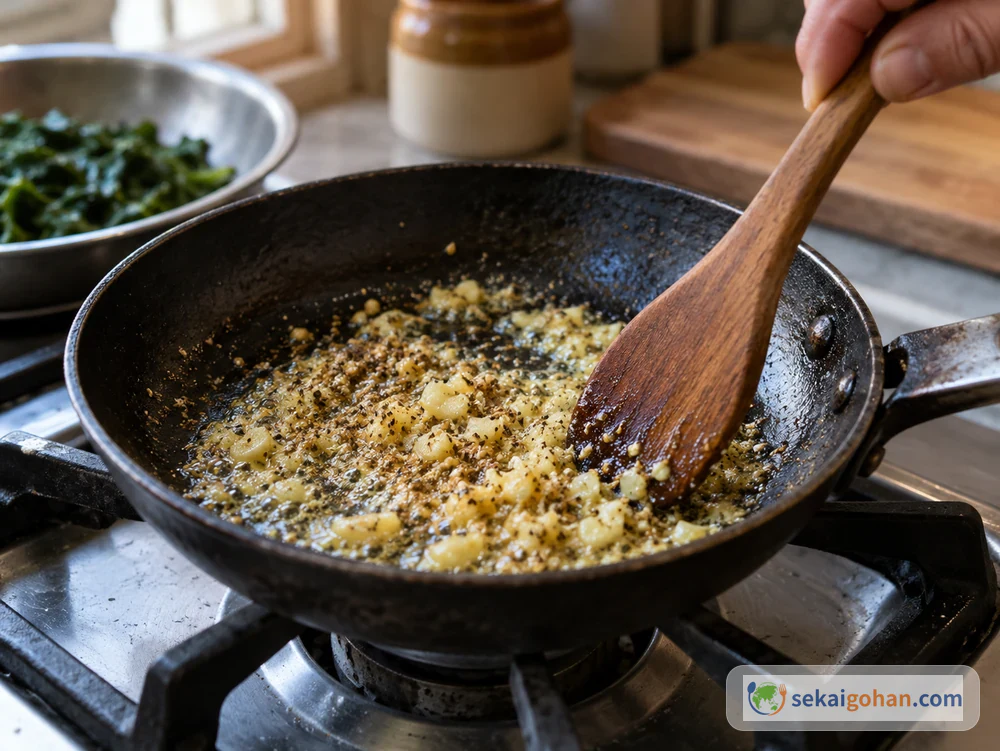
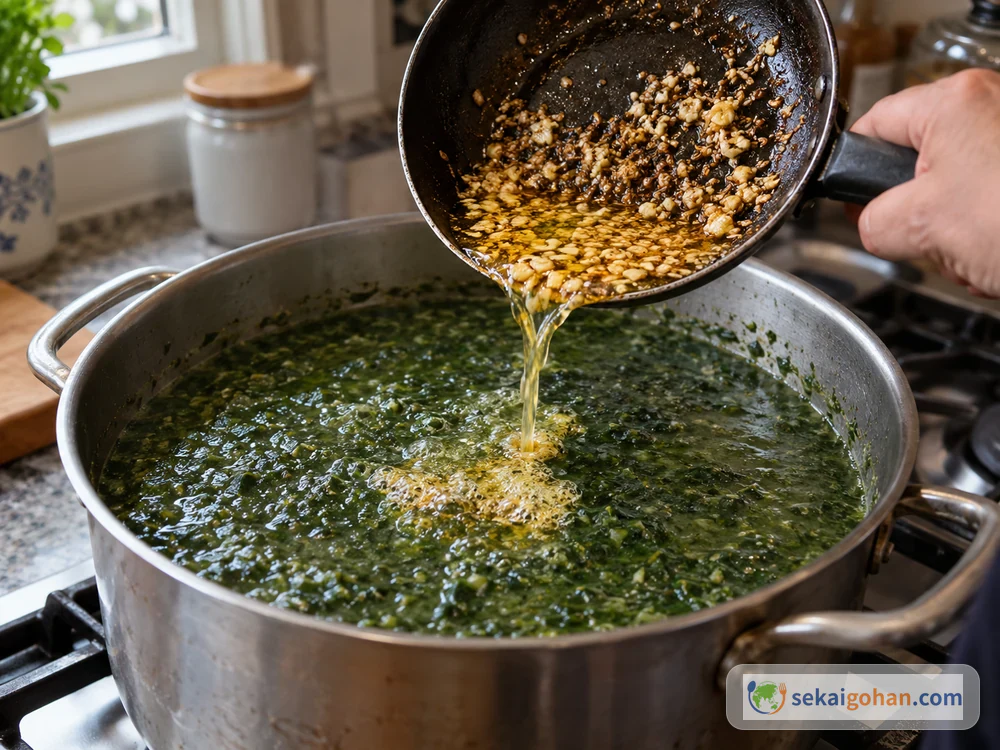
When the ghee in a small pan foams into fine bubbles and the crushed garlic and coriander turn pale gold, pour it all at once into the green soup. A toasty aroma fills the whole kitchen. Molokhia (ملوخية), finely chopped jute leaves simmered in chicken broth until thick and green, is that soup. On the banks of the Nile it's an everyday dish, spooned over rice. In Japan the same leaves are called moroheiya and turn up in produce stalls every summer.
Molokhia in Egypt and Beyond
The Egyptian Way
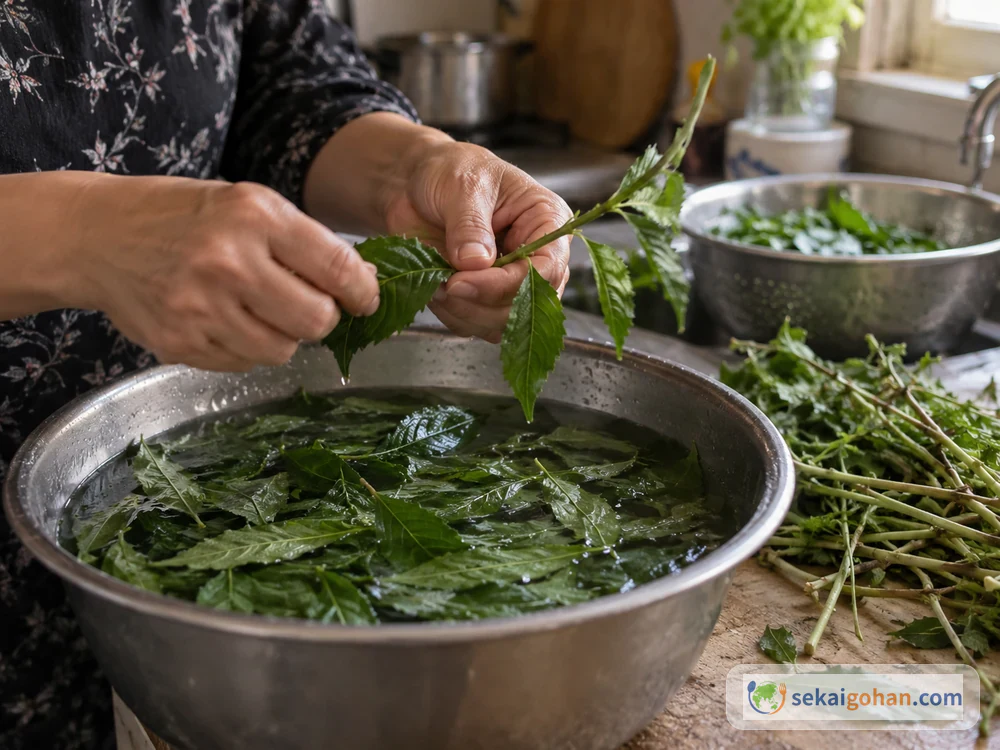
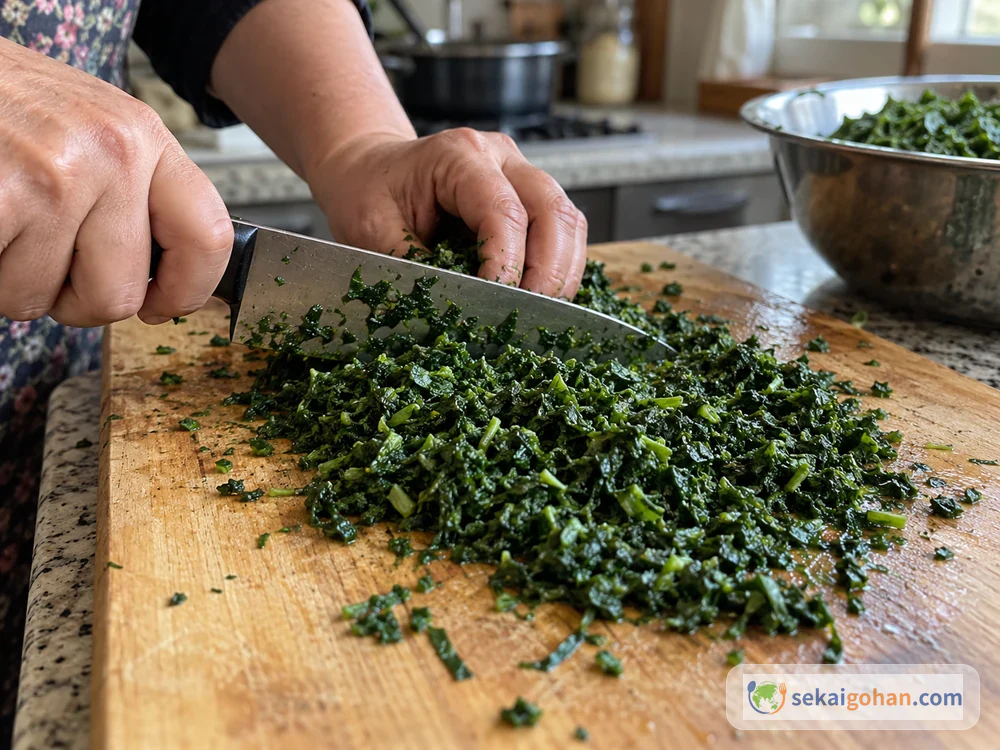
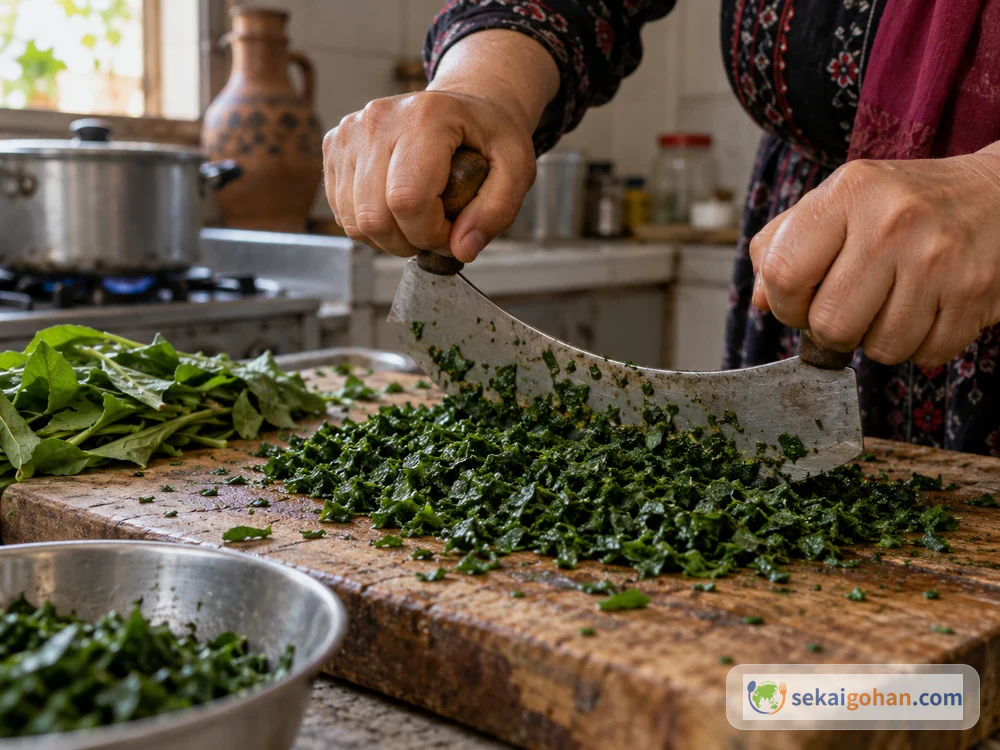
In Egypt, molokhia begins with picking the leaves. You strip them from the stems, then rock a half-moon, two-handled blade (a mezzaluna in English) back and forth over a cutting board until the leaves are nearly a paste. This very fine chopping is the mark of the Egyptian style. In Lebanon and Syria the leaves are simmered whole, so the plant is the same but the look and texture are completely different.
The leaves come from Corchorus olitorius, a relative of the fiber plant jute, once placed in the linden family and now in the mallow family. As they simmer, the chopped leaves release a slippery thickness, a bit like okra, that spreads through the whole soup. That slipperiness is the point, so enjoy it.
On the Egyptian table, molokhia usually comes in a soup bowl with white rice, or with rice cooked with short pieces of vermicelli browned in oil. Some people mop it up with flatbread (aish baladi). Boiled chicken, pickled vegetables (torshi), and lemon go alongside. It's an everyday family lunch, not a special-occasion dish.
Regional Versions Along the Nile
What goes into the pot changes along the river. In Alexandria on the Mediterranean, molokhia is often made with shrimp. In the Nile Delta and in Upper Egypt (the Sa'id region upriver), the base is a poultry broth of chicken, duck, or rabbit. Rabbit is the traditional, superior pairing, but chicken rules everyday tables today. In Cairo, some households prefer lamb broth.
In villages near Luxor, households share "molokhia nashfa," made with sun-dried leaves and meat, around the celebration of the Prophet Muhammad's birthday (Mawlid).
Cross a border and the dish changes again. In Tunisia, the leaves are dried, ground to a powder, and simmered for a long time in olive oil into a dark, nearly black stew called mloukhiya. Made with beef or lamb and eaten with bread, it's heavy like a sauce rather than a soup. On the Mediterranean coast of the Middle East, cooks use whole leaves and serve them with vinegar-pickled onions and toasted flatbread.
More than a thousand years ago, the Fatimid caliph al-Hakim (reigned 996–1021) banned the sale and eating of molokhia, for reasons no one knows. The ban did not last long, and molokhia soon returned to Egyptian tables. Among the Druze, who revere al-Hakim, the custom of not eating molokhia has been handed down.
Ingredients (serves 4)
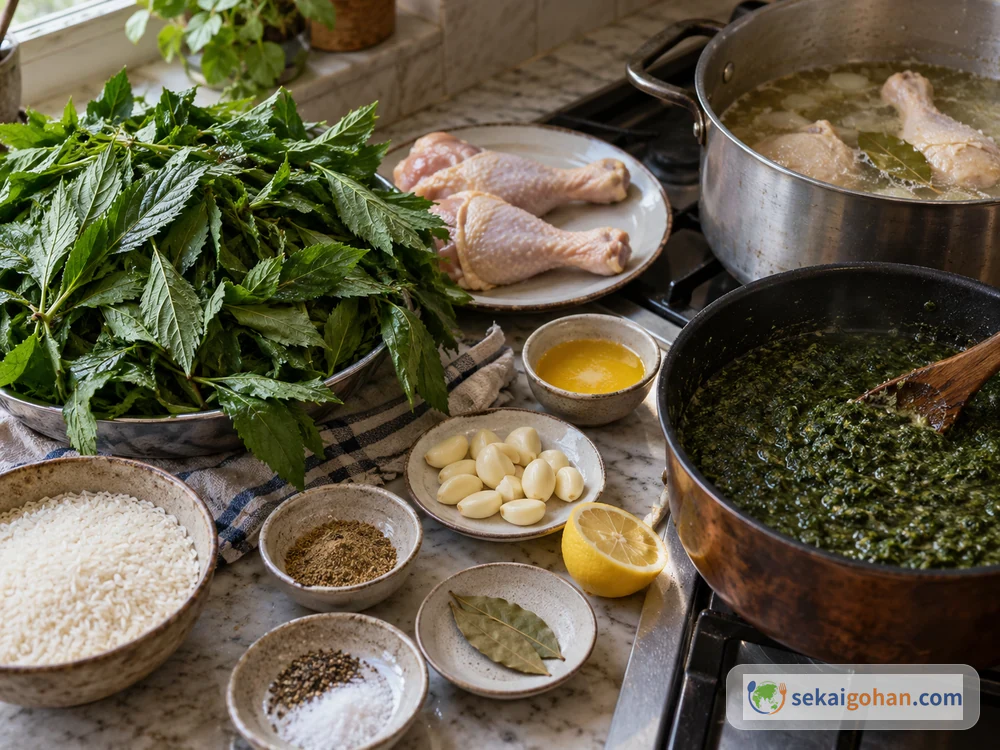
500 g of molokhia looks like a lot, but chopped and simmered it shrinks remarkably. If weighing the leaves is hard, buy about twice that amount with stems on and adjust by the amount of leaves you pick. 8 to 10 cloves of garlic may seem like a lot too, but fried in ghee they turn sweet and lose their edge.
Ground coriander loses its aroma once opened. If yours has sat on the shelf a long time, add a bit more or use a fresh jar, so the aroma of the ta'liya comes through clearly.
Choosing Jute Leaves and Other Ingredients for Molokhia
Molokhia comes in three forms: fresh, frozen, and dried. Fresh leaves are sold in bags in many places from summer to early autumn, so buy what you need while they're in season.
Out of season, or when you'd rather skip picking leaves, use frozen chopped molokhia. International and Middle Eastern grocers sometimes sell it chopped fine Egyptian-style. Use about 7 oz (200 g) frozen in place of 1 lb (500 g) fresh leaves, add it to the soup still frozen, and break it up as it thaws. Frozen molokhia carries more water and its color dulls easily, so start with less broth and simmer a bit longer to thicken it, but stop before it overcooks.
Most of the flavor comes from the ta'liya (garlic and coriander aromatic oil) poured on at the end, not from the leaves. The coriander here is ground coriander seed, not cilantro leaf. Any spice aisle has it, though grinding whole seeds on the spot gives a little more aroma. Ghee (clarified butter) is the usual fat. If you have none, use a neutral oil with a touch of butter.
If you grow molokhia in a home garden, do not use the seeds, seed pods, or young sprouting leaves in food, and do not mix leaves from plants that have flowered and set seed pods into your harvest. They contain cardiac glycosides, and eating them by mistake can cause poisoning with dizziness and vomiting. Those parts are not found in the leaves and stems at harvest or in molokhia sold as a vegetable, so store-bought molokhia is safe to eat. Store packaged seeds where children cannot put them in their mouths.
Ta'liya is very hot oil. Poured into a watery soup it can spatter, so keep your face away from the pot and move the skillet to the rim of the pot before pouring gently. Have small children step away from the kitchen for the moment of pouring.
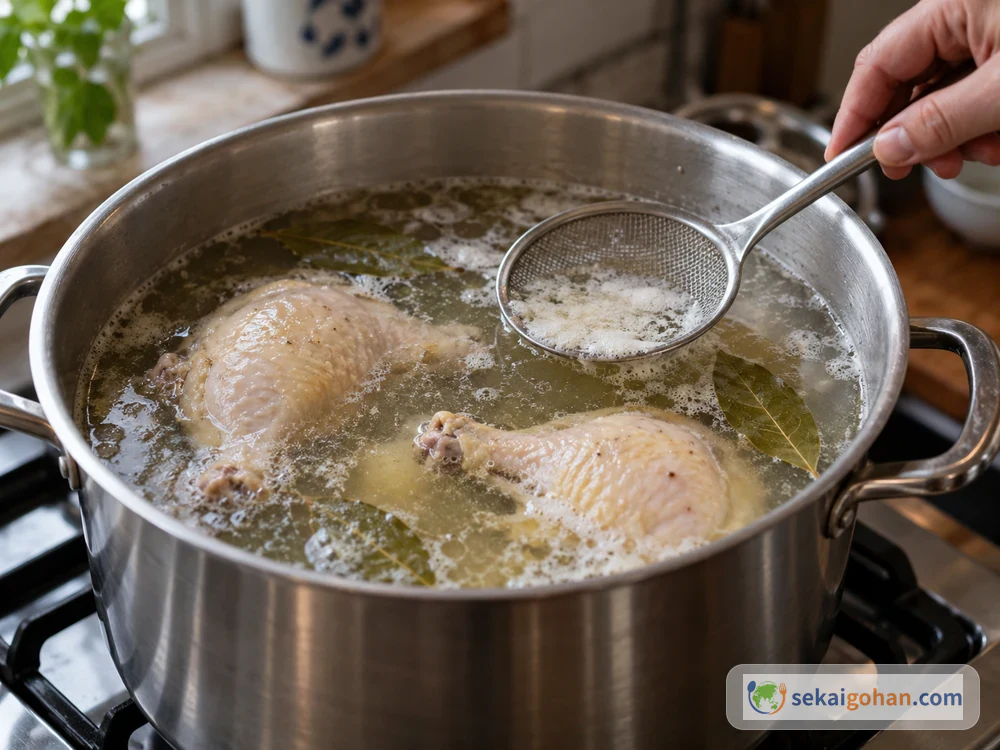
You can also roast the removed chicken in a 450°F (230°C) oven for about 15 minutes to give the skin a toasty color before serving. Set aside a little garlic and coriander to rub into the chicken skin, so its aroma matches the soup.
If the soup seems too thin, simmer it uncovered over low heat for a few minutes. If it gets too thick, thin it a little at a time with the broth you set aside. That is the surest way back. Thinning with water dilutes the flavor, so save the broth until the end.
Serving Molokhia over Rice
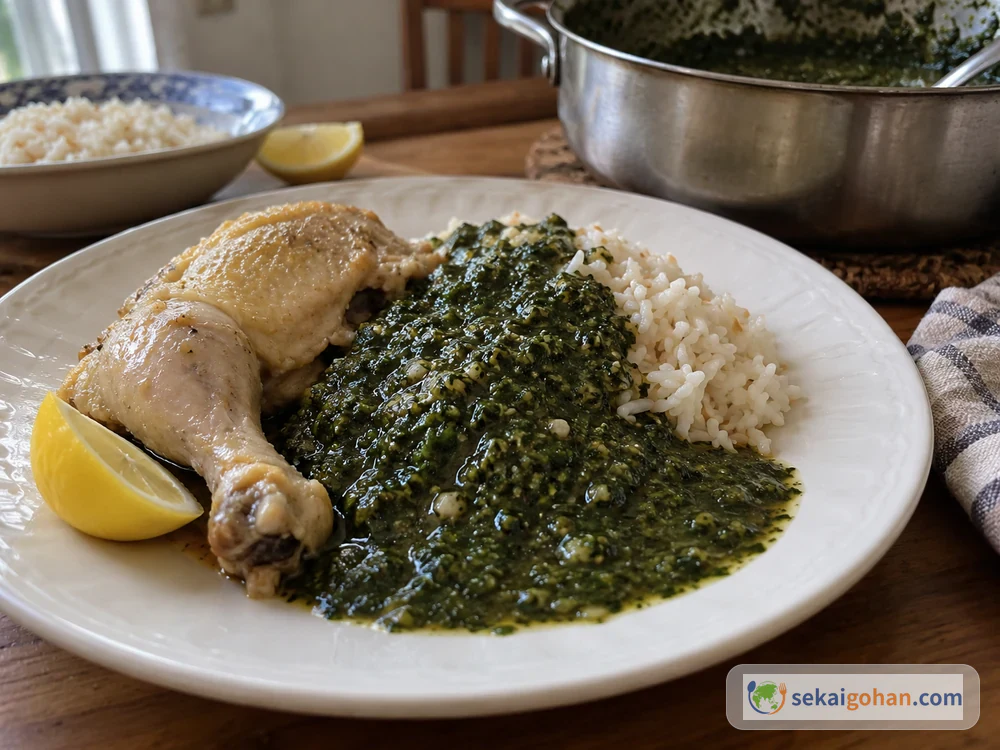
The easy way is to pour the molokhia into a soup bowl, set out white rice, and let everyone spoon it over their own. You can also spread the rice on a plate and ladle the soup generously on top. Pull the chicken off the bone and serve it on a separate plate, or roast it first. A squeeze of lemon instantly lightens the slippery mouthfeel and lifts the garlic.
For rice closer to the Egyptian style, brown short pieces of vermicelli in oil until colored and cook them with the rice, so you get a toasty bit of noodle in every bite. Plain white rice works well too: the thick soup works into the grains and eats almost like rice in tea.
To round out the meal, koshari, with its layers of rice, macaroni, and lentils, and the breakfast fava dish ful medames are everyday Egyptian tastes that sit comfortably beside molokhia. Add ta'ameya tucked into pita, and you have a table like a Cairo eatery.
Frequently Asked Questions
Can I eat it if I dislike the sliminess of molokhia?
The sliminess is molokhia's signature, so it won't disappear completely. Chopping the leaves less fine, so some texture remains, and loosening the soup with more broth make the mouthfeel much lighter. A squeeze of lemon as you eat helps too.
Can I use a broth other than chicken?
Yes. For an Alexandrian-style sea aroma, simmer shrimp shells to make the stock. Commercial chicken bouillon dissolved in hot water is convenient, but it tends to be salty, so taste before adding salt at the end.
How do I make it spicy?
Basic Egyptian molokhia isn't spicy. For heat, add a little chopped green chile or chili flakes when you make the ta'liya, or put chile on the table so each person can add their own.
Can I make it ahead and store it?
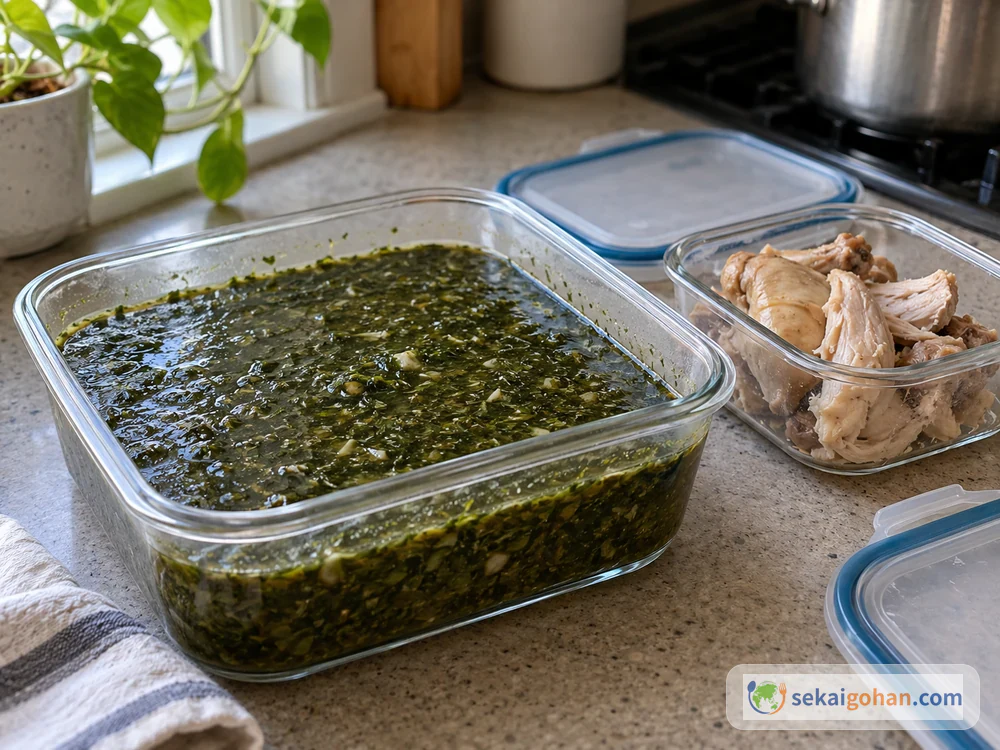
Let it cool, refrigerate it, and eat it soon. Reheat it over low heat, stirring, without letting it boil hard. It darkens and loses aroma over time, so a small fresh batch of ta'liya poured on at the end brings it close to freshly made.
Are there ingredients to watch for allergies?
Ghee is made from dairy. If you have a milk allergy, make the ta'liya with neutral or olive oil alone. If you use shrimp broth, watch for shellfish allergies too.


