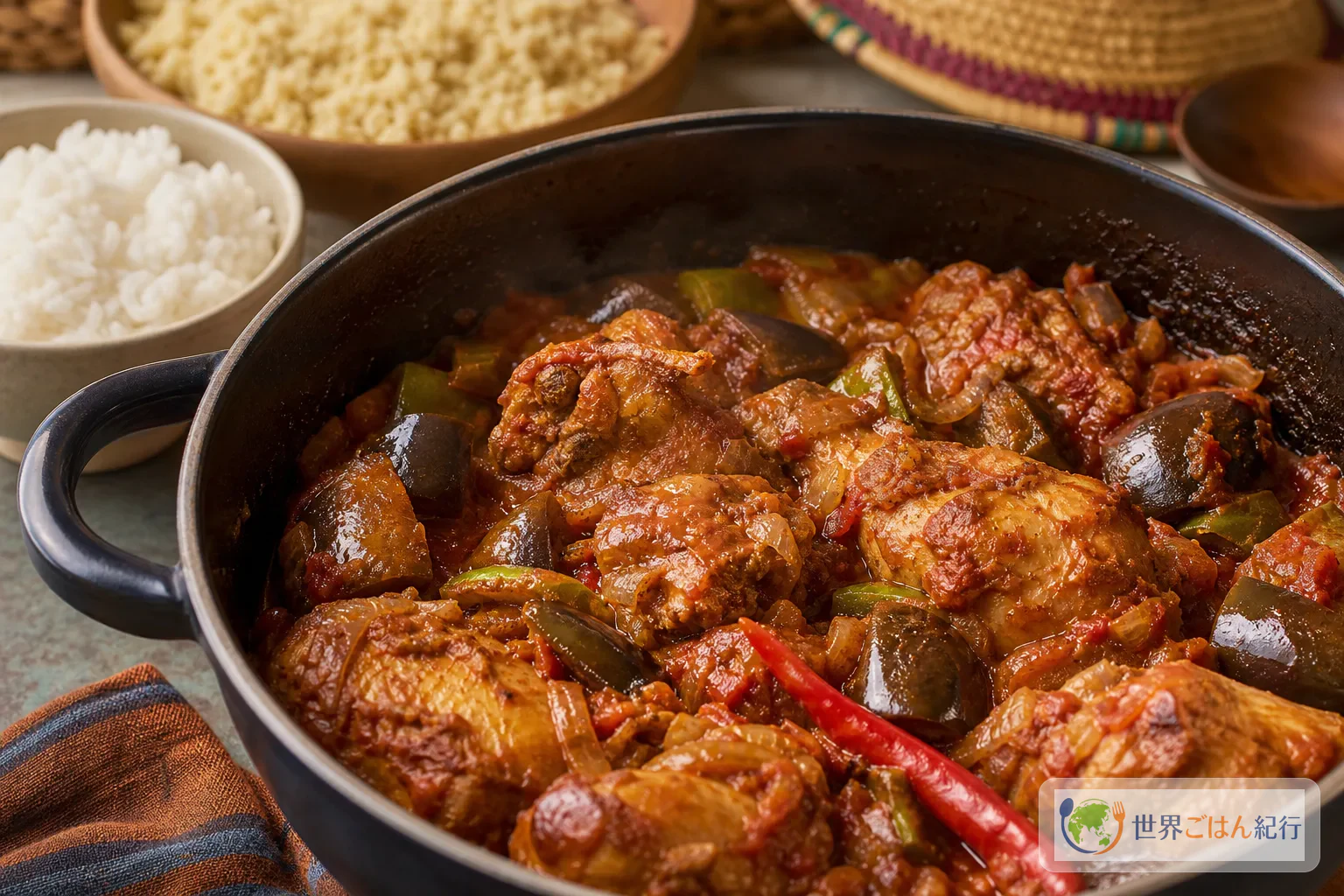
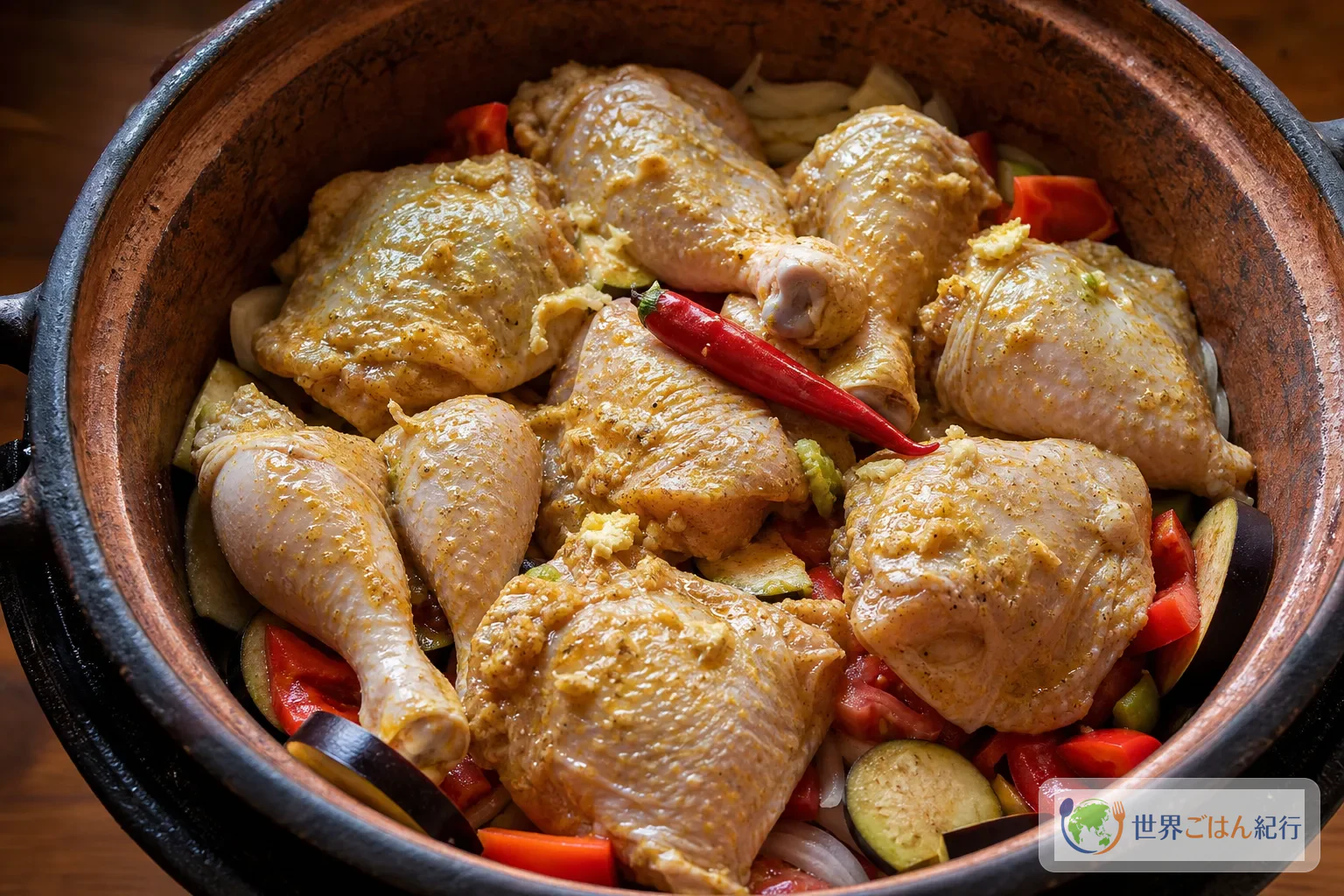
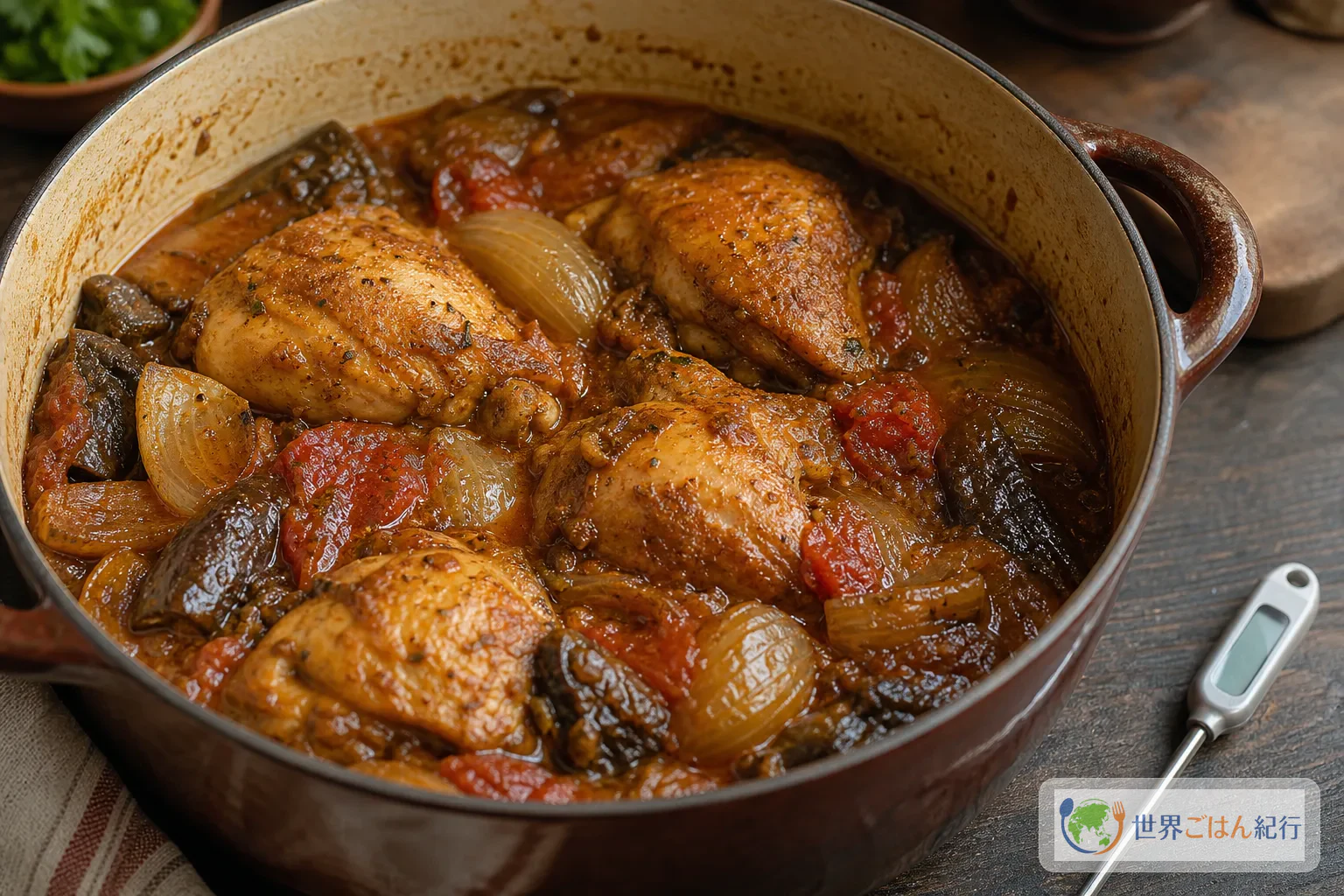
Chop the onions, crush the tomatoes, rub the chicken with salt and put it all in the pot. This is the moment you'd normally reach for water. Leave it out. Kédjénou (Kedjenou), a chicken stew from Côte d'Ivoire, is traditionally made without added water: the onion and tomato slowly give up their moisture, and with the chicken's fat they become the sauce. The result is tender, steam-braised chicken in a concentrated tomato-onion sauce scented with ginger.
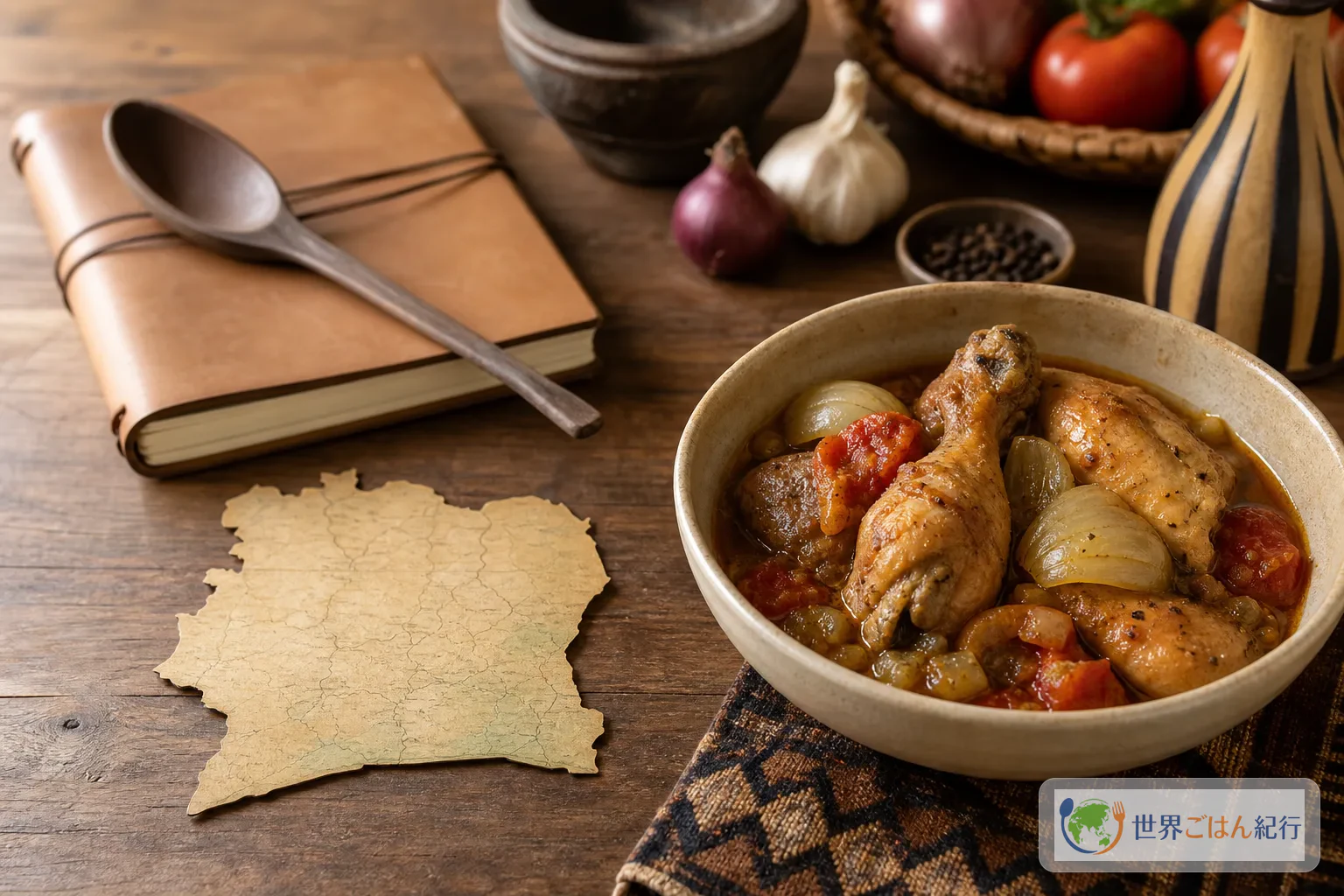
About Kédjénou
Origins in Central Côte d'Ivoire
Kédjénou belongs to central Côte d'Ivoire, especially the Baoulé and Bété, and began as the food of people who farm and hunt. Chicken, guinea fowl and, depending on the region, game were cooked with onion, tomato, salt, ginger and herbs. The name comes from a Baoulé phrase meaning "to shake what's inside."
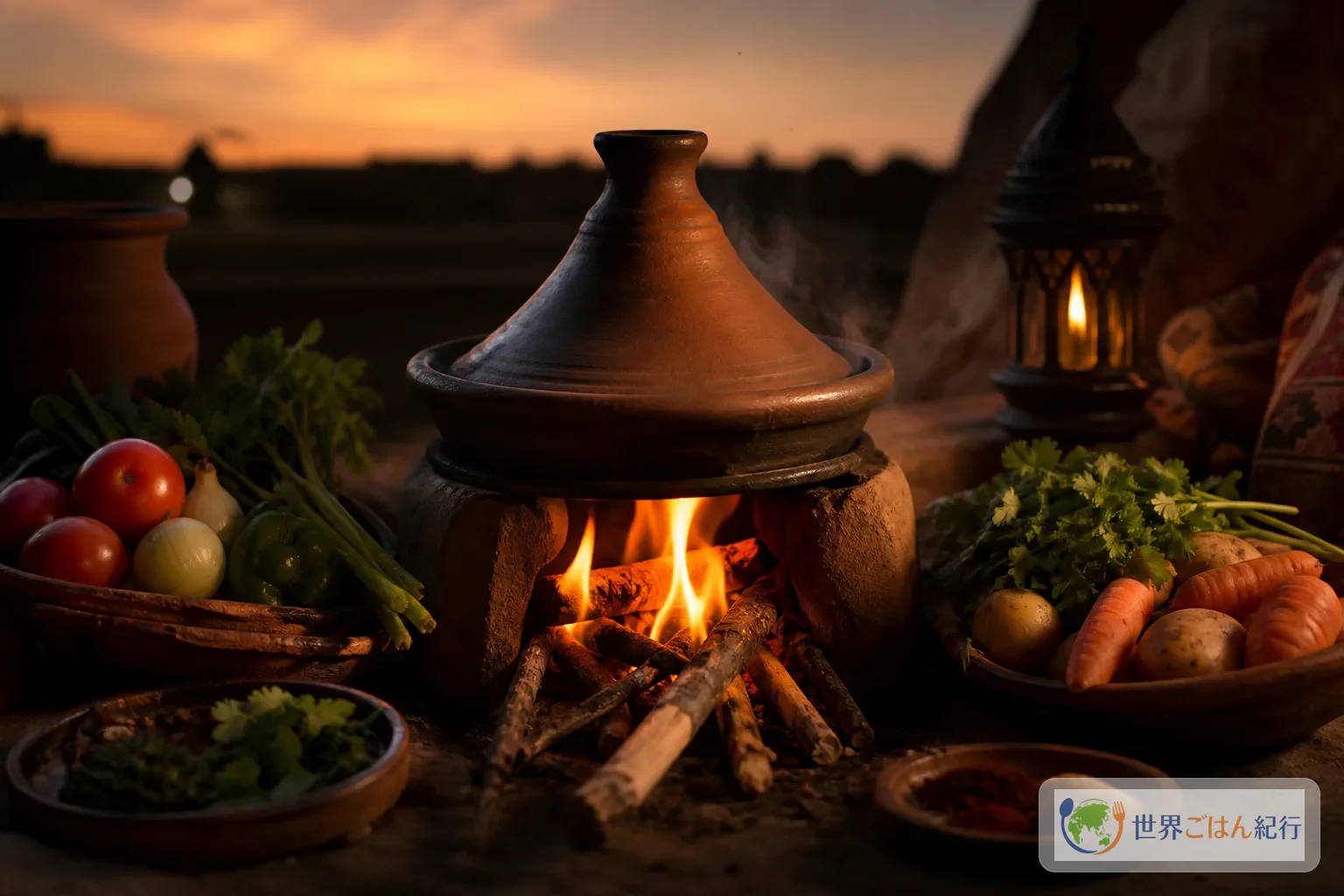
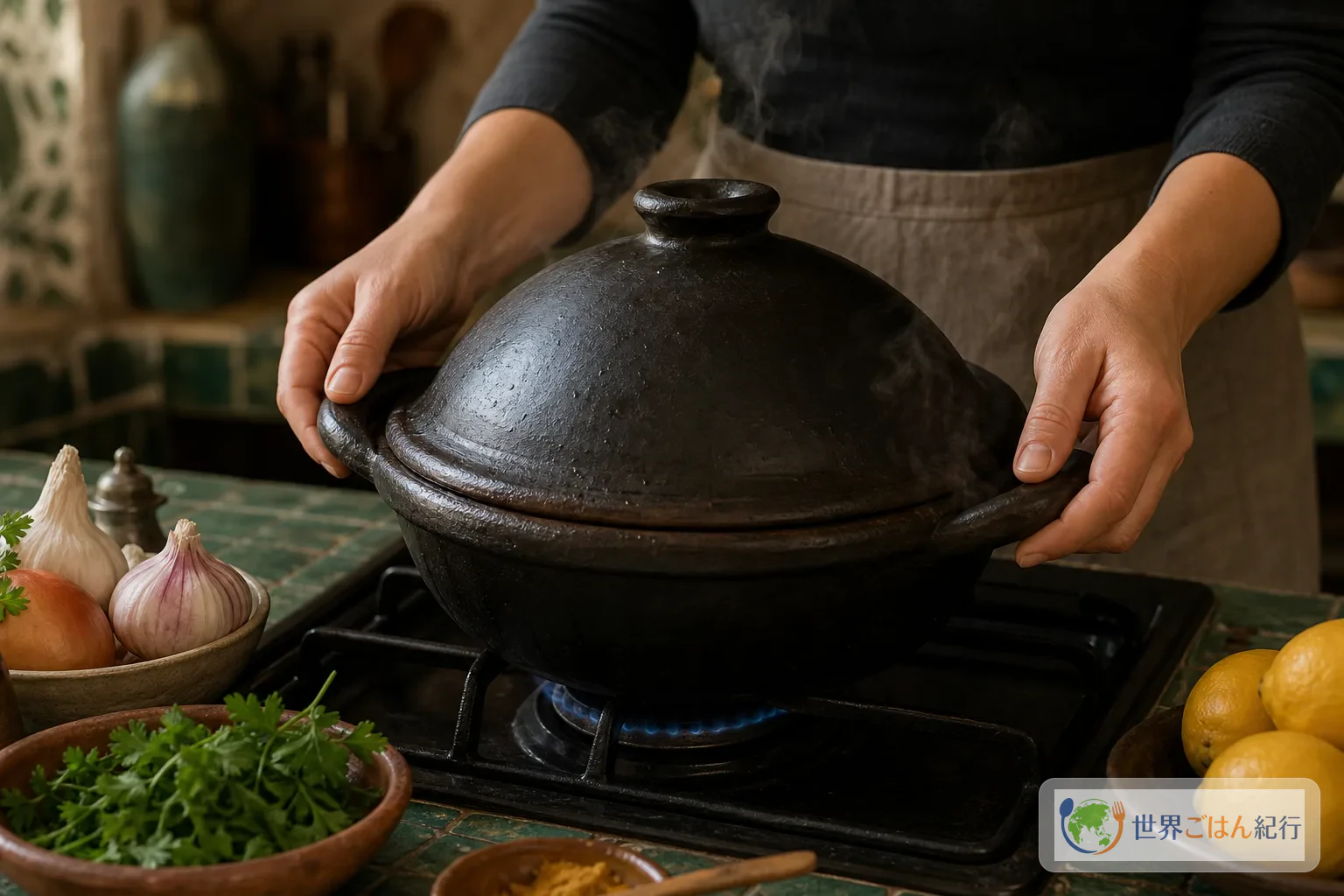
The traditional pot is the canari, a narrow-mouthed clay pot set over the fire, its lid sealed with banana leaves and the like. During the long cooking, the people around it take turns lifting and shaking the pot to protect the bottom, rather than leaving the job to one person.
How It Differs from Other Stews
Many stews start by searing the meat hard for a toasty flavor. Kédjénou does the opposite: it traps the vegetables' moisture and the chicken's fat, and turns the time with the lid unopened into flavor. At first the steam makes a small sound, then a low one from the whole pot. Lifting the lid would reassure you sooner, but some aromas stay only if the lid stays on. The dish asks little of your hands. The skill is learning when to keep your hands off.
There's no single formula. Cooks add guinea fowl, fish, eggplant, okra, chili and oil, and urban versions in Abidjan often use oil, water or stock. Whatever the pot, the core comes down to three things:
- Do not let the moisture released by the vegetables escape
- Loosen the chicken by steam-braising, not by searing it firm
- Do not open the lid; protect only the bottom by shaking the pot
When searching, including both spellings makes it easier to find local recipes.
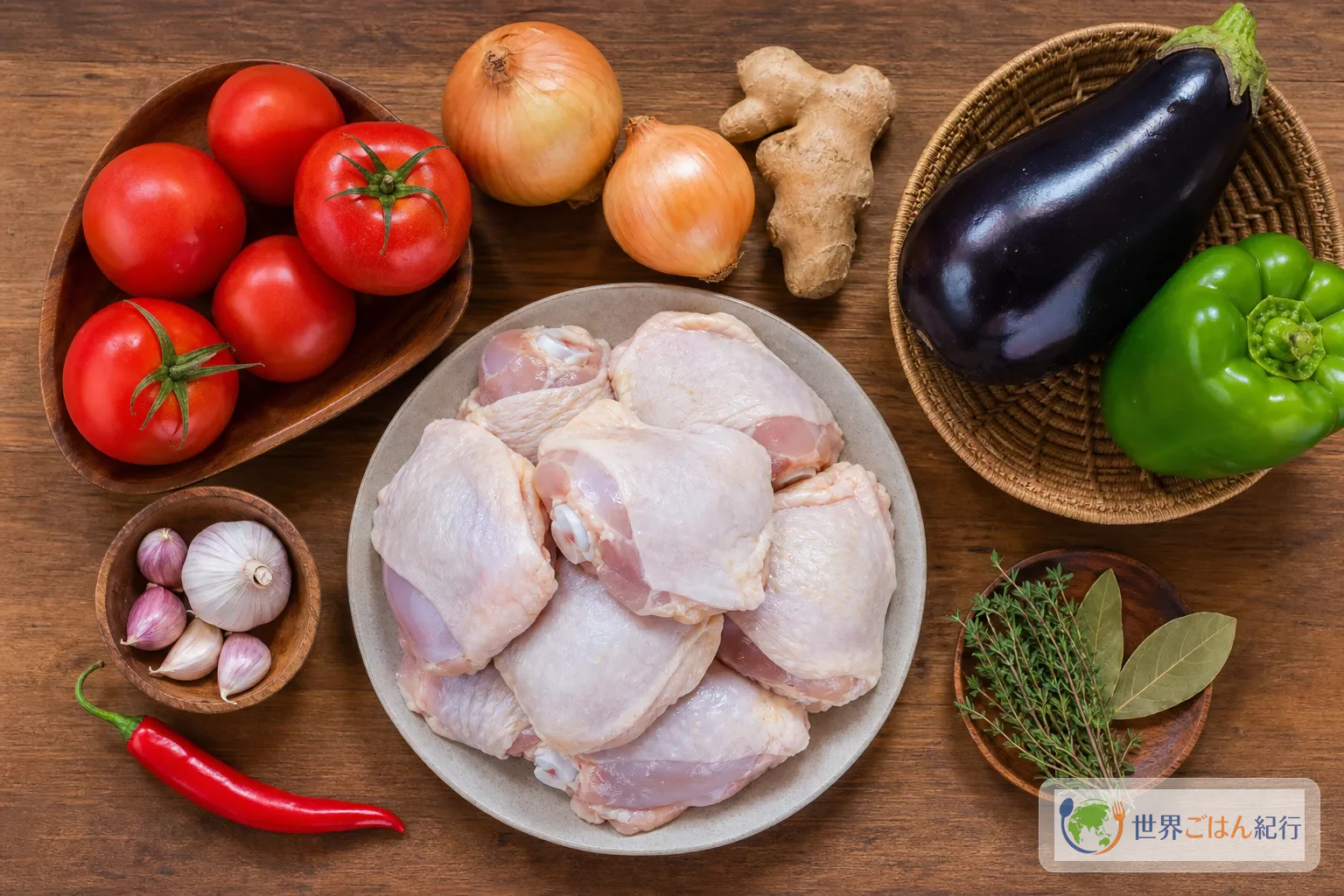
Ingredients (serves 4)
To serve alongside
Attiéké (fermented cassava couscous) adds sourness and a grainy texture, as it does at the local table. If you don't want to hunt down imported attiéké, plain white rice cooked firm is fine. Both soak up the kédjénou sauce, so keep the salt light.
| Side | Guide for 4 | Why choose it |
|---|---|---|
| Attiéké | 400–500g | The light sourness from fermentation cuts the chicken's fat |
| Or white rice | 2 cups | Easy to get, and lets you finish all the sauce. Uncooked rice, in 180 ml cups (about 360 ml in all) |
| Lime or lemon | 1 | A little at the end to taste. Don't add too much sourness |
Check that the center of the thickest part of the chicken has reached 74°C (165°F).
Add red oil, or not
Red palm oil shows up often in Ivorian cooking, but kédjénou doesn't need it. Think of it as an extra: it rounds the aroma slightly and adds color when drizzled over attiéké. For your first try at the traditional waterless version, skip it and judge the aroma of the chicken skin and vegetables first.
If you buy it, check the label for cooking use, the capacity and the origin. You only use 1–2 tsp at a time, so it suits anyone who also plans to cook African dishes and bean dishes.
Choosing a Pot and Tools for Kédjénou
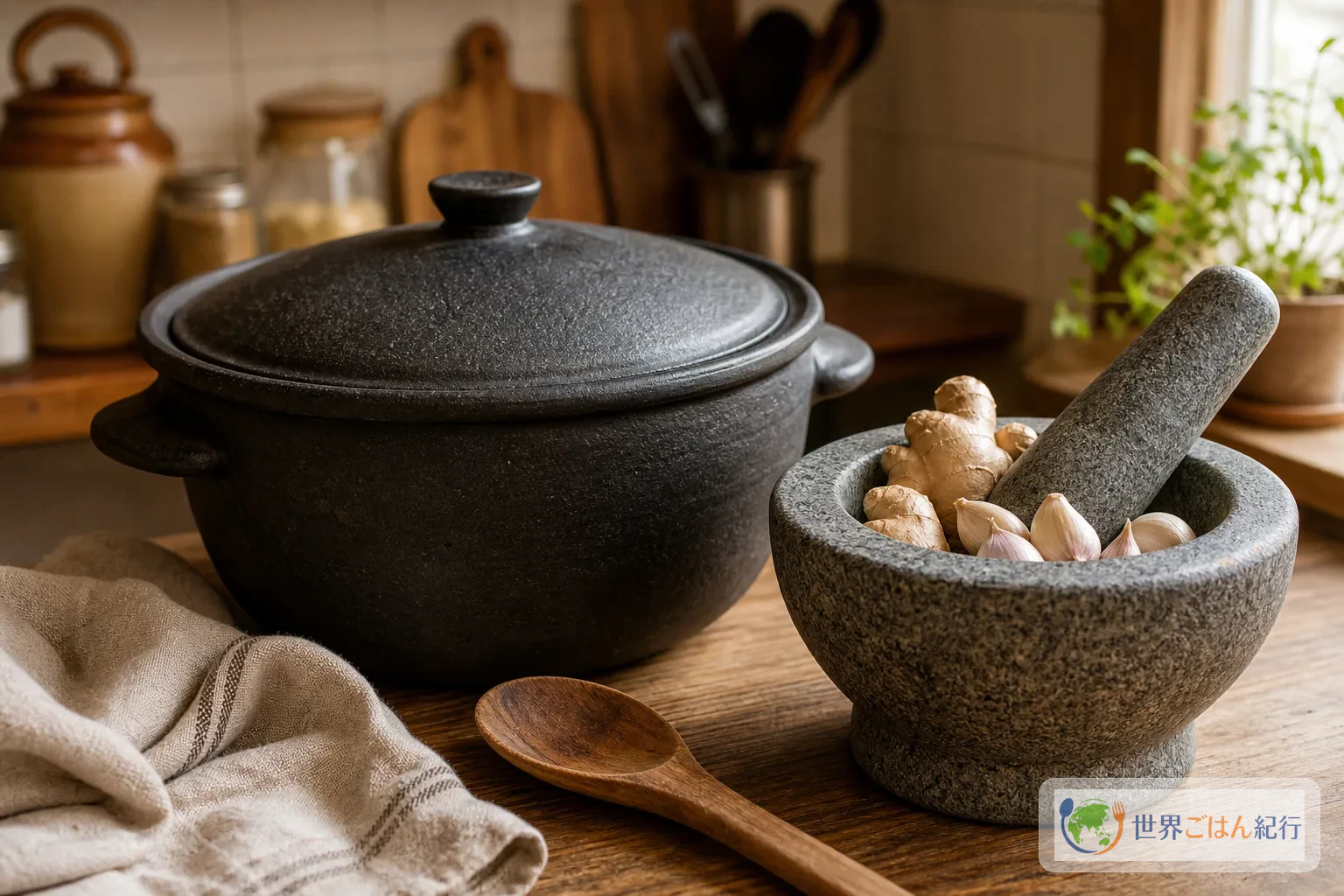
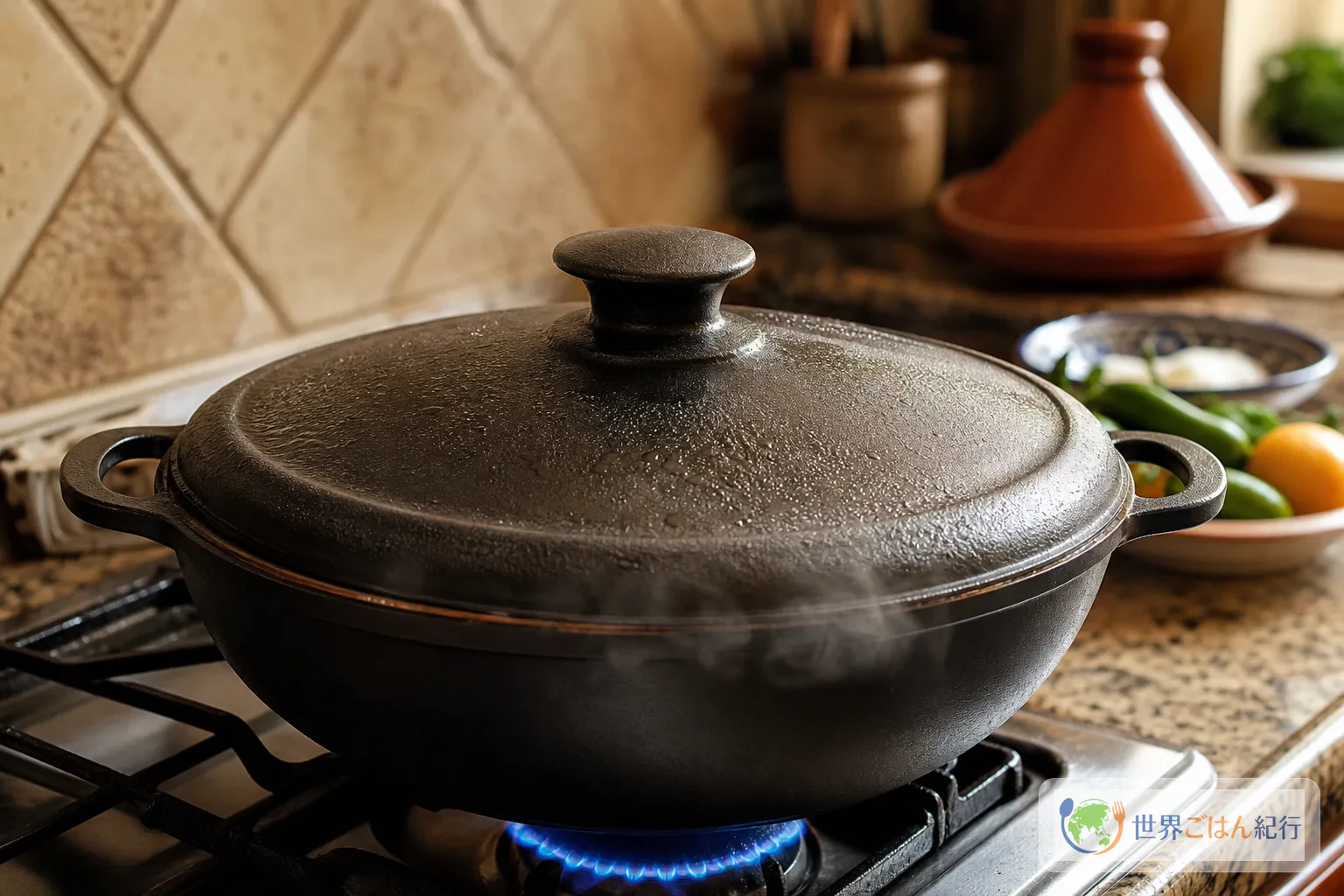
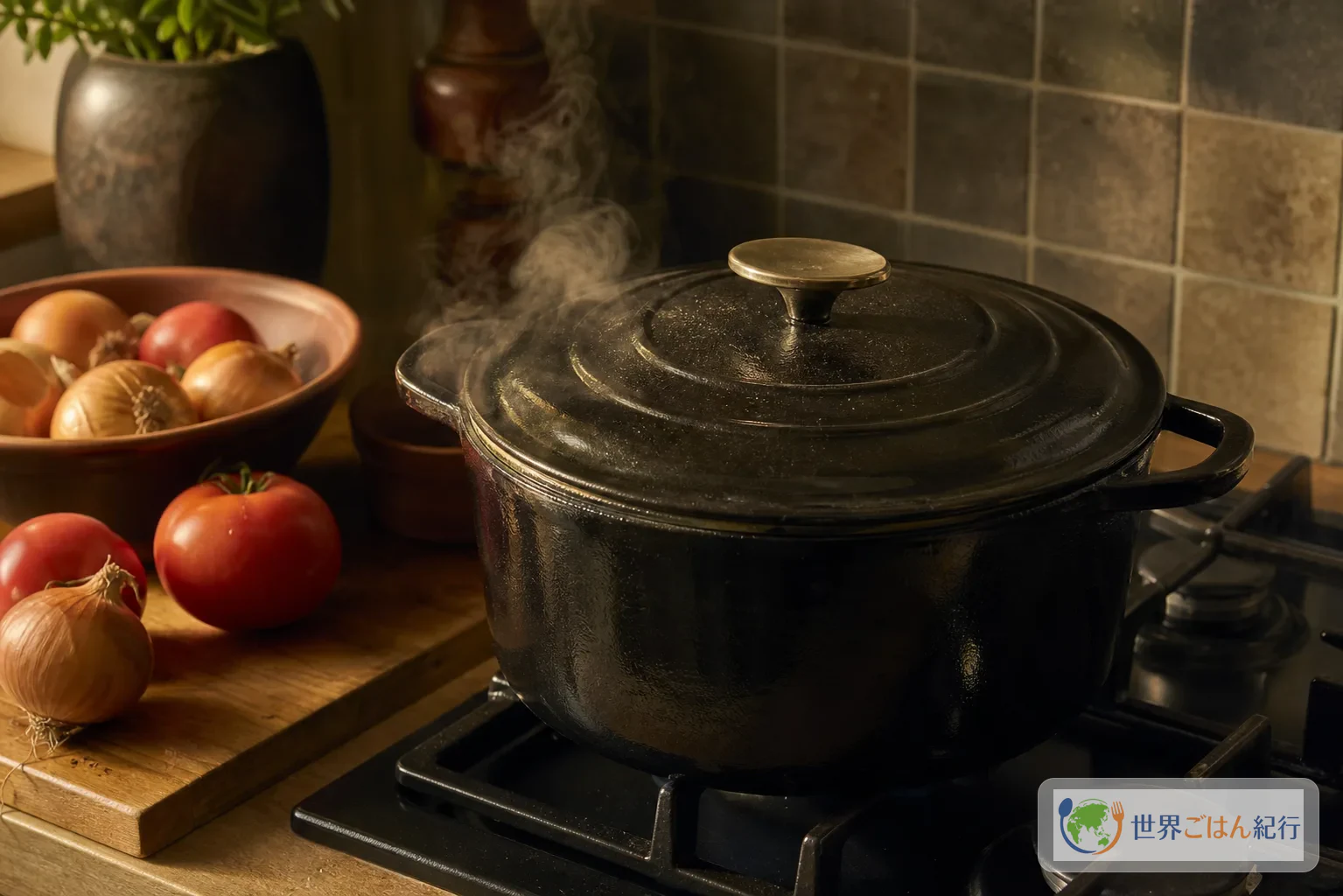
A canari isn't necessary at home. What you want is a heavy pot whose lid doesn't wobble or lift, where the chicken fits with the pot filled to about eight-tenths of its height, and where the heat at the bottom doesn't spike suddenly. Enameled and cast-iron pots are ideal. They're slow to change temperature and hold their residual heat after leaving the burner, so plan to turn off the heat a little earlier. If you do use a clay pot, avoid sudden heating and heating it empty, and follow the product's instructions.
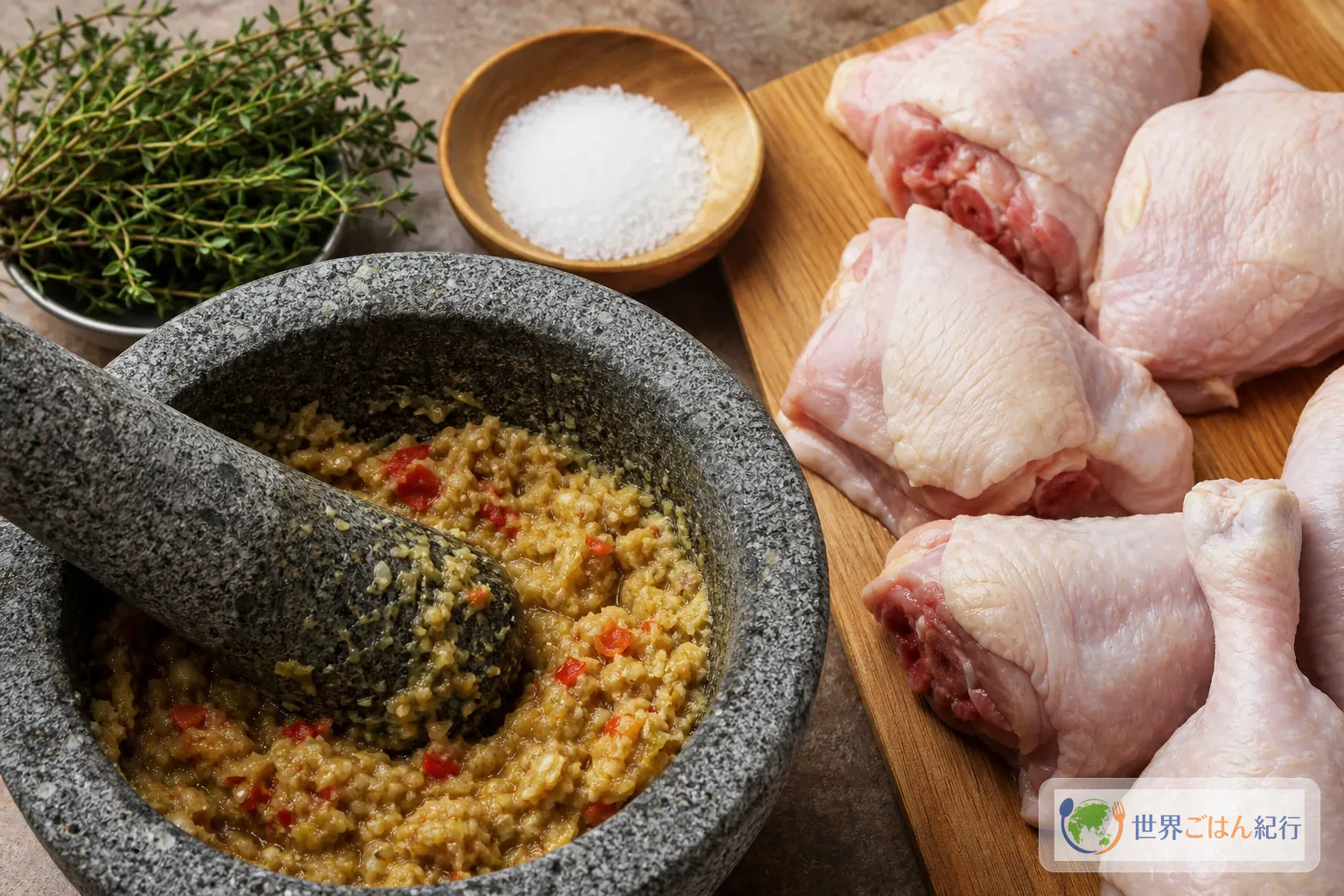
For the aromatics, a knife is enough: chop them finely, or crush ginger and garlic with the flat of the blade. A stone mortar evens out the grain size of the aromatics and is handy if you often cook dishes where ginger fiber and garlic are crushed together. For kédjénou alone, it isn't worth buying one.
Method
In kédjénou, the water comes from inside the pot. If the bottom looks dry at first, don't panic. Lay the vegetables underneath and close the lid. If a burnt smell comes up, don't ignore it. Take the pot off the heat, check the bottom, and rescue it only if necessary.
Serving, Variations and Nutrition
Serving with Attiéké or Rice
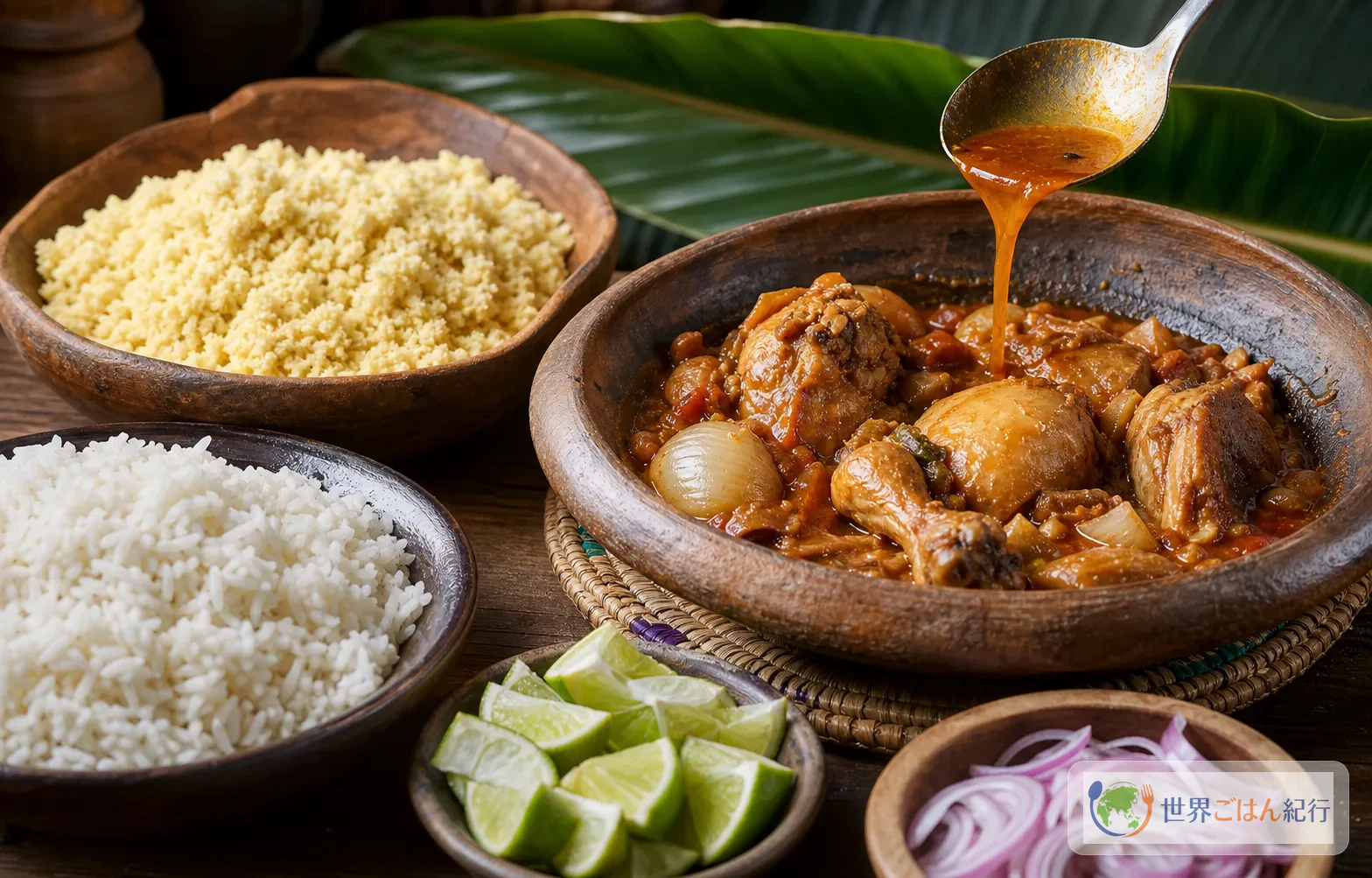
On an Ivorian table, kédjénou comes with attiéké, a couscous-like staple of fermented, steamed cassava. Its light sourness and loose grains keep the mouth from feeling heavy, even when they soak up a stew with oil. For the full method, see how to make attiéké.
If you can't find dried or frozen attiéké, white rice works well. Cook it on the firm side so it takes up the sauce a little at a time. Want more sourness? Add lime at the edge of the plate and squeeze a little just before eating; lots of lemon juice in the pot clashes with the tomato's acidity.
Red palm oil is best kept out of the pot. A few drops over the plated attiéké let you check the aroma and color before adding more.
Variations
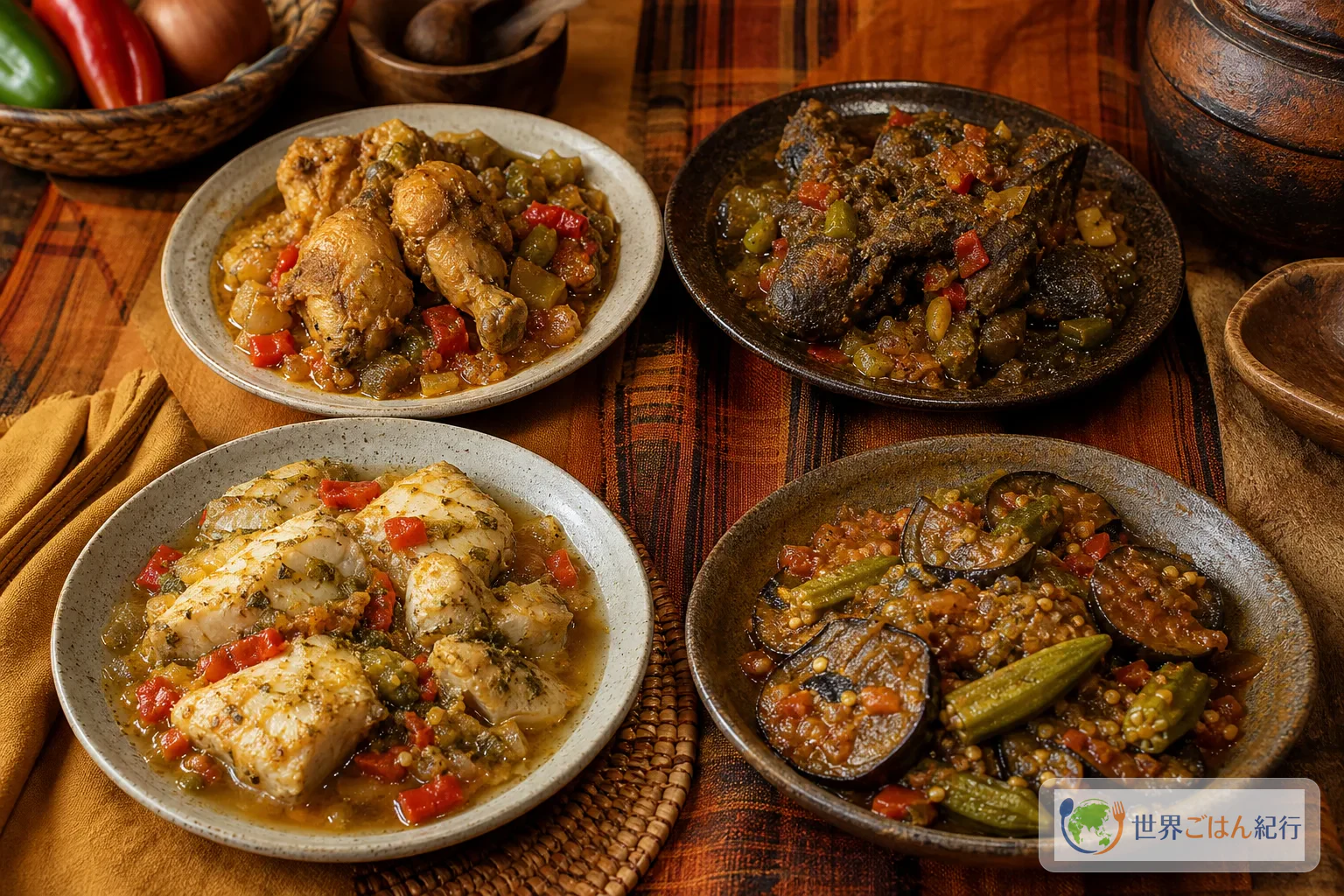
Whole chili. A red chili added uncut gives the sauce its aroma while keeping the heat fairly mild. Anyone who wants it hot can add a little sliced chili to their own plate. Habanero and Scotch bonnet types are very hot, so start with 1/4 of one.
Guinea fowl. It appears in Ivorian recipes too and is firmer than chicken. Use the same 2.25 lb (1kg), extend the low-heat time by 10–15 minutes, and check that it reaches 165°F (74°C) near the bone. If the meat is still hard, rest it a further 10 minutes.
Fish. Coastal tables make a fish version. Fillets fall apart easily, so cook the vegetables covered for about 20 minutes first, then lay the fish on top and check doneness at 15–20 minutes. With white fish, shake the pot less, or the flesh dissolves into the sauce.
More eggplant and okra. One more eggplant collapses into the sauce and gives it body, and in a season when tomatoes are short on water, it rounds the flavor better than adding water would. Halve okra lengthwise and add it for the last 15 minutes so the sliminess doesn't spread through everything.
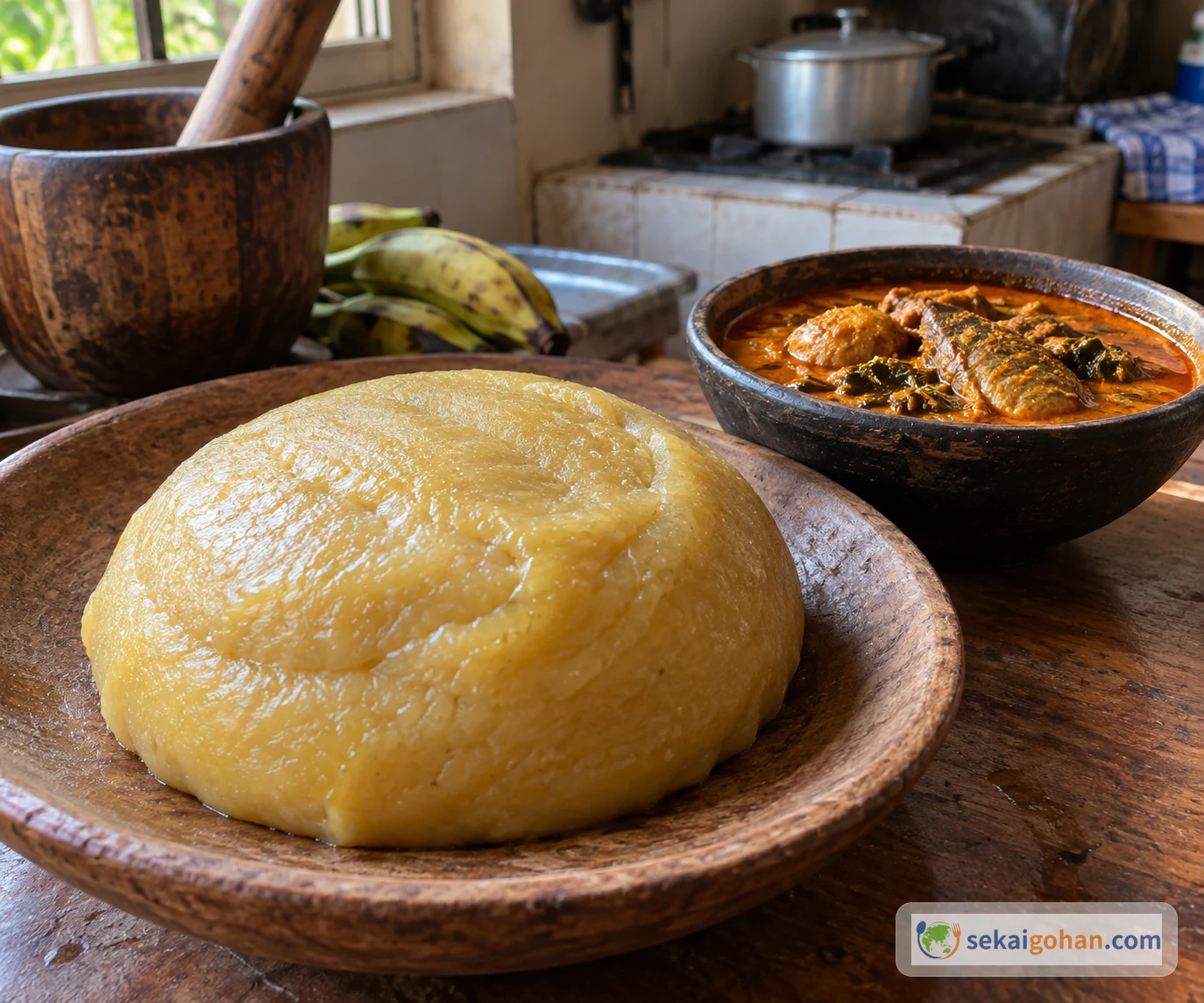
Other staples. Kédjénou also goes with boiled yam, plantain and cassava fufu. Steaming sweet potato or potato separately and serving it alongside makes it easy to taste the sauce on its own terms.
Nutrition
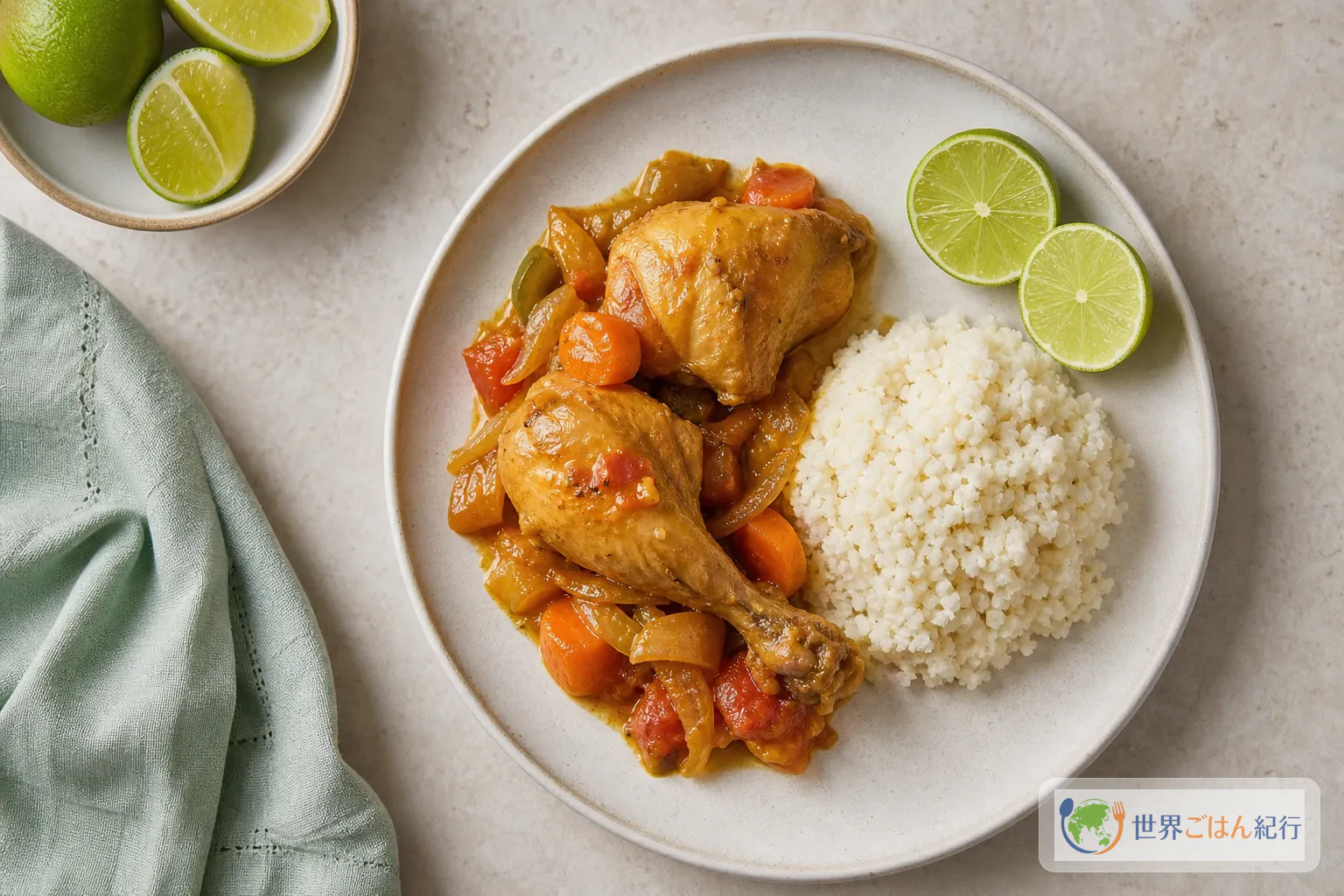
Divided into four servings, the bone-in chicken thighs, vegetables and vegetable oil come to about 520 kcal, 1.5 oz (39g) protein, 1 oz (29g) fat, 1 oz (30g) carbohydrate, 0 oz (7g) fiber and 0 oz (2.1g) salt equivalent per serving, not counting white rice or attiéké. Removing the chicken skin, adding red palm oil or changing the amount of staple changes these numbers. To reduce salt, use only 1 tsp for the first rub and add more at the table.
Frequently Asked Questions
Is it really okay not to add water?
With plenty of fully ripe tomato and onion and a closed lid, moisture comes out of the vegetables and chicken. Pot size, heat and tomato ripeness all change how much. If a burnt smell comes up, take it off the heat, and add up to 3.5 tbsp (30–50ml) boiling water only if the bottom is dry. That ends the waterless method, but saving the pot matters more.
Can I make it with chicken breast?
You can, but it dries out more easily than bone-in thighs. Cut it into large slices, shorten the simmering time to 30–35 minutes, and turn off the heat as soon as it reaches 165°F (74°C). The first time, bone-in thighs give more time to take up the vegetables' moisture.
How can I reduce the heat of the chili?
Put one whole chili in the pot and take it out before eating. For a gentler aroma, leave out the chili and use black pepper alone. Wear gloves when you cut a hot variety so the juice doesn't touch your eyes or skin, and wash the utensils afterward.
How many days can I keep leftovers?
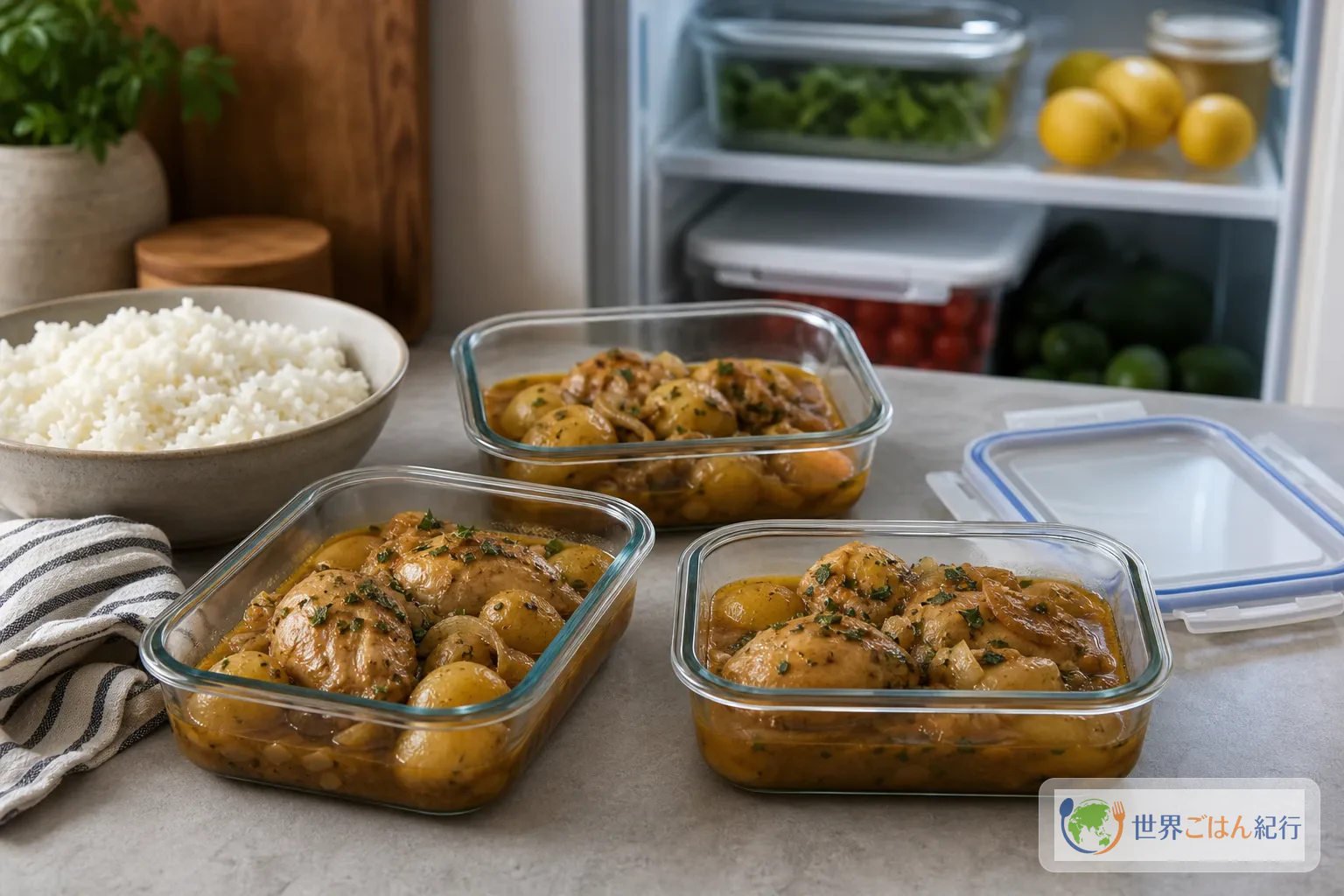
Within 2 hours of cooking, divide into shallow containers and refrigerate at 4°C (40°F) or below. Keep it up to 3–4 days in the refrigerator, or 2–3 months frozen as a stew. When eating, reheat to 74°C at the center, and avoid refreezing.
Sources
The materials that confirmed the origin, cooking method, how it is eaten, and storage and safe temperatures of kédjénou are as follows. All online materials were reopened on the day the text was written and checked against the scope used in the text.
- A Tour of African Gastronomy: Côte d'Ivoire (UN Tourism) Accessed and checked: 4 August 2026. Checked the markets of Côte d'Ivoire, attiéké and how kédjénou is eaten.
- Kedjenou (196 flavors) Accessed and checked: 4 August 2026. Checked the canari, the stew without added water, the step of shaking the pot, and example ingredients.
- Ivorian Kedjenou Recipe (Travel Food Atlas) Accessed and checked: 4 August 2026. Checked the ingredient composition, cooking time, and pairing with attiéké or rice.
- Chicken Kedjenou from the Ivory Coast (Tastes From the Road) Accessed and checked: 4 August 2026. Checked the canari, attiéké, and variations extending to fish and guinea fowl.
- Kedjenou de pintade fermière (MAGGI Côte d'Ivoire) Accessed and checked: 4 August 2026. Checked an example of a different line of recipe using guinea fowl, water and oil.
- La gastronomie ivoirienne : une diversité culturelle à découvrir (paper published by Ziglôbitha) Accessed and checked: 4 August 2026. Checked the culinary background tied to farming and hunting, the canari, aromatics and regional differences.
- Safe Minimum Internal Temperatures (FoodSafety.gov) Accessed and checked: 4 August 2026. Checked the safe temperature of 74°C for chicken and reheating.
- Cold Food Storage Charts (FoodSafety.gov) Accessed and checked: 4 August 2026. Checked refrigerator and freezer periods for stewed dishes and cooling conditions.