In Côte d'Ivoire, women stand over steamers as clouds of steam rise around them. What they're making is attiéké. It's a couscous-like staple made from cassava (manioc) that has been fermented and then steamed. The grains come out light and fluffy, with a faint sourness from the fermentation, and they taste quite different from the wheat couscous of North Africa. The flavor is mild and goes with almost anything, a little like rice does in Japan.

What Is Attiéké?
Attiéké (also spelled atieke, attieke or athieke) is the cassava couscous of Côte d'Ivoire: cassava that has been fermented and steamed into light, fluffy grains with a faint sourness. It is not wheat couscous, and it is eaten like rice, usually with grilled fish and a tomato salad. This page gives a home version made from tapioca starch.
Attiéké in Côte d'Ivoire
How attiéké is eaten
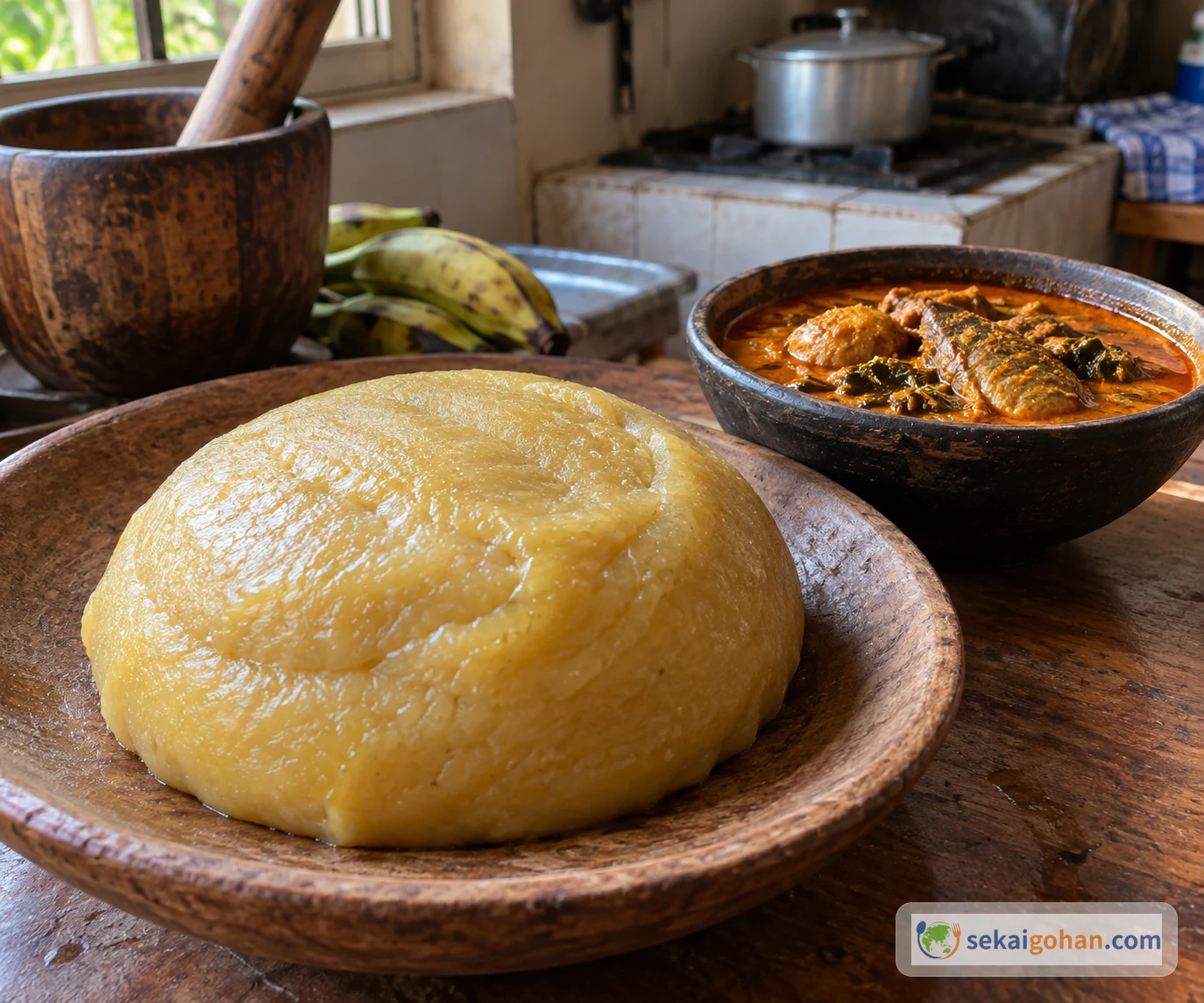
Attiéké is an everyday staple in Côte d'Ivoire. It's traditionally served with grilled fish or grilled chicken and a hot chile paste called piment, but its flavor is rich enough to stand on its own. Alloco (fried plantain) sometimes joins it on the plate. Placali, a pounded cassava paste, is the country's other cassava staple.
It's worth tasting attiéké next to Africa's other staples, such as the cornmeal ugali (Tanzania) and the teff-based injera (Ethiopia). Try it next to the couscous served with tagine (Morocco) too, and you'll notice how much North and West African "couscous cultures" differ.
Cassava and the history of attiéké
Cassava is native to South America. The Portuguese brought it to West Africa in the 16th century, and it adapted to the tropical climate and spread quickly.
Traditional attiéké takes several days to make. Fresh cassava is peeled and grated, then pressed in a cloth sack to squeeze out the liquid. Next it's mixed with a starter (a portion of the previous batch) and left to ferment for 2–3 days. Finally, the fermented mass is crumbled into granules and steamed. The fermentation is what gives attiéké its distinctive flavor. Grating, pressing and fermenting also reduce the cyanogenic compounds that raw cassava contains.
Cassava staples around the world
During the age of exploration, cassava spread from South America to Africa and Southeast Asia, and each region developed its own way of processing it. Attiéké stands out because it is both fermented and steamed.
| Dish | Country/region | Notes |
|---|---|---|
| Farofa | Brazil | Toasted cassava flour, sprinkled like a topping. A standard side for feijoada |
| Garri | Nigeria | Dried, roasted fermented cassava, rehydrated with water to eat |
| Fufu | Ghana | A pounded, dough-like cassava staple. A West African staple alongside jollof rice (Nigeria) |
| Bammy | Jamaica | A flat cassava bread, eaten with jerk chicken |
| Tapioca | Southeast Asia | Chewy pearls made from cassava starch |
Ingredients (serves 4)

A home version
Ivorian attiéké is made from fresh cassava, but fresh cassava is hard to find in many places. This recipe uses tapioca starch (cassava starch) instead.
Tapioca starch is a gluten-free ingredient. People with a wheat allergy can eat it with confidence.
Choosing Ingredients for Attiéké

Tapioca starch (cassava starch) works fine, but use cassava flour if you can find it. Tapioca starch is only the starch extracted from the root. Cassava flour is the whole root, dried and ground, so it keeps more fiber and protein and gets closer to the texture of attiéké in Côte d'Ivoire.
At home, lemon juice stands in for the sourness of the 2–3 day fermentation. Go easy on it, though, because too much sourness pulls the dish away from the real flavor. About 1.5–2 tbsp is a good guide.
In Côte d'Ivoire a little chile paste called "piment" is served alongside. Any chile paste works as a stand-in; yuzu kosho or kanzuri (a Niigata chile seasoning) from Japan would add heat and a fresh accent.
Tips for Making Attiéké
Forming the granules
Mix the tapioca starch with the lemon juice and salt. Then add water a little at a time, rubbing the mixture between your hands. Use your fingertips to break it into granules so it never forms big lumps.
Steaming time
If you steam it too long, it turns mushy. Stick to 20 minutes and fluff the grains with a fork as soon as they come off the heat. You want them airy and separate, the way the rice is in nasi lemak (Malaysia).
Preparing and grilling the fish
Salt the fish, pour lemon juice over it, and let it sit for 15 minutes. This removes any fishiness and firms up the flesh. Pat it dry with paper towels and season both sides with black pepper.
Crisp skin is what makes the fish a good contrast to the soft attiéké. Start over medium heat, and don't move the fish until the skin has set.
Serving, Variations, and Storage

Variations
Attiéké with braised fish (poisson braisé) is the most popular way to eat it. Instead of grilling the fish over direct heat, wrap it in aluminum foil with onion, tomato and chile and steam-bake it. The fish's savory juices soak into the vegetables, which end up working like a sauce.
For braised chicken (poulet braisé), use chicken thighs instead of fish. Marinate them in onion, garlic, mustard and lemon juice, then cook them in a frying pan.
Attiéké salad is a modern twist that's light and good for summer. Toss cold attiéké with tomato, cucumber and onion, then dress it with vinaigrette.
For a Japanese-style plate, swap the fish for a Japanese dried fish (horse mackerel himono or Atka mackerel) and serve it with grated daikon and ponzu. The faint sourness of the attiéké goes surprisingly well with Japanese flavors, and a little yuzu kosho can stand in for the piment.
Nutrition and gluten-free eating
Cassava is a major source of energy for many people in the tropics. Attiéké is completely gluten-free, so it's a very useful alternative to couscous for anyone with a wheat allergy or celiac disease.
| Nutrient | Per serving (estimated) |
|---|---|
| Energy | 340 kcal |
| Protein | 3 g |
| Fat | 5 g |
| Carbohydrates | 2.5 oz (72 g) |
| Fiber | 4 g |
Storage and leftovers
| Method | Duration | Tips |
|---|---|---|
| Refrigerator | 2 days | Keep in an airtight container so it doesn't dry out. Sprinkle with a little water before reheating in the microwave |
| Freezer | 1 month | Wrap single portions in plastic wrap and put them in a freezer bag |
| Grilled fish | 1 day refrigerated | The next day, flake it and turn it into a salad |
Leftovers are easy to use up. For attiéké fried rice, stir-fry it with egg in a frying pan, with a little fish sauce for depth. For attiéké soup, stir it into chicken soup to thicken it. For attiéké gratin, layer it with boiled vegetables in a baking dish, top with white sauce and cheese, and bake.
FAQ
Q1. Can I make it without fermenting?
Yes. Lemon juice recreates the sourness of fermentation. If you want to go further, you can try a "pseudo-fermentation": mix the tapioca starch with water, stir in 1 tbsp yogurt, and leave it overnight at room temperature. That's harder to control, so beginners should stick with lemon juice.
Q2. I don't have a steamer.
A microwave works. Put the attiéké in a heatproof container, cover it with plastic wrap, and heat at 600 W for 3 minutes. Stir, then heat for 2 more minutes. The texture is a little different, but it still comes out light and airy.
Q3. What fish go well with it?
In Côte d'Ivoire, the standard choice is tilapia, a freshwater fish. Any grilled fish works well, including sea bream, horse mackerel, mackerel and Spanish mackerel. A split dried horse mackerel is an excellent match too. Raw fish doesn't suit it, so always serve attiéké with cooked fish.
Q4. Can children eat it?
Yes. Attiéké is mild and easy for children to eat. Leave out the chile paste and take the bones out of the fish, and even small children can eat it safely. Because it's gluten-free, it also suits children with a wheat allergy.
Q5. What is the difference between attiéké and couscous?
Attiéké is made from cassava, while the couscous of North Africa is made from wheat. Both are small steamed grains, but attiéké has a mild, faintly sour taste from fermentation.
Q6. What else can I cook from Côte d'Ivoire?
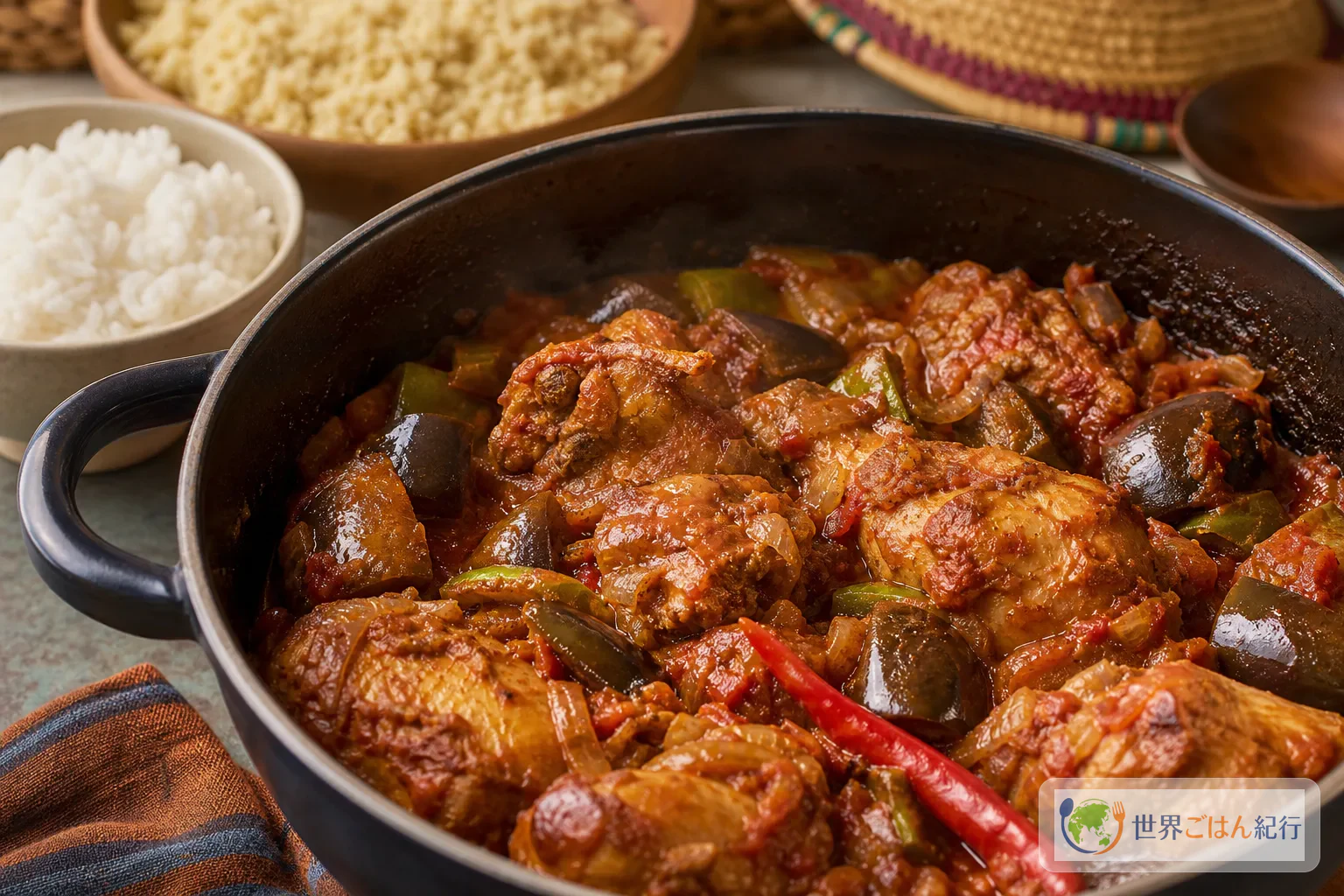
For more Ivorian cooking, see kedjenou and foutou banane.