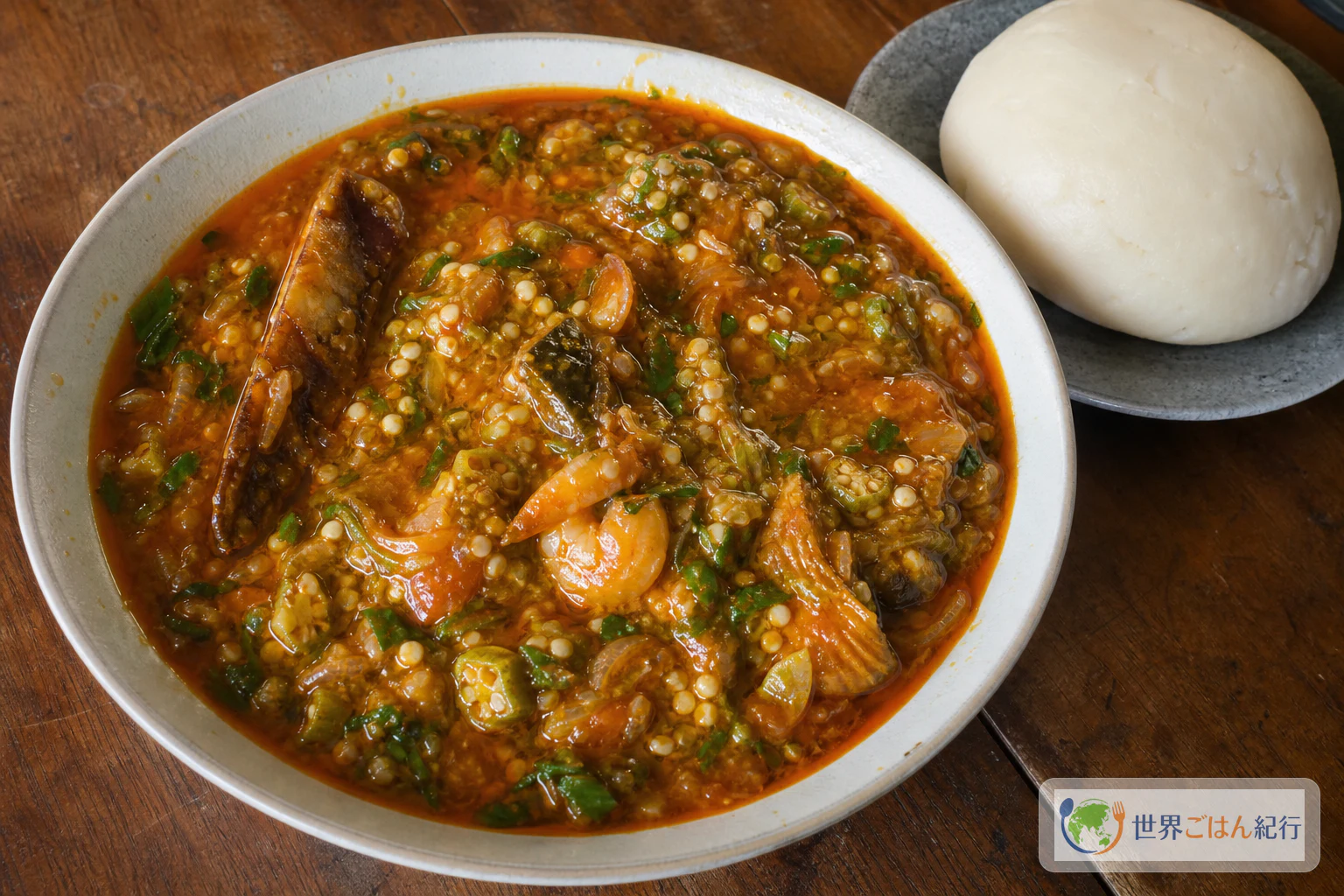
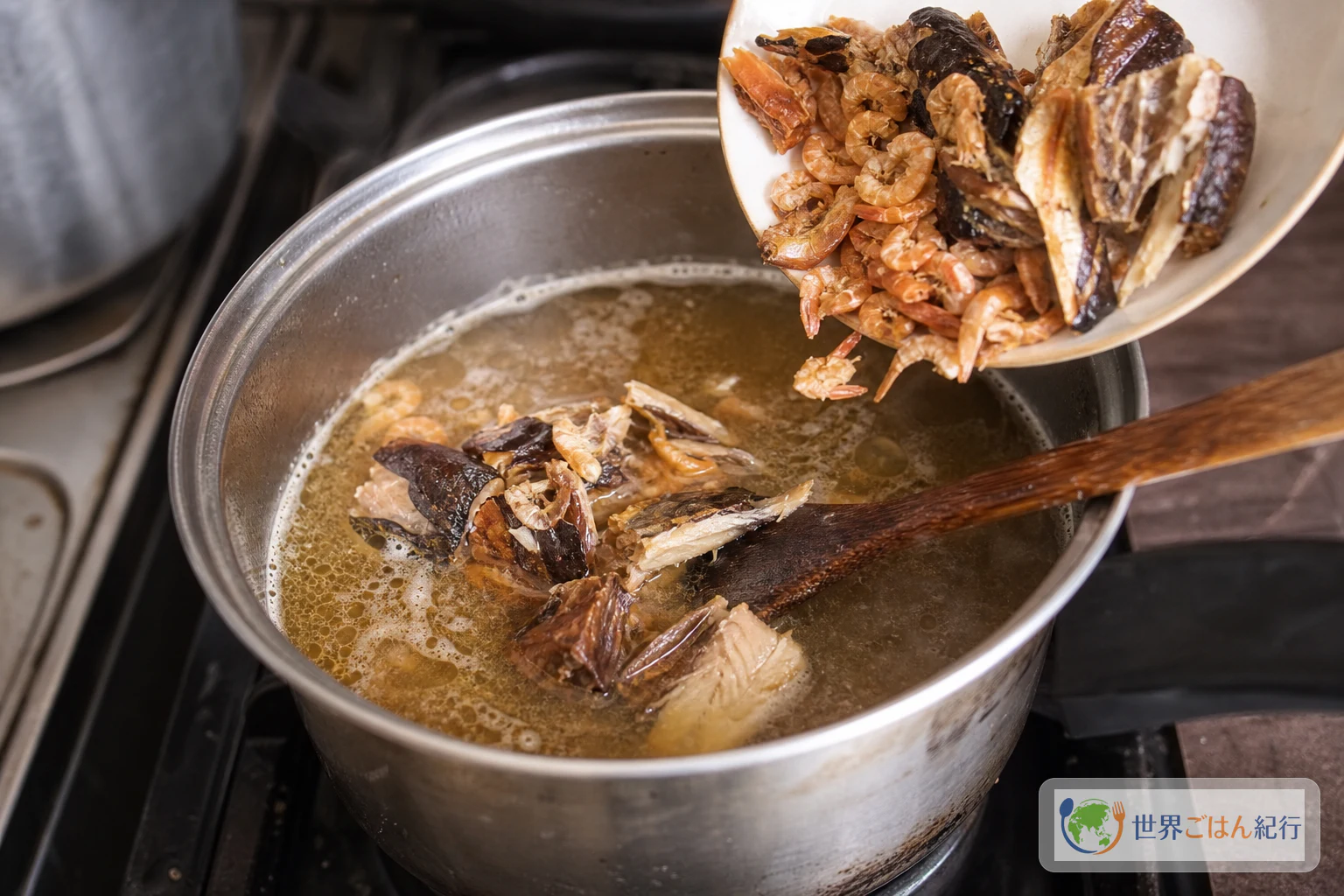
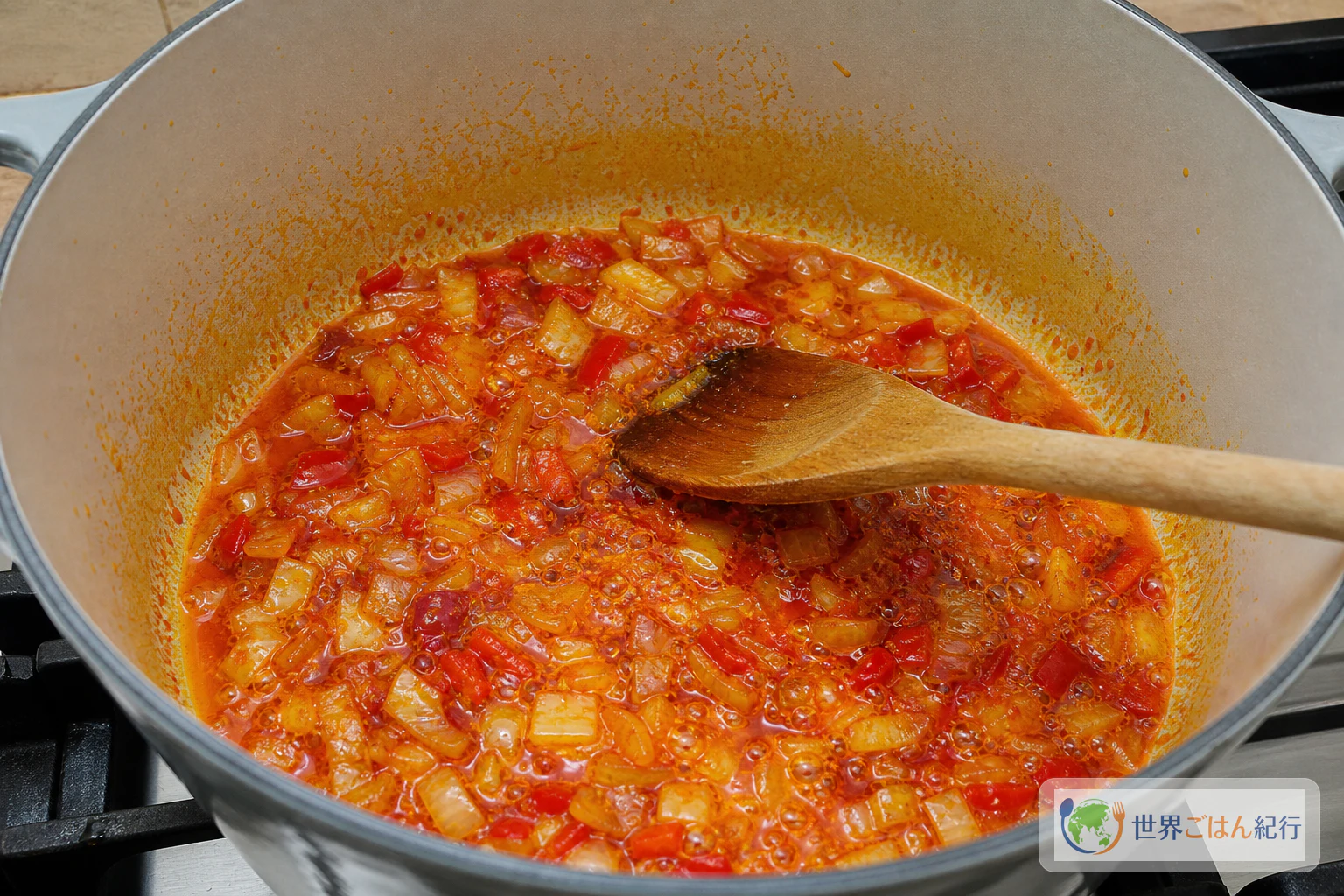
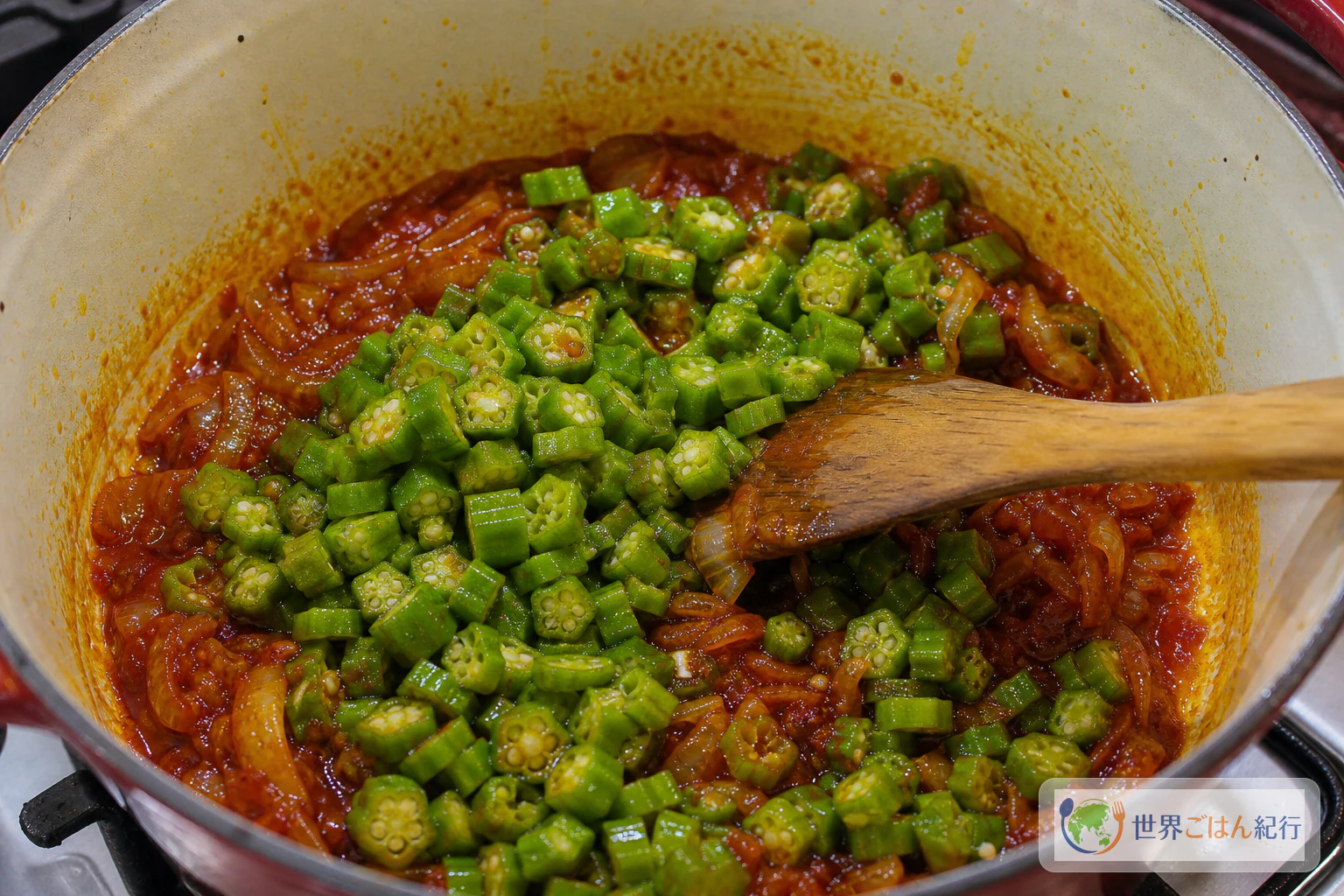
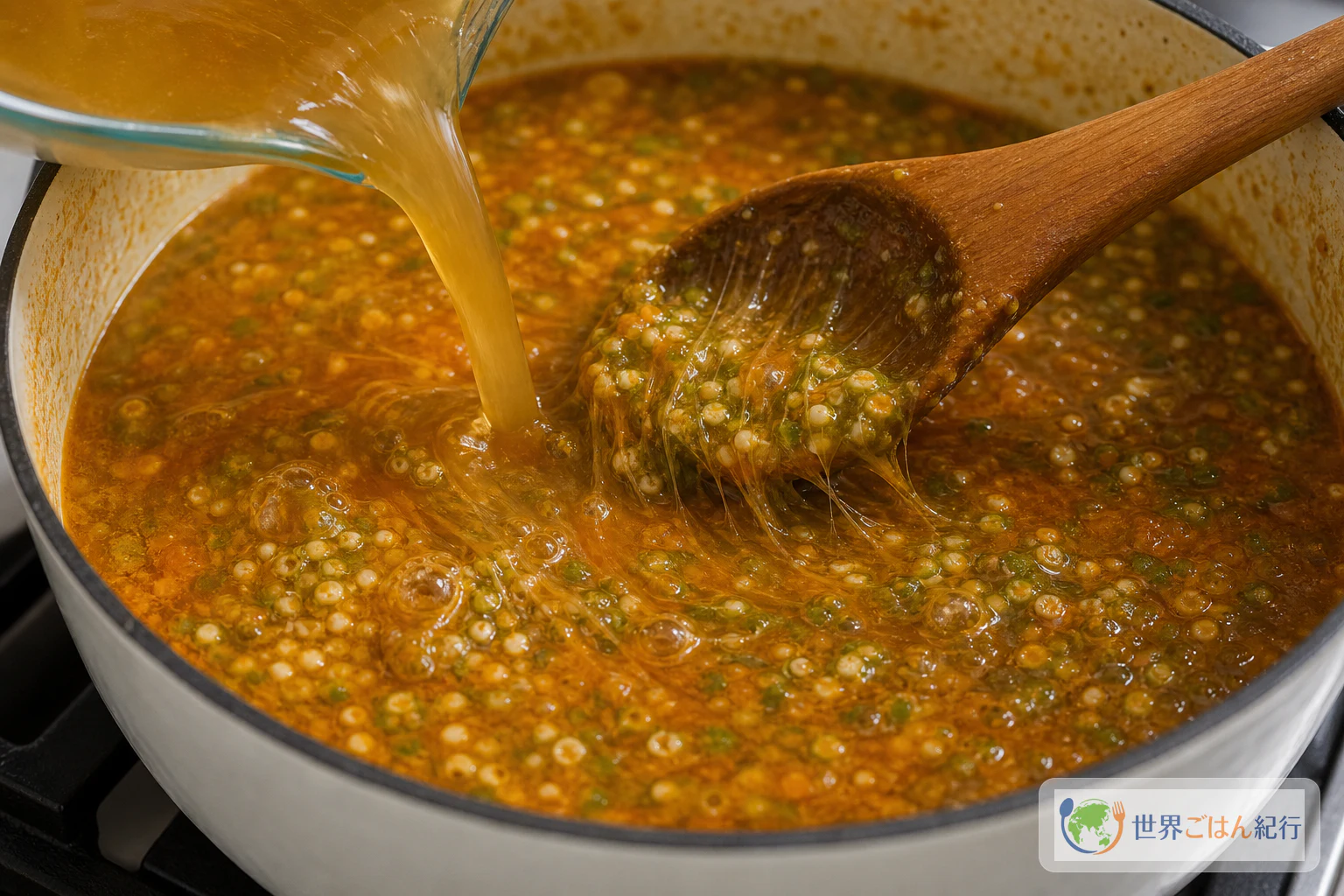
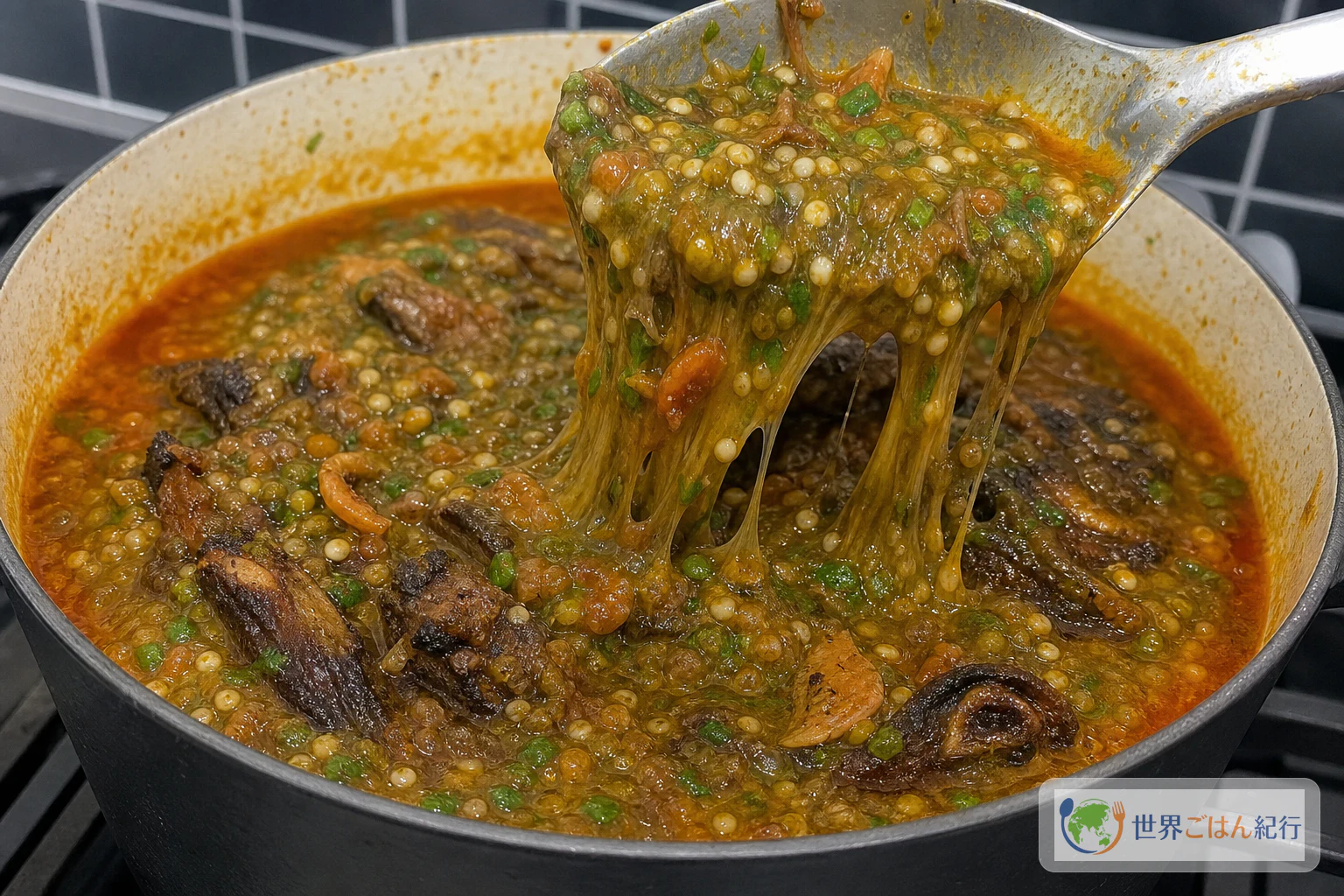
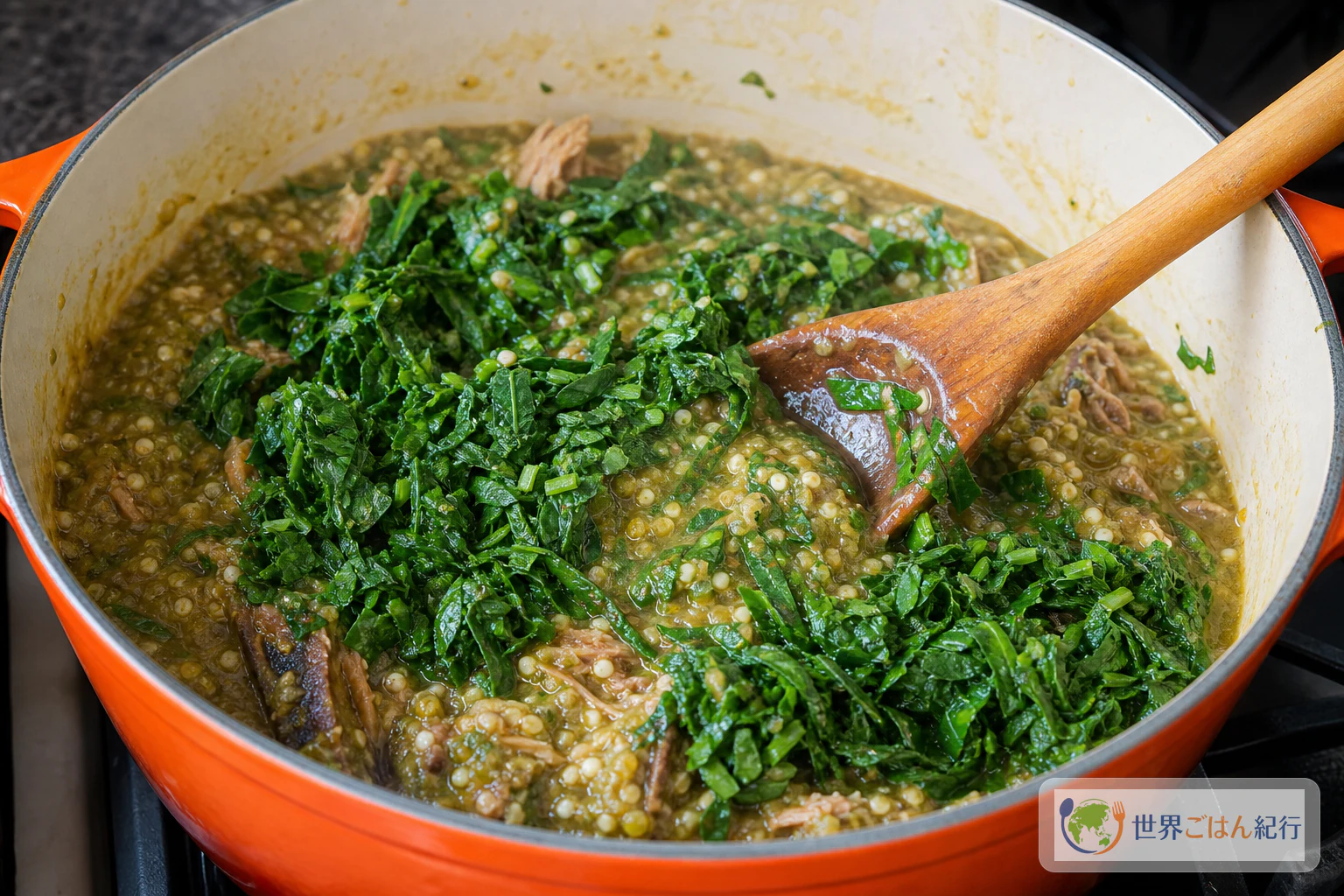
The moment the chopped okra goes into the pot, thin strands start clinging to the tip of the wooden spoon. Then come the red of the palm oil, the smell of seafood stock and the slight bitterness of greens. Pinch off a small piece of fufu or eba and sink it in, and the soup slides around it and clings. Nigerians love draw soup for exactly that stretchy, "drawing" texture.
What Nigerian draw soup is
"Draw soup" is a Nigerian Pidgin English name, and it comes from the way the soup stretches into strands from the bowl when you dip fufu into it. It's less a single fixed recipe than an umbrella term for soups thickened to a slippery, stretchy texture with okra, ogbono, ewedu and the like. In Nigeria you'll hear okro soup, okra soup and names that include a region, all mixed together.
Recipes differ from region to region, among Yoruba and Igbo cooks and others. Some households get the stretch from ewedu (jute leaves, also known as molokhia) or ogbono seeds, others from okra. Home cooks layer in meat, fish, dried fish, crayfish, locust beans, ugu leaves and more, and the soup is eaten with eba (made from gari) or pounded yam.
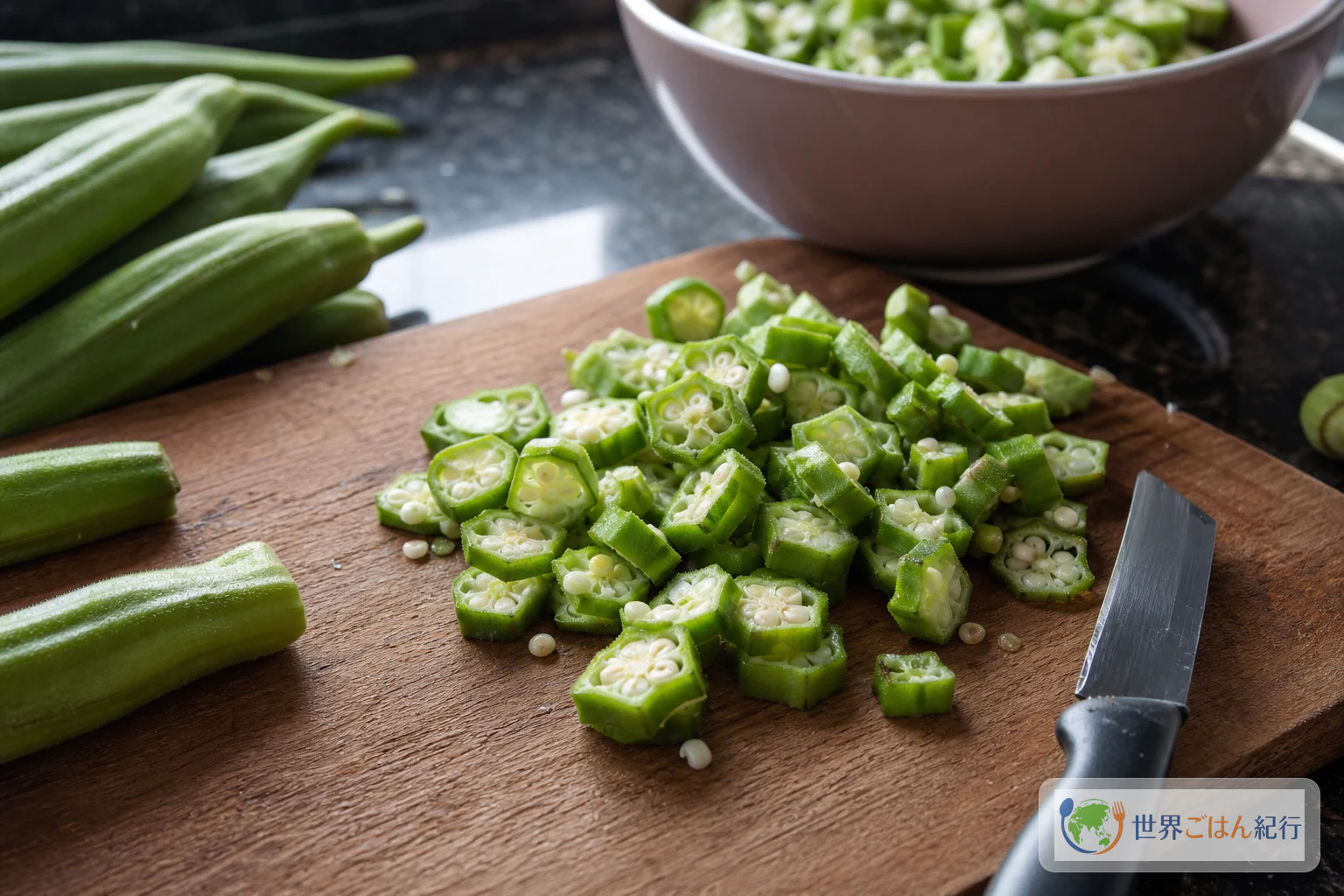
The version here is the okro soup / okra soup style, built around okra, which is easy to find almost anywhere. Outside Nigeria, hold on to three things: how you cut the okra, a seafood stock and red palm oil. Keep those, and the soup keeps its character.
In egusi soup the richness of melon seeds is the star; in asaro it's the heft of yam; in abacha it's the texture of cassava dressed in red palm oil. In draw soup, the stretch shapes the way you eat it. This isn't a soup to sip with a spoon but one to scoop up with fufu or eba, so a slightly thicker pot with plenty in it turns out just right.
Ingredients (serves 4)
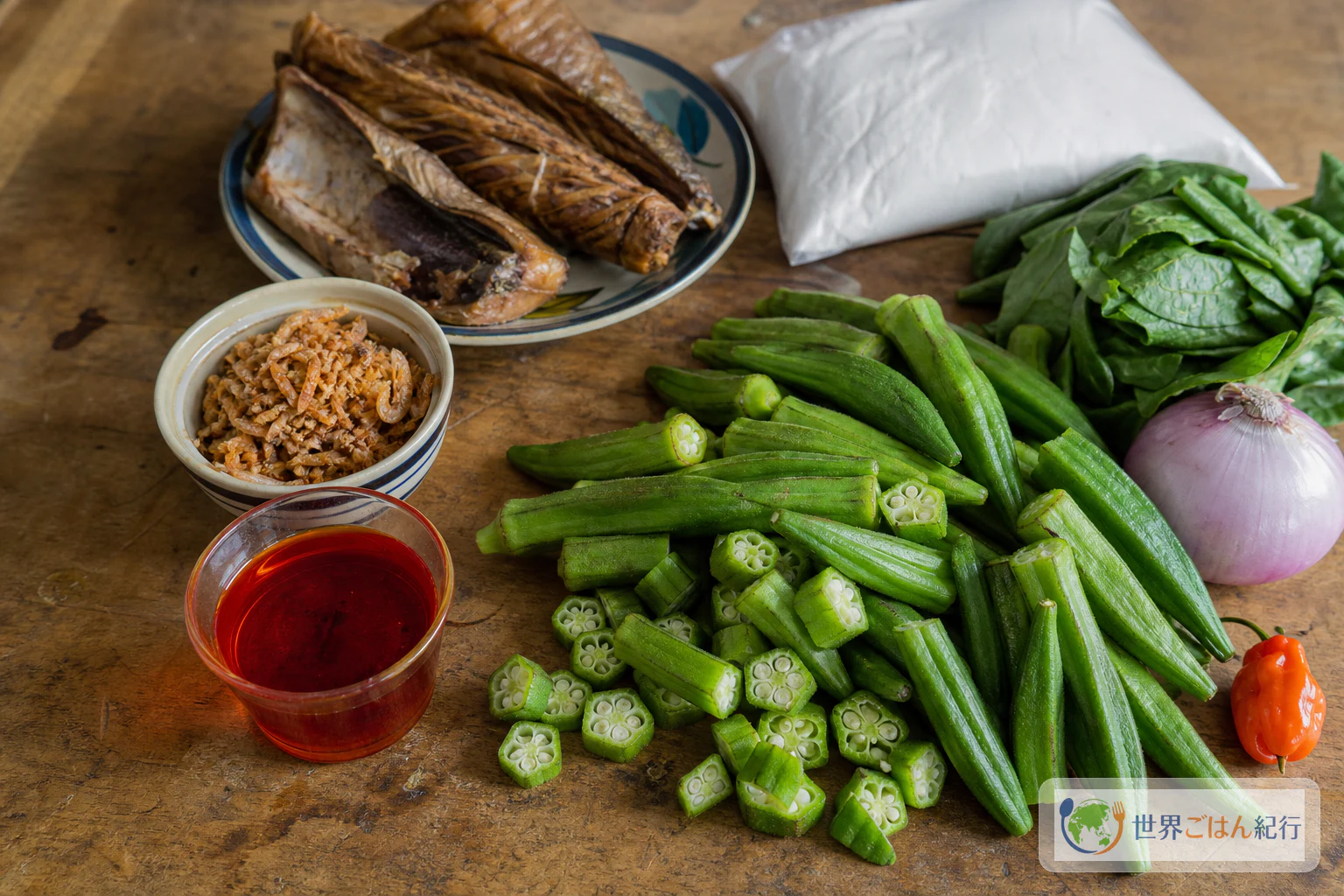
This serves 4. If you're serving fufu or eba alongside, prepare the starch separately. It can be eaten with plain white rice, but the fun of scooping up a stretchy soup comes through more clearly with fufu-type swallows.
This recipe uses fish, shrimp and chile. If anyone eating reacts to shellfish or fish, don't just leave out the ground dried shrimp; cook in a separate pot. For cassava flour or fufu mix, use commercially processed products, and avoid processing raw cassava yourself at home.
Nutrition estimate
Each serving is roughly 330 kcal, with 20 g protein, 17 g fat and 24 g carbohydrates. If you serve fufu or eba, the energy from the starch is added on top. On days you want less oil, cut the red palm oil to 2 tbsp, but the core of the aroma weakens, so keep the ground dried shrimp and seafood stock rather than dropping them.
Shopping for draw soup
The items that give the soup its Nigerian character are red palm oil, dried seafood and the fufu-type swallow. Look for them at African or international grocery stores or online. They carry over to dishes like abacha and suya, too.
Red palm oil gives draw soup its red edge and nutty aroma. It's not an oil to eat in quantity for health reasons, so treat it as a seasoning oil that defines the dish; a small bottle is a realistic place to start.
Ground crayfish brings a burst of ocean savoriness, and dried shrimp ground in a spice grinder plays a similar role. If shellfish is fine for everyone at the table, the soup comes together better with it than without.
Fufu or eba is what makes draw soup work at the table. Think of cassava-flour products as the swallow you scoop the soup up with, not as a substitute ingredient in the pot.
Method
Draw soup isn't a dish where you simply cook the okra down to pull out every bit of slime. Make the stock, bloom the aromatics in oil, bring out the okra's stretch, and add the greens briefly at the end. Keep that order, and the savoriness of the fish and the lightness of the okra both stay in the same pot.
Fixing a draw soup that won't draw
The most common failure isn't a bland flavor but a stretch that falls short. The cause usually comes down to how the okra was cut, overcooking or too much stock.
| Symptom | Main cause | Fix |
|---|---|---|
| Thin and runny, won't cling to fufu | Okra cut too large, too much stock | Coarsely chop 2.75 oz (80 g) okra, cook it in a separate pot for 2 minutes and add |
| Tastes grassy | Okra wasn't coated in the oil long enough | Cook 2 more minutes over medium-low heat and add 1 tsp ground dried shrimp |
| Stretch has broken and it's turned brown | Cooked too long over high heat | Chop 3.5 oz (100 g) fresh okra, add at the end and simmer over low heat for just 3 minutes |
| Fish aroma is too strong | Too much skin or bone left from the smoked fish | Remove the tough skin and serve with lime and sliced onion |
| Too much oil floating on top | Too much palm oil, not stirred enough | Turn off the heat, let it sit 3 minutes, and skim off just 1–2 tbsp from the top |
Onion adds aroma, but too much can make the stretch feel weaker. On days you want the stretch to be the star, stay at or under 5.5 oz (150 g) onion and make sure half the okra is coarsely chopped.
Serving, storing and varying draw soup
How to eat it
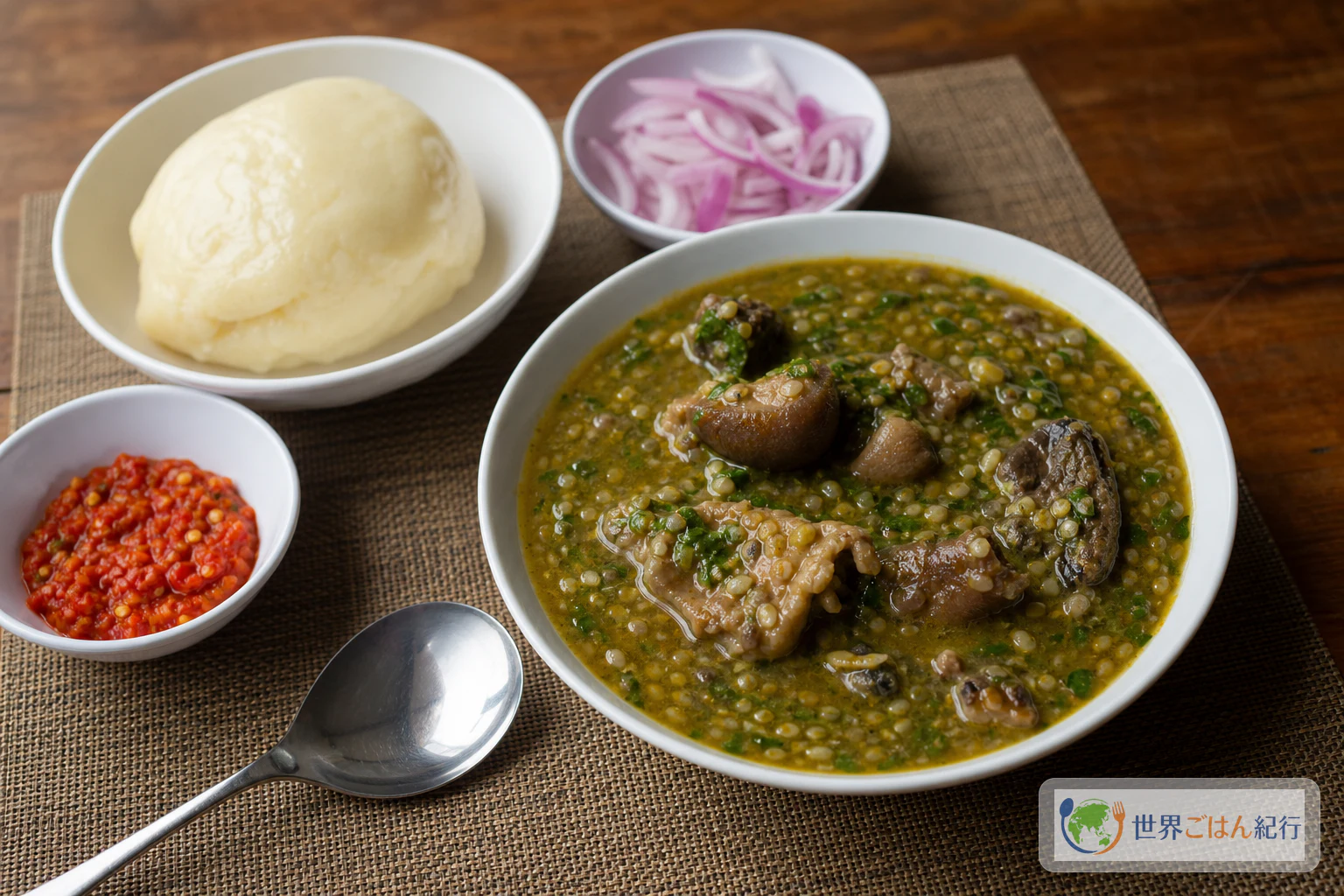
Pinch off bite-size pieces of fufu or eba, make a shallow dent with your fingertips or a spoon, and scoop up the soup. If you're not comfortable eating with your hands, cut the fufu with a spoon and pour the soup over it. Serving it over white rice? Make the soup a little thinner, or the stretch will feel too strong.
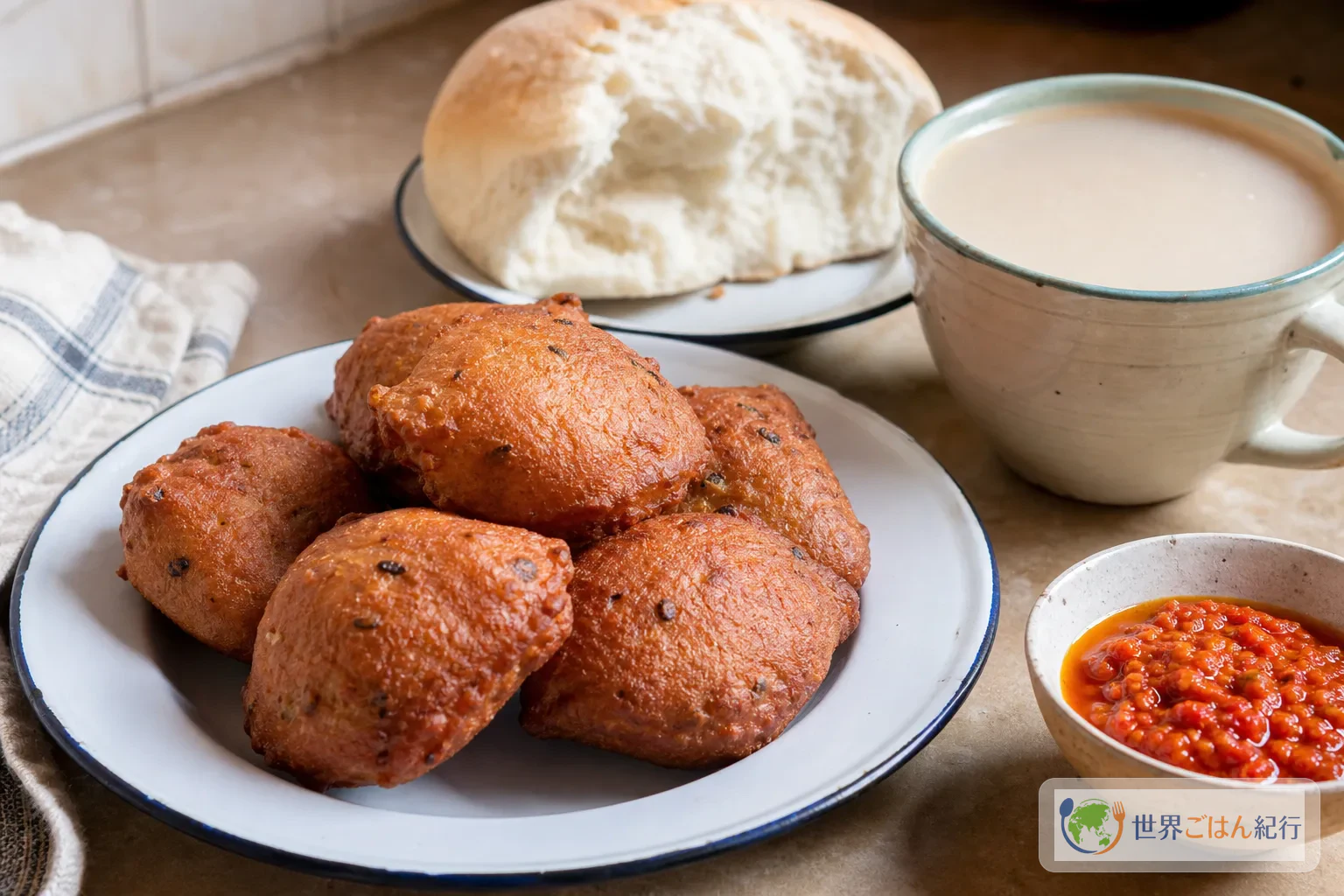
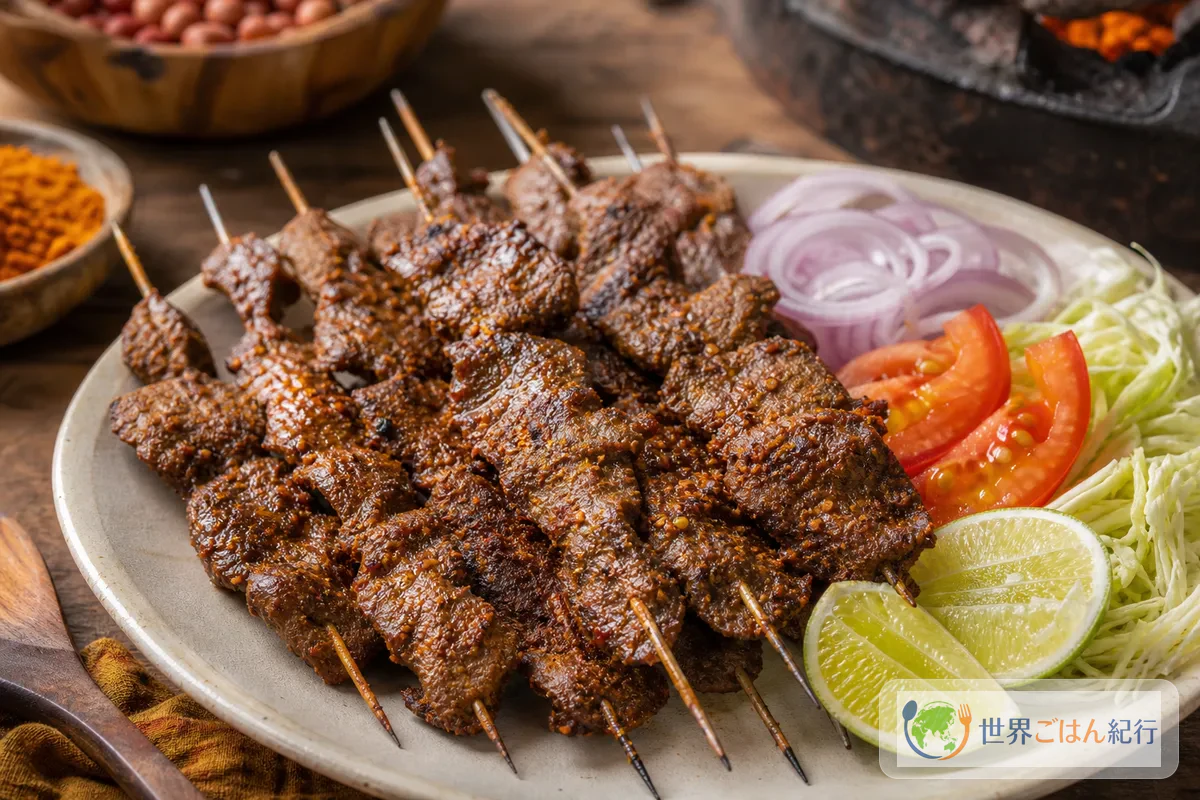
For a menu, skip doubling up on starch with Nigerian jollof rice. Draw soup works better with fufu or eba plus a little suya for smoky grilled meat or akara for light bean fritters. On a day you want to compare West African soups, Ghanaian fufu or groundnut soup shows you what eating soup with a swallow is all about.
Storage and reheating
Leftovers keep in the refrigerator for 2 days. As the soup cools, the okra's stretch tightens and the fish aroma gets stronger. To reheat, transfer it to a pot, add 2 tbsp water and warm over low heat for 4–5 minutes, until just short of bubbling. In a microwave, heat at 600 W in 1 1/2-minute bursts, stirring between each, until hot all the way through. It can be frozen, but the okra turns a bit watery, so use it within 1 month.
Household variations
Across Nigerian households, draw soup changes character depending on what makes the stretch and which proteins go in. For a first attempt, an okra base and a seafood aroma that isn't too strong give you a soup that suits both fufu and rice.
| Style you'll see in Nigeria | How it tastes | How to approach it in a home kitchen |
|---|---|---|
| Okra-centered okro soup | A light stretch and green aroma that carries seafood or meat | Use 14 oz (400 g) fresh okra and coarsely chop only half |
| Seafood-forward versions | A rich stock from dried shrimp, dried fish and smoked fish | Up to 12 g ground dried shrimp. With grilled mackerel, remove bones and skin to tone down the aroma |
| Versions layered with meat | Beef, goat and offal make it richer and heavier | Use only fish the first time; once you're comfortable, add just 2.75 oz (80 g) pre-boiled beef tendon |
| Versions with ogbono | A thicker stretch and heavier mouthfeel | Try it after making the okra version. If adding, start with 2 tsp |
| Versions with more greens | Bitterness and a green aroma that cut through the oil | 3.5 oz (100 g) komatsuna or spinach. Garland chrysanthemum (shungiku) is strongly aromatic, so no more than 1 oz (30 g) |
FAQ
Are draw soup and okra soup the same thing?
Not exactly. Draw soup is an umbrella term for Nigerian soups with a stretchy, stringy texture, and okra soup is the version that gets its stretch from okra.
Isn't it inauthentic without ogbono?
Ogbono is a seed that creates a strong stretch and has its own appeal, but okra alone makes a perfectly good okro soup. Getting the balance of okra, seafood stock and red palm oil down first makes the ogbono versions easier to tackle later.
Can I replace red palm oil with ordinary oil?
Switching all of it changes the color, the aroma and the depth that makes the soup taste Nigerian. On days you really want to cut back, reduce it to 2 tbsp and add 1/2 tsp paprika for color. The aroma still won't be the same, though.
Can I use frozen okra?
Yes. Okra chopped after thawing releases water, so cut it while half-thawed and shorten the cooking time in the pot by 1 minute. If the stretch is weak, add a little more finely chopped okra.
What if I'm eating with kids or people who don't like heat?
Use just 1 g chile in the pot and serve the chile sauce on the side. Seafood and red palm oil alone give the soup plenty of definition, and adding heat at the table is easier than trying to tame a spicy pot.