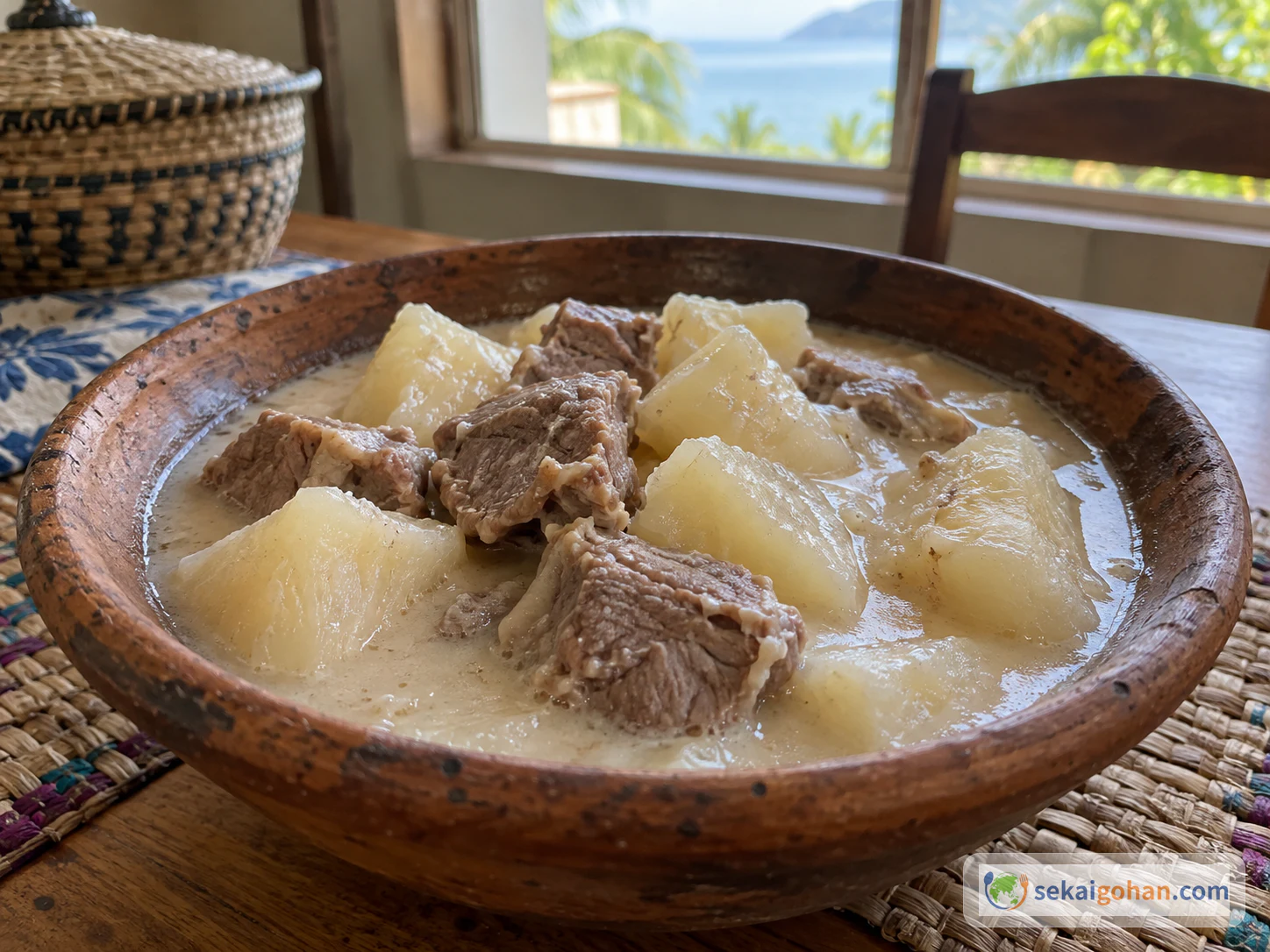
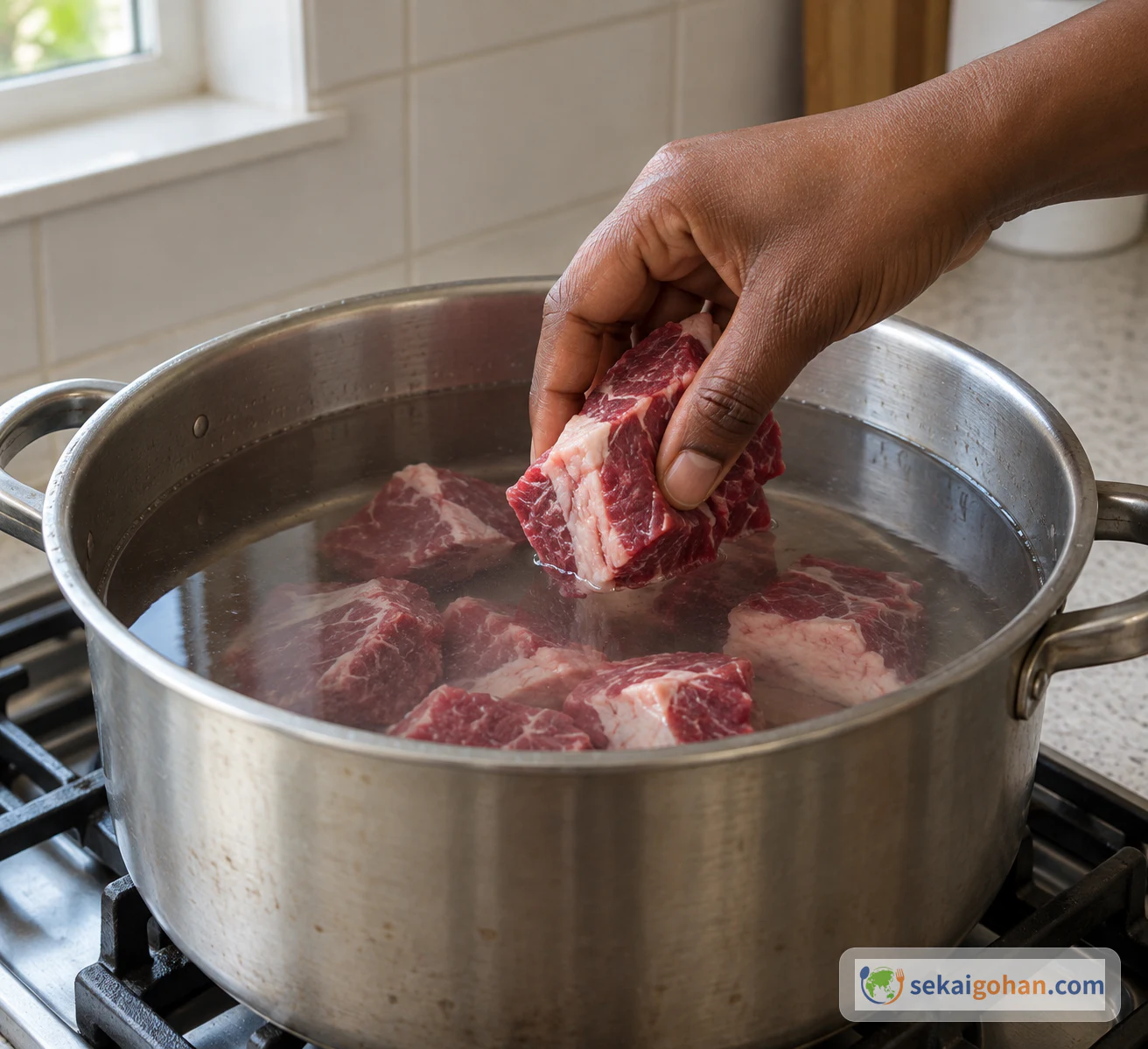
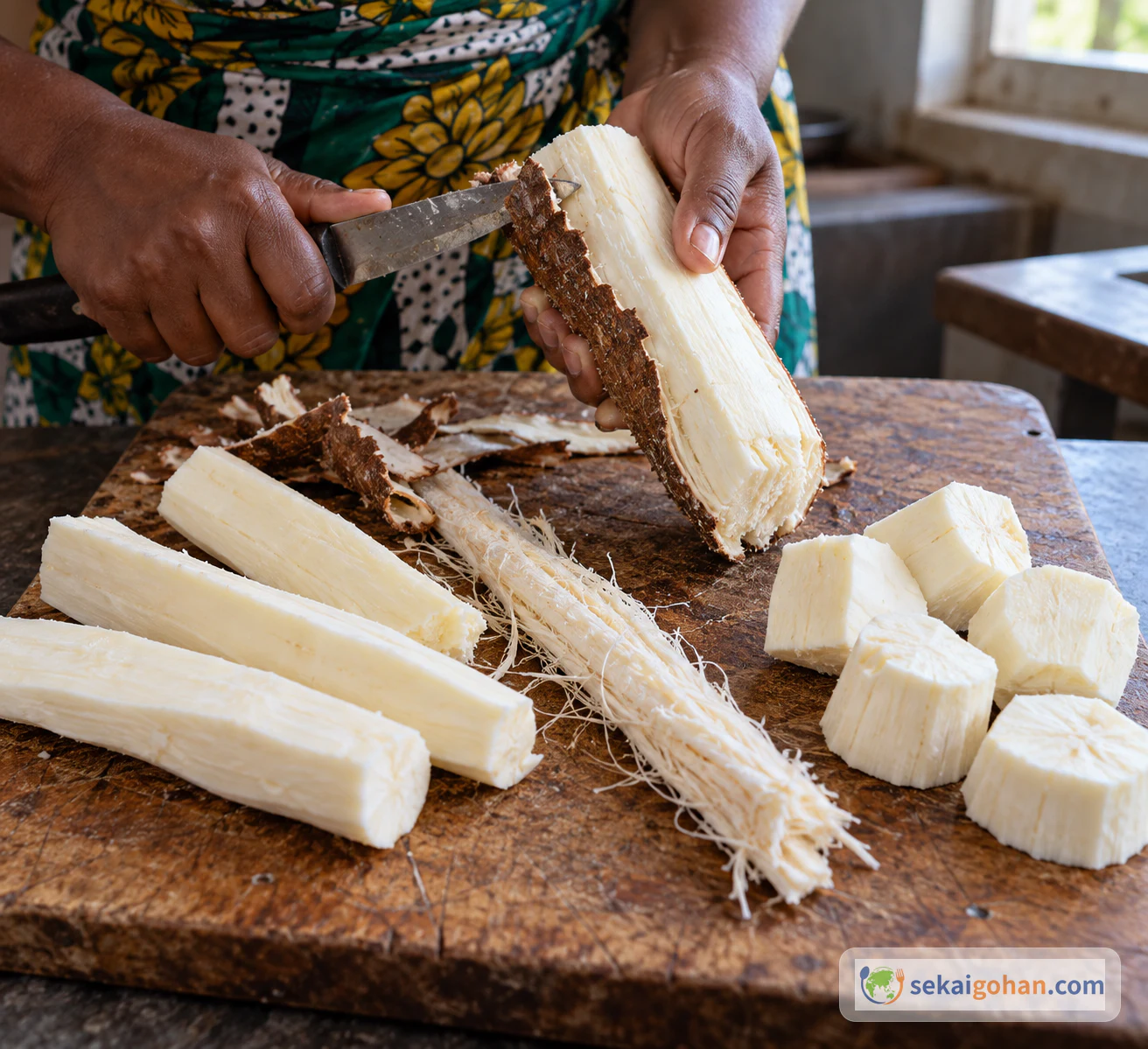
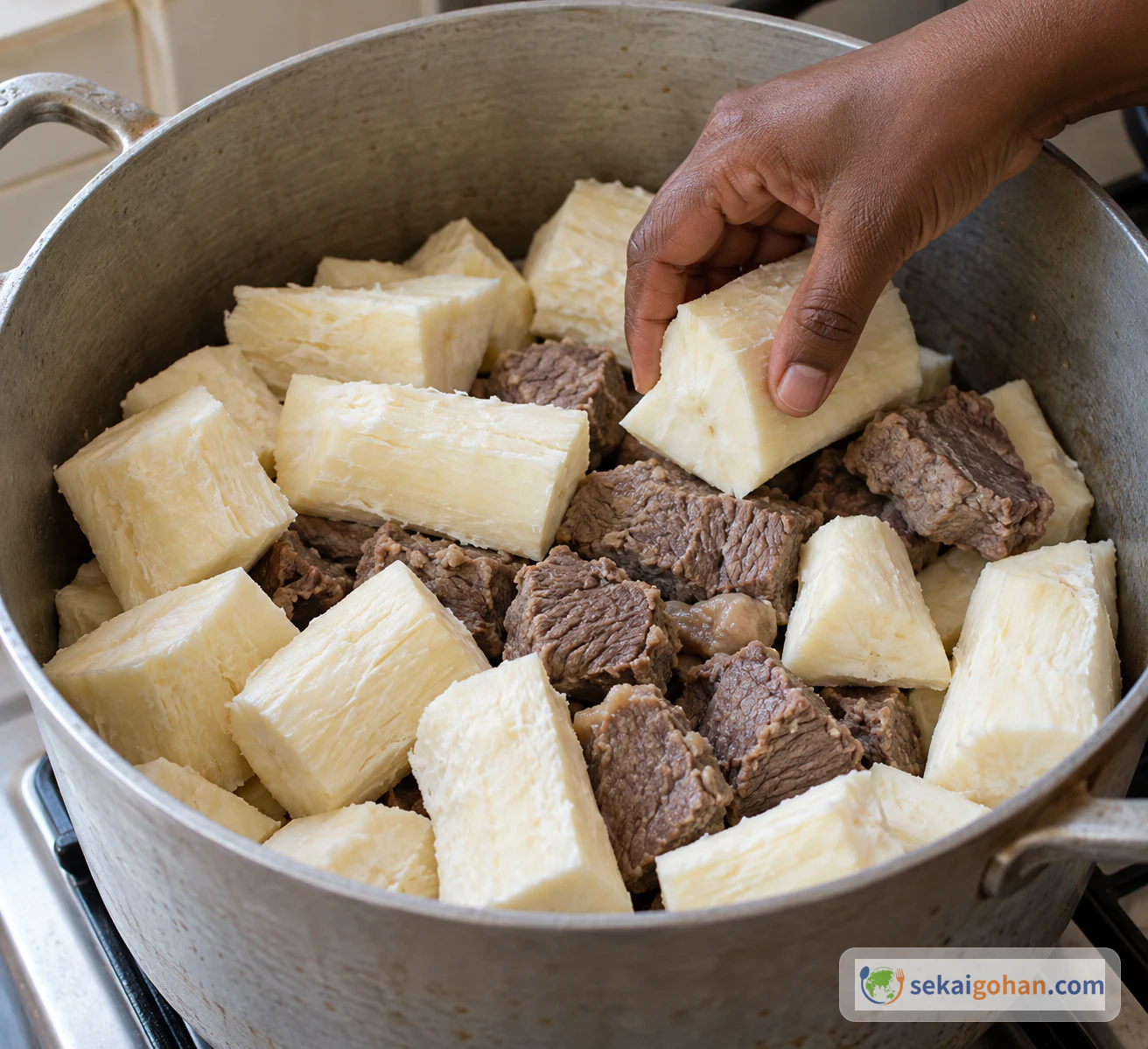
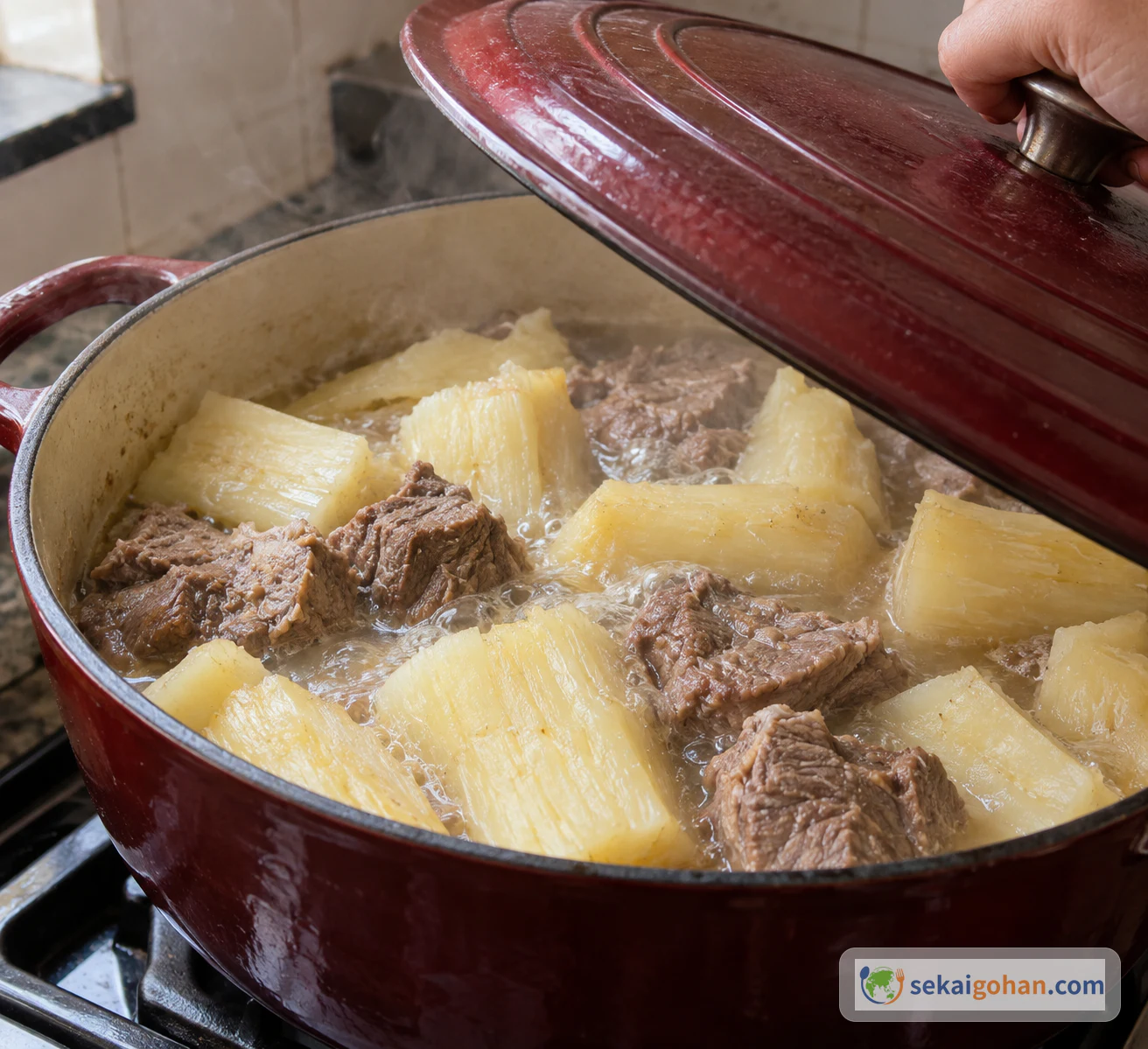
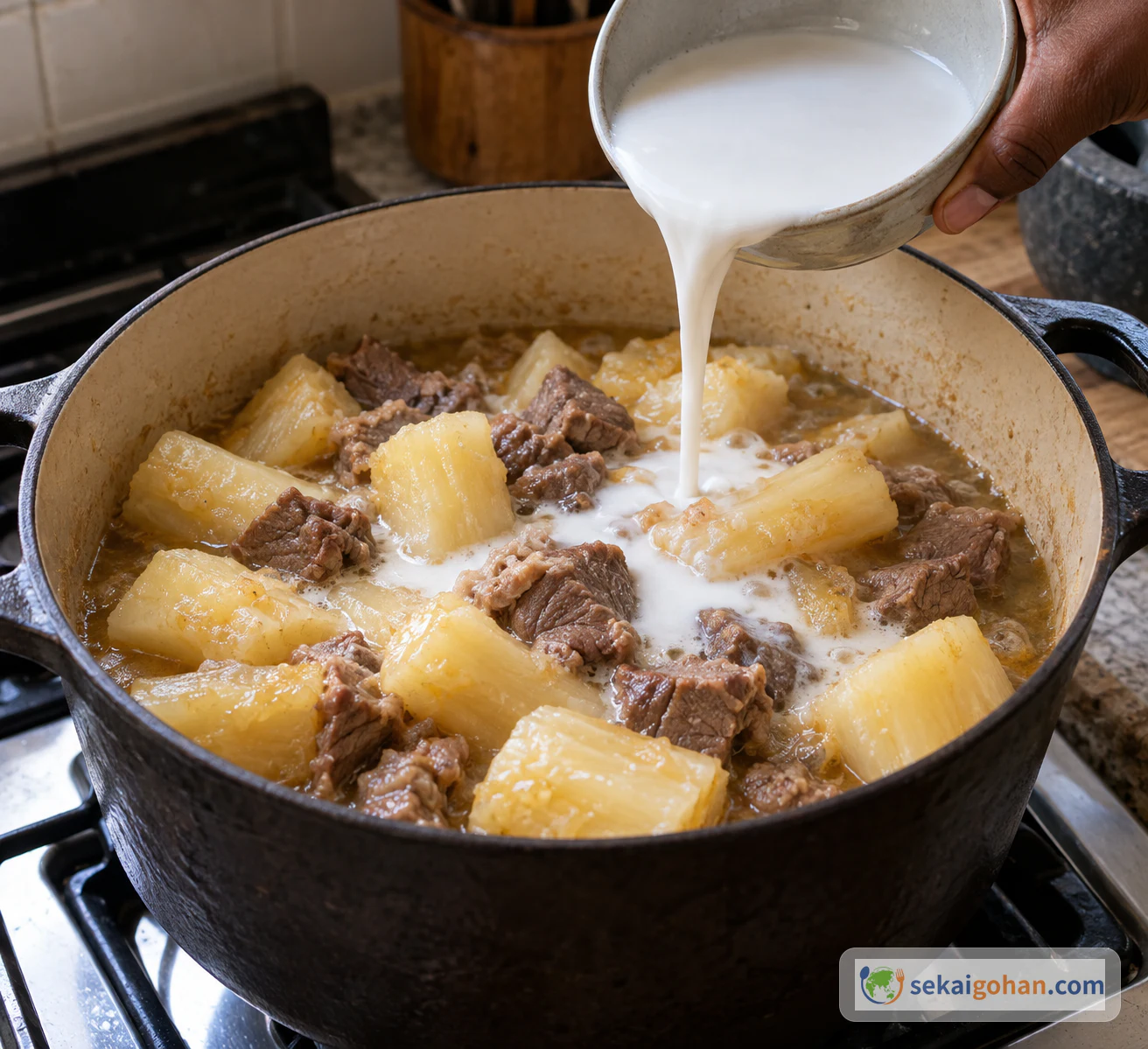
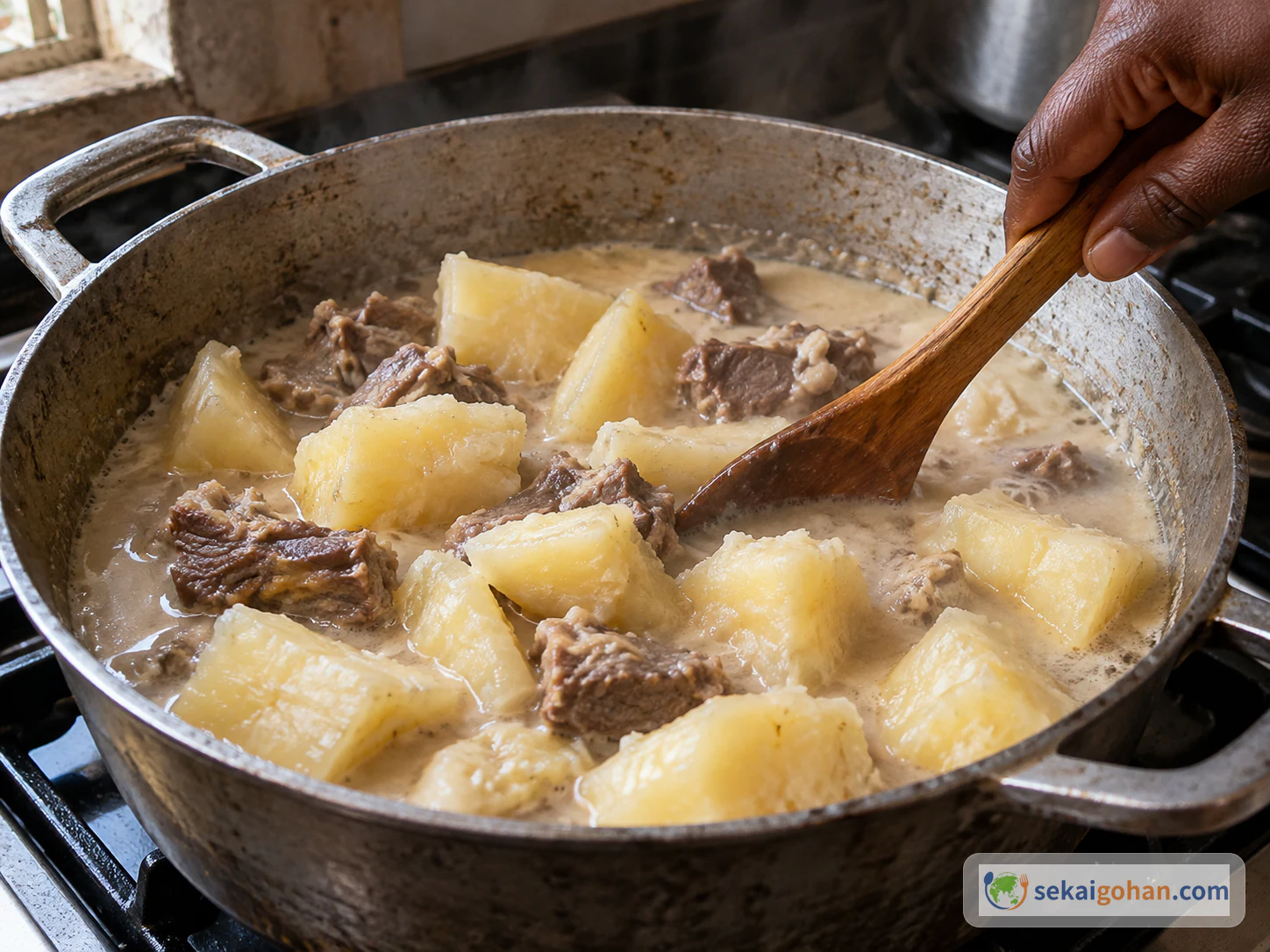
Beef simmers first in salted water while the cassava is peeled, its tough central thread pulled out and the white flesh cut small. Then it all goes into one heavy pot in layers (half the cassava, the beef, the rest of the cassava) with water and a lid, and it cooks until the cassava turns soft. Only then does the coconut milk go in, for a short final simmer.
That is mhogo mwitsi wa nazi na gnama, a Comorian dish of beef and cassava finished with coconut milk, often shortened to mhogo wa nazi. The ingredient list is short: fresh cassava, beef, coconut milk, salt and water. Two things matter most. Choose cassava sold as food, and cook it until it is tender all the way to the center.
Mhogo Wa Nazi on the Comorian Table
Fish and seafood are widely eaten in the Comoros and easier to find than meat. Rice and cassava are staples too, coconut milk goes into many sauces, and cassava with coconut is a popular pairing. The traditional form of this dish uses dried cassava, which needs its own safe preparation. This version uses fresh root.
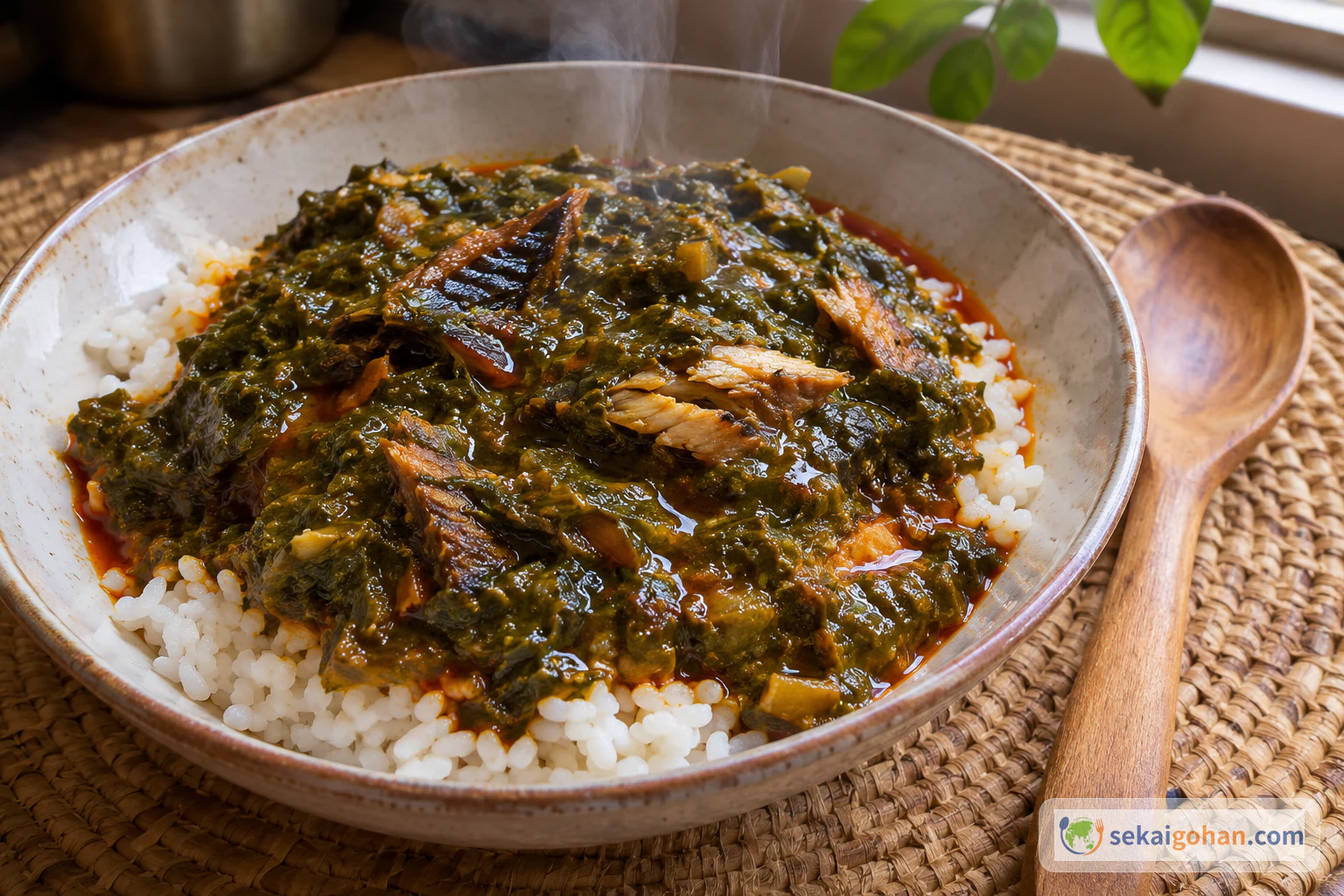
The dish uses the root, not the leaves. If it's the leaves you're after, try cassava leaf stew, which is another dish entirely.
Ingredients: Fresh Cassava, Beef, Coconut Milk and Two Waters
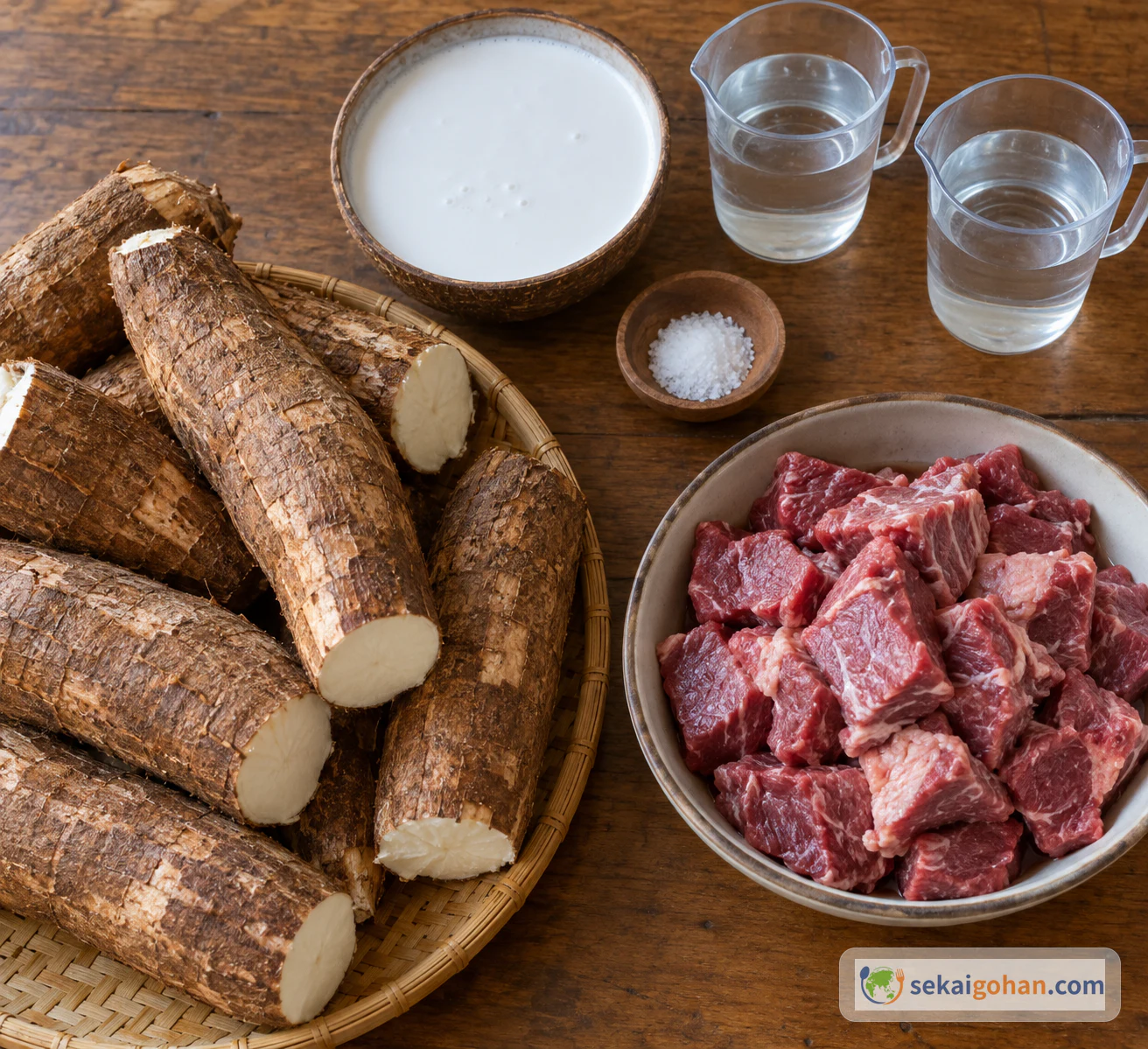
Keep the two waters separate: 3 cups go with the beef, 2 cups go into the layered pot. Weigh the cassava as you buy it.
Equipment
- A heavy-bottomed pot with a lid, for layering and cooking the cassava and beef
- A saucepan for cooking the beef
- A sharp knife and a cutting board
- A skewer or thin knife for testing the cassava
- A wooden spoon or spatula
Choosing Cassava and Beef
Cassava contains cyanogenic glycosides. Never eat it raw. Peel it and cook it completely. Ordinary boiling is not enough to reliably remove these compounds when you do not know the type of cassava. Use only fresh cassava sold as food, preferably a sweet variety, and follow the seller's preparation instructions. Do not use roots of unknown origin, bitter varieties, or cassava whose handling you cannot confirm. Keep peel and trimmings out of the pot.
Fresh cassava isn't stocked everywhere, so buy it where it is clearly sold for eating. Check the label or ask the seller how it should be prepared, and use only fresh root with this method.
For the beef, pick a stewing cut such as shin, which suits the long cook. Cut it and put it straight into the pot without rinsing it, so raw-meat juices don't splash around the sink.
If you have a coconut allergy or other food allergies, check the coconut milk label for its ingredients and any allergen statements.
Method: Beef First, Then Cassava in Layers
Each stage has one signal to watch: the beef cooked through, then the cassava tender to the center. Only the final simmer after the coconut milk is timed.
Troubleshooting Mhogo Wa Nazi
| Problem | Likely cause | What to do |
|---|---|---|
| The cassava is still firm in the center | It needs more time | Cover and keep cooking, testing the thickest pieces with a skewer. Hold off on the coconut milk |
| The pot is running dry before the cassava is tender | Water has evaporated | Add a little water at a time and keep the lid on |
| The cassava breaks up in the sauce | Stirring too hard in the final simmer | Stir slowly from the bottom, or gently shake the pot instead |
| The stew tastes flat | Not enough salt | Add salt a little at a time at the end and taste again |
| The sauce is thicker or thinner than you like | Evaporation and how much the cassava has softened | Next time, adjust with the lid and heat rather than extra coconut milk or other ingredients |
Serving Mhogo Wa Nazi
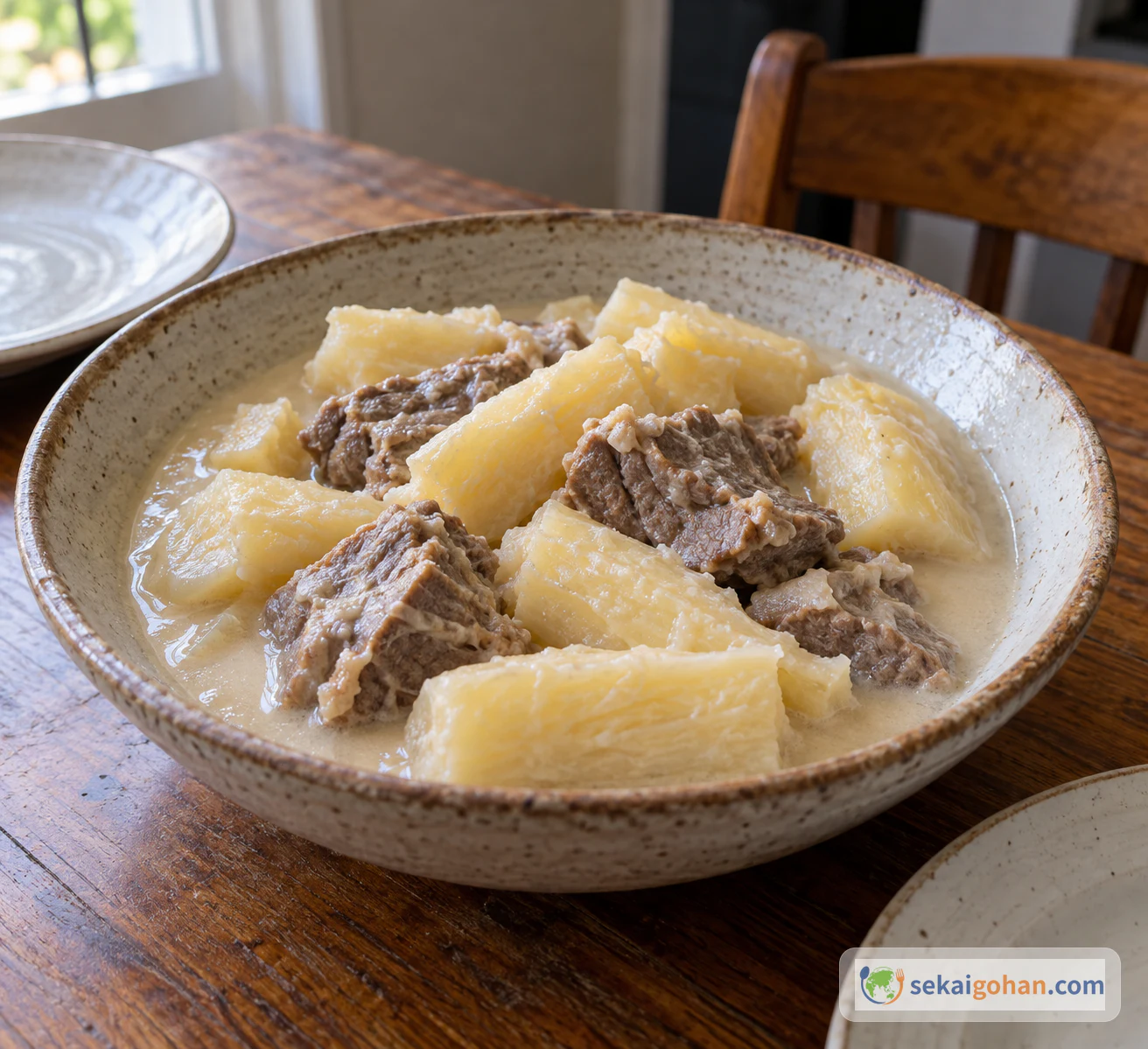
Spoon the cassava and beef into a shared bowl with plenty of the coconut sauce. The cassava is already the staple, so the dish stands on its own. Plain rice on the side is optional.
Frequently Asked Questions
What is the difference between the fresh and dried cassava versions?
The traditional form uses dried cassava, which needs its own safe preparation. This recipe uses fresh cassava root.
Why are the water amounts in cups, not milliliters?
The cup size isn't specified, so the amounts stay as cups. Use the same measuring cup for both stages, and judge the second stage by how tender the cassava is.
Is the 2.25 lb (1 kg) of cassava weighed before or after peeling?
Weigh it as you buy it, with the peel on.
How much salt should I use?
Add a little with the beef, then taste and adjust after the coconut milk goes in.
What happens to the liquid from cooking the beef?
It isn't used again. Lift the beef out, layer it with the cassava, and add fresh water to the pot.
Is cassava safe as long as it is soft?
No. Cassava contains cyanogenic glycosides, so it must be peeled and cooked thoroughly. Ordinary cooking reduces them by about 10–75%, which does not reliably bring them to safe levels when the type of cassava is unknown. Tenderness tells you the cassava is cooked, not that any root is safe. Use cassava sold as food, follow the seller's instructions, and never substitute bitter or unidentified roots.