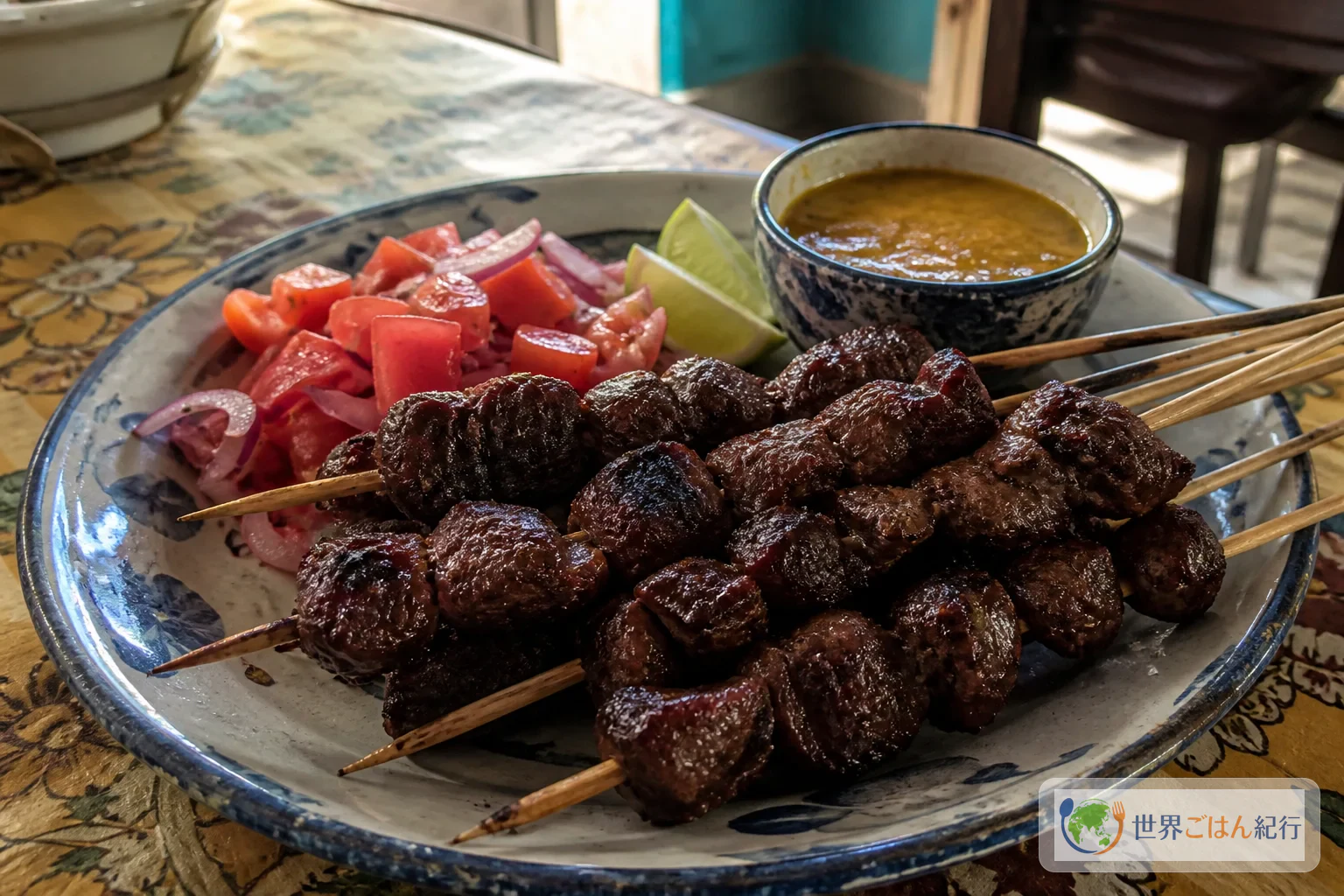
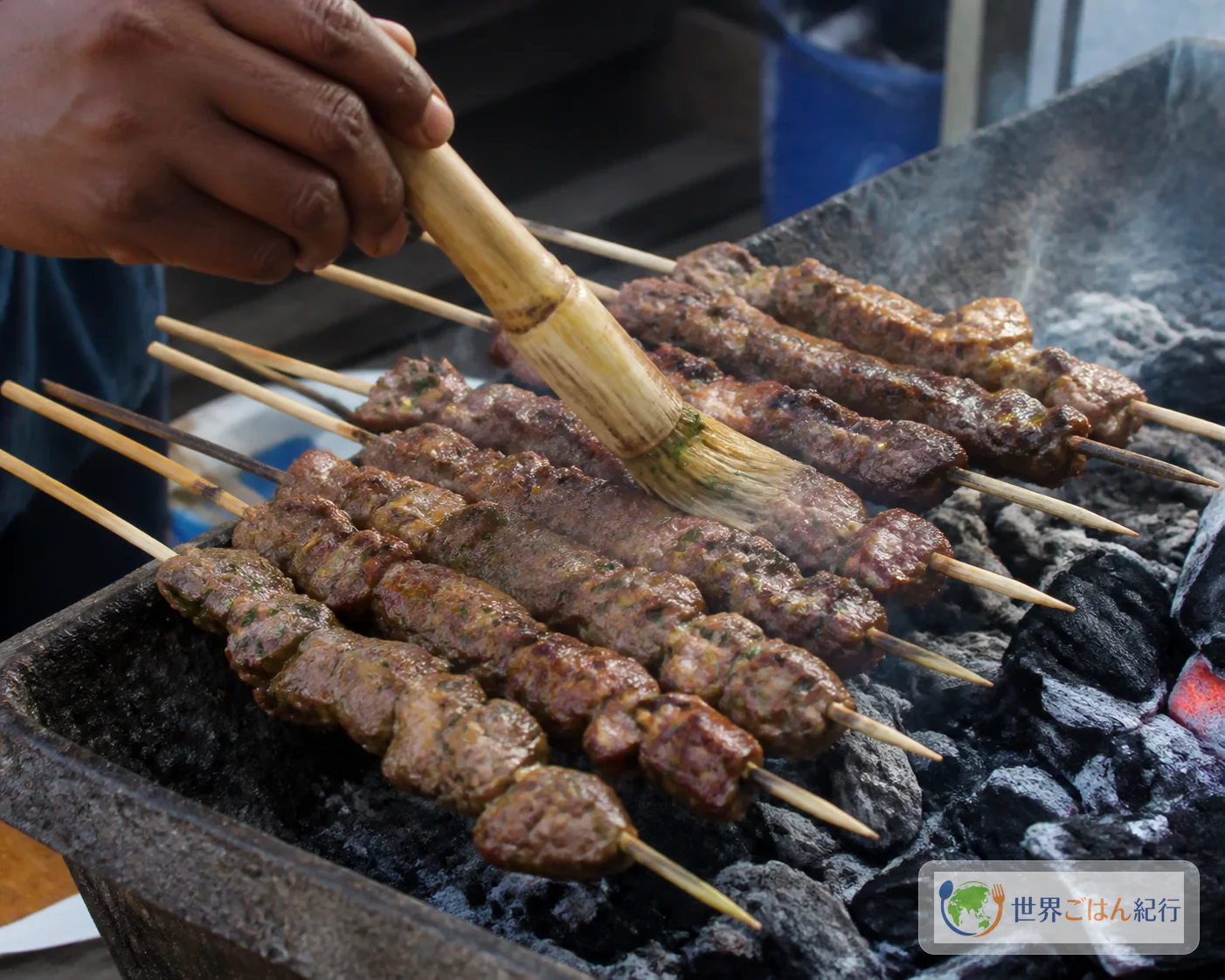
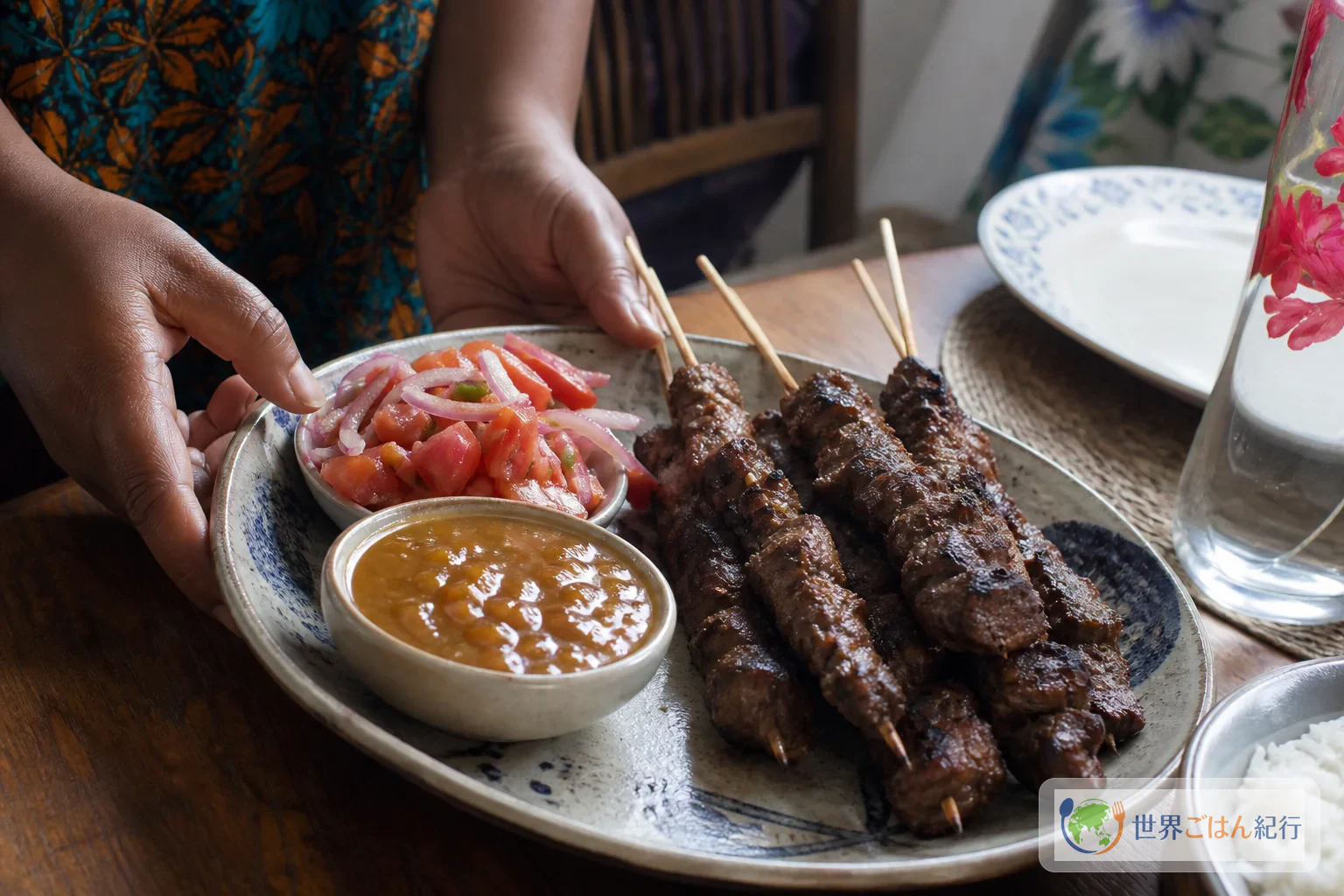
The coals glow under the grate, and where the fat drips, small flames flare up and paint dark brown streaks across the meat. Every time you turn a skewer, garlic and ginger drift up into the smoke. Mshikaki is Tanzania's grilled skewer: beef, lamb, goat, or other meat cut small, marinated in an aromatic mixture, and cooked hard over high heat. It comes out with a deep brown crust and a center cooked all the way through, and the lime's acidity and the tomato's juiciness keep it from ever feeling heavy. You don't need more spices to get there, but you do need a dry surface before the meat meets the heat.
Mshikaki in Tanzania and Zanzibar
Mshikaki shows up all over Tanzania, though the table around it changes with the region. Coastal cooking leans on spice, heat, and coconut milk. Inland, meals are simpler: ugali, rice, and grilled meat. In the port towns, the marinade layers spices, citrus, and chili, while inland versions center on the meat and salt.
Stone Town in Zanzibar grew from a long history of sea trade in which African, Arab, Indian, and European cultures mingled. You can see that history in the buildings, and you can taste it in the aromas cooks reach for: coconut, tamarind, chili, cardamom. Mshikaki gets called "African yakitori" sometimes, and as a description of grilled meat that's fair enough. On the coast, though, it comes with acidity and spice on the side.
Evenings at Forodhani Park
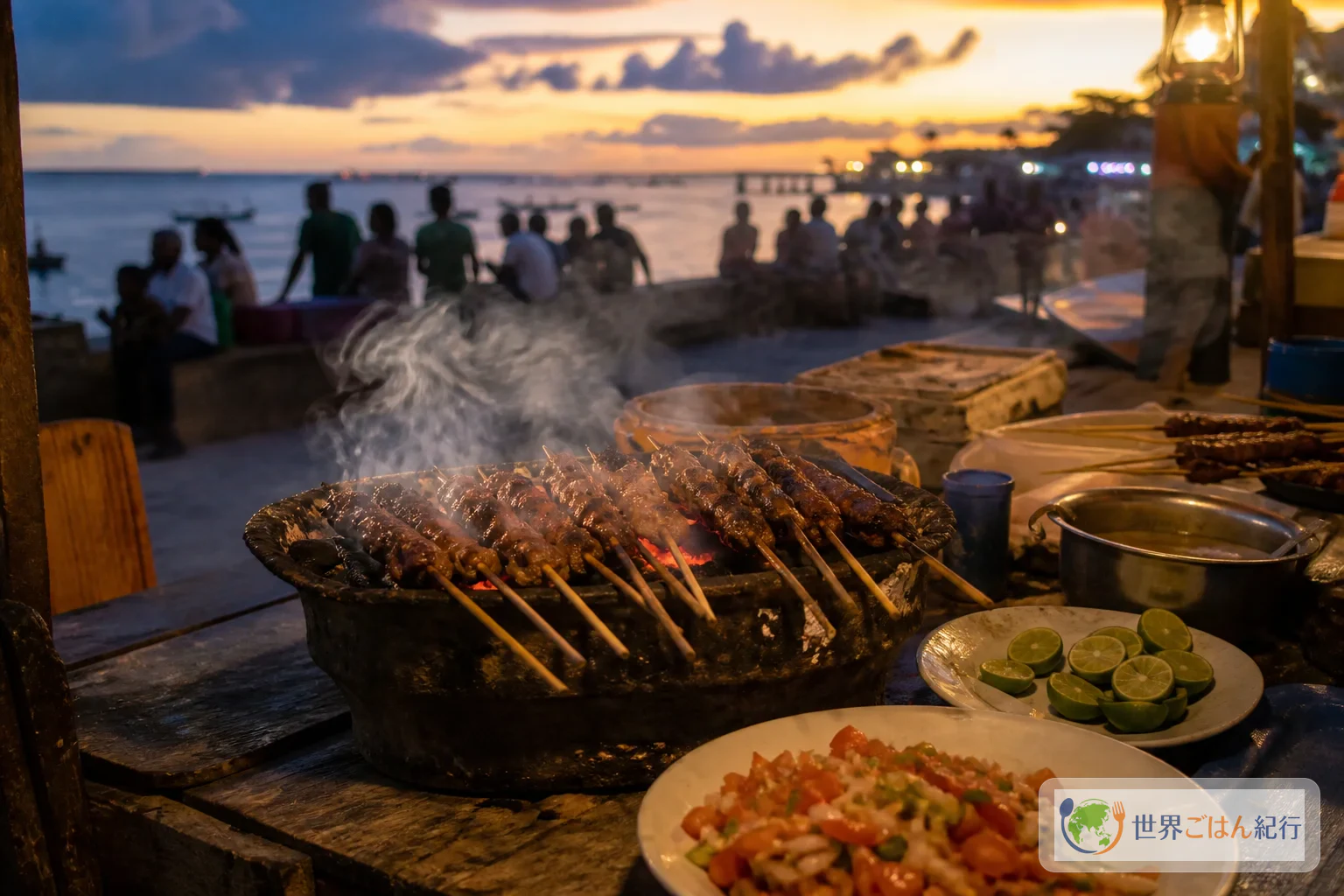
Forodhani Park on the Stone Town waterfront is quiet during the day and turns into a food scene in the evening. Stalls sell seafood, coconut, tamarind drinks, and sugarcane juice, and families and friends walk, talk, and eat. Mshikaki is food for those hours after work when people gather, which is why a short skewer you can eat standing up makes so much sense.
Home and Stall Versions
At home, mshikaki is usually beef, lamb, or goat cut small, marinated in garlic, ginger, lemon, oil, and water, and grilled over charcoal. Restaurants in Tanzania and Zanzibar also pair chicken with coriander and lime and serve a mango and tamarind sauce alongside. The number of spices and the marinating time vary. How strong the aroma is depends on the meat, on coast or inland, and on whether it's cooked over street charcoal or on a home griddle.
Both spellings appear in English, since Swahili dish names vary when transliterated.
Ingredients | Keep the Aroma Rather Than Making the Meat Tender
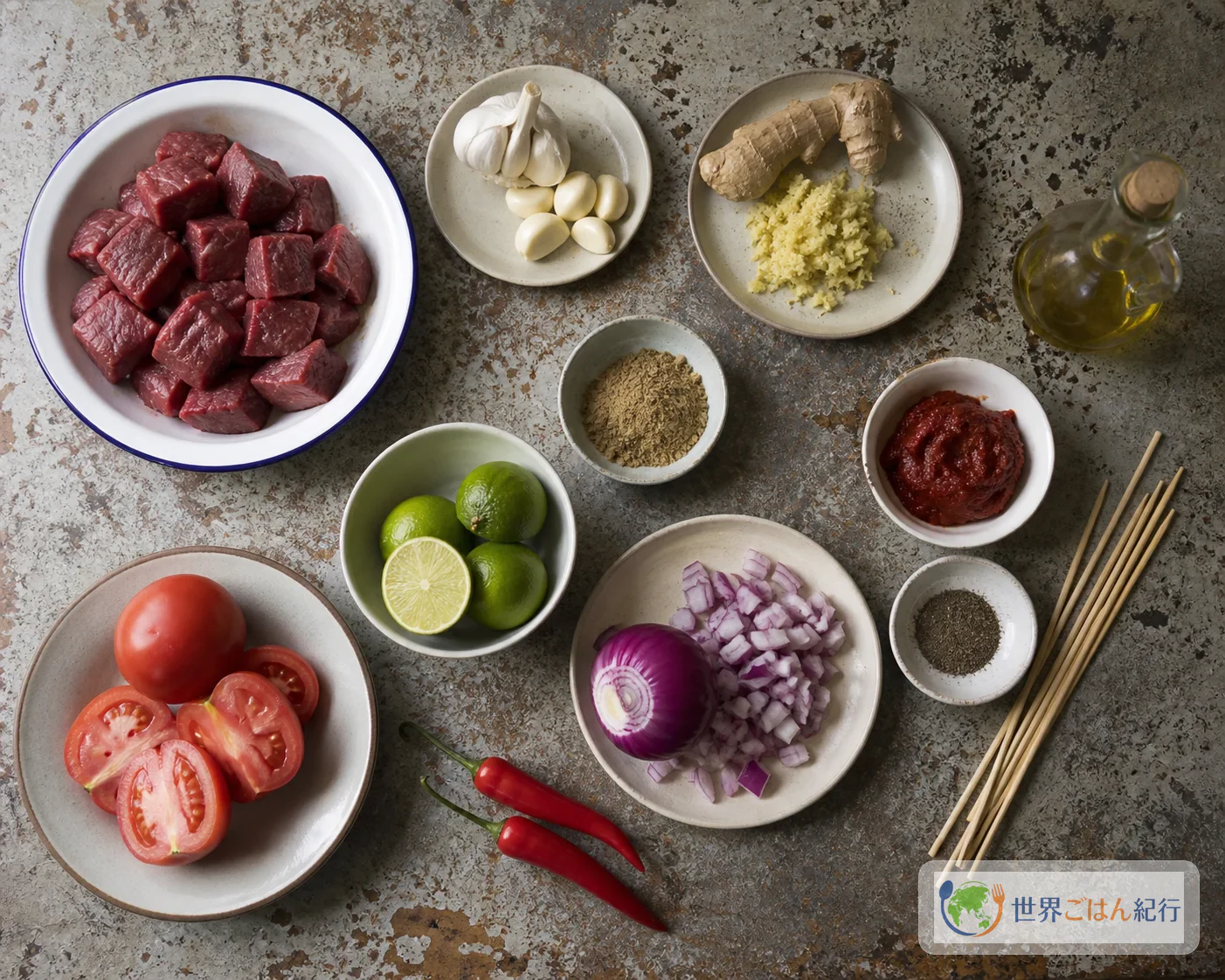
This makes 4 servings, with about 12 bamboo skewers. For beef shoulder, choose a thick block that holds moisture after grilling, not thin slices of lean meat. If you switch to lamb shoulder or goat, cut it to the same 1 inches (3 cm) cubes.
Meat and marinade
Mango-tamarind sauce
Tamarind is the intensely sour ingredient that tightens the sweetness of the mango. When buying it, check the volume of the paste and the ingredient list on the label. If you make the sauce with lime alone, replace the 1 tbsp in the sauce table with lime juice.
Salad and starch to serve
Coriander here is not the fresh leaves of cilantro but the dried seeds ground to a powder. It gives a dry, citrus-like aroma that suits grilled meat, rather than the green note of the herb. When buying, check that the label says ground coriander and note the quantity. Replacing it with curry powder pushes forward the aroma of cumin and turmeric and tends to bury mshikaki's light acidity.
Beef, limes, tomatoes, onions, garlic, and ginger are enough from an ordinary grocery store. Specialty shopping is worth it when you want to secure the aroma of dried coriander and when you want to add the sweet-sourness of tamarind. Neither is used in large amounts at once, so choose a quantity that can also go into other Indian Ocean coastal dishes and curries, and you will not be left with surplus.
Allergy and hygiene notes
The basic recipe in the ingredient tables uses no egg, milk, or wheat, but store-bought sauces and spices differ by product, down to the production line. Check the labels, and if you are serving someone with a food allergy, decide on the products first and then plan the menu. It is also important not to reuse tongs or plates that touched raw meat for the grilled meat or salad. The sauce you brush on during grilling should only be the portion you set aside in a separate container before the raw meat goes in.
Choosing Meat for Mshikaki
For a first try, beef shoulder with coriander, garlic, ginger, and lime gets you the coastal flavor using ingredients from an ordinary grocery store. Tamarind stays out of the marinade and goes into the sour sauce served with the grilled meat, so the same skewer works both as a basic mshikaki and with Zanzibar's sweet-sour taste. If you switch to a different meat, rethink both the marinating time and the internal temperature.
Method | Cut the Meat Small and Do Not Put It Too Close to the Fire
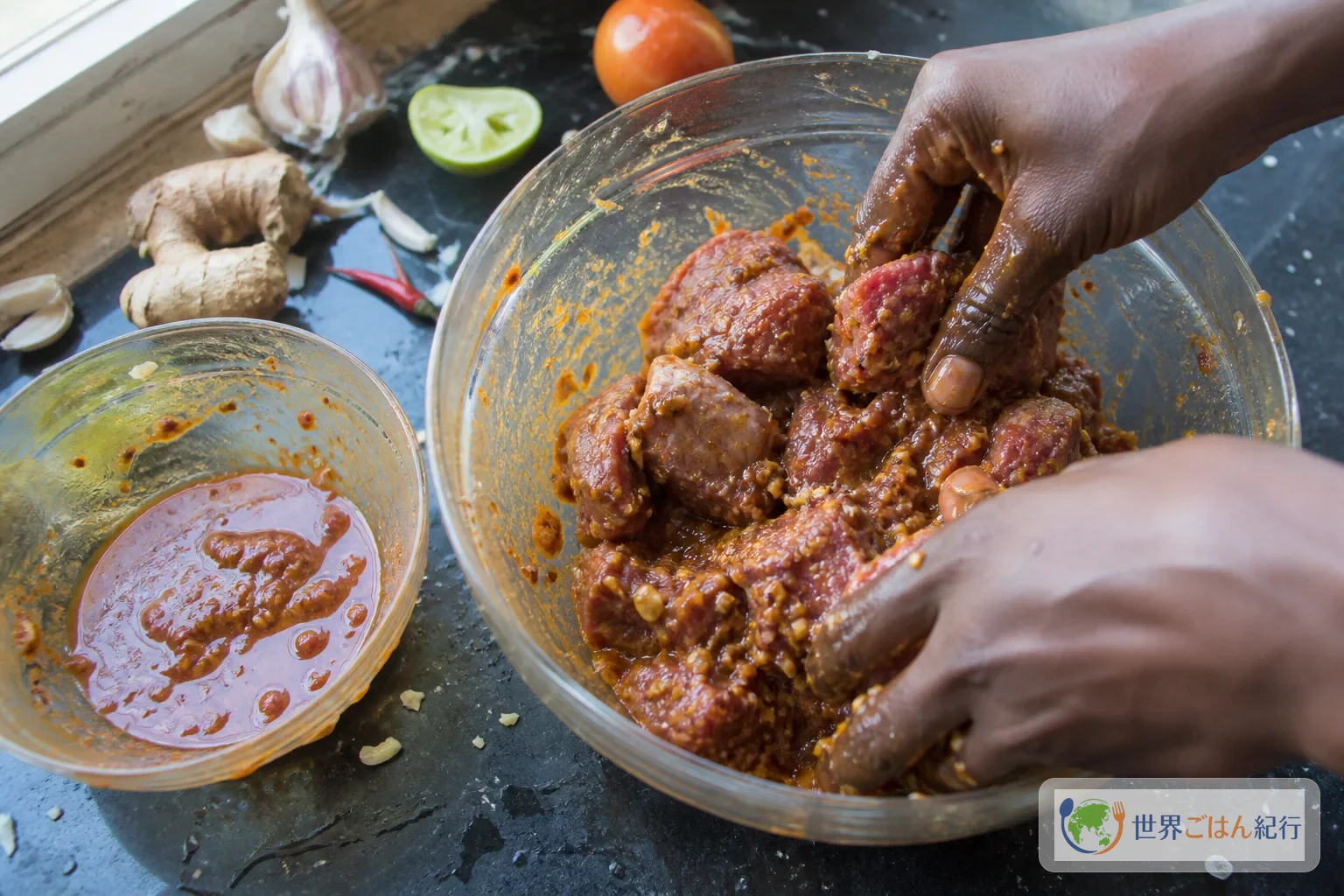
1. Prepare the meat and marinade
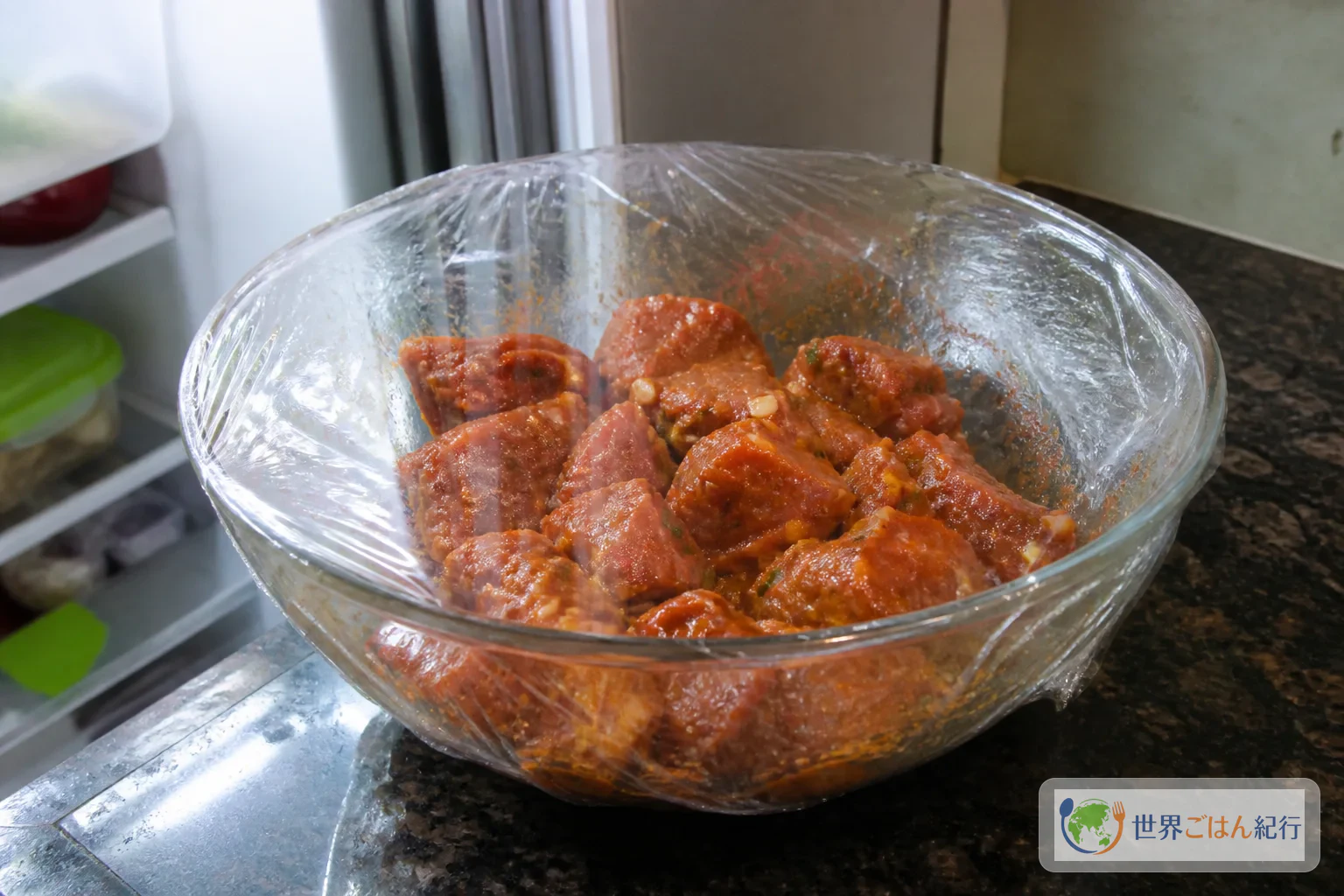
2. Marinate the meat in the refrigerator
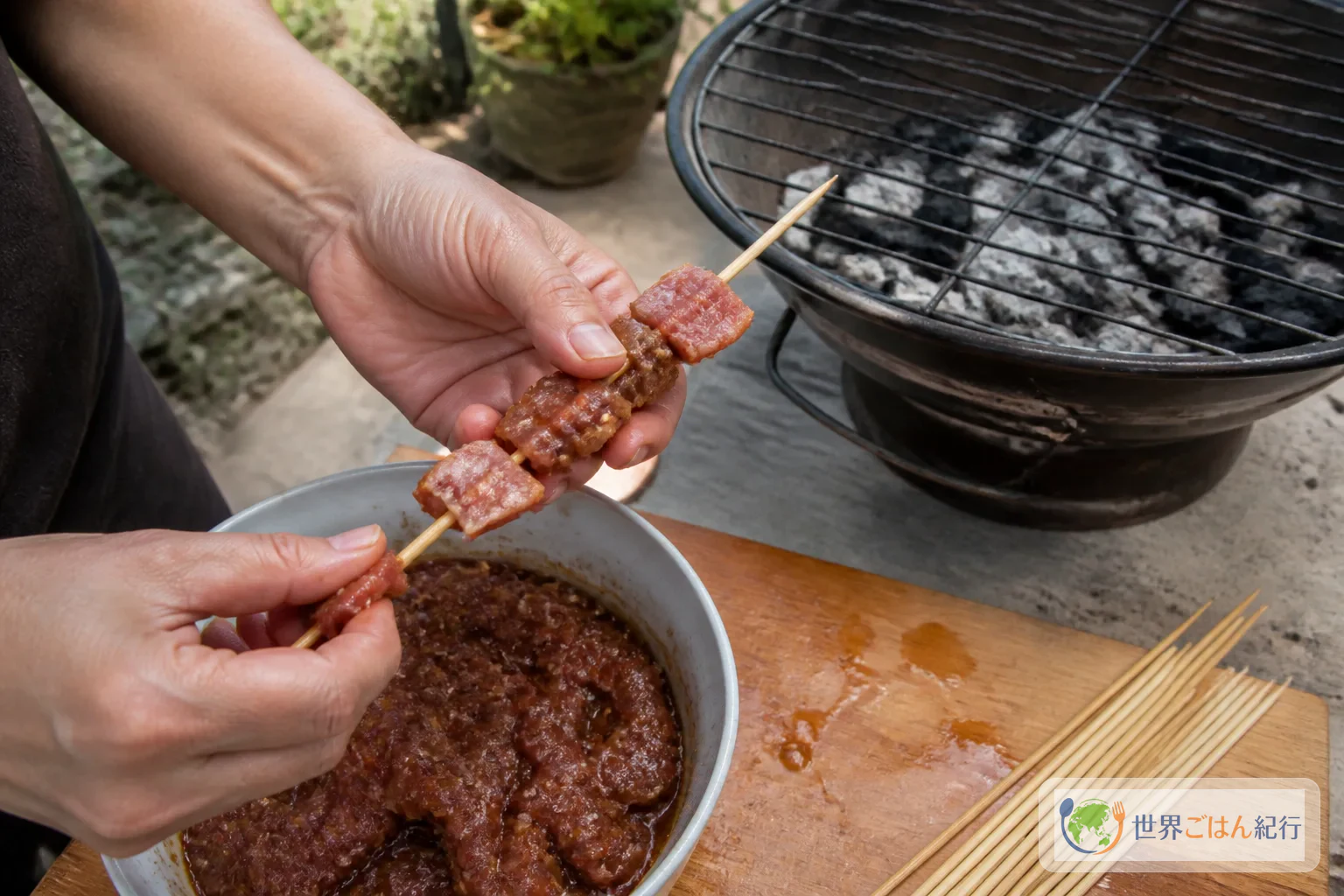
3. Skewer the meat and prepare the fire
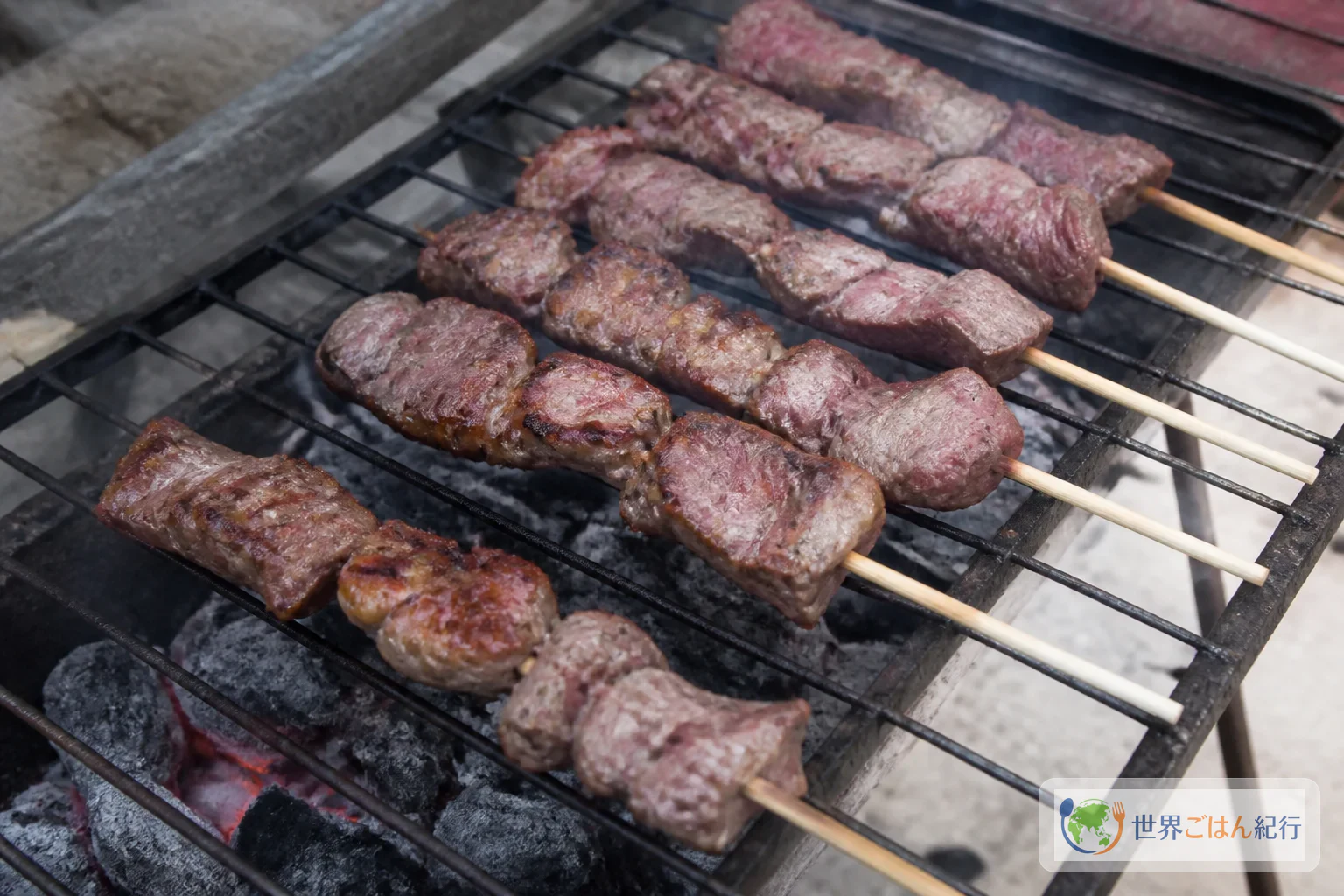
4. Put color on the first side
5. Turn and cook through to the center
6. Serve with sauce and salad
Heat the center of the meat to 167°F (75°C) for at least 1 minute, and do not let utensils that touched raw meat spread contamination to other foods. If you switch to chicken or ground meat, check the center of a thick piece with a probe thermometer. Even if the juices look clear, give priority to temperature when you can measure it, and do not put cooked meat back on a plate that held raw meat.
Grilling Mshikaki and Fixing Mistakes
Grilling without charcoal
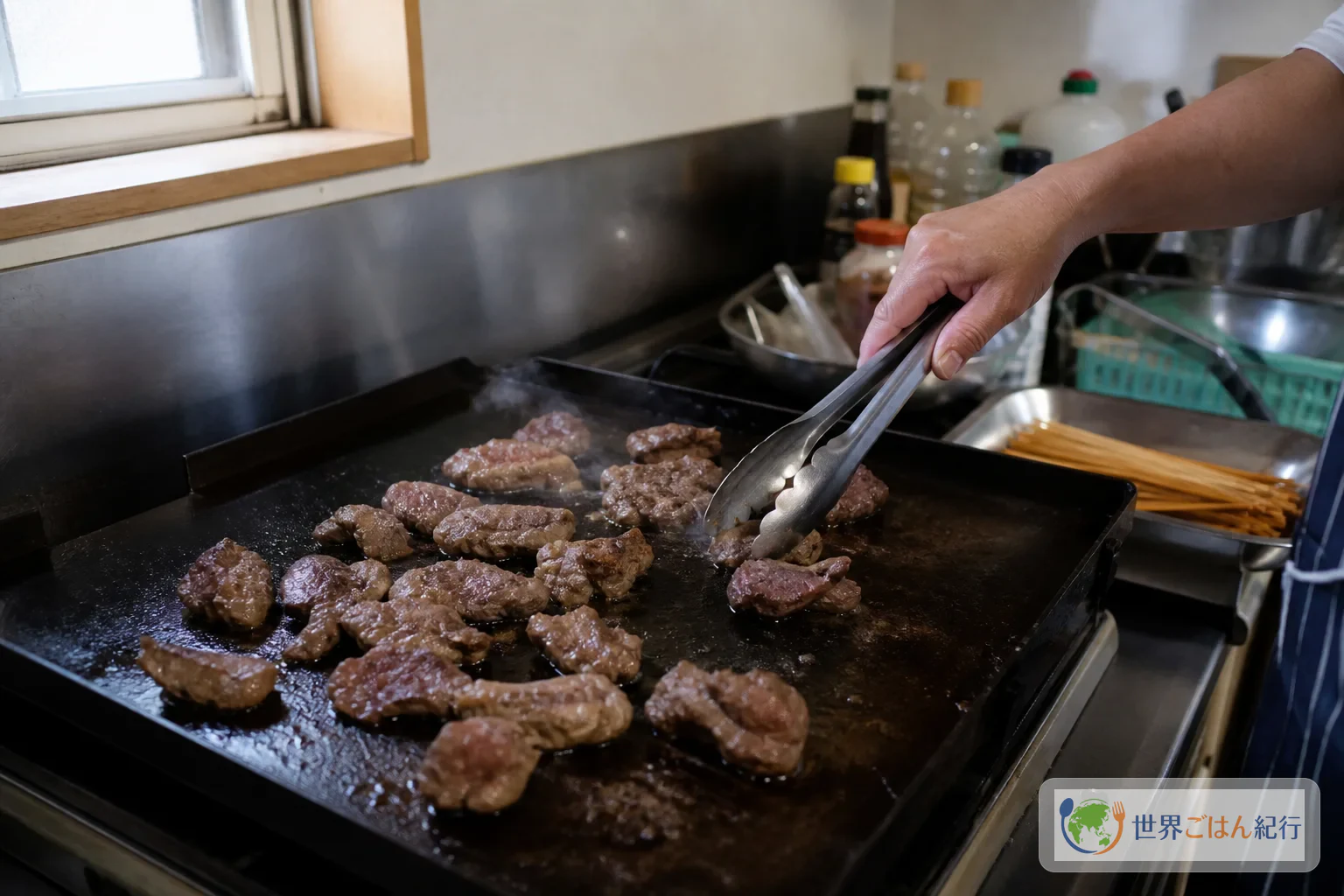
Charcoal gives mshikaki the most smoke, but a frying pan or grill works too. Indoors, skewer handles that sit near the heat for a long time will scorch, so either lay just the meat on the griddle or wrap the skewer ends in aluminum foil.
| Method | How heat is applied | Result and judgment |
|---|---|---|
| Charcoal grill | Set the grate 10–12 cm from the coals and grill the four sides in turn | Gives the most smoky aroma. If flames rise, move to a cooler spot |
| Broiler | High heat 3 minutes on one side, then 2–3 minutes after turning. Move to lower heat before it burns | Dries the surface easily indoors. Keep the skewer handles away from the heat |
| Cast-iron griddle | Preheat 5 minutes over medium-high heat, remove the skewers, and cook in 2 batches | Less likely to steam. Leave space between pieces |
| Ordinary frying pan | Cook in small batches over medium heat, then cover for the last 2 minutes | The easiest, but too much meat in the pan releases liquid |
If you buy a griddle, pick it for keeping the meat out of its own steam and getting a good sear, not for cooking more at once. Check the size of the cooking surface, which heat sources it works with, and how to care for it. If you already cook in small batches in a frying pan, you have everything you need.
Common problems
Thread the meat loosely so the heat reaches all four sides. Most other trouble comes from the fire being too close or the meat staying wet.
| Condition | What is happening | How to fix it |
|---|---|---|
| Only the surface is black and the center is cold | The coals are too close, or the meat is too large | Move to a cooler spot, cover, and add 3 minutes at a time. Measure the internal temperature |
| Meat is tough | Lean meat that is too thin, overcooked, or exposed to acid for too long | Stop cooking; serve with the mango-tamarind sauce and salad. Next time stick to 1 inches (3 cm) cubes |
| Flavor is weak | Marinade did not stay on the surface, or too little salt | Sprinkle a little salt on the cooked meat and serve with lime. Never spoon raw-meat marinade over it afterward |
| Flames rise and it turns bitter | Oil or tomato paste dripped onto the coals | Move the skewers to a cooler spot and let the fire settle, leaving the browned parts on |
| Water comes out on the griddle | Skewers packed in, meat surface wet | Shake off excess marinade before grilling, and cook in 2 batches |
Serving, Variations, and Storing Mshikaki
At the table
To get closer to the stalls of Zanzibar and Dar es Salaam, set out small portions of sides instead of piling the skewers alone on a big platter. A kachumbari of tomato and red onion catches the meat juices, lime cuts the fat, and fries soak up the marinade. With chapati or coconut bread, you can pull the meat off the skewer and wrap it up. If you serve a starch on its own plate, make Tanzanian ugali a little softer so it catches the sour juices dripping from the meat.
The plate is built differently from Zanzibar-style pilau, Tanzania's festive rice dish, which brings meat and rice together in one pot. With mshikaki, the meat stays on the skewer and each person adds salad and sauce a bit at a time, alternating aroma and acidity the way you would at a stall. For an East African comparison, put Kenyan nyama choma beside it. Nyama choma is built around salt, while mshikaki changes with every bite depending on the marinade and sides.
Variations
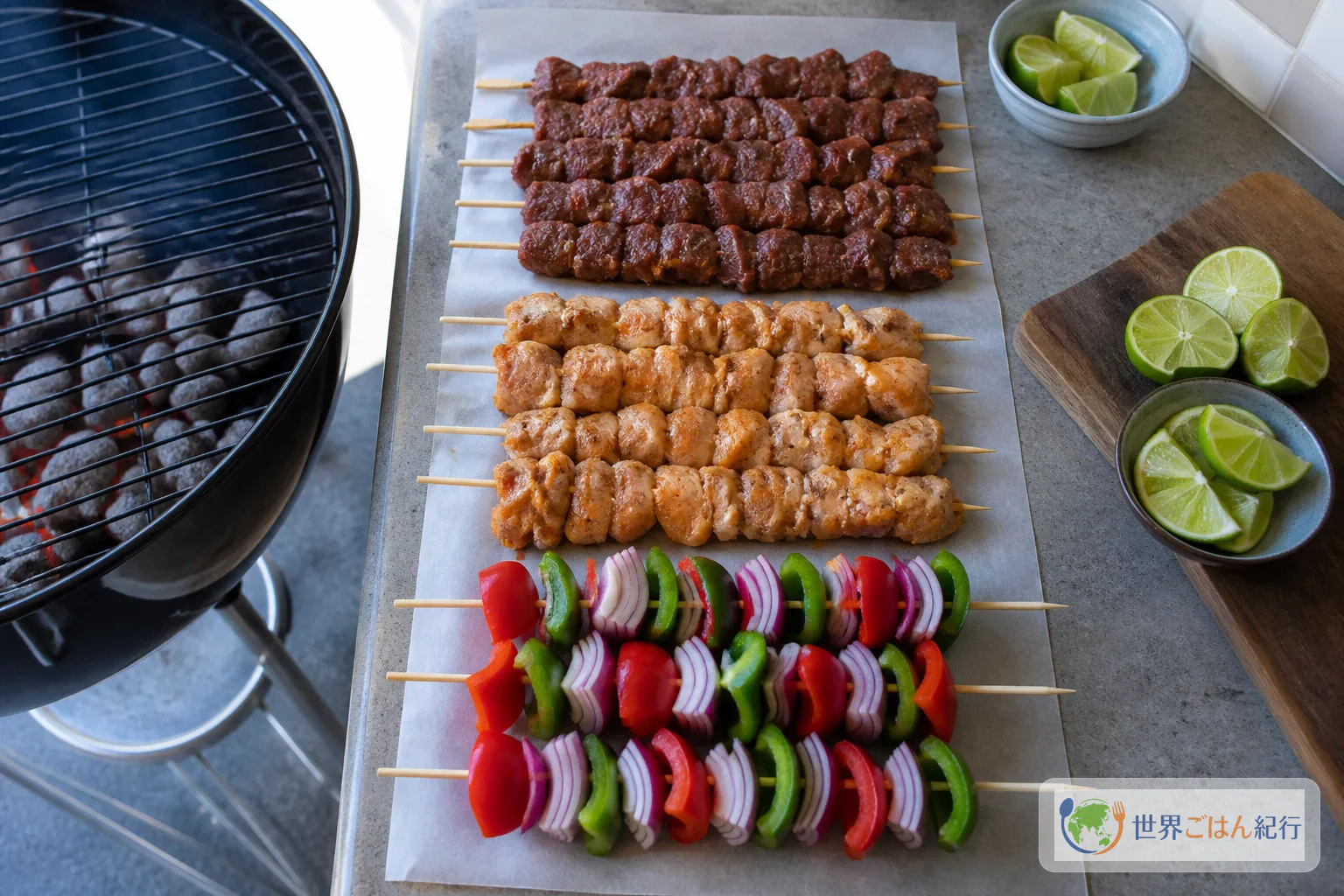
The pairing of meat and marinade is easy to change. Meat, vegetables, and seafood cook at different rates, though, so give each its own skewers.
Chicken thighs, coastal style. Replace the beef with 1.75 lb (750 g) of chicken thighs, skin removed, cut into 1 inches (3 cm) cubes. The lime, garlic, ginger, and coriander blend works as is, but always confirm that the center reaches 167°F (75°C) for at least 1 minute. The mango, chili, and tamarind sauce adds a sweet-sour note to the mild chicken.
Lamb or goat, inland style. Lamb shoulder brings out the aroma of its fat, so drop the mango from the sauce and lean harder on the lime and tomato salad. For goat, cut smaller 1 inches (2.5 cm) cubes and marinate up to 3 hours so it doesn't toughen while the center cooks through.
Seafood. Octopus and fish go on skewers too. Cut white fish into 1 inches (3 cm) cubes, use half the salt you'd use for meat, and add the lime juice 15 minutes before grilling. Parboil octopus before threading it, then grill the surface briefly over charcoal. Seafood tightens up if grilled as long as beef, so cook it first.
Mild version. Leave out the red chili powder and cut the black pepper to 1/4 tsp. The tomato paste and lime hold the flavor together even without heat, and anyone who wants it hotter can add minced chili to their sauce at the table.
Vegetable skewers. Cut bell peppers, red onion, and carrots into 1 inches (2 cm) pieces and season them with just oil and salt. You can thread vegetables between the meat, but watery ones like tomatoes and mushrooms make the meat steam. For the best browning, keep the vegetables on their own skewers and grill them for the last 5 minutes.
Storage
Keep the meat refrigerated in its marinade until you grill it, and grill all of it the same day. Once the cooked mshikaki has cooled slightly, move it to a shallow container, refrigerate, and eat it by the next day. To reheat, take the meat off the skewers, put it in a frying pan with 1 tsp of water, cover, and warm over medium-low heat for 3–4 minutes. A microwave tends to harden the surface; if you use one, squeeze lime over the meat at the end and serve fresh salad to bring back some texture.
Frequently Asked Questions
Is mshikaki the same dish as satay?
Both are grilled skewers. Mshikaki comes from East Africa, including Tanzania, where beef, chicken, lamb, goat, and other meats are marinated in an aromatic mixture and grilled over charcoal. It is served without a rich peanut sauce like satay's; here, the sourness of the Zanzibar coast comes from the mango and tamarind sauce.
Can I make it with thin sliced beef for grilling?
Yes. Fold the thin slices as you thread them instead of stacking them flat. They cook quickly, so check the center as soon as the surface has color. Beef shoulder in 1 inches (3 cm) cubes makes it easier to get both a grilled crust and juicy insides.
Is it okay to add lime from the start and leave it overnight?
For a first try, keep it to 1–4 hours. To marinate overnight, start with only oil, garlic, ginger, spices, and salt, and add the lime juice 1 hour before grilling. Meat left in acid for a long time changes texture on the surface, and grilling won't make it tender again.
Do I need to soak the bamboo skewers?
Over charcoal or under a broiler, soaking them for 20 minutes keeps the tips from scorching. On a griddle, you can take the meat off the skewers and cook it loose. After soaking, wipe the skewers dry before threading the meat.
What can I replace the coriander with if I do not like it?
Use 1/2 tsp of ground cumin and 1/4 tsp of black pepper; the aroma will be different but still works. Swapping in 1 tbsp of curry powder brings turmeric and fenugreek forward and turns it into more of a curry-flavored skewer. The easiest adjustment is to halve the coriander and keep the lime.
Can I freeze the grilled meat?
Yes. Wrap the grilled meat in single servings, put it in a freezer bag, and freeze. It will be firmer than freshly grilled, so use it within about 2 weeks, thaw it in the refrigerator, and warm it in a covered frying pan. Do not refreeze, and serve it with fresh salad and lime.