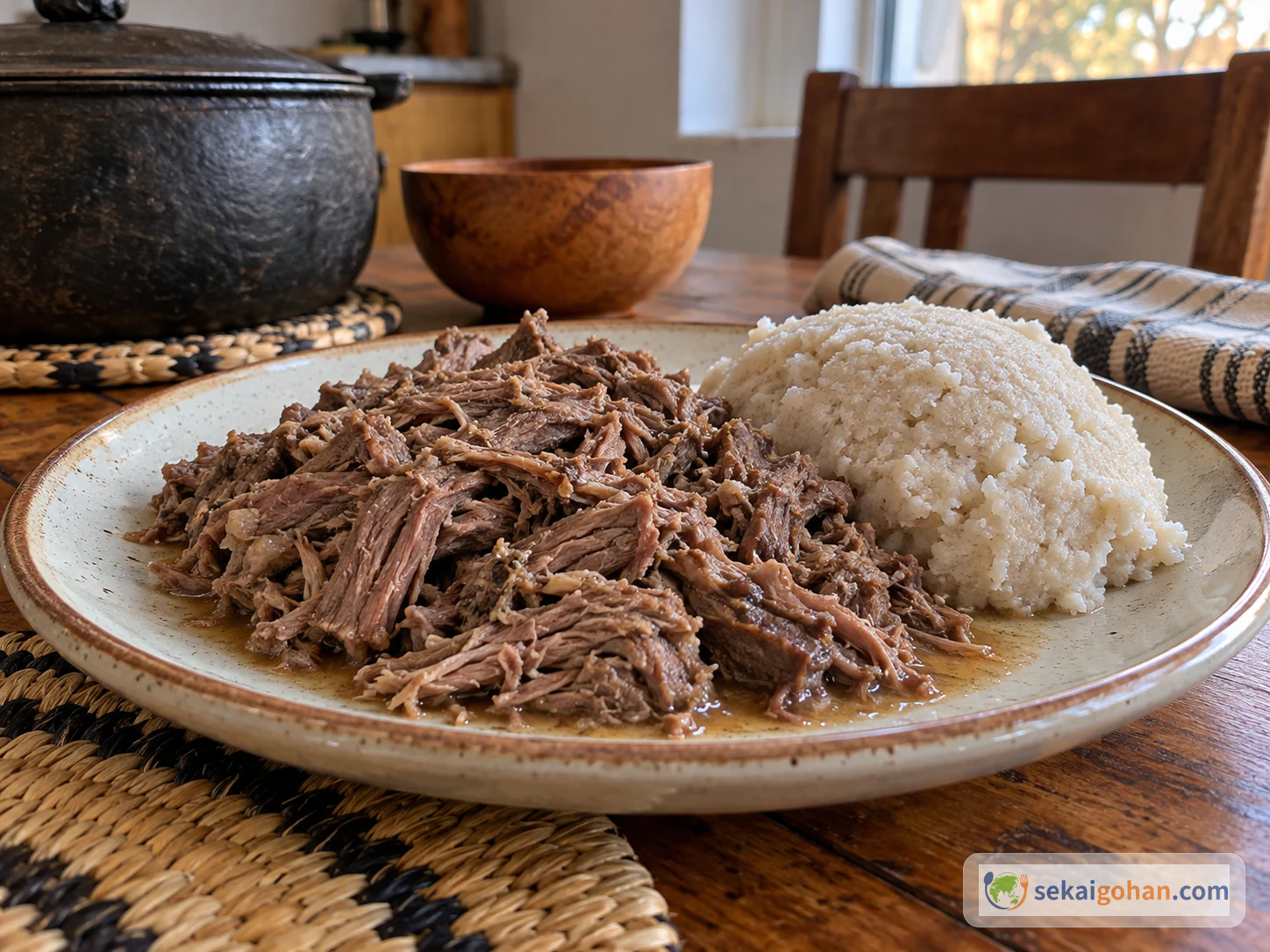
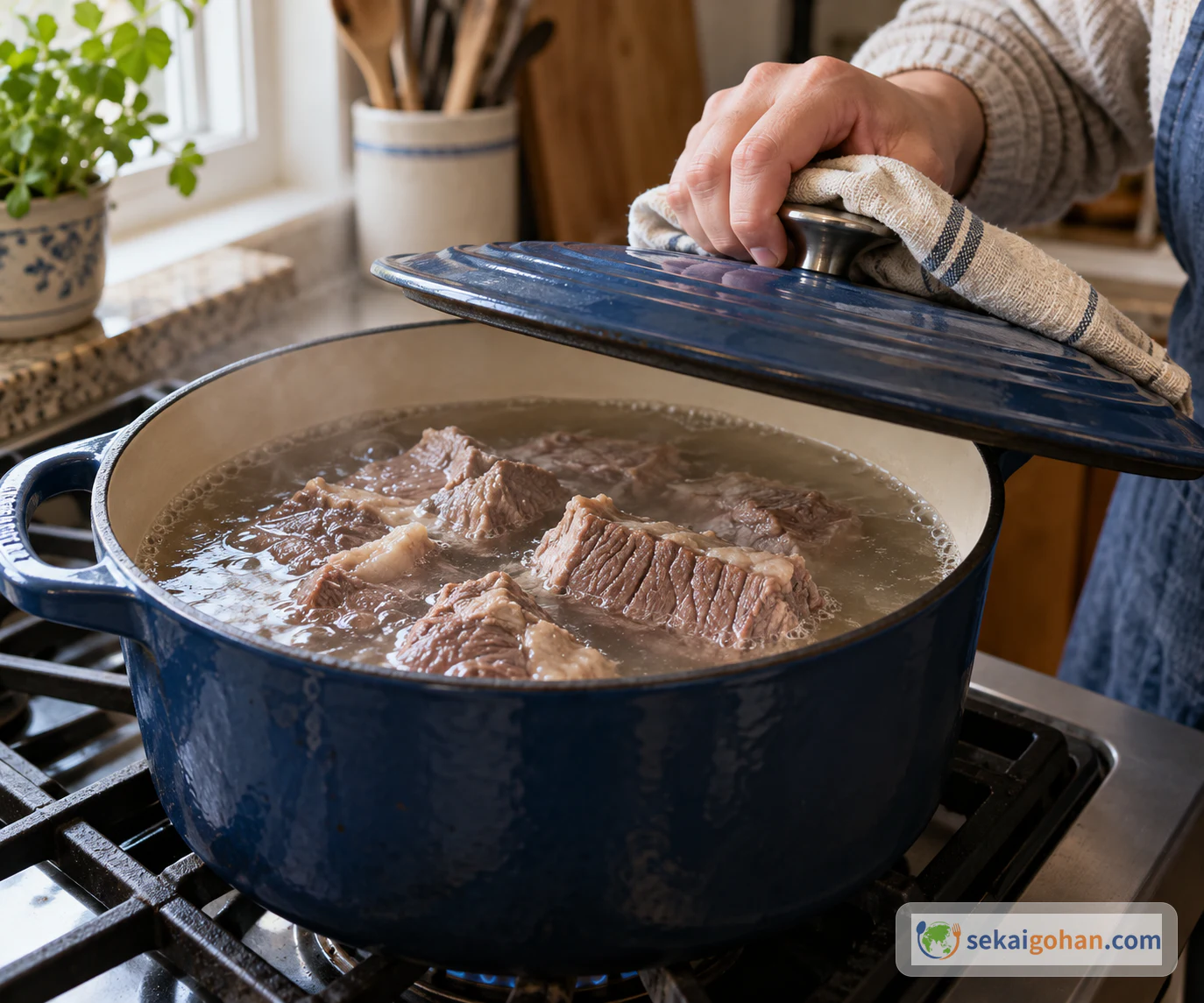
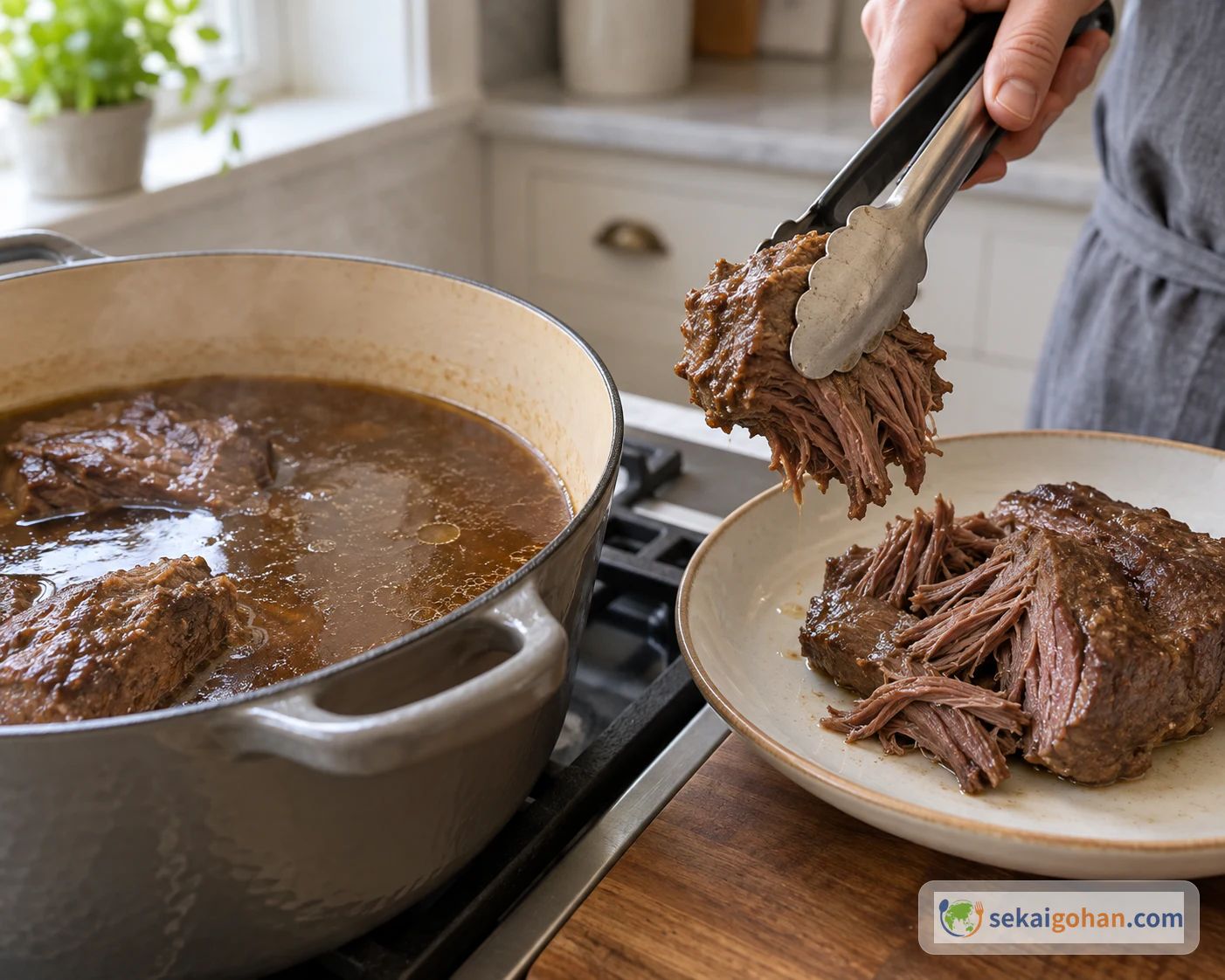
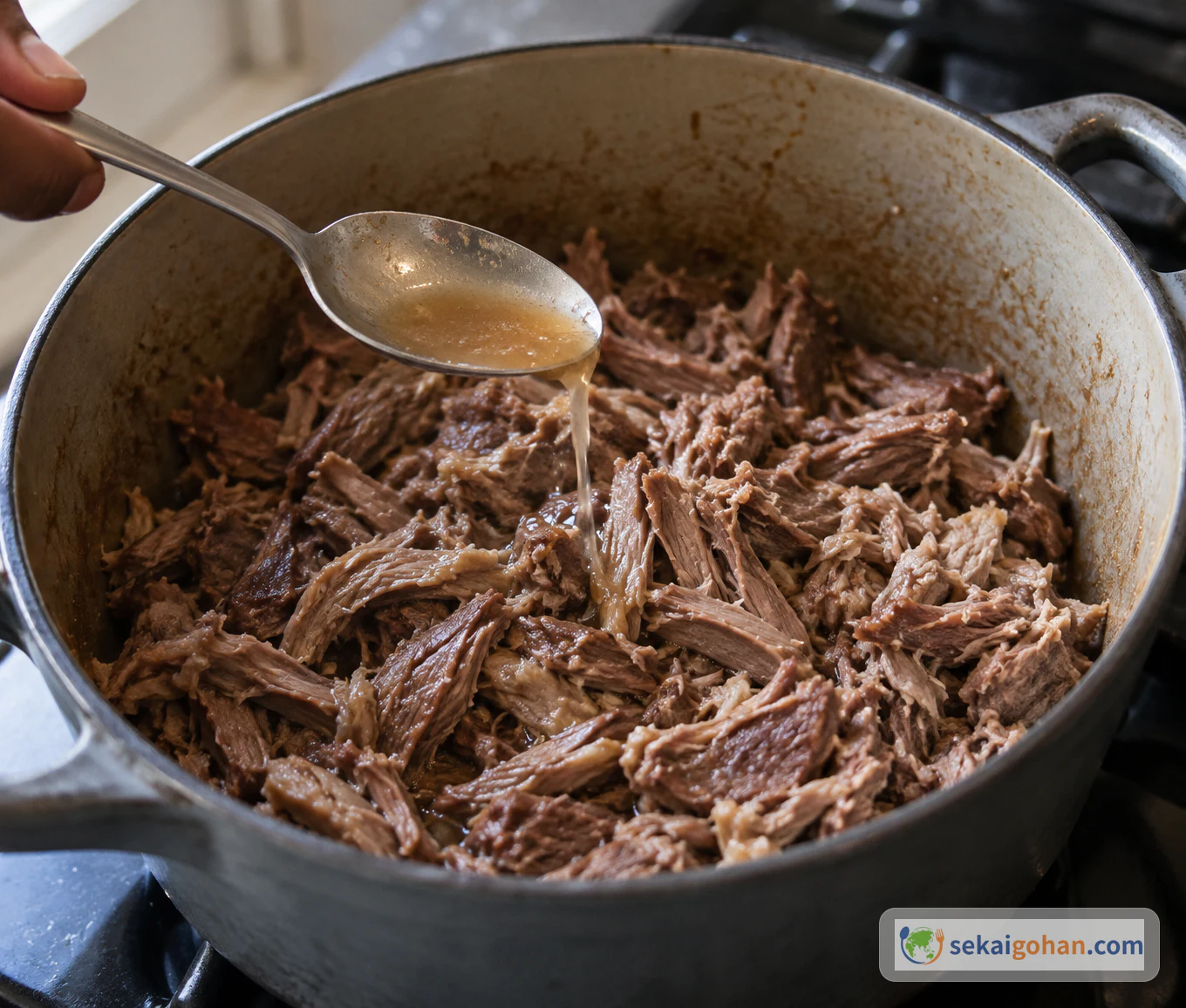
Seswaa asks for beef, salt and water, and then for time. There's no onion, no spice blend, no oil. The flavor comes from the beef itself, the salt and the broth it cooks in, plus the patience to wait until the meat falls apart. In Botswana it turns up at most special occasions, from weddings and funerals to ceremonies and community gatherings: beef boiled until soft in a three-legged iron pot, pounded with a wooden stick, and served hot beside maize or sorghum porridge.
Seswaa in Botswana
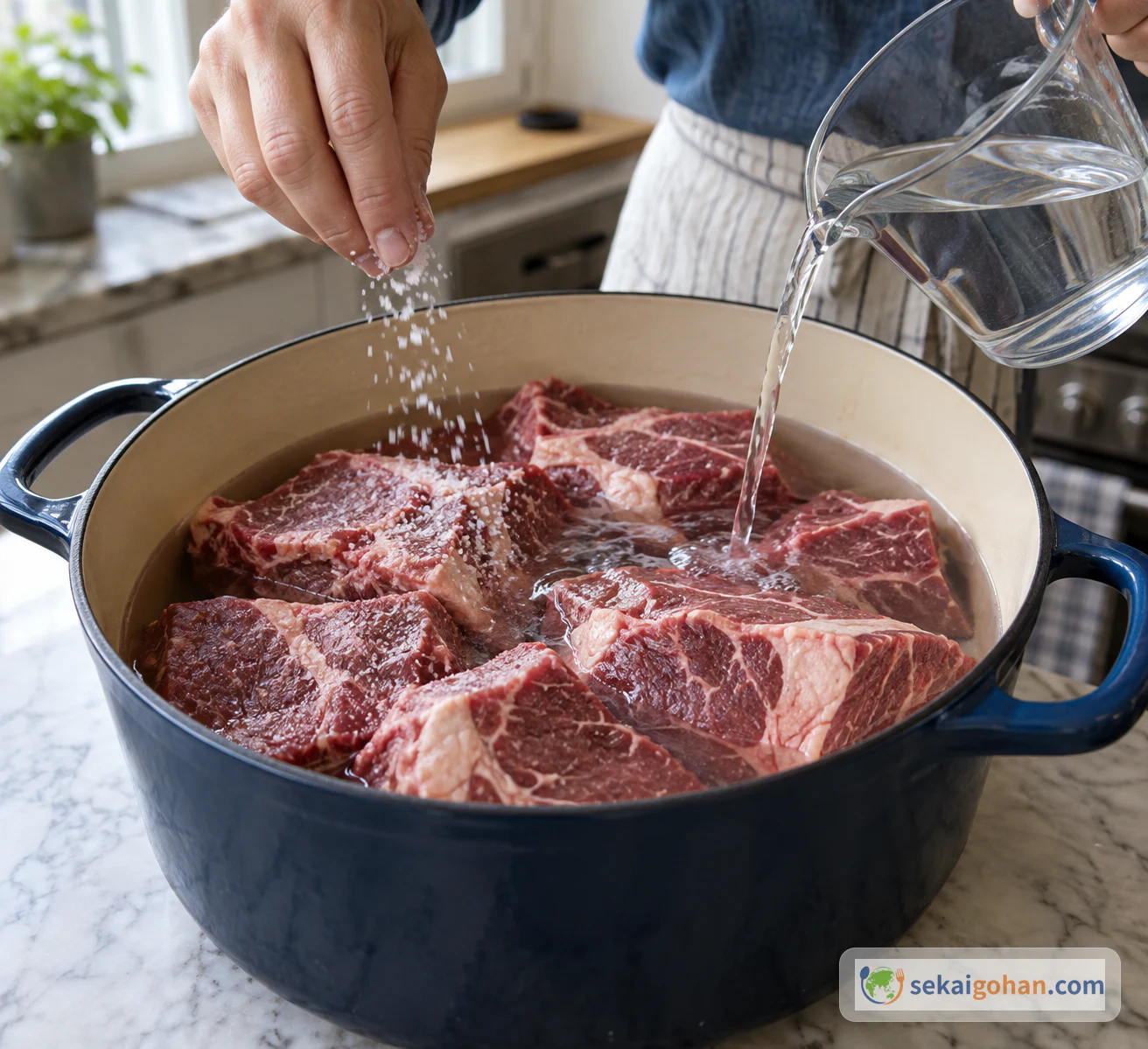
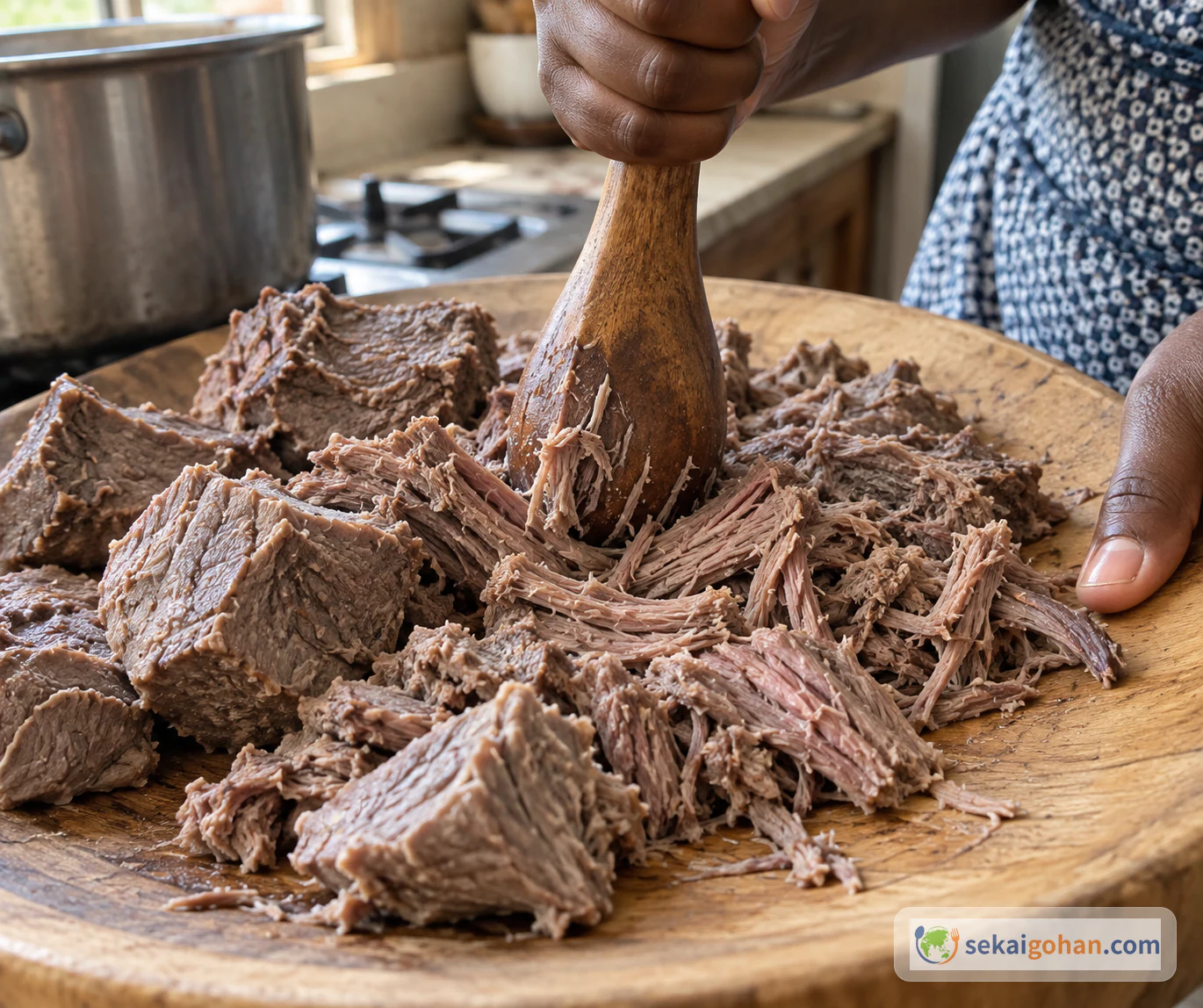
Seswaa, also known as chotlho, is made with beef, sometimes chicken, boiled in water with a good amount of salt until soft. The meat is then beaten with a wooden spoon until it shreds. It belongs to the big occasions where beef is eaten in quantity, and it is cooked and served communally.
The pounding stick is called tswaiso, or loswao in other dialects. One explanation for the pounding is that it made tough meat from older cattle easier to share out, and easier to chew for both the young and the elderly. Skill comes in at every stage, from picking the cut to judging when the strands are right. The aim is thread-like meat that is neither too dry nor too wet, and getting there takes experience.
Some traditional methods boil the beef for about four hours, while a covered, gentle simmer in a modern pot takes 2.5–3 hours. Either way, the meat is ready when it is tender, not when a timer goes off.
Ingredients for 6 Servings: Beef, Salt and Water
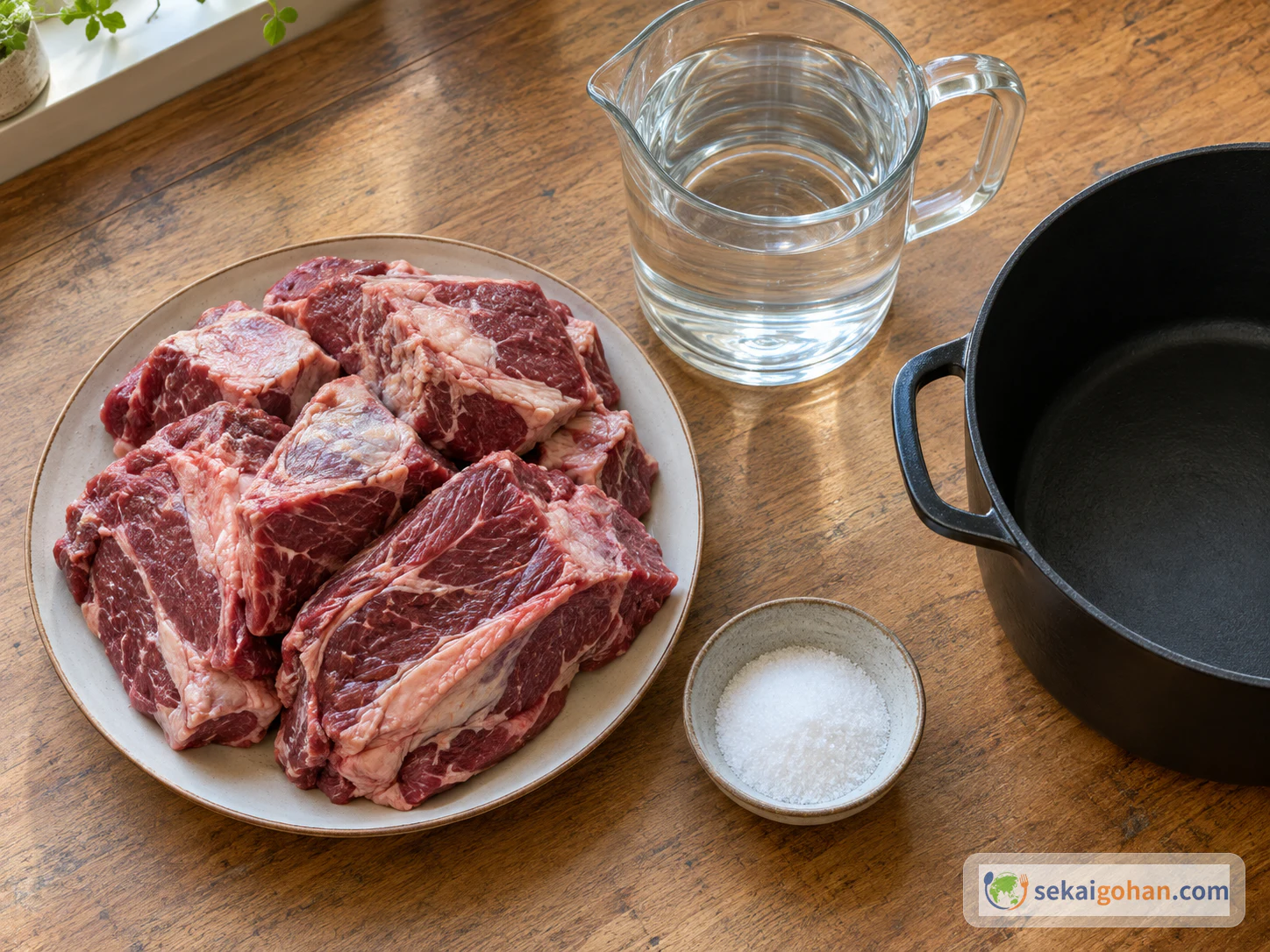
Equipment
- A deep, heavy pot with a lid, large enough to hold the beef and 1.5 quarts (1.5 L) of water
- Tongs, for lifting the meat out
- A sturdy board or shallow bowl for pounding
- A strong wooden spoon or a meat pounder
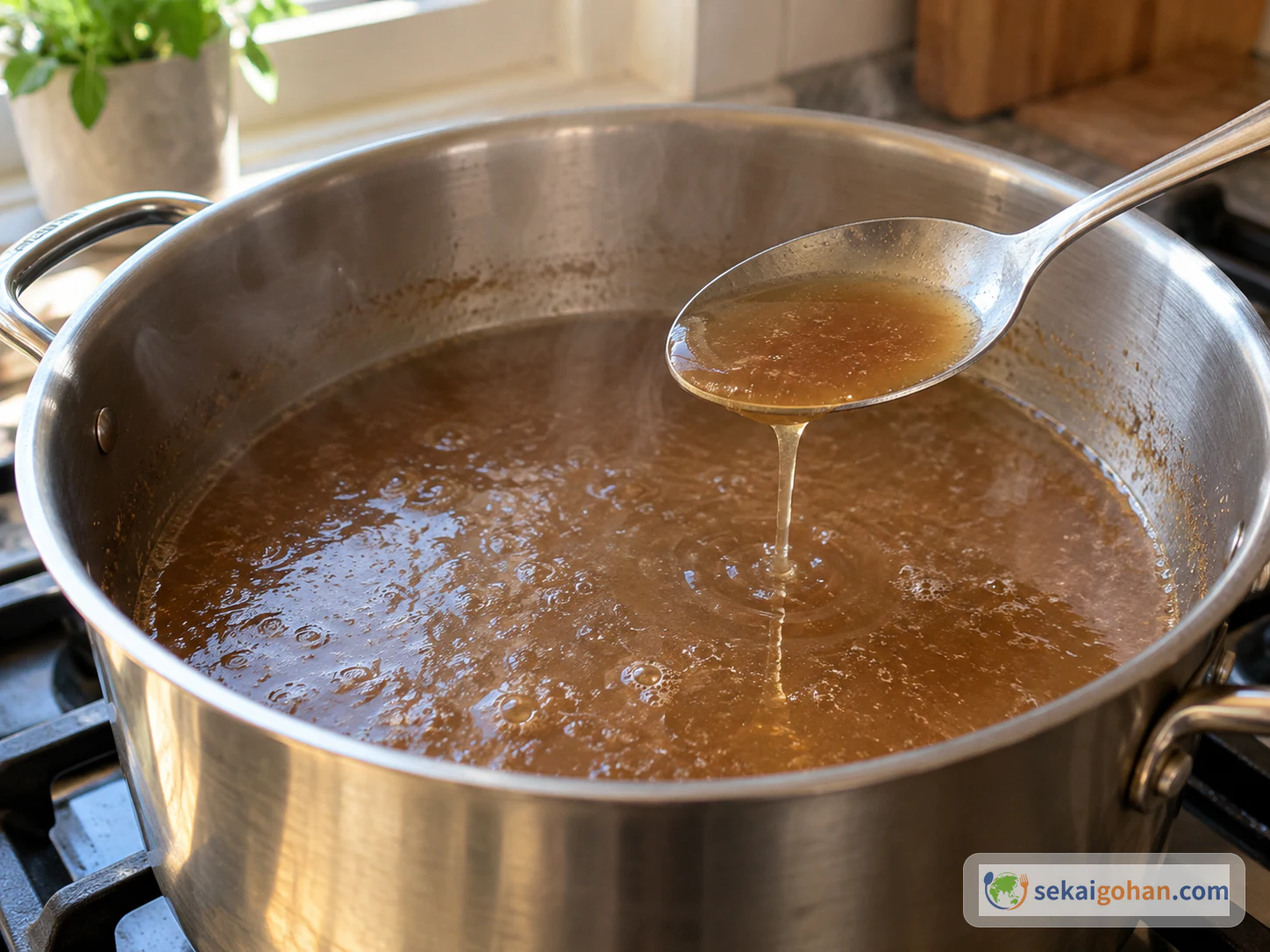
- A spoon for returning the broth
- Clean, shallow containers for any leftovers
A deep pot and a strong wooden spoon are practical tools for pounding the beef at home.
Choosing the Beef and Salt for Seswaa
Beef. Chuck and brisket are both cuts for slow cooking. At the butcher, ask for a boneless piece of chuck or brisket and look at how much fat it carries. Different cuts break down and release fat differently, so a different cut gives a different result.
Salt. Salts vary in grain size and saltiness. If you use something other than fine salt, add it with care and finish seasoning by taste.
Seswaa Doneness, Texture and Fixes
Cook the beef until it gives way under a wooden spoon, pound it into coarse threads rather than a paste, and return just enough reduced broth that the strands are moist but not sitting in liquid. Nothing else goes into the pot.
Pot, water and doneness
The recipe uses 1.5 quarts (1.5 L) of water for 3.25 lb (1.5 kg) of beef, and whether that surrounds the meat depends on your pot and on the size and shape of the pieces. Before you start, set the beef in the pot and picture where the water will come to. A deeper, narrower pot helps it reach around and between the pieces. If the water falls well short of the meat, switch pots rather than changing the amounts.
Water added during cooking dilutes the salt, so taste at the end and adjust. Keep track of how much you added. It'll help the next time you make it.
Whether 1.5 quarts (1.5 L) of water surrounds 3.25 lb (1.5 kg) of beef depends on your pot and the shape of the meat. Read "Before You Simmer" first, and judge doneness by tenderness and a fully cooked center, not by the clock alone.
Pot size, the cut and the size of the pieces all change how long the beef takes. The meat is ready when it separates into fibers when pressed with a fork or wooden spoon and the center is fully cooked.
Common problems
| Problem | Likely cause | What to do |
|---|---|---|
| The beef won't come apart | Not cooked long enough, or the simmer was too low or too uneven | Return it to a gentle simmer and check again for tenderness. If the pot is getting dry, check the water level and the heat |
| The pot is drying out during simmering | Heat too high, or a wide pot loses water fast | Lower the heat. Added water dilutes the salt, so taste at the end |
| The strands are dry | Not enough broth returned, or the meat cooled before pounding | Spoon in more of the reduced broth, a little at a time |
| The meat is sitting in liquid | Too much broth returned at once | Lift the meat out with a slotted spoon, or stop adding broth. Next time, add it gradually |
| It has turned to paste | Pounded too long or too finely | Next time, stop as soon as coarse fibers show |
| Too salty | The pot or pieces were smaller, so the salt was more concentrated | Return less of the reduced broth. The salt amount is meant for 3.25 lb (1.5 kg) of beef and 1.5 quarts (1.5 L) of water |
These amounts are for 6 servings. For a smaller batch, add salt with care and adjust by tasting rather than dividing the numbers.
Serving, Storing and Varying Seswaa
Serving with bogobe
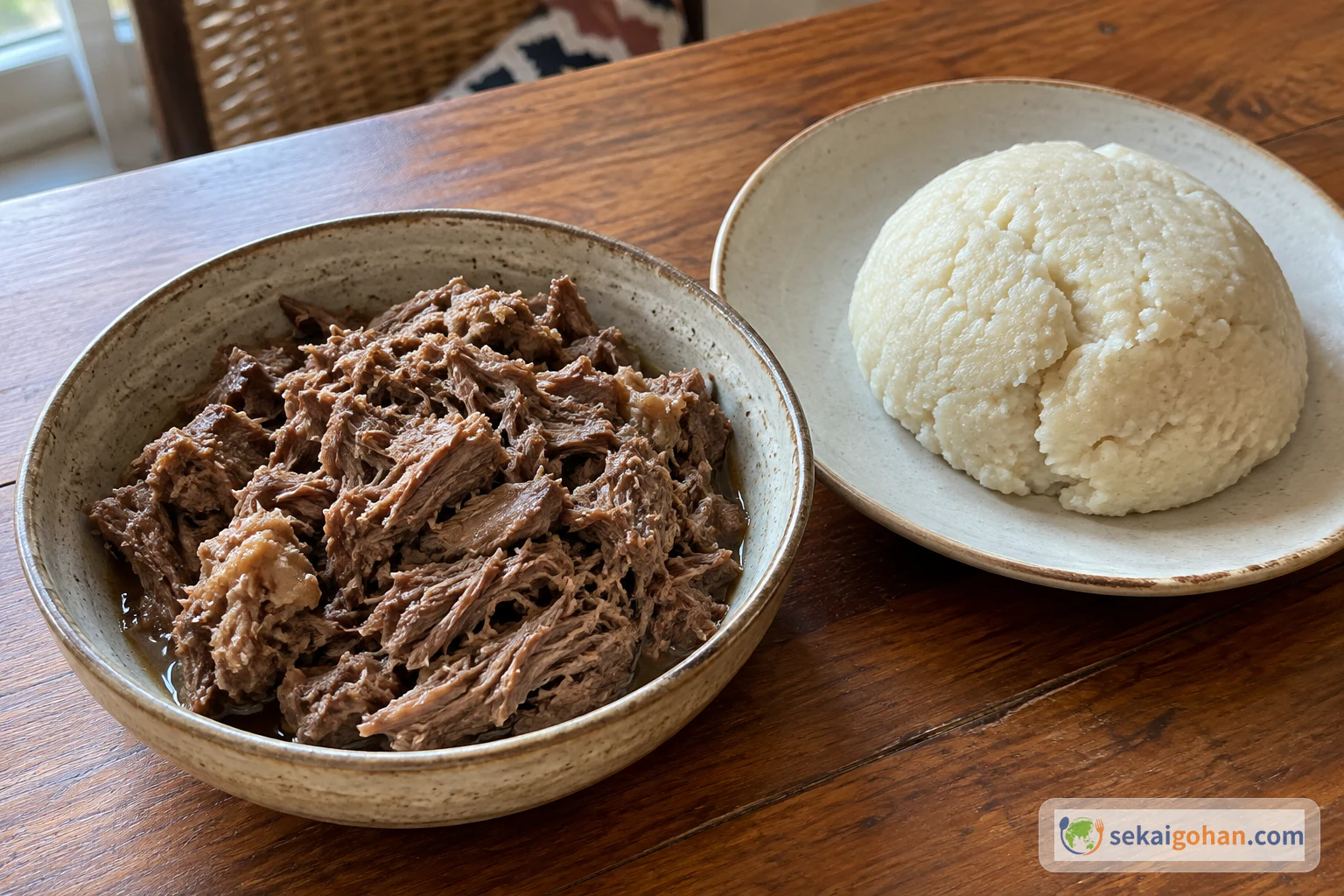
Sorghum and maize are staple crops in Botswana, and bogobe is the porridge eaten with a relish. Serve seswaa hot with maize or sorghum porridge, which is firm enough to carry the salt and broth of the meat. Leafy greens make a good optional side. For another Botswana porridge, try bogobe jwa lerotse, and for more about the country's food, see our Botswana page.
Leftovers and food safety
Don't leave cooked seswaa at room temperature for long. Divide leftovers into clean, shallow containers so they cool quickly, then refrigerate them at 50°F (10°C) or below. Reheat only the portion you will eat, and heat it until the center reaches 167°F (75°C).
With beef as the main ingredient, this dish is unsuitable for anyone with a beef allergy. For packaged meat and salt, check the labels for allergen and shared-facility warnings.
Variations
The plain version is beef, salt and water, and some cooks change it. Each addition shifts the flavor:
- Black pepper: brings aroma to the front.
- Onion: adds sweetness and savory depth.
- Bay leaf: changes the aroma of the broth.
- Chili: adds heat, though it is not traditional.
- Pressure cooker: some cooks use one. It is a separate method, so follow your appliance's instructions for meat and check that the beef is fully cooked and tender.
Frequently Asked Questions
Can I make seswaa with meat other than beef?
Chicken is sometimes used. The amounts and timing here are for beef, and chicken would cook differently and give a different texture.
Can I add onion or pepper?
You can. Onion, black pepper, bay leaf and chili are all changes some cooks make, and each moves the result away from the plain dish. To taste seswaa as it is usually made, try it plain first.
Do I need a special wooden stick?
No. Traditionally cooks use a tswaiso stick and a three-legged iron pot, but at home a strong wooden spoon or meat pounder works well for breaking the meat into coarse strands.
How long does the whole recipe take?
Beyond the 2.5–3 hour simmer, allow time for trimming the beef, reducing the broth and pounding. Your pot, the cut and the size of the pieces all affect the total, so leave room for the meat taking longer.