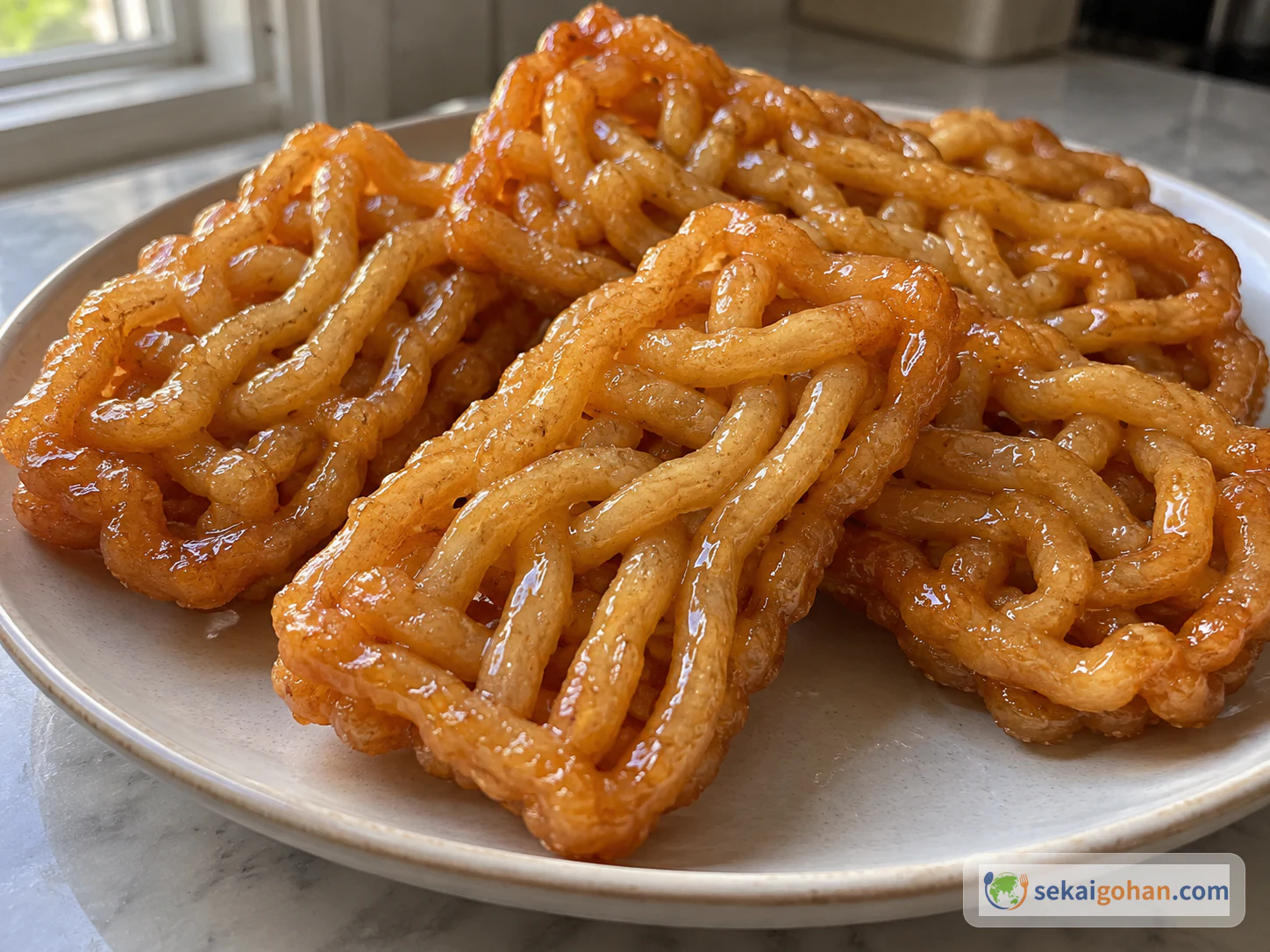
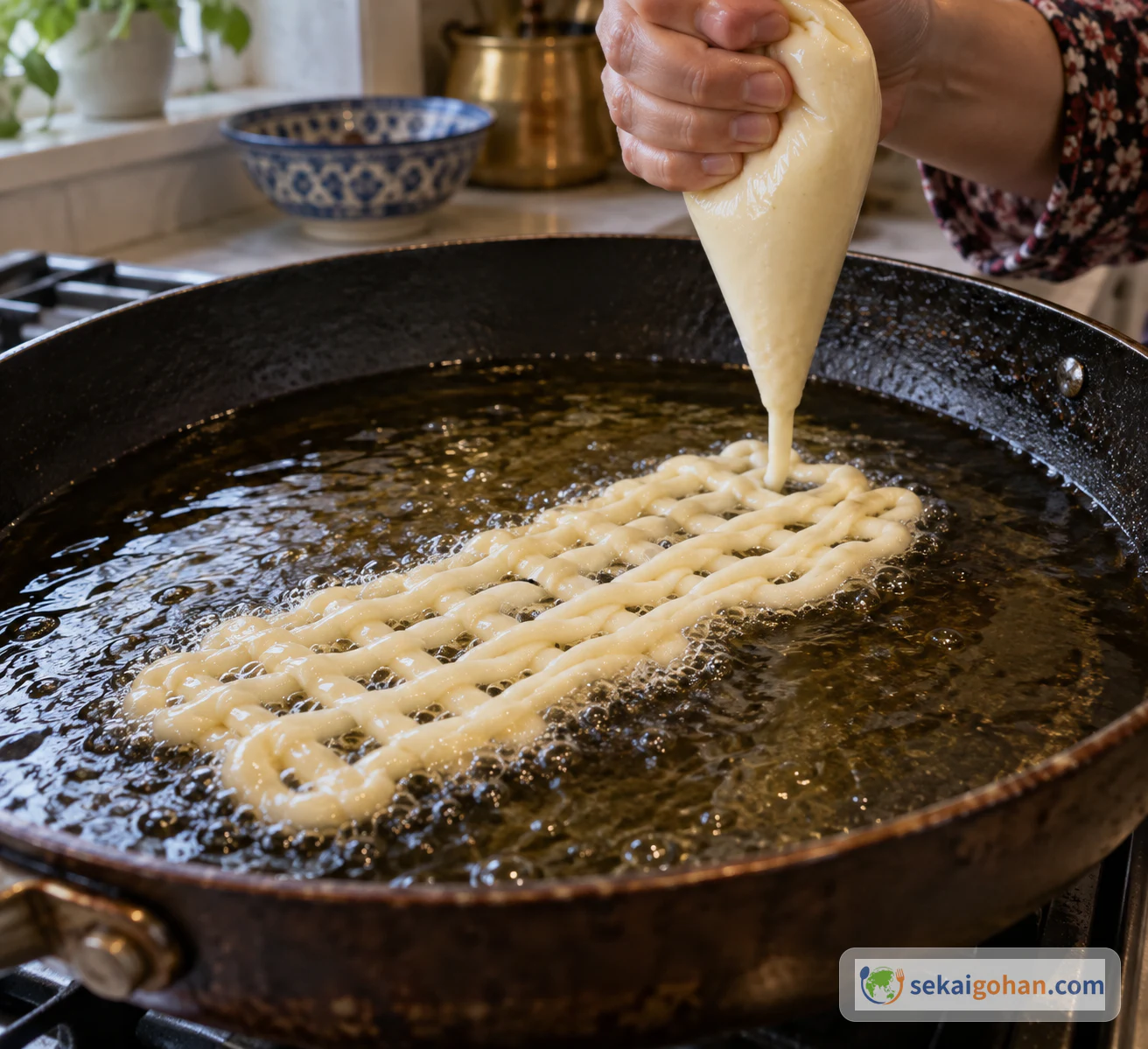
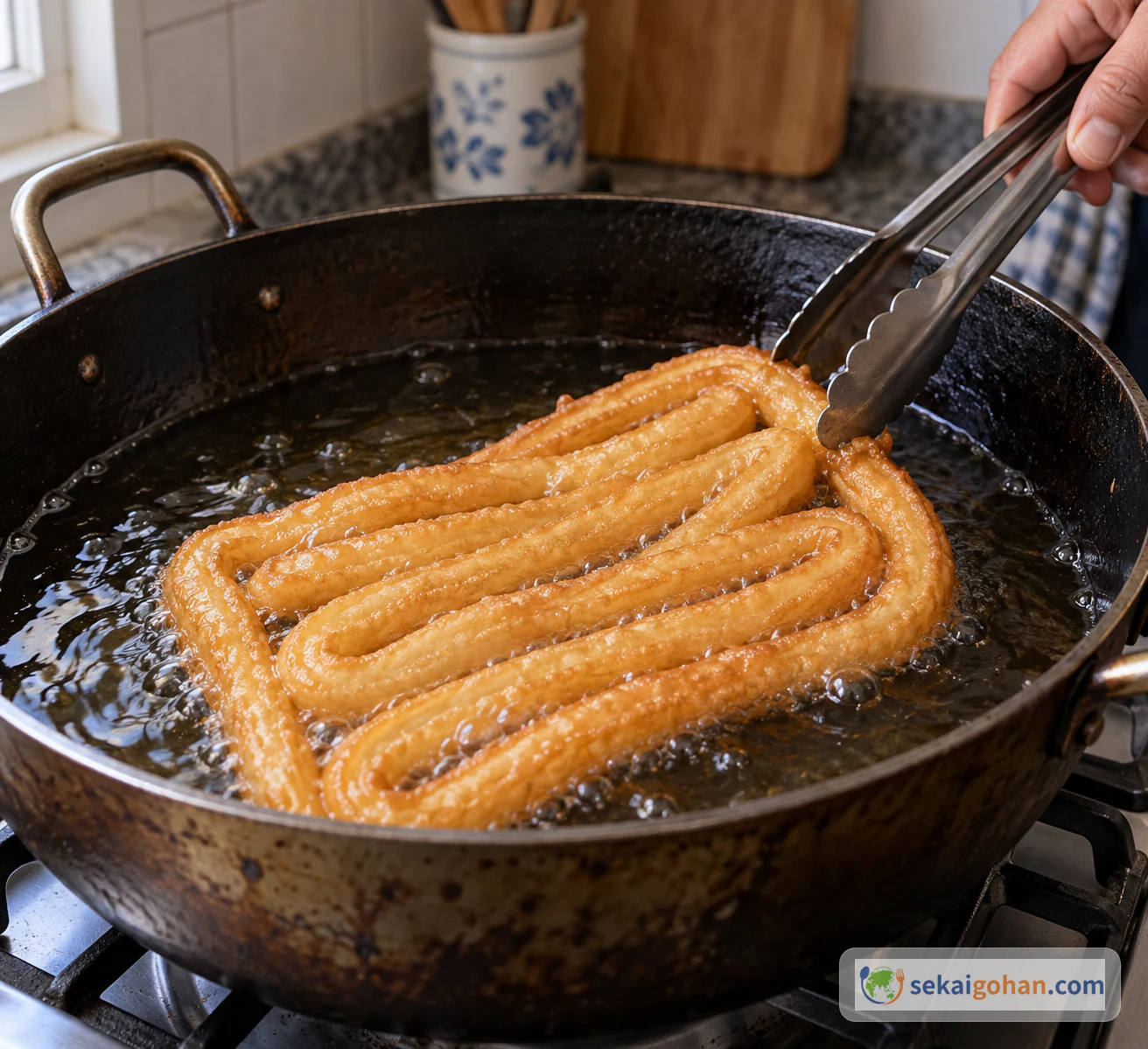
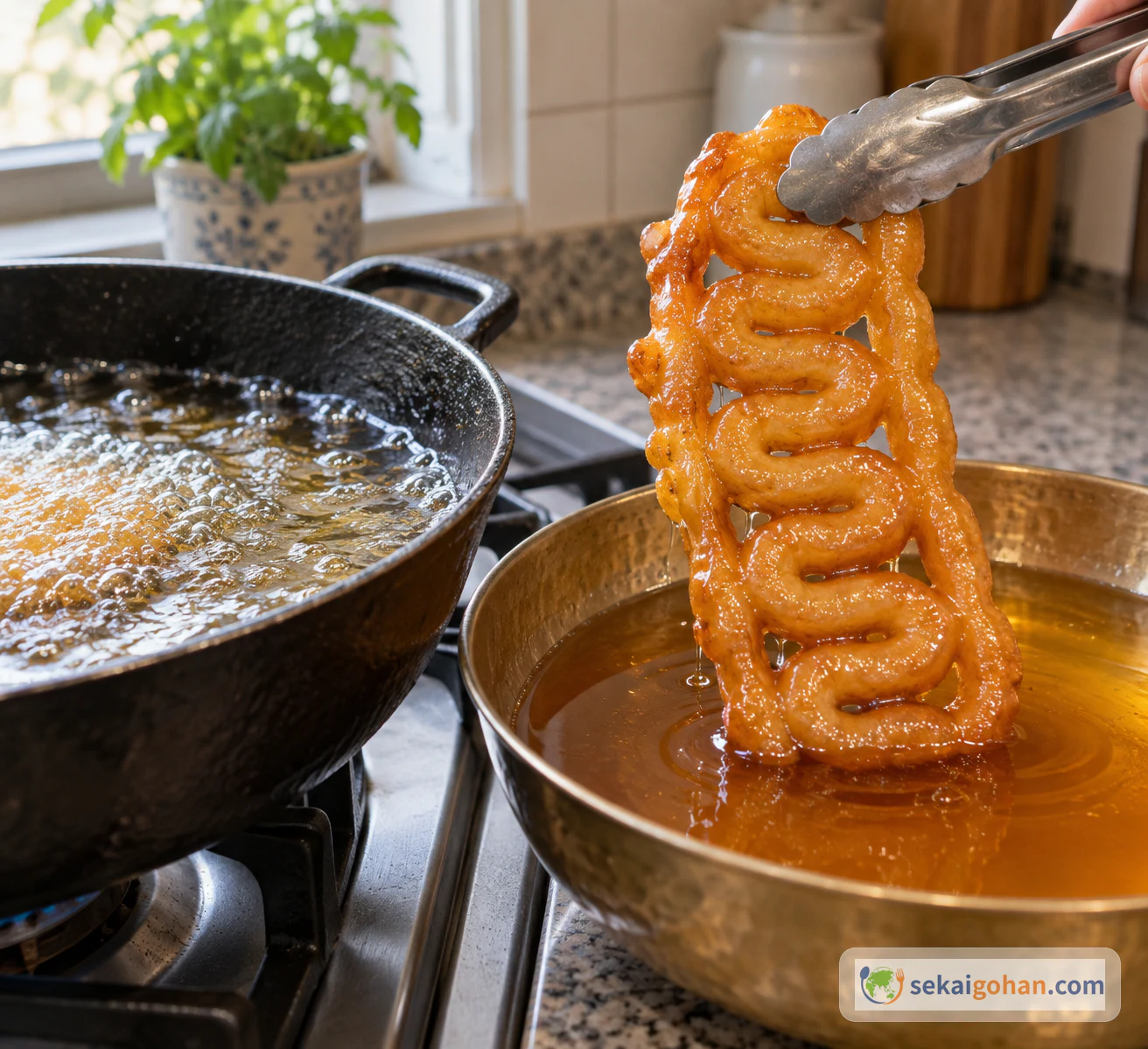
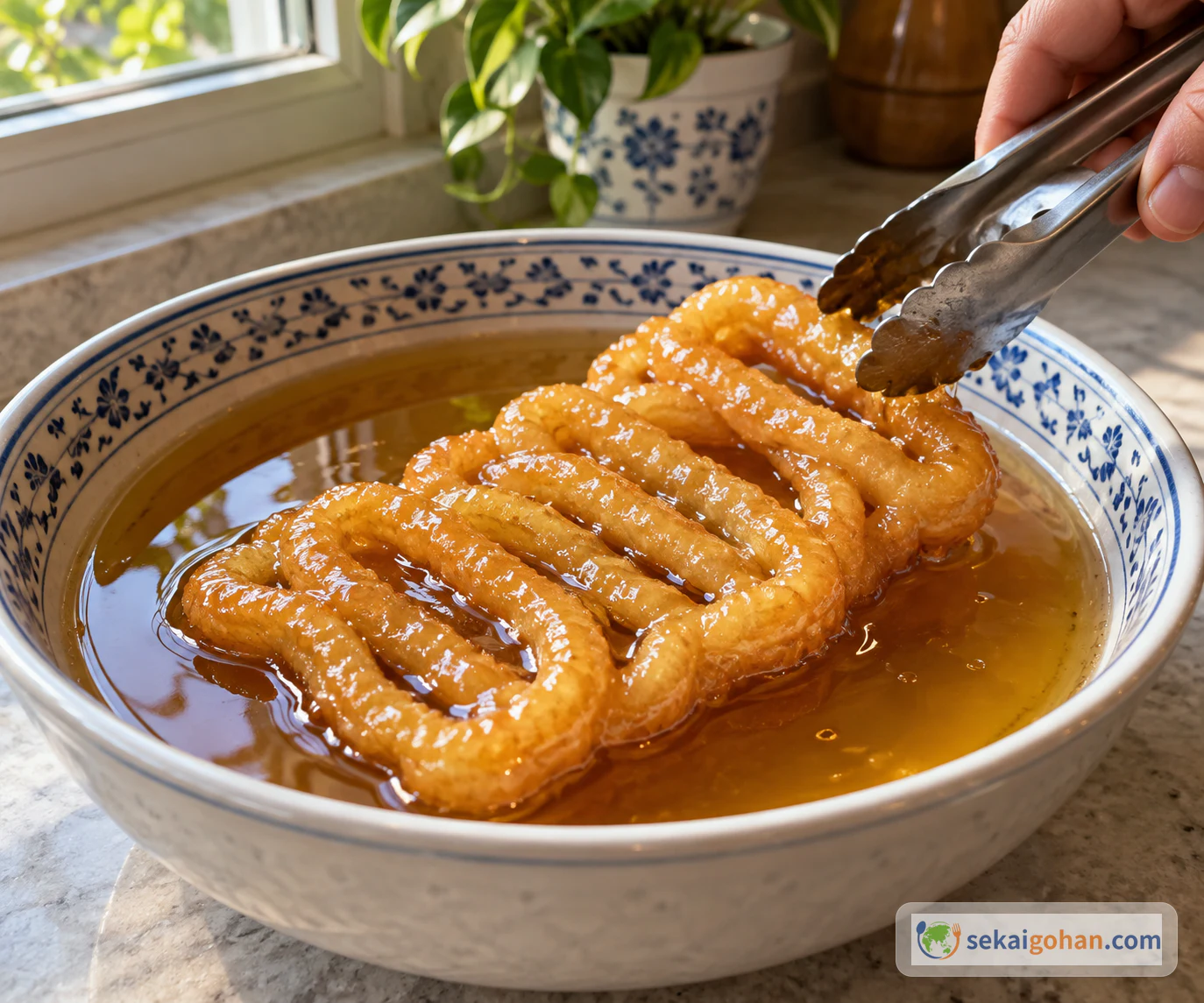
During Ramadan in Boufarik, a market town near Blida not far from Algiers, the streets fill with zlabia shops, their honey-glossed fried sweets stacked high. At night, once the fast is broken, the pastry comes to the table with tea or coffee as family and friends gather. Zlabia de Boufarik is a semolina batter piped into long loops, fried golden and dipped in honey. It tastes of toasted grain, and the shell snaps when you bite it before the honey takes over. Many sweets across a wide region are called zlabia, or zlebia. This one is the Boufarik style: medium and fine semolina, a little flour, and no food coloring. For more dishes from the country, see the Algeria country page.
About Zlabia de Boufarik
The Boufarik Style
Compared with Tunisian zlabia, the Boufarik version is made with semolina, uses no coloring and has a thicker shell. The batter is piped back and forth into an elongated, roughly rectangular shape rather than a round spiral. Locals describe the texture as croquante et mielleuse, crunchy and honeyed.
It shares a region, but not a method, with the semolina batter of Moroccan baghrir or with Tunisian makroud.
Ramadan in Boufarik
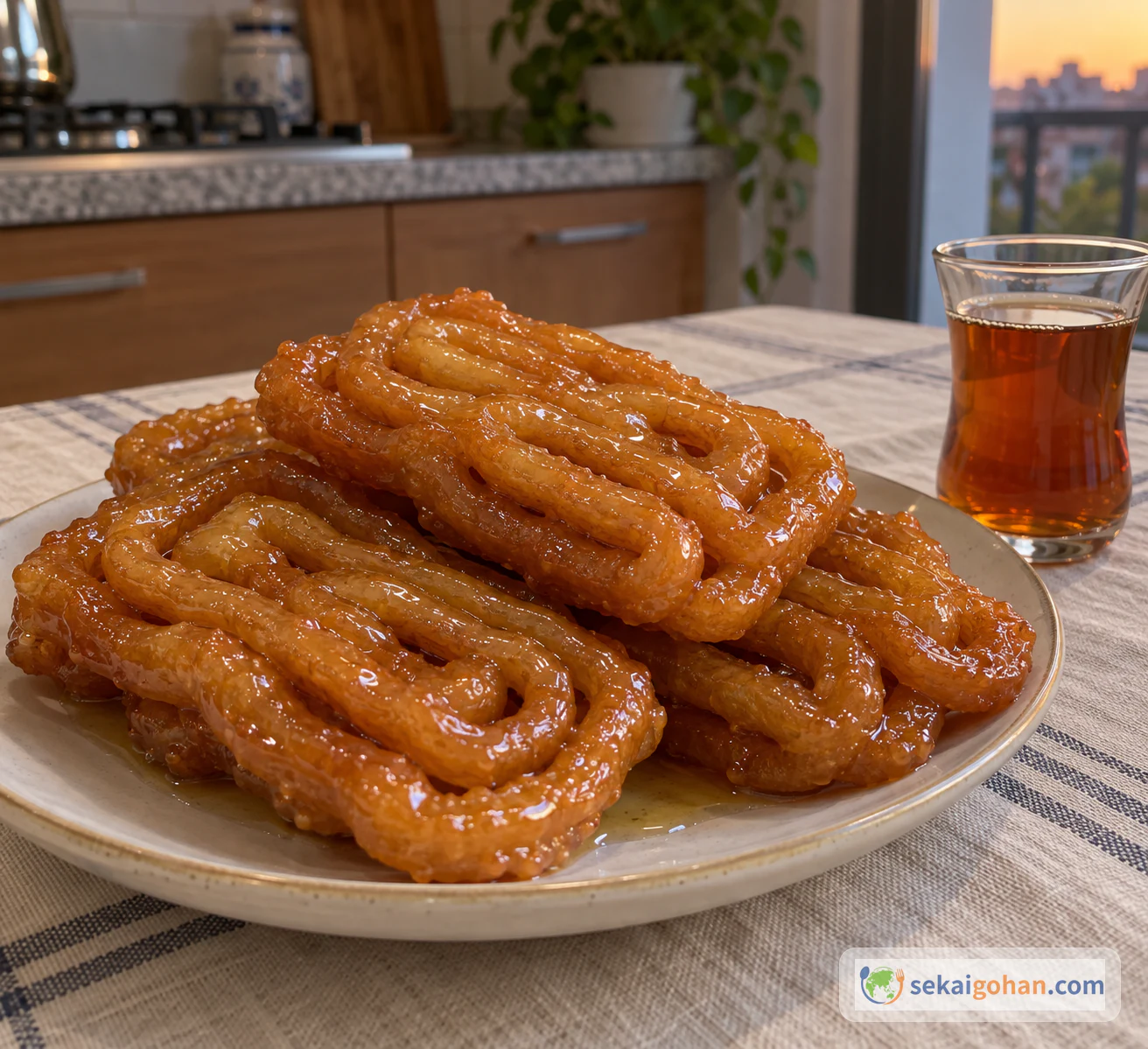
Boufarik sits on the Mitidja plain and has long been a market town where people and goods passed through. During Ramadan, buyers come from other parts of the country for its zlabia. In some Boufarik families the know-how is handed down from one generation to the next, and some makers produce and sell zlabia only during that month.
Origins and the Name
Nobody knows exactly where zlabia came from. One theory says it arrived by way of Turkey; another says Andalusian people brought it after 1492.
In Latin letters you'll see zlabia, zlebia and zelabya. The Arabic زلابية is also used for several different sweets in different regions, so the spelling alone doesn't tell you which pastry is meant or where it came from.
So when you compare recipes online, check which style you're looking at. If it calls for a single flour, food coloring or a round spiral, it isn't the Boufarik type.
Ingredients: Two Grinds of Semolina, With the Water Left Open
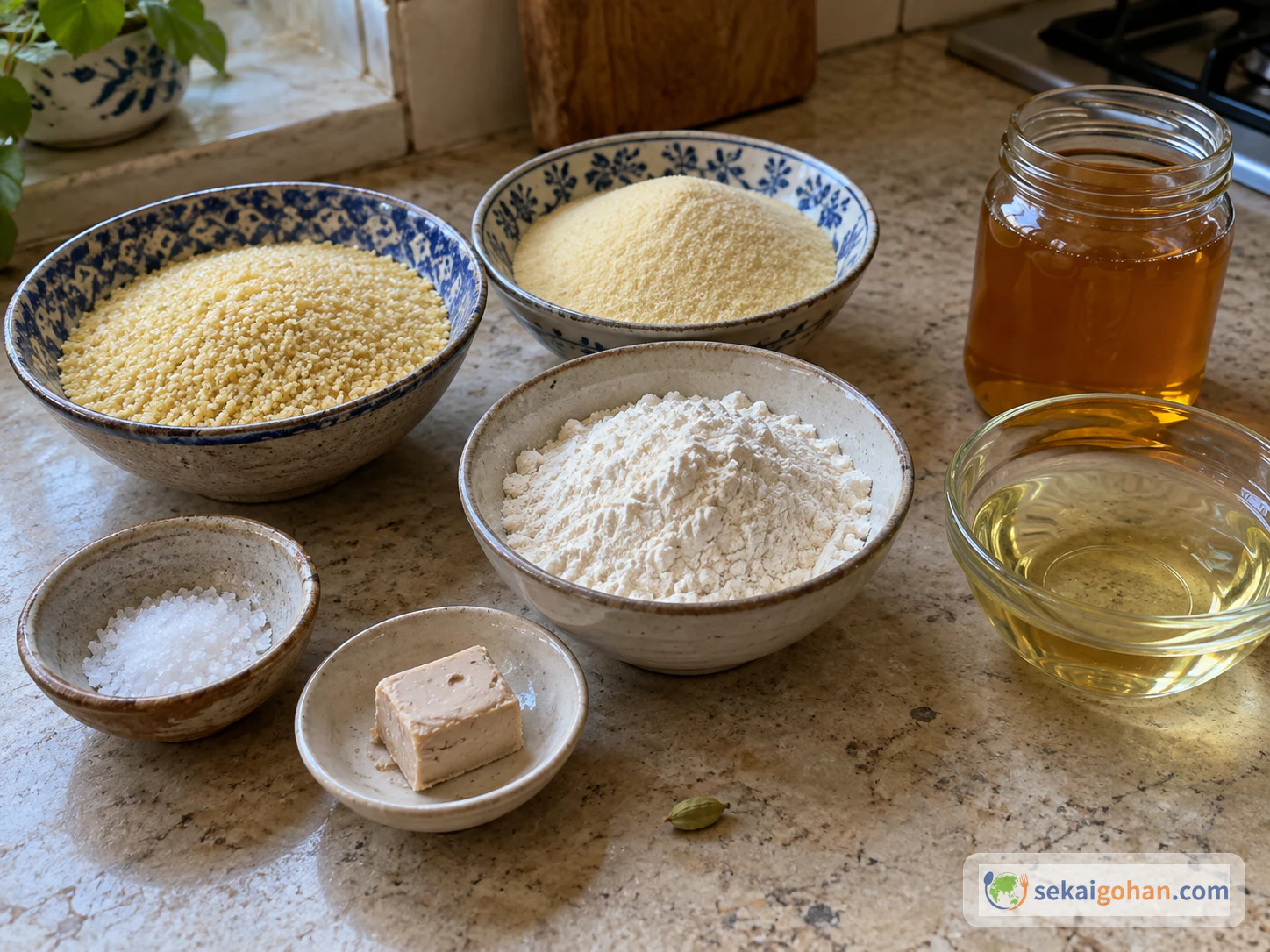
Serves 6. Add the warm water gradually until the batter feels right, as described in the steps.
This recipe contains wheat (gluten) from the semolina and flour, and it uses honey. Check the frying oil label if you need to avoid traces of other foods.
Equipment
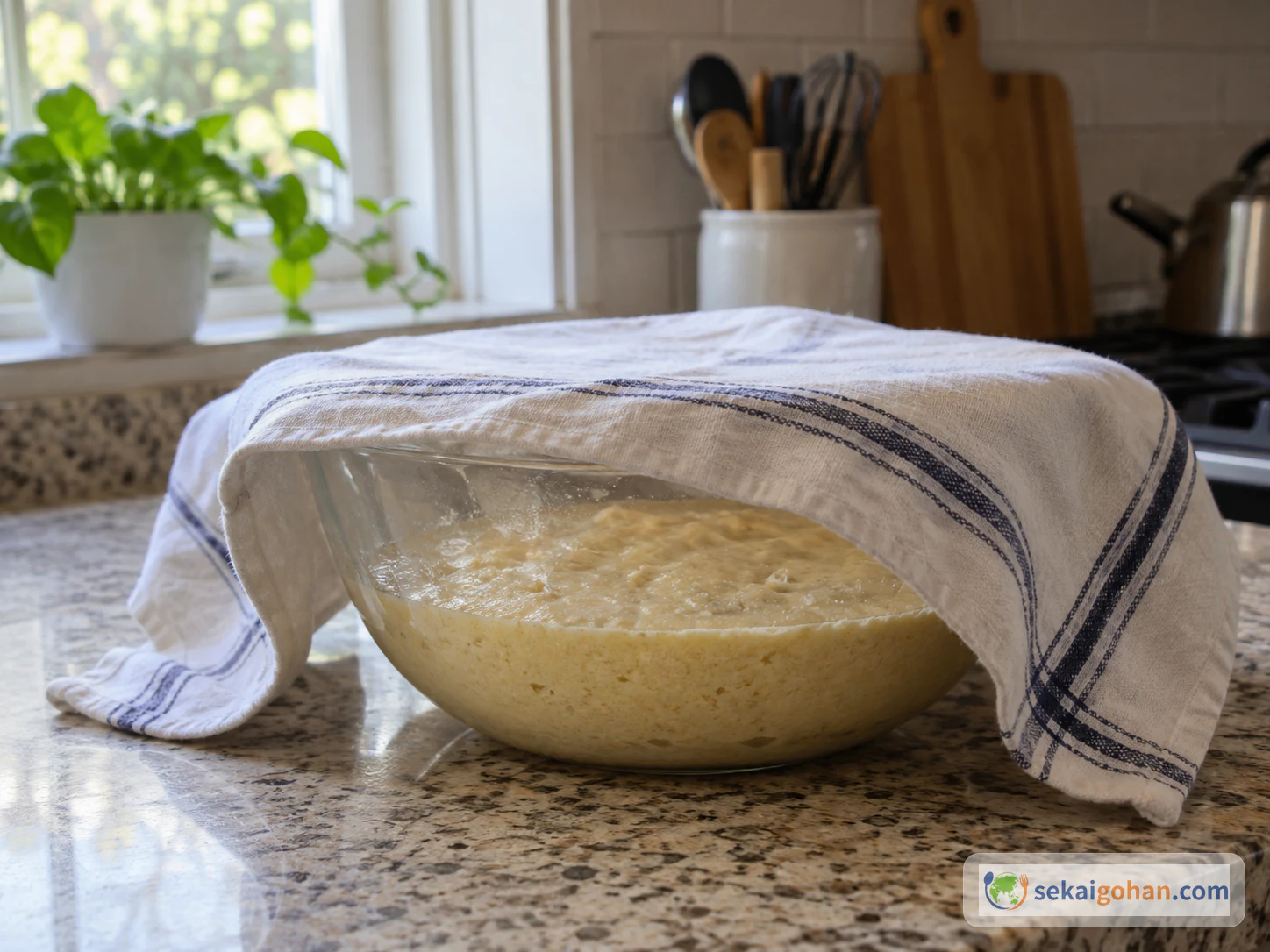
- A large mixing bowl, plus a cloth or lid to cover it
- A wooden spoon or spatula
- A piping bag or a funnel. A large nozzle gives oversized pieces; a 0.375 inch (8 mm) tip works better.
- A deep frying pan
- Tongs or a slotted tool for turning and lifting the pastry
- A separate shallow bowl for the honey
- A plate for draining off excess honey
- Optional: a thermometer to watch the oil
Choosing Semolina and Honey for Zlabia
Buy the two semolinas separately. Look for durum wheat semolina labeled medium and fine, at import grocers or online shops that sell North African ingredients. Having both grinds matters more than anything else in this recipe. If you have to replace one, note which one you changed and expect a different grain and texture. Replace all the semolina with ordinary flour and you end up with a different sweet altogether.
Choose a honey you like. Homemade honey (miel maison) is ideal if you have it. Any honey you can easily buy will work too, though its aroma and thickness will change how the pastry finishes and how thickly the honey coats it.
Method: From Batter to Honey
Go by how the batter feels and how the pastry looks, not by set water amounts, oil temperatures or times.
When the Batter or Shape Goes Wrong
| What you see | Likely reason | What to do |
|---|---|---|
| The batter runs and won't hold a line | Too much water went in at once | Next time add water in small amounts, aiming for the thick, sticky batter in step 3 |
| The batter is too stiff to pipe after resting | It thickened while resting | Stir to degas and add a little water just before piping |
| The pieces come out very large | The piping opening is too wide | Switch to a 0.375 inch (8 mm) tip |
| The loops crowd together or the pan feels hard to manage | Too much batter or oil in the pan | Pipe fewer pieces at a time and don't fill the pan too deep with oil |
| You're not sure when to turn or remove the pastry | There's no set time or temperature | Go by color: golden on the first side, then golden on the second |
Varying Zlabia de Boufarik
The cardamom is optional. Leave it out and the honey and fried semolina come forward. Halving the recipe isn't straightforward, since the yeast and water would need adjusting, so make the full batch.
Frequently Asked Questions
How much water should I use?
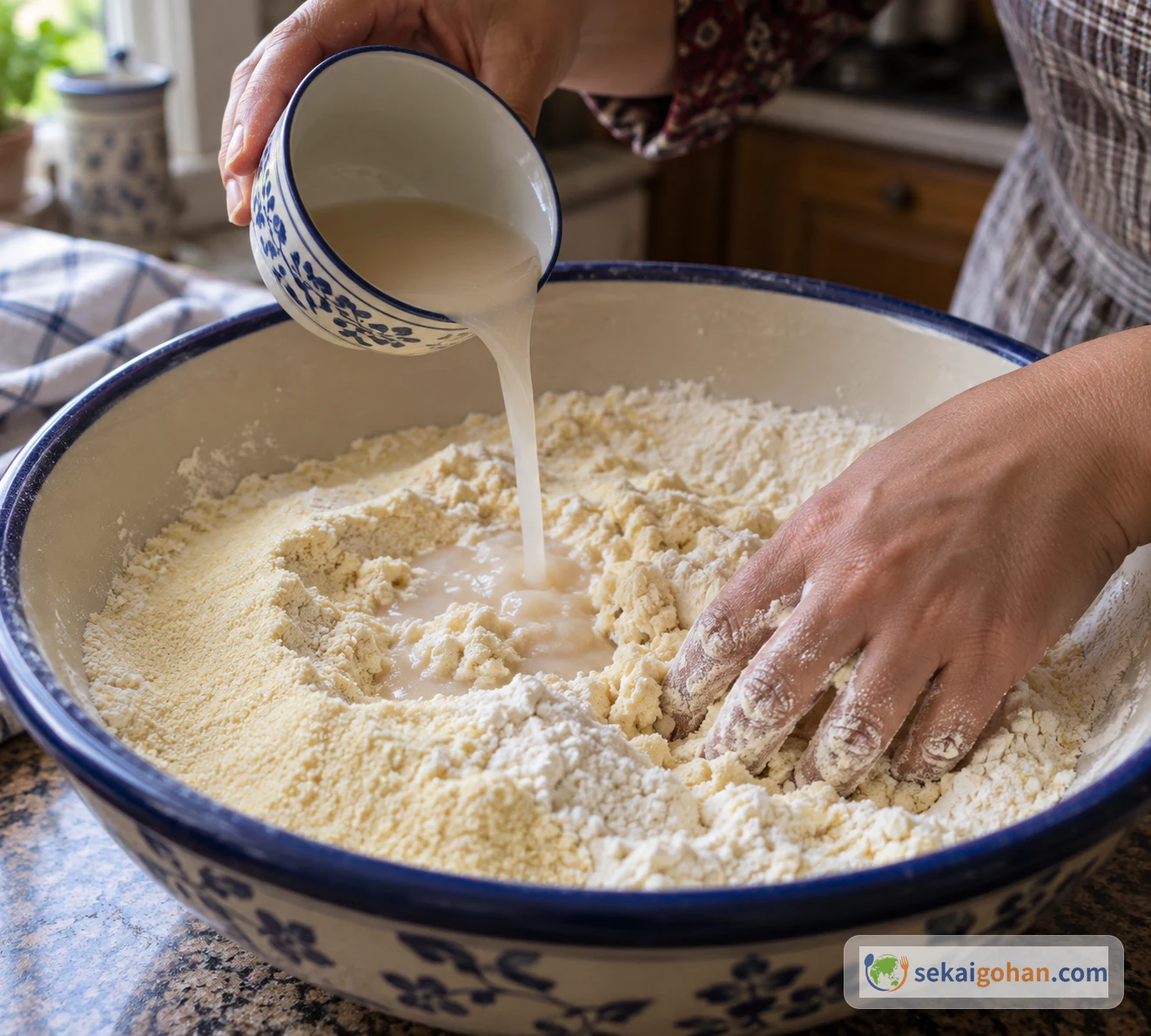
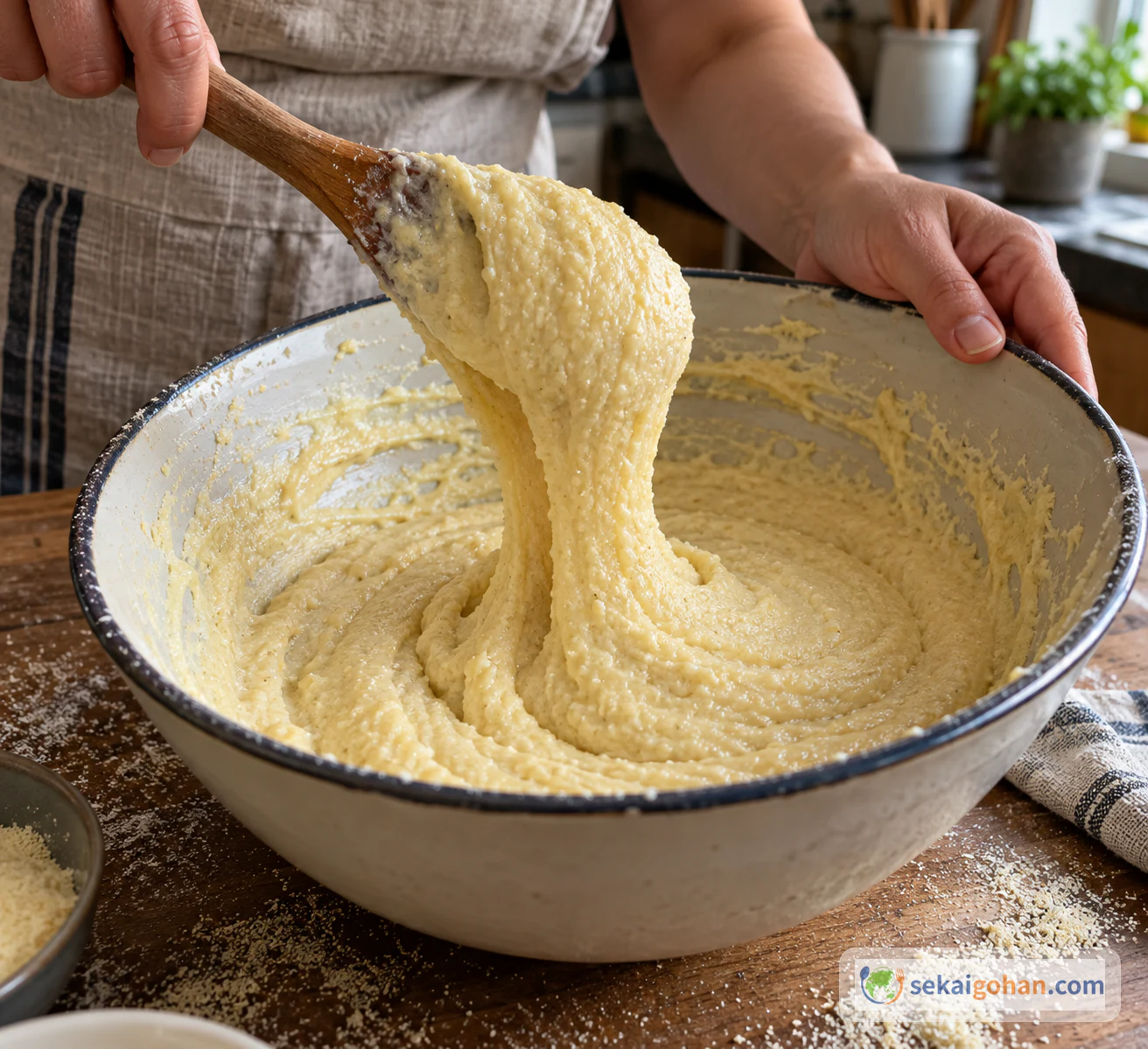
Add warm water little by little until you have a crêpe-like batter. After the first rest, add more a spoonful at a time until the batter is thick and sticky.
Can I use dry yeast?
The recipe calls for 20 g of baker's yeast (1/2 cube), which is fresh compressed yeast. Don't use 20 g of dry yeast in its place.