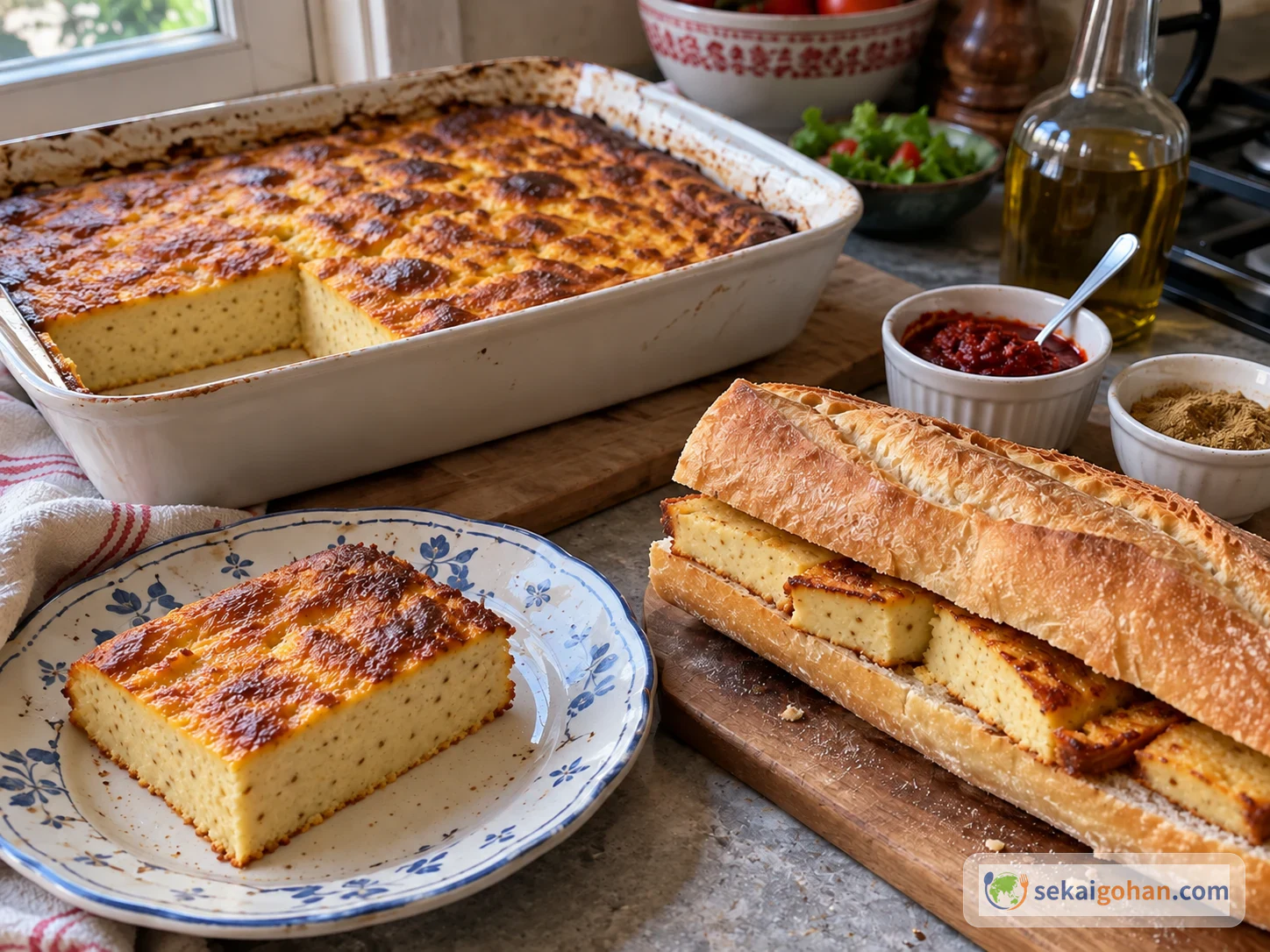
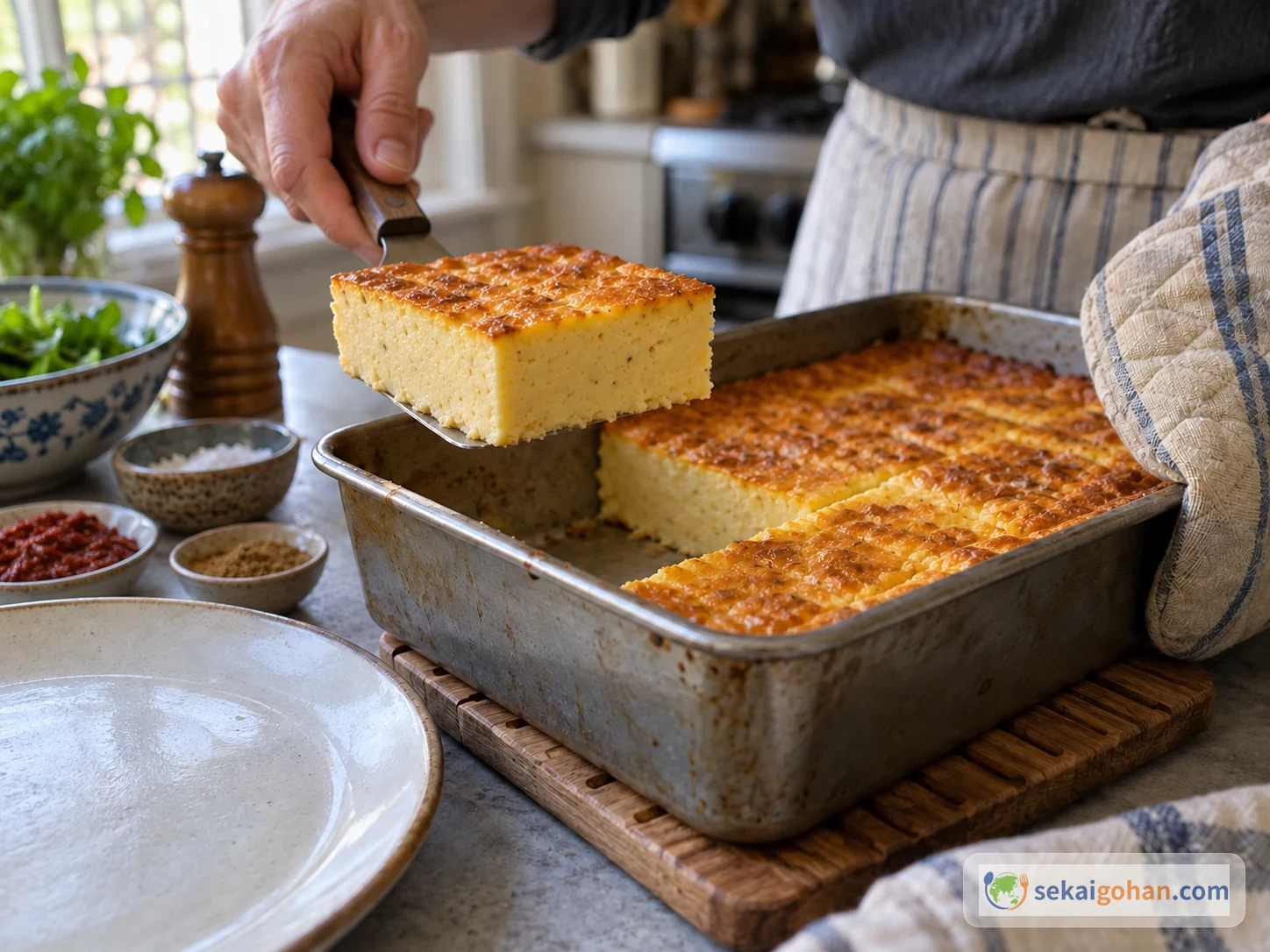
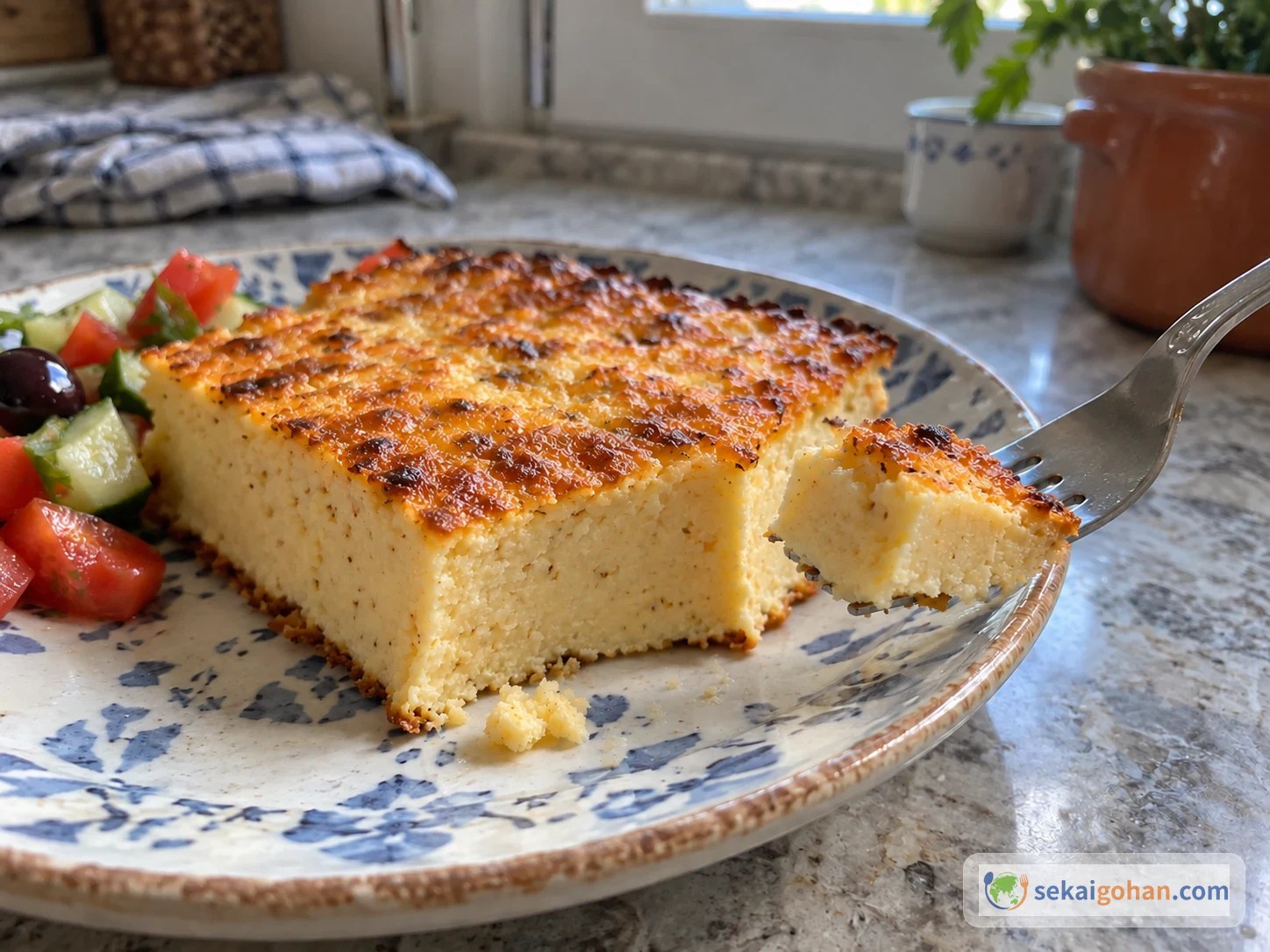
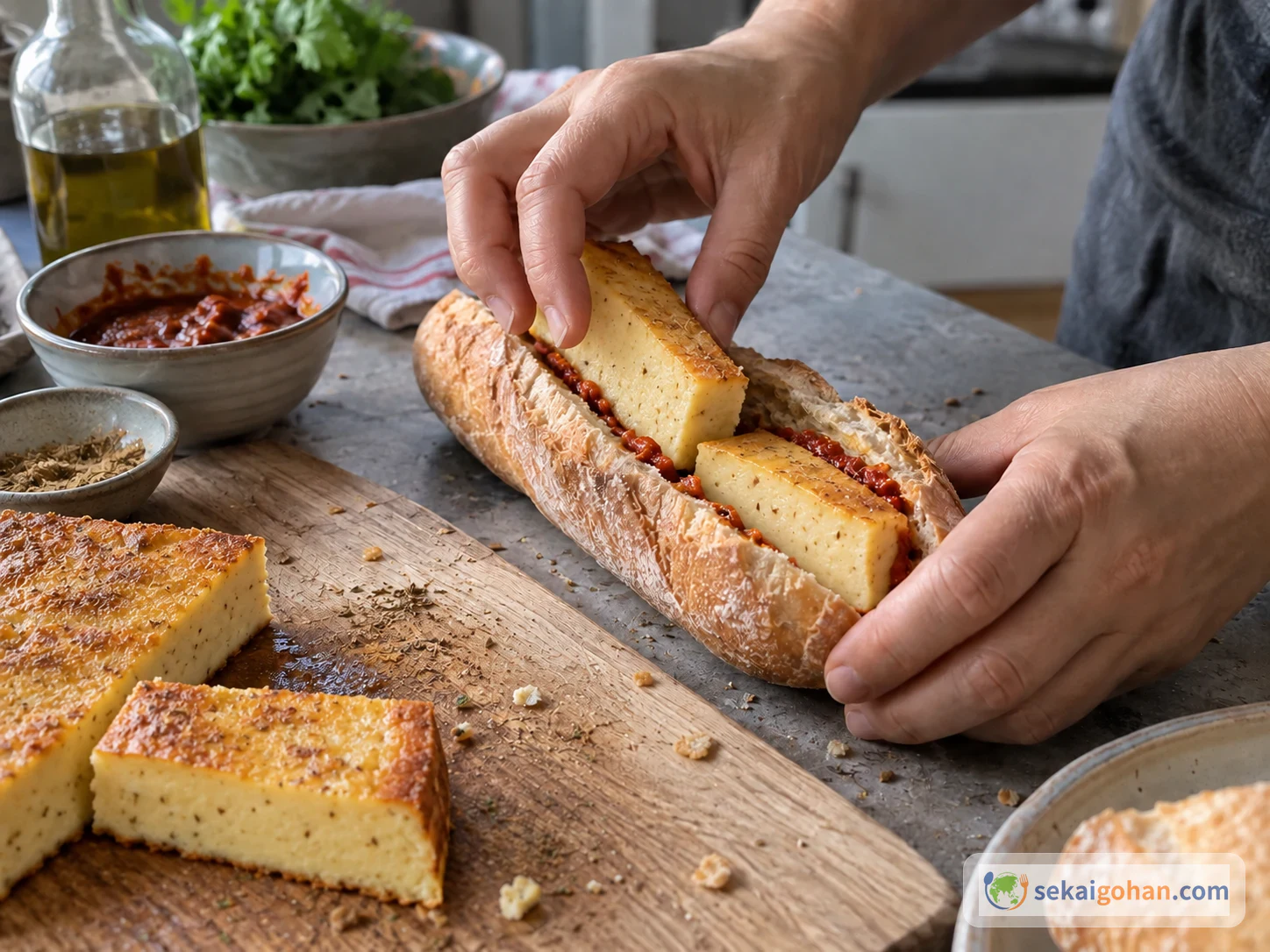
A steaming square slice slides between the halves of a split baguette, followed by a sprinkle of cumin and a smear of harissa. Bite in, and the bread's crust crackles while the warm bean flan inside gives way, soft. Garantita (also karantika) is an Algerian bake made from chickpea flour, lightly browned on top and soft in the middle. The best part is where that softness meets the chew of the bread.
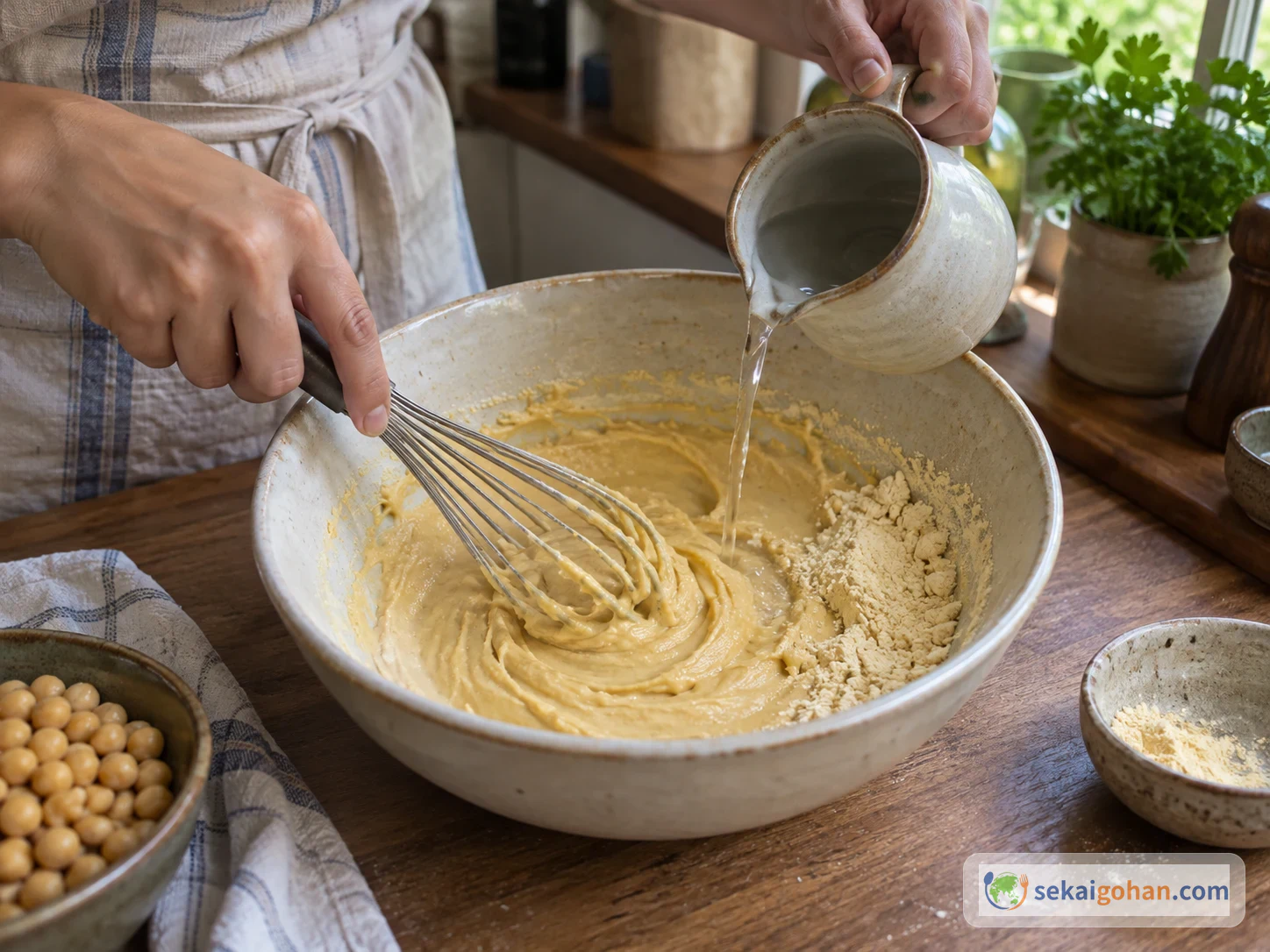
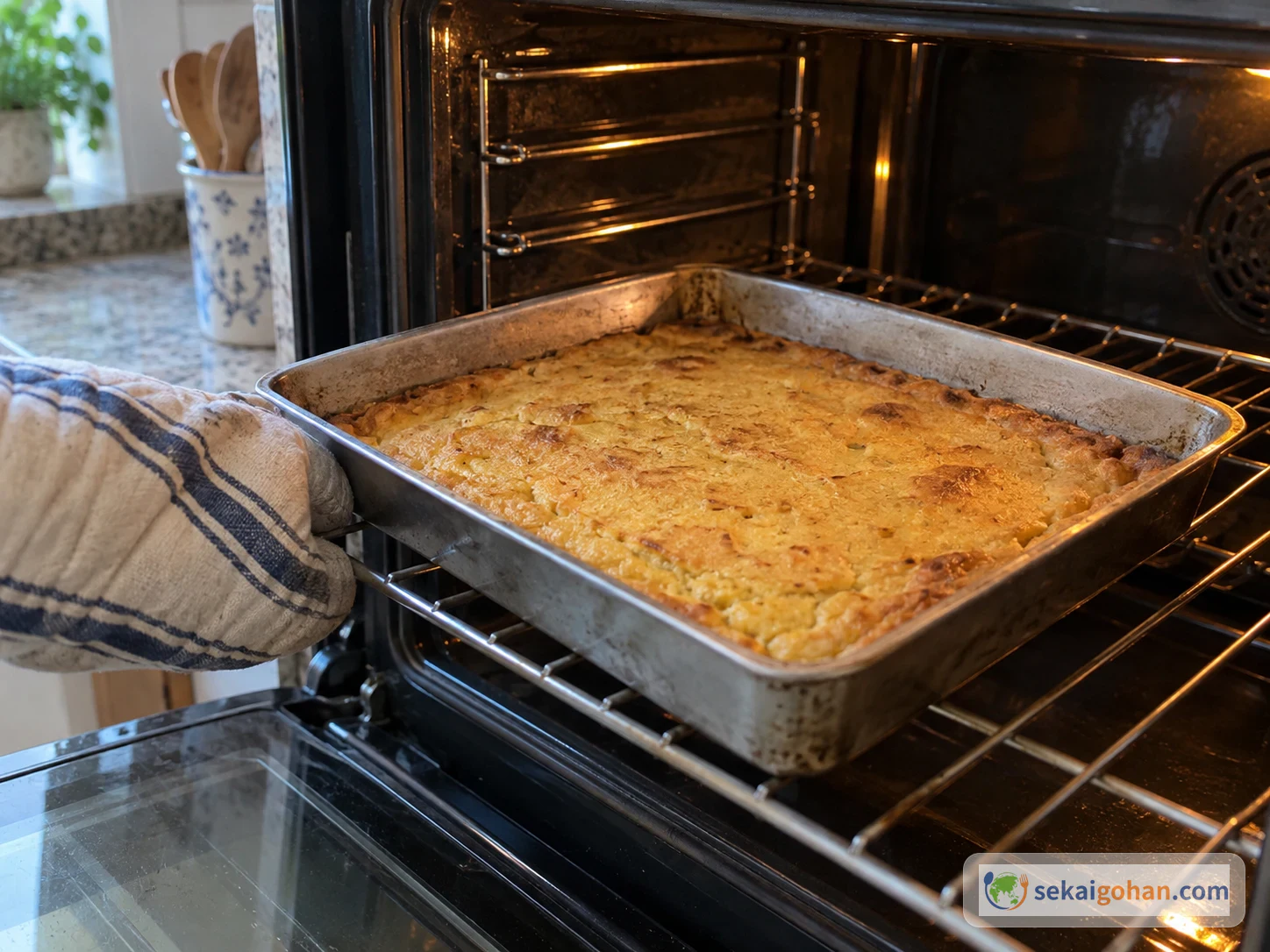
There's no meat and no wheat flour in it, just chickpea flour, water, eggs and oil. Before baking, the batter stays runny, almost a liquid, and in the oven it sets into a soft flan rather than a dry pancake. At home, the two tricky parts are finding the right bean flour and making sure the middle has set when it comes out.
Garantita in Algeria: names, regions and household formulas
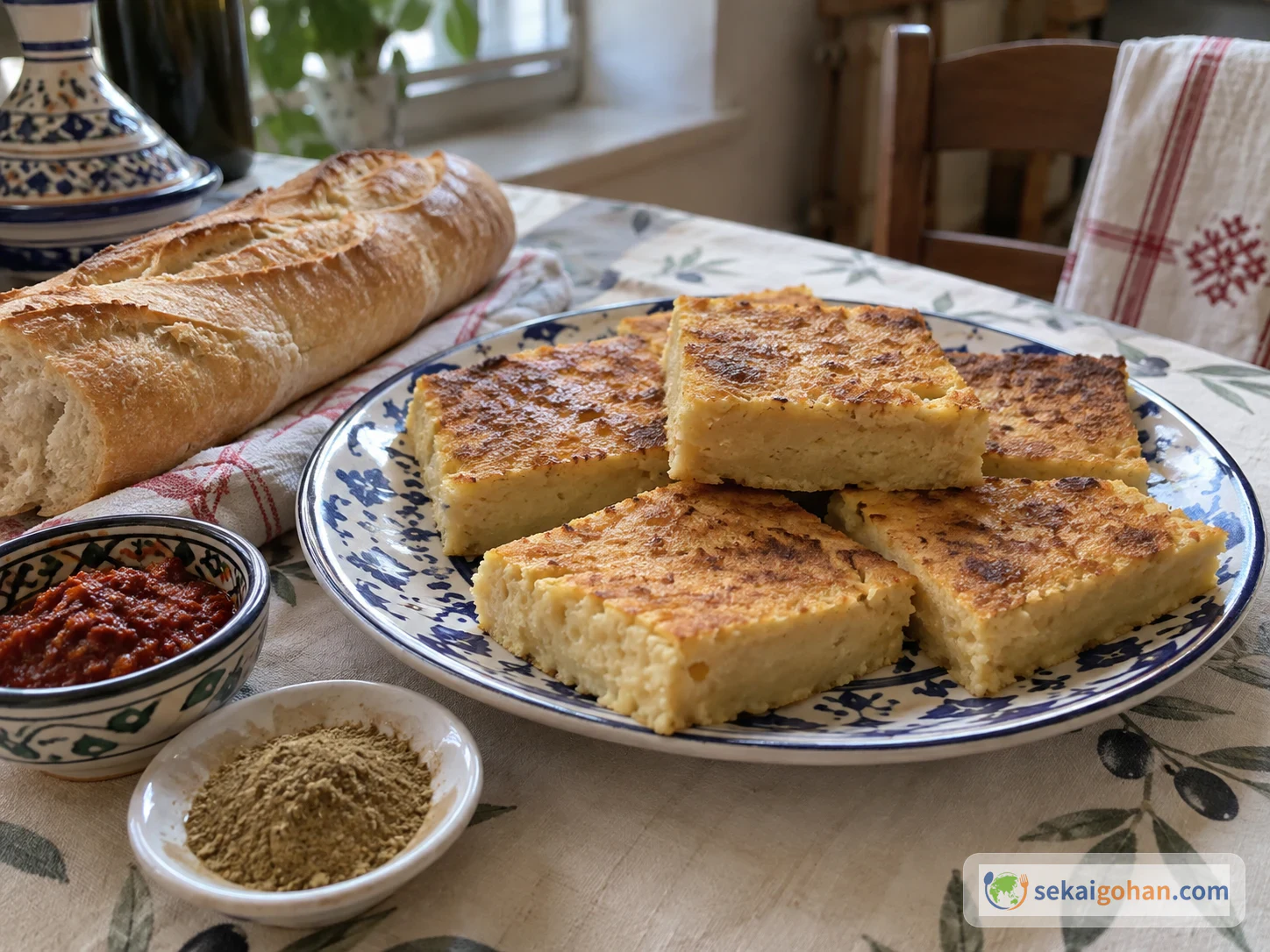
The dish is known for names that vary by place. In the center of the country it's garantita. In the west, around Oran, it's karantika or karan, and you'll also see calentica and kalentika. They all mean the same chickpea flour bake. Oran is the city most linked with it, as street-stall food and a quick meal on the corner.
On the street it comes tucked into a baguette. It's also eaten as warm square slices on a plate with salad, and at home in Annaba (formerly Bône), calentica was made as a starter before the meal. So the same flour can make a portable meal in bread or a first course served at the table.
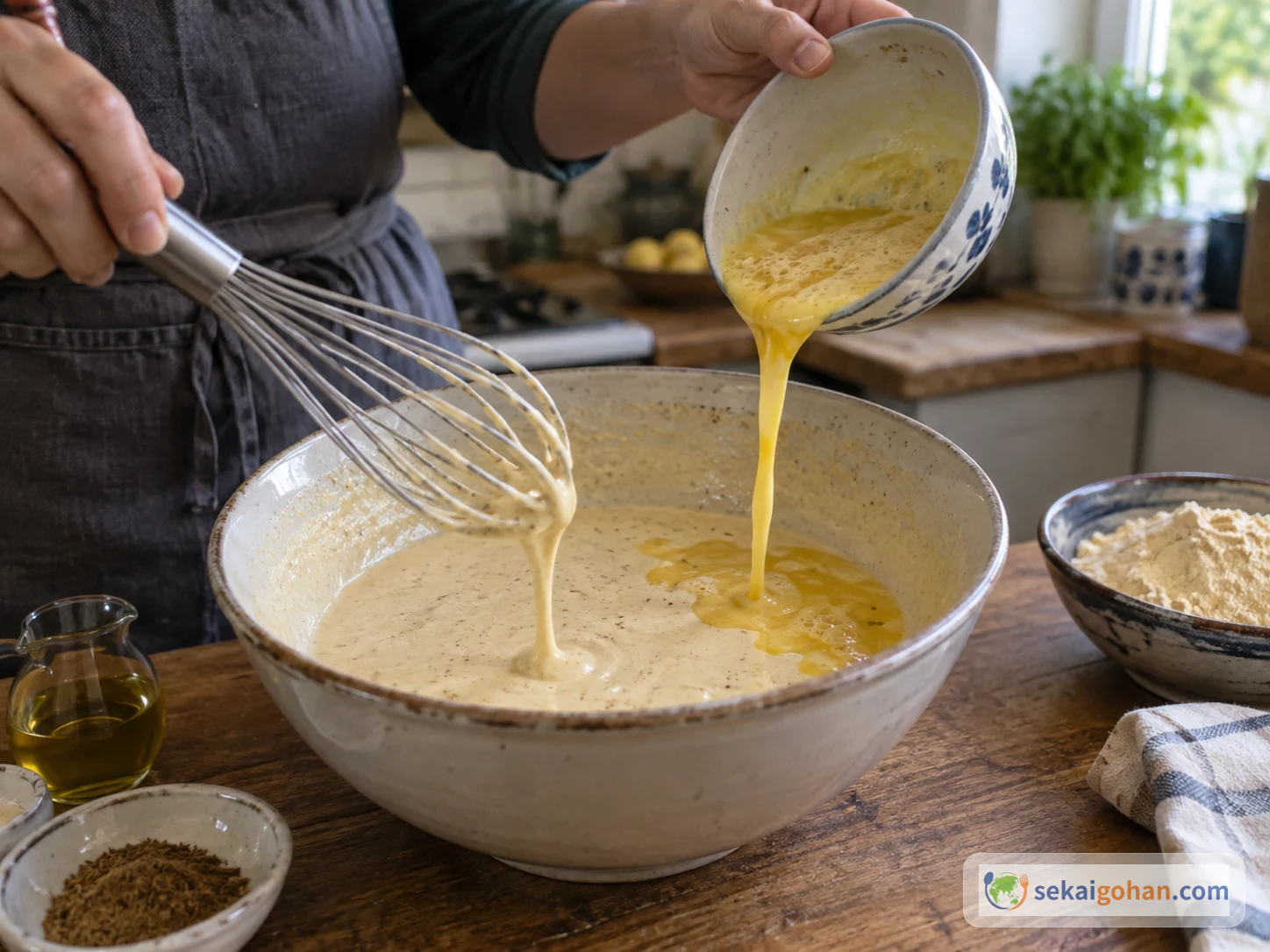
Formulas change from household to household. Some leave out both egg and milk, some add egg, and some replace part of the water with milk. Egg holds the flan together, and milk gives it a dairy flavor. Each family keeps its own formula. The basic one here uses 2 eggs and no milk, and the milk version is in the variations table below.
One formula from a street-corner seller in Tlemcen uses 9 oz (250 g) bean flour, 1 quart (1 L) water and 1 egg. Another household formula uses both egg and milk. A dish with one name can have several family versions.
Ingredients (serves 6)
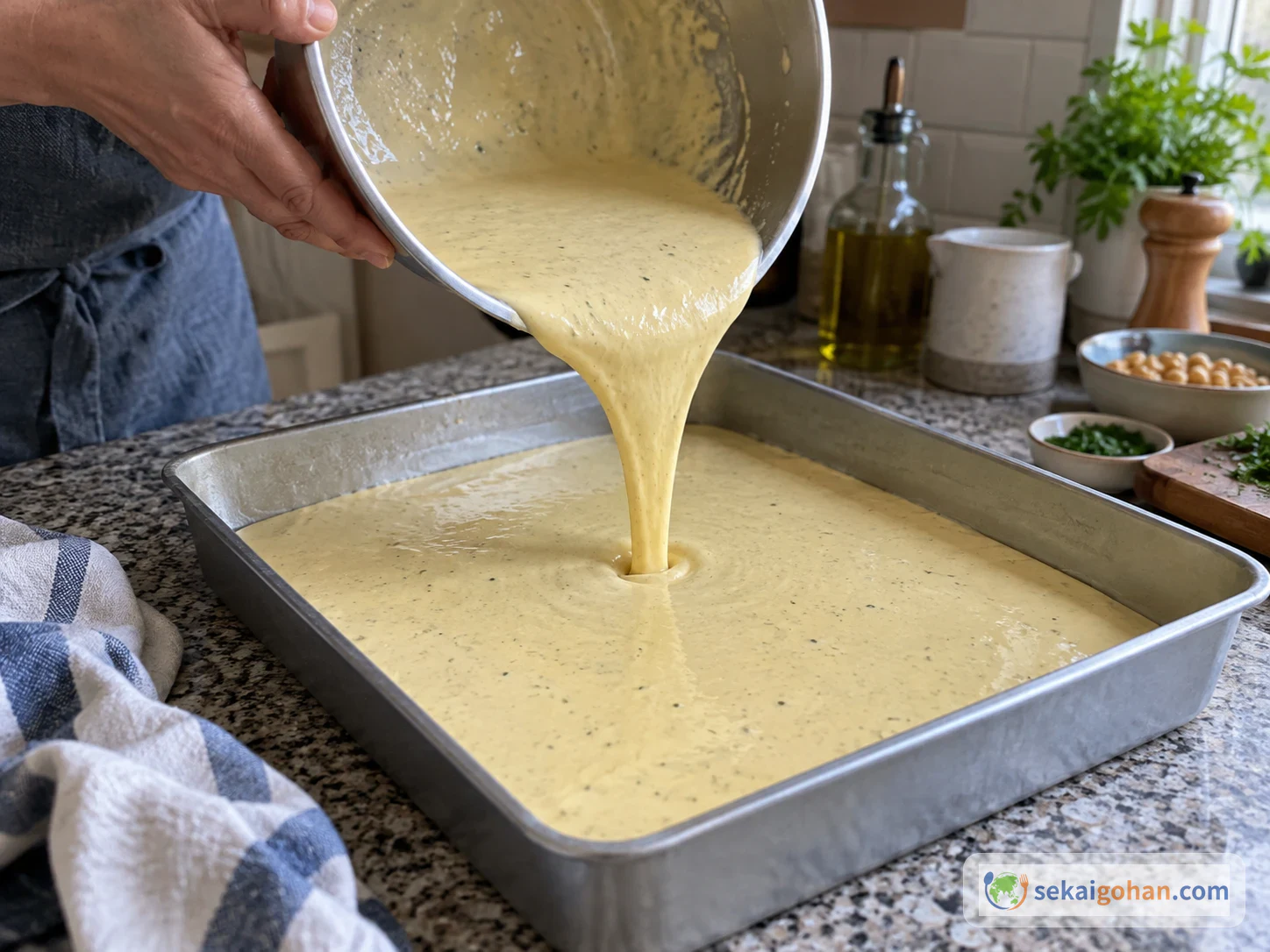
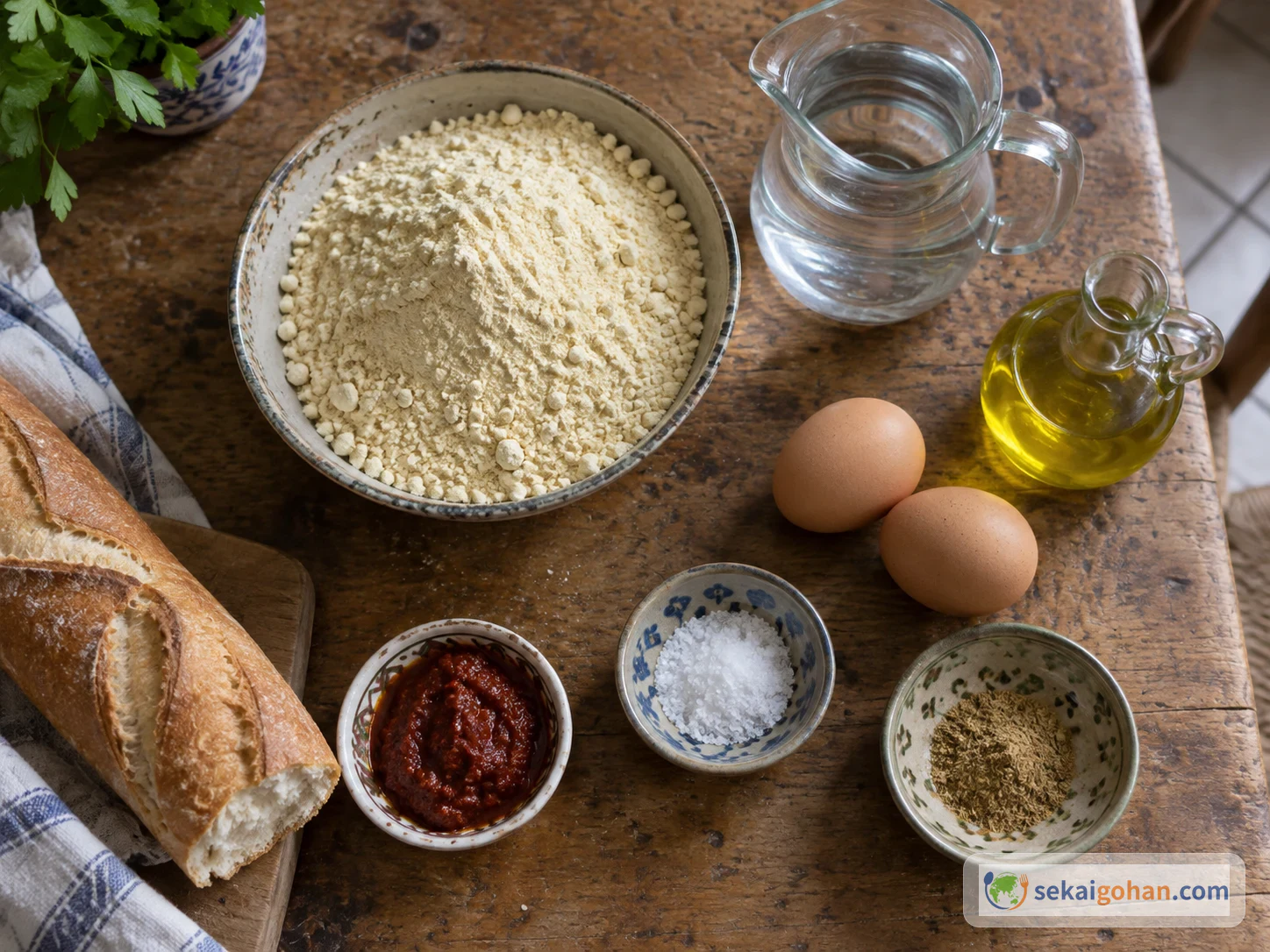
When shopping, look for the flour first. Choose unroasted chickpea flour with no seasoning mixed in. It is a different thing from roasted flour for confectionery. Check the ingredient label to confirm it is flour from chickpeas, and avoid seasoned mixes for frying. Mashed canned beans retain water and grain, so they cannot be swapped straight for this amount of flour. Prepare an oven-safe dish 22 x 33 cm and at least 1.5 inches (4 cm) deep, and check beforehand that it fits in the oven.
Tools are a whisk, a scale, a bowl of 2 quarts (2 L) or more, an oven-safe dish, an oven and a spatula for serving. Look for the flour at stores selling imported foods or online, by the general name "chickpea flour." Prepare the cumin as powder, and choose the harissa by heat and ingredient label. No dedicated baking appliance is needed, but a microwave will not give the same baked surface.
Pouring the whole amount into a smaller dish makes the batter thick and takes longer for the center to set. When changing dishes, check the capacity and the oven-safe label, and do not pour the batter up to the rim. Use 22 x 33 cm as the standard, and judge doneness by the state of the center, not only by time.
The basic flan contains egg and the bread contains wheat, and switching to a milk version adds dairy. Check the ingredients of the chickpea flour and harissa as well, according to what the eater avoids. Do not taste the batter, which mixes raw flour and egg. Keep it from touching cooked food or utensils, and wash hands, utensils and the work surface.
Choosing chickpea flour for garantita
The quantities are built on chickpea flour, so don't swap in the same amount of wheat flour, rice flour or canned beans. You need bean flour as the main ingredient to get its flavor and the soft texture of a flan made from a watery batter. Use unroasted flour, too. Roasted flour sold for confectionery won't give the same result.
Method
Preparation takes about 15 minutes and baking 60 to 75 minutes. Allow about 90 minutes in total, including the 5-minute rest after baking. Even if the batter looks like a thin liquid, do not add flour to make it firm. It sets while baking. Steps 1 through 3 use no heat; the only heating is the 350°F (180 °C) oven in step 4.
If small lumps of flour remain before baking, break them up with the whisk. Only for lumps that are hard to break up, remove them with a fine-meshed strainer. But if the lumps are so big that throwing out the flour would change the quantity, mix again. Don't mistake foam on the surface for dry lumps. Leave the runny consistency as it is.
If it comes out hard and dry, the usual causes are overbaking or a dish that is too wide. Adding water after baking will not return it to the original flan. Next time go back to the specified dish and quantities, check the state of the center from 60 minutes, and stop baking there.
When the center of the garantita stays runny
If the batter in the center still runs, don't serve it yet. Bake it longer at 350°F (180 °C), 5 to 10 minutes at a time, and check the center each time. If the top is already deeply colored, cover it loosely with aluminum foil and keep the foil from touching the heating element. Browning and doneness are separate. A softly set flan and uncooked liquid batter are different things, so also check that the center has reached 160°F (71 °C) or above.
Next time, look at three likely causes: batter poured too thick, an oven that wasn't fully preheated, and a gap between the temperature you set and what the oven actually reaches.
Serving, variations and storage
Cut the 12.5 oz (360 g) baguette into 6 pieces and slit each one along the side. Spread about 1/2 tsp harissa thinly inside each and tuck in the warm flan. Every bite gives you the mild flan, the cumin, the heat of the chile and the crust, one after another. If anyone at the table isn't used to heat, put the harissa on the side and let them taste the flan on its own first.
Variations
| Change | Specific modification | Flavor, texture and cautions |
|---|---|---|
| Milk household formula | Make the 1 quart (1,000 ml) water 3¼ cups (780 ml) water plus 1 cup (220 ml) milk | Adds a dairy flavor. Egg and flour stay the same; not for anyone who must avoid dairy |
| Make it with olive oil | Replace the ¼ cup (60 ml) vegetable oil with the same amount of olive oil | Adds the flavor of the oil. The 1 tsp (5 ml) oil for the pan stays separate |
| Serve without heat | Skip the harissa; add only cumin | The flan itself contains no chile |
| Make it a starter on a plate | Serve the flan in small slices without bread | You taste the soft, warm beans directly. Salad goes well alongside |
| Try the Annaba household example | Add 1 tbsp Dijon mustard to the batter | A household version from Annaba. Check the mustard's ingredients for allergens |
If you'd like to bake the bread yourself, kesra, the Algerian semolina flatbread, is a good choice. For another warm North African bean dish, try Tunisia's lablabi, where the beans go into a soup instead of being baked as flour. It's also a nice partner on days you serve garantita as a starter eaten on a plate.
Storage and nutrition
Don't store leftovers in bread. Put just the flan in clean, shallow containers. Refrigerate quickly in a shallow container. Don't leave it at room temperature for more than 2 hours, or more than 1 hour if it's above 90°F (32 °C). Keep the refrigerator at 39°F (4 °C) or below, and eat the flan within 2 days, starting the next day.
When reheating, make sure the center reaches 165°F (74 °C) or above. In a microwave, turn it partway so no cold spots remain. For reheating in an oven, use 160 to 170 °C, and check the center temperature, not just the time. Reheating does not make food that sat too long at room temperature safe. Also, don't wait several hours for it to cool completely before refrigerating.
The nutrition figures are approximate. They cover the flan only, without the bread, harissa or finishing cumin, and are based on 9 oz (250 g) bean flour, 3.5 oz (100 g) edible egg and a total of ¼ cup (65 ml) oil. One of six portions has about 275 kcal, about 11 g protein, about 15 g fat and about 24 g carbohydrate. Actual values depend on your ingredients and how much oil stays in the dish, and the milk version will differ.
Frequently asked questions
Is there a formula without egg?
Some household formulas use only flour, water, oil and salt. Leaving out the 2 eggs from this recipe, though, changes both the baking time and how the flan holds together. If you need to avoid egg, use a recipe written to be egg-free.
Will it have the same texture if frozen?
Freezing isn't recommended, because the flan can turn grainy after thawing. The first time you make it, make only as much as you can finish within the 2-day refrigerator window.