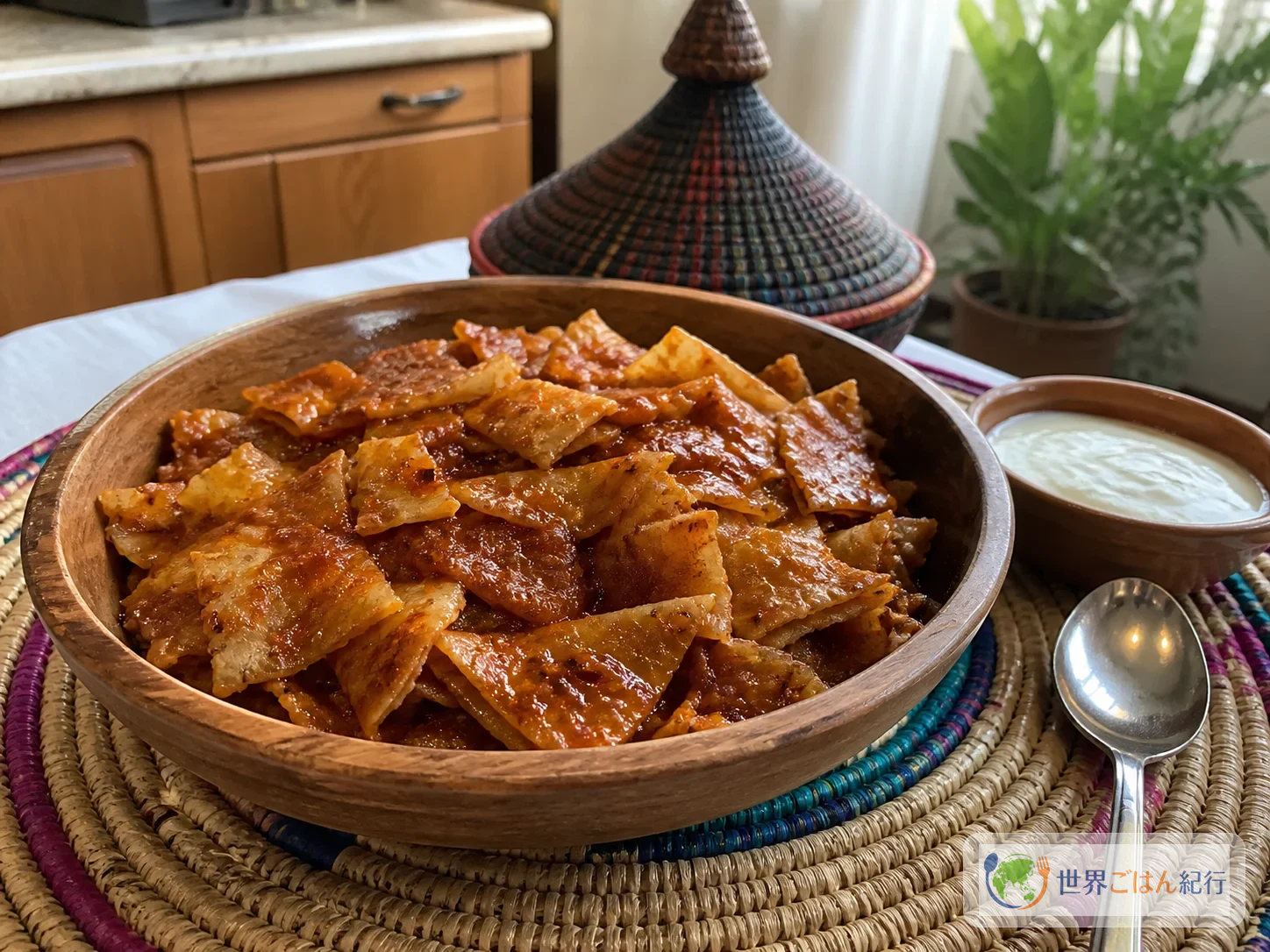
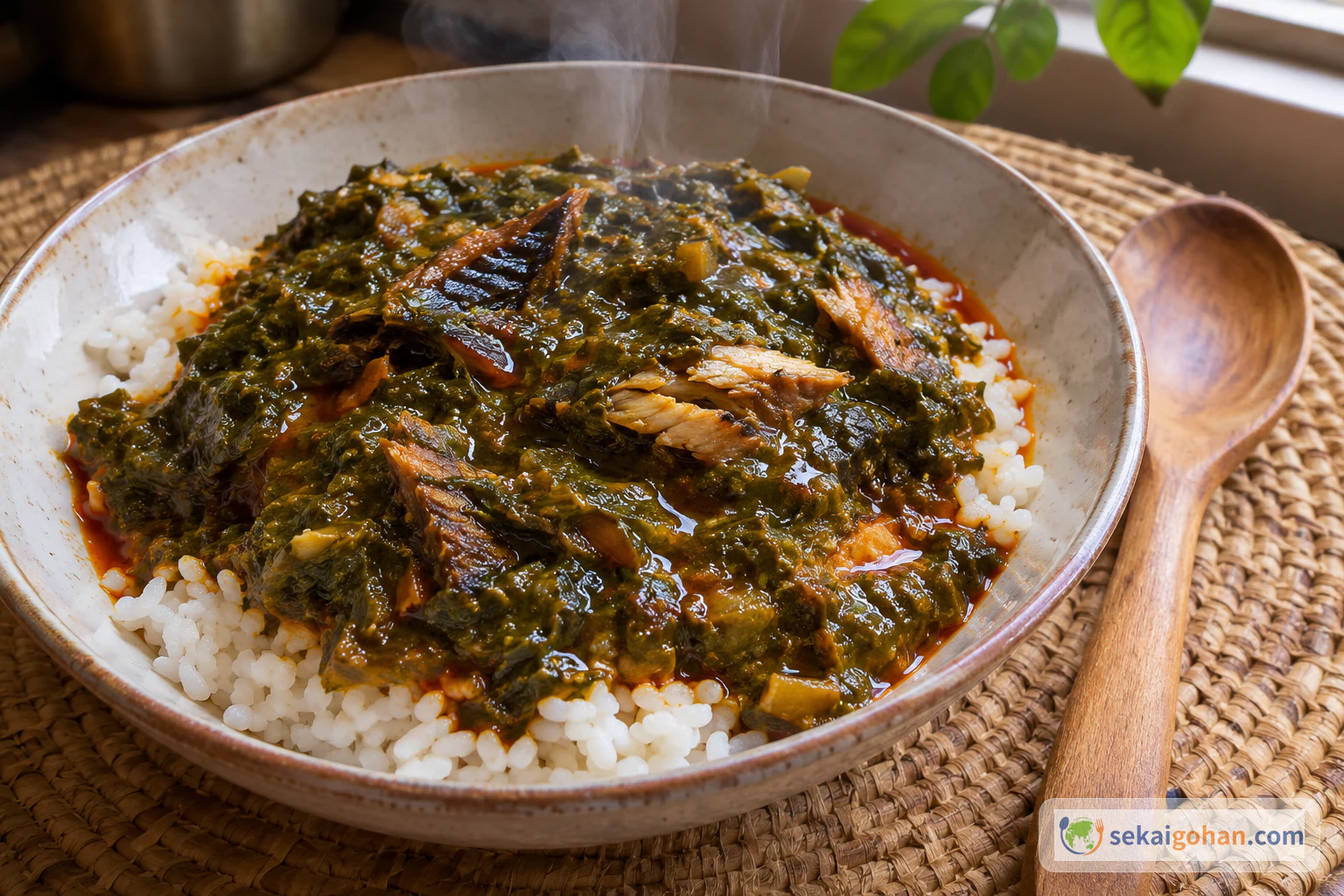
Drop red palm oil into a skillet and the scene in the pan changes. An orange glow spreads, and the sauce of crushed onion and chili, watery at first, slowly grows heavy. Only then do the greens go in, squeezed firmly of water. This is efo riro, the leafy-green stew of southwestern Nigeria, grassy and faintly bitter with the local leaves and deepened by red palm oil and dried shrimp. If you like seed-thickened stews such as egusi soup or the red rice dish jollof rice, it's an easy next West African dish to try.
Efo Riro in Southwestern Nigeria
Efo riro comes from the southwest of Nigeria, where the leaves most often used are efo shoko and efo tete. With efo in the name, the leaves are the star rather than the meat. Still, the foundation of the flavor is the red sauce you make before they go in.
"Efo" means leafy vegetable in Yoruba, and "riro" means "to stir, to mix." Literally, it is a "stirred leaf": a leafy-green stew. It is also spelled Efo riro, Efo-riro, and other ways.
How efo riro is eaten in Nigeria
Efo riro isn't really a soup you drink on its own. Its rich sauce is meant to coat a staple, which does the work of a spoon. In Nigeria it's paired with "swallow," staples pounded from cassava or yam such as eba, amala, fufu, and pounded yam. It's also eaten with rice and other grains.

Regional differences
Cooks combine leaves, meat, dried fish, ground crayfish, ponmo (cow hide), and iru (fermented locust beans) in different ways. Some pots lean on seafood, while others are built on beef or chicken stock. Rather than hunting for the one authentic recipe, keep two things in mind: mix the leaves in last, and cook the pepper sauce until its water is gone.
Ingredients (serves 4): First Gather "Leaves, Red Oil, and the Savor of the Sea"
Some Nigerian recipes put in many kinds of meat and fish, but for the first time do not add too many ingredients. Take the broth from chicken, and use 14 oz (400 g) greens, 3 tbsp red palm oil, and 1–2 tbsp dried shrimp. Once you can see the roles of these four, it is easier to judge when you expand to beef or dried fish next time.

Powdered dried shrimp and iru are used, so if you have a shrimp or seafood allergy, check ingredient labels and leave out the relevant ingredients. The flavor will not be the same after substitution. Habanero is hot even in small amounts, so set aside some sauce for tasting before adding more, which makes it easier to adjust.
Buy Red Palm Oil, or Skip It This Time?
Red palm oil is not just an oil that adds red color. It gives the pepper sauce, before the greens go in, an earthy aroma and body. At 3 tbsp, the presence of the red oil comes through, but it is not an amount that drowns the whole pot in oil.
The condition for buying is that you plan to cook West African dishes such as efo riro, egusi soup, and jollof rice again. A small food-grade bottle is enough to begin with. The condition for skipping is that you want to try only one dish and cannot think of a use for the rest, or that you do not want to carry its aroma into dishes made with light oil. In that case you can mix 3 tbsp rice bran oil with 1/2 tsp paprika powder, but the aroma of red palm oil does not come back.
When you look at a product page, check not the price or stock but the food labeling, volume, and ingredients.
Choosing Ingredients and Substitutes for Efo Riro
This version replaces shoko and tete with spinach and kale and swaps crayfish for powdered dried shrimp. The red palm oil stays for its color and earthy aroma. As long as each substitute plays the same role as the original, the dish keeps its shape.
Greens
Shoko leaf is a green with a mild bitterness. Ordinary spinach, fresh or frozen, stands in well, and spinach alone is plenty for home cooking. Mix in a little komatsuna and the stems keep some bite. Kale helps the leaves hold up in the stew.
Substitution table
| Role in Nigeria | What to keep elsewhere | Replacement and judgment |
|---|---|---|
| Greens such as shoko / tete | Spinach, kale, komatsuna | Spinach for tenderness, komatsuna for stem texture, kale for stewing resilience |
| Red pepper base | Red bell pepper, onion, chili | Bell pepper for sweetness; adjust the heat separately |
| Ground crayfish | Powdered dried shrimp | If you can eat crustaceans, a small amount brings savor of the sea |
| Red palm oil | Edible red palm oil | Keep it for color and aroma. Rice bran oil plus paprika is a different taste |
| Iru | Fermented locust beans | Optional. Natto is strongly sticky and aromatic, so use far less |
| Swallow | Eba, fufu, white rice | White rice is fine the first time; try another staple next time |
Powdered dried shrimp
Of everything on the ingredient list, powdered dried shrimp changes the dish the most for the smallest amount. The pot works with chicken broth alone, but 1 tsp to 1 tbsp of dried shrimp leaves the salt of the sea lingering deep in the red sauce. It isn't the same as Nigerian ground crayfish, but it's an easy substitute to find. Add it gradually rather than all at the start, checking the aroma as you go.
It's worth buying if you like seafood aromas and will use it in other West African dishes too. Skip it if you can't eat shrimp, or if strongly scented dried goods tend to sit forgotten in your refrigerator. When you buy, check the net weight, the ingredients, and whether it says no added coloring.
A mortar, if you add one tool
A blender handles this recipe fine. If you crush small amounts of whole dried shrimp, chilies, and iru, though, a mortar gives you a coarse paste that keeps its aroma, while a long run of an electric blade can warm the pepper sauce and make it too fine.
A mortar earns its space if you keep making dishes that call for crushed beans, chilies, and dried goods, such as akara and abacha. For a single try with powdered shrimp and ready-made paste, or with no room to store one, skip it. When you buy, look for a granite bowl and pestle sold as a set, check the bowl's diameter and weight, and make sure the material is food-safe.
Method: Reduce the Pepper Sauce, Then Mix the Greens in Last
If you finish the cutting, the first simmer, draining the greens, and reducing the sauce first, you will not hesitate at the pot. There are 7 steps in all, with about 45 minutes of cooking. Heat varies by stove, so proceed by the thickness of the sauce and how the oil floats, not just the time.
Common Efo Riro Problems and Fixes
Most trouble comes from the order. If you cook the greens first, they release water. If you add the leaves before the red sauce has reduced, the color thins and the flavor blurs. Leaves go in last.
Watery stew
Water collecting at the bottom of the pot means the greens weren't squeezed enough or the pepper sauce wasn't reduced enough. Heat for 3–5 minutes over low heat with the lid off, until a line drawn across the bottom with a wooden spatula stays for about 1 second. Cook off the water first; thickening with potato starch turns it into a different dish.
Bitterness
Shoko has a mild bitterness, and kale and komatsuna taste greener and more bitter than spinach. A shorter blanch followed by cold water softens that bitterness and grassiness a little. Oil heated until it smokes gives a different, harsher bitterness, and burnt oil can't be rescued, so keep the heat under the red palm oil in check.
Too much heat
If the chili heat stands out, add a little more greens or chicken and let it meld over low heat. Adding water would only thin the sauce. At the table, serving more white rice keeps the flavor balanced better than diluting the pot. Next time, start the habanero at 1/4 and remove some seeds before it goes in the blender.
Heavy oil
Cutting the red palm oil to 1 tbsp makes the stew lighter, but the color and aroma weaken with it. Make it with 3 tbsp the first time, then try 2 tbsp or a blend with rice bran oil. Without any red palm oil, think of it as efo riro-style stewed greens rather than a dish with the Nigerian aroma.
Serving, Storing, and Varying Efo Riro
Serving with rice or swallow
For an ordinary weeknight dinner, plain white rice is fine. The red sauce clings to the rice and a little fiber from the greens remains, and that alone makes a meal. On days you want to get closer to the Nigerian table, prepare fufu mix or eba separately and cook the efo riro a little thicker, so it becomes a sauce you ball up and scoop by hand. Boiled plantain adds sweetness and rounds off the heat. Decide on the staple first: it tells you whether to cook the stew thicker or leave more sauce.

Storage
Once it has cooled slightly, divide it into single servings in shallow airtight containers and finish it within 2–3 days in the refrigerator. To freeze, cool it completely, wrap one serving at a time, and keep it for 2–3 weeks. Greens soften on reheating, so if you want to keep their texture, leave them a little firm before freezing.
To reheat, move a portion to a small pot, add 1–2 tbsp water, and warm it over low heat until it's hot at the center and the sauce has loosened. Throw out anything left long at room temperature or with an odd smell, color, or stickiness. Avoid refreezing, and take out only what you need.
Variations
For beef shank or goat, simmer the meat until tender first and add its broth to the pepper sauce. Tough meat that keeps cooking in the sauce will outlast the leaves, which break down first.
For a stronger seafood aroma, increase the powdered dried shrimp to 2 tbsp and add flaked smoked fish at the finish. Dried fish, powdered crayfish, and stockfish work too. They all add salt, so cut back on the final salt.
With spinach alone, shorten the boiling time and the finishing mix to about 3 minutes. With kale alone, slice the stems thin and pass them through hot water for 90 seconds first. Greens vary in water content from bag to bag, so go by "no water drips" rather than the clock.
Without chicken, build savor with dried shrimp, mushrooms, and a rich vegetable stock. Leave out the shrimp as well and you can lean on dried shiitake powder and grilled onion. This makes a lovely pepper-stewed green dish, though it lacks the richness of the Nigerian habit of layering seafood and meat.
FAQ: Small Questions Before You Make Efo Riro
What does efo riro taste like?
The sweetness of red bell pepper, the heat of chili, the earthy aroma of red palm oil, and the savor of the sea from dried shrimp all overlap. Because the greens go in last, you taste leaves wearing the sauce rather than leaves that have broken down.
Is it a failure if I don't use red palm oil?
No, but the color and aroma change. Rice bran oil and paprika powder give you the redness and a good green stew, just one that heads in a different direction. If you want to compare, buying a small amount of red palm oil makes the difference easy to judge.
I don't like dried shrimp. What can I substitute?
Try smoked fish, a little fish sauce, or dried shiitake powder, in that order. If you avoid seafood, use dried shiitake powder and the chicken cooking broth. The aroma won't be the same, so let the greens and pepper sauce lead.