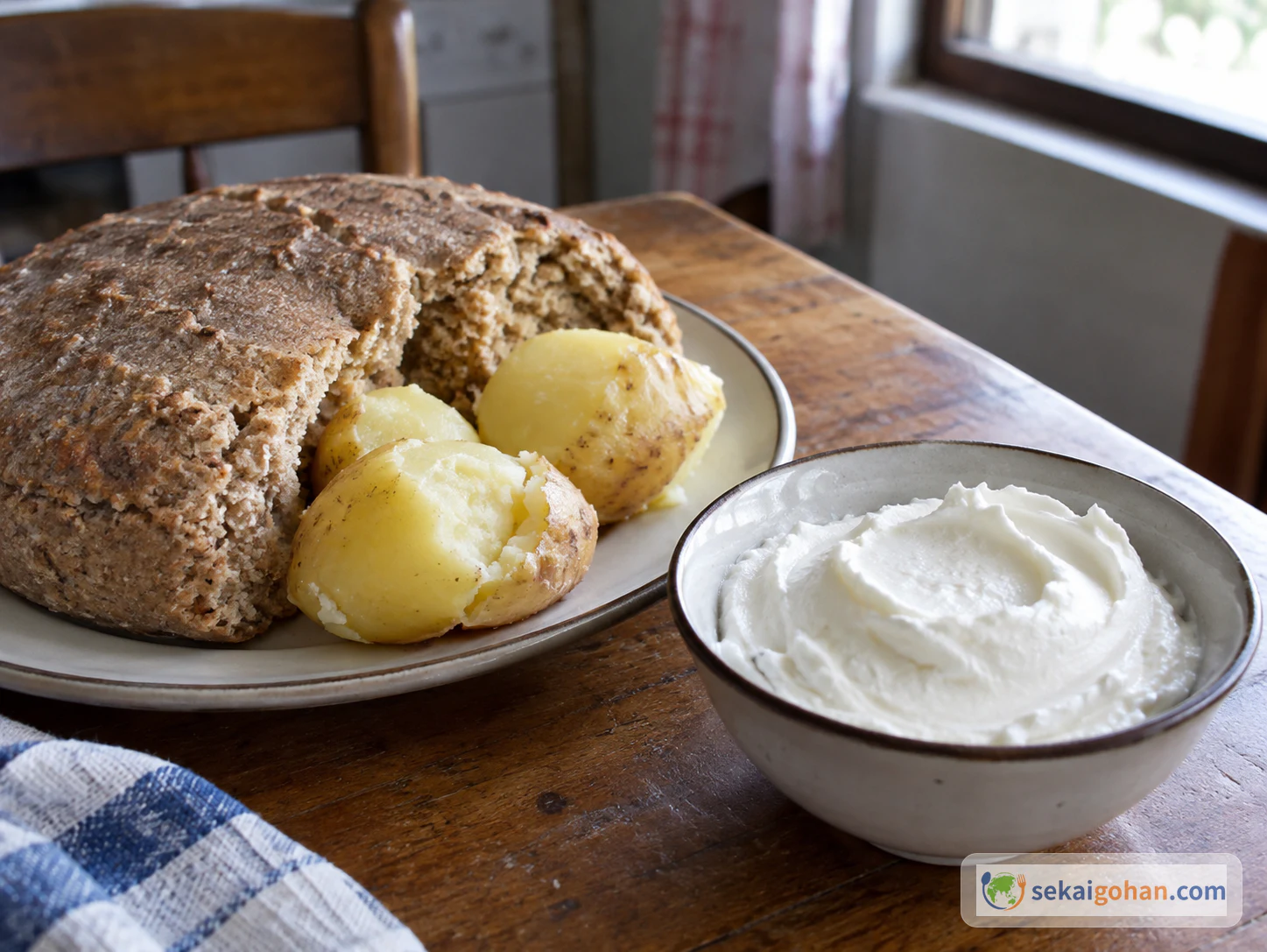
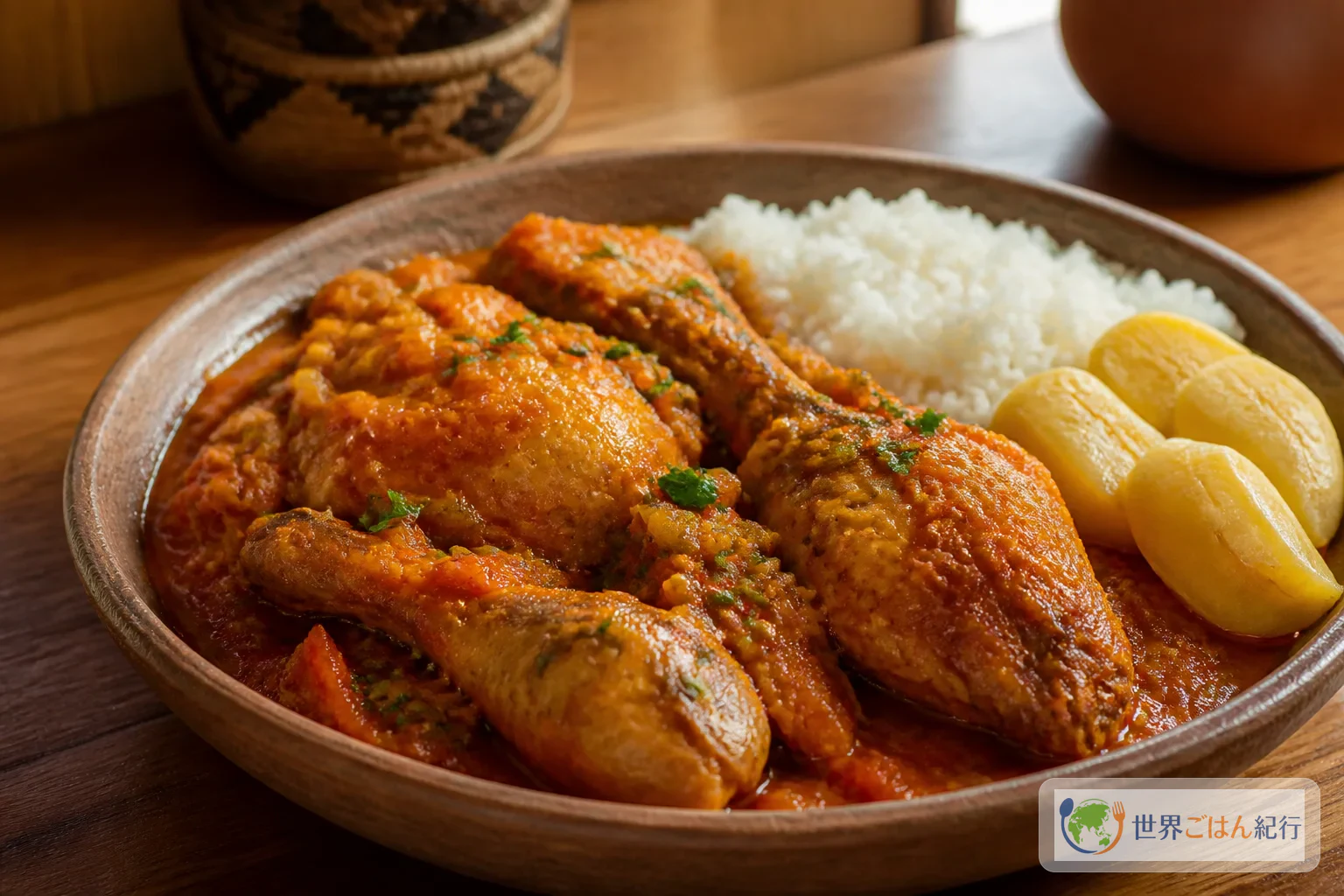
Lift the lid off the pot and a soft, sweet scent of starch rises with the steam. Inside, wrapped in banana leaves, the green bananas have turned into a quiet yellow mass, ready to be broken up and eaten with peanut sauce, beans, and greens. To many people "banana" means fruit, but in Uganda matooke is a staple, closer to rice or potatoes. It is mild and starchy, and it takes on the flavor of whatever sits beside it on the plate.
About Matooke, Uganda's Steamed Banana Staple

Matooke (also spelled matoke) is made from East African highland cooking bananas, wrapped in banana leaves and steamed, then mashed once soft and steamed again. In Luganda, the banana and the dish share the same name. It is eaten every day with meat, fish, vegetables, or peanut sauce.
The star is neither a spicy sauce nor a mound of meat. It is the staple that holds the plate together, in the same way as Tanzanian ugali or Ghanaian fufu. Once you feel how it takes in the flavors around it, African cooking starts to look a little different.
If this is your first Ugandan dish, the street-corner egg roll rolex takes fewer ingredients. For the heart of the Ugandan home table, though, matooke is where to go.
Ingredients (serves 4): Think of the Green Bananas, the Leaves, and the Sauce Separately

Matooke has few ingredients on paper. But some days you cannot gather them all from your usual supermarket. First look for the green cooking bananas. Next, banana leaves for aroma. Last, the sauce to eat with it.
This recipe uses peanuts. If you have a peanut allergy, do not serve the peanut sauce; pair the matooke with a bean stew or a tomato-based vegetable stew. Some store-bought peanut pastes contain sugar, dairy, or added oils, so check for "unsweetened, no flavoring" on the label.
Find green plantains and banana leaves at international grocers or frozen food stores. For a first batch, don't cut corners on these; they keep the dish true to its core.
Banana leaves are a tool for making aroma and humidity. You can make it without them, but once you try frozen leaf, you see the difference in the steamed result.
For the peanut sauce, use unsweetened paste, not sweet peanut butter. Think of it like sesame paste: thin it with water a little at a time.
On days without banana leaves, line the steamer with parchment paper and add one small piece of frozen leaf for fragrance. Without any leaf, the aroma ends up like steamed potatoes. Even a small amount of leaf is worth having for a first batch.
Choosing Bananas and Leaves for Matooke
The two hurdles at home are finding the right bananas and making up for the aroma of steaming in banana leaves. Green cooking bananas, frozen banana leaf, a steamer, and unsweetened peanut paste will get you close in a home pot.
Look for bananas with green skin that feel heavy in the hand and barely dent when pressed. Bananas ripened to yellow give a strong sweet aroma, and even steamed and mashed they never settle into a staple.
Ugandan matooke uses East African highland cooking bananas. What is most easily available elsewhere is imported green plantain. It is not exactly the same variety, but it is much closer than a yellow sweet banana. Once ripe and yellow-skinned, plantain is sweeter and more aromatic, and leans toward a different dish rather than matooke.
On days when you have no cooking bananas, you can practice with potatoes or sweet potatoes, but the result is matooke-style steamed potato. The dish depends on the aroma and starch of green bananas, so for your first time at least, find green plantains.
Frozen banana leaf comes in large pieces, and you may not use it all. Freeze the leftover leaf in portions and use it in dishes such as Papua New Guinea's mumu or steamed fish. Think of the leaf as a cooking tool for aroma and humidity rather than a main ingredient, and nothing goes to waste.
Method: Wrap in Leaves, Steam, and Steam Again
The order for matooke is: peel, wrap, steam, mash, steam again, and make the sauce. It is not a dish you cook through all at once over strong heat. Build steady steam in the pot and soften the bananas slowly to the center.
Lay a banana leaf on the plate and mound the matooke on it. Rather than pouring all the peanut sauce over the top, serve it on the side so each person can adjust the thickness. Setting beans and greens alongside makes it easy to balance staple, sauce, and vegetables.
Because the steaming time is long, the water can run out partway. Check the amount of steam every 15–20 minutes, and add boiling water when the sound turns dry. Adding cold water lowers the temperature and extends the steaming time.
Common Matooke Problems and Fixes

Most problems with matooke come down to the choice of bananas and to moisture.
| Problem | Cause | Fix |
|---|---|---|
| Too sweet an aroma | Used dessert bananas or ripe plantains | Use green cooking bananas. Divert yellow ones to frying or dessert |
| Mushy | Boiled in water, or second steaming too short | Use a steaming rack and steam inside the leaf. Reheat for at least 20 minutes after mashing |
| Hard in the center | Pieces too large, or steaming too short | Cut into 4–5 cm pieces and steam 50–60 minutes until a skewer goes through without resistance |
| Turns dark | Left sitting after peeling | Soak in lemon water for 10 minutes and steam right away |
| Sauce separates | Boiled hard, or peanuts added all at once | Thin gradually with water and simmer gently over low heat |
| Flavor is blurry | Too little salt, or relying only on the sauce | Sprinkle 1 tsp salt on the matooke itself and use the saltiness of the beans and greens |
Banana leaves tear easily. A small tear is fine, but a big split lets the steam escape and the matooke dries out, so layer two leaves or reinforce them with parchment paper underneath. The leaf only needs to keep the bananas out of the water while steam circulates through the whole pot.
Imported green plantains are slightly firmer than Ugandan matooke bananas, so give them a little more steaming time and check that the center is soft before mashing. Force-mash them while still hard and grains remain, leaving the texture gritty. Waiting until a skewer slips in easily is faster in the end.
Serving Matooke
How Matooke Is Eaten in Uganda
Matooke receives soups and sauces the way white rice does. In Uganda it comes with meat or fish stews, beans, greens, peanut sauce, and sometimes chicken or beef stew. Break it up a little, coat it with peanut sauce, and add beans or greens from the side. Keep the sauce to one side and mix it in a bit at a time; pour it all over and the matooke soaks it up at once.
A small dish of sour tomato and onion cuts the weight of the peanuts and makes the plate easier to finish. If you find peanut sauce heavy, sauté onion, tomato, garlic, and a little curry powder, add water, and simmer for 10 minutes for a vegetable sauce that suits matooke just as well.
Building a Menu Around Matooke
For a weeknight, matooke, peanut sauce, and sautéed greens are plenty. On the weekend, add a bean stew and roast chicken. With guests, mound the matooke in the center and offer two sauces so everyone can serve themselves. Cook the staple the way you would cook rice, and change the flavor with what goes beside it.
For an East African spread, a little grilled meat like Kenya's nyama choma works well, since the matooke takes up the fat. On a lighter day, stir-fried greens like sukuma wiki are enough. A small portion of something sour with lemon and onion, like Senegalese yassa chicken, takes the meal in a different direction from peanuts.
More Ugandan and African Dishes to Try
Next try luwombo, a leaf-wrapped main dish that steams chicken or mushrooms together with peanut sauce. Both use the aroma of banana leaf, but matooke is the staple while luwombo carries its own sauce, and seeing them side by side shows how the same leaf plays different roles.
The rolex is a street snack and matooke the staple of home cooking; making both lets you see how the street and the home table connect. In the same street context, kikomando shows chapati moving from wrapping an egg to receiving beans. Further west, the bean rice waakye and the sweet fried plantain kelewele show how bananas and beans play different roles by country.
Storing and Reheating Matooke

Matooke is most fragrant just made, but the long steaming time makes it worth cooking extra. Always store the matooke and the sauce apart; left together, the moisture soaks in and the matooke turns sticky by the next day. Let it cool slightly, put it in a shallow container, and finish it within 2–3 days in the refrigerator. The peanut sauce keeps for 2–3 days in the refrigerator in its own container.
The microwave works, but the surface dries out easily. Sprinkle 1–2 tsp water over the matooke, cover loosely with plastic wrap, and heat in a 600 W microwave for 2–3 minutes. For something closer to the local way, wrap it in leaf or parchment paper and steam it over medium-low heat for 10 minutes, which also helps avoid a floury texture.
Freezing is possible, though the texture suffers a little. Wrap single portions in plastic wrap and use within 2 weeks; thaw in the refrigerator for half a day and reheat in a steamer. Peanut sauce separates easily when frozen, so keep it in the refrigerator if you can. If it does separate, stir it back together in a small pot over low heat, adding water a little at a time.
Leftover matooke has a second life, too. Roll it into small balls, brush a pan with a thin film of oil, and cook over medium-low heat for 3–4 minutes per side, until browned.
FAQ

Can I make it with ordinary yellow bananas?
Yellow dessert bananas are high in sugar and aroma, and they turn into a sweet paste when steamed. Matooke is a staple, so use green cooking bananas or green plantains.
Is it a failure without banana leaves?
Not a failure, but the aroma and the way moisture is held change. Without leaves, line the steamer with parchment paper and wedge a cloth under the lid so water droplets don't fall onto the bananas. If possible, add even a small piece of frozen banana leaf for aroma.
The steaming time seems too long.
Green plantain is high in starch and takes time to soften to the center, and a weak steam stretches it further. If the heat is too low, raise it to medium-low and keep a steady steam going. Boiling it directly in water changes the texture, so stay with the steaming rack.
Should the matooke itself be salted?
A little salt makes it easier to eat; nearly unsalted matooke needs plenty of sauce to settle the flavor. Use 1 tsp for four servings as a guide, and adjust to the saltiness of the peanut sauce and beans.