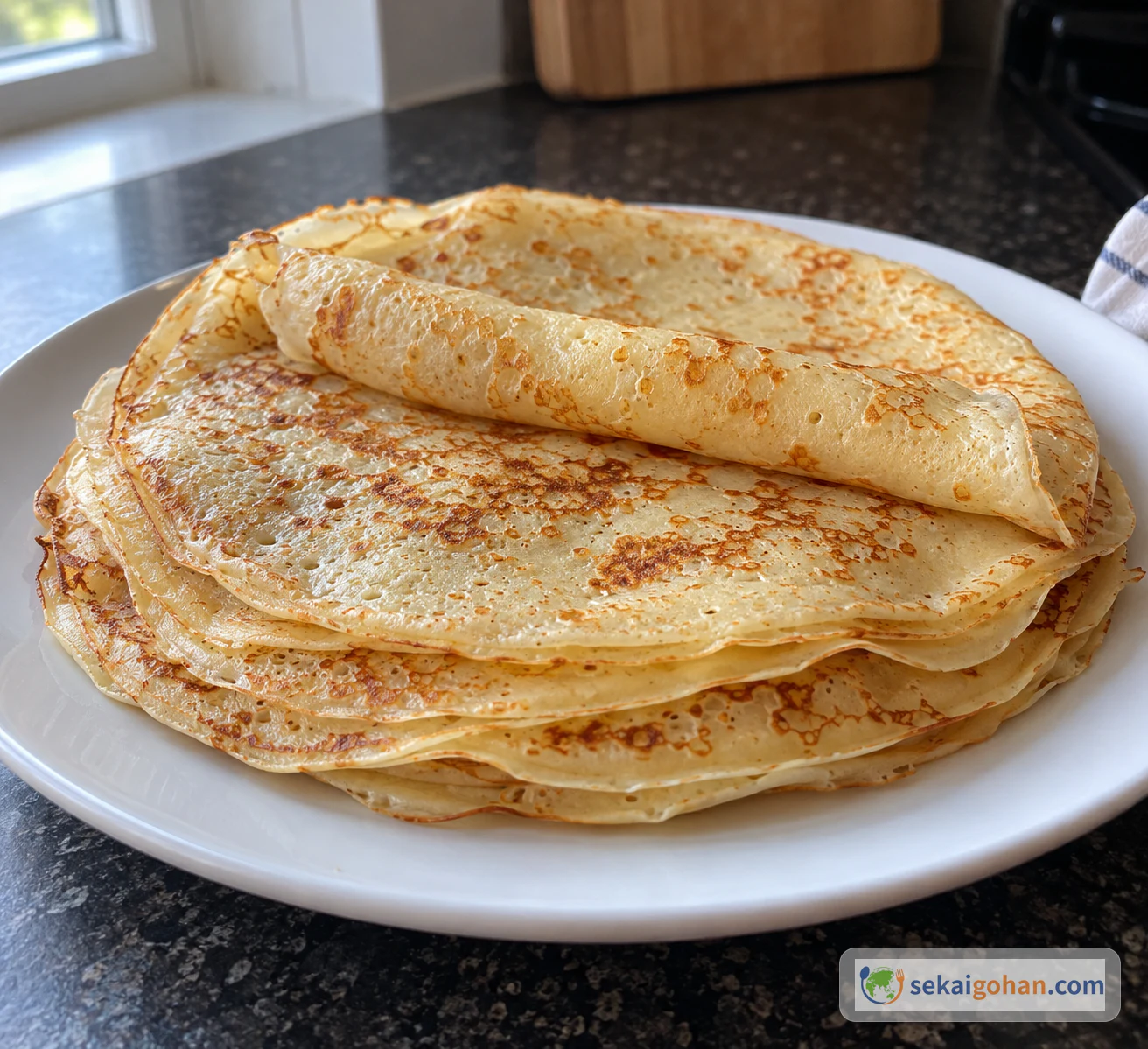
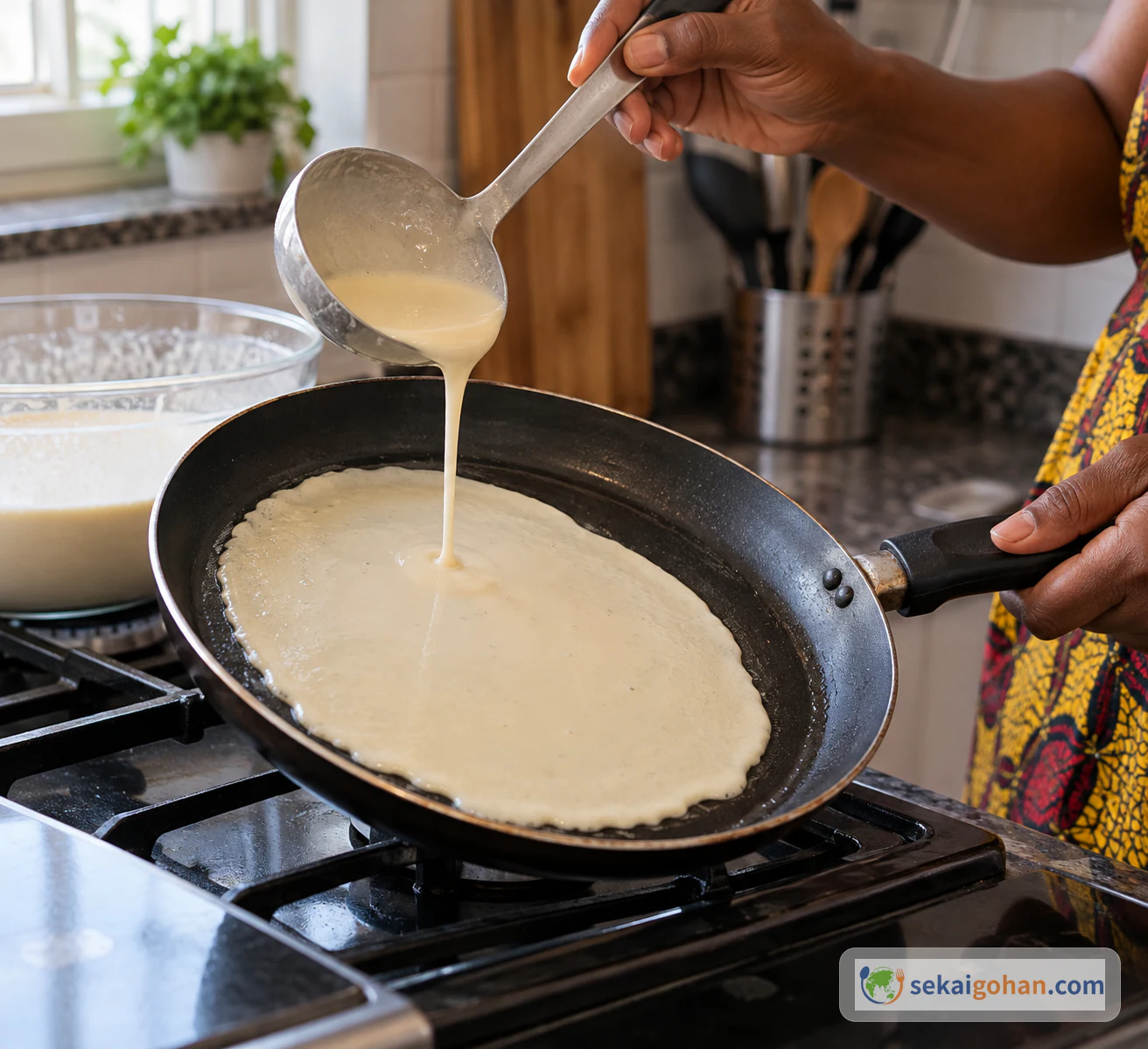
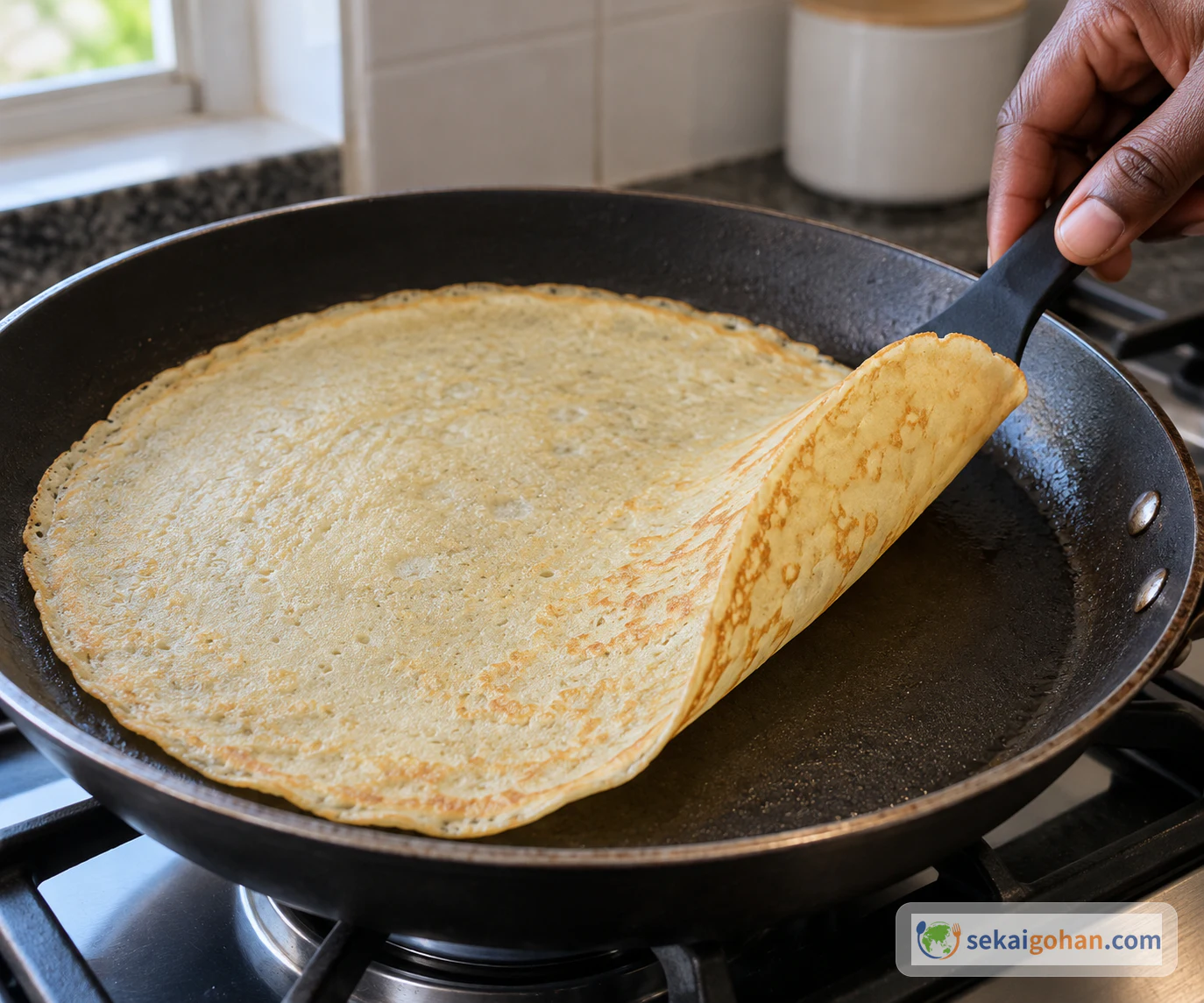
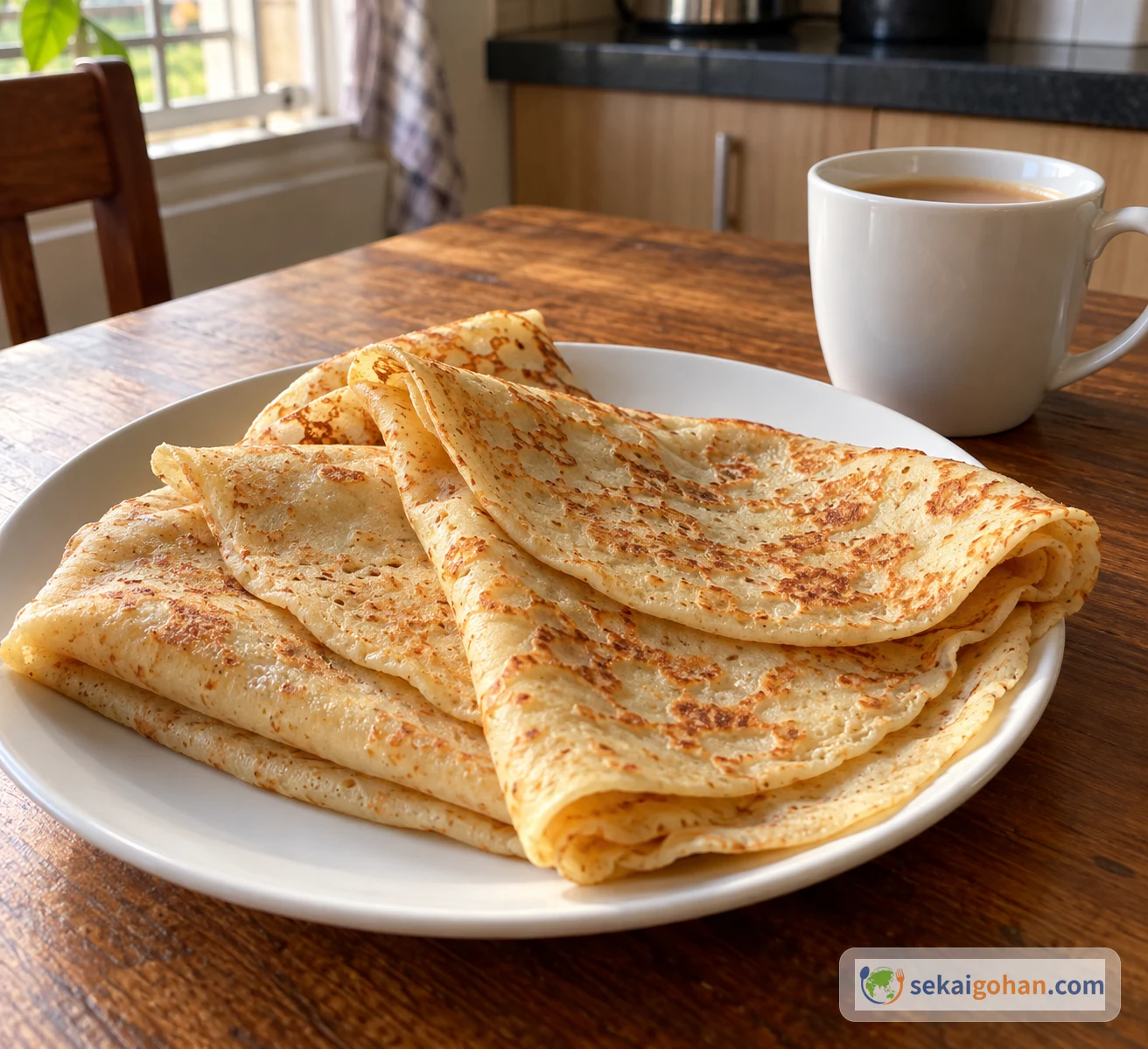
Thin batter swirls across a lightly oiled pan and spreads into a wide, pale round. Once the surface sets, you turn it and let it brown as much as you like, and the edges go faintly crisp. This is Nigerian pancake, often called Diet: thin and light, with a little sugar and a pinch of dry cayenne in the same bite, plus enough salt to bring the two together. The sweet and the heat stay in balance. For more of the country's food, see the Nigeria country page.
Nigerian Pancake at Home
If you grew up on thick, fluffy pancakes, this is a different style altogether. The batter is a pourable mix of flour, eggs, water and evaporated milk, and the pancakes are cooked thin. "Diet" is simply another name for the dish and says nothing about weight loss or a restricted meal.
People eat it at breakfast or as a light afternoon snack. It is one dish among many on a Nigerian morning table, which can just as easily hold pap and akara or yam and egg.
Onion and chilli are where cooks part ways. One cook recalls arguing about whether onion belongs in the batter while living in a university hostel, and every kitchen seems to settle the question differently.
Ingredients: Proportions and Units
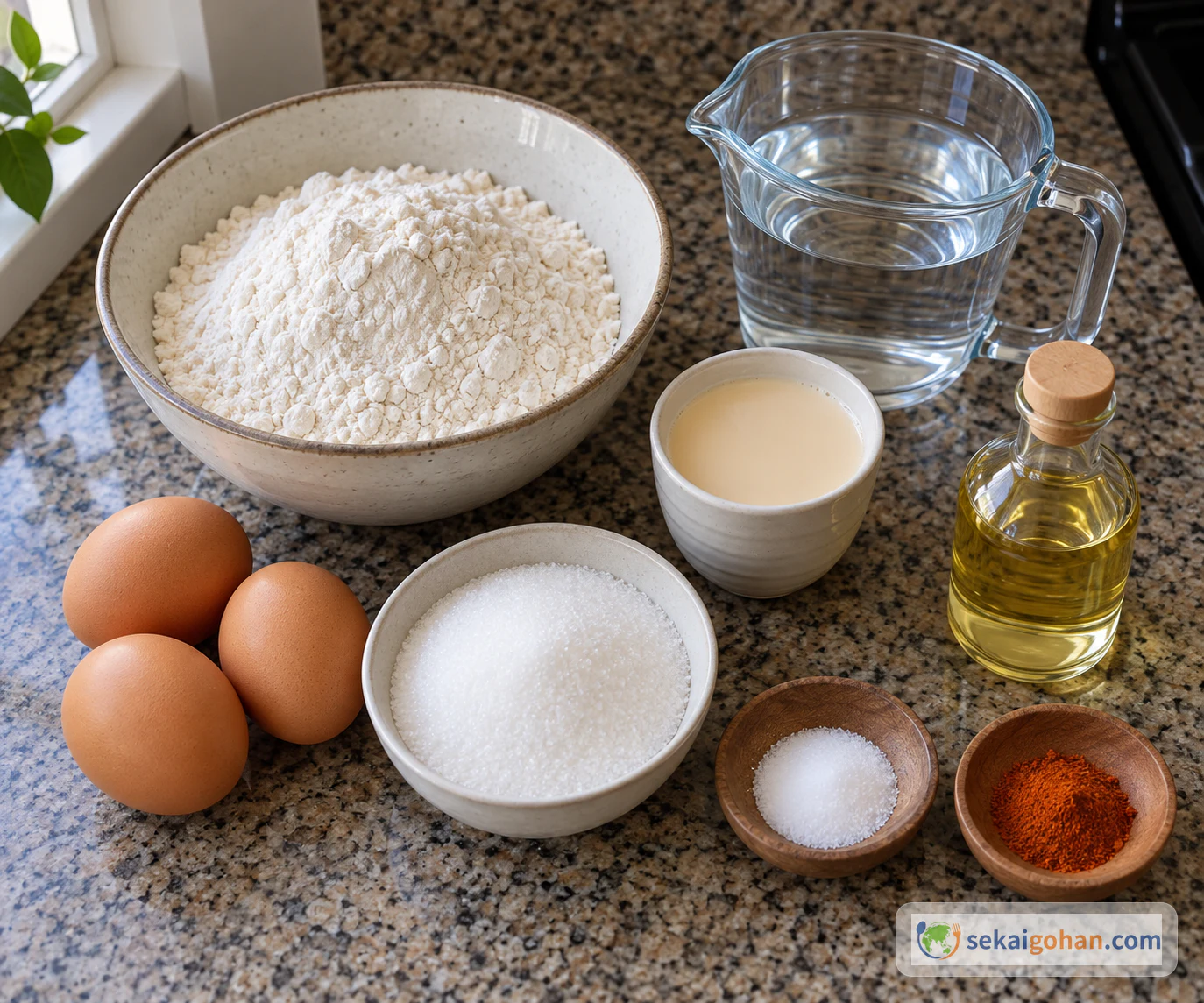
Use 1 lb (500g) of flour and 1 litre of water, with the milk and sugar amounts listed.
Choosing Ingredients for Nigerian Pancake
- Evaporated milk: Look for unsweetened evaporated milk. Sweetened condensed milk throws off the sweetness, and regular milk won't give the same result.
- Cayenne: Use dry ground cayenne pepper. Other chilli powders differ in heat and flavor, so start small and add to taste.
- Flour: Plain or all-purpose wheat flour.
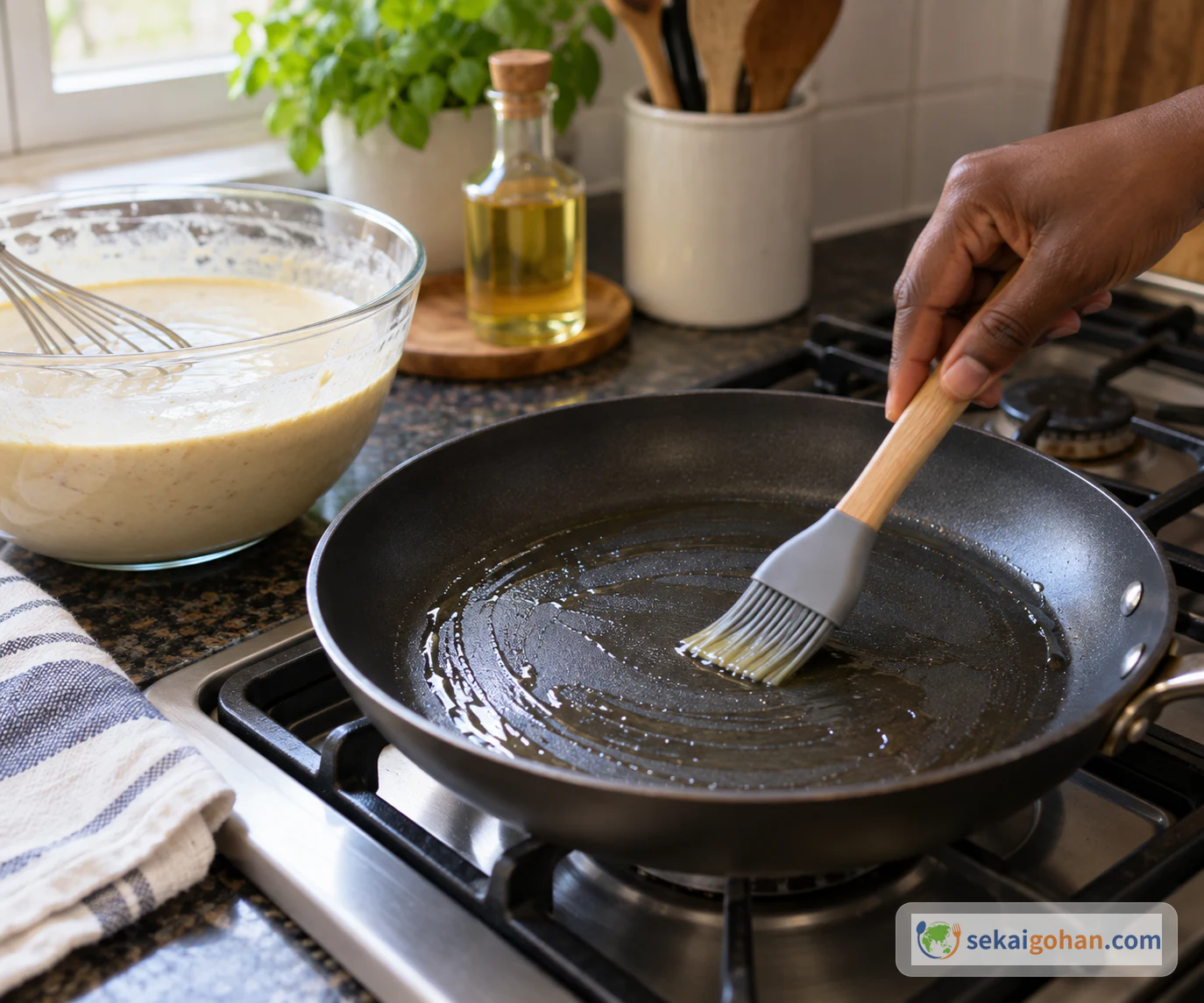
- Oil: A neutral vegetable oil, enough for a thin film in the pan each time.
Equipment
- Large mixing bowl
- Whisk
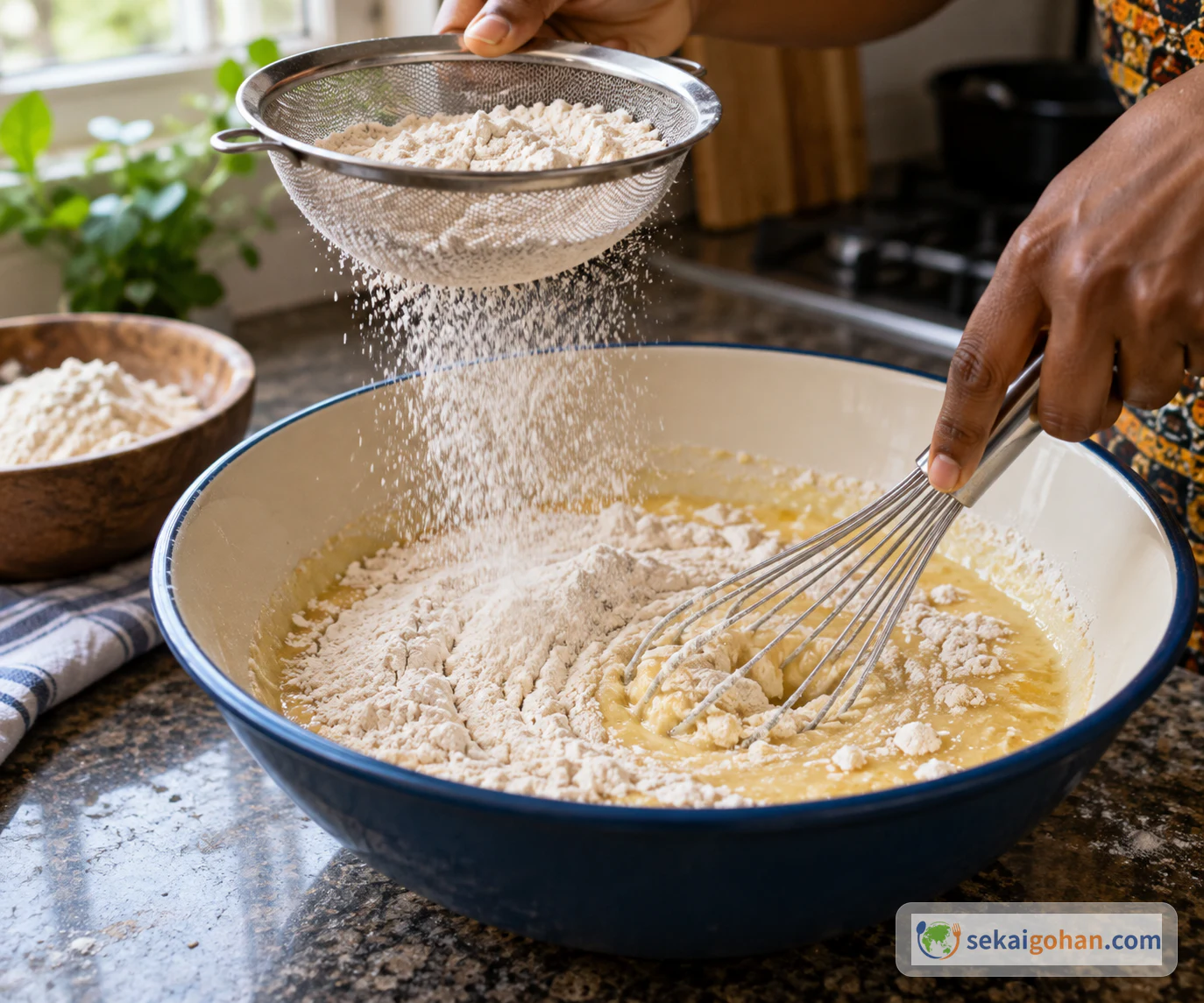
- Sieve, for sifting the flour and, if needed, straining the batter
- Hand mixer (optional, for working out lumps)
- Frying pan
- Ladle, for pouring the batter
- Spatula, for turning
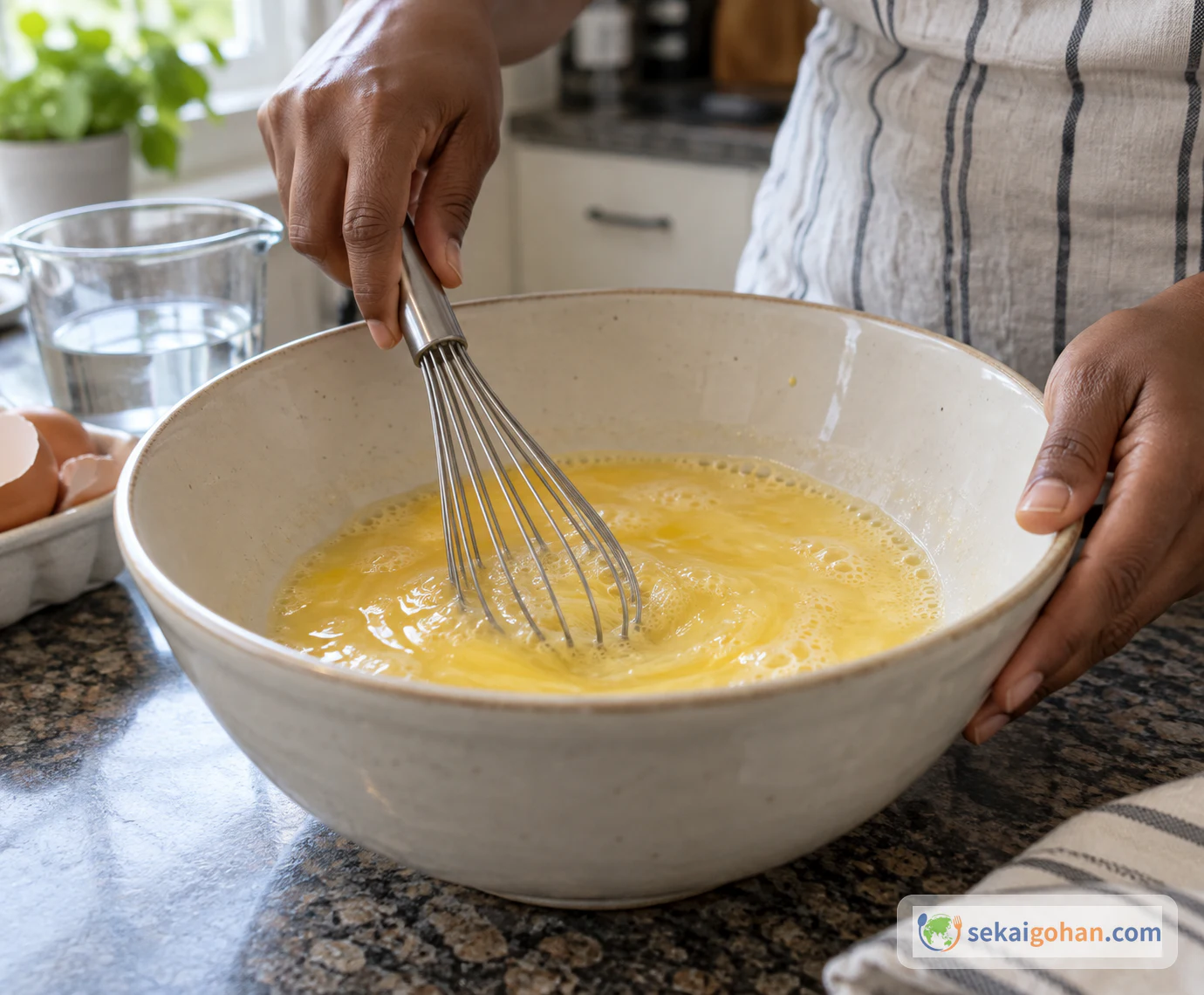
Method: Smooth Batter, Thin Pour
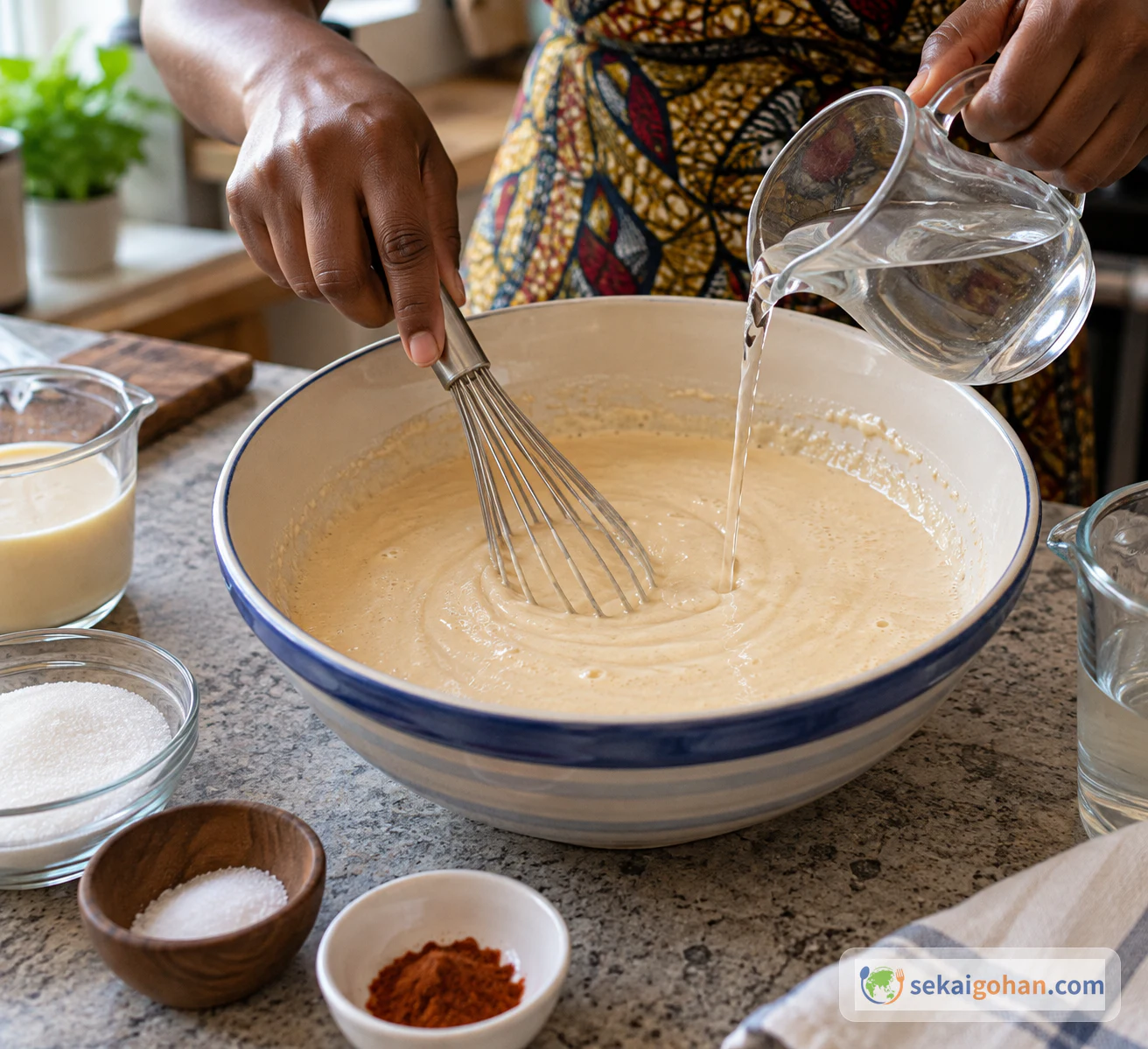
Judge each stage by what you see: a lump-free batter, a surface that has set before you turn it, and an underside browned to your liking.
Nigerian Pancake Troubleshooting
| Problem | What to check | What to try |
|---|---|---|
| Lumps in the batter | Was the water added all at once? | Strain the batter through a sieve or use a hand mixer. Next time, mix the flour into the smaller amount of liquid first and add the rest of the water gradually |
| The pancake tears when turned | Had the surface set? | Wait until the top has set before turning |
| The pancakes come out thick | How much batter went in? | Pour less and tilt the pan wider |
| Too much or too little heat from the chilli | The cayenne amount | Adjust the cayenne in the next batch |
| It tastes too salty | Was the salt added twice? | The ½ tsp goes in once only |
Serving and Variations
Sweet toppings such as honey or fruit suit these pancakes well; serve them on the side rather than mixing them into the batter. For a drink, tea, pap, kunun aya and zobo all go well.
Red onion and habanero (or scotch bonnet) are optional extras. The base recipe uses only dry ground cayenne, so add fresh chilli or onion if that's how you like it.
Frequently Asked Questions
Is "Diet" a weight-loss food?
No evidence supports that. "Diet" is simply another name for the dish, and its origin is unknown.
Does the batter need to ferment or rest?
Not in this recipe. It has no yeast or other leavening and no resting time. Fermented pancakes such as Nigerian masa (waina), made from rice, are a different dish.
How many pancakes does this make?
That depends on how much batter you pour for each pancake.