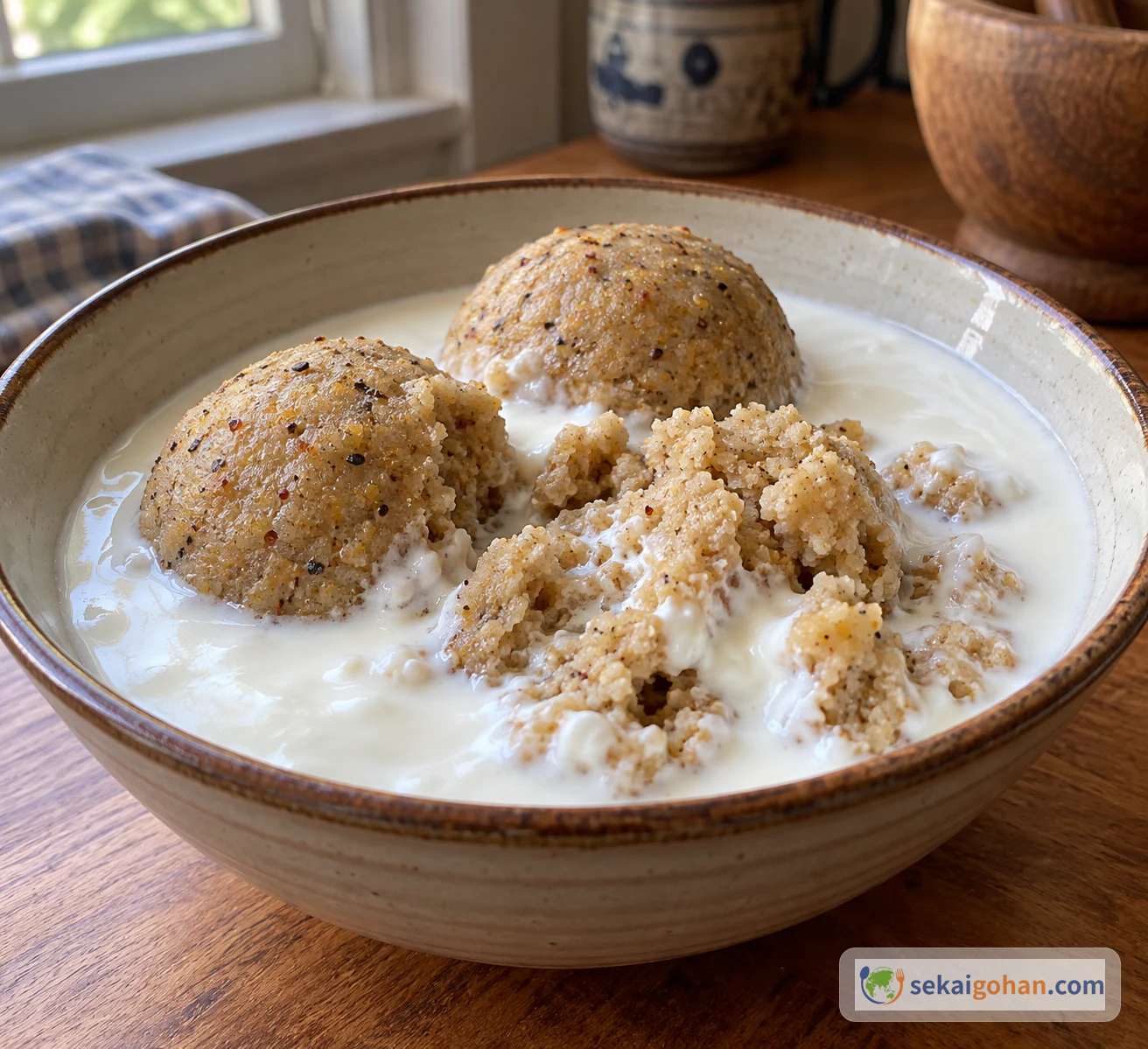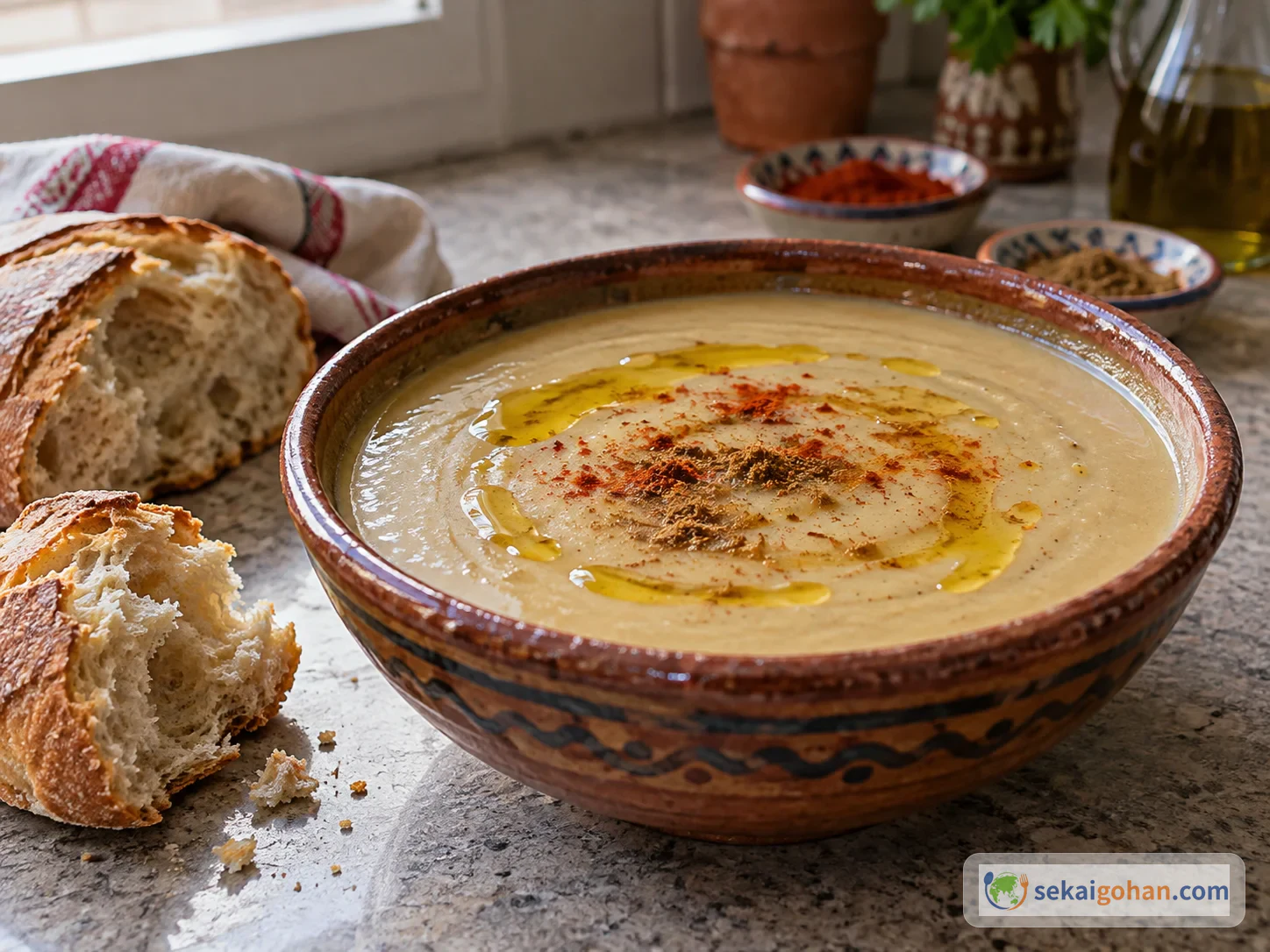
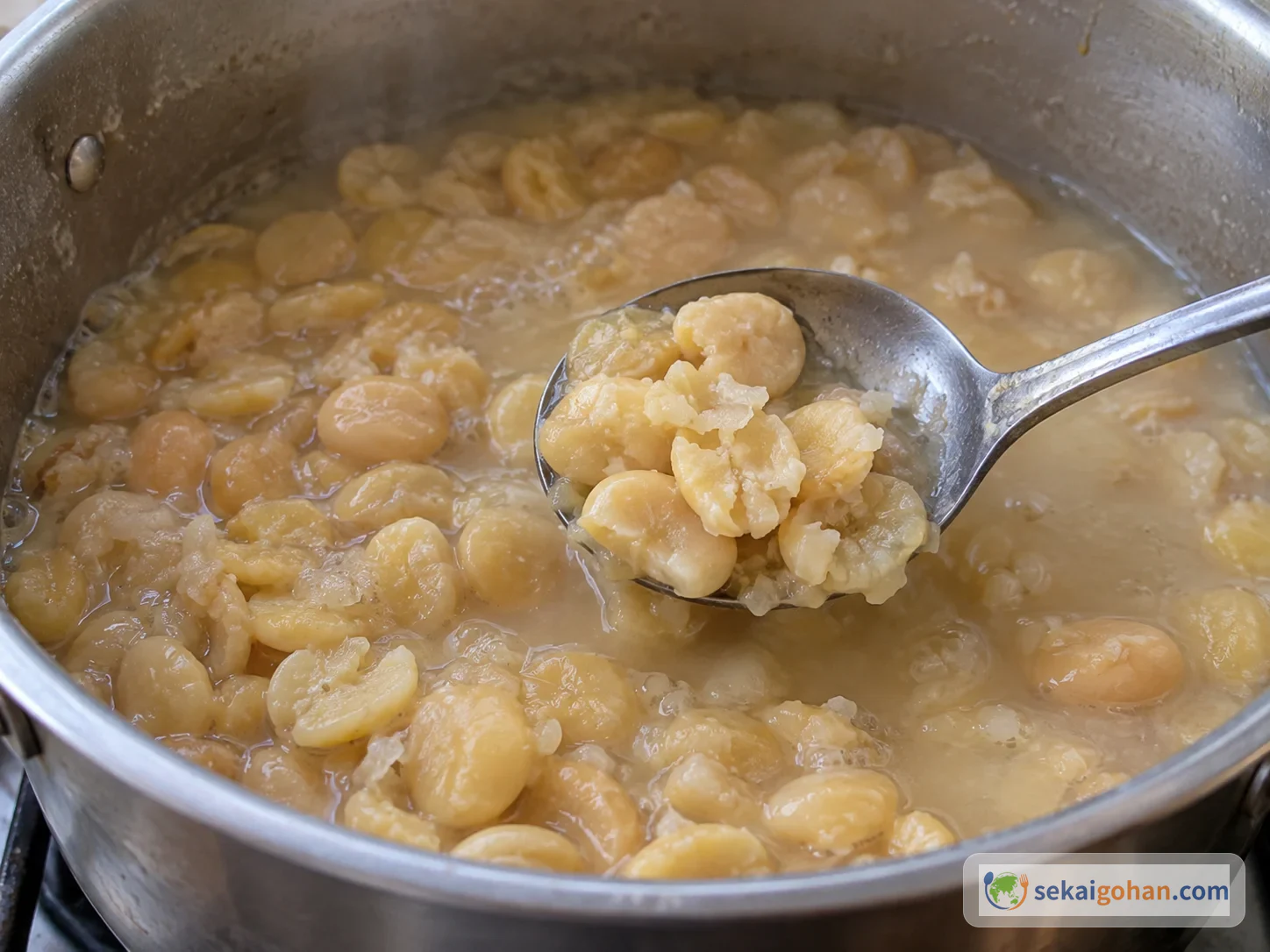
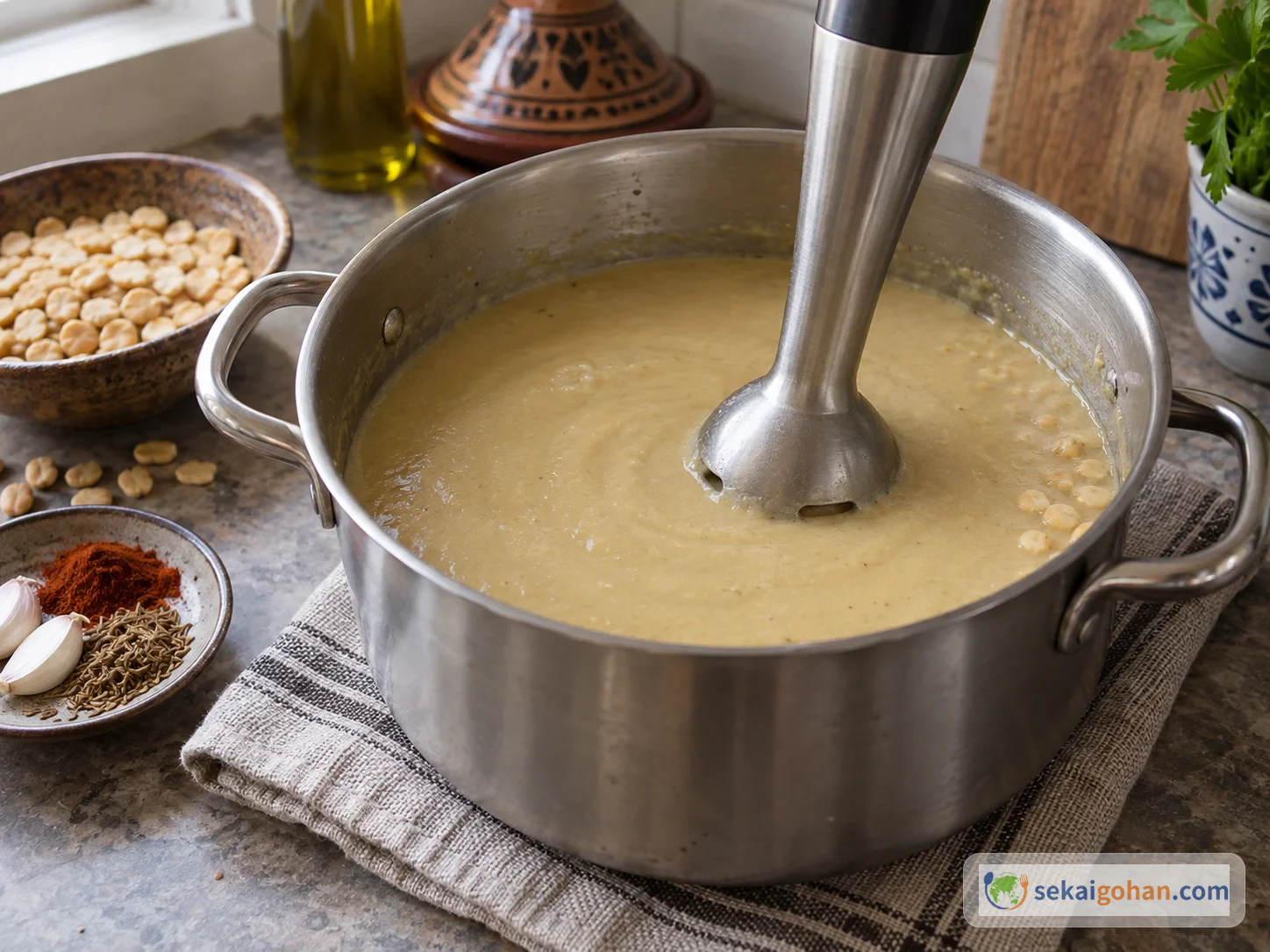
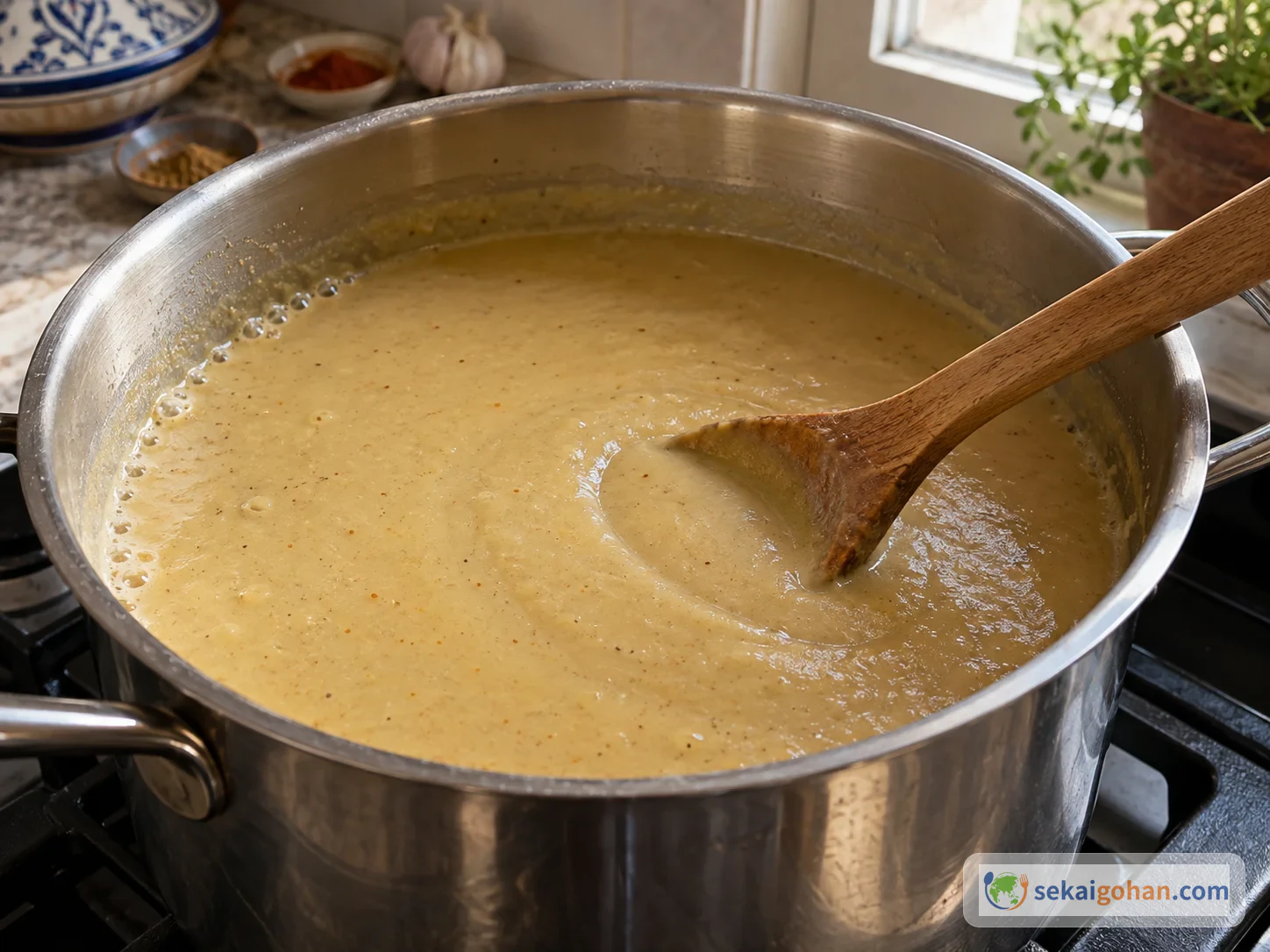
Pale, cream-colored bean purée fills the bowl, and olive oil dropped on the surface forms small golden rings. Torn bread is stacked beside it, and a small jar of cumin sits on the table. You dip the edge of the bread into the beans, scoop, add a pinch of cumin, and eat. That is how bissara is usually enjoyed. This Moroccan dried fava bean soup is made from skinned dried fava beans cooked and mashed smooth. There's no milk or cream; the beans alone give it its silky thickness.
Bissara in Northern Morocco
Spelled Bissara, Bessara, or Bisarra, it is especially loved in northern Morocco, where people eat it at street stalls and make it in their home kitchens alike. It appears on the table both morning and night. This is an everyday meal built around beans, not a festival dish or a grand plate of meat. In the north it is also served as an accompaniment to fish.
How thick you make it decides how you eat it. A thickly finished purée goes on a shared plate, and everyone dips bread to scoop it up. A thinner one is poured into individual bowls and eaten with a spoon, and plenty of cooks land somewhere in between. This recipe aims for a thickness you can scoop with bread.
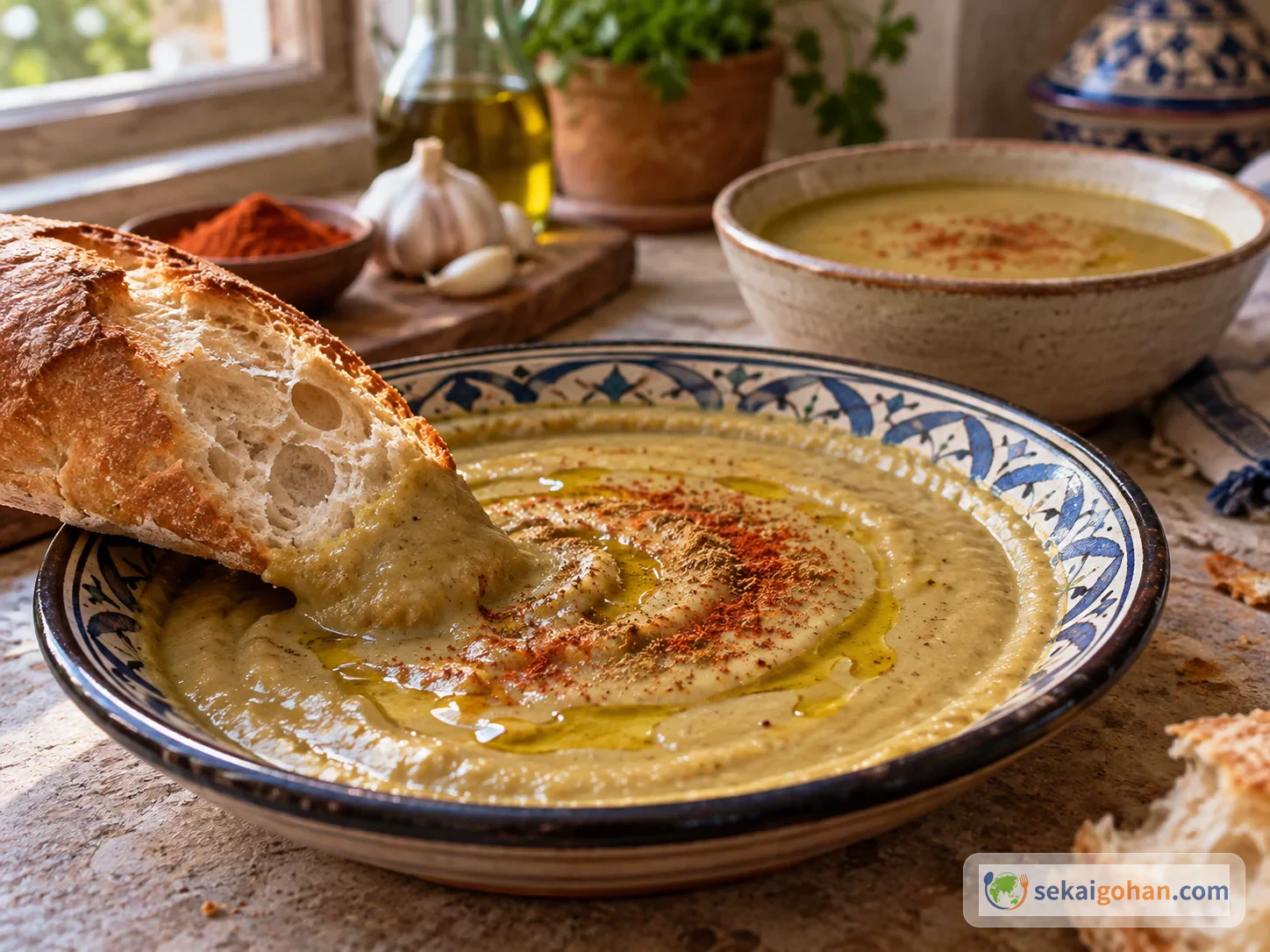
Seasoning bissara happens in two stages: cook the beans in the pot, then add oil, cumin, and heat at the table.
It's often thought of as a winter soup, but in Morocco bissara is also served on hot summer days. One cook who mostly makes it in winter remembers ordering a bowl at a roadside restaurant on a summer car trip from Rabat to Marrakech with her father. People eat it in every season.
Ingredients (serves 4)
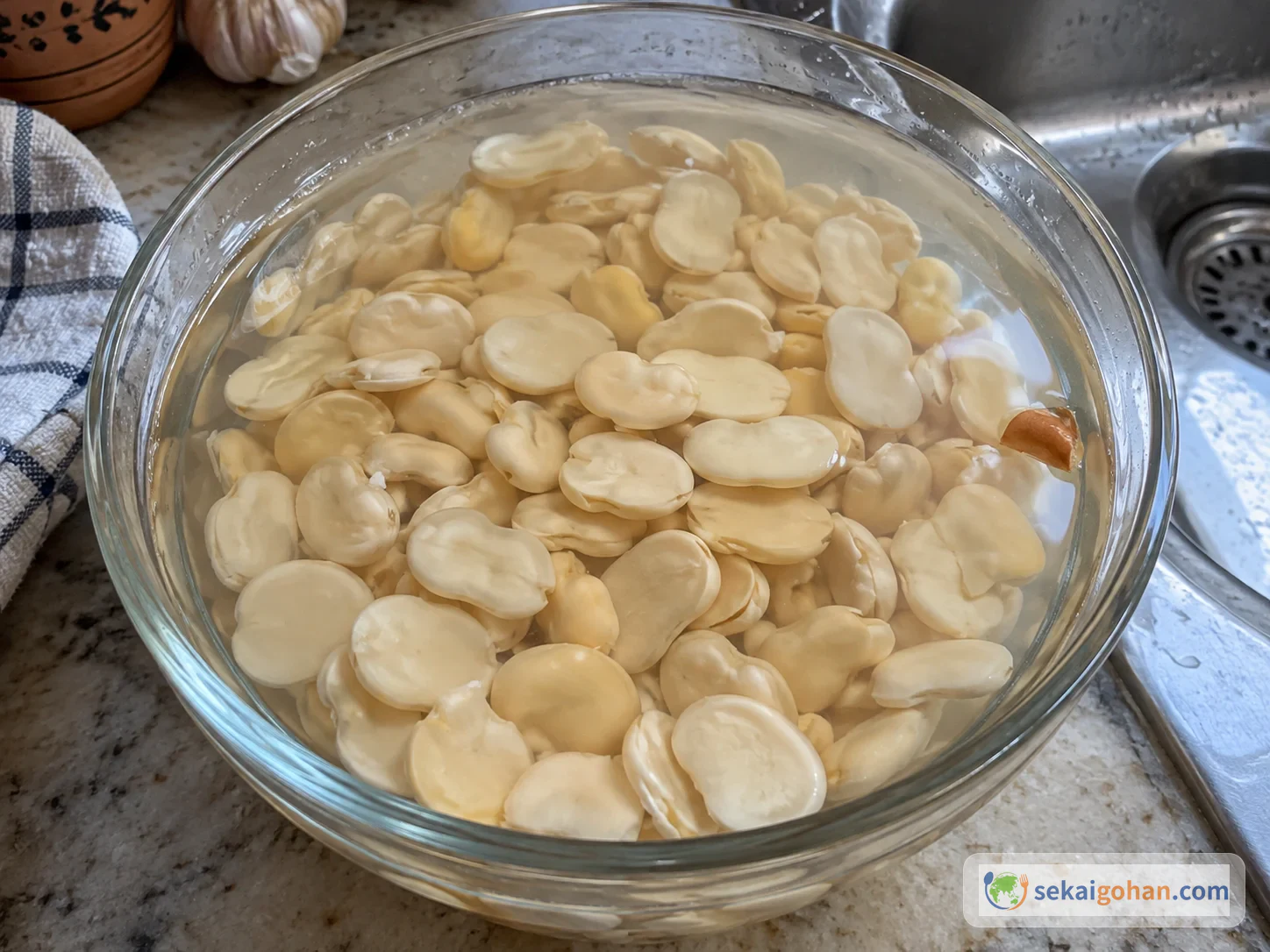
"Dried fava beans" on a shelf means broad beans. What you need are pale cream-colored skinless split beans; round brown beans with the skin on and salted fried fava beans are not for this method. Do not choose by the product name alone; look at the ingredient and processing labels and confirm the skin and the processing state. For spices, use ground cumin and a mild paprika powder. Curry powder is a mix of several spices and differs in flavor from cumin alone.
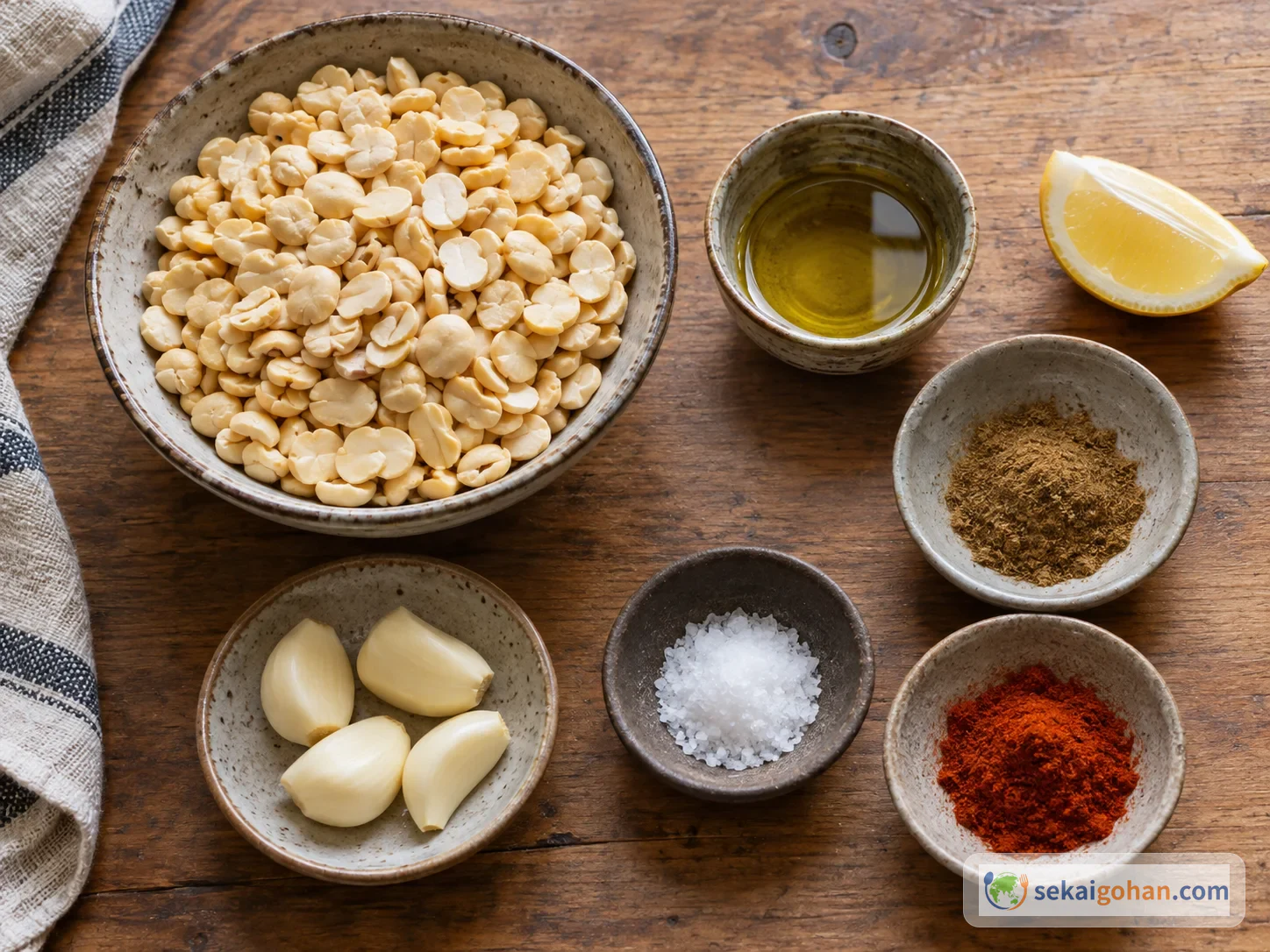
When shopping at import grocers or online, look first for dried skinless split fava beans. Canned or fried beans may show up in search results too, but they are not the same ingredient. Garlic, salt, bread, and everyday oil are easy to find at a regular shop, so secure the beans and cumin first.
The nutrition values are an estimate for all four servings of soup. Bread, the optional lemon juice, and heat are not included, and adding oil would change the values. The 8 hours 15 minutes of prep time includes 8 hours of soaking. Older beans, a different pot, or different heat can make them take longer to soften.
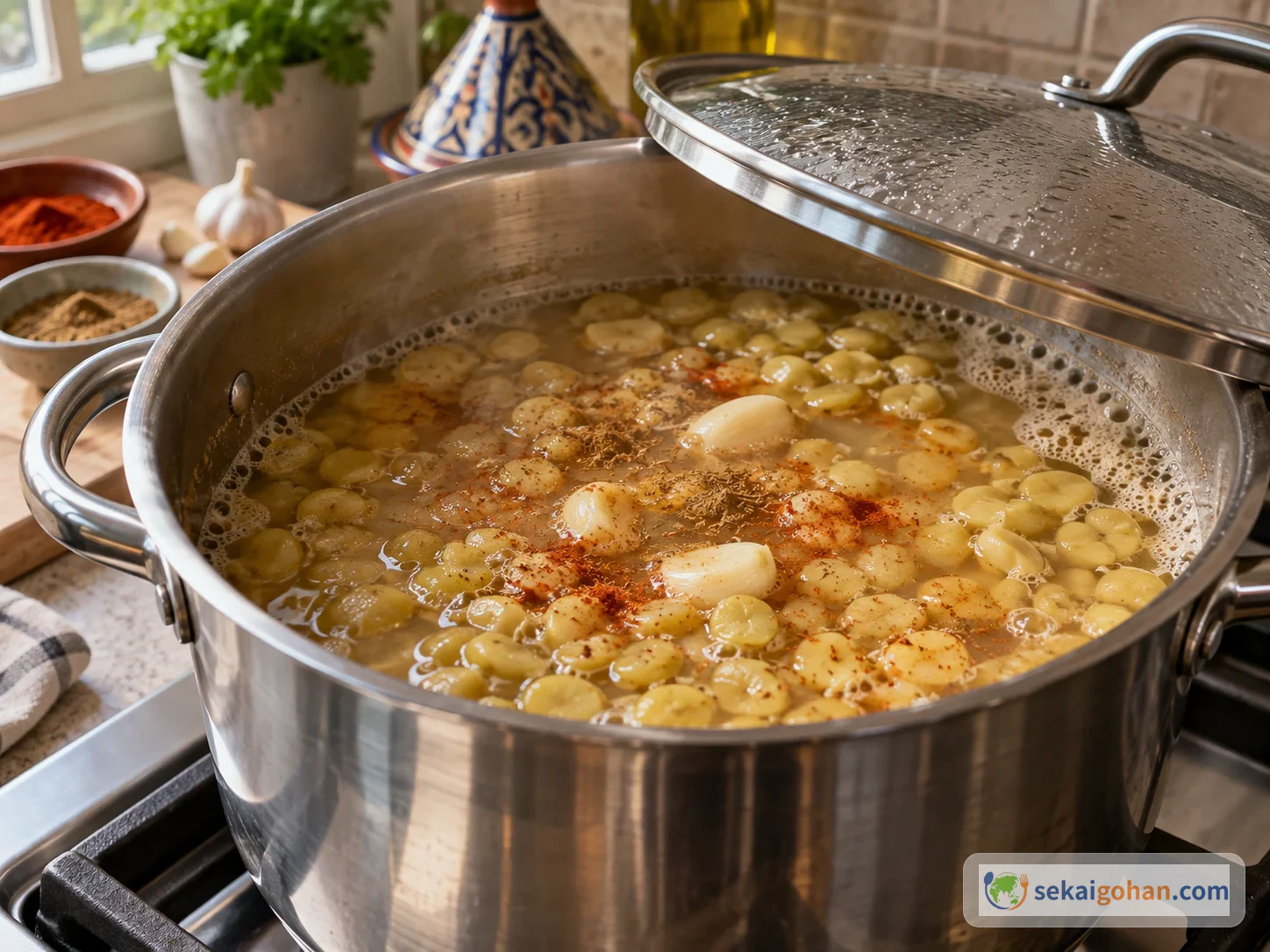
For equipment, prepare a heavy pot of about 3.25 quarts (3 L), a colander, a heatproof bowl to catch the cooking liquid, a wooden spoon, and an immersion blender. Without a blender, press the soft-cooked beans through a sieve; it takes more effort and time. Check that the beans are soft before you mash them. Do not throw away the cooking liquid. Reserve the cooking liquid for adjusting the thickness later.
Choosing Fava Beans and Toppings for Bissara
When you shop, check three things: the beans should be dried, skinless, and split. Above all, look for skinless dried split beans. Fresh or frozen fava beans hold a different amount of water and make a different dish, so they won't work at this amount and cooking time.
Split pea bissara
Bissara is also made with dried split peas. Fava beans and peas are different beans, so the color and flavor change, and the pea version can include onion. Green split peas turn the soup greenish, and it won't taste like the fava version. Think of it as a different bissara made with split peas.
To make it, replace the 9 oz (250 g) of fava beans with the same amount of split peas. Dried split peas don't always need an overnight soak, so check the package for soaking directions and rinse them before cooking. Simmer them 50–60 minutes over low heat until no hard core remains. Add water as needed, watching how much they absorb and how thick the soup gets.
Toppings and dietary notes
Cumin and oil are the core toppings. Serve the cayenne on the side so that heat can be adjusted bowl by bowl; that way, people who don't like spicy food can share the same pot. A mild paprika adds color. The basic formula contains no bouillon, meat, or dairy. If you're cooking for a specific diet, check the labels on any stock and on the bread.
Fixing Gritty, Scorched, or Flat Bissara
Watch for hot splashes when making the purée. First, check the instruction manual to see whether your blender can handle hot liquid. Stop the blade before lifting it out of the liquid. Do not pour hot soup straight into a sealed blender jar. If the temperature or capacity limits are unclear, let it cool before blending.
A gritty purée means the beans were mashed before they were soft. If they still aren't soft, add water and keep cooking 10 minutes at a time. Cooking time depends on the age of the beans and how they were processed, so go by whether they are soft to the core, not just the clock at about 60 minutes.
Bissara thickens as it cools. To reheat it, set it over medium-low heat and add 3.5 tbsp (50 ml) water at a time, stirring the bottom. Return water a little at a time and stop when it reaches the thickness you like. If the bottom scorches, leave the scorched layer in the pan rather than scraping it into the soup.
If the taste seems flat, add the finishing oil and cumin to the bowl before you reach for salt. Taste a bite, then salt if needed. Lemon juice is optional. Use just enough to notice, so it doesn't cover the taste of the beans.
Serving Bissara
Bean soup and bread make a full meal, but if you want a vegetable dish alongside, zaalouk goes well. For another Moroccan soup, this one with meat and tomato, try harira, a separate dish from bissara.
Frequently Asked Questions
Can I make it with dried fava beans with the skin on?
You can, but removing the skins takes effort, and the soaking and cooking times change. The times in this recipe are for skinless split beans. With skin-on beans, soak them as the product instructions say, remove the skins, and make sure they are soft to the core. Leaving the skins on changes the mouthfeel.
Will it be smooth without a blender?
Yes. Cook the beans until quite soft, then press them through a sieve, reserving the cooking liquid. It takes longer than a blender, but mashing with just a wooden spoon leaves graininess. Grainy texture and a hard core are two different problems, so learn to tell them apart.
How do I store leftover bissara?
Do not leave it in a big pot at room temperature for long; move it to small containers and cool it quickly. Refrigerate within 1–2 hours of cooking. Divide into portions and refrigerate quickly. Keep the refrigerator at 39°F (4°C) or below. Freeze what you cannot finish within 48 hours, in portions labeled with the date; use within 1 month. To eat, thaw in the refrigerator, take out only the amount you need, and reheat while stirring until the whole thing is thoroughly hot. Bring the thickness back by adding water. Do not rely on these times for anything left at room temperature.
What should I check for allergies?
Don't serve it to anyone who needs to avoid fava beans. If you switch to split peas, first check that the person can eat them. Some breads served alongside contain wheat, dairy, and other allergens. Check the ingredient labels of the bread, mixed spices, and any added stock as well as the soup itself.