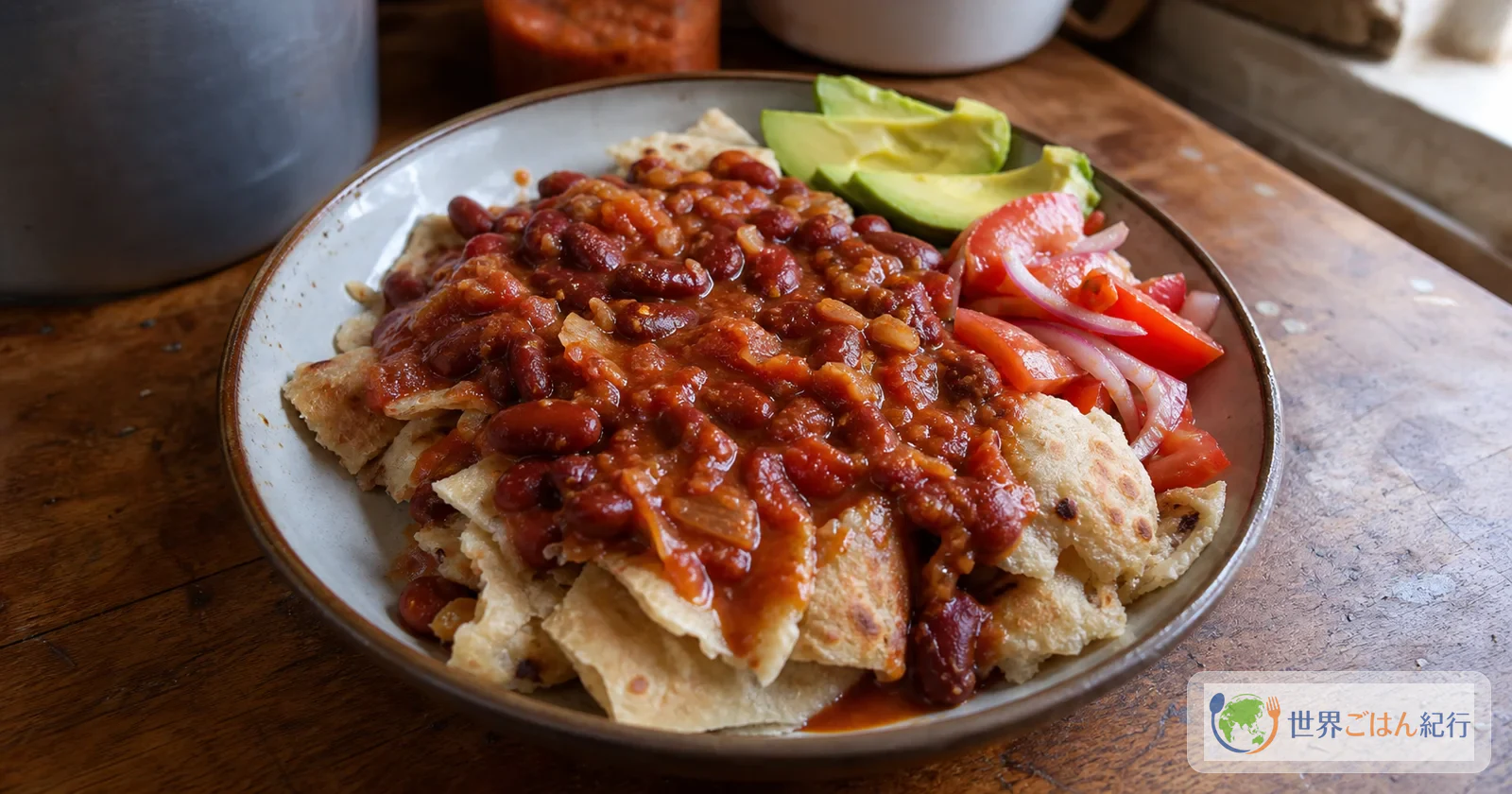
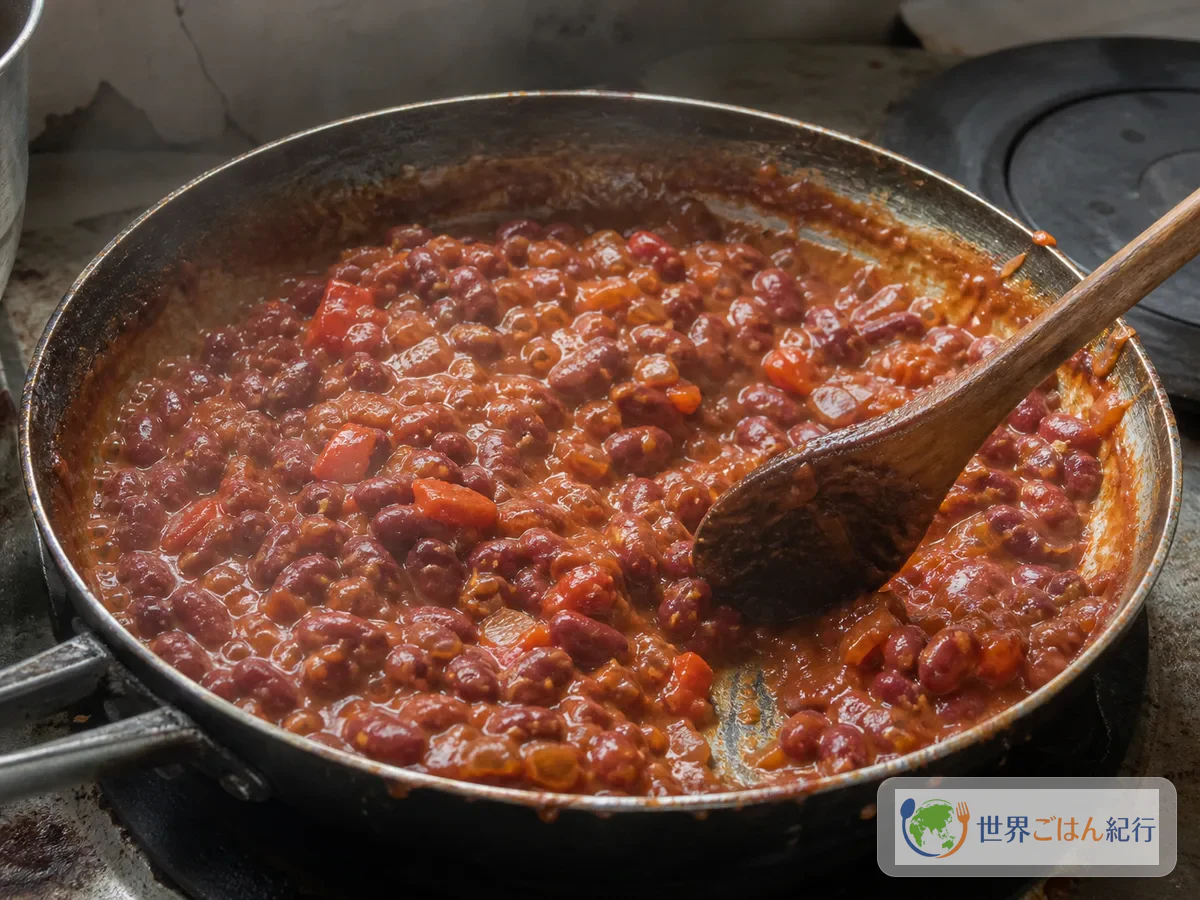
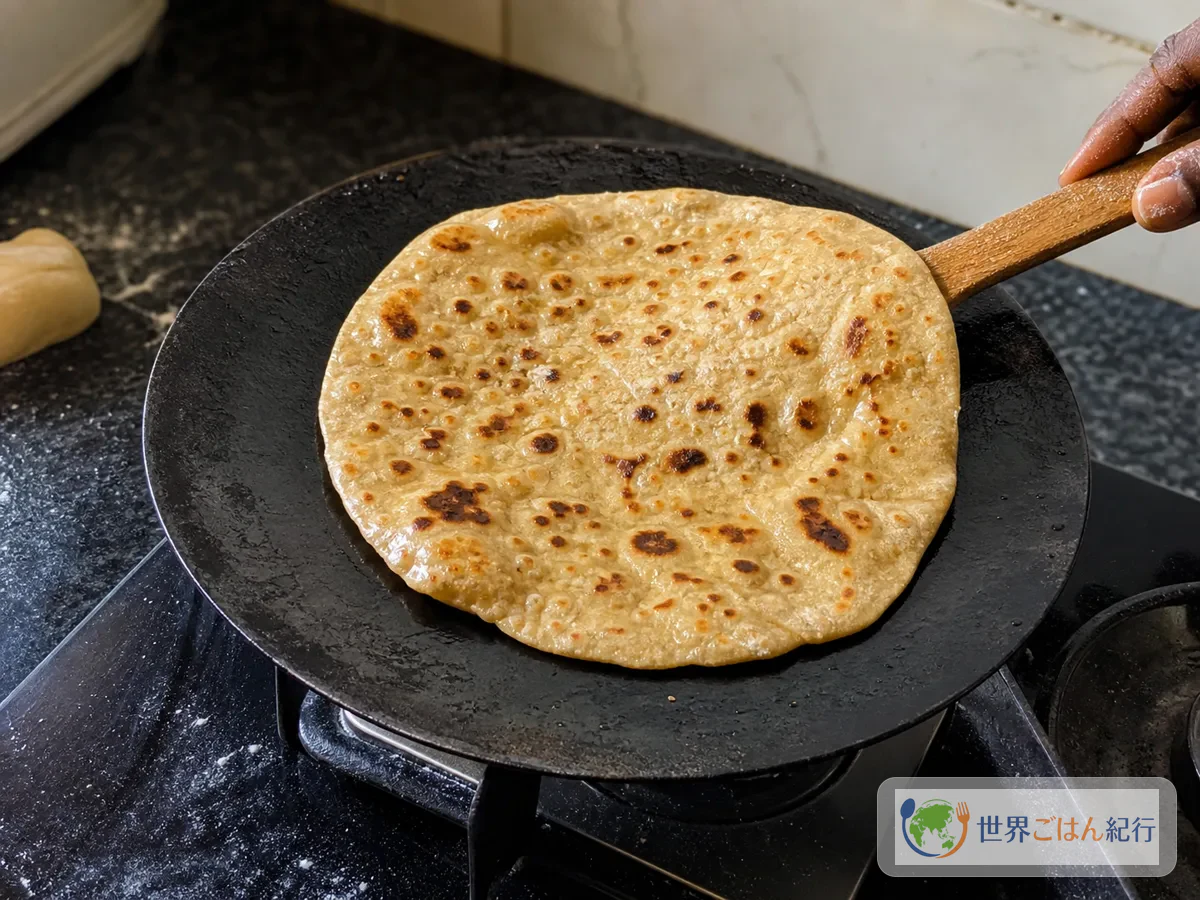
In the evening kitchen, the bean liquid has just begun to thicken when the chapati goes into another pan. The sweet smell of flour, the light toastiness of oil and a red sauce of tomato and onion all meet on one plate at the end. That plate is kikomando: chopped chapati topped with a bean stew, eaten at Ugandan street stalls and in homes. It's cheap, it's fast and it stays with you a long time. Like the rolex, which rolls an omelet into chapati, it grew out of the chapati stalls. Here, though, the bean stew soaks into the bread, and the plate is heavier and more filling.
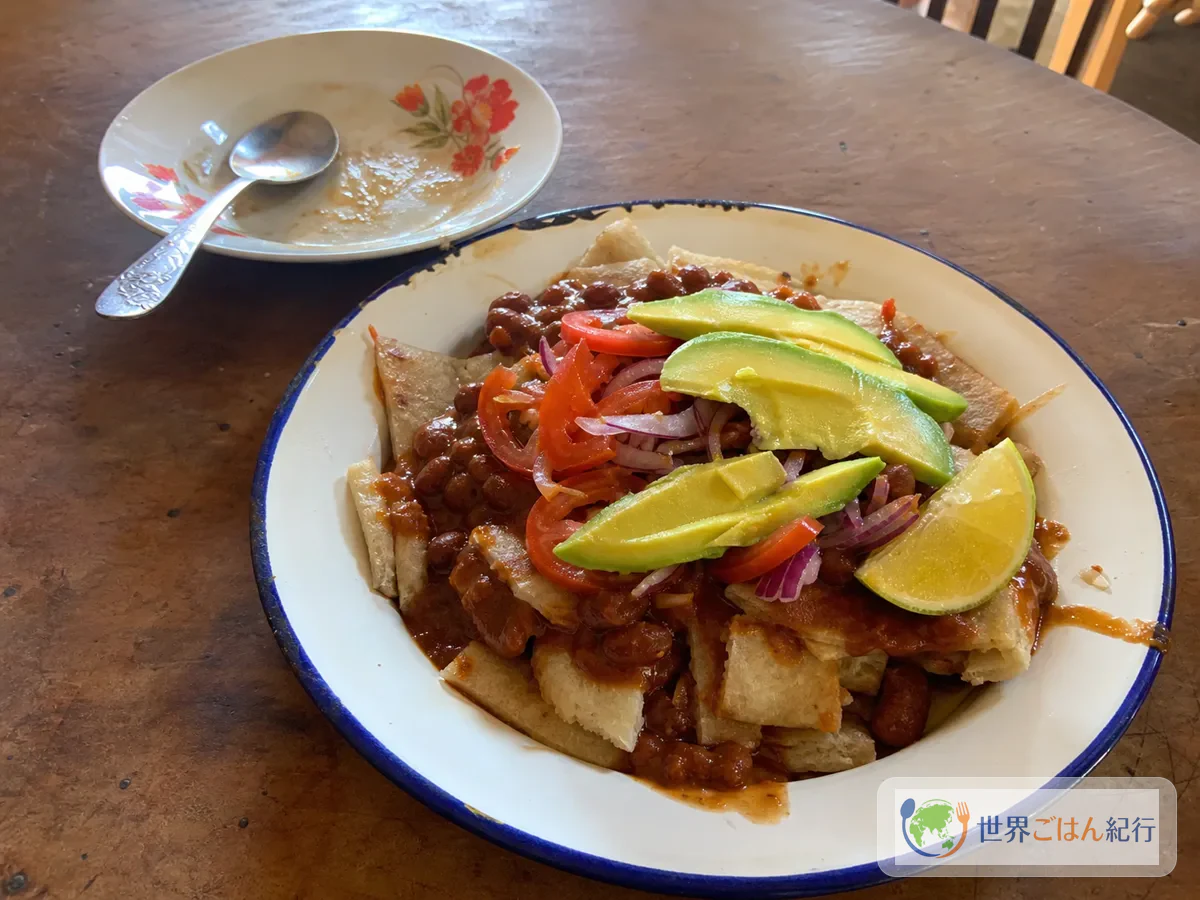
Kikomando at Uganda's Chapati Stalls
Ugandan chapati is often said to have spread where the food of Indian immigrants met East Africa's street-food culture. Students, construction workers and low-income city residents eat it as street food, and chapati served with beans goes by the name kikomando. Across East Africa, chapati and beans are also an everyday home comfort food. The rolex and kikomando share the same flour base, but one wraps egg and the other carries beans, and between them they fill the gaps between breakfast, snacks and dinner.
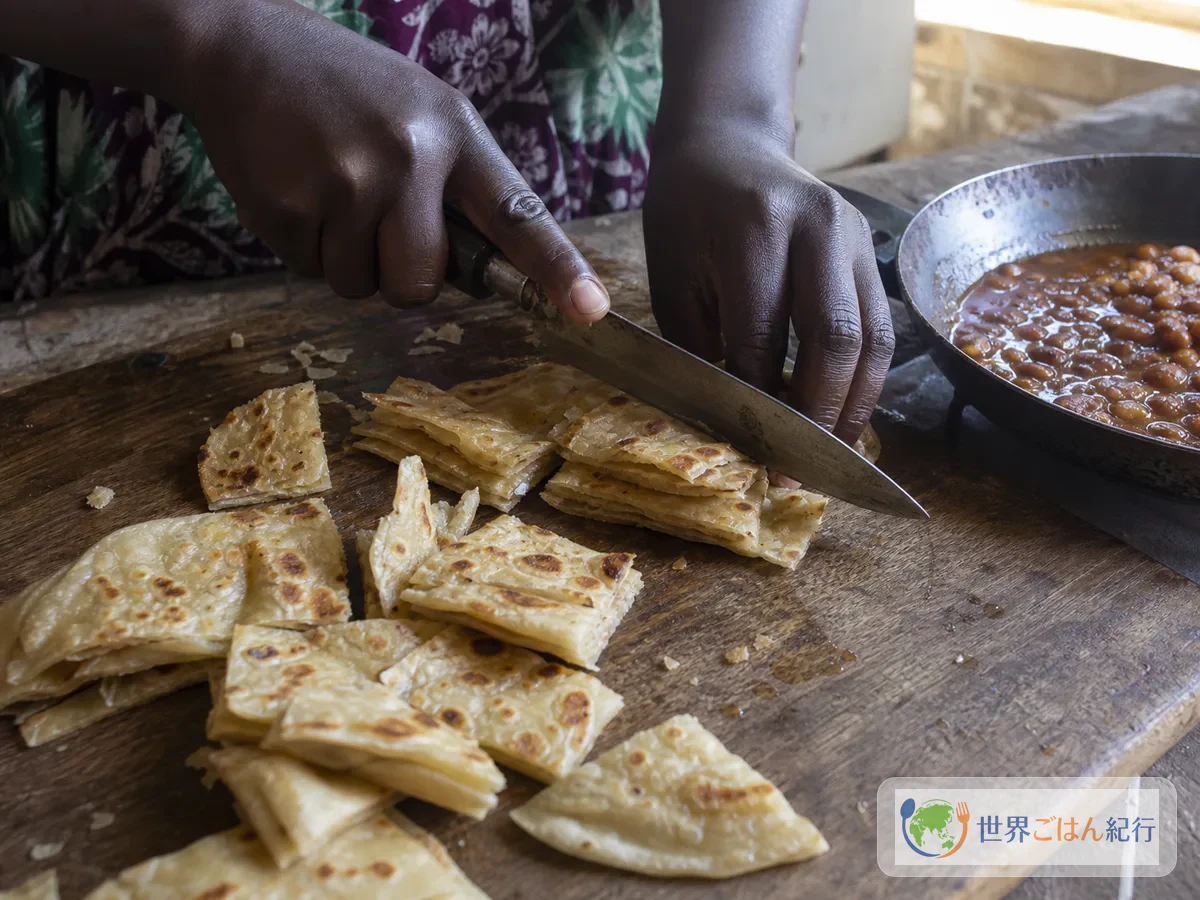
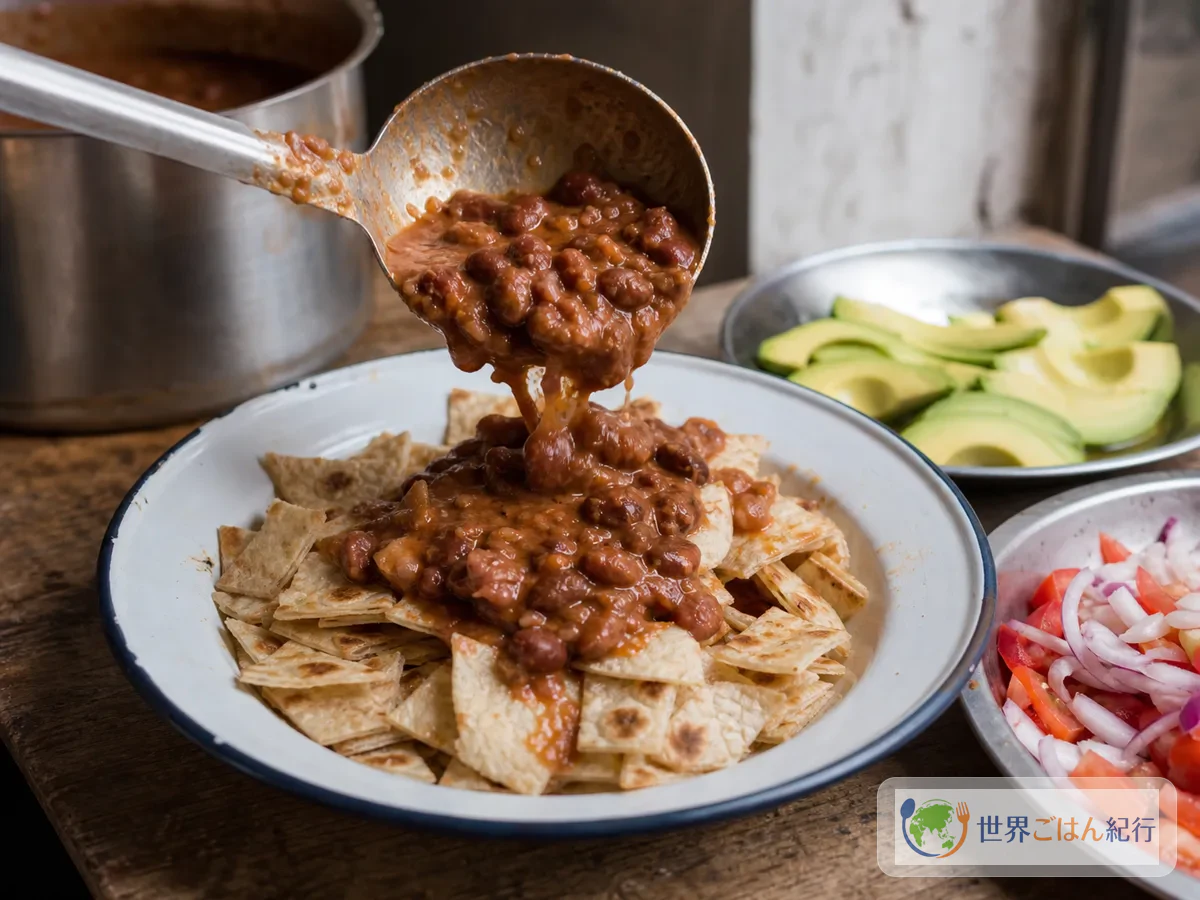
Kikomando is less a neatly plated restaurant dish than a stall plate that fills you up quickly. The chapati is torn by hand or chopped roughly with a knife, and the beans are spooned over it. Sometimes there's avocado at the edge of the plate, and sometimes tomato and onion add acidity to cut the richness.
| Pillar of authenticity | How it appears in Uganda | What to keep when cooking elsewhere |
|---|---|---|
| Chapati | Thin, oily flatbread cooked at a street stall | Mix in atta flour and cook it thin for a toasty flavor |
| Beans | Cooked beans loosely bound with tomato and onion | Use some of the bean cooking liquid in the sauce instead of plain water |
| How it is eaten | Beans spooned over chopped chapati | Cut bite-size so the sauce has more surface to soak into |
| Accompaniments | Avocado, tomato, onion, chile | Use acidity and raw vegetables to lighten the beans and oil |
If matoke is the home-style Ugandan plate built on green banana, kikomando is the chapati stall's plate.
In English-speaking countries it is written simply as Kikomando. The name belongs to Uganda's urban street-stall scene; in terms of ingredients, it is "chapati and beans."
Ingredients and Substitutes: Serves 4
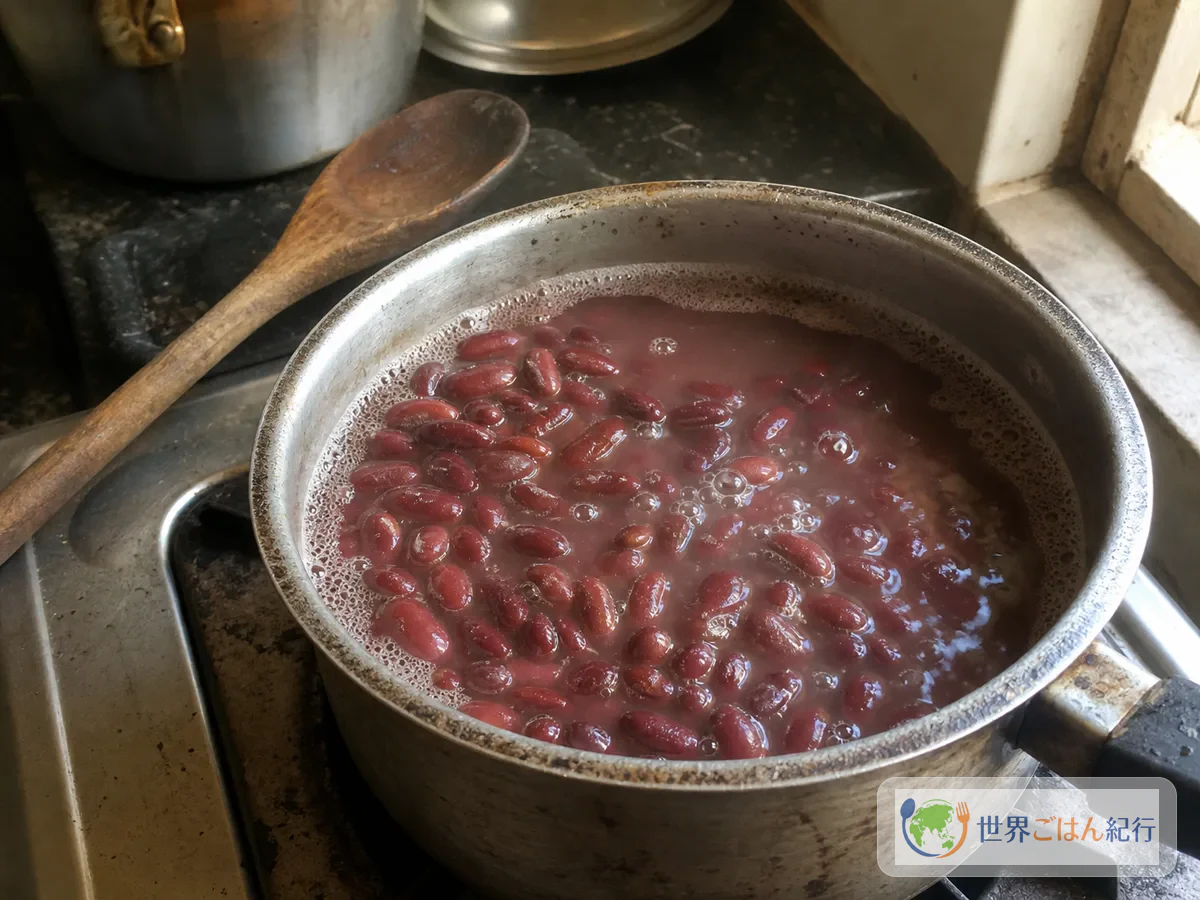
These amounts are for four people eating kikomando as a main dish. Making it from dried beans gives a better aroma and also gives you bean cooking liquid to use. On a weekday, canned red kidney beans with carefully cooked chapati make this quite a practical dish.
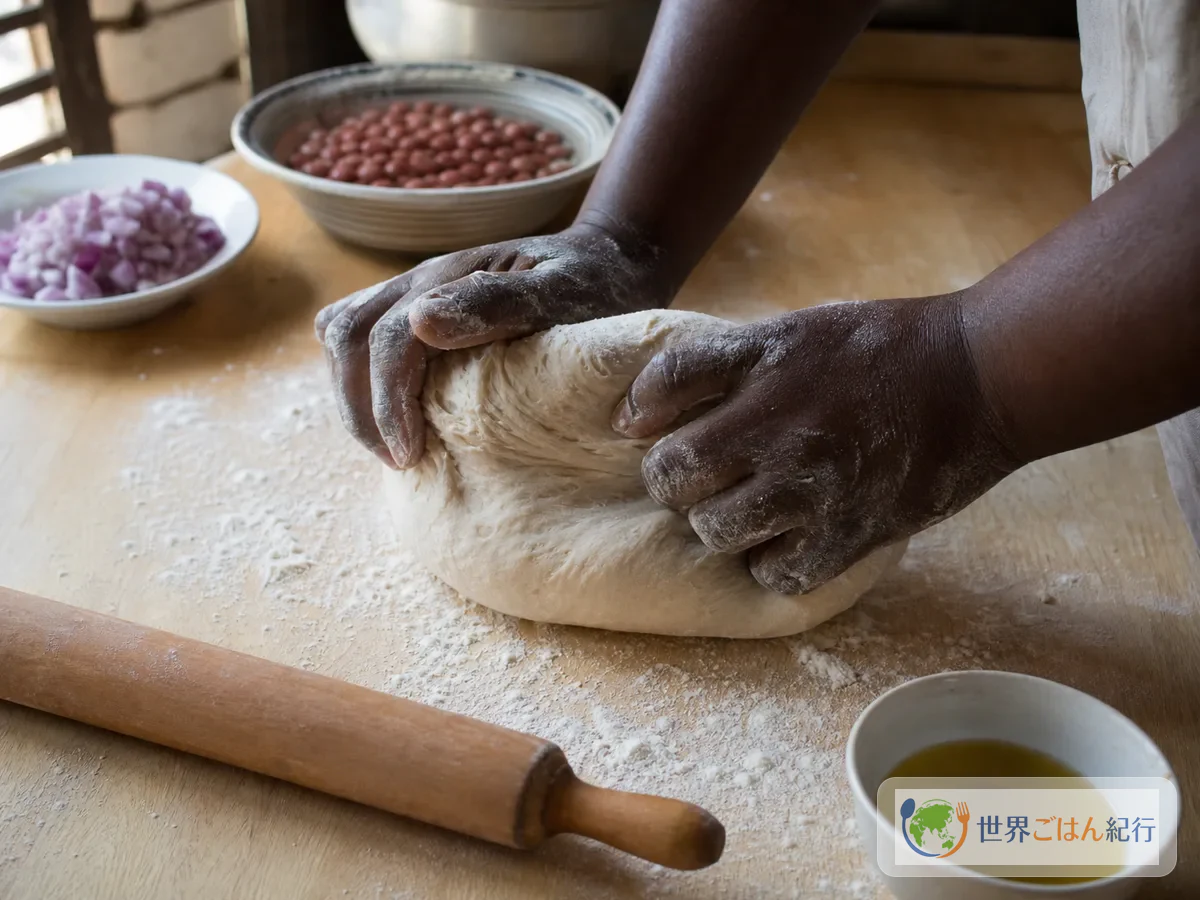
If you do not have atta flour, you can still make this by mixing whole wheat flour and all-purpose flour. With all-purpose flour alone, though, the aroma is shallow and the chapati goes soft right away once it meets the beans. If you want to get close from the first try, mixing in even a little atta gives the chewiness that makes it taste like chapati.
Dried beans or canned
| Method | Best for | Flavor and texture | Watch out for |
|---|---|---|---|
| From dried beans | Weekends, or when you can soak the night before | Strong bean aroma, and the cooking liquid pulls the sauce together | If the first boil is too short, only the skins stay hard |
| With canned beans | Weekdays, your first attempt | Quick and hard to get wrong | If you do not drain them, the sauce turns thin |
| With store-bought chapati | Busy days | You can try the bean stew alone | Thick naan or tortillas move it toward a different dish |
| Make only the dough the day before | When you want to cook right away the next day | Keeps the aroma of freshly cooked chapati | Take it out of the refrigerator and let it come back for 20 minutes before rolling |
Kikomando Ingredients and Tools
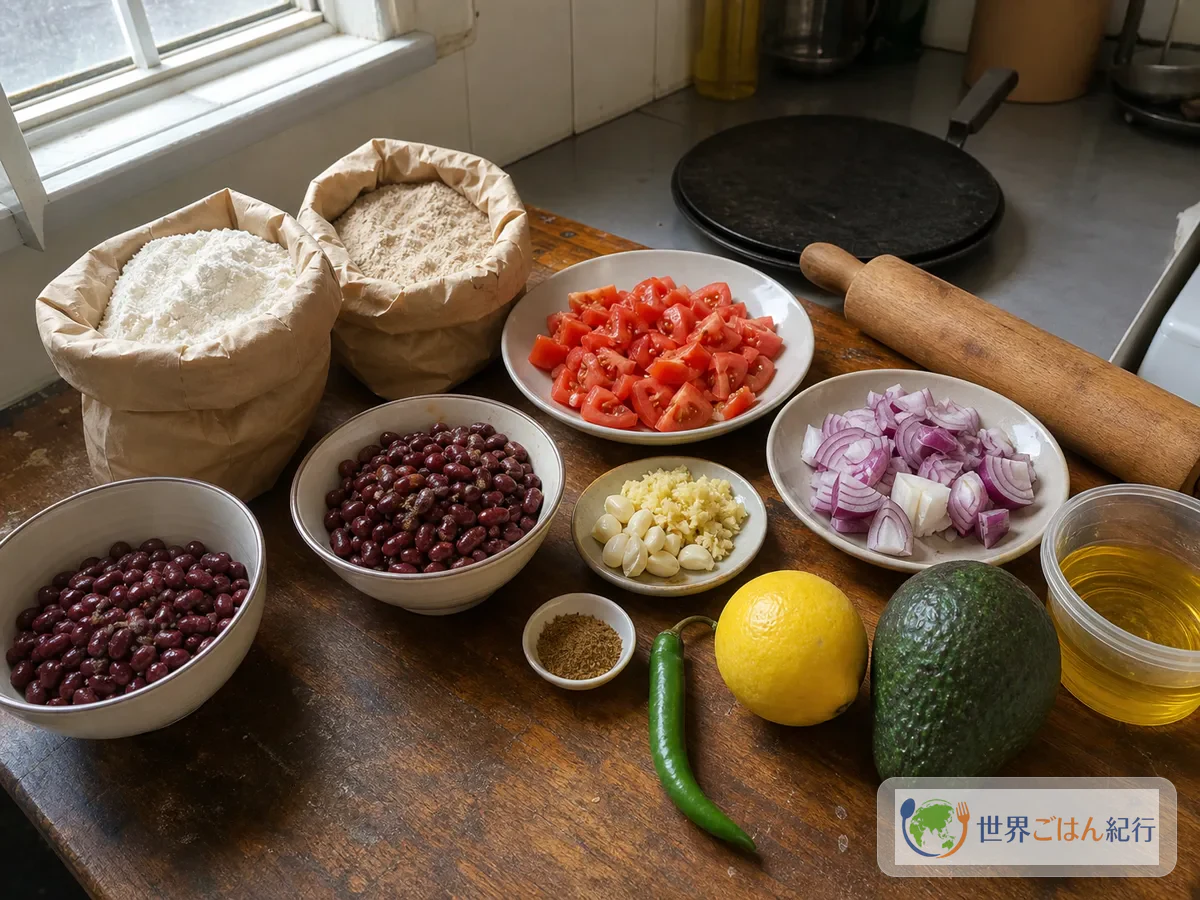
Tomatoes and onions are easy to find. The harder items are atta flour, a tawa for cooking flat chapati and, if you plan to keep cooking dried beans, a pressure cooker.
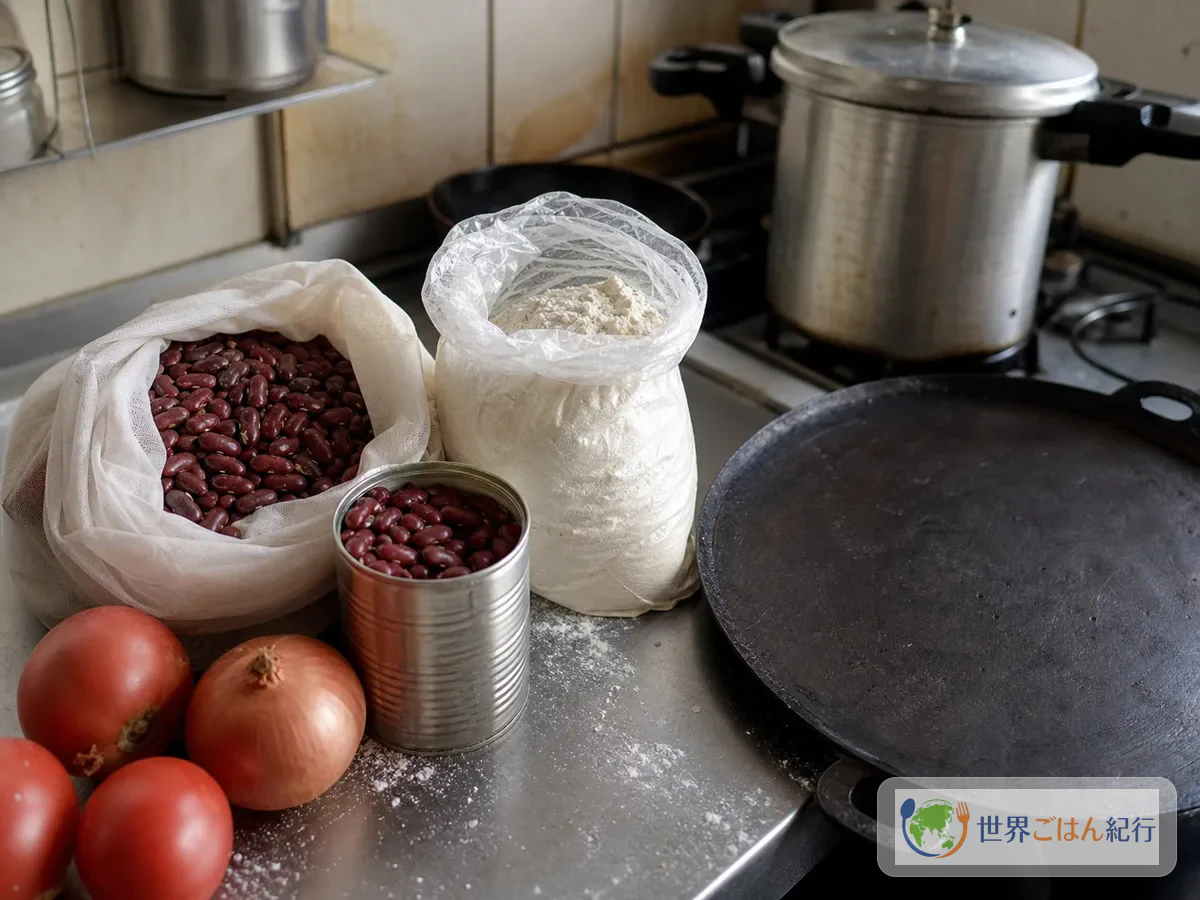
Canned beans work perfectly well here. A few cans of red kidney beans in the pantry also come in handy for other bean dishes, such as githeri or chili. On days when you cook dried beans, a pressure cooker takes much of the burden out of soaking them the night before and simmering for over an hour the next day.
How to Make It: Coat the Chapati in the Thickness of the Beans
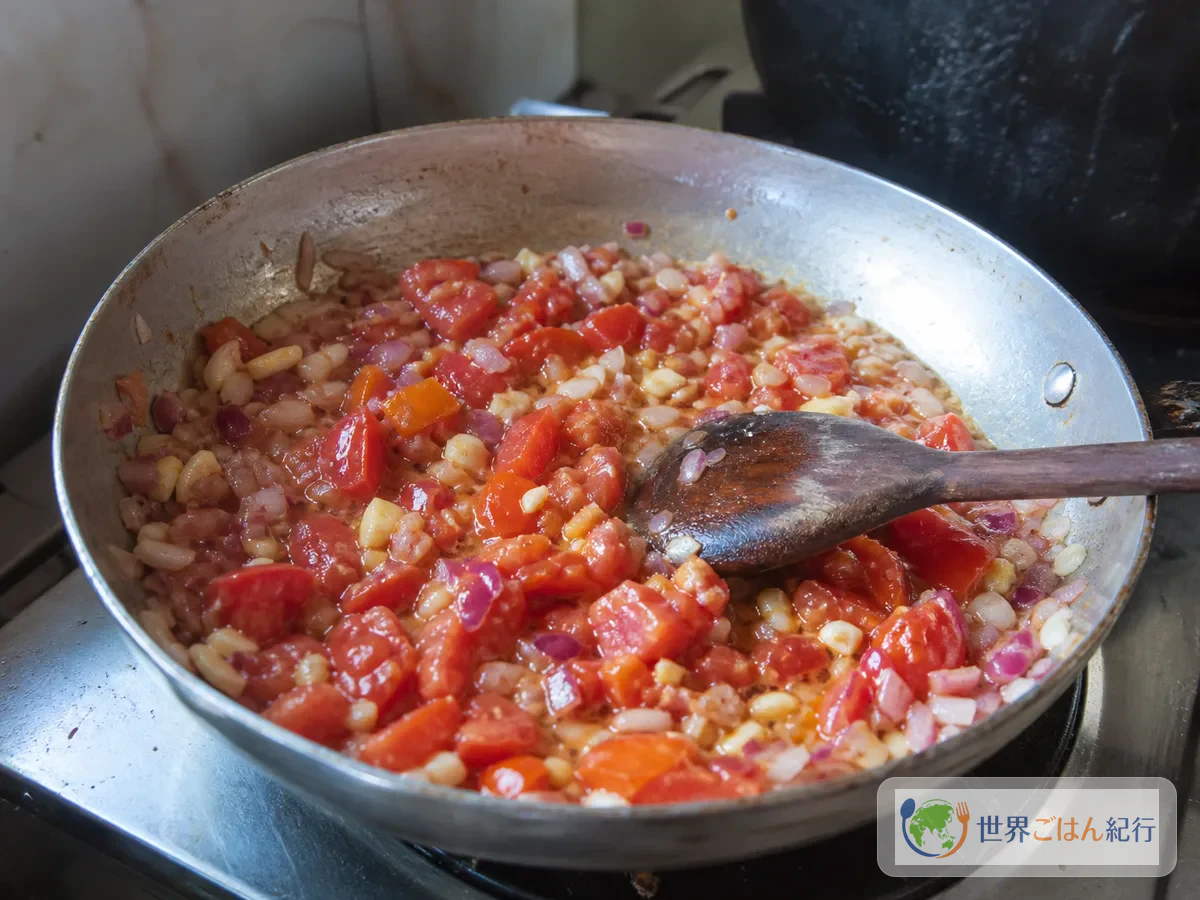
If you are using dried beans, start the night before. If you are using canned beans, replace step 1 with "drain in a colander, rinse, and drain well" and start from step 3. Freshly cooked chapati is ideal, but if you make the bean stew first and cook the chapati last, the aroma lasts at the table.
Common Kikomando Problems and Fixes
The ingredients are simple, so when kikomando goes wrong it is usually the moisture or the cutting. You want a spoonful that gives you the toastiness of the chapati and the thickness of the beans together. That means beans that aren't watery, and chapati cut small enough for the sauce to get in.
The beans should soak into the chapati without becoming a thick paste. If the sauce is thin like soup, the chapati goes soggy fast and the bottom of the plate turns watery. A good consistency is when you push the beans aside with a wooden spatula and the red sauce slowly flows back.
| Problem | Cause | Fix |
|---|---|---|
| Watery beans | Added the beans before cooking down the tomato | Remove the lid and reduce over medium-low heat for 5 to 8 minutes |
| Hard bean skins | Too little soaking, or old beans | Add ¾ cup (200 ml) water and simmer another 20 minutes over low heat. In a pressure cooker, 5 more minutes |
| Hard chapati | Cooked too hot and too briefly | Preheat over medium heat and brush on a thin layer of oil. Wrap in a cloth after cooking |
| Everything feels heavy | Only oil and beans, not enough acidity | Add lemon, tomato, red onion, or cilantro |
| Flavor is blurry | Canned beans carry too much liquid | Rinse and drain the beans, and adjust the salt at the end |
| Chapati goes soggy | Cut too fine, or too much bean liquid | Cut into 1.5 inches (3–4 cm) squares and make the bean sauce thicker |
With canned beans, rinsing too much weakens the aroma, but the thick liquid from the can makes the sauce cloudy. Rinse them lightly in a colander, drain well and then add them to the tomato base.
Serving, Storing and Reheating Kikomando
At the table
Kikomando is staple and side dish on one plate, and at lunch it is enough on its own. In the evening, add some acidic vegetables so it doesn't get tiresome. Tomato, red onion, lemon and cilantro are plenty. If you want greens, cook them the way Kenya's sukuma wiki does.
Don't mix everything together in one big dish at the start. People differ on how soft they like their chapati, so put the cut chapati on each plate, spoon the beans over and let everyone add acidity to taste. You keep the energy of the street stall, and everyone gets the plate they want.
| Occasion | How to pair it | Reason |
|---|---|---|
| Lunch staple | Kikomando alone, or with avocado | Beans and chapati give you carbohydrates and protein together |
| Evening plate | Plenty of tomato, red onion, and lemon | Acidity cuts the oil and beans so it stays easy to eat to the end |
| Eating with children | Leave out the green chile; add heat on adults' plates | Keeps the sweetness of the beans, and each plate can be adjusted |
| Make-ahead day | Make the beans a bit thick; cook the chapati the same day | Not watery the next day, and the flour aroma is kept |
A little bean liquid always remains at the end of the plate, and pressing the edge of the chapati into it is half the fun. So leave a thin flow of red sauce across the bottom instead of cooking the stew to a paste. If you're also serving rice, halve the chapati and spoon a little bean stew over the rice, which makes it easier for children and older family members.
More dishes to try
For another chapati dish, the rolex is the easy next step, and matoke shows a different side of Ugandan staple foods. Among bean dishes, Kenya's githeri combines corn and beans in one pot, while Ghana's groundnut soup gets its body from peanuts instead of beans.
Storage and reheating
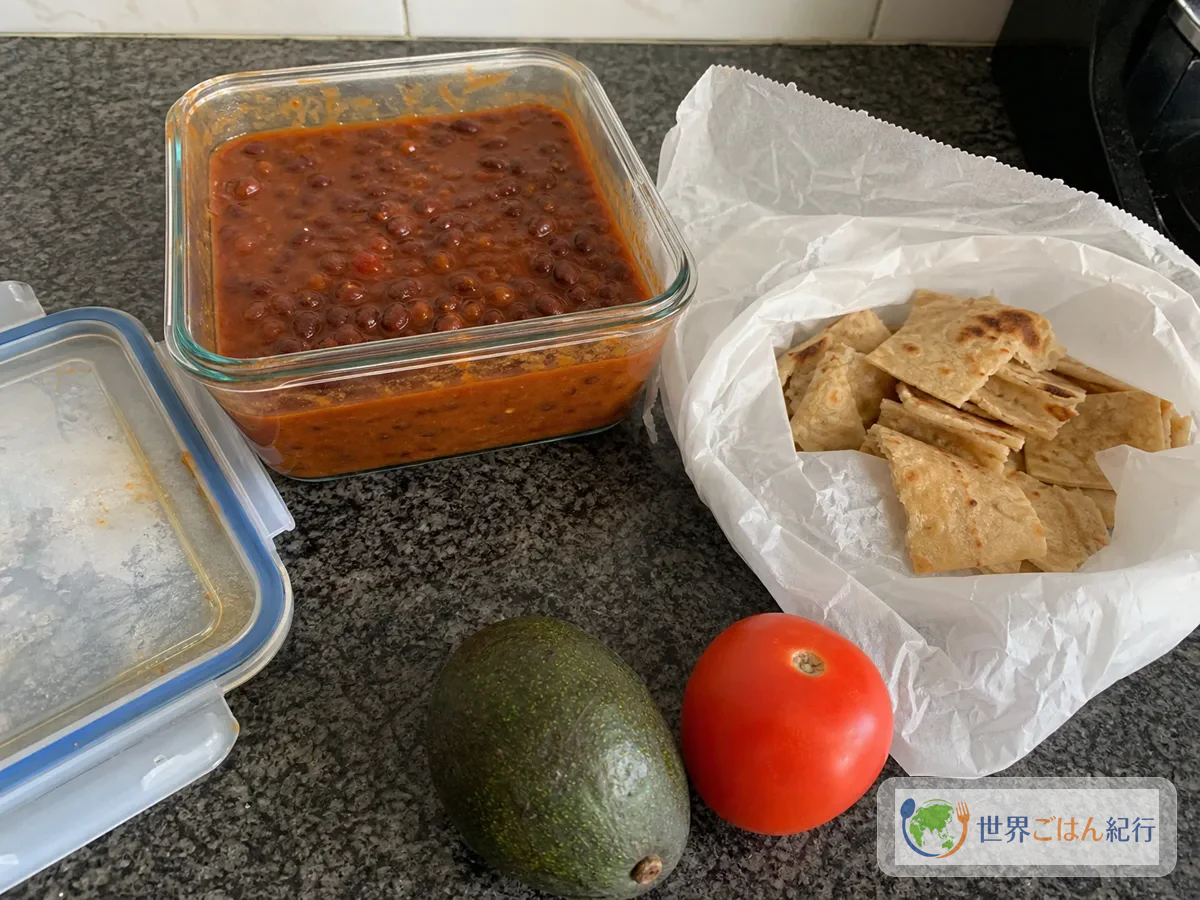
Store the beans and the chapati separately. Refrigerated together, the chapati soaks up all the bean liquid and turns heavy like dumplings by the next day. The bean stew keeps about 2 days in the refrigerator and 2 weeks in the freezer. The chapati keeps about 2 days in the refrigerator, or 2 weeks in the freezer if wrapped individually in plastic wrap.
To reheat, add 2 tbsp water to the beans and warm them over low heat for about 5 minutes, stirring. In a microwave, heat at 600 W for 2 minutes, stir, then heat 1 more minute. Warm the chapati in a skillet for 30 seconds per side to bring back the aroma, or cover it lightly with a damp, wrung-out paper towel and microwave at 600 W for 20 to 30 seconds.
If you're cooking ahead, finish the bean stew a little thick, since you can add water when reheating. Beans that are watery on the first day taste thin the next, with only the salt standing out.
Frequently Asked Questions
Q1. Can I substitute store-bought tortillas or naan?
You can, though it moves a little away from kikomando. Tortillas are thin and dry out easily, so warm them in a skillet with a light brush of oil. Naan is sweet and thick, so cut it small and make the beans thicker. A thin whole-wheat flatbread gets you closer.
Q2. Does it have to be red kidney beans?
Red kidney beans are easiest for both color and texture, but pinto beans, black-eyed peas and similar beans also work. Adzuki beans tend to taste like a sweet, and their skins split easily, so save them for later. Canned beans already contain salt, so go easy when you season at the end.
Q3. Can I put an egg on top?
Yes. A fried egg or a thin omelet makes it more like a rolex. Still, beans and chapati are the stars, so make it without egg the first time and get the bean consistency and the cut right. Add the egg next time and you'll taste the difference.
Q4. What can I add to make it hot?
Green chile, chili powder or hot sauce at the end all work. Adding a little to each plate is easier to eat than making the whole stew hot. With avocado and tomato on the side, even strong heat has something to balance it.
Q5. How far can I scale up the number of servings?
The bean stew scales easily to double. Chapati dries out if you cook a big batch at once, though. For 8 servings, make the beans first in a big pot and cook the chapati two at a time just before eating, wrapping them in a cloth to keep warm.